
Gas Prices Do Not Follow Oil Prices Overnight
About this episode
Gas prices stay stubbornly high even after crude oil drops, and the hosts break down why: refinery costs, taxes, regional fuel rules, logistics, and geopolitics—especially Iran’s Strait of Hormuz disruptions. They discuss how crude benchmarks like Brent and WTI translate (imperfectly) into what drivers pay at the pump, plus why recovery can take months. The show also includes Jeff’s motor minute and a review of the 2026 Subaru Uncharted EV, praising its design and power while calling out range and tight rear space.
The gas price sign can feel like it’s mocking you: crude oil dips on the news, but your local station still sits above four dollars a gallon. We walk through the real mechanics behind that disconnect and why it’s rarely a simple one-to-one relationship. From supply and demand to politics, weather, shipping constraints, and the time it takes crude oil to become finished gasoline, we map the chain that turns headlines into what you pay at the pump. If you’ve ever asked why prices jump fast but fall slowly, this conversation is for you.
We also dig into the global pressure points that can move markets overnight, including the Strait of Hormuz and the ripple effects of uncertainty across worldwide oil pricing. Then we bring it back home: how U.S. benchmarks influence regional costs, why refining and state-specific fuel requirements can raise prices, and how gas taxes and local distribution help explain why two stations in the same neighborhood can show different numbers. We keep it practical, focused, and grounded in how drivers actually experience these swings.
After the news, we shift into car culture and new-car talk. Jeff’s Motor Minute highlights the Houston Art Car Parade and its long-running community vibe. Don then reviews the all-new 2026 Subaru Uncharted EV, a subcompact electric SUV with sharp proportions, dual phone chargers, a huge center screen, and surprising punch with 338 horsepower. We also talk honestly about EV range expectations, pricing, and why plugging in a plug-in hybrid can dramatically change your real-world fuel costs.
Subscribe for more straight talk, share this with a friend who’s furious at the pump, and leave a review to help more drivers find us. What’s the most you’ve paid for gas this month?
Be sure to subscribe for more In Wheel Time Car Talk!
The Lupe' Tortilla RestaurantsLupe Tortilla in Katy, Texas
Gulf Coast Auto Shield
Paint protection, tint, and more!
Disclaimer: This post contains affiliate links. If you make a purchase, I may receive a commission at no extra cost to you.
---- -----
Want more In Wheel Time car talk any time?
In Wheel Time is now available on Audacy!
Just go to Audacy.com/InWheelTime where ever you are.
----- -----
Be sure to subscribe on your favorite podcast provider for the next episode of In Wheel Time Podcast and check out our live multiplatform broadcast every Saturday, 10a - 12nCT simulcasting on Audacy, YouTube, Facebook, Twitter, Twitch and InWheelTime.com.
In Wheel Time Podcast can be heard on you mobile device from providers such as:
Apple Podcasts, Amazon Music Podcast, Spotify, SiriusXM Podcast, iHeartRadio podcast, TuneIn + Alexa, Podcast Addict, Castro, Castbox, YouTube Podcast and more on your mobile device.
Follow InWheelTime.com for the latest updates!
Twitter: https://twitter.com/InWheelTime
Instagram: https://www.instagram.com/inwheeltime/
https://www.youtube.com/inwheeltime
https://www.Facebook.com/InWheelTime
For more information about In Wheel Time Podcast, email us at
[email protected]
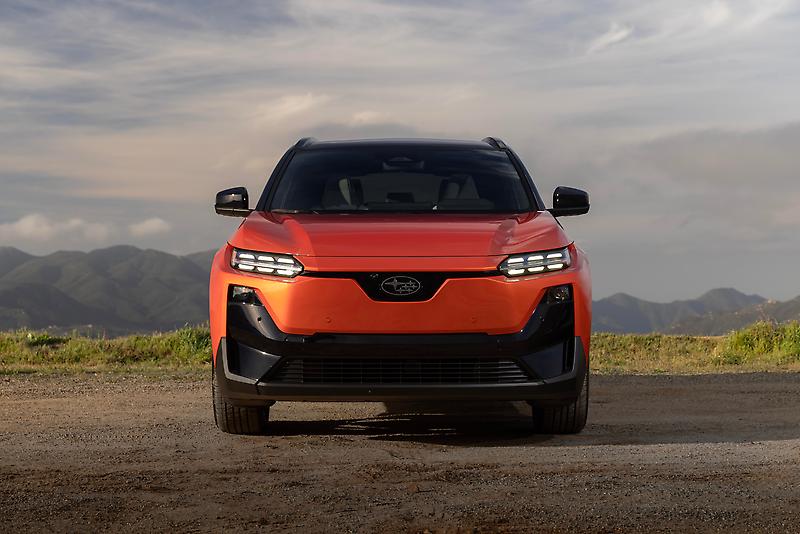
2026 Subaru Uncharted EV
"Plus,ourrecallsoftheweekandlater,Jeffhashismotorminute,andI'llreviewthe2026SubaruUnchartedEV. [29.4s] What? [30.2s] Yeah,it'sallbrandnewstuff."
They’re talking about a new Subaru electric car coming in 2026 called the Uncharted. The show plans to review it, so they’ll likely cover what it’s like to drive and what makes it different from other EVs. Since it’s a new model, it’s probably still being figured out by the market.
The host says they’ll review the 2026 Subaru Uncharted EV. This is a future Subaru electric vehicle, and the episode is framing it as part of their “brand-new stuff” lineup. Listeners can expect discussion of how Subaru’s EV approach differs from its traditional gas lineup.
Lone Star Street Rod Association event
"That'stheLoneStarStreetRodAssociationeventupinGrandbury. Andthat'sagoodpoint."
The “Lone Star Street Rod Association” is an organized group that hosts car events, typically focused on street rods and classic hot-rod culture. Mentioning the association helps listeners understand the event’s car community context.
oil prices dropped April 8th
"And uhoil, of course, turns into gasoline once they refine it. So oil prices dropped April 8th after President Trump announced a ceasefire with Iran, but then national average price of gasoline remained above four dollars a gallon uh according to AAA."
Oil prices can move fast when world events change. But gas prices at the pump don’t always drop right away, even if oil gets cheaper.
The segment describes how crude oil prices can change quickly due to geopolitical events, like a ceasefire announcement. Listeners should note that oil price movement doesn’t automatically translate into immediate retail gasoline price changes.
gasoline prices
"So oil prices dropped April 8th after President Trump announced a ceasefire with Iran, but then national average price of gasoline remained above fourdollars a gallon uh according to AAA."
They’re talking about what you actually pay for gas at the pump. The key point is that pump prices can lag behind oil price changes.
The discussion focuses on retail gasoline pricing—specifically the national average price per gallon. It’s central to the episode’s theme: gas prices don’t follow oil prices overnight.
AAA
"So oil prices dropped April 8th after President Trump announced a ceasefire with Iran, but then national average price of gasoline remained above four dollars a gallon uh according to AAA."
AAA is a well-known organization that tracks things like gas prices. They’re being used here as the reference for what the average pump price is doing.
AAA is cited as the source for the national average gasoline price data. For listeners, it’s a reminder that fuel-price reporting often comes from established aggregators and survey programs, not just spot market quotes.
crude oil
"Crude oil is raw, unprocessed, and liquid petroleum pumped out of the ground at oil wells. The primary ingredient is crude oil is microscopic and marine organisms that capture the sunlight via photosynthesis."
Crude oil is the raw oil pulled out of the ground. Refineries turn it into gasoline, so changes in crude can affect gas prices later.
Crude oil is described as raw, unprocessed petroleum pumped from oil wells. It’s the upstream input that refineries convert into gasoline and other fuels, so crude price changes can influence gasoline costs—but not always immediately.
supply and demand balance
"The first is a fundamentals supply and demand balance. How much oil are institutions producing, and how much oil are people consuming?"
Oil prices move based on two things: how much oil is available and how much people want to use. If there’s less oil than usual, prices usually go up.
Global oil prices are heavily influenced by the balance between how much oil is produced and how much is consumed. When supply tightens or demand rises, crude prices tend to move up, which can eventually affect gasoline prices.
Alaska has the lowest gas tax at about nine cents a gallon
"And this further explains why different states and even different gas stations within the same area have different prices. Alaska has the lowest gas tax at about nine cents a gallon."
Alaska’s gas tax is lower than most places. Since taxes are part of the price per gallon, that can help keep pump prices down.
This is an example of how state tax policy can strongly affect pump prices. A lower per-gallon tax can offset higher crude/refining costs, leading to cheaper gasoline relative to other states.
OPEC
"Well, at the beginning of the story, he said OPEC. OPEC is part of it as well. Now, back in the 70s when we had to downsize our vehicles, because OPEC was in charge."
OPEC is a group of countries that produce a lot of the world’s oil. When their decisions affect oil supply, it can change fuel prices and even how people buy cars.
OPEC (Organization of the Petroleum Exporting Countries) is a group of oil-producing nations that can influence global oil supply and pricing. The episode connects OPEC’s role to historical events in the 1970s that affected fuel availability and consumer vehicle choices.
motorcycle taxis
"But they use them for taxis. They have the long seats on them, and they're actually motorcycle cycle taxis. And they have people hanging off them like the people on a motorcycle."
“Motorcycle taxis” are passenger transport services where riders carry customers on a motorcycle, often with modified seating or passenger accommodations. The transcript describes them as having long seats and people hanging on like they would on a motorcycle, which changes how safety and vehicle design are approached.
Art Car Parade
"It's called the Houston Art Car Parade. This thing originated in 1984 with a fruit mobile. Now, what this does, uh, it's it's for charity, and there's all kind of things going on."
This is a parade where cars are turned into art—painted, decorated, and customized. People drive them around a route so the community can enjoy the creativity, often for a good cause.
An art car parade is an event where vehicles are decorated or customized as moving art, then driven in a public route. It’s often organized for community involvement and charity, blending car culture with local art and fundraising.
subcompact SUV
"It is considered a subcompact SUV, about the size of the cross-trek."
A subcompact SUV is a smaller SUV class—usually easier to drive in town and park. It generally has less space than bigger SUVs, and the host compares it to the Crosstrek for scale.
A subcompact SUV is a smaller SUV category designed for easier parking and everyday driving, typically with less interior space and cargo capacity than compact SUVs. The host compares the Uncharted’s size to the Subaru Crosstrek to give listeners a real-world reference point.
front fascia
"Umfrontfascia,cleandesign,doesn'tlookEV-ish,whichisabigthingforme. WhydotheyhavetohaveEVcarslookdifferentthantherestofthem?"
That’s the car’s front styling—basically the front “face” you see first, including the bumper and grille area.
Front fascia is the visible front-end bodywork of a vehicle, including the bumper area, grille opening, and styling surfaces. It strongly affects how the car looks at a glance, which is why the speaker focuses on its “clean design.”
radiator
"Granted,youdon'thavetohaveabigopeninginthefrontforcoolingtheradiator. It'snotmoving."
A radiator helps keep a car from overheating by cooling hot fluid. The speaker is saying EVs may not need as big of a front opening for cooling.
A radiator is a heat exchanger that helps cool the engine and other components by moving coolant through a network of fins. The speaker notes that EVs don’t necessarily need the same large front opening because they don’t use an engine radiator in the same way.
air intake
"Itdoeshavekindofagrill-likething. It'sanairintake,butgood. Theyputitinthefrontlikeit'ssupposedtobe."
An air intake is where outside air enters the car to help cool important parts.
An air intake is an opening that brings outside air into the vehicle’s cooling or intake systems. Even on EVs, air intake openings can be used to cool battery packs, inverters, motors, or other electronics.
C pillar
"ThereardoorhandleisdisguisedintheCpillar. WhatIlikedjusttherightproportionsofcurvesthatwillgiveitextraappeal,inmyopinion."
The C-pillar is part of the car’s body near the rear side window. They’re saying the door handle is hidden there to make the car look cleaner.
The C-pillar is the vertical body structure between the rear side window and the rear window (or hatch area). Hiding or disguising door handles in/near the C-pillar is a styling choice that can improve aerodynamics and clean up the side profile.
small SUV
"Don'ttouchit. Ithinkthey'vegotahomerunhere. Granted,itisasmallSUV. Interiorhighlights."
They’re talking about a compact SUV—smaller than most SUVs—so it’s easier to live with but still gives you that SUV shape.
A small SUV is a compact crossover/SUV size class that balances practicality with easier maneuvering and parking than larger SUVs. The speaker frames the design as a “home run” specifically within this smaller SUV category.
steering wheel controls
"Steeringwheelcontrolsarekindofhardtoread,butI'vegotoldtiredeyes. [1385.4s] Sodon'tblameitonSubaru."
Steering wheel controls are the buttons on the steering wheel. They let you change things without looking away from the road, but sometimes they’re hard to see.
Steering wheel controls are buttons or touchpads mounted on the wheel for functions like audio, phone, and driver-assist settings. They’re convenient because you can adjust things without taking your hands off the wheel, but they can be hard to read depending on layout and lighting.
fastback design
"Asfarascargo,it'stightintheback,especiallywithitsfastbackdesign. [1394.3s] Soyougiveupalittlebitofroombackthereintheback."
A fastback is a car shape where the roof slopes toward the back. It can look sporty, but it can make the back area feel more cramped.
A fastback design is a body shape where the roofline slopes smoothly down toward the rear. It can improve style and aerodynamics, but it often reduces rear headroom and makes the cargo area feel tighter.
EV
"Uh,andobviouslyyouhavetochargeitbecauseit'sstrictlyanEV,nothingbutuhelectricitythere."
An EV is an electric car. It runs on electricity stored in a battery, so you have to charge it to keep driving.
EV stands for electric vehicle. It relies on an electric motor and a battery pack, so charging is required to drive.
high speed
"Doyoudriveitathighspeedalot? Itain'tgonnado287miles."
Driving at high speed increases aerodynamic drag and energy use. For EVs, that typically means reduced real-world range compared with gentler driving.
ground clearance
"Rideandhandling,eightinchesofgroundclearancegivesitatrueoff-roadlook."
Ground clearance is how much space there is between the ground and the bottom of the car. More clearance can help on bumpy roads and makes the car look more rugged.
Ground clearance is the distance between the road and the lowest part of the vehicle. More clearance can help with rough roads and gives a more “off-road” stance, though it doesn’t automatically make the vehicle truly off-road capable.
excluding tax, title and license
"Wow. Excludingtaxtitleandlicense. Competitors,theHyundaiIonic5,theTeslaModelY,andtheMustangMachi."
They’re saying the price doesn’t include the extra fees and paperwork you pay to register the car. Your final cost will be higher once those are added.
“Excluding tax, title and license” means the quoted price doesn’t include government and registration-related costs. These fees can vary by location and can significantly change the final “out-the-door” price.

Tesla Model Y
"Competitors,theHyundaiIonic5,theTeslaModelY,andtheMustangMachi. NextweekI'mgoingtoreviewtheKiaSportageplug-inhybridelectric."
The Tesla Model Y is an all-electric SUV. You charge it at home or on public chargers instead of stopping for gas.
The Tesla Model Y is a battery-electric compact SUV. In comparisons like this, it’s typically evaluated on EV range, charging network access, and total cost of ownership.

Hyundai Ioniq 5
"Competitors,theHyundaiIonic5,theTeslaModelY,andtheMustangMachi. NextweekI'mgoingtoreviewtheKiaSportageplug-inhybridelectric."
The Hyundai Ioniq 5 is an all-electric car. Since it runs on electricity, you charge it instead of buying gas.
The Hyundai Ioniq 5 is a fully electric crossover. It’s often compared directly with other EVs on charging convenience and real-world range.
plug-in hybrid (PHEV)
"ThisisthefirstvehiclethatI'veactuallymadeitanefforttoplugitin. Becauseit'sgotagasolinemotor. Yeah."
A plug-in hybrid is part electric and part gas. You can plug it in to use electricity for shorter trips, which can cut down how much gas you burn.
A plug-in hybrid (PHEV) combines a battery-electric mode with a gasoline engine. Because you can charge it, you can often drive many trips on electricity first, then use gas when the battery is depleted.
donut spare
"Sotheplug-inhybrid,thatisthesamerelationashavingadonutspare,becausethedonutsparetireonlygoesabout50,60,maybe70miles."
A donut spare is the small temporary spare tire you’re meant to use only briefly. They’re comparing that idea to how a plug-in hybrid’s battery is useful, but not as capable as a full electric car.
A “donut spare” is a compact temporary spare tire designed for short distances and lower speeds. The speaker uses it as a metaphor for a plug-in hybrid’s limited electric-only range—use it when it fits your needs, but don’t expect it to replace the full capability of a true EV.
GulfCoastAutoShield
"Well,whynotletGulfCoastAutoShieldprotectit? HoustonianJohnGrayinvitesyoutohisstate-of-the-artfacility..."
This is a local shop that does car-care services. They help protect your car’s paint and glass so it stays looking nicer for longer.
GulfCoastAutoShield is an auto detailing and protection shop being promoted in the segment. They offer services aimed at preserving a car’s appearance and adding protection against damage.
ceramic coating
"...applyaceramiccoating,installapaintprotectionfilm,nanoceramicwindowtint,ornewwindshieldprotection calledExoshield..."
Ceramic coating is a protective layer put on your car’s paint. It helps the paint resist damage and makes washing easier.
A ceramic coating is a liquid polymer/ceramic layer applied to a car’s paint to improve chemical and UV resistance. It can make the surface easier to clean and help reduce minor staining and oxidation.
paint protection film
"...applyaceramiccoating,installapaintprotectionfilm,nanoceramicwindowtint,ornewwindshieldprotection calledExoshield..."
Paint protection film is a clear protective sheet on your car. It helps stop rock chips and minor scratches from ruining the paint.
Paint protection film (PPF) is a clear, tough film applied to high-impact areas like the front bumper, hood, and fenders. It’s designed to protect against rock chips, light scratches, and road debris.
radar detector
"Howaboutaprofessionallyinstalledradardetector? GulfCoastAutoShielddoesthattoo."
A radar detector is a device that warns you when it senses police speed radar. Laws vary a lot, so it’s important to check what’s allowed where you live.
A radar detector is an electronic device that alerts the driver when it detects police radar signals. It’s commonly used to warn about speed enforcement, though legality and effectiveness vary by location and enforcement methods.
Request an Explanation
Heard something you'd like explained? We'll add it to this episode.
Sign in to request explanations for terms you heard.
Want to learn more?
Browse our glossary for plain-English explanations of automotive terms, jargon, and concepts.
Help improve this episode
See something that's not quite right? Our annotations are AI-generated and can sometimes miss the mark. Click the flag icon on any annotation to suggest a correction.