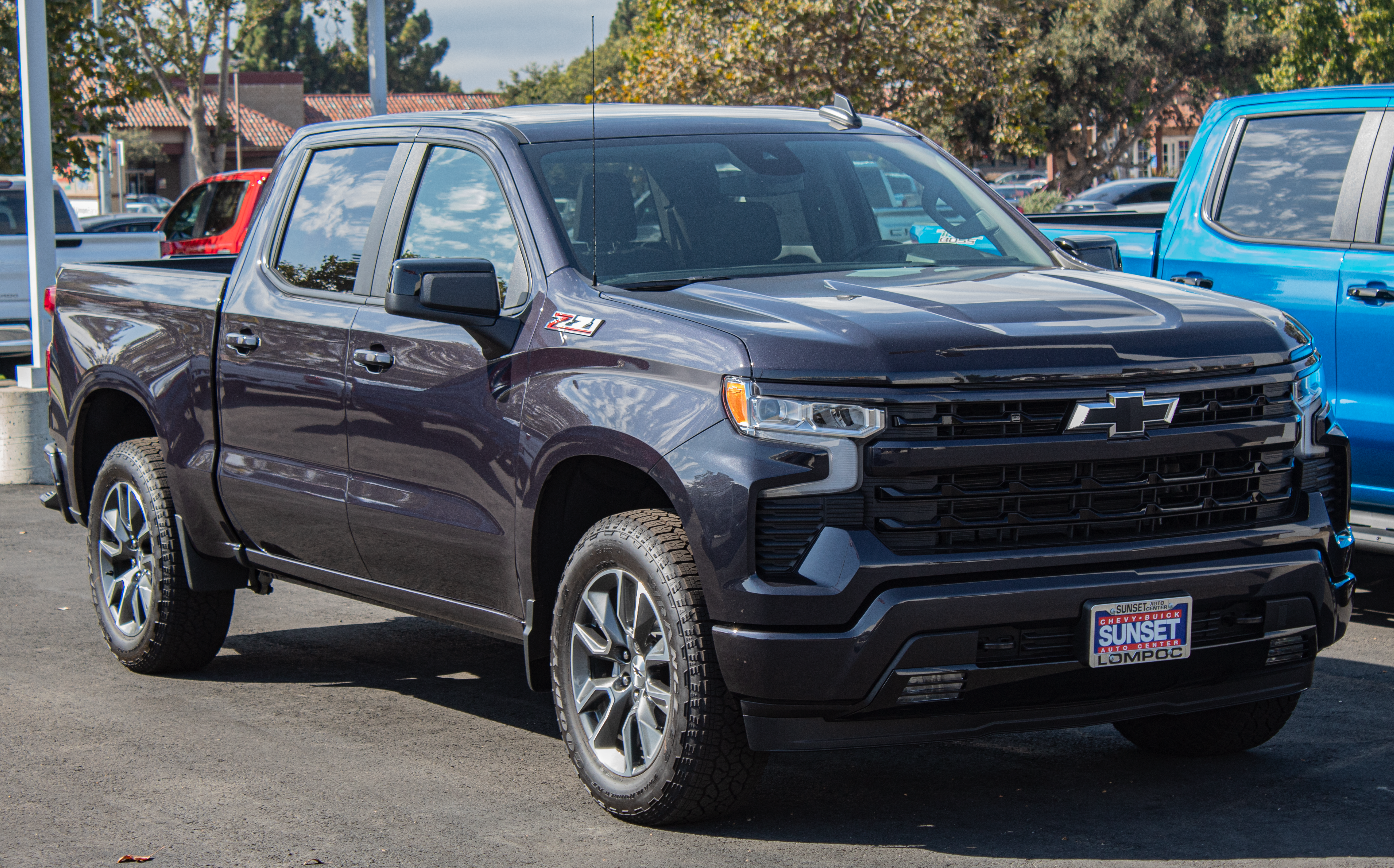
General Motors is a big car company. They’re talking about GM’s recent earnings and how GM is managing how many cars sit at dealerships, which can affect prices and dealer profits.
Toyota is being used as an example of how to manage car supply. The idea is that if you don’t flood dealerships with too many cars, prices stay stronger and dealers do better.
“Days supply of inventory” is a metric that estimates how long current dealership inventory would last at the current sales pace. Lower days supply generally suggests tighter supply, which can support pricing, while higher days supply can lead to discounts and slower sales.
GMC is GM’s brand that’s known for trucks and SUVs. They’re using it here to show that GMC has more cars sitting at dealerships for longer than some other GM brands.
Pricing power is the ability to sell cars without having to cut prices a lot. If there aren’t too many cars available at dealerships, sellers can usually hold prices better.
Dealers often borrow money to buy cars to keep on the lot. If the cars don’t sell fast, the dealer keeps paying interest, which makes too much inventory costly.
The “EV race” refers to automakers competing to develop and sell electric vehicles (EVs) quickly. Here, the hosts argue GM has moved resources away from EV production, implying a strategic shift in how fast and where GM is investing.
The Chevrolet Silverado is a big pickup truck. The hosts are saying GM is making a lot of money because the Silverado is selling well, even while other projects are being reduced.
The Chevy Trax is a smaller, cheaper crossover. The point here is that GM isn’t only selling trucks—they’re also selling a budget-friendly option to attract more customers.
This is about GM trying to focus on electric pickup trucks. The hosts are saying they changed plans because the market wasn’t responding the way they expected.
They’re basically saying car companies learn what people want by watching what sells. If a car doesn’t sell, they should stop making it and try something else instead of waiting too long.
Concept
cut your losses, admit your mistake, and find something to build that people might want to buy
If a car isn’t selling, the company should stop and change direction. The hosts are saying the market is harder right now, so companies can’t keep building what nobody wants.
When gas gets more expensive, driving costs go up and people may think twice about buying big gas-guzzling vehicles. The hosts are pointing out that GM is still selling trucks and SUVs even with higher fuel prices.
GMC Sierra is GMC’s big pickup truck. The hosts bring it up because they’re comparing how GM’s truck inventory and sales are doing across different brands.
Tariff refunds are payments back to companies related to taxes on imported goods. The hosts are saying GM’s profit outlook may be helped by money it expects to get back, not just by selling more cars.
The Chevrolet Silverado 1500 is a popular full-size pickup truck from Chevrolet. The hosts are using it to check real listings and pricing, so you can see what dealers are offering right now.
This is basically the average price people are paying when they buy a car. It’s a better measure than the advertised price because it reflects the real deals customers get.
This is about whether a car company is building enough of the cars people want. If they don’t, prices can rise because buyers can’t easily find what they want. The hosts are debating whether GM is truly matching demand or just charging more.
They’re talking about how many brand-new cars cost less than $30,000. If that number is small, it means fewer choices are affordable for most people. The point is that automakers may be making money by focusing on higher-priced buyers.
Price inflation means prices went up over time. They’re comparing how much car prices rose versus how much prices rose in general for everything else. The goal is to see if carmakers are charging more than normal inflation would explain.
Stellantis is another major car company that makes and sells vehicles in the U.S. The hosts mention it to compare pricing trends between different automakers.
“Certified” usually means the used car went through an inspection and comes with extra coverage from the dealer. The hosts are weighing if that extra assurance is worth the extra cost.
Term
CP owed
“CPO’d” means the car is certified pre-owned. It usually comes with an inspection and extra warranty coverage compared to a regular used car.
Depreciation is how a vehicle’s value drops over time, often fastest right after purchase. The hosts reference the idea that a new car can lose a large chunk of value immediately, and they compare that to how much a specific used model has fallen versus MSRP.
MSRP is the price the manufacturer lists for the vehicle when it’s new. Depreciation is how much the car’s value drops after you buy it. If it’s only down around 15% after a few years, that usually means used prices are staying high.
Inventory just means how many used cars dealers have available. If there aren’t many cars to choose from, sellers can charge more, and used cars don’t drop in price as much.
A dealer reviews portal aggregates customer feedback and rating data to help shoppers evaluate dealerships before visiting. Using an interactive map and letter grades can quickly identify patterns like consistently low scores or frequent complaints.
The “A” rating is basically a score for how well a dealership is doing based on reviews. It helps you narrow down which dealers are more likely to treat customers well.
The Chevrolet Corvette is a sports car built for fast, exciting driving. In the podcast, it sounds like the main point is about avoiding certain dealerships or service locations. That means the discussion is more about ownership experience than the car’s basic purpose.
Add-ons are extra items a dealer tries to sell on top of the car’s price. They can make the total cost higher, so it’s worth checking what they are before you agree.
Dealers often don’t pay cash for the cars they stock. Instead, they use a lender/credit line and are supposed to pay it back quickly after the car is sold. If they don’t, it can mean the dealership mishandled money, which is why it’s a big deal.
Think of floorplan financing as a “stocking loan” for a car dealership. The dealer uses it to have cars on the lot, and then pays the lender back after each car sells. If the dealer doesn’t pay on time, it can lead to legal trouble.
If a dealership already has buyers lined up, it doesn’t have to keep cars sitting around for long. That helps them avoid extra costs that build up while the cars are waiting to be sold.
Sometimes when you trade in a car that still has a loan, the dealer says they’ll pay off that old loan. If they don’t, you can end up still owing on the old car loan even though you thought it was handled—so your credit and bills can get messy.
The segment frames this as a “do your homework” issue: researching a dealership’s history, claims, and how it handles payoffs and paperwork. The idea is to reduce the risk of being stuck with unresolved financing or credit problems.
A loan payoff means paying off the remaining amount you still owe on your car loan. If the dealer doesn’t actually send that payoff, the lender may still consider the loan active.
Your credit can get hurt if a car loan is still showing as unpaid. Even if you traded the car in, if the payoff wasn’t sent, your credit report may still show that loan.
The title is the paperwork that proves who owns the car. If there’s still a loan on the trade-in, the title can’t be transferred cleanly until that loan is paid off.
A payoff check is how the dealer pays off the remaining balance to the lender. The point here is that you shouldn’t just trust the promise—make sure it actually gets paid.
“Planned obsolescence” means designing something so it fails or feels outdated earlier than it should. The hosts are basically saying that if engines are failing at normal driving speeds, it doesn’t sound like a deliberate “planned” timeline.
Invoice pricing is what the dealer pays the automaker for the car. It’s a helpful starting point for negotiating, but your final price can still change because of incentives and extra dealer charges.
Manufacturer incentives are deals from the car company that can lower what you pay. They might be cash back or special financing, and they can change from month to month.
Dealers often add extra charges besides the sticker price. A “dealer fee report” is basically a way to see what those extra fees usually are so you can compare offers and avoid surprises.
Topic
dealer side by side and see ratings nationwide
They’re talking about comparing car dealers using ratings and tools that make it easier to choose. The focus is on helping you make a better buying decision.
A warranty is like a promise that some repairs will be paid for for a certain period. Before buying one, you want to know what it covers and how long it lasts so you don’t pay for coverage you can’t use.
Insurance cost is heavily influenced by the vehicle you buy, your location, and your driving history. Tools that compare insurance quotes can help you estimate the real monthly cost of ownership, not just the car payment.
CarEdge is a website/app the hosts are recommending. They’re saying it helps you compare dealers and find information that can help you spend less when buying a car.
LIVE
We have the tech to get food delivered in 15 minutes, but we all have horror stories about
buying tickets. The Game Time app gives fans the advantage. Get amazing tickets in just a few taps.
Fees are included, so what you see is what you pay. And the Game Time guarantee means
authentic tickets at the best price every time. Take the guesswork out of buying tickets to
concerts, sports, comedy, and more with Game Time. Download the Game Time app and create an account
for $20 off your first purchase. Terms apply.
Or as a nutrient-packed reward to round out your afternoon.
Kachava keeps you fueled and satisfied wherever your day takes you. Plus, it actually tastes
delicious. No fillers, no nonsense. Just the good stuff your body craves. And for the times
you feel like switching it up, you've got seven flavors to choose from. All with the highest
quality ingredients. Treat yourself to the flavor and nutrition your body craves. Go to
Kachava.com and use code NEWS. New customers get 15% off their first order. That's K-A-C-H-A-V-A.com
Code NEWS. Saving money on everything for your next project when you shop at Minards.
Minards has a huge selection of bagged concrete and mortar mixes. Great for any project. Whether
you're pouring a walkway, a concrete slab, or setting a post, view our entire selection of
concrete mixes and supplies in store. And on Minards.com. Plus, check out the weekly flyer
for more great deals happening now. It's noon here in Ventner City, New Jersey,
under nation's capital, Washington, D.C. And this is Car Edge Live for Tuesday, April 28th.
Me, Ray, in my living room in Ventner City. And Zach hanging out in Washington, D.C. today.
How are you, handsome? I'm doing fantastic. Thanks so much, folks, for tuning in for another
episode of Car Edge Live. Excited to be here with you, my dad. And you know, you got a little
bacon neck today, dad. Well, you know, I can't afford them good t-shirts. I'm gonna get you some.
It's a good-looking outer shirt, but we got it, all right. Noted. Maybe for your birthday. My dad's
75th birthday's coming up on May 25th, if I'm not mistaken, correct? You are not mistaken. It is.
Could be some new t-shirts in your future. Dad, today's show is brought to you by caredge.com.
For those of you that are unfamiliar, we have our brand new car search. Shop new cars, use cars,
you can get Car Edge Pro. You can learn more about our car buying service, research, dealer reviews.
You're not using the dealer reviews. Get better. Insurance, warranty savings, we got so much more
back at caredge.com. Dad, the big story that we're gonna talk about this morning,
General Motors. Their earnings just came out and profits are up 22%. General Motors,
interestingly, dad, is one of the few automakers who have done a great job following Toyota's
lead in terms of minimizing the amount of inventory they have on dealer lots. I'm gonna come here
to our handy-dandy days supply of inventory chart. And you can see Chevrolet only has a 67
days supply of inventory Cadillac 76. GMC, a little bit high at 84. But still,
dad, GM earning a lot of money, making a lot of money, and
trying to follow the Toyota Playbook of restricting inventory and maintaining pricing power.
What do you see here when you dug into General Motors? Excuse me.
Is it restricting inventory or is it producing what the market wants? Is it producing the
requisite amount of cars without over supplying dealers? Because let's face it, it costs dealers
a poop ton of money in floor plan interest charges when vehicles just sit on their lot. So
in order to make dealers more viable, more profitable, if you match your production to your
demand, it seems to make a lot of sense to me. I don't understand why other manufacturers
don't do that. And I do get that there was that theory many years ago that if
the manufacturers build it, the people will come and buy it. And I guess for a long time that was
true. But there's so few people that can actually afford to buy cars today that I don't think you
can take that pray and spray approach of let's build way too many and we'll eventually get people
to buy them when people can't afford them now. It is interesting to your point about maybe they're
producing the right vehicles. General Motors is one of the fastest to get out of the EV race.
They still have electric vehicles, but they've pulled so many of their workforce away from
producing electric vehicles. I mean, there is headline after headline after headline about how
they've restricted and shut down their EV plants. And dad, they've reshuffled quite a few of their
workers. I mean, there have been significant layoffs at General Motors where they have stopped the
production of many vehicles. They are, though, I want to be very fair here. They are a truck
company. I mean, Chevrolet Silverado is what's doing, excuse me, their earnings and helping them
make the most money. But then they do a nice job balancing that with the Chevy Trax, for example,
which is one of the most affordable vehicles out there. But it is interesting. They are definitely
being aggressive in terms of the types of vehicles that they're producing. They were quick, quick to
get off the EV truck train. I hate saying that EV truck train, but whatever, the EV truck approach,
they got out of that game pretty quickly. Well, they did. It's incumbent upon any business
to look at what sells and what doesn't. And basically, take your customer feedback that's
given to you. And the way you get feedback in the automobile industry is either it sells or it
doesn't. And if it doesn't sell, get off of it. If it doesn't sell for the dealer, get off of it.
If it doesn't sell for the manufacturer, once they ship it to the dealer and the dealer has trouble
selling it, get off of it. Make a decision quickly. Nobody says that you have to wait. Well,
let's give it three years. No, give it 90 days. Give it 120 days. Either there's a market for
some of this stuff or there isn't. And I understand in the olden days, 20 years ago, legitimately,
or 25 years ago, the manufacturers just felt that they could build whatever they wanted to build,
and eventually they could convince people to buy it. That's not the case today. When the vast
majority of Americans can't participate in the new car market, then you have to take a different
approach to what you're going to build. And if you build something and nobody wants it, then
cut your losses, admit your mistake, and find something to build that people might want to buy.
For sure. But it is fascinating, Dad. I mean, they are crushing it in the truck game right now. And
to be clear here, General Motors has temporarily laid off thousands of employees. I think it's
1,300. It's the total number that were temporarily laid off in the first quarter. At the same time,
they had record-setting revenues, 46 billion, I think, in revenue. One of their manufacturing
plants hasn't been entirely shut down, yet they're producing and adding a sixth shift at one of the
plants that produces their pickup trucks. So this is such an interesting moment, because at that
the same time that gas prices are going sky-high. And we will do a live experiment here in a second.
We'll go to the car edge car search and we will look at some of the Chevrolet and General Motors
products, GMC products for the Sierra, for example. Because I'm honestly a little bit confounded
that they're able to produce more and more trucks, especially in the wake of what we see with Ford,
Dad, where they're struggling to sell leftover inventory. General Motors and Chevy are doing a
good job. They appear to. And I know they've adjusted their income forecast for the year by $500
million. But excuse me, that $500 million is based on expected tariff refunds. So yes,
their incomes up, their profits up, they're selling more expensive SUVs and pickup trucks
when gas prices have gone up. But we have to wait and see how long that lasts.
The one thing that I mentioned to you is that I look at that and that to me just
indicates how wide and how deep that chasm is between those in America who can afford to buy
cars and the rest of us who can't. And they seem to have accepted the fact that the vast
majority of people are not going to be able to buy. And so they are going to just cater to that 13 to
15% that can. And that 13 to 15% buys enough cars that they make a lot of money. Excuse me.
Hopefully that cough goes away sometime soon. Dad, let's do a little bit of a live experiment
here. I'm on the Car Edge Car Search Chevrolet 1500. Let's go nationwide. Let's go. Where do you
want to go in the United States, Dad? Montana. I don't think, okay, let's not go to Montana.
There's not enough people. Go to Nebraska. Nebraska, Little Rock, right? Little Rocks in
Arkansas, but that's okay. Lincoln is what I meant. Okay. Yeah, yeah, yeah. Lincoln is in
me a second. I need a zip code. All right. Man, I cannot believe I just said Little Rock, Nebraska.
Okay. The people that don't live in Little Rock, Nebraska are certainly going to be pissed at you.
Yeah. Here we go, Dad. We've got some brand new vehicles just landing on this dealership slot.
We're searching for just Chevrolet Silverado 1500s, 79,784 bucks for a high country, $53,795,
$7,000. Yeah, man, these prices are pretty high, multiple. In the 70s here, mid-60s, 70,
it's fascinating, Dad, that these things are selling so well because when we look at Ford,
they're a here work truck, 43,000. That's been sitting for 262 days. It's just fascinating to
look at this and see the General Motors earnings and they're so positive for the company. They're
doing so well. But these numbers are eerily similar to what we see over on the F-Series side of things
where the prices are $70,000 plus thousand dollars. Well, I think that the average transaction price
for Chevy pickup trucks and GM's pickup trucks was probably in the mid-60s. Yeah. If that doesn't seem
expensive, I don't know what would because that seems expensive to me. But then again, I'm not
buying them because I'm not a pickup truck kind of guy. But the sad reality is that for those who
are pickup truck people, you're going to spend in the 60s to $70,000 price point in order to
get that pickup truck that you're so desirous of. Seems crazy to me.
And pops if I may, automotive news every day now. Yes.
Has this updated live widget on their website and look at this. This shows average marketed
price for new cars. It just keeps going up, y'all. It's $1,124 which is up $749 from a month ago
and over $1,000 year over year. Which is why I say the actions of the manufacturers do not match the
words of the manufacturers when they say things like, well, we're going to have to address the
affordability crisis. I talked about this last week with a podcaster in Arizona. You say those
things but your words don't match. You see the prices just keep going up. It's ridiculous.
I mean, Ford says we're going to bring out more models that are $40,000 and less in 2030.
Well, what happens between now and 2030? Who's supposed to afford these things for the next
three years? And so that's the part that I find most concerning is they all say we want to bring
out more affordable stuff. Great. God bless them. But does it really take three years?
Okay. And during that three years, are we going to continue to see the average marketed price
continue to increase as significantly as it has, which belies what it is that they're all saying?
I don't know. Sometimes words and actions need to be together. Not so separate that it's so
obvious that it's just corporate BS at this point. So isn't that a little bit dead? I mean,
you were at the outset of this saying that Chevrolet General Motors, they've done a good job
matching what people want with what they're producing. So where is that actually happening?
Because most of their profitability comes from these big trucks. They added the additional
day of production for big trucks. Is it the inventory of track side? Tracks, as I should say,
and traverses and emblazor EVs. I do see General Motors doing the same thing,
Ford's done doing the same thing. Stalantis has earnings in two days. If we see,
per fascinating, they've all just increased their prices significantly. Where have they
actually done a good job matching consumer demand with their supply? It's kind of hard for me to
see it because they do just keep raising their prices like everyone else.
Nobody said they weren't raising their prices. But the amount of available inventory seems to
match better with the amount of demand for that expensive inventory. And we know that the percentage
of vehicles, new vehicles that are offered by all manufacturers that are $30,000 and less,
that percentage is what? Somewhere around 12% or 13% of all the vehicles that are all?
It's very low, very low. So that like 87%, 88% of all new vehicles that are offered in this country
are over $30,000. And that percentage of under $30,000 is like at the lowest level it's ever been.
So there's nothing that shows that pricing is so far off for the vast majority of people
that for the most part they have abandoned these manufacturers, in my opinion, have abandoned
the vast majority of the buying public. And they're okay with it because apparently
you can have record profits just catering to the 13% to 15% of the population that has the money.
I want to do for General Motors here in a second a new versus
used analysis. Before I do, we did some research. I think this was last week
or the past decade. General Motors prices have increased 43.5%. Now that might sound like a lot
right now. But you know what? It's only 2.2 points above the inflation rate. General Motors is
actually significantly lower than some of their peers in terms of inflation, price inflation,
like Ford, for example, or over at Stellantis. That being said, in 2015, the average transaction
price at General Motors was sub $40,000. It was $38,902. The average transaction price in December
end of 2025 was $55,805. I'll have to dig through the most recent earnings here and see what the
average transaction price is. Now back in 2015, General Motors, and I think we gave them kudos
when we talked about this last time, they were at a $13,000 price point with the Chevy Spark.
In 2025, they have a sub $22,000 offering, the Chevy Trax, which again, when you compare General
Motors to their peers, I'm going to scroll down here quickly and show you this. Ford, for example,
it's $28,000 to get in the door. Jeep, it's $495,000. General Motors has done a good job
retaining, here it is, a relatively low price point compared to their peers at $21,895. It
is interesting to see how price inflation has evolved, whether it be for General Motors, Ford,
Stellantis, et cetera. But dad, here's what I want to do. I want to take a quick peek. I want to do
a new versus used analysis. I'm very curious how their big pickup trucks are faring on the used car
market. So we've got here, I don't know, some benchmarks for various trim levels. Let's do,
it seems like an LT, it's kind of a middle of the rung trim level. So let me trim LT.
We've got 11,000 of these for sale nationwide, and it looks like they range anywhere from
54 to 62, something like that, 63.9. So I guess they get a little more expensive, 54 to 64,
somewhere in that range. Let's see, dad, if it's a good or a better deal to go used or certified,
let's use our handy-dandy little matrix down here. So we want a vehicle with relatively low
mileage and a relatively low price. I don't think we're going to get that much of a low price,
but we'll do there. Let's see here, let's do a relatively new one, right? We want one that's
maybe up to 2020, we'll do the 2025, 12,000 miles on its 50 grand. That's $4,000 less or $5,000 less
than a brand new one with no miles. CP owed here though, 11,000 miles, 15,000 miles, 44.
This is a 2023 or 2025. Let's look on this 2023, I'm curious. So it's fallen 15% below its original
MSRP. This is a 2023. I don't know. In the old days, in the olden days, young man,
a new car would depreciate 20 to 25% the moment you drove it off the lot.
And this truck again is three years old?
Yes, and it's depreciated 15%.
And it's got 11,000, so it's got low mileage.
It's got low miles, but the fact is that it's based on the asking price, it's
depreciated 15% from its original MSRP. That is not normal, or maybe that is the new normal.
Let me rephrase that. I believe that to be the new normal, because there is, as we discussed last
week, a huge shortage of used car inventory. That used car inventory was at 1.95 million vehicles
last month. The lowest point has been at in quite some time. So this is the new normal.
Well, you are going to pay more for younger, lower mileage used vehicles today than you ever
would have in the past, because the amount of depreciation is so limited when you compare it
to the past. It's crazy. I guess what it really indicates is the world has changed dramatically,
and I need to get my ass in gear with it. Evidently, pops. Evidently.
All right, I want to take one more second here on the General Motors story, and then we can switch
gears to another topic. I want to do a quick analysis, Dad, of good and bad Chevrolet dealers.
Bear with me for a moment here. We're going to go ahead and head over to the CarEdge dealer reviews
portal. I'll pull this up on the screen, and let's use the little map feature here. Let me pull this
up. All right, so we're looking at the map. This is under dealer reviews, interactive map,
and let's look at just Chevrolet dealers. So I'll toggle this on right here. All right, so these
are the graded. It's almost 700 Chevrolet dealers we have nationwide. Let's see the mixed out of
ABC dealers. Let's see really quick. I'll zoom back out just a little bit. All right,
let's see how many A dealers are out there. It looks like a lot. Yeah. 368 A rated Chevrolet
dealers out there out of 681. Now let's see how many are DNF? Only 71. Okay, so we know of at least
71 Chevrolet stores to avoid at all costs. Yeah, I mean, I would be really cautious going to any of
these F4. Yeah, you can see this one's got a score of 33. We'll go ahead and click on that fire,
but where looks like what's going on here? Just add-ons. Yeah, he's got to be just got to be
careful when it comes to, you know, dealers, add-ons and things like that. So it's interesting,
this is what's going on in the used in the new car market, excuse me, for Chevrolet. It's also
what's going on in the used car market a bit for Chevrolet as well. Now, Deb, there was a story
in automotive news this morning that caught my attention. It is just mind boggling today.
We have a Toyota dealership. Yeah. That's being sued for going out of trust. Okay.
How does that happen? Explain to our community what this means, why it's important, dealerships
going out of trust is bad. Very bad. How the heck does a Toyota dealership go out of trust?
That's a good question. You have to be a really poorly run Toyota dealership to figure out how
you could lose that kind of money because what they mean by out of trust is as you sell your new
inventory that you have on your credit line, you are obligated to pay that off within, I think,
48 or 72 hours from when you sold it or delivered it. Yeah. Because again, these car
dealers, they don't pay cash. Sometimes they finance it. They give them a little bit of
time to line up the money to buy the cars. But we know from having spoken to Tyler yesterday
at a Toyota dealership. Yeah. And other Toyota dealerships that
you have, most of their inventory is pre-sold before it ever arrives. So you don't have
tremendous carrying costs associated with Toyota inventory. So for a Toyota dealership
to be out of trust for them to sell cars and not pay the loan off on those cars
to their floor plan company would indicate to me that somebody's skimming the profits
off the top. Okay. Because we have established that pretty much owning a Toyota store is akin
to have a printing press for money. So if you have that printing press, and Toyota stores are
some of the most profitable stores in the country, how could you, you've got to be stealing from
yourself in order to do, in my opinion, in order for this to happen? What did the article say?
Yeah. So for those of you in Connecticut, this would be like a, you know, call to action,
maybe watch out for Steven Cadillac GMC, which also owns Steven Toyota. This is what's so interesting,
dad. Again, the finance companies can do these audits. They can literally come to the dealership
and they do every month, Jack. And like make sure the cars show up. Yep. Yeah. And so it's
interesting. This is a Cadillac GMC dealer that also has a Toyota dealership and somehow, some way,
16 cars weren't there that were supposed to be there. So again, this is like a call to action
for those of you in the Northeast. Do your homework before you go buy a car from a dealer
who's being sued by their finance company for having, what was it, 16 cars that they can no
longer find? Well, and you know what wouldn't surprise me? What's that, pops? My guess is that
in time it will come out that people who traded in their cars that had existing loans on their cars,
that the dealership had agreed to pay off as part of the transaction. My guess is a lot of those
vehicles will end up not having been paid off. And so the poor customer ends up holding the bag
because they've got two open car loans, not one. Did that happen in Arizona? Was that that journalist
in Arizona that got in touch with us at one time? And I think there's like a good lesson here. It's
actually paid off the auto loan. Like there's literally, can you talk us through that? Like
what you're describing here could be a huge, huge hit on someone's credit because they're
just expecting the dealer to pay off the car loan. Oh, absolutely. You know, the dealership is part
of the deal says, oh yeah, well, we're going to pay off the car loan. We're going to make it whole
so that we can get the title. And then in many cases they don't. They just take the finance
money from the bank that bought the new deal and never take whatever's still out on the existing
trade and ship that off to the bank that's holding the loan on that vehicle. There is a tremendous
amount of faith that's involved when you buy cars. And the faith is that the dealership will
convince you that they are going to handle certain things for you. And your faith in them is that
they will actually do what they say. There's no guarantee. You need to look at each dealership
separately and see how they've handled things in the past. See if there's been any claims again,
but people don't. I mean, that's hard. That's really hard. Oh, absolutely. I'm not, you know,
but it's surprising to me that it doesn't happen more often because you talk about something
that's built on a house of cards. Yeah, no trust us. We're going to send that payoff check. Don't
you worry. It was just crazy to see that this happened to a Toyota dealership. This happened
into a Nissan dealership. All right. You know, we see that headline every once in a while. Never,
never see it with Toyota. I want to put one more comment back to the beginning of the show.
It's interesting that General Motors lowered the EV market, lowered the profitability of what
they're making, but are still making money. Yeah, it is. I'm shocked. I'm shocked at how
good General Motors earnings were, which to be clear, I don't think is great for car shoppers.
General Motors has done the best job of any of the domestic automakers in terms of
trying to follow the Toyota Playbook, which again, not to try and confound what we're just
talking about with this dealer who's being sued by Toyota Motor Financial, which is crazy
returning out of financial services. GM, man, you got to give them some credit.
That Mary Bar over there, they're not getting the same headlines Ford is getting with the recalls
and with all the leftover unsold 2020 side inventory. They've done a much better job.
But they're getting hammered on their engines for those pickup trucks.
This is true. Yeah, we don't talk about that often.
At a certain mileage, you can pretty much expect, in many cases, that some of these engines or a
good percentage of these engines are just going to implode. So they're issues that they have.
Planned obsolescence dead? Planned obsolescence?
Well, yeah, but I don't think the planned obsolescence is supposed to be happening when
you're driving down the interstate at 75 miles an hour. And the engine just, I don't know,
she's just, you know. But yeah, they're making enough money off of those trucks that I guess
they can afford to take care of those issues as they do crop up. Folks, if me and my dad and our
incredible team can help you out with anything, check out caredge.com. We offer our car buying
service. We also have a car search. We get things like some Windows stickers to the best
manufacturer incentives this month. Invoice pricing, get dealer price quotes on their research. We
have so many pieces of data and things that can help inform your car search. And then like we
looked at earlier on the show, dealer reviews, we have a map, we have dealer fee reports. You can
browse by brand search for dealers, compare dealer side by side and see ratings nationwide. We can
help you save money on insurance and a vehicle warranty as well. There's so much good stuff
back at caredge.com. We're back tomorrow with more Car Edge Live. Looking forward to it. We
appreciate everyone for tuning in. Please, if you enjoyed today's show, subscribe to the
channel and share with us some future guests you want to see on the show. It was really
nice having Tyler yesterday. So we're open-minded to get more folks on here with us.
I think we need to get Joe Lewis back on. I'm talking to Joe in 30 minutes. You know what?
I'll ask him to join the show next week or maybe later this week if he's here.
Yeah, maybe May 1st, Friday, May 1st. Okay. Yeah. I'm literally,
I'm having a call with him in 30 minutes. I'll talk to him. Look at that. I had no idea.
I love it. All right, y'all. We're back here tomorrow. Pops, enjoy the afternoon.
You do the same. Love you, handsome. Thanks, everybody, for being here. We'll see you tomorrow
at noon Eastern right here in my living room. If you liked the show, please take a moment
to rate, review and subscribe. It really does help the show to grow. Thank you for listening.
About this episode
General Motors’ strong earnings are the centerpiece here, with Ray and Zach arguing that GM is doing a better job than some rivals of matching production to demand, especially in trucks. They also dig into high pickup-truck prices, rising average new-car prices, and the shrinking share of affordable new vehicles. The conversation shifts to used-truck depreciation, Chevrolet dealer ratings, and a troubling Toyota dealership lawsuit over being out of trust.
Today on CarEdge Live, Ray and Zach discuss the latest info on General Motors. Tune in to learn more! Hosted by Simplecast, an AdsWizz company. See https://pcm.adswizz.com
for information about our collection and use of personal data for
advertising.