
General Motors Just Got CAUGHT | Episode 1060
About this episode
General Motors’ strong earnings are the centerpiece here, with Ray and Zach arguing that GM is doing a better job than some rivals of matching production to demand, especially in trucks. They also dig into high pickup-truck prices, rising average new-car prices, and the shrinking share of affordable new vehicles. The conversation shifts to used-truck depreciation, Chevrolet dealer ratings, and a troubling Toyota dealership lawsuit over being out of trust.
General Motors
"General Motors. Their earnings just came out and profits are up 22%. General Motors, interestingly, dad, is one of the few automakers who have done a great job following Toyota's lead..."
General Motors is a big car company. They’re talking about GM’s recent earnings and how GM is managing how many cars sit at dealerships, which can affect prices and dealer profits.
General Motors (GM) is a major automaker that reports quarterly earnings and profit trends to investors. In this segment, the hosts focus on GM’s profitability and how its inventory strategy helps protect pricing and dealer health.
Toyota
"...following Toyota's lead in terms of minimizing the amount of inventory they have on dealer lots... trying to follow the Toyota Playbook of restricting inventory and maintaining pricing power."
Toyota is being used as an example of how to manage car supply. The idea is that if you don’t flood dealerships with too many cars, prices stay stronger and dealers do better.
Toyota is referenced as a benchmark for managing dealer inventory levels. The hosts call it a “playbook” for restricting inventory to maintain pricing power—meaning fewer cars sitting unsold helps keep prices from dropping.
days supply of inventory
"I'm gonna come here to our handy-dandy days supply of inventory chart. And you can see Chevrolet only has a 67 days supply of inventory Cadillac 76. GMC, a little bit high at 84."
“Days supply of inventory” is a metric that estimates how long current dealership inventory would last at the current sales pace. Lower days supply generally suggests tighter supply, which can support pricing, while higher days supply can lead to discounts and slower sales.
GMC
"Chevrolet only has a 67 days supply of inventory Cadillac 76. GMC, a little bit high at 84."
GMC is GM’s brand that’s known for trucks and SUVs. They’re using it here to show that GMC has more cars sitting at dealerships for longer than some other GM brands.
GMC is GM’s truck/SUV-focused brand and is used in the inventory-days chart. The hosts call out GMC’s relatively high days supply as a sign of looser inventory control compared with Chevrolet.
Cadillac
"Chevrolet only has a 67 days supply of inventory Cadillac 76. GMC, a little bit high at 84."
Cadillac is GM’s luxury brand. In this chart, they’re pointing out that Cadillac has more days of inventory sitting at dealerships than Chevrolet.
Cadillac is GM’s luxury brand and is included in the inventory-days comparison. The hosts mention Cadillac’s higher days supply relative to Chevrolet, implying more inventory sitting on lots.
pricing power
"...trying to follow the Toyota Playbook of restricting inventory and maintaining pricing power."
Pricing power is the ability to sell cars without having to cut prices a lot. If there aren’t too many cars available at dealerships, sellers can usually hold prices better.
Pricing power means a manufacturer can keep prices relatively high because supply is controlled and demand supports it. The hosts connect it to restricting inventory—fewer cars sitting on lots reduces the need for heavy discounts.
floor plan interest charges
"...it costs dealers a poop ton of money in floor plan interest charges when vehicles just sit on their lot."
Dealers often borrow money to buy cars to keep on the lot. If the cars don’t sell fast, the dealer keeps paying interest, which makes too much inventory costly.
Floor plan financing is the short-term loan dealers use to pay for inventory on their lots. When cars sit unsold, dealers pay interest on that borrowed money—so excess inventory becomes expensive quickly.
EV race
"General Motors is one of the fastest to get out of the EV race. They still have electric vehicles, but they've pulled so many of their workforce away from producing electric vehicles."
The “EV race” refers to automakers competing to develop and sell electric vehicles (EVs) quickly. Here, the hosts argue GM has moved resources away from EV production, implying a strategic shift in how fast and where GM is investing.
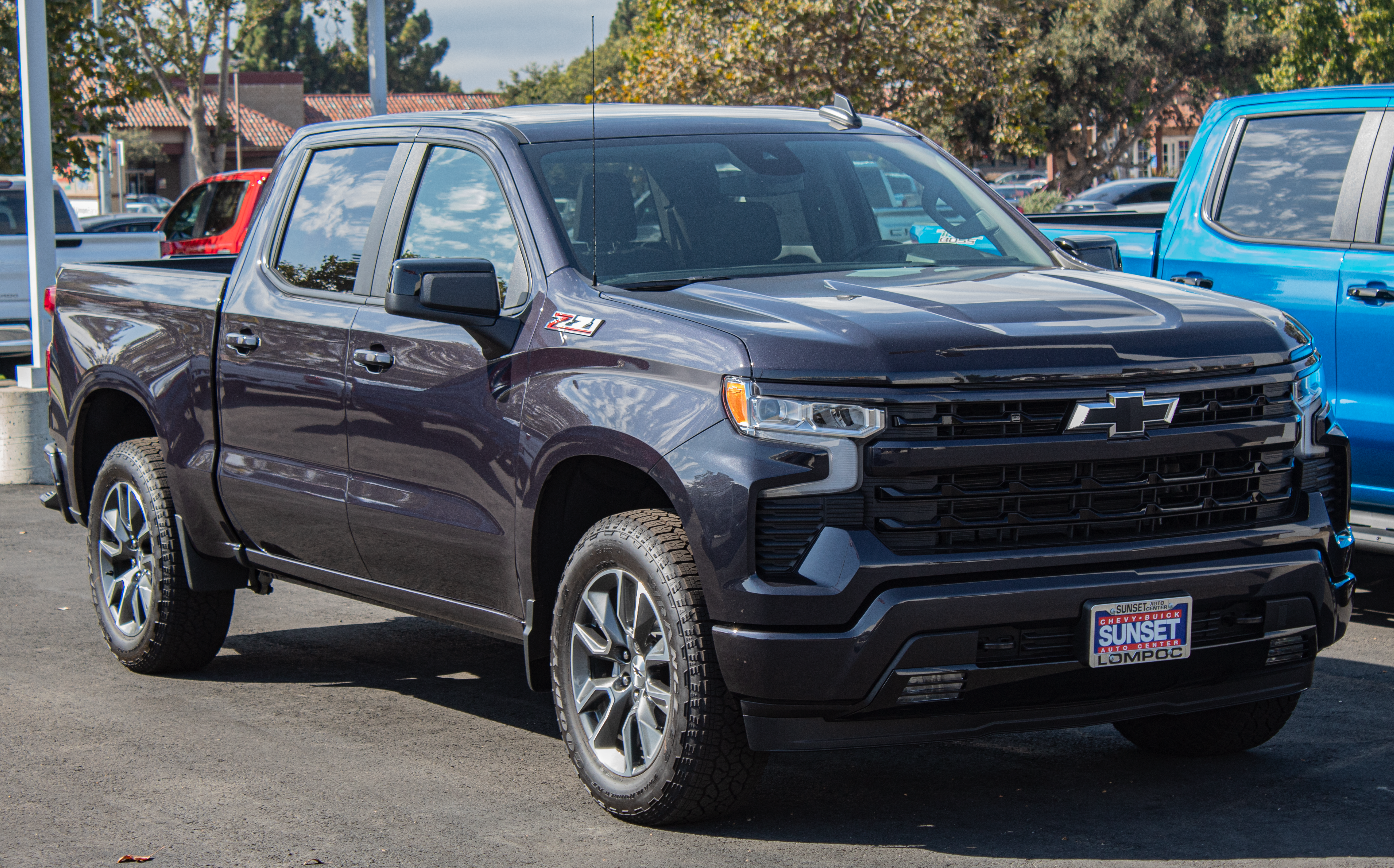
Chevrolet Silverado
"They are, though, I want to be very fair here. They are a truck company. I mean, Chevrolet Silverado is what's doing, excuse me, their earnings and helping them make the most money."
The Chevrolet Silverado is a big pickup truck. The hosts are saying GM is making a lot of money because the Silverado is selling well, even while other projects are being reduced.
The Chevrolet Silverado is GM’s flagship full-size pickup, and it’s a major driver of the company’s profits. In this segment, it’s mentioned as the model line that’s “doing” the earnings work while other programs are being scaled back.

Chevrolet Trax
"But then they do a nice job balancing that with the Chevy Trax, for example, which is one of the most affordable vehicles out there."
The Chevy Trax is a smaller, cheaper crossover. The point here is that GM isn’t only selling trucks—they’re also selling a budget-friendly option to attract more customers.
The Chevrolet Trax is a compact crossover positioned as a more affordable option in GM’s lineup. The hosts use it as an example of GM balancing its truck-heavy strategy with lower-priced vehicles that can reach more buyers.
EV truck approach
"They were quick, quick to get off the EV truck train. I hate saying that EV truck train, but whatever, the EV truck approach, they got out of that game pretty quickly."
This is about GM trying to focus on electric pickup trucks. The hosts are saying they changed plans because the market wasn’t responding the way they expected.
“EV truck approach” refers to GM’s strategy to pursue electric trucks as a major growth area. The hosts say GM “got out of that game pretty quickly,” framing it as a course correction based on what the market is actually buying.
take your customer feedback... either it sells or it doesn't
"Well, it's incumbent upon any business to look at what sells and what doesn't. And basically, take your customer feedback that's given to you. And the way you get feedback in the automobile industry is either it sells or it doesn't."
They’re basically saying car companies learn what people want by watching what sells. If a car doesn’t sell, they should stop making it and try something else instead of waiting too long.
The segment describes a feedback loop where vehicle programs are evaluated by sales performance across the manufacturer, dealers, and customers. If a model doesn’t sell at any stage, the idea is to stop producing it and reallocate resources quickly.
cut your losses, admit your mistake, and find something to build that people might want to buy
"And if it doesn't sell for the manufacturer, once they ship it to the dealer and the dealer has trouble selling it, get off of it. Make a decision quickly... cut your losses, admit your mistake, and find something to build that people might want to buy."
If a car isn’t selling, the company should stop and change direction. The hosts are saying the market is harder right now, so companies can’t keep building what nobody wants.
This is a business concept applied to automaking: when demand doesn’t materialize, manufacturers should pivot away from unprofitable or unpopular programs. The hosts connect it to shifting market conditions and limited ability for many Americans to buy new cars.
gas prices going sky-high
"So this is such an interesting moment, because at that the same time that gas prices are going sky-high. And we will do a live experiment here in a second."
When gas gets more expensive, driving costs go up and people may think twice about buying big gas-guzzling vehicles. The hosts are pointing out that GM is still selling trucks and SUVs even with higher fuel prices.
Rising gas prices can change consumer behavior by making fuel-heavy vehicles more expensive to run, which often pressures demand for large trucks and SUVs. The hosts argue GM is still selling more expensive SUVs and pickup trucks despite higher fuel costs, suggesting pricing power and/or a market split by affordability.

GMC products for the Sierra
"We'll go to the car edge car search and we will look at some of the Chevrolet and General Motors products, GMC products for the Sierra, for example."
GMC Sierra is GMC’s big pickup truck. The hosts bring it up because they’re comparing how GM’s truck inventory and sales are doing across different brands.
GMC’s Sierra is the brand’s full-size pickup lineup, closely related to the Chevrolet Silverado platform. The hosts mention it to broaden the inventory discussion across GM brands (Chevrolet and GMC) and their truck offerings.
tariff refunds
"They appear to. And I know they've adjusted their income forecast for the year by $500 million. But excuse me, that $500 million is based on expected tariff refunds."
Tariff refunds are payments back to companies related to taxes on imported goods. The hosts are saying GM’s profit outlook may be helped by money it expects to get back, not just by selling more cars.
Tariff refunds refer to money returned to companies after tariffs (taxes on imported goods) are paid or assessed, often due to policy changes or trade agreements. In this segment, the hosts say GM’s income forecast adjustment is tied to expected tariff refunds, implying financial results may be influenced by government trade policy rather than only vehicle demand.
Chevrolet Silverado 1500
"Here we go, Dad. We've got some brand new vehicles just landing on this dealership slot. We're searching for just Chevrolet Silverado 1500s, 79,784 bucks for a high country, $53,795,"
The Chevrolet Silverado 1500 is a popular full-size pickup truck from Chevrolet. The hosts are using it to check real listings and pricing, so you can see what dealers are offering right now.
The Chevrolet Silverado 1500 is GM’s full-size half-ton pickup, offered in many trims and configurations. In this segment, the hosts use it as the example vehicle they’re searching for on CarEdge Car Search to see what’s available and priced across the country.
Ford
"it's fascinating, Dad, that these things are selling so well because when we look at Ford, they're a here work truck, 43,000. That's been sitting for 262 days."
Ford is one of the big automakers. In this segment, they’re using Ford as an example of how truck prices and sales conditions are changing.
Ford is referenced in the context of truck pricing and inventory sitting on dealer lots. The hosts compare Ford’s situation to General Motors to illustrate how pricing and sales performance are trending across brands.

F-Series
"But these numbers are eerily similar to what we see over on the F-Series side of things where the prices are $70,000 plus thousand dollars."
The F-Series is Ford’s pickup truck lineup. The hosts are saying the typical prices for these trucks are extremely high, which affects affordability.
The Ford F-Series is referenced as a benchmark for truck pricing, with the hosts noting prices in the $70,000-plus range. This matters because it shows how high transaction prices can be even for mainstream pickup lines.
average transaction price
"Well, I think that the average transaction price for Chevy pickup trucks and GM's pickup trucks was probably in the mid-60s."
This is basically the average price people are paying when they buy a car. It’s a better measure than the advertised price because it reflects the real deals customers get.
Average transaction price is the typical price customers actually pay for vehicles, not just the sticker price. The hosts use it to show that real-world deal prices for pickup trucks are landing in the mid-$60,000 range, which directly impacts affordability.
Chevy
"Well, I think that the average transaction price for Chevy pickup trucks and GM's pickup trucks was probably in the mid-60s."
“Chevy” means Chevrolet, a GM brand. They’re talking about what people are actually paying for Chevrolet pickup trucks on average.
“Chevy” is used to refer to Chevrolet pickup trucks and their average transaction price. The point is to quantify how expensive the average deal is, reinforcing the affordability argument.
average marketed price
"This shows average marketed price for new cars. It just keeps going up, y'all. It's $1,124 which is up $749 from a month ago and over $1,000 year over year."
This is the average of the prices you see dealers advertising for new cars. If it keeps going up, it usually means cars are getting harder to afford.
Average marketed price is a metric based on the prices being advertised/listed for new cars across the market. The hosts cite it rising month-over-month and year-over-year to argue that pricing pressure is continuing despite claims about affordability.
matching consumer demand with supply
"Where have they actually done a good job matching consumer demand with their supply? It's kind of hard for me to see it because they do just keep raising their prices like everyone else."
This is about whether a car company is building enough of the cars people want. If they don’t, prices can rise because buyers can’t easily find what they want. The hosts are debating whether GM is truly matching demand or just charging more.
“Matching consumer demand with supply” is the idea that automakers produce the right mix of vehicles in the right quantities for what buyers actually want. If supply is misaligned, you can see either shortages (leading to higher prices) or excess inventory (often leading to discounts). The hosts question whether GM is doing this well or simply raising prices while relying on a smaller group of higher-income buyers.
new vehicles offered under $30,000
"we know that the percentage of vehicles, new vehicles that are offered by all manufacturers that are $30,000 and less, that percentage is what? Somewhere around 12% or 13% of all the vehicles"
They’re talking about how many brand-new cars cost less than $30,000. If that number is small, it means fewer choices are affordable for most people. The point is that automakers may be making money by focusing on higher-priced buyers.
The segment discusses how few new vehicles are priced under $30,000, citing that only about 12–13% fall below that threshold. This matters because it shows how much of the market is effectively “priced out” for many buyers. The hosts connect this to pricing power and profitability concentrated in higher-priced segments.
price inflation
"General Motors prices have increased 43.5%... It's only 2.2 points above the inflation rate. General Motors is actually significantly lower than some of their peers in terms of inflation, price inflation,"
Price inflation means prices went up over time. They’re comparing how much car prices rose versus how much prices rose in general for everything else. The goal is to see if carmakers are charging more than normal inflation would explain.
Price inflation here refers to how much vehicle prices have risen over time, compared to general inflation in the economy. The hosts mention GM’s price increases and then compare them to inflation to argue whether pricing is “out of line” with broader cost increases. This is a macro way to evaluate whether automakers are simply passing through costs or taking extra pricing power.
Stellantis
"like Ford, for example, or over at Stellantis. That being said, in 2015, the average transaction price at General Motors was sub $40,000."
Stellantis is another major car company that makes and sells vehicles in the U.S. The hosts mention it to compare pricing trends between different automakers.
Stellantis is a large multinational automaker formed from the merger of Fiat Chrysler Automobiles and PSA. The hosts reference it alongside Ford and GM while comparing entry pricing and how transaction prices have shifted over time.

Chevy Spark
"Now back in 2015, General Motors, and I think we gave them kudos when we talked about this last time, they were at a $13,000 price point with the Chevy Spark."
The Chevrolet Spark is a small, lower-cost Chevrolet. The hosts mention it to show what GM’s cheapest price point looked like back in 2015.
The Chevrolet Spark is GM’s small, budget-oriented subcompact. Here it’s used as a reference point for GM’s lower entry pricing in 2015, when the average transaction price was around a $13,000 level for that model.
Jeep
"Ford, for example, it's $28,000 to get in the door. Jeep, it's $495,000. General Motors has done a good job retaining, here it is, a relatively low price point compared to their peers at $21,895."
Jeep is a car brand known for SUVs. The hosts mention it to show that some brands start at much higher prices than others.
Jeep is referenced as a pricing benchmark in the “entry price” comparison. The key point is that different brands have very different starting price points, which affects how buyers perceive value and affordability.
trim LT
"Let's do, it seems like an LT, it's kind of a middle of the rung trim level. So let me trim LT. We've got 11,000 of these for sale nationwide..."
“LT” is a specific version of a car with a certain level of features. When you shop used, the trim level can change the price a lot.
“LT” is a trim level designation used by Chevrolet to indicate a mid-level equipment package. The hosts use it to compare pricing and availability for a specific trim, which matters because used prices vary a lot by trim.
certified
"let's see here, let's do a relatively new one, right? We want one that's maybe up to 2020, we'll do the 2025, 12,000 miles on its 50 grand. That's $4,000 less or $5,000 less than a brand new one with no miles. CP owed here though, 11,000 miles, 15,000 miles, 44."
“Certified” usually means the used car went through an inspection and comes with extra coverage from the dealer. The hosts are weighing if that extra assurance is worth the extra cost.
“Certified” typically refers to Certified Pre-Owned (CPO) programs, where a used vehicle is inspected and backed by additional warranty coverage. The hosts are comparing whether buying certified (with lower risk) is a better deal than buying regular used.
CP owed
"That's $4,000 less or $5,000 less than a brand new one with no miles. CP owed here though, 11,000 miles, 15,000 miles, 44. This is a 2023 or 2025."
“CPO’d” means the car is certified pre-owned. It usually comes with an inspection and extra warranty coverage compared to a regular used car.
“CP owed” appears to be a transcription of “CPO’d,” shorthand for Certified Pre-Owned. It indicates the vehicle is part of a manufacturer/dealer certification program rather than just a regular used listing.
depreciation
"So it's fallen 15% below its original MSRP. This is a 2023. I don't know. In the old days, in the olden days, young man, a new car would depreciate 20 to 25% the moment you drove it off the lot."
Depreciation is how a vehicle’s value drops over time, often fastest right after purchase. The hosts reference the idea that a new car can lose a large chunk of value immediately, and they compare that to how much a specific used model has fallen versus MSRP.
depreciated 15% from its original MSRP
"It's got low miles, but the fact is that it's based on the asking price, it's depreciated 15% from its original MSRP. That is not normal, or maybe that is the new normal."
MSRP is the price the manufacturer lists for the vehicle when it’s new. Depreciation is how much the car’s value drops after you buy it. If it’s only down around 15% after a few years, that usually means used prices are staying high.
MSRP is the manufacturer’s suggested retail price, and depreciation is how much a vehicle loses value over time. When a used truck is only down about 15% after a few years, it means the used market is holding value unusually well compared with typical depreciation curves.
shortage of used car inventory
"...because there is, as we discussed last week, a huge shortage of used car inventory. That used car inventory was at 1.95 million vehicles last month."
Inventory just means how many used cars dealers have available. If there aren’t many cars to choose from, sellers can charge more, and used cars don’t drop in price as much.
“Used car inventory” refers to how many used vehicles are available for sale. A shortage can push prices up and reduce how much vehicles depreciate, which is why younger, lower-mileage used cars can cost more than they historically would.
used car inventory was at 1.95 million vehicles
"That used car inventory was at 1.95 million vehicles last month. The lowest point has been at in quite some time."
They’re quoting a number for how many used cars are available nationwide. When that number is low, it usually means fewer choices and higher prices.
This is a market-wide measure of how many used vehicles are available for sale. Lower inventory levels generally mean higher prices and less depreciation pressure, which the hosts connect to the “new normal” for used-car pricing.
dealer reviews portal
"We're going to go ahead and head over to the CarEdge dealer reviews portal. I'll pull this up on the screen... under dealer reviews, interactive map..."
A dealer reviews portal aggregates customer feedback and rating data to help shoppers evaluate dealerships before visiting. Using an interactive map and letter grades can quickly identify patterns like consistently low scores or frequent complaints.
A rated Chevrolet dealers
"All right, so let's see how many A dealers are out there. It looks like a lot. Yeah. 368 A rated Chevrolet dealers out there out of 681."
The “A” rating is basically a score for how well a dealership is doing based on reviews. It helps you narrow down which dealers are more likely to treat customers well.
Letter grades (like “A rated”) are a simplified way to summarize dealer performance from review data. In practice, they help shoppers filter out dealers that repeatedly underperform, rather than relying on a single review or salesperson.
DNF
"Now let's see how many are DNF? Only 71. Okay, so we know of at least 71 Chevrolet stores to avoid at all costs."
In this context, “DNF” is a bad dealer rating category. The hosts are saying these are the dealerships you should avoid.
“DNF” here appears to be a dealer grade category meaning “do not finish”/avoid—i.e., a low rating bucket based on the portal’s scoring. The hosts treat it as a list of stores to avoid at all costs, implying a pattern of negative customer experiences.

Chevrolet 71 Chevrolet
"...y are DNF? Only 71. Okay, so we know of at least 71 Chevrolet stores to avoid at all costs. Yeah, I mean, I wou..."
The Chevrolet Corvette is a sports car built for fast, exciting driving. In the podcast, it sounds like the main point is about avoiding certain dealerships or service locations. That means the discussion is more about ownership experience than the car’s basic purpose.
The Chevrolet Corvette is a performance sports car known for strong acceleration and a driver-focused design. The podcast context references “stores to avoid,” which suggests the conversation is about dealer experience or service issues rather than the car’s engineering. Corvettes are often discussed because they’re high-demand vehicles, and ownership experience can depend heavily on how they’re sold and serviced.
add-ons
"Yeah, I mean, I would be really cautious going to any of these F4. Yeah, you can see this one's got a score of 33. We'll go ahead and click on that fire, but where looks like what's going on here? Just add-ons."
Add-ons are extra items a dealer tries to sell on top of the car’s price. They can make the total cost higher, so it’s worth checking what they are before you agree.
Add-ons are extra products or services added to a vehicle sale beyond the base price—often things like accessories, protection packages, or fees. They can inflate the out-the-door cost, so spotting “add-ons” is a key part of evaluating dealer pricing behavior.
going out of trust
"How does that happen? Explain to our community what this means, why it's important, dealerships going out of trust is bad. Very bad. How the heck does a Toyota dealership go out of trust?"
Dealers often don’t pay cash for the cars they stock. Instead, they use a lender/credit line and are supposed to pay it back quickly after the car is sold. If they don’t, it can mean the dealership mishandled money, which is why it’s a big deal.
“Going out of trust” is a dealership finance issue where the dealer sells new inventory that’s financed through a floorplan/credit line, but fails to pay off the lender within the required short window after delivery. It’s serious because it can indicate misuse of funds and can trigger audits, lawsuits, and dealership shutdowns.
floor plan company
"Because again, these car dealers, they don't pay cash. Sometimes they finance it. They give them a little bit of time to line up the money to buy the cars... to their floor plan company would indicate to me that somebody's skimming the profits off the top."
Think of floorplan financing as a “stocking loan” for a car dealership. The dealer uses it to have cars on the lot, and then pays the lender back after each car sells. If the dealer doesn’t pay on time, it can lead to legal trouble.
A floorplan company (or floorplan lender) provides the financing that lets a dealership carry new-vehicle inventory. The dealer pays off the loan shortly after each vehicle is sold/delivered, so the lender can track whether the dealer is following the terms.
pre-sold before it ever arrives
"And other Toyota dealerships that you have, most of their inventory is pre-sold before it ever arrives. So you don't have tremendous carrying costs associated with Toyota inventory."
If a dealership already has buyers lined up, it doesn’t have to keep cars sitting around for long. That helps them avoid extra costs that build up while the cars are waiting to be sold.
When dealerships pre-sell vehicles before they arrive, they reduce “carrying costs” and the time inventory sits on the lot. That matters because floorplan financing and interest/fees can add up the longer cars remain unsold.
trade-in payoff not completed
"...16 cars weren't there that were supposed to be there... people who traded in their cars that had existing loans... the dealership had agreed to pay off... the poor customer ends up holding the bag because they've got two open car loans, not one..."
Sometimes when you trade in a car that still has a loan, the dealer says they’ll pay off that old loan. If they don’t, you can end up still owing on the old car loan even though you thought it was handled—so your credit and bills can get messy.
The hosts describe a situation where a dealership agrees to pay off an existing auto loan on a customer’s trade-in, but then doesn’t actually send the payoff to the lender. That can leave the customer responsible for two loans instead of one, and it can take time to unwind the paperwork and credit impact.
due diligence before buying from a dealer
"...call to action for those of you in the Northeast. Do your homework before you go buy a car from a dealer... See if there's been any claims again..."
The segment frames this as a “do your homework” issue: researching a dealership’s history, claims, and how it handles payoffs and paperwork. The idea is to reduce the risk of being stuck with unresolved financing or credit problems.
auto loan payoff
"...could be a huge, huge hit on someone's credit because they're just expecting the dealer to pay off the car loan... the dealership is part of the deal says, oh yeah, well, we're going to pay off the car loan..."
A loan payoff means paying off the remaining amount you still owe on your car loan. If the dealer doesn’t actually send that payoff, the lender may still consider the loan active.
An auto loan payoff is the process of sending the remaining balance to the lender so the vehicle’s loan is fully satisfied. In dealership transactions, the payoff is typically handled via a payoff check or electronic transfer after the trade-in deal is finalized.
credit impact from unresolved liens
"...could be a huge, huge hit on someone's credit because they're just expecting the dealer to pay off the car loan... There's no guarantee. You need to look at each dealership separately..."
Your credit can get hurt if a car loan is still showing as unpaid. Even if you traded the car in, if the payoff wasn’t sent, your credit report may still show that loan.
If an existing loan isn’t actually paid off, the lender may keep reporting the account as active, and the customer’s credit can be affected. Even if the dealer claims it’s being handled, unresolved liens and delayed payoff paperwork can create credit and identity-of-debt confusion.
title
"...we're going to pay off the car loan. We're going to make it whole so that we can get the title. And then in many cases they don't..."
The title is the paperwork that proves who owns the car. If there’s still a loan on the trade-in, the title can’t be transferred cleanly until that loan is paid off.
A vehicle title is the legal document proving ownership. Dealers often need the payoff completed to obtain or transfer the title cleanly, which is why customers are told the dealer will “handle” the payoff so the title can be issued without liens.
dealer payoff check
"...There's no guarantee. You need to look at each dealership separately... We're going to send that payoff check. Don't"
A payoff check is how the dealer pays off the remaining balance to the lender. The point here is that you shouldn’t just trust the promise—make sure it actually gets paid.
A payoff check is the payment sent to the existing lender to satisfy the trade-in’s loan balance. The hosts emphasize that customers should not assume the check was sent just because the dealer promised it.
planned obsolescence
"Planned obsolescence dead? Planned obsolescence? Well, yeah, but I don't think the planned obsolescence is supposed to be happening when you're driving down the interstate at 75 miles an hour."
“Planned obsolescence” means designing something so it fails or feels outdated earlier than it should. The hosts are basically saying that if engines are failing at normal driving speeds, it doesn’t sound like a deliberate “planned” timeline.
Planned obsolescence is the idea that products are designed to wear out or become outdated on a schedule, pushing customers to replace them sooner. The hosts question whether the engine failures they’re discussing could be intentional, noting it would be unlikely for that to happen during normal highway driving.
Invoice pricing
"We get things like some Windows stickers to the best manufacturer incentives this month. Invoice pricing, get dealer price quotes on their research."
Invoice pricing is what the dealer pays the automaker for the car. It’s a helpful starting point for negotiating, but your final price can still change because of incentives and extra dealer charges.
Invoice pricing is the price a dealer pays the manufacturer for a vehicle before adding profit and fees. It’s often used as a benchmark in negotiations, but the actual “out-the-door” cost can still differ due to incentives, holdbacks, and dealer add-ons.
manufacturer incentives
"We get things like some Windows stickers to the best manufacturer incentives this month. Invoice pricing, get dealer price quotes"
Manufacturer incentives are deals from the car company that can lower what you pay. They might be cash back or special financing, and they can change from month to month.
Manufacturer incentives are discounts or financial offers provided by the automaker to reduce the purchase price or improve affordability. They can include cash rebates, low-rate financing, or lease deals, and they often change monthly based on inventory and sales targets.
dealer fee reports
"dealer reviews, we have a map, we have dealer fee reports. You can browse by brand search for dealers, compare dealer side by side and see ratings nationwide."
Dealers often add extra charges besides the sticker price. A “dealer fee report” is basically a way to see what those extra fees usually are so you can compare offers and avoid surprises.
“Dealer fee reports” refers to tracking and publishing the extra charges dealers add on top of the vehicle price. These can include documentation fees and other add-ons that affect your final “out-the-door” cost.
dealer side by side and see ratings nationwide
"You can browse by brand search for dealers, compare dealer side by side and see ratings nationwide. We can help you save money on insurance and a vehicle warranty as well."
They’re talking about comparing car dealers using ratings and tools that make it easier to choose. The focus is on helping you make a better buying decision.
This segment is about comparing dealerships using ratings and side-by-side tools. It’s a consumer decision workflow rather than a technical automotive topic.
vehicle warranty
"We can help you save money on insurance and a vehicle warranty as well. There's so much good stuff back at caredge.com."
A warranty is like a promise that some repairs will be paid for for a certain period. Before buying one, you want to know what it covers and how long it lasts so you don’t pay for coverage you can’t use.
A vehicle warranty is a contract that covers certain repairs for a set time/mileage, either from the manufacturer or as an aftermarket/extended plan. Understanding what’s covered (and what’s excluded) matters because warranties can significantly change total ownership cost.
insurance
"We can help you save money on insurance and a vehicle warranty as well. There's so much good stuff back at caredge.com."
Insurance cost is heavily influenced by the vehicle you buy, your location, and your driving history. Tools that compare insurance quotes can help you estimate the real monthly cost of ownership, not just the car payment.
CarEdge
"There's so much good stuff back at caredge.com. We're back tomorrow with more Car Edge Live."
CarEdge is a website/app the hosts are recommending. They’re saying it helps you compare dealers and find information that can help you spend less when buying a car.
CarEdge is the platform being promoted in the segment, positioned as a resource for dealer comparisons and pricing-related research. It’s presented as a way to find dealers by brand and evaluate ratings nationwide.
Request an Explanation
Heard something you'd like explained? We'll add it to this episode.
Sign in to request explanations for terms you heard.
Want to learn more?
Browse our glossary for plain-English explanations of automotive terms, jargon, and concepts.
Help improve this episode
See something that's not quite right? Our annotations are AI-generated and can sometimes miss the mark. Click the flag icon on any annotation to suggest a correction.