A “sim” is a driving video game/training setup that tries to mimic real driving. The speaker is saying you can practice getting used to very fast driving in a sim before doing it for real.
A Formula One car is a top-level race car built to go extremely fast. The speaker is using it to explain that at that speed, everything happens so quickly that you have to train your reactions.
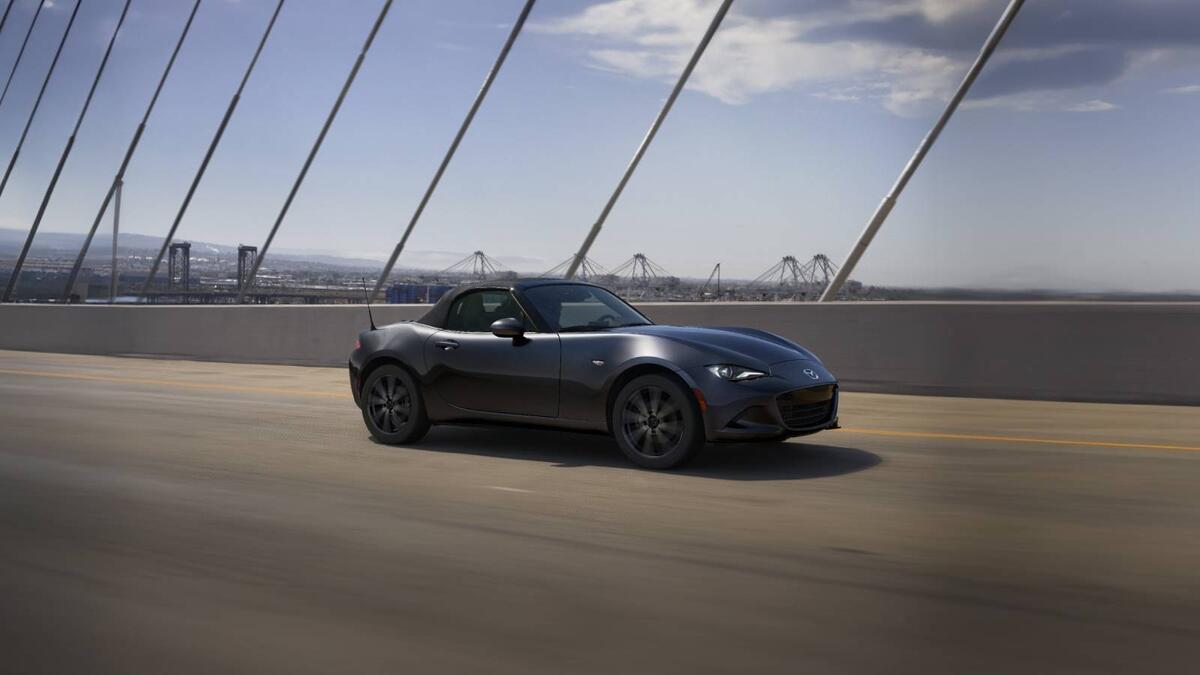
The Mazda MX-5 (Miata) is a small two-seat convertible made to be fun to drive. It’s designed to handle well and feel quick through turns, not just to be the fastest in a straight line. That’s why it can seem impressive even if it doesn’t have huge power.
“Acclimation” here means training yourself to handle how fast things happen when you’re driving quicker. The faster the car, the more your brain has to adjust so you can react and make decisions in time.
They’re talking about how quickly your brain can take in what’s happening and decide what to do next. When you go faster, you have less time to think, so your brain’s speed matters a lot.
Self-preservation means the driver’s instinct to stay safe. In very fast cars, mistakes can turn into problems extremely quickly, so a person may drive more cautiously (or panic) depending on how they feel about the risk.
High horsepower means the engine makes a lot of power, so the car accelerates hard. On a track, that can make it harder to drive smoothly because small mistakes can show up immediately.
It means you’re slowing down too much before you turn. If you come in too slow, you often end up braking harder than you need, and the car feels less stable.
“Brake later” means you wait a bit longer before slowing down for the turn. That can help you keep more speed going into the corner, instead of coming in too slow.
It means braking at the same spot every lap. That way you can tell whether your problem is the braking timing, the braking strength, or your cornering line.
“Overall grip” is how much traction the tires have. If the car is balanced better, the tires can stick more, so the car feels more controllable through the corner.
They’re talking about brake pressure on a simple scale (like 1 to 10). Going from “9” to “8” is a small change, but it can make the car feel more stable and easier to control.
psi is a unit for measuring pressure. In this context, it tells you how much braking force the system is producing. Instead of “brake a little less,” you can aim for a specific number.
Brake pressure is how hard the brake system is squeezing the brakes. More pressure usually means stronger braking. Racers sometimes measure it so they can brake the same way every lap instead of guessing.
A data system is the car’s sensors and computer that record what’s happening while you drive. It can track things like how hard you’re braking. Coaches use that information to help the driver repeat the right actions.
Alex Palau is mentioned as a driver who stays calm and keeps going even if he doesn’t get everything perfect. The idea is that more experience means you learn from mistakes and trust your ability to recover. That confidence helps when braking and turning get stressful.
Stingray Rob is mentioned as an example of a less-experienced IndyCar driver. The speaker’s point is that experience changes how you handle mistakes—more experience usually means you’ve learned what to do when things go wrong. Less experience can mean you’re less willing to commit fully.
“IndyCar field” just means the set of drivers in IndyCar. Here it’s used to compare drivers with different experience levels. The speaker uses that to explain how confidence and mistakes differ.
“Last few tents” means the very small time gaps—like a few tenths of a second—that decide who’s fastest. When you’re that close, even tiny mistakes can cost you position.
“Unforgiving” means the car doesn’t let you recover easily from small mistakes. If you’re a little off in a corner, you can lose speed and take a long time to get back up to pace.
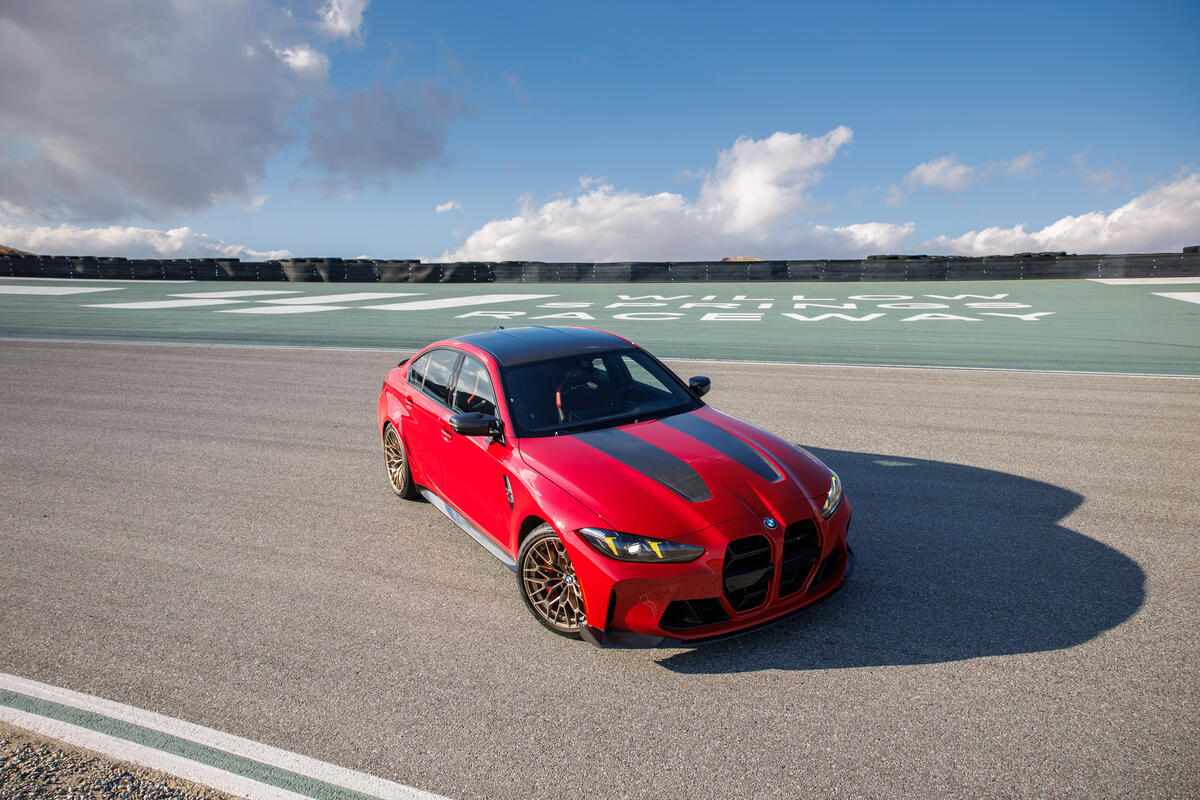
BMW’s M3 is a high-performance version of a regular BMW. Here, the speaker is talking about race versions of the M3 built for GT3 racing, not a normal street car.
“Sebring 12R” is a 12-hour endurance race at Sebring. Like other long races, it rewards smooth, consistent driving rather than just chasing the absolute fastest lap.
In racing, times are measured in tenths of a second. “Half a tenth” means 0.05 seconds—tiny, but it can still decide who wins or keeps their job.
Term
arrow downforce
Downforce is the “suction” from the car’s shape and wings that presses the tires to the road. If a race car has less downforce than you’re used to, it can feel like it wants to slide when you turn in.
Over-driving is when you drive faster than the tires can handle. The car starts to lose grip, so you have to back off and drive in a way that matches what the car can actually do.
Homestead is a race track in Florida where big racing events happen. The driver is saying this was the race where they finally started trusting the car and driving faster without overdoing it.
Term
stoveed it in
“Stoveed it in” appears to describe a late, aggressive inside-line maneuver into the last corner. In racing terms, this is the kind of commitment you need when braking later and aiming for maximum exit speed onto the front straight.
Races give you only a certain number of laps to figure things out. Tires and the car’s feel change over time, so you have to learn quickly within that limited run.
Working the tire means using the tires hard enough that they start gripping the way they’re supposed to. If you don’t, the tire won’t give you useful feedback about how the car is set up.
Setup and balance are the adjustments that change how the car feels and handles on track. Balance is basically whether the car behaves evenly or feels like it wants to push one way when you drive hard.
A stint is how long a driver stays in the car before they pit or switch. “Long stints” means the driver has to keep the car working well for a long time, not just be fast for a single lap.
Endurance racing is about staying fast and consistent for a long time, not just one sprint. It forces you to manage things like tires and how hard you push the car over many laps.
G loads are a way to describe how hard the car is accelerating or turning compared to normal gravity. Higher G loads mean you feel more “push” in your body, like during hard braking or fast cornering.
Road tires are the kind you can drive on public streets. They’re usually not as grippy or heat-resistant as track tires, so putting huge power through them can be challenging.
Brakes are what slow the car down, but in hard driving they also have to handle a lot of heat. The point here is that some cars’ brakes couldn’t keep up with the power and repeated stops.
The F1 GTR is a real race car from McLaren that was designed for endurance racing. Here, it’s being compared to the McLaren Senna to see how similar (or different) their performance feels, especially around braking and aero.
The McLaren Senna is a very track-oriented supercar from McLaren. Here, they’re comparing how it performs next to a real race car, especially things like braking and aerodynamic grip.
The Nissan GT-R is a fast sports car made for quick acceleration and strong performance on a track. People talk about it a lot because it can post very impressive times in tests. It’s built to be fast in more than one way, not just in a straight line.
Term
arrow download
This sounds like they mean downforce, which is the aerodynamic “squeeze” that pushes the car onto the road. More downforce usually helps the tires grip better, especially when you’re braking hard.
Lap time is how long it takes to drive one full lap around a race track. People track it so they can tell whether the car or their driving is getting better.
“Tenths” means fractions of a second—like 0.1 seconds. In racing, chasing tenths is how people squeeze out tiny improvements, but it can also make you feel rushed.
The McLaren F1 is a famous, very high-end supercar made by McLaren. The host is talking about driving one on a road course and how the first lap teaches you what the car is doing.
Place
India, the road course
They’re talking about a road-course track in the Indianapolis area. The driver describes a specific moment on that track where the car suddenly lost traction and they had to catch it.
“Adaptable” means you can change how you drive to match what a particular car is doing. The host’s point is that variety helps you learn faster because every car feels a little different.
The Porsche GT3 RS is a very track-oriented 911. It’s designed to be fast and grippy, and the host is saying the first laps can feel shockingly quick compared to what you’re used to.
Spa refers to Circuit de Spa-Francorchamps in Belgium, one of the most demanding road courses in the world. It’s known for fast corners, elevation changes, and long braking zones—so it’s a great place to feel how a car’s grip and aero work at speed.
The C7 Corvette is a specific generation of Chevrolet’s Corvette sports car. The host is saying that certain versions of it come with track-focused parts that make it feel extremely quick.
Cup tires are performance tires made for track driving. They grip harder than normal street tires, which helps the car go faster, but they can wear out quicker.
A factory Aero pack is extra bodywork added by the manufacturer to help the car stick to the road at high speed. It usually makes the car easier to control and faster in corners.
PDR is a device that records driving information while you drive. It’s like a dash camera, but it also adds data so you can review what happened during the run.
A HANS device is a safety collar that helps protect your head and neck in a crash. It’s often used with a racing seat and roll cage so the driver is restrained more safely.
A full cage is a metal safety frame inside the car. It helps protect you and keeps the cabin stronger if there’s a serious crash.
Car
Miata
The Miata is a small, light sports car (a Mazda) that’s great for learning how to drive fast on a track. The point here is that even if you’re going quickly, it can feel more manageable than a much more powerful car.
This means you don’t have to drive a super powerful car to learn how to drive well. Instead, you drive a more manageable car really skillfully and smoothly, close to its limits, to build confidence.
Concept
thinking about it the right way
They’re talking about how your mindset matters when you’re driving near the edge. If you stay calm and make good choices instead of panicking, the car is easier to control.
LIVE
Driving a car out of a corner on the limit is like tightrope walking.
Entering a corner is like jumping onto a tightrope blindfolded.
If I don't find a half a tenth here,
I'm going to be out on the street with a can of soup in my hands.
You know the single biggest difference is I'm better at making mistakes
because I've made way more than you have.
At one point I sold a couch for a set of tires and long story short,
I had no money and was stupid.
Okay, welcome to It's Not The Car.
This is a show about racing and the people we are under pressure.
It's also a podcast about that one time when you watch that guy do that stupid thing in that one car
and you thought, I mean, I'm never going to do anything that dumb.
And then later, you did something just as dumb but entirely different
because that's how life works, right?
I'm Sam Smith.
I'm not going to introduce myself today because life is a mystery
and everyone stands alone as Madonna sang.
What was that?
Like a prayer, Ross?
Don't know because I never really listened to Madonna.
That's your loss.
How are you?
It's good to see you.
I'm good.
I'm ready to do a podcast.
No, that's a terrible idea.
Don't do that.
So before we go any further, we want to thank BF Goodrich Tires.
Some of you may have noticed they're helping support the show this year.
BFG has made a huge push to really get back into the performance and ultra high performance market.
They're building more tires for grassroots motorsport and performance enthusiasts.
Long story short, they make good stuff.
We like what they make.
If you have a minute, check it out.
And their tires are awesome.
They actually are really nice.
I really enjoy them.
So we switch formats on this show every episode.
Today's format is called Ross and Sam Dissect the Obvious.
It's basically an excuse to tear apart an idea that everyone thinks they know.
But in talking about it, we usually figure out a lot more than we thought we knew.
Today, we're talking about the idea of working up to speed in big cars
when you've only been in small ones.
How the pros make big jumps from, say, a slow car to a fast one
as they're coming up in their career.
How normal people make those jumps when they don't have pro talent.
The fact that those jumps aren't always straightforward, right?
Sometimes big learning happens in a short period of time.
Sometimes it happens over a long period of time.
Sometimes it never happens at all.
And last but not least, we wanted to talk about a couple of things
that everybody knows in the business, but we don't always pull apart the why on.
So I started off in slower cars.
Well, my very first race was in a six or 700 horsepower super modified oval track car.
That was definitely not a slow car.
But I went into, I started racing Formula Ford.
And a Formula Ford in the open wheel car world, it's one of the slower ones.
And I went pretty good in that.
And then I moved up to Atlantic and I got into Trans Am.
And I will say that it took me longer to be good in a fast car than some other drivers.
And yes, I go to the, well, why is that?
The simple answer there is, hey, I didn't have a whole lot of budget to be playing with.
And I could not afford something big.
And when you're in a faster car, things happen and sometimes they're bigger
than you want them to be.
The crash damage thing, the self preservation, the car preservation,
the budget preservation, all of those things played a role.
So I think I can identify with people who struggle in either one of those ones.
But then I've had like tons of experience coaching drivers in slow cars and fast cars
and everything in between.
I don't know, what is it?
Like five or six years you've been doing this?
You're not very old, right?
No, two centuries.
Two centuries.
Man, I was off by so much there.
Well, technically I was sitting that century in this century.
So yeah, that's two centuries.
You brought this up before we started taping.
I got into automotive journalism, spent 20 years in it, right?
And I came from a background as club racer with budget oriented,
relatively low horsepower, relatively high grip cars.
And then almost immediately, once I got into business,
ended up having to test really, really high horsepower cars with a dearth of grip.
Sometimes a dearth of brakes.
Sometimes no grips, no brakes, no power, no tire, nothing.
And you were really interested in how that whole learning process went.
So back up for a second and just start with a question.
What's the most common thing that you've seen people struggle with
if they're good in something like a specmiata or a relatively low powered road car?
And they get into something that demands more from you where things happen quicker.
Can I turn you one thing into two things?
Oh, totally.
Turn into anything you want.
This is not reality.
This is a podcast.
So the one thing is the acclimation to speed, things happening faster.
Somebody comes from a slower car, they move into a faster car,
and things are just happening very, very quickly.
And they can't process that information fast enough.
I've had drivers that are in that situation where I feel like they're just,
things are happening too fast.
I have them watch video at one and a half speed.
Watch their slow car, but watch it at faster speed.
And that helps them with that just getting used to the things happening quicker.
And it's like, okay, process that information,
think about that, pretend you're in the car.
It's so easy to go, well, the best way to fix that is to drive even faster cars.
Because if you drive really fast cars and you come back to a slightly slower car,
it seems now it's like I've got all the time in the world.
Well, nowadays you can do that on a sim.
You can get in there and drive a Formula One car on a sim and get used to boom,
things are just happening so quickly.
To your respect, Miata, now it doesn't seem all that fast.
So that's kind of my first thing is the acclimation to the speed part of it.
And the processing speed of the driver's brain is the challenge.
The second part of that is simply the self-preservation part of it.
When things go wrong in a really fast car, they go wrong really fast and really quickly.
For that reason, I think self-preservation becomes a stronger motivation or demotivation,
depending on how you want to look at it.
Okay, so that raises a second question, right?
How often you meet somebody who doesn't think that's a problem.
And it turns out that's what they're getting stuck on, that's their speed bump.
And thinking of a couple of people I've met over the years who have gotten into
relatively high horsepower things on a racetrack and they've been relatively experienced
and they swore up and down that they weren't spooked by the speed, they weren't thrown off
by what the car could do.
And then we'd look at their data, we'd look at the trace and we'd see moments where they were
coming out of it or moments where they were less committed than they knew they should be
or thought they were.
Well, good point.
And I think it almost means having to step back and define fast for a moment.
You mentioned like, is it fast because it's got tons of horsepower and it gets down the
straightaway faster, in which case it really is just while things are happening, I'm coming to
this corner and things look scary.
But then there's cars that have good horsepower, but they also have more grip.
And I think part of that becomes, I just don't trust, I don't believe that a car could
slow that quickly, go around a corner that fast.
I've looked at, yeah, thousands of pieces of data and I'll see somebody, they get on the power
just as early as anybody else, even though it's got a lot more horsepower than they're used to,
and they get down that straightaway, the brake zone's kind of okay.
But by the time they get to turn in, they've over slowed by five miles an hour.
That's a lot of speed to make up for.
And I think some of it is just, I can't believe that a car could turn into the corner and stick
with that amount of speed.
It's just, it is that trusting.
And I will say, I always go back to the quote, it's in Paul Van Valkenberg's book, I believe,
Engineering and Mechanics, or it's in Donna Hughes, Unfair Advantage, one of the two.
One or both of them said, driving a car out of a corner on the limit is like tightrope walking.
You're playing with that, like you're right on the edge and you're coming out of the corner.
But entering a corner with the car at the limit is like jumping onto a tightrope blindfolded.
Because you don't really know what you've got.
That's why it's so much fun.
Yeah.
And you kind of just got to trust that I'm blindfolded.
I know the rope was there.
I'm going to jump.
Oh, I got it.
And it's that trust of, wow, the car stuck.
And I think a lot of drivers struggle with that.
And they'll go, it's not fear.
And no, I don't think it's fear, it's belief.
It's trusting that the car will work there.
And it's one of those things where for many drivers, they've got to work up to it.
And some drivers take a lot of time to work up to it.
My job as a coach is to come up with strategies to help a driver
take those incremental jumps at the appropriate rate.
Not as huge jumps.
So they go over that limit and miss the tightrope.
But also not like, okay, I'm going to go a tenth of a mile an hour faster now.
Hey, this could take all day for you to get up to speed.
You can't do that.
It's coming up with strategies, coaching methods to help you get there.
Okay, so this is going to go completely off piece.
How do you read a person when you need to push them beyond their comfort zone with
something like that?
But you don't know how far to push them.
You don't know what's going to work.
You have a bunch of different examples from your past that you know work.
But also you've got a different person here.
You haven't worked with them before.
How do you decide how far to nudge them safely?
First of all, I would say that is the most stressful part of being a driver coach.
Oh, absolutely.
Oh, God.
Because part of the job is you've got to push a little bit.
And maybe push is not even the right word, but you've got to help them stretch that envelope.
And have them, the risk level goes up.
And constantly I'm going, okay, I've pushed them.
I've helped them stretch that envelope.
I sure hope I don't go too far here and the driver sails off the track and hit something.
Hopefully we've done the prep beforehand of, okay, if you take a step here
and things don't work out the way you want, just sort of open your hands a little bit.
For example, let the car run a little wide, run around the outside edge of the track
and don't fight the car.
The worst thing you can do at that point is like, I'm going to get to that apex no matter what.
Crank on the wheel, get it into the apex and the car spins because of that,
and sails off the outside of the track and hits the wall.
That's the most stressful part of being a driver coach is pushing and the appropriate amount.
But there is something about the eyes of a driver.
If you're having that conversation and you're talking to them and sometimes they'll glaze over,
sometimes they get laser focus, sometimes they get that little quiver of,
I don't quite know if I can do this.
If you keep asking the right questions, you keep having the right kind of conversation,
99% of the time, you get a pretty good feel for, okay, this driver is up for that level of pushing,
stretching, and then sometimes it's, how do I make the process simpler?
Here's an example that I use a lot is I see a driver that's over slowing for a corner by five
miles an hour. I go, you need to carry more speed into the corner. Most drivers' natural reaction
to that will be, okay, I got to break later. They try to break later and they break harder and
things go bad and they basically prove to themselves that they can't carry more speed
into the corner. What I often will say is don't do anything different,
break at the same place and you're breaking the same place, look further into the corner,
stuff like that, but I'll say right now on a scale of one to 10, how hard are you using the breaks?
I'm at a nine out of 10 or an eight out of 10 and I go, okay, one notch less, break later.
So if you're at a nine before, break at an eight. Understand that when you do that,
now the car isn't so pitched up on its nose, it's going to be better balanced,
therefore the car is going to have more overall grip. That's a key part of this is
giving a driver a logical, the laws of physics-based reason to trust that the car is going to have
more grip. Now, just because you're breaking a little bit lighter, the car carries two miles
an hour more through the corner and the car is better balanced and the driver goes, oh,
that's actually better. I like that. So there's a step there. Now, I have worked with drivers where
I know that they don't have the ability yet to determine a nine-pedal versus an eight-pedal.
They might go from a nine to a five-pedal and things are going to go bad at that point.
Again, the tools we have now with a SIM would be like, okay, let's practice all this on a SIM
beforehand and or sometimes you can say, driver, sit in the car, close your eyes, imagine coming
to the brake zone for this turn, turn one, for example, and go to the brakes. Boom. And if you've
got a data system hooked up and you can go, oh, you just generated whatever, 500 psi of brake
pressure. Okay, now imagine coming in again, close your eyes, you're sitting in the car,
coming down to that corner. Okay, now braking an eight-pedal and they come down there and it's
495. No, that's still a little bit too hard. Come down there. Oh, now it's like 475. That's
back it off so it's 450, the pressure, the psi, and you get the driver to go, okay, now we're at
that point. So you program them sitting in the paddock area using the data. Now, and not everybody
listens to show has all those tools, but you can do that with some pretty simple data systems.
So you go through that process and now the driver comes in there and they're programmed to do that
and in their mind, they've got a good mental picture image of what it is they're trying to do.
Now, they start to go into the corner and go, wow, car stuck, stuck. The lack of
belief, it's taken a big step forward. First off, I want to note that literally everything you just
said, I'm sitting thinking about how all of it's a metaphor for life and how trying too hard in
certain places and et cetera, et cetera, spinning off into the distance, but God, that's another
podcast or maybe it's this one, but it's not the life or something like that. I'm serious.
But to get back on the rails here, if that's how you give that mentality and that process to
somebody who doesn't have it initially, what have you seen in people who, the professional
athletes who've been doing this their entire life, who are just wired to start asking questions
internally, figuring that out? What does it look like in somebody who does this for a living?
I've said to a lesser experienced driver, I'll go, what's the difference between me as a driver
and you as a driver? They might think about that. I'll go, you know, the single biggest difference
is I'm better at making mistakes because I've made way more than you have. The difference between
an Alex Palau and somebody that's towards the back of the IndyCar field, a Stingray Rob, for
example, Alex Palau can fire the car into a corner and go, I'm okay with whatever happens here.
He's made more mistakes. He knows that if he gets it wrong going into a corner,
there's a strong chance that it's not going to turn out bad. It's just going to be,
what ran wide, mess that corner up. That lap is not going to be a good one. I'll get it better
next lap. I'm pretty sure there are some people listening to this podcast that go, well, you know,
I go to the track three times a year or something like that. It's tough to get that same level of
trust in yourself that if you go over the limit a little bit,
something really bad isn't going to happen. Now, yeah, I only go to the track three times a year,
but I'm on my simulator five days a week. Well, that makes up for a lot of it now.
Have you ever seen anybody be really successful at the top level of promoter sport that takes
a long time to learn? I want to assume the answer is no, but also assumptions, you know,
what they do to you and me, right? Long time no, longer than some other people. Yes,
I've seen drivers who just like right away, they're fast and other drivers would kind of
take a little bit more of a logical step in growing. I have seen drivers who I think they
just take the attitude or they have the self confidence, the belief that I can get away with it
and if I don't get away with it, it's not going to be that bad. They care less.
What do you mean? Well, this actually gets to part of the why is it better to learn in a slow car
topic. One of the reasons for that is if you're driving a car that, okay, at the end of the day,
if I push it off a cliff, it's not going to hurt my bank account too much. But if I'm driving a
$150,000 car, that's going to hurt my bank account. It's that self preservation mode that kicks in
and it's not necessarily, I don't want to get hurt. I don't want to die, that kind of a thing.
How much am I willing to risk here? That's my $150,000 baby that I just I'm stretching
buying a car that expensive. And by the way, I'm also planning on driving it to work tomorrow morning.
You're just not going to take the same risk level or you shouldn't be taking the same risk
level or living with that same risk level. I think part of it is just simply the self
preservation part of it. And yeah, one of the reasons for the slower car is they're usually
cheaper. They're more disposable. Hi, it's Sam. A couple quick things here and I'll let you get
back to the show. So we make it's not the car because we love doing it. Thankfully, other people
love it too because Ross and Jeff and I don't make a profit on this show. We just keep it going
through help from everybody who listens or watches on YouTube. Now part of the way we do that is
something called Patreon. You go there and for a few bucks a month you get neat perks like bonus
episodes, discounts on the merch we sell and some free speed secrets training from Ross. If any of
that sounds good, you can join at patreon.com forward slash not the car. The other way we keep
this show going is new this year. It's through support from our friends at BF Goodrich, the
tire company. BF Goodrich likes what we do here. They believe in grassroots enthusiasm and they
wanted to support the show, which is great because Ross and Jeff and I actually really do like BFG
tires. We own BFG tires and we even occasionally get to run races on their tires in amateur and
duro series like Champ Car. We've got some fun stuff planned with them and for the show this year. So
if you get a chance, give BF Goodrich some love. They're good folks and their help makes all of
this possible. Okay, thanks for listening. Back to the show. It's a known thing that there are
people who are very good in fast cars who simply get into something like a speckmiata and can't
find the last few tents, can't be at the sharp end of the grid that they'd be in on something more
potent. What stands in the way there? It's interesting how in the past few years we've seen
there's the Mazda MX-5 Cup series and every now and then they'll have a guest driver come in,
who's a top level pro IndyCar driver, top prototype car in IMSA or something like that,
and they come and do an MX-5 Cup race. They're not terrible, absolutely not, but they're not like,
oh, put it on the pole and walked away from the field either. They might run in the top 10. Sometimes
it's more like the top 15. The answer is always miata, right? So we'll go with the MX-5 here.
They're very, very, very unforgiving in terms of you slow that car half a mile an hour too
much for a corner and you're dead in the water for a long period of time. Whereas in a faster car,
you can make up for that by just a little earlier squeeze on the throttle. If you've got more power
coming out of the corner, you can make up for that. So in many ways, a faster car can be more
forgiving in terms of trying to get that ultimate outright pace. You just get to the throttle a
little sooner and make up for it. Can't do that in a car that you're already pushing the gas pedal
through the firewall. You can't push it any further or sooner or anything like that. So
in the 90s, I'd been driving Indy cars and then went into prototype cars in IMSA. Then in 1998,
I got hired by BMW to drive the GT3 BMW M3s. And I'd say it took me three races before I felt
like, okay, I'm starting to get this thing figured out. But when did you first realize
that you weren't figuring it out? Was that moment one or was that like?
No. So the first two races of the season are Daytona 24 and Sebring 12R. You don't need that last
half a tenth. I was good in traffic and we went well. We're on the podium and all that stuff. All
of that was good. The first sprint race I went to, I'm kind of like, you know, I'm half a tenth off
here. And when you're being paid to be a race driver for a team like the BMW team, half a tenth
is the difference between holding your job or getting fired. Right. And that race part way
through that weekend, I'm like, I got to figure this out here. The biggest problem for me was,
you know, that trust of going into the corner that I talked about where you come in the corner
is like, I just don't trust that I can, this will hold. I was the opposite. I was used to come
into the corners that would just, I turn in, I had more arrow downforce and it's like, well,
in this car that has less arrow downforce, I turn in and the car would slide and I would scrub off
half a mile an hour or a mile an hour. I was over driving the car and I had to kind of,
I had to slow myself down and stop worrying about that last half a tenth and just like,
just focus on sensing the car. I remember that race. It was homestead. I remember it very well
because it came down to catching my teammate in the last three laps of the race. Literally,
we came out of the last corner, I stoveed it in on the inside on the last corner. It came out on
the front straightaway and I won by a foot or two. It was that close, but it was probably part way
through that race where I finally kind of went, okay, now I'm starting to trust that I can go
fast without over driving the car. How much time elapsed between you making the decision to go look
for that time and you finding it? And I mean, like, that could be weekends, days,
that could be minutes, the whole process, start, finish. I'm going to say, Friday morning, first
practice, I knew there was a problem. Halfway through the race on Sunday, I felt like, okay,
I got the problem solved. Now I need to be consistent with that. Had I perfected it in one
weekend? No, but I knew what the problem was. I fixed it most of the time to the point where I
was a touch quicker than teammate in the same car. And now I just, it was very comforting to know,
okay, I've come away from this weekend, the next bunch of races, now I just need to
cement that, solidify it and be consistent with that. How long did it take you to get the resolution
that you wanted, the consistency that you wanted? How many more races? I'll let you know when I get
there. I teed that up. I just sort of seen that coming. Yeah. When you realize that, how did you
feel? Because I've been lucky enough to dip my toe into a lot of different experiences in the
business, including a lot of different experiences in a race car. But the one experience I've never
even come close to having is, if I don't find a half a tenth here, I'm going to be out on the
street with a can of soup in my hands. How did you feel when you realized that? And what does that
feel like when you're forced to acknowledge that there is a ticking clock on whether you fix it
or not? It's not a good feeling. It really isn't. I mean, it's, you know, I'd gone through a bunch
of years where, you know, I was broke and had no money, broke, had no money. Same thing, I think.
They're totally different things, believe me. Look, man, I worked in journalism. They are two
different states. I was so broke that I was broke and didn't have any money. There we go.
You know, so many years of that kind of racing where no money, no budget had to be careful.
And then I'd gotten hired to drive cars in IMSA. And this was pretty cool. But in two years in a row,
the team that I was driving for kind of folded at the end of that year. I always said, you know,
the least secure job in the world is a professional race driver's job. It's the only job in the world
that you have to compete for your job with somebody who's willing to pay to do your job. So then I'd
gotten this job, job in air quotes here, this job to drive race cars for BMW in the factory team.
That's a pretty good feeling. But then you realize there's a whole other level of pressure,
the different kind of pressure. So it was uncomfortable. Fortunately for me, I came away
from Sebring going, okay, I'm good. I'm competitive. I did my job. And then we got to the next race,
which was a sprint race. And I went from being concerned to leaving that weekend going,
I'm feeling pretty good. It helped that we won, you know, and you leave the track and you're
on a high from, you know, we just won. So fortunately, the bulk of that pressure went away.
But then you have to continue to deliver. You can't just go, well, I did it once,
you got to keep doing that. There were moments through that year where it was, okay, take your
own advice, focus on your own performance, stop being overly focused on the lap times and the
results, just do what you do best, really focus on driving the car to its limits, sensing that,
not trying to get too much out of the car. And you know, things worked out. Were there
moments through the weekend, through the year where you're like, oh, gotta be careful there.
Yeah. But definitely by halfway through the season, it was like, man, this is fun. This is like
really fun. And finally it was, okay, I'm now driving for arguably the best team. You start going,
you're leading the championship. You better finish this off because who knows when you're
going to get this opportunity again. Right. But it was amazing season for learning. It was also
from a learning perspective in terms of how do I manage myself. And I will say that a lot of
how I coach today, that season played a role in that. One of the things that I love about
talking to pro athletes or anybody who's had time in professional athlete spaces is that they are so,
and I say this in part because the way my head works is similar, but they're so wired to not
dwell on what they've done well, which could be so destructive and yet so helpful in other ways.
There's an old saying in media, it's something like you're only as good as the last thing you've
done. And every racer I've ever met, the amount of time that they will, the true pros will let
themselves bask in the thing that they did well after they've done it, kind of let themselves
enjoy that moment. It's a heartbeat and they are so quick to move on and so quick to let it go.
As you got better and as you climbed in the sport, did the amount of time you were willing to let
yourself spend on those things change? I don't think I've ever changed my way of thinking
way back as a kid playing sports and stuff. I rarely spend any time thinking backwards. I just
think about what's the next corner? What's the next lap look like? So I've always been that way.
I'm not saying that's good, bad, or ugly or way I am.
I guess maybe a better question is not so much thinking backwards, but enjoying
the little success before you move on to the next problem you have to solve. Is it something
you like doing or not? For a very short period of time. Tracks. So Sam, I want to ask you,
you talked about this before, we've talked about this, is you're driving some clapped out BMW at
some point doing some races and finding the next time that you could drive a club race or whatever,
right? And then you're doing magazine stuff and somebody comes along and says, here's this
quarter million dollar Ferrari, go test it, drive it at the limit and tell us what you think.
What was going through your head? For the most part, it was how the hell did I get here and also
don't think about that because you're just going to screw up if you're thinking about it.
It was interesting. One of the things that you mentioned, see the other thing about journalism
Bentley is that it wires you to immediately turn the question back to somebody else because
you don't want to talk about yourself. So why do you think that way, Sam?
Why did you think I'm that way, Bentley? Why do you think I'm that way? Tell me about
Chalmaza. Yeah, so the background on that, for those who have not listened to literally every
single episode of this show, and by the way, if you've done that, I'm very sorry, the checks
in the mail, you will be recompensed. The background there is I was a club racer. I grew up in an
old car family. I got into club racing lightly on an intense budget in college. And then once I got
out of it and got into car magazines, ended up spending more and more time around high-powered,
high-grip exotics and race cars and ended up doing a lot of track testing. And I had a lot of seat
time by then in a lot of random things. When you say on a budget, you told me the story once of
needing a set of tires. So you sold your couch and then you needed another set of tires and you
had some other couch or chair in your house. So you sold that. So that's the kind of budget we're
talking here, right? I mean, look, you need a couch, but you don't really need a couch, right?
You can't drive it. So it was club racing, right? And if you go look up the record,
all you will see is that I was not very good and the car was not very good. And all I wanted to do
was get more of it. And we didn't know enough about car prep. I didn't know enough about what I was
bad at. And over the course of several years, I learned a lot and then got significantly better.
But yeah, there was one point I sold a couch for a set of tires. And then I ended up selling my share
of a race car at one point in order to fund another set of tires to then run on that same race car
that I then borrowed from the person I had bought it. I had sold my share too. Long story short,
I had no money and was stupid. But the job, the funny thing about the job is you didn't just get
thrown into big, fast stuff. You work your way up to it and you are shown to be competent and
all of a sudden one day, there you are in this quarter million dollar Ferrari or this,
you know, IMSA prototype or whatever the hell it is. And for me, it was mostly just, I read a lot
of speed secrets. I spent a lot of time talking to people who knew a lot more than I do and did
and do and still do. And you and Jeff talk all the time, but assuming that anything you know does
not apply to the situation you're in and starting from a blank slate. And I just kept trying to
look at it that way. Because the interesting thing, you said something the other day when we
were talking about this, you said that the funny thing about a lot of high-performance road cars
is that they don't quite work like race cars, but they are very, very fast in a way that you
can't immediately process if you've never been exposed to them before. And so a lot of it for
me was just figuring out how to ask myself those questions. What does this car need? What does this
tire need? You have X amount of laps. You need to figure these things out and you don't have to
find the last tenth in it, but you do have to get to a point where you're working the tire and the
car hard enough to have intelligent things say about setup and balance and who it was designed for
and why it was built. And that was really cool because it turned out to be really useful later
in race cars, in finding that pace and figuring out what, again, a tire wanted, a car wanted.
So you said something and it made me realize one of the, I think a really important point here is
you learned how to drive a fast car by driving bad cars. And bad could be slow. I mean, you could
drive a bad fast car too. But when Steven Thomas, I've talked about him before, I spent eight years
coaching him and he went from zero, never driving on the track to winning Le Mans in less than four
years. And one of the keys, I think, was that very first year, I had him drive a little bit of
everything and he drove some bad cars. You've mentioned this. You know, cars where if you're
at full throttle, the car would almost die. So you got to drive the car, only go into half throttle.
And he learned how to do that over long stints and endurance. So learning those things makes you
more adaptable. And I think the fact that you did that is what helped you learn how to drive a
faster car. So my question then is, what was it like when you first got into, and maybe you
share this, what the car was, but a car when you got in there, you went, oh my god, this thing is
fast. You plant your foot in it and it's like a rocket ship taken off. I turn into the corner and
the thing just like, wow, the G loads, you stand the brakes and my nose is up against the windshield.
What was it like when you first drove that? And what was it?
Honestly, Ross, that list is so long. And so it goes back so far that I honestly don't remember.
And it's included everything from, I mean, hell, even 20 years ago, a lot of the exotics were
making 500, 600 horsepower with road tires and brakes that didn't stand to them. And by the end
of my stinted road and track, we did a side-by-side test with a McLaren Senna and an F1 GTR, the
Le Mans car. And the numbers they spat out were virtually all but identical, the exception that
the Senna made more arrow download and it was better under braking, which was like, cool.
But the one common thread, the one thing that I loved about the job was that every single thing
you tried was different from the thing you had tried before on purpose.
And if you didn't wipe the slate clean and keep asking questions about how the car worked
and what it needed to do, whatever you were feeling didn't matter. And there was always a
clock ticking, right? There were many moments where I had to go find a lap time in something and use
that as a baseline for other stuff, but I had the luxury of never having to depend on tenths for my
job and also knowing that if I took a couple of laps or a full session even sometimes to figure
out what the car wanted, that was okay. And so I just always backed up and told myself,
this doesn't matter. Ask yourself smart questions, slow down and work up to it.
And what amazed me was that ended up working in just about any situation I've ever been in.
I mean, I think we've talked about this on the show, but there was a day where I tested an
Exalanzo McLaren F1 car. As in Fernando Alonso's car. Yeah. Not Frank Alonso, but Fernando, yeah.
I got into it thinking, okay, I don't know what I'm doing. And I got out of it thinking,
I don't know what I'm doing. But the first lap was what's happening. And the last lap,
I vividly remember this. I mean, I popped off the brake, it was at India, the road course,
and I popped off the brake, smidged to abruptly, and the car, you know, kicked loose. And I
corrected and caught it and got back in the throttle. And there was a brief moment where I
thought, I just slid an F1 car, look at me. And then another voice in my head popped in and went,
no, you're a moron. And that's not a thing you should be doing, but it happened in your
competence. So keep being competent and don't do stupid things. And that's like that, it's funny
because you talk to people like, well, how blown was your mind when you tried the Bugatti so-and-so
or the first time you drove a Group C car? I'm not a professional driver, but man, those moments,
my mind was, I did not have the bandwidth to have a blown mind. Does that make sense?
Yeah. And the word that comes to mind is adaptable. I see drivers who, for years,
they go to the track and they drive their car. And it's the same car. And they've been driving
the same car for five years or 10 years or whatever, right? And there is nothing wrong with that,
absolutely not. But in terms of getting that last little bit out of your driving, I think
there's huge value in driving different cars because you learn different things. That's why
I also say, I'll get a club racer who's been doing sprint racing and they're like, how do I go faster?
I go, go drive an endurance race because you have to pass and be passed offline so much
that you learn, well, how do I adapt to this? How do I adapt to that? And I think the thing that
you probably have learned through all that experience is, okay, I'm going to be driving
Fernando Alonso's Formula One car. How does that feel? Now I'm driving a minivan. No,
you're driving a front-wheel drive hot hatchback. Very different, but how do you adapt to those
things? And I believe that the best drivers have learned how to adapt and they can drive slow
cars fast. They can drive fast cars fast. You know, the old saying, I'd rather drive a slow car
fast than a fast car slow. Well, I'd rather drive both of those fast and it's learning how to adapt
and what needs to happen. I will say, I have driven a lot of fast cars, but last year getting in a
Porsche GT3 RS at Spa and the first couple laps, it's like, this thing is crazy fast
for a production car that I could go down to a Porsche dealership and maybe buy, I don't know,
well, not with my bank account, but with somebody's bank account. And I can understand how somebody's
going to drive it with a margin, even when they don't want to drive it with that big a margin.
It can be intimidating. And I'm trying to think the first time I drove, God, it must have been a
C7 Corvette at VIR, the ZR1 or the Z06, but with the factory Aero pack and the factory cup tires
and all these other things that they're designed to pull lap time out of it. Those cars come with
something what GM calls a PDR, it's performance data recorder. It's basically just dash cam with
data overlaid on it. And I remember looking at somebody's footage, one of the factory test drivers
was there and he'd gone up into the climbing S's at VIR and it entered at like $0.50 or something.
I don't remember what it was, which were street cars rocking fast, right? That's moving into the
S's. But I remember looking at that going like seeing the number 150 or whatever the hell it was
popping up on the screen and looking at that going, there is no way in hell I'm going to do that in
a car without a Hans device, without like full cage around me, without everything.
Proper seat and yeah. Yeah. And then like the weird spooky thing is then I went out there and drove
car and like started putting pace into it and like came in and looked at the data and little
screen and I was doing something similar and you don't think about it. And I've loved talking
over the years to people who have bought really high performance cars and then actually use them
really hard on race tracks because the people who genuinely use the cars and know how to get time
out of them, they get a little spooked by how fast they are without safety gear in them. It's a
strange situation. But I think that's hugely important and I think if you're not slightly
spooked by it. Yeah. Time to go do something else because you should. And by the way, spooked is
the wrong word. I know we're using that why we're using it, but it's if you're spooked to the point
where your body tenses up and you start holding your breath, yes, park the car right now, relax,
calm down. Like, but if you're just like, I'm feeling like I'm pretty darn close to limit and
if something goes wrong here, it's going to be bad. So I'm going to make the decision to either
tune it back up a little bit or do something about the car that I'm driving. And that's where,
again, you're driving a Miata, you can be going up the same S as that VIR with the car moving around
and to the point where you're kind of giggling going up there, but you're not in the state of,
oh my God, I'm going to die if I go off here and I'll be paying for this for the rest of my life.
So there's the argument for drive a slow car fast. We've in typical fashion here, we've gone
about 3000% off the rails from the original topic, which I don't know I'm fine with Bentley,
but at the same time I can't help. I want to bring us back to what we started on for just a minute
and close on this. The idea that there is a way to get your head around any vehicle you're in
and any situation you're in by thinking about it the right way. You've worked with a lot of people
over the years. Have you ever seen anybody do this in an unorthodox way? Have you ever seen
anybody in their climb into an 80 car, for example, for the first time? They've never driven one
before, they've never driven anything that fast in that particular way. And they do something to
adapt to it that you've never seen. Or is it just that everybody's working from the same set of
tools and using them in mostly the same ways? From a skill technique perspective, yeah, they're
breaking with the right foot or their left foot. They're using the throttle with the right foot,
they're turning the steering wheel with two hands. So all of that's the same. I think Indy cars is a
great place to look at drivers who have come up through the ranks, whether they come up through
sprint cars or open wheel cars or production, whatever. They've come up some way and now they're
in Indy cars. And this goes back to the 60s or last week kind of a thing. There are drivers who,
I want to be careful how I say this, but there have been Indy car drivers who are fast because
they're incredibly brave and there's a very fine line between brave and intelligent,
isn't the wrong word here, but let's just say. Intelligent? Yeah, let's just say that they're
fast because they don't think about the risks, they don't think about the consequences. There are
drivers who get into really fast race cars like Indy cars who overthink and they're that tiny
little bit off in speed. The very, very best drivers and today that's Alex Palau, he thinks
and he's got the right balance on the risk reward kind of a thing. And he's not known as, oh, he's
just so brave. That's why he's fast. No. Now there are guys in Indy car today who I'd say
they're closer to the brave range with less thinking and I won't name names,
but one of them drives for AJ Foyt and but tends to make more mistakes. And what makes him fast is
that I don't care about the consequences. Again, the very, very best have the right balance there.
And maybe that's a way to end this is that should be your mental model. That's what you're aiming
for. The right preparation, the right thought, the right objectives, understanding what your
objectives are, you know, you're doing a track day. Sorry, but there's no going to be, well,
I guess you can drive out of the track and head down to the convenience store and buy a thing of
milk and milk and pretend you're just won the Indy 500, but. I'm just driving my weekend.
Every day. That would be an ice cream cone. No one cares. Yeah, still ends up all over my
face. I'm just for band eating. So it's finding that right balance and knowing that, you know,
the thought, the preparation, the understanding what your goals are and taking appropriate risk.
And on the other side going, how do I build my trust? How do I get my belief system that
this will work? And how do I mentally prepare to be more acclimatized to the speed?
And you find that right balance in between and go, that's the mental model that I want.
And that's what I'm going to do my mental prep for with that model. You can practice in the sim
and all that kind of stuff. So then go and work at moving up incrementally in with the right strategies.
I think that's a really good way to close it out. Is there anything else you want to add
before we wrap this? Always remember driving a car. There's the technique scale part of it.
And then there's the mental part of it, which is your state of mind and confidence and belief and
how you process information, all that kind of stuff. And when they merge and work together,
it's magic. There's nothing better. Okay, I like that. So with that, we are out of time. That's
our show, which means it is time to read us out. It's not the car is written, produced and built
by us. I'm the show's creator and producer. If you'd like this episode, you'd like to help us keep
going. Well, good news. You can check out patreon.com forward slash not the car and click become a
member. We also have a merch store and a show site and it's not the car.com. None of it will ask
too much of you. All of it will be very high horsepower and easy to drive. And if you put
all of our merch on it once, you turn into Ross Bentley. Don't tell him I said that because he's
got a large box of merch showing up at his house soon and he's going to have to wear all of it.
In a nutshell, patreon memberships and merch sales are what make it's not the car possible.
We do the show on our own dime because we like it because we wanted to see something like it out
in the world. We don't make a profit. If you're enjoying the show, please leave a review and
share it with anyone you think might enjoy it. Your recommendations make a huge difference and
they really do help us keep it's not the car on the air. As always, thank you for listening. Have fun.
About this episode
Working up to speed in big-power cars is less about raw courage and more about acclimation—especially when “things are just happening very, very quickly.” The hosts and guests break down the mental bottleneck (“the processing speed of the driver's brain is the challenge”), why mistakes escalate fast, and how coaching uses incremental steps and data to redefine what “fast” means. From sim practice to learning in cheaper, more forgiving cars, the episode ties confidence, braking balance, and tire feedback into handling the limit safely.
Why are some drivers fast in everything? What makes a person quick in Miatas but not Mustangs—or vice versa?
How do the pros wrap their heads around big jumps in speed, power, and risk?
This is show about many things. Precision. Restraint. A Corvette Z06 walloping into the climbing esses at VIR. That feeling you get when everything is right and nothing is wrong, at least not anything important, and you are up on the tire and the sky is awash in blue.
It’s Not the Car is a podcast about people and speed. We tell racing stories and leave out the boring parts.
Ross Bentley is a former IndyCar driver, a bestselling author, and a world-renowned performance coach. Jeff Braun is a champion race engineer. Sam Smith is an award-winning writer and a former executive editor of Road & Track magazine.
We don’t love racing for the nuts and bolts—we love it for what it asks of the meatbag at the wheel.