
About this episode
Working up to speed in big-power cars is less about raw courage and more about acclimation—especially when “things are just happening very, very quickly.” The hosts and guests break down the mental bottleneck (“the processing speed of the driver's brain is the challenge”), why mistakes escalate fast, and how coaching uses incremental steps and data to redefine what “fast” means. From sim practice to learning in cheaper, more forgiving cars, the episode ties confidence, braking balance, and tire feedback into handling the limit safely.
Why are some drivers fast in everything? What makes a person quick in Miatas but not Mustangs—or vice versa?
How do the pros wrap their heads around big jumps in speed, power, and risk?
This is show about many things. Precision. Restraint. A Corvette Z06 walloping into the climbing esses at VIR. That feeling you get when everything is right and nothing is wrong, at least not anything important, and you are up on the tire and the sky is awash in blue.
“Being shot out of a cannon will always be better than being squeezed out of a tube.”
This show changes format every episode, because squirrel. This format is a new one—we call it ROSS AND SAM DISSECT THE OBVIOUS.
***
This episode was produced by Sam Smith.
As always, thanks to our friends at BFGoodrich for supporting the show!
**
Who We Are + Spicy Merch:
www.ItsNotTheCar.com
**
Support It’s Not the Car:
Contribute on Patreon www.patreon.com/notthecar
**
Topic suggestions, feedback, questions? Let us know what you think!
[email protected]
**
Check out Sam's book!
**
Where to find us:
https://www.instagram.com/intcpod
https://www.instagram.com/thatsamsmith/
https://www.instagram.com/j.v.braun/
https://www.instagram.com/rossbentley/
https://rossbentley.substack.com/
https://speedsecrets.com/
**
ABOUT THE SHOW:
It’s Not the Car is a podcast about people and speed. We tell racing stories and leave out the boring parts.
Ross Bentley is a former IndyCar driver, a bestselling author, and a world-renowned performance coach. Jeff Braun is a champion race engineer. Sam Smith is an award-winning writer and a former executive editor of Road & Track magazine.
We don’t love racing for the nuts and bolts—we love it for what it asks of the meatbag at the wheel.
New episodes biweekly on Tuesdays.
sim
"Well, nowadays you can do that on a sim. You can get in there and drive a Formula One car on a sim and get used to boom,"
A “sim” is a driving video game/training setup that tries to mimic real driving. The speaker is saying you can practice getting used to very fast driving in a sim before doing it for real.
“Sim” refers to a driving simulator—software and hardware that recreates driving dynamics and visuals. The point here is training: a sim can help drivers get used to the pace and decision-making demands of high-speed cars without the same real-world risk.
Formula One car
"You can get in there and drive a Formula One car on a sim and get used to boom, things are just happening so quickly."
A Formula One car is a top-level race car built to go extremely fast. The speaker is using it to explain that at that speed, everything happens so quickly that you have to train your reactions.
A “Formula One car” is an open-wheel race car designed for extremely high speeds, rapid acceleration, and very high cornering loads. The speaker uses it as an extreme example of how quickly events can happen, and how simulator practice can help drivers adapt to that pace.
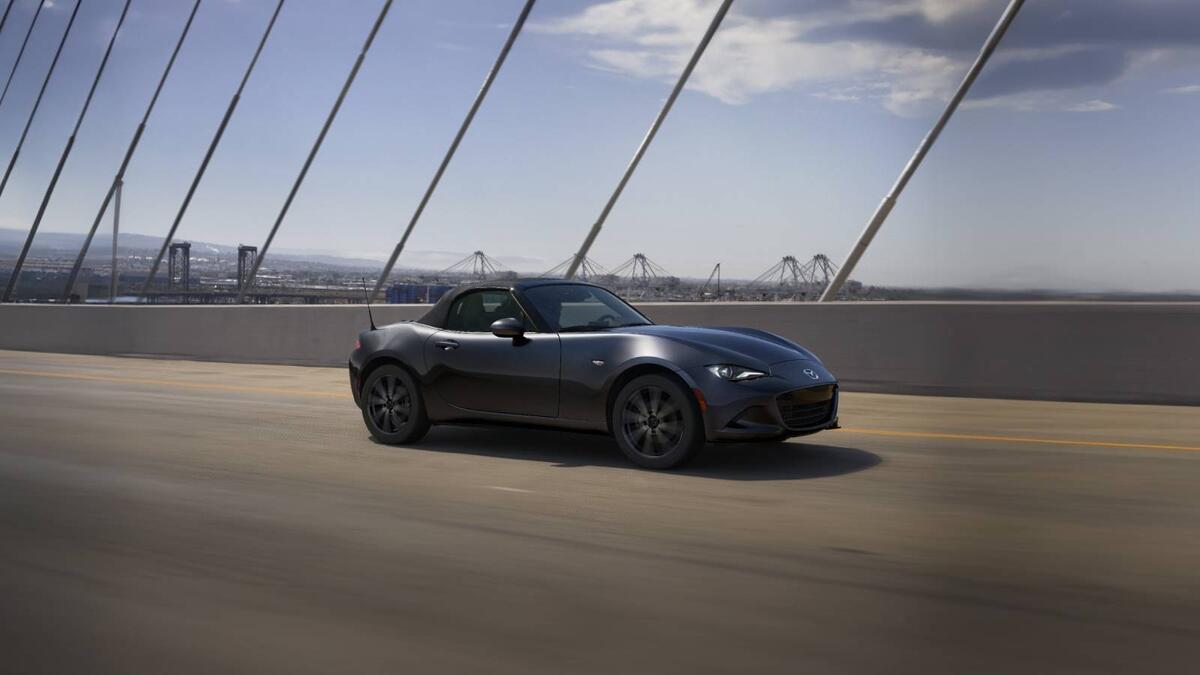
Mazda MX-5 / Miata
"...s are just happening so quickly. To your respect, Miata, now it doesn't seem all that fast. So that's kin..."
The Mazda MX-5 (Miata) is a small two-seat convertible made to be fun to drive. It’s designed to handle well and feel quick through turns, not just to be the fastest in a straight line. That’s why it can seem impressive even if it doesn’t have huge power.
The Mazda MX-5, commonly called the Miata, is a lightweight two-seat roadster built for nimble handling and driver feel rather than outright straight-line speed. It often comes up in discussions about how quickly a car can feel “fast” through quick steering and responsive dynamics. That’s why it’s frequently mentioned when people talk about performance that’s about control and momentum.
acclimation to the speed part of it
"So that's kind of my first thing is the acclimation to the speed part of it."
“Acclimation” here means training yourself to handle how fast things happen when you’re driving quicker. The faster the car, the more your brain has to adjust so you can react and make decisions in time.
This is the idea of acclimation—getting your brain and senses used to how quickly events unfold at higher speeds. In racing, that’s crucial because reaction time and decision-making have to keep up with the car’s acceleration and the track’s visual information rate.
processing speed of the driver's brain
"And the processing speed of the driver's brain is the challenge."
They’re talking about how quickly your brain can take in what’s happening and decide what to do next. When you go faster, you have less time to think, so your brain’s speed matters a lot.
The speaker is describing how a driver’s cognitive processing speed limits performance in big-power cars. At higher speeds, the time available to interpret what’s happening, choose a line, and execute inputs shrinks dramatically, so the driver’s “thinking rate” becomes a bottleneck.
self-preservation
"The second part of that is simply the self-preservation part of it. When things go wrong in a really fast car, they go wrong really fast and really quickly."
Self-preservation means the driver’s instinct to stay safe. In very fast cars, mistakes can turn into problems extremely quickly, so a person may drive more cautiously (or panic) depending on how they feel about the risk.
“Self-preservation” here means the driver’s instinct to avoid danger when the consequences of mistakes escalate. In very fast cars, errors can develop and compound in a fraction of a second, so fear and risk assessment can strongly affect how aggressively someone drives.
high horsepower
"And it turns out that's what they're getting stuck on, that's their speed bump. And thinking of a couple of people I've met over the years who have gotten into relatively high horsepower things on a racetrack and they've been relatively experienced"
High horsepower means the engine makes a lot of power, so the car accelerates hard. On a track, that can make it harder to drive smoothly because small mistakes can show up immediately.
“High horsepower” means an engine output that provides strong acceleration and can overwhelm a driver’s ability to manage traction, braking, and timing. On a racetrack, more power typically raises the stakes because mistakes happen faster and require quicker corrections.
over slowing for a corner
"Here's an example that I use a lot is I see a driver that's over slowing for a corner by five miles an hour. I go, you need to carry more speed into the corner."
It means you’re slowing down too much before you turn. If you come in too slow, you often end up braking harder than you need, and the car feels less stable.
“Over slowing for a corner” means you’re reducing speed more than necessary before turn-in. In driving terms, it usually shows up as entering the corner too slowly, which can force you to brake harder and upset the car’s balance.
break later
"Most drivers' natural reaction to that will be, okay, I got to break later. They try to break later and they break harder and things go bad..."
“Brake later” means you wait a bit longer before slowing down for the turn. That can help you keep more speed going into the corner, instead of coming in too slow.
“Break later” (brake later) is a racing technique where you delay braking closer to the corner. The goal is to carry more speed into the turn while keeping the car’s weight transfer and balance in a workable window.
break at the same place
"What I often will say is don't do anything different, break at the same place and you're breaking the same place, look further into the corner..."
It means braking at the same spot every lap. That way you can tell whether your problem is the braking timing, the braking strength, or your cornering line.
“Break at the same place” refers to braking at a consistent reference point on track (or road) rather than changing the braking location. Consistency helps you isolate what’s actually wrong—speed, braking force, or line—so you can adjust one variable at a time.
overall grip
"now the car isn't so pitched up on its nose, it's going to be better balanced, therefore the car is going to have more overall grip."
“Overall grip” is how much traction the tires have. If the car is balanced better, the tires can stick more, so the car feels more controllable through the corner.
“Overall grip” is the total traction available from the tires, combining how well the car can accelerate, brake, and turn. In this context, reducing braking intensity helps the car stay more balanced, which lets the tires use more of their available grip.
pitched up on its nose
"now the car isn't so pitched up on its nose, it's going to be better balanced..."
It means the car’s front end dives down when you brake. If it happens too much, the car can feel less stable and harder to steer well.
“Pitched up on its nose” describes excessive front-end weight transfer during braking, where the car’s nose dips and the rear unloads. Too much of this can reduce stability and make it harder to turn smoothly, lowering effective grip.
nine-pedal versus an eight-pedal
"I have worked with drivers where I know that they don't have the ability yet to determine a nine-pedal versus an eight-pedal."
They’re talking about brake pressure on a simple scale (like 1 to 10). Going from “9” to “8” is a small change, but it can make the car feel more stable and easier to control.
A “nine-pedal versus an eight-pedal” is a way to quantify brake input intensity (like a 1–10 scale) rather than using a single fixed technique. The point is that small changes in pedal pressure can noticeably affect balance and grip, especially when you’re already near the limit.
psi
"you just generated whatever, 500 psi of brake pressure... and it's 450, the pressure, the psi..."
psi is a unit for measuring pressure. In this context, it tells you how much braking force the system is producing. Instead of “brake a little less,” you can aim for a specific number.
psi (pounds per square inch) is a unit of pressure. Here it’s used to quantify brake pressure so the driver can adjust braking effort precisely (e.g., backing off from 495 to 475 to 450 psi). Using a pressure number turns braking into something measurable and repeatable.
brake pressure
"got a data system hooked up and you can go, oh, you just generated whatever, 500 psi of brake pressure. Okay, now imagine coming in again..."
Brake pressure is how hard the brake system is squeezing the brakes. More pressure usually means stronger braking. Racers sometimes measure it so they can brake the same way every lap instead of guessing.
Brake pressure is the hydraulic force applied by the brake system to slow the car. In racing, teams may measure it (for example in psi) to help drivers repeat the same braking effort lap after lap. That repeatability is what lets drivers build a consistent “mental picture” for braking zones.
data system
"if you've got a data system hooked up... you program them sitting in the paddock area using the data..."
A data system is the car’s sensors and computer that record what’s happening while you drive. It can track things like how hard you’re braking. Coaches use that information to help the driver repeat the right actions.
A data system in motorsport is onboard instrumentation that records sensor data like brake pressure, speed, and throttle position. Teams use it to compare what the driver did on one lap versus the next, then “program” or coach the driver toward repeatable inputs. It’s a feedback loop between driver technique and measurable vehicle behavior.
Alex Palau
"The difference between an Alex Palau and somebody that's towards the back of the IndyCar field... Alex Palau can fire the car into a corner and go, I'm okay with whatever happens here."
Alex Palau is mentioned as a driver who stays calm and keeps going even if he doesn’t get everything perfect. The idea is that more experience means you learn from mistakes and trust your ability to recover. That confidence helps when braking and turning get stressful.
Alex Palau is referenced as an example of a driver who can commit to braking and corner entry even when things go wrong. The point is that experience and repeated mistakes build confidence and decision-making under pressure. In this segment, he’s contrasted with a less experienced IndyCar driver.
Stingray Rob
"...somebody that's towards the back of the IndyCar field, a Stingray Rob, for example..."
Stingray Rob is mentioned as an example of a less-experienced IndyCar driver. The speaker’s point is that experience changes how you handle mistakes—more experience usually means you’ve learned what to do when things go wrong. Less experience can mean you’re less willing to commit fully.
Stingray Rob is used as an example of a driver toward the back of the IndyCar field. The speaker’s comparison is about experience: the less experienced driver may hesitate or overthink because they’ve made fewer mistakes. That difference affects how confidently they can push into corners.
IndyCar field
"The difference between an Alex Palau and somebody that's towards the back of the IndyCar field, a Stingray Rob, for example..."
“IndyCar field” just means the set of drivers in IndyCar. Here it’s used to compare drivers with different experience levels. The speaker uses that to explain how confidence and mistakes differ.
The “IndyCar field” refers to the overall group of drivers competing in IndyCar racing. In this segment it’s used to frame a comparison between a more experienced driver and someone positioned toward the back of the pack. That context supports the discussion about confidence and learning from mistakes.
BF Goodrich
"The other way we keep this show going is new this year. It's through support from our friends at BF Goodrich, the tire company. BF Goodrich likes what we do here."
BF Goodrich is a tire company. Here, they’re sponsoring the podcast and also supporting racing where people use their tires.
BF Goodrich is a tire brand that sponsors motorsport and enthusiast driving. In this segment, they’re specifically tied to racing on their tires and to grassroots support for the show.
last few tents
"there are people who are very good in fast cars who simply get into something like a speckmiata and can't find the last few tents, can't be at the sharp end of the grid"
“Last few tents” means the very small time gaps—like a few tenths of a second—that decide who’s fastest. When you’re that close, even tiny mistakes can cost you position.
“Last few tents” refers to the final fractions of a second that separate fast drivers in racing. At that level, tiny errors in braking, corner entry, or throttle timing can prevent a driver from reaching the front of the grid.
IMSA
"who's a top level pro IndyCar driver, top prototype car in IMSA or something like that, and they come and do an MX-5 Cup race."
IMSA is a big pro sports-car racing series in the U.S. The hosts are saying some drivers come from very advanced racing backgrounds.
IMSA is a major American sports-car racing organization/series. In the segment, it’s referenced to describe the kind of high-level prototype racing experience guest drivers may have.
unforgiving
"They're very, very, very unforgiving in terms of you slow that car half a mile an hour too much for a corner and you're dead in the water for a long period of time."
“Unforgiving” means the car doesn’t let you recover easily from small mistakes. If you’re a little off in a corner, you can lose speed and take a long time to get back up to pace.
In driving terms, “unforgiving” means the car responds poorly to small mistakes, so you lose time and momentum quickly. Here, the hosts say that if you’re even slightly too slow through a corner, the car stays “dead” for a long time before you can recover.
throttle
"Whereas in a faster car, you can make up for that by just a little earlier squeeze on the throttle. If you've got more power coming out of the corner, you can make up for that."
Throttle is how much power you ask the engine for with your right foot. In racing, when you apply it after a turn matters a lot.
Throttle is the driver’s control of engine power by opening the intake (via the pedal). The hosts explain that in a lower-power, unforgiving car, small throttle timing differences out of a corner can be the difference between staying fast and falling behind.
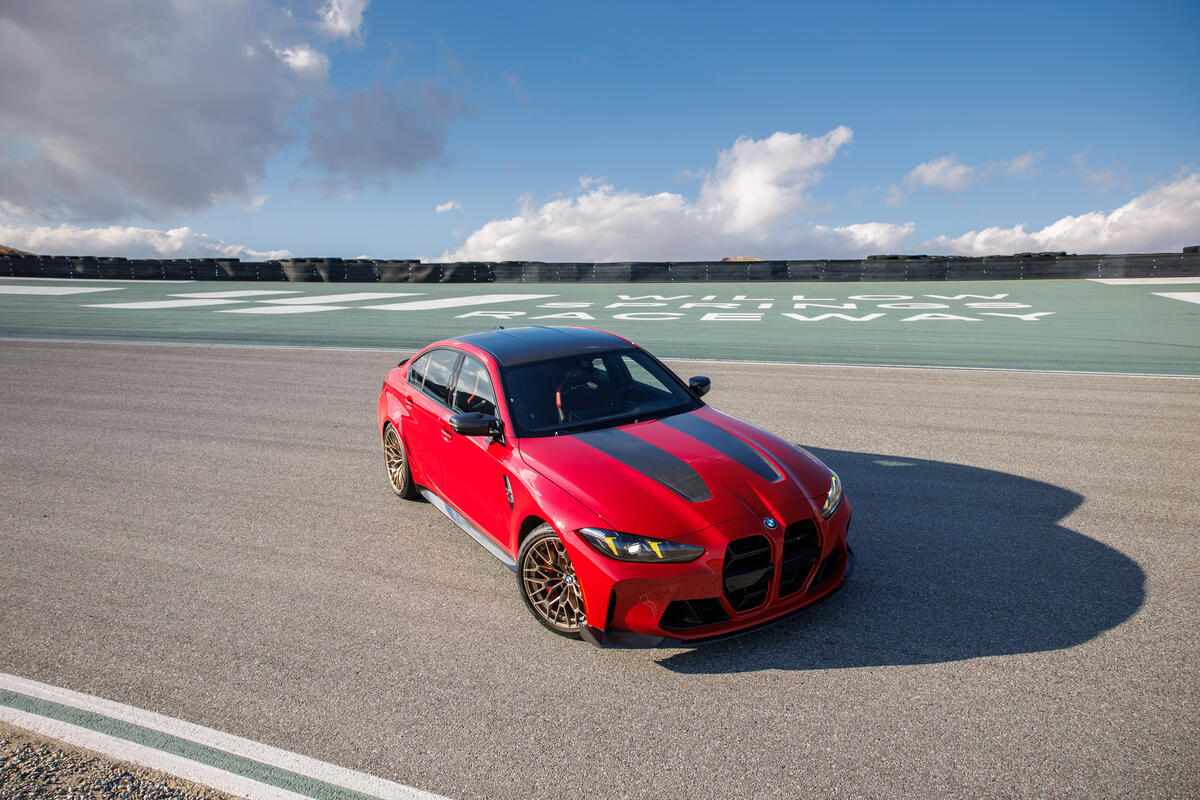
BMW M3s
"Then in 1998, I got hired by BMW to drive the GT3 BMW M3s. And I'd say it took me three races before I felt like, okay, I'm starting to get this thing figured out."
BMW’s M3 is a high-performance version of a regular BMW. Here, the speaker is talking about race versions of the M3 built for GT3 racing, not a normal street car.
The BMW M3 is BMW’s performance-focused M division sedan/coupe, and in the late 1990s it was adapted for GT racing. In this segment, the speaker says they were hired by BMW to drive GT3 BMW M3s, meaning race-prepped M3s built to compete in the GT3 class.
Daytona 24
"So the first two races of the season are Daytona 24 and Sebring 12R. You don't need that last half a tenth."
“Daytona 24” is a famous 24-hour race at Daytona. It’s not just about one fast lap—you have to stay consistent and manage the car for a whole day.
Daytona 24 refers to the 24-hour endurance race at Daytona International Speedway. It’s a major IMSA event where teams and drivers must manage tire wear, fuel, and traffic while staying fast for long stints.
Sebring 12R
"So the first two races of the season are Daytona 24 and Sebring 12R. You don't need that last half a tenth."
“Sebring 12R” is a 12-hour endurance race at Sebring. Like other long races, it rewards smooth, consistent driving rather than just chasing the absolute fastest lap.
Sebring 12R refers to the 12-hour endurance race at Sebring, a classic IMSA event known for rough track surfaces and heavy braking zones. Because it’s endurance racing, small setup and driving differences can show up over long stints.
half a tenth
"I'm kind of like, you know, I'm half a tenth off here. And when you're being paid to be a race driver for a team like the BMW team, half a tenth is the difference between holding your job or getting fired."
In racing, times are measured in tenths of a second. “Half a tenth” means 0.05 seconds—tiny, but it can still decide who wins or keeps their job.
A “tenth” is a timing unit in racing: one tenth of a second. “Half a tenth” is 0.05 seconds, which can be huge in qualifying or sprint races, and the speaker emphasizes that it can decide contracts and results.
arrow downforce
"I was used to come into the corners that would just, I turn in, I had more arrow downforce and it's like, well, in this car that has less arrow downforce, I turn in and the car would slide..."
Downforce is the “suction” from the car’s shape and wings that presses the tires to the road. If a race car has less downforce than you’re used to, it can feel like it wants to slide when you turn in.
Downforce is the aerodynamic force that pushes the car’s tires harder onto the track, improving grip. “Arrow downforce” here likely refers to the car’s rear wing/aero package producing more downforce than the speaker was used to, changing how the car rotates and grips mid-corner.
over driving the car
"I was over driving the car and I had to kind of, I had to slow myself down and stop worrying about that last half a tenth and just like, just focus on sensing the car."
Over-driving is when you drive faster than the tires can handle. The car starts to lose grip, so you have to back off and drive in a way that matches what the car can actually do.
Over-driving the car means pushing beyond what the tires and chassis can reliably do, so grip is exceeded and the car slides or loses speed. In this context, the driver had to stop chasing the last fraction of pace and instead focus on sensing the car’s limits.
homestead
"I remember that race. It was homestead. I remember it very well because it came down to catching my teammate in the last three laps of the race."
Homestead is a race track in Florida where big racing events happen. The driver is saying this was the race where they finally started trusting the car and driving faster without overdoing it.
Homestead refers to Homestead-Miami Speedway, an oval/road-course hybrid venue used for major North American racing. The speaker remembers a specific race there where the car’s behavior and their confidence finally clicked.
stoveed it in
"Literally, we came out of the last corner, I stoveed it in on the inside on the last corner. It came out on the front straightaway and I won by a foot or two."
“Stoveed it in” appears to describe a late, aggressive inside-line maneuver into the last corner. In racing terms, this is the kind of commitment you need when braking later and aiming for maximum exit speed onto the front straight.
club racing
"You can't drive it. So it was club racing, right? And if you go look up the record, all you will see is that I was not very good and the car was not very good."
Club racing is amateur racing run by local groups. It’s a place where people learn how to drive and set up a car for track days and races.
Club racing is amateur motorsport organized by local clubs rather than professional series. It’s where drivers often learn racecraft, car preparation basics, and how to manage tires and setup over repeated laps.
car prep
"And all I wanted to do was get more of it. And we didn't know enough about car prep. I didn't know enough about what I was bad at."
Car prep means getting a car ready for track use. It’s the work you do so the car is safe and behaves predictably when you’re driving hard.
Car prep is the process of preparing a car for track use—making sure it’s safe, reliable, and properly set up for racing conditions. It often includes setup changes, tire choice, brake cooling, and making the car consistent lap after lap.
X amount of laps
"What does this car need? What does this tire need? You have X amount of laps. You need to figure these things out"
Races give you only a certain number of laps to figure things out. Tires and the car’s feel change over time, so you have to learn quickly within that limited run.
In racing, “X amount of laps” frames the limited time you have to learn and adjust—tires change, fuel load changes, and the car’s behavior evolves as you push. It’s a reminder that you’re working within a session window, not doing unlimited testing.
working the tire
"but you do have to get to a point where you're working the tire and the car hard enough to have intelligent things say about setup and balance"
Working the tire means using the tires hard enough that they start gripping the way they’re supposed to. If you don’t, the tire won’t give you useful feedback about how the car is set up.
Working the tire means driving in a way that brings the tire into its effective operating range—using enough load, slip angle, and temperature to generate predictable grip. If you don’t “work” the tire, it may feel inconsistent or underperform, making it hard to judge setup changes.
setup and balance
"but you do have to get to a point where you're working the tire and the car hard enough to have intelligent things say about setup and balance and who it was designed for"
Setup and balance are the adjustments that change how the car feels and handles on track. Balance is basically whether the car behaves evenly or feels like it wants to push one way when you drive hard.
Setup and balance are how you tune a race car’s behavior—adjusting things like suspension geometry, tire pressures, and alignment to control how the car responds. “Balance” usually means whether the car feels neutral or biased (e.g., tending toward understeer or oversteer) as you push it through corners.
long stints
"And he learned how to do that over long stints and endurance. [1978.1s] So learning those things makes you [1984.9s] more adaptable."
A stint is how long a driver stays in the car before they pit or switch. “Long stints” means the driver has to keep the car working well for a long time, not just be fast for a single lap.
A stint is a continuous period of driving in a race before a driver change or pit stop. “Long stints” emphasizes learning to manage tire wear, fuel/engine behavior, and consistency over extended time rather than just one fast lap.
endurance
"And he learned how to do that over long stints and endurance. [1978.1s] So learning those things makes you [1984.9s] more adaptable."
Endurance racing is about staying fast and consistent for a long time, not just one sprint. It forces you to manage things like tires and how hard you push the car over many laps.
Endurance racing is competition focused on completing long-duration events while managing mechanical stress, tire degradation, and driver consistency. The speaker ties it to learning throttle control over time, not just peak speed.
G loads
"I turn into the corner and [2000.8s] the thing just like, wow, the G loads, you stand the brakes and my nose is up against the windshield."
G loads are a way to describe how hard the car is accelerating or turning compared to normal gravity. Higher G loads mean you feel more “push” in your body, like during hard braking or fast cornering.
G loads (g-forces) describe the acceleration forces a driver feels during braking, cornering, or acceleration, measured in multiples of Earth’s gravity. The speaker uses it to convey how intense the car felt—so much that the nose rises and the driver is strongly loaded in the seat.
road tires
"even 20 years ago, a lot of the exotics were [2020.2s] making 500, 600 horsepower with road tires and brakes that didn't stand to them."
Road tires are the kind you can drive on public streets. They’re usually not as grippy or heat-resistant as track tires, so putting huge power through them can be challenging.
Road tires are street-legal tires designed for everyday use, typically with less grip and less heat tolerance than dedicated track tires. The speaker contrasts exotics making 500–600 horsepower on road tires and brakes, highlighting how much power can overwhelm tires if they’re not up to the task.
brakes
"making 500, 600 horsepower with road tires and brakes that didn't stand to them. And by the end [2027.1s] of my stinted road and track, we did a side-by-side test"
Brakes are what slow the car down, but in hard driving they also have to handle a lot of heat. The point here is that some cars’ brakes couldn’t keep up with the power and repeated stops.
In performance driving, brakes are more than just stopping power—they’re also about heat management and consistent braking force. The speaker notes brakes that “didn’t stand to them,” meaning they couldn’t handle the repeated heat and stress from very high-power driving.

F1 GTR
"we did a side-by-side test with a McLaren Senna and an F1 GTR, the [2033.2s] Le Mans car. And the numbers they spat out were virtually all but identical"
The F1 GTR is a real race car from McLaren that was designed for endurance racing. Here, it’s being compared to the McLaren Senna to see how similar (or different) their performance feels, especially around braking and aero.
The F1 GTR is a McLaren race car built to compete in endurance racing, including the 24 Hours of Le Mans. In this segment, it’s compared directly with the McLaren Senna to show how a purpose-built Le Mans machine can produce performance numbers that are surprisingly close in some areas.

McLaren Senna
"But the one common thread, the one thing that I loved about the job was that every single thing [2052.1s] you tried was different from the thing you had tried before on purpose. [2056.9s] And if you didn't wipe the slate clean and keep asking questions about how the car worked"
The McLaren Senna is a very track-oriented supercar from McLaren. Here, they’re comparing how it performs next to a real race car, especially things like braking and aerodynamic grip.
The McLaren Senna is a track-focused supercar from McLaren, known for its high-power V8 and extreme aerodynamic design. In this segment, it’s used as a benchmark in a side-by-side test against a Le Mans race car to compare real-world behavior like braking and aero.

Nissan Gtr
"... side-by-side test with a McLaren Senna and an F1 GTR, the Le Mans car. And the numbers they spat out w..."
The Nissan GT-R is a fast sports car made for quick acceleration and strong performance on a track. People talk about it a lot because it can post very impressive times in tests. It’s built to be fast in more than one way, not just in a straight line.
The Nissan GT-R is a high-performance sports car known for strong acceleration and all-around speed, often highlighted in head-to-head testing. It’s a frequent subject in performance conversations because it can deliver very consistent lap times and results against other top-tier supercars. That makes it a natural reference point when discussing track performance numbers.
arrow download
"And the numbers they spat out were virtually all but identical, the exception that [2038.7s] the Senna made more arrow download and it was better under braking, which was like, cool."
This sounds like they mean downforce, which is the aerodynamic “squeeze” that pushes the car onto the road. More downforce usually helps the tires grip better, especially when you’re braking hard.
“Arrow download” appears to refer to aerodynamic downforce—how a car’s aero creates force pushing it toward the ground. The speaker says the McLaren Senna made more downforce and was better under braking, which is consistent with improved grip and stability.
lap time
"There were many moments where I had to go find a lap time in something and use that as a baseline for other stuff"
Lap time is how long it takes to drive one full lap around a race track. People track it so they can tell whether the car or their driving is getting better.
Lap time is the total time it takes to complete one circuit around a track. Drivers use it as a baseline to compare changes—like tire pressure, driving technique, or setup tweaks—especially when chasing small improvements.
tenths
"I had the luxury of never having to depend on tenths for my job"
“Tenths” means fractions of a second—like 0.1 seconds. In racing, chasing tenths is how people squeeze out tiny improvements, but it can also make you feel rushed.
In racing, “tenths” refers to time differences measured in one-tenth of a second. When you’re not required to chase tenths for your job, you can take extra laps to learn what the car wants without feeling pressured to be perfect immediately.
Mclaren F1
"I tested an Exalanzo McLaren F1 car. As in Fernando Alonso's car."
The McLaren F1 is a famous, very high-end supercar made by McLaren. The host is talking about driving one on a road course and how the first lap teaches you what the car is doing.
The McLaren F1 is a legendary supercar from McLaren known for its unusual three-seat layout and a naturally aspirated V12 engine. In this segment, the host references testing an Exalanzo McLaren F1, tying the car to the idea of learning traction and throttle/brake balance quickly on track.
India, the road course
"I popped off the brake, it was at India, the road course, and I popped off the brake, smidged to abruptly, and the car kicked loose."
They’re talking about a road-course track in the Indianapolis area. The driver describes a specific moment on that track where the car suddenly lost traction and they had to catch it.
This refers to the road course layout at the Indianapolis area (commonly called the Indianapolis Motor Speedway road course in track contexts). The host describes a moment where lifting off the brake triggered a sudden loss of grip, then they corrected and got back on throttle.
kicked loose
"I popped off the brake, smidged to abruptly, and the car, you know, kicked loose. And I corrected and caught it"
“Kicked loose” means the tires suddenly lost grip. The car starts sliding, so the driver has to react quickly to steer and regain control.
“Kicked loose” describes a sudden loss of traction where the car’s tires break grip and the vehicle starts to slide or rotate unexpectedly. In this segment, it happens right after the host lifts off the brake, highlighting how weight transfer and grip limits can change instantly on track.
adaptable
"And the word that comes to mind is adaptable. I see drivers who, for years, they go to the track and they drive their car."
“Adaptable” means you can change how you drive to match what a particular car is doing. The host’s point is that variety helps you learn faster because every car feels a little different.
Here, “adaptable” describes a driver’s ability to quickly adjust technique to different cars and conditions. The host argues that driving different cars builds skills because each car teaches different lessons about balance, traction, and response.

Porsche GT3 RS
"I will say, I have driven a lot of fast cars, but last year getting in a Porsche GT3 RS at Spa and the first couple laps, it's like, this thing is crazy fast"
The Porsche GT3 RS is a very track-oriented 911. It’s designed to be fast and grippy, and the host is saying the first laps can feel shockingly quick compared to what you’re used to.
The Porsche GT3 RS is a track-focused version of the 911 line, built to deliver high grip and strong lap-time performance with a more aggressive aerodynamic package than a standard 911. In this episode, it’s used to illustrate how even a “production” car can feel brutally fast and intimidating for new drivers.
Spa
"but last year getting in a Porsche GT3 RS at Spa and the first couple laps, it's like, this thing is crazy fast"
Spa refers to Circuit de Spa-Francorchamps in Belgium, one of the most demanding road courses in the world. It’s known for fast corners, elevation changes, and long braking zones—so it’s a great place to feel how a car’s grip and aero work at speed.

Chevrolet C7
"I remember the first time I drove, God, it must have been a C7 Corvette at VIR, the ZR1 or the Z06, but with the factory Aero pack and the factory cup tires"
The C7 Corvette is a specific generation of Chevrolet’s Corvette sports car. The host is saying that certain versions of it come with track-focused parts that make it feel extremely quick.
The C7 Corvette is Chevrolet’s seventh-generation Corvette, known for being a major step up in performance and track capability compared with earlier generations. Here it’s mentioned alongside specific performance variants and hardware (aero pack and tires) to explain why some cars feel “designed to pull lap time out of it.”
VIR
"it must have been a C7 Corvette at VIR, the ZR1 or the Z06, but with the factory Aero pack and the factory cup tires"
VIR is a well-known race track in Virginia. It’s the kind of track where you can really feel how tires and aero affect speed and control.
VIR is Virginia International Raceway, a road course in Virginia that’s commonly used for driver training and performance testing. Its combination of long corners and braking zones makes it a good venue for comparing how different cars and tire/aero setups behave.
factory cup tires
"the ZR1 or the Z06, but with the factory Aero pack and the factory cup tires and all these other things that they're designed to pull lap time out of it."
Cup tires are performance tires made for track driving. They grip harder than normal street tires, which helps the car go faster, but they can wear out quicker.
“Cup tires” are track-oriented tires (often a manufacturer’s performance tire line) designed for high grip and consistent behavior during hard driving. Compared with typical street tires, they’re usually stickier but may wear faster and be less comfortable.
factory Aero pack
"the ZR1 or the Z06, but with the factory Aero pack and the factory cup tires and all these other things that they're designed to pull lap time out of it."
A factory Aero pack is extra bodywork added by the manufacturer to help the car stick to the road at high speed. It usually makes the car easier to control and faster in corners.
A factory Aero pack is an official aerodynamic package installed by the manufacturer, typically adding spoilers, splitters, diffusers, and other surfaces to increase downforce. More downforce improves tire grip at speed, which can translate into faster lap times.
PDR
"Those cars come with something what GM calls a PDR, it's performance data recorder. It's basically just dash cam with data overlaid on it."
PDR is a device that records driving information while you drive. It’s like a dash camera, but it also adds data so you can review what happened during the run.
PDR stands for performance data recorder. In this context, the host says GM’s PDR is like a dash cam, but it overlays driving data so you can see speed/inputs and correlate them with what the driver did lap-by-lap.
Hans device
"there is no way in hell I'm going to do that in a car without a Hans device, without like full cage around me, without everything."
A HANS device is a safety collar that helps protect your head and neck in a crash. It’s often used with a racing seat and roll cage so the driver is restrained more safely.
A HANS device (Head and Neck Support) is a motorsport safety restraint that helps prevent the driver’s head from snapping forward during a crash. It works with the seat harness and is commonly paired with a full roll cage in track cars.
full cage
"there is no way in hell I'm going to do that in a car without a Hans device, without like full cage around me, without everything."
A full cage is a metal safety frame inside the car. It helps protect you and keeps the cabin stronger if there’s a serious crash.
A full cage refers to a roll cage: a welded metal framework inside the cabin that strengthens the chassis and protects occupants in a crash. It’s especially common in track-focused cars where higher speeds and harder impacts increase the need for structural safety.

Miata
"And that's where, again, you're driving a Miata, you can be going up the same S as that VIR with the car moving around"
The Miata is a small, light sports car (a Mazda) that’s great for learning how to drive fast on a track. The point here is that even if you’re going quickly, it can feel more manageable than a much more powerful car.
The Mazda Miata is a lightweight, front-engine, rear-wheel-drive roadster that’s popular for learning car control on track. In this segment, the host uses it as an example of how you can drive at the limit without the psychological fear that sometimes comes with bigger-power cars.
drive a slow car fast
"So there's the argument for drive a slow car fast. We've in typical fashion here, we've gone about 3000% off the rails from the original topic"
This means you don’t have to drive a super powerful car to learn how to drive well. Instead, you drive a more manageable car really skillfully and smoothly, close to its limits, to build confidence.
“Drive a slow car fast” is a driving philosophy: you can get more enjoyment and often better learning by pushing a car that’s not brutally powerful. The idea is to focus on smoothness, traction, and technique so you build confidence and consistency as you approach the car’s limits.
thinking about it the right way
"The idea that there is a way to get your head around any vehicle you're in and any situation you're in by thinking about it the right way."
They’re talking about how your mindset matters when you’re driving near the edge. If you stay calm and make good choices instead of panicking, the car is easier to control.
The host is describing a mental approach to driving: understanding what the car is doing and what your body should do when you’re near the limit. In track terms, this is about managing perception and decision-making so you don’t freeze up when conditions or grip change.
Request an Explanation
Heard something you'd like explained? We'll add it to this episode.
Sign in to request explanations for terms you heard.
Want to learn more?
Browse our glossary for plain-English explanations of automotive terms, jargon, and concepts.
Help improve this episode
See something that's not quite right? Our annotations are AI-generated and can sometimes miss the mark. Click the flag icon on any annotation to suggest a correction.