
LIVE SHOW — Sliding Hoopties with Bill Elliott and Mario – (Grattan, MI - 6/13/26)
About this episode
Grottin Raceway in Belding, Michigan sets the stage for a live, Q&A-style conversation with Bill Elliott and Mario, where the hosts highlight how “Every corner is uphill, downhill, off camber, on camber, blind, or all of that at the same time.” The discussion ranges from learning to drive—starting in a “1949 pickup Ford pickup truck”—to coaching culture, turbo-lag technique, and why tiny input changes can mean “a tenth of a second apart.” The show wraps by thanking the Porsche Club of America rally sport region.
LIVE from a Porsche Club of America weekend at Grattan Raceway on June 13, 2026!
***
Want the INTC gang to come to your event and tape a show? Drop a line – [email protected] !
***
Two weeks ago, Ross and Sam went to a PCA track weekend to coach, tell stories on a podcast, and hang out. This is the stories bit — Saturday night, live from the paddock, a series of definitely plausible tales from our hosts' long careers in motorsport and car journalism.
PLUS: Audience questions, tangents, and Sam has candy (for some reason)!
***
Questions Answered in This Episode:
How did Ross—one of the world’s top performance coaches, a former IndyCar driver and sports-car champion—learn to drive and coach?
*
Which car did Sam get into as a journalist where he thought, “This is gonna kill me”?
*
Why were Ross and NASCAR legend Bill Elliott in the same car at the same time, sideways and backward, collapsing in laughter?
*
And more!
*
This show changes format every episode, because squirrel. This format is a new one—we call it “LIVE FROM THE WESTERN-MICHIGAN BUDOKAN."
This episode was produced by Sam Smith.
***
Special thanks to the PCA's Rally Sport Chapter for the invite and the hospitality, and for eating all those Haribo bags we left behind.
As always, thanks to our friends at BFGoodrich for supporting the show!
**
Who We Are + Spicy Merch:
www.ItsNotTheCar.com
**
Support It’s Not the Car:
Contribute on Patreon www.patreon.com/notthecar
**
Topic suggestions, feedback, questions? Let us know what you think!
[email protected]
**
Check out Sam's book!
**
Where to find us:
https://www.instagram.com/intcpod
https://www.instagram.com/thatsamsmith/
https://www.instagram.com/j.v.braun/
https://www.instagram.com/rossbentley/
https://rossbentley.substack.com/
https://speedsecrets.com/
**
ABOUT THE SHOW:
It’s Not the Car is a podcast about people and speed. We tell racing stories and leave out the boring parts.
Ross Bentley is a former IndyCar driver, a bestselling author, and a world-renowned performance coach. Jeff Braun is a champion race engineer. Sam Smith is an award-winning writer and a former executive editor of Road & Track magazine.
We don’t love racing for the nuts and bolts—we love it for what it asks of the meatbag at the wheel.
New episodes every other Tuesday.
Grottin Raceway
"We are at Grottin Raceway in Belding, Michigan with Porsche Club of America's Rally Sport region. And Grottin, if you don't know it, is a funky little throwback gem."
Grottin Raceway is a small road-racing track in Michigan. The cool part is that it was built decades ago and the corners are really different from each other—some go uphill, some downhill, and some are tilted sideways.
Grottin Raceway is a club road course in Belding, Michigan. It’s known for its “throwback” layout built in the 1960s and for being unusually varied corner-to-corner, including uphill/downhill and off-camber sections.
Porsche Club of America's Rally Sport region
"We are at Grottin Raceway in Belding, Michigan with Porsche Club of America's Rally Sport region. And Grottin, if you don't know it, is a funky little throwback gem."
This refers to a regional motorsport group within the Porsche Club of America (PCA) focused on rally-style or rally sport activities. It’s relevant because it frames the kind of driving event and community context happening at the track.
Belding, Michigan
"We are at Grottin Raceway in Belding, Michigan with Porsche Club of America's Rally Sport region. And Grottin, if you don't know it, is a funky little throwback gem."
Belding, Michigan is where this track is. Knowing the location helps you understand what kind of track environment they’re talking about.
Belding, Michigan is the city where Grottin Raceway is located. Mentioning the location matters because club tracks often have distinctive layouts and surface/terrain characteristics tied to their region.
off camber
"Every corner is uphill, downhill, off camber, on camber, blind, or all of that at the same time."
“Off camber” means the road is tilted sideways in a way that makes the tires not sit flat. That can make the car grip less and feel a little sketchy in the corner.
“Off camber” describes a corner where the road surface tilts away from the center of the turn, so the tires don’t stay equally loaded. That can reduce grip and make the car feel less predictable because the outside/inside tire traction balance changes as you turn.
on camber
"Every corner is uphill, downhill, off camber, on camber, blind, or all of that at the same time."
“On camber” means the track surface tilts in a way that helps the tires stay more planted. It often gives the car more predictable grip when you’re cornering.
“On camber” is the opposite of off camber: the road surface tilts toward the center of the turn. This usually helps tire contact and can provide more consistent grip through the corner, especially as load transfers.
blind
"Every corner is uphill, downhill, off camber, on camber, blind, or all of that at the same time."
A “blind” corner is one where you can’t really see what’s coming next. Drivers have to be more careful and depend on what they’ve learned from previous laps.
A “blind” corner is one where you can’t clearly see the apex, exit, or braking reference from your current position. That forces drivers to rely more on prior track knowledge and careful setup because visual cues are limited.
vinyl bench seats
"I'm sitting on this bench seat. [436.8s] You know, one of those big old vinyl bench seats and old trucks."
Vinyl bench seats are the older-style seats you can share with someone else, usually made from vinyl material. The host is pointing out the classic interior feel of old trucks.
Vinyl bench seats are a common older-car interior setup: a wide, single seat for multiple passengers upholstered in vinyl. In older trucks, bench seats often go along with simpler seating layouts and a more “classic” driving position compared with modern bucket seats.
clutch
"I can't reach the pedals, but I've kind of gotten that front edge of the seat and I'm reaching down to holding the clutch down and my legs shaking... And my brother says, let the clutch out."
The clutch is what you press when you’re starting off or shifting gears in a manual car. Pressing it disconnects the engine from the wheels; releasing it connects them so the car can move.
The clutch is the pedal and mechanism that disconnects the engine from the transmission so you can start moving or change gears smoothly. When you “hold the clutch down,” you’re keeping that connection open; letting it out re-engages the drivetrain and the car begins to move.
LMP three car
"I did the Thunder Hill 25 hour race in an LMP three car and my co-drivers were Colin Brown, Naju Sain who I'd been coaching for about three years at"
LMP3 is a type of race car used in endurance racing. It’s built specifically for track racing, and it’s meant to be a more accessible prototype class than the top-tier Le Mans cars.
“LMP” refers to Le Mans Prototype, a class of purpose-built race cars used in endurance racing. An “LMP3” car is a specific, smaller, more cost-controlled prototype category designed for teams and drivers to compete in endurance events.
Thunder Hill 25 hour race
"I did the Thunder Hill 25 hour race in an LMP three car and my co-drivers were Colin Brown, Naju Sain..."
This is a long race where cars and drivers compete for about 25 hours. It’s more about staying consistent and not breaking the car than just going fast for a short time.
The Thunder Hill 25 hour race is an endurance event, meaning teams drive for a long continuous period with driver changes. The “25 hour” format emphasizes consistency, traffic management, and mechanical sympathy over outright sprint speed.
coach you all weekend long
"We are going to coach you all weekend long."
They’re describing a coaching plan that lasts the whole race weekend. The idea is to help the driver improve step by step during each practice and race session.
This refers to an intensive, multi-day coaching arrangement during a racing weekend. That kind of coaching typically focuses on consistent technique, session-by-session improvement, and adapting to track conditions.
Nigel Mansel
"I've had conversations with Nigel Mansel sitting on a pit wall in Portland"
Nigel Mansell is a famous race car driver from the UK. The host is saying they talked with him during a race weekend from the pit wall area.
Nigel Mansell (spelled “Mansel” in the transcript) is a legendary British Formula 1 driver known for aggressive driving and multiple World Championship titles. Here, he’s mentioned as someone the speaker spoke with while sitting on a pit wall, implying firsthand racing insight.
Portland
"I've had conversations with Nigel Mansel sitting on a pit wall in Portland"
They mention Portland as where they watched and talked with a racing driver from the pit wall. The pit wall is where teams and drivers get updates during a race weekend.
Portland is referenced as the location where the speaker sat on a pit wall and talked with Nigel Mansell. In racing contexts, “pit wall” conversations usually happen during practice or qualifying when teams are actively monitoring performance and making adjustments.
formal coach
"I've never really had a formal coach which I think is wrong, I should."
They’re talking about the difference between learning on your own versus having a coach. In racing, a coach helps you improve faster by giving structured feedback and guidance.
The speaker contrasts having informal learning (reading, studying, talking to people) with getting a formal coaching setup. In motorsport, coaching can mean structured feedback on driving technique, racecraft, and how to translate data into on-track changes.
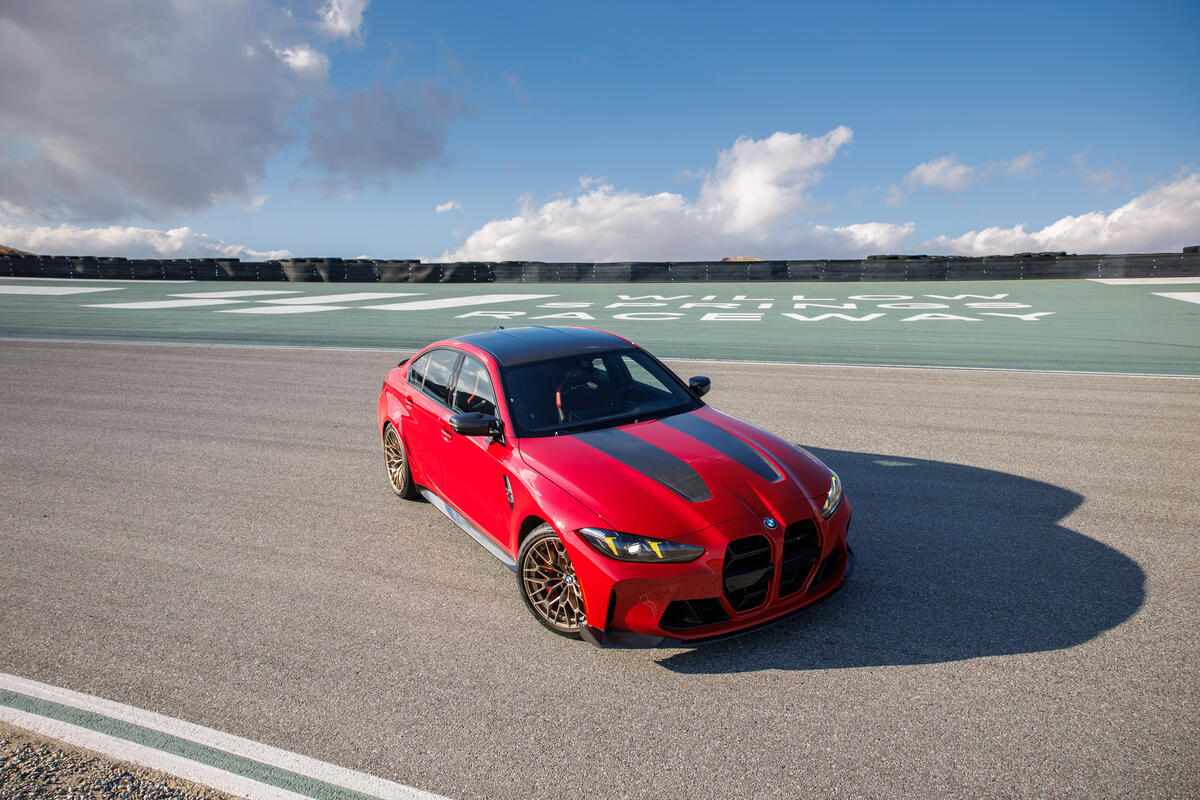
BMW M3
"You won Daytona. You won a manufacturer's championship with BMW in an M3 on the factory team."
The BMW M3 is BMW’s performance sports car. Saying “BMW in an M3 on the factory team” means the racing team was using a real, purpose-built M3 as part of BMW’s official racing effort.
The BMW M3 is a high-performance version of BMW’s 3 Series, built for track use and racing credibility. In this context, the host is referencing Nigel Mansell’s (or the speaker’s) factory-team success in an M3, which is notable because factory racing programs use highly developed, homologation-level hardware and data-driven setup.
IMSA
"I was kind of making that transition from driving underfunded, poor Indy cars to try to get into IMSA and run with bigger teams in IMSA."
IMSA is a big U.S.-based racing organization that runs sports-car races. It’s known for endurance events where teams have to keep the car running for long stretches.
IMSA is the International Motor Sports Association, which organizes major North American sports-car racing series. In the IMSA context, teams and drivers compete in endurance-style events where car setup, reliability, and driver stints matter as much as outright speed.
24-hour race
"And I got invited to go to Daytona to drive a prototype car in the 24-hour race. And we went testing."
A 24-hour race is exactly what it sounds like: cars race for a full day. Drivers swap out and teams stop to refuel/maintain the car so it can last the whole time.
A 24-hour race is an endurance format where the same car/entry competes continuously for a full day, with driver changes and pit stops. Prototype cars are built to balance speed with durability, because mechanical failures are the biggest threat over that time scale.
Daytona
"And I got invited to go to Daytona to drive a prototype car in the 24-hour race. And we went testing."
Daytona is a famous race event in Florida where cars race for a long time. It’s tough because the cars have to keep working for hours, not just minutes.
“Daytona” here refers to the Daytona endurance race event at Daytona International Speedway, where prototype cars run for long durations. It’s a major proving ground for race teams because the cars must survive high-speed running, traffic, and changing conditions over many hours.
prototype car
"And I got invited to go to Daytona to drive a prototype car in the 24-hour race. And we went testing. ...prototype cars, the body panels, the way they fit,"
A prototype car is a race-only car built specifically for competition. It’s not just a modified street car, so it can feel and handle very differently.
A prototype car is a purpose-built race car designed for top-level endurance racing rather than being based on a production model. They’re typically aerodynamically optimized and engineered for high downforce and long stints, which is why their handling feel can be very different from other race categories.
underfunded, poor Indy cars
"I'd been driving Indy cars. They weren't the best, like they were underfunded, but they were well-prepared."
In racing, “underfunded” usually means the team has less money for engineering and testing. That can make the car less competitive even if it’s still prepared to race.
“Underfunded” in racing usually means limited budgets for engineering time, testing, and parts, which can lead to less development and fewer upgrades. “Indy cars” refers to open-wheel IndyCar-style racing, where teams with more resources can often run more testing and bring better-prepared cars.

Renault R5 turbo
"first one is an R5 turbo, which like Renault R5 short wheelbase, massive amount of power, mid range, lots of turbo lag."
The Renault R5 Turbo is a small, fast turbocharged car. Because it’s short and turbocharged, it can feel jumpy and a little unpredictable until the turbo really spools up.
The Renault R5 Turbo is a hot-hatch built around a turbocharged engine, and it’s known for being unusually punchy for its size. In this segment, the host highlights the short-wheelbase setup, strong mid-range shove, and the classic turbo-lag feel that can make it feel “hairy” to drive.
turbo lag
"first one is an R5 turbo, which like Renault R5 short wheelbase, massive amount of power, mid range, lots of turbo lag."
Turbo lag is the short delay before a turbo engine really starts making power. You press the gas, and for a moment it feels like nothing happens—then the boost kicks in.
Turbo lag is the delay between when you press the accelerator and when a turbocharged engine delivers strong boost. It happens because the turbo needs time to spool up, so throttle inputs can feel like they “wait,” then suddenly surge.
short wheelbase
"first one is an R5 turbo, which like Renault R5 short wheelbase, massive amount of power, mid range, lots of turbo lag."
Short wheelbase means the car is shorter from front to back between the wheels. That can make it turn quickly, but it can also make the car feel more jumpy or harder to control at the limit.
Short wheelbase describes a car with less distance between the front and rear axles. That geometry can make the car change direction quickly, but it can also make it feel more “twitchy” or prone to sudden attitude changes when traction is limited.

Porsche 934
"But for us it came down to the 934 and the 935. [1153.8s] And the 934 and the 935 are arguably the peak of Porsche's 1970s experiments with turbocharging"
The Porsche 934 is a Porsche race car from the 1970s. It was developed for IMSA racing and started from the idea of the 911 Turbo, then got race-focused changes so it would handle better at speed.
The Porsche 934 is a 1970s Porsche race car built for IMSA, and it’s closely tied to Porsche’s turbocharged 911-based racing development. In this segment, it’s described as evolving from the earlier 930-era 911 Turbo concept into a purpose-built race package with changes aimed at stability and handling.

Porsche 935
"But for us it came down to the 934 and the 935. [1153.8s] And the 934 and the 935 are arguably the peak of Porsche's 1970s experiments with turbocharging"
The Porsche 935 is a famous 1970s Porsche race car. It started as a more experimental turbo project and then turned into a dedicated, very serious race machine that was successful in IMSA and well-known in Europe.
The Porsche 935 is a 1970s Porsche turbo race car that began as a science-experiment style build and then grew into a purpose-built tube-frame monster. The segment highlights its dominance in IMSA and its strong reputation in Europe, tying it to Porsche’s broader turbocharging “experiments” of that decade.
turbocharging
"And the 934 and the 935 are arguably the peak of Porsche's 1970s experiments with turbocharging [1163.8s] for the sake of basically tweaking the nose of the FIA"
Turbocharging is a way to make an engine feel stronger by forcing extra air into it. More air usually means more power, but it also needs careful tuning so the engine stays healthy.
Turbocharging uses exhaust gases to spin a turbine, which forces more air into the engine. That lets a smaller engine make more power, but it also increases heat and stress—so race teams often “tweak” boost levels and engine setup to manage reliability and performance.
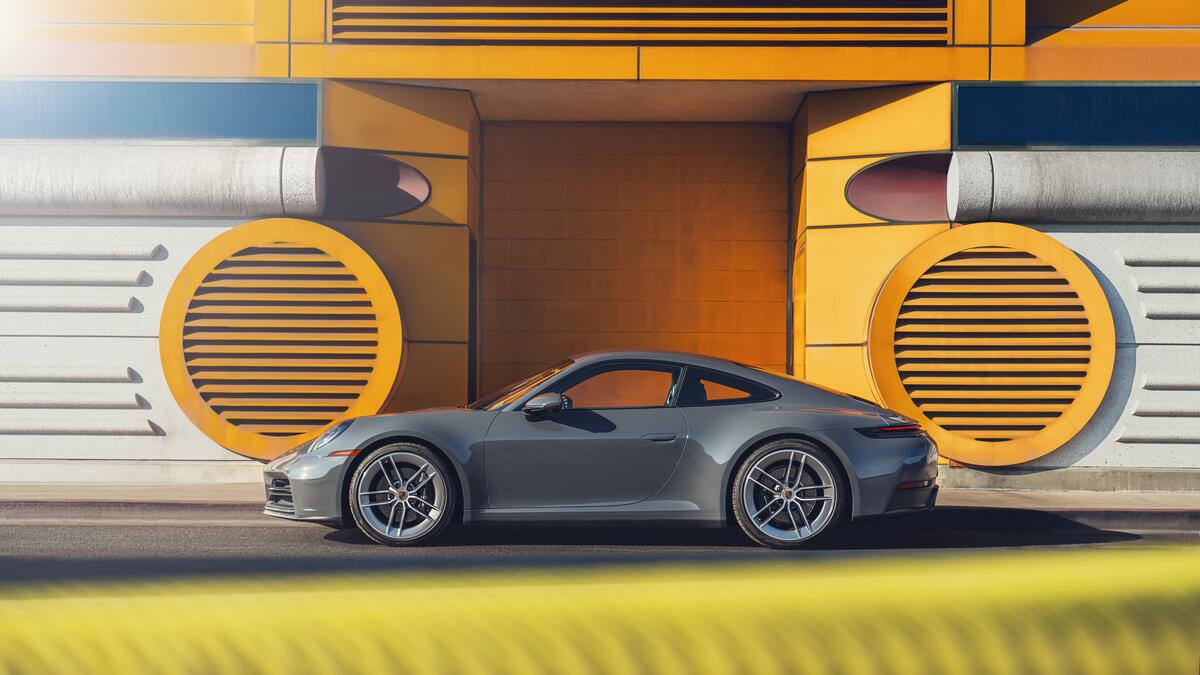
Porsche 930
"And the 934, the 934 was essentially a 930, the first gen 911 turbo that turned into race [1196.1s] car because why not?"
The Porsche 930 is the early 911 Turbo generation. The point here is that the 934 is basically Porsche taking that early turbo 911 concept and turning it into a dedicated race car.
The Porsche 930 refers to the 911 Turbo’s first generation (the 930-era 911 Turbo). In the segment, the host frames the 934 as essentially a 930 that turned into a race car, connecting the road-car turbo idea to the later IMSA-focused race development.
spring rate
"So they poke at some things and there are some secret tweaks, but underneath it's really [1209.7s] just kind of the road car with some spring rate and the boost wick cranked way up."
Spring rate is how stiff the suspension springs are. Stiffer or softer springs change how the car settles and grips in turns, which matters a lot for race handling.
Spring rate is how stiff a suspension spring is, usually measured by how much it resists compression. Changing spring rate affects ride height, weight transfer, and how the car responds in corners—important for making a turbo race car “calm down” and stay stable.
downforce
"And they basically stuck a bunch of wing and a bunch of arrow and more tire under the [1227.4s] things to get them to calm down."
Downforce is the “suction” effect that pushes the car toward the ground. More downforce usually means better traction in corners.
Downforce is the aerodynamic force that presses the car downward, increasing tire grip. Race teams use wings and other aero parts to create downforce so the car can corner harder and feel more stable at speed.
wing
"And so they poke at some things and there are some secret tweaks, but underneath it's really [1221.1s] It's called the 934 and a half, right? [1222.6s] And they basically stuck a bunch of wing and a bunch of arrow and more tire under the"
A wing on a race car is there to push the car down onto the track. That helps the tires stick better when you’re going fast.
In race-car context, a wing is an aerodynamic device that generates downforce—pushing the car’s tires harder onto the road. More downforce generally improves grip and stability, especially at speed, which is why the segment mentions adding “wing” to the IMSA-ready 934 variant.
big twin turbos
"Big twin turbos, you open the engine lid on the things and it's like looking at an HVAC plant."
“Twin turbos” means there are two turbochargers helping the engine make more power. The host is saying that on these race Porsches, the turbo system is so packed with hoses and parts that it looks like a whole heating/cooling setup.
“Twin turbos” means the engine uses two turbochargers to force more air into the cylinders, improving power potential. The host’s point is that on these Porsche race cars, opening the engine lid reveals an extremely packed, plumbing-heavy turbo setup—compared to an HVAC system because of the dense network of lines and components.
plumbing and wires and tubing
"plant. I mean, the size of this trailer that we're sitting on and plumbing and wires and tubing, so dense that you couldn't stick your hand in and it might chew your arm off if you did,"
On turbo race cars, there are lots of pipes and lines that move air, fuel, and cooling fluids around the engine. The host is emphasizing that the late Porsche 935 is built with so many of these lines packed together that it’s hard to even reach in.
In a turbo race car, “plumbing” and “tubing” refer to the network of pipes carrying pressurized air (boost), fuel, and various cooling/heat-management fluids. The host uses the HVAC analogy to describe how tightly packaged and complex the systems are on the late Porsche 935.
Le Mans
"The 34 that we got was it won Le Mans with Bob Wallach and God, what was the livery?"
Le Mans is a super famous long-distance race. Cars race for about 24 hours, so winning depends on both speed and not breaking down.
Le Mans refers to the 24 Hours of Le Mans, one of the most famous endurance races in the world. Winning it requires not just speed, but reliability, efficient pit strategy, and strong driver consistency over a full day of racing.
livery
"The 34 that we got was it won Le Mans with Bob Wallach and God, what was the livery?"
A livery is the car’s paint and sticker design for racing. It’s the look of the car—colors, graphics, and sponsor logos.
In motorsport, a livery is the car’s paint scheme and graphic design—often including sponsor placement and distinctive colors. It’s part of how teams brand the car during races and can become iconic for a particular car or era.
boost
"they asked us where we wanted the boost and there was a little voice in my head that said, all the way up."
Boost is extra pressure from a turbo that pushes more air into the engine. That can make more power, but it has to be controlled so the engine stays safe.
Boost is the extra pressure a turbocharger (or supercharger) provides to force more air into the engine. More boost generally means more potential power, but it also increases stress on the engine and requires careful tuning to avoid knock or overheating.
monster single turbo
"[1404.6s] So the 34 had monster single turbo, soft, soft springs, tiny cage tubes, like you got [1412.2s] in it, it was a 9 11 and the 35 you got in it and it was tubes more tubes."
A “single turbo” setup uses one turbocharger. If it’s described as “monster,” it’s likely a big turbo that can feel slow to respond at first, then really punch once it spools up.
“Single turbo” means the engine uses one turbocharger rather than multiple. Calling it “monster” suggests a very large turbo setup, which typically creates strong boost once it spools but can also bring noticeable turbo lag.
tube frame cars
"[1418.0s] And I've driven a lot of tube frame cars. [1419.9s] I haven't driven a lot of them with a 9 11 roof skin. [1422.8s] But you know, the cool thing about a 9 35 by the end of the run was that they had done"
A tube-frame car is built around a metal “skeleton” made of tubes. Race teams like this because it can be very strong and easier to shape for performance.
A tube-frame car uses a welded framework made from metal tubes to support the body and drivetrain, rather than relying on a conventional stamped unibody structure. This is common in race cars because it can be very strong and allows engineers to tune stiffness and packaging.

McLaren Formula One
"[1482.5s] all the way up to, you know, we were talking yesterday, I tested a McLaren Formula One [1487.1s] "
McLaren makes Formula 1 race cars. The speaker is saying they tested one, and that it’s a very different kind of race car to drive.
McLaren is a Formula 1 constructor known for high-downforce, high-revving single-seaters built around advanced aerodynamic and hybrid-era powertrains. The speaker is referencing testing a McLaren Formula One car, implying an F1-level machine with very different driving demands than prototypes or GT-style race cars.
warming up the tires
"and like, God, I got to back it up, even just warming up the tires. And you learn to like sit there and balance it and like build boosts with your right foot"
Tires need heat to work their best. When they’re cold, they can feel slippery and unpredictable, but once they warm up they grip better. The speaker is saying part of the learning process is getting the tires hot enough to drive confidently.
“Warming up the tires” means bringing tire temperature into an operating range so the rubber grips consistently. Race tires often need heat cycles to reach the friction level where steering response and traction improve. The speaker mentions it while describing how they’re already halfway through the corner, highlighting that early grip can be limited until the tires are hot.
trailing it off
"And it was, man, it was, you'd get into it and then there'd be nothing, then you get into it some more and then there'd be nothing. And like by that point, you'd be well and truly halfway through the corner and like, like, God, I got to back it up, even just warming up the tires."
“Trailing it off” means you gradually let off the gas instead of snapping off the throttle. In a fast corner, that helps the car settle and stay controllable while you slow down and turn. The speaker is describing how you manage throttle and braking together to keep the car balanced.
“Trailing it off” refers to easing off the throttle while braking or during the transition into a turn. In performance driving, that change in engine torque can strongly affect balance—especially on turbo cars—because the drivetrain load changes as you lift. The speaker pairs it with “breaking the car” and “build boosts with your right foot,” describing a coordinated throttle/brake technique.
pin the nose on the brakes
"as you're breaking the car and trailing it off and doing the thing you got to do with 911, which is like pin the nose on the brakes and get it in the corner and like balance the whole thing."
This phrase means you brake hard enough that the car’s weight shifts forward. That extra front grip helps the car turn in and point where you want. The speaker is saying that’s a common way to drive a Porsche 911-style car.
“Pin the nose on the brakes” describes a driving technique where heavy braking transfers weight forward to increase front-end grip and help the car rotate into the corner. It’s essentially using brake-induced weight transfer to make the front tires bite and guide turn-in. The speaker attributes this to “911” driving, implying classic rear-engine 911 balance management via braking and throttle coordination.

Ford Taurus
"we had some competitive models there and we had a, I think it was a Monte Carlo or something like that because we were comparing it to a Ford Taurus."
The Ford Taurus is a regular, everyday Ford sedan. Here, it’s brought up because the speaker is comparing how two different cars feel and how they reveal what you’re not great at as a driver.
The Ford Taurus is a mainstream American sedan that was used as a benchmark in Ford’s product launches. In this segment, it’s mentioned as a comparison point against a Monte Carlo, highlighting how different cars can expose different driver weaknesses.
reverse 180 spin
"did you know that if you do a reverse 180 spin in a Monte Carlo, I would have said that would be like a early 80s Monte Carlo, if you do a reverse 180 spin, you can get the inside of the outside front tire..."
A reverse 180 spin is when you back up and turn the car around so you end up facing the opposite direction. The speaker is describing it as a tricky stunt that shows how the car’s grip and turning behavior work in reverse.
A reverse 180 spin is a maneuver where you rotate the car about 180 degrees while moving backward, effectively repositioning the car. The speaker uses it to explain how reverse traction and vehicle geometry can let you “reach” the inside of the outside front tire to clear a cone.

Ford Panther
"My other fun fact that's adjacent to that is that a Ford Panther, you know, so like a Crown Victoria, what we used to call the Mercury Grand Marti, the BIK, the Big Marcus, that whole platform, those cars will do, it's something like 43 miles an hour in reverse..."
The Ford Panther platform is the “under-the-skin” design used by certain big Ford police cars. The speaker says the gearing and setup were made for that kind of driving, which is why it can do surprisingly fast reverse maneuvers.
The Ford Panther platform is the rear-wheel-drive vehicle architecture used for cars like the Crown Victoria and related models. The speaker claims these cars were geared and calibrated for police-style driving, which they say enables unusually high reverse speed for doing maneuvers like J-turns.

Ford Crown Victoria
"... that is that a Ford Panther, you know, so like a Crown Victoria, what we used to call the Mercury Grand Marti, th..."
The Ford Crown Victoria is a large four-door sedan. It was commonly used by fleets, including police departments, because it was built to be dependable and easy to keep running. People mention it because it’s a classic example of a practical big car.
The Ford Crown Victoria is a full-size sedan that became well known for its role as a durable, fleet-friendly car, including police use. It’s often discussed because it represents a straightforward, traditional approach to building a large American sedan with strong real-world usability. In a podcast, it may come up when referencing the “Panther” platform and how these cars were used and maintained.

Mercury Grand Marquis
"My other fun fact that's adjacent to that is that a Ford Panther, you know, so like a Crown Victoria, what we used to call the Mercury Grand Marti, the BIK, the Big Marcus, that whole platform..."
The Mercury Grand Marquis is a large older sedan. The speaker groups it with other similar police-car-style cars to talk about how their setup affects what they can do in reverse.
The Mercury Grand Marquis is a full-size sedan that shares much of its platform heritage with other Panther-family vehicles. Here, it’s mentioned as part of the same “whole platform” the speaker associates with police-oriented gearing and reverse capability.
J turn
"they were calibrated for, I mean like that whole of the gear was set up for police chases and for J turn, Rockford turns, right?"
A J-turn is a driving move police cars use to turn around quickly while staying in control. The speaker is saying some cars were set up so the gearing helps you do maneuvers like that.
A J-turn is a police-style driving maneuver used to quickly change direction while maintaining control, typically involving a controlled reverse/turn sequence. The speaker ties it to the Panther platform’s gearing/calibration, claiming those cars were set up with that kind of driving in mind.
Rockford turns
"they were calibrated for, I mean like that whole of the gear was set up for police chases and for J turn, Rockford turns, right?"
Rockford turns are a kind of aggressive turning maneuver you hear about in police driving. The speaker groups it with other turnaround techniques to explain why certain cars can behave differently in reverse.
“Rockford turns” refers to a specific evasive driving maneuver associated with police tactics and high-speed directional changes. In this segment, it’s mentioned alongside J-turns as part of the kind of driving the speaker claims the Panther platform was geared/calibrated for.

1974 Pontiac Safari station wagon
"best way. [2272.1s] 1974 Pontiac Safari station wagon, you know the one that had that kind of little, the roof went back, had that little tiny bump up there, wood paneling on the side..."
The 1974 Pontiac Safari is an old-school American station wagon with a long body. The speaker is talking about doing a stunt in reverse with it, showing how these big cars can still be controlled in a very specific way.
The 1974 Pontiac Safari station wagon is a long-roof, full-size American wagon known for its wood-panel styling and family/utility layout. The speaker describes using one in reverse around a racetrack with another car following, emphasizing how vehicle length and packaging affect low-speed control and visibility.
oversteer
"tires slide, but they're at the back of the car, is that oversteer or understeer? Yes, yes, I don't know what the answer is, but I want it."
Oversteer is when the back of the car starts to slide more than the front. That makes the car want to spin or turn more than you intended.
Oversteer is when the rear of the car loses grip more than the front, so the car tends to rotate toward the outside of the turn. In the scenario described, the tires sliding at the back is the classic setup for asking whether it’s oversteer or understeer.
understeer
"tires slide, but they're at the back of the car, is that oversteer or understeer? Yes, yes, I don't know what the answer is, but I want it."
Understeer is when the front of the car can’t grip enough, so it won’t turn into the corner. The car feels like it’s pushing straight instead of following the turn.
Understeer is when the front tires lose grip first, so the car doesn’t turn as much as you want and tends to push wide. The host is contrasting it with oversteer by asking what it means when the sliding happens at the back of the car.

Porsche 944 Turbo
"so we're at the track and we're taking these guys, at the end of the day, Bill Elliott says, give me a ride around the track. So I take him out and I'm wailing, it was a 944 turbo actually, wailing around the track, you know, having given a good time"
The Porsche 944 Turbo is a classic Porsche sports car with a turbo engine. Here it’s being driven on a very slippery track, so it’s a good example of how a car handles when tires can’t grip well.
The Porsche 944 Turbo is a front-engine, rear-transaxle sports coupe that’s known for its turbocharged performance and balanced feel. In this story, the host drives a 944 Turbo around a cold, icy track, which highlights how that chassis behaves when grip is limited.
Westwood Motorsport Park
"we're doing a bunch of laps. This was at Westwood Motorsport Park outside of Vancouver, like January 15th. It was cold."
Westwood Motorsport Park is a race track near Vancouver. In this story, it matters because the track had an icy section that made driving much harder.
Westwood Motorsport Park is a racing venue near Vancouver that the host references as the location of the cold, icy driving experience. The track conditions become central to the story because they change how the car can be driven through an S-bend.
S-bend
"The track had this weird deal where the water drained and it drained right across the track in the middle of this S-bend. Most cars, you could come up and you just had to do a little breather throttle to get through there"
An S-bend is a part of the track where you turn one direction and then quickly turn the other direction. It’s tricky, and in this story the middle of it had ice.
An S-bend is a sequence of two opposing curves in quick succession, so the car must transition from turning one way to turning the other. The host describes water draining across the middle of the S-bend, creating an icy strip that forces a very specific line and throttle approach.
breather throttle
"Most cars, you could come up and you just had to do a little breather throttle to get through there, but now there's a strip about a foot wide of ice across the track."
A “breather throttle” means you lightly add a bit of gas for a moment to help the car stay settled and keep traction. Here, it’s mentioned as what most cars would do before the ice made it much harder.
“Breather throttle” is a driving technique where you slightly open the throttle briefly to keep the car moving and stabilize traction through a tricky section. The host contrasts this normal approach with the problem created when an ice strip appears across the track.
skid control
"in the paddock area we had a cone there and I would take these guys and just had them like do skid control around these cones and at one point Billy goes that looks like a piece of work"
Skid control is how you keep a car from spinning out when it starts sliding on slippery tires. It’s about steering the car and using the gas and brakes in a controlled way so you can still point it where you want.
Skid control is the set of driving techniques used to manage a car when the tires lose grip and the car starts to slide. In practice, it often means steering to where you want to go while modulating throttle and brakes so the slide doesn’t get worse.
turn the car on the brake
"everybody has that moment I mean I know we've talked about this that moment where you realize you can turn the car on the brake that the brakes are for more than just stopping the car"
It means using the brakes while entering a turn to help the car rotate and point where you want. Instead of only slowing down, braking can also change how the tires grip so the car turns in better.
“Turn the car on the brake” describes using braking to help rotate the car into a corner, not just slow down. By transferring weight forward and changing tire grip, braking can increase front-end bite and make the car turn in more effectively—especially if you’re trail-braking near the apex.
DEs
"you realize you can turn the car on the brake that the brakes are for more than just stopping the car you know mine was doing DEs in like right around college shortly before college"
“DEs” means driving events, like track days or organized practice sessions. The speaker is saying they learned how braking and turning work together while practicing in that kind of setting.
“DEs” here refers to driving events—most commonly “driving events” or track-day style sessions—where drivers practice car control. The key point in the story is that the speaker learned braking-and-turning behavior in a controlled environment rather than on public roads.
bleed off
"you have to bleed off and then all of a sudden it's like oh I mean something happened there and the car turned differently like that was great"
“Bleed off” here means you gradually release the brakes. The goal is to reduce how hard you’re braking so the tires can grip again and the car turns more normally.
“Bleed off” in this context means easing off the brake pedal pressure to reduce deceleration and let the tires regain grip. Drivers do this when they’re braking too hard and the car isn’t turning the way they expect, so the car can settle and rotate correctly.
autonomous vehicles
"[2776.7s] but he ended his career you know now he was in California he ended his career [2781.4s] working as the head of Google self-driving car division Waymo but actually started before it [2786.7s] was called Waymo and it turns out that the guy who was helping engineer autonomous vehicles [2791.6s] and automated driving was a massive catering and Lotus 7 dork"
Autonomous vehicles are cars that can drive on their own using cameras and sensors. Instead of you doing all the driving, the car handles steering and speed control.
Autonomous vehicles are cars that can drive themselves using sensors, software, and control systems rather than relying on a human to steer and brake continuously. In the segment, it’s tied to Waymo’s work on automated driving.
automated driving
"[2786.7s] was called Waymo and it turns out that the guy who was helping engineer autonomous vehicles [2791.6s] and automated driving was a massive catering and Lotus 7 dork and like loved him to pieces and [2798.1s] that whole dichotomy of the dude who was helping take steering wheels away from people also loved"
Automated driving refers to vehicle systems that take over some or all driving tasks—like steering, acceleration, and braking—using onboard sensing and algorithms. The host contrasts that “taking steering wheels away” idea with the visceral fun of a lightweight sports car like the Lotus 7.

Indy car
"[2822.3s] Mario with Mario and ready and naturally it was at Speedway at Indie you know we couldn't [2828.8s] there is no way to drive around in an Indie car with somebody else unless you ring up Firestone [2833.7s] and ask them for rides and time in the two-seat Indie car they have one of the five or six that"
“Indy car” means a high-performance open-wheel race car used in IndyCar racing. It’s built for speed and track driving, and the host is saying it’s hard to get a passenger ride in one.
An Indy car (IndyCar) is a purpose-built open-wheel race car designed for oval and road-course racing in the IndyCar Series. The host is using it as the context for a two-seat ride-along experience, emphasizing how rare it is to share seat time in a high-performance race machine.
Speedway at Indie
"[2815.8s] Google was but the thing that stuck with me that I'm thinking of now we I got to spend a day with [2822.3s] Mario with Mario and ready and naturally it was at Speedway at Indie you know we couldn't [2828.8s] there is no way to drive around in an Indie car with somebody else unless you ring up Firestone"
“Speedway at Indie” refers to the Indianapolis Motor Speedway area, a famous U.S. racing venue. The host uses it to set the scene for a rare two-seat IndyCar ride experience.
Firestone
"[2822.3s] Mario with Mario and ready and naturally it was at Speedway at Indie you know we couldn't [2828.8s] there is no way to drive around in an Indie car with somebody else unless you ring up Firestone [2833.7s] and ask them for rides and time in the two-seat Indie car they have one of the five or six that"
Firestone is a tire company that’s involved in racing. In this story, the host says you’d have to contact Firestone to get access to ride time in a special two-seat IndyCar.
Firestone is a tire brand closely associated with motorsport, including IndyCar racing. Here, the host mentions calling Firestone to arrange rides/time in a two-seat IndyCar.
Laguna
"another one out of every 20 will then crash the car with you in it which happened at Laguna with me and a driver I won't name"
Laguna Seca is a famous race track in California. The host is saying this kind of bad luck (a crash) happened to them there.
Laguna refers to Laguna Seca, a well-known road course in California used for high-speed testing and racing. It’s mentioned here as the place where the host experienced a crash scenario involving a pro driver.

McLaren F1 GTR
"and a driver I won't name and a McLaren F1 GTR that I ended up testing two years later and he looped it down the front straight at a buck 30 going over the hump under the bridge"
The McLaren F1 GTR is a special, track-racing version of the famous McLaren F1 supercar. In the episode, it’s the car involved in a serious on-track crash, showing how fast and dramatic racing accidents can be.
The McLaren F1 GTR is a race-focused version of the iconic McLaren F1, built for endurance racing with a lightweight, track-first layout. In this story, it’s the car that the host tested and that a driver looped at high speed, illustrating how quickly things can go wrong on track.

Nissan Gtr
"...ith me and a driver I won't name and a McLaren F1 GTR that I ended up testing two years later and he lo..."
The Nissan GT-R is a performance sports car made by Nissan. It’s designed to be very fast and to handle well, not just in a straight line but also when turning. People talk about it a lot because it’s known for delivering big performance.
The Nissan GT-R is a high-performance sports car built to deliver supercar-level acceleration and grip with strong everyday drivability. It’s often discussed because it became a benchmark for performance per dollar and has a reputation for being fast in a repeatable, track-capable way. In a podcast, it may be referenced when comparing how different cars feel and perform under the same testing conditions.

Alfa Romeo GTV
"...n who is deeply bent right like restored an alpha gtv with a bunch of alphaholics parts in his garage b..."
The Alfa Romeo GTV is a sporty two-door coupe. It’s known for its distinctive look and for being a car people like to restore and modify. That’s why it often comes up when discussing classic cars and enthusiast parts.
The Alfa Romeo GTV is a sporty coupe that’s known for its classic styling and driving character. It’s frequently mentioned in enthusiast circles because many owners and restorers focus on keeping them original or upgrading with period-correct performance parts. In a podcast, it may be brought up as an example of a car with a strong identity and a dedicated restoration community.

Nissan Skyline
"bought a couple of Nissan skylines I mean photography clearly pays more than writing right bought an r32 right when they got legal like all these things good dude understands cars"
The R32 is a specific generation of the Nissan Skyline. It’s a very popular one with car fans, especially because it’s known for being a strong, turbocharged performance car.
The Nissan Skyline R32 is the 1989–1994 generation of the Skyline, famous in enthusiast circles for its turbocharged performance and rally/track reputation. The host mentions buying an R32 “right when they got legal,” tying it to the era when importing and owning these cars became possible.
indies road course
"and I don't know if any of you are familiar with indies road course but it runs backward from the oval you make a right hand turn off the oval go through the infield"
This is a specific track layout at Indianapolis that’s used for road-course racing events. The host is explaining the route—where you leave the oval, go through the infield, and then rejoin the straight.
“Indies road course” refers to the IndyCar-style road course layout used for events at Indianapolis Motor Speedway, which differs from Formula 1’s typical circuit configuration. The host describes the direction of travel and how you transition from the oval to the infield and back out.
pit straight
"so you exit right in front of the right in front of the the pit straight paddock and you you like track out right up to the wall car is going this way right"
The pit straight is the main straight section of a circuit where the pit lane runs alongside the track. In the host’s description, it matters because the car is exiting the corner and lining up in front of the pit area before continuing down the straight.
left rear arms
"and the walls on the left and they were looking at the left rear arms and I went over this whole wrinkle in the paint like you know how you when you like you you could tell when an arm's"
The left rear arms are parts of the suspension that hold the rear wheel in the right position. If they’re bent, the car can handle differently even if the damage doesn’t look dramatic.
“Left rear arms” likely refers to the rear suspension control arms on the left side of the car, which locate the wheel and control how it moves under braking, cornering, and bumps. The host says the crew was looking at them after the impact, because bent arms can change alignment and handling even if damage isn’t obvious.
wrinkle in the paint
"and the walls on the left and they were looking at the left rear arms and I went over this whole wrinkle in the paint like you know how you when you like you you could tell when an arm's been hit"
A wrinkle in the paint is when the surface looks wavy or creased, usually after something hits the car. It can be a clue that the car took damage, even if it doesn’t look totally bent.
A “wrinkle in the paint” is a visual sign of body or structural deformation from an impact. Even when parts aren’t obviously bent, paint wrinkling can indicate the car was hit hard enough to move panels or underlying components.
Request an Explanation
Heard something you'd like explained? We'll add it to this episode.
Sign in to request explanations for terms you heard.
Want to learn more?
Browse our glossary for plain-English explanations of automotive terms, jargon, and concepts.
Help improve this episode
See something that's not quite right? Our annotations are AI-generated and can sometimes miss the mark. Click the flag icon on any annotation to suggest a correction.