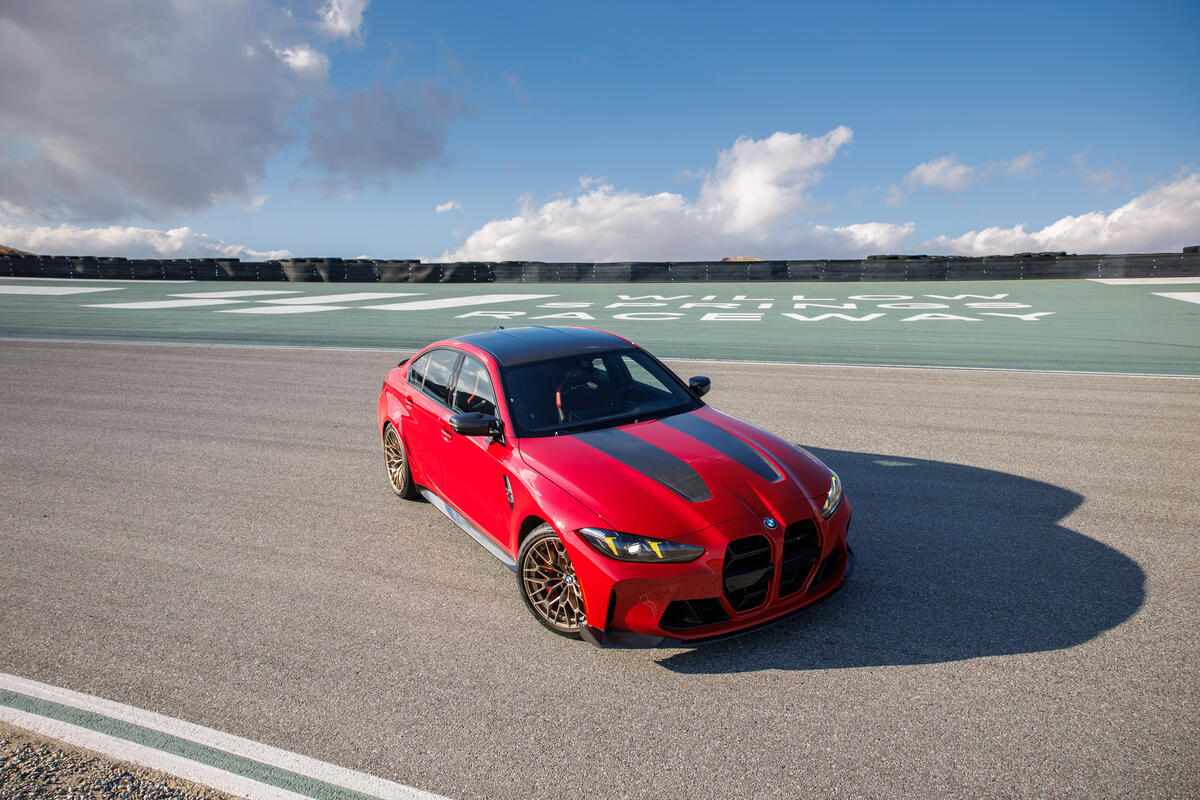
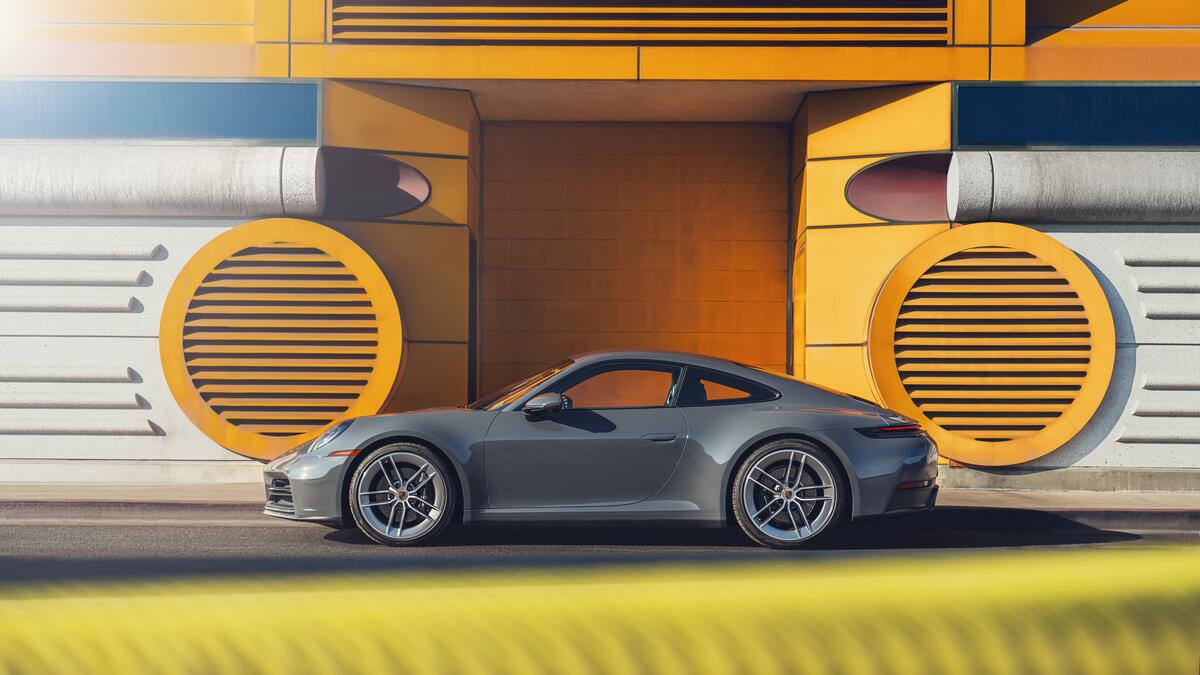
Grottin Raceway is a small road-racing track in Michigan. The cool part is that it was built decades ago and the corners are really different from each other—some go uphill, some downhill, and some are tilted sideways.
This refers to a regional motorsport group within the Porsche Club of America (PCA) focused on rally-style or rally sport activities. It’s relevant because it frames the kind of driving event and community context happening at the track.
“Off camber” means the road is tilted sideways in a way that makes the tires not sit flat. That can make the car grip less and feel a little sketchy in the corner.
“On camber” means the track surface tilts in a way that helps the tires stay more planted. It often gives the car more predictable grip when you’re cornering.
A “blind” corner is one where you can’t really see what’s coming next. Drivers have to be more careful and depend on what they’ve learned from previous laps.
Vinyl bench seats are the older-style seats you can share with someone else, usually made from vinyl material. The host is pointing out the classic interior feel of old trucks.
The clutch is what you press when you’re starting off or shifting gears in a manual car. Pressing it disconnects the engine from the wheels; releasing it connects them so the car can move.
LMP3 is a type of race car used in endurance racing. It’s built specifically for track racing, and it’s meant to be a more accessible prototype class than the top-tier Le Mans cars.
This is a long race where cars and drivers compete for about 25 hours. It’s more about staying consistent and not breaking the car than just going fast for a short time.
They’re describing a coaching plan that lasts the whole race weekend. The idea is to help the driver improve step by step during each practice and race session.
They mention Portland as where they watched and talked with a racing driver from the pit wall. The pit wall is where teams and drivers get updates during a race weekend.
They’re talking about the difference between learning on your own versus having a coach. In racing, a coach helps you improve faster by giving structured feedback and guidance.
The BMW M3 is BMW’s performance sports car. Saying “BMW in an M3 on the factory team” means the racing team was using a real, purpose-built M3 as part of BMW’s official racing effort.
IMSA is a big U.S.-based racing organization that runs sports-car races. It’s known for endurance events where teams have to keep the car running for long stretches.
A 24-hour race is exactly what it sounds like: cars race for a full day. Drivers swap out and teams stop to refuel/maintain the car so it can last the whole time.
Daytona is a famous race event in Florida where cars race for a long time. It’s tough because the cars have to keep working for hours, not just minutes.
A prototype car is a race-only car built specifically for competition. It’s not just a modified street car, so it can feel and handle very differently.
In racing, “underfunded” usually means the team has less money for engineering and testing. That can make the car less competitive even if it’s still prepared to race.
Car
Renault R5 turbo
The Renault R5 Turbo is a small, fast turbocharged car. Because it’s short and turbocharged, it can feel jumpy and a little unpredictable until the turbo really spools up.
Turbo lag is the short delay before a turbo engine really starts making power. You press the gas, and for a moment it feels like nothing happens—then the boost kicks in.
Short wheelbase means the car is shorter from front to back between the wheels. That can make it turn quickly, but it can also make the car feel more jumpy or harder to control at the limit.
Car
Porsche 934
The Porsche 934 is a Porsche race car from the 1970s. It was developed for IMSA racing and started from the idea of the 911 Turbo, then got race-focused changes so it would handle better at speed.
The Porsche 935 is a famous 1970s Porsche race car. It started as a more experimental turbo project and then turned into a dedicated, very serious race machine that was successful in IMSA and well-known in Europe.
Turbocharging is a way to make an engine feel stronger by forcing extra air into it. More air usually means more power, but it also needs careful tuning so the engine stays healthy.
The Porsche 930 is the early 911 Turbo generation. The point here is that the 934 is basically Porsche taking that early turbo 911 concept and turning it into a dedicated race car.
Spring rate is how stiff the suspension springs are. Stiffer or softer springs change how the car settles and grips in turns, which matters a lot for race handling.
“Twin turbos” means there are two turbochargers helping the engine make more power. The host is saying that on these race Porsches, the turbo system is so packed with hoses and parts that it looks like a whole heating/cooling setup.
On turbo race cars, there are lots of pipes and lines that move air, fuel, and cooling fluids around the engine. The host is emphasizing that the late Porsche 935 is built with so many of these lines packed together that it’s hard to even reach in.
Boost is extra pressure from a turbo that pushes more air into the engine. That can make more power, but it has to be controlled so the engine stays safe.
A “single turbo” setup uses one turbocharger. If it’s described as “monster,” it’s likely a big turbo that can feel slow to respond at first, then really punch once it spools up.
A tube-frame car is built around a metal “skeleton” made of tubes. Race teams like this because it can be very strong and easier to shape for performance.
Car
McLaren Formula One
McLaren makes Formula 1 race cars. The speaker is saying they tested one, and that it’s a very different kind of race car to drive.
Tires need heat to work their best. When they’re cold, they can feel slippery and unpredictable, but once they warm up they grip better. The speaker is saying part of the learning process is getting the tires hot enough to drive confidently.
Term
trailing it off
“Trailing it off” means you gradually let off the gas instead of snapping off the throttle. In a fast corner, that helps the car settle and stay controllable while you slow down and turn. The speaker is describing how you manage throttle and braking together to keep the car balanced.
This phrase means you brake hard enough that the car’s weight shifts forward. That extra front grip helps the car turn in and point where you want. The speaker is saying that’s a common way to drive a Porsche 911-style car.
The Ford Taurus is a regular, everyday Ford sedan. Here, it’s brought up because the speaker is comparing how two different cars feel and how they reveal what you’re not great at as a driver.
A reverse 180 spin is when you back up and turn the car around so you end up facing the opposite direction. The speaker is describing it as a tricky stunt that shows how the car’s grip and turning behavior work in reverse.
Car
Ford Panther
The Ford Panther platform is the “under-the-skin” design used by certain big Ford police cars. The speaker says the gearing and setup were made for that kind of driving, which is why it can do surprisingly fast reverse maneuvers.
The Ford Crown Victoria is a large four-door sedan. It was commonly used by fleets, including police departments, because it was built to be dependable and easy to keep running. People mention it because it’s a classic example of a practical big car.
The Mercury Grand Marquis is a large older sedan. The speaker groups it with other similar police-car-style cars to talk about how their setup affects what they can do in reverse.
A J-turn is a driving move police cars use to turn around quickly while staying in control. The speaker is saying some cars were set up so the gearing helps you do maneuvers like that.
Term
Rockford turns
Rockford turns are a kind of aggressive turning maneuver you hear about in police driving. The speaker groups it with other turnaround techniques to explain why certain cars can behave differently in reverse.
Car
1974 Pontiac Safari station wagon
The 1974 Pontiac Safari is an old-school American station wagon with a long body. The speaker is talking about doing a stunt in reverse with it, showing how these big cars can still be controlled in a very specific way.
Understeer is when the front of the car can’t grip enough, so it won’t turn into the corner. The car feels like it’s pushing straight instead of following the turn.
The Porsche 944 Turbo is a classic Porsche sports car with a turbo engine. Here it’s being driven on a very slippery track, so it’s a good example of how a car handles when tires can’t grip well.
An S-bend is a part of the track where you turn one direction and then quickly turn the other direction. It’s tricky, and in this story the middle of it had ice.
A “breather throttle” means you lightly add a bit of gas for a moment to help the car stay settled and keep traction. Here, it’s mentioned as what most cars would do before the ice made it much harder.
Skid control is how you keep a car from spinning out when it starts sliding on slippery tires. It’s about steering the car and using the gas and brakes in a controlled way so you can still point it where you want.
It means using the brakes while entering a turn to help the car rotate and point where you want. Instead of only slowing down, braking can also change how the tires grip so the car turns in better.
“DEs” means driving events, like track days or organized practice sessions. The speaker is saying they learned how braking and turning work together while practicing in that kind of setting.
“Bleed off” here means you gradually release the brakes. The goal is to reduce how hard you’re braking so the tires can grip again and the car turns more normally.
Autonomous vehicles are cars that can drive on their own using cameras and sensors. Instead of you doing all the driving, the car handles steering and speed control.
Automated driving refers to vehicle systems that take over some or all driving tasks—like steering, acceleration, and braking—using onboard sensing and algorithms. The host contrasts that “taking steering wheels away” idea with the visceral fun of a lightweight sports car like the Lotus 7.
Car
Indy car
“Indy car” means a high-performance open-wheel race car used in IndyCar racing. It’s built for speed and track driving, and the host is saying it’s hard to get a passenger ride in one.
Place
Speedway at Indie
“Speedway at Indie” refers to the Indianapolis Motor Speedway area, a famous U.S. racing venue. The host uses it to set the scene for a rare two-seat IndyCar ride experience.
Firestone is a tire company that’s involved in racing. In this story, the host says you’d have to contact Firestone to get access to ride time in a special two-seat IndyCar.
The McLaren F1 GTR is a special, track-racing version of the famous McLaren F1 supercar. In the episode, it’s the car involved in a serious on-track crash, showing how fast and dramatic racing accidents can be.
The Nissan GT-R is a performance sports car made by Nissan. It’s designed to be very fast and to handle well, not just in a straight line but also when turning. People talk about it a lot because it’s known for delivering big performance.
The Alfa Romeo GTV is a sporty two-door coupe. It’s known for its distinctive look and for being a car people like to restore and modify. That’s why it often comes up when discussing classic cars and enthusiast parts.
The R32 is a specific generation of the Nissan Skyline. It’s a very popular one with car fans, especially because it’s known for being a strong, turbocharged performance car.
Term
indies road course
This is a specific track layout at Indianapolis that’s used for road-course racing events. The host is explaining the route—where you leave the oval, go through the infield, and then rejoin the straight.
The pit straight is the main straight section of a circuit where the pit lane runs alongside the track. In the host’s description, it matters because the car is exiting the corner and lining up in front of the pit area before continuing down the straight.
Term
left rear arms
The left rear arms are parts of the suspension that hold the rear wheel in the right position. If they’re bent, the car can handle differently even if the damage doesn’t look dramatic.
Term
wrinkle in the paint
A wrinkle in the paint is when the surface looks wavy or creased, usually after something hits the car. It can be a clue that the car took damage, even if it doesn’t look totally bent.
LIVE
Welcome to It's Not The Car.
I'm Sam Smith.
I'm a club racer, a writer, and a recovering motorsport journalist.
And this is a live show.
It is July 13, 2026, right?
No, June.
June.
June.
It is June, isn't it?
Don't ask me.
It is June 13, 2026.
We are taping this in front of an audience live.
We are at Grottin Raceway in Belding, Michigan with Porsche Club of America's Rally Sport
region.
And Grottin, if you don't know it, is a funky little throwback gem.
It is one of the most entertaining club road courses in the country.
It was built in the 1960s.
It's been called a paved motocross track.
Every corner is uphill, downhill, off camber, on camber, blind, or all of that at the same
time.
And most of all, it's a lot of fun.
Hi Ross.
Hey Sam.
You used the word funky.
Yeah.
I'm not sure I've ever heard a racetrack called funky before.
Well that's just because you're, I don't know man, this place is funky.
What else do you call it?
Well, I don't know.
I'm thinking, well maybe, actually, I can think of another funky one.
Like a couple of years ago, I wasn't here because I was at Le Mans.
Le Mans is pretty funky too, I think.
Or it's Le Fonky.
Le Fonk.
So we're here hanging out with a bunch of great friends.
We've got gorgeous Michigan summer weather, Bluebird Day, and the chapter was kind enough
to ask us to come coach and tell stories and record a live show on Saturday night.
So before we go any further, let's hear it for all of you guys.
Ross and I have been watching.
I've seen a lot of DE crowds.
This is a good one.
Lots of great cars.
Lots of people hustling, driving really well.
And most of all, man, everybody's been really welcoming and wonderful and just kind.
And I hate to say it, but you don't get that everywhere.
And it's been great.
So give yourselves a round of applause, man.
It's a big deal.
Are you guys having fun?
Yeah.
Nice.
Do I get to say no?
No, you don't.
Oh, because I am having a blast.
OK.
There's about you.
You're very old.
Oh, wait a minute.
It's not about me.
It's not even about the car.
Jesus, Ross, really?
OK.
So today, for those of you who don't know, we change formats every episode on this show.
Now, that's partly because Ross and I and Jeff Brown, the IMSA champion, race engineer,
and friend we co-host this show with, well, I mean, Jeff, we should probably talk about
why Jeff isn't here.
He's not here because he's in France.
He's serving as a competition director for a race car at some 24-hour race named after
a Pontiac or something.
It's like Le Mans or Wommas.
I don't know.
Mr. Fancy Pants.
It's not Michigan.
But anyway, all three of us like trying new things, so we switch show up a lot.
We're also gluttons for punishment.
That's part of it.
Tonight, we're doing one of the things I love most with this show.
When we started this thing, I never expected it to get as big as it did.
We're now three years in, 100 episodes, thousands and thousands of listeners, and the best part
of all that has been the people we've been able to meet through the whole thing.
People who've come up to us at tracks and car shows and just sometimes in the middle
of absolute nowhere and told us that we love what we're doing with it.
With that in mind, tonight, we're going to kick it back to you guys.
We're going to do a live Q&A show, which is really just a big conversation.
This is a live version of something we call no-dumb questions, right?
And that's typically where we all go, but there will be dumb answers for sure.
Right, right.
And usually, we take questions over email and DM on social media.
People get a hold of us, and this is where I guess Shameless Plug,
intcpod.gmail.com, blah, blah, blah.
We tap into Ross and Jeff, answer questions about driving and engineering
and sometimes a whole lot else.
But with this, we're going to pull the BC boys and pass the mic, right?
So it'll go through the crowd.
Christian is effectively our mic stand.
Where'd you go?
There's there.
And we're going to treat this something like a Reddit AMA,
which means you can ask us anything.
Careers, racing, dumb things we've seen, done,
places we've been, places we've done.
I'm thinking dumb things we've done.
Is this it?
We're sitting on a trailer on a hill in Michigan.
I don't know, man.
We were talking earlier, like there's a pin holding the thing.
And what if at the end of this, we just pulled the pin and like
go stride off the hill into the pond?
But for those who don't know or haven't met us yet,
since Ross hates talking about himself,
he's one of the most respected performance coaches in the world.
He's a former IndyCar driver, sports car champion.
He happens to have written one of the best books ever put together
on how to drive faster.
And well, he's the only guy on this show and we don't need to talk
about anybody else.
So that's really good.
So let's move on.
Oh, is that my cue?
I get to talk about Sam.
So 20 years of testing cars and playing around with cars and magazines,
executive editor of Road and Track Magazine.
Did you know this?
He starred in a couple of TV shows that were on NBC.
Was it Friends or was it Seinfeld?
They aired it two in the morning in bars with the sound off,
which means that the people who watched them were drunk.
And that was probably the best way to see what we made.
But yeah, mm-hmm.
Yeah, that's it.
It happened.
I'm no one talks about it, but you can ask him about it tonight.
I wouldn't, but you can technically.
Yeah.
Yeah.
Okay, that's it.
Great.
We've talked about me.
Let's go.
Yeah.
So the way we're going to do this with questions is Christians at
that center poll in the tent.
We've got a mic and a recorder and the mics into the PA so we can hear
you the recorder.
He's got it just so we've got the file and ends up on the podcast
and to incentivize people to speak up to incentivize people to speak up.
I've got a giant bag here of Haribo gummy bears, little tiny bags,
and I'm going to throw them at you.
And if that sounds good, well, ask questions.
If it doesn't sound good, I'll throw them at you anyway.
Can I have one?
This is a professional operation.
So if you've got a question, raise your hand.
We'll kick it off.
Let's go.
I've been teaching people how to drive for ages, right?
Anywhere from professional race car drivers to people like me.
So the question that I thought of one day is like, how did somebody teach
you how to drive or how did you learn to drive?
Oh, that's a good one.
Wait, hold on.
I get to throw a thing.
Arnie, can I throw some at you?
That, that's terrible.
No, more loft.
I majored in words in college.
I'm very good at this.
How did you, how did you learn to drive?
So the very first driver training that I ever got.
I was 11 and my 14 year old brother taught me how to drive in my dad's
1949 pickup Ford pickup truck in our driveway.
So I know this has little to do with racing, but actually it does have
a lot to do with racing.
I'm sitting on this bench seat.
You know, one of those big old vinyl bench seats and old trucks.
I'm sitting on that.
I can't reach the pedals, but I've kind of gotten that front edge of
the seat and I'm reaching down to holding the clutch down and my legs
shaking, trying to hold the clutch down.
I'm not sure if it's my nerves or the little skinny legs that I still have.
And my brother says, let the clutch out.
So I let the clutch out and we're like, now we're the driveway isn't as long
as this tent and now I'm heading for the shrubs at the end of our driveway
and that's when instant kicked in and somehow I hit the brakes and I stopped
the truck.
That was my first driving lesson.
So fast forward a couple of years and I'm driving race cars and I took
a driver training program at Westwood Motorsport Park just outside of
Vancouver and the guy that was assigned to instruct me was the same
age as me.
He'd been racing for one year.
So now he was an instructor.
He ended up driving my car more than I drove it.
That's what he thought instructing me was.
Let me show you how to drive.
So that was my first instructor.
I can honestly say that I've had little to no training from anybody else
other than 2015, 2016.
I did the Thunder Hill 25 hour race in an LMP three car and my co-drivers
were Colin Brown, Naju Sain who I'd been coaching for about three years at
that point and John Bennett who I'd coached for about three years.
So now my three co-drivers were my coach.
So they were like, okay, now it's payback time.
We are going to coach you all weekend long.
So I guess, Arnie, seriously, I have had very little and yet I think I've had a
lot because I've read, I've studied, I've talked to people.
I've had conversations with Nigel Mansel sitting on a pit wall in Portland
and kind of asking him questions.
So, but I've never had, I've never really had a formal coach which I think is
wrong, I should.
So Arnie, what are you doing next weekend or two weekends for now when I'm racing?
You got to come and coach me.
Okay.
But see, that's amazing, right?
Like that's a piece of evidence that says like you made it.
You won Daytona.
You won a manufacturer's championship with BMW in an M3 on the factory team.
Like you did and you've done an awful lot.
You made it to Indy.
All of these things came out of you wanting to be better and figuring out
your own way to do it.
And it's this testament that on some level, anything is possible if you just
start putting in the work and figuring it out.
And that's, I think a lot of people believe that they can't get there without
a coach or without some massive amount of money or help.
And that's cool.
Well, interestingly, when I started coaching, if a driver had a coach,
that was seen as a weakness.
Like we're either born to drive race cars or not, right?
That's how I think the thinking was.
Did, what do you think would have happened if somebody went to AJ Foyt or
Mario Andretti and said, I'm going to coach you?
Punches.
Definitely in Foyt's case.
AJ would have pulled out a hammer and hit you, right?
Or AJ would have hit Mario just for just for fun.
Yeah, yeah.
So, you know, there was a long period of time there were a driver having a
coach was like, it was not normal.
So, so the process of me learning how to coach myself and I'm going to, you
know, name a couple of the guys like Michaels and Mickey and Peter Krauss
and Tom Long, a couple of other guys, like they were sort of on the beginning
of coaches happening in North America.
And I got to say Europe is behind North America.
You would think with kind of their attitude about motorsport in Europe,
they would be ahead.
But it's still kind of almost a little bit seen as a bit of a weakness in
Europe as a coach.
Wait.
So when you started this, did you get, how did people treat you when they
found out you were coaching for other people?
Paddocks are gossipy places, right?
So I remember being at, I think it was actually Sebring and I was there
coaching a driver one time and I'm walking through the paddock and a
friend and a fellow driver comes up the other way and he goes, what are you
driving this weekend or something like that?
And I go, I'm not, I'm coaching this weekend.
And he went, that's too bad.
And I went, actually, no, it's not.
I love coaching.
So I took the craft, the art, the science or whatever it is of coaching.
I took it seriously.
And I think that's, I'm going to say some, that's a bit of a difference
than some other people.
I often say, and please don't take this the wrong way for some people that are
in motorsport, typically pro drivers who they don't have a drive this, this
year and they go, well, I'm going to coach a lot of coaches are actually
underemployed race drivers who are wanting to be hanging out the track
so they can get the next ride and make a few bucks still in the sport,
that kind of thing.
But there's a small core of people in North America who I consider professional
coaches because they look at coaching as it's a profession and you take it
seriously.
Arnie, that was a great question.
Thank you, man.
I do have a little bit of a follow-up.
If I throw another thing at you, I'm probably still going to miss.
No, you don't have to throw anything else.
So you talk about a process that you used, right?
Can you explain that a little bit, how you got from being here?
I went from a 48 Ford pickup truck to a Ford car or whatever.
Well, I think the main thing is my dad worked on race cars, oval track stuff,
short track oval stuff in the Pacific Northwest.
So every weekend for me was at an oval track watching my dad's cars racing.
And I can remember being like 8910 years old in that range.
And I could tell the difference between the best drivers and the less than best
drivers.
So there was something right at early on where I kind of went, I see things.
And I'm not saying that I was born with something special.
It was just, I was so obsessed, fanatical about this sport.
There are other people sitting in the stands who were like, good racing.
Give me another beer.
Not when I was 10, but I was just, I was obsessed.
So from the time I was five, we came home from the very first race that my dad took me to.
And I told my parents that I was going to be a race car driver.
At five years old, every kid does, right?
But I got to do that.
So it's just following.
I'm not even sure it's a passion.
It's an obsession.
It's something's not quite right up here.
Brain damage.
Yeah, I was going to say brain damage, but it was a great follow up, man.
Chris, who we got next?
Hey, Phil Mather.
Hey, Phil.
What is one car that, there's a question for both of you.
What is one car that you were asked to drive that when you first saw it and looked at it,
it was like, okay, this is a pretty cool looking car, good car, well put together.
But then once you got in it, you thought this thing's going to kill me.
Is that a bad thing?
You want to go first or me?
Hugo, I've just been talking.
I thought it was going to kill me.
I mean, there have been situations where I wanted, like you see something and you get in it and you go,
yeah, if I'm going to go out, this is a great way.
There have been moments where, you know, I've strapped into something and thought,
okay, well, if anything happens, I'm probably not going to live through it.
But that's such a funny question, not funny.
That's such an interesting question to ask because if I honestly thought something was going to kill me,
I wouldn't get in it.
So there's the joke answer.
But what about you?
Well, think about it because first I'm going, I'm not sure.
But now, like, there was a time when I was racing in IMSA.
I was kind of making that transition from driving underfunded, poor Indy cars to try to get into IMSA
and run with bigger teams in IMSA.
And I had this, a friend of a friend that kind of connected me with some people
and I got invited to go to Daytona to drive a prototype car in the 24-hour race.
And we went testing.
I'd been driving Indy cars.
They weren't the best, like they were underfunded, but they were well-prepared.
And I showed up and I look at this car and I go, oh, what have I gotten myself into?
Now, they were paying me.
So there was a little bit of, I'm desperate.
I need money.
I'm going to get in this car.
And I remember doing like about half a dozen laps and coming in and starting the list
of all the things that needed to be fixed.
Fortunately, in the time between testing and the 24-hour race that year,
there was a time where I was like, okay, you're going to commit to driving this thing?
And I'm like, I don't really want to.
Out of the blue, I get a call from a guy named Craig T. Nelson.
He's done some acting a little bit.
And he's like, hey, I read your book.
Why don't you come and co-drive with me at Daytona?
So I went, I was like, I don't have to drive that thing.
So that's the first thing.
This car was, every corner looked like it was pointing in the wrong direction.
You know, prototype cars, the body panels, the way they fit,
are supposed to be really tight together.
You know, this one, I could have stuck my hand in and touched the engine, I think.
So it was just, that's one that I can think of.
I'm so sorry.
I just did camera for the second time.
Carry on.
Wow.
Clearly, my future is in sports.
Yeah.
They're hard to throw, man.
I should have told you you should be wearing a helmet here.
I should.
Yes.
Yeah.
How about?
So I have, a few years ago, I ended up driving a few cars in some of the budget endurance races.
And there's a couple of them that were marginal.
But I've always been a fan of make do with what you've got and make the best of it.
And like I coached a driver who was new to the sport in his 50s.
And I had him drive a lot of cars in a budget endurance racing series.
And he drove a lot of really bad cars, but he learned how to adapt.
And I think it really helped him.
So as long as they're not dangerous, which there have been a couple of them are marginal that way.
If they're going to handle poorly, figure out a way to deal with it.
Okay.
So I thought about this and nothing, I think my answer for this is that I've never gotten anything that
thought I was going to kill me, but I've gotten into stuff that had a, what?
Oh, I thought another one.
No, no, but that had a, when you said kill me, you had, oh, I got it.
Yeah.
No, but that I have gotten into stuff that had a reputation for being hairy, like really,
really hairy and ended up not being super gnarly.
And, but you do have that moment where you strap, you open the door and you sit down and you go,
okay, I've read, seen, heard a thousand things about this for the, and two things come to mind.
And first one is, and Joe, this will make you smell, first one is an R5 turbo, which like Renault
R5 short wheelbase, massive amount of power, mid range, lots of turbo lag.
We'll get to that in a second.
But the thing that really, really struck with me, stuck with me, I guess about 14 years
ago, right after I started at Road and Track, I had been at, I'd done a bunch of work for
car and driver, I've been club racing and done some endurance racing and done a bunch
of high performance testing.
You know, I'd been in the business about 10 years and I was talking to my editor one
day, we started talking about things that spook you.
And somehow, because of course it did, 911s came up and like, I've never met a 911 that
really spooked me, but I've met some that give you a little pause and I mean, everybody
knows the feeling, right?
Like you look at it kind of like side-eye and go, hmm, are you my mother?
We wanted to talk about this and we narrowed it down to the best way to talk about this.
We figured was to take the two gnarliest cars in myth.
Not the things that Porsche had built to be gnarly, but the things that people thought
were gnarly.
And for us that came down to, and this is an emotional question is anything, right?
Like I'm sure there are a bunch of different answers.
But for us it came down to the 934 and the 935.
And the 934 and the 935 are arguably the peak of Porsche's 1970s experiments with turbocharging
for the sake of basically tweaking the nose of the FIA and showing up in IMSA and tweaking
everybody else's nose there.
And the 935 started life as kind of a science experiment hot rod on a relatively simple
911 tub and evolved over the course of a handful of years into a big tube frame, absolute
monster of a thing that dominated IMSA and had a massive, massive reputation success
in Europe as well, right?
And the 934, the 934 was essentially a 930, the first gen 911 turbo that turned into race
car because why not?
And the best way I can describe that is think of the 1970s NASCAR version of a 911 turbo,
right?
So they poke at some things and there are some secret tweaks, but underneath it's really
just kind of the road car with some spring rate and the boost wick cranked way up.
And the cars were so much to get a handle on that there was a different version of them
eventually built for IMSA.
It's called the 934 and a half, right?
And they basically stuck a bunch of wing and a bunch of arrow and more tire under the
things to get them to calm down.
And so my boss, his name was Larry, we were talking about this and he was like, if you
got both of these together, what would you do?
And I'm like, well, I think in order to illustrate it, you need to figure out where it started
and where it ended.
So take a late 935, one of the Kramer cars, one of the things where they had arguably
solved for the problem.
Big twin turbos, you open the engine lid on the things and it's like looking at an HVAC
plant.
I mean, the size of this trailer that we're sitting on and plumbing and wires and tubing,
so dense that you couldn't stick your hand in and it might chew your arm off if you did,
right?
And I said, do that.
And then on the other hand, start with a real early 934.
Like, so with the wings on, I'm like, no, no, not the half, like the early car.
The cars we ended up with, we had a late, the late 935 was, was the, what they called
the last 935, I believe it was, had coke livery on it.
It might have one Daytona, forgive me, the resume is like flying out my ears, but-
Wasn't it Preston Hen, one of those ones?
Possibly.
No, no, no, that wasn't a Preston car or that wasn't a Hen, swap shop car.
But the, that was super cool, we got that together, like made some calls that kind of
happened.
And one of the weird things about being a road and track was you could literally just
like start making calls and people would answer the phone and you could very nicely ask for
things and show your proof of insurance and they would be like, your magazine matters
a lot to me and I would be like, it matters a lot to me too, sir, thank you.
And then all of a sudden we'd be standing in a place doing things like strapping into
935s.
But the 934 was really interesting.
The 34 that we got was it won Le Mans with Bob Wallach and God, what was the livery?
It was jeans.
It had like, when you look at it in profile, it had guys sitting in the seat in denim with
big stitches on it, but got these things together at a track in the desert out in Arizona.
We brought, you know, typically with, with racetrack tests, we would, we would sometimes
bring people along to kind of act as baseline and the further we got into my tenure at R&T,
the less we did this simply because it just, it didn't end up paying dividends logistically.
But for this one, we bought, brought a guy named Darren Law.
You probably know Darren, right?
We drove with him at the very first Petit Le Mans race.
Yeah.
Great guy, good shoe, super laid back, tall, chill, looks at everything.
He's just like, yeah, we could do that.
Yeah, sure.
I'm going to get at it.
And he went on.
Why did you call me?
I didn't know you then.
And also I thought of you as Ross Bentley.
You were the world's fanciest man.
My nerves, my heart.
I couldn't have dealt with it.
We got the cars together and, you know, they, they naturally, they asked us where we wanted
the boost and there was a little voice in my head that said, all the way up.
And then there was a little voice in my head that said, turn it all the way down.
And it ended up somewhere in the middle and both of them, which in those cars, I want
to say God, seven to eight in the 35s, like 700, 800 horse, I don't remember what it was.
And the 34 was 45 I don't remember.
But they were, they were essentially as they ran.
So the 34 had monster single turbo, soft, soft springs, tiny cage tubes, like you got
in it, it was a 9 11 and the 35 you got in it and it was tubes more tubes.
And I've driven a lot of tube frame cars.
I haven't driven a lot of them with a 9 11 roof skin.
But you know, the cool thing about a 9 35 by the end of the run was that they had done
so much to the thing that it was, it was a 9 11 in the same way that like I am Jude law.
Like we both have receding hairline and one of us looks really good and the other one
looks like me, but it, I remember I drove the 9 35 first because it somehow seemed like
the less intimidating thing and it just felt like any other seventies prototype grade sports
car that you might want to try, which meant like a bit of lag, but you got on it and you
kind of worked your left foot with it and did like, you had to balance it, right?
But it was really friendly.
I called, I called Bobby Ray Hall after the fact and called a couple of other people and
they were like, yeah, the cars are pretty docile.
Like by that point, they were just race cars.
Like you didn't think too much about it.
And after that, after that, I got into the 34 and I'm like, there weren't a lot of moments
over the course of 20 years of testing, like literally everything from, you know, spec
me out as a Formula Vs and like trying to put two CVs, shift or two CVs on their roof
all the way up to, you know, we were talking yesterday, I tested a McLaren Formula One
car that Alonso drove for most of a season, right?
Like out of that list of dozens and
of race cars, I can't think of a moment outside of that 934 where my hands shook a little.
And I got in it and, you know, it's, man, this is a race car, you do race car things,
you put heat in the tires and then you start leaning on it.
And it was this big, soft, rolly, polly thing.
And you, the boost on it, it was, man, it was, you'd get into it and then there'd
be nothing, then you get into it some more and then there'd be nothing.
And like by that point, you'd be well and truly halfway through the corner and like,
like, God, I got to back it up, even just warming up the tires.
And you learn to like sit there and balance it and like build boosts with your right foot
as you're breaking the car and trailing it off and doing the thing you got to do with 911,
which is like pin the nose on the brakes and get it in the corner and like balance the whole thing.
And after a lap or two, I looked around and realized I was just driving the thing and
wasn't thinking about it. You were talking yesterday, you're sitting in this tent,
talking about drive stupid. Like the moment I stopped thinking about it,
it just turned into another car. And it was, it was a big old spooky weirdo of a car.
Like you had to, you had to be on your game, like you had to be, there was a lot of arms moving,
there was a lot of like, whoops, that's a lot of speed, man. There's a lot of break.
Okay, here we go. Like this thing's moving around. But it gave that same thing that you get
in any pro race car that's got any history where you get in it and you start working it,
you can squint and imagine the mosa on it too in the morning. You can imagine wallet climbing
out of it with this French accent. You can imagine all of it. And I got out of it and I
looked at it and I loved the thing. And all I thought was, man, I need a 934. And I called
my wife and she was like, I don't know what that is and I don't care. And also how many monies and
that conversation didn't go very far. But that's, that was the really cool thing about all the
ostensibly spooky stuff I ever tried. There was stuff that like you had to be on your game for
and you had to be like right up there with it. Like, but even, man, even the hairiest of hairy
things still reacts the same way that everything else does, right? You hope so. Yeah, yeah.
There will be no more of that allowed, sir. My name's John Dyak. Hi, John. So I'm a weekend
warrior. I know nothing about cars can barely work on them. Had a lot of fun meeting a friend who said,
bring your car to the racetrack. Let's go. And I've been doing it ever since. Amen, man. Yes.
But one of the things I've learned at these different track weekends are one of the things
that they push for. They push technology like data collection. So sure enough, I went out and
bought the Garmin. How do I, a guy who just gets in to go and have fun, get benefit and understand
technology to improve where I'm at? That is a great question meant so many people are in that spot,
too. If you have a Garmin catalyst, go to my website, speechsecrets.com. Go to partners,
go down there and download a document that I wrote. I call the five 15 one process and it's
basically if you have five minutes between sessions, here's what to look for on your catalyst.
If you've got 15 minutes, look at this on there on your couch. If you got one hour or more,
look at this on your on your catalyst. Just follow that. It will give you the right information
for you to focus on. And I'd just say, you know, what you're doing, you're having a blast. Don't
over complicate it. I hear so many drivers that are exactly what you're talking about and they're
having fun. And then somebody says, you have to have the latest and greatest all this stuff.
And you buy it and then you look at and you go, I don't have time to look at it. And even if I did
have time, I don't understand it. Just drive. The catalyst was designed for people like you.
But even that, if you find that confusing, just ignore it. Just drive. There's a really,
really relevant core of truth in there, right? I mean, my, my version version of Ross's answer
is figure out what in there is interesting you be curious and start poking and chasing buttons and
watching and looking and swiping through the menus. And if there's nothing interesting,
maybe it's not for you. You know, the great big secret of data is that you don't have to use it,
like especially if you're doing it for fun. If there's nothing about it that's fun,
put it on the shelf. And if there is something that's interesting,
dive in. It only helps you if you want it to help you, right? And one of the great sources of data
at the racetrack is all the people around you right now. And you're going, yeah, but I got some
advice from somebody that told me I should take turn one flat, you know, no, like have a filter,
think about it. I'm looking out here going, this is such an amazing social sport as well.
And it's the people around you that make it fun. I don't think there's anybody here that if you
went to them and said, Hey, can you give me some advice or some tips? They would go, no, I'm not
giving it to you. Everybody wants to help. So there's some great data here without buying any of it.
You have no idea how many people are in that exact same spot because it's a, it is a big,
big door to open. And once you open it, there are dozens, dozens of places you can go with it.
But that's a, that's a great question. What's next? Hey, everyone, Rich Chang. We are in a room
full of folks that love to drive on a racetrack. And with this being a multi-day event,
we're going to be back tomorrow. And so if there is one skill that you can secretly install on our
brains tonight, what would it be and why? Easy. Sleep. I got to stop laughing. I'm shaking the
trailer and there's this little, it sounds like a terrible, a cheap motel bed. I don't know where
to go with that, Sam. I don't either. I'm very uncomfortable having said it now, but I think
I'm going to leave it out there. Yeah. As long as you're not looking at me. Yeah. No, it's amazing
how much, how many people go to a track and they, they make it such a social event. I'm not, I don't
want to take anything away from that, but sometimes I'm on like a third day at an event and somebody
goes, yeah, I've got like five hours sleep the first night and I got six hours sleep last night.
Get sleep. And if you're going to show up at a track for a weekend, the biggest thing is make sure
that your car is prepped early. I mean, how many of you have done an all nighter before the first
day at the track? Me? Yes. Okay. How many of you have done an all nighter the second night at the
track? That's a, that's a good amount of hands. Yeah. Yeah. And was it any fun? Kind of at the
time there's a little bit of that adventure part of it, but I've, I've seen people at a track at
a, at a club race, an SCCA club race, for example, something goes wrong with the car or the car was
broken when they showed up and the team does an all nighter. And the next morning they're bragging
about doing an all nighter. You go to a pro race and if a team has to do an all nighter,
they're embarrassed. That's the difference between pro racing and club racing. Now,
that's an awful lot of beer, right? Well, yeah, yeah, large amounts of beer, just immense quantities
of beer. But yeah, yes, carry on. What are you saying, Frank? Nothing, nothing. I have a beer.
Sure, carry on. Okay. But no, it's interesting too, because they're always really, they're,
they're not just embarrassed, but like they feel like they have failed and they are shamed, man.
Like they don't want to talk about it. Years and years of being in paddocks and asking some,
some engineer or some driver or some mechanic or some principal to just like, well, how'd you
end up there? And it's always short answers. And then they just like change the subject immediately.
And yet, man, some of my best memories at racetracks are of being an idiot two in the morning
with a wrench in my hand. And that's, and how is that any different than any other day? Oh,
that hurts. You're so mean in your old age. Why? Rich, you know, okay, sleep, really important.
Get sleep. Okay. If there was one thing that you could do tomorrow, it is have a plan every
single time you go on track. I see too many drivers go on going, well, I'm just going to go out and,
I don't know, turn a new fast lap, or I'm going to get smoother. It's a big, huge thing.
Break it down. Get really specific about what it is you're going to work on. And then guess what
happens? You see a little improvement, you go, Oh, I want more of that. It's even better. It's even
more fun. Can I, can I add one thing? Yeah. Take it less seriously and more seriously at the same
time. Ask more questions and try more things, right? People get into this and it's amazing.
People tend to fall into three categories when they start doing this. It's either this is a
military operation, everything is going to run according to plan, and I'm not having a good
time. And if you are on the racetrack, you are going to die unless you do it right. And then
in the middle, there's, Okay, here we are. We're thinking about it. It's great. What did I do in
that last corner? But did there was their last corner? Wait, oh, hell, there's another corner.
And then the third group is like, there's going to be some beer later, and there's going to be
some beer later. And later, I think we're going to have some beer. And like, there's no wrong way
to do this. But everybody who has a good time doing this, and does it long enough,
goes into it with a plan. Like, okay, the whole goal of my weekend is X or Y, whether that's
drink a lot of beer, or have some fun with my friends or find a 10th, right, and do it in this
way. And inevitably, like, the people who, the people who end up sticking around the longest
and learning the most are the people who find that magic combination that works for them of
asking questions and trying new things and not thinking about it as if it's some
eternal death march where one tiny mistake and the car is going to rock into the trees and
everyone dies and you go home with a title and a flaming piece of bodywork in your hand and
nothing else, right? There's one other thing. Gummy bears. Gummy bears. I mean, we have too many
of them. Okay, next. Thank you. That was a great question. Yeah. Thanks again, guys, for coming
to Andre Baros. Hi. So, Ross, I remember you telling, I think I got the story, right, that you
were, I think, doing like a press thing for BMW a while back. And that's, I want to say, when you
kind of discovered, you went out and kept playing with in a certain turn and how you're releasing
the brake. And I think that's where you kind of got into the being smooth with brake release. Was
that, do I remember the story, right? Okay. So, I was thinking, what are maybe each of you another
time when either you were racing or doing some kind of a press event where you were out there and
you just so happened to kind of discover a new kind of technique or something like that? Kind
of like we were talking earlier about, I started to kind of process how as we come over the jump
and the suspensions compressing that you kind of tie the brake application to that, right? The same
as we always tie unwinding the steering to adding more throttle, things like that. I think we're
but I mean, what, man, that squeaking is really unnerving. Is that weird for you? Should I do
it more? No. Okay, good. I will. Hey, what's yours? I'm curious. There's so many of them.
What else, actually, I think the biggest thing there was not maybe a specific technique, but some
of the most, some of the best learning opportunities were driving cars that were not meant to be driven
on tracks. And no, we're not going to go there quite yet, Sam, but we will maybe get there.
But, you know, I'm thinking about a time when I was doing a new product launch for Ford and
we had some competitive models there and we had a, I think it was a Monte Carlo or something like
that because we were comparing it to a Ford Taurus. Sounds pretty exciting, doesn't it? But when you
start driving those cars, they show up your weaknesses as a driver way more. It's really
interesting to drive a car like that that isn't meant to be driven that way. I think I learned a
lot from those kinds of things. And just as I sort of a side note to that, a sidebar to that,
did you know that if you do a reverse 180 spin in a Monte Carlo, I would have said that would be
like a early 80s Monte Carlo, if you do a reverse 180 spin, you can get the inside of the outside
front tire, which is now at the back of the car, it'll lift up an ear and you can clear a cone.
One of those cones are that high. Do you want to know how I know? My other fun fact that's
adjacent to that is that a Ford Panther, you know, so like a Crown Victoria, what we used to call the
Mercury Grand Marti, the BIK, the Big Marcus, that whole platform, those cars will do, it's
something like 43 miles an hour in reverse because they were calibrated for, I mean like that whole
of the gear was set up for police chases and for J turn, Rockford turns, right? I love doing
dumb things in cars in reverse, there's something that feels like just broken about it, best way.
1974 Pontiac Safari station wagon, you know the one that had that kind of little, the roof went
back, had that little tiny bump up there, wood paneling on the side, you laid everything down
in the back, it was like a bowling alley back there, it was so long. One of those in reverse,
backing up around a racetrack with another car following it to get this to be 56 miles an hour
in reverse. And here's a question for you, because this is what came out of this experience,
is when you go through a corner backing up and you turn into the corner and now the front
tires slide, but they're at the back of the car, is that oversteer or understeer? Yes, yes, I don't
know what the answer is, but I want it. So, to your question, I think sometimes it's doing
things that are a little out of the unusual and experiencing things that are out of the norm,
so you end up becoming more adaptable. And I think those are some of the things that I had
like aha moments, I didn't know you could do that, but you learned to do that. I told Sam briefly
about an experience I had, this would have been 1990, get a call from a fellow who was CEO of
Electronic Arts Canada, the software company. They had just launched the Bill Elliott NASCAR game,
video game, and he asked me, could you take our team of software coders to the local track
and let them drive some cars, help them a little bit, take them for rides? And by the way, I got
Bill Elliott coming in as well, so the two of you can do that. So Bill Elliott and I are like
taking these guys for rides, we're doing all this stuff. At the end of the day, Bill goes,
take me for a ride. NASCAR driver, for those who are too young to remember. Yes, yes, Daytona,
awesome bill from Dawsonville, first million dollar. Have you ever been to Dawsonville? Oh,
I driven through it. There is so much not happening in Dawsonville. It is the sleepiest
Mayberry ever. Except when you see the Bill Elliott area and there's a mural of Bill Elliott in
this little building. Yeah, so we're at the track and we're taking these guys, at the end of the
day, Bill Elliott says, give me a ride around the track. So I take him out and I'm wailing,
it was a 944 turbo actually, wailing around the track, you know, having given a good time,
we're doing a bunch of laps. This was at Westwood Motorsport Park outside of Vancouver,
like January 15th. It was cold. The track had this weird deal where the water drained and it
drained right across the track in the middle of this S-bend. Most cars, you could come up and
you just had to do a little breather throttle to get through there, but now there's a strip about
a foot wide of ice across the track. We've been driving across it all day long, just keep the
wheel straight as you go across it. Everything was good. So we're doing this and I come up there
and I'm like, you know, I kind of trying to hustle through, I'm trying to impress Bill here,
give him a ride, then he gets, we come in and I go, give me a ride now. So we get in there,
I get in the passenger seat, he takes off, he's driving around. His car control was just,
it blew me away how good a NASCAR driver is. Just like unbelievable. We're coming up about the
third lap and he kind of turns and he looks at me and he goes, I think I'll take her flat.
That was a good build impression. That was great. And I kind of look at him like,
so he just flats it through this thing and we hit this ice. And the next thing I know we're
kind of doing this, he's got the wheel going like this. At one point I'm looking out and going,
there's the guardrail, guardrail. And we're like,
and we're carrying on and we both just looked at each other and absolute burst into hysterics.
Like a couple of little 10 year old kids laughing at each other. Yeah, silly stuff we do in cars.
Hi, it's Sam. Couple quick things here and I'll let you get back to the show.
So we make it's not the car because we love doing it. Thankfully, other people love it too because
Ross and Jeff and I don't make a profit on the show. We just keep it going through help from
everybody who listens or watches on YouTube. Now part of the way we do that is something called
Patreon. You go there and for a few bucks a month, you get neat perks like bonus episodes,
discounts on the merch we sell, and some free speed secrets training from Ross. If any of that
sounds good, you can join at patreon.com forward slash not the car. The other way we keep this
show going is new this year. It's through support from our friends at BF Goodrich, the tire company.
BF Goodrich likes what we do here. They believe in grassroots enthusiasm and they want it to
support the show, which is great because Ross and Jeff and I actually really do like BFG tires.
We own BFG tires and we even occasionally get to run races on their tires and amateur enduro
series like a champ car. We've got some fun stuff planned with them and for the show this year.
So if you get a chance, give BF Goodrich some love. They're good folks and their help makes
all of this possible. Okay, thanks for listening back to the show.
Oh my god, what is it that gene that makes and everybody has it that thing where you do something
in a car and it could be like hucking it sideways in a place in a time that this is not supposed to
be or like Rockford turns like whatever it is just burst out laughing and it's it's universal.
There are things you can do that just make that it just bubbles up from inside you and just does
not stop. It's just joy machine. It's like joy machine gun. Kids, don't try this at home. Do try
this at home. Shut up. It's good. Also, I have always, I never knew it was a lifelong dream to
hear a man from Western Canada do a Georgia impression. No man, you could have been a
Georgia stock car driver dude. So I had a skid car, one of these things without rigor wheels
and in the paddock area we had a cone there and I would take these guys and just
had them like do skid control around these cones and at one point Billy goes that looks like a
piece of work and so he gets in the thing and I get him beside him and I'm controlling it like
I'm making it like and he goes what do you want me to do kind of I can't do that part of the accident.
So he I said just drive it in a big oval around those cones and he goes which way do you want
me to go and I go whichever way you want he goes I think I'll turn left.
Man I yeah things moments I've had where I realized where I had a realization I mean it's
funny because like everybody has that moment I mean I know we've talked about this that moment
where you realize you can turn the car on the brake that the brakes are for more than just
stopping the car you know mine was doing DEs in like right around college shortly before college
and you have that moment where you're like you come into a corner a little too hot and you're
like oh hell well I screwed this up and then you go to brake but also you know the car's
turning so you can't really just stand it and you have to bleed off and then all of a sudden it's
like oh I mean something happened there and the car turned differently like that was great
but that wasn't that's not the kind of thing that like every so often when I put my head on the
pillow right before I turn the light out I think about and it makes me smile the stuff that that
really sticks with me is always it's always been the moments where you notice that you see that
somebody is human you see that like one of your heroes is a person just like you you meet a car
that you've always wanted to meet and it lives up to a thousand percent of your expectations and you
are not crushed by it because like believe me the number of times out of the at this point thousands
of cars that I have driven there have been a lot of things where it's like oh my god the myth
is the myth is dumb and stupid and this thing's a pile right but there is so most of it really
comes down to the one thing that comes to mind I wasn't even driving it was probably about 10 years
ago we at R&T we used to do this thing called driving with that I came up with it was a kind of
recurring feature as a way to get to spend time with people who drive for a living
without sitting in a room with them and pointing a mic at their face and asking them dumb questions
and watching them yelling at you you know and this was always the structure there was always
we'd go for a drive with somebody in something that meant something to them at a place that
meant something to them right perfect example was a guy named John Kravchik who for a long time was
the the CEO of Hyundai North America before that he had worked in product development at Ford
but he ended his career you know now he was in California he ended his career
working as the head of Google self-driving car division Waymo but actually started before it
was called Waymo and it turns out that the guy who was helping engineer autonomous vehicles
and automated driving was a massive catering and Lotus 7 dork and like loved him to pieces and
that whole dichotomy of the dude who was helping take steering wheels away from people also loved
one of the most primal pure devices of speed and engagement that anybody's ever built
was fascinating right so I spent a day with him in a cater room seven in in Mountain View where
Google was but the thing that stuck with me that I'm thinking of now we I got to spend a day with
Mario with Mario and ready and naturally it was at Speedway at Indie you know we couldn't
there is no way to drive around in an Indie car with somebody else unless you ring up Firestone
and ask them for rides and time in the two-seat Indie car they have one of the five or six that
they haven't rushed you know this those things are old and they are real old like at that point it was
done up like one of the current Indie cars like one of the Lara DW 12s I guess but was really
underneath it I want to say that IRL bones in it yeah and they had stretched it and it was like
those things were goofy and stitched together with like chewing gum and staples
and tape I don't know if you could pay me enough to go for a ride in one of those two-seater Indie
cars it's one of the only cars I've been in where you get in it and you're like oh god like this
thing doesn't turn or stop or brake or anything and you know you strap into those things and like
they're designed for given like I don't know NFL players and teenage cheerleaders rides around
some racetrack somewhere and Mario meets some CEO and they put him in there and the guy gets
like well I was a race car and Mario was like I'm Mario hello and does his you know Mario song
and dance which is always very charming because he's Mario and and and the car was not the point
right it was being at that temple with that guy who is the most American of icons to come out of
that he's right up there with AJ with Foyt except Foyt is like I almost got run over by Foyt and
his golf cart and Speedway right like everybody's almost got run over by Foyt walking around Speedway
like Foyt's a grumpy dude who's a nice guy Mario is a nice guy who's and so we went
and spent we had the whole Speedway to ourselves the road course open sat did a bunch of shoots with
him photo shoots against wall spent the whole day talking to him went into a bus had this wonderful
really cool conversation about what cars mean to him and he was honest and open and interesting
and god talking about his failures talk about the stuff that meant something to him and why he
kept coming back to the Speedway even though like he knows that he's gonna spend his entire month
there just getting bugged at the same questions about the same things that he's been talking about
since 1964 when women's first year five something like that right in your cars yeah yeah
and the Bronner Hawk I think yeah yeah so he he did all that we talked and you know actually the end
of it he was like well do you want to ride in the car I was like sure I mean nobody says no to
riding with Mario right and I brought around with him I was like okay cool he's racing drivers
like driving a thing all right sure you know it's new like after a while you ride with enough enough
pro drivers and one out of every 20 will do something where you're like oh god that that guy
nothing is really I don't know what just happened that guy's really good and then another out of
another one out of every 20 will then crash the car with you in it which happened at Laguna with me
and a driver I won't name and a McLaren F1 GTR that I ended up testing two years later and he
looped it down the front straight at a buck 30 going over the hump under the bridge we ended
up backwards in the P gravel but the point is Mario man he took took me out I came back in
and then they asked the photographer if he wanted to ride photographers a guy named Andrew Trahan
who is deeply bent right like restored an alpha gtv with a bunch of alphaholics parts in his garage
bought a couple of Nissan skylines I mean photography clearly pays more than writing right
bought an r32 right when they got legal like all these things good dude understands cars
understands racing and he strapped into it and the way you strap into that thing like again
this big chewing gum you know swiss cheese holes car you sit behind the driver parallel
because they've just stretched it and the the driver is essentially like lined up with your
thighs and your legs go down the side of the cockpit and you feel like the world's weirdest
circus monkey and they drive the car and you get out and I I watch them go around and they came in
and Andrew gets out of the car and Mario goes okay thank you and then the mechanics kind of go
over to the left rear of the car and I don't know if any of you are familiar with indies road course
but it runs backward from the oval you make a right hand turn off the oval go through the infield
the out of corner and then you exit back onto the oval on the front
straight and it is it's not the configuration they use in f1 it's it's the current it was the
current configuration so you exit right in front of the right in front of the the pit straight
paddock and you you like track out right up to the wall car is going this way right so it's going
straight ahead and the walls on the left and they were looking at the left rear arms and I went over
this whole wrinkle in the paint like you know how you when you like you you could tell when an arm's
been hit but not bent and you know it's bent but you also know it's not bent right and they were
kind of like deep sigh and I looked at one of them and I went is that what I think it is because
yeah we don't have any more of those it's gonna be a bit and he's like we kind of need to park the
car for a day and I I walked over to Andrew and Mario had gone off to use the restroom and I walked
over to Andrew I went what happened he goes his voice kind of got soft he went Mario hit the wall
and I went what and he goes yeah he goes just touched it just with the wheel like and it was
it wasn't it wasn't like it slid out it was just a little bit of kiss on exit and I went but really
and every voice in my head is thinking and I wasn't in the car why I wanted to be in the car
when Mario hit the wall and the way that sort of thing works is you don't want to be rude you
don't ask Mario hey Mario what were you doing why did you hit the wall with my friend in the car
you you very politely change the subject because that's just not a thing you do right but I asked
the mechanics after and found one of the guys and I just kind of pulled him aside I'm like
how often does that happen he goes it doesn't I said well why do you think it happened today
and he kind of shrugged and smiled and he goes everybody wants to impress somebody right and I
went I guess and kind of smiled and walked away and right before I turned around he went
road and track man and I I smiled back at him and all I kept thinking about for the rest of the
day was that all of us everybody has an ego and we are all on some level on some day thinking
about how we are maybe not qualified to be there even Mario gets tiny little bits of imposter
syndrome Mario form the one world champion like one of the most lettered racing drivers in the
history of racing drivers much less American drivers and I it was this wonderful lens into how
we all think and work and the notion that even that guy is human we were talking a couple of days
ago about how insecure some of the top level drivers in the world are oh yeah and I'm thinking as
you're saying that I'm going yeah you're only as good as your last race Mario's last race was a
long time ago arguably the best all-round driver that's ever lived and he had to try to prove that
he still got it I think I think we might have time for one more quick one and then Joe okay
thanks guys for coming out this weekend it's been wonderful my question comes from a pet peeve
of mine actually in media and when racing is promoted or talked about most people don't know
how to relate to it so you hear about crashes all it becomes gladiatorial have you
had an experience where you've taken someone that has presented it in that light talk to them
taking them for a ride done something where you saw a shift and they actually understood
how difficult it is or how skilled of an event that it is and changed their attitude
and that's a that is a great question that is so good that I don't want to throw candy at you but
oh okay Cameron I'll throw it to Cameron Cameron wants to be thrown at yeah I gotta say Joe that
was super interesting how many of you and you can just show your hands here how many of you
have told a friend a co-worker somebody in your family you told them that you go to the track and
you drive on the track and they go what's the big deal I drive all the time and you try to explain
to them everything that you do we were having a conversation earlier today and going how many
different discrete skills techniques things do you do in one lap of a racetrack it's hundreds
if not thousands of little tiny little movements that you do and from one lap to the next it can be
a tenth of a second apart like it is mind boggling so jody your question is I have had people that
for whatever reason you know they're they might be media a sponsor and there is like
the key people in the sponsor but they're bringing guests to the to an event and somehow you get to
give them a ride sometime and they like to get out of the car shaking their head going I had no idea
yes it's very satisfying for us I think to kind of go yeah finally people kind of get it so yeah
I've had that and I don't know in the media world how many times that you've seen that kind of a thing
people come away going wow more more than I can talk more more than I can remember more than I
could think of and it's great because everybody thinks of it as you turn the wheel racing drivers
aren't athletes yada yada blah blah everybody's heard it right the the one that immediately came
to mind is my friend Josh Condon one of the he was for a long time he was a senior editor at
rodentrack he ended up being editor-in-chief of rob report for a bit you know does independent
this this is a real thing I swear independent luxury which media consulting which sounds like
sounds like a boondoggle but god he's good at it the backstory on this is that people who work at
car magazines are just like you expect 99 percent of them are diehard nerd enthusiasts track day
rats car mag car rats like production car rats restoration rats like diy rats all of it and
then there's that one percent of people who come in from somewhere else because you need what they
do and it's special and josh was one of those guys josh josh had worked at a bunch of new york
magazines before I met him through I used to do a bunch of work for Esquire magazine from the
New York Times and things like that and I met him through all of that and he was the rare
combination that you get out of new york media people where they are curious and interesting
and don't think that everything that happens in the middle of the country or on wheels is made
for dopey idiots and we we ended up hiring him during a reboot of the magazine
because he had a remarkable eye for story and he brought a curiosity to motorsport and to car
media that you never saw but I love to do this at any time we brought anybody into the business if
we could we would do a baseline day for them if they didn't have any background in cars we would
take them to a racetrack and get you know as broad a selection of stuff as we could so like in some
cases that meant here's just a bunch of random sports cars in some cases for people who really
needed a white sheet that was a front drive car I know a wheel drive car a rear drive car something
light something heavy something with too much power and you go out and you watch them try and wrap
their head around it and I for this I want to say it was here we took him out we
signed one of the guys on staff to ride along with him and kind of give him the whole this is an apex
this is breaking this is how it works this is what you do in the corner with your hands this is where
your eyes go that whole thing and then I somebody asked if I would give him a ride and something
quicker and I think it might have been I don't remember whatever it was I took him out came back
in and he looked at me and he went there's so much more happening here than I ever would have guessed
and I said well what do you mean he goes it is 20 different levels of your brain and it is exhausting
and it is great and I cannot imagine what it's like at in F1 at the top level even in like IMSA
or NASCAR I said it is jumping on a trampoline playing chess with somebody at highway speeds while
also trying to remain calm and lifting weights and threading needles and I went yeah that's it
and he goes this is one of the coolest things I've ever done I'm like yeah yeah it is and that those
moments were they were just as great as you'd expect man it was it was pretty cool because it's
the cool thing is you put anybody in that situation they may not like it but they see it right
and I think on that note we we need to wrap it this is we are now out of time that is our show
we so many people to thank for this first off we need to thank the Porsche Club of America the
rally sport region in particular especially our friends here who made it happen Christian Malouf
Irina Rochina I really hope I did not mangle your name Irina Joe Fialca and everybody else in the
chapter who helped make this happen plus the chapter's crowd of wonderful drivers and instructors
and everyone who welcomed us I know Ross has been here multiple years it was a privilege to come
here with him and to be here with you guys thank you for everything it's been a great time I love
coming here with you guys and this has been fun doing a live sessions like thank you for having
us come here and have fun we have a lot of gummy bears up here I'm gonna leave them up here just
take them if I take them home it's gonna be bad news but have a good night guys thank you
About this episode
Grottin Raceway in Belding, Michigan sets the stage for a live, Q&A-style conversation with Bill Elliott and Mario, where the hosts highlight how “Every corner is uphill, downhill, off camber, on camber, blind, or all of that at the same time.” The discussion ranges from learning to drive—starting in a “1949 pickup Ford pickup truck”—to coaching culture, turbo-lag technique, and why tiny input changes can mean “a tenth of a second apart.” The show wraps by thanking the Porsche Club of America rally sport region.
LIVE from a Porsche Club of America weekend at Grattan Raceway on June 13, 2026!
***
Want the INTC gang to come to your event and tape a show? Drop a line – [email protected] !
***
Two weeks ago, Ross and Sam went to a PCA track weekend to coach, tell stories on a podcast, and hang out. This is the stories bit — Saturday night, live from the paddock, a series of definitely plausible tales from our hosts' long careers in motorsport and car journalism.
PLUS: Audience questions, tangents, and Sam has candy (for some reason)!
***
Questions Answered in This Episode:
How did Ross—one of the world’s top performance coaches, a former IndyCar driver and sports-car champion—learn to drive and coach?
*
Which car did Sam get into as a journalist where he thought, “This is gonna kill me”?
*
Why were Ross and NASCAR legend Bill Elliott in the same car at the same time, sideways and backward, collapsing in laughter?
*
And more!
*
This show changes format every episode, because squirrel. This format is a new one—we call it “LIVE FROM THE WESTERN-MICHIGAN BUDOKAN."
This episode was produced by Sam Smith.
***
Special thanks to the PCA's Rally Sport Chapter for the invite and the hospitality, and for eating all those Haribo bags we left behind.
As always, thanks to our friends at BFGoodrich for supporting the show!
It’s Not the Car is a podcast about people and speed. We tell racing stories and leave out the boring parts.
Ross Bentley is a former IndyCar driver, a bestselling author, and a world-renowned performance coach. Jeff Braun is a champion race engineer. Sam Smith is an award-winning writer and a former executive editor of Road & Track magazine.
We don’t love racing for the nuts and bolts—we love it for what it asks of the meatbag at the wheel.