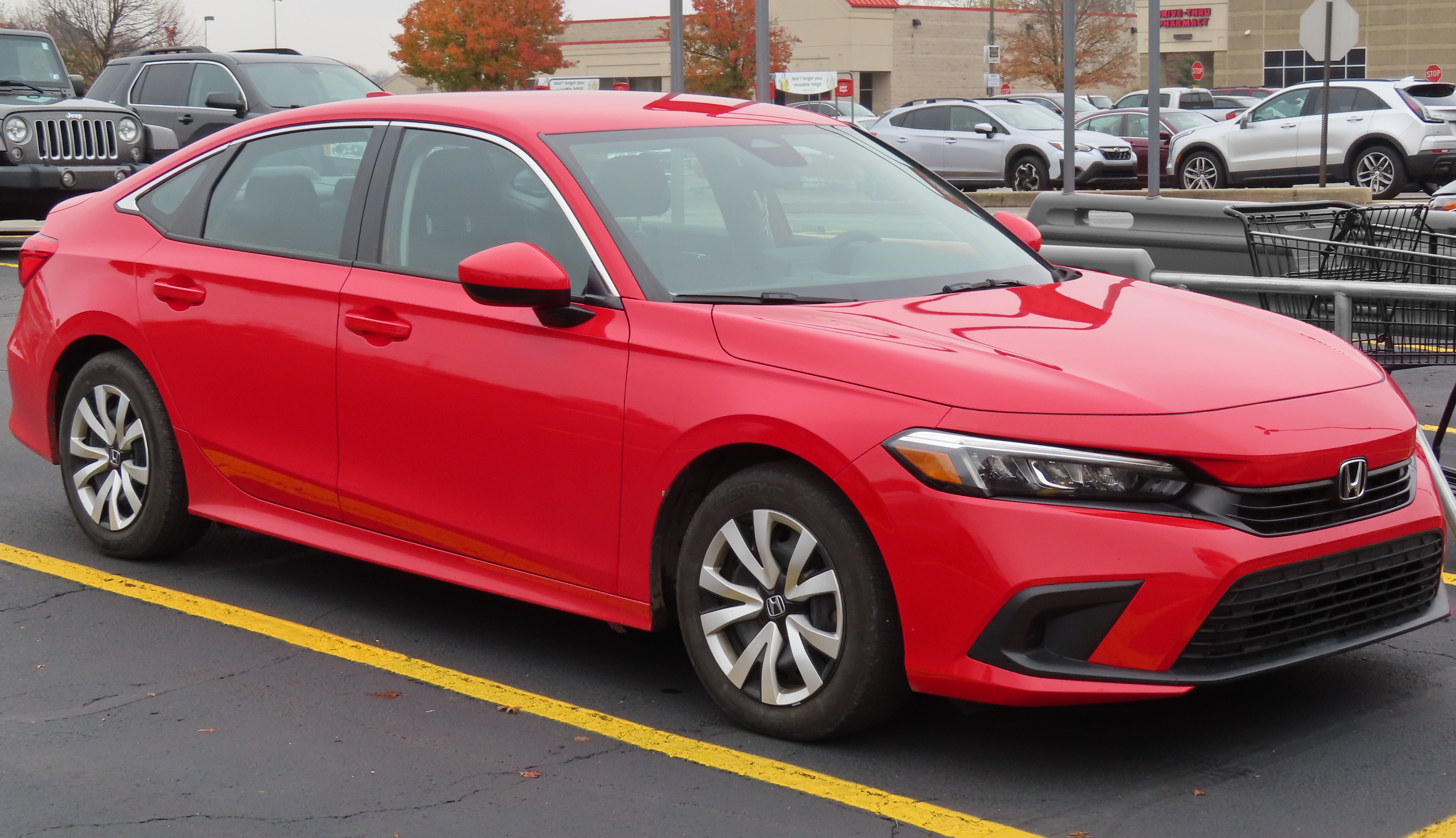
Frank Schwartz shares deep insights into the real costs and logistics of grassroots racing, emphasizing the benefits of renting race cars versus owning them. He discusses the financial and time commitments involved, the challenges younger racers face, and how rental options provide flexibility and reduce startup costs. Frank also highlights how racing expenses have evolved over the decades, the importance of community at the track, and practical advice on choosing classes and managing racing budgets. The conversation offers a thorough look at the economics and lifestyle of amateur racing with plenty of personal stories and data-backed observations.
Topics:race car renting vs owninggrassroots racing costsracing logistics and time commitmentracing class selectionfinancial challenges for young racersrace car maintenance and sparesregional racing economicsracing community and cultureracing tire and entry fee trendsendurance racing options
GHiT 0729: The Costs of Racing with Frank Schwartz
We have a great discussion of the costs associated with racing and the potential advantages of renting vs owning your race car. While racing is never going to be called cheap, this is a very viable alternative, especially if you are just getting started in racing.
A link to the episode is: https://tinyurl.com/RacingCosts
We hope you enjoy this episode!
If you would like to help grow our podcast and high-performance driving and racing:
You can subscribe to our podcast on the podcast provider of your choice, including the Apple podcast app, Google music, Amazon, YouTube, etc.
Also, if you could give our podcast a (5-star?) rating, that we would appreciate very much. Even better, a podcast review would help us to grow the passion and sport of high performance driving and we would appreciate it.
Best regards,
Vicki, Jennifer, Ben, Alan, Jeremy, and Bill
Hosts of the Garage Heroes in Training Podcast and Garage Heroes in Training racing team drivers
We hope you enjoy this episode!
If you would like to help grow our podcast and high-performance driving and racing:
You can subscribe to our podcast on the podcast provider of your choice, including the Apple podcast app, Google music, Amazon, YouTube, etc.
Also, if you could give our podcast a (5-star?) rating, that we would appreciate very much. Even better, a podcast review would help us to grow the passion and sport of high performance driving and we would appreciate it.
Money saving tips:
1) Enter code "GHIT" for a 10% discount code to all our listeners during the checkout process at https://candelaria-racing.com/ for a Sentinel system to capture and broadcast live video and telemetry.
2) Enter the code "ghitlikesapex!" when you order and Apex Pro system from https://apextrackcoach.com/ and you will receive a free Windshield Suction Cup Mount for the system, a savings of $40.
"Yeah. That's another reason why you would want to rent a race car. One that people don't want to talk about. Let's say you decide I love Mazda RX-7s and I want to race a Mazda RX-7. I go out and I buy a Mazda RX-7 and I build it to the"
Select text to request an explanation
If you're not using Ironclad for contracts, you could be leaving millions on the table without knowing it.
Every contract holds renewal dates, pricing terms, and obligations you can't afford to miss,
but good luck finding them when it matters.
Ironclad's AI instantly surfaces what matters, so you can act before opportunities slip away.
That's why they're trusted by OpenAI, L'Oreal, and Salesforce.
Find the savings hiding in your contracts at ironcladapp.com slash podcast.
That's ironcladapp.com slash podcast.
Captain's Log Supplemental
Hey, Jeremy, you know those race cars you're busy building?
Yeah, I do. I got one that I'm looking at every day.
You know what I don't see you working on?
You don't see me working on the amazing Sentinel system yet.
That's true. It would take all of 10 minutes for you to have one.
And it's very quick and easy to install.
It is. It is. And we could watch you when we are not at the race with you and see how you're doing.
And then we can call you up when you get out of the car and tell you everything you did wrong.
And I love that because so many years I've been driving and not been able to see what I'm doing.
I know.
And now we can.
I know. You know what I'd like to do with the video?
My most favorite thing is I take the video and I load it on YouTube.
And then I send it to my coach and say, look at 26 minutes and 17 seconds.
Look at this one lap and tell me what I can do better.
And every single time, you know what they say?
Everything.
Exactly.
Precisely.
So with the Sentinel system, you get instantaneous feedback plus useful feedback
that unfortunately is accurate for my driving.
I think it's accurate for all of our driving.
Pretty much. Yeah. That's probably true.
Yeah. But you need to get one in your car, sir.
Yes, I do. And with the discount code that you're going to tell everybody,
they can save 10% on this awesome system.
Yeah. Trouble free.
I haven't had an issue getting video every time we've gone out with the Sentinel.
It's always worked.
Can't say the same for some of the other systems we've tried.
I don't know.
It's on the podcast notes down there.
Don't do it while you're driving though.
We like to have our listeners live.
It's good.
Welcome to the Garage Heroes in Training Podcast.
I am the only host.
You're stuck with me this week.
It's Bill.
And we have a guest this week, a returning guest.
And he is one that we've had on the list for lap two and lap three and lap 50.
However, he is a very exceedingly busy, involved with racing,
involved with his company called Grass Paddock Motorsports.
He's been racing B-Spec and a racer for quite a while.
So he knows the pain and feels the pain of racing on the grass.
Roots Motorsport type racing.
And welcome back to the podcast, Frank Sports.
Thanks for having me.
No worries.
Always good.
And you were requested to come back.
And I've been delinquent in contacting you about it.
And then I did.
And you're like, yeah, that's gone great.
But not just yet.
It's because you've been having too much fun recently.
What have you been up to?
Well, in general, we're on the road 30 weekends a year at a racetrack somewhere.
We have cars located around the country.
For a strategic reason, we'll get into it a little bit later.
But it's pretty much every other weekend we're somewhere.
And even though we live in the Midwest, where our race season runs from
basically April through October, racing all around the country means
we only have a couple of weeks off in December, basically.
Other than that, we're going somewhere all the time.
That's fantastic.
Watkins-Klein was on the recent hit list, right?
Yeah.
So exciting.
It's my favorite track.
I've done about 35 tracks around the country right now.
And between driving it and racing on it, which are not the same thing.
They are not.
Some tracks drive really fun, but they're not really fun to race on.
Because passing is a little difficult, a little iffy in some areas.
And then you're not on track the whole weekend.
So having a location where there's a lot of fun things to do outside of the racetrack,
Watkins-Klein is a kind of a resort weekend community.
So there's a lot of people visiting, doing touristy things.
But it also means there's a lot of great restaurants and things to do,
state park to go hiking in and all of that kind of stuff.
So yeah, it's my favorite track in the country so far.
The next one's always my favorite.
So I sold that from Russ Bentley, but it seems appropriate to just about every racer.
So have you been to the world famous bar slash restaurant near Watkins-Klein?
Well, there's quite a few of them.
Obviously, there's the Seneca Lodge.
That's the one, I think.
Yeah.
We did a brewery restaurant about 10 miles out of town on Saturday night
called Grist, thanks to a recommendation from a friend of mine, Jason.
And phenomenal view over the lake and the food was really good and the atmosphere was top notch.
So yeah, had a great time.
I had a couple of clients who were renting cars and we were taking care of cars this weekend
in addition to driving ourselves and they asked me at the end of the weekend,
how was your weekend?
What was your favorite part?
Even though I managed to win both my races on Saturday and Sunday,
my favorite part was when we all went out to dinner on Saturday night.
Yeah.
I've said it before, if I told you racing was free, but you couldn't take any friends to the track
and you couldn't make any friends while you were there, you just had to kind of do it by yourself.
People would probably race two or three times, but it'd get old pretty quick.
The people would make it all worthwhile for me.
Indeed, the two complement each other very well, but either one independently,
maybe the friends would win out in the long run, but it would definitely dramatically
and drastically cut the enjoyment out of racing because most of the people at the racetrack are
the best people.
Well, it helps that you have something in common to begin with, but in general,
a race weekend for the overwhelming majority of people is a vacation.
People, you know, short of having an accident or mechanical problems with the car,
people are generally in a really good mood at a racetrack, even though you may be up late
working on the car and have to get up early to get ready for everything and you don't get
enough sleep and you're like super busy and it's physically exerting and you've got to unpack
everything and pack everything back up. By and large, there's a lot of smiles at a racetrack.
Yeah, but even the bad times make for great stories once you're done.
Yeah, sometimes you need a couple of weeks to let it kind of work its way through the system.
Yeah, I don't want to count how many times I've been at the racetrack saying,
is this juice worth the squeeze, you know? Sometimes it just piles, but that's okay.
So, Frank, you address one of the things with your company that
early on we made fun of our friend Adam because he wouldn't get his own car and he is a devoted
renter of race cars and we made fun of him because that's the way you have friends as you make fun of
them. But as we got more into this, this was like first or second year we were racing,
as we got more and more into it, we noticed that maybe Adam had some wisdom that we weren't
acknowledging at the time, but where he just doesn't want to own a race car,
maintain a race car, work on a race car, but he loves driving. And your company kind of
addresses that directly by assisting people like that and maybe some other people who should be like
that. Yeah, you know, so I think it's probably important to kind of describe a little bit about
what I do during my day job. So I've been a consultant in the automotive industry for about
15 years. I work for automotive suppliers and I work for directly for some car companies,
helping them understand how to do business better. So I'm sort of on the corporate strategic side
of things. And as such, you know, I did 30 some years in the industry, getting up to
pretty high level executive vice president at one of the suppliers. And research and data was like
super important part to making decisions. I mean, you got a lot of people who work for you,
who are smarter than you in very specific areas. So you take their feedback. But a lot of times,
there is a lot of emotion involved in things. And you kind of need to have some non-emotional
data. So it's one of the things I did for quite some time on the automotive side is market research
and, you know, it's important how you design a survey and a questionnaire and what kind of
questions you ask people because you can lead them into the answers that you want them to have.
And you can, you know, disguise things that are important and maybe don't come out.
So quite some number of years ago, when I was racing, I was racing in a class that wasn't
doing very well from participation point of view. And I said, you know, this is probably time to
take my day job and my weekend job and combine them. And, you know, so much for everybody who
has an opinion about why racing is successful or who isn't, I'm going to do the research.
And I'm going to do some studying about why people race and why they don't race and what causes them to
start and what causes them to quit and, you know, what kind of different people race and,
you know, how all of that can be used to make the experience better for everybody.
So one of the things that certainly came out through all of that is we all race for different
reasons. But in general, A, racing isn't cheap. And B, we're all really busy. So there's limitations
to how much you can race, even if racing is the most important thing to you in the world,
right? Unless you're independently wealthy, retired, and have a lot of free time,
which by the way, there are quite a few of those people racing. But for the majority of us, the
rest of us, having three weekends a year available to go racing is pretty much the limit.
The majority of people who race, race two or three weekends a year. And this kind of comes
back to the question about owning versus renting. From a financial point of view,
if you're not doing four weekends a year, you can't economically justify owning a race car.
In other words, the cost of a tow vehicle, the cost of a trailer, the extra time that you
have to take when it's your own car, you got to get to the track a few hours early
and you leave a few hours later because it takes time to unload and pack up and all of those kind
of things. So over the course of a year, four weekends is kind of to break even. Yet the
majority of people only can race two or three weekends. So clearly, I'm not going against
the idea that emotionally, there's always a reason to own your own race car.
Oh yeah. Yeah, I think you're being very charitable and saying break evens four
because you're at the minimum. Yeah, and that's because most people underestimate the value of
their free time. So I'm just saying my free time is worth 15, 20 bucks an hour,
which for some people it's more than they make it their job and for other people it's
substantially less. But even at that rate, it's pretty involved. So one of the things I did after
I used all of this data to help grow the class I was part of, when I stopped doing that, it was
kind of like running on its own. Then I started a business to have race cars for rent and the
general idea in the beginning was spec meata is kind of like entry level, but it's, you know,
it's not exactly inexpensive. And I think the V spec class has an opportunity to be less expensive
than spec meata. When you compare nationally competitive cars, right, because you almost
can't rent a nationally competitive spec meata, you can rent a regionally competitive one
all day long. Yeah, you know, nationally competitive cars are, you know, hard to come by.
In V spec, you can literally rent a car and win the runoffs with it. If you're talented enough
as a driver, because there's several companies around the country in addition to mine that have
cars for rent. And secondly, the way the rules are set up, the cars are actually
more evenly matched than even spec meata, which is something people don't fully understand.
If you take a field of spec meata cars and you take the person who's in the middle of the pack
and compare them to the fastest car, the gap is bigger than if you do the same thing in a
V spec race. And by the same token, it works the same way, you know, top third of the field,
top 10 of the field. It's different top five, because V spec just doesn't have the size to have,
you know, top notch, five top notch drivers show up at the same track. But
certainly if you look at spec meata and SRF three is the two classes that everybody says are
even, they're actually less even than V spec. So, you know, again, the idea that you can rent a car
inexpensively, and if you don't win the race, it's not the car, it's you. That's rare,
no matter what class of racing you run in, but it's possible in V spec.
Right. Yep. Yeah, we, we were in and out of V spec for a little bit just because we
couldn't get enough weekends of racing everything together. So we gave it to somebody who's a friend
of ours to get it being used because it just sat there with us and we just never got there.
Well, you know, this is the, this is the biggest issue, you know, not to go up on a tangent,
but this is probably the biggest issue looking at racing across the country. The general idea
that you want to race because you want to drive fast on a racetrack can be accomplished with a HPDED
or time trial or some other kind of competition event. You don't necessarily need a race car to do it.
If you're doing racing, you want other people who have similar rules, wheel to wheel competition,
you want to have some sort of battle. But depending on the class that you're in
and the part of the country you're in, you can't really always guarantee that you're going to find
other people to be competitive with. Some classes that are very strong in certain regions and formula
B, big in the Northeast, almost non-existent on the West Coast. Right. So, you know, people have
to do research on that and a lot of people don't and then buy a car and then are
disappointed in my area. I either can't race it enough because there aren't enough races or
I race all by myself most of the time and so that's something to consider as you go through it.
Again, it comes back to another advantage for renting. You're never stuck with a car
when you rent because at the end of the weekend you give it back and you're done and
you're still very free and flexible. Absolutely. Yeah. You know, there's a certain
advantage of finishing the weekend and just walking away to a regular car and getting in it
as opposed to getting the car into the trailer, getting the trailer into a truck and trailering
all the way home. It's a significant delta in time. Yeah. You know,
finances are probably one of the reason why people are limited in how many times a weekend they can
race. The much free time they have is a critical aspect of it. How far they are from the racetrack
is a critical aspect. Again, I do a lot of research in other sanctioning bodies and stuff
like that, but the cutoff seems to be five hours. If there's a racetrack within five hours of where
I live, there's a very high likelihood I'm going to go. Once you go past five hours, the numbers
drop pretty substantially. I think the reason is most people can find a way. If you're already at
a point where you can afford to go racing, you're probably at a point with your job where you can
find a way to work Friday or late to go racing. You're not working 40 hours a week in fast food
where they're not letting you get out of your schedule. That's typically not going to earn
enough money to go racing. Again, racing isn't cheap. My data shows it's not getting
more expensive, but it was never cheap. You have those arguments online all the time with people
about it. It's too expensive. I can't afford it. When I started back in the 80s, I had to have a
second job to pay for racing. I couldn't do it on my salary. If you have some impression that
back in the old days, we got to go racing for $150 entry fee. You're correct. At that time, I was
making $7 an hour. That $150 entry fee was a pretty substantial hit. That's probably more expensive
compared to my salary than a $500 entry fee is today.
Sure. It varies across the country because I know I get jealous of our friends on the West Coast.
Their HPDs seem to be a whole lot cheaper than the East Coast guys, but I'm not going to tow to
LA to go racing. It is what it is. According to my data, and we're talking about sprint
racing because I'll talk about endurance racing a little later. According to my data,
if you are sprint racing, the cheapest, least expensive place to race in the country is in
Detroit at Waterford Hills. Waterford Hills is a private club. I say private. Anybody can join.
That owns their own racetrack. They race six weekends a year. They race three races a weekend
and four club members, which means that you volunteered some time to help do maintenance
at the track somewhere during the quarter city year. You can race all six weekends
for less than $275 a weekend. Wow. As an entry fee. Then if you consider that Detroit is a
major metro area, the overwhelming majority of people who race there live here, which means
there's literally no travel expenses. There's no hotel expenses. You can eat dinner at home.
I started, I raced there early in my career when my children were young. I was able to race on a
Saturday and get home in time to give my kids a bath before they went to bed and read them
a bedtime story. It's one of the key reasons when people call me and ask me, hey, I want to start
racing. What can you advise me? My first question is what's your zip code? If you live
in certain zip codes, it's ridiculously expensive. If you live in other zip codes,
it's really easy and inexpensive. I don't think we're at the extreme where we're at,
but I think we're towards the higher end, just east coast, northeast especially, is a little
pricing. When we were making fun of Adam, and Adam probably can laugh at us now,
we were saying you should get a car because the one thing racers are good at is we want
to share the sickness with as many people as we can. Even to the point of the first one's free,
but then we've set the hook and life is good from there on. I think he had some wisdom because
it's not that he's not mechanically inclined. He's not interested in being the mechanic,
so I think it works well for him. To be fair, if you want to turn my stomach,
you put a wrench in my hand, I'm in a bad mood before I even put the wrench on a nut or a bolt.
I really dislike working on cars, but I'm not wealthy, so I have to work on cars in order
to own cars. It's not just that we have people today who are less mechanically inclined
because cars are more complicated. Every person who's less capable of turning a wrench,
they're probably more capable of decoding software-related problems than cars.
Sometimes they're the same thing because the software's becoming harder and harder in cars.
I'm not going to be one of those people who jump on the bandwagon that say,
we don't have a lot of racers today because they're not mechanically inclined.
Growing up, when I did, you had to be mechanically inclined to own a car because you were broke,
you had a used car and it would break down all the time. If you didn't know how to fix it,
you weren't going anywhere. Even bad cars today are way better than the best cars
we had back in the 70s and 80s. My youngest son, for example, as a Honda Civic has his daily car
by and large, he's never driven anywhere where it broke down on the way.
That was a couple of times a year occurrence when I was his age.
Easily. I remember growing up and seeing all the cars on the side of the road that
caught fire and it's pretty rare now. Yeah. If you look at that side of it,
that's one thing. I would think one thing that's pretty critical that keeps people from getting
started racing that I hadn't considered. Again, when I started my business, my target was younger
people who have less money, give them an opportunity to find a way to start racing.
Most of my clientele are not younger people. Most of my clientele are middle-aged,
more on that in a minute. I have a couple of younger people who work for me,
who race cars out of the shop. They trade crew time for seat time. One of them,
Trenton, had a conversation with me just the other day about something that didn't occur to me,
but it's really hard to own your own race car if you don't own your own home.
And a place to keep everything. Yeah. You say, okay, you live in an apartment
complex. You can just go out and you can rent a storage building and you can put your car there.
Well, storage buildings generally don't allow you to work on cars in the storage building.
So now you're like, okay, well, then you can go out and rent a garage somewhere
that lets you work on it. Costs just went up. And if you're living in an apartment,
you're probably saving to buy a house. So why would you spend that extra money on storage?
So renting is a possibility to get younger people involved earlier than they might be able
to afford to or logistically be able to, because it's not just, okay, where's my car set and where
do I work on it? But where's the trailer set? And oh, by the way, I have a tow vehicle, which,
you know, if I can only have one car, then my tow vehicle is also my commuter vehicle going to
from work, which means it's bigger and it, you know, sucks more gas. So, you know, it's really a financial
difficulty for young people to get started in racing. And it's mainly because, you know,
things that were possible for us in our late 20s when we were younger are not possible for
a lot of the younger generation today. I had plenty of friends when I was younger
who bought houses in their late 20s. Not many people in their late 20s can do that today.
No, no, even if you're in a condo, you often don't have
space or, you know, a lot of condos don't have garages, you know, so you're in the
parking lot and nobody in the condo association wants a race car, maybe under a tarp, maybe just
out in the open in the parking lot for weeks on end. So it gets tricky. Yeah, I was 34 when I
started racing. I've been autocrossing since I was 20, so 14 years of autocrossing. But
I was 34 when I started racing and I, you know, finally got to a point financially. And
like I said, I had a second job to help pay for it, that I'm going to go out and buy a car and
build a race car. And I had the car that I bought towed to my apartment complex. And the next day,
the apartment complex manager knocked on the door and said, you can't have that car here
if it doesn't run and doesn't have a plate on it. Right. So I was lucky. I was working for
Dana Corporation and I'm talking about it at work. And my boss said, well, you can do it
out of the garage in the shop at Dana Corporation. So I built my first race car at work, which is a
really unusual opportunity. But had that not happened, I would have had to sell that car and
I would not have started racing at 34. It would have taken many more years before I had a chance.
Yeah, it's tricky. You know, it's like that chicken and an egg thing they make jokes
about for, you know, since the beginning of time. So it's a tough one. So when you're looking at racing,
you've got to look at, you know, some people make a budget, like one of our friends,
Colin, is like a budget obsessed individual. He likes his Excel spreadsheets. He keeps track of
everything. Then other people are, let's classify them as the ostrich, right? You know,
it is what it is and they don't want to know and they just spend the money that they need to spend
the money, which is never a good plan. But they sometimes they do it. The one thing that really
tips the balance towards renting a car is all the associated startup costs. If there's any
storage costs, if there's any mechanical issues, things like that. Those are the things
that are often not even thought about because you think about the fun part of being on track
and the racing, but you don't think about all the other stuff that's almost or more than a full-time
job to get you to the racetrack. Yeah, you know, I'm still amazed at the number of people who
race who don't have a full set of spares. And what I mean by that is if I can only race
two weekends a year and I go to the track and something breaks, there's still a substantial
number of people who just load the car up on the trailer and go home. They basically lost one of
their two weekends a year. And it's one of the things we've learned as we've rented more and
more cars. We're getting close to our 100th client right now. So that's 100 different people
who have sat in one of our race cars. But we have a literal spreadsheet of spare parts that we take
to the racetrack that allow us in almost every circumstance to pick the car. So once you've
invested your weekend, you get to carry out your weekend. And I go even one step further.
I check all of the local pick and pulls around the racetrack that I'm going to
to verify that there are parts available for the things that I don't carry around as spares.
We had a client have an accident in the first practice session in Florida last year,
which under normal circumstances would have ended this weekend. And we managed to get
them out for his race because 80% of the parts that were necessary to fix the car were in the truck.
And the two things that we didn't have to fix it, he was able to drive 15 miles away and pick
them up from a junkyard. Because I had checked ahead of time that they had cars available.
Quite honestly, had they not had cars available, then I probably would have loaded those two
of items in the truck. So how much is all of those spare parts worth?
Geez, when you're talking about bumper reinforcements and hoods and things like that,
you're basically saying, okay, now I got to buy a spare car because you can't order to buy all
of those things individually. So now you got a parts car. And the space for your race car and
the trailer, you know, where's the parts car going to go? And are the neighbors going to complain?
And what do you do when you take everything off of it? How do you get rid of it? Not that
I've had that problem, you know, I'm just saying. So, so yeah, there's a lot of startup costs
that people don't consider. You got a race car. You got four tires on it for dry.
There's still people who go to the racetrack without rain tires.
And I've seen people load up and go home one a weekend turned into rain,
because they didn't have four extra wheels and four extra tires, which could be, you know,
anywhere from $1,500 to $3,500 in cost and value.
Yeah. Plus, you know, I'm on the side that if I just bring four drives and four wetts,
that's still not enough because, you know, there's, you know, you could run over a piece
of safety wire, you could just get a flat, you could deep eat it or whatever. And, you know,
and a lot of races don't have tire companies supporting the racetrack.
No, almost none. So, you know, I've been at a racetrack before where I had a valve stem problem.
You know, I can't, I can't get that fixed on a, I can get it fixed probably on a Saturday.
If the track is near a metro area, I can throw it in the tow vehicle and run out.
But generally, I can't get it fixed on a Sunday.
And racetracks in metro area are kind of rare because they're noisy.
So most of the racetracks are kind of remote. So, yeah, you'll miss half your day. You'll
miss your afternoon session if you have to run out and get a valve stem repaired.
So, yeah, you got to have extra tires. So, you start to add all of that stuff together and
the costs, the investment to get started go up substantially, which again,
if you're renting, you don't have that, right?
No, no, it's, it almost eliminates, and when I say almost, it almost eliminates startup costs
because I'm associating, you know, personal safety items, you know, you got to have your,
people will argue, you got to have your horns, you got to have your suit, you got to have your
helmet, you got to have your gloves, you got to have your shoes, you got to have your socks,
balaclava, ideally, you know, those aren't free either, but you were going to get them
either way. So, it's essentially as close to zero as possible to be safe or all these associated
costs and all this associated time and all this associated space and money and it piles up. I mean,
I look at what we started with, we started in one, and I'm prefacing this, I think most of our
audience knows, I'm a little ridiculous. So, we started off with one hanger that's essentially
one, two, three, four, seven car spots. I ran out of room so fast that we had to get a second
hanger. So, now I have one hanger with seven car spots, and that's 20 foot ceilings, and then
another hanger with six car spots, again, with 20 foot ceilings. And I'm running out of space again,
and granted, our team is a little large and I'm a little ridiculous, or as Vicki likes to say,
I'm a lot ridiculous, but that's a different story. So, you know, it doesn't get smaller.
Well, you know, if you rent from a medium-sized rental company or larger, like we are,
we're not semi-truck, you know, seven car trailer kind of people, but we're also not like one car
on an open trailer people either. So, we're kind of in between in terms of our size.
Most of us have spare honds, spare socks, spare gloves, spare racing suits, and stuff like that.
In the trailer were those cases where people either forget it, or earlier this year I had
a husband and wife team who went through driver school, and they weren't fully sure that,
you know, they were going to keep racing after driver school. So, they only bought one set of
everything. Oh, no. So, we provided the second set. With the exception of helmet, I think a helmet is
a very personal item. Yep. How it fits and how you see out of it is critical for safety. So,
you know, I don't necessarily recommend people share helmets. No. Right? You kind of need to,
it's like a shoe, right? If you're a size nine, you don't want to be racing in a size seven shoe
by the same token. If you've got a smaller head, you do not want to put a larger helmet on
because it's free and somebody loaned it to you for the weekend. If you have an accident,
it's not safe. Yeah, I think every time I hear about sharing stuff, and, you know, again,
we're predominantly endurance racers. I just remember the one story that our friend Mental
said when he was judging an endurance race. They had a college team and they were in a Texas
race and, you know, they saved money by everybody sharing the same race suit,
everything in Texas in the summer. So, you can imagine the second person thought that was a
really bad idea. The third people on thought it was just a terrible idea. And, you know,
by the end of the weekend, they automatically upgraded to the, no, this is a bad idea
fundamentally from the ground up. Terrible idea. Yeah. You know. Yeah. Not the mental picture
anybody wants to think about because if you've ever raced and you see what it looks like on a hot
summer day, sharing that with your friends is a level of intimacy that I am willing to say,
no, thank you. No, no, yeah. So, so I guess it all comes down to and I don't know that we
want to get into costs because it obviously depends on where you're racing and what type
of racing it is. I know you have a ton of B-spec cars and you might even have more cars than
that. But when you look at it externally, I've heard people who check into it say they get a
little bit of sticker shock with the number. But when you start looking at all that number
takes in, it's really not that much different if not less than what you're going to spend
without all the startup costs, without all the storage costs, without all the hassles
of getting to and from the track and everything. If you look at the number, it's not that far off.
Yeah. So, you know, I'm not afraid to talk about generic numbers in this conversation because
I've done a ton of not just research, but you know, I'm the first rule of racing is never
add up all the receipts. No, no, it's never a happy place at the end of that conversation.
No, but I'm a spreadsheet guy and everything is in a spreadsheet. So every roll of duct tape
I bought, every tube of JB weld, I know when I bought it and I know why I bought it. So,
you know, let's just talk about the really difficult conversation of cost. So I'm going
to start this with the details of what I said earlier, which is racing has not got more expensive
over the past years. If I track entry fees at a racetrack, and I've done this now since the
80s when I started. Now, obviously, I have my own data for the races I went to. But,
you know, since then I've also gone back and pulled up data by looking at old registration
forms to see what the costs were in other places. The biggest problem with entry fees is inflation
goes up every year, but entry fees do not. And what I mean by that is, let's just say,
when I started racing, the entry fee for a regional race weekend in the late 80s was 150
dollars. It was 150 dollars and 88. It was 150 dollars and 89. It was 150 dollars and 90. It was
150 dollars and 91. And somewhere in 92, 93, they moved it to 165. And then it saved for a while
and then they moved it to 175. And, you know, now it's 400 dollars. So if you started racing
in one of those periods of time where they didn't change the entry fees for five years,
your entry fee is cheaper than inflation because it's stair stepping. It's not going
up at a linear manner. Yeah, it's notchy. Yep. So that's why people have this general idea
that racing used to be cheaper. Yeah, some things were cheaper based on when you did it, right?
So the second part of racing that has an expense is the cost of driving to a racetrack.
And whereas, you know, gas is substantially more expensive, vehicles are way more expensive.
But in general, we have more racetracks available more weekends now than we've
ever had in the past. So you can race more without driving as far in general. So I'm
going to also argue that travel costs have maintained a fairly similar linear rate with inflation.
So those are two things that people always talk about. Then the third one that comes up is tires.
And, you know, my argument would be tire technology has gotten to the point now
where tires are generally quicker, longer than they used to be. However, we have all different
kinds of tires. So there are tires that are only good for a weekend. Whereas in B-Spec, we have
tires that are, we have a spec tire from Goodyear, which is phenomenal. I ran Watkins Glen this
weekend on the fifth weekend on a set of tires and won my races and set a track record. So
that didn't happen in the 80s. I bought a set of tires. It was fast for that weekend. And if I
wanted to go fast the next weekend, I had to buy another set of tires. Even sometimes more than one
set of tires per weekend. Yeah. Well, we have that today too. And, you know, that's kind of where
I'm at now. So we've talked about entry fees. We've talked about travel. We've talked about
tire costs. Those are the three things people always jump on. What we haven't talked about
that has had a significant impact on the cost of racing is lap time. So in 1990, I built an ITC
Ford Fiesta. In 1990, it cost me five grand to build that race car. That included a roll cage,
which was bolt in. That included all of the suspension details that included, you know,
to the limit of the rules to modify it, you know, boring the engine, balancing the engine,
the suspension, putting in a limited slip. And I ran all the stuff we knew back then, right?
Yeah. And, you know, the car at the end of the day had 80 horsepower weighed, you know,
1800 pounds or so. And at our local track, Waterford, my lap time was right amount around
a minute 20. And in 2019, I built a B-spec race car, which cost me about 10 grand.
The car was more robust. It broke down less. And it was way safer. It was way safer. And it was
about a second lap faster. And if I look at inflation from 1980 to, you know, let's just
say 2020, 40 years, sorry, 1990 to 2020, 30 years, $5,000 was about equal to 10 grand. So,
for the same inflation number, I had a car that was more reliable, safer, and slightly quicker.
The difference is in 1990, building that Fiesta, the gap from me to the fastest car on the track
was not that huge. Today, I can buy a minivan from the factory with 300 horsepower.
Easy. Yeah. Right. And cars are just substantially quicker. And you look at a class like American
sedan, which is used, you know, American muscle cars like Mustangs and Camaros. And the front
running guys are having to buy six tires a weekend to be competitive. Easily. You know,
the difference is the cars are big and heavy, and they're blindingly fast. So, if you're comparing
that Camaro in 2020 to my Fiesta in 1990, you're not really comparing things that are like.
You're comparing. The cost is really a factor of how fast you want to go.
Yeah. And how heavy the car is, not, you know, a natural part of racing.
So. And the car back then was probably, you know, I'm not going to say it's the fastest car on
track, but relatively fast back then. And now we consider a beast-back car, which is going
faster on the same lap. Slow. Oh, yeah. Yeah. So, you know, if I go to Daytona, the difference between
a beast-back car and a GT1 car is 45%. So, if they have a minute and 40 lap time in a GT1 car,
it's a two minute and 15 lap time in a beast-back car. Right. So, if I go to a handling track like
Waterford, the difference is about 20%. So, the gap's about half. But it's huge. And that speed
and the weight of the vehicles is what drives the cost. So, you know, if you're looking at,
you know, what's the least expensive way for me to get involved in racing,
first off, you want to buy a car that's regionally classed and not nationally classed.
Right. Okay. So, you know, an IT car, you can buy a decent IT car for five grand. The problem you
have is most parts of the country, when you take it to the track, you're going to be the only
IT car in your class. So, you know, there's a gap between a 15 grand beast-back car today
and a five grand improved touring car. And then, you know, our variable cost for a weekend in a
beast-back car is about 500 bucks. So, that's grand for the tires. They last, let's say, four weekends,
three weekends to be safe. Because the more skilled drivers get more weekends out of tires,
we find with our renters, they don't get as much time on the tires as the experienced drivers do.
They over-brake and over-corner. So, you know, you've got $350 set of tires for a weekend,
and then you've got $50 in premium gasoline because most of our cars run
catalytic converters, so you have to use premium unleaded for the performance cars.
And then you've got cost of brake pads and rotors over the year. You've got the cost of oil changes.
You add all of that stuff up, and you're about $500 of cost for a weekend for a beast-back car.
I would imagine there are classes where their weekend cost is probably five grand.
Easy. Yeah. Because that speed doesn't come for free.
Nope. And then there's improved touring cars where you can probably do it for $250 a weekend.
In other words, the improved touring cars are older. They're substantially lighter. My beast-back
car weighs 2,675, so my tire wear is based on that. Remember, my Fiesta was around 1,800 pounds
as an IT car, but the same tires on the two cars, and the Fiesta is probably going to get twice as
many weekends as the beast-back car is. So, you know, your variable cost for a weekend is,
you know, $250 to $500. Specmiata is probably pretty similar to the $500, if not more.
The difference being, you know, for a Specmiata, you're not going to get $500 and have an
nationally competitive car, right? You're going to be regionally competitive.
Yeah. And, you know, again, you know, to be fair, you're not allowed to say it, but I can.
You're being very conservative on those costs because I know people who spend more than that
at lower levels. And, you know, it's kind of like when we lived in Hawaii, it was to say,
oh, it's really expensive out there. I'm like, well, it can be as expensive as you're willing
to make it. I mean, if you want a very new pair of sticker tires every time you go on the track,
that's, you know, let's say there's five run groups. That's five. That's 20 tires,
minimum. And then we're talking, if you're that ridiculous, you might want to do that for
practice too, right? And then, you know, you're talking, you can spend as,
racing's like, you know, you can spend as much as you want. Nobody's going to stop you.
Nobody. And, you know, the closest comparison to a race car that I'm going to use as an example
is a boat. Yeah, exactly. So, you know, everybody says a boat's a hole in the water you pour money
into. Race cars are very similar. But just like racing, if you're not close to a racetrack,
if you're not able to use the race car four times a year, it's probably better to have a friend with
a boat than it is to have a boat. It's always better to have a friend with a boat, Frank. We
both know that. That's fine. So, you know, for people who are just starting out,
look, let's not sugarcoat it. There's, there's 100 reasons to own a race car.
The first one is, if you like working on cars, then you don't need to rent. You need to own.
Okay. Yeah, if that's what, if that's what scratches the itch, yeah. Yeah.
The second one is, if you want your race car to look exactly like you want your race car,
you want it the color you want, you want the seat in exactly the same position you want,
the exact steering wheel you want. You're very specific about the way it feels and the way it
looks. You need to own your own race car, right? Yep. If, if your racing schedule is based on,
oh my God, it's Monday. I've got a free day on Friday. I'm going to go racing this weekend.
You need to own a race car because it's really hard to rent a race car and
four days notice. It's really hard to prep a race car and four days notice just for those listening
at home. So don't blow that off. I'm just saying, if you wake up on Monday and say,
I'm going racing this weekend, generally. Yes. You need to own your own race car to
have a chance of making that happen. For sure. Yep. Right? Yep. So, so there's tons of reasons
to own a race car. Reasons not to own a race car. I don't have a garage. I don't have a tow
vehicle. I'm not sure if I like racing enough to make that big initial investment.
That's a big one that people often forget. Yeah. Imagine you'd go through this, you start and
you're like, yeah, that was fun, but it's not really fun. Then what do you do? You're going
to lose a lot of money trying to liquidate what you've just bought. You're not getting that
money back. Yeah. You want to race all over the country. I can rent you a car and I'm waiting
for somebody to call me and ask for this, but I can give you a package deal for 2026 that includes
Sebring, Lime Rock, Watkins Glen, Laguna Seca. You could do those four racetracks in one year
and not tow one mile because I have cars in the northeast and the southeast and in California.
Yeah. That's quite a bucket if you're going to make a bucket list. Those are on that list.
Yeah. That's another reason why you would want to rent a race car.
One that people don't want to talk about. Let's say you decide I love Mazda RX-7s
and I want to race a Mazda RX-7. I go out and I buy a Mazda RX-7 and I build it to the
IT-7 class that currently is regionally allowed in most of the country,
which means I'm going to race against other Mazda RX-7s that are built similar to mine
in terms of rules. Great. I find a car that I think is phenomenal base for five grand. I buy it.
I invest five grand in and I have the nicest Mazda RX-7 in IT-7 in the country and I've spent
10 grand on it. Awesome. 20-27 rolls around and the club that you're racing with says,
you know what? There aren't enough Mazda RX-7s racing anymore. We're going to shut down the
IT-7 class. That car is not worth anywhere near to 10 grand you have in it. In fact,
you're not going to be able to get the five grand that you bought
or in the first place most likely. You're at the sanctioning body, the club, the
for-profit organization that runs your car can change the value of your car by a rule change.
This is another reason renting may be a big advantage over owning because if they kill
B-spec next year, you don't lose money. I do because all my cars are worthless. Or if next year,
this year you're renting a B-spec Mini Cooper for me because the way the rules are set up,
the Mini is a good car to have. Next year they add 100 pounds to the Mini and they take 100 pounds off
the Mazda. Next year you can rent a Mazda from offline racing and you're like always in the
competitive car. And you may find out your driving fits a different car. Yeah. So there are
people owning a car is right for. There are people who renting a car is right for. You just got to
ask yourself those questions which ones work. And by the way, there's three types of rental
companies in the country. There are large companies that this is all they do.
Alliance Autosport in Ohio is a great one we recommend all the time. They have
Specmiata, they have TA2, they have Formula Cars, they got a huge shop, SpecRacer Ford,
and they'll take care of you and they'll travel to many of the racetracks in the country.
Of course you pay more like you hire them to race at Sebring. You're going to have to pay
them to tow your car from Ohio to Sebring. Right. So you know your costs to rent a car from
them and again I don't know their exact numbers so I'm going to use some generic numbers but
most of those companies are in the three to four grand entry level range and they go up from there
depending on if you want to have test days or whatever else. Basically for the weekend
it's that much. Yeah. And then of course you've got to pay for the transportation on top of
that rental rate. Then you have a guy who's got a Specmiata who can't really afford to go racing
so he races his Specmiata twice a year and he rents his only car to you two weekends a year.
He might rent it to you for a thousand bucks a weekend because that's a thousand dollars in
his pocket he didn't have otherwise and it helps cover his cost of racing.
You know he's not a business he's just a guy renting a car. Right. There are those options
all over the country as well but very specific tracks and very specific weekends. For example
he's probably going to drive his car on the weekend when 40 cars show up in its class.
He's not going to let you rent it. He's going to let you rent it on a weekend where only
two cars show up. Right. Or like I started in the 80s I had a race car and as I continued to
improve the race car I put a new suspension on it. I got nicer wheels. I got better tires.
I had enough parts left over to build a second car. So when I started renting in 1991
it's the first time I've rented anybody a race car. I had two race cars and the
really good car I drove and the less good car with the older parts on it I would rent at a
discount to people and you might be able to find that situation for 1500 or two grand.
If you look around the country there's people who have two cars and they'll rent one of them to
you and that's an option. Our company is kind of in between so we're not 1500 bucks and we're
not $4,000. We're in between that so we're generally around $2,500 a weekend. Again,
you still have to pay to transport the cartoon from the track so those are some general numbers.
When people come to us and they say you know what I want to rent the July Watkins Glen Race
next year and they want to sign a contract today I'll give a huge discount for that
because it helps me plan my travel. If somebody comes to me and says hey I want to rent
three weekends next year I'll give a discount for that and then I also typically between Black
Friday and middle of December I offer some specials. Last year I offered three race weekends
at majors Mid-Ohio, Gratton and Genderman and the run-offs at Road America package price for 15 grand.
And you know that means you can go run at the national championship race in a competitive car
with no out-of-pocket of course unless you wreck it or damage it. No out-of-pocket,
no towing for the same price it would cost you to buy a car.
And that's basically you know plus or minus that's a full season for almost everybody.
Yeah so you know that's four weekends and all the towing, all the fuel, all the tires,
all the brakes, all the maintenance, all the assurances that the car is good.
We have 21 race cars for rent which means you know with our spares you go out on a Saturday and have
a mechanical or an accident. Odds are you still go out Saturday afternoon or Sunday.
You're going to make it through the weekend. We have been known to run back to the shop
and pick up a spare car if we needed to. Sometimes when we have room on the trailer we have a spare
car at the track already. Right. So you know these are all things that aren't going to happen
if you were to own your own car like to give an example to do the same thing with your own car
three majors and the runoffs you know you are probably looking at
five grand out of pocket in terms of towing and especially if you're nationwide like that.
Yeah oil changes and everything else so it is it is another option another way for people to get
involved in racing. Yeah and it's also great when you can uh let's let's just pretend we're
we're going to use ourselves as an example. We live in the northeast one of our bucket list tracks
is Thunder Hill. Getting one of our cars at Thunder Hill is expensive. It's probably easily
more than a week at least. Just tow out tow back and and race there and who knows what condition
you're in to race there after towing across the country. You know we're probably closer to two
weeks to do it the right way. So we are at Thunder Hill on October 25th and 26th and we have two
cars available. Exactly. And the rental from us is less than it would cost you to tow the car
to and from Thunder Hill. 100% and and you know we we have cars I mean you know people who listen
to the podcast know we we probably have too many cars but you know you know if we want to go do
you know let's say the the 25 which doesn't exist anymore hopefully it comes back
you know this this would be a way for us to do it because you know it's it's hard to get
because not only if you're going to go out there you got to bring all your spares
you got to bring all your tools you got to bring all your supplies you got to bring
it gets hard to do it in one trailer and it's no fun driving across country with a trailer
and it's really no fun driving all the way back. So you know this is this is good for people who
have even if you own your own car sometimes this this is the this is the make sense button
not the oh my god button so let's think about it. Yep. Did we miss anything Frank?
Are we to recover it pretty good or you know because obviously we're going to have a part
three but you know anything that comes to note right now? I don't think I missed anything but
I think we talked about too many different subjects so maybe I can summarize real quick.
That'd be great. Thanks. Racing isn't cheap. It's never been cheap.
At the same time you have never had more of an option on how to go racing
and more reasonable options on how to go racing because when I started rentals were
virtually non-existent and now there's rentals all over the country in all different kinds of classes.
Yeah. When I started an endurance race was a rarity and you couldn't find a seat in an endurance car
if you had a pocket full of money. Now with all of the different endurance series
that's another option on how you can get started in racing. We didn't talk about it during the
podcast but some of the endurance series don't require you to have a competition license.
I would caution one thing that we haven't talked about that I want to make sure people think about
what happens if you get hurt at a racetrack. So only one club in the country has a really
great insurance policy that let's say you're walking through the pits and you step in a
pothole and you break an ankle. You know some sanctioning bodies have insurance that cover you
for that. Most of them do not. By the same token if I run off the track and hit a guardrail
some sanctioning bodies will send me a bill for repairing the guardrail.
It's not a small bill either. Right. So you know I'm not going to get into a value conversation
about which sanctioning bodies are best and which ones aren't because if you live again we
back to the zip code thing if you live in certain parts of the country you only have a
couple of choices. Right. So not everybody races everywhere enough to make people happy.
So racing isn't cheap. It's really not getting more expensive though. What is getting more expensive
is driving fast is expensive. Heavy cars. Rentals are a way to mitigate the cost. Rentals are a way
to experiment before you make the final investment. Rentals are a way to be flexible and you know
finally there's going to be a certain percentage of people who listen to this and who are like
even a $500 a weekend entry fee is outside of any kind of money that I can afford.
The majority of us who race cars would kill to have people come over to our house
and help us work on our race cars and would kill to have people come to the track and help us
and by and large you know the one thing that doesn't get talked about enough is if you love
racing and you cannot financially afford to race go to a racetrack when they're having a race
walk around talk to people volunteer with the club or the organization that's having the event
flag a corner work grid go help them in timing and scoring you know do something like this to
volunteer to help the event run and the reason for that is all of the best deals in racing
happen word of mouth at the racetrack if you see a car for sale online that means the guy who
owned that car has tried to sell it for a period of time his friends have all turned it down
yep all the people at the racetrack who are not friends but acquaintances have turned it down
and he's posting it online as his last resort to sell it the best deals get sold verbally at a
racetrack that never were posted anywhere for sale yep indeed so going to a racetrack is the
biggest thing you can do to minimize your cost of racing because you're going to meet a lot of people
and maybe you get lucky i have five people who work on my race cars at my shop and who've gone
to driver's school in exchange for the amount of work that they've done on the race cars
versus having to spend any money out of pocket right so frank if anybody wants to rent a nationally
competitive beast back many i know a guy you know a guy how would you get in contact with that guy
our website is www.graspatic.com just a quick comment about where the name came from
if you go to a racetrack to race the people with money tend to be in the garages they rent
garages for their cars because it's nice and convenient and then the people with a little
bit of money tend to be padded in the flat paved areas which are often reserved and then the
rest of us end up paddicking somewhere in the grass so we kind of adopted that as our
mantra and atmosphere we tend to be a graspatic attitude not necessarily our location
but we're rather inclusive we scholarship minorities and women who want to get started
racing on a fairly regular basis and we help people who can't afford to go racing
find a way to get into the club and the activity so graspatic is our name because
you know that's kind of the atmosphere and attitude of where we are on a racetrack weekend
yep indeed so reach out to frank this sounds like interesting fun to you and you may see us next
to you who knows thank you sir thank you for having me always fun we'll uh we won't say goodbye we'll
just say we'll see you in our third lap coming soon ish thanks Frank thank you
hey it's tanner and you know that first icy morning when you realize that your heat
isn't working well don't let that happen just reach out to my friends at Cornell's plumbing
heating and air these guys are the only ones i call when i got a broken pipe no hot water or even
no water at all their local family owned and operated and know how to make your home comfortable
tell me heard tanner from the brew talking about it to get a zero dollar service call with repair
or 50 bucks off any repair trust the links Cornell's plumbing heating and air
Cornell's plumbing heating and air
Request an explanation for:
6 cars
6 cars featured
Request an Explanation
Heard something you'd like explained? We'll add it to this episode.
Sign in to request explanations for terms you heard.
Want to learn more?
Browse our glossary for plain-English explanations of automotive terms, jargon, and concepts.
See something that's not quite right? Our annotations are AI-generated and can sometimes miss the mark.
Click the flag icon on any annotation to suggest a correction.