A deep dive into the upcoming 2027 Kia Telluride features insights from James Bell, Kia's head of corporate communications. The discussion covers the vehicle's design evolution, including a larger grille and enhanced interior screens. The episode also touches on the importance of tire pressure gauges, with Matthew Guy emphasizing their necessity for everyday drivers. Additionally, the podcast explores a recent NASCAR texting scandal involving executives' disparaging remarks about fans and team owners, highlighting the ongoing tensions in the sport's management and fan relations.
Hello and welcome to this week's TTAC podcast!
This week we're talking about the 2027 Kia Telluride -- and we do so with Kia's James Bell.
Also, TTAC contributor Matthew Guy and I discuss tire-pressure gauges and the major text-messaging scandal rocking NASCAR.
We thank James and Matthew for their time and Matt Posky for editing. Most of all, we thank you for listening!
"...walk us through tire pressure gauges. Yeah, and it's almost a lost art to do some of these basic checks on your car anymore. I mean, it's something..."
A tire pressure gauge is a device that tells you how much air is in your car's tires. It's important to check this regularly to keep your car safe and running well.
A tire pressure gauge is a tool used to measure the air pressure inside a tire. Maintaining the correct tire pressure is crucial for vehicle safety, fuel efficiency, and tire longevity.
"...that simple tire pressure management systems were not a thing in our cars. But these days, just about..."
A tire pressure management system is a feature in newer cars that checks the air pressure in the tires for you. If the pressure is too low, it will let you know so you can fix it.
A tire pressure management system is a technology in modern vehicles that automatically monitors tire pressure and alerts the driver when it is too low. This system enhances safety by preventing under-inflated tires.
"...just says, hey, you've got a low tire pressure somewhere, or it'll specifically say your left front is down to 19 psi..."
Low tire pressure means there's not enough air in the tire. This can make your car harder to control and can cause the tire to wear out faster.
Low tire pressure refers to a condition where a tire does not have enough air, which can lead to poor handling, increased tire wear, and a higher risk of tire blowouts. Most vehicles have a monitoring system to alert drivers of low tire pressure.
"...it tells you if you've got between 30, you know, or 32 or 35 psi. But they're not super precise if you're doing this a lot and especially if you're doing any off-roading."
PSI means pounds per square inch, which is a way to measure how much air is in your tires. Keeping the right PSI helps your car drive better and saves fuel.
PSI stands for pounds per square inch, a unit of pressure commonly used to measure tire pressure. It indicates how much air is inside the tire and is crucial for optimal performance.
"...if you're doing any off-roading. And Tim, you guys, and if there's any listeners out there who've been listening for a while, you guys know that I like off-roading."
Off-roading is when you drive your vehicle on rough surfaces like dirt or rocks instead of on regular roads. Special vehicles are made for this kind of driving.
Off-roading refers to driving on unpaved surfaces, such as dirt, mud, or rocky terrain. Vehicles designed for off-roading often have features like higher ground clearance and specialized tires to handle rough conditions.
"...you're going to want to air down your tires just for extra traction."
Airing down your tires means letting some air out of them. This helps your tires grip better when driving on rough surfaces like dirt or mud.
Airing down your tires means reducing the tire pressure to improve traction, especially in off-road conditions. Lower tire pressure increases the tire's surface area in contact with the ground, enhancing grip.
"...But a lot of these, what they call TPMS tire pressure monitoring systems in new cars, and I've seen this even in test cars..."
TPMS is a system in cars that checks if the tires have enough air. If a tire is low on air, it lets you know so you can fill it up and stay safe while driving.
TPMS stands for Tire Pressure Monitoring System, which is a safety feature in modern vehicles that monitors the air pressure in tires. If the pressure drops below a certain threshold, the system alerts the driver, helping to prevent tire blowouts and improve fuel efficiency.
"...my wife wanted a new seven passenger SUV coming out of another brand, and this is before I joined Kia, and she said, yeah, we need to get another one."
A seven passenger SUV is a type of car that can fit seven people inside. It's great for families or when you need to take a lot of friends somewhere.
A seven passenger SUV is a sport utility vehicle designed to comfortably seat seven people, making it ideal for families or groups. These vehicles often come with additional cargo space and features that enhance passenger comfort.
"...the biggest difference, especially on what appears to be the X-Pro model is the grille. So can you walk us through the design change there..."
The grille is the front part of a car that lets air in to cool the engine. It's also important for how the car looks, and changing it can make a big difference in design.
The grille is the front part of a vehicle that allows air to enter the engine compartment for cooling while also serving as a design feature. Changes to the grille can significantly impact the vehicle's overall appearance.
"...with the screen, it's very easy to swap them out and you can they can be customizable as well. So it is a good thing. But you're right. It is a bit more evolutionary when it comes to our screen use. Kia has and I would say the Hyundai Motor Group..."
Hyundai Motor Group is a big company from South Korea that owns several car brands, including Hyundai and Kia.
The Hyundai Motor Group is a South Korean automotive group that includes Hyundai, Kia, and Genesis. They are known for their innovative designs and technology in the automotive industry.
"...ior, I knew it was going to be reminiscent of the EV9, and it is, but it moves it also towards the mor..."
The Kia EV9 is a new electric SUV that will be available soon. It's designed to be roomy and has modern technology, making it a good option for those looking to drive an electric car.
The Kia EV9 is an all-electric SUV that represents Kia's commitment to sustainable mobility and innovative design. Set to launch in the near future, it is anticipated for its spaciousness, advanced technology, and eco-friendly performance.
"...can we talk powertrain? It looks like the powertrain carries over. Yes, and no, we've got some surprises..."
The powertrain is the system in a car that makes it move. It includes the engine and the parts that help transfer the engine's power to the wheels.
The powertrain refers to the components that generate power and deliver it to the road, including the engine, transmission, and drivetrain. It's crucial for understanding a vehicle's performance and efficiency.
"...our sister company Hyundai continued on with the v6 that was in the Palisade and the Telluride..."
The Hyundai Palisade is a family-friendly SUV that has a lot of space for passengers and cargo. It's popular for its comfort and modern features.
The Hyundai Palisade is a midsize SUV known for its spacious interior, advanced technology, and strong V6 engine. It's designed to compete in the family SUV market, offering comfort and versatility.
Car
Hyundai Telluride
"...our sister company Hyundai continued on with the v6 that was in the Palisade and the Telluride..."
The Hyundai Telluride is another large SUV from Hyundai, known for being roomy and having a lot of features that families appreciate.
The Hyundai Telluride is a three-row SUV that has gained popularity for its spaciousness, upscale interior, and strong performance. It competes with other midsize SUVs in the market.
"...the v6 that was in the Palisade and the Telluride. But we are moving a little differently..."
A V6 engine has six cylinders arranged in a V shape. It's common in cars because it offers a nice mix of power and fuel efficiency.
A V6 engine is a six-cylinder engine arranged in a V configuration. It is known for providing a good balance of power and efficiency, making it a popular choice for many vehicles.
"...we're going to now have the emphasis or the focus model be the turbo hybrid, which is going to do I think better than 36 miles per gallon..."
A turbo hybrid is a type of engine that uses both a turbocharger and an electric motor. This helps the car use less fuel while still providing good power.
A turbo hybrid combines a turbocharged engine with an electric motor to improve fuel efficiency and performance. This setup allows for better power delivery and lower emissions compared to traditional engines.
"Hyundai Motor Group with the Kia Telluride did a fantastic job of that, I believe with the v6."
A V6 engine has six cylinders arranged in a V shape. It provides a good amount of power while still being relatively fuel-efficient, making it popular in many cars.
A V6 engine is a six-cylinder engine arranged in a 'V' configuration, which typically offers a good balance of power and efficiency. It's commonly used in many mid-size and full-size vehicles.
"...and now we're going to just basically take that same premise and that same level of comfort and power, but put it in a four cylinder turbo hybrid..."
A turbocharger is a part that helps the engine get more air, which makes it more powerful. It helps the car go faster and use fuel more efficiently.
A turbocharger is a device that forces more air into the engine's combustion chamber, allowing for more fuel to be burned and thus increasing power output. It improves engine efficiency and performance.
"...the death of the Kia Soul, which I always thought was kind of a relatively popular city car."
The Kia Soul is a small car with a square shape that is easy to drive in cities. It's known for being affordable and having a lot of space inside, which many people like.
The Kia Soul is a compact crossover known for its unique boxy design and practicality, making it popular in urban environments. It offers a spacious interior and has been appreciated for its affordability and distinctive styling.
"...I think the Hyundai venue is the only boxy one left, although the although Nissan did just release a new kicks, although it's also about a little over 30 for the high end trims on that one."
The Hyundai Venue is a small SUV that has a boxy shape, making it easy to park and drive in the city. It's designed for people who want a practical vehicle without needing a larger car.
The Hyundai Venue is a subcompact SUV known for its boxy design and practicality. It's aimed at urban drivers looking for a compact vehicle with good maneuverability and features.
"...although Nissan did just release a new kicks, although it's also about a little over 30 for the high end trims on that one."
The Nissan Kicks is a small SUV that looks modern and stylish. It's a good choice for people looking for an affordable vehicle with useful features.
The Nissan Kicks is a subcompact crossover SUV that offers a stylish design and a range of modern features. It's positioned as an affordable option in the crowded SUV market.
"... if a new one is planned. Soul is gone. Nissan's juke is long gone. Nissan's cube is long gone. The Sc..."
The Nissan Juke is a small SUV that stands out because of its unusual shape. It's fun to drive and has a sporty feel, but it's not being made anymore.
The Nissan Juke is a compact crossover SUV known for its distinctive styling and sporty performance. Although it has been discontinued in some markets, it remains a topic of interest due to its unique design and enthusiastic fan base.

"...icons. I would say the, you know, Porsche, it's a 911 Ford, it's probably the Mustang or the F F 150 f..."
The Porsche 911 is a famous sports car known for being fast and fun to drive. It's been around for a long time and is loved by many people for its unique shape and great performance.
The Porsche 911 is a high-performance sports car that has become an automotive icon since its introduction in 1964. Renowned for its distinctive design and rear-engine layout, the 911 is celebrated for its exceptional handling and driving experience, making it a popular topic among car enthusiasts.
"...now, Porsche, it's a 911 Ford, it's probably the Mustang or the F F 150 for Kia. Many people would say it ..."
The Ford Mustang is a popular sports car that has been around since the 1960s. It's known for being powerful and stylish, making it a favorite among car lovers.
The Ford Mustang is a classic American muscle car that debuted in 1964 and has since become a symbol of freedom and performance. Known for its powerful engines and sporty design, the Mustang is often discussed for its cultural significance and influence on the automotive market.
"...the Kia Soul, the Nissan Cube and the Scion XB. And our two competitors have been long gone."
The Nissan Cube is a small car that has a very unique shape, almost like a box. It was made for a few years and is known for being roomy inside.
The Nissan Cube is a compact car known for its distinctive design and spacious interior. It was produced from 2009 to 2014 and is often recognized for its quirky, boxy shape.
"...the Kia Soul, the Nissan Cube and the Scion XB. And our two competitors have been long gone."
The Scion xB is a small car that also has a boxy shape. It was made for a while and was popular among younger drivers who liked to customize their cars.
The Scion xB is a compact car produced by Toyota under the Scion brand from 2004 to 2015. It features a boxy design similar to the Kia Soul and Nissan Cube, appealing to younger buyers with its customizable options.
"...one of the complaints about the soul is that it never had an all wheel drive platform available to it. And that, of course, was solved by Seltos."
All-wheel drive means that all four wheels of a car get power from the engine. This helps the car grip the road better, especially when it's slippery or rough outside.
All-wheel drive (AWD) is a drivetrain configuration that provides power to all four wheels of a vehicle simultaneously. This enhances traction and stability, especially in adverse weather conditions.
The Toyota GR86 is a fun sports car that is designed for people who love to drive. It's light and has a special setup that makes it great for handling on the road.
The Toyota GR86 is a sports car that emphasizes driving enjoyment and performance. It features a lightweight design and rear-wheel drive layout, making it popular among enthusiasts.
"...s what the Kia brand was there for. The Soul, the Stinger, the first generation Telluride, the Optima, all..."
The Kia Stinger is a stylish car that looks sporty and is fun to drive. It offers good performance and is a great option for those who want something a little different from regular sedans.
The Kia Stinger is a sporty sedan that debuted in 2017, designed to compete with luxury performance cars. It is recognized for its powerful engine options, sleek design, and engaging driving dynamics, making it a noteworthy model in Kia's lineup.
"...the Stinger, the first generation Telluride, the Optima, all that moved that spectrum from being more jus..."
The Kia Optima is a mid-size car that is known for being comfortable and stylish. It's a good option for families looking for a reliable vehicle.
The Kia Optima is a mid-size sedan that has been praised for its stylish design, comfortable interior, and value. Although it has been replaced by the Kia K5 in some markets, it remains relevant for its reputation as a reliable and affordable family car.
"...ube was. You know, so, and I think again, between Seltos and K4, Kia has a good one-two punch. And as I s..."
The Kia Seltos is a small SUV that has a lot of space inside and modern features. It's a good choice for people who want a vehicle that is both practical and stylish.
The Kia Seltos is a subcompact SUV that was introduced in 2019, offering a blend of style, technology, and versatility. It has quickly gained popularity for its spacious interior and advanced safety features, appealing to a younger audience.
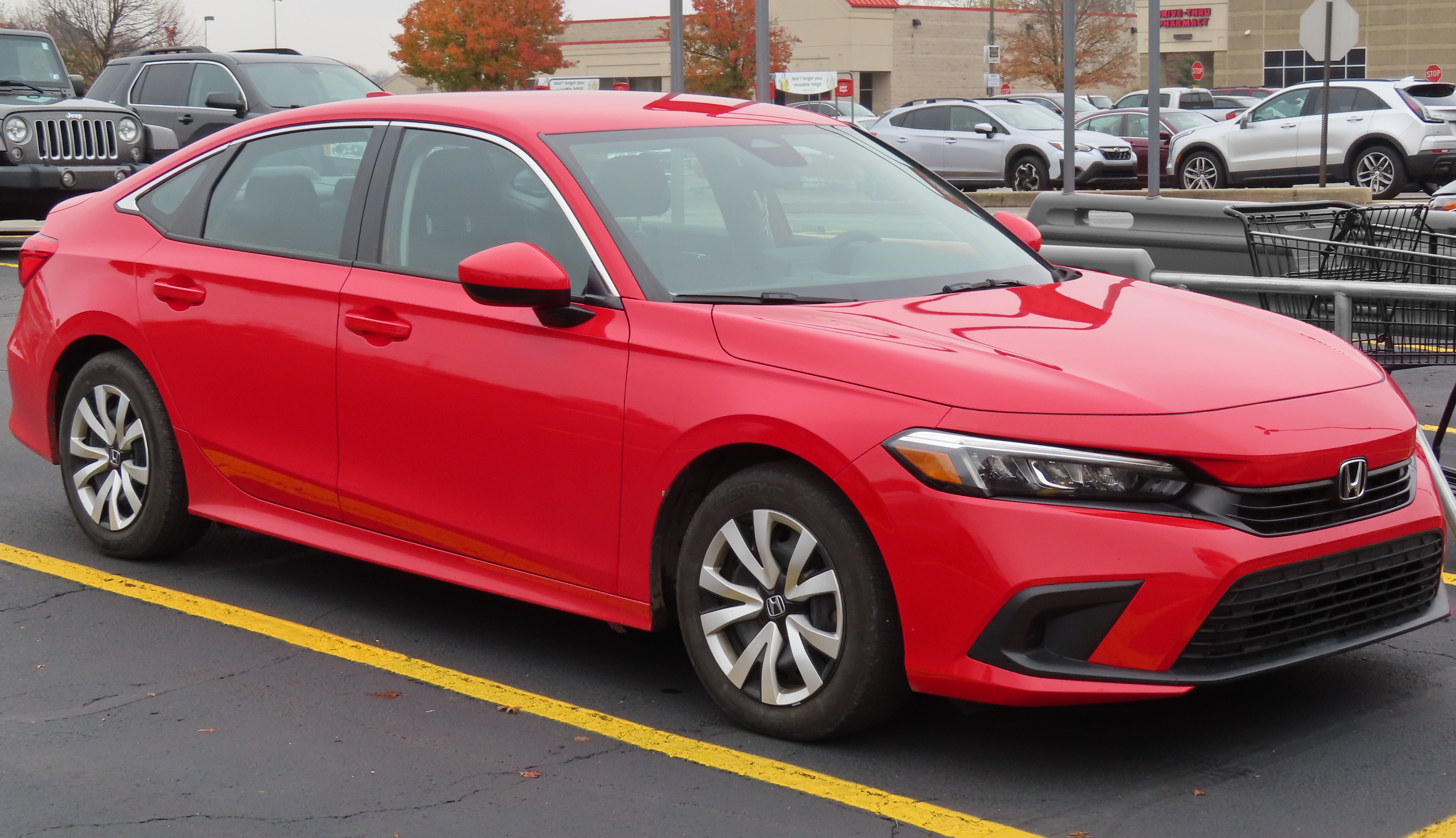
"Obviously there's still plenty of small cars. The K4 is obviously more traditional sedan. The Civic still exists in both hatchback and stand form. Corolla's still around in hatchback and sedan form. So, you still have plenty of stuff. The Nissan, Nissan just launched a new Sentra,"
The Toyota Corolla is a small car that is very popular because it's dependable and gets good gas mileage. It's a great choice for people looking for an affordable and practical vehicle.
The Toyota Corolla is one of the best-selling cars in the world, known for its reliability and fuel efficiency. Since its introduction in 1966, the Corolla has been a staple in the compact car segment, making it a common choice for budget-conscious buyers.
"... of stuff. The Nissan, Nissan just launched a new Sentra, a refreshed it really. The Sentra still exists...."
The Nissan Sentra is a small car that's easy to drive and good on gas. It's a practical option for people who need a reliable vehicle for everyday use.
The Nissan Sentra is a compact sedan that has been a staple in Nissan's lineup since 1982. Recently refreshed, it is known for its affordability, comfort, and fuel efficiency, making it a popular choice for daily commuters.
"Sounds good, James. Thanks. Thank you so much for your time. We've been talking with James Bell, the head of corporate communications for Kia, talking Telluride, Kia Soul, and a little bit more. So once again, James, thank you for your time. And we will go ahead and end or wrap this segment"
The Kia Telluride is a large SUV that can fit a lot of people and their stuff. It's known for being comfortable and having a lot of nice features, making it a great choice for families.
The Kia Telluride is a mid-size SUV that has gained acclaim for its spacious interior, upscale features, and value for money since its launch in 2019. It has quickly become a favorite among families and is often discussed for its combination of style and practicality.
"NASCAR has always been on NASCAR as an entity has always ruled with an iron fist... either you race under our rules or you don't race at all."
NASCAR is a racing organization that organizes stock car races. They have strict rules that drivers and teams must follow to participate in the races.
NASCAR, or the National Association for Stock Car Auto Racing, is a popular motorsport organization in the United States known for its stock car racing events. It has a strict set of rules and regulations that teams must follow to compete, which has been a point of contention among some participants over the years.
Select text to request an explanation
Hello and welcome to this week's The Truth About Cars podcast. I am Tim Ely,
T-Tex managing editor and this week we're talking Kia, NASCAR and more. This week
T-Tex contributor Matthew Guy and I talked about tire pressure gauges an
important tool. We also talk about a major texting scandal in NASCAR. We also
have James Bell from Kia on with us to talk about the 2027 Kia Telluride
which was part of the 2025 Los Angeles Auto Show. But first, buying a car should
feel secure. Start to finish. That's why you should buy your next ride on eBay. See
eBay has got everything from classics to trucks and imports. Now with secure
purchase sellers and titles are verified and financing delivery and insurance
options are built right in. Plus eligible vehicle purchases are backed by up to
$100,000 in protection. So buy your next car in eBay. eBay, things people love.
Secure purchase is powered by Carmo dealer services LLC in eBay subsidiary. If
you like what you hear on the Truth About Cars podcast please go ahead and
leave us a review and also check us out online at t-tech.com that is t-t-a-c dot
com or the truth about cars all spelled out dot com. We're your home for car
reviews, car news, opinions and so so much more. Here on the Truth About Cars
podcast we're always talking about the stuff that we use in our homes, in our
cars, and on our cars. Tools, cleaning products, that sort of thing. And today
we're discussing an important tool that I believe every driver, no matter how
mechanically inclined they are or are not, should have in their car. And that's tire
pressure gauges. And as always we have Matthew Guy, a t-tech contributor with us.
Matthew, how are you doing today? Hey, it's not a bad day. How about you? I'm doing
well just to just kind of hang in there as we get into the holiday season. So
Matthew, walk us through tire pressure gauges. Yeah, and it's almost a lost art
to do some of these basic checks on your car anymore. I mean, it's something
that checking your tire pressure is not something that a lot of people think
about doing on even every oil change that's low in every fuel fill. And that's
a lot it has to do with all of the technology that's in our cars these
days, you know? I mean, it wasn't that long ago that simple tire pressure
management systems were not a thing in our cars. But these days, just about
everything that we have in our driveway either will throw a light on the dash.
That's just not too specific, but just says, hey, you've got a low tire pressure
somewhere, or it'll specifically say your left front is down to 19 psi and you
need to put more air in this right away. So having a tire pressure gauge on hand
is not as common as it used to be, but I still think it's a really, really
important tool to have an important tool to know how to use because even if your
car, you know, you're relying on these programs and relying on these different
features that are in your car, that some things can go wrong with them.
They're not always going to alert you right away. And then by the time this is
true, by the time your tire is low enough to be noticeably low on air
pressure, it's debilitatingly low. So you're not going to really notice
unless you're a really, really good eye if you're only five pounds low, which
can affect your tire, I'm sorry, your fuel economy and things of that nature
can affect performance of your vehicle if you're even just five pounds low.
But by the time you can visually see 10 or 15 pounds, that's a critical thing.
So there's all kinds of different tire pressures out there, tire pressure gauges
out there. I had picked up a newer one off eBay just a little while ago and it
reminded me when I used it over the weekend about how important these things
are. You can get these things, tire companies often give them out, you know,
if you're at the tire shop, you can get these little pencil gauges, I call them.
Right, Tim, you probably can... Yeah, yeah, I think I've had them in the past.
Exactly, right. And they're just kind of knocking around your glove box or
knocking around your center console or whatever. And these are just the very
basic ones that you use to tire pressure gauge and the bottom end pops out.
It's just a little plastic square and it tells you if you've got between 30, you
know, or 32 or 35 psi. But they're not super precise if you're doing this a lot
and especially if you're doing any off-roading. And Tim, you guys, and if
there's any listeners out there who've been listening for a while, you guys know
that I like off-roading. So if you're venturing out into certain situations,
you're going to want to air down your tires just for extra traction.
And having a really good tire pressure gauge is important for that because there
are some tire pressure gauges that have a digital readout. So you can get really,
really precise down to a certain psi. And those readouts, I'm sorry, those tire
pressure gauges will also have a little release on them. So you can really,
really be specific when you're airing up and airing down. So I like those.
I picked up one of those off eBay just the other day. It wasn't expensive.
I was expecting it to be even like 40 bucks, but this thing was only 20 bucks.
Oh, wow.
Yeah. So I was really, really impressed with it. I've been using it for ages now.
I just picked it up off eBay a little while ago. And I've been using it for ages,
just for off-roading and things like that. And it hasn't gone wrong. It's been accurate
because I'm thinking, all right, this thing was only 20 bucks and it's got a digital
gauge and it's got the release valve so I can get pretty precise with air pressures.
How accurate is this thing? So just being, you know, with all good scientific trials,
you use three or four different tests to make sure that it's actually accurate.
And it is. So I was very impressed with it. You don't need to spend a bundle to
get a really, really good tool these days.
Yeah, that's good. And again, I think this is a tool that every driver should have,
whether it is what you call the pencil gauge, the basic gauge, which is what I probably had
back when I owned a car. I know I had a few. I don't recall where they came from if they were
giveaways. If I paid for them, I know gas stations used to sell them cheap. I assume they still do.
Obviously, you mentioned eBay motors, of course. And then I would, you know, also recommend,
especially for people who struggle with this, people who live in areas where it's cold,
I would recommend maybe a digital gauge just for the precision. And just, I think you touched
on this when you mentioned at the open that all cars or most cars have these
have these, these, you know, sensors and everything digital these days. Just a reminder,
I know you touched on this too. So I don't want to, you know, be too redundant. But
a lot of these, what they call TPMS tire pressure monitoring systems in new cars,
and I've seen this even in test cars. I've seen it several times in the past few weeks just due
to the weather being a little chilly here in Chicago is you get, they're off by one,
if one tire is off by one or two pressure, it'll set the light off. Then people
start thinking, you know, it's a problem with my car because the warning lights off.
It's just that because when it's cold, their pressure drops a little and sometimes one tire
drops more than another. And being one PSI off is probably not going to harm your car or your
tires or you. But if you want to adjust it until they're all the same, a digital gauge makes life
a little easier. Just like you said, Matt, Matthew, more precise. So I would recommend
consumers at least have the pencil gauge and if not a digital gauge or both, especially at only
$20. Absolutely. And it's the type of thing that if you're, if any of our listeners are just getting
into, you know, car ownership or thinking about turning some wrenches, these types of,
you know, checks that you can do on your own car, something simple like checking your tire air
pressure is a great way to build a little bit of confidence just working around your car.
Absolutely. Right. So I mean, for the sake of 20 bucks and, and that's, you know, that's a pretty
fancy one that's got like, you know, the digital gauge and it's got a longer nozzle on it so that
you can release a little bit of air pressure. I've seen the digital gauges as low as like 499
in a gas station. So those things. And I've actually saw one the other day on eBay that had,
this was cool. It had a little light, little LED light right up at the top so that you could
actually see what you're doing at night when you're trying to fiddle around and find the
Schrader valve on your car. That's a big thing to be able to see at night. So good, right? So these,
I love how the democratization of, you know, LEDs and those types of things, the cost of this stuff
has come down so much from when you and I were, you know, young gear heads in, you know, as a
teenager, you know, getting the digital tire gauge for Christmas was like, whoa, you know,
this is super, super cool. And it's still super, super useful, but it's just so accessible to a
lot of people these days, especially if someone's just getting into their first car or just trying
to decide if they want to turn a few wrenches. This is a great way to build a bit of confidence.
So totally recommend picking one up off eBay. Yeah. And again, I also think it's
completely necessary for all drivers, particularly in areas where the weather changes in the fall
and spring. And, you know, if it's Florida and it's 75 degrees all year round, probably a little
less necessary, but I still think everyone, even in, even in those places should carry them because
it's not just temperatures, it'll change pressure. Obviously, you run over a nail or something and
that'll cause problems or you could get a whole new tire. Slow leak, a leak, you bend a rim if you
maybe hit the curvil pellet parking or hit a pothole, but poorly, barely enough. So
everyone needs to have these, but I think it's really, they're really extra important in the
Midwest, Northeast, Mid-Atlantic, the upper part of the South, like Tennessee, Pacific Northwest,
all of Canada, basically. So essentially, if you're not one of the smile states, you probably need,
you definitely need one of the, well, again, everyone, I think every car owner needs one,
but I think it's extra important for those of people who are not in the smile states, particularly
in October, November, and then conversely in March, April, May. So, Matthew, anything else
you want to add on tire pressure gauges? No, nothing else I wanted to add, man, other than
you're exactly right about temperature differentials and things of that nature can make them really
useful too. So, go out, find one on eBay, have it delivered to your house, you won't regret it.
Yeah, for sure. All right, that's been the Stuff We Use segment here on the Truth About Car's
podcast. Thank you, Matthew. Thank you.
On this week's Truth About Car's podcast, we are talking with James Bell, the head of corporate
communications for Kia. And the reason we're talking to James is because the Kia Tell Your
Eye has been updated and is probably one of the bigger debuts at this year's 2025 Los Angeles
Auto Show. So, James, how are you doing today? Well, hold on, I'm going to correct you on something
here, Tim. It's not probably one of the bigger debuts. It is the biggest deal.
Well, that's your job to say, not mine. Fair enough. No, thanks, Tim. It's always a pleasure.
You and I go back a long ways, always having a good time. So, it's fun to be here now.
Yeah, so talk to us a little bit about what Kia's trying to accomplish with the next generation
Tell Your Eye. Well, you know, it's a delicious challenge that you get when you work for a car
company to have a chance to try to outdo a legend. And when we think about how the Tell
Your Eye, the first generation, was received in 2019 as a 2020 model, it still kind of baffles
smart guys like you and I, because this is a vehicle that traditionally, you know, the phrase
is a hockey stick. So, when you look at sales trend over time, obviously, when something comes out,
it's new and hot and fresh, you get that spike. And so, that's the short end of the hockey stick,
so to say. And then over time, it cools down and then you end up kind of flat lining for a bit
until the new model comes out. That happens to, gosh, 95% of cars on the road. Tell Your Eye did
not. If you chart out Tell Your Eye sales, they started up strong and went up. And it really just
kind of just settled a little bit in the last probably six months, but that's because there's
been a lot of good fun conversation about the new Tell Your Eye coming out. So, you've got a combination
of people who are very loyal to the idea of a seven passenger SUV from Kia that are looking
forward to seeing the new one. So, you know, maybe not getting a new old one, if you know what I mean,
you know, the current generation, or have always liked the Tell Your Eye, but have been driving
something else and now kind of waiting to see what the next gen is. So, our sales have just
started to flatten out, but again, the idea of that hockey stick chart does not look like what
Tell Your Eye did. And so, when you go to replace that, it's a lot of pressure, but it's a fun
pressure and we kind of relish it here at Kia. Yeah, so you've gained in size with the Tell Your Eye.
Is that, I'm trying to figure out how to phrase this, is that kind of just something you see from
consumer demand, you know, is it just bigger, is always better? It seems like cars just get
bigger and bigger and very rarely get smaller. Well, yeah, I mean, the new generation Tell
Your Eye is a little bit longer, a little bit taller, and really just to kind of maximize
interior space, not that it was missing or delinquent in the first generation, but
you're right, bigger is better, but I also think it's not necessarily bigger on the outside,
it's just maximizing the space on the inside, using new materials, high string steels, things
like that can really kind of, you know, open up that interior space. So, you know, I just think
that the skill or the bullseye that the Tell Your Eye hit for the Kia brand was connected to being
the right size. It's not, you know, it's not a monster truck, it fits in people's garages,
but yet it has more than enough space for most American drivers. You and I both know there's
just something very interesting about the American car buying a Psyche that's very
wound to getting the most vehicle for their dollar, and that often means buying too much.
You know, I think in my own family, my wife wanted a new seven passenger SUV coming out of
another brand, and this is before I joined Kia, and she said, yeah, we need to get another one.
And I said, why? And I went out to the current car and I looked at the rear seats, the two in the
back, and they'd never been touched. So why are you driving around these chairs that nobody needed?
Well, just in case. And that is such a prevalent part of the American car buying Psyche, that just
in case part, where I think Tell Your Eye nailed it was because it's the right size. It gives sense
that sense that people like of just in case I need to go pick up my entire family at the airport,
I'll have room for them and their things. But then on a day-to-day perspective,
it's still very usable. So I think it worked well.
Let's talk design for a second. So I'm looking at, I have photos in front of me of both the
2027, the new model, and the 2025. And the difference is it's evolutionary, not revolutionary.
The biggest difference that I'm seeing in photos, and we just for photos closure to our listeners,
we're recording this a little bit in advance of the LA show. And I'm hoping to see the Tell
Your Eye up close in LA. So my opinions might be a little bit different if I see it up close.
I've not seen it in person yet. But the biggest difference, especially on what appears to be the
X-Pro model is the grille. So can you walk us through the design change there to go with
kind of keeping the overall shape more or less the same, and then really just sort of
changing the grille a lot? Well, this is the challenge. Because when you
have a vehicle that is such a huge success, I mean, I'm thinking back for the first
year of Tell Your Eye, I think we were going to build 55,000 of them. And by the end of the
run of the first generation Tell Your Eye, we were turning out about 130,000 if memory serves.
So, you know, almost three times as much. And then for this generation, we're looking to do
even more than that. So when you go to reintroduce something that has been such a success, it's
a balance point. And I think for my money, and granted, Tim, you haven't seen it in the flash,
it is, I think that if you took the front grille clip off the car, you would say, wow, that's a
big grille. No question about it. But when you put it back on and then look at the detail and the
kind of forms and functionality of some of the bits, I mean, on the X-Pro version, we have
real tow hooks on the front. They're not plastic little decorations that are serious.
When you look at some of the way it all fits in, at first glance, it looks big. But then when you
see how much of it is actually taking in air and how much of it is kind of a technical design
element, it shrinks in a bit. And also, I think being in a contrasting dark matte color compared
to the body paint color makes it even look a little bit more imposing. But you know what,
that's kind of the way the business is right now. There's just a big trend. I mean,
I guess going back to Audi and Lexus a couple years ago with the big bottom feeder, big mouth,
so to say, on the front. And so we found a way, I think, to kind of catch some of that spirit
and some of that energy, which we know our competitors have been successful with, especially
in their luxury space, but then also make it look more functional and more usable. So again,
I've seen it in the flesh. You have not. Well, at least at the moment, we're recording this.
But I think it works better when you do see it in context of other vehicles on the road and when
you see just how much detail and how much effort has gone into making that an interesting space,
if nothing else. Yes, this episode should go live right after the debut for those who've not
seen it yet. So it was a good chance that I will have my opinions in print or on the website as
people listen to this episode. When it comes to tire rider, when it comes to any vehicle that has
a lot of inherent curiosity and energy in the marketplace, it's a lot of fun for us on the OEM
site. And I have just loved watching websites with their, you know, we have a rendering, we think
this is what the new tire ride is going to look like. No, no, no, we think this is what it's
going to look like. And it's been so much fun to look at those and say, well, okay, that website,
they're close, but not quite. And this one, not even close. And this one, we're getting closer,
but not quite right. And so it's a lot of fun when the world wants to see a new baby.
Yeah, speaking of more design, let's go from the outside of the inside and
talk about the biggest change that I can see in photos is the dash. So the old or current
however you want to find it, tell your ride has two screens that sort of run together from the
gauges to the center stack. That has not changed, but the look of it has. And it looks a little more
one piece together in photos than it does with the outgoing model. So can you walk us through that as
well? Yeah, sure. I mean, you know, screens, let's be fair, it's an interesting evolution in the car
business. We went from having just a certain number of cars having screens in place of physical
gauges and needles and things like that to suddenly everything. I mean, your cheapest car now has
screens and there's good manufacturing reasons for that. Those are dashboards and some of the
elements and the mechanical elements in them can become a knock on quality down the road. If there's
some sort of issue in there, it's often not pretty. You have to dig in and to replace a little plastic
gear or something like that. Whereas with the screen, it's very easy to swap them out and you
can they can be customizable as well. So it is a good thing. But you're right. It is a bit more
evolutionary when it comes to our screen use. Kia has and I would say the Hyundai Motor Group,
all of our three brands have done a great job of taking a lot of information, putting it in that
long rectangular screen space as opposed to vertically, like some of our competitors, and
just providing a lot of information in a more subtle, not as visually imposing way. And that's
wired back a lot to how we approach safety. Our premise is that we all want to have the coolest
technology and the biggest screens and have all that good fun bling, if you will, in the car.
But at the same time, if it's too busy, if it takes too much work to change the air conditioning
speed or the fan speed, I should say, or change the radio station or move my seat adjustment,
because I have to dig through screens, then I'm not driving safely. And so we try to find a balance
between big screens that give the information that are attractive to look at, that do what you need,
but then not be over reliant on them. And I think that's one place where
when I saw the new Telluride interior, I knew it was going to be reminiscent of the EV9,
and it is, but it moves it also towards the more rugged space that you saw in the current generation
Telluride. So I think it's a nice balance. I think people are going to enjoy it,
who I can tell you they will, because we've been clinically the vehicle now for the last
probably four or five months. And yeah, the interior has been a big hit.
Yeah. Okay. So also, this is a 2027 model. Yeah. Now that I believe that means it cannot
be sold until after January 1st, if I am correct with my legalities there. So why did you skip
the 2026 model year? Easy, because we had planned out our production, as I said earlier,
the current generation has been, you know, right to the bitter end here has been a big
sales success. So we had a pretty good pulse on how many we needed to build to just do a
nice clean transition. And so we saw that with the new generation coming online in very early
26, and the old generation having a nice end of life coming up to the very end of 2025 into
early 26, there was no need to have a 26 model. Let's just jump right in with this all new model.
As you said, it's in will be on sale in 26 as a 27. But yeah, there's nothing too dramatic there.
It was just looking at production, you know, the the wind down of current and the build up of the
new. And that just made the most sense. And can you tell me when it goes on sale? Do you guys know
yet? Yeah, of course, I think it's in the first quarter of 26, if memory serves. But what we'll
by the time your listeners hear this, it'll be definitely secured because we'll be announcing
at the show. But between all of us, I believe it is the first quarter. And then can we talk
powertrain? It looks like the powertrain carries over. Yes, and no, we've got some surprises that
were we held for the LA auto show. But I guess we can talk about that now. You know, our sister
company Hyundai continued on with the v6 that was in the Palisade and the Telluride. But we are
moving a little differently. We're going to now have the emphasis or the focus model be the turbo
hybrid, which is going to do I think better than 36 miles per gallon, but have more power and more
torque than the v6, the outgoing v6. Now, you know, I understand the v6 was incredibly well
mated to the transmission that, you know, I've always said, going back to my time, Tim, when I
was on your side of the fence as on the media, there are times where you drive a car and you think,
wow, this transmission and this engine, they don't like each other. They're not they're not in sync.
They're not, you know, giving me a nice smooth power transition. Hyundai Motor Group with the
Kia Telluride did a fantastic job of that, I believe with the v6. And now we're going to just
basically take that same premise and that same level of comfort and power, but put it in a four
cylinder turbo hybrid, which again, with more power, more fuel efficiency, fewer emissions,
it's all it's all the best. And then as a secondary choice, we're going with a new 2.5
liter turbo four cylinder. But I think the biggest focus is going to be on that on that
turbo hybrid, because it's it's the best of all worlds. Alrighty, and then I'm trying to think
was anything else I want to ask and tell you, right? Because they wanted to switch gears briefly
and talk to you about a different model as well. So we'll, we'll, we'll table, excuse me, we'll
table Telluride say that five times fast until unless I think of anything else to ask before
our time runs out. But I want to talk to you, James, because you are at Kia, obviously, and Kia
made some news recently with the the discontinuation or the death of the Kia Soul, which I always thought
was kind of a relatively popular city car. And previous to this episode, we have had David Thomas
from CDK global on the talk about small cars in general, just kind of the lack of affordable
small cars across the board. And obviously, there are still some small cars for sale,
including your own K four. And some of those vehicles are under $30,000 or under $35,000.
So I don't want to overstate the case, but we did have a good discussion, David, and I did about
what's happening with that segment. And, you know, especially with the box of your cars going
away, I think the Hyundai venue is the only boxy one left, although the although Nissan did just
release a new kicks, although it's also about a little over 30 for the high end trims on that one.
So, so the kick we have a new kicks, the venue is kind of soldiering on and I don't know if a
new one is planned. Soul is gone. Nissan's juke is long gone. Nissan's cube is long gone. The
Scion brand is long gone. So the XB is gone. So, you know, what is happening in that segment and
why did Kia make the decision to move away from the soul? And does key does the existence of K
four play a part as well? Well, I mean, I'll say, first off, I agree with everything you said, the
soul is, you know, every brand has its icons. I would say the, you know, Porsche, it's a 911
Ford, it's probably the Mustang or the F F 150 for Kia. Many people would say it was a soul.
I mean, that was the little the little box that could and if you mentioned, if you think back
to when the soul was introduced in 2008, I believe there were three import brands that came out with
a similar kind of city runabout machine, the Kia soul, the Nissan cube and the Scion XB.
And our two competitors have been long gone. And the soul has been soldering on.
I think it's mostly just a slight move in people's tastes. There we're seeing more interest in
something more small SUV ish. And I think that's why the new cell toes that we've got coming out
in 2026 will be a nice kind of a step for people who are maybe very loyal to the soul,
like that idea. And the cell toes is going to have equal. Yeah, I forgot the cell toes.
Yeah, you know, it's fine. I mean, one of the one of the complaints about the soul is that it
never had an all wheel drive platform available to it. And that, of course, was solved by cell
toes. I think that when we had the current generation soul and the current generation
cell toes in the showroom, these current cell toes just wasn't kind of quirky enough or curious
enough, which is exactly what the soul is quirky and curious. And so it did a good job for people
who needed all wheel drive as a Kia option, which was still, you know, inexpensive, high value,
great feature content for what you get. But it maybe didn't have that quirkiness. And I think
the next generation is going to solve a lot of that. It isn't, it doesn't look like a soul by
any measure, but it doesn't look like the current generation cell toes either. It's very much a
modern interpretation of it. And so while, you know, again, back to your original question,
we wish the soul could last forever. Business realities are that that segment, that kind of
vehicle is not quite where it is. But it doesn't mean that people are leaving that segment. It
means they're looking for more modern options. And I think that's what the cell toes will do
a lovely job of. Yeah. And David and I did talk about the existence of cell toes and as well as
K4 and how those do sort of, I don't want to say substitute, but those do give folks an option.
Soul intenders can get an option from cell toes or K4 if, you know, they're not able to get a
soul before it goes away. So Tim, if I can just mention, you know, K4 has been a huge unexpected
success for us. And we've had a lot of people coming in with, you know, a 2017 soul or 2020 soul
looking to move into something different and going home with a K4. And which seems counterintuitive
to the way we know a lot of the industry is right now of, you know, SUV or bust. But no,
the K4 has a lot of interior space. And I think there's been a bit of a,
for lack of better term, a rationalizing going on with people saying, do I really need to carry
around this box? It's just me in the car. Or it's just me and my kid in the backseat when I'm
picking them up at school. I don't need a big box. I just need something, you know, more sleek and
nimble and just kind of nip around traffic. And the K4 has hit that like a perfect bullseye. So I
think between going forward, and I hear you're saying, we can't replace the soul because it's
irreplaceable. It's a bit of a legend. But the K4 and the self coming Celtos, I think will
satisfy that happy soul group very closely. Yeah. And it's not just about the soul itself. It's also
about just the amount of cars that are available under $30,000, under $35,000. The type of design
that exists, whether they're sedan, boxy, crossover, or some combination they're of. So,
you know, the soul was just the driving. It was just the news hook or news peg of that
conversation because it's obviously, as we said, the juke and the cube have been gone for quite
some time. Sine as a brand took down the XB with it and Toyota didn't, and Toyota moved the GR86,
or move the, what was called the FRS then, now it's the GR86. They moved the sports car over,
but they did not move the cube, the cube shaped utility vehicle. And anecdotally, I've heard from
a lot of people who love the boxy shape. They like the higher headliner. They liked the higher
headroom or the ability to haul small items, like TVs or small home depot projects, stuff like that.
People who maybe are a little outdoorsy, you wanted to haul a bicycle or a surf board in
California, stuff like that. So, there was always some utilitarian element to it, and I just don't
know if, you know, the market tastes have changed. If people have changed, I know some people like
the, especially older folks, like the, getting in and out, I found it a little easier.
The higher ride height, yeah. The higher seat height, I should say.
Yeah. So, there's a larger conversation here about automotive design at the lower end price
point that that's not just Kia. It just so happens that you work for Kia.
Yeah. I think, you know, that's one of the fascinating parts about this industry. And in fact,
I was just talking to a guy at dinner the other day about this, that what is one person's perfect
is another person's nightmare. And, you know, you just, and that's the delicious part of trying
to set up a lineup that appeals to enough. You can't cover everybody, but if you can cover most
and do it in a, an attractive, affordable, you know, the easiest way I used to like to say it,
and I think Tim and you and I have talked about this many times in the past,
is there has to be something in the next car you're considering that you're, that you're proud of,
that, you know, when you, when you pull in your neighborhood after visiting the dealer
and you get out of the car and you kind of look around the neighborhood like,
anybody see this and anybody going to come over and want to have a look and, you know,
you have a moment of pride. Kia wasn't that way back in 2008 when the first Soul came out.
It was kind of like, oh, you got a Kia there. Yeah, I got a good deal on it.
Sure. It made sense. That's what the Kia brand was there for. The Soul, the Stinger,
the first generation Telluride, the Optima, all that moved that spectrum from being more just,
oh, I got a good deal on it too. I'm proud of it. I'm interested in showing this off and being,
and having been an extension of my personality. And, and again, the Soul, I think did a lovely
job of that. But, but, you know, trends move on. And the small, more, you know, traditional SUV type
machine, as you mentioned, the Nissan Kix, that's got kind of that, yes, it's small and boxy, but
it's not a box the way the Cube was. You know, so, and I think again, between Seltos and K4,
Kia has a good one-two punch. And as I said, the K4 is already punching hard. So,
the new Seltos should fill in that riddle well. Yeah. So, if there's anything else you want to add
on, that's actually, before we wrap this segment, that's actually a great conversation we could have,
you and I could have a future episode, just having an OEM perspective on what's happening
with certain segments. It's easy for myself or David Thomas as people who don't work for OEMs to
come in and say, we believe this, this and this, we also don't see, we also don't see your financials,
we also don't see what's selling and what isn't. It's like the old quote about sports coaching,
that if you're, if you're a head coach, you listen to the fans, you'll be soon sitting among them. So,
there's always, there's always internal perspective that sometimes, you know, if I ran a car company,
I would probably run it through an enthusiast lens and probably produce some stuff that wouldn't
sell very well. So, you know, it's, it's always interesting conversation and I wanted to pick
your brain just because it wasn't just the soul going away. That was just what drove the conversation
because obviously it's one fewer model and one fewer boxy utilitarian model as well in that segment.
Obviously there's still plenty of small cars. The K4 is obviously more traditional sedan.
The Civic still exists in both hatchback and stand form. Corolla's still around in hatchback
and sedan form. So, you still have plenty of stuff. The Nissan, Nissan just launched a new Sentra,
a refreshed it really. The Sentra still exists. Obviously, there's a few other models I'm
forgetting right now, but Subaru offers some utilitarian wagon type stuff for a little bit
more money into the, into the mid $30,000 range. So, you have, you know, you have options there.
It's not like, oh my gosh, the Kia Soul has gone away the whole segment's dead, but it was just like,
that was a good conversation starter piece, you know, go from there. So, James, if there's
anything more you want to add on Telluride or Soul, feel free. Otherwise, we'll go ahead and wrap
the segment. Well, I just, you know, just back to Telluride. I think it's going to be, well,
we're really excited about, excuse me, the LA show, you know, it's always interesting to show off your
new baby. We hope that people think it's cute. And some people will and some people won't. I'm
thinking this time of episode with the ugly baby when they're in the Hampton. Well, we'll have
people lament, you know, you did this, change this part too much, you changed that part too much.
At the same time, you're going to have, we believe even more people saying,
oh, what you changed, we liked it the way it was, but that's even better. And especially,
I think, from the powertrain side, that turbo hybrid engine is a real gem. So, yeah, we're excited
to finally get it out. It's been a secret we've been holding for way too long. So happy to have
the LA show and happy to have people come to your website and check it out.
Sounds good, James. Thanks. Thank you so much for your time. We've been talking with James Bell,
the head of corporate communications for Kia, talking Telluride, Kia Soul, and a little bit more.
So once again, James, thank you for your time. And we will go ahead and end or wrap this segment
of the TTEC podcast. Thanks, James. Thank you.
eBay has reinvented vehicle buying from click to curb. Everything's covered.
It's all thanks to their new secure purchase. Ever try to buy a car and end up in a parking
lot with a stranger and some blind trust? Or spend half the day at a dealership talking
to pushy salespeople and signing paperwork? Or maybe, worst of all, wait for hours at the DMV
just to transfer the title. That air is over. For years, eBay has been the go-to for gearheads,
collectors, and DIYers. Because whatever you're into, from classics to SUVs and trucks to imports,
eBay's got it. And now with secure purchase, eBay isn't just where you find your next ride.
It's where you can buy it start to finish. Sellers and titles are verified,
paperwork is handled by experts, and payments are traceable and digital. So you know exactly who
you're dealing with and exactly what you're getting. Plus, you can finance insurer and
register your vehicle all in one place. No more hours at the dealership. No more trips to the DMV.
Get your vehicle, plates, and paperwork shipped to your door ready to drive. And it's all part of
one seamless process designed to feel as easy as buying anything else online.
And eligible vehicles purchased on eBay are backed up by up to $100,000 in purchase protection.
Thinking about selling your ride, secure purchase makes that simple too, because you know your buyer
and their funds are verified. If you still owe on your car, the financing payoff is fully integrated,
so you're not chasing paperwork or waiting intros to clear. And with secure purchase,
you get paid fast. And you're not going to be stuck chasing no shows or answering the fifth
still available message. This is what modern car buying looks like. Skip the DMV,
skip the sketchy meetups, buy it on eBay. eBay, things people love.
Secure purchase is powered by Carmo Dealer Services LLC in eBay subsidiary.
Here on the Truth About Cars podcast, we're always talking NASCAR or just about always, and we are
now getting deeper and deeper into the silly season, which is the kind of fun name for the off
season, because there's always silly news. Or in today's case, news, it's a little more serious.
We'll get into it in just a second. But first of all, or first off, I should say, we have,
as you almost, as we almost always have, T-Tech contributor Matthew Guy. Matthew,
how are you doing today? Hi, doing good. Doing good. How about you?
I'm doing well, doing well. So NASCAR news today, and this has come to light over the past.
So obviously, as our listeners know, this is recorded. So this has come to light over the
past few days leading into the week of Thanksgiving, the American Thanksgiving. So
I don't have these, I'm looking at the exact dates here. It looks like this kind of came to light.
Today is early, no, it's early the week of Thanksgiving. This kind of came to light over
the weekend, the weekend before Thanksgiving, just to put people into perspective here.
So essentially, Trackhouse Racing has a lawsuit about the Charter,
I'm sorry, Dutch Trackhouse Racing, 2311 Racing. I had the wrong team. 2311 Racing and Front
Remote Sports have kind of an antitrust case going on against NASCAR. And it's a big thing.
We'll talk about it more going forward in the podcast as more comes to light and as more happens
with the lawsuit. And as I, not being a legal expert, learned more about it. And I think Matthew
is also learning as well. But we are hearing today that NASCAR executives fired off some texts to
each other that were really harsh towards fans and owners. So just as an example,
legendary team owner Richard Childress, one of the more successful owners in sport history,
was called by NASCAR president Steve Phillips, or Steve Phelps, excuse me, Steve Phelps,
called him a bloody stupid redneck who made his fortune, and I'm paraphrasing,
now it's not verbatim, but it's close, who made his fortune because of NASCAR.
And he also referred to Childress as an idiot and dinosaur and pain in the earth. So I don't
know if Phelps is British or not, but he, using words like bloody and arse, definitely sounds like
it. And I believe that is in, within our bounds for what we consider a clean episode. So I'm not
going to say any words that would get us in trouble with the, with our podcast house, but I believe
arse is okay. And then executive vice president, Brian Herbst, H-E-R-B-S-T, basically said that
he also said that Childress was an idiot and said teams are short-sighted only looking for
themselves, which might actually be true. And maybe, maybe, maybe not. And Phelps was basically
saying that if owners didn't like things, they should get rid of their charter and get the hell
out of here. So, so that is a little bit not as unreasonable. It's just, you know, two sides of
dispute, kind of fighting each other. And I think the worst thing comes a little bit later from
Jeff Dickerson, who's the co-owner and CEO of Spire Motorports, excuse me, I'm having a tough,
tough time today. Motorsports, Spire Motorsports, he's talking, texting to an unknown person
and basically says something about a podcast appearance. And if Heather Gibbs, who's the
co-owner of Joe Gibbs Racing along with legendary team owner and former NFL coach Joe Gibbs,
basically says if Heather had been planted on him, I'm not quite sure what that means.
But then he also comes at the very end of the conversation and says, it's actually not Dickerson,
it's the person he's talking to. The person says, unfortunately, most of our fans are not
exactly top readers. So, essentially, a shot at NASCAR fan intelligence. And it's, it's,
it's unfortunate. Matthew, I'm still digging through this. I want to get your take, then I'll,
then I'll give you mine. Of course, yeah. And a lot of this, just for any of our listeners who
might not know, a lot of these messages and a lot of these text messages, and there were some
emails as well. A lot of these are coming out because of, you know, the legal proceedings
that have been put in place. Yeah, part of this, in the legal world, they will call it discovery.
And as part of getting ready for whatever arguments that need to be made for the lawsuit
that's brought against NASCAR. And the thing with some of these texts and some of these messages
that are being out there now, if they are deemed, okay, so we can't show this to a jury,
or, you know, they're unsealed in, in some way, shape or form, that's why we're, we're seeing
these types of things as the public now. And that's why these things are coming out. So we've seen
some people online also questioning, all right, so this message is from 2023. Why is this only
coming to light now? Why is this only showing up right now? That's why, you know, because these
messages were subpoenaed, or however they got into the legal system, were deemed of a certain
importance or not. And then that's why they're out here in the open. So you were now also starting
to see some responses and some commentary from what I consider respected people in the industry,
like Mark Martin, you know, you know, Mark Martin, he tweeted, or on X the other day,
in response to some of these messages, right? It's been going on, quoting on in the sport,
I love, he's disappointed all the way around, right? He said, and this is interesting, quote,
there were plenty of problems before the charters in the RTA, but I'm not sure how you ever fix all
this now, end quote. And, you know, Mark Martin is always someone who's a pretty level head when
it comes to both racing in the car, he was always a very clean racer back in the day, but also as
a, you know, ambassador for the sport, he will certainly call out bad behavior, but he's also
pretty level headed, he doesn't tend to go off the handle to use a turn of phrase there when
he sees something he doesn't like. So his responses are usually pretty measured. So I tend to agree
with him, you know, and listen to what what he says. And he's right, you know, that I mean,
there's there's always going to be people like you talked about as well, you know,
sometimes things are set in the heat of the moment. We've all fired off a text message,
we've all fired off an email that we've wanted to call back in our lives. And the old saw that,
hey, if you're going to email it or you're going to text it, you better be comfortable with it
showing up in a in a lawsuit 10 years down the road, right? Because things are forever on the
internet. One or two, one or two messages is outlier. But this that we're finding out now
through this discovery process and it's being released to the public does seem to be more than
just a one off type of email sent in frustration, right? It seems to be more culture of whether
it's, you know, NASCAR has always been on NASCAR as an entity has always ruled with an iron fist
right back to the days of Big Bill France. And that's the way it is, right? Either you race
under our rules or you don't race at all. And NASCAR is finding out that they that that is a
very difficult position to take in the year 2020, whatever, right? So, right. And so that's what
once you get people like Michael Jordan as a team owner, they're going to start to question this
type of stuff. And maybe there was some frustration there with Richard Childress, because Richard
Childress, if you remember, was also one of the people who said, God, you know, this, this agreement,
right, was sent to us and we had to sign it by the end of the day or we don't race, you know,
he did express a bit of frustration, which is unusual for someone who's been in NASCAR
for a long time, because they know how much of an iron fist NASCAR as an entity rules the sport.
So that's probably where some of these some of these some of these names and frustrations from
people like Steve Phelps stemmed from, right? Why is this guy not playing ball? Like, I mean,
he knows he's been around forever, you just sign it and you go is a lot of a lot of the
a lot of the way that some of these things have been approached in the in the past. And
I'm glad that a lot of this stuff is coming to light, you know, because NASCAR has been such a
closed sport in terms of being able to see behind the curtain in any way shape or form. So
it's an extremely interesting and the course is going to come out now during the off season,
nothing else to talk about, right? Yeah, exactly. Yep. What do you think? I mean,
with with with a lot of these, a lot of these messages, you know, one or two, you know, okay,
that's an outlier. But once we see a whole bunch of them from the same three or four people,
do you think NASCAR does need to scapegoat as well? Right? You know, for all this type of stuff?
Yeah. Yeah. So I mean, if they focus on one or two people that might be the scapegoat that they
want in and maybe are looking for. Yeah. So my take is a couple of different things. I think
what you said about all of us have fired off, if not in our jobs, at least in our personal lives,
a text where maybe emotions got the best of us, whether we're arguing politics or arguing with
a specific and other or whatever. And you know, like, like you said, you should never send a text,
you wouldn't be comfortable with the world seeing in a lawsuit. I would also suggest that
if you can, if you're going to write an angry email or text and text, obviously,
you're in the middle of a conversation, you may be expected to reply quickly. So it may not always
be possible, but sometimes you sit on it, think about it, let it, you know, if it's an email to
your boss or something and you're angry, maybe let it sit overnight before you, before you send it.
But, you know, I think too, there may have just been, it's hard to tell, you know,
if they're sincere in these feelings or if it's just frustration. Do they really mean that Richard
Scheller is in their view a redneck or is it just, you know, upset? Like I've got, we all have a friend
you might have an argument with and you call them dumb, you know, they're not dumb. You might,
or you might get mad at them and take a shot at their personal appearance and you know that
you didn't really mean to make fun of the way they look, but you were just mad, right? So maybe
Richard Scheller gets hit with that term because of where he's from or because of his accent or
because of his long-term involvement with the sport that's associated with the South. And this
has been often stereotyped as having redneck fans. So maybe, you know, maybe Richard Scheller's,
maybe really, I don't know anything about his personal life. I don't know, maybe he was really
into hunting and fishing and people stereotyping that way, although I would also say for an
outdoorsman, it doesn't necessarily make you a redneck, it's, it is a stereotype. But, you know,
so maybe Steve Phelps feels that way or maybe he just took a shot at him because of the way
children's talks or whatever and who knows, you know what I mean? I'm trying to say, I guess
what I'm trying to say is if he called him fat, I don't know what children's looks like, if he
called him fat or ugly or something, is he fat or ugly or is he just frustrated? So does he mean
it or not? So I don't know if he means it or not, but, you know, it's something that's not a good
look. It's something you wouldn't want being out there professionally. It could ruin the
professional relationship between children and Phelps, even if Phelps goes to apologizes and says,
I didn't mean it. You're not a redneck. I'm just angry. You know, also it could get, you know,
it's someone who is in a corporate position. I don't think anyone should be sending any emails
or texts talking negative about coworkers at all. Just because it's, you know, it's rude, it's
impolite, it's unproductive, it's bad for morale and all those other things. So, you know, there's
that. So I think it's not definitely not a good thing. What I'm really focused on is kind of
insulting the fans intelligence. Now, we know the appears the text that said that came from somebody
we don't know who it is. I'm not sure why the person's identity is not known, but look, let's
face it, all sports fans, including NASCAR, there's a certain percentage of fans that probably aren't
highly educated or probably aren't highly intelligent because there's a segment of society
that's not, but that does not mean that all the fans are dumb. It does not mean you should
take shots at your fans. I mean, there's a lot of smart NASCAR fans and NASCAR, when I say smart
NASCAR fans, I both mean in general and smart in terms of understanding the sport and understanding
the strategy. You know, one thing I'm still learning as as a relatively casual fan who has had to
get more and more into NASCAR as we talked about it every week on this podcast,
I'm still learning a lot about tech and pit strategy and tire choices and tire strategy that
I didn't always know when I was younger. When I was younger, it was kind of like, well,
which driver is best at driving a car? Which car is fastest? And that's an overly simplistic way
of looking at the sport. And the more I learned about the sport and the more I cover it, especially
on the opportunities, which has been once a year in the past couple of years, to cover our NASCAR
race in person and actually talk to drivers and and watch beat reporters talk to drivers,
people who've covered the sport every week. I'm learning more and more about the sport and it's
complicated sport. It really is. And people don't realize that how complicated it is because a lot
of races as we've discussed before are one and lost in the pits. So to be a NASCAR fan requires
a level of intelligence that I think every other sport has to just like in football,
there are football fans who really understand the X's and O's of a play. And there are others
who don't, right? So and there's some who are in between. I consider myself in between when it
comes to football. I understand a wide receiver, a rope tree. I know what a rope tree is. I know
basics of plays, but there are some terminology. There is some terminology. There are some
concepts that I don't know. And I could probably learn if I spent a few minutes watching a YouTube
video or reading an article from a very good writer who explains it clearly. So what I'm trying
to say is, and I was getting kind of a little starting to get a little bit long winded, so I'm
going to try and rain myself in. But what I was trying to say is that NASCAR has a lot of smart
fans, whether you're talking about BookSmart or you're talking about people who are smart when it
comes to the sport itself or both. And so to sit there and insult your fans, I think is a terrible
look. And now the one saving grace here is it was not Steve Phelps who said it. It wasn't a team
owner. Well, we don't know, but we don't know who said it. So for the moment, until that identity
gets revealed, that it could be, it could just be, they did say are. So I assume they are either a
team owner or a or a member of NASCAR's corporate side, because they did say our fans, they were
possessive about it. They could have been a driver too, I suppose, or a crew chief or crew member,
crew worker. But, you know, whoever said it, insulting your fans is just a bad, bad idea.
Yeah, just, I mean, literally biting the hand that feeds you, right? And you come back to, I mean,
this is a different, like different segment of racing altogether, but you come back to John Force
in, in the NHRA and drag racing, you know, I mean, John Force has always praised his fans,
right? It doesn't matter. And, and, and, you know, he's always often said in interviews and stuff
like that, he's always grateful for the fans. And, you know, I remember him saying one time,
and this always stuck with me, right? He's like, every shingle that's on my house is there because
of the fans, right? Right. So I mean, that, that type of thing. And yes, there's always going to be
frustration. There's always going to be all, you know, those types of conversations. But
you need to appreciate the fans. And sure, sometimes fans are going to be very invested in
what's going on and very vocal, right? And I mean, sometimes I joke that, you know, I'm,
because I'm such a big NASCAR fan, I'm also a big critic, because I care, right, about what
happens, right? Some of your biggest fans are going to be harshest critics. Absolutely. Absolutely.
Right. And there's, you know, there's argument there that that that will be used. I'm sure that,
you know, while these emails were meant to be private, you know, they were meant to be meant
to be part of, you know, a private conversation, those types of things. But when you're talking
about, you know, not just your fans, but also some of the major pillars of the sports like
Childress, right? You know, calling them, you know, the names that were said to, you know,
that were leveled at him, right? I mean, Richard Childress, you know, beyond, you know,
very briefly coming out and saying, you know, I had to sign this agreement, you know, before
midnight, and that was a bit beyond the pale. He's not involved in the, I mean, he keeps catching
strays, right? I mean, he's not, he's not actually involved in this lawsuit, right? He's not named
in the lawsuit. The 2311 and front row motor sports has brought, you know, arguing, I think
the simplest way to describe it, I've been looking for a simple way to describe it, but is basically
arguing that NASCAR's charter model limits fair competition because it controls how teams enter
the cup series, right? And share revenue. So that's as simple as this jaundiced brain can,
can comprehend it, right? There's, there's someone else out there who can make that too.
Yes. Right. So, but there's all kinds of, you know, there's a lot of stuff that start to surface now
that Steve Phelps has written, you know, whether it's in a text or in an email that does start to
paint a bigger picture about how, you know, some corners of NASCAR upper echelons of the,
of the C suite of the, you know, of the executive corner are frustrated with both the fans
and frustrated with the teams. And that, you know, one or two emails are an outlier, you know,
a whole bunch of them starts to develop some sort of pattern, right? You know, you got to imagine
that mean regardless of, of like the outcome of the lawsuit, right? I mean, these texts and
stuff that are coming out, they got to create some sort of shake up in the upper levels of the sport,
right? I mean, the only way, you know, to, to fix some of these, some of these
image problems is to shuffle people around, right? And whether it's to shuffle people out of the
spotlight and say, okay, as NASCAR as an entity, you know, we've quote unquote fixed this problem
by moving this person out of the corner where levers are pulled, whether that actually happens
or not is one way to do it. So I do think that during the off season, we're going to see some
changes there because of the surfacing of these conversations. Yeah, we have only a few minutes
left. I tend to agree with just about everything you said there. And if there's something I don't,
I'll think it over and we'll talk about next time we get to this topic. But I wanted to add to
just, you know, I'm not defending, so let me preface this by saying that straight up,
I'm not defending any of the nasty comments from Phelps or Herbst or anybody else who,
who mocked fans or team owners. I do, you can logically understand something without
defending it. And I do understand that if you are in management position,
sometimes, and I've worked in the quote unquote, I worked at the car dealership world, I don't
know if you really call that retail or customer service a little bit of both. But I've worked in
that world where people can sometimes be down on customers because customers can frustrate you.
It's just part of the job, right? So I can understand to an extent, if you're Steve Phelps
or Herbst, and you're upset with these, these, these teams that you're fighting over the charters
stuff with that are having this lawsuit with, I can understand, you know, disagree with them,
I'm getting frustrated and, and, and all that sort of thing. And again, as we said at the outset,
we all say things we don't mean or, or probably don't mean or we lose our cool or whatever.
And I can even understand if being upset with the fans, if the fans are siding with the drivers
and you're frustrated or with the, I shouldn't say drivers, but with the other, the teams that
are fighting against NASCAR in the lawsuit would be more accurate. But just because I can understand
it doesn't mean it doesn't mean it's defensible and it doesn't mean it should have happened.
And it doesn't mean it's good. It's not good. It's, like I said, even whether Steve Phelps meant
to call Richard Childress a redneck or, or whether it was just a moment of frustration,
he didn't mean it. It's going to, it's going to impact the relationship going forward. And
again, the, again, I take issue with the unknown person who, who mocked the fans, you know, I'm
not, I'm not dumb. I know how to read. You know how to read. And we told that NASCAR fans aren't
good readers. It's a little frustrating. I mean, yeah, are there some fans who probably
fit a stereotype or don't, if you talk to them, maybe don't seem all upright? Sure. That's because,
like I said, there's a certain pop portion of the population and that is like that.
And there's a certain portion of all sports fans that are like that. Is that most NASCAR fans?
Of course not. Heck no. Most NASCAR fans are very smart. Just because I like to go see cars go
fast in circles doesn't make you stupid. And again, because the sport has complicated strategy,
I think you need to have intelligence to really truly understand it on a level beyond
so and so is faster and so and so. So I think NASCAR fans are very, very smart, very obviously
I'm biased because I'm a NASCAR fan. I consider myself educated and relatively smart. I'm not
saying I'm a genius or anything, but I think I'm smart. And I think you are too, Matthew. I think
everyone at T-Tech is very smart. And I think most of our readers are very smart. I would 99%.
So I think most people are pretty smart in general. So I'm obviously a little bit biased,
but to see somebody say that about their fans just had a good look. And if I were an NASCAR fan,
I'd be insulted. Well, I am an NASCAR fan, so I guess I am insulted. But yeah,
and it's also, and I don't want to, we don't have time to go into too much detail on this,
but it's also something I see a lot with other corporate entities. I've seen with other sports
like MLB and NFL, sometimes mocking their fans or doing things and insult their fans intelligence.
I think baseball is going to ruin what was a really good year in 2025 when it comes to the lockout
that may happen at the end of the 2026 season. I think it's going to hurt itself pretty badly
over money and other things. If I had time, I could think of tons of businesses
that have insulted their customers intelligence, whether it's the airlines, or fast food chains,
or whatever we deal with our daily life. We don't have time to get into that. But
to see NASCAR have some high profile, probably a high profile person, certainly a person who
either works for a race team or for a NASCAR, say that about their fans is frustrating. And as you
said, you quoted John Forrest, but part of the reason why NASCAR is so popular, obviously Forrest
is a drag race NHRA guy, but part of the reason why NASCAR got so popular and moved itself away
from the Southern regional sport that was stereotyped as a sport for dumb rednecks.
Part of the reason why it got so popular is because drivers were so accessible to fans
20, 25 years ago. And to sit there and have them insulted, I think is terrible. So
NASCAR does not come out looking very good in this, unfortunately. And, you know,
I've obviously had to work with NASCAR a little bit to cover the Chicago races. And
there are some really good people who helped us out within the NASCAR PR structure. But this
these particular, maybe it's not, maybe you shouldn't say it's NASCAR all together, but certainly
Phelps, Herbst and a few others don't look very good coming out of this.
Yeah. And, and it speaks to the type of, the type of attitude where, where
some of these people within NASCAR just feel, all right, you know, we're the only game in
town. If you'd, if you don't like to say that sport, like sell your charter and get out, like,
right? I mean, that's, yeah, we should talk about that more next week because we're running out of
that's been part of NASCAR for a long, long time. And if they, I feel, you know, need to grow,
I mean, you talk about baseball, baseball has changed, you know, and, and beside what's coming
down the pipe, I mean, I do feel that the game has gotten better over the last two, three,
three, four, five, six years, right? Because of listening to fans and other, other stakeholders
in the, in the game and the, the, you know, the sport itself has gotten better. So I do think
that NASCAR can learn from that. If they're trying to emulate stick and ball sports with these
playoffs, right, that they've been trying to do for the last so long, then take a page from that too,
take a page from that too, right? So anyways, but I also look forward to talking about, you know,
because I know there's got to be a change coming in the way that the playoffs are going to be run
for 2026. So looking forward to talking to that too in future episodes. Yeah, absolutely. We'll
have enough time today, but we spent a lot of time and at least I did and I'm long winded and
that's my fault. We spent a lot of time on the, the implications of the insults and frustrations,
but I think we really should talk a little more as we dig into this lawsuit about NASCAR's iron
fist ruling style and whether there's room for pushback and for people like Michael Jordan,
who's a very competitive person, who's never had a lot of respect for ownership as a bold fan, I know.
So we'll get into that further down the line, but we only have about a minute left. So Matthew,
thank you so much for your time. Much appreciated and we will dig further into this NASCAR story
because it's going to be ongoing. I can't tell you when because things may change week to week,
but we'll get into this as the off season, as the off season rolls on. So thank you for listening
to the NASCAR segment here on the Truth About Cars podcast and Matthew, thank you for your time.
Thank you.
That's all for this week's Truth About Cars podcast. I am Tim Healy,
T-Tex managing editor and you can find us for every to your podcast or online at ttac.com.
That's t-tech.com or the truth about cars all spelled out.com. We thank James Bell and Matthew
guy for their time and we thank Matt Poskey for editing. Most of all, we thank you for listening.
Have a happy Thanksgiving and we'll see you next time.
Request an explanation for:
18 cars
Scroll for more
18 cars featured
Request an Explanation
Heard something you'd like explained? We'll add it to this episode.
Sign in to request explanations for terms you heard.
Want to learn more?
Browse our glossary for plain-English explanations of automotive terms, jargon, and concepts.
See something that's not quite right? Our annotations are AI-generated and can sometimes miss the mark.
Click the flag icon on any annotation to suggest a correction.