EV depreciation takes center stage with IC Cars analyst Carl Brower, who breaks down a five-year study showing several EVs among the biggest value losers—Nissan Leaf leads at 63.1% depreciation, with Tesla Model S/X and VW ID.4 also near the top. Brower explains why using MSRP (not incentives) matters, how platform age and weak used-market demand hurt EVs, and why Toyotas dominate the “best retained value” list. The show also covers cordless impact wrenches for spring tire swaps and NASCAR chatter about YouTuber Cletus McFarland climbing the ranks safely.
Hello and welcome to The Truth About Cars podcast! I am Tim Healey, the managing editor, and this week we discuss EV depreciation with analyst Karl Brauer. We also talk about impact wrenches and Cleetus McFarland’s efforts to join the NASCAR circuit.
We thank Karl Brauer and Matthew Guy for their time, and we thank Matt Posky for editing. Most of all, we thank you for listening!
We’ll see you next time!
Learn more about your ad choices. Visit megaphone.fm/adchoices
"and this week we discuss EV depreciation with analyst Carl Brower. We also talk about impact
wrenches and Cleetus McFarlane's efforts to join the NASCAR circuit."
EV depreciation just means how much an electric car’s price drops as it gets older. The episode is about why that drop can be faster than people expect.
EV depreciation is how quickly an electric vehicle loses value over time. In practice, it’s driven by factors like battery/technology perceptions, changing incentives, supply-demand shifts, and how new EVs are priced versus older ones.
"We go back five years, and we look at the MSRP of vehicles, and then we look at their current value. Now, a lot of people
are like, well, why do you use MSRP versus,"
MSRP is the price the manufacturer lists for the car when it’s new. The episode uses MSRP because it’s the same reference point across vehicles.
MSRP (Manufacturer’s Suggested Retail Price) is the sticker price a car is launched with. In depreciation analysis, MSRP is often used as a consistent “starting point,” even though real-world transaction prices can differ.
"and compared to their MSRP, the car with the highest depreciation was the Nissan Leaf at 63.1%."
The Nissan Leaf is a popular electric car. Here, the host is saying it lost a lot of value over five years, which helps explain why some EVs depreciate faster than expected.
The Nissan Leaf is an early mass-market EV and is often used as a benchmark for EV depreciation. In this segment, it’s cited as having the highest depreciation versus MSRP, illustrating how quickly some EVs can lose value after purchase.
"But that was 63%. The next one was the QX80... because... that car was like 15 years old and now there's a new one out."
The Infiniti QX80 is a big luxury SUV. The point here is that when a vehicle is near the end of its life cycle and a newer version is coming, the older one often drops in value.
The Infiniti QX80 is a large luxury SUV, and it’s used here to show that depreciation can be driven by product-cycle timing. The segment links its big drop to it being “15 years old” and then facing a new generation release, which typically resets buyer expectations.
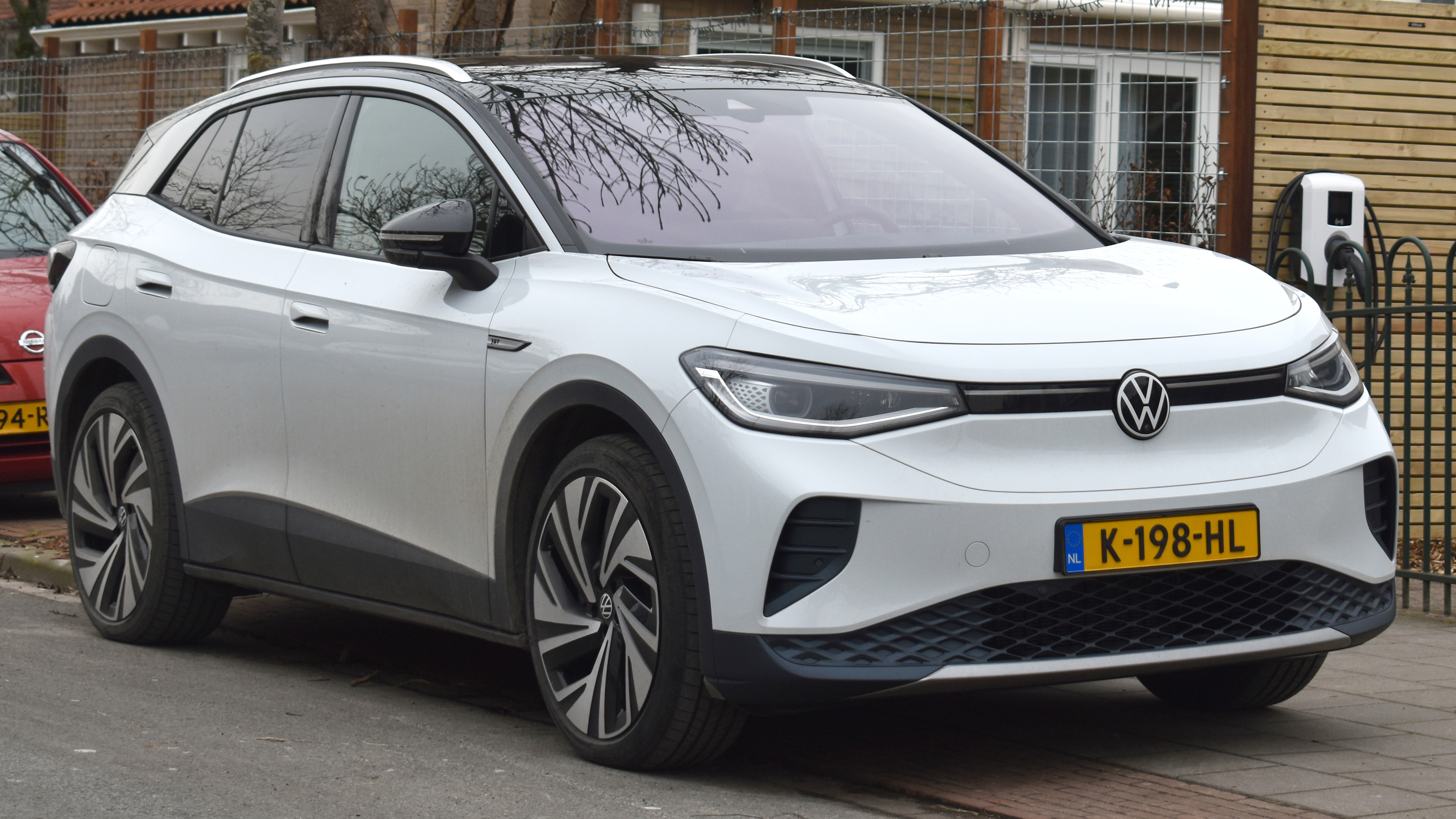
"But then third was the Volkswagen ID4 lost 62.1%."
The Volkswagen ID4 is an electric SUV. Here it’s mentioned because it also lost a lot of value over five years.
The Volkswagen ID4 is a compact electric SUV, and it’s included among the worst five-year depreciation performers in this segment. Its placement supports the broader claim that many EVs have been losing value quickly in the used market.
The Ford Mustang Mach-E is an electric SUV/crossover. The host is saying it also lost a lot of value over five years.
The Ford Mustang Mach-E is an EV crossover, and it’s listed as having significant five-year depreciation. Its inclusion broadens the pattern beyond Tesla and shows other mainstream EVs can also lose value quickly.
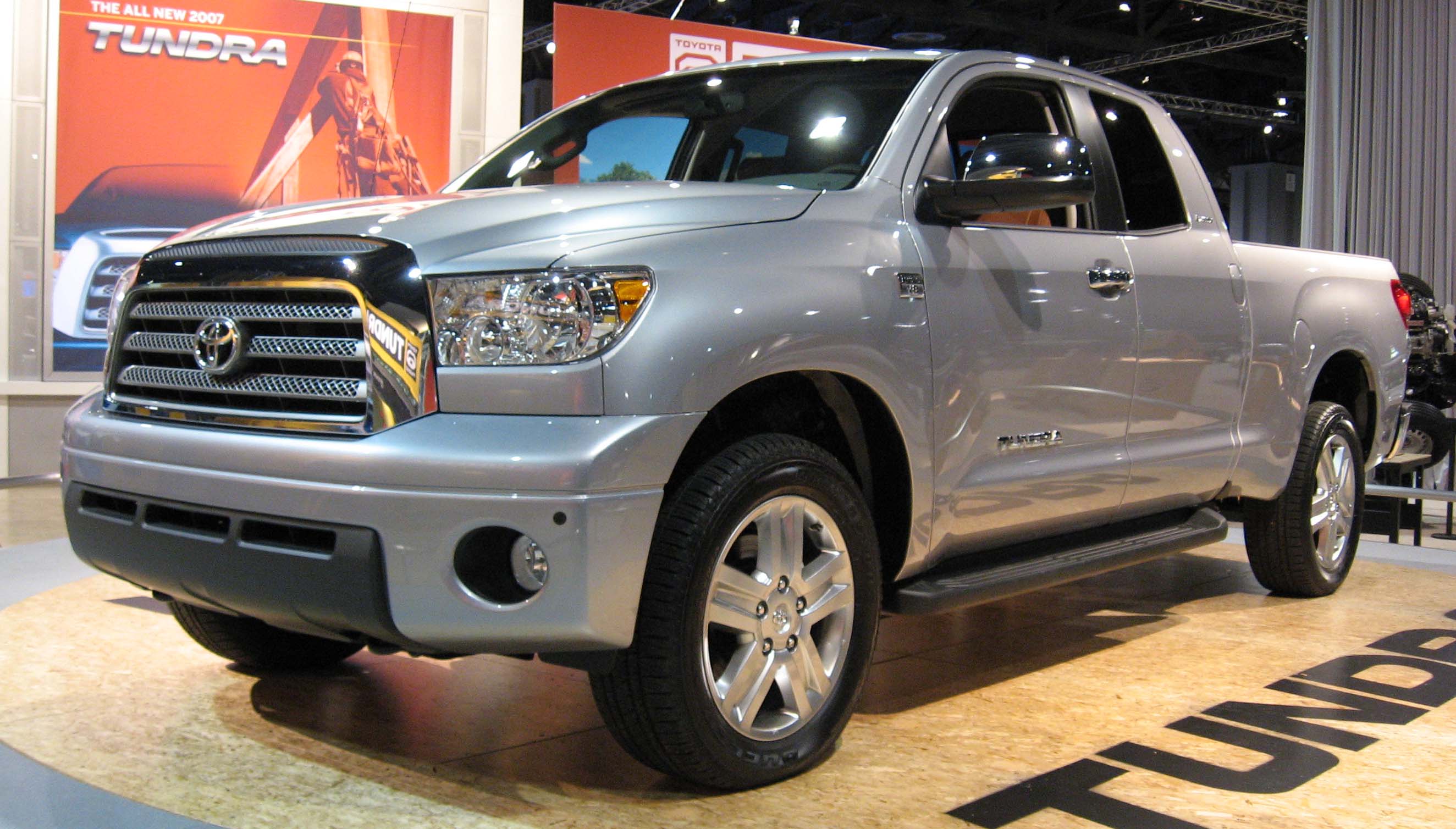
"Then you had the Toyota Tacoma and [437.4s] Toyota Tundra that did really well. Toyota Trucks, surprise, surprise, great for holding value."
The Toyota Tundra is Toyota’s larger pickup truck. In this discussion, it’s mentioned because it doesn’t lose value as quickly as many other vehicles.
The Toyota Tundra is Toyota’s full-size pickup, and the speaker credits it with strong value retention. It’s grouped with other Toyota trucks as examples of vehicles that depreciate less than average.
"[442.2s] Honda Civic was number six, Subaru BRZ 7, Toyota GR Supra 8, Toyota Rev4 9, Toyota Corolla Hatchback"
The Subaru BRZ is a small sports car. The speaker is saying it’s one of the models that doesn’t lose value as fast as many other cars.
The Subaru BRZ is a sports coupe known for being relatively affordable and fun to drive. In this segment it’s cited as one of the cars that holds value well, contrasting with EVs that depreciate more.
"So we looked at just overall vehicle segments and versus kind of the industry average. The industry average for five-year depreciation is 41.8 percent. If you take all cars and average it, they lose 41.8 percent of their value after five years."
Five-year depreciation means how much a car’s resale value drops after about five years. The episode uses this to compare EVs versus gas and hybrid vehicles.
“Five-year depreciation” is how much a vehicle’s value drops after five years of ownership. The speaker compares the industry average to different powertrain types (hybrids, SUVs, trucks, and EVs) to argue that EVs are losing more value over that period.
"This week, we're talking about cordless impact wrenches. And the reason why I want to talk about them is that at this time of year, a lot of gear heads are switching over their tires, right?"
An impact wrench is a power tool that helps you remove and tighten lug nuts faster. “Cordless” means you don’t need an air hose or compressor—just charge the battery and go.
A cordless impact wrench is a handheld tool that uses a hammering mechanism to quickly loosen or tighten fasteners like lug nuts. Compared with a standard hand wrench, it delivers much more effective turning force with less effort.
"You know, you got to have a really good set of winter tires if you're living in the snow belt in order to be safe and tackle the winter properly."
Winter tires are made to grip better when it’s cold and snowy. They usually have a different tread pattern and rubber that stays flexible in low temperatures.
Winter tires are designed with softer rubber compounds and tread patterns that improve grip in cold temperatures and on snow or ice. They’re commonly recommended for drivers in snowy regions during the winter season.
"But a lot of these are in the same sort of ecosystem as other cordless tools... So if you got a cordless drill... a lot of them except the same sort of battery, just kind of goes into the bottom of the handle."
Some tool brands use the same battery system across many tools. If you buy one tool, you can often use the same battery in other tools too.
A cordless ecosystem is a brand’s set of tools that share the same battery platform, so batteries and chargers can be reused across multiple tools. This reduces cost and makes it easier to expand your tool collection over time.
"whether it's a brand like Makita or Milwaukee, Ryobi, a lot of those things, you can really grow your arsenal of tools."
Makita is a well-known brand for cordless tools. People often choose it because the batteries can work across many different tools.
Makita is a major power-tool brand known for its wide lineup of cordless tools and battery platforms. In the segment, it’s used as an example of a brand ecosystem and is also tied to higher torque models.
"And the one that I was using was DeWalt brand. The value of those are pretty good."
DeWalt is a popular brand of cordless tools. In this segment, the speaker is saying they like DeWalt because it’s a good value.
DeWalt is a major cordless tool brand, and the speaker says they were using a DeWalt impact wrench. The segment frames DeWalt as offering good value for the money compared with pricier options.
"And that's for a reason, because it has a huge amount of torque. I just find that those Makita ones... is really heavy."
Torque is the “turning strength” of the tool. More torque generally means it can loosen or tighten stuck bolts more effectively.
Torque is the twisting force that an impact wrench delivers to turn fasteners. The segment connects torque to performance differences between brands and battery/tool configurations.
"...especially on lug nuts, you get that... If you're not holding on to it properly, especially if those lug nuts are really, really tight..."
Lug nuts are the nuts that hold your wheel onto the car. If they’re not tightened correctly, the wheel can loosen or cause problems.
Lug nuts secure a wheel to the vehicle’s hub. Proper tightening matters for safety and wheel retention; incorrect torque can lead to loosening, vibration, or damage to the wheel/hub.
"Just about every week here on the Truth about Cars podcast, we do some NASCAR chat. Now, just a quick note to our listeners. You may have missed or may have noticed that we missed NASCAR chat last week."
NASCAR is a popular American racing series where cars race on tracks, often ovals. Fans follow the races and the teams week to week.
NASCAR is a major American stock-car racing series known for oval track racing and close competition. It has its own culture, rules, and race-weekend rhythms that many fans follow closely.
"Like in trucks and now in O'Reilly Auto Parts, I mean, he he acquitted himself really well..."
O'Reilly Auto Parts is a big car-parts store chain. They sponsor racing, so you’ll hear their name tied to events and series.
O'Reilly Auto Parts is a major U.S. automotive parts retailer that sponsors racing events and series. In this segment, it’s referenced as the venue/series context for Ty Dillon’s and Cletus’ performance.
"...he did have a brown pants moment, but he certainly he caught the car."
“Brown pants moment” is a slang phrase for a sudden scare or near-mistake during driving—often when the car gets loose, nearly spins, or the driver has to save the situation. In racing commentary, it highlights that even skilled drivers have moments of stress.
"And again, he might make rookie mistakes, you know, every driver who's new to a series does."
A “rookie mistake” is an error made by a new driver in a series—often from misjudging pace, braking points, or how to manage traffic. The key idea is that some mistakes are expected when learning the series’ rhythm and rules.
"...especially with Michael Jordan being a team owner and his cross sport appeal."
Michael Jordan is a famous sports figure who’s also involved in racing as a team owner. The point here is that big-name celebrities can help bring new attention to NASCAR.
Michael Jordan is referenced as a NASCAR team owner, showing how celebrity involvement can influence a sport’s mainstream reach. The episode uses his name to connect racing with broader pop-culture attention.
"I remember seeing his Cletus's interview afterwards... And I think that's a good thing... bring a lot of new viewers to the race there at Rockingham."
Cletus McFarland is a popular racing YouTuber. The conversation here is about how his visibility and money can affect chances for other drivers.
Cletus McFarland is a well-known motorsports YouTuber and racing personality whose content often brings attention to grassroots racing. In this segment, the discussion is about how his fame and resources can influence who gets opportunities.
"But I wish I had the chance when I was young to try my hand at go karting or legends racing or something."
Go-karting is usually where people start racing. It helps you learn how to drive fast and race with other drivers before stepping up to bigger cars.
Go-karting is a common entry point for aspiring racers because it’s relatively affordable and teaches core driving skills like braking, cornering lines, and racecraft. Many professional drivers start here before moving to higher-level series.
"one of the reasons he ran this race was so that he could run Talladega later on. And it was part of a license."
Talladega refers to Talladega Superspeedway, a famous NASCAR track known for high speeds and pack racing. The speaker suggests the driver’s schedule included Talladega later, implying it’s a key event they were working toward.
"when we were kids, you heard about the Grand Turismo, right? The GT Academy, right? Yeah, I remember that."
GT Academy is a program that tries to find talented racers, including people who start in video games. It then gives them a chance to compete in real cars.
GT Academy is a program that recruits people from sim racing (and other backgrounds) and gives them a path into real motorsport. The speaker is highlighting the idea of moving from virtual racing to actual seats.
Select text to request an explanation
Hello, and welcome to the Truth While Cars podcast. I am Tim Healy, the managing editor,
and this week we discuss EV depreciation with analyst Carl Brower. We also talk about impact
wrenches and Cleetus McFarlane's efforts to join the NASCAR circuit. Before we do that,
I'd also like to apologize for mispronouncing our guest's name last week. It's Eric Lidue,
not Lendro. I regret the air. With that in mind, let's get into it.
On this week's Truth While Cars podcast, we are talking with Carl Brower from IC Cars that is
I, the letter I, C as in seeing or vision, cars.com. He's the executive analyst over there,
and we're talking about EV depreciation. But first off, Carl, how are you doing?
Doing great, Tim. Just never fails to amaze me how the industry stays interesting. It just
keeps turning along, and there's always a good story to tell.
Yeah, yeah. We're coming off the New York Auto Show a week ago or so. Well, the public,
the press days were, I think the public days might still be going on as this launches. But
anyway, we're talking about EV depreciation. So IC Cars, you folks over there did a study
that shows basically the top 10 cars for depreciation and EVs were pretty dominant.
Yeah. I mean, you really saw, really two dimensions to this recent study. And we do the
five-year depreciation study pretty much every year. We use the same metrics. We go back five years,
and we look at the MSRP of vehicles, and then we look at their current value. Now, a lot of people
are like, well, why do you use MSRP versus, because that's the only thing that we can be
consistent and confident about from cars from five years ago, right? Maybe there's a market spike,
and it made cars sell for more back then. Maybe there was a market deficit or a depreciation
already going on when the cars were new, lack of demand, and they sold for below MSRP. But
depreciation, and by the way, I've worked at Kelly Bluebook and other places,
this is how it's always configured. It's MSRP when new and what it's worth three, five,
10 years later on the marketplace. That's it. No incentives taken into account either.
So with that said, when we looked at cars from five years ago and then what they're worth today,
and compared to their MSRP, the car with the highest depreciation was the Nissan Leaf at 63.1%.
So yeah, now that vehicle, because it doesn't cost that much in terms of raw dollars, it's
actual just price, that only, quote unquote, added up to about $17,743 in loss over five years.
But that was 63%. The next one was the QX80, probably because as we both know Tim, that car
was like 15 years old and now there's a new one out. So that really hurts the value of that.
You also see that when there's been a vehicle that's maybe been on the same platform for a long
time. And then somewhere in that five year period, an all new version comes out. It slams the value
of the previous old version. And so that can, the QX80 lost 62.8% of its value. But because
it's a much more expensive vehicle, that was $52,000, like three times the amount that the Nissan
Leaf lost in just pure numbers or pure money. But then third was the Volkswagen ID4 lost 62.1%.
Fourth was the Tesla Model S lost 62% exactly. Then you had the Land Rover Range Rover Land
Rovers are always high on this list. You had the BMW 7 series, luxury sedans are always high on
this list because luxury cars in general lose more money than non-luxury cars. And sedans in
general lose more money than SUVs. So luxury sedans pretty much take it in the worst. And then the
Tesla Model X was number seven. The Ford Mustang Mach-E was number eight. And then the BMW 5 series,
another luxury sedan was number nine. And the Infiniti QX60, an SUV, but Infiniti and other
brand kind of like Land Rover that struggles was number 10. So that's just the first 10. There's
25 on this list. But yes, you can see how the first third, fourth, and seventh car and eighth car
were all pure electric vehicles. Two of them were Teslas plus the Mach-E and the ID4 and the
Nissan Leaf. So half of the top 10 cars losing the most value in the last five years were electric
vehicles. And I believe out of the 25, it was eight. Oh, sorry, let's see. Top version was five in the
top 10 and eight in the top 25. So about a third of the top 25 were electric vehicles.
So the last time we hit you on was the end of February. And you were discussing,
excuse me, we were discussing how EVs were affected by the EV tax credit, the federal
EV tax credit going away. So how is that related to this, if at all?
Probably not really closely related. The one thing that a lot of people want to point out,
which is true, is let's say you buy a new EV and it's 30,000 MSRP, but there's a $7,500 credit on
it. Then you really only end up paying $20,25. And a month later, if you were going to sell it,
you'd probably have trouble selling it for much more than that $20,25 because you could go buy a
new one and pay $20,25 effectively for it. So a lot of people, especially people who like EVs and
hate the depreciation, they want to point that out and say, you're taking a depreciation from
$30,000 when you should only be taking it from $20,25 because that's really what people pay.
But the flip side of that, you could argue is, yeah, but if it takes $7,500 of help from the
government to sell the car, then that also reflects that the market demand for the car
probably isn't that good. If every one of those cars was benefited by a $7,500 credit to get someone
to buy it, then that's still something that helped sell every one of those cars before the incentive
went away, obviously at the end of last September. But the incentive going away or not going away
at the end of the day, we're going to take it from MSRP. And so that's why it really doesn't matter
whether the incentive was or wasn't in place, the depreciation is going to be based on MSRP.
No, the other thing I'd want to point out is that we not only did individual vehicles,
we also have the cars that held their value the best, the 25, the best, not surprisingly,
Porsche 718 Cayman is number one, Porsche 911 and number two. Interesting to me that the Chevrolet
Corvette is number three because that car not necessarily is always great on resell value over
the course of its long history, but with the C8, the mid-engine, all the production problems when
that car first came out, COVID and all, there had been kind of a consistent lack of supply
versus demand for that car. So it's still holding its value pretty well over the last five years.
I feel like I've seen a kind of a big shift in say the last year, the last 18 months,
I've seen these things on bring a trailer and it looks like they're kind of struggling to be sold
and people want more than they can get for them. But that's just a percentage of the last
five years. So we're not seeing that in the five year number yet. We'll check in again in a few
years and see how the Corvette's still holding up that well. Then you had the Toyota Tacoma and
Toyota Tundra that did really well. Toyota Trucks, surprise, surprise, great for holding value.
Honda Civic was number six, Subaru BRZ 7, Toyota GR Supra 8, Toyota Rev4 9, Toyota Corolla Hatchback
10. So what do you got here? One, two, three, four, five, five of the top 10 best cars for holding
their value. They have a Toyota badge on them. So kind of the antithesis, the electric vehicles,
right? Five of the top 10 and losing the most value were EVs, five of the top 10 and keeping
their value were Toyotas. And just to give you some perspective, we were talking on those high
losses, 60 plus percent, you know, the number 10 infinity on losing value was 58 through 3,
but most of them are at 60 or above. These top 10 for maintaining their value, the Porsche Cayman
is losing 9.6 percent, less than 10 percent of its value after five years. The Porsche 911 is 11.1
percent. Even the Corvette's 18.7, Tacoma's 19.9, Tundra's 21.2. So, you know, you're talking like
less than a third or give or take a third of the value or less that they're losing on these
cars holding their value versus the ones that are losing the most value on the depreciation.
But real quick, the last thing I just wanted to point out was we also did segments,
and this was interesting. So we looked at just overall vehicle segments and versus kind of the
industry average. The industry average for five-year depreciation is 41.8 percent. If you take all
cars and average it, they lose 41.8 percent of their value after five years. Ibrids lose 35.4,
so they lose considerably less. SUVs lose 44.9, so they're a little above the average. Trucks lose
34.2. So, hybrids and trucks are losing approximately 35 percent of their value versus the industry
average of 41. Electric vehicles, 57.2. So, they lose about 16 percent more on average than the
industry average, and over 20 percent more than a truck or a hybrid. 34 percent, 35 percent for
the truck and the hybrid, 57.2 percent for the EV. Yeah, okay. So, the circle back to the leaf for
a second. I know we've already touched on it a little bit, and I think we all know that part
of the factor for the leaf is that the vehicle, a new leaf came out just last year, but what are
any other factors that may have caused the leaf to have this depreciation that we haven't already
talked about? Probably the age of its platform. Again, kind of like that QX80 in number two.
How long, Tim, was the leaf basically the same car? Its whole life, right? Like from the time it
was introduced to the market, which was I believe around 2010, 2011, it was basically the same car
until this redesign this past year. Up until then, it was the same basic car all that time. So,
like the QX80, you had this really old, some would say obsolete, certainly past its due date,
past its sell-by date, as I like to say, design, platform, car, and then finally you have a new
one come out. Well, that just slaughters all the old ones. It's like, why is anyone want those old
ones when the new one is finally new and it's all new from top to bottom? Is that also happening
with some of the other EVs as well? I mean, are there other factors that play on why EVs across
the board are so high in depreciation? Well, when you look at the Model S, Tesla for number
four and the Model X number seven and the top 10 for losing value, again, old designs. The Model S
is still, for all intents and purposes, the same car it was when it came out in 2009, 2010, and the
Model X is essentially the same car when it came out like whenever it was 2015, I want to say. So,
these cars are 10, 15-year-old designs and there is no new one on the horizon, but they're just
old. They're also expensive. The more expensive a car is, typically, the more space it's got to fall,
and especially a premium car. So, you could argue that the Model X and the Model S have
everything going against them. They're luxury cars that cost a fairly high amount of money,
relatively speaking, when they're new and they're very old designs. So, they have all those factors
pushing them down. But the Volkswagen ID.4, that's still a pretty new car. The Mustang Mach-E, again,
these are not 10-year-old designs. They're barely five or less year-old designs, really.
So, I think that's where you just see the EV thing. They're just as electric vehicles. They're just
not holding strong demand on the used market. Gotcha. So, it's not really necessarily
a reflection of the challenges of owning an EV.
No, I don't think so. I think it's a reflection of the used market. So, the used market we've seen
for decades, they won't put the same premium on a luxury badge or even luxury features as the used
market. Used car buyers are much more bottom-line. Where can I get the best value for my dollar?
Okay.
And if I can buy a $20,000 car that moves me around dependably, I'm not going to pay
$28,000 because one of them has a Mercedes badge and one has a Toyota badge. I'll take the Toyota,
and I don't care about that extra $8,000. I got to have the fancy car badge on my vehicle. So,
that hurts premium cars. I think the same thing now is true. It's been proven true pretty resolutely
on electric vehicles. Electric car buyers, they recognize that's kind of a compromise. I'm paying
more for the equivalent vehicle. I'm getting less range. I'm getting more headaches when it
comes to reasons I want the electric car. I'm willing to pay more. Used car buyer, once again,
why would I pay more for an electric car and compromise on things like cold weather performance
or confidence to drive across the country if I suddenly have to or refueling time? Why would
you pay more for that? I just need the best car for my money. That's used car buyers. So,
that premium that luxury and EVs can get from new car buyers falls away for used car buyers.
Yeah, and then have the changes of the new car market had any play, like, for example, Honda
canceling three planned EVs plus the small niche brand of Fila kind of falling apart at the last
second right as they were planning to launch. Shifts in plans, shifts in government, shifts
in fuel accounting regulations. Obviously, we touched upon the EV tax credit. So,
have his future planning played a part in this at all? I mean, if there's more EVs in the market,
does that affect things now that Honda's canceling three and there's fewer options in the near term?
I think that that is more than offset. You're definitely raising the point that there's less
EVs on the horizon and theoretically fewer for people to buy. But there's the loss of that $75
under credit, which I predicted and it was essentially what happened. We'd lose approximately
half the market share. Instead of 8% new car market share, we're going to have 4% with my
prediction. Well, it did a little better than that. It's 5% give or take. So, all those cancellations
of future models, to me, that's just the automakers recognizing we're not going to be able to sell
these things. If we invest all this money in R&D and development and launch for these vehicles,
we're going to have a lot of expensive vehicles sitting in dealer lots that aren't being sold.
So, in other words, the market is readjusting on the new car side to the demand level when
you take away a $7,500 federal tax credit. All right. So, Carl, again, we're with Carl Browler
from IC Cars, the executive analyst over there. So, Carl, is there anything we haven't touched
upon yet that really stood out to you and you really want to talk about here?
I think when we looked at like truck, we also broke it out by like truck and SUVs segments
just to see kind of the top performing ones or the worst performing. And again, you look at like
small SUVs, the RAV4 and the RAV4 Hybrid, Honda HRV, Honda CRV, Subaru Crosstek, Trek, Subaru
Forrester. Those are your top five small SUVs holding their value the best. When you look at
trucks, Toyota Tacoma, Toyota Tundra, Ford Ranger, Jeep Gladiator, GMC Canyon, those are your top
five trucks holding their value the best and they're above average for the truck segment. So,
you look at hybrid vehicles, it's Toyota RAV4, Toyota Senna, Toyota Corolla Hybrid, Toyota Prius.
So, the first four in the hybrid category are Toyotas and then the Crosstrek, the CRV Hybrid,
and the Islander Hybrid are all still above average, those seven are above average for the
hybrid category. So, Toyotas, especially, whether it's hybrids or traditional vehicles and especially
their SUVs and then their trucks as well. Toyota has always had a great reputation for resale value
and maintaining it with low depreciation and our latest study just keeps continuing to prove that
out. Cool. All right, Carl. I think unless there's anything else you really want to add, I think
you might be able to just go ahead and wrap it here at this point. So, once again, we've been with
Carl Brower from IC Cars. That's I as in the letter I. C as in the letter as in the to C with
your vision. So, and cars, so iccars.com. Carl, thank you so much for your time.
Great opinion with you, Tim. Industry is never boring. Always fun talking about it with you.
Just about every week here on the Truth About Cars podcast, we talk about the stuff that we use in
our homes, in our cars, on our cars, cleaning products, tools, that sort of thing. And just
about every week, we have T-Tech contributor, Matthew Guy with us. Matthew, how are you today?
Hey, doing good, Tim. How are you doing? I'm doing well. What are we talking about today?
This week, we're talking about cordless impact wrenches. And the reason why I want to talk about
them is that at this time of year, a lot of gear heads are switching over their tires, right? Tires
and rims from their winter. Yeah, yeah. Right? You know what I mean? And that's something that we
always harp on. You know, you got to have a really good set of winter tires if you're living in the
snow belt in order to be safe and tackle the winter properly. But now, as we roll into April,
it's time to get those off and put your all seasons or your summer tires or whatever you've got
back on. And if you're fortunate enough, you know, to have those tires already mounted on some wheels
and balanced on those wheels and then have a bit of driveway space in order to change them yourself.
It's a great way, you know, just to spend a couple hours leisurely to it. You can do it a
lot quicker in a couple hours, but it's a great entry, I think, as well to do it a bit of wrenching
on your own. And over the weekend, it really, really helps. You know, every car, you know,
has lug nuts. And I'm just going to, I'm just going to stick with, you know, the standard,
you know, four or five or six lug nuts. There are some exotics out there that just have the
big center one, but stick them with car race car, right? Like a whole bunch of Porsches and stuff
like that have those these days. And NASCAR, which we'll talk about later in the show.
But with, you know, your four or five lug nuts, you can use a standard wrench, you know, and you
can, and you can wail on that thing all day, you know, yourself and get those lug nuts off. But I
do find that investing in a impact wrench is a really, really good idea because it allows you to
get those lug nuts off pretty quick. It offers more torque than a lot of us can
provide at one time anyways, at least without standing on a great big long bar,
trying to try to bust off those lug nuts after all winter. And it used to be, I mean, 30 years ago,
when, you know, 30, 40 years ago, when I started wrenching on cars, if you wanted an impact on,
you had to also have an air compressor, and you had to have airlines, and you had to have this,
that and the other thing. But it's a lot more approachable these days because you can buy
cordless impact wrenches that are super, super powerful. There wasn't that long ago that I
used to dismiss a lot of this cordless stuff as not being suitable and powerful enough for what
we were trying to do. But a lot of these are in the same sort of ecosystem as other cordless tools.
So if you got a cordless drill, if you got a cordless wrench of some sort, if you've got cordless
flashlight, a lot of them except the same sort of battery, just kind of goes into the bottom
of the handle, just like a magazine. And I really like that because once you're into an ecosystem,
whether it's a brand like Makita or Milwaukee, Ryobi, a lot of those things, you can really grow
your arsenal of tools. And, you know, put it on your Christmas list, put it on your birthday list,
if someone's trying to find some ideas for you, right? There's a gift giving idea.
If you do get into one particular brand, it really, really helps to stick with that brand,
especially for these cordless tools. And the one that I was using was DeWalt brand.
The value of those are pretty good. There are 300 bucks American compared to, let's say,
if you're looking at something like, I mean, Porter cable is also a little bit cheaper,
but the quality, you know, you just make sure you're getting what you're looking for.
But there's also like Makita, for example, is like over 500 bucks. And that's for a reason,
because it has a huge amount of torque. I just find that those Makita ones, especially the 18
volt ones from a half inch cordless impact wrench, is really heavy. It's the most expensive,
but it's arguably has the highest torque. I feel anyways, just using them. But the one that I was
using this weekend was a 20 volt DeWalt. You can pick those up, you know, with a lot of different
places, Home Depot, Amazon, eBay, a whole bunch of different places. And you, I mean, 300 bucks,
don't spend any more than 300 bucks for once, far as I'm concerned. You know, and the weight,
those are definitely less than 10 pounds. So they're one of the lighter ones out there.
And I would say it would take, I mean, it's just a couple of seconds, right, to get it
off of, especially even the big ones, right? And they say, you know, the peak fastening torque,
I'm just looking at the specs here now, 757 foot pounds. I mean, that's more than the diesel
truck. I just love these. I know they're not directly comparable. But saying that, you know,
your, your cordless impact wrench has more, more foot pounds of torque than some diesel trucks is
just, it's a cool gear head bragging silly thing, right? And I love that, right? And you also,
you know, it makes me green as well, because you get that specific noise, right? When you're
using an impact gun, especially on lug nuts, you get that. Oh yeah, we all know that noise.
You all know that noise, right? From a grad, from a professional grad, and you feel good about the
job you're doing, you know, it's done, right? Because you're doing it yourself. And you also
get this little bit of, you know, I do anyways, get this little bit of joy from that sound.
So it makes you feel like you're on a pit crew. And this type of stuff, you know, I mean, in terms
of safety and things that nature always be safe when you're jacking up your vehicle,
we've talked about that a million times. But as for the tool itself, just hold onto it tight,
there will be a bit of kickback to it. If you're not holding on to it properly,
especially if those lug nuts are really, really tight on there and haven't rusted on all winter.
So just hold onto it, pay attention, know what you're doing, put on a pair of safety glasses
if you feel the need. And I think this is a really, really, it's not cheap, but I think it's a really,
really good tool to have in your arsenal of, especially coming out of winter and now into April.
Is there anything we need to talk about with impact crunches, whether in terms of safety or,
and forgive me if I don't believe I kept caught you mentioning this, but when you're,
I know that a lot of cars, you don't just torque left in a numerical pattern,
but you got to kind of go on a star or it'll be in your vehicle's owner manuals or anything
like that you need to talk about. You're so right. Like that star pattern is super important
because it allows you to cinch the wheel down in the correct manner, right? If you just do it in a
circular pattern, NASCAR pit stops aside, the old ones, it's always better to go in a star pattern
just because you end up torquing your wheels a little bit more efficiently. It's more even.
More even up against the hub. Exactly. That's the word I was looking for, man.
And also it's a really good idea to make sure to re-torque your wheels after about 100 miles or so
of driving, maybe even a little bit less. Sometimes they can loosen up just a little bit after you've
been messing with them after you've changed your tires. So re-torque your wheels after 100 miles
or so, and you'll be good to go. Sounds good. All right, Matthew, thank you for your time talking
about impact wrenches here on the Truth about Cars podcast. Thanks. Thank you.
Just about every week here on the Truth about Cars podcast, we do some NASCAR chat. Now,
just a quick note to our listeners. You may have missed or may have noticed that we missed NASCAR
chat last week. That was because we were New York auto show focused. Matthew Guy and I were both
traveling as well, and there were some family things going on due to holidays and stuff like that.
So it was just difficult for us to get to NASCAR and squeeze it in with all the New York auto
show stuff. And going forward, there may be some changes to the podcast where we might do NASCAR
a little less often or stuff we use a little less often. We're still sort of working through that.
But for now, we'll still be sticking with stuff we use in NASCAR most weeks. And
if there is a week where we go away for this, there's a reason for it, whether it's a particular
guest or particular topic just fits better that week. So if you're a NASCAR fan and you like what
you hear on the Truth about Cars podcast, please, please stick with us. It was, it was mostly not
necessarily a one off, but it's sort of a temporary thing last week where we kind of moved away from
NASCAR. So with that said, we're back onto the NASCAR track punfully intended this week with
a TTAC contributor, Matthew Guy. Matthew, how are you doing today?
Not pretty good. How about you?
I'm doing well. So we're back, you know, back chatting NASCAR. Like I said to our listeners
in just a second ago, I personally didn't have much of a chance to follow racing the last couple
of weeks. I was out of, away from night TV, the last race, the Martin Zoo race. And then
NASCAR was off over the Easter weekend, which might be the only off day of the season. I
don't have it counted. I have a schedule in front of me, but I'm not going to count it all
days out because that would take a while and be kind of boring. But so NASCAR was off after
Martinsville, which was won by Chase Elliott. And then NASCAR sticks with the short track theme,
rolling into Bristol this coming Sunday, getting back in bidding, getting back on track and that
time the pun was not intended. Yeah. So what we wanted to talk about with NASCAR being off
and with Matthew and I both having some travel and not being able to follow the support
as closely as we typically do over the past few weeks. The last time we discussed it on
this podcast was after Darlington and the Cool Pain Schemes. What we want to talk about with
there was no race to go over. What we want to really talk about is Cletus McFarland, the
YouTube driver, he's a YouTube star who has made his bones, I guess, talking about NASCAR.
And he's now trying to make his way onto the circuit as a driver. And Matthew,
I've got my thoughts for that one of the two years. And again, bringing in T-Tech contributor,
Matthew Guy. Yeah, for real. And it's something that you always, when you hear about these efforts
first, right? We talked about this in the pre-show, you want to make sure that people who are coming
into the sport, whatever level it might be, ARCA or trucks or O'Reilly Auto, right? I mean,
those sorts of different levels of NASCAR, you want to make sure that they are maintaining a
minimum speed, right? I mean, there is a certain level of competition that needs to be held up.
And the cool thing about Cletus, and for anyone who's unfamiliar, Cletus McFarland is a pen name,
right? His real name is Garrett Mitchell. Yeah, thank you. I should have specified that.
Yeah, no, for real. And a lot of people don't know, right? I mean, it's just the name that he's
built for himself with his YouTube channel. And he's got, you know, I mean, I mean, the man has
got, I can't remember if it's his own racetrack or not. But he's been also doing some stuff like
quote unquote, freedom factory racetrack in Florida, right? And I'm pretty sure he owns it.
And like they'll have races and famous drivers will come in and like they'll race Crown Vicks
for however many laps, you know what I'm saying? It's not like the man is completely
new to getting behind the wheel of car and in competition, right? But serious competitions,
you know what I mean? Like in trucks and now in O'Reilly Auto Parts, I mean, he he acquitted
himself really well, you know, I mean, Ty Dillon, you had some had some good words for him, right?
He was saying, quote, the thing I could see was you're getting excited to catch the guys in front
of you. And he did and he, you know, he did have a brown pants moment, but he certainly he caught the
car. You know, there were some definite, not just flashes of good driving, but there was,
you know, a solid performance throughout the whole thing. And it wasn't, it wasn't, I mean,
yes, it was probably, you know, for for clicks or for views or for likes originally. But maybe,
you know, Cletus has been a bit more up on the wheel than a lot of people expected,
you know what I'm saying? And his, you know, his finishes, I think he finished six laps down with
at O'Reilly. And he with that's the, what I old guys call the Bush series, right? Yeah. Yeah. One step
just below cup. And he, Cletus, you know, said that that was a completely different challenge
than trucks. Oh, absolutely. You can understand why, right? The quality of the car, right? The
level of competition from the other drivers. And it's just more going up the ladder more so. But
he's had some really good experience with like the Arkham and Ard series. And if he, you know,
I'm glad that he's ventured into the O'Reilly series and into the trucks because you know,
it's brought a lot of new eyeballs to the sport because there's a lot of people who have watched
his channel. I don't know how many millions of views. When you start talking here now, I'll go
and look to see how many, how many, how many subs he's got on YouTube, but it's millions of that,
I'm confident. And it brings a lot of new people to sport, man. And I'm not mad. I ain't mad with
it at all. I mean, if he was out there just wrecking cars and wrecking other people and messing
stuff up, but he's not, he's taken it serious. And his skills are, you know, such that, I mean,
I hope that he sticks with Arca as well, because he's been having some really good success there.
And I do, I do hope that, I do hope that happens. And this is something that, that does happen
every now and then, right? You look at Frank Immunas, you know, he was an actor and, you know,
still is, I believe, I believe they rebooted his show. Very true. Very true. So I shouldn't use
the past tense. But that's another example of someone who has come into the sport and has not
been a rolling chicane, right? I mean, it has been someone who's been really competitive, really
racing and been good for the sport for bringing new eyeballs. So it's, I, you know, the, these sort
of, you remember back in the day that crossover episodes, right? So these sort of crossover
episodes between, you know, YouTube and now someone who is skilled getting behind the wheel
and coming into racing is, I think it's an overall good thing. And I had to laugh at what you said
when we were looking at pictures of him. You're like, why is Luke Bryan in a suit? Because
you're in a race suit, because he does kind of resemble him after, you know, at a quick glance,
right? Yeah, yeah. So my thoughts are pretty much similar to yours on this. And some people are
going to dismiss it as a publicity stunt. I think some of that may just be a little bit of dislike
towards sort of the new work content creators, the new school of YouTubers and influencers.
But I agree with you. I think if he's bringing more eyeballs to the sport, it's fine. If he has
driving experience, it's like he has an ARCA, and he's climbing the ladder the right way.
You know, it's a little bit like Alio Castro Nevers being the 200, 500 last, excuse me,
the Daytona 500 last year, or that might have been the year before, but it's not exactly the same.
But first of all, Alio Castro Nevers has way more driving experience and it's almost certainly a
much better driver than Cletus McFarland. But some people are upset, oh, you know,
he doesn't have NASCAR experience and all. Well, as long as he, the guy can make minimum speed and
he's not risking anybody else's races through boneheaded moves. And he knows what he's doing
out there. And first of all, all rookies are not going to completely know what they're doing. I
don't care how, again, Castro Nevers, I think had a little bit of a struggle, too, because he was
just new to the series, new to the track, new to the culture. And it's the gentleman who's,
you know, won the Indy 500 multiple times and has raced everything under the sun.
But whenever you're new to anything, you're going to struggle a little bit. It's just how it is.
Very few people hop into a car at that level, no matter what their experience is, and just
belong. So there's always going to be some growing pains. So I think that's obviously going to be
natural. And again, I don't have a problem with somebody who is like McFarland, who's got a little
bit of can't believe he's his funny pen name, but it's more recognizable. He has experience at
lower levels, it looks like. So he's not just jumping in as a newbie with no experience.
And it seems like he held his own. He didn't do very well. But again, I don't think that's expected.
He's 33 years old. He's more or less a rookie. You know, if he was jumping into the Cup series
with no experience, and he was affecting other people, and he couldn't maintain minimum speed,
and he was spinning every two laps, I think I'd be more upset about it. But I think if he has
the ability and the resources to belong on the track, that's fine. And again, he might make
rookie mistakes, you know, every driver who's new to a series does. And then of course, there is
that fine line between what is a rookie mistake and what is being too aggressive. And we can look
at Carson Hosefar for that over the past two to three seasons. But you know, I'm fine with it.
Like you said, it brings more attention to the sport, which I think NASCAR after having a nice
little renaissance during COVID when it was the only game in town, I think NASCAR has lost a little
bit of media attention as the other sports have come back online. And I don't think there's any
particular reason for it. I don't, it's not that the sport is boring. I think, I think Tyler Reddick's
start to the season has probably brought some attention back to the sport, especially with
Michael Jordan being a team owner and his cross sport appeal. I think, you know, it's just, it's
a definite flow with popularity. You know, I'm a fan of stick of all sports and with the exception
of the NFL, they all sort of seem to go through ups and downs in terms of popularity and marketing.
So it feels like I don't have numbers in front of me. So maybe NASCAR is doing better than I thought
and maybe I'm way off base. But it does seem like NASCAR has lost a little bit of the juice that
it got in 2020. And so having, having a guy who's known for something outside of NASCAR, in this case
his YouTube career is fine with me. And I had, again, I had no problem with Frankie Muniz doing
what he's done either, especially since Muniz has shown some talent and shown some ability.
I never had a problem with Patrick Dempsey hopping the Grey's Anatomy Star hopping in the race cars
at celebrity events or events where he says, if you're a serious race car driver and you have
the talent and the ability to keep up with the pack and drive safely and not be getting black flagged
and not getting into avoidable contact and that sort of thing, I'm fine with it. I don't care
where you come from. Absolutely. And excuse me, I agree with that. And there are, and this is a
different level of skill that I'm about to talk about here now too. But you talk about Paul Newman,
who was a really, really good racer. And I read somewhere that someone, I can't remember if he
described himself or someone else described him as this, but it was a, instead of a actor who happened
to be a race car driver, he was a race car driver who happened to be an actor. Such was the level of
his skill. And I think that translates to definitely Patrick Dempsey and, you know, Muniz as well.
And perhaps we're seeing something here with Cletus McFarland too. He's
someone who's from a different background, right? I mean, movies and stuff like that is one thing.
But YouTube is that same sort of genre-ish. You know what I mean? Like you're still creating
content just in a very different way. And you're not, you know, starting racing in little cars,
in little go-karts when you're four years old, right? But you're creating content in a different
way with YouTube. And with four point, you know, for almost four, over four and a half million
subscribers, he reads just an audience that NASCAR is desperately wanting to reach because you're
right about, you know, after COVID and, you know, the other sports coming back and everything like
that. I mean, there's a lot of eyeballs on Cletus's channel that NASCAR desperately wants to
watch their races. And if this is one way to do it, and let's not forget, don't diminish the fact
that he started 32nd, started 33rd and finished 32nd at Rockingham. I mean, that's an old school
short track, less than a mile, sort of challenge that is very, very unique.
Yeah, Rockingham is hard.
Oh, Rockingham is brutal, right? I mean, from every interview I've ever seen,
Rockingham is such a hard track. And to be able to basically stay out of everyone's way,
have a couple of brown pants moments and be able to come back from them. And I remember seeing his
Cletus's interview afterwards, because of course, the microphones show up as these climb
out of the car as they always do. And that's fine. And he was like, where did I finish 32nd?
Oh, I get all that for one spot. And he was saying it kind of jokingly in that manner. And I think
that's a good thing, you know, man had a good attitude towards it all. And he seemed to, I think,
bring a lot of new viewers to the race there at Rockingham.
Yeah, my only complaint with this Cletus McFarland thing is it may feel a little unfair to younger
drivers who've tried to kind of climb the ladder and don't have the attention he has. But again,
he has racing experience. So it's not like he's hopping in the car cold. So racing requires
money, right? So on some levels, all unfair. One reason, you know, I don't know if I'd ever
have made, odds are I wouldn't have made it. But I wish I had the chance when I was young
to try my hand at go karting or legends racing or something. And odds are I would have been in
the middle of the pack at best or bad and I would have moved down with my life. Or maybe got the
chance to race on Friday night ball rings like I know you do sometimes. But, you know, you need
money to do that. It takes a lot more money than joining a little league team, right? Or even a
hockey team. So I did play a little hockey when I was young. That was a lot of money, but it wasn't
quite racing money. So I wasn't very good at hockey. So I didn't stick with it. But, you know,
so what I'm trying to say is it may feel a little unfair that McFarland has a chance
to do this because he's well known. But on the other hand, the money he makes may help.
The money he's made on YouTube may help pay for this. He might have had the opportunity,
you know, a 23 year old young driver who has talent but no money and doesn't have,
doesn't catch the right person's eye, may never get that shot. And that's true of all pro sports,
I think. But I think it's doubly true with racing, just given the cost involved.
So that's my only real, my only real issue here is that some of these, you know,
Frankie Moon is back to him. He started racing in his late 30s because he made all that money as
an actor. But then of course he made, well, I think he, I should rephrase that. I believe he was
actually doing well at a younger age. He kind of started getting attention for being in trucks
in his late 30s. So I don't want to undersell him. But, you know, again, with the exception of maybe
it's a little unfair from a money perspective, I have no problem with all this. And I think it's
probably a good thing for NASCAR in the end, as long as he doesn't mess up.
You know, as long as he doesn't get in the cup race and go out there in the second lap,
screw up someone's playoff chances. Then you start having problems.
Then that's a different conversation all together. And that's, but he did not do that,
right? I mean, in his own words, right? He said, did I ruin anyone's day other than
my own? I did not. And he was accurate, right? I mean, he says that he felt that he learned a
lot. And if I'm, I believe I'm correct in saying this, that one of the reasons he ran this race
was so that he could run Talladega later on. And it was part of a license.
I think that's the idea. Yeah. But they may make him run Kansas first.
You can go. Right. You are, right. You are. So, and that's, you know, it's all growth. And
you talk about money. It's all a money racket. I mean, how do you, the old joke, right? How do
you make a small fortune in racing? You start with a large one, right? And that's the sort of
thing. It just costs money to start these things. And there's, you know, it is what it is. There's
when we were kids, you heard about the Grand Turismo, right? The GT Academy, right?
Yeah, I remember that. You know what I'm saying? Right? I mean, drag some people out of, out of,
out of SIM racing and actually put them in seats. Some of them may have been very good. I don't,
I don't know. I don't know how it turned out, but there was at least one guy. I remember his name
was Lucas. I think his name is Lucas. And he went on to some success. But there's, I mean, these
days, there's more to racing too than just finishing, finishing well. You got to be good
in media. You know, you got to be good in interviews. And Cletus McFarland is very, very good.
He has to be to do what he does for a living.
He can go, right? And so that's part of, I think the appeal and should the man
choose to run full time in an arca or something or in trucks or wherever he chooses to go,
if he chooses to go anywhere, that's part of his deal as part of his package and
part of the strength that he'll bring to whatever team should he choose to
go and do that, right? Yeah. All right. Well, with that, we just about time here on the NASCAR
portion of the Truth about Cars podcast this week. We'll be back talking most likely and
topics can always change, you know, depending on what's happening off the track. Sometimes things
pop and then we just like the Cletus McFarland thing kind of popped up and then we ended up,
talking about it, but if we are doing on track stuff, the race this week is in Bristol. So
short track to short track two weeks and two races in a row, not two weeks as NASCAR was
off for Easter. So with that, Matthew, thank you so much for your time. We have Matthew Guy on.
Thanks again. Thank you. That's it for this week's The Truth About Cars podcast. I am Tim Healy,
the managing editor, and you can find us for every year podcast. You can also find us online
at ttsc.com. That's ttech.com or the truth about cars all spelled out.com. We thank Carl Broward
and Matthew Guy for their time. And we thank Matt Poskey for editing. Most of all, we thank you for
listening. We'll see you next time.
Request an explanation for:
6 cars
6 cars featured
Request an Explanation
Heard something you'd like explained? We'll add it to this episode.
Sign in to request explanations for terms you heard.
Want to learn more?
Browse our glossary for plain-English explanations of automotive terms, jargon, and concepts.
See something that's not quite right? Our annotations are AI-generated and can sometimes miss the mark.
Click the flag icon on any annotation to suggest a correction.