Greg Alberalla Gives Tips for Upgrading a Cummins
About this episode
Greg Alberalla joins The Diesel Podcast to talk Cummins upgrade strategy built around testing, vendor support, and protecting expensive hardware. They connect stock-block limits to billet engine choices, discuss how UCC prep relies on months of dynoing and validation, and explain why chasing power without data can end in catastrophic failure. The conversation also covers oil analysis, fuel filtration, and modern electronics/data acquisition (including aftermarket ECUs) to reduce guesswork and prevent expensive problems.
stock engine block
"Cast block and then the limitations of really like us of heavily modified stock engine block"
The “stock engine block” is the original engine foundation that came with the truck from the factory. If you add a lot of power, that factory block can be the weak link, so stronger parts may be needed to keep the engine from failing.
The “stock engine block” is the factory cast engine block that comes from the manufacturer. When diesel trucks are heavily modified for higher power, the stock block can become the limiting factor because it may not tolerate the added cylinder pressures and stresses as well as stronger aftermarket hardware.
billet engine
"but we ended up going to a [144.4s] fleece and freedom billet engine and we really got that really just in the nick of time"
A “billet engine” usually means some key engine parts are made from a solid chunk of metal and machined into shape. That can make them stronger, which helps when you’re trying to make a lot more power than the factory setup was designed for.
A “billet engine” typically means using billet-machined engine components (often for the block or critical internal parts) made from a solid piece of metal. In high-power Cummins builds, billet parts are used to improve strength and reduce the risk of failures that can happen when pushing a heavily modified stock engine block.
fleece and freedom
"but we ended up going to a [144.4s] fleece and freedom billet engine and we really got that really just in the nick of time"
“Fleece and Freedom” are aftermarket brands associated with diesel performance parts, here specifically tied to a billet engine setup. In Cummins upgrade conversations, the brand names matter because different builders and part lines target different strength, machining quality, and compatibility for high-power builds.
burnout competition at UCC
"and we took the year and kind of kind of [154.9s] Shelfed that for a little bit and just kind of did the burnout competition at UCC and then this year"
They’re talking about a truck event where people compete by doing burnouts. If you’re building a truck for that kind of event, you have to make sure it can handle the stress and heat without breaking.
This segment references a “burnout competition” at UCC, which is a specific event where trucks are judged or tested on burnout performance. For builders, events like this influence how they plan upgrades because the truck needs to be reliable under repeated high-load launches and heat.
horsepower level
"you know, we left off [214.3s] The horsepower level a year and a half ago at 33 37 was my highest horsepower"
“Horsepower level” is just how much power the truck is making. When people chase higher numbers, it also means more stress on the engine, so they want enough testing before pushing it at an event.
“Horsepower level” refers to the target power output the builder is trying to achieve. In diesel tuning, the horsepower number is often used as a shorthand for how much cylinder pressure and stress the engine and drivetrain must survive, which is why they discuss testing and data before raising it.
dynoing
"you know to go drag racing again, you know UCC is we're doing a lot of dynoing You're doing sled pulling."
Dynoing is when you put the truck on a machine that measures how much power it makes. It’s used to test changes in a controlled way before you go race.
“Dynoing” means running a vehicle on a dynamometer (dyno) to measure things like power and torque under controlled conditions. For a Cummins build, dyno sessions help tune fuel/boost and verify changes before track or sled/drag testing.
sled pulling
"You're doing sled pulling. You're doing a drag racing portion"
Sled pulling is a race where your truck drags a heavy sled. The weight makes the truck work hard, so it’s a tough test for power and traction.
Sled pulling is a motorsport where a vehicle pulls a weighted sled along a track, usually with increasing resistance. It heavily stresses the drivetrain and traction, so diesel builds often focus on torque delivery and durability for sustained load.
ODSS racing
"And we might do ODSS racing with this truck too as well, but that's kind of that's my inside scoop on UCC this year"
ODSS racing is a particular kind of race the host is talking about. The exact meaning of the acronym isn’t explained here, but it’s one of the event types they might run.
“ODSS racing” is a specific racing format/class referenced by the host as part of their competition schedule. Because the acronym isn’t expanded in this segment, it’s best understood as a particular ruleset/event type within their diesel racing scene.
prep goes into a UCC type truck
"I think like as is an enthusiast we lose sight of how much prep goes into a UCC type truck because of the different competitions that are involved"
They’re saying a serious competition truck takes a lot of prep. It’s not just bolt-on parts and a couple tests—you have to plan and test to be ready to win.
The host emphasizes that a competition diesel build requires extensive preparation, not just quick upgrades and a few test passes. The key idea is that success depends on planning, iterative testing, and matching the build to the specific competition format and level of rivals.
validation testing
"Maybe it's a year maybe longer and and all the validation testing and and work that you need to do to get something like that ready"
Validation testing means you test the truck repeatedly to make sure the upgrades actually work and won’t fail. It’s how you confirm the build is ready for competition.
Validation testing is the process of confirming that a modified build meets the performance and durability targets under realistic conditions. In high-stakes diesel competition, it often means repeated runs to find weak links before the event.
engine turbo
"Can you walk me through whatever you can with that fast 72 truck as it pertains to the engine turbo?"
A turbo is a device that uses exhaust gases to spin a fan, which pushes more air into the engine. More air usually means more power, but it has to be tuned correctly so the engine doesn’t get too hot or stressed.
A turbocharger (“turbo”) forces more air into the engine by using exhaust gas to spin a turbine, which increases power potential—especially on diesel engines. When someone discusses a turbo in a build, they’re usually talking about matching turbo size, boost control, and fueling so the engine makes strong power without overheating or stressing components.
fleece freedom
"The guys at fleece and freedom have been with me since since day one... So any part or product that they make or when it comes to the engine side"
Fleece Freedom is an aftermarket company that makes parts for diesel performance builds. The host is saying they’ve trusted their products for a long time and they help with the engine upgrades.
“Fleece” and “Freedom” are aftermarket diesel performance brands the host credits for engine-side parts and development support. In Cummins tuning/build culture, these companies are commonly associated with performance components and calibration work that help diesel engines make more power reliably.
Amsoil
"fleece freedom Amsoil has been with me for for forever... one of the Biggest reasons we can continue to to push and torture these engines"
Amsoil is a brand of engine oil. The host is saying they use it because it helps protect the engine, especially when the truck is pushed hard.
Amsoil is a motor-oil brand the host uses in both competition engines and daily drivers. The key point is that oil choice matters for diesel builds because high power and heat can accelerate wear, so builders often rely on specific oil formulations and change/analysis routines to keep engines alive.
oil samples
"like we we absolutely beat the crap out of these things and... Time and time again, you know, we look at oil samples and stuff and everything comes back good"
Oil samples are when you take used oil and test it to see how the engine is doing internally. It can help spot wear or contamination before it becomes a bigger failure.
“Oil samples” refers to sending used oil to a lab to analyze wear metals, contamination, and oil condition. Builders use this to catch problems early and to verify that an engine is staying healthy under heavy loads.
sns diesel motorsports
"So you got fleece freedom amsoil the guys over at sns diesel motorsports have been with them for forever"
SNS Diesel Motorsports is a company that provides parts for diesel performance. The host is saying they supply the fuel-system components, which are important for making power safely.
SNS Diesel Motorsports is an aftermarket diesel performance brand the host credits with supplying “fuel system stuff.” On a Cummins build, the fuel system is critical because fueling strategy and hardware directly affect power, smoke, and engine stress.
hard way
"Ryan from hard way kind of wired up the entire truck"
“Hard way” appears to be a shop or builder the host credits with wiring up the truck after the fact. In diesel builds, wiring is often part of integrating engine management, sensors, and supporting systems for the turbo/fuel setup.
four-link setup
"They did the 850 cage and the four-link setup and some of the other Fab into things"
A four-link setup is a type of rear suspension that uses multiple arms to hold the back axle in a controlled way. It helps the truck hook up better when you launch hard.
A four-link setup is a rear suspension arrangement using four control arms to locate the axle more precisely than a basic leaf-spring or simpler link system. It’s commonly used on drag-focused diesel trucks because it helps control axle movement under hard launches, improving traction and stability.
850 cage
"They did the 850 cage and the four-link setup and some of the other Fab into things"
An “850 cage” sounds like a roll cage built to meet a certain safety rule for a competition class. A roll cage helps protect you if something goes wrong and can also make the truck feel more solid.
An “850 cage” likely refers to a roll cage built to a specific safety standard or class requirement (the “850” is typically tied to a rulebook or vehicle category). Roll cages are used in high-power builds to protect occupants during hard launches or crashes, and they also add chassis rigidity.
Fab
"They did the 850 cage and the four-link setup and some of the other Fab into things"
“Fab” means custom fabrication—making parts from scratch or modifying parts for the build. It’s the kind of work a shop does when off-the-shelf parts aren’t enough.
“Fab” is shorthand for fabrication—custom metalwork like brackets, mounts, exhaust components, and other one-off parts. In a truck build, “Fab into things” usually means additional custom fabrication beyond bolt-on parts.
Yukon gear and axle
"Yukon gear and axle they've they've been with me for a long time"
This refers to Yukon, a company that sells stronger drivetrain parts. In a diesel truck, those parts help the rear axle and gears survive when you add power.
Yukon Gear & Axle is an aftermarket supplier that makes drivetrain components like gears and axle parts. On a Cummins or other diesel truck, upgrading these can improve durability and help handle higher torque from engine and turbo modifications.
72 millimeter turbo
"I mean for a 72 millimeter turbo we've got some of the highest horsepower numbers out of this thing"
A turbo is what forces extra air into the engine. “72 millimeter” is a size measurement of that turbo, and bigger usually means it can support more power when the truck is built to use it.
A “72 millimeter turbo” refers to the turbocharger size, typically tied to the compressor wheel diameter. Larger turbos can move more air at higher engine speeds, which often enables higher horsepower—assuming the rest of the fueling and engine setup is matched.
turbo upgrade
"You think of a guy who has a daily driver and it's a do-it-all truck and they're looking for a turbo upgrade"
A turbo upgrade is swapping the stock turbo for a different one. That can change how quickly the truck feels like it’s getting power and how much power it can make.
A turbo upgrade means replacing the factory turbocharger with a different turbo setup to change how the engine makes boost. On diesel trucks, the turbo choice strongly affects spool characteristics (how quickly boost arrives) and the maximum power the engine can support.
stainless diesel
"Like we use stainless diesel [825.1s] on a lot of projects"
“Stainless Diesel” is a parts brand the host mentions for Cummins projects. The takeaway is to pick vendors you trust for quality and support.
“Stainless Diesel” is a company/brand name the host references as a supplier used on Cummins-related projects. The key point for listeners is that the discussion is about choosing reputable parts vendors when upgrading turbo and driveline components.
transmission
"Uh a transmission is a great example of that because it's like, you know, hey, do you need it installed? [856.7s] Do you need it serviced?"
A transmission is the gearbox that helps the truck use the engine’s power efficiently. It’s especially important on diesel trucks because the engine makes a lot of pulling force.
In a diesel truck, the transmission is the gearbox that multiplies engine torque and matches it to vehicle speed. When upgrading a Cummins, transmission choice and service support matter because power increases can stress driveline components.
dodge truck
"I think it was titled something like the the weakest point in any dodge truck [877.4s] It was about transmissions"
“Dodge truck” here refers to Dodge’s pickup lineup, which commonly includes Cummins-equipped models. The host is framing a video about the weakest points in these trucks—specifically transmissions—so it’s a brand-specific reliability/upgrade discussion.
input shaft
"And what goes into him and he was talking about the input shaft and [896.4s] being American made"
The input shaft is the transmission part that first receives power from the engine. If you’re making more torque, that shaft has to handle more twisting force, so it matters.
The input shaft is the part of the transmission that receives rotational power from the engine (via the torque converter or clutch) and sends it deeper into the gearbox. When someone discusses an “input shaft” in the context of stronger builds, they’re usually talking about durability under higher torque.
freedom racing engines
"It's so helpful to understand. I think the build philosophy and I'm sure the same is [905.8s] It's the same with fleece and freedom racing engines and chase and the team they're"
“Freedom Racing Engines” is an engine-building name. The point is that different builders have different approaches, and that affects how well an upgraded setup holds up.
“Freedom Racing Engines” is a referenced engine-building brand/team. The host is grouping it with other builders to emphasize that upgrade success depends on the underlying build philosophy, not just the parts list.
factory block
"Do you think that's been one of the biggest evolutions in the power numbers that we see that these trucks make In the beginning you'd mentioned the limitation of the factory block and now going into these Billet blocks"
“Factory block” means the original, production engine block that comes from the manufacturer. In diesel performance builds, the factory block can be a limiting factor because it may not be designed to handle the extreme cylinder pressures and stresses associated with very high power levels.
Billet blocks
"In the beginning you'd mentioned the limitation of the factory block and now going into these Billet blocks Excuse me in these setups like freedom racing engines has has that been the the kind of gateway that's opened up these extreme power levels"
A “billet block” is an engine block made from a solid chunk of metal that’s cut and shaped. People use it in high-power builds because it can be tougher and handle more stress than a regular factory block.
“Billet blocks” refers to engine blocks machined from a solid billet of metal, rather than cast from a mold. In high-power diesel builds (like Cummins upgrades), billet blocks are used because they can be stronger and more consistent, helping the engine survive higher cylinder pressures.
fuel system technology
"because i've seen it for so long that it's like it's it's really cool ... you know it's it's um It's across the board right, you know fuel system technology is getting Better and better and better tools are getting you know testing equipment"
The “fuel system” is how the engine gets fuel and how precisely it’s delivered. Better fuel system parts and controls can help the diesel burn fuel more efficiently and support more power safely.
“Fuel system technology” covers the components and control strategies that deliver fuel to the engine—such as pumps, injectors, and how fuel pressure/timing is managed. Improvements here matter for diesel upgrades because they directly affect combustion quality and how much fuel the engine can safely burn under boost and high load.
testing equipment
"fuel system technology is getting Better and better and better tools are getting you know testing equipment or is getting better and better better"
“Testing equipment” is the gear used to measure what the engine is doing. For performance builds, it helps people confirm power and make sure the engine isn’t overheating or running dangerously.
“Testing equipment” refers to tools used to measure engine and tuning results—commonly things like dynamometers, datalogging tools, and pressure/temperature measurement. In diesel performance development, better testing helps builders validate safe power levels and diagnose issues before pushing further.
package deal
"I think it's a package deal of like you know data acquisition in you know like the amount of time and effort that s and s puts into all of their mo tech stuff"
They’re saying big power isn’t one magic upgrade. It’s a combination of the right parts plus careful testing and tuning so the engine stays together.
The speaker is describing a “package deal” approach to extreme power: you don’t just buy one part and expect reliability at the top end. Instead, you combine tuning strategy, instrumentation/data acquisition, and development time so you can identify what’s working and what’s failing under load.
data acquisition
"I think it's a package deal of like you know data acquisition in you know like the amount of time and effort that s and s puts into all of their mo tech stuff"
It means using sensors and a computer to record what the engine is doing while it runs. That way you can see problems early and tune the truck based on real numbers, not just feel.
Data acquisition is the process of collecting live measurements from an engine and drivetrain during testing or tuning. On a high-power Cummins build, it helps you see things like cylinder pressure, boost behavior, and temperatures so you can adjust safely instead of guessing.
factory cast commons block
"The limitations of a factory cast commons block is just like the biggest uh the biggest uh"
The engine block is the big metal foundation inside the engine. When you push a Cummins to extreme power, the factory cast version can become the weak link and fail if the stresses get too high.
This refers to the Cummins engine’s factory cast block (the main engine structure that houses the cylinders). In high-power builds, the cast block’s strength becomes a limiting factor—once cylinder pressures and stresses exceed what the casting can handle, you start seeing failures regardless of how much other hardware you add.
nitrous fuel
"We haven't found the limitation of nitrous fuel Data, you know, it's just the actual strength of the block at that point"
Nitrous is a system that injects a special gas to make the engine burn more aggressively. It can add a big power jump, but it also increases stress on engine parts—especially the block.
Nitrous fuel (nitrous oxide injection) is an add-on system that increases the amount of oxygen available for combustion, allowing much more fuel to burn and producing a large power boost. The speaker is saying they haven’t found data limits in the nitrous side yet, but the engine block strength still caps how far the build can go.
EGTs
"That's the extreme level of performance. I don't know what the pressures are. I don't know what the egt's are ... But you're making tons of power ..."
EGTs means exhaust gas temperatures—how hot the gases are leaving the engine. If EGTs run too high, it can mean the engine is working too hard or not cooling well, which can hurt longevity.
EGTs (exhaust gas temperatures) measure how hot the engine’s exhaust gets. They’re important on diesel performance builds because higher EGTs can indicate excessive fueling, poor cooling, or conditions that may accelerate wear.
differentials
"And we can even jump in the differentials and transmission fluids and things like that ..."
A differential is part of the drivetrain that lets your wheels turn at different speeds when you go around corners. The fluid inside it keeps the gears lubricated and helps prevent overheating when you’re towing or driving hard.
A differential is the drivetrain component that allows the wheels on an axle to rotate at different speeds while turning. Differential fluid matters because it lubricates gears and bearings and helps manage heat under towing or high-power driving.
clean diesel fuel
"maximizing power reliability and efficiency begins with clean diesel fuel That's why fast fuel systems remove air and vapor up to 99 of water and filters debris down to two microns"
Diesel engines like fuel that’s as clean as possible. If the fuel has water or dirt in it, the engine can lose power and the fuel system can wear out faster.
“Clean diesel fuel” means diesel that’s been filtered and treated so it contains very little water and debris. In a diesel pickup or commercial vehicle, fuel contamination can reduce power and accelerate wear in the fuel system.
maximizing power reliability and efficiency
"maximizing power reliability and efficiency begins with clean diesel fuel That's why fast fuel systems remove air and vapor up to 99 of water and filters debris down to two microns"
He’s talking about getting the most out of your diesel truck in three ways: more power, fewer problems, and better fuel use. His point is that dirty fuel can hurt all three.
This is a performance-and-ownership concept: improving diesel output while also reducing failures and wasted fuel. The host ties it to fuel cleanliness, arguing that contamination can cause both power loss and accelerated wear.

Lucid Air
"...n diesel fuel That's why fast fuel systems remove air and vapor up to 99 of water and filters debris do..."
The Lucid Air is a luxury car that runs on electricity. Instead of using diesel fuel, it uses a battery to power an electric motor. Because it doesn’t use fuel like a diesel engine, the usual fuel-filtering concerns don’t apply the same way.
The Lucid Air is an electric luxury sedan built around battery-electric power rather than diesel or gasoline. It’s relevant to a diesel podcast segment because the discussion about removing water and vapor from fuel systems highlights how different powertrains handle “fluid” needs—diesels rely on fuel filtration, while electric cars rely on battery and thermal management. The mention likely ties back to filtration and contamination control concepts, even though the Lucid Air doesn’t use diesel fuel.
fast fuel systems
"That's why fast fuel systems remove air and vapor up to 99 of water and filters debris down to two microns This alone can triple the life expectancy of your fuel system while also restoring lost power and efficiency"
This is an add-on fuel system that cleans up diesel before it gets to the engine. The goal is to remove things like water and tiny particles that can cause problems.
“Fast fuel systems” refers to an aftermarket fuel filtration/water-removal setup aimed at improving diesel fuel quality before it reaches the engine. The host claims it removes air and vapor and reduces water content while filtering out fine debris.
two microns
"That's why fast fuel systems remove air and vapor up to 99 of water and filters debris down to two microns This alone can triple the life expectancy of your fuel system while also restoring lost power and efficiency"
“Two microns” is a filtration rating that describes how small of particles the filter can remove. One micron is a millionth of a meter, so two microns is extremely fine filtration for diesel fuel.
fastride.com
"There's a fast fuel system for your rig made right here in the usa Visit fastride.com to find the perfect fuel system upgrade for your truck"
They’re telling you to check fastride.com to look at a fuel-system upgrade product. It’s the company behind the “fast fuel systems” mentioned earlier.
The host directs listeners to fastride.com to find an aftermarket “fuel system upgrade” for their truck. This is a brand/product callout tied to the earlier claims about water removal and fine filtration.
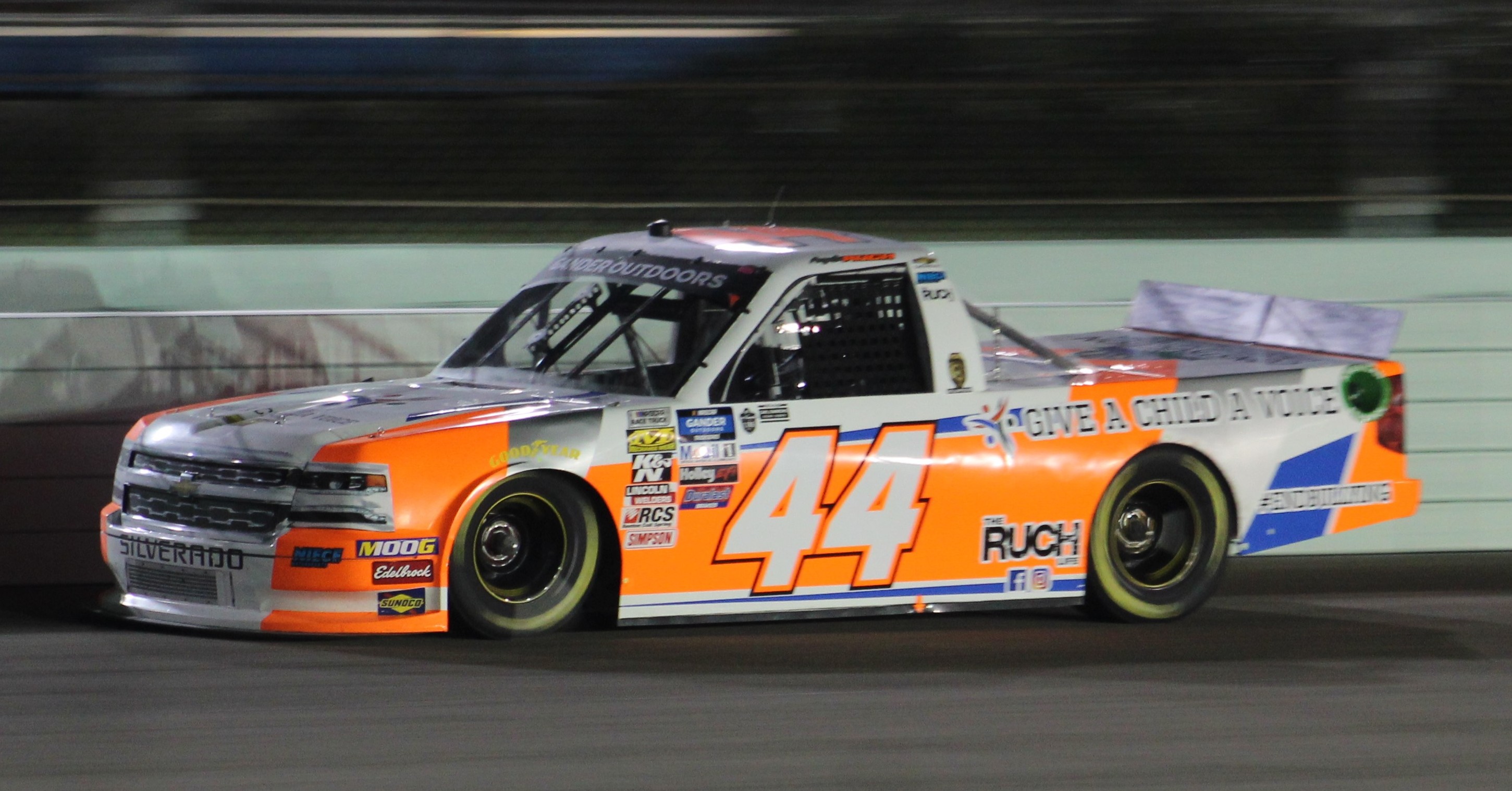
dermax
"The younger generation wanting to build something whether it's an old 59 whether it's a 6o power stroke a dermax whatever it might be"
“Dermax” is slang for a Duramax diesel engine, which shows up in some Chevy and GMC trucks. It’s popular with modifiers because there are lots of parts and tuning options for it.
“Dermax” is a common nickname for the Duramax diesel engine family, associated with Chevrolet/GMC trucks. It’s widely discussed in the diesel tuning community because it’s known for strong aftermarket support and upgrade paths.
diesel performance
"You know to be able to enjoy Enjoy these trucks and enjoy diesel performance"
“Diesel performance” just means how well a diesel truck can move and pull after upgrades. People usually focus on making it stronger and more responsive, especially for towing.
“Diesel performance” refers to how a diesel truck’s engine and drivetrain are tuned or modified to improve measurable outcomes like acceleration, towing strength, and drivability. In the diesel world, it often centers on increasing torque and optimizing fueling and boost.
race truck
"Really building a race truck, you know, like that's that's cool and that's fun But you know like the trucks that we give away"
A “race truck” is built mainly to compete, not just to be a normal work truck. It often gets more aggressive modifications to make big power, which can come with trade-offs for daily use.
A “race truck” is a vehicle built primarily for competition rather than everyday work use. That usually means more extreme engine tuning and supporting modifications, which can trade off some drivability, comfort, or long-term durability.
thousand horsepower
"It's been crazy being in this industry for this long that you know a thousand horsepower was You know the the upper tier of"
“Thousand horsepower” is a big milestone number in the diesel world. It means the truck is making extremely high power, and the host is saying it used to be rare but now it’s more common.
“Thousand horsepower” is a benchmark number in diesel tuning and drag-racing circles, meaning the truck is making at least 1,000 hp at the crank or wheels depending on the context. The speaker is contrasting older “upper tier” builds with how common very high-output trucks have become.
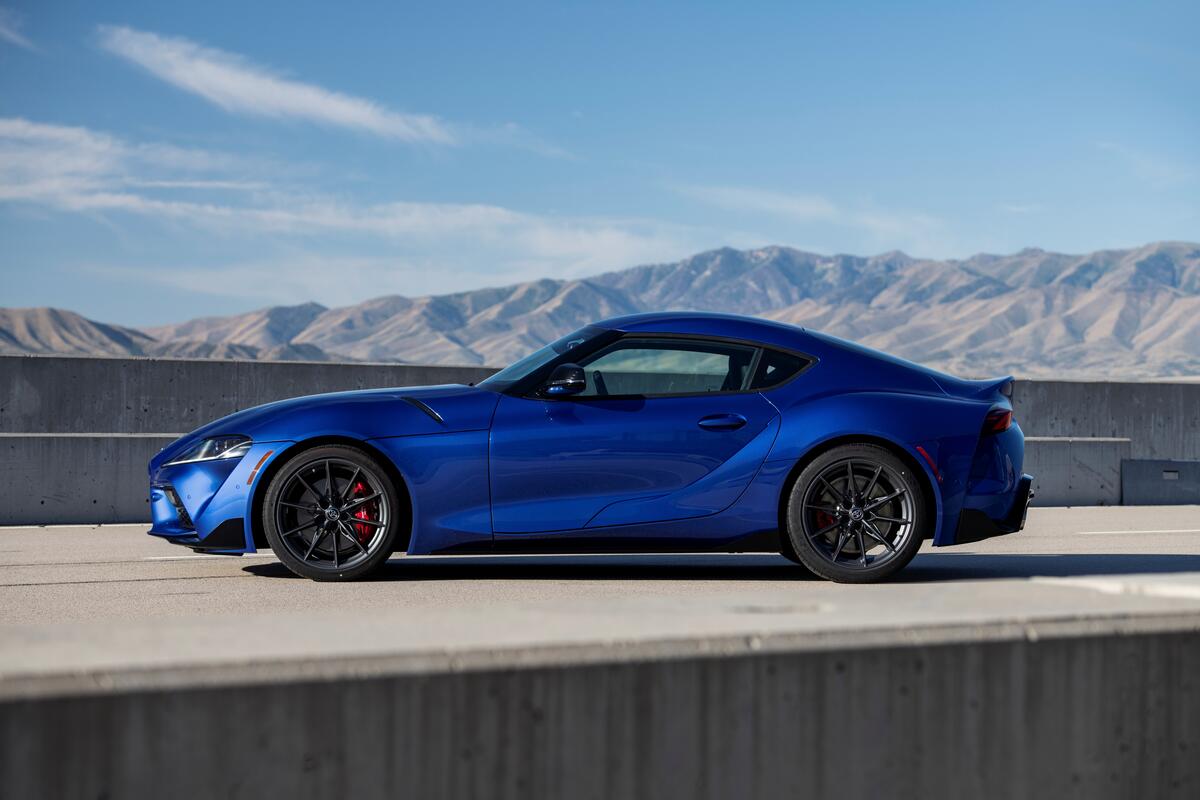
Toyota A90
"Your your tractor that you're gonna go buy a you know 50 horse model next thing You know, you need a 70 or a 90. It's like the same thing with the truck You know, you build something that you know has some drop-in parts and"
The Toyota Supra is a sports car made for fast driving. People talk about it when they’re discussing how much power you need for what you want to do with the car. The idea is that more capability helps you handle bigger goals or upgrades.
The Toyota Supra is a performance sports car known for its strong acceleration and driver-focused design. It often comes up in discussions about choosing the right “capability” for a build or upgrade path, because people compare how different power levels and setups change what the car can do. In a diesel-focused podcast, it’s likely mentioned as an example of matching engine output to the job you’re trying to accomplish.
900 horsepower
"But you know, you start getting it above that 900 horsepower, you know, It starts to start to turn into a little bit more of a toy than it is in every day every day driver"
Here “900 horsepower” is being used as a rough line where a tuned diesel can stop feeling like an easy daily driver. More power usually means more stress on parts and more compromises for everyday driving.
The speaker is using “900 horsepower” as a practical threshold where Cummins builds often shift from a comfortable daily-driver goal to more of a specialized, high-stress setup. In diesel tuning culture, higher horsepower typically increases demands on supporting components and can make the truck feel less like an easy commuter.
12 valve
"Does that number change a bit if we go to say 12 valve like a p-pump truck or VP 44 like how does how does that reliable daily driver number change? ... when it comes to a reliable usable truck..."
“12 valve” is a way of describing an older Cummins engine design. Enthusiasts talk about it because the engine and fuel system are different from newer ones, and that affects how easy it is to make power and how it feels to drive every day.
“12 valve” refers to a Cummins engine family known for having 12 valves per cylinder head (as opposed to later designs). In the diesel world, it’s often discussed alongside specific injection hardware (like P-pump), and it’s commonly treated as a more old-school platform that can be strong but may be less straightforward to make high power and daily-drive-friendly than newer common-rail setups.
VP 44
"Does that number change a bit if we go to say 12 valve like a p-pump truck or VP 44 like how does how does that reliable daily driver number change?"
“VP 44” is the name of a specific fuel injection pump used on some older Cummins diesels. Since it’s part of the fuel system, it affects how the engine makes power and how well it can handle heavy tuning for everyday use.
“VP 44” refers to the Bosch VP44 injection pump used on certain earlier-generation Cummins diesels. It’s a specific fuel-system component that enthusiasts compare against both 12-valve P-pump setups and later common-rail engines when discussing what’s practical for a reliable daily driver versus pushing extreme horsepower.
P-pump
"Does that number change a bit if we go to say 12 valve like a p-pump truck or VP 44 like how does how does that reliable daily driver number change?"
“P-pump” is an older type of diesel fuel pump used on some Cummins engines. It controls fuel in a different way than newer systems, so it can change how easy it is to tune for power and how the truck drives.
“P-pump” is shorthand for the Bosch P7100-style mechanical fuel injection pump used on many older Cummins “12 valve” engines. Because it’s a mechanical pump system, it behaves differently than common-rail setups and is often discussed in the context of how power upgrades and drivability change with tuning.
common rail
"I guess all all of my horsepower stuff is common rail related. I mean, don't get me wrong I have some 12 valves still around here..."
Common rail is a modern way of injecting diesel fuel. It keeps fuel at high pressure in a shared “rail,” then sends it to the engine at the right time, which helps the truck run smoother and makes power upgrades more straightforward.
“Common rail” is a diesel fuel-injection system where fuel is pressurized and stored in a shared high-pressure rail, then delivered to each cylinder as needed. It’s known for more precise control of injection timing and pressure, which usually makes it easier to tune for power and can improve drivability compared with older injection layouts.

6 7
"On a daily basis like even when it comes to 5 9 versus 6 7 like 6 7 all day like 6 7 to me like it's fun ... You know, we swapped in a 6 7 if we're changing an engine out."
“6 7” means a 6.7-liter Cummins diesel engine. The point here is that it can feel quicker to respond when you drive it, especially depending on the turbo setup.
“6 7” is shorthand for the Cummins 6.7L diesel used in many Ram heavy-duty trucks. In this segment, the host argues that the 6.7L’s setup—especially turbo choices—can make the truck feel more responsive and enjoyable than a 5.9L.
swap project
"Every truck that it has gotten a swap project around here like I have a 62 d 100 teal swept line / You know, we swapped in a 6 7 if we're changing an engine out."
A “swap project” is a build where you replace major components—here, an engine—into a different truck or configuration. The host’s point is that spending time and money on a swap only pays off if the final result is actually fun and usable to drive.
turbos
"So I think that that plays a huge part / Is the reason that you would pick the 6 7 because of how responsive it can be with / Different turbos and just what you how quickly you can drive them versus a 5 9"
“Turbos” are parts that help the engine make more power by forcing extra air in. The host is saying the turbo choice affects how quickly the truck feels like it’s responding when you drive it.
“Turbos” are turbochargers—forced-induction devices that use exhaust energy to spin a compressor and push more air into the engine. In a diesel swap or upgrade, different turbo options can change how quickly the engine responds (spool-up) and how usable the power feels day to day.
platform
"I tend to find that the Cummins guys can be more resistant to changes in a platform than maybe the other brands [2481.0s] I got into diesel got my first one in 2008"
“Platform” here means the overall truck/engine setup people are working with. The host is saying some Cummins owners don’t like changing to newer setups as much as other groups do.
In enthusiast talk, “platform” means the specific vehicle/engine generation and its underlying design that upgrades are built around. Here, the speaker claims Cummins owners are more resistant to changes in that platform compared with other diesel brands.
eight speeds
"Like I have not gotten the chance to drive one of the new eight speeds Um from everyone that I've ever heard talk about them."
This is talking about an automatic gearbox with eight different gear ratios. Having more gears can help the truck feel smoother and keep the engine in the right spot more often.
“Eight speeds” refers to an eight-speed automatic transmission, meaning it has eight forward gear ratios. More gears can help the engine stay in a more efficient or power-friendly range, which can improve drivability and fuel economy compared with fewer gears.
aftermarket support
"That one or two problems that they may need improvements on that the aftermarket Support has already taken care of fix that and rock on, you know"
Aftermarket support means non-factory parts or shops that can improve or fix the truck. The idea here is that if a model has common problems, there are already parts available to address them.
Aftermarket support means third-party parts and services sold outside the vehicle manufacturer—like upgraded components or fixes for known weak points. In this context, the host is saying that if a truck has a couple of common issues, the aftermarket already has solutions.
injectors
"You're on the phone Monday morning and calling to figure out if I need bigger injectors or a turbo to like get your horsepower level up"
Injectors are the parts that spray fuel into the engine. If you upgrade them, the engine can get the right amount of fuel more effectively, which can help make more power.
Fuel injectors are the components that spray fuel into the engine in precise amounts and timing. On a diesel like a Cummins, upgrading injectors can help deliver more fuel efficiently, which is one path to higher horsepower.
electronic side
"Is it maybe the electronic side? Is it stuff that it's happening on the engine?"
The “electronic side” refers to the diesel’s engine control electronics—things like sensors and the engine control unit (ECU) that manage fueling, boost, and timing. Changes here (often via tuning or new control strategies) can significantly affect how much power the engine can safely make.
engine dyno
"[2823.4s] Jump of whether that's [2825.9s] engine dyno [2828.3s] Chassis dyno, uh, I think you're gonna see a lot of horsepower"
An engine dyno is a machine that runs just the engine and measures how much power it makes. It helps you compare changes like tuning or parts in a controlled way.
An engine dyno measures an engine’s output on a test stand. The engine is run under controlled load so you can quantify power and torque without the rest of the vehicle affecting results.
chassis dyno
"[2825.9s] engine dyno [2828.3s] Chassis dyno, uh, I think you're gonna see a lot of horsepower [2834.0s] um [2835.5s] Gains, you know to come and I think"
A chassis dyno measures how much power the car actually delivers to the wheels. It’s like testing the full vehicle on a treadmill with rollers.
A chassis dyno measures power at the wheels while the whole vehicle is strapped down and driven by rollers. Because it includes drivetrain losses, wheel horsepower numbers often differ from engine dyno results.
aftermarket ecu's and ecms
"[2894.9s] This is kind of more competition [2896.9s] Versus the daily driver side of things, but you're seeing a lot of people switch over to [2901.6s] You know aftermarket, you know ecu's and ecms, you know and you know"
An ECU (engine control unit) and ECM (engine control module) are the vehicle’s computers that manage fueling, timing, boost, and other parameters. Aftermarket ECUs/ECMs replace or reprogram the factory calibration to give tuners more control for performance builds.
stock ecms
"[2907.5s] When you were built when you were building a competitive truck [2911.2s] Uh [2912.1s] 23 years ago you had a lot of guys on stock ecms, you know"
Stock ECMs are the original factory engine computers. They’re programmed for normal use, so serious performance builds often want more tuning options.
Stock ECMs are the factory engine control modules with factory software calibrations. The transcript contrasts them with modern aftermarket engine control solutions, implying that factory control is less flexible for high-end tuning.
catastrophic failure
"and then if something if something happens and [2936.9s] You have a catastrophic failure and you don't know why like it or it or it's uh, uh, it's preventable"
A catastrophic failure is when something in the engine breaks badly and usually causes major damage. The claim here is that better engine electronics can help stop that from happening.
A catastrophic failure is a sudden, severe mechanical breakdown where the damage is extensive and often ends the engine’s life. The host argues that many of these events can be prevented by better electronic monitoring and control strategies.
electronic safety devices
"it's preventable [2944.7s] You know with a lot of the electronic safety devices that we're building into this stuff now"
These are electronic systems that watch the engine and help protect it. If something goes wrong, they can reduce damage or stop the problem from getting worse.
Electronic safety devices are onboard systems that use sensors and control logic to detect abnormal conditions and reduce risk (for example, by limiting power or triggering protective strategies). The host’s point is that modern truck electronics can help prevent failures by catching problems earlier.

Cummins
"You know, it's how many times you want to buy an engine? [2954.1s] You want to buy one once you buy one twice [2957.2s] Well, if you would have went and bought, you know a mo tech or an aftermarket ecm like you could have saved that so"
Cummins makes diesel engines that are common in heavy-duty trucks. Here, they’re talking about upgrades that change how the engine is controlled so you can reduce the chance of expensive problems.
Cummins is a diesel-engine brand best known for heavy-duty inline-six engines used in trucks. In this segment, the host is talking about upgrading a Cummins by changing engine control hardware/software to avoid failures and improve reliability.
mo tech
"Well, if you would have went and bought, you know a mo tech or an aftermarket ecm like you could have saved that so"
MoTeC makes aftermarket engine computers. People use them to tune how a diesel runs so it matches the upgrades they’ve done.
MoTeC is an aftermarket electronics brand known for engine management systems and standalone ECUs. In the context of upgrading a Cummins, the point is that a MoTeC setup can provide more control and better tuning than relying on stock calibration.
Turbo guys
"I do think I think across the board, right? Like you've got [2968.1s] Turbo guys spending so much time making sure that things are [2972.0s] Efficient and you've got fuel system stuff."
“Turbo guys” refers to builders and tuners focused on turbocharging upgrades, where the turbo’s airflow and boost control are central to how the engine performs. The host connects this to efficiency-focused development and the need for matching fuel and engine management changes.
domino effect
"It's almost like a domino effect. Like if we think to say a mo tech [3025.3s] Well, if you're running that on a factory block"
The host is saying that if you change one thing in a truck build, it affects other parts too. If the engine can’t handle more power, then the next upgrades—like the transmission—have to be reconsidered.
The “domino effect” here describes how changing one part of a diesel build (like engine control or base hardware) forces changes in other systems. For example, tuning on a factory block can limit how far you can push power, which then changes what engine builders and transmission builders can safely do next.
Request an Explanation
Heard something you'd like explained? We'll add it to this episode.
Sign in to request explanations for terms you heard.
Want to learn more?
Browse our glossary for plain-English explanations of automotive terms, jargon, and concepts.
Help improve this episode
See something that's not quite right? Our annotations are AI-generated and can sometimes miss the mark. Click the flag icon on any annotation to suggest a correction.