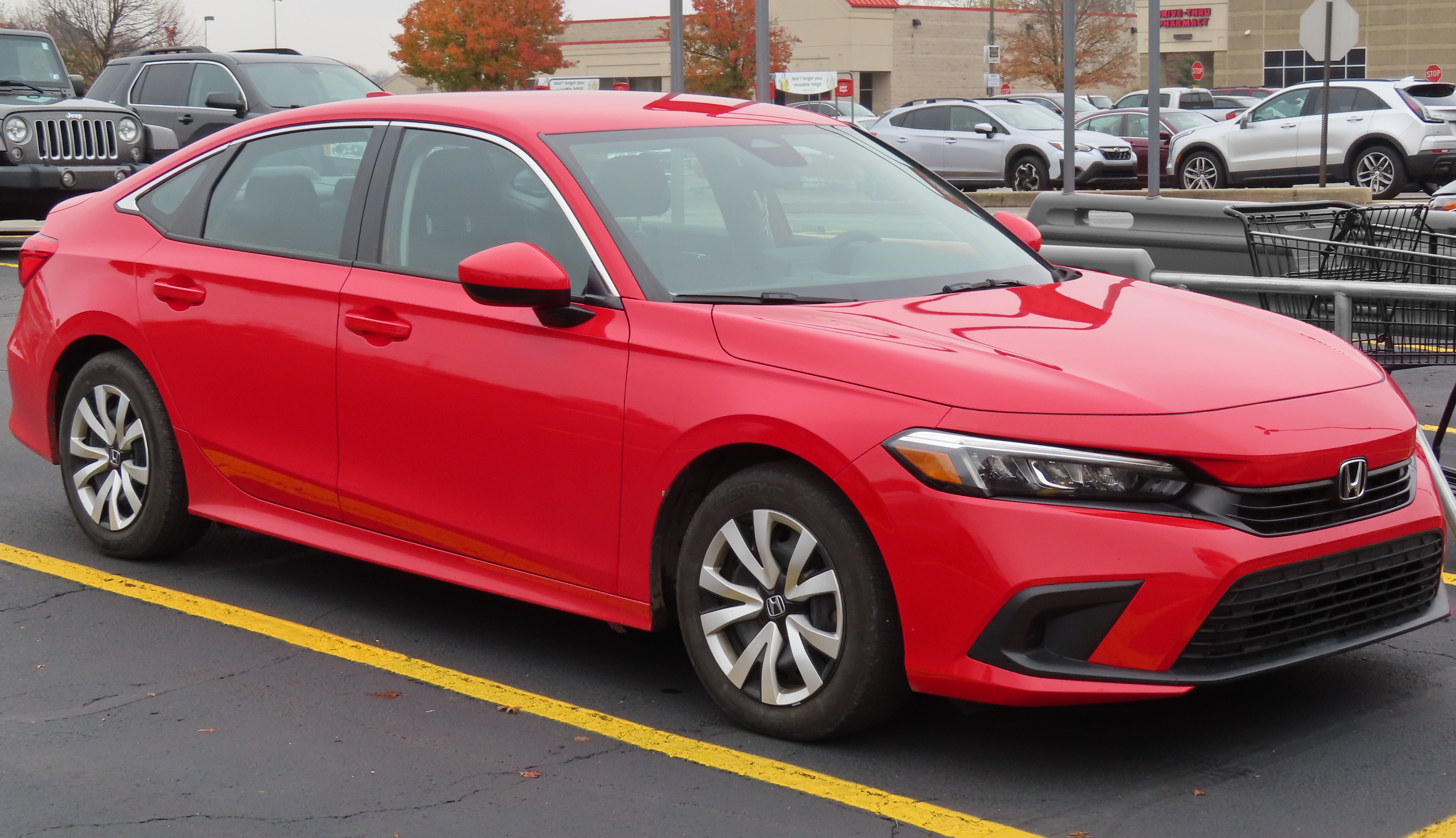
Certified pre-owned vehicles are used cars that have been checked and approved by the dealer to make sure they are in good condition, often with some warranty.
CPO means Certified Pre-Owned. It's a way for car companies to sell used cars that are in good condition and come with some guarantees, like a warranty.
EV subsidies are money given by the government to help people buy electric cars. This makes it cheaper for buyers and encourages more people to switch to electric vehicles.
The NADA Dealer Academy is a school for people who work in car dealerships. It teaches them how to run the dealership better and improve sales and service.
Fixed Ops means the parts and service side of a car dealership. It's where they fix cars and sell parts, and it usually makes more money than just selling cars.
Parts and service are the parts of a car dealership that fix cars and sell parts needed for repairs. They help keep customers coming back after they buy a car.
Pedestrian detection helps cars see people walking in front of them. If the car notices someone in the way, it can warn the driver or stop the car to avoid hitting them.
Hands-free cruise control lets you set your car to maintain a certain speed and keep a safe distance from the car in front of you, so you don't have to keep pressing the gas pedal or brake all the time.
Traffic assist helps your car automatically slow down and speed up in traffic, making it easier to drive in busy areas without having to constantly use the brakes and gas pedal.
This term describes a type of technology in cars that helps the driver by controlling some functions like steering and speed, but the driver still needs to pay attention and be ready to take over at any time.
The CANBUS system is like a network in your car that helps different parts talk to each other. It helps mechanics check what's wrong with the car by showing error codes.
The Toyota Corolla is a small car that many people buy because it's easy to drive and doesn't use much gas. It's a good choice for anyone looking for a car that will last a long time without causing too many problems.
An OBD dongle is a small device that plugs into your car to check how well it's running. It helps you understand any problems and can even help lower your insurance costs.
Lane centering is a feature that helps keep your car in the center of the lane while driving. It can automatically steer the car to stay in the lane, making driving easier.
Connected car technology means cars can connect to the internet and talk to other devices. This helps improve safety and makes driving easier with better navigation and entertainment options.
Semi-autonomous driving means the car can help you drive, like keeping you in your lane or stopping automatically, but you still need to pay attention and take control when needed.
Automatic braking is a feature in some cars that can stop the car on its own if it senses that a crash is about to happen.
LIVE
Hey, everybody, welcome back to another episode of The Daily Dealer Live.
I'm your host Sam Dark and welcome to this space where Automotive comes together to learn, to share, to grow.
Thank you, our Daily Dealer Live audience, for choosing to be here on this Monday, November 17th.
Let's jump right into it.
First up today in news, Ford is teaming up with Amazon to sell certified pre-owned vehicles,
making Ford the second automaker to plug into Amazon Autos after Hyundai joined the platform last year.
Now shoppers can browse, finance and buy Ford Blue Advantage CPO units directly on Amazon and then take delivery through participating Ford dealers.
And so far, more than 164 dealers have raised their hands according to CNBC, a dozen stores are already live and another 10 go live next week.
For now, only the LA, Seattle and Dallas markets are eligible to participate, but more markets will likely open up soon.
Ford says the goal isn't to bypass dealers, it's to drive more traffic to them.
And depending on how the CPO program performs, Ford may eventually look at listing new vehicles on Amazon as well.
Next up, in an effort to cushion the blow from U.S. auto tariffs, the South Korean government is rolling out a major bump in EV subsidies at home to keep its industry competitive.
The government plans to boost EV incentives by 20% next year, raising the pot to $936 billion won.
And for those who can't make the conversion, including me, that's about $658 million or way over a half billion.
It's part of a broader package that also pumps more financing into auto parts suppliers to help them absorb higher costs tied to the tariffs.
Both Hyundai and Kia stand to benefit the most.
Hyundai already told investors the U.S. levies cost it more than $828 billion won in Q2 and warned the hit would grow in Q3.
And while the U.S. has agreed to lower the tariff rate from 25% to 15%, as part of a larger investment deal, Seoul clearly isn't waiting around.
Hyundai is also upping its own investment at home, committing more than $125 trillion won.
Again, conversion, that's $86 billion in Korea between 26 and 2030 to shore up production and protect supply chains.
Well, what's the bottom line here? South Korea is going all in to keep its automakers, especially Hyundai and Kia competitive, protecting thousands of supply chain jobs and accelerating homegrown EV tech development.
And finally up to a subprime auto delinquencies climbed again in October, hitting a new record in Fitch's ratings auto ABS data and signaling deeper strain on the most vulnerable buyers.
The 60-day subprime rate rose to 6.65% while Primestell held steady at .37%, widening the gap and putting more pressures on lenders to mitigate risks.
And with lower-income consumers reporting sharper financial stress, more deals are stalling.
If this trend continues, approvals could get tougher and dealers will likely lean even more on prime and near-prime buyers to keep volume moving.
And that is a wrap on today's industry headlines.
Yuli, welcome back!
Hello, hello.
Alright, what do you think about Amazon autos? Is it a good idea? Bad idea? Not a big deal?
I think it's the inevitable evolution of the industry, but I mean for dealers, I don't know, I don't know that it's a great idea.
Yeah, it's interesting to see, you know, OEM after OEM, Hyundai, it starts with now Ford, who's up next.
I probably have a couple of guesses. Does Stellanus go next?
But it'll be interesting to see, particularly with this focus on CPO as opposed to new, that's where Hyundai started, what will be the net effect.
So, to our audience joining our live stream, just a quick reminder, we're live across all CDG social media platforms.
Post your comments. We'll bring them into today's show.
And what a show we've got in store for you, our daily deal live audience.
Coming up today, we'll hear a Cox Auto's response to Brian Kramer last week on Viotto product capabilities.
He made some comments about CarMax and Carvann and whether or not they showed up on Viotto.
We're going to give them a shot at coming back and responding to that.
But first, we've got actually one of our highest commented and liked posts on Twitter and Instagram ever.
And we'll introduce him in just a minute.
But let's go to yoga cars.
Amazing Amazon Ford.
Bezos is starting new AI company that will focus on supporting automobile manufacturing space amongst others.
Jonathan Gamble says, let's go.
So that is an interesting comment from yoga cars into Jonathan.
Thanks for shouting props out.
But we'd love to hear from all of our audience.
So bring it in.
All right.
Who is our highest?
By the way, how do you say that, Yuli?
So on Twitter, on X, formerly known as Twitter.
Well, it was like highest liked.
It created the most buzz, right?
So Twitter is the most.
Yeah.
Twitter and X is owned by Elon Musk.
Elon Musk owns Tesla.
We talked about distribution models.
And our next guest, Don Hall, president of the Virginia Auto Dealers Association,
made some comments that made him famous on Twitter.
Welcome to the show, Don Hall.
Let's bring you in.
Hey guys, it's great to be with you guys.
I look forward to chatting today about some important subjects in my mind.
Yeah, it's exciting to have you back.
And you trended across our daily dealer live audience earlier as we were talking about direct distribution versus the
franchise model.
Huge advocate you are for the franchise model.
So we're excited to catch back up with you.
So, Don, Virginia and New Jersey had elections.
They're the only two states that recently had general elections.
How did auto dealers fare in those, Don?
You know, I appreciate the question number one.
And I get asked by a lot of car dealers.
A lot of people say to me, well, Don, how do you feel about the election results and what's taking place?
I said, thank God, as a young guy so long ago, I joined the auto industry.
And I've been part of it for a very, very long time.
In the auto industry, good, bad or indifferent, last month is indeed last month.
This is a new month.
Let's march on, meaning the following.
We don't always like the outcome of elections.
And that's a fact in life.
Sometimes we're happy.
Sometimes we aren't.
But the reality is that's last month.
Now we have to learn how to deal with the new folks taking over and in charge.
And I am certain with the auto industry coming together in the Commonwealth and in New Jersey and many other states out there
that all of us make sure that our message is resonating in the governor's office, if you will.
And that we're about enterprise.
We're about taking care of the dealers.
But most importantly, ensuring that every consumer has a great buying experience in each and every state in this great nation of ours.
So, Don, as part of these elections, you're lobbying for bills and you're lobbying for candidates that are representing certain viewpoints.
What's the top one or two lobby topics that you're engaged with currently as you're having discussions with politicians and on the Hill?
Well, as Yuli was talking a minute ago about Amazon, we're talking about the virtues and the value of a system that often gets taken for granted even by us in that system.
And that is the franchise system.
The fact is it's 100 plus years old.
It's a great system.
It's not a system we ought to get rid of because it's, quote, old.
Old things can offer lots of great things, too.
And the franchise system indeed protects consumers.
It protects the state of Virginia, in this case, or any other state, but most importantly, it protects the dealers as well.
The money that they put in this business, the number of people we hire in this business.
And so it's always about making sure that we're being fair.
The manufacturers have their direction, their marching orders, and oftentimes they don't march in a direction that would be beneficial
to those of us who work day in and day out moving metal and making sure that customers have indeed a great buying and service experience in those dealerships.
So your viewpoint is to protect the franchise model, which that is basically using government to say certain businesses can't exist.
We talked about that in the past.
Tesla, you said, hey, it would be better if Tesla came to consumers through the franchise model.
How do you reconcile our auto dealer group, typically that's free market with this constrained market, which is come through this channel?
I mean, I get employee or customer experience, but a free market, even with Tesla, will drive towards a better customer experience because they're going to lose money and profit if they don't, right?
How do you reconcile that paradox?
Well, I think the biggest answer, the simplest answer is this.
If you want competition, then you have a strong franchise system nationwide.
It makes it very different.
I've talked to a couple of my peers both in Australia, as well as in Germany, where their system is very different.
They don't have the franchises that we enjoy.
And as a result, the OEM is making all of the decisions.
The entrepreneur has really a whole lot at risk and it makes no decisions to speak of.
If you want to buy, as an example, in Richmond, Virginia, a Ford.
There are six or seven Ford dealerships in the greater Richmond area.
In fact, more than that, if you go out an extra 20 minutes.
And as a result, I can give you competition, competition for the new vehicle, competition for your trade, the value of your trade, competition when it comes to the financing.
I give you competition when it comes to servicing of your vehicle.
And that's what benefits individuals the most.
Not a manufacturer deciding what's in your best interest and what you're going to pay and how you're going to get your car serviced.
People brag a lot about what was so much easier when I bought my Tesla.
I said, well, fine, tell me what it's like when you have to get your car worked on.
When you have to get a service.
Oh, that's not easy done.
Body work, repair work, some intellectual property and what not.
All they have up.
Yeah.
So it's interesting, one thing that's been on my mind a lot lately.
So I'm part of the CDG circles and in the circle that I belong to there are many dealer groups.
One member of that group actually got an invite to go back to China and see some of China's EV tech, which to me is fascinating.
Some people say that the EV tech is advanced even farther beyond what the United States EV tech is.
And yet we constrain the market here in the United States.
We don't allow that product to come in.
What's your take on that?
And do you think there will be a time where once that tech does make its way into the United States, we'll be far enough behind that we'll have a problem?
Or will we quickly innovate?
If it's true, it's good tech and be able to keep up with that, Don.
A couple of things.
One, I've had a longtime friend of mine who spent five years in mainland China, came back U.S. for a year or two and then went back to Taiwan.
He's in Taiwan with his family as we speak.
He's an expert.
He represents the federal government.
I won't go into what area, but he does.
And he said to me so often, we ought to be very leery and concerned about the Chinese.
Much of what they have, in fact, came from our institutions and our businesses that have been taken and then literally sent to China to be used.
Secondly, I'm not a protectionist.
I believe in the open market.
I believe in competition.
I believe in Darwinism.
The strong survive.
Survive over the fittest.
Absolutely.
But in a situation where our government has underwritten an industry to the degree and we had this along with Tesla underwritten industry to this degree.
We would be bringing cars that would sell for 15, 16, 17, 18 thousand dollars who oftentimes will not be subject to the kind of things that we're subject to as Americans and the things that we believe in and labor and so forth.
The cost of it is so different in mainland China versus here that we have a very unlevel playing field.
It would be very unfair to the American workers, both of those union workers that work in these plants, but also those who sell and service and own dealerships.
We cannot allow that to take place in the short term.
It'd be great because everybody can drive around in $20,000 cars that haven't existed in a long time.
But the reality is that we've got to stand for America and our way of life.
And that means we take care of all concern, the least among us, if you will.
And that includes those individuals who build them to those individuals who repair them to those individuals who sell them.
And we need a free market to do that, but not a market that is being underwritten by an entire government in order to create havoc on our economic system.
So that's a great and an interesting response.
Once the Chinese product does come in, will we have catch up to do or is it your belief that we've innovated equal to them or beyond them?
And what are ways we can stay competitive to prepare for that day?
I was in Mexico and I saw Chinese EV product driving around and it just makes you think our roads look a little different than others do, right?
Yeah, first of all, it does not mean that we have to be complacent and just say, well, Americans are going to get what we get.
And it's just the way it is.
And you Americans need to suck it up.
And because you haven't been innovative and you haven't been on the cutting edge of doing things to make our cars better and so forth.
We are a different regulated entity than China by a long shot.
Our lives are different.
And so again, I go back to my earlier statement, not to sound redundant.
A level playing field will compete.
Yeah.
Level playing field, but it will never be level.
And so therefore we ought to resist the temptation and to at least the current administration and maybe even the previous to some degree where we're not going to let the Chinese in.
Sorry, but we're not going to let you in.
And that's where tariffs will make a difference and should make a difference where there financially is no incentive for them to come into our country.
And the lack of level playing field is intellectual property rights to your point.
They've stolen a lot of that.
And then it's cost of labor, which it's all the above supporting that.
All right.
So take us to take us to the tariffs, Don.
And then we'll go into our main topic for today.
So we're about six months in.
We've seen tariffs at varying percents.
A lot has been up in the air, including this next period of chip shortage,
which kind of came and went, but it may not be completely gone.
Are you a fan of tariffs at this point?
Or are you a little nervous about how long it goes on and the ultimate impact to the economy?
Interesting enough, I had dinner literally last Thursday night with Chris Christie, the former governor of New Jersey.
Oh, yeah.
And Chris made it abundantly clear to me a couple of things.
He said, one, Trump is true to himself in that he has been pro-tariffs since the early 1980s.
So this is not a new phenomenon with him based on a lot of years and so forth.
And I said, well, Chris, I said, how do you feel about tariffs?
And he says, I don't like them.
We are the wealthiest country in the world.
We cannot expect Vietnam as an example to have equal trade and buy from us what we sell to them,
buys first and so forth.
We are the wealthiest country in the world.
And it caused me to sort of get somewhat reflective.
And I thought, well, and then I had a board meeting two weeks ago with my dealers.
And I have a tendency when I'm meeting with, and these are dealers from all over Virginia,
some of the biggest names you've heard of in Virginia for sure in terms of dealer organizations represented.
And I said, tell me how the tariffs are impacting your business.
And now part of this is because we're such a unique industry with unique people that are in it,
meaning no matter how good or bad things are, we're always so positive.
And we deal with those bad things in very unique ways.
And there's a lesson for all of us to learn from those who run dealerships and deal with tough times
that tariffs are not impeding our business to the degree where it's causing us to be in a tailspin
or may make massive major cuts.
It's uncomfortable.
It's created some issues for sure.
But not to the point where we're going, oh my goodness, it's time to get out of the business.
It's time to sell out. Why? Because tariffs are here and so forth.
I think that I'll leave it up to Washington to make those choices.
But I think Chris Christie, without realizing it, had more impact on me in that there is some logic
to the fact that as Americans, we are blessed in a unique way.
And maybe some of these things are not equal.
And therefore we ought not to be necessarily just drawing these hard lines with all countries
to trade equal in our trade and so forth because we are indeed the wealthiest.
We are indeed a country that's willing to help folks who have a tougher business climate and so forth
to do better.
And as Americans, we need to care.
And yes, we've suffered a little bit, but not end of the world.
We too shall go through this and continue to sell and service vehicles.
And it does make you wonder too a little bit in the history of, in history as you know,
as we all know, the pendulum swings one way and then it swings the other.
And it's possible in this kind of corrective pendulum swing, perhaps in the near future,
it swings back to the point you're talking about.
So thank you for your perspective.
All right, Don, talk to us.
You're fresh off a week at the NADA Dealer Academy.
And the stat that jumped off the page for us as we talked about it prepping today was
Fixed Ops is still the most profitable part of the dealership.
Yet a lot of owners under leverage it.
Why do you think that is that Fixed Ops is so under leveraged today?
You know, Sam, I go back to the, my starting industry was in 1979 as a young guy.
And I remember back then that parts and service was, you know,
it was a necessary part of our business.
It's the people in the back end.
We're the people on the front end.
Yeah.
And fast forward to 2025.
Yeah, it's still, unfortunately, the mentality is it's the people on the back end.
We're the front end.
We're the front end that gives away cars that puts too much money in a trade in order to make the deal happen.
And by the way, it's the service department that has the ability to make huge profits
and more importantly, retain customers for life.
Yeah.
One of the things in this wonderful class I spent at the Dealer Academy is this idea
that not only do I want to have your warranty work, obviously,
but I want to have you coming back to me after that period is up.
But more importantly, Mr. Customer, tell me about the other cars that you currently own.
You see, the perception is that I can get a better, less expensive oil change out on the street,
or I can get my car worked on out on the street with others for lesser money.
The fact of the matter is this.
It is not true.
We have certified texts, certified to work on your vehicles.
And the reality is we've got to do a better job.
And the front end needs to understand clearly, Mr. and Mrs. Front End,
we exist for the purpose of service who in fact can carry the water of the dealership,
meaning the average absorption rate is somewhere between 70, 75%.
I've got Virginia dealers at over 100%.
In other words, all your expenses are covered by parts and service.
This is an area that has great, even today, growth potential.
And we know so little about it and dealers go,
well, but I make an X amount of dollars, so I don't think about it.
No, this is the area that allows us to do very well and to retain customers for a lifetime.
So to prove the point, I'm going to bring up one stat here in just a minute.
But I am curious, what the heck is Don Hall doing at the NADA Dealer Academy class?
Are you taking this course?
Why are you going back to school there in McLean, Virginia?
Well, one, they allowed me to do it, which I'm internally grateful to my extent
to the NADA staff that allowed me to do this, first and foremost.
Two, look, if I'm not a young guy, at least by numbers wise,
if you care about this business and you care about life, it's always about education.
It's listening today.
That's part of your education.
Any opportunity you've got to enlighten yourself,
you may not agree with everything is said,
but the fact of the matter is to be able to sit in a class
and listen to 20-some people in that class talk about one week it was parts
and then later became service the next week and to listen about what goes on
and knowing that a lot of them don't really understand it
or appreciate it to the degree that they ought to appreciate it.
And so part of my message is life is about growing, life is about learning,
and when you're not willing to grow and learn, it's time to check out.
I am not checking out.
This Marine stands at the duty and is ready to go to war to do whatever
to protect the dealers and also say to dealers, get a dose of reality.
If you don't understand it, then you ought to understand it quickly
because there's a lot more you can do profitability wise
and your future is more in the service end of the business
than it'll ever be in the selling end of the business,
especially with your Amazons and others who are now into our business
and trying to take advantage of us.
We need to be the kings of service and parts
and both which give us great opportunities to make a lot of money
and take care of a lot of people.
So I don't know if you've heard we've had many Fixed Ops leaders.
It's part of Fixed Ops Friday on the show
and they all say that exact same thing.
It's all about retention in today's world.
It's all about serving that customer to the highest level possible.
And Dawn, that's why we here at Cardiola Ship Guy and Daily Dealer Live
do what we do three times a week.
I love this platform to just get to talk to people like yourself,
ask questions and learn because in learning and being transparent
and challenging each other, we grow, we find better solutions.
So one stat before we have to let you go,
that you quoted as part of your time there.
Tires might be the most shocking area of Fixed Ops.
75% of customers buy tires from the first person who recommend them
and yet only 8% of tires are sold by franchise stores.
Why is that happening if that's true
and how did Bob at your NADA Dealer Academy class teach
and suggest you fix that?
Dr. Bob, it's been in NADA for a long, long time.
An icon for sure.
An icon.
Look, with your dealerships, we can say,
well, you know, they meet our salespeople
and they know who they are.
No, no, no, no.
The people in that service lane when they drive in,
it's those individuals, those advisors
who establish a long-term trusting relationship
with the consumers.
And the reality is we don't think to ask.
We had an exercise where we had to call parts departments
as an example as a class.
This is a devastating exercise, Don.
I did this in my time and I said, wait, we'll be the exception.
When that call gets made, you'll love the response
and, Don, what happens invariably?
Ladies and gentlemen, listen clearly.
When you call in, your folks don't do a good job.
They don't take names, numbers.
They don't act.
And this is true in every single dealership we did this in.
It is embarrassing.
We have a golden, great opportunity to sell more tires,
to sell more service, not to abuse people by overselling,
but just take care of their needs to be able to convince them
that you don't have to go down the street to get an oil change.
We do a better job.
We use the right kinds of products.
Our people are trained.
And so at the end of the day, as a fixed,
as a guy who spent his life in sales,
and here's all my dealers talk about the sales part of our business,
I'm here to tell you, change your language.
Change the way you think about your business.
If not, get it that way quickly.
Hire the right people.
Hire the right consultants.
Use the various companies that can help you be better
with AI today on warranty.
You had a guest on that recently as well.
This is what will make a huge difference on what we're doing
10, 15, 20 years from now,
and also in your profitability today.
Do it now.
And on that mic drop,
President of Virginia Auto Dealers Association, Don Hall,
thank you so much for being with us,
sharing your perspectives on all things.
Look forward to having you back at some point soon.
Thanks, Don.
Thanks, Don.
Dude, every time he's on, I get so fired up.
Like he is unapologetic in his commitment to the auto
industry, and I love the different viewpoints he has
because I do think about some of the international things
we're doing and what will the unintended consequences
down the road be.
And it's voices like him that have seen kind of that
pendulum shift of history that kind of understands
some of the why they see the path and they see kind
of the wisdom in some of the things that are
happening today.
So it is interesting to hear him speak.
Colin Kubik says, preach, Don.
And I would agree with that, right?
So, hey, before we jump to our next guest,
let's talk escalating fines and enforcement actions.
They're hitting dealers hard right now.
KPA's complete compliance suite protects you from
every compliance risk while helping to reduce
insurance premiums and liability exposure.
Learn more at kpa.io forward slash automotive
kpa.io forward slash automotive.
And then you can, as always, we got our good old
QR code up there and you can scan that for more
information or click the link in the show notes.
But huge props to KPA for supporting the content
today, including that really fun conversation with
Don that we just had.
And, you know, that conversation and some of the
things Don said about the importance of continued
education really reminds me of CDG circles,
which is open right now.
If you want to join a circle, that enrollment
will end at the end of this month and then you'll
have to wait until the end of Q1 to jump into one.
But I can tell you, I've seen conversations in
the circle that I'm involved in.
And it's been interesting.
One of the members, as I said, is going to China
just to check out what they're doing over there.
And it's fascinating to hear everybody's viewpoint
and get their take on the industry.
It's tough to keep up with, but as you go back
and you digest it and read it after the fact
there's a lot of actionable content in there.
And that's the value of continuing ed, Yuli.
That's what this business needs all the time.
Yeah.
Continue to improvement.
Yeah.
All right, let's jump to our next guest.
CEO and founder of SafeRide.ai Will Bright.
Welcome to the show, Will.
Hey, Sam and Yuli.
Great to be here.
Thank you for having me.
It's great to have you.
Well, welcome.
We're super pumped to have you.
I know you have a pretty remarkable piece
of technology to share with the classroom today.
Before we get into that, let's ask
each other a question.
You know, how's business in your neck of the woods?
Oh, man, business is great.
We just crossed the first 5,000 pre-orders
from dealers for our product.
So that's not too bad for a company of our size.
And we're hiring a lot of folks, both on the sales side
and on the technology side.
So it's firing all cylinders.
I love it.
Now peel back the layers a little bit.
5,000 pre-orders of what exactly?
Yeah.
So SafeRide is an AI dash cam that you can preload
into almost any car on your lot,
and bring advanced safety features
like pedestrian detection that works using cameras
instead of ultrasonic sensors or radars
that have a lot of false positives, right?
We bring hands-free crews and traffic assist.
So, you know, on those long commutes on the highway,
you can press the cruise control button,
keep you in the center of your lane
at a safe distance relative to vehicles.
You're driving through city traffic on the way
out of the office, stops at red lights,
goes when they're green.
We don't make turns.
We don't navigate from a point to a point.
This is level two plus driver assistance, not autonomy.
It's an important differentiation.
But at the end of the day,
we make driving much more convenient, much safer.
And the final thing is around predictive maintenance.
Getting back to what Don was talking about
around the front half of the dealership,
helping out the back half,
every car that has a SafeRide unit in it
delivers useful service insights to the drivers
and connects them back to the dealers
where they bought the car with the SafeRide unit installed.
So Will, you ideated this.
You created it.
You brought it into the world.
What went into the idea of making this product
in a world where so many OEMs have versions of this?
What was the gap that caused you to create the product?
Yeah, I mean, the big gap has to do with the cost
of this on new cars versus the number of cars
that are already on the road that are transitioning
through the dealer network every year
and don't have this technology.
The key is that with technology like this,
you can eliminate 80 to 90% of collisions
and everyone deserves an extra set of eyes.
Everyone deserves to have a safer vehicle.
It's just a shame that these technologies
have only been available on the expensive higher end cars.
Now anyone buying a $20,000, $30,000 used car
can have access to this lifesaving
and convenience enhancing technology.
So that's probably the big thing.
It takes about 25 years for the national fleet to cycle.
So if I was waiting until this technology
rolled its way out to every tier of car,
my grandkids would still be dodging Nissan Centres.
I don't want to live in that world.
So Will, Yoga Cars asks online, 5,000 pre-orders.
Is this from consumers or dealers that are pre-ordering?
All from dealers.
We sell exclusively through dealerships.
We do not sell direct to consumer.
Interesting.
And where does it get added on?
Is it at acquisition on the used car?
Is it in the finance office?
Is it in the service department?
What does that look like?
Yeah, so every dealer group, you know,
as you know, runs a little bit differently.
So ultimately it's an optimization that they get to decide,
but we're finding the majority of our customers
are focused on pre-loading at vehicle acquisition.
One of the interesting things about SafeRide
is that because we connect directly into the CANBUS system,
as soon as it's connected to a vehicle,
we can see all of the outstanding codes on the car.
We can see all of the history of what's been happening
on the CANBUS of that vehicle.
If you have outstanding warranty claims
that need to be dealt with on that vehicle.
So there's kind of this first step of installing it
right at acquisition where you can get those useful insights.
And then once the customer comes onto the lot,
you know, they say, oh, I'm here for a 2022 Corolla.
And, you know, immediately you can say,
well, we've got a SafeRide Corolla right here
that drives itself to a degree
and will stop you from hitting people in other cars.
Does that sound like something you'd be interested in?
So it tends to be, you know,
tends to be a good option.
It makes for quite a good test drive.
I would imagine insurance companies would be excited
about this on older vehicles.
Are there discounts on insurance or are there,
do you have experience with, you know,
with the rising cost of insurance?
Do you have any experience in that world?
Oh, yeah, insurance companies love this.
I mean, it's safety enhancing technology
that can now be put on every vehicle.
And so to the degree that, you know,
some of the first advisors that I've run
on to our company were CIOs of Aflac and Allstate.
All of them are exceptionally excited about this.
It also aids them in their, you know,
driver monitoring programs and enabling drivers to,
you know, with a single button press,
enable that instead of going through,
oh, send me your OBD dongle to this whole thing.
So drivers will get a discount on their insurance
by virtue of having SafeRide installed on their vehicle.
Now, I know you mentioned that this ideally
would be installed at the point of acquisition.
But do you see a future in where consumers
are going to be coming in looking to get this installed
on their personal vehicles at the dealership?
Yeah, so the answer is that, you know,
as knowledge of our product, you know,
goes out as people are in cars,
the people that have this, it's a pretty,
I don't know, it might be a good time to show the video
just to show kind of how different this is.
There will be a lot of people coming in that want that.
But for now, it makes most sense to have it
as part of the vehicle sales process.
There are very few, if any other products
that can increase the per vehicle profit
as much as SafeRide can.
So what you're seeing right now is a 2016 Volkswagen.
I have no hands on the wheel, no feet on the pedals.
And that is a red light with no lead car.
So the device is identifying the red light
with these two cameras that face the road
and it is applying the brakes to bring the vehicle
to a stop at that red light.
And is the device, the cell phone looking thing
under the camera, are the rear view mirror there?
Yeah, yeah, exactly.
The device that you've seen there has a screen.
The final product doesn't have a screen.
It looks a little bit more just like a traditional dash cam.
You know, much smaller and more compact.
More screens and cars, not generally a good thing.
What you're seeing is a 2020 Toyota Corolla driving itself
on a nice curvy road in Texas there.
But yeah, exactly.
That's our device on the windshield
and it's facing the road and seeing what's going on.
You had mentioned earlier that it doesn't steer itself.
This one looks like it's steering itself.
Oh, what I said was that it doesn't make turns.
It will keep you in the center of your lane.
So it's like lane correction.
Oh, exactly.
Like lane centering.
Unfortunately, there's so many trade terms for these things.
But yeah, we say hands-free cruise because if you're, you know,
driving on the road, it'll keep you in the center of the lane.
So are there things people are looking for in their next car?
Yeah.
So Will, are there qualifications in a used piece of inventory?
You know, as a used car manager,
I'm going out looking for vehicles.
Are there vehicles for which this qualifies and doesn't?
Like what is the overarching inventory or, you know, is it year?
Is it certain, you know, what am I looking for in used cars
when I'm trying to buy something that will qualify for this?
Yeah, absolutely.
The key, so right now we're compatible with around 300 different models
of vehicles built since 2010.
So we've got a pretty wide range of compatibility.
The key thing to look for is vehicles that are from,
you know, say 2012, 2015 and newer.
Those tend to be where we have the highest level of compatibility
where we can deliver the most value to the consumer
and, you know, make some models that work really well with our platform.
You know, we cover Toyota, we cover Honda, we cover Lexus,
we cover Ford, we cover GM.
So it's kind of a situation where whatever your set of brands are
that you prefer to sell, we can become a big part of your business.
It's just that, you know, if you're trying to sell like a 2008 Honda Civic,
it's a little bit less of a thing.
But granted, you know, that's not similar to cars.
So a couple of comments coming from online.
Robert says, what other benefits does this have for the dealership?
You mentioned something about other tools that it has.
Yeah, absolutely.
So mentioned previously, the predictive maintenance, right?
And the great thing about that is that, you know,
because we have access to the Canva system,
we can see that the car's transmission is shifting,
say, 0.2 seconds out of time, right?
And we can say to the driver, hey, you need a transmission service.
Otherwise, in a year, you're going to have to get that replaced.
The service is a few hundred dollars.
Replacements a few thousand dollars.
And the driver knows for certain that, well,
this is based on real insights and data from my vehicle.
They don't have to trust anyone who's maybe, you know,
they have their own perceptions of what the incentive
is a mechanic might be, right?
And then from there, we provide them a very easy interface
where they can use a phone agent to book a service appointment
at the dealership where they purchase the product.
So for every car that you sell with Safe Ride in it,
we're delivering those service insights to the drivers
and making it very easy for them to come back
and give business to your service department.
In the future, we'll be able to offer even more robust tools
around inventory management.
You know, it's very easy for us to lock and unlock cars.
It's easy for us to, you know, arrest transmissions
or sorry, arrest, arrest ignition, my apologies.
So there's a lot of things that you can do
when you're connected to the Canva.
So does for the dealer that sells these
or offers these to their dealer client customers,
is there like a monthly subscription with an integration?
Like how does it work from my end as a dealer
and then is the consumer paying a subscription
or is it just one and done?
Yeah, so from your end as a dealer,
you're purchasing the devices from us at a certain number
and then you're equipping them onto vehicles
and selling those vehicles for a higher number.
In most cases with the dealers that we're working with,
it's producing a situation where they're generating
more profit per vehicle on the safe ride unit itself
than they are on the whole vehicle, like far and away.
And more than they are on any other existing preload product.
And that is a subscription to the end user from there
or does it just work into perpetuity from there?
So there is a subscription for the driver.
It's pretty reasonable.
It's much less than comparable products from OEMs that exist.
And the other thing too is that there's a certain period of time
that the subscription is rolled into the vehicle purchase.
So you can drive off a lot that day using all the features
that are there.
And then if you want to continue to have access
to convenience features like the application
you can use to lock and unlock your car, view its location.
There's an ongoing subscription for that.
At the end of the day though,
the safety features of pedestrian detection
with the automatic braking,
those will function regardless of subscription status.
Our goal is to eliminate 80, 90% of road deaths
by getting this into every car.
So that'll work always.
So do you have integrations?
You mentioned being able to push out service reminders
and being aware of service maintenance
as they're coming up.
Is there an integration with service schedulers?
So the customer can then quickly schedule
based on that recommendation.
How does that work?
Well, yes.
So the way that we tackle that today
is leveraging phone agents to call the dealership
on your behalf and book those service appointments.
So when the driver says,
hey, I'm available at Wednesday, 9am, Thursday, 2pm,
whatever their schedule is,
our phone agent calls the service department and says,
hello, I've got a Honda 2015.
I need this service kind of schedule at this time.
And when the dealer responds
and confirms the appointment,
then we send the driver a simple notification
that adds to their calendar.
So in terms of the scheduling process
from the dealer side,
it's exactly the same with someone calling in.
In the future,
we'll be able to integrate with more software platforms
that exist within the dealers.
That's just kind of the easiest sort of universal path today.
For now.
Yeah, yeah.
So Jason Hoffman says, very cool, go public.
I want to buy stock.
So he either knows you or he's very excited about this,
which I'm sure it's probably,
he's super excited to see different tech.
So as the CEO of a company will
that has created this connected car technology
and given it to dealers as a tool,
what do you see the future of this type of technology
when it comes to dealer groups looking to retain
and stay connected to their customers
and their customer vehicles,
even more than the OEM does,
a dealer that wants to remain connected.
What's the future of this will?
Well, yeah, that's kind of an interesting question.
OEMs want this customer relationship.
Ultimately, dealers want this customer relationship.
The thing that I care about
is supporting the dealer customer relationship
because the dealers are the businesses
in these communities that interface with these people
that care about these people.
And one of the things that really surprised me
when I first started getting into this industry
a few years ago
is the level of philanthropic contributions
that come from dealerships.
And when I tell people about that,
they get confused and I'm like,
well, go look at the name on the stadium in your town
for your high school.
Go look at the name on the library in your town.
You'll often be surprised to find it's the same folks.
So not to get too far from the core of the question
at the end of the day,
dealers don't have a very useful set of tools
that can enable them to maintain the relationship
with the customer,
retain those service tools,
retain the service from the vehicles they sell.
And that's a big part of the value that we offer
and as we continue to grow,
that's something that we're going to develop
more and more tools around.
We start off today with this basic,
hey, you need to get service.
Go back to that dealer.
Here's an easy way to do it.
You don't have to call six places.
You don't have to look for a guy on Craigslist.
Just press this button and you're in the door.
And as time goes on,
we'll be able to bring more and more to that.
Another thing too, just briefly,
that we add value in for the dealers
is ease of install.
So our technology, you know,
it's funny when you go
and you look at a lot of other products,
you see the install process.
It takes two hours or something.
This is the entire,
this is the entire setup.
This is the whole wiring harness right here.
Oh, check that out.
Okay.
Yeah.
That's the whole show.
Does that plug into the,
the port?
Is that what that is?
So the OBD port.
Take you back, Sam.
So OBD is a universal port for the canvas,
but it's a read-only port.
And because we need to send data,
we don't connect to that.
We connect to the canvas system,
but in a different port
on the wiring harness of the vehicle.
In the case of some 90% of cars,
the port that we connect to is directly above
the rear view mirror.
So this is the cable for Toyota's.
This is the cable for Ford's.
So each vehicle, you know,
make and model will vary somewhat on the cable,
but it's only this component of the setup that varies.
So super,
super smart that you have OEM ports
so that you're not dealing with general ports
that would create a little bit of a challenge.
Right.
Yeah.
We want the install to be as easy and simple as possible.
We don't want this to take six hours.
Well, Will Bright, CEO and founder of SafeRide.ai,
super fascinating conversation
on this connected car technology
and this ability to take a regular vehicle,
a used piece of inventory,
and give it some capabilities
to not only protect people around it,
but also deliver greater value to the consumer
through the dealer group.
We appreciate you being on the show today
and sharing your perspectives.
Thanks for being here.
Yes, appreciate it.
Thanks, Will.
Super cool.
And Robert, of course, said,
how long is the install?
As soon as he left,
I would love to have asked that.
So actually,
if you will,
if you have an answer to that question,
you can put it in the chat.
We still have a chat group here.
We'll shout that out,
because that is a great question.
So all right.
Five minutes.
He just wrote five minutes.
Five minutes.
All right.
Five-minute install.
I don't know if that's every or particular or whatever,
but it seems like that's pretty easy to pop in.
So we appreciate him sharing the tech.
You know, it is interesting.
I'd never thought about, like,
retrofitting a used car with some of the capabilities.
That'd be kind of cool, wouldn't it, Julie?
Yeah.
I mean, we talk about carplay
is kind of one of the leading things
that now is going by the wayside with the new vehicles.
And then the next thing is that semi-autonomous driving.
You know, that lane keeper,
that automatic braking starts to stop.
I think it's like that.
This kind of addresses that.
Yeah.
All right.
Last week, we had a conversation with Brian Kramer.
It was a very good conversation.
He gave us some really good tips on used car acquisition,
but he threw out a piece of information
that we're going to share with our next guest and get his take.
I promised Brian in the moment, you know,
to ensure fairness and equity
and make sure we're not showing preference to anybody.
I said, hey, look,
we're going to give this other company a chance to respond.
And he said, great,
which I love that about Brian and his company
and everybody in automotive.
Everybody wants a fair shake.
So next up, Patrick Jane's AVP,
V-Auto Inventory Solutions at Cox Automotive.
Welcome to the show, Patrick.
Sam, Julie, how you doing?
Great to be with you.
Dude, you've got a real mic.
Check that out.
You're ready.
Matt.
We do a couple of internal podcasts.
So I got to, you know,
try to be as cool as you guys.
Wait, are you in the Cox Studio?
Because I have seen that there in Atlanta.
I'm not.
I'm not.
This is the Patrick Jane Studio, right here.
Okay, fair.
Nice store,
compliments to my wife who, you know,
put that up back there.
That's about as good as it gets.
Yeah.
All right, Patrick,
before we go in with Brian Kramer's comment,
I just want to ask you,
how's Biz,
and for the audience that hasn't seen you before,
because you have been on the show,
tell us a little bit about yourself
and what you do out there in the world.
Well, first of all,
business is pretty good.
I mean,
as your vendor,
you can't say it's been good, right?
Otherwise, it looks like you're in the ground.
But we are extremely busy right now
and we're trying to get a whole bunch of solutions
to the finish line at NADA.
That's like the Super Bowl for the vendor space, right?
Yeah.
But regarding me,
I've been around first 14 years with an OEM,
and I got to meet the guy that they smuggled out of Japan
in an instrument case personally
by the day and a half with them
so you know how much I am and what was that.
Yeah, I do know who you're talking about.
That's crazy.
And then I moved into my retail career
and coincidentally, you had the guy,
the man of Virginia on earlier down the hall.
Down the hall.
Yeah.
He was in the dealership in Virginia for nine years.
So I had been to nine VA IDA conferences with Don
as the lead there.
And even one step further,
and if Don is still on,
I want him to know that Mike Stant,
for NADA, the president,
worked for me at one time.
Back in the days,
he made me to claim this.
Back in the days of New Zealand.
So I want Don to know that the fact that,
I was the one who created that soft heart of Mike
that let him go to NADA Academy,
which was probably not,
he wasn't eligible for as the leader of VA IDA.
So anyways, that's my story.
So as a graduate of NADA Academy,
I think I get to go back to any class
and it would be a fun thing
to just go sit in on one of these classes
and help the other students see the value
of really this continued training.
Again, that's why CDG does what it does
with Daily Deal Alive
and with the CDG circles and all the other things.
Patrick, we're going to do one little pivot for you.
We're going to send you back into the green room real quick.
We're getting some weird audio stuff from you
and just have Sam and the crew
make sure they've got the right mic checked.
Everybody's freaking out as we do this,
but Sam, if you can help us with that on the other side,
and then we're going to have you back
and while we're waiting for that,
because we want to hear Patrick's response
and we want everybody to be able to hear it.
And, you know, it's interesting,
Don talked again about the importance of education.
Patrick kind of endorses that.
CDG obviously will be at NADA.
We're going to have a great,
we're going to have a great party there at NADA.
Obviously, anybody that wants to register,
we can't have everybody
but we want as many as we possibly can there.
And for whatever reason,
it's going to be, you know,
NADA is a great place,
CDG circles are a great place
and NADA dealer academy, Mike Stanton
and Bob, who Don mentioned,
is an absolute legend there.
Anybody that's Bob Atwood,
anybody who's been through NADA dealer academy
knows Bob Atwood and loves him
and the impact that they've had on all of us
as we go out into the world in the automotive.
But let's bring Patrick back.
I think he's set to go now.
All right, Patrick, are you there?
I am. They told me to sit still.
Oh, okay.
Don't get so emotional.
I don't know what that means.
Actually, you know what's funny about that Patrick
is I used to scream and yell at the very beginning
of the show because I get super excited
about all this. Like, I love what we do here.
And they're like,
we don't want you to lose the energy,
but we don't want you to scream and yell anymore.
And so I had to put them up.
I'm like, how do I stay excited
when I'm not screaming and yelling?
All right, let's do it.
So we had Brian Kramer on.
Brian Kramer is obviously with a competing company
and he made the comment about Viotto
that Viotto's competitive set
is narrow
because you only pull in Cox products.
And as a result,
you don't have access to Carvani.
You don't have access to Carmax.
And for a used car manager
seeking to put a good
number and be competitive against
either one of those entities,
you've got to have access and visibility to both.
And so we just want to get your take
on that from a Viotto perspective.
It's a well-used product
across all automotive.
What say you, Patrick, about that?
There's a couple of questions in there, right?
You named some specific players,
but I'll start out with the fact
that we only use data from Cox
solutions.
And that's just simply not true.
We're 14,000
rough tops, right?
And we have been in this business for 20 years.
We came with a patented
harvesting technique
that has been hugely successful.
We are a month-to-month contract
type of company.
We've delivered partial data to our dealers.
I don't know that we'd have got to those
14,000 clients selling them
one by one by one over the years
and then also being able to retain
that number of clients.
So we
harvest all the third-party sites.
We harvest all the dealer sites.
I get it.
Our competitors have figured out techniques
to be able to do that as well.
But we see 5 million
vins a day.
We've been storing this data for over 15 years, right?
Even really
sets about the auto trader acquisition
that actually happened.
So I would say that
from a culture
standpoint,
we talk about diversity of data,
I use
an example that's kind of near and dear to my heart.
So I
managed the Stockwave business
for a few years.
And before I have a broader scope
now and Stockwave is an auction
acquisition software
about 7,000 rooftops.
And when you look at Stockwave
we have about 90%
of the wholesale space
that we bring into Stockwave. Now we could
have made a decision to say
we're going to build Stockwave, which doesn't have
a whole lot of competition in that solution
and say we're only going to show
Mannheim cars and OVE cars
because that would benefit Cox Automotive.
It's back to this
kind of what brought the auto to the market
to begin with, which is we want to help
dealers find the right cars
no matter where they live, right?
So we have direct integrations
with a number of
auctions
throughout the entire ecosystem, including
heavy hitter competitors
that came into the market in the last few years
like ACV, right? So you would think
oh boy, we'd like to keep them out of the mix, right?
We bring that stuff in.
So I think we have a culture of
being able to bring all the data in
but I want to get to
the specific claim around
car max and car bottom because
that's the one that
preserves a little bit more debate. Because
as a setup to that, Patrick, how valuable
is it
when you're talking about accurately pricing
a used car in today's market to have as much data
as you possibly can to get at the correct
price, right? If you have part of it
you're disadvantaged. If you have all of it
you're better advantaged. However
all the data still doesn't necessarily tell
the truth, right? You have to, we talked
about this in our used car manager round table. Is it data
or is it experience? And it's having
all the right data and then applying
your experience to it to get to the
to the right number. Patrick, thoughts?
True. And
you know, that's why we've
I was one. So
we lean heavily on a performance
management model that comes with
the software, if you will, because
there are a lot of insights in the auto.
How do you put those insights together
to be able to make the best decision?
But at the end of the day, the
insights have to be
inclusive, right? I mean, they have to have
everything that you need to know, but I'll also
debate that sometimes
you have to get the outliers
out of the data as well. So
our system is spent a
lot of energy trying to get
so if we, let me back up and say
for example, we typically
see a car in the market
of VIN four to five
different times when we harvest
the
internet, if you will, right? Yeah.
And when we see that VIN
or four or five different times, if we see
different prices for that vehicle
on different websites,
we have to stop for a minute and say
is it should
we just deliver an average of those
prices for the same VIN, is
that going to be helpful? And
so what we've done is come up with an
outlier system to make sure that
it is statistically
true, if you will, that
that vehicle is online
for the price that the dealer intended it to be.
Okay? So there are times
and you will see in a
competitive set in Viotto, you'll pull up
20 cars and it will say that we found 20 cars
in a competitive set, we went out 50 miles
and here are the cars and you'll see right on top
of that competitive set, it will say
and we found four outliers that we are
not including in the competitive
set because we feel that they are so
far out of the range of what
the market average looks by those cars,
we might have you chasing
a number either up or
down that is not
relevant. What is the
reason? What's the thought process
behind the outliers? What drives those outliers?
I think, well
let's, let's, we know that
there's been some tricks done
over time that hey I might actually
syndicate a different number to one
website than another, right?
Okay, okay. Because I may need to feel
like I'm more competitive here and I don't
have to be as competitive on this particular platform.
Dealers have done
that, they differentiated their syndication
to be able to put that out there
and we just want to make sure that we're not
pulling in any garbage if you will
that we are very confident
on the price of that vehicle
because we know that you're trying to make a decision
more on either a fire the vehicle which is a very important
decision and what you want to put into that
vehicle because the great appraisal is
what can I sell it for, minus my reconditioning, minus
a little bit of profit, that's what I ought to pay
for the car. We want to make sure that that is
giving you the best guidance as possible
and then on top of that we don't want
people pricing to a
competitive set that is not
true, right? So, we're very
careful about, about fleshing out
these outliers and that kind of brings me
to the next topic which is virtual listings.
Go for it.
That's an interesting thing in today's, right?
Yeah, absolutely. Can I go there?
Please, let's do it. Yes. All right. So, that
kind of gets me to the CarMax and the Carvan thing.
Okay. So, first of all
I can take you
into your stores today and show you CarMax
listings in your
store site. I'm not sure where that came from
that we don't have that because we harvest all the third party
sites and those cars are on third party
sites, etc.
But Carvana is a different
bird.
Let's call it, right? And I'm going to
ask you guys a question.
I have the same question all the time.
Carvana has their
inventory in one place
on the Carvana website
for a price
and if I'm in Chicago
and that car is in Portland
I can't
pay that price that they're
listing without some sort of
transfer fee or transportation fee. So, there's
going to be a premium to that, right? And Patrick
is that what you mean by virtual listing? So, that's
that Portland vehicle for sale in New York
and it's just not realistic that
you're going to transport that all the way across the country.
Although I'd be curious comments in the
social field, you know, is there an extra charge
added on or how
do they deliver on that if it's advertised there?
They do, yeah. They charge you
for the delivery. Absolutely.
Yeah. I had a pal of mine
the other day that was trying to sell his car to Carvana
and they were charging
him a transportation fee
because he was kind of outside of their
area where they like to go pick it up in your driveway, right?
So, they had
to actually deduct from the value
so yeah, they
I get it. They
play that game if you will.
The question I would ask you guys
if you're trying to price your car to market
and should
you see that listing that
potentially is not a true listing
in your market and do you want that calculated
in your market average? I would want
the ability to bring it in or out
and consider both
but probably more often out than not.
I guess what you're saying is
if Carvana
is advertising a vehicle at 17,000
on the west coast and you're on the east coast
and it's 1500 to ship it
then the true market price
of that vehicle on the east coast is 18.5
but you're not able to bring
that into the set
because you can't account for the shipping cost
so you just omit it.
So,
I think we're in a whole new
realm of things now
and we're starting to apply AI
to what we call a feature
called smarter competitive sets
to where we're applying
data science and AI
to kind of help the user
come up with that competitive set
to your point the decision that you just made
you said well sometimes I want it in
sometimes I want it in
I don't know what the right answer
is to that
we can develop through data science
we can inject
and help some of those decisions
be made that are found on science
and rather than necessarily art.
So
that's where we're at with that today
and we are
working through
that piece so that we
don't bring in
what you might consider bad data
or stuff that your users and
Sam what you decide to do is one thing
but the user
at one of your stores
who might have a different motive
saying hey I'd love for that
that price to market to be higher
because I put too much into this car
I'd love to be able to price it up
he can hide a problem that way
and hide the problem so
we don't want to enable
folks to be able to do that
the most accurate listings
is possible and not let them
manipulate the system to be
able to raise the prices on cars
or go the other way
so you can show it either way
we appreciate you coming on to share your perspective
on this because as soon as that was dropped
we wanted to get not only your perspective
but how you think
about that piece of inventory how you look at it
so Patrick before we go because we've just got
about a minute and a half left
what are you working on as you think about this last
half of the year and going into NADA
do you have anything
exciting for dealers in terms of tools
capabilities or features
service drive and being able to go out
and find more cars I mean
this inventory shortage is not going away
at least on the used cars tonight anytime soon
and we know that dealers are trying to get more
pervasive and being able to pull in cars
from different sources so
we have stood out a number
of different sources of
help and generated
initiatives those things were
Russian to
NADA with
that will help with better
insights around vehicles
and to be able to really identify
by channel
which sources you're doing the best
with one that came up we did a quick
Detroit workshop
a little while ago and we talked about site on scene
appraisals tricky thing right
I would ask a dealer and most of them
would say I don't know it's all blended
in with my other appraisals
right so we're trying to break those
things out and then provide
insights on the car that you
can't see
which is you know the original goal of
the old Pollock was to be able to
as a guy who was blind legally
blind to build a company is to be able
to find out information about a car that
you can't actually touch and feel so
we stay on that mission so we can
help dealers bring in cars that
the car is in the car max don't get out
of the driveways Patrick James
AVP vado inventory solutions
that Cox Automotive thank you for being on
today's show sharing your perspectives about the tool
thanks for the opportunity to get back
in there and I love it my
honor thanks for being there
and they thank you Patrick
thanks Patrick
and that's what's so cool you leave
automotive is we can throw something out
we can get a response like I learned some new
things I think it's a cool thing to think
about like what do you want your competitive
set I probably don't want that Portland
vehicle in our Chicago land
that it could hide a problem but I might
want to know about it anyway
and have access to it in the ability on a
ton of comments online
and including eager case
there's plenty of cars available at auctions
but we have a shortage of quality use cars
I think that's absolutely spot on
and yoga cars says it's
simple math you know the dealer zip code
crosser more or less fix you can easily add
transportation cost of virtual inventory
and have price for that car in your market if you
want to see it but I don't think at moment
there's an automated path to that
just to make it quick and easy as you're
appraising a vehicle but
Julie a ton of information and it's
only Monday November 17
only Monday yeah thanks
everybody for being here
thank you for watching daily deal live we break down
the biggest moves in the car business as
they happen don't forget we're
live every Monday we'll be back
Wednesday and Friday so this is your world
hit like hit subscribe
turn on those notifications so you never
ever miss a beat
and we'll see you next episode everybody thanks for
being here thanks guys
About this episode
The episode dives into significant automotive industry developments, including Ford's partnership with Amazon to sell certified pre-owned vehicles, which aims to enhance dealer traffic rather than bypass them. Discussions also cover South Korea's increased EV subsidies in response to U.S. tariffs, and rising subprime auto delinquencies indicating financial strain among buyers. Notable guest Don Hall advocates for the franchise model, emphasizing its benefits for consumers and dealers alike, while Will Bright introduces innovative AI dash cam technology aimed at enhancing vehicle safety and dealer profitability. Patrick Janes addresses competitive data strategies in the used car market.
Today's show features:
Don Hall, President of Virginia Automobile Dealers Association
Patrick Janes, AVP, vAuto Inventory Solutions at Cox Automotive
Will Bright, CEO and Founder of Saferide.ai
This episode is brought to you by:
KPA – Escalating fines and enforcement actions are hitting dealers hard across safety, privacy, and F&I compliance. KPA's Complete Compliance Suite is the only all-in-one solution that protects your dealership from every compliance risk. Our integrated software, expert consulting, and award-winning training help you reduce insurance premiums, mitigate liability exposure, and protect your reputation. Learn more at https://kpa.io/automotive/
Saferide.ai – Saferide is pre-load AI Dashcam that makes cutting-edge saftey and conveneince features affordable for all drivers. We enable Hands-Free Cruise, Traffic Assist, Pedestrian Detection, and Predictive Maintenence for hundreds of models built since 2010. Contact us at 415 583 7394 or [email protected] to learn more
CDG Circles – A modern peer group for auto dealers. Private dealer chats. Real insights — confidential, compliant, no travel required. Visit https://cdgcircles.com/ to learn more.
Car Dealership Guy is back with our second annual NADA Party—happening in Las Vegas on Thursday, February 5th. It’s the hottest ticket at NADA 2026. Spots are limited and unfortunately we can't invite everyone —so RSVP today at https://carguymedia.com/cdglive and we hope to see you in Vegas!
—
Check out Car Dealership Guy’s stuff:
CDG News ➤ https://news.dealershipguy.com/
CDG Jobs ➤ https://jobs.dealershipguy.com/
CDG Recruiting ➤ https://www.cdgrecruiting.com/
My Socials:
X ➤ https://www.twitter.com/GuyDealership
Instagram ➤ https://www.instagram.com/cardealershipguy/
TikTok ➤ https://www.tiktok.com/@guydealership
LinkedIn ➤ https://www.linkedin.com/company/cardealershipguy/
Threads ➤ https://www.threads.net/@cardealershipguy
Facebook ➤ https://www.facebook.com/profile.php?id=100077402857683
Everything else ➤ dealershipguy.com