
Happy Hour: The Future of Dover’s All-Star Race & Too Many Road Courses?
About this episode
Hosts kick off with a live, off-track update from the Watkins Glen campground and then shift into a wide-ranging debate about NASCAR’s road-course expansion and what it does to strategy, unpredictability, and driver evaluation. Shane van Gisbergen’s road dominance sparks Hall of Fame talk, while schedule constraints and cross-series matchups (IndyCar/NASCAR) come up. The conversation turns to Dover’s All-Star Race—format confusion, a concrete mile oval, and whether the weekend should be more special—plus officiating and caution-call challenges.
road courses
"since, I don't know, 2021, 22, when road courses really became like implemented in the schedule, there's four, 56 of them."
A road course is a type of race track with lots of turns and braking, more like a street course than a simple oval. More road courses in a schedule means drivers and teams have to be good at turning and slowing down precisely.
Road courses are race tracks built with a mix of left and right turns, braking zones, and elevation changes, unlike typical oval circuits. In NASCAR-style series, adding more road courses changes how teams set up cars and how drivers train, because braking and cornering technique matter more.
pitting
"he had a hell of a drive the other day, gained 36 seconds coming from the middle of the pack after pitting."
Pitting is when the car pulls into the pit lane during the race to do things like change tires. When you pit (and how long it takes) can decide whether you end up near the front or stuck in traffic.
Pitting is when a race car enters the pit lane to change tires, refuel, or make adjustments during a race. The timing of a pit stop can dramatically affect track position and race strategy, especially on road courses where passing can be harder.
middle of the pack
"he had a hell of a drive the other day, gained 36 seconds coming from the middle of the pack after pitting."
“Middle of the pack” just means the driver wasn’t near the front at the start of that stretch. They had to move up through other cars to improve their position.
“Middle of the pack” means running around the middle positions in the field rather than leading or battling at the front. In race strategy discussions, it often implies the driver had to work through traffic and manage tire and pace to gain positions.
next gen
"he only did it in one car. He only did it with the next gen. It's like, well, some of these other guys did it that way too."
“Next gen” refers to a newer generation of NASCAR race car rules and hardware that changes how teams build and set up the car. When a driver dominates “with the next gen,” it implies they adapted quickly to the new package’s handling and performance characteristics.
right hand turns
"if it involves right hand turns, you can't bet against him at this point."
Some tracks have mostly right turns. If a driver is great on those tracks, it means they can handle the car well even when the turns are mostly in one direction.
In racing, “right hand turns” highlights a driver’s ability to perform on tracks where most corners turn to the right. If a driver is strong specifically on right-hand-heavy layouts, it suggests their car control and setup choices translate across different track types.
street course
"whenever you go to a road course or even a street course dusty, he's going to be the favorite, if not one of the closest favorites."
A street course is a race run on regular city streets that are closed for the event. Because the track is tighter and the walls are closer, drivers have to be more precise.
A street course is a temporary race track laid out on public roads, usually with barriers close to the racing line. Compared with purpose-built tracks, it often has less runoff and more uneven surfaces, making car setup and driving precision more critical.
road racing
"And I just want to point out something like, you know, you could say, hey, it's because he's [640.8s] did Australian supercars, and those cars are kind of similar to these cars and so on and so forth. [645.7s] And yeah, he's done all road racing for his entire life."
Road racing means racing on a track that has lots of turns and braking, not just long straightaways. Drivers have to be smooth and precise to keep the car fast through corners.
Road racing is racing on courses that use public roads or permanent road-course layouts, with lots of braking, turning, and changing direction. It rewards car control through corners and consistent lap-to-lap execution rather than just straight-line speed.
V8
"It's not just because he's a V8 guy. It's because he is just a really damn good driver."
V8 is an engine type with eight cylinders arranged in a V shape. People mention it because it affects how the car makes power and how it feels to drive.
V8 refers to an engine configuration with eight cylinders arranged in a V shape. In racing discussions, it often signals a particular powerplant family and the kind of sound, torque delivery, and drivability teams are used to.
cup car
"The thing for me too is like, you know, everyone says like Jeff Gordon, that's that's the benchmark... I just have to say that I want to see Scott McLaughlin in a cup car."
A “Cup car” is the main type of stock car used in NASCAR’s top series. It’s built for racing under NASCAR rules, not like an IndyCar or other open-wheel race car.
A “Cup car” refers to NASCAR’s top-level stock-car platform (the Cup Series). It’s a purpose-built race car that’s loosely based on production models, with rules that differ from other NASCAR series and from open-wheel cars like IndyCar.
Sonoma
"I want to see Scott Mc at Sonoma and Watkins Glen just absolutely uncork one of these cars."
“Sonoma” is a famous road-racing track. The hosts are talking about whether Scott McLaughlin could do well there in a NASCAR-style car.
Sonoma refers to WeatherTech Raceway Laguna Seca (often just called “Sonoma” by fans), a road course known for elevation changes and technical corners. The discussion is about how a driver might perform there in a different car category.
Watkins Glen
"I want to see Scott Mc at Sonoma and Watkins Glen just absolutely uncork one of these cars."
Watkins Glen is a famous race track for road-course racing. They’re hoping to see how Scott McLaughlin would do there in a NASCAR-style car.
Watkins Glen is a well-known road course in the U.S., famous for its mix of high-speed sections and braking-heavy corners. The hosts mention it as a place where a driver could showcase pace in a different type of race car.
Road America
"Unfortunately, Chris, IndyCar is running at Road America during the San Diego weekend, but they are off during Sonoma."
Road America is another famous road-racing track. The hosts are talking about IndyCar’s schedule—where it races during the same weekend as “San Diego” versus Sonoma.
Road America is a major American road course known for long straights and fast, flowing corners. The segment uses it to explain IndyCar’s schedule timing versus Sonoma, affecting when the driver could race there.
IndyCar
"Unfortunately, Chris, IndyCar is running at Road America during the San Diego weekend, but they are off during Sonoma."
IndyCar is a major racing series with open-wheel race cars. They’re mentioning it because IndyCar’s race dates determine whether a driver can show up at Sonoma.
IndyCar is the top open-wheel racing series in North America, with cars that are aerodynamically driven and built for road courses, street circuits, and ovals. The hosts reference IndyCar scheduling to set expectations for when a driver might appear at certain tracks.
Chevy
"So who knows what that entails? There's a Chevy Alliance, obviously with Penske on the IndyCar side and Trackhouse."
“Chevy” means Chevrolet. The hosts are using it to talk about which manufacturer brand is involved with the racing project they’re discussing.
“Chevy” refers to Chevrolet, a major NASCAR and IndyCar manufacturer brand. In this segment, it’s used to frame the “project 91” return and the broader alliance structure across racing series.
Penske
"There's a Chevy Alliance, obviously with Penske on the IndyCar side and Trackhouse."
Penske is a racing team/organization. The hosts are saying Penske is involved on the IndyCar side of the alliance they’re discussing.
Penske refers to Team Penske, a prominent motorsports organization that competes across IndyCar and other racing platforms. Here it’s mentioned as the IndyCar-side partner in a “Chevy Alliance” context.
Trackhouse
"There's a Chevy Alliance, obviously with Penske on the IndyCar side and Trackhouse."
Trackhouse is a racing team. The hosts mention it as the other side of the alliance they’re talking about, alongside Penske.
Trackhouse refers to Trackhouse Racing, a motorsports team known for NASCAR competition and driver development. In this segment, it’s named as part of the alliance structure alongside Penske and Chevrolet.
NASCAR road course wins
"Because this is a track discipline that NASCAR has been on really since its inception, and he is clearly the best at it of all time."
Road courses are tracks with lots of turns, not just left turns like most ovals. When people talk about “road course wins,” they mean how often a driver proves they can handle that more complex style of racing.
In NASCAR, road courses (tracks with turns and braking zones like road racing circuits) are a different discipline than oval racing. A driver’s road-course win rate matters because it shows they can consistently adapt to braking, cornering, and traction demands that differ from ovals.
oval wins
"So the win rate on road courses is huge, but factor in the ovals and it's not there."
Ovals are the classic NASCAR tracks—mostly turning in one direction at high speed. The hosts are basically saying you can’t judge a driver only by road-course success; oval results also matter.
Oval racing is NASCAR’s core format, typically emphasizing sustained speed, drafting, and managing tire wear through long, high-speed turns. The discussion contrasts road-course results with oval results to evaluate whether a driver’s overall record is Hall of Fame–level.
win percentage
"And also you look at it right now, he's won 7 of 62, so he just turned 37 over the weekend. I don't know how long his runway is. I mean, that win percentage is better than a lot of Hall of Famers, obviously currently."
Win percentage is how often a driver finishes first compared to how many races they’ve entered. The point here is that the driver’s “how often they win” rate looks unusually high.
Win percentage is the fraction of races a driver wins, which can be a strong indicator of dominance—especially early in a career. The hosts use it to argue that a driver’s current rate of winning compares favorably to many Hall of Fame inductees.
runway
"I don't know how long his runway is. I mean, that win percentage is better than a lot of Hall of Famers, obviously currently."
Here, “runway” just means how much time the driver has left to keep performing at the top. It’s a way of talking about how many more chances they may have to rack up wins.
In this context, “runway” means how much time a driver has left at a high level—often tied to age, motivation, and continued competitiveness. The hosts are using it to frame how many more wins a driver might realistically add.
crap shoots
"And I mean, you never know Daytona, Talladega, Echo Park, Vigway, Atlanta, they're all crap shoots."
They mean some races are basically unpredictable. Even if a driver is strong, things like timing and race incidents can make the winner hard to predict.
A “crap shoot” describes a race where outcomes are especially unpredictable due to variables like cautions, strategy swings, and pack racing. The hosts apply it to certain NASCAR events to suggest that even great drivers can’t guarantee a win there.
SMT data
"They have three years of SMT data on him now, and they still can't do [1192.4s] what he does."
SMT data is basically “performance data” the team collects while the car is running. It helps teams see exactly how the driver and car are behaving, not just what it looks like on TV.
SMT data refers to telemetry-style performance information collected from a driver and car during testing or competition. In racing, it’s used to quantify driving inputs and car behavior so teams can compare what the driver is doing versus what others can reproduce.
sim
"Put it in the sim. Yeah. Yeah. That is a great point. You can't replicate."
A sim is a racing video/physics simulator that lets drivers practice and teams test ideas without going on track. It’s useful, but it can’t perfectly copy what a great driver does in real life.
A “sim” is a racing simulator used to model car behavior and track conditions so drivers can practice and teams can test setups virtually. It can help reproduce certain aspects of driving, but the transcript emphasizes that it still can’t fully replicate a top driver’s real-world nuance.
Denny Hamlin at Martinsville
"everyone always says like, [1217.0s] you know, Denny Hamlin at Martinsville, like, I can't drive like him."
They’re pointing to a specific driver and track to illustrate that some racers are especially strong in certain places. The idea is that track-specific skill is hard to copy.
The hosts use Denny Hamlin’s reputation at Martinsville as an example of how certain drivers can be exceptionally good at specific tracks. It’s a discussion point about driver skill specialization and why it’s hard to fully replicate.
ovals
"And he's only going to get better on the ovals and think about the amount [1261.5s] of progress that he's made in the last year."
Ovals are tracks that are mostly one-direction turning (usually left turns) and tend to be faster and more repetitive than road courses. The driving and car setup are different, so getting better on ovals matters.
Ovals are tracks that are mostly left-hand turns and typically run at higher sustained speeds than road courses. Because the racing line, braking frequency, and car setup priorities differ, drivers who improve on ovals can gain a big competitive advantage.
NASCAR Cup Series road-course count
"Now we're only up to four, or excuse me, we're only up to five from last year. This year we have a street course in San Diego and then the four. What is the perfect number for the amount of road courses?"
They’re talking about how many road-course races NASCAR should include in a season. The idea is that the right number can make races more interesting and less predictable.
This segment debates how many road courses should be on the NASCAR Cup Series schedule. The hosts connect the number of road courses to unpredictability, arguing that more road-course events can increase variety and reduce repeat outcomes.
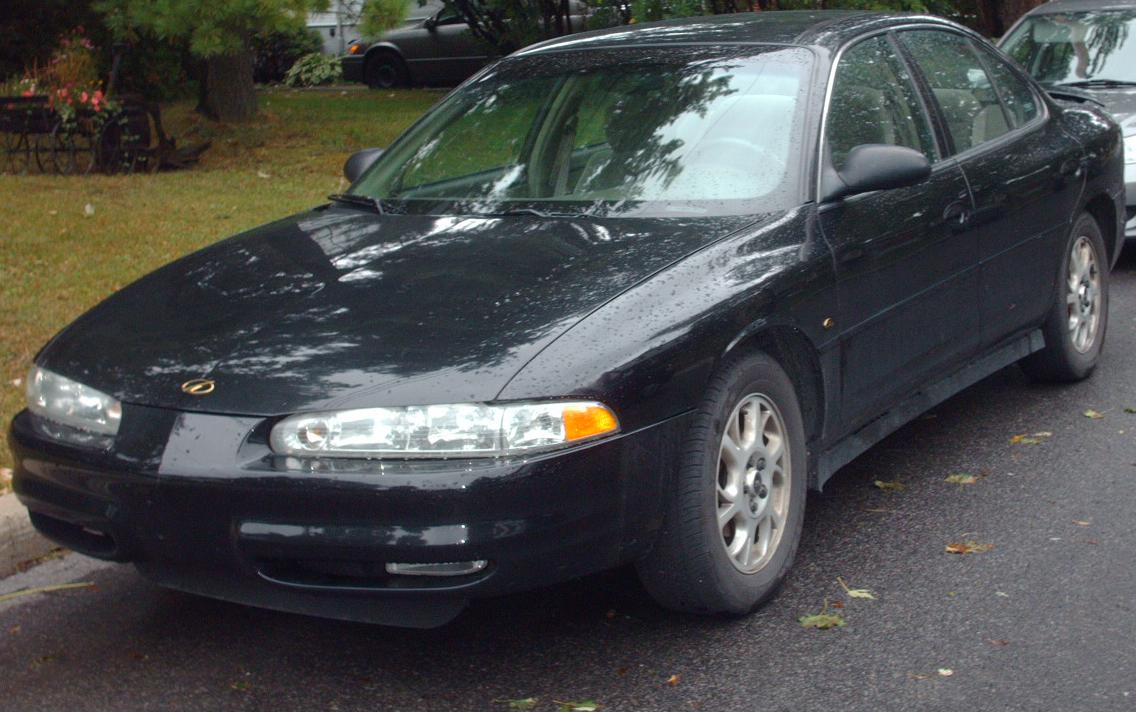
Oldsmobile Intrigue
"...ust creates some of the enthusiasm, mystique, the intrigue. And for road courses, no disrespect to SVG, he's..."
The Oldsmobile Intrigue is a mid-size car (a sedan) made for regular driving. It’s not typically something you’d see as a modern performance focus, but it can come up in conversation because of its name. The “intrigue” reference is likely about the car’s name or a story connected to it.
The Oldsmobile Intrigue is a mid-size sedan produced by Oldsmobile, built for everyday comfort with a focus on smooth driving. It may be discussed in a podcast when the conversation shifts to “intrigue” as a theme or name recognition, rather than as a current racing machine. That makes it a likely mention tied to the show’s wording or a specific anecdote.
fresh tires
"And he had a great drive coming with fresh tires and everything. Those last 25 laps were great."
Fresh tires are new or recently changed tires. They usually grip the road better, so the car feels faster and more controllable—especially for the laps right after a change.
“Fresh tires” means the car is running tires that have been recently changed, so they have full grip and predictable behavior. On road courses, that can strongly affect lap times and how aggressively a driver can brake and turn in.
road course racing
"Yeah, so me personally, I do like road course racing. I always have, I thought two back in the day was way too few of a sample size when you have a 36, really 38 race schedule"
A road course is a track with many corners, not just left turns like an oval. Racing on road courses usually requires different car setup and driving style, especially for braking and turning.
Road course racing refers to races on tracks with lots of turns, braking zones, and elevation changes, unlike oval-only racing. In NASCAR Cup, adding more road courses changes how teams prepare because car setup and driving technique shift toward grip and braking stability.
strategy calls
"But as Travis Peterson, Michael McDonald's crew, she told me after the race, like, there's going to be strategy calls where you're going to get off strategy to try and beat those guys."
Strategy calls are the team’s in-race decisions. They might decide when to pit or how to manage tires so the driver has the best chance to win later in the race.
In NASCAR, “strategy calls” are decisions made by the team during the race—often involving pit timing, tire choices, and track position. On road courses, these calls can be especially important because tire wear and braking zones vary lap to lap.
track types
"Think about the amount of types that we have... there's intermediates, yes, but I mean, there's mile and a half, there's two miles, there's 1.33 miles... But when it comes to the road courses..."
Different NASCAR tracks are grouped by type (like short tracks vs big ovals). Those differences affect how teams set up the car and how drivers race.
“Track types” refers to categorizing circuits by layout and length—like short tracks, intermediate tracks, and super speedways—because each category changes racing strategy and car setup. The hosts discuss how many distinct track categories exist and how road courses are different enough to justify a specific number of events in the season.
super speedway races
"We have six super speedway races. And I'm trying to think of like... for everyone saying, oh, well, SPG is just going to win every race."
Super speedways are the biggest oval tracks NASCAR races on. Because they’re so fast and wide, racing often comes down to staying in the draft and managing speed over long stretches.
“Super speedway” races are NASCAR events run on very large oval tracks (commonly 2.0 miles or more), where cars spend more time at high speed and drafting becomes a major factor. The hosts argue that the schedule should include multiple track types so one dominant track specialist doesn’t define the whole season.
IMSA type of cars
"I also kind of feel like these cars are a little bit built for them. Because they're kind of very, very similar to the the IMSA type of cars."
IMSA is a racing series that often focuses on road courses. The point here is that the cars NASCAR is using (or the way they’re set up) can feel more like the road-course cars used in IMSA racing.
IMSA (International Motor Sports Association) is a sports-car racing series known for road-course-focused cars and setups. When the hosts say the NASCAR cars are “very similar to the IMSA type of cars,” they’re implying the vehicles may be better suited to road-course demands like braking performance and cornering balance.
Montreal
"seeing a couple of comments talking about Montreal."
Montreal is brought up as a possible race location. The speaker is talking about how the track there has standout features that would make racing exciting.
Montreal is mentioned as a potential destination for NASCAR-style racing. The speaker references the circuit’s famous cornering challenge and the idea of bringing a stock-car-style event to a track known for high-level competition.
circus Jill Villeneuve
"I don't know how much I love the idea of going to circus Jill Villeneuve when you are going to have every car that's ever lapped at be faster than what you are."
“Circus” here is a nickname tied to the Circuit Gilles Villeneuve in Montreal. The speaker is basically saying that track has a big, high-energy reputation.
“Circus” is a nickname reference to the Circuit Gilles Villeneuve in Montreal. The speaker is using the nickname to emphasize the track’s reputation and the intensity of racing there.
hairpin
"That hairpin is going to be wild every time they run it."
A hairpin is a super tight turn where the track basically makes you turn back around. It’s tough because you have to brake hard and then get back on the gas without losing grip.
A hairpin is a very tight, slow-speed corner that forces the car to turn back on itself, often near 180 degrees. It’s a key feature on many road courses because it heavily tests braking stability and traction when you accelerate out.
chicane
"Those guys trying to barrel their way through a chicane right before the start finish line."
A chicane is a section where the track forces you to weave through a couple of turns to slow down. It’s tricky because you have to stay in control and choose the right line to avoid losing speed.
A chicane is a sequence of alternating turns designed to slow cars down and prevent high-speed straight-line running. In racing, it’s often where drivers must balance speed with control, because hitting the wrong line can cost time or cause contact.
start finish line
"Those guys trying to barrel their way through a chicane right before the start finish line."
The start/finish line is the official line where a race begins and where the final lap is judged. On many circuits, it’s also a key reference point for braking and passing because drivers know exactly where the lap timing and scoring are determined.
Canadian Tire Motorsports Park
"And that's, that's, you know, Canadian Tire Motorsports Park. I think it's perfect for the trucks, but it doesn't have the infrastructure to host a cup series race."
Canadian Tire Motorsports Park is a Canadian race track. The point here is that it might be great for smaller NASCAR events, but the speaker thinks it isn’t set up well enough for the biggest Cup Series races.
Canadian Tire Motorsports Park (often called CTMP) is a road course venue in Canada. The speaker argues it’s a good fit for trucks but lacks the infrastructure needed to host a NASCAR Cup Series event.
Nashville fairgrounds
"We talked about that with the Nashville fairgrounds a couple of weeks ago."
The Nashville fairgrounds are being used as an example of a venue choice. The speaker’s point is that where NASCAR races depends on whether the track facilities can handle the event.
The Nashville fairgrounds are referenced as a prior example in the discussion about whether certain venues have the right setup for NASCAR events. Here, it’s used to support the idea that track infrastructure matters when choosing dates.
the Glen
"Do you take a date from the Glen if you're going to start rotating people?"
“The Glen” is a nickname for a famous road-racing track. The speaker is debating whether NASCAR should keep that date or rotate it.
“The Glen” is a shorthand reference to Watkins Glen, a major road course venue in NASCAR and other series. The speaker considers whether to rotate dates away from it or keep tradition.
Austin
"I think you'd take away Austin, but then again, you have that huge market in Austin."
Austin is being discussed not just as a track, but as a business market. The speaker’s point is that sponsors like being there, so it’s a tough date to remove.
Austin is discussed as a market that attracts sponsors, influencing scheduling decisions. The speaker suggests that even if a date might be moved, Austin’s commercial importance makes it hard to drop.
chase
"we knew likely that it was going to be a one-year stop gap and that it was going to be back to August or I think even better in the chase. Like, we got a road course in the back in the chase and that takes care of that issue."
In NASCAR, the “Chase” is the playoff part of the season. Drivers who are close to the championship focus on scoring enough points to keep their title hopes alive.
In NASCAR, the “Chase” refers to the playoff-style phase where the championship contenders race for the title. It changes how teams prioritize points and race strategy compared with the regular season.
points race
"This was really to get North Wilkesboro a points race and that's fine and dandy, but ultimately one SMI track had to take the brunt of that decision"
A “points race” is a race that affects the season championship standings. Your finishing position earns points, and those points add up over the season.
A “points race” is a race that counts toward the championship standings. NASCAR uses a points system, so where and when races are scheduled affects which drivers can gain or lose ground in the title fight.
tunnel
"especially in the days when there wasn't a tunnel. When there was no tunnel, you were in the infield. You blew up on lap five, you were in the infield until lap 500 was done"
In this context, a “tunnel” is a passage that helps people move around the track safely. They’re saying older Dover setups made it much harder to deal with problems during very long races.
Here, “tunnel” refers to track infrastructure that allows access between areas without crossing the active racing surface. The point is that earlier Dover race operations were harder when there wasn’t a tunnel, especially during long events.
infield
"Mike Bagley has talked about the fact that the 500 mile races at Dover were akin to a hostage crisis, especially in the days when there wasn't a tunnel. When there was no tunnel, you were in the infield. You blew up on lap five, you were in the infield until lap 500 was done"
The “infield” is the space inside the race track. They’re saying that if something went wrong early, the car could end up stuck there for a long time during those older, longer races.
The “infield” is the area inside the oval track. The hosts are referencing how, in earlier Dover setups without a tunnel, a blown engine early could leave a team stuck in the infield for the remainder of the long race.
Dover 400-miler
"I think shortening the race length from a Dover 400-miler to running the 200 that they're going to, I think that helps. There is one thing that we have to temper expectations with a little bit though."
“Dover 400-miler” means a 400-mile NASCAR race at Dover. Longer races make strategy and car durability more important, because the car has to last and keep performing for a lot of laps.
“Dover 400-miler” refers to a long NASCAR race distance at Dover International Speedway (400 miles). Longer races increase the importance of durability, pit strategy, and managing wear—especially on a track known for punishing conditions.
running the 200
"I think shortening the race length from a Dover 400-miler to running the 200 that they're going to, I think that helps. There is one thing that we have to temper expectations with a little bit though."
“Running the 200” means the race is cut down to about 200 miles. A shorter race usually changes how often teams pit and how hard they can push without wearing the car out.
“Running the 200” means the race is shortened to about 200 miles. In NASCAR, cutting the distance can change pit frequency, tire strategy, and how aggressively teams push early versus saving the car for later.
All-Star race
"I'm just speaking because I'm local, let's say we go to freaking New Samaritan Speedway for the All-Star race... So, like I said, I wouldn't be too hurt about Dover being the all-star race for this year."
An “All-Star race” is a special race where the best or most popular drivers get together for something a little different from the normal schedule.
An “All-Star race” is a special event that typically brings together top drivers or a mix of regular series competitors for a one-off or marquee race. In NASCAR-style contexts, it often means Cup-level drivers competing in a different format or at a different venue than usual.

Crown Vic
"It was incredible. They ran, the Crown Vic race is okay. It's a bunch of car YouTubers, and it's basically just, it's kind of a nyuk-nyuk thing."
“Crown Vic” means the Ford Crown Victoria. It’s a big, older American sedan that’s popular for certain fan-friendly races and events.
“Crown Vic” is short for the Ford Crown Victoria, a full-size American sedan that was widely used in police fleets. In racing contexts like this segment, it usually refers to a spec-style stock-car event built around the Crown Vic platform.

Pontiac Grand Prix
"We ran the Grand Prix Grand Prix, a little baby oval of nothing but Pontiac Grand Prix that had a jump in the middle of the back stretch that you had to hit at least once."
The Pontiac Grand Prix is a Pontiac model line. In this story, they used only Grand Prix cars on a small track, and there was a jump in the middle of the back straight.
The Pontiac Grand Prix is a mid-size American coupe/sedan line from Pontiac, known for its V8-era performance and popularity in grassroots racing. Here, it’s specifically described as the single-car type used on a small oval, with a jump that forces drivers to hit it at least once.
spotter radios
"Tim Berman clicks over to turn six... he sees a 51 rolling off and the turn spotter radios the track is clear."
A spotter is someone watching the track and talking to the driver by radio. They help the driver understand what’s happening ahead, like whether the track is clear.
In NASCAR, the spotter is a crew member positioned to watch the track and communicate with the driver via radio. Spotter calls about track conditions (like whether the track is clear) can influence how officials and drivers respond to incidents.
debris
"So there's no debris. That's how it all happened and why there's no caution."
Debris is anything loose on the track—like parts from a crash. Officials look for it because it can be dangerous for cars to drive over at full speed.
Debris refers to loose parts or fragments on the racing surface after a crash. In NASCAR officiating, whether debris is present (and where it is) strongly affects whether officials call a caution.
turn spotter
"So there's no debris. That's how it all happened and why there's no caution... the turn spotter radios the track is clear."
A turn spotter watches one part of the track closely. They tell the driver what they see there, like whether it’s safe or if something is still on the racing line.
A turn spotter is a spotter assigned to monitor a specific section of the track (like a particular corner). Their job is to observe conditions in that area and relay critical information—such as whether the track is clear or if debris remains.
caution
"But that should obviously should have been a caution. And I'm sure I haven't listened to a whole lot of talk yet, but I'm sure that Mike Ford said the same."
A caution is NASCAR slowing everyone down because something happened on the track. It helps keep drivers safe while officials deal with the issue, and the hosts think one incident should have triggered it.
A caution is when NASCAR slows the field due to a problem on track (like a crash or debris) so drivers can pass safely. The hosts are discussing how an incident on a road course should have triggered a caution, but cameras and sightlines may have caused it to be missed.
race control
"Yeah, I, it's, it is really tough to look. This is not an easy job. These guys do, especially with like race control, especially when you go to a road course, like as Dustin put it with 23 turns,"
Race control is the group of officials watching the race and deciding what happens next. They call things like cautions when there’s an incident, and on road courses it can be tough to spot everything quickly because of blind spots.
Race control is the centralized officiating team that monitors on-track action and makes calls during a NASCAR race, like when to throw a caution. On road courses—where there are many corners and sightlines can be blocked—it can be harder for race control to see incidents in real time.
blind spots
"Because that's now you're asking for a lot. Especially at a track that's really so big and has that many blind spots. It is a really tough"
Blind spots are parts of the track where it’s hard to see what’s going on. On big road courses, corners and angles can hide crashes from officials and cameras.
Blind spots are areas on a track where officials or cameras can’t clearly see what’s happening due to track geometry, elevation changes, or cornering angles. The hosts argue that Dover’s (and similar) layouts make it especially difficult to detect incidents in real time.
broadcast camera coverage vs missing a wreck
"Ultimately that tells me either you've cut down on the number of cameras that you're using or you didn't have cameras in the right spots... you can't miss a wreck that big."
They’re talking about whether the TV broadcast setup—where cameras are placed and what kind they are—can miss big crashes. The point is whether the system can react fast enough.
The hosts debate whether the broadcast’s camera placement and technology choices (fewer fixed cameras vs PTZ/AI) could cause major crashes to be missed on TV. It’s a discussion about how coverage decisions affect what fans see during incidents.
PTZs
"Watkins Glen, if you're going to go the route of we're going to start cutting manned cameras to put in PTZs or AI controlled cameras..."
PTZs are cameras that can move left/right, tilt up/down, and zoom in. They’re meant to track the race, but they can be slower to catch a sudden crash than fixed cameras.
PTZ stands for pan-tilt-zoom cameras, which can move and zoom to follow action. In broadcast terms, they’re used to cover incidents dynamically, but they can be risky if they don’t capture a fast, high-impact wreck quickly enough.
AI controlled cameras
"Watkins Glen, if you're going to go the route of we're going to start cutting manned cameras to put in PTZs or AI controlled cameras or any of that kind of crap..."
These are cameras that use computer software to decide where to point and how to zoom. The worry is whether they can react fast enough to capture a big crash.
AI-controlled cameras use software to detect action or incidents and automatically adjust framing. The concern raised here is whether the system can reliably catch a major wreck in time compared with well-placed fixed cameras.
NASCAR officials letting cars race back to the line
"I feel like NASCAR officials have done a good job this year. They've let them race back to the line on a last lap, unless it's a massive incident that you have to have the yellow come out."
They’re talking about how NASCAR sometimes lets the race continue to the finish on the last lap. But if there’s a big crash, they bring out a caution to slow everything down.
This segment discusses NASCAR’s officiating approach near the end of races—allowing cars to race back to the finish line on the last lap unless there’s a major incident requiring a caution. It’s about race control decisions and how they affect strategy and outcomes.
yellow
"They've let them race back to the line on a last lap, unless it's a massive incident that you have to have the yellow come out."
The “yellow” is the race’s slowdown warning—like a caution. Drivers have to reduce speed and be ready for a problem on the track.
In stock car racing, the “yellow” refers to the yellow flag/caution period when officials slow the field for an incident. It’s the signal that drivers must be prepared for reduced speed and possible track hazards.
top 10
"but man, Ram, three top 10s. This past weekend at Watkins... Mini Tyrell getting his first top 10..."
A “top 10” means the driver finished 10th or better. It’s a good result because it usually earns more points and gets more attention.
A “top 10” finish means the car/drivers placed in positions 1 through 10. In series like NASCAR and ARCA, top-10s are a key benchmark because they typically correlate with points, visibility, and sponsor value.
oval game
"This past weekend at Watkins, I feel like the road course game is almost like better than their oval game."
An oval track is the classic oval shape where you mostly turn one direction. The racing is more about staying fast and managing tires than handling lots of different turns.
“Oval game” is shorthand for performance on oval tracks, where cars run mostly left turns at sustained speed. Compared with road courses, ovals emphasize aerodynamic balance, tire management, and maintaining momentum through banked corners.

Dodge Ram
"...ave the, they've not had the best start, but man, Ram, three top 10s. This past weekend at Watkins, I f..."
The Dodge Ram is a large pickup truck made for hauling and everyday driving. In racing, people may mention it when a Ram-based truck does well in a weekend of competition. “Top 10s” means it finished near the front of the pack.
The Dodge Ram is a full-size pickup truck line known for being used as both a work vehicle and a daily driver. In a motorsports context, it can come up when discussing how a particular Ram-equipped entry performed in a race weekend, such as multiple strong finishes. That’s why it might be mentioned alongside talk of results like “top 10s.”
ARCA race
"but Kaden Hanika, I feel like we can all be in agreement here. Won the ARCA race on, on Friday afternoon..."
ARCA is a racing series for stock cars. Drivers use it to build experience and show they can compete, sometimes before moving up to bigger NASCAR races.
ARCA refers to the ARCA Menards Series, a stock-car racing series that often serves as a proving ground for drivers before or alongside higher-profile NASCAR events. It’s known for a mix of oval and road-course racing, depending on the schedule.
truck race
"...strapped into the number 11 tricon garage truck and then went out there, got a penalty at the end of stage two, came back, won the truck race..."
A “truck race” refers to racing in a pickup-truck-based stock-car series (commonly the NASCAR Camping World Truck Series). The vehicles are purpose-built race trucks that resemble production pickups but are engineered for racing durability and performance.
stage two
"got a penalty at the end of stage two, came back, won the truck race..."
Many stock-car races are divided into stages. “Stage two” is the second part of the race, and what happens there can impact points and how you finish overall.
Stage racing splits a race into multiple segments (stages), with points awarded at stage end. “Stage two” is the second segment, and penalties or incidents there can affect track position and the final result.
tricon garage
"strapped into the number 11 tricon garage truck and then went out there..."
Tricon Garage is a racing team. The team prepares the truck and helps the driver with strategy during the race.
Tricon Garage is a racing team name referenced here as the outfit Kaden Hanika drove for. In motorsports, teams handle car preparation, strategy, and day-to-day operations for their drivers.
penalty
"...went out there, got a penalty at the end of stage two, came back, won the truck race..."
A penalty is the race officials saying the driver or team broke a rule. It usually hurts their position or results.
In stock-car racing, a penalty is an official punishment for a rules violation (for example, contact, speeding, or procedural infractions). Penalties can cost track position immediately or later through restart/finishing adjustments.
Request an Explanation
Heard something you'd like explained? We'll add it to this episode.
Sign in to request explanations for terms you heard.
Want to learn more?
Browse our glossary for plain-English explanations of automotive terms, jargon, and concepts.
Help improve this episode
See something that's not quite right? Our annotations are AI-generated and can sometimes miss the mark. Click the flag icon on any annotation to suggest a correction.