A dock fee is an extra charge dealers add for moving the car to the dealership. Even if it shows up on the paperwork, the dealer might be able to lower other parts of the deal so you don’t really end up paying it.
The buyer’s order is the paperwork that shows the car price and every extra charge the dealer is adding. It’s the document you should review closely to see what you’re actually paying for.
Paint protection is a dealer-sold product intended to protect a car’s exterior paint from minor scratches, chips, and staining. It’s typically offered as a film/clear-coat style application or a coating package, and it’s often bundled as a paid add-on.
Add-ons are extra items the dealer tries to sell on top of the car’s base price. They can add a lot to the total cost, so it’s worth asking what’s required versus optional.
Fabric protection is an extra treatment meant to make cloth seats and carpets more resistant to stains. It can be helpful, but it’s still an add-on you should evaluate before paying for it.
Gap insurance helps if your car is totaled and the insurance payout doesn’t cover what you still owe on the loan. It can be especially useful early in the loan when the car’s value drops quickly.
A cargo cover is a panel in the back of the car that you can pull over the trunk area. It helps keep things out of sight and can protect them a bit from dust or sun.
Wheel locks are special bolts on your wheels that need a specific key to take the wheels off. They’re used to make it harder for someone to steal your wheels.
“Port installed” means the car got that accessory before it even reached the dealership—while it was being shipped. Since it’s already on the car, the dealer usually can’t just remove it for you.
“Dealer installed options” are add-ons the dealership puts on after the car arrives. Since the dealer is the one adding them, they may be easier to negotiate than items that came installed earlier.
“High-margin items” are add-ons where the dealer makes more profit. That’s why they’re often the easiest things for a dealer to push—and the most important to question or negotiate.
Gap protection helps if your car is totaled and the insurance payout doesn’t cover what you still owe. It can be important on leases or when the car’s value drops faster than your loan balance.
A lease is like renting a car for a few years with rules about mileage and what the car is worth at the end. Since you’re not buying it outright, gap protection can matter more.
They explain that if you sell your car, you may be able to cancel add-on coverage and get some money back. That refund can affect how much you have available for your next down payment.
When a car is financed, the bank gives the dealership a starting interest rate. The dealer can sometimes change it to charge you more or offer you a lower rate.
Term
buy it down
“Buy it down” means the dealer or bank pays a cost to lower the interest rate you get. That can make your monthly payment smaller.
Even though the bank provides a starting financing rate, the dealer often has flexibility to set the final rate you’re offered. That’s why two people can get different rates for similar loans.
The transaction is the whole deal you’re making to buy the car, not just the car’s price. How the deal is put together can affect what you pay.
Term
30-day and a 90-day package
A 30-day and 90-day package refers to a time-limited add-on or coverage product that can be purchased as part of the deal. In this segment, the host discusses it as a fixed-fee option rather than something tied to the car’s price.
Dealer margin is how much profit the dealership makes from the sale. If the dealer has more profit room, they may be able to offer bigger discounts or better financing terms.
Term
availability for discount
Availability for discount means whether the dealer has room to lower the price. If a car is harder to find, discounts may be smaller.
The Hyundai Tucson is a popular compact SUV. The hosts mention it to show that the same car can cost less in one state than another, but you may have to wait for it to be shipped.
Term
ship it to you
Shipping it to you means the car is transported from where it’s being sold to where you live. That can add waiting time and may change what extras you can get from the local dealer.
Free oil changes are maintenance freebies the dealer may include to sweeten the deal. If you buy from farther away, you might not get those same included services.
A “lost leader” is when a business sells something at very low profit to get you in the door. Here, the dealership hopes you’ll come back later for paid service and repairs, not just buy the car once.
“Warranty work” means repairs that are covered by the car’s warranty. If something breaks within the warranty period, the warranty can pay for the fix (instead of you paying full price).
“Maintenance” is the regular care your car needs to keep it running well. Think of things like scheduled checkups and replacing fluids before problems happen.
The “service department” is where the dealership fixes cars and does scheduled maintenance. It’s often where dealerships make a lot of their money over time.
“Moving inventory” means selling cars that are already sitting on the lot (or in the dealer’s pipeline). The speaker ties it to dealership strategy: low profit on the sale can be acceptable if it helps sell units and build future service customers.
These are state rules that control how car brands can sell cars. In many places, the brand has to sell through local dealerships instead of selling directly to you.
Union requirements refer to labor rules negotiated through unions, such as staffing, wages, and work rules. In auto retail, they can affect how dealerships and related operations are staffed and run.
The idea here is that cars shouldn’t be treated like something mysterious where you have to negotiate to get a fair price. It should be more like buying a normal product with a clear cost.
Remote keyless entry means you can unlock the car by pressing a button instead of using a key in the door. You usually keep a small key fob in your pocket.
“DOT legal” means the car and its parts meet U.S. safety rules. Here, it sounds like the windshield needed to meet those standards to be allowed on the road.
The Kia K4 GT line is a sportier version of the Kia K4. It’s meant to look more aggressive and, in this review, it’s also described with a stronger engine than the base model.
Notchback is a way of describing a car’s rear shape that’s kind of in-between a hatchback and a regular sedan. It usually means the back looks more separated, but it still has a hatch-style opening.
Curb appeal just means how good the car looks from outside, like when you first see it parked. Things like color and styling can make people notice it.
This means the engine has four cylinders, and it uses a turbo to make more power. A turbo helps the engine feel stronger without needing a bigger engine.
This is the car’s automatic gear system with eight different gear ratios. It helps the engine choose the right “gear” for the situation so the car feels responsive and drives smoothly.
CVT means the car can smoothly change “gears” without distinct steps. The host is saying this car doesn’t use that style of transmission, and instead uses a normal multi-gear automatic.
Peak torque is the engine’s strongest pulling force. If it happens at lower RPM, the car feels like it accelerates more easily without needing to rev high.
0-60 is how fast the car goes from standing still to 60 mph. The host is saying that if it’s 7 seconds versus 8 seconds, the difference usually isn’t dramatic day-to-day.
The host compares the Kia’s steering to a BMW 3-Series. They mean the BMW is known for very precise, confident steering feel, and the Kia is close but not identical.
This means the dashboard uses two big screens, each about 12 inches. The host is pointing out that the car’s interior is designed around those screens.
Adaptive cruise control is like cruise control that can automatically keep a safe distance from the car in front of you. It helps reduce the need to constantly adjust your speed in traffic.
These are safety features that help the driver by watching what’s happening around the car. They can warn you or even help take action to avoid crashes.
Automatic emergency braking is a safety feature that can brake for you if it thinks a crash is about to happen. It’s designed to help prevent collisions or make them less severe.
A hatchback is a car where the back opens like a door, not just a trunk lid. It usually makes it easier to load things and can be more practical for everyday use.
Car
Volkswagen GTI
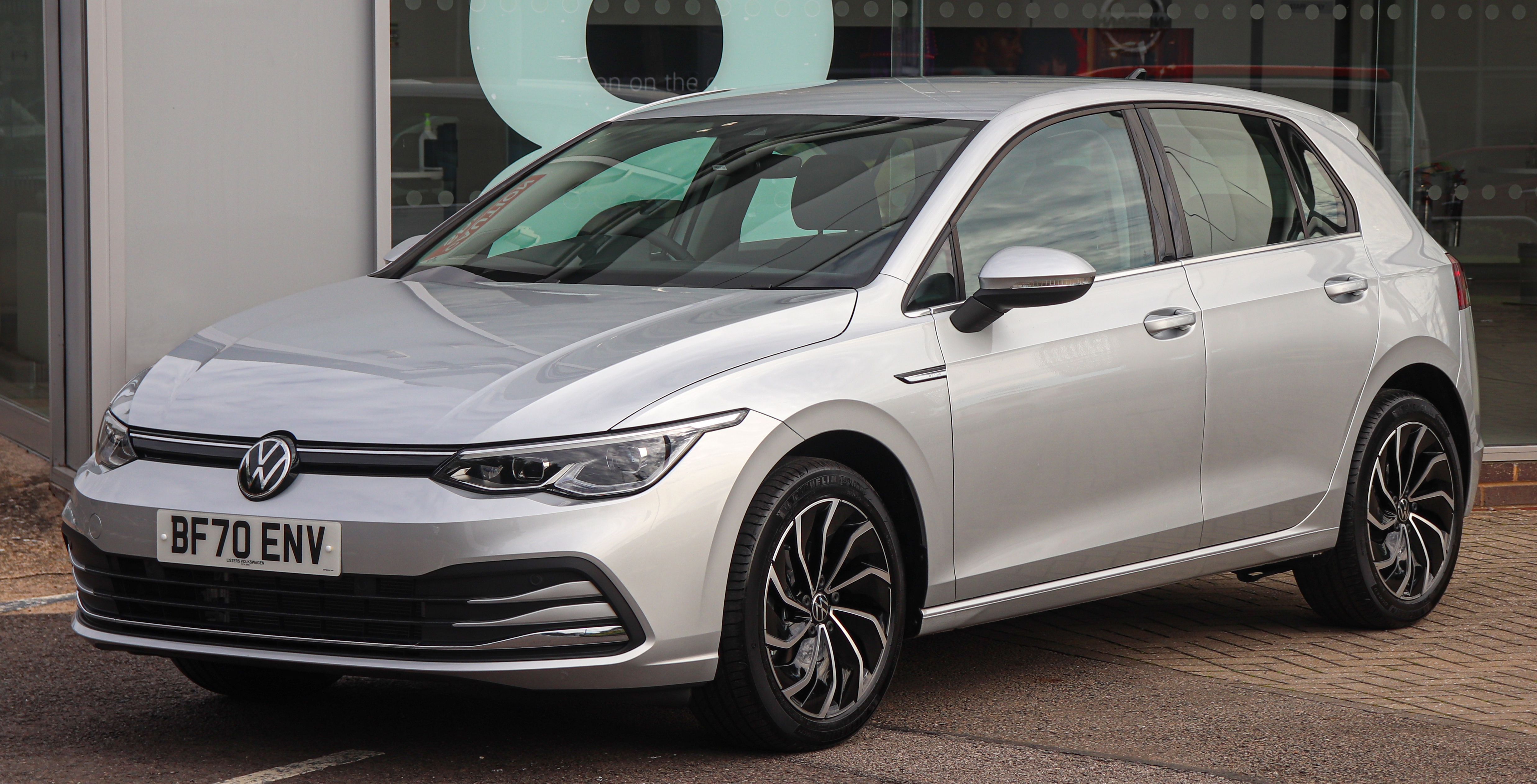
The Volkswagen GTI is a popular compact car that’s meant to feel sporty, not just practical. The host is comparing the Kia K4 GT’s vibe to that kind of fun driving.
The Volkswagen Golf is a compact car with a hatchback body style. It’s designed to be practical for daily use, but it can also feel fun to drive. The podcast mentioned it as an example of a car that has a sporty vibe.
Topic
New England Motor Press Association Winter Vehicle Awards
This is an annual car awards event run by a regional press group. The host explains how and why they give the awards and what kinds of categories they include.
This is an award category for cars that are especially strong in technology. The host describes it as being about things like software and overall build quality.
Rivian is an electric-vehicle company. They’re mentioned as the Technology Award winner because the host describes it as having strong software and build quality.
The Tesla Model Y is an electric SUV, meaning it runs on electricity instead of gasoline. Because many people buy it, it can show up in news when there’s a problem that affects lots of cars. That’s why it may be brought up in a recall or safety story.
The Tesla Model 3 is an electric car. Here, the host is talking about a recall because the headlights were considered too bright, which can bother or distract other drivers.
The Ford Explorer is an SUV. The host says a lot of them were recalled because the roof rails could detach, which is dangerous if they come loose on the road.
The Tesla Model S is an electric car, not a gas-powered one. It can come up in news when there’s a safety or recall issue affecting certain vehicles. In the podcast, it’s referenced as part of the broader Tesla discussion.
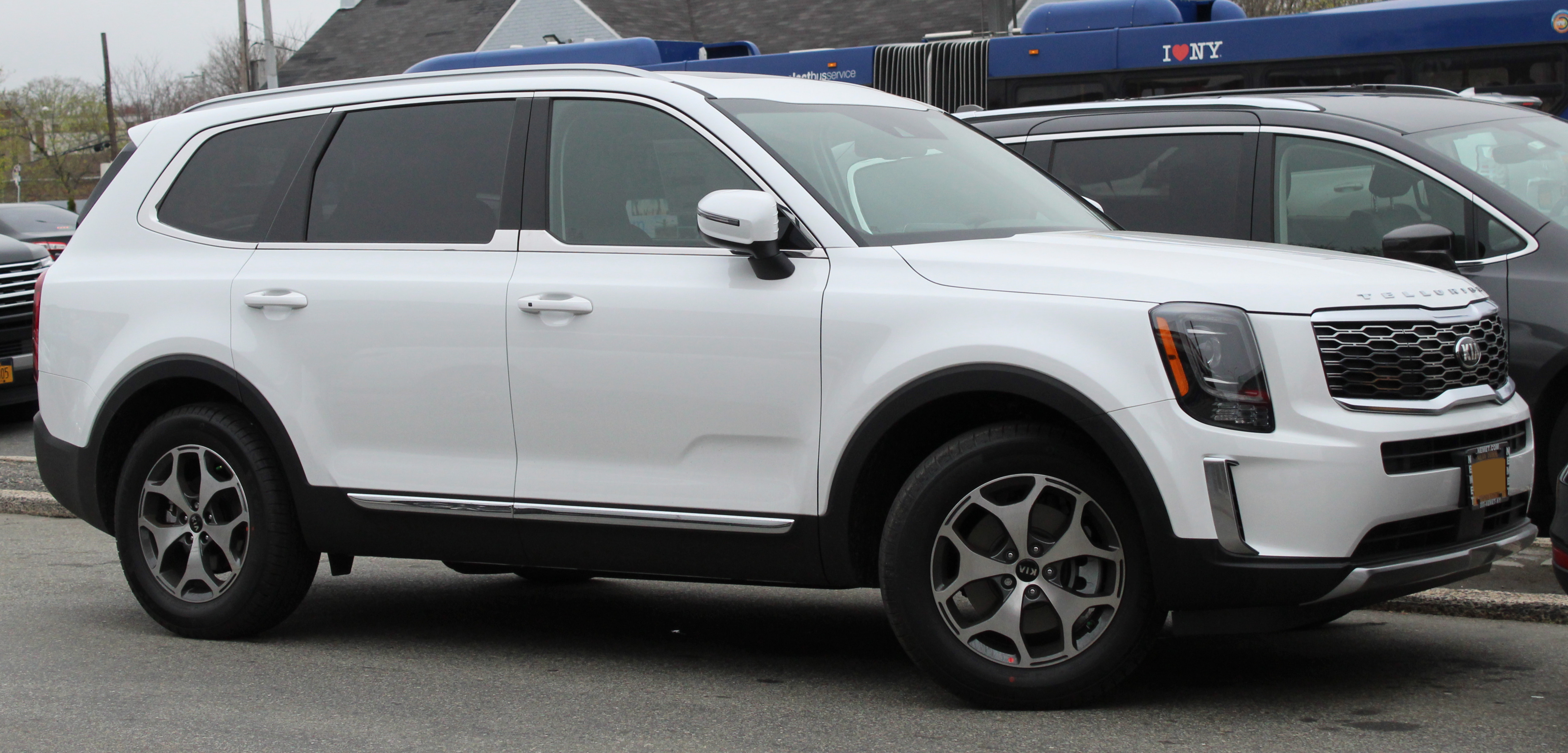
The Kia Telluride is an SUV. The host says a 2024 recall involves the power seat overheating, which could create a fire risk, so they recommend parking outside if you have that setup.
A power seat is a car seat that moves using buttons and electricity. If something goes wrong, it can overheat or malfunction, which is why the host is warning about it.
The Honda Pilot and Honda Passport are SUVs. The host says some 2026 models had a recall because the rear subframe wasn’t tightened properly during assembly, which can affect how securely the car’s structure holds together.
A rear subframe is part of the car’s structure at the back that helps hold up the suspension and other components. If it isn’t tightened correctly, the car may not be assembled as securely as it should be.
The Honda Odyssey is a minivan, and this segment references a recall affecting many units. The host claims the rear camera isn’t as waterproof as it should be, so it can fail—an issue that impacts visibility and driver assistance features that rely on the camera.
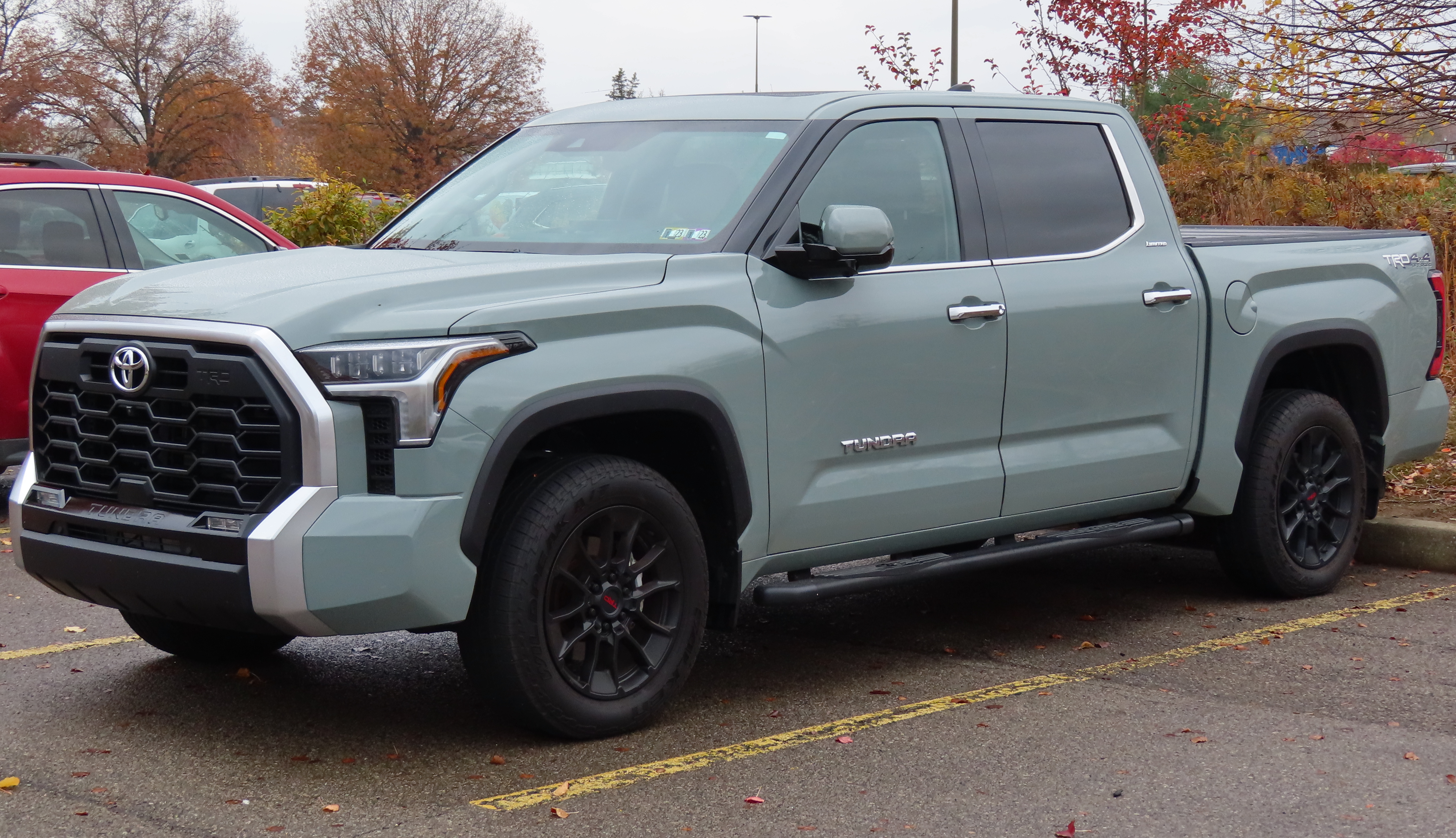
The Toyota Tundra is a big pickup truck. Here, the host says a 2026 recall happened because the truck’s sticker load rating was wrong after adding a roof rack, which could affect how much you’re supposed to carry safely.
Load capacity is the maximum amount of weight the truck or car is allowed to carry. If you add a roof rack, it can use up some of that allowance, so you may have less room for cargo.
Cargo weight is the weight of what you’re carrying—like bags, tools, or other items. The car’s sticker ratings account for this, and adding accessories can change what you can safely carry.
Dodge Ram is a line of pickup trucks. Pickup trucks are built to tow and carry things, and they’re often used for work or heavy tasks. The podcast mentioned it while listing top picks in different categories.
The Honda Passport is a midsize SUV. It’s designed to be roomy enough for families but not overly large to drive. The podcast mentioned it as a favorite because it fits that “just right” size idea.
The Hyundai Ioniq 5 is an electric SUV. The podcast brought it up because it was considered good for winter driving. That means it’s meant to handle cold weather without major problems.
The Hyundai Ioniq 9 is an electric vehicle. The podcast talked about it because it was driven in winter conditions and seemed to work well. That’s why it’s included in a discussion about the best EVs for cold weather.
The Ford Maverick is a small pickup truck. It’s meant for people who want the ability to haul or carry things, but in a vehicle that’s easier to drive and park than a big truck. The podcast mentioned it as a top pick in its truck size category.
The Ford F-150 is a large pickup truck. It’s designed for towing and hauling, but it can also be used for everyday driving. The podcast mentioned it in the context of winter performance, meaning it’s considered capable in cold conditions.
The Chevrolet Suburban is a large SUV. It’s built to carry more people and handle family trips comfortably. The podcast listed it as one of the vehicles worth considering.
The Subaru Crosstrek is a small SUV-style car. It’s meant for regular commuting but can also handle rougher roads a bit better than a typical sedan. The podcast listed it as one of the vehicles to consider.
The Toyota 4Runner is a midsize SUV. It’s built for drivers who want a tougher vehicle that can handle rough roads. The podcast listed it among other good options for different needs.
Mudflaps are small panels behind the tires that help keep mud and water from being kicked up. They can help protect the car and reduce mess in wet or snowy weather.
Concept
negotiation is done behind the scenes
The host is talking about buying a car without lots of back-and-forth haggling. Instead, the dealer handles the deal details so the buyer doesn’t have to negotiate directly.
It’s extra insurance for repairs after the original warranty runs out. If something breaks later, the warranty may help pay the repair bill—depending on the fine print.
This is an add-on plan meant to help cover damage to your tires and wheels. If you hit a pothole or damage a tire, it may reduce what you pay out of pocket.
At many dealerships, there’s a finance person who finalizes the loan/lease paperwork and may try to sell extra coverage. This is where warranties and protection plans are often offered.
A paint protection package is a dealer add-on that aims to protect the car’s exterior finish, often via coatings or film. These packages can be marketed as helping prevent chips, scratches, and fading, but the actual product quality and coverage vary widely.
This is an extra treatment for cloth seats to help them resist stains. If you spill something, it may be easier to clean, but it depends on the specific product.
Satellite radio is a subscription music/talk radio service that uses satellites to send stations to your car. It’s different from normal radio stations you get over the air.
A free preview is a trial where you can use a paid service for a limited time without paying. After the trial, the subscription usually starts charging monthly.
LIVE
W-A-T-D presents John Paul, the car doctor, All Things Automotive.
Have questions?
Call or text 7-8-1-837-4900.
Now, here's John Paul, the car doctor.
And good morning everyone and welcome to another edition of the car doctor program on 959 W-A-T-D.
My name is John Paul, the car doctor here to help you with your car problems.
Unless you're listening to the program on Monday night at 9 o'clock, then good evening.
Because we rerun the program over the summertime Monday night at 9, so there you go.
I just learned that by the way.
Didn't know that.
And thanks to Rob Hackler for doing that.
If you've been paying attention, you probably heard I finally got around to buying a new car.
And the process wasn't as painless as I hoped it would be.
And car shopping sometimes always isn't as painless as it should be.
But with us on the phone is Nick Minzias, whose name I probably just screwed up completely,
who is the CEO of Driver's Hub.
Nick, good morning and welcome to the car doctor program.
Hey, good morning.
So Minzias, am I close?
Yeah, you said it right.
All right.
All right.
Well, you know, our producer, Jesse Wilkins, is fluent in Greek.
And is this a Greek name?
It is.
It is.
And Jesse wasn't in today.
So I was counting on him to help me with the pronunciation just in case.
But before we get started on your business, there are services you can use where you
go in and you say, I want to buy such and such car.
And all of a sudden that company goes out and pings four or five different car dealers.
Next thing you know, your phone's ringing off the hook and your emails are getting bombarded
and people are calling you left and right.
You guys with Driver's Hub came up with an answer to this, right?
Yes, we did.
We developed a technology that essentially reaches out to dealerships, utilizes AI to
handle all the back and forth.
And at that point what we do is leverage the AI, leverage multiple dealerships so we can
negotiate them simultaneously and then present the offers to the users so they can choose
the best one that suits them.
And are you guys, and I'm just guessing here.
Are you guys creating like temporary email addresses and things like that so your system
can kind of consolidate everything?
We are, yes.
We create an alias for the consumers.
That way any spam and automated emails that come from the dealerships, which there are
several hundreds in fact over the course of several weeks.
That way we can filter them and not bombard the consumers with any spam or unwanted solicitation.
And a lot of times when you are dealing with a dealership and you know the little pop-up
person comes up on your screen or you're looking at cars, they don't work for the dealership.
Well they do, but they're not at the dealership and sometimes they're not real.
Are you talking about internet salespeople?
Yeah.
Yes, typically they work for the dealership, but they're a pass-through team.
So for the most part what happens is they're vetting leads and they're trying to schedule appointments.
That's their main job.
Their main job is how do you get the person in the door?
And then sometimes some dealerships give the internet salespeople a little bit more authority
and so they have the ability to work on deals and not just pass them off.
And did you create this company out of frustration from buying a car?
Yes, not just my own.
As somebody in the industry for a long time and being a car person and a hobbyist,
a lot of people go to me to help them buy a car.
So I've seen how frustrating it can be across all the different brands,
across all the different buyer types, whether it's financing or lease or paying cash.
And so after dealing with so many different purchases, hundreds in fact,
it's just been something that needed to get built.
Well, it's sort of interesting because here in Massachusetts there's a car
buying, selling website called iccars.com.
And the owner of the CEO of that company created it because he was trying to buy a sports car
and he got so frustrated trying to do it, he decided to create his own site.
And it's interesting how sometimes that's how things get created.
Now you said you're a car hobbyist, so was it a combination of being a hobbyist
and a tech guy that put this together for you?
Yeah, the experience of being able to build any kind of technology just allowed me to
accelerate the process of building the product.
Typically when people have an idea, they don't know where to begin.
They don't have the experience to get started and if they do,
they don't have the money or the time or the knowledge to be able to execute on their idea.
And so being able to understand the auto business and the technology side of it,
we were able to build a product that customers really like.
Okay, good. So I think we have sort of a foundation built here.
Take us through the process. If I'm car shopping and like I said earlier,
I just recently purchased a Hyundai Tucson.
Say I wanted to go out and I wish I had this conversation a month ago with you,
that probably would have made life a lot easier.
But tell me how the process works.
I want to go out and buy a Hyundai Tucson.
I'd like to buy it somewhere within 50 miles of home.
Tell me how I go about doing that using your site and your tools.
Okay, so you go on the website, you search for the car.
You can use either an AI assisted chat feature or you can use traditional filter,
a traditional filter system to outline what car it is.
So you can choose Hyundai Tucson, press enter, go on to the results page.
So on the results page, you can then filter even deeper if you want a certain color.
And like you said, you want to be within 50 miles.
You can choose all those filters to refine it as deep as you want to go.
Once you find the car you like, you press a button on the page that says negotiate.
Once you do that, the system gets to work.
The system will then use a proprietary AI matching engine to find similar vehicles
to the one you chose within a radius that you selected.
And then our system will negotiate all of them simultaneously without you having to do anything.
And it'll manage all the negotiations, all the conversations,
and the only input that you'll have or even need to be involved in is accepting an offer when we present them to you.
And how long does this take?
So as we know, dealerships aren't always the fastest getting back to you.
So it could take anywhere from 24 to 72 hours to start getting your offers in.
As an example, the dealership that I work with, say somebody's listening today and they go on Drivers Hub and they go to use this,
the dealership I work with today is a family day and they close on Sundays.
They just don't report on Sundays.
So again, that would add to a little bit more time, I would think, for it all to get together.
Now, how does the service work cost-wise?
Are you getting paid from the sale or is the consumer paying you for the negotiation?
We charge the consumer for the negotiation.
They pay up front.
They can choose a one-month or a three-month option.
The typical consideration window for buying cars is about six weeks.
So that varies because people either don't know what they want,
so they're continuing to drive different cars or the faster buyers know what they want, buy it quickly, and move on.
So that's why we offer two different options and so they can choose either one.
One of the things that we see it all around the country and we see it here and it aggravates me to no end is dealer documentation fee.
And I know you can't, dealers can't just make it go away because if they do, it becomes discriminatory sales practices.
But is that something that in the process of the AI negotiation, you can sort of in theory make it go away?
Or is that just part of the negotiated price?
So what we do is we fight to make sure that there's no add-on fees to any deal.
The dock fee is something that all dealerships charge.
It varies based on state and really when negotiating a car, while they may not remove the dock fee,
they may remove the price from the vehicle, thus giving you a discount of the dock fee,
even though the dock fee still shows up on the buyer's order.
So just because it shows that there's a dock fee, if you're paying $30,000 for a car and they charge you $150 for a dock fee,
if you end up getting the car for $29,850, you in essence have not paid a dock fee, even though it says you have.
I wish it was $150.
We're seeing dock fees in Massachusetts anywhere from I think $300 to $900.
And I know in Florida where I spend some time, $900 seems to be the average.
And then there's an additional fee that sometimes is added on in Florida, which I don't even know what it is,
but it's sort of a regional sales fee.
And I'm like, what a bunch of nonsense, but that's just my opinion on that.
A lot of different fees, different states charge different fees.
I've seen them as low as $85 and I've seen them as high as $1,000 plus.
It just depends on the dealership and really what type of practice they're following there.
I mean, in my opinion, it's pretty deceptive.
They try to advertise a certain price and add it on in the back end,
whether it's through some kind of paint fee or window fee or any of the different fees that you're trying to tack on
and pad with profit to lure you in.
I know the FTC's been making their rounds about this and they're getting pretty strict as they should be
to make sure that the consumer's not being deceived.
You brought up the add-ons like paint protection, fabric protection, wheel and tire packages,
gap insurance, all that sort of stuff.
For people who are either interested or not interested in that,
is that something you can also help negotiate?
I know some of these things like, say, for instance, you're buying a car and it has a cargo cover and wheel locks
and I don't know, something else and it's all either port installed or dealer installed options
and they can't remove those because if it was port installed, it came with the car and they charged for it.
But are some of those add-on extras like paint protection, is that something your system can help negotiate
and say, you know, my consumer doesn't want that?
Oh, absolutely. Those are very, very high-margin items.
So while I do agree that some of those items are worthwhile having, for example,
gap protection, especially if you have a lease, it's required so you can't get rid of that.
But if you're going to get into a car that's highly depreciating,
it's worthwhile having if you don't put a lot of money down and you're upside down on it, it's worth having.
I think wheel and tire, depending on where you live, if you live in a place that doesn't have good roads
like Chicago, for example.
Or here.
Well, anywhere with some snow where they're getting salt and plows banging up the streets,
it's worthwhile having because tires today can cost $500, $600 or more and it's not bad to have some of these things.
But being able to get these packages at the best price knowing that they're very high-margin is ideal.
And another thing that dealerships aren't really doing is they're not informing consumers that if they end up selling their car,
they can cancel their policies, whether it's an extended warranty, a wheel and tire package or anything like that,
and they can get a pro-rated refund, which can greatly change the amount of money that somebody gets when they trade in their car.
So it could be several thousand dollars that they can get back.
And if they knew that, they may want to change the car earlier because several thousand dollars could be their down payment.
Yeah, no, absolutely.
And I noticed even with the car I recently purchased, it had an offer, if you were going to finance it, it was $2,250.
Then it was $3,000. $2,000.
And then it didn't exist at all.
It was just .09% interest.
That's kind of a moving target sometimes, isn't it?
So the bank typically gives dealerships what's called a buy rate, and the bank or the dealership can then do whatever they want with it.
They can upsell it, they can buy it down if they wish.
Really, even that's negotiable.
So the rate that they give you, they may say your rate's 3.99% for example, but that's negotiable as well.
And most people don't realize that that is negotiable.
They think that the bank sets the term, sets the rate, and that's all it is, but that's not how it works.
The bank gives them a rate, and at the dealer's discretion, whether they lower the rate, raise the rate, or keep the same rate, it's all up to the dealership.
Well, we've kind of discussed how it all worked.
Is the cost to the consumer based on the price of the vehicle?
Is it based on the transaction? You said there's a 30-day and a 90-day package you can buy.
What's the typical fees involved?
Yeah, no, it's not based on the price of the car.
It's either a $79 one-month charge or $139 three-month charge.
And what I will say is typically the more expensive a car gets, the more margin there may be in it for the dealer, there may be more availability for discount.
But then when it gets very expensive, typically those cars are a little bit rarer.
So it just depends on the market that you're in and what type of discount we can get will vary based on where you are or what type of car you're looking for and where the car is located.
And we factor in other things as well.
So for example, if you're in Massachusetts and you're trying to buy a Hyundai Tucson as an example and we're able to find you one in Arizona for, let's say, $1,500 less than what you're going to get it for in Massachusetts,
well, then we consider how much it's going to cost to ship you, ship it to you.
So there's other factors that people don't always consider when they're searching for a car or frankly anything.
And these variables matter because if you're going to save $1,500 and pay, I'm sorry, if you're going to save $1,500 in the car but get it from Arizona,
now you have to wait a week or longer to get it shipped to you, you may not be able to negotiate any additional services.
For example, if you buy the car from a local dealer, he may give you a couple free oil changes.
There's different things that you can negotiate and leverage by being a local customer.
So it's important to factor all these things in when working on the deal.
Well, it sounds like a great process to make car buying somewhat transparent but somewhat painless.
I generally enjoy going out car shopping because I kind of know a little bit more than a lot of people do about kind of how it works and what sales people look at and that type of thing.
But a lot of people would much rather get a root canal than go buy a car sometimes.
Well, that's definitely true. That's the one commonality amongst people is regardless of whether you're rich or poor, looking at a cheaper car or expensive car, the process is just painful.
I mean, it really is. And it built that way on purpose. It's surrounded by conflict, high pressure. They want to get you in there.
They know it's an emotional decision and they know that if they get you in the dealership that they'll leverage that knowledge that, hey, if we get them in here, we know they want the car.
So we can surround this whole experience with conflict to make them a little uncomfortable and then ultimately what that'll do is it's going to make them pay more money.
And that's just wrong.
Yeah, and really at the end of the day, the dealership should not, in my opinion, they should not be making this experience so painful. They shouldn't be making it painful at all.
Really, the selling of the car is a lost leader for them. They're not making money on selling the car. They're making money on customers returning back to them and getting service, warranty work and maintenance.
And so the very customers that they're putting through this process that they're frustrating and aggravating are the same people that don't want to go back to them for the things that actually make them money.
It really makes no sense.
Right, it really. And I know I've been around forever and, you know, years and years ago, the service department accounted for about 75% of the profit of the dealership.
And today that service department's got to account for somewhere around 130%. And because the sales, the car sales don't generally add that much profit.
I remember the last new car I bought, which was seven years ago, when we were all done and come to find out, you know, it turned into a more casual buying experience because the sales manager knew somebody I knew and we shared some stories.
And I said to him, spend your computer around. I want to see, you know, how much money you made on this car and turned it around. He goes, Well, you know, on your sale, we lost $2,100.
I said, Okay, you know, how did that work? And he said, Well, the sale before you, we made $10,000. And it's really all about, you know, moving inventory and, you know, building that customer base so we can get them back into the dealership.
And it's exactly, you're exactly right. It really is. You shouldn't.
It's tough to do business with people that don't want to do business with you. But sometimes in the car sales business, that's exactly what it is. You're, you're dealing with somebody who
make it difficult for you to be a good customer because, you know, it's a, well, we got to check with this and we got to do this and we come back and the paperwork is what it says it is or, you know, whatever kind of nonsense goes on.
And it sounds like this system makes it work. Have you had any dealerships that just, you know, the deal sort of done and then all of a sudden you hear that they rejected it for one reason or another?
No, that's not really an issue. The issue that we really run into is dealerships that don't want to negotiate over the phone.
Right.
Or they don't want to negotiate over email or they don't want to negotiate. They want the consumer in the dealership.
Of course.
And yes, that's the main problem that we run into. And we see that happening less and less over time as most consumers are shifting to an online experience.
And you have companies like Tesla who provide a really seamless experience. Thankfully for them, they're not subject to the same franchise laws or the same union requirements that some of the other manufacturers are because they've gotten into the game so late.
I mean, they're not allowed to sell in certain states because of those same laws, but because of their model and their ability to sell online, they've been able to really provide a service to the consumer that is painless.
And frankly, it's not all about money saved. Even a driver's hub. Our goal is not just to save people money. Yes, that is a byproduct of what we do.
But the main thing that we're trying to do is we're trying to create a painless experience so that when people go and buy a car, they're not left wondering, did I get a good deal?
Did I spend six hours in the dealership unnecessarily? Did I have to really deal with this guy lying to me about having to go talk to his manager for six hours?
I mean, all these different things that people are feeling leaves them just having an experience they're not satisfied with.
And what we're trying to do is we're really trying to work on behalf of the dealers as well and provide an experience for the consumer that makes them satisfied with the actual dealership as well.
That way, they don't have to worry about, well, is this customer going to want to work with us again? So we're essentially helping the dealers get out of their own way.
Yeah, it really makes sense because if the customer comes in informed, the dealer knows what the transaction is going to take place.
It becomes pretty seamless. It becomes friendly. Like you said, there's no negotiation that goes on. It's just I want to buy this car.
It's going to be $39,521. That's how much I know the negotiated prices. I walk in the door, say, hey, look, you know, I'm that person that wanted to buy that particular vehicle.
And they go, oh, yeah, you're willing to pay this. Okay, good. All right. And, you know, and in theory, an hour later, you should be done.
I agree 100%. And that will eventually happen at some point. We're essentially trying to re commoditize cars for some somehow the dealerships were able to convince people that cars were some rare item that you just couldn't get.
But in reality, they're just a commodity. It's no different than buying a chair at the store or anything, frankly. I mean, it's really, it shouldn't be so complicated.
The car costs X. The profit should be Y. The consumer should pay whatever that total is. And that should be all it is.
And then at the end of the day, they can make I believe personally that if the dealerships simplify their model, they would make way more money because they're paying so much money across all these different platforms to acquire customers.
And there's and on top of that, the process is so difficult that the employees that they have are required. They require so many different people do so many different things, where if they simplify things, they could run the dealership with maybe 25% of the people that they have outside of service, of course.
And they would make more money. Yeah, I really believe that. No, you're a I remember years ago, I was at a Buick dealer up in New Hampshire, and he bought a fleet of used Buick centuries or something.
And, you know, they look to be a pretty good price. And it was and he was very specific. It's not a negotiable price. Here's the price. And I looked at him, I said, So you're making you said I'm making $1,000 in every car I sell.
And he said, What's good about it? Somebody comes in, they look at it. Oh, I want the white one. It's, you know, $13,995. He said, I make $1,000. They go out the door. They're happy. They got a good car. I sold a good car.
And he said, I would rather do that all day long than all the nonsense that goes in with, you know, new car negotiation sometimes. So you're right. If you make the if process simple and painless, they're going to be everybody's everybody's going to be happy at the end.
Yes, and the only problem that I'm seeing is you have a couple players out there that believe this model would work and they try it to put a no haggle price. They price them really well.
The problem is you have so many different ownership models across these different these different brands where once you have a dealership that undercuts that no haggle dealer.
The whole process blows up. Yeah, you need to have uniformity across the industry. And when you have so many different people that operate their businesses so many different ways, it's impossible to do that.
Yeah, absolutely. Hey, Nick, I want to thank you for taking your some time out of your Sunday morning and joining us. The website is drivers hub.com pretty simple and go in there and and go check it out.
And I and as as we were talking, I was going in, I clicked on, you know, new choose to make to model. And then you get to the point of start to negotiate. And and what's nice is it does bring up the website brings up all the local dealer photos.
So you know what you're looking at? It's a it's a great site. It's a great process.
And for youth car buyers, we have a really great product for them that we don't charge for it's called deal scanner. We wrote an algorithm that essentially ranked all the vehicles within a certain subset.
So if you're looking for a Hyundai Tucson use 2024, you can look up a Hyundai Tucson scroll down to deal scanner, press view view the comparable set.
And then it'll pull up all the 2024 Hyundai Tucson that we've ranked based on an algorithm that we wrote. And then you can see all of them in table formats. You don't have to go searching and figuring out which one's a good deal on your own.
There you go. Hey, it sounds like a great service and Nick. Thanks for creating it and hopefully people people use it and take advantage of it.
I appreciate it. Thanks for time and having me.
All right, take care. Bye bye. We need to take a break. Pay some bills. My name is John Paul. This is the car doctor program. You're listening on 95 9 W ATD. When we come back, we're going to talk about the car that got me from Maine to here, which was a T a K for GT.
We'll talk about that when we come back. You listen to the car doctor program on 95 9 W ATD.
If you want to buy a car from a school of friends, car or even a rental, combine that with great rates of insurance, hotel gas and buying savings and discounts on 80 700 brands and you're covered on and off the road.
Get a special membership offer today at a a dot com slash join. That's a a a dot com slash join.
If twisted T hard iced tea was your best friend, it would be the kind of friend that starts an impromptu dance party in the supermarket aisle that turns into an all day pool party rager in your place and you don't even own a pool.
Twisted T hard iced tea turns any day into a legendary adventure. It's smooth and refreshing realized tea with just the right kick of alcohol.
Twisted T hard iced tea. Keep it twisted.
The Sherwin Williams summer sale is here. Get 30% off select paints and stains or 35% off our newest product Emerald Symmetry July 17 through the 27.
Whether you're refreshing your interior or exterior, we've got the colors to bring your vision to life and with delivery, getting everything to your door is easier than ever.
Shop online to have it delivered or visit your neighborhood Sherwin Williams store retail sales only some exclusions apply see store for details delivery available on qualifying orders.
Hey there folks. It's Quinn Kelly reminding you to tune in Sunday night at five for the South Shore's first voice in sports talk radio, the sports exchange on match coverage of local high school action as well as a relatable voice on all things Boston pro sports.
We've got you covered live at five every Sunday night. Have a question for our host Miss last week show or just want to share a great sports story. You can find us on Twitter at SE on WATD.
But remember mark your calendar folks and we'll see you Sunday night at five for the sports exchange on 95 nine WATD make an appointment Sunday morning at 11 for John Paul, the car doctor on 95 nine WATD.
Now back to the car doctor and welcome back to the car doctor program on award winning 95 nine WATD next week by the way we're going to be talking to a fellow by the name of Mark.
I'm going to go with WEC WECK although there's a D in front of it so it's DWECK and he is the founder and CEO of a new car company called Wink.
And it's a little electric car. It's meant for just driving around town, you know if you live in a, you know, low speed community kind of place.
And it's about the price of an expensive golf cart, but it actually has like air conditioning and heat and windows and all kinds of power windows.
Remote keyless entry so you push a button and you can unlock the car and it's kind of a neat little car and he's, he's basically developing the car himself.
So it's kind of a little guy building, building a little car. You know it's a Chinese company is building the car.
But what was sort of interesting was he had a spec out certain things for the car so it would be DOT legal.
And he found out the Chinese company was like putting counterfeit windshields in and stuff so he had to like source the windshields from someone else.
So very interesting, very interesting guy and his, I don't want to say his claim to fame, but he has sold about, sold and imported about a billion cars before this.
But the cars were, the car that showed up in the McDonald's Happy Meal. Apparently he was a guy who did the McDonald's Happy Meal car.
And literally, you know, had to go to China and have them built and all that.
He said I had to source the little tires and the little axles and all that sort of stuff.
So he knows how to work within the Chinese manufacturing community.
So it's actually, it's kind of an interesting, interesting character. So we're going to talk to him next week.
But right now let's talk about the Kia K4 GT line.
Kia does a good job of delivering vehicles that look like they should be more expensive than they really are.
The GT4 turbo hatchback, and I guess it's more about hatchback, notchback-ish kind of thing.
I wouldn't really call it a fastback.
Notchback seems like a better term for it, but it's got this kind of aggressive styling.
It's got kind of a wide look to it.
Typical Hyundai Kia lighting, headlights are really distinctive looking.
It has some real curb appeal. People, it's been parked in the driveway here in the street.
I live on, a lot of people walk because it's a dirt road, a lot of people walk dogs and kids and all kinds of stuff.
And it's, people have sort of stopped and stared, part of it's the color too.
But, you know, from when people have looked at it, they're like, how much does that cost?
But under the hood you find a 1.6 liter turbocharged four-cylinder engine.
It makes about 190 horsepower.
So not a crazy powerhouse, but also makes 190 foot, 95 foot pounds of torque.
The engine, the engine's connected to an 8-speed automatic transmission, so no CVT in this case.
It's an actual real 8-speed.
Peak torque comes in real early, so it feels more responsive than it is.
Torque starts to develop and peaks out at like 1700 rpm, so it gives it a pretty sporty kind of feel.
It feels stronger than it really is.
You know, 0-60, you know, Kia says somewhere around 7 seconds, I would guess that's the case.
I'm not a 0-60 person unless, you know, it's a crazy 0-60, you know, 0-60 in, you know, 1.9 seconds or something.
But, you know, is there really a difference between 0-60 in 7 or 8 seconds?
No, not really.
But it does feel spirited enough to keep driving interesting.
Handling, it's tuned, I would say it's tuned more for comfort than, you know, carving up twisty two-lane back roads.
But I think it does a good job balancing that out because even on our less than perfect roads in Massachusetts,
it does a pretty good job of absorbing bumps and cracks and crevices and everything else.
So I think if you were using this as a commuter car, it'd be pretty pleasant to be in.
Steering's really good.
It feels accurate, predictable.
You know, it's not a BMW 3-Series steering, but it feels tight, feels comfortable, does everything it's supposed to be.
Inside, you'll find a pretty thoughtfully designed cabin.
The dash is dominated by dual 12-inch displays.
Pretty typical of everything we're seeing from Kia and Hyundai these days.
The good news is, unlike the last car that I drove, Kia didn't abandon common sense in pursuit of technology, I guess.
There's some buttons for things like climate control, so you can actually make adjustments without going through all the touchscreen menus.
That's kind of nice.
The cabin itself has kind of a sporty look, rear seat spaces.
Not bad if, depending where you sit, front room, leg room is ridiculous on how good it is.
Normally, whenever I get into a car, I usually end up moving the seat all the way back,
and maybe, occasionally, depending on the car, I'll go up just a little bit.
Put the seat all the way back here, which you lose a lot of the backseat leg room when you do that,
but there is a ton of leg room in this car, a ridiculous amount, it seems like.
But if you're a 6'4 and want to drive a smaller car, I think you'd be happy in this.
Technology, like everything that Kia and Hyundai does, adaptive cruise control,
a whole suite of advanced driver-assistant features.
Not long ago, you'd only see these on Cadillac and BMW and Mercedes.
Now you're seeing them on kind of everyday cars, automatic emergency braking, all that sort of stuff.
Price-wise, price starts at around $29,000 when it's pretty well-equipped, near the $32,000, $33,000 dollar mark, I think.
Kia and Hyundai, in spite of all the things going on around the world,
seem to have done a pretty good job of holding their prices where they were.
So I think you get a pretty impressive combination of style, performance, and tech for the money.
Is it perfect? No. Steering could feel a little bit better,
could feel maybe a little bit more connected to the road, but not bad.
Put the rear seat down, there's a ton of rear seat room.
It offers something, you know, there's no, I don't think there's any real compromise.
I think it's a car that, you know, you get some style.
It's practical, it gets decent fuel economy, and it's something a lot of other cars don't have.
It actually has a spare tire, which I like to see.
And so if you're shopping for a compact vehicle and haven't considered a hatchback,
and you want something that's a little bit fun to drive,
and maybe it's reminiscent of something like a Volkswagen GTI, so something that's fun,
I think the Kia K4 GT should be something you can go out and road test.
So kind of that's my take on this.
What happened was this past week we have the New England Motor Press Association Winter Vehicle Awards.
And even though it's the middle of summertime, we give out the awards in the summer because,
well, years ago we used to try to do it at the Boston Globe, would give out these awards,
would try to tie them right into President's Day holiday, car shopping time.
Never really worked quite the way we hoped it would.
And then we started something called our Ragtop Ramble when there was a lot of convertibles.
We would take convertibles and we would start off typically at the Lars Anderson Auto Museum.
And then we would go from Lars Anderson, stop somewhere on the way, swap cars.
In the early days we also would stop at restoration shops or fun little novelty stores,
someplace to kind of stretch, swap cars around and look around and see what's there.
Then we'd drive up to Kennebunkport, Maine, and would go to the colony house and would have lunch,
swap cars again, turn around and come back.
And we've been doing that for, I don't know how many years now, more than 25 I think.
And each year we have different winners that we give awards to, including some winners like a Technology Award,
something we call our Design and Elegance Award, which actually went to a McLaren.
And that was an award that originally we worked with the people of the Boston Museum of Fine Arts
in the Lars Anderson Auto Museum, so we worked with both of them.
Now we just work with the Lars Anderson Auto Museum to pick their favorite, which was a McLaren.
This year we also did a Technology Award.
And Brian Riemer, who was from MIT, probably the smartest guy I've ever met,
we sat with him and kind of went over what he thought was a good tech vehicle, and that was the Rivian.
And I have only driven a Rivian once, I thought it was good, but he said it's got the software, hardware,
it's got the fit and finish and quality, and nobody could really disagree with him, and it really was a good pick.
So we'll get into the actual awards a little bit later.
But right now I want to talk about some recalls that happened in the news, and one of them was a Tesla Model 3.
I guess there's about 20,000 Teslas that the headlights are actually too bright.
And if you're somebody who says, you know, headlights are too bright, well, you're right, because 20,000 Tesla Model 3s, they really are too bright.
288,000 Ford Explorers were recalled because apparently the roof rails can detach.
2024 telluride, the power seat can overheat and cause a fire, and they tell you to park the car outside if you have power seats in your telluride.
There are a few Honda pilots and passports for 2026 that apparently the robot didn't fully tighten the rear subframe.
There was about 325,000 Honda Odyssey's that the rear camera apparently isn't as waterproof as it should be, and it can fail, and they're going to take care of that.
Expensive cars aren't impervious to being recalled. The Rolls Royce Spector was apparently recalled due to a brake issue, and my favorite recall of the week is the 2026 Toyota Tundra.
And the Toyota Tundra had a, every car has stickers on it to say how much it can carry for cargo weight and all that sort of stuff.
And sometimes they have to re-tag those because they put a roof rack on and the roof rack actually adds a couple pounds and that affects the overall load capacity.
Well, in the 2026 Tundra, they mislabeled the load capacity and it affected one car, one Toyota Tundra. So they did a recall for basically one vehicle, which I thought was kind of hilarious.
Why don't we take another break? And if I've been doing a lot of talking, if you would like to join us, our phone number is 7818374900. We'll be right back.
Whether you're in your own vehicle, a friend's car, or even a rental, combine that with great rates of insurance, hotel, gas and buying savings, and discounts on 8700 brands, and you're covered on and off the road.
Get a special membership offer today at aaa.com slash join. That's
The Sherwin-Williams Summer Sale is here. Get 30% off Select Paints and Stains, or 35% off our newest product, Emerald Symmetry, July 17th through the 27th.
Whether you're refreshing your interior or exterior, we've got the colors to bring your vision to life. And with delivery, getting everything to your door is easier than ever.
Shop online to have it delivered or visit your neighborhood Sherwin-Williams store. Retail sales only, some exclusions apply. See store for details delivery available on qualifying orders.
Snapshot from Progressive wasn't created for just anybody.
Oh no, we made it for you, gradual breakers. You keep your eyes on the road, so you've seen it all.
As long as it all happened directly in front of you, like a Swedish masseuse, your foot knows exactly the right amount of pressure to apply to the break.
That's why your passengers feel totally relaxed with you behind the wheel, and occasionally super sleepy.
With snapshots, safe drivers like you get personalized rates based on your driving habits. Sign up today at Progressive.com.
Progressive Casual Insurance Company and Affiliates. Snapshot not available in California or from all agents.
Get ready for the South Shore's best dad and daughter duo in the building business.
The Bethany Builders podcast on WATD.
Each week, the Bethany Builders crew. Chris Bethany, Steve Burton, Christian Fourier, and Sophia Bethany discuss ongoing building and remodeling projects.
Sports, fun, and more. Listen live or watch them on the Bethany Builders YouTube or Facebook page.
The Bethany Builders podcast is sponsored by Bethany Builders of Duxbury, Coopman Lumber, and Trex Dacking.
The Bethany Builders podcast Sunday afternoons, 12.15 to 1 on 959 WATD.
Make an appointment Sunday morning at 11 for John Paul, the car doctor on 959 WATD. Now, back to the car doctor.
And welcome back to the car doctor program. I want to go over the winners before we get to the Tom from Kingston.
NEMPA best winter truck was the Ram 1500, and it happened to be the Warlock Edition.
The best winter crossover, one of my favorite vehicles, the Honda Passport. Not too big, not too small.
I actually like it better than the Pilot, and it was in the Trailsport version.
Best winter family utility of the year, the Kia Telluride. Everybody's favorite vehicle happened to be the X-Pro.
Best winter EV of New England, the Hyundai Ioniq 9. I drove that partway to Maine. It's a very impressive vehicle.
And then we had some sort of subcategory winners, compact truck, Ford Maverick, full-size truck, the F-150 Tremor,
and some of the other picks, Subaru Crosstrek, Subaru Forester, Toyota Forerunner, Chevy Suburban.
We had a good choice of vehicles, and again, Technology Award went to the Rivian, and the Design and Elegance Award went to the McLaren.
But let's talk to Tom and Kingston. Tom, good morning.
Good morning, sir. How are you? Good.
So now you've got to be very careful when you're driving. You can only drive so fast, and you've got to be careful how fast you put the brakes on.
And you have to go back with the brake and oil. Remember those days? I do, but I'm not doing any of those. Of course not.
I did put mudflaps on the car. Oh, that's good. How did you do it yourself, or did you have them put it on?
No, I did it myself. They weren't hard to do. Tom did a good program for people to get involved with.
Yeah, absolutely. It's short money. I was afraid he was going to say a percentage of the price.
Yeah, that's what I was thinking. But for $79, if you can save a couple thousand, and the idea that all the negotiation is done behind the scenes so you don't have to deal with it,
I mean, I had people calling me up going, oh, do you want to come in this afternoon? And I'm like, no, first off, you're 100 miles away, and no.
And my phone rang nonstop for like three days, and it still occasionally does. I still get a phone call, hey, did you make any decisions?
And I'm like, yeah, I bought a car a week ago. It crossed me off a list, I guess.
So yeah.
For me to come in there and sit for six hours was no tough thing to do. But I tell people, if you want to be crazy and go to a dealership, please don't go at nine in the morning, be there when they close at 9.30.
Right.
One of the better experiences I had when I bought the previous Hyundai dealership in Rockland, I went there after I got home from work, so it was probably close to 6.30 as I was driving by.
And I went in and I think they closed at seven or something. So the negotiation happened pretty quick because they wanted to go home.
Now, does AAA still have that warranty, extended warranty?
Not in Massachusetts currently.
Okay.
Yeah.
Oh, they, yeah, no, they, no, they don't have the wheel and tire package. They have the extended warranty in Massachusetts.
But the extended warranty. So if you get a three and 36 you want to make it, you know, fifty and seven or whatever.
Yeah. And, and, you know, it's funny, I'm surprised with the new car I just bought. I haven't been approached by any warranty companies to buy an extended warranty.
Were you offered one from the dealer?
I told them no, you know, and, well, and I kind of feel bad. The F and I woman, the finance and insurance person.
Yep.
She looked at me and she kind of knew we got talking earlier on. And she's like, you're just going to say no to everything, aren't you?
And I said, yep. And which they probably would have tried to sell me. I know they had a paint protection package.
They had a fabric protection package. They had wheel and tire insurance. I'm sure they have gap insurance.
I'm sure they had some of the others, you know, probably extended warranty.
And I've always told everybody, you know, if your car has a warranty on it, don't even think about buying an extended warranty till you're at the end of your current warranty.
And then kind of based on how's the car been for the past 345 years?
If it's been a really trouble free car for five years, chances are it's going to be a pretty good car for the next four or five years.
I went ahead and saw the commercial on TV, you know, the endurance and those companies like that.
Well, I called them up. I made up a car that I had.
And they wanted, um, we can do it for like $59 a month or whatever it is.
You ain't paid for 24 months and all that stuff.
And I kept saying no, but thank you anyway. No,
And then they called me back to lower the price price.
So I found out that's negotiable also.
Yeah. Yeah.
We look at it and $3,400.
They say, if I put that $3,400 in the bank and use that money for any repair work,
I think you'd better off doing that rather than doing it.
It's amazing how stuff, the old Volkswagen that we technically traded in because they didn't want to try to sell it because it would have been a $1,000 car.
Although I look online and it seems like one's in worse condition of selling for $4,000.
I don't understand.
Although what people are asking what they actually get sold are two different things.
But that car actually had satellite radio in it and, you know, and, and they switched over.
There's a free preview on this car and they switched over and they said, well, I said, well, how much is it when the free preview was over?
They said, well, you're prepaid for a year on your 2009 Volkswagen of $5.95 a month.
And they said, you know, at the end of the year, it'll be $24.95 a month.
And then I said to them until I call up and complain and then you knock it back to like $4.95 a month, right?
And the woman and the woman said, well, yeah, that's what that's what most people do.
So hey, Tom, I'm going to let you go because we got something else and we're going to try to fit them in in the last couple of minutes here.
All right.
All right.
Tom and Pembroke not to be confused with Tom and Kingston.
Tom and Pembroke.
Pretty close though.
Yeah.
Okay.
Yeah.
I remember you used to talk about places, you know, but scratches and dings.
I just have a few on my car and they wanted almost $4,000 just to clean them up or whatever.
Yeah.
Yeah, that that price varies a lot.
I mean, a lot of time, you know, scratches can get a little bit tricky.
It's funny when I was at the dealership, there was a van.
And I said to the guy running the van, I said, oh, do you do paintless dent removal?
And he said, no, I do everything but that.
He said, I do paint, touch up, bumper repair, stuff like that.
And it was, I said, well, do you do retail?
And he said, no, he said, you know, you'll have to schedule it in through the dealership.
So what I would do is I would call a local dealership, find out who they're using and see whether you can schedule it.
Maybe not through the dealer, but through the whoever the person is that comes in that does the work.
Okay.
That place you used to talk about was a dent wizard or something.
Yeah.
Yeah.
And that's who that's actually who this guy was.
Yeah.
Yeah.
Yeah.
Okay.
Okay.
All right.
All right.
All right.
Take care.
Bye bye.
And as we're wrapping up here, we'll try we'll try we were we were encroaching on the news time last couple weeks.
So I'm going to try to do a little bit better, better with that.
So we did get somebody who wants me to do a public service announcement about, hey, in bad weather, drive with your headlights on, not just your daytime running.
Yes, please.
A lot of people think they have with daytime running lights and what that means your back lights aren't working.
So drive with your headlights on in bad weather.
You can drive with your headlights on all the time.
Then you kind of look like you're in a funeral procession.
But drive, drive, drive them along.
You're better off that way.
Hey, that music means we need to go.
I want to thank him for filling in.
Great job, Tim.
As always.
And until next week, make sure you wear your seatbelts.
Drive safely.
Be good to your car.
And if you do see an emergency vehicle by the side of the road, slow down or move over.
It saves lives.
Talk to you all next week.
Bye bye.
Thank you.
About this episode
After sharing that buying his own car “wasn't as painless as I hoped it would be,” the host talks with Nick Minzias of Driver’s Hub about an AI-assisted way to reach multiple dealers, negotiate simultaneously, and use consumer email aliases to cut spam. They break down how the workflow and timing work, plus how fees, add-ons, and financing markup can be handled. The episode then shifts to a review of the 2026 Kia K4 GT—highlighting its 1.6T, early torque, 8-speed automatic, and dual 12-inch displays.
In this episode of The Car Doctor Podcast, we interview Nick Mintzias, CEO of DriversHub.com, about how AI-powered car shopping is transforming the vehicle buying experience. We also discuss the latest NEMPA Vehicle Awards and provide an in-depth review of the all-new 2026 Kia K4 GT, highlighting its performance, technology, and value.