Slicks are special race tires that have almost no tread. They grip the track really well for drag racing, but they usually don’t last long and aren’t for everyday driving.
Nitrous is a chemical boost you can add to a car for extra power, usually just for racing. The “bottles” are the tanks that hold that boost until you use it on the track.
In drag racing, people measure how fast a car runs the track using seconds. Saying someone went “in the 10s” or “in the fives” means the car was getting faster and faster—those are different speed/time levels.
The “5.0 Mustang” is a famous Mustang generation that became a starting point for a lot of performance and racing fans. “Pioneer days” means the early days when people were building and racing these cars before today’s modern parts.
Company
NMRA
NMRA is a drag-racing organization that runs events. It helps racers compete and gives performance shops a chance to show what they can do.
Company
FunFord
FunFord sounds like a Ford-focused racing event or program. The point in the conversation is that these kinds of events helped racers and shops get noticed and grow.
Car
small block Chevy
“Small block Chevy” means a popular Chevrolet V8 engine used in a lot of hot rods and race cars. It was especially common in drag racing because it’s strong and has tons of aftermarket parts.
The “aftermarket” is everything that happens after the car leaves the factory—like performance parts and tuning services. Racing often drives what people want to buy and install.
“LS” is a GM V8 engine family that became very popular for performance builds. People like it because it’s powerful, reliable when built right, and there are lots of parts to support it.
The Mustang is Ford’s sporty car line. The “Fox body” Mustang is one older generation that many people consider important. It’s talked about because it helped shape what the Mustang became later.
They’re talking about a drag-racing car that used nitrous (an extra power boost) on top of a smaller V8 engine. “Carbureted” means it used a carburetor to mix fuel and air before the nitrous helped it make more power.
In drag racing, “10-second” is a bragging benchmark for how fast a car runs. “1060s” is basically shorthand for that kind of fast elapsed time, showing how quick the car was for its era.
“Going in the fives” means the car is running in the 5-second range for elapsed time. It’s an example of how much faster cars have gotten compared to the past.
Concept
drag racing era comparison (good old days vs modern competition)
They’re talking about how racing used to be less competitive and less advanced, and now everything is more serious. The point is that modern cars and racers have way more tools and experience.
Concept
LS days
They’re talking about the early days when GM’s LS V8 engines became a go-to for racers. Back then, you could start with an LS and some upgrades, then learn and get faster as you gained experience.
NOS is a company known for making nitrous systems. The speaker is saying their dad connected with the people behind those nitrous parts, which helped them get started.
A turbocharger uses the car’s exhaust to spin a device that pushes more air into the engine. More air usually means more power, but it has to be tuned correctly to stay safe.
“Jets” are small parts that meter how much of a chemical (like nitrous or fuel) gets into the engine. If you use the wrong size, the engine can run too rich or too lean and get damaged.
Pro Mod is a drag racing category where cars are heavily modified to go as fast as possible. These cars usually use advanced engine setups and strong safety/strength upgrades to survive repeated hard runs.
Company
Big Stuff
“Big Stuff” sounds like a performance parts/tuning company that helped with the build. Drag racers often rely on specialty shops for the right hardware and setup.
A “dry” nitrous setup means the nitrous system adds the gas, but the fuel still comes from the normal fuel system. That affects how you tune it so it makes power without running too lean.
Fuel injection is a system that delivers fuel using sensors and controls instead of a carburetor. It can help the engine run the same way every time you make a pass.
This is describing how performance gains came primarily from technology and calibration rather than completely changing the “combination.” In drag racing, incremental improvements in fuel delivery, ignition control, and forced-induction/nitrous strategy can translate into big time improvements.
In drag racing, people often talk in time “ranges” like “8.80s,” meaning the car ran the track in about 8.8 seconds. It’s a quick way to say the car is pretty quick.
Term
950
“9.50” likely means the vehicle ran in about 9.5 seconds. In drag racing, those numbers are used to compare how fast different cars or setups are.
Term
unblown nitro jet boat
“Unblown” indicates the engine is not using a supercharger/blower to force more air into the engine; it’s typically naturally aspirated relative to a blown setup. In nitro racing, whether a setup is blown vs unblown is a major performance and tuning distinction.
In drag racing, the “tree” is the set of lights that starts the race. A “practice tree” is used for test runs so you can practice your timing and get the launch dialed in before the real rounds.
Concept
reaction timing
Reaction timing is how fast you start moving after the lights tell you to go. In drag racing, being a little quicker (or smoother) can make a big difference.
Concept
progression of D&D performance
“Progression” here refers to how D&D Performance evolved over time—from where it started to what it does today. For listeners, this is a useful framing because performance shops often grow from one specialty (like drivetrain work) into broader car building and tuning capabilities.
SVO (Special Vehicle Operations) was Ford’s performance-focused group. In this story, it helps explain why the family had racing knowledge and connections early on.
Concept
reinvesting racing revenue into the business
They’re basically saying they used the money they earned to keep building toward racing. Instead of taking shortcuts, they kept the family stable while putting the performance money back into the shop.
The rear axle is what helps send power to the back wheels. If you’re making more power than stock, people often upgrade it so it doesn’t break when you accelerate hard.
BorgWarner is a company that makes drivetrain parts like transmissions. Here, they’re mentioned because they were developing stronger versions of components used in performance builds.
Ford Racing is Ford’s performance-parts program. Here, they wanted to sell transmissions, but they weren’t willing to include the stronger upgrade pieces that performance customers often need.
The “T5” is a specific transmission used in some Ford applications. “T5 parts” means parts made to repair or upgrade that transmission, so the shop’s early business was focused on one transmission type.
A transfer case is the gearbox that routes power to the front and rear axles in four-wheel-drive (and some all-wheel-drive) vehicles. The speaker is saying they couldn’t buy transfer-case-related inventory from the distributor, which constrained what driveline categories they could sell.
Concept
minimum sales requirement
Sometimes parts companies require a new seller to meet a certain sales number in the first year. It’s basically a “prove you can move product” rule, and they’re saying they exceeded it.
A manual transmission is a car gearbox you shift yourself. You use a clutch pedal and a stick to choose the gear, instead of letting the car do it automatically.
Mail order means customers didn’t have to come to the shop. The shop could sell parts and ship them to people in other places.
Topic
Super Ford
“Super Ford” sounds like a magazine or publication for Ford enthusiasts. They used it to place a small ad to find customers who were already interested in that kind of car.
The Ford Super Duty Lariat Tremor is a heavy-duty pickup truck. It’s meant to handle tough jobs and also be better for rough roads than a basic truck. The “Tremor” part usually means it has extra off-road features.
A print ad is a business ad you see on paper, like in a newspaper or magazine. They’re saying early on, people would see the ad and call the shop to book work.
A rotary phone is an old-style phone where you dial by turning a round dial. They’re joking that back then, calls were probably coming in through a phone like that.
A local racetrack is a nearby place where cars race. They’re saying the shop got customers because they were active in racing and people recognized them from events.
“Racing stuff” just means what they did for motorsports—helping race cars or working around racing events. They’re saying that racing presence helped them get customers early.
They were running the business from their house, not a warehouse. That means they had to pick up and unload parts themselves because they didn’t have big shipping/loading equipment.
A rebuilt transmission is a used one that gets taken apart and fixed with new parts where needed. It’s usually cheaper than brand-new, but it’s meant to work like it should.
A “69 Camaro” is a 1969 Chevrolet Camaro. It’s a classic muscle car that a lot of people still build and upgrade today, including with pre-packaged “crate” engines.
A crate engine is a brand-new engine you can buy as a complete package. Instead of hunting down lots of individual parts, you get an engine that’s ready to install.
They mean the car was already making strong power straight from the factory, measured at the wheels. Testing at the tires shows what actually gets to the road, not just what the engine claims.
The Ford Mustang GTD is a more extreme, performance-focused version of the Mustang. The podcast is comparing its expected power to a less powerful Mustang GT. The main point is that the GTD is meant to be much stronger.
A pulley is part of the supercharger drive system. If you change it, the supercharger spins faster, which can make more boost and power—if the car is tuned correctly to match.
A tune is when a shop updates the car’s computer settings. After mods like a pulley or intake, the tune makes sure the engine gets the right fuel and timing so it runs strong without overheating or knocking.
“Cold air” usually means an intake that brings in cooler air from outside the engine bay. Cooler air helps the engine make more power, especially when the car is tuned for it.
“To the tire” means the power number measured at the wheels. It’s usually lower than the engine’s advertised horsepower because some power is lost as it goes through the drivetrain.
“Blower noise” is the sound a supercharger makes when it’s pushing air into the engine. People like it because it’s a fun, obvious sign the car is making boost.
Term
Steggy port
A “Steggy port” refers to a specific aftermarket porting/modification of intake components associated with supercharged applications. Porting can improve airflow and boost efficiency, which helps power and throttle response when paired with the right tune.
This phrase means parts that help send power from the transmission to the wheels. When you make more power, these parts may need upgrades so they can handle the extra twisting force.
The “transmission side” is the part of the car that handles shifting gears. In the shop, that meant one person focused on transmission repairs or upgrades while the other handled the performance upgrades.
This describes an operational structure where a shop runs two distinct workflows—e.g., transmission work and performance work—while sharing the same physical space. It’s a common approach in performance garages because it allows specialization without losing the benefits of shared tools, staff, and logistics.
A dyno is a machine that tests your car’s power. Instead of guessing, it measures how much horsepower and torque the engine makes while the car is strapped down.
Concept
revenue mix: parts sales vs customer build cars
They’re talking about where the shop’s money comes from—selling parts versus building cars for customers. Different types of work can pay differently, so the shop has to balance them.
Instead of giving one big price, the shop lists what they’re charging for each part and how many hours of work it takes. That way it’s easier to understand why the total ends up being higher than people expect.
Labor hours are basically how long the mechanic says the job will take. Even if the parts don’t look expensive, the time spent diagnosing and doing the work can add up.
A restomod is basically a classic car that gets upgraded with newer parts. The goal is to keep the old-school look, but make it drive and perform better like a modern car.
Topic
repetition vs changing platforms in a performance shop
They’re talking about how shops do better when they can repeat the same kind of work on similar cars. But it’s hard because new car models keep changing what the shop has to do next.
The Shelby GT500 is a very powerful version of the Ford Mustang. It’s made to be faster and more performance-focused than a regular Mustang. People bring it up because it’s one of the most well-known high-power Mustangs.
Instead of giving one lump-sum number, an itemized quote lists each part and each labor step separately. That way you can see where the money is going and it’s easier to understand the total bill.
They’re talking about how to explain repair costs clearly. By showing parts and labor separately, customers can better understand what they’re paying for.
Concept
labor vs parts markup
Shops often make money in two places: the parts they install and the labor time they charge. The percentages can be different, so an itemized breakdown helps customers understand why the bill looks the way it does.
This part is a story about how the shop helped a customer at a Mustang event. The key takeaway is that they went above and beyond to get the car’s transmission fixed in time.
They’re describing a transmission rebuild done very quickly—overnight. That means the shop didn’t just “patch” it; they took the transmission apart, fixed what was wrong, and got it back together fast so the customer could make the show.
Over-delivering means doing a little more than what the customer expected. For car parts and repairs, that can mean you get the right part quickly and keep the customer updated, so they’re not stuck waiting.
“Ship it” means sending the car or parts to another place instead of working on it where it is. It can be helpful for customers, but it also costs money and takes time.
Shop margins are the profit left over after all the bills. If the shop has a bad day—like expensive equipment breaking—it can hurt the business a lot because there isn’t much extra money to absorb the loss.
If gas prices go up, people have less money left over. That can make them delay buying extra car stuff like upgrades or maintenance beyond what’s required.
“Down market” means moving to cars that are still cool and fast, but not the absolute most expensive ones. It’s basically a budget-and-reality adjustment.
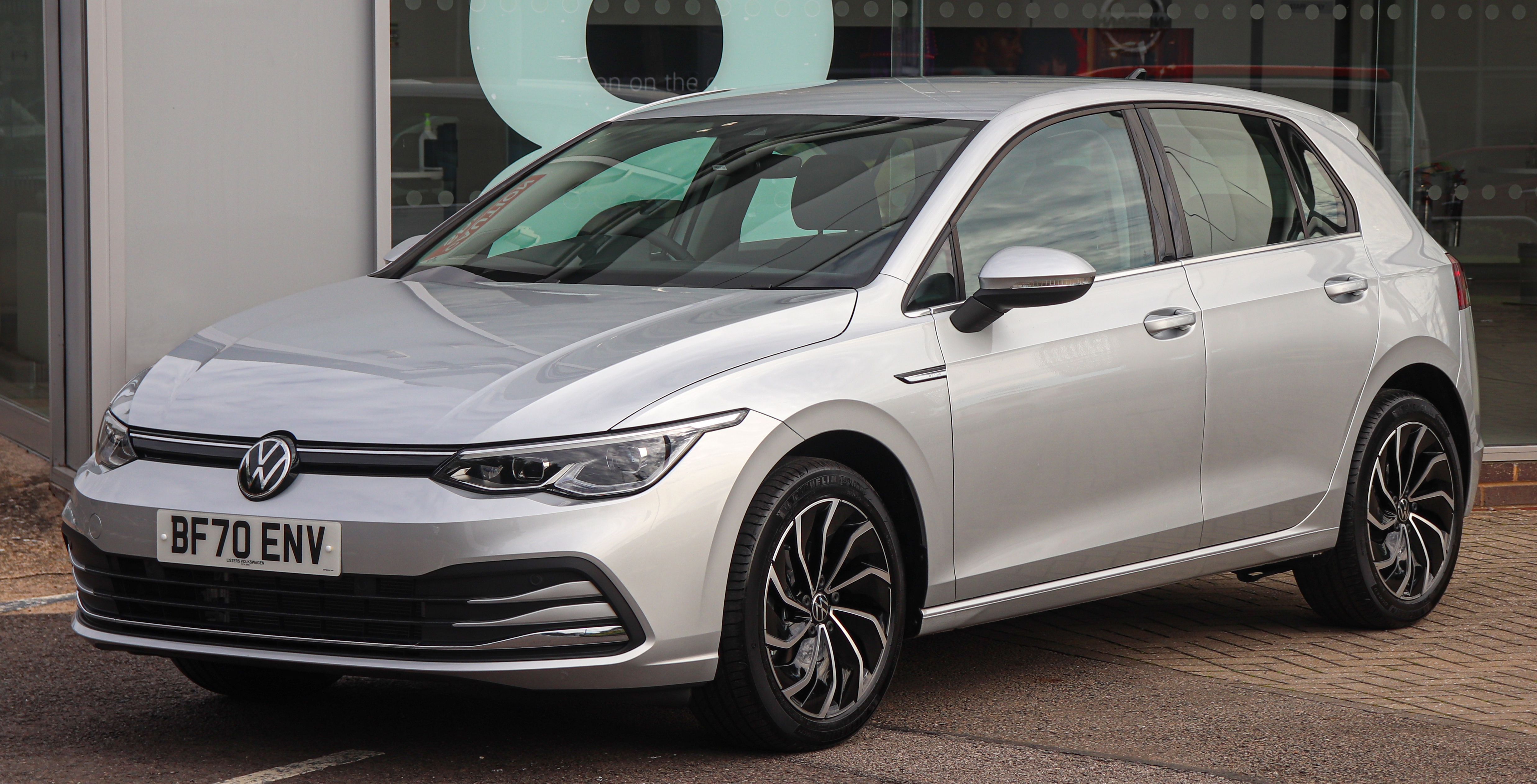
The Golf is a compact car model. The podcast is talking about it in terms of where it sits in the market—like whether it’s priced or positioned lower than before. That affects who it’s aimed at and what buyers expect from it.
An “03 Cobra” is a 2003 Ford Mustang SVT Cobra. It’s a special Mustang built for performance, and a lot of people love them because they’re fast and there are lots of parts and upgrades available.
“Resurgence” means people are starting to want those older performance cars again. Instead of buying newer stuff, enthusiasts go back to the classics because they’re fun and there are lots of upgrades available.
That phrase means a 2020 Ford Mustang Shelby GT500 with the Track Pack. It’s basically the version of the GT500 that’s set up to handle track driving better than a standard one.
“To the tires” means the power was measured at the wheels. It’s a real-world number showing how much thrust the car is actually putting down, and it’s usually different from the horsepower number you see in brochures.
They mean the Ford Mustang Shelby GT500, which is the super high-performance Mustang. The customer was thinking about selling it, but the real goal was getting back into the older Cobra.
The hosts are talking about the business side of running a performance shop: you need revenue to keep the lights on, pay staff, and continue doing customer work. It’s a reminder that even when the work is enthusiast-driven, shops still operate like businesses with cash-flow needs.
Term
$150,000 car
They’re basically saying that a cheaper car is often more fun to live with, even if you could afford something much more expensive. Expensive cars can cost a lot more to fix, so the “stress level” is different.
Term
$40,000 car
They’re saying that a $40,000 car can feel better to drive and own because it’s usually simpler and cheaper to fix. You’re less worried about expensive parts if something breaks.
Term
rear shot
“Rear shot” sounds like they mean damage to the back of the car. Rear repairs can be costly because the parts may be harder to find or more specialized.
They’re saying that the real issue isn’t just the price of the car—it’s whether you can actually get the parts quickly if something breaks. If parts are hard to find, repairs take longer and cost more.
LIVE
My dad would literally load two slicks, a jack, and a few tools in the trunk of a car and a
couple of nitrous bottles.
And we could take and drive that car to the track, unload the stuff out of it, throw some
tires on it, and go out there and run 1060s and then put the tires back on it and go home.
And that was in the late 80s, and it was really an impressive feat.
And now we see people thought those tires were being pressed going in the 10s back then, and
we see guys going in the fives on those tires now.
It's insane.
Welcome to the automotive advantage.
Grow your business and get smarter in just one hour.
The side lights are exactly where they've been this whole time.
The top light is off, everyone's mic'd, mine's on, your my everything's good.
This feels different.
You feel different.
Just start the pod.
All right, welcome back, ladies and gentlemen.
This is the automotive advantage.
Justin, I'm super excited about podcasts there.
We got a great friend of the channel, a longtime friend of mine, Donnie Walsh, Jr.
Thanks for joining the automotive advantage today, buddy.
Thanks for having me here.
Really, I've been very excited to come on.
Donnie, I know you from the pioneer days of the 5.0 Mustang.
You and your dad were an amazing team.
You built a great racing team.
You built a great business, so we want to talk a lot about your business today.
And we want your feel.
You're in Detroit.
You got an incredible feel, great knowledge, great network of people in the industry.
So are you up to represent every small speed shop in America today?
Are you up for that task?
I'll do my best, for sure.
Give me the highlights of the racing career.
I announced for you for years.
I had fun talking about all the great victories.
I think you're the winningest 5.0 Mustang driver in the history of drag racing Mustangs.
Is that, am I close to true?
I don't know about that.
There's a lot of guys that did really well in that.
And it was a nice part about the NMRA and FunFord and all those things.
And I think they gave guys a real opportunity to showcase what they could do, make their
shops better.
A lot of those guys were business owners like us.
And so it was a great time for racing.
It was the start of the automotive aftermarket industry.
There was the small block Chevy years and then in the late 80s, the 5.0 Mustang
takeover.
You had LS when you came in, so there's these chapters.
But Donnie, you and your dad set the pace early.
Do you want to talk a little bit about your first experiences racing and what cars you
were in and what the scene was like when this thing started breaking open in the late
80s?
Well, the Mustang, the Fox body Mustang just definitely kind of set it in stone.
It was going to be like the 69 Camaro of the 60s and 70s.
But it was doing it with, at the time, what we thought was a lot of technology from them,
which obviously it wasn't a lot.
It's come far, far ways from that now.
But no, it was just, it was exciting to be a part of that.
What we did, we raced a carbureted nitrous small block car.
But the coolest part was is that while a bunch of cars were being tailored to the track at
the time that were 10 second cars, which was a really fast car at the time, my dad would
literally load two slicks, a jack, and a few tools in the trunk of a car and a couple
of nitrous bottles.
And we could take and drive that car to the track, unload it, or unload the stuff
out of it, throw some tires on it, and go out there and run 1060s, and then put the tires
back on it and go home.
And that was in the late 80s, and it was really an impressive feat.
And now we see people thought those tires were being pressed going in the 10s back then.
And we see guys going in the fives on those tires now.
That's just, it's insane.
It's crazy to look back at the beginning of anything, because if I wanted to go race now
against you, I don't stand a fucking chance, right?
Like you guys have been doing it for so long, it feels like all the classes, promo, drag
race, everything is just so competitive, so advanced.
What was it like back then, because we always talk about the good old days, I remember
like early LS days, if you had an LS with some modifications, you could go race it
and you could find a little class that you liked, and you could kind of grow with it.
When you guys first started going on the track, did it seem like, okay, everyone here kind
of also doesn't really know what's going on, we do stand a chance, or did it already feel
like you were racing against kind of guys that knew what they were doing?
I think you're still racing against people that know what they're doing, obviously,
and everybody kind of had their niche.
It was kind of neat when we first got into it.
We were running a nitrous car, we had the likes of Gene Deputy running a turbo car, which
he was really one of the true pioneers of that deal.
You had Granatelli running a supercharged car with his faxed in, with him owning that.
So it kind of gets you, that was the start of that, where all those guys had like,
they had an in on what they were doing, and then you just, you kept working at
your craft.
That's really all it was.
But I think that anything you get into, it is very competitive today.
It was competitive then, but in I guess a different manner.
It probably was not as competitive as it is today.
Why nitrous?
I'm always interested in where people like start from.
Why'd you start there?
Well, that was just something that my dad, he started with nitrous.
He formed a relationship with Dale Vasnian, one of the owners of NOS.
They had a real good relationship.
Dale worked with him while he was at Ford Racing, and it was a great way to take a car back
then, that same car that I'm talking about that went in 1080s, 1060s and 1080s, that
car would only run 1290s on motor.
So it was incredible that for a $300 kit, fill a bottle, and make sure you're real careful
with the tune up, you could run good.
Later on I learned, I mean, nitrous is a volatile power outter, right?
So as time has gone on, we have moved away from it and do a lot more superchargers and
turbochargers.
I feel like even the jets were not all the same millimeter back in the day.
You could easily just get the wrong jet, and that'd be the end of that motor.
So yeah, it was a different time back then.
And that's one of those things that we weren't, you know, you're not taking and flowing
all those jets.
Like today, a nitrous guy, I mean, he's flowing those jets.
He knows what every one of them does.
Back then, I mean, you're taking it out, reading it, you're hoping you read
it right, throw it in there, and that's what you have, right?
So there's just a ton of businesses that start.
You advance your racing, D&D performance comes along.
I guess let's conclude like the racing discussion.
I don't want to talk about how the company was progressing as you were, but you
go on to be the winningest Pro 5-0 driver ever.
You run the class really till it ends.
We recently had the 25th anniversary of NMRA, which is no longer around.
But talk about the racing and the competition, and then eventually you go to
Pro Mod and you do some crazy fast stuff.
But talk about the graduation through Mustang Drag Racing and where it took you.
So in Mustang Drag Racing, it really started with my dad racing his stuff.
I helped him for several years.
And then I started wanting to do my own stuff.
And what was great about that is my deal was I got to buy the parts off of his car
that he was no longer using for 50% off.
So there's no free rides in my house.
So you were paying, but I was able to buy those parts.
And then like we're talking about at the time like the first steps for
us were he always ran a carbureted combination, carbureted nitrous.
Simple as simple could be.
My dad really liked the combinations to be simple.
So the first thing that I did was took some of his old parts.
And we did between Steve Griebeck and John over at Big Stuff.
Well, at the time, DFI.
We did a fuel injected version of my dad's old motor with nitrous running it
as a dry system.
And so we took a combination that my dad was going 950s with and
went out and went 880s with it.
Again, just technology, nothing.
We weren't doing anything better other than technology taking it further.
So it was neat going from that and just kind of going through the different
things and running, I guess it progresses with cars and with combinations
and whether you run, we ran superchargers for a long time.
Throughout all of pro 5.0, we ran a pro charger combination.
And that's it.
I feel like dads are like the ultimate support system for their son, right?
They want to see their son succeed.
But I also feel like, especially drag racing dads, pretty competitive.
How's your dad when you go 880s on his used stuff?
He's going 950.
Was he like into this?
Or is he like, what is this new fangled technology?
What are we going on over here?
How does this feel back then?
So I'm sure, yeah, absolutely.
I grew up in a very competitive home.
From the time I was very young, everybody in my household raced.
My sister, I have two older sisters, one of them raced snowmobiles.
I raced a snowmobile.
My dad raced a snowmobile.
We got into boat racing.
My mom drove the boat.
My dad drove the boat.
And this was an unblown nitro jet boat.
So I mean, it was serious, pretty serious.
And so, yeah, I mean, it was very competitive.
So then I come along and want to start drag racing and start doing that.
My dad always was one of my biggest supporter, but he was also competitive.
So what you have to remember is when we went 880s with his old combination,
he was going 860s with his new combination.
So he had a lot better motor, had a lot better car, but he still went faster.
So and that would be the last car that he raced when he bowed out of it.
He bowed out of it before I ever went faster than him.
So there we go.
Smart man right there.
He saw, he saw what was coming.
Downey, also, you know, something I'm thinking about today,
like you're incredible talent.
You were widely regarded as the best driver in Mustang drag racing.
I was telling Justin before you got here, there's only two
people that Carlo Catalinato will not bet on a practice tree,
and it's you and Antron Brown.
We're just always wired different.
Are you a natural driver?
You were just put in that position early and you developed.
Why are you the best driver and any lineup for as long as I've known you?
Well, I don't know about being the best driver.
I feel like I'm a good driver and I work very hard at it.
We're going back to what I said about my whole family being competitive
and racing for so long.
I raced a kitty cat snowmobile when I was two and a half.
I have the coat to show it that's about this big.
So I've been on something like that for a long time.
So when I get into a car, I'm very, very comfortable.
And I think it's really important to be that way.
And then, of course, when you have a good team,
they help you be comfortable.
On top of, already, if you're comfortable driving,
now you're comfortable with the tool that you're racing.
So I feel that's really important to me.
And it was everything to me.
But if we go racing, we are leaving.
I've always said, I never want to leave our shop
not feeling like we can win.
I fully understand there's a lot of people
out there that are very good that have opportunities to win.
But I want to leave knowing that we can win.
And so I never want to let my team down.
I've always been very hard on myself for the driving.
And then I expect the same back from the team.
While the racing's going on, you form a business.
Dad starts a business with you.
I know it is a transmission company.
You build cars.
Your stuff is impeccable.
You build just amazing stuff on a shop.
Talk about where it started, the progression of D&D
performance, and what do you do today?
And then we want to dive into a little more
of how big we're going to go with this thing.
But start us off.
Well, D&D started on a very simple thought process.
And it was a job for me to have while I was in school.
And it was extra revenue for my father.
He worked at Ford Racing, or SVO at the time.
And that money went to the household.
But the D&D money went to racing.
So it allowed him to do the things
he wanted to do without shortcutting the family, which
was a great lesson for me to learn very early on in my life.
But so that's how D&D started.
A couple years in, we were so busy
that I couldn't really do anything else.
I had to decide if that was my path or not.
And I was watching a lot of my friends get out of college.
And they weren't getting jobs in the fields
that they had worked so hard for.
They were struggling with what that job was,
because they really didn't know what they wanted to do
when they started to get their degree.
So I looked at it, and it wasn't hard to come up
with that I loved what I did,
and that this was going to be the path.
So hence, that's what we did.
Now, D&D started out literally in our basement.
And we built rear axles, which is what
we started building, 8-8s, 9-inch Ford stuff.
And then that grew into the Borg Warner
and Tremac transmission stuff.
Did you see a niche there?
Or were you just good at building rear ends?
Or like, why start there?
Were you like, oh, I'm good at this.
And some people of the track want me to help them with it.
Is this a good business?
Or was it like, and no one's doing this?
Where did that come from?
So the interesting part of that is where that started was,
and anybody that was in the Fox bodies at that era
learned that the T5s broke pretty easily.
They're about made of glass
when you've started putting any type of power to them.
So there were some upgrades that Borg Warner was working on.
And at the time, Ford Racing didn't want,
they wanted to have a transmission in their catalog,
but they didn't want to do any of the upgraded parts and whatnot.
And so my dad originally wanted to do that,
the transmission stuff through Ford Racing.
And then he said, well, I think I'm gonna do this
for our side business if you're not interested.
And actually it was at a time where Ford signed off on it.
So that was fine, no big deal,
which was very important later on as things grew.
So, but that's what it was.
It was really to your deal on the niche was
just that people were breaking a lot of transmissions.
And we weren't looking,
we weren't trying to swing for the fence.
We were looking for something to as a,
just a good side business, if you may.
And it just, it grew.
When we went to Borg Warner with the idea,
that was we were only able to sell T5 parts.
We couldn't buy any transfer case stuff.
We couldn't buy anything that other distributors were selling.
That was all we could sell.
And they kind of set a minimum
of what we had to sell the first year.
And later on, admittedly,
they didn't feel that we were going to be able to do that.
And we doubled it the first year.
So it was, it got off to a good start
and thought, this might be a real thing.
This could work, cut to 30 years later.
Were the pretty good margins
and manual transmissions back in the 90s?
Yeah, there was good margins on it for sure.
There's always been better margins in the parts.
So if you're willing to stock the parts and pieces
and willing to have the knowledge to build them
and what to do with it, then it's helpful.
And when you started, was it just like,
you're just selling to other NMRA guys, basically?
Or did it kind of scale quickly?
Was it like local street racers here in Michigan?
Or like, what were the first customers?
And then how did it kind of scale from there?
So we had our customers that were local, obviously.
But again, as I said before,
we were doing this out of our basement of our home.
So we weren't, this wasn't like a huge advertising,
hey, look at us, come drop your car off,
we'll do all this work.
It was more mail order stuff.
So we did do some local work,
but for the most part, we took an ad out
in Super Ford at the time and just a small ad.
And literally our first ad that we had,
it had the hours to call between 6 p.m. and 9 p.m.
I mean, that's how small this thing started, right?
And that's when the phones would get answered.
And so in the meantime, I'd get work done during the day
and my dad would try and sell more stuff at night.
So when I look back, it's very humbling
looking back at what that was to what it has become.
While to think that you would look at a print ad
and be like, okay, I got to call these guys at 7.30 tonight
because they're probably at another job right now.
I'll just wait around and call them up.
It feels like a rotary phone might have been involved
or something, I don't know, but that's crazy start back then.
But I guess you could measure it, right?
You got one ad, if the phone rings,
you know, the ad's working.
How long did it take?
Do you remember the first phone call?
I mean, it started right away.
I mean, it really did.
It, we had a good following from the racing stuff
that we were doing and the local racetrack,
we went to Milan all the time.
So we already had a good following, as you'd say, now.
So that was a good start.
So it wasn't just a turn the light switch on or off,
but it definitely started a snowball rather quickly
with the parts and it surprised us a lot.
So we would literally go down to Muncie, Indiana
to pick up parts and transmissions
because we were doing this out of our house
and we couldn't have trucks, you know,
freight trucks showing up and whatnot.
So I would go down there and load my F-150 up
with like 18 T5s in the back of it
and have to hand bomb them off the loading dock
so I could fit them all in the truck.
I mean, it's just stuff, these stories are things
that, you know, it's cool to talk about now
and say this is how we did it.
But yeah, there's no loading dock
at the basement of your personal house.
I guess you gotta unload it yourself.
That's crazy.
I'm just wondering, do you have an idea
how many T5 transmissions you've sold in your career?
No, no idea, to be honest with you.
It's a lot.
We sold a lot for several years,
sold a lot of rebuilt units, sold a lot of new units,
sold a lot of overstock units.
And now, of course, the only T5s that are available
are the Ford Racing version that Tremac sells.
And we still sell them to this day.
So it's wild that 36 years later we're still selling them.
That's crazy.
But we talked about this, or I ranted about this
recently on the pod, like it just feels like now
everything has to be new and brand new idea
every 10 seconds, but it's like, if you get it right,
you can do it for 36 years, you know?
I mean, you're gonna make little changes along the way,
but getting it right, building the brand,
just doing the thing slowly can work for a long time.
You don't have to reinvent your business model
every eight minutes because chatbots exist, you know?
That's why we talk about new car sales all the time
on the podcast, because you get that right vehicle
and that right plat, you know,
you mentioned 69 Camaro, do you know how many
crate engines have been sold to 69 Camaro's
over the last 50 years, you know, endless.
Same thing with Fox Body Mustang,
that was its street car takeover this past weekend.
Still 50 Mustangs in competition, I mean,
it's still everywhere, so.
I was hyped up this weekend on O3 Cobras.
I feel like I missed the O3 Cobra boat
because I was on the LS side, but I still want one.
Have you had like a bunch of eight second
O3 Cobras or something?
We have built several cars for customers.
Obviously we built them all from, you know,
11 second cars down to seven second cars.
You know, in that street kind of fun car like that.
And the O3 O4 Cobra was a great platform.
That was a great platform.
You know, I guess any car shop or performance shop
will have those cars that were just good for them.
They liked them.
They were good for business.
They made sense, and the O3 O4 Cobra
hands down was one of those cars.
I mean, I can still remember the first time
we put one on a dyno and realized that,
hey, this thing, it's hard to say today
that it was a big deal.
But when one of those made 370 horsepower
right out of the dealership to the tire,
that was huge because, I mean,
Mustang GT at the time made like 215 to the tire.
So you turn that around to that and you're like,
wow, like this is really a neat piece.
And then you put a pulley and a cold air and you tune it
and it makes 450, 460 to the tire.
And you're talking about a pretty serious car
in the O3 and O4, so which you see it stood the time
in that guys still want them.
They're still, they're very sought after
and now they're going up in value because of it.
And they made the best blower noise.
I think that was peak blower noise for me.
Especially with the like Steggy port
and all that back in the day,
those things were just awesome.
All right, well, maybe we need one for the summer.
Automotive.
I had one, I sold it with 1500 miles on pony prep, very rare.
Anyways, Don, talk about that side though,
you're selling parts and then when do you start
building cars and you've got full dyno
and tuning capabilities, right?
Like walk us through the whole menu you offer.
So back then, I mean, we moved into doing
all the transmission drive line parts and sales.
And all along that on the racing side of it,
I always had a small section of the shop
that was just to do customer cars, R cars,
just in the race car, all that.
As that grew, it was kind of getting in the way
of the other shop.
And then at the same time, a key thing happened
and it was that for several years I ran D&D
while my dad still was at Ford Racing.
Well, then he decided he was going to retire
from Ford Racing and his retirement
was going to be dropping down to one job.
And the one job was coming in the D&D.
So we learned real quick that it might not be
the best idea for two chiefs to be trying
to get things done every day.
So he wanted to, he said he was going to
continue running or take on running
the transmission side of it.
And then I would do the performance stuff.
So at that point we had it as like two separate entities
but still under the same roof.
And so we did that for several, you know, several years.
Obviously, well, we still are doing it.
So that's it.
But those, that, I guess, moved from doing
a couple cars here and there to seeing that
I relied on someone else to tune a car,
wasn't happy with what happened there,
which forged a relationship where I met Mike Wesley
and got into doing the, we started doing the tuning.
And then once we started doing the tuning,
then I realized we can't be doing these things
out on the street all the time.
Like these cars at the time I thought they were fast.
And so it was literally one customer car
that had me buy all the software
and then three months later buy a dyno.
And that's where all that started.
So from then on we did both, now we do all the builds.
We do a lot of superchargers, turbochargers.
We do some engine builds throughout the winter
when we have time.
It's hard for us to do it during the summer
when things are real busy day to day.
We have the dynojet dyno that we've had
for several years.
And then just recently we ordered a mainline hub dyno
to be able to, I feel we'll be able to do a much better job
doing all of the tuning, or I shouldn't say all of it,
a lot of the tuning before it ever comes off the,
before it ever goes out on the street or to the track.
I feel we can have a better product for our customers
and be able to do anything from a 250 horsepower car
to a 7,000 horsepower car.
I gotta talk about dynojets.
I gotta, what do you want to survive on?
Give me a percentage of revenue of part sales
and customer build cars.
Can you do that for me?
Tell me where the company breaks down.
I would say right now the car build stuff
is probably around 30 to 35% of the business.
And then parts and the transmission side of it
is still the bigger part of the business.
And you, I mean, inherently you hinted at this,
but you don't make the margin when you're working
on somebody else's car as much,
but does that drive the whole brand?
Why do you do that?
We build the cars out of passion.
I just, I love building the cars.
It's something, it's kind of like racing.
You know, it's someone, inherently someone always asks you,
how much money do you make racing?
And I'm like, make, like, no,
we have to work a lot of hours to make enough
so that we can go out and spend it racing.
You know, and so that's kind of,
the cars aren't like that building them,
but they're still profitable.
But definitely it's not the way to become wealthy for sure.
But it is a way, like I said, I love doing it.
This whole business is based around passion without it.
You can't be successful.
And I'm sure that's the way it is in a lot of things,
but for us, it's definitely rewarded
because of the passion more than it is the revenue.
The car side is so hard to,
because people just don't understand it.
Like, you know, you give them an estimate on something,
you know, it's 20 grand, it's 25 grand.
Instantly though, like, there's no way
it can cost that much.
You itemize it out.
It's like, okay, all this looks reasonable, right?
You get to the bottom, there's labor
that doesn't seem that crazy, 25 hours, 30 hours, whatever.
And then you add up the number at the end
and you're like, well, that's a huge number.
But people may mistake that for like,
oh, these guys are ripping me off.
That's how they afford the race cars.
That's why they have this big building.
But like, I guess PSA for me to the world,
like shops that are building cars,
good shops that are building good cars
are not making a ton of money doing it.
It is kind of a passion play, right?
And every once in a while,
you get a good combo or good package
that you can kind of sell a lot of,
but it feels that way.
I mean, that's what I'm hearing from you too, right?
Absolutely.
And the whole thing is,
this repetition is how you make money building the cars.
However, there's not a lot of repetition in our business.
And that's why I bring up like the 0304 Colbert days
or even the 1314 Shelby GT 500 days.
There's some repetition there,
but it doesn't last long
because the next car comes along
and then everything you've put into that,
now you have to go into the next platform to do.
But one thing that's really good for customers
is to see a detail of what you're,
when you do a quote,
customers a lot of times want you to get off the cuff.
What do you think?
Do you think it's gonna be like 15 grand, 17 grand?
What is it gonna be?
And I don't like to do that
because it doesn't show them what it is.
When somebody looks through 40 line items
and we're literally making 12, 13% on those items.
And then at the bottom is the labor that's there
that maybe the shop makes 35% on
because we have good guys that get paid well.
So with that, you get to the bottom
and somebody can look at it and say, wow.
Like, yeah, it's $20,000
but there's only $3,500 a labor.
They're gonna have the car for this much time.
And I think it's easier for people to understand
and I know it is for me.
When I get stuff that work done on my house,
I don't know what something should cost.
So I can't tell them what it should cost.
But when I see all the itemized, it helps me a bunch.
So that's what we try to do for customers on jobs like that.
And fun fact, you wanna go to a shop
that makes enough money to be around in the future
so that if you have a problem,
when you have a problem
or when you wanna upgrade that thing, they're still there.
See a lot of people do it backwards.
We're like, I just wanna go to the cheapest shop.
I was like, well, the cheapest shop's gonna be out of business
and then you're gonna be on your own.
So yeah, I'm sure you see that too.
And that's a real common thing for me.
That's one of the things I do tell people is
I can't do it.
Sometimes people call and say,
this shop is willing to do it for this.
And I just let them know
that that's probably their best avenue to do
because I can't do that
and answer the phone the next time you call.
I won't be here.
And a lot of times I do share
that we've been here a long time.
We've been through a lot of ups,
been through a lot of downs
and we know what we can and can't,
what we can get away with not charging and making a living.
And sometimes it's good when people understand that.
So that's it.
You probably don't even know I was paying attention
but we were at the Fox Mustang show
at World Forward Headquarters.
You have a display and you get some products out.
You always bring the nicest black notch back
in the world, you jerk.
But anyways, there was a customer there
that had brought you a transmission
that they broke on the way to the show.
They were from Jersey and you would state up
in addition to everything you had to do
to set up to be at the show
and you had rebuilt the transmission overnight
and you were bringing it back to the show.
And I sat there and I'm like,
this is why this dude's been in business
for all this time.
And the guy was blown away.
He's like, you built it last night?
You were like, yeah, I wanna make sure you had it.
Like incredible customer service.
Like obviously you and your dad had to do that
but can you talk about how important it is
to over deliver this to someone
that needs a part like that?
Well, absolutely.
I mean, it is, right?
It is in your life, it's in my life,
everything that we do.
And I think that as time goes on
you recognize that more and more how important that is.
And I feel like in today's world
even more so than years ago
that's what we have to give as customer service.
So sometimes we can't beat the deal
that somebody is gonna,
a huge corporation is gonna give somebody
but what we can do is we can do service like that,
take care of somebody like that.
And then you take care of a guy like that
and now three Fox Fest go by,
as each year goes by,
those same, that same group of guys
literally have me bring one or two transmissions
every time with me
because they wait until that time to pick them up.
And the best part about that is there,
that's a perfect example of those guys will say to me
I don't want you to have to ship it.
I don't want you to have to do the,
I want you to, I'll pay with a check
so that you don't have to pay the 3%.
They care as much when you care about them,
they care a lot about you, which is nice.
And that goes back to you, Justin,
your comment about go to the right shop,
go to a shop that's been around,
go to a shop that treats you right.
I mean, this is a lot about small shops today,
this conversation for me, right?
Yeah, well, and it's hard to be a shop.
I mean, I feel for all the shop guys,
I've been in shops before and the margins are tiny
and the one good day you have, the next day,
the dyno explodes and takes out three cars with it
or something like that.
It's just a, you know, it's really hard.
You're passionate about the cars,
but the day-to-day experience can be pretty rough.
So it's hard to stay like, no, we should do it,
grab his transmission, let's do the right thing,
be easy to be like, yeah, we'll ship it back
to your house, whatever it would be a couple of weeks
who cares, but like just staying on top of that
is why shops that are good stick around,
but it takes a toll on the owners and the employees.
I mean, it's not an easy way to make very little money.
It's what it ends up being.
Six to nine, baby.
Six to nine was probably more profitable
than the whole empire, honestly.
Yeah.
Downey, talk a little bit about what you feel
in the market right now.
We're in weird times coming out of COVID, it was great.
Now it's kind of sad a little bit tightened up.
We've got all sorts of turmoil in the news,
you know, how are we going to read into that?
But what's the feel on the street and in the market?
Like, tell me what you feel.
So I feel it's very difficult for me to answer that question
because of being here in Detroit,
we're coming off of a really cold winter.
People have been hiding and not wanting to work
on anything, not do anything.
And the spring is just kind of breaking for us, right?
So I feel that I could answer that question
a lot better in the next 60 days.
It's gonna make, we're gonna see more
about what happens when the weather breaks
and whether people are still spending money or not.
We're still doing okay.
And I actually, I looked at something last night on,
I looked on how we're doing it this present time.
And you know, because I said we do a lot
of mail order stuff, there's a lot of stuff
that it isn't as dependent on the weather here.
Our car stuff is, but that isn't.
So I was looking and we're up about 20% for the year
right now, which is really good for us.
I'm very happy with that.
The hard part is what this business is,
it only takes 45 bad days to eat up that, right?
So you just have to kind of see how things go,
keep an eye on it.
And I am concerned on how things are for sure.
When gas is expensive, it, those basics
between groceries and gas being expensive,
those are things you can't not do, you have to do them.
So when they come off the top, after that,
it's, you know, that's when you get concerned
whether people can still afford to do something.
I've always said that guys will do whatever they can
to have their toy or have fun with what they wanna do.
They, everybody needs a getaway.
And you know, the cars are, you know,
our customers getaway.
So they will do it if they can
and they'll figure out a way.
I just, when things get like they are right now,
I hope that they choose us.
Why are you up 20%?
Is there something that you look at
or is it just writing the economy
or what do you credit that to, Danny?
We are, we're trying to adapt right now
and do better, do a better job to reach our customers.
And we're really just in the very beginning of it.
But it's, we're seeing that we have to do that.
We've, we're just, we're trying to make those changes
to try and do that.
And we are seeing that things are, are working with that.
So that's great for us.
Okay, I definitely wanna go there.
I do wanna stick on the market move for a second though.
Like I feel as if,
and maybe this is just the people I'm around,
like I'm going down market now.
Instead of like trying to buy GTDs
and dreaming about crazy $400,000 things.
Like an 03 Cobra to me,
which isn't really down market.
They're still super expensive,
but like I just want,
I just want cars like that again.
We were looking at C506 the other day.
I was like, I've had a bunch of those.
I want another one of those.
Like, do you see maybe a resurgence of like,
are people coming into you?
I mean, like, dude, I just bought an 03 Cobra.
Like I'm hyped on this.
I'm getting rid of my brand new car for that thing.
Do you see any of that?
Or do you feel any of that?
Or where do you, what's your take?
So we do, we see a lot of that, right?
I mean, the 03 or 04 Cobra is the perfect example.
I have a good customer in mind
that we've built a few cars for.
Did a 2020 GT 500 track pack car for him.
It was made a thousand horsepower to the tires.
Just a fun all around car.
We built that for him probably in 21.
And last year he came to me and said,
you know, we got a lot of things going out of my business.
I want to be a little more careful with things.
I missed my 03 or 04 Cobra from when I was younger.
I found one.
Will you do that for me?
I'm gonna sell my GT 500.
He didn't sell his GT 500 because he didn't like it.
He did it, I mean, because he was feeling
it was the more responsible thing to do,
but he wanted to go back to the 03 or 04 Cobra.
We did that for him and he's just elated with it.
Just says I have so much fun
for the amount of money I spent.
I have so much fun with this car.
And that's great to hear, right?
I mean, we have to get paid
and have to have revenue to do this,
but really when you see the customer is really excited
about something that you've done for them,
that's what gets you by.
Like you're talking about the shop being not easy
and it isn't, you have, you do have, you have great days
and then you might have bad days
and they could be in a row,
they could be a month of it, you know,
but all it takes is a customer like that
that's excited about what you did.
And the other thing about the price of cars today,
as we talk about the price of cars all the time,
what I'm noticing is like,
even if you can afford a $150,000 car,
it's different driving a $40,000 car
if you can afford a $150,000 car
than driving a $150,000 car
if you can afford a $150,000 car.
Like it's way more fun to drive a $40,000 car.
Your care goes down a little bit, right?
The whole thing is like,
oh, if it breaks, we can build an engine
or we can get a transmission.
If I break the brand new GTD rear shot,
like I don't even know,
and can you even get parts for those things?
So like, I feel like even,
yes, people don't want to spend the money
but even people who have the money,
some of you said about just buying a cheaper one
and having more fun in it, you know?
And I feel like that's how it used to be back in the day.
You just buy shit cars
and just go smash on them at the drag strip
and that was fun.
And then we got addicted
to like the newest, coolest, shiniest thing.
I think this returned back,
some of it's economics
but some of it's just like it's more fun to do, you know?
Well, and I feel that some of it is economic driven, right?
But the other side of it is that most of the perfect thing
that you just said is you don't worry about it as much.
So, we all have worked hard to be where we're at,
what we buy, what we drive.
And so when you have something like that
that you spend a lot of money on,
you can literally think of how many hours
you put in to have it.
If it gets a scratch, it's a big deal
or you don't really wanna park it
in a certain parking lot or whatever.
I can't tell you how many friends of mine
that have bought like an older car that don't paint it
just because they're like, I just wanna have fun with it.
I wanna park it where I wanna park it.
I wanna drive it where I wanna drive it.
And you really can't argue like it's not really a bad call,
still a cool car.
So I'm seeing a lot of that
and I feel like in times when times get a little bit
harder, we find that we get a different customer base.
And a majority of our customer base ends up being people
that instead of going to buy the new car,
they say, I'm gonna throw 10 grand at my C5 Corvette
and make it something fun, something more exciting for me.
I'll play with that this year
or the next couple of years versus the guy saying,
ah, you know what, I'm just gonna go buy a new car.
So in some instances, it's better for us,
but you still have to have enough customers
that wanna do that.
And you need someone to buy the new car
so they can depreciate so that we can buy it later.
Yeah, that's grateful, yeah.
Donnie, what's your advice for shop owners out there
right now that might have a company similar to yours?
What are you telling them?
What advice would you give them right now?
I would probably give them advice that as a new shop owner,
I would say the thing that I wished that we had done
early on is I wish that we had worked on
the office side of the business
as much as we worked on the actual work
on the vehicle side of the business
and promoting that and doing that.
My dad was a workaholic and he loved to do the paperwork,
he loved doing that and then would still like
being in the shop as much as he could as well.
And so we didn't do that.
And now it's definitely the part that is the hardest
for us in today's thing.
I think a lot of times people create this business
but then don't have the backing of it,
whether it be the office, whether it be the building,
whether it be that.
And I feel like that's what I would tell a new,
someone's wanting to start that shop
to focus on that as much as their work that they're doing.
I feel that here at Drive-Line Studios.
But it's funny because especially like car guys,
I always hear like, well, I'm not a numbers guy,
I don't like numbers, you know,
and then you're like, what's the CFM of that
the cylinder head?
They know it instantaneously,
pull up some volumetric efficiency table,
they can read that perfectly.
What's your margin?
Oh, I don't, I'm not a numbers guy.
It's like, it's hard to apply yourself to that
because it's boring and it sucks.
And you realize, oh man, I'm losing money
on things that I love, but like, yeah, that's critical.
And I think we talk about new businesses.
I would love to see someone come into the space
that is good at that fractionally or whatever
where if I'm a speed shop or I'm a content creator
or I'm a agency, I could go and just be like,
hey, can you just look at my books?
Can you just help me set this up?
Like that would be a cool,
because the way we do it now is crazy.
It's just like, you start selling stuff,
you start getting letters from federal agencies
that you owe them money or like,
you don't have business licenses or whatever the thing is.
They were shared, so maybe shared a little too much.
Now we're gonna have our tax guy on soon,
this is all gonna get cleared up,
but like, yeah, he's busy right now with that.
But yeah, it's hard to learn the business side, right?
People will tell you about cylinder heads all day long,
but it's hard to learn how to do bookkeeping, for example.
Yeah, obviously it's a very important portion of the business.
And then it's really hard to know where you're at
on a daily, weekly, monthly basis
if you don't have those things put in place.
And I feel like in years of past,
I feel like there's been some years,
sometimes where things were just so good out there
that it was hard to make a mistake.
And that's not the case today.
Today is, you have to have everything in line
and working very hard for the percentages
that are out there for you to succeed, so.
Donnie, like any car project,
we're always thinking about what we're gonna do next.
What do you wanna do next with your business?
What do you think the next chapter is for you?
So I would say D&D's next chapter
we've always been known for more Ford related,
on the transmission side, we've been known
for more as a Ford related Tremac dealer.
And we wanna work towards having more kits
that I feel are better than what's out there today.
I really just wanna work on the quality
of trying to make everything
that we do the best that it can be done.
And whether it be the snap ring that I think
could be better or just silly things,
but I really wanna work on all that.
And then as I said, as a new business owner,
trying to work on helping that office
and getting that to be a more solid experience for people,
that's what I really want.
It's very difficult with our current staff,
it's very difficult to keep up when we're real busy.
And I wanna work at making that better
and making that customer interaction better.
The customer side of this business
is one of the craziest parts to me
because in any other industry,
shops like the shops that we're used to
would not survive an hour.
You know what I mean?
If I go into a crumble cookie,
it's not like they're all in the back making cookies
and no one's gonna come out to the front
for another three hours.
It's not like I get there and they're like,
oh yeah, no, they're at the cookie thing,
they're not even here today.
It's just like crazy how this operates.
And we, because you grow up in this industry,
you just tolerate it, but you forget what it's like
for someone who's just barely a car guy, right?
Who's like used to having real businesses to operate with
and then they go to a shop and there's like,
well, this guy hasn't called me back in months,
he has my car, you know, there's all that stuff.
So yeah, I think people forget
that the business side of this,
the customer experience side of it,
at the end of the day, it's like 99%
of what the customer feels, right?
Because they assume the car's gonna be fast
when they pick it back up.
But it's how was the whole process, the whole way?
So what are you doing to make that better?
Is it more phone people?
Is it more in the shop people?
Is it better email system?
Well, what's kind of your first step?
Our first step is in the beginning
of when a customer first comes to us,
I want to have, we're working on a new website
to try and answer as many questions as we can
before we ever even have interaction.
I wanna try and integrate more videos into our website
so that we can take care of some of the day-to-day
questions for installation things,
for the transmissions, for the clutches,
for the hydraulics, all those types of things.
And I feel that doing that will help us immensely.
It'll free us up to take care
of some of these other things
to create that better, and I feel we give
a good customer experience, but it can be better.
And I wanna make it better, and I'm hoping by doing that
we can build upon it and hopefully build more cars
and sell more transmissions and have more cars
on the dyno and creating more special cars for people.
I love that.
When we talked about the packages earlier,
it was way easier back in the day when it's like,
well, there's two superchargers for this car.
You can pick one of the two.
Now it's like, well, there's 10,000 different power adders
and there's all these part numbers,
but like still most questions come up
more than once for a shop, right?
And if you keep hearing the same question
over and over again, it's like, okay,
let's just make a video about this.
Like I can just send a guy a video, it'd be so easy.
And then he feels like, oh cool, I can watch this
when I get home, you know,
I don't have to be on the phone right now.
So yeah, I think that's super smart.
And that's what I've found as the years have gone on,
I think about the things that you spend a lot of time at
that are trivial to me, but not trivial to you
if you've bought a transmission
and then you're having this issue.
So if I've heard it a dozen times,
it probably warrants a video being done.
So that's after talking to a few friends,
they say that might be a good way to do it.
I love it.
It is the way to do it, so do it.
Donnie, like a lot of folks in the industry,
but also especially in the Detroit area,
you get exposed to a lot of new cars
and a lot of new cars for anybody else,
sees them nationally.
You wanna talk about some new cars?
Like I know you're close to Ford.
Give me your opinion of a new Ford Mustang.
Talk about a Mustang for me for a while.
So our whole business was built upon
the Fox body Mustang.
That's where everything started,
whether it be the transmission stuff,
the axle stuff, the end of the performance side
of the business.
What I liked about that platform
and a few that came after it was that
it kinda had a Jeep mentality
where you buy the car,
it's a pretty good deal for what it is
and then there's just massive,
there's just so much out there
to customize it and make it yours.
Whether it's how you like it to look,
how you like it to drive,
how fast you want it to be,
all those things were kind of an open thing
for a Fox body to the point where now
you can't even find one that hasn't been messed with.
Like it's very difficult.
So now the new Mustang,
it's a phenomenal car, it's a great car,
but it's really expensive
and I feel like it's taken,
people talk about that kids don't talk about Mustangs.
The kids aren't talking about Mustangs
not because it's not a good car
not because they don't like it
because they don't see it as attainable
and then if it was attainable,
they couldn't do the things,
they couldn't make it theirs
and so I'm concerned that maybe
that's getting lost with the Mustang today
and I'm wondering if that might be why
the sales aren't that great
and I know you've spoke about it before
but we have far more people on the Ford side
come in with F-150, single cab, crew cab
but five liter trucks that, especially here in Detroit
when you have snow three months a year, four months a year
or like this year, it feels like the whole year.
A guy can have a truck that's all wheel drive,
has a five liter, has a 10 speed automatic in it
that's fast, has a bet on it
so he can go to work and do a lot of things
with the truck so I think all of that's really hurting
the Mustang today, which is unfortunate.
Yeah, I mean, you make the connection immediately
I'm not sure every small shop realizes it right
but for every Mustang that's not sold new
that's a lost opportunity for D&D in the long run, right?
Absolutely, it's a loss for us on the transmission side
the entire driveline side of it
and then also on the performance side of it
it's like I said, the guy who comes through our door
that just spent under $45,000 for the F-150, he's ready
he's gonna buy a supercharger for it
he wants to lower it, he wants wheels
and all in, he's still spent less
than a lot of Mustang GT costs
that's hard, that's just a hard fact
and I don't know that all of the people that do that
would do that if the Mustang was priced differently
and maybe with some options taken out of it
like these new cars, it's great
that they have these comforts, we've all gotten used to them
but does the guy who buys that car need it?
Maybe the Dark Horse comes with all those things
but maybe the Mustang GT, maybe it doesn't have
all those Fufu things on it so the guy can afford it
Ask him about another car, he knows everything, ask him
Well, it's funny, I mean, I don't wanna seem
like we're taking credit for this
but we said it again last weekend
like the F-150 is the new Fox, really
like you see them, it gives me the same emotion
as when I saw a Fox back in the day
you're just like, oh fuck, what's in it?
Like the quieter they are, the more mysterious they are
you know, like the more sleeper they look
the more I'm like, all right that thing runs
the eights or something like that, it's just cool
but to your point, again, it's an F-150
I'm not gonna feel that bad if it gets scratched
I'm using it as a truck but it also runs nines
you know, like I didn't pay a trillion dollars for it
I can sell it, like the wife's not really gonna,
you know, you need a truck for work
so no one knows what engine's in it kind of a thing
so like, yeah, I love that those things are around
GM doesn't really have a version of that anymore
which I don't love, yeah
but like, there's no Camaro
there's no real affordable C8
because they're still new now
I think that's why the C7s are going up in popularity
because people are like, okay, I can buy one of those
I can modify one of those, still do it the way I want it
but where else are you seeing those little
fun F-150 type of things?
Are there any other makes and models out there
like the BMW world is big right now
I don't know if you're into that at all
but like, what are you seeing out on Woodward
as like the modern Fox if you will?
There isn't a modern Fox, right?
There is not, you know, to us, you know, back then
you know, a new car is $12,000 or $13,000
which I don't know in today would be
maybe $35,000 or something
you're not, there just isn't that car, right?
I really, the F-150 just stands out so much
it's really hard for me to even think of anything else
it's in that same realm.
It is crazy the BMW whole deal.
Now it's a more upscale car
but it's amazing that a car that at one point
nobody really cared about how fast it was
and now everybody buys an M3, throws downpipes on it
tunes it, puts it on E and the thing goes nice
like, and handles and looks good, you know
just the whole, it has the whole package
more expensive car but it does, it can do a lot
again, there's a car that's an all-wheel-drive car
so it can be driven all year round
and it's definitely not as useful as an F-150
but it could probably still be sold to the wife
easier than a Mustang.
Plug for the new Grand Sport X
well, you know, I do think that all-wheel-drive
is more and more important, people are seeing why, right?
And it's cool that you can buy an E-Ray
which is probably gonna be pretty affordable
here in a minute once they discontinue them
but you could mob around all winter
in one of those things and still have a ton of fun
at the track, I mean, expensive
but I like the all-wheel-drive aspect of it for sure.
It is funny that a lot of the niche cars
that are popular right now
do happen to be all-wheel-drive for sure.
And I feel that that's for the horsepower levels
in these cars and what they can do
and so as soon as, you know, back not too many years
ago, my wife was driving an SRTG
just a great all-around truck.
Like, you know, it hauled the kids, it hauled the dog,
it was fast, it was, you know, even then
it was a naturally aspirated truck, it wasn't a track hop
but that thing from a light, it was very difficult
to get beat and, you know, Woodward was something
like that for the first, you know,
zero to 60 or zero to 70.
So all-wheel-drive, I mean, it just makes sense
for those kinds of things to be able to put
the power down and these cars,
they're not stopping making power.
Like, I mean, it's just crazy with like the ZR1X,
the power it's making, but I've talked to several people
about the E-Ray and I think that it's just a killer package
that kind of got overlooked because of maybe
how it was marketed to begin with.
Like, it wasn't really marketed as the performance side
of it, it was more marketed as making sense
because it was the hybrid, but I think,
I mean, it's a phenomenal package.
Yeah, it's funny, going to the X designation is gonna help.
Even if they just kept it, if they kept it exactly the same
and they just called it a Stingray X,
it's gonna sell better than the E-Ray.
I think as soon as you put the E on it,
everyone's like, now I'm out on this thing completely.
Great car though, but maybe people are gonna trade them
in on some Grand Sports and we can all get
some street racer deals on E-rays.
Donnie, I'm wondering about your opinion
of the Hellcat phenomenon that took over the world
but, you know, crazy here in Detroit
and then Caniscus is back,
looks like we've got more Hellcat stuff coming.
Talk about that segment of the market a little bit.
Well, it's really crazy to me that what Stilannas did,
they took a car that was completely outdated
that wasn't selling, put perform, put horse power in it,
put some cool wheels on it, couple years later,
put some fender flares on it
and it just continued to sell
and continued to sell great.
And I'm sure that, you know,
the Camaros, Wolves helped it,
but really it outshined all these cars
and performance by a bunch.
And so when you drive one too, like say a Challenger,
for a car to get into and drive to Florida or whatnot,
it's a nice car.
Like, I mean, that chassis is built off
of an old E-Series or a Mercedes chassis
and it just, it was a decent car.
So between that having horsepower
and like the scat packs for what they cost,
make, when we get one on our dyno,
they make like 440 to the tires naturally aspirated.
It's a cool car.
So I understand why they did well.
I think that they stepped up
when Ford and GM kind of backed off
and it was just like perfect timing
for them to do what they did.
But for them to do what they did
with such an outdated car
is really shows what people want.
Yeah, I think, I mean, we've talked about it, Dodge.
That is a masterclass in knowing your customer.
It was just like, hold on,
who is our actual customer?
What are they like?
Are they like cool looking cars,
horsepower, more horsepower?
America.
America, horsepower and cool looking car.
We can do that.
What's that old thing over there that we can't sell?
Just put a bunch of that into there
and start selling this bad boy.
That I'm actually sad.
I'm already sad that I missed the Hellcat wave.
I think this is why I want an F-150 so bad
because I don't want to miss out.
I mean, we missed prime Hellcat time.
One of us didn't.
You missed it.
I got it right at the tail end.
Okay, that's too late.
How many miles do you have on that thing?
It's magic.
Okay.
I'm thinking about how these cars are built,
who they're built for
and the segment they're built for.
Where I'm going with this is, as a shop owner,
when you see a Hellcat,
which is clearly built for a drag racer,
versus Camaro,
which we had endless iterations
of road racing cars in that platform.
How, is there a difference to you,
first of all, which one moves the needle for you?
And what are you excited about?
Drag racing versus road racing, right from the factory?
I like horsepower.
So I like cars that perform well.
I would rather have a car,
kind of a do-it-and-all car,
than just have like,
like the demon was a,
I think it's really cool that Dodge did it.
It wouldn't be a car that I would buy for myself.
It's not like,
we can build one,
we could build a regular Hellcat to make it faster
and make it do that better.
But to just be able to buy it and it be there,
I mean, what a cool thing that they did.
For me, myself, like I said, I like it to do both.
I like the ZR1,
or the ZR1X probably does it for me the most
on a car that's being built,
that's horsepower just does everything so well.
As far as cars for us to work on and build,
we, I think very fondly of the C6 and C7 Corvettes,
the 11 to,
11 to say, 17, 18 on the Mustang.
I think that those are a good value for people
and it's a good all-around car.
They can be built to do everything
if a guy wants to go around corners, we can do that.
If he wants to go drag racing, obviously can do that.
So those are some of the cars that I think are good values
and make sense to build.
I think every car person on planet Earth
has at least several times tried to figure out
what the payment on a ZR1X is at this point.
Like it's just, even if you don't like the styling,
even if you don't like the rear end, even if whatever,
it runs 870s, it's just like, you have to do the math.
Like, could I actually afford this thing
because it looks so badass.
Did you order a ZR1X, Donny?
I did not, no.
And it's, I love the car.
I think that it's a really cool car.
It's obviously, it's a very expensive car.
It's not something that's in the cards
for me at this point.
But Donny, we're up 20% this year.
Yeah, yeah, we were up 20% in three months.
We'll wait and see how that works out.
Being in business for as long as we have,
we know how fast that can go a different direction
with the economy.
It's just a lot.
It's like 250 grand by the time you're all said and done.
Like that's, in my head,
that's what like the coolest super car
that I could imagine back in the day cost, you know?
And it's just like, now we're here.
But that thing's never gonna depreciate.
I don't think it's too cool of a car.
Like I don't, in my brain, I'm like,
oh, wait till they're 120,
like that's never gonna happen.
The thing's just gonna sit there or climb.
It's too good of a car, I think at this point.
But you have said to me last week,
Grain Sport launches,
but you said that the team was really pushing,
but don't forget, C9 is right around the corner.
Donny, maybe this is a question for you.
Like, is there another generation of Corvette
that I'll say tops, ZR1X,
but from a performance standpoint,
where do you think this ends?
You know, when you ask that question,
the first thing I think about is,
if you asked me six or seven years ago,
do I think that Chevrolet will come out
with a Corvette that makes over a thousand horse bar
that goes eight seventies?
I would have just been like, no way.
Like it's, the old ZR1 was a cool piece.
And now you compare it to it.
And you're like, geez, like,
has nowhere near the performance.
So I don't know where it's going.
I hope that it continues to go.
I do feel that it's, at some point,
we do have to look at,
anybody can walk into that dealership and buy that car.
And for somebody like me,
who's raced several different cars over the years,
but started with a 15 second Mustang
and now, you know, racing in a five second car.
An eight second car isn't for everybody.
Like, so that's a scary, that's kind of a scary deal.
But I know with all the nannies they have on these cars,
it helps them immensely.
And hopefully that keeps people safe
and that means they can keep building them.
It does seem absolutely absurd.
Cause every, you know, you're always like,
this has to be the end.
And then I was like, nah, nah.
Remember that car you won NMRA?
That's the slowest thing ever conceived
at this point, 10 second car.
Like they don't even, it's crazy how fast everything is now.
But it's also crazy that, yeah,
it doesn't seem to be stopping.
I mean, well, Donnie's given us the right answer.
These are very, that very high performance cars.
I would never say dangerous
cause that's not the right tone,
but it does, the way that it's designed
is the base car outperforms the up level car
from the previous gen.
So base Corvette C9 means it's gonna be
Z06 or Grand Sport X level.
That's where we're gonna start from.
That's what that means.
Yeah, it's also funny on the safety thing though,
like I just had my car on the dyno
for like a dyno day event at Vengeance.
So my car is here on the dyno
and then there's a ZR1X on the alignment rack facing it.
Which car?
My Trans Am.
And my car makes a 1,060 wheel
and people are like,
oh man, you're gonna race that?
You're gonna drive that?
Like, do you have parachutes?
Do you have like fire safety?
Like what if it explodes?
It's so crazy, blah, blah.
And I'm like, I can just go to a Chevy dealer
and buy that thing makes more than this thing
that everyone's like, you're gonna need two parachutes
and a whole jacket and fire system.
Like that car would make more power right now
and it's faster cause it's actually aerodynamic.
Like it is insane to think how wild my Trans Am is
to me and then there's a faster car
with a window sticker sitting right across from it.
It's crazy.
Which it probably will need a transmission at some point.
So just throw it out there.
That's why we-
That's why we-
And it will need a transmission soon.
So yeah.
Donnie, I'm thinking we're close to wrapping it up
but I think about your future.
Thank you for sharing an incredible story
in the buildup of the company.
But we talk a lot about private equity on here
and I forgot one of the things we wanted to talk to you about
is the future of D&D, where it goes
and are you looking at private equity
and do you ever bring on another partner?
Do you think about selling the company?
Like what's the future look like for you there?
I like what we do.
And I like that my dad and I started it together.
It's 36 years later.
But literally when we first started this,
it was something that I was like,
well, we'll do it for a couple of years,
see how things go and next thing I knew it was five years later.
Next thing I knew it was 10 years later.
And some of your questions make me think about
I can't believe that we're really here.
Like it's 36 years later.
I've gotten to do something that I love to do.
Maybe not every day, but I love doing it.
I love our customers and have a great team of people
which I have the utmost respect for.
I wouldn't be where I am with racing the shop
or anything without my family and all the team of people
around me and the great companies we deal with.
But I guess as a whole, I like what I do.
I don't really, I don't think
that we'll be doing something different.
I'm not huge on the private equity
on what's kind of happened.
I've watched some companies that are like mine
that they take a lot from the owner.
You have to be very experienced to do well
with what you're doing, with what we do.
So our business isn't one that I feel
would do well under private equity.
So I wouldn't wanna see it go down like that.
I'd never say we wouldn't sell something
somebody that I thought could do bigger things with it.
I know of some people who have done that
and been very proud of what's happened with their company
that they couldn't do.
The truth is I'd rather keep doing what we do
and keep building cool cars and build cooler cars
and as time goes on and hopefully we can
build the business to be better and better every year.
Donnie Walsh, Jr. ain't never stop him.
Chilston.
I thought private equity.
Sorry.
Six to nine, baby.
Donnie Wood, give us a plug for the shop.
How do I, if I wanna spend more time with you,
how do I find you?
Where our website is ddperformance.com.
Phone number's 248-735-6220.
You can email us, you can give us a call,
you stop in and see us, we're in Wicksville, Michigan.
We're happy to take care of you.
And we're gonna be seeing more of you
on social media, I'm hearing.
A little more modern push over there.
So I know that's a, so much effort.
We're, we put on a podcast once a week
and I'm already late on our last two episodes,
so we are late.
Yeah, but it's just, you gotta do it these days,
but it's hard to get going,
especially when you're so busy with everything else.
So that'll be exciting to watch though.
Can't wait to see it.
Yeah, I'm excited for it just because it's a new thing
and it's whenever you dive into something
and you're looking at it
and what the best way to do it, do everything.
And we won't know for sure in the beginning,
but we're gonna venture into it
and see what we can do with it.
I'll venture like everything, it'll be awesome.
It's an engineered project and you'll be great.
But Tony, thanks for coming on, spending time with us.
Thanks for being a great friend through the years.
It's been tremendous watching your race
and awesome to see the business you've built.
Congratulations and keep it going for many more years.
Well, thank you very much
and I really enjoy you guys having me on here.
Again, obviously our friendship
has been great throughout the years.
I still feel that you're the best announcer
that we could have ever had
and I think you made a big difference in NMRA days
with your announcing.
And so I thank you for that
and thank you for having us here.
Thank you, buddy.
I guess you did actually get back on the mic.
It's just in a podcast form now,
you're not screaming from a tower anymore,
but this is easier, it is.
But you don't really come up with cool nicknames
for anyone anymore, because we may be...
Mr. 400, I didn't, we haven't talked about that,
but you know, that's him right there.
Look at that guy.
All right, that's the pod.
About this episode
Donnie Walsh Jr. and the hosts dig into how D&D Performance grew from a basement racing side hustle into a 36-year Detroit driveline and performance shop. Walsh recounts late-80s Fox-body Mustang racing—carrying slicks and nitrous to the track—and explains why nitrous started their program before shifting toward superchargers and turbos. The conversation then pivots to business: starting with T5 transmission parts, adding dyno tuning and full builds, balancing margins, and winning customers through over-delivery and transparent estimates. Market talk covers why people are shifting toward “fun per dollar” cars like C5/C6 Corvettes and 03/04 Cobras, plus his take on modern Mustangs, Hellcats, and the Corvette arms race.
How do you build a performance shop that lasts 36 years? Donnie Walsh Jr. of D&D Performance in Wixom, Michigan has the answer and it starts with a dad, two slicks, a jack, and a trunk full of nitrous bottles in the late 1980s.
In this episode of Automotive Advantage, Justin sits down with one of the most respected names in Mustang and performance transmission history. Donnie and his father started D&D Performance out of their basement building T5 transmissions running a single print ad with hours from 6 to 9 PM. Today, D&D is a full-service performance shop specializing in Tremec and BorgWarner transmissions, driveline builds, supercharger and turbocharger installs, and dyno tuning — and they're up 20% year over year.
In this episode:
Donnie's drag racing career competing in Fox body Mustang classes from the nitrous era through Pro Mod, and why he was considered the best driver in NMRA Mustang history
How D&D Performance started: basement-built rear axles, a T5 transmission niche, and a BorgWarner deal that launched a 36-year business
The real margins on performance shop work: why building cars is passion-driven, not profit-driven, and where the real money actually comes from
What separates shops that last from shops that close: customer experience, staying on the phone, and rebuilding a transmission overnight at a car show
Reading the market right now: economic headwinds, the return of the $40K fun car, and why D&D is up 20% while others are tightening
The Fox body Mustang legacy and what the new Mustang is getting wrong: why attainability built the aftermarket, and why that's being lost
The future of D&D: a new mainline hub dyno, a revamped website with install videos, and why private equity isn't the answer for shops like this
D&D Performance is one of the most trusted names in Ford performance and Tremec transmission builds in the country. If you're a shop owner, performance enthusiast, or automotive business operator this conversation is a masterclass in staying relevant, staying profitable, and staying true to why you started.
Subscribe to Automotive Advantage the podcast built for serious automotive business professionals.
New episodes every week on YouTube, Spotify, and Apple Podcasts.