A unique glimpse into the personal office of Lenny Lawson, a car dealer and podcaster, reveals a collection of nostalgic items that tell stories of his life and career. From a vintage bicycle to a restored key cabinet, each piece holds sentimental value and reflects his journey in the automotive world. The episode also touches on the challenges of mentoring younger employees, discussing their maturity levels and work ethics, particularly in a dealership environment. Lawson emphasizes the importance of building personal relationships in business and the lessons learned from both successes and failures.
"...There's also a valve cover right in front of Dale there. It's a valve cover off of a 327 V8 out of a, what was it? 1967 Corvette."
The valve cover is like a lid for the engine that keeps everything clean and holds the oil inside. It helps protect important parts of the engine.
A valve cover is a component that sits on top of the engine's cylinder head, protecting the valves and other internal parts from dirt and debris. It also helps to contain engine oil and prevent leaks.
"...It's a valve cover off of a 327 V8 out of a, what was it? 1967 Corvette. Yes, that is Office Stay Core for a cargo route."
The 1967 Corvette is a classic sports car made by Chevrolet. It's famous for its stylish look and strong engines, making it a favorite among car enthusiasts.
The 1967 Corvette is part of the C2 generation of Chevrolet's iconic sports car, known for its sleek design and powerful performance. It features a range of engine options, including the 327 V8, which was popular for its balance of power and drivability.
"...it's a looks like about a 1965 international scout with a snow plow on it. It's in the top position in this cabinet."
The International Scout is an old SUV that was made in the 1960s. It's known for being tough and good for off-road driving, which means it can handle rough terrains.
The International Scout is a classic SUV produced by International Harvester from 1961 to 1980. It was known for its rugged design and off-road capabilities, making it a popular choice among outdoor enthusiasts.
"...he used it to ride his 1970 Yamaha 125 Enduro that had a whopping 11 and a half horsepower. Was it in my office? Same thing..."
The Yamaha 125 Enduro is a small motorcycle that's good for riding on both streets and dirt trails. It's easy to handle, which makes it great for new riders.
The Yamaha 125 Enduro is a lightweight dual-sport motorcycle known for its versatility on both pavement and off-road conditions. It features a small displacement engine, making it ideal for beginners or those looking for a fun, agile ride.
"...they're paid on a plan we call flat rate. And how is it determined? Well, like for every job that a car dealer can do to a car, there is a book..."
Flat rate means mechanics get paid a fixed amount for each repair job they do, no matter how long it takes. This can make them work faster, but it might also mean they don't take as much time on each job.
Flat rate is a payment system used in the automotive repair industry where mechanics are paid a set amount for each job, regardless of how long it actually takes them to complete it. This system incentivizes speed and efficiency but can sometimes lead to rushed work.
"...there is a book. It's really digital now, but it used to be a printed book. You open it up and it's a labor time guide..."
A labor time guide is a book or digital tool that tells mechanics how long a repair should take. It helps them know how much to charge for their work.
A labor time guide is a reference tool used by mechanics to determine the standard amount of time required to complete specific repair tasks on various vehicles. This helps in estimating costs and ensuring that repairs are done efficiently.
"...if you had to replace an alternator, you look it up and right there's how much time it takes..."
An alternator is a part of a car that makes electricity to keep the battery charged and power things like the lights and radio while the engine is running.
An alternator is a crucial component in a vehicle's electrical system that generates electricity to power the car's electrical systems and recharge the battery while the engine is running. It converts mechanical energy from the engine into electrical energy.
"But, you know, water pump, for example, some of them are internal to the front of the engine and some aren't, you know, there's all different kinds of configurations."
The water pump is a part of the car that moves coolant around to keep the engine from getting too hot. If it fails, the engine can overheat, which can cause serious damage.
A water pump is a crucial component in a vehicle's cooling system, responsible for circulating coolant through the engine and radiator. It helps maintain optimal engine temperature and prevents overheating.
"You want to generate, if you're a good technician, you will generate probably 110% in flat rate hours of your clock time."
Clock hours are the real hours a mechanic spends working on a car. It’s different from flat rate hours, which are based on how long the job is supposed to take.
Clock hours refer to the actual time a technician spends working on a vehicle, as opposed to flat rate hours, which are based on a set time for a job. This distinction is important for understanding how technicians are compensated.
"...I've had people that had just lemons. I mean, legitimate lemons. And usually those people will never darken your door again..."
A 'lemon' is a car that has serious problems that make it hard to drive or unsafe. There are laws to help people who buy these bad cars get their money back or a replacement.
In automotive terms, a 'lemon' refers to a vehicle that has significant defects or issues that impair its use, value, or safety. These problems are usually covered under warranty, and lemon laws exist to protect consumers from such purchases.
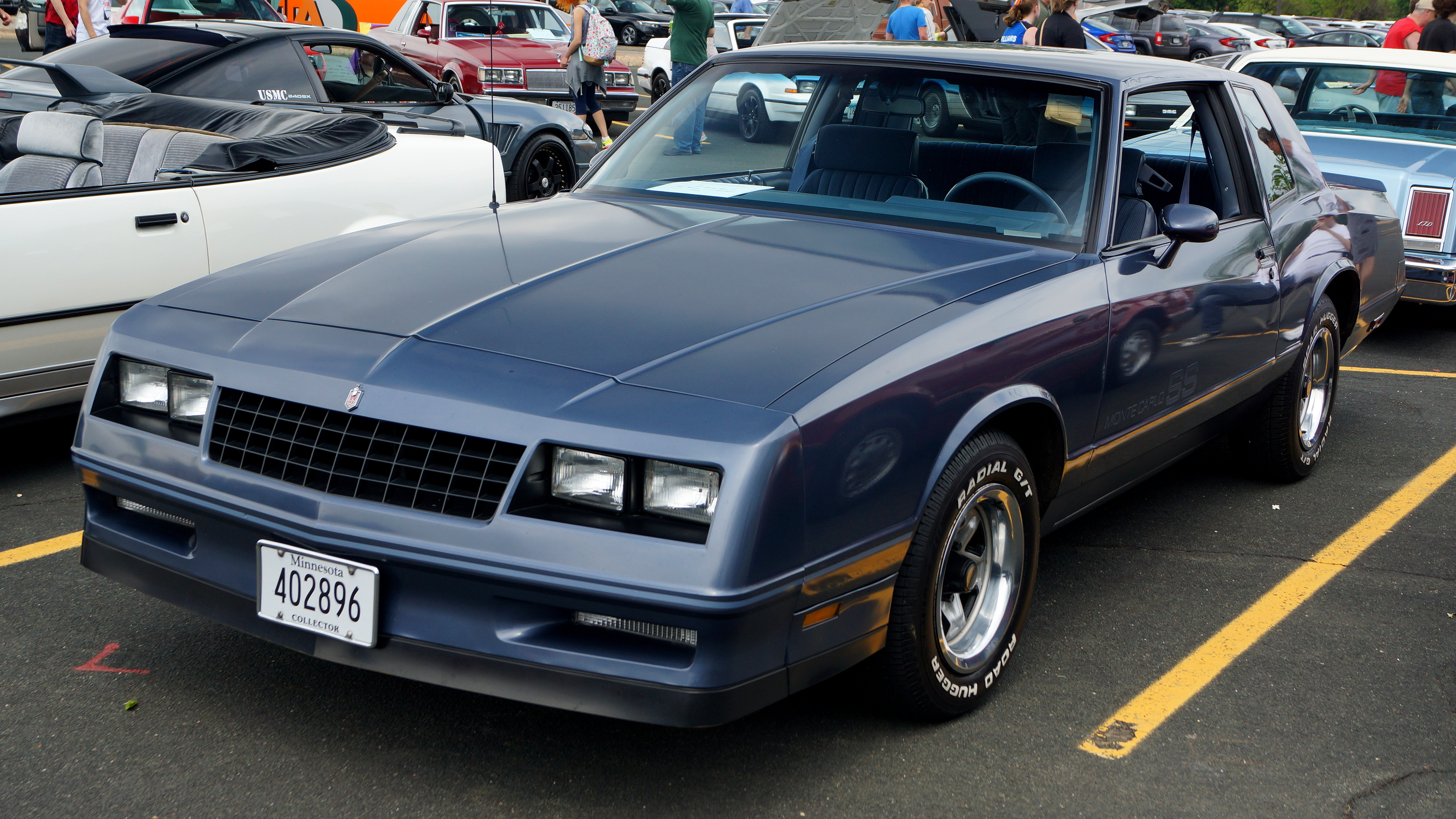
"...he's driving a Monte Carlo sometime ago, and he smashed up against the light pole. And I look at it and I said, why did you do that?..."
The Chevrolet Monte Carlo is a car that was made by Chevrolet. It's known for being stylish and having good performance, especially in earlier models.
The Chevrolet Monte Carlo is a mid-size car produced by Chevrolet, known for its sporty design and performance, especially in the 1970s and 1980s. It has been popular among car enthusiasts for its classic styling and V8 engine options.
Select text to request an explanation
Okay. So I know you've been wondering about this for years. Uh, it's something that it's
kind of like the elephant in the room. And I'm just going to go ahead and address it
right here, right now. And here it goes. What is a new car dealer with a twist, which is
me, you know, I'm one of those car dealers that tells you like it is. And also is a
podcaster radio show host for a show called my car guru. What does he keep around him in his office?
What kind of things if you just look around his office, what would what would you see?
You know, there's a lot of people that over the years, since I've been doing this for like 25 or
yeah, I remember the exact first show I did somewhere between 25 and 30 years ago. Okay.
That's a lot of talking. But anyway, so a lot of these people, they come down from the tri-cities
and we, we just have the best time. We, we meet each other face to face. And I've had several of
them say, Hey, just say a few words. So I know it's you. And so I do that. And then we all have a
laugh. And then they come back to my office and they go, Wow, this is a lot of stuff.
So I'm just going to tell you, if you haven't been here, let me give you an example. You ready?
Okay. So I look to the right. There's my dad's CB radio and a shortwave radio. Do I use them? No.
I just look at them. There's a autographs picture of Dale Earnhardt
at Daytona Motor Speedway. Matter of fact, I believe that's the wall that he hit when he died.
Isn't that depressing? There's also a valve cover right in front of Dale there.
It's a valve cover off of a 327 V8 out of a, what was it? 1967 Corvette. Yes, that is Office
Stay Core for a cargo route. Let's see what else does. Oh, there's a bicycle in my office.
It's not just any bicycle. It was my bicycle in 1968. My dad took me to, or my brother,
to John's Cyclery on Route 60 in St. August, West Virginia said, Boys, it's time. You've saved a
little money. Let's go buy some bikes. I was thrilled. I walked into the door and it was
like I heard angels singing because I saw this bicycle. It's red. It has a banana seat. It has
shock absorbers on the rear end of the banana seat. High rise handlebars and a gear shift right there
on the crossbar. It's called a apple crate. It was part of the Schwinn crate bikes. They had
orange crate, apple crate, lemon peel, one of them was called a lemon peeler. And I don't remember
all the different names, but yeah, it's in my office. Part of my decor. There's also a very tall
metal cabinet that I'm looking at. Used to be a key cabinet back in the 30s. It would be
something that you would, well, if you went to a gas station and you said, Hey, I need to cut a key
when they would walk up to this cabinet or one just like it and pull out a key blank and cut you a
new key. It probably had some type of lathe on it or something. So anyway, that's been completely
restored. Some of the metal sides have been knocked out and replaced with glass and it's got a bunch
of Tonka toys in it. Why would I have Tonka toys in my cabinet? Because I used to play with them.
I'm looking at one right now. It's a looks like about a 1965 international scout with a snow plow
on it. It's in the top position in this cabinet. Okay, I look to the left. I bet there's probably
500 brochures laying all over this table. These are brochures from the 50s all the way up through
the 70s. Part of a collection that I inherited. And this is just a sampling of it. There's also a
real to real tape player. You know what that is? Well, they used to use them. Well, this one was used
at the radio station at that's actually broadcasting this show. I went into the recording studio to
do some commercials one day. And I said, what do you do with those real to reals? Well, we don't
use them anymore. I said, well, I would love to buy one of those for my office for your office. Yeah,
I'd like to have one for my office. Why? Because I just like stuff like that. It's just something to
display. And I'd be willing to pay for it. Well, I go up there the next week and the real to real
is sitting in the front foyer, you know, where they greet customers at the radio station
and had a little sticky note on it and said for Lenny Lawson.
And so I went to the station manager and I said, how much dough? Yeah, and she said nothing.
Just take it and it's heavy and it's on display in my office. I've had customers come in and say,
what's that for? Do you play it? And I said, no. Well, what's it there for to look at?
You know, it just brings comfort. Okay, on top of the cabinet to the left is a motorcycle helmet.
That was my brother's motorcycle helmet. It's it's got stars and stripes on it.
It looks like the one from Easy Rider. You remember the movie Easy Rider? The chopper
that in the chopper had the red, white and blue flag on it. It was who was that Peter Fonda's
was a Peter Fonda? It was a Fonda. And my brother wanted that helmet when he well,
he used it to ride his 1970 Yamaha 125 Enduro that had a whopping 11 and a half horsepower.
Was it in my office? Same thing. It's a problem. And then the final thing, I mean,
there's a whole bunch more stuff, but I found a thing I mentioned to you. There's a little sign
here that is probably one of my most prized possessions. And it says Lawson's dress shop.
No, I didn't have a dress shop. My dad didn't have a dress shop. But his mom did.
It was in Ripley, West Virginia. And for a while in Princeton, West Virginia, when my dad moved down
there, she opened a dress shop down there, but she did that for many, many years. And this was a,
it looks like it's made out of brass. Somebody's mounted it on a piece of wood.
And I've got it in my cabinet, or not, I mean, in my bookcase here. And it's just another one of those
things that I like looking at. So, you know, from a recommendation standpoint, as if I am qualified
to make a recommendation, I like keeping things around me that means something to me behind me
is the TV cabinet for our first TV that we had when I lived in West Virginia. And it,
look, it's a piece of furniture. There's no TV in it anymore. No, my mom and dad could not throw it
away. So he took the TV out, threw it away, and turned it in into a cabinet, you know, to put,
right now it's just full of pictures. So I don't care how hard your family works on you
to try to force you to get rid of things that you love and that you surround yourself or surround
yourself with, but resist it. It's your stuff. It means something to you. It's none of their
business. When you die, it will become their problem. Until then, they need to mind their
own business. Okay, I'll be back in just one minute. Okay, I am back. You know, one of the
the functions of this office, my office is as a psychiatry office. I have to do a lot of
psychological counseling, you know, and sometimes it's with people who bought cars somewhere else
and, you know, they're trying to figure out how to get out of it, which most of the time they can't
and, you know, we investigate how they got into it and maybe learn some lessons from it
so that they don't do it again. But other times it's might be a friend, you know, to come in to
just shoot the breeze and talk and there's a lot of that, but many times it's an employee who's
struggling. And it's funny how so many of the excuses that I hear from these young people,
this particular person that I talked to the other day was 23 years old. Well, I went to college when
I was 17, graduated 21, got married at 21 and started running the entire service department,
body shop and parts department at my dad's dealership. Why did I get that job?
Probably because my dad owned the dealership. I mean, I'm not naive, but I was prepared.
You know, I paid bills. I bought a house. I didn't get any help. Nobody
cosigned for me or anything. I did it myself. And, but I'm telling you folks, you know, the
maturity levels of some of these younger people, I mean, I see it even up until their 30s. It's
like they have not, they don't have any real grasp of what reality is really like.
And that was kind of the case. I mean, the excuse that I heard, for example, of a technician the
other day, he's having a hard time getting to work on time. And my service manager wanted me to
talk to him. So I brought him in and we talked and I said, why can't you get to work on time? And
he said, well, you know, I set my alarm clock. Yeah. Okay. So when it goes off, what do you do?
He said, well, I just sometimes I just, I don't hear it. Or I, you know, turn it off and I'll
excuse us. Just keep going. You know, it's just like the dog ate my homework kind of a deal.
And then he turns around and says, I want to guarantee what do you want to guarantee you? I
want to guarantee that I'm going to make a certain amount of money. Now that this person happens to
be a mechanic that's like all the other other mechanics, they're paid on a plan we call flat
rate. And how is it determined? Well, like for every job that a car dealer can do to a car,
there is a book. It's really digital now, but it used to be a printed book. You open it up and
it's a labor time guide. And so if you had to replace an alternator, you look it up and right
there's how much time it takes and it may take longer to replace an alternator on one vehicle
than it does on another vehicle. Alternator is probably a bad choice. But, you know,
water pump, for example, some of them are internal to the front of the engine and some aren't, you
know, there's all different kinds of configurations. But for each different operation and for each
different making model, there's a certain amount of time. So it may, it may pay three hours to do
a particular job or eight hours, you know, to maybe replace the transmission, pull one output,
another one in. And so if they have eight flat rate hours, then you multiply that by their flat
rate pay rate, which may be $25 to $35 an hour, then that's how they get paid. And so if you're a
technician, you know, you want to have more flat rate hours than you have clock hours. You want to
generate, if you're a good technician, you will generate probably 110% in flat rate hours of your
clock time. And that's how really good technicians make big money. I had one the other, well,
last week, one of my technician was 172% of clock time. I mean, and I went back and talked to him
when I saw that and I said, how'd you do this? He said, man, I just work. I just work hard and he
has no comebacks. So it's not like he's going really fast and doing lousy work. No, he does really
good work. And I am so glad to have him. But this other guy won't show up to work on time,
doesn't have the best attitude, fusses a lot, complains a lot, wants a guarantee.
And I'm sorry, but that's not how you get one. You know, the work, doesn't the work need to come
first, doesn't the production need to come first before you get a guarantee. You know, a lot of
people say, well, I work harder if they pay me more. No, you won't. You won't work any harder
than you're working now. You may for a day or two, but no, the only people that I know of,
well, the only type of jobs I know of where people should and many do work harder because of a
pay plan are the people that are on commission. You know, like a salesperson, for example,
new car salesperson, they start every month at zero. They have no idea what they're going to
make in the given month. And many times their pay plans are based on the number of cars that they
sell. It could be specific vehicles that the dealership is pushing because of age or, you know,
because they have too many of a particular model, they may pay more flat commission on those particular
vehicles or salespeople are paid on a percentage of the profit that's made on the vehicle.
And typically that's anywhere from 25 to 35% of the gross profit made on the vehicle.
That will be their commission. So basically they're incentivized two ways. Number one,
they need to sell more cars and the cars that they sell, they want them to be profitable. But
that's harder and harder now than it used to be because of just how competitive it is because
of the internet, because of the pricing that's available online. I mean, if you want to be competitive,
you've got to find out what your competitors are pricing their vehicles for and be at or below them.
And that's really tough when a salesperson greets a customer and they've been shopping
all over the place and they come in and said, you know, if you don't beat this price, I'm going
somewhere else. And the salesperson, especially an inexperienced salesperson is just dumbfounded.
They just don't know what to say. And what they really need to do is say, that's great,
Mr. Customer. I am glad you've done a lot of research. Now my job will be to help you
choose the right vehicle, one that you like that you feel comfortable with and we can test drive
some different things. And then I'm sure that we'll be able to get together on price. Doesn't
helpful. You know, you don't just immediately take a customer to the vehicle that they were
interested in, pull it out and bill it out, you know, and take their money. It just doesn't work
that way. I wish it was really, you know, it's kind of like going to Ingalls, you know, to a
grocery store, Kroger, whatever, and just going, you need bread, you go to the bread aisle, you
grab a loaf of bread, you go up and pay for it. You know, that's, that's not what this business is.
And I don't even know that it should be because we're talking about, you know, average selling
price of right around $50,000 now and that's a big investment. The customer maybe have done,
have done a lot of research online, but they've never driven one. They don't know what it drives
like. They don't know what it rides like. That's the job of a, of a professional salesperson.
He doesn't have to be a professional negotiator. If he does a great job building value in the
product, building value in the dealership and making the people respect him. Would you rather
buy a car from somebody that you liked and respected? I mean, that's how I have over the
years gotten so much repeat and referral business is, you know, because the people like us and they
respect our business and they know we try hard. And even my best customers, you know, I might have
had them come in and we've done a repair and we messed it up or we didn't, they had to come back
a second time. I mean, they, they give us some grace because they, they understand that, that,
you know, we put in the effort and we treat them with respect. We give them a loaner car
and we apologize and we'll get it right. I mean, I've had people that had just lemons. I mean,
legitimate lemons. And usually those people will never darken your door again
because they blame you. They say they don't, but they blame you. And I have over the years,
it's much harder now to get a vehicle bought back, but over the years, I've been able to get a lot
of people, they're full money back from a manufacturer or at least get the manufacturer
to provide some trade assistance money to pay the difference so that they could get out of a bad car.
And so we put them into a different car and then four or five years later,
they're back and they're back because they trust us and they like us. And that's what,
that's what you want. Now, there's some people out there, you may be listening,
you say, I don't care. I don't need any more friends. I don't need to make friends
when somebody works at a car dealership. Yeah, you do because someday you're going to need them.
You know, your car is going to break. You're going to need another car. Wouldn't you just
like to be able to walk into a car dealership or drive into a car dealership and
look up and see a familiar face and feel that they're going to take good care of you. And even
if they do mess up, you know that they're going to make it right because if you don't know them
and they're strangers, then there's no emotional attachment. And if you go off on somebody,
like a service advisor or salesperson or whatever, and you create a scene,
they don't really want to help you. A lot of people don't. I mean, if somebody gets up in your
face and they're cussing and yelling and screaming in front of other customers and stuff, do you
really want to help them? Well, you have to. Well, no, you don't. You really don't. I mean,
if somebody is creating a big enough scene, I've thrown out several in my life. I had this one
guy, he was really upset and I said, sir, you're just going to have to leave. We didn't do anything
wrong. I don't know why you're so upset. So he storms out the dealership jumps in his car,
backs up and slams into a light pole, though he haven't a lot. And he comes running back in
there. He's really mad now. And he's looking for me. He said, what are you going to do about
my car? And I said, what do you mean? He said, come out here and look what happened. So I go
out there and look, and he smashed up and he's driving a Monte Carlo sometime ago, and he smashed
up against the light pole. And I look at it and I said, why did you do that? He said that light
poles should not be there. Folks at light pole was a good 50 feet from the back of the parking
place where he was. But apparently he was so mad he accelerated too much and missed the brake pedal
or something. He almost hit one of my vehicles. You know what that guy did? He sued me. He sued me.
He wanted me to give him a new car. I think it was $50,000 in mental anguish or whatever you call it.
And, you know, he was suing me. He wanted me to eliminate that pole. So I just called my attorney.
I said, this will be fun. I said, we need to go to court on this one. He said, okay. And he
studied the case. He said, yeah, you're right. This will be fun. So we went to court and went
before the judge and it was hilarious. He represented himself and he got blistered by my
attorney and the judge. And you know what? When it was all said and done, he walked over to me. He
said, well, no hard feelings. Can I come out and get my oil changed? I said, sure. Just watch out
for the light poles. I'll be back in just one minute.
Okay, I'm back. Yeah. So my office looks like a junkie museum. It's not junkie.
It's just a lot of stuff in it, but it's all things that I like. And it's a funny thing is that
the effect that it has on people to come to visit, whether they're trying to buy a car,
they have some kind of a problem, they enjoy it. And I do too. And I am very hopeful over time that
a lot of these young people to work for me now, that I will be a good example to them and be able
to help them really not make the same mistakes that I have seen so many times with other people.
If you can just get them to listen, get them to sit down and not just think that a, you know,
this is a business that go to work, they do their thing, they clock out, they go home.
They don't develop any kind of relationship. You know, it's really important not to just
have relationships with your customers and your friends and the people that you hang around with.
But the people that work for you, it's, it's got to be more than just a transactional relationship.
It's got to be personal. If you want them to stick around and you want them to value the workplace
and you don't want to have massive amounts of turnover, and that's a big problem in today's
society. Well, thanks for listening to this edition of My Car Guru. I know it's a little
different, but I think sometimes it's, it's okay to be different. If you need me, call me 423-552-2020.
If you need a copy of the My Car Guru guidebook, which is like gold, it'll save you a lot of gold.
Just send me your email address to my cell phone, 423-552-2020, or send me an email to
Lenny Lawson 2020 at gmail.com and I'll, I'll get you a copy really quickly, just in time for Christmas
and I'll see you next time.
Request an explanation for:
2 cars
2 cars featured
Request an Explanation
Heard something you'd like explained? We'll add it to this episode.
Sign in to request explanations for terms you heard.
Want to learn more?
Browse our glossary for plain-English explanations of automotive terms, jargon, and concepts.
See something that's not quite right? Our annotations are AI-generated and can sometimes miss the mark.
Click the flag icon on any annotation to suggest a correction.