Winning a road rally requires endurance, teamwork, and a reliable vehicle, as discussed by Andy and Mercedes Lilienthal, who recently completed the L-CAN 5000 rally. They share insights on navigating the challenges of long-distance driving, including unexpected obstacles like wildlife and weather conditions. The episode also covers their experience with the Honda Passport Trail Sport, which performed well in the rugged terrain. Additionally, NASCAR's latest race in Las Vegas is analyzed, highlighting key incidents, including a significant crash involving William Byron and Ty Dillon, which impacted Byron's championship hopes.
This week on the TTAC podcast we chat with married automotive journalists Mercedes and Andy Lilienthal about what it takes to win an Arctic road rally.
TTAC contributor Matthew Guy and I discuss paint guns (for your car, not paintball) and we dig into NASCAR's wild afternoon in Las Vegas.
We thank Mercedes and Andy for their time, and we also thank Matthew for his. We thank Matt Posky for editing.
Most of all, we thank you for listening. We'll see you next time!
"...discuss the Alcant 5000 rally, as well as how you can do a rallying yourself..."
Rallying is a type of car racing that happens on different types of roads, including dirt and gravel. Drivers race against the clock and often have to deal with tricky conditions.
Rallying is a form of motorsport where drivers compete on public or private roads in specially modified cars. It often involves a series of timed stages and can take place in various weather conditions and terrains.
"...NASCAR's playoffs continue to roll on as well..."
NASCAR playoffs are special races that happen at the end of the NASCAR season to find out who the best driver is. Only the top drivers get to compete in these important races.
The NASCAR playoffs are a series of races that determine the champion of the NASCAR Cup Series. Only the top drivers qualify for this elimination-style competition, which intensifies the racing as the season concludes.
"...that's why you should buy your next ride on eBay. See, eBay has got everything, from classics to trucks and imports..."
eBay is a website where you can buy and sell many things, including cars. They make sure sellers are trustworthy and help with payments and delivery.
eBay is an online marketplace that allows users to buy and sell a wide variety of items, including vehicles. It offers features like verified sellers and secure transactions to enhance buyer confidence.
"...you've worked in dealership environments before, so you've probably seen some of the larger facilities for repairing cars and fixing cars and stuff like that, right? Yeah, I've seen some body shop facilities and some paint base."
A body shop is a place where cars are fixed after accidents. They repair dents, scratches, and paint the car to make it look new again.
A body shop is a facility that specializes in repairing the bodywork of vehicles, including collision repairs, painting, and refinishing. They often have specialized equipment and trained technicians to handle various types of damage.
"...I brought the gun down to one of the body shop stores that I know, and just got them to have a look at it."
A paint gun is a tool that sprays paint onto cars or other surfaces. It helps to cover large areas quickly and evenly when painting.
A paint gun, also known as a spray gun, is a tool used to spray paint onto surfaces, commonly used in automotive painting. It atomizes the paint into a fine mist for an even application.
"...give me some fisheye killer, which is not something that I had done before. So it's pretty good. You know, a product like this is a pretty, it's not a cheap investment..."
Fisheye killer is a special product that helps fix paint problems on cars. Fisheye defects look like little bumps or holes in the paint, and this product helps prevent them from happening, making the paint job look better.
Fisheye killer is a product used in automotive painting to eliminate fisheye defects, which are small craters or dimples that can occur in the paint surface. These defects are often caused by contaminants like oil or silicone on the surface being painted. Using a fisheye killer helps to ensure a smooth and flawless finish.
"Or maybe worst of all, wait for hours at the DMV just to transfer the title."
The DMV is a place where you go to get your driver's license and register your car. It's known for being slow and having a lot of paperwork.
The DMV, or Department of Motor Vehicles, is a government agency responsible for vehicle registration and driver licensing, often associated with long wait times and paperwork.
"...Plus, you can finance insure and register your vehicle all in one place..."
Registration means officially signing up your car with the government so you can legally drive it. You usually get a license plate and have to pay a fee to do this.
Registration is the process of officially recording a vehicle with the appropriate government authority, which typically involves paying a fee and obtaining a license plate. It's necessary for legal driving on public roads.
"...Plus, you can finance insure and register your vehicle all in one place..."
Financing is when you borrow money to buy a car and then pay it back over time, usually with interest. It helps you afford a car without paying the full price upfront.
Financing refers to the process of obtaining funds to purchase a vehicle, typically through a loan or credit arrangement. It allows buyers to pay for their vehicle over time rather than all at once.
"...vehicles purchased on eBay are backed up by up to $100,000 in purchase protection. Thinking about selling your ride, secure purchase is being said simple too..."
Purchase protection is like a safety net for buyers. It helps ensure that if something goes wrong with the car you bought, you have some protection against losing your money.
Purchase protection refers to a guarantee that protects buyers against potential issues with their vehicle purchase, such as fraud or misrepresentation. In this context, it provides peace of mind for buyers when purchasing vehicles online.
"...st completed the L-CAN 5000 rally in a 2026 Honda Passport Trail Sport. Andy or Mercedes, can you go ahead a..."
The Honda Passport is a big car that can carry a lot of people and stuff, making it great for families. It's also built to handle rough roads, so you can take it on adventures.
The Honda Passport is a mid-size SUV that offers a spacious interior and strong off-road capabilities, making it a popular choice for families and adventure seekers alike. Its recent models have been designed with rugged features and modern technology, enhancing its appeal in the competitive SUV market.
"...every vehicle based competition is different. So some actually do have maps. Typically TSD or time speed distance rallies, as this is known, the LKN 5000 rally are precision based..."
A TSD rally is a car competition where drivers have to follow a set route while keeping to certain speeds and times. It's not just about racing fast; it's about being accurate with your timing and navigation.
TSD stands for Time-Speed-Distance, which is a type of rally competition where participants must navigate a course while adhering to specific time and speed requirements. It emphasizes precision and timing rather than outright speed.
"...TSD or time speed distance rallies, as this is known, the LKN 5000 rally are precision based..."
The LKN 5000 rally is a car event where drivers compete by following a route and trying to be as precise as possible with their timing. It's a fun challenge that tests both driving and navigation skills.
The LKN 5000 rally is a specific event that likely involves a series of timed stages where participants navigate using precision techniques. It's part of the broader category of TSD rallies, focusing on accuracy rather than speed.
"...when we did this the first time in 2020, we took our own vehicle, which is a JDM 1991 Mitsubishi Pajero turbo diesel. And as we were getting passed by everybody, because it makes about 99 horsepower at the crank..."
The Mitsubishi Pajero is a type of SUV that was built for driving off-road. The 1991 version has a diesel engine, which is good for fuel efficiency but has less power than many newer cars.
The Mitsubishi Pajero is a mid-size SUV known for its off-road capabilities and durability. The 1991 model features a turbo diesel engine, making it suitable for various terrains, though its power output is relatively low compared to modern vehicles.
"...the all wheel drive system worked very well. It had plenty of space, lots of cubby holes, which was great."
All-wheel drive means that all four wheels of a car can get power from the engine at the same time. This helps the car grip the road better, especially in bad weather or on rough terrain.
All-wheel drive (AWD) is a drivetrain system that provides power to all four wheels of a vehicle simultaneously, enhancing traction and stability, especially in adverse weather conditions or off-road situations.
"...it's a body on frame vehicle with solid axles and all that stuff. Well, we had some challenging road conditions..."
A body-on-frame vehicle is built with a strong frame that supports the body on top. This makes it tough and good for off-roading, like trucks and SUVs.
A body-on-frame vehicle is constructed with a separate body mounted on a rigid frame. This design is often used in trucks and SUVs, providing durability and the ability to handle off-road conditions effectively.
"...it's a body on frame vehicle with solid axles and all that stuff..."
Solid axles are strong parts of a vehicle that help the wheels move together. They are good for off-roading because they provide better grip and stability.
Solid axles are a type of axle design where the axle housing is a single piece, providing strength and durability. They are commonly found in off-road vehicles for better traction and stability.
"...that ground clearance and a four-wheel drive were extremely beneficial and they do an ice slalom..."
Four-wheel drive means that all four wheels of a vehicle get power from the engine at the same time. This helps the vehicle grip the road better, especially in bad weather or off-road.
Four-wheel drive (4WD) is a drivetrain system that provides power to all four wheels of a vehicle simultaneously. This enhances traction and control, especially in off-road or slippery conditions.
"...that ground clearance and a four-wheel drive were extremely beneficial..."
Ground clearance is how high a vehicle sits off the ground. More ground clearance means the vehicle can go over bumps and rough areas without getting stuck.
Ground clearance refers to the distance between the ground and the lowest point of a vehicle's body. Higher ground clearance allows vehicles to navigate over obstacles and rough terrain more easily.
"...they do an ice slalom on Great Slave Lake outside of Yellow Knife..."
An ice slalom is a race where cars drive on ice and try to go around cones. It shows how well the driver can control the car on slippery surfaces.
An ice slalom is a motorsport event where vehicles navigate a course marked by cones or flags on an icy surface. It tests a driver's skill and a vehicle's handling in slippery conditions.
"...Alkan 5000 is the longest road rally in North America. But it's by far not the only one. In fact, a lot of..."
The Alkan 5000 is a long car race in North America where drivers go on a tough journey. It's known for being very challenging and fun for people who love driving.
The Alkan 5000 is known as the longest road rally in North America, attracting participants who are eager to test their vehicles and driving skills over a challenging course. It often features a mix of terrains and conditions, making it a true test of endurance.
"...clubs for a time-speed distance rally. We have the Cascade Sports Car Club Geargrinders, which is the TSD club. So instead of doing 10 days and 5000 miles worth of time-speed distance rally..."
In a time-speed distance rally, drivers try to reach certain points on a route at specific times. It's like a timed race, but instead of speed, it's about being precise with your timing.
A time-speed distance (TSD) rally is a type of motorsport event where participants must navigate a course while maintaining a specific average speed. The goal is to arrive at checkpoints at predetermined times, making it a test of both driving skills and timing.
"...have a reliable car, have those three things I mentioned, power, ground clearance and comfort because it is a long, grueling rally..."
A reliable car is one that you can trust to work well without breaking down. This is important for events like rallies where you need your car to perform well.
A reliable car is one that is dependable and unlikely to break down during use. Reliability is crucial in motorsport events to ensure participants can complete the rally without mechanical issues.
"...this year in a Ford Maverick. And they had never done TSD rally before. And they were a force..."
The Ford Maverick is a small pickup truck that can also come with a hybrid engine, which means it uses both gas and electricity to run. It's known for being budget-friendly and good on gas.
The Ford Maverick is a compact pickup truck that offers a hybrid powertrain option, making it a versatile choice for various driving needs. It has gained popularity for its affordability and fuel efficiency.
"...But one thing that they didn't consider was they brought this... It was a front-wheel drive Maverick hybrid... But they were on the OE highway tires."
OE highway tires are the tires that come with a new car when you buy it. They're made for driving on regular roads and might not be the best for rough or off-road driving.
OE highway tires refer to Original Equipment tires that come installed on a vehicle from the manufacturer. These tires are typically designed for on-road use and may not perform well in off-road or rugged conditions.
"...e vehicle, and we've seen everything from vintage Mini Coupers, and that's crazy to us, a seven-inch tire and ha..."
The Mini Cooper is a tiny, cute car that's really fun to drive. It's popular because it's easy to park and has a unique style that many people love.
The Mini Cooper is a small, stylish car that has become a symbol of fun and individuality since its introduction in the 1960s. Known for its compact size and agile handling, it has a dedicated fan base and is often seen as a trendy choice for urban driving.
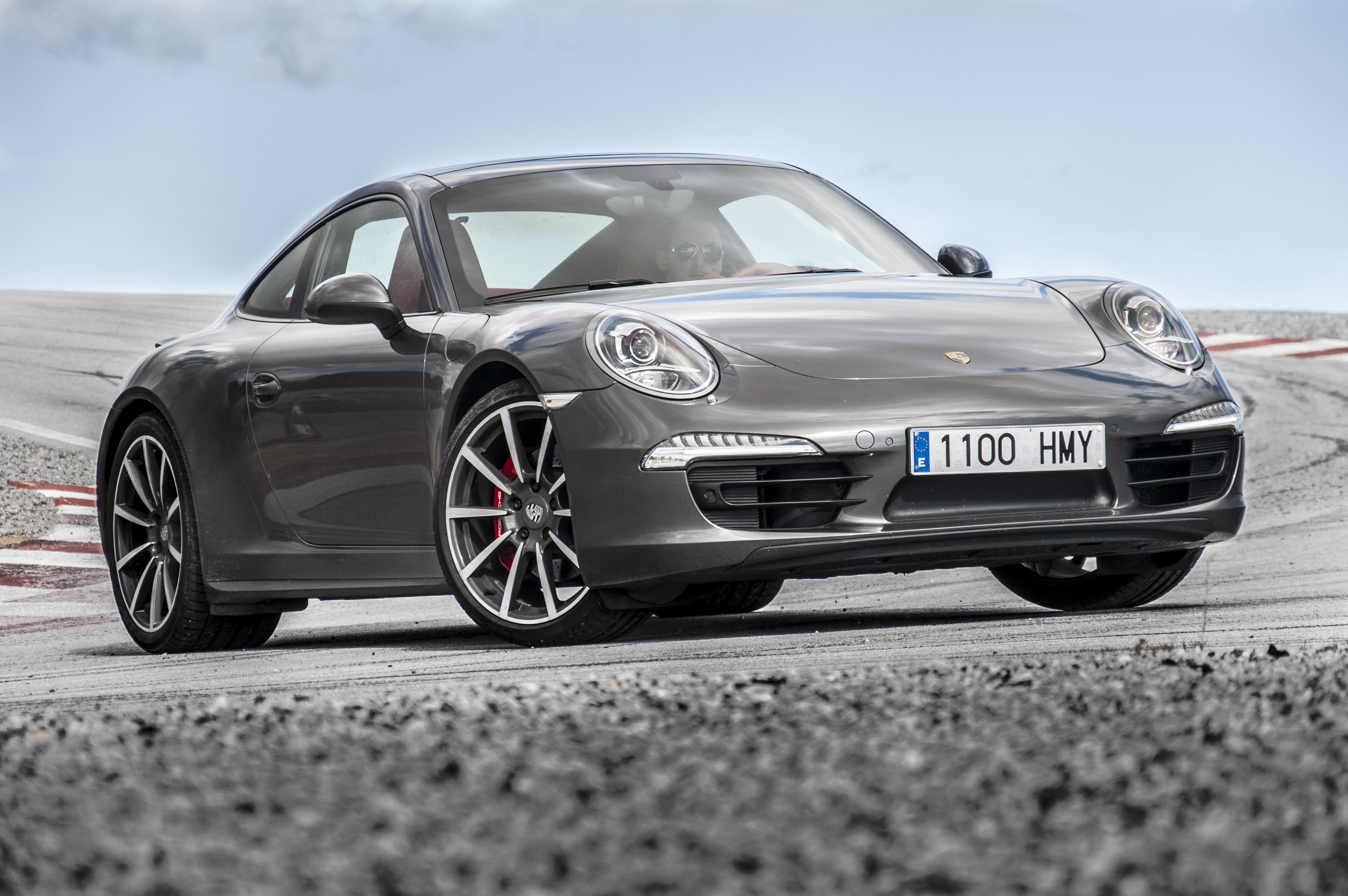
"... year we had a competitor in a very road oriented 911, Porsche 911. They were very nice people with a v..."
The Porsche 911 is a famous sports car that looks really cool and drives fast. It's known for being fun to drive and has been around for a long time, so many people love it.
The Porsche 911 is an iconic sports car known for its distinctive design and rear-engine layout. It has a rich history in motorsport and is celebrated for its performance and handling, making it a benchmark in the sports car segment.
"...between that point of the race and the checker flag. What happened was Byron had a good run..."
The checker flag is a special flag that tells drivers the race has finished. When they see it, they know to stop racing and slow down.
The checker flag is a flag used in auto racing to signal the end of a race. When the lead car crosses the finish line, the checker flag is waved to indicate that the race is over and all competitors must stop racing.
"I mean at Talladega Speedway he's won there I want to say three times"
Talladega Speedway is a big racetrack in Alabama where cars go really fast in NASCAR races. It's known for exciting races because of how the track is built.
Talladega Speedway is a famous NASCAR track located in Alabama, known for its high-speed races and large oval layout. It is one of the largest tracks in the NASCAR series and often features thrilling races due to its banking and length.
Select text to request an explanation
Hello, and welcome to the Truth about Cars podcast. I am Tim Ely, a managing editor, and this week
we discussed Pink Guns, NASCAR's Wild Weekend in Las Vegas, and what it's like to win an
Arctic rally race. We have Mercedes and Andy Lillianthal on to discuss the Alcant 5000
rally, as well as how you can do a rallying yourself. NASCAR's playoffs continue to
roll on as well. But first, buying a car should feel secure. Start to finish. That's
why you should buy your next ride on eBay. See, eBay has got everything, from
classics to trucks and imports. Now with secure purchase, sellers and titles are
verified, and financing, delivery, and insurance options are built right in.
Plus, eligible vehicle purchases are backed by up to $100,000 in protection.
So buy your next car on eBay. eBay, things people love.
Secure purchase is powered by Carmo dealer services LLC in eBay subsidiary.
If you like what you hear in the Truth about Cars podcast, please go ahead and leave us a review
and also check us out online at ttech.com, that's ttac.com, or the Truth about Cars
allspulledout.com, your home for car reviews, car news, and so so much more.
Here on the Truth about Cars podcast, we are always talking about the stuff that we use
in our homes and on our cars. And in our cars, as the case may be, we almost,
just about every time we do this, we have ttech contributor Matthew Guy with us. Matthew,
how are you doing today? Doing good, Tim. How are you doing today?
I am doing great. So let's go ahead and get started with,
you sent me a thing before we started recording on paint guns. Is that correct?
That's right. And it's something I am not a skilled painter by any stretch of the imagination.
Very, very basic, very, very amateur when it comes to, you know, painting anything
on my car. And I picked up this neat gun. It's from a company called InnoCraft, I-N-O-K-R-A-F-T,
and got it off eBay. And it turns out that this brand has, the brand was new to me,
but they have been making these guns for a while and they have a bunch of different ones. So I
chose something that was middle of the road. I know that sounds a little bit boring, right?
Instead of going bigger, going home. But the kit that I chose had three different nozzles in it
for spray patterns, right? For the as big as the fan is going to be, the fan of paint that comes
out. It had a pretty decently big bucket on top for gravity feeding some of the paint. And then,
of course, it's just sprayed out using air from my very basic air compressor. I don't
have a huge one in the corner like you would see in a big garage or anything like that.
But I really gravitated towards this one because it came with a lot of other features.
Had a little filter on it. It's got a little gauge out there so you can tell that if you're
still getting the appropriate amount of air to force the paint through the guns. And it
was really easy to use. I was really, really impressed by how easy it was to use by
someone like me who's basically got, you know, two two ham hocks for hands when it comes to
painting and doing bodywork, right? Yeah, yeah. Some people like myself just not very good at these
kind of things. Yeah. And I know that bodywork is a completely foreign animal to a lot of people,
me included. So I thought I would start off with this, you know, just to just to give it
a try. The whole thing it only I mean, it's a really solid gun. It's crafted of aluminum.
There's no plastic on any of the touch points or any of the connection points,
which was a big selling point for me. But the whole thing weighs about three and a half pounds. So
it feels a lot more expensive than it is there on eBay. You can pick it up easily for 100 bucks
or less. And I think that's a really, really good price point for someone who's just getting
into it or just trying because you can use this not just for cars, but you can use it for
stuff around the house. They say you can use it for lacquer. They say you can use it for
all kinds of different spraying jobs, if whether it's paint or clear or something like that. So
you know, just make sure you've got the correct. I'm learning a lot about viscosity, like the
thickness of the paint, fine tuning air pressure, right from the compressor. But this gun can take
up to 50 psi, which is a lot. And I haven't approached that yet. All I've done so far
is I've spray painted the spoiler for someone's car. And then I've practiced on some on some just
metal, you know, doors that I've got lying around, because what do you have lying around if you're
a gearhead other than random car parts, right? Right, right. So I don't know. I mean, if you've
done, you've worked in dealership environments before, so you've probably seen some of the
larger facilities for repairing cars and fixing cars and stuff like that, right?
Yeah, I've seen some body shop facilities and some paint base.
Yeah, so right. So I brought the gun down to one of the one of the body shop
stores that I know, and just got them to have a look at it. Right. So after I bought it,
I said, now guys, have a look at this. Tell me what you think, honest opinion,
and more of an indictment over what they use there. The gun wouldn't hook up to their air
supply. And that's more of an indictment of what they use, not the gun. But even the people who
do this for a living said, yeah, this is actually a pretty good gun for a hundred bucks,
right? Just because of the construction of it being aluminum, and they're not being too many
plastic, no plastic connection pieces, and then hardly any plastic into it at all. So I did
find it excelled and laying down a pretty, you know, pretty professional like coverage
of individual body panels and trim pieces and things like that. And then once I actually did
the spoiler, I had a bit more experience with the gun. I mean, the tool is only as good as the
person who's using it. So being able to move the gun back and forth smoothly and making sure you
can fine tune that viscosity. I'm learning a lot about viscosity, right? Making sure to
making sure to get that fine tune. So the process of painting really, really nails it down. And
as well, there's something called fisheye killer. That's a good thing. Yeah, fisheye is terrible
in paint. Oh, it's brutal, right? And I've learned about that as well. So now I confidently
walk into the body shop and hey, give me some fisheye killer, which is not something
that I had done before. So it's pretty good. You know, a product like this is a pretty,
it's not a cheap investment, but I mean, at $100 from a place like eBay, it's something that most
of us could either save up from a couple of paychecks or splash out on for a gift or something
like that. And I feel that it's a really good thing to add to my tool box or my weaponry,
you know, for working on cars. Yeah, $100 plus the one you sent me was $100 even
in American also shipping and handling as well. So keep that in mind folks. But yeah,
with that, is there anything else you want to add when it comes to these things, Matthew?
No, not at all, right? But just keep your expectations there for what it is and practice,
practice, practice with these types of things. Absolutely. All right. So with that, we'll
go ahead and wrap this week's stuff we use segment here on the Faithful Cars podcast.
eBay has reinvented vehicle buying from click to curb. Everything's covered. It's all thanks to
their new secure purchase. Ever try to buy a car and end up in a parking lot with a stranger and
some blind trust? Or spend half the day at a dealership talking to pushy sales people
and signing paperwork? Or maybe worst of all, wait for hours at the DMV just to transfer the title.
That air is over. For years, eBay has been the go-to for gearheads, collectors and DIYers.
Because whatever you're into from classics to SUVs and trucks to imports, eBay's got it.
And now with secure purchase, eBay isn't just where you find your next ride. It's where you
can buy it start to finish. Sellers and titles are verified, paperwork is handled by experts
and payments are traceable and digital. So you know exactly who you're dealing with and exactly
what you're getting. Plus, you can finance insure and register your vehicle all in one place.
No more hours at the dealership. No more trips to the DMV. Get your vehicle, plates and paperwork
shipped to your door, ready to drive. And it's all part of one seamless process designed
to feel as easy as buying anything else online. And eligible vehicles purchased on eBay are backed
up by up to $100,000 in purchase protection. Thinking about selling your ride, secure purchase
is being said simple too, because you know your buyer and their funds are verified.
If you still owe on your car, the finance and payoff is fully integrated,
so you're not chasing paperwork or waiting in checks to clear. And with secure purchase,
you get paid fast. And you're not going to be stuck chasing no shows or answering the fifth,
still available, message. This is what modern car buying looks like. Skip the DMV,
skip the sketchy meetups. Buy it on eBay. eBay. Things people love.
Secure purchase is powered by Carmo Dealer Services LLC in eBay subsidiary.
Here on this week's Truth About Cars podcast, we are talking with Mercedes and Andy Lilienthal,
a married couple who just drove and just completed the L-CAN 5000 rally in a 2026 Honda
Passport Trail Sport. Andy or Mercedes, can you go ahead and tell, first of all,
thank you for hopping on. And second of all, can you tell our listeners what it's like to
drive in a road rally across the Arctic? It's a lot of driving. So L-CAN 5000 starts
in Kirkland, Washington outside of Seattle and goes up to various points. But generally,
as far north as Alaska, sometimes up to the Arctic Ocean this year, went as far north as
we went as far north as the Arctic Circle in the Yukon Territories. And yeah, it's a lot
of endurance driving, a lot of long days. Yeah, what's it like being a married couple,
you know, that close quarters for that long? It can have its challenges. But for the most part,
you know, every L-CAN 5000 rally or every big long trip that we take, or even short ones,
we learn from each other. We fine tune what works well and we try to work on things
that don't really work so well. You know, whenever we partner up together with a vehicle
based competition, Andy usually drives and then I'm the navigator. If I partner with anybody else,
I usually drive because we're both automotive journalists. But yeah, I, you know, it can get
a little tense, especially during competition, but we work through, you know, the competitive part
as best as we can and have fun for the rest. And I should point out too that this is a 5000
mile this year was closer to 5500 miles. But it's not 100% competition. So you have
competitions in the morning and then sometimes a second competition in the afternoon. So each day
you're doing between an hour and maybe maximum two hours of competition a day. And then you have
600 miles to drive to the next stop. Okay, so it's not a full-on. Correct. Right. Yeah. So
Mercedes, you navigate when Andy's driving. What is it like to be a navigator? What does
that entail? It can't be just as simple as looking at a map. So what all are you doing other than
just telling Andy turn here and turn there? Yeah, that's a great question. Every vehicle based
competition is different. So some actually do have maps. Typically TSD or time speed distance
rallies, as this is known, the LKN 5000 rally are precision based. So people get root books.
So co-drivers or navigators get a root book. Some which have little what they call tulip
notes that have like a arrow saying turn left, turn right, railroad tracks, whatnot.
Some of them don't. And the LKN 5000 rally does not have that. But they basically have root
instructions, whether it's the competitive part of it or a transit, like Andy was alluding to
several hundred miles of just driving. But I as a navigator have to say, okay, in 62.9 miles,
turn left on highway 37, then go another 282.5 miles and then turn right here or things
like that. The competitive element adds speed as well. So you have to be perfectly on time,
perfectly on course, exactly as the rally master has it or early or late in your penalized points.
Yeah, you're actually just still my next question. So Mercedes, you've driven in these
events, Andy, you did the driving this time. What is it like to we all we all know in a
sense, but it's like, even if we never really race, we all know what's like to try and be
first to a finish line, even if even if our only racing has been doing go cars for fun.
But trying to hit it so you're not too early, trying to watch your speeds, you're not over
the speed limit. These are public roads. You're also, you know, you're trying to make sure that
if you arrive too early, like you said, you get a penalty. So as a driver,
how much stress does that put on you to just try and be not only not too slow, but also not too
fast? It's, it's pretty, I mean, there's a lot of stress, there's a lot of pressure.
And because it's on public roads, you also run into other traffic, trains, cows, livestock, sheep,
I mean, mud, you know, you just never know. And so, you know, all the checkpoints are invisible,
they're GPS and their GPS dropped, there's a pin and you don't know where they are, but
there's equations you can do, given the fact they give you the speed and the distance,
and you have to figure the time. So we're in a class called, in the Alkan called 2S, which is 2SOP.
SOP stands for seat of pants, because we don't run a calculator that tells us to slow down or
go faster. And then the two nomenclature is trucks and SUVs. Right. So there's one S,
there's 2S, and then there's one U, which is unlimited, and two U. And the U stands for
unlimited, meaning you can run a rally computer where you throw in the directions, and it's when
you're going, it tells you to go faster, go slower. And that's generally the most
accurate group, if you are a real diet dialed in your system. I should point out too that
the summer Alkan rally, it alternates summer, winter, the summer Alkan rally also includes
motorcycles. Okay. Now, even though it was summer this time around, did you encounter
any winter like conditions? This, we did not have any snow this year. Not that it couldn't
have, but we, we ran into pretty much everything but snow. Yeah, we had a lot of rain. We had some
mud, we had some unexpected flooding and cows in the middle of the road with one time speed
distance rally. That was fun. Yeah, a lot of dirt and gravel. Yeah, about 900 to 1,000 miles of
no pavement. And that's if you do all the rallies, optional extreme control routes,
which basically means if you want to go for everything, which typically that's what we do,
and we wanted to test the Honda in that manner too, that will add several hundred miles potentially
and a lot of it is dirt and gravel in very remote conditions. Right. So there's different
awards. You have your overall award, you know, for a second, third kind of thing, you're in,
you know, your class awards, but then they have these awards called like the Arctic award or
the go farther award. And, and those are achieved by doing these optional extreme control
routes like up to the Arctic Circle this year was one of them in the Yukon Territories. So there's a
variety of different awards achievements you can receive. Okay. Yeah. So how did the Honda put
itself? Yeah, the Honda ended up being a really, really good choice. When we did this the first
time in 2020, we took our own vehicle, which is a JDM 1991 Mitsubishi Pajero turbo diesel.
And as we were getting passed by everybody, because it makes about 99 horsepower at the
crank, we started thinking what, what would constitute a good Alkan vehicle? And we basically came up
with three basic things that an Alkan vehicle, we want an Alkan vehicle, and that's power,
ground clearance and comfort. And so the passport, trail sport had all of that. The all wheel
drive system worked very well. It had plenty of space, lots of cubby holes, which was great
to store water bottles, sunglasses, maps, GPS communicators, that kind of stuff. And yeah,
it had plenty of power to get around, you know, camper vans on the Alkan highway or Alaska highway
and get past, you know, logging trucks on back roads and all that kind of thing.
And it really good camera system to their trail watch camera system.
Yeah. So when you would be going slower or in the trail mode,
it's got a pretty big hood on it and the trail watch cameras work very well
off road or if you're in tights parking spots.
Can you explain to me and our listeners the challenge of, so you said the competitive
segment of the day was only an hour to two hours, so it doesn't seem like a lot,
but then you have to drive in slow conditions, six to 700 miles.
So you probably have days where you're driving 16 to 18 hours. Can you explain to me the
challenge of that, you know, staying awake, staying attention focused on the road,
making sure nothing breaks down, making sure you're hydrated, making sure you eat enough,
stop enough to use the restroom, that sort of thing, especially in the middle of nowhere.
Kind of walk me through the challenge of that.
Yeah, it's it becomes grueling, you know, it starts out, it's very fun.
The camaraderie is fantastic throughout the whole event, but yeah, we have 15, 16 hour drive days
and, you know, you're it's all at highway speed, so you're not going, you know, 150 miles an hour
anywhere. You know, you do have to make miles though, you know, as one of the competitors
says, don't dawdle, because there's a lot to see up there is national parks and state
provincial parks and wildlife and all kinds of things. And then, yeah, you're we jokingly
say the Alcan 5000 is part long distance driving part sleep deprivation, part
poor nutrition, because you sort of have to eat when you can. And a lot of time that means
gas station food or bringing along your beef jerky. And if you get in late,
you may just all the restaurants may be closed down.
You mentioned camaraderie in the event. So do you have a chance to really socialize with
with your competitor, excuse me, your competitors?
We do, yes. At night, if you're lucky enough to get in early enough,
you might be able to share a beer with them. They typically have a buddy car system
with radio comms, so that people that are paired next to each other. So every car typically leaves
in a minute apart. So for instance, this year, we were car number two. And so we have
a few buddy cars, maybe three or four different cars where we're connected with on it on
whatever radio station or radio station frequency that you want to say, hey, we need fuel or
we need to use our Jerry can or we're stopping for a bio raker whatnot. So people are always
together. So this isn't like a fully isolated thing. You usually have another competitor with you.
And then you can also call heads up like, hey, there's a long haul truck driver that's coming
a million miles an hour or there's somebody that's stuck that we need to help or assist with,
which has happened many times before, things like that. And then, yeah, it depends. There might
be other competitors that might have blown a tire or two, or just other people around
on the side of the road that we've helped in all those instances. The fact that matters,
you're with a bunch of crazy people who are willing to spend good money to drive on terrible roads
for 16 hours a day. And we love every bit of it. And so it's just fun. It's a bunch of
like minded people that way. Everybody's kind of interested in the travel aspect of it, also
into cars. And you sort of become bonded with these people too. We're friends with so many
people that we've done this with over the years. And I think that the best part,
one of the many best parts about this is it marries spending time with each other,
spending time traveling. Like Andy said, the gearhead aspect of it, but then also the challenge of it
and seeing new and cool different things. So for me, that's what always keeps bringing us back
for more. Yeah, for sure. Okay. So my next question is I'm going to go back a little bit.
You mentioned cows on the road and other obstacles. How do you deal with those? I'd
be out of the obvious. And then what was, were the cows the worst thing you saw,
or were there other obstacles this year that were more difficult?
Yeah. So as far as the timing question as concerned, and that's a really great question.
If you hit, not hit cows, but like if you hit a train that's all of a sudden passing and you
need to go and it's your time that you need to be driving or cows or herd of sheep or things,
there are what are called TAs or time allowances that you can take.
So rally computers and rally apps, the unlimited class have it a lot
easier in some of those respects because their computers tell them all the time if they're earlier
late or earlier late, we as in the seat of pants class don't have that luxury. So,
but everybody needs to take a time allowance and then figure out, okay,
you know, it's three minutes, 15 seconds. I'm going to put that into our little rally app that
is on the phone called the rick to app. And then hope that I gauged my kitchen timer right,
or some people have stopwatches. We literally use a kitchen timer. So if we come to a stop,
because like let's say, you know, if you can, one of the grueling parts of TSD rally is the need
to focus on multiple things at one time. And so, you know, we're on course, let's say the average
speed is say 32 miles an hour. And we're going through and you come around the corner and there's
a flooded road with cows standing in it. Now, you know, if you can think about it quickly
enough, and you're going to come to a stop, you hit that kitchen timer, and then you hit
it again, once you're through that section to see, oh, okay, look, that took us exactly two
minutes and 32 seconds. And then you can add that and try to make up that time. So it's also
like, it's also, it could be called expert multitasking too. Very quick pace. That's the
thing is if I accidentally think I hit the kitchen timer button and didn't hit it right away
or all the way or something, then I'm off. Then I need to, we need to figure something
also really quick. Yeah, so it's a lot of moving parts, a lot of quickness. And hopefully not a
lot of fighting, not fighting, but like, oh my gosh, oh my gosh, you know, which happens sometimes.
So you guys came home the winner. So kind of explain to me if you haven't already. I don't
think you mentioned classes earlier, but I don't think I'm not quite sure if I caught the
entire thing. So how does that work? You won your class. And then also, what did you do
to win this year? Yeah, so we did win the two S class, the truck and SUV class in the SOP class.
Anyway, what did we do? Well, we actually won it last year too. This was kind of an odd year that
there was a makeup year. So last year was a winter one, 2024. And then they had this odd
2025 summer. So we won our class last year, driving it in Eos Grenadier. And this year,
we were able to repeat it in the Honda Passport Trail Sport. I think a lot of it had to do with
taking some of the lessons we learned in 2024 and applying those. And that meant really kind of
concentrating on what we're doing, making sure our math, making sure our math is right.
And then we took second overall too, which was incredible because usually it's the
unlimited classes, one, two, three, because of the rally computer. We were pretty, I would say,
unbelievably over the moon, the fact that we came in top three, top two without a computer. So
I think a lot of it is just keeping our eyes on the prize and staying as we say, staying
surgical and not getting wrapped up in it. Oh my God, there's cows in the road. What do we
do when you panic and you lose that focus? Well, we've been through all of that and we've
made a lot of mistakes and we've learned from them as many as we can from. There were a lot of great
new teams this year, both Moto Guys and also new teams, whether they had a car or they had a truck
or an SUV. And they were very passionate and eager to learn. And so a couple of them kept
on coming up and asking questions for us, which we're very humbled with. And if we didn't
know the answer, we put them in touch with Pete Schneider. For instance, Peter is an expert, expert,
multi-decade long rallyer and he finished and he took top overall. But yeah, we're very quick to
say what not to do because there were some things that took us multiple huge Alkan rallies to learn
and if we can help somebody else enjoy the sport more and quicker and have fun at it,
then hey, that's what the community is all about. Yeah, we jokingly say we'll
gladly help you until you start beating us. I think somebody called us too, so yeah.
How was the Ineos last year? The Ineos was surprisingly, actually surprisingly good.
Not that I didn't think it would be good, but you know, we all know the criticism of the
steering and you know, it's a body on frame vehicle with solid axles and all that stuff.
Well, we had some challenging road conditions in which that ground clearance and a four-wheel
drive were extremely beneficial and they do an ice slalom on Great Slave Lake outside of Yellow
Knife and the track had a lot of deep, rutted-out snow and the top three fastest times were all
body on frame four by fours and we took third overall. As a driver, I took third overall
ice slalom. And one thing that Andy may have forgotten to mention is when we did the Ineos
Grenadier, it was winter. It was a winter rally. So that was, you know, absolutely crazy winds,
you know, crazy cold temperatures and things like that. But you know, we drove the Ineos Grenadier
before Canada even got any of the vehicles and just as the very first units were starting to
be delivered in the United States. So we pretty much were the first competitors that have done
anything with it. Oh, very cool, very cool. So how do you get involved in something like this?
I mean, you guys have been doing this obviously, and I should have said this at the outside, but
I didn't. But anyway, T-Tac readers would know that you've written for the site a few times about
your off-road adventures. So you guys are not new to this. But let's say someone listening has
the money and the time to do this and they have a vehicle that that's equipped for it or they
can get a vehicle together. How did they get started? Yeah. So Alkan 5000 is the longest
road rally in North America. But it's by far not the only one. In fact, a lot of
areas around the country, especially on the coasts, have clubs for a time-speed distance
rally. We have the Cascade Sports Car Club Geargrinders, which is the TSD club. So instead of
doing 10 days and 5000 miles worth of time-speed distance rally, you're doing it on a Saturday
morning for maybe two hours and you might drive 150 miles. And then you have lunch together. And so
it's a really good way to get into the hobby or the motor sport or the sport. And you can do it in
pretty much any vehicle, too. Now, if you want to do the Alkan, which you totally can, it's
open to the public. They usually get a waiting list. But the things I would tell people are
have a reliable car, have those three things I mentioned, power, ground clearance and comfort
because it is a long, grueling rally. And just, you don't even have to know how to do TSD. They
have a class. They will teach you. There's plenty of people. Like, if you're good with math,
it's amazing. You can be really good. Good people can be their first... There was a team
this year in a Ford Maverick. And they had never done TSD rally before. And they were a force
to be reckoned with. We were like, holy crap, they're up and coming. We were concerned
about them overtaking us at points. But one thing that they didn't consider was they brought this...
It was a front-wheel drive Maverick hybrid, which is totally fine in almost all respect.
The only thing they brought was... But they were on the OE highway tires.
It spares, though. And they had three flats because we ran... We always run an all-terrain
tire. And... Picture Honda had witch tires. Well, it came... The car comes with the grabber
all-terrains. But we had no problems. But they had three flat tires. They had to change to and plug
one. So making sure that you've got good tires, make sure the vehicle is up for it, and just be
ready for adventure. Yeah. And then the biggest thing is, is getting back to the LKN 5000 rally,
it's not extremely expensive when you look at registration and things. I mean, there are some
competitions that are vehicular-based competitions that are tens of thousands of dollars.
I think 2026, the registration is open now. And I think it's like 4,200 or something like that.
And that includes almost all of your motel rooms. If you think about that, that's really very,
very inexpensive. And these half-day rallies or local rally TSD groups, you can just search
and Google. Many of them are like 20 bucks, 30 bucks. Bring what you got for a drive.
That's not bad at all. No, no, not at all. Aside from the entry fees for the race,
and you don't have to give me exact dollar figures if you don't want to,
or if you don't want to give away competitive secrets. But about how much money goes into,
and obviously you had an OEM vehicle this year, so you may have had some OEM support,
but how much money typically goes into prepping a vehicle,
at least prepping it enough that it'll survive the event.
Yeah, that's a good question. We're a totally unrepresentative example,
because we did have OE backing and we didn't modify the car other than a rally innovations
light bar and Baja Designs lights, and we partnered with them, and that vehicle was a prototype for
them, so they were able to put that on there. But I would say that you don't have to invest
a ton of money. You just need a reliable car and a good set of tires. I mean, really, that's it.
The winter one is a little bit different, because you're experiencing temperatures 40, 50,
below zero, so you need to have the gear and the car needs to be ready for those kind of conditions.
So you're going to spend more on a winter Alkan, but if you do a summer Alkan,
as long as you have a reliable vehicle, and we've seen everything from vintage
Mini Coupers, and that's crazy to us, a seven-inch tire and hardly any ground clearance.
I'd try it.
Yeah, but vintage Mini Coupers to Porsche 911.car. I mean, you get a little bit everything,
so just like I said, tires and reliability are very crucial.
And aftermarket lights really helped, especially in the winter and those really long drive days,
because there's a lot of big wildlife out there, from Kiribu to Moose to Bison to,
you name it, so I would also echo lights. Yeah, we didn't run aftermarket lights in 2024,
and we still made it happen, but it is nicer to have big lights up front.
Yeah.
What about safety gear? What is required and what would you recommend?
Yeah, that's a really good question. Do you want to?
Yeah, yeah, for safety gear, they require having a large, is it an ABC or a BC fire extinguisher,
triangles, for if you have to pull over, and water.
Everything needs to be strapped down and match it down. There is a tech inspection.
Right, yeah, and so they have other things too, like a first aid kit and making sure that all your
lights work and your horn works and stuff like that. So the gear is minimal as far as from a safety
standpoint, but yeah, well, and again, yeah, we already touched on this part, but you know,
radio communications, so.
You have to have that. You also have to have a GPS tracker in the vehicle.
Okay, so those are required. What do you recommend? Anything that is not part of that list?
Food.
Food? Yeah, yeah, plenty of snacks, you know, and protein stuff, because you don't have a chance
to really stop very quickly and, you know, you might need to take biobricks in the middle of
nowhere and or you might have a fuel station, but the fuel station that's, you know, 250 miles
around, you know, any given radius might be closed because they had a power outage
truth that's happened once before. So everybody has to bust out their jerry cans.
The summer doesn't require you to carry extra fuel. We do every year anyway,
and you should. The winter one does require you to bring at least five gallons of extra fuel.
Yeah, that makes sense. That makes sense. So I just have, if we have about five minutes left,
I have one or two more questions. So I just wanted to ask, and all the years you've
done the LKN or some of these other events, especially in these really remote areas,
what's the weirdest thing you've seen, whether it's wildlife or
near 24 hour day or a vehicle that shouldn't be in one of those roads,
maybe a car that you see a Lamborghini in these gravel roads or something. I don't know.
What's the craziest thing you've seen?
I know, we've had it quite a bit. We saw in 2020, we encountered a wolf on them in the
middle of the river, which was incredible. We had heard it on the road. We had heard it
on the radio that there was a wolf like, I don't know, 10 miles north of Eagle Plains.
And by I thought, well, by the time we get there, we won't be there. It was still there.
And we almost threw the Pajero into the ditch, come to midway.
Well, they're coming around to bend and all of a sudden, oh, it was right there.
Yeah. So that was, that was crazy. We've seen incredible Northern Lights, which was crazy.
This year we had a competitor in a very road oriented 911, Porsche 911. They were
very nice people with a very wrong set of tires. And in fact, they got,
they were carrying zero spare tires. We always carry at least one, if not two full size spares.
And they got flats and they had no spare tires. And they ended up stranded in Prince George,
British Columbia for four days as they awaited those specialized tires from 911.
Yeah. I'm not sure if they realized how much gravel and dirt there really was up in these
roads. And so for me, I agree with all Andy's sentiments, but some of the vehicles that
you do see up there. It's amazing that some of these people can see through their wind screen
still up front because it, some of them are just decimated because of all the rock chips and
the splinters and the cracks and everything. But that's just a part of life up there. And,
you know, for the Honda, we only had one, one kind of puncture, but there was no crack.
All the rest of them, all the other three times, they all were cracked.
I would also say that I think the, it's less about the crazy things we've seen up there
versus the crazy experiences you have. Like we drove hundreds of miles on the ice roads up in
Northwest Territories, Yukon Territories. You just, it's stuff like that that you just
can't experience down here. There's all these things that you just don't get to experience.
Well, and the one big thing that we have left out so far is the mummified toe that must
cut your lips with a sour tow cocktail. So if you know, you know.
Yeah. Sour tow cocktail in Dawson City. Yeah, that's it.
Look it up. I will, I will. If our listeners say down here is in the states, you guys are in the
Portland area, right? Correct. Yes, Portland, Oregon. Yeah, for sure. All right. So I think
with that, with that, unless you guys have anything you want to add, we'll go ahead and wrap
the segment up. Yeah. You can know, we did a lot of social media. So you can follow us at
Crancheff Culture, Instagram, Facebook, all the social medias. And yeah, it was a heck of an
experience. We appreciate your time letting us be on the show. Yeah, thanks for having us on your
show. Yeah, thanks for coming on. So with that, we've been chatting with Mercedes and Andy
Lilienthal, who just won their class in the LCon 5000 Rally in a 2026 Honda Passport Trail
Sport. So once again, Mercedes and Andy, thank you so much for your time. And to our
listeners, thank you for listening to the segment of the Truffaut Cars podcast. Thanks, guys. Thank you.
Ever try to buy a car in line and end up in a parking lot with a stranger, a paper title,
and some blind trust. With Secure Purchase in eBay, you don't have to. Secure Purchase means
sellers and titles are verified. Financing, covered. Registration, handled. Delivery, get your ride,
plates and paperwork shipped to you so you can skip the DMV and sketchy meetups.
Buy your next car in eBay. eBay, things people love. Secure Purchase is powered by Car
Modeler Services LLC in the eBay subsidiary. Here on the Truffaut Cars podcast, we're
always talking NASCAR just about every week, especially as we get deeper into playoff season
with just a few races left to go before the championship. And we already have a group of four
spot nailed. So, or a nab, I should say. So anyway, we always bring in T-Tech contributor,
Matthew Guy to talk NASCAR with us. Matthew, how are you doing? Hey, doing great. Just
coming down off of watching Las Vegas, I guess. Yeah. Yeah. So it was a very interesting race.
What to me stood out was that two of our championship contenders are top eight going
into this round that will narrow it down to four for the championship race. Two ran into problems
that are going to really make it hard for them to get back in. They still have time, a couple of races
left, but William Byron had a bad accident, which we'll get into in just a second. And then
everyone was okay that it was just, it looked pretty awful. And then Ryan Blading blew a tire
early on in the race and drove into the wall. And I don't think he was able to get back on
track. I don't recall seeing him get back on track. In fact, he was interviewed by the
care center. So my understanding is that NASCAR rules once you're out of the car,
you're done for the day. I believe it's correct. So I'm surprised he didn't get back in. Maybe
the damage was more extensive than we thought. Because sometimes you see a guy blow a tire, hit
the wall, and they pull the sheet metal off and get them back out there, but he didn't go
back out. So he must have done more damage. And I must have maybe missed it on the broadcast.
So if they said, and I missed it, that's my fault. But yeah, so Blading was out with
blown tire. And then Denny Hamlin comes home. The other big storyline comes home with his 60th
career win, which puts him, I think, number 10 on the all time list. And obviously secures him a
spot in the final four at Phoenix in a few weeks. So Matthew, what was your take on this race?
Yeah, you're right. I mean, it was had all of those, all of those issues, you know, for
some of our championship contenders, I mean, between Blading and the tire, you talked
about William Byron, who ran over Ty Dillon, the number 10 car at the opening of Pit Road.
And even Chase Elliott, I mean, the number nine car, they had a Pit Road penalty.
I forgot about that. Yeah, they never really recovered back into the top 10. They finished
18th, which is not a great day for them. So looking ahead to the other two races that
are in this round of the championship playoffs, that puts them in a bit of a hole to
going forward, especially with with Talladega coming up. I mean, Talladega is such a wild card.
I know that Chase does well there, but there's definitely anything can happen at Talladega.
Super speedway especially. Yeah. Right. I mean, and if you have two bad races in a row,
that can really put you behind the eight ball. But you talk about Danny Hamlin, right? I mean,
on one of our previous episodes, we talked about, you know, him getting to 60, we speculated
at the time that he would get his 60th win this year, and it did happen, right? So, and he talked
about, you know, his dad is not feeling well, right? So he dedicated the win to him,
gives him the first, Danny gives the number 11 team the first of the four spots in, you know,
NASCAR's so-called winner take all championship finale. So he's, and Hamlin's never won a cup,
right? Hamlin's never won a cup. I don't believe so. No, right. I mean, he's won Daytona,
three times, Daytona 500, right? He's a three-time Daytona 500 winner and arguably one of the,
you know, best drivers, active drivers, at least to not have a championship title under his belt. So
being locked into the final four right now for him with the structure that we do have, you know,
that bodes well for his, I think, performance for the next two races coming up. He doesn't
have to worry. And then we'll see what happens in Phoenix. So he was certainly, he was certainly
overcome. Usually he's pretty antagonistic when he wins talking about, you know, hey, I beat your
favorite driver and stuff like that. But he put that to one side, just talking about his dad,
stuff like that. So it was a good race overall, you know, and if anyone has been to the
Vegas track, it's your typical 1.5 mile track. But, you know, there's just always something about
Vegas, just even, right? Just even being there is something that's a little bit different than
going to a track in another market. So I enjoyed it. I thought it was a good,
I thought it was a really good, thought it was a really good race, especially with Hamlin
talking about his dad, you know, getting them into racing and taking them to the race track
when he was a kid and just financial sacrifices to keep it going and things like that. So
yeah, yeah, he normally, he said he normally gives the fans, I'm not sure we can say the word
because of different podcast platforms that host us. But he said the SHIT word and it was kind of
funny, you know, live TV, technically, it's well, I guess are on cable. So it doesn't
really matter. But then he said, you know, normally get the fans our time,
both my dad being in poor health. Now I'm a paraphrasing not saying what he said verbatim.
But he said, you know, with my dad being in poor health, I don't really feel like trolling today
in so many words. So he was in obviously, I also have to wonder, it's not his first child,
I don't think, but he did have another baby not too long ago, a few months, born a few
months ago. So they may still be weighing in his mind to the circle of life thing that,
you know, I have a newborn at home, and then my father is in poor condition. So there may
be some emotional weight there too. So, you know, Danny Hamlin, we've given him a hard
time in this podcast, but and I've had interactions with him where he was a little cold,
not mean, but like I told you once, at the Chicago Street races here, I said good morning to him,
and he either didn't hear me or just heard me didn't respond. But he, you know, he can be
kind of a cold fish sometimes, but he's a human. He's a human. He's got emotions. And I think
it was a big deal for him to win 60 puts himself in a nice spot to win the to win the whole
thing, depending on how the next few weeks goes, obviously, he can rest a little easy if
something should happen to go wrong between now and Phoenix and one of these upcoming races in
Talladega and I forget the other race. Martin'sville. Martin'sville, yeah. Because if I understand
it correctly, because he's because he's locked himself into a top four spot, a poor finisher,
then his next few races are not going to hurt him. A mechanical failure or a crash out,
not going to hurt him. At least not in terms of pointing to obviously could damage a good car
or whatever, but, you know, or do damage to him, then maybe his an injury doesn't
run as strong a performance of Phoenix. But in terms of standing points, he's safe if something
goes wrong. So that's that's huge. It was nice to see one of the top eight get the win and not
leave it open with two more races to go. You know, I don't have a problem with non-playoff guys
having a chance to win. But I really would have made things chaotic. And maybe maybe
would have made things more fun had a non-playoff driver took home the checkered in Vegas.
Or really, what I really wanted to talk to you, the one that stood out in my mind,
that the incident that stood out in my mind was the William Byron running into Ty Dillon.
So for those who didn't see the race or missed that part of it, if you did miss that part of it,
the broadcast did a very good job almost to the point of too much. They replayed it a lot
between that point of the race and the checker flag. What happened was Byron had a good run.
He was either in first or second at the time. I want to say he was at first. I think he
just made a nice pass on Hamlin or Hamlin just passed him. I can't recall top man,
but he was he was in a good spot and he was in the top top one or two positions and he was
he was rolling his car was fast and he was he didn't really have any traffic in front of him,
except for Dylan, who was going to get ready to pit and Dylan. It looked like he came
high off the corner, the final corner before the pits and maybe too high. I don't know if
he's coming in too hot or if he had a mechanical issue or just took a poor line. It's hard to tell
at that track, especially some of the camera angles, but he was a little high and he came down low and
I don't know if he got like I'll get to the miscommunication that happened in just a second.
So if you are aware of this listeners, I'm getting there, but he came low almost as if
he made a last second decision to pit and Byron had nowhere to go and didn't have time to slow
down and he's slammed into the back of him. It's like if you've ever been on the freeway
and a slow poke comes and you're going way too fast and a slow poke comes into your lane
and you don't have time to break it basically the same thing. So now if there wasn't miscommunication,
apparently spotters were telling each other that hey, so I think Dylan spotter and I don't
know the guy's name was telling Byron spotter hey he's going to pit and it was not relayed
to Byron. Maybe if it was Byron would have lifted it off the gas a little earlier,
tapped the brakes a little earlier, adjusted his line to go around. It didn't look like Dylan
waved. These drivers sometimes use an old school wave out the window even at 170 miles an hour
throw their hand out the window just to wave to the guy behind and let another pitting.
It didn't look like he pitted, excuse me, it didn't look like he waved in the
replay and he was so high in the track that it was even when you see the impact,
the spot where Byron's car hits Dylan's car, it seemed like he wasn't pitting.
He was really, really late and I think Michael McDowell took a penalty on that same thing earlier
in the race. So it was kind of a weird thing, a weird deal. Both drivers were fine. I think
John Hunter Nienetschek was also caught up in the wreck and as I understand it,
physically he was fine and I don't think it helped his race at all but he's usually a
backmarker anyway or a mid-pack guy at best. Not typically a competitor but
yeah. It was definitely a hard hit, one of the hardest ones that I've seen in my years
of watching NASCAR racing. One of the hardest car-to-car hits I've seen. I've seen some really
hard car-to-wall hits or cars upside down backflipping on a super speedway in a 10-car wreck.
That was one of the biggest car-to-car hits in a one car-to-one car wreck
that I've ever seen and it was really because one guy was slowing down to probably,
and I don't know the pit real speed limit at Vegas on top of my head. I also don't know exactly
what speed he'd be doing coming down there but he'd probably be doing 80 to 100 at that point
and Dylan that is and Byron's doing 170 or more. So he closed that gap awful fast and hit him awful
hard and thankfully both guys are okay but it definitely makes William Byron's championship
quest that much harder. It does and the closing speeds, you're exactly right, the closing
speeds there were yes sorry didn't you talk about you I think you're starting to say something.
No no no no and just the closing speeds are absolutely immense and you're 100 spot on when
you talk about not seeing whether Ty Dylan did wave or didn't wave far enough out you know
put his hand far enough at the window or whatever. Byron said you know that he never saw him
wave and he had no indication that he was pitting. No idea right so and he said obviously
I wouldn't have driven full speed into him so you know no one wants to do that. No one wants to
do that right so I mean like you said you're paying on the money because there's a couple of cars now
that are wadded up and then the you know now the bottom four drivers in the playoff standings
with two races remaining in this round you've got the 24 there who had that that had that
happened then Elliot there in the nine who had the trouble on pit road, Logano and Blaney
then who blew the tire and finished dead last so that's where you know these types of bad days
can put someone behind the A-ball pretty quick but like you said with this structure that we
have now for the playoffs if someone does have because Blaney has had a really really good run
I mean at Talladega Speedway he's won there I want to say three times
so if he goes into that with that confidence right I've got three I'm a three time winner
here and yes I consider myself to be in a must win situation you can bet he's going to
try to run as far as he can towards the front of the pack to make sure he doesn't get caught up
someone else's mistake so he talked about being optimistic he talked about being unhappy
with what happened the way he was leaving Vegas but we talked about being optimistic going into
Talladega and I think he's got right to be optimistic right he's had very good success
not just at Talladega but he's had decent success at at Martinsville too so I think that they can
show up at both of those tracks and bring the speed and try to overcome the hole they just
find themselves in right now I think they're being hard on themselves when they say overcome
the hole we put ourselves in he didn't purposely you know blow a tire so but they are in a
hole right now so I do think at least the next track he's got a really good chance of getting
himself back in the game yeah and so I don't like as I've said before in this podcast I don't
have a particular driver the root for against for the most part I mean sometimes Rowdy Butch can
can get on my nerves as a fan but my personal next with him I've been brief and fine but
just watching him race he can be kind of uh you know he's he's you know sometimes hosts of R2
we've talked about that before sometimes their driving styles are a little overly aggressive
but I don't root against them necessarily um so the reason I say that is because I feel a little
more bad for Byron I do for Blaney because with Blaney it's racing things break I don't care how
good your team is how good your car is bad luck will get you and not to even make a
vegas pond bad luck will get you in at any track and you can blow a tire and he may be a piece of
debris I can't remember if he had a piece of debris or it was just a tire war too quickly or whatever but
you know I feel more bad for Byron because that could have been avoided with better communication
between the spotters and with maybe away from Dylan or Dylan checking his mirrors and by the way
listeners if you don't know these NAS cars do have rearview mirrors I don't they don't have
side views because very dynamic to do ever use uh the drivers do check them uh so you know or spot are
communicating with Dylan to stay high or with Byron and maybe there wasn't a communication I didn't
catch uh I was listening to the broadcast or watching the broadcast to see if they would
replay anything if they did I missed it um you know I may have gone to the restroom or
something but like I uh I didn't catch any radio chatter so I don't know if there was any
radio chatter from one spotter to the to either Dylan or Byron because usually a spotter will tell
you and just to give a little bit of background most of our listeners understand this because
they're probably NASCAR fans but for the any new listeners or anyone who's picked up NASCAR
recently and still learning the sport spotters exist spot to me the three the two most important
people outside of the driver are the crew chief and the spotter and the spotters exist
and it's completely um completely illegal thing it's not cheating or anything spotters exist
to help drivers see you know the drivers have blind spots in the cars and not only that but they're
also looking forward most of the time so there might be a spotter can say hey someone's supposed to be
behind you or whatever if they're not checking their mirrors or if they haven't checked their
mirrors in a few seconds and spotters can see around corners in a way that the driver can't
you know spotter can see more of the track spotters obviously help guide drivers through
big accidents and say go high go low go left go right because spotters can see things
that drivers just can't you know even the best driver with the best vision and the best setup
has blind spots and that sort of thing or can't see around the next corner human vision is limited
so anyway a spotter saying to to Byron hey slow down you're going to hit Dylan or to Dylan
stay high Byron's coming up on you that would have been huge and I know there was supposed to
be some some sort of communication and some how wires got crossed and sounds like Byron's team
didn't get the message from Dylan's team that Dylan's team was going to pit that was the impression
that I got from the driver interviews after the wreck as well as what the sideline reporters or
in this case pit road reporters were coming up with as they talked to crew chiefs and others
involved in the in the incident so um that's why I feel more bad for Byron because that could
have been avoided a flat a blown tire it's hard to completely avoid and just it's unfortunate
it happened to Blaney when it did and as we said a few minutes ago he couldn't get back in the race
for whatever reason so that's unfortunate as well but it does happen I mean a blown engines happen
and sometimes it's not the driver's fault sometimes it just is it just sometimes it's
maybe the maybe the crew put the car together had something to do with the pit crew or maybe
no one did it just you know it just happens so with with Blaney it's bad luck and you
just kind of shake you had and you're like well you do have two more races to get to get into
a phoenix or get in the top four for phoenix and even if you don't win those extra races you
maybe get in on points Byron's going to have that same scenario he can win and get in or get
in on points and he may have more point let me actually check he may actually have more points
than Blaney because he's he lasted longer on the race but at the same time he could have
avoided the whole thing uh had there been better communication so that's why I'm a little
frustrated on his behalf because that did not need to happen yeah it was something
that was unlike Blaney's tire going down which was arguably out of their control what happened
was exactly what I was trying to say thank you yeah right then the 24 you make a really good
point that was absolutely within their control because um I like the way you put it that
you have the driver then the other two most important people being the crew chief and the
spotter because even you know others there's other popular you know the one of the popular
podcast door bumper clear that's that's the language that some drivers and spotters use right when
they are passing another car um they're at the door they're at the bumper and then they're
clear so it's those types of terminologies if anyone who's listening is new to NASCAR it's
those sorts of terminologies that allow drivers to see a lot more than they will be able to
around their car because um they've got a full face helmet on they've got the Hans device if you've
ever seen inside a model you really can't turn it on very much no right and the and the seat
also comes out around your head pretty pretty pretty far as well so they do and I like that you
said yes they do have mirrors on these things sometimes it feels like they don't use but they
do have mirrors on these things and you've got that you got that great big something I remember
years and years ago these steps and really really great big ones and before they started putting
some rules amongst these things they used to try different types of mirrors right so they'd have
like a big one or they'd have a little little one like a almost like you put on a on a trailer um
when when you're trying to spot a little spotter mirror just down in the corner of the window
stuff like that and there's those types of things that I always think is pretty cool
that um you know these drivers and these teams just try to try to work within and without all
the different rules that are in that NASCAR rule book and come up with something that makes either
a little bit safer just give them a little bit more of an advantage um when they're when they're
going around the track yeah and we have only a few minutes left so we'll go ahead and wrap it
because I really think the highlight of the race was the Byron incident and before I finish
where I finished my thought I was going to point out that Byron is in better shape point-wise
than Blaney Blaney is minus 31 on the cut line whereas Byron is minus 15 um excuse me and Byron
also has a stage win in the playoffs so Byron has a little bit easier road to that if he doesn't win
atel dago or martinsville he's a little bit easier road to the final four um or just go back to
what you said with mirrors I believe about half the cars now I believe it's drivers or team
choice uh some have camera just like some street cars now have review camera mirrors
usually it's more on luxury cars while they're starting to see it in
some mid-price family vehicles um as well as you and I both test OEM cars and we both have
probably experienced the camera mirror I I know I probably get into a car about three I'm sorry
about 30 percent of the time third of the time um that have the camera mirrors so in NASCAR
they are I forget what the number is I want to say it's similar between quarter and half but
but some of the teams have chosen to go camera mirrors and others are using
old-fashioned actual glass mirrors so I believe that's correct right Matthew yeah that sounds
about right those those stats sound about right because it's cool that they have the choice
to do that instead of being completely locked down and some drivers when they're looking at
the um I have expressed and I I fall to this as well um when I'm looking at one of those camera
mirrors because there's no depth there um I find it jarring first when I look at it I'm like oh it
just takes a minute to adjust because it's like definitely yeah so oh man that's great talking
about that type of stuff and I'll close out by saying this wouldn't it be something else if
Denny Hamlin gets his championship that's his first one but also the winner of the championship
would be the owner of one of the teams that's actively suing NASCAR
forgot about that we'll talk about that loss who we've we've been teasing it for half a year now
and we just haven't really had a chance to get into it partly because every time we talk about
it it changes before you get to that before we get to it but it's on our docket of off-season
topics we've been focusing on on-track action for most of the season um so we'll get into that
along with so the usual silly season stuff drivers changing teams like or people who need
rides like Daniel Suarez um you know maybe paint schemes which we've touched upon before there's new
stuff there there was new stuff this past weekend such as Kyle Larson's car um there's all sorts of
silly silly season stuff we can get into but that that loss would definitely be one of them
but I want to close this race this Las Vegas race but it's kind of reiterating how how
frustrated I feel how frustrated excuse me I feel for William Byron and again I'm not a
William Byron fan I don't know much about him other than briefly interviewing him at
the Chicago Street Race um I have no rooting interests one way or another didn't really care
who won the race uh but I do feel bad for any driver who is taken out by a miscommunication
like that and thankfully it was no injuries no serious injuries either him or Dylan because
if you haven't seen the wreck if you're listening to this you are either a hardcore fan
who missed the race and this time of year I understand it there's a million sports going
on as a football baseball hockey fan it's too much for me I haven't even watched my favorite hockey team
yet because their season started and I've got NASCAR and uh baseball and football and it's like
you know between our obligations to watch NASCAR for the podcast and just watching as a fan
and then also try to watch the other sports since I'm a little bit oversaturated so I understand
if some of you may have missed the race but if you if you did miss the race go on YouTube
go on NASCAR's website and see I think TBS probably has a replay on their site as well
go ahead and watch William Byron and Dylan and watch the replay of the hit
you'll see what happened it's pretty clear that Dylan got right down in front of Byron and Byron
just had no chance to slow down so it's it's a pretty rough um rough hit and you know again
congratulations to Denny Hammond as well all getting aside about Hamlin's trolling which
I've never thought was all that bad I think it's pretty light-hearted and pretty tongue-in-cheek
but all getting aside to Hamlin congratulations on 60 on being the top 10 list there's only one
other driver who's active um that was that might have actually been the other bush who
retired I meant I always get Kyle and Kurt mixed up so um either way I think I think Hamlin is
you know every other driver's been long retired so for in a couple cases it passed away so for
Hamlin to be on theirs is pretty awesome and we'll see if he gets the championship coming up
Matthew anything to add or should we go ahead and close her no that sounds good to me man
thank you for having me this week uh yeah thank you for jumping on as always and we will be talking
about uh Taladega next time this next time you hear this segment of the truth about cars podcast
so with that thank you for listening thank you Matthew for hopping on and we will go
ahead and finish our NASCAR segment here on the T-TAC podcast that's it for this week's
the truth about cars podcast I'm Tim Healy the managing editor and you can find us
wherever you get your podcast you can also find us at T-T-A-C dot com or the truth about cars
allspallout.com we thank Andy and Mercedes Alienthal and Matthew there for their time
and Matt Poskey for editing most of all we thank you for listening we'll see you next time
you
Request an explanation for:
6 cars
6 cars featured
Request an Explanation
Heard something you'd like explained? We'll add it to this episode.
Sign in to request explanations for terms you heard.
Want to learn more?
Browse our glossary for plain-English explanations of automotive terms, jargon, and concepts.
See something that's not quite right? Our annotations are AI-generated and can sometimes miss the mark.
Click the flag icon on any annotation to suggest a correction.