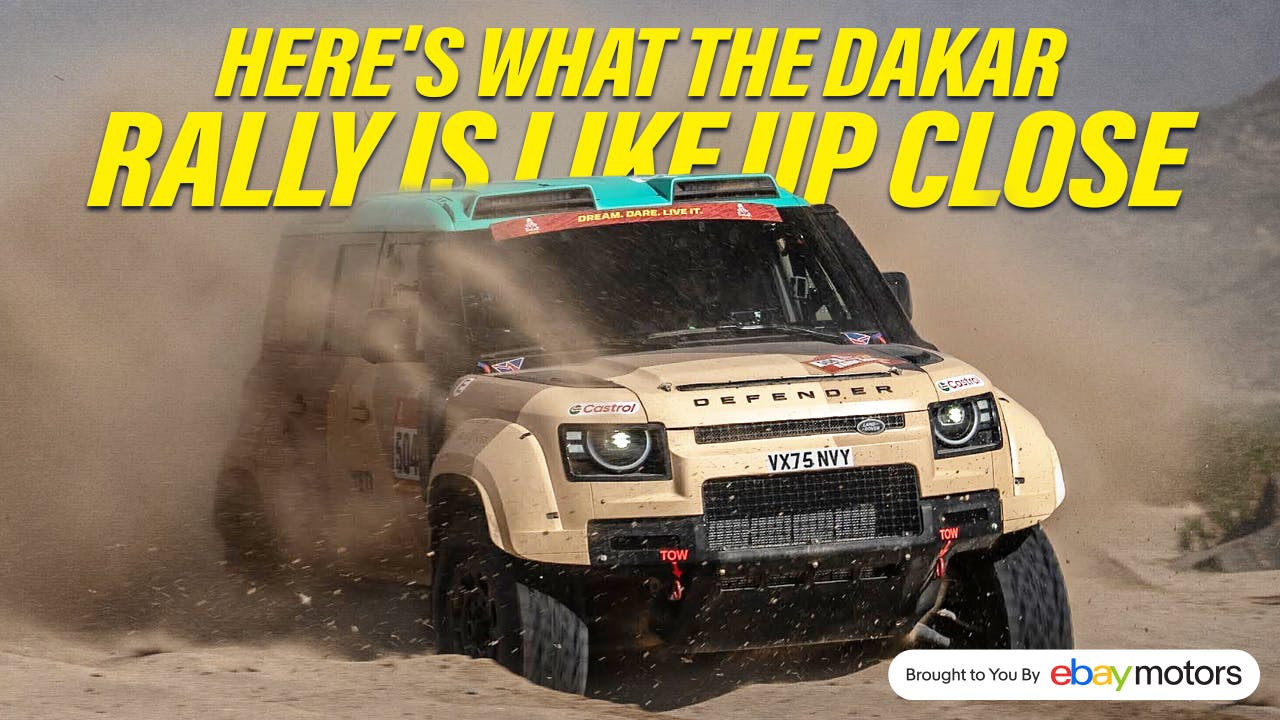
Journalist Mercedes Lillianthal shares her firsthand experience covering the Dakar Rally in Saudi Arabia, detailing the challenges of reporting in such a remote and demanding environment. She discusses the hospitality of the locals, the performance of Jaguar Land Rover's Defender teams, and the physical demands of chasing the rally across the desert. The episode also touches on the complexities of being an independent journalist while working with an OEM, the evolution of the Dakar Rally, and the unique aspects of the stock class competition. Insights into the event's history and its potential for greater recognition in North America are also explored.
Hello and welcome to The Truth About Cars Podcast! This week we chat with journalist and photographer Mercedes Lilienthal about the Dakar Rally.
TTAC contributor Matthew Guy and managing editor discuss winter sunglasses and the return of Tony “Smoke” Stewart to the world of NASCAR.
You can find us wherever you get your podcasts. You can also find us online at tee tee a cee dot com, that’s TTAC dot com, or at the truth about cars, all spelled out, dot com.
We thank Mercedes Lilienthal and Matthew Guy for their time and Matt Posky for editing. Most of all, we thank you for listening!
We’ll see you next time!
"...we chat with journalist and photographer Mercedes Lillianthal about the Dakar Rally. T-Tech contributor Matthew Guy and I discuss winter sunglasses and the return of Tony Smoke Stewart to the world of NASCAR."
The Dakar Rally is a famous race where drivers compete in tough off-road conditions. It includes different types of vehicles like cars and motorcycles, and it's known for being very challenging.
The Dakar Rally is an annual off-road endurance event, known for its challenging terrain and long distances. It typically features a variety of vehicles including cars, trucks, and motorcycles, and is held in various locations around the world, with recent editions taking place in Saudi Arabia.
"...From Toyota's to Aston Martin's, eBay has thousands of cars, and the largest online selection of vehicle parts and accessories."
Aston Martin is a luxury car brand from the UK, famous for making stylish and fast sports cars. They are often seen in movies, especially James Bond films.
Aston Martin is a luxury British sports car manufacturer, known for its high-performance vehicles and association with James Bond films. The brand emphasizes craftsmanship, performance, and style in its cars.
"...if there's a money tree that presents itself and we win a lottery, we would love to actually compete in the Dakar Classic Series. It's kind of a dream."
The Dakar Classic Series is a race for older cars that takes place in tough off-road conditions. It's like a big adventure for classic car lovers who want to see how their vehicles perform in challenging situations.
The Dakar Classic Series is a rally event that celebrates classic vehicles, allowing them to compete in a challenging off-road environment similar to the original Dakar Rally. It emphasizes adventure and endurance, attracting participants who appreciate vintage automotive engineering.
"...we would love to actually compete in the Dakar Classic Series. It's kind of a dream. We've got a Pajero sitting right behind us behind the wall here."
The Mitsubishi Pajero is a type of SUV that is great for driving off-road. It's built to handle rough terrains, making it a favorite for people who like adventure and outdoor activities.
The Mitsubishi Pajero is a mid-size SUV known for its off-road capabilities and durability. It has been popular in various markets for its ruggedness and versatility, making it a suitable choice for adventurous driving, including rally events.
"...to be able to go there on behalf of Jaguar Land Rover JLR, to see the..."
Jaguar Land Rover is a company that makes luxury cars, including the Jaguar sports cars and the Land Rover SUVs.
Jaguar Land Rover is a British multinational automotive company that designs, manufactures, and sells luxury vehicles under the Jaguar and Land Rover brands.
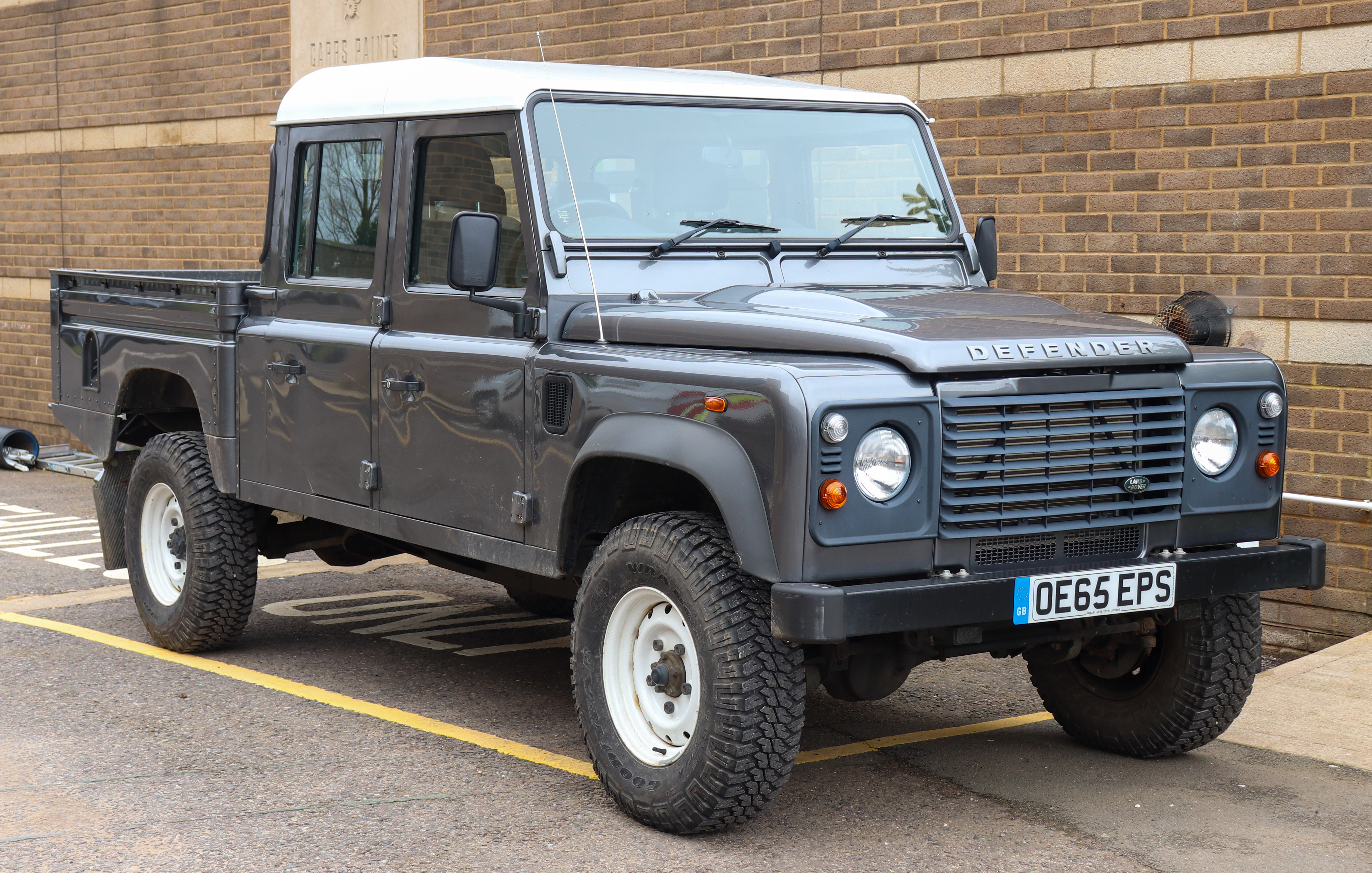
"...to see the Defender teams, there were three teams competing with their new D7XRs. That was just wonderful to..."
The Land Rover Defender D7X is a tough and capable SUV that can handle rough terrains and is often used for off-roading.
The Land Rover Defender D7X is a variant of the iconic Defender, known for its rugged off-road capabilities and modern technology, designed for both adventure and utility.
Car
Land Defenders
"... surrounding areas. So, you know, we drove stock defenders out into the desert and tried to catch them. You ..."
The Land Rover Defender is a tough car made for driving in rough places like deserts and mountains. It's famous for being able to handle tough conditions and is loved by people who enjoy outdoor adventures.
The Land Rover Defender is a rugged off-road vehicle known for its durability and capability in challenging terrains. It has a rich history dating back to the 1940s and is often celebrated for its iconic design and versatility, making it a popular choice for adventurers and outdoor enthusiasts.
"...any big rally, Baha, you know, 1000, any of those types of rallies..."
The Baja 1000 is a famous race in Mexico where vehicles drive over rough and sandy areas. It's known for being very difficult and exciting for both drivers and spectators.
The Baja 1000 is an off-road race held annually on the Baja California Peninsula in Mexico. It is known for its grueling course that includes a mix of desert, rocky terrain, and coastal roads, attracting a variety of vehicles and racers from around the world.
"...if they had tools, if they had consumables, if they had differential parts and spare engines and all those types of things, we had a really in-depth tour of all of that..."
Differential parts help the wheels of a car turn at different speeds, which is important when going around corners. They make driving smoother and safer.
Differential parts are components of a vehicle's drivetrain that allow the wheels to rotate at different speeds, especially important during turns. They help improve traction and handling.
"there were three privateer entries that had Nissan patrols."
The Nissan Patrol is a big SUV that is very good at driving off-road. It's used in tough races like the Dakar Rally because it can handle rough conditions.
The Nissan Patrol is a large SUV known for its off-road performance and rugged design. It is often used in challenging environments, making it a suitable choice for events like the Dakar Rally.
"...to be part of Dakar in this revamped stock class, they worked with them to update the regulations..."
The stock class is a type of racing where cars are mostly kept the same as they come from the factory, with only a few allowed changes.
The stock class in racing refers to vehicles that are built to remain close to their factory specifications, with limited modifications allowed to ensure fairness in competition.
"...we're going to compete this weekend up there with our personal Subaru, things like that..."
Subaru is a car brand from Japan that makes vehicles known for their ability to handle tough conditions, like snow and dirt. They are popular in rally racing.
Subaru is a Japanese automotive manufacturer known for its all-wheel-drive vehicles and performance-oriented models. They have a strong presence in rally racing, particularly with models like the Subaru WRX.
"Even if it isn't, like F1, obviously, when they race in other parts of the world, you can DVR it if it's overnight, or maybe it'll be casually shown on time delay, at least that was the case in the past."
Formula 1, or F1, is a top-level car racing series where drivers compete in fast cars on different tracks around the world. It's very popular and known for its exciting races and advanced technology.
Formula 1 (F1) is a premier international auto racing sport, known for its high-speed cars and prestigious races held worldwide. It features advanced technology and engineering, making it one of the most popular motorsports globally.
"the external body. But what they can do, they can update a lot of different things like the differential internals. You know, they replaced the OEM fuel tank that was normally a 90 liter in the octa, I believe, to a 550 liter fuel tank, which is massive. I mean, this thing is massive."
The Toyota Supra is a fast and stylish car that many people love for racing and customizing. It's known for being powerful and fun to drive, making it popular among car enthusiasts.
The Toyota Supra is a high-performance sports car that has gained a cult following due to its powerful engine and tuning potential. Known for its sleek design and impressive speed, the Supra is often discussed in the context of racing and car modifications.
"...they replaced the OEM fuel tank that was normally a 90 liter in the octa, I believe, to a 550 liter fuel tank, which is massive."
OEM means the original parts that come with the car when you buy it. An OEM fuel tank is the one that was designed and built by the car's manufacturer.
OEM stands for Original Equipment Manufacturer, referring to parts that are made by the vehicle's original manufacturer. In this context, the OEM fuel tank is the standard fuel tank that comes with the vehicle from the factory.
"...they replaced the OEM fuel tank that was normally a 90 liter in the octa, I believe, to a 550 liter fuel tank, which is massive."
A 550 liter fuel tank holds a lot of fuel, which means the vehicle can go further without needing to refuel. It's much bigger than the usual tanks.
A 550 liter fuel tank is a large capacity fuel tank that allows a vehicle to carry more fuel than standard tanks, which is beneficial for long-distance travel or off-road racing.
"...they carried three full size 35 inch BF Goodrich and 17 inch wheel spare tires in that vehicle."
BF Goodrich is a brand that makes tires, and 35 inches is how tall the tire is. Bigger tires help cars drive better on rough surfaces.
BF Goodrich is a well-known tire brand, and a 35-inch tire refers to the diameter of the tire. Larger tires like these are often used in off-road vehicles for better traction and ground clearance.
"You know, they have the same eight speed automatic gearbox as a production octa, but it ends up having a lower final drive ratio."
An eight-speed automatic gearbox helps the car change gears automatically, making driving easier and often improving fuel economy.
An eight-speed automatic gearbox is a type of transmission that can automatically change gears in a vehicle, offering eight different gear ratios. This allows for smoother acceleration and improved fuel efficiency compared to transmissions with fewer gears.
"...they had a bespoke rally rally spec braking system with vented discs, you know, six, six pin piston front and rear or six pistons in the front, I believe, and four piston real rear calipers..."
A bespoke rally braking system is a special type of brake setup made just for rally cars, allowing them to stop quickly and safely on rough terrain.
A bespoke rally braking system is a custom-designed braking system specifically engineered for rally racing. It often includes features like vented discs and high-performance calipers to handle the extreme conditions of rally stages.
"...with vented discs, you know, six, six pin piston front and rear or six pistons in the front, I believe, and four piston real rear calipers..."
Vented discs are special brake parts that help cool down the brakes, making them work better and last longer, especially during hard driving.
Vented discs are a type of brake disc that has internal ventilation to help dissipate heat. This design improves braking performance and reduces the risk of brake fade during heavy use.
"...four piston real rear calipers, you know, hydraulic jacks to raise either side of it if they had a flat tire, if they needed to service the vehicle in the field."
Hydraulic jacks are tools that help lift cars up easily, making it simpler to change tires or fix problems when you're out on a rally.
Hydraulic jacks are tools that use hydraulic pressure to lift heavy objects, such as a vehicle. In rally cars, they are often used for quick tire changes or repairs in the field.
"... story of how you found it. Like this 1973 Dodge charger on eBay that has been tucked away in an Arizona b..."
The Dodge Charger is a big car that looks sporty and can go really fast. It's popular because it can be used for everyday driving but also has a lot of power for fun rides.
The Dodge Charger is a full-size sedan that combines muscle car performance with everyday practicality. Its bold design and powerful engine options have made it a staple in American automotive culture, often associated with speed and performance.
"...NASCAR has made a bunch of news this off season. And one of the things, we've talked about it a little bit on the podcast before..."
NASCAR is a type of car racing that takes place on circular tracks. It's very popular in the U.S. and involves cars that look like regular cars but are specially built for racing.
NASCAR, or the National Association for Stock Car Auto Racing, is a popular motorsport organization in the United States known for its stock car racing events. It features a series of races held on oval tracks, with a strong emphasis on speed and strategy.
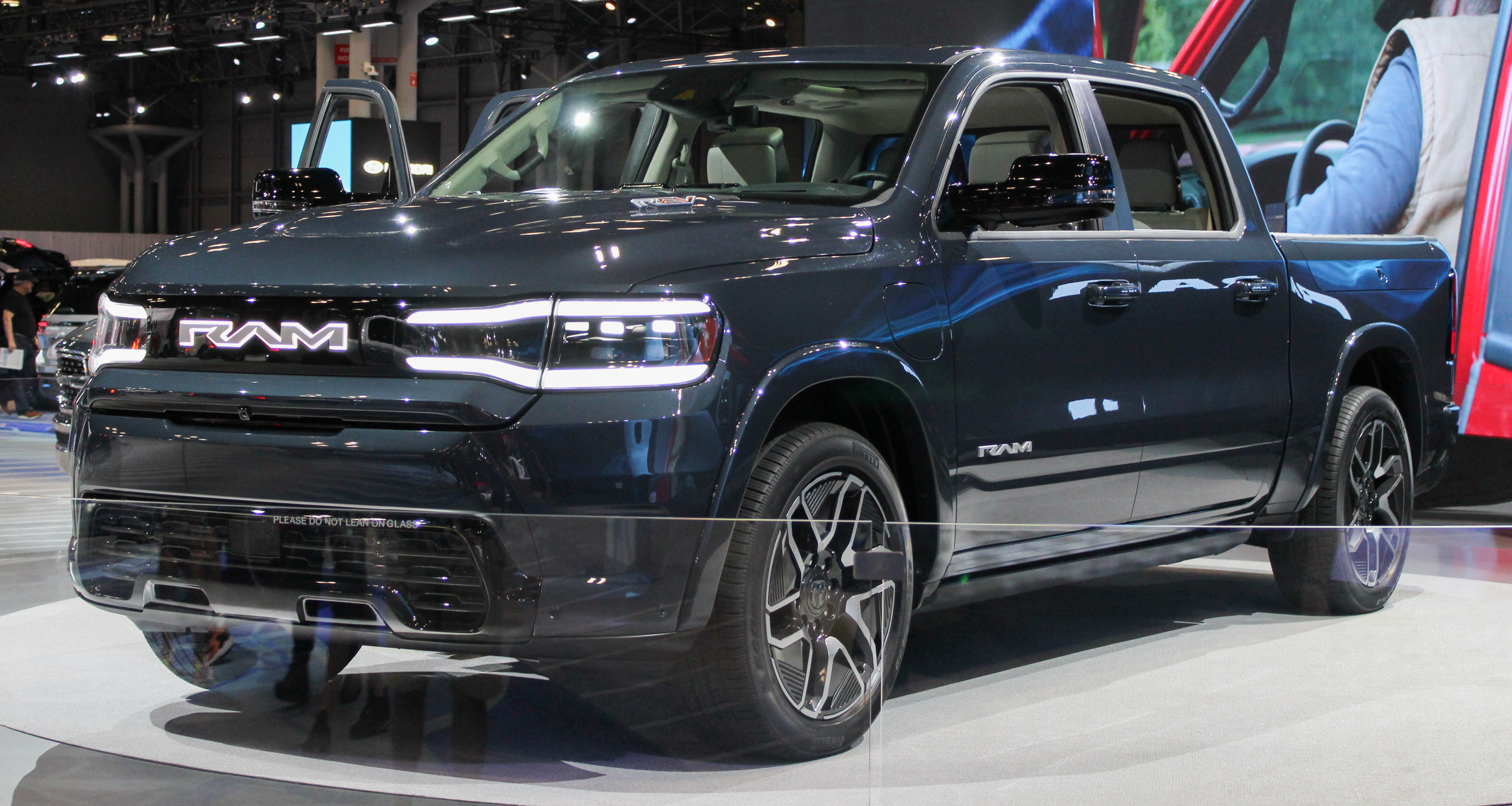
"...driving the truck series in the number 25 Colleague Racing Ram 1500 as Dodge returns to truck..."
The Ram 1500 is a type of truck that is big and powerful, often used for carrying heavy loads or towing. It's also comfortable for everyday driving.
The Ram 1500 is a full-size pickup truck known for its strong performance, comfort, and advanced technology features. It is popular for both work and personal use.
"...So what this partnership is, is it's going to have, Ram will have five full-time truck entries... the truck series is based on pickup trucks..."
The Truck Series is a racing series where pickup trucks compete against each other. It's part of NASCAR and has its own unique events.
The Truck Series is a part of NASCAR that features modified pickup trucks racing on various tracks. It showcases both established and up-and-coming drivers.
"...yway, Tony Stewart is now driving the 25 truck at Daytona. So obviously, Tony Stewart, one of the biggest ..."
The Chrysler Daytona is a cool-looking car from the 1980s that was made for speed. It's known for its unique shape and was popular in racing, making it an interesting part of car history.
The Chrysler Daytona is a sporty coupe that was produced in the 1980s, known for its aerodynamic design and performance-oriented features. It gained popularity in motorsports and is often discussed for its unique styling and place in automotive history.
"... the race. Yeah. I mean, it's such a huge get for Ram. And it's not unsurprising given Rams pensions f..."
The Dodge Ram is a big truck that can carry heavy loads and is great for work or outdoor activities. It's known for being strong and reliable, making it a favorite among truck lovers.
The Dodge Ram, now known as the Ram Truck, is a full-size pickup truck known for its strong performance and capability. It has been a popular choice for both work and recreation, offering a range of powerful engines and advanced features.
Select text to request an explanation
Hello, and welcome to the Truth About Cars podcast. I am Tim Healy, the managing editor,
and this week we chat with journalist and photographer Mercedes Lillianthal about the
Dakar Rally. T-Tech contributor Matthew Guy and I discuss winter sunglasses and the return
of Tony Smoke Stewart to the world of NASCAR. But first, a word from our sponsor eBay Motors.
This message comes from eBay. The worst part about loving cars might just be buying them,
and all the parts. From Toyota's to Aston Martin's, eBay has thousands of cars,
and the largest online selection of vehicle parts and accessories. eBay, things people love.
On today's Truth About Cars podcast, we're with Mercedes Lillianthal,
freelance journalist and photographer who just covered the Dakar Rally in Saudi Arabia.
Mercedes, how are you? I'm doing great. Thanks so much for having me on the show again, Tim.
Yes, you've been on before. You and your husband, Andy, had competed in the Elkhon 5000 in a once.
That was very interesting conversation. This will be a little bit different since you weren't
behind the wheel this time, but can you walk us through what it's like to go over to the Middle
East and cover off-road rally like this? Yes, it was a huge, huge bucket list of mine to cover
Dakar as a journalist. Heck, one day, if there's a money tree that presents itself and we win a
lottery, we would love to actually compete in the Dakar Classic Series. It's kind of a dream.
We've got a Pajero sitting right behind us behind the wall here. But to cover it as a reporter was
very interesting. I've never been to that part of the world before. Getting to the Middle East
took a bit of a doing. There were three different separate flights and multi-hour layovers and things
like that. But once I arrived, everyone was so hospitable and so kind and welcoming. It just
really was a treasure. To be able to go there on behalf of Jaguar Land Rover JLR, to see the
Defender teams, there were three teams competing with their new D7XRs. That was just wonderful to
see them in action and to see how well they were really doing. You said you were there on the
behalf of Jaguar Land Rover. Sometimes in the non-motor sports world, in the stick-and-ball
sports world, you have team coverage of games. The Chicago Bears, for example, have a reporter
that covers the team for their own website. Of course, you have reporters who work for
outlets that are not owned by the team. When you cover this for an OEM, how much are you also
doing that doesn't involve the OEM at all? How much freedom do you have to be critical of the OEM
or competitors? Are you working kind of more, are you kind of like being a little more public
relations for the OEM or sort of more, yeah, they're sponsoring you, but you're still on your own,
still independent? Right. Yeah, that's a really good question. I actually did not cover the
defender portion of the rally for them as internal, so to speak. I was an external
reporter. An external journalist, an external photographer. I bought my own equipment to do
everything in a lot of video as well with social media via Crenshaw culture. They hosted me,
but it was me as far as all the different coverage that I'm going to be doing via social media or
earned media. True journalist form with being unbiased no matter how things came about that I
got there, but yeah, it was really interesting. I mean, they did have some challenges with the
D7XRs a little bit earlier on when I was there for stage two and three, and they were very open
about it and seeing as this is their first foray into Dakar rally with those vehicles that are
based on the stock Akta. Yeah, so it's a bit like being in a pressure for us then. So Subaru or
Mercedes or whoever or Ford may host the truth about cars, but at the end of the day,
they're not telling me what to do, what to write, what to cover. It's up to me and I might even be
critical. So okay, I got, I got lay the land now. I wanted to kind of just clarify that because I
wasn't quite sure what that meant. So okay, yeah, so let's go then into the physical challenges of
covering. I've never covered an off-road race as a reporter. I've never driven a one. I've never
watched one as a fan. All the racing that I've seen, whether it was as a reporter or a fan,
I've never actually raced as a driver. Everything I've seen has been either a city street race,
like the NASCAR race that was in Chicago or a regular racetrack with seats like the Indian
apolis Speedway or something like that. So what is what is the physical challenge of, you know,
you're outdoors, I assume you're in the desert or something similarly remote, not in a city or town,
I'm sure. Yeah, I guess some things are kind of obvious, making sure you're staying hydrated and
probably walk a lot and stuff like that. But what are the physical challenges of covering
an event like this? Yeah, that's a really great question. And you have a lot more experience
with on-road and track stuff than I do, because I always find myself in the dirt and the dust. So
the physical challenge is great question. You know, we, as kind of a chase crew, so to speak,
with journalists, you're limited with, you know, timing and you don't necessarily know exactly when
teams are going to come through a certain checkpoint or, you know, come through the finish line or
things like that. They do have satellite trackers on each of these vehicles to see where they may be,
but timing is everything. And so getting out to the middle of the desert, you know, I flew in
through Riyadh and then Riyadh into Alula. And my time for stage two and stage three with the
WAC and going on course, so to speak, was all in Alula in the surrounding areas. So, you know,
we drove stock defenders out into the desert and tried to catch them. You know, we were out in
stage two, my first day actually covering that rally towards the finish line where they were
coming in and we just missed the defender teams coming through. We did have a chance to see some
SSV classes, some of the big man trucks, the T5 type class. Those are insane. Some of the
first experience with that. Mind you, I've got my cell phone, I've got my mic, I've got, you know,
my DSLR with my 200 lens. So I'm in full, you know, not full, but like usually I carry two lenses,
wide angle in my 200, but, you know, with being so minimal with kit, with camera kit especially,
I just took the one camera and one lens. So, but I have that on a harness so that if I needed to,
you know, whip up my camera and take quick photos, I can and then drop it down and take video with
my phone. And, you know, stage three was a bit easier when we went out there. We timed it perfectly
where we had a few minutes before the three defenders came through, but we also saw, you
know, ultimates coming through. We saw different classes coming through and it was really exciting
to see because that was a completely different area with kind of a secret viewing point that we
were at. And then I had a chance to drive as a woman in Saudi Arabia back over to the Bivouac
before we parted ways and I ended up taking a trip home. You mentioned driving as a woman in
Saudi Arabia. Is that still not allowed for, I thought it was now allowed? Yeah, it is allowed now.
As of June of 2018 is when they allowed it for women, yes, for women to drive. So,
Westerners, Saudi Arabians, anybody in the world now as a woman is now allowed to drive in the
country. So, that was, that was very interesting for me. You know, one, I've never been to this
region at all and I was very respectful of how I dressed and what I, you know, what I said,
how I appeared because I'm being very respectful to their culture. And then, you know, being a
driver, it was interesting when I ended up driving, I drove in the desert from the viewing point back
over to the Bivouac and in part of the city. And what was interesting is there were police
lined in every intersection and I wasn't 100% sure what was going on. I mean, obviously Dakar
rally, you know, any big rally, Baha, you know, 1000, any of those types of rallies, you have
police presence, you need to. But we got word that the prince was coming in unexpectedly. And so,
stage three was kind of, ah, you know, everybody was running around trying to figure out what to do
and I think they even changed course a little bit because he was being expected. And as a woman
driving past all of the police presence was just had really interesting feelings because of, you
know, hey, I'm here, it's legal, I know, you know, but it just made me think about how it was way
back when in 2018, when they first were allowed to start driving to set myself into that, even though
I'm a, you know, Westerner that I've been able to drive since, you know, early on, like everybody
else in the country was really, really fascinating. Okay, yeah. So then you also mentioned it took
three flights to get there. I assume it also took three flights to get home. Can you walk us
just briefly, don't to go too deep in detail, but just like what cities you had to connect in?
Yeah, so on the way there, so we were visiting family in the Midwest. So I flew out of Minneapolis
and then I had a layover in Dulles in the East Coast and then Dulles over to Riyadh and Riyadh
into Alula. And I think by the time I got to the place that I was staying was, I don't know,
one in the morning or something, somewhere around there. And then on the way back home,
we left Alula or I left Alula and then I had a very short overnight in Dubai. So that was my
first time in UAE. And then I had just a couple hours I stayed within a hotel within the terminal
because I literally had a few hours sleep, take a quick shower and then go from Dubai over to
where did I go? San Francisco and then went through customs there and back home to Portland,
Oregon, where I live. Okay. Yeah, it's a lot of travel. I mean, anytime you fly to the other side
of the world, it's going to be two or three flights, I think. Right, right. Yeah, I'm not sure what the
longest continuous flight in the world is right now. I think it might be like 20 hours to Australia
or something like that. But yeah, it's a lot of travel. So back to the race itself as opposed to
all the travel, what did you kind of see with Ford? I don't know how they wound up. I know there
was some talk when I was in Detroit for the Detroit Auto Show that Ford was really getting to win
because they'd never won this race before. And they were doing fairly well at the time. I don't
think they won, but I don't know that off top of my head. How did Ford end up doing it from what you
saw? That's a really good question. I saw some of the Fords come through on stage, stage three,
actually, but I didn't have a chance to really get to talk to them. I did pass their area in
Bivouac and took a couple photos of video and they had literally a whole entire city area that was
there. So it was interesting to see, but that was when everybody was out competing. And so
there were a few mechanics, but they were kind of holed up with their computers and whatnot. And
so I didn't have a chance to go in and actually talk to them in person. And same with Honda too,
with Hot Racing. But it was neat to see all the different teams that were there and then also
check out the Defender area of the Bivouac. They had so many different semis
and each semi had a role. So if they had tools, if they had consumables, if they had
differential parts and spare engines and all those types of things, we had a really in-depth
tour of all of that in addition to clean rooms and suspension bits. I mean, it was pretty incredible
to see how they did this as a newcomer to the Dakar in this fashion as Defender with their
D7XRs. And to see, I mean, they basically said we can rebuild an entire vehicle if we need to right
here. So yeah, it was really fascinating. I have a lot of coverage of it via Cranchev culture,
VR and social media. For me, I would love to just take one of those semis and plop that puppy,
you know, plop that puppy right on our property so I can use all the tools because, you know,
every person that was there, that was support. And I believe it was like 100 or 120 people,
it could be off. Every person had a role. Every vehicle had a role. They had different RVs for
like the drivers. They had rooftop tents that lined the tops of some of these semis for support crew.
They had a whole fleet of different defenders that had rooftop tents on those and support supplies
to and vehicle recovery supplies within those defenders so that more support staff can be there
and then be all on site. It was fascinating. My short time there was stage two and stage three.
I think they were up until about three in the morning making sure that all those vehicles were
ironed out, dialed in, and in tip-top shape for stage three.
Yeah, I want to talk to you about defenders specifically in just a moment, but
overall, you've touched on this already a little bit so I don't want to belabor the point too much,
but what was the OEM presence like you mentioned, Honda, Ford? Obviously, you were there on behalf
of Jaguar Land Rover. What is the OEM presence like in an event like this, which is one that
probably isn't well known outside the car enthusiast world?
Right, yeah. Dakar Rally has been going on for a really long time. It actually started as the Paris
Dakar Rally itself. It had a different name. It started in 1978, I believe it is. It usually is
right around Christmas time and it finished in 1979 at the beginning of January, but it's had
different places throughout the world, whether it's Africa, whether it's South America or now
since 2020, I believe, in Saudi Arabia. But as far as the vehicle manufacturers themselves,
with the stock class in particular, there were the three defenders, there were two factory-backed
Toyota Land Cruisers, and then there were three privateer entries that had Nissan patrols.
The stock class is really fascinating. If I may focus on that just for a second, because
it's revamped. FIA was updating the regulations with Defender to basically say,
now we've got different kinds of vehicles. They're not the same type of older style vehicles that
were running back in the day in 78, 80, that type of thing. They've changed a lot. In order to bring
companies like manufacturers like Toyota, Defender, maybe Ford would do the stock class.
Maybe not, I don't know, but other different manufacturers to be part of Dakar in this revamped
stock class, they worked with them to update the regulations. That to me was really fascinating.
Defenders send themselves, they said, we welcome more manufacturers. We welcome this to be a proving
ground for a vehicle that basically was built, the D7XRs was built off the same assembly line
in parts with the stock Octa. They had a lot of different upgrades and a lot of changes that
they were able to do, but they all had to stay compliant within the regulations.
Those regulations are really interesting. How you can change production-specific key things
such as engine and stuff like that, but you can still do a lot of other changes
to make it really ready and some upgrades as well. That's really interesting. What was the kind of,
I don't want to have you repeat what you've already touched on, but what was the kind of
spread over the different teams from mile to mile, I guess, to be the way to put it?
Oh gosh. Well, the T1 Ultimates are, I mean, they're nuts, and not nuts, if I came out wrong.
Absolutely insane as far as their capability and what they're able to do. You can pretty much do
anything. Again, I don't know what regulations can allow T1s to do what they can if there's
anything they can't do, but they're super fast. They're wicked. Everything's modified.
They're very, very quick. While I was there for the two stages that I was there, I had limited
time, so I focused mainly on the stock class because I wanted to understand that, of course,
to make sure that I had my coverage correct. In addition to the T1 Ultimates and all the
different classes, there's another facet within Dakar Rally, which is Dakar Classic. Now, they
run regularity rallies. If you haven't heard of that term, maybe you've heard of TSD rallies,
or Time Speed Distance Rally. Which is what Alkan was, which we talked about with you.
Exactly. This is like Alkan 5000. We're going to be going to Thunderbird Rally in Canada,
and in me, we're going to compete this weekend up there with our personal Subaru,
things like that. It's within the umbrella of Dakar Rally, but it's done a different way where
it's more regularity fashion, where you have to be perfectly on time, perfectly on course.
You can't really be very early or late. Those are all classic vehicles. I think that they have
another set of regulations that they need to follow up on and make sure that they're in
adherence with too. My next question is more overall, and this is probably something that's
not very easy for a reporter to answer. I'm going to try anyway. Dakar, like I said,
is not necessarily well-known outside of the car enthusiast or racing enthusiast,
not industry, you don't have the word looking for, but community, I guess, would be the word
looking for. I assume part of the reason is because it is a different part of the world and
probably difficult to televise in the proper time zones. It might be on TV, on delay,
then that's part of the problem. I'm not even quite sure if it is on TV. Even if it isn't,
like F1, obviously, when they race in other parts of the world, you can DVR it if it's
overnight, or maybe it'll be casually shown on time delay, at least that was the case in the past.
So, not you, but how does the organizing body or the people who run this rally,
how do they sort of, what can they do, especially in this year of 2026, where
everyone's information age is so fractured and so siloed and it's harder than ever for
one major event that's not the Super Bowl to break through. What can anyone do to really kind of
get Dakar to be on the same level as, if not the same level as Daytona 500 or Indy 500,
at least in the same level as, say, an F1 race that's going to draw some eyeballs on TV and on
the internet and on streaming? Yeah, that's a really great question. I think some people,
it's like out of sight, out of mind, they don't necessarily know what they see. Oh, okay, I see
a little bit of coverage on social media and they just flip through to the next thing. That's probably
where I'm at. Yeah, and as a reporter, this is my first time going over to Dakar personally and
having boots on the ground effort. I think in this type of an instance, there are, in North America,
but the US particularly, F1 obviously, NASCAR is absolutely huge. It's just like the Super Bowl,
right? I mean, American football versus soccer or cricket or things like that that are different
in other parts of the world, rugby, for instance. But I think the closest thing that we would
probably have would be the Baja 1000 that would be down in Mexico. I think for me, off-road racing
or off-road rally raid competitions, which is what the Dakar basically says, it's so fascinating
because there's every type of vehicle, there's every type of class, there's ages of vehicles.
I mean, heck, if you look at Mr. Dakar himself, Stefan Peter Hansel, he was part of the defender
team. He turned 60 years old. He was 60 and he's won 14 titles with Dakar himself. So,
you know, to be able to bring that story into the Americas in particular in North America and say,
hey, there is this very storied, long-lasting, you know, some controversy as far as, you know,
where it was in different nations, as far as, you know, some of the issues that they've had with
not terrorism, but, you know, just some issues that they had that they needed to change. In 2008,
they even canceled the rally. But there's a lot of history and there's a lot of guts and determination
and money and everything involved with this. It's just, and it's so electrifying to be there in
person and to see these vehicles take off, no matter if it's a really small vehicle or if it's a
huge man truck that's just blazing right past you in sand dunes, it's electrifying. I don't know if
any other word to be able to say it. It just sucks you right in right along with the dirt. And for me,
it's like off-road meets, you know, NASCAR meets, you know, the Super Bowl and it's all, you know,
conglomerated into one, one package. So for me, you know, I loved watching it from afar to be
able to see this in person and cover a couple of teams that were doing that and see the rest of
the vehicles and still highlight those. I mean, it really was just a memory of a lifetime. And I
hope to be able to do it again. And I hope more people see this rally raid, even the Dakar classics,
and go, oh, wow, okay, that's really interesting. I've never even heard of it. And so it's part of
my job to help bring rally as Andy and I do with timespeed distance rallies and highlight it more
in the United States and in North America, because it is such a unique, interesting, fun,
challenging type of type of event. Yeah, it seems like the only real, to me, and this is my opinion,
that to me, the best ways for this event to get more coverage in the United States would be to have
a time bill, a broadcast on a major network, such as ESPN or one of ESPN's offshoots,
something bigger than just like the Motor Trend Channel. No disrespect to the Motor Trend Channel,
but that channel is not being watched outside of enthusiasm, probably. And the other thing,
I think, too, would be a documentary on Netflix, something similar to Drive to Survive and F1
or something like that. So that's probably the best way to do it. But right now, I think,
you know, for me, I've always heard Dakar, I've never had a chance to really watch it. I've,
this past year, I caught a little bit of coverage in social media and passing just because
I follow enough car-related, enough automotive journalists, enough car-related pundits and
maybe even a few drivers or maybe someone else that I follow follows them and ends up in my feed.
You know, and obviously, I was with Ford at the Detroit Auto Show, so I talked, you know,
I heard Ford mention a little bit about how they were doing and maybe caught a few video clips
that the auto maker showed us. But I've never really had a chance to like, quote unquote,
watch this race or maybe back when I was younger, I may have read a few magazine features
in Car and Driver or something like that. But yeah, I'd like to see this race and other overseas
races that are not time zone friendly to the States to get a little more coverage. Now,
that being said, we're just, we're running out of time here, but I would like to, before we let you
go about your day, I'd like to hear from you on anything else from this event that you'd like
to talk about or what the defenders themselves that we haven't already touched on.
You know, I think touching a little bit more on the defender teams mentioning who they were
and how they placed throughout the whole entire 13 stage event would be important because those
are the ones that I focused on primarily. Sure. Walk us through that. Yeah, yeah. So the winners,
overall stock class winners of the entire 2026 stock car rally stock class was a 26 year old
Lithuanian driver. His name is Rakes and I hope I don't butcher this. Bachutska, I believe is how
you pronounce this last name. You know, I'm part Lithuanian, but it's such a small part of my family
and their name was easy. And their name was actually easy to pronounce. So I'm not any better
at it than you are. I apologize. I'm going to try and help you out with it. Yeah, but Bachutska is
my closest. Sorry, I'm German. I know German, but I don't know. Yeah, I'm part German too.
But he had a Spanish co-driver Oriole Vidal and they were racing number 502 and they took
first place in stock class. Then we had a duo of Americans. We had driver Sarah Price and
co-driver Sean Barrowman in number 504. They placed second in the stock class as far as a podium.
Then they had the French duo, co-driver Micah Metki along with Mr. Dakar himself that I mentioned
earlier, Stefan Peter Hansel. They placed in fourth place. So for me, taking a look up person
in close or in person in close with the D7XRs, it was really interesting to learn these teams
have not really competed with that type of vehicle before. They've done, you know, they've come from
either the SSV class, they've come from, you know, the huge man truck type of classes. They've come
from modos, you know, I mean, all different classes, but they've adapted so quickly to this
with what the defender said. So understanding that the stock class teams, they can't change
production type things like you said, the engine, for instance, gearbox, differential housings or
the external body. But what they can do, they can update a lot of different things like the
differential internals. You know, they replaced the OEM fuel tank that was normally a 90 liter
in the octa, I believe, to a 550 liter fuel tank, which is massive. I mean, this thing is massive.
It's right behind. They carried three full size 35 inch BF Goodrich and 17 inch wheel spare tires
in that vehicle. And behind that, they had stuffed this 100 and I think it's 145 gallon fuel tank.
You know, they have the same eight speed automatic gearbox as a production octa,
but it ends up having a lower final drive ratio. They've got different suspension,
but they ended up having to use the stock locations. You know, they had a bespoke rally
rally spec braking system with vented discs, you know, six, six pin piston front and rear or six
pistons in the front, I believe, and four piston real rear calipers, you know, hydraulic jacks to
raise either side of it if they had a flat tire, if they needed to service the vehicle in the field.
I mean, a ton of internal stuff. I'm not even touching on, but, you know, for me, it was fascinating
to kind of peel back the layers and look to see, okay, I know these, these three teams are very
accomplished. The co-drivers, the navigators are very accomplished as well. How did they react
when they just literally said, okay, here are the keys, just take off and let's go, you know,
with limited amount of experience behind those wheels and knowing that I think this whole
entire Defender program came into be with testing and regulation change and all of that, I believe,
less than 18 months. That's very, very, very short amount of time to work with everything,
to figure out how are you going to end up outfitting the vehicles while the regulations are being
updated, while you're trying to build the thing and then find your teams and all of that. And,
fascinating story. And, you know, we've posted a ton of, you know, now I'm doing recap wheels on
crankshaft culture, but I posted a lot while I had service and internet, you know, and time to be able
to say, okay, here's the story. This is what's going on as I am in Boots on the Ground in Saudi Arabia.
Very cool. Very cool. So once again, we've been with Mercedes, Lillianthal, freelance photographer
and journalist covering a lot of off-road and overlanding and talking about the Dakar rally
in Saudi Arabia. Mercedes, thank you so much for your time. Yeah, thanks so much, Tim. I appreciate
being on. Yeah, yeah. And we'll have you on again soon. And the next time you got you and Andy
driving a rally for sure, we definitely want to chat about that. So yeah, yeah, you know what,
that would be coming up this weekend. Thunderbird Rally in Canada. And that's what part of Canada
is that in? That's a good question. It starts in Merritt and wherever they take me, I haven't gotten
the navigator book yet. What province is Merritt in? Merritt is in British Columbia. British Columbia,
okay. So the Pacific Northwest part of Canada then. Awesome. So yeah, we will have you on again,
talk about the Thunderbird Rally in the future. Thank you so much for your time Mercedes.
Thanks so much for having me on.
The cars you'll find in eBay are just different. They come with a story that you can't wait to
share. Maybe it's the car's history or the story of how you found it. Like this 1973 Dodge
charger on eBay that has been tucked away in an Arizona barn for over 40 years.
Only 55,000 miles and somehow in great running order. It even has a rare sunroof. Suddenly a car
that was hidden for decades is uncovered on eBay and ready to be delivered straight to your driveway
thanks to eBay's secure purchase. The new seamless and secure way to buy your next car.
And just a few clicks, the title and DMV paperwork is all handled for you.
There are thousands of cars like this on eBay from rare finds like the Pontiac Grand Prix,
to unique builds in your next daily driver. And now a new seamless way to buy them.
eBay, things people love. Here on the truth about cars podcast, we're always talking about the
stuff that we use in our homes, in our cars and on our cars as the case may be. And of course the
stuff that we use is sponsored by eBay Motors. So we think eBay Motors for that. And we have
T-Tech contributor Matthew Guy with us today. Matthew, how are you doing? Hey, pretty good Tim.
How are you doing? Yeah, I'm doing well. So just trying to stay warm and speaking of staying warm.
So as we record this and it's probably not changed between the time we record and the time that you
are the listener hears this, the half the country right now, half of America and a good chunk of
Canada, I believe I've looked at a weather map in the past few minutes, but about half of us are
under a winter storm conditions, whether it's really cold in some places we're used to this
in Chicago, I'm used to it being really cold, but in some places people are not. But we have
winter weather and we have sunny days where it's really cold like right now where I'm sitting as
you and I record this. It is very cold outside. It's also very sunny. So the sun is very bright
and the sun reflects off glass in the urban areas. So you want to talk about sunglasses that are
specifically formulated for winter. Yeah, and whether you're in an urban area like yourself,
I mean the sun is just absolutely hammering your eyes off of the towers and off with the other
glass buildings that are there and then out in the rural areas. I mean if you've ever been on a
road where there's a lot of snow both on the surface, it is open farmland here in Illinois
in the Midwest. Oh yeah. It's for real, right? So I mean you guys know what I'm talking about
and you end up with and snow blindness is a real thing. We know this, right? So it's
important to have a decent pair of sunglasses with you and I've been wearing regular prescription
glasses since you know 10 years old, right? So for the last 35 years I've had these things on
my face and it's only been fairly recently that I've managed to pick up from eBay a couple of pairs
of pretty good sunglasses that don't, they fit over my normal glasses but they don't look like
the ones that you know that are completely dorky looking and are huge just blocks on your face,
right? They look almost sunglasses. So I like them. I picked up a couple pairs and I've learned a
couple of things. I thought our listeners should learn. There is a rating called UV, right? So UV
ultraviolet 400 and so UV 400 protection is this industry standard which allows the lens to filter
out up to about I think it's between 90 and 100% of your light, of the UV light that comes in,
you know, it's trying to be filtered from your eyes. It's something that's designed to block
about 99 to 100% of the harmful like UVA UVB rays, right? Up to where the 400 comes in, something
called nanometers. So that is something that you should look for and the thing is, is that this
is apparently not very expensive to implement on cheap sunglasses. So that's why it shows up on both,
you know, Oakley's and Rayban's are 300 bucks and then $15 pairs like I got off Amazon that
all claim the same thing. And to these Jonesties, these cheap ones that I bought
really helped yesterday when it was super, super bright and it's been a long time since I've actually
wore sunglasses while striving. And during the daytime it helped a lot. Now one thing I did
notice was that I mean my prescription is fairly thick. Prescription is fairly strong so my lenses
are thicker than normal. And when I tried them on first I was indoors with artificial light,
you know, and the reflection that I was getting inside the glasses off of my lenses was biblical,
couldn't see a thing. So I thought, well, we'll try these outdoors in natural light and they were
just fine. So I think that's the difference, right, between something that has this UV400 protection
and I highly suspect that a more expensive pair like, you know, from Oakley or from Rayban or
something like that, the frames might be a little bit better quality, but I don't really care about
that. Right, I mean, it's just cheap sunglasses, I'm going to lose them anyways. So that's why I
tend to gravitate towards these things. And I just highly recommend, I mean, jumping on eBay,
picking up something like this for the sake of 20 bucks, I mean, you can pick up at least one pair,
maybe even two and save your eyes a lot while straight driving in the winter.
And you say you want to translate a little bit of money, you get this off eBay?
I did, yeah. And I was just looking for this notation that says polarized UV400. And I know
that there are some out there, I'm sure that, you know, claim to have this protection on it,
claim to have this UV400 protection, but might not, or might say, hey, UV doesn't stand for
ultraviolet, it stands for Uber, very, or something like that, right? You know, sometimes we run into
those types of things. I remember years ago, I was at a nameless place where you would buy goods,
it was a flea market, they were selling new products, right, put it that way. And at the time,
they were selling some bedsheets, right, brand new bedsheets in the thing. And there's always a
count, right, there's a thread count, right, so like 1000 thread count is much smoother than 300
count. And the brand name was called 1000 count. So it was a trick, right? So these were actually
very poor quality sheets, but the brand name was there. I don't think that's happening with these
eBay, with these eBay glasses at all, because I found that they really did a good job out in the
daylight of protecting my eyes. And at night, I did try them at night, I have no desire to wear
them, but I didn't want to see if it reduced a little bit of the sparkle, you know, of the dazzling
effect of the headlights coming towards me. And it did, it did a little bit. I find my eyes have
got such bad stigmatism that they're pretty starry anyways, the headlights that are coming
towards me, if I don't have the proper prescription on. So I choose not to wear them, I don't wear my
sunglasses at night, the Corey Hart. I was just going to say the song is stuck in my head now.
There's your earworm for today. But I do hardly recommend something, I mean, for the sake of
20 or 25 bucks, pick up a couple of pairs, keep them in your car, keep them in your truck. And
it does, it does help and they don't look super dorky. These that I have just over my glasses,
and then anyone who's fortunate enough not to have prescription lenses, you're good to go.
Yeah, I saw my contact lens wear, despite the fact that I'm getting older, and
my doctor's pushing me to at least get readers, but I'm, I'm pushing back because I had glasses
as a child, didn't love, didn't love wearing glasses. But so I'm a contact guy for now,
but I do have, I do have regular sunglasses, but I don't have these particular winters. So
maybe I have to check them out on each day, because I am, I'm a sunglass loser, I lose them
all the time. Yeah, I have a nice pair of Oakleys, it was given me once as press, press trip swag
years ago before T-Tac. I don't even know where they are. They're in my house somewhere. The
sunglasses, the two sunglass pairs I can find. What is the car right now? The other one is in
my coffee table. Both of those for $20 pairs from Walgreens bought in a hurry because I was on the
way somewhere and had lost my sunglasses or sat on them and broke them, something like that. So
it's good to know that these are inexpensive because I tend, like I said, I tend to lose
sunglasses or I'll put them on the driver's seat of the car and forget they're there and sit on
them and break them. I've done that a couple times. Um, yeah, so good to know that they're
inexpensive and there's obviously the safety component of making sure you can see when you're
driving. So that's, that's a huge thing. I think people always think of sunglasses as a summer
thing, but you need them in the winter just as much, especially when it's bright and like today
is here in the city of Chicago, it's bright with no clouds. And like you said, in urban areas, you
have glass buildings that can reflect the sun. And like you said, and I'm very familiar with this,
even though I don't live in the country, I have a lot of family in the farm areas of northwestern,
north, excuse me, northeastern Illinois, and I spent a lot of time driving out to, um,
to different parts of the state where there's a lot of corn fields and a lot of soybean fields.
And when those fields are harvested this time of year and they're just blanketed in snow,
you're right, Matthew, you get a lot of reflection. So good to know that these sunglasses are out
there for a relatively cheap. And I think with that, we'll go ahead and, um, oh, I did want to
mention one thing. When you first said they go over your glasses, I kept thinking of the flip-ups
that baseball players wear. That's a different thing. So anyway, with that, those were there too.
And right. And so I don't, maybe I'll try those next time. I'll look like the actor who used to be
on the TV show, different strokes back in the nineties. Yeah. Yeah. Yeah. I don't, I don't
remember, I don't remember that from Drift and Strokes. I only watched the show a little bit,
but I definitely can picture them as a baseball player, uh, baseball players wearing them,
thinking of Major League or Bull Durham, something like that. So, you know, so anyway,
with that, we'll go ahead and wrap this segment here on this week's Truth About Cars podcast.
This message comes from eBay. The worst part about loving cars might just be buying them
and all the parts. From Toyota's to Aston Martin's, eBay has thousands of cars
and the largest online selection of vehicle parts and accessories. eBay, things people love.
If you like what you hear on Truth About Cars podcast, please go ahead and leave us a review.
You can also find us online at ttech.com. That is ttac.com or the truth about cars,
allspotout.com. We're your home for car reviews, car news, and so, so much more.
Here on the Truth About Cars podcast, just about every week we talk about NASCAR and
oh my gosh, is it getting close to NASCAR? Seize it again. We'll talk about that in just a minute,
but we typically have ttech contributor Matthew Guy with us and he's with us today. So,
Matthew, how are you doing? Hey, Tim, doing pretty good. It's been a decent week for talking about
NASCAR and like you said, it's not too many weeks now before Daytona. Yeah, three or four depending
on how you measure things. I think we figured out in the pre-show meeting that it was three Sundays
from, by the time you hear this, it'll be two Sundays. It'll be one, it'll be February 1st,
February 8th, and then the 15th will be the actual race. So if you count that, the 15th
is the third Sunday of the three, so I don't know how you, some people will say that it's two,
some will say it's three, whatever. It's the 15th and it's not very, you'll be hearing this podcast
on January 30th. So as, you know, only 16 days or so from there. So with that being said, NASCAR has
made a bunch of news this off season. And one of the things, we've talked about it a little bit on
the podcast before, although it's kind of gotten buried in some more serious news.
Colleague Racing and Dodge are doing, so Dodge is doing this free agent driver thing where they're
going to kind of have a mini competition. It's sort of like, I don't want to call it a reality show,
that's not accurate, but not fully accurate. But basically Dodge has some, what they call free
agent drivers driving the truck series in the number 25 Colleague Racing Ram 1500 as Dodge
returns to truck. Are they returning or have they not been in truck before? They're returning NASCAR.
I can't recall if Dodge was ever in truck before and trucks have been around for a long time. But
so they're back in the NASCAR rule for sure though. Either way, that is definitely true.
So what this partnership is, is it's going to have, Ram will have five full-time truck entries.
So for those who don't know, the truck series is based on pickup trucks, obviously, and runs on,
usually on Fridays. So you have Truck Friday, the Xfinity race on Saturday and Cup Sunday,
and most race weekends, right? So we're going to have, Dodge will have drivers, Daniel Dye,
Justin Haley, and Brendan quote unquote, funny nickname, Butterbean Queen. It always makes me laugh
that nickname. So those guys will be full-time drivers, and then there's another driver who's
been announced. And then for the fifth driver, or the fifth truck, the number 25 truck,
this will not be, this truck, this number 25 will not be chasing truck series championship points.
Ram's going to have their kind of their own prize, and they're going to have different drivers
involved in this. But the big news is that, so they're not going to really unveil all the drivers
yet. But the big news is that Tony Stewart is the first one going to be driving the number 15.
And so I actually, let me clarify this, I think I got this information a little bit wrong,
because I was reading from an older press release. So the newest update is that Colour Racing has
five trucks, like I said, Daniel Dye, Brendan, Butterbean Queen, and Justin Haley driving full
time in three of the trucks. The fourth truck will be the rotation of free agent drivers. And the
fifth will be driven, number 14, will be driven by the winner of the Race for the Seat Reality TV
series. So there actually is a reality TV component. And I read, I either read the previous press
release wrong, or they had changed up plans. So that is my fault. I do apologize and hopefully
have clarified it. But anyway, Tony Stewart is now driving the 25 truck at Daytona. So obviously,
Tony Stewart, one of the biggest names in NASCAR Cup Racing here, excuse me, NASCAR Cup Racing
History, three time cup series champion. He, he was controversial in his time, had a temper,
a little bit. I believe he attempted the double Indiana, the Indianapolis 500 and the Coca-Cola
600. He had some, he's double IndyCar Racing. After leaving NASCAR Cup, he has been in the
NHRA Drag Racing series. And I believe he's done, I don't have his stats in front of me,
but I believe he's done quite well. He's now in his 50s and still, still rocking.
I just became a father relatively recently. So he's got a lot going on. And Matthew,
you're a longtime NASCAR fan. I do apologize for kind of rambling here. You're a longtime NASCAR
fan and you have watched his career from start to finish. I want to get your thoughts on Tony
Stewart driving in, driving antitone and not as part of the Daytona 500, but in the Craftsman
Truck Series before the race. Yeah. I mean, it's such a huge get for Ram. And it's not
unsurprising given Rams pensions for things being over the top and loud and in your face. I mean,
that's their brand, right? So getting someone like Smoke is a huge deal, right? I mean, Tony
Stewart is, like you said, he had, he had that personality in NASCAR. So he appeals, you know,
to, to a lot of people who like bold, brash personalities in the sport, because he was never
afraid, you know, whether he was speaking his mind to another competitor or to the media,
or to NASCAR executives really. I mean, he was someone who certainly spoke, spoke his mind. And
then the man had almost 49 wins, almost 50 wins had like stats are off the top. He had over 300,
had to have over 300 top 10s, had to. And he's the only guy, and I love this stat,
to win the title under three different sponsorships, right? Winston is first one back in 02. And then
it was Nextel in 05, and then the Sprint Cup in 2011. And because it's a little bit different
than Alan Kowicki in 1992, because Alan was the owner of that team. And then one could argue that
it was Stuart Haas racing, not just Stuart racing, right? But I think that's just semantics. So I mean,
he's, you know, the first, in my mind, anyways, the first owner driver since Alan Kowicki in 92
to win the Cup Series Championship. And that's the kind of person that I think fits really well
with the RAM brand. So the fact that he races for Dodge now over in the NHRA, I think this is a
really good fit. And it's not something that could have happened if he was driving a different brand
over in the NHRA. There's one great story about when him and, he tells about when him and
Lee Pruitt started dating, that they were going wherever, if they were being driven somewhere,
or if they were driving themselves in motorhome, or somewhere like that, I can't remember that
detail. And once they said, all right, you know, yeah, we're going to do this, we got to tell everybody,
some of their first calls were to their agents to say, all right, I'm driving Dodge,
they're driving Ford, how are we going to work this out? I just love that. I love that. I love
that, that story that he tells on some podcasts sometimes. And I think it's just a perfect fit
for Ram. So you're right, they'll have those three, Ram will have those three, three trucks there with
colleague. Their fourth truck is Tony Stewart, this free agent deal. And then the whole race
for the seat campaign that they're trying out as well, which is pretty innovative. You talk about
innovation, and you talk about new ideas in the sport, things like that. And that's one of them,
right? We'll see how it works out, we'll see how it goes. But this 25 truck is going to look
really good. They have one on the floor, you probably saw it too, at the Detroit Auto show.
Yeah, you know, I can't remember if I saw, I saw a couple of race cars. I saw an Indy car,
I saw a NASCAR Cup car, I thought I saw a truck that was number 24, which is not this one. So I
don't, I might have been, I don't think it was the Stellantis stand, so maybe a different brand,
but it might have been, I think it might have been Toyota, because Toyota is obviously heavily
involved as well. I don't remember up top of my head. But yeah, I'm excited to see this too. I'm
not sure if I'll watch the race, maybe some highlights or parts of it. It is, I do have some,
I actually have some plans. So that's February 13th. I won't be able to watch this race live
off the DVR. I do some plans that night. But just to clarify, it is February 13th,
not the 15th when the actual Daytona 500 is. So if anyone didn't hear the beginning,
Tony Stewart is not racing the Daytona 500. He's racing in the Craftsman Series truck
race that weekend on Friday the 13th, which is a little bit of an auspicious date, of course. But
so the superstitious out there might be a little concerned. But I think it's a good thing, you know,
it'll bring attention to truck racing, which doesn't, you can watch as truck races really,
the hardcore fans who watch every bit of racing, and those who maybe have a rooting interest in a
driver or a team. Truck racing, I don't want to say it's necessarily a stepping stone to cup,
although it can be, and often is. For those who know NASCAR, you know, there are lower levels
of racing than eventually if you're a good enough driver, and there's an opening you can get into
cup, right? Xfinity is closer to cup, obviously. And I think I always considered Xfinity kind of
like double A or triple A in baseball, or, you know, an Xfinity driver, a lot of the younger
Xfinity drivers are probably going to be in cup in the next few years if they're any good.
But of course, Xfinity has, you know, drivers who drive both races, Xfinity and Cup. You have
veteran drivers who are, who maybe are some of their tire from Cup who weren't really trying to
get into Cup. Racing Xfinity, you have, with truck, you've had a little bit of celebrity
action in the past couple of years, because former child actor, now almost 40 years old, Frankie
Munez, who I was, I'm knocked up in the middle, that's who's most well known for, he got into the
series, and he was, you know, I don't have his stats in front of me, but he was a serious racer. He
gets some attention. And he was, you know, a routine, a regular competitor in the series in
truck recently. So, so there's a little bit of interest there too, from anyone who remembers
him as a child actor wants to see him drive. And he clearly has an interest in racing and
some talent and some skill. So, you know, but that name gets gets attention to truck.
When I was younger, I used to like watching truck racing, because it was, hey, trucks are racing,
and they're kind of like NASCAR. That's kind of cool. But as I got older, I focused more on Cup.
But yeah, having Tony Stewart in this race will probably draw some eyeballs, for sure,
for people who are looking for something to watch on a Friday night in the middle of February,
who might not otherwise watch Cup or Accidity, or truck or Accidity.
And I remember when the trucks first came out in 95-ish. And, you know, the joke was, hey,
there's more space for advertising on the back. Right, just over what would be a tonne old cover
on a road truck. But it's, trucks have always been really fun to watch.
I think that the look of them, and Ram has gotten the look of this truck right.
There have been some, yeah, there have been some strange looking trucks over the years.
But that initial year, back in 95-ish, you had the OBS Chevy back then, so you had like the 95,
so the GMT-400 Chevy, you had the, I guess it would technically be OBS Ford.
So like that 95-96, they didn't change to the Jelly Bean until 97.
And then you had Ram, which was just really just a year out of the new Freightliner look, right?
That's just some really, really good looking trucks. And this one, this
number 25, at least, and I just went back while we were talking and looked through the pictures.
Ram had the 14, which is the reality show truck, or one of it, the sticker it up,
to look at the 14 at the Detroit show. And it looked good in person too.
It's not just smoke and mirrors using photos.
Cool, yeah, great, I'm sorry.
Yeah, so no, it looks really good. I like that Craftsman is back,
has got the Craftsman banner across the top of the windshield and then the driver's name
on the back, on the back window. I think that's pretty cool because NASCAR has been doing that
a little bit so that new fans can identify drivers a little bit better, especially in this age of
not having the same, right? Because one time you saw the Budweiser number eight, you knew that was
Dale Jr. But sponsors don't generally run the entire year anymore. So that's a difficult,
more difficult thing to do. So I kind of like this. I like that. And they've moved the name
around a little bit in Cup, but seeing it here on the back window of the trucks, I think that's
a really good idea. And you can see Stuart's name. It's cool. Yeah. And when sponsors, even when they
do run the entire year, sometimes they change up the look of the car. So, you know, I think it was
Napa with Chase Elliott last year was blue and white and yellow most of the time, the company,
the company's standard colors, but a couple of times they were black and gold, I think. So
just as an example, but we don't have much time left. We're a little shorter on NASCAR this week
just first and behind the scenes reasons just a little bit shortening the segment. So
in a saving room for Daytona in the future, we'll talk more about, we'll talk more about Tony
Stewart at Daytona as we preview the race in a couple of weeks. And then the week after when we
go back and look at the race and see what happened. So with that, Matthew, I'm going to have to go
and close the segment. Is there any other anything else you want to add on smoke returning to NASCAR?
No, looking forward to watching it for sure. Yeah, looking forward to it too. And the other
thing I wanted to add before we, before we wrap this is I'm looking forward to seeing
who else will hop, will rotate it and drive the 25 and if Stewart will race at the other races,
you know, I don't want to get, we don't have time to get into all his controversies. I was never
the biggest fan of his because of his controversies, especially the incident involving the death of
another driver and short track racing where Stewart kind of ran him over. I'm trying to make,
I'm trying to be careful here because I don't remember all the facts. I don't want to say
anything incorrect. I believe Tony Stewart ran somebody over. Is that, that's correct, right?
Well, there's all kinds of different, with that issue, because the other person who did get struck
by a vehicle was out on the hot racetrack. That's what it was. Yeah. Right. So that happened as
well. Right. So there has, there's some culpability. You know what I mean? Like the person was there.
Yeah. I'm trying to be careful here because I want to make sure we don't legally say anything we
can't. I don't want to. I got you. But I don't want to fame or, or, or label anybody, but
one of the cool things though about smoke is that he would just, if, if, and, and we've been in the
media pool as well. And sometimes like we've been on the side of interview and drivers and
sometimes there are some very strange questions asked, right? There's some and some people and
Stewart would be like, what are you doing? What are you asking? Like he wouldn't just
tow the line and just give a bland vanilla answer. So that type of stuff, that bit of
independent thinking is a little bit of the Denny Hamlin and Bush brothers.
And they're all over 40. So they're all part of that same generation. Well, the Bush brothers,
I think one is still, still as a three in front of his age, but not for much longer.
But anyway, they're all part of the older generation. So, and just to clarify, Tony
Stewart did strike and kill a driver. The driver had gotten out of the car to, to yell at someone's
and Stewart was clearly in charges. So I just want to make sure that I had that out there so
that we have the facts correct for all sorts of reasons. But with that, you know, I never was
the biggest Tony Stewart fan, but I am curious to see how he does in truck racing. And like I said,
I'm curious to see what other drivers, whether it's Jimmy Johnson or Martin Truex Jr. You guys
who retired relatively recently and they're still somewhat active. I know Jimmy Johnson still drives
occasionally, maybe sickly, a Leo Castor Neves in there or a Mark Martin or something like that.
But with that, or maybe a Dale Jr. But with that, we do have to wrap here on the TTAC podcast on
our NASCAR segment. So thank you again, Matthew for joining us. Thank you. And with that, we'll
go ahead and close out our NASCAR chat for this week here on the Truth About Cars podcast.
The cars you'll find in eBay are just different. They come with a story that you can't wait to
share. Like this 1973 Dodge Charger on eBay that has been tucked away in an Arizona barn for over
40 years. Only 55,000 miles and somehow in great running order. It even has a rare sunroof.
Suddenly a car that was hidden for decades is being delivered in just a few clicks with
eBay's secure purchase. All the paperwork handled. There are thousands of cars in eBay from unique
finds like the Pontiac Grand Prix SJ to daily drivers. And now with a new way to buy them.
eBay, things people love. That's all for this week's Truth About Cars podcast. I am Tim Healy,
the managing editor. You can find us wherever you get your podcasts. You can also find us online
at TTAC.com. That's ctech.com or the truth about cars all spelled out.com. We thank Mercedes
Alienthal and Matthew Guy for their time and Matt Poskey for editing. Most of all, we thank you for
listening. We'll see you next time.
Request an explanation for:
9 cars
Scroll for more
9 cars featured
Request an Explanation
Heard something you'd like explained? We'll add it to this episode.
Sign in to request explanations for terms you heard.
Want to learn more?
Browse our glossary for plain-English explanations of automotive terms, jargon, and concepts.
See something that's not quite right? Our annotations are AI-generated and can sometimes miss the mark.
Click the flag icon on any annotation to suggest a correction.