Sen. Bernie Moreno lays out a plan to “hermetically seal” the U.S. market from Chinese vehicles, arguing the bill would go beyond direct imports into the manufacturer and supply chain. He ties the proposal to connected-car data risks—cameras, location/ownership data, and potential access to vehicles—and contrasts it with existing “Connected Vehicle Rule” efforts. The discussion also weighs trade-offs for dealers and consumers, including warranty/support failures, while the hosts pivot to FTC pricing-disclosure rules and dealership operations.
Today, I'm joined by Sen. Bernie Moreno to discuss his legislative plan to "hermetically seal" the US market from Chinese vehicles to protect national security and dealer valuations.
We dive into the $400 billion cost of the EV transition, the "Common Sense" way to handle FTC pricing compliance, and why the US needs to return to building sub-$25,000 affordable cars.
This episode is brought to you by:
Interested in supporting Sen. Moreno? Visit https://secure.winred.com/team-moreno/hddonate to learn more
1. Podium - Podium helps dealers consolidate sales, service, messaging, and voice into one connected system that actually runs the work. If your AI isn’t driving real outcomes, it’s time to take a closer look @ here.
2. CDK Global - The CDK Dealership Xperience Platform unifies your operations with AI-driven tools built to grow with you. Visit @ here.
3. CDG Circles – A digital peer group for top auto dealers. Private dealer chats. Vendor reviews. Real insights — confidential, compliant, no travel required. Join dealers representing 3,000+ rooftops @ here.
Check out Car Dealership Guy’s stuff:
For dealers:
CDG Circles ➤ https://cdgcircles.com/
Industry job board ➤ http://jobs.dealershipguy.com
Dealership recruiting ➤ http://www.cdgrecruiting.com
Fix your dealership’s social media ➤ http://www.trynomad.co
Request to be a podcast guest ➤ http://www.cdgguest.com
For industry vendors:
Advertise with Car Dealership Guy ➤ http://www.cdgpartner.com
Industry job board ➤ http://jobs.dealershipguy.com
Request to be a podcast guest ➤ http://www.cdgguest.com
Topics:
01:35 The Hermetically Sealed US Auto Market.
02:00 Predator, Not Competitor.
03:45 Your BYD Is Filming Air Force Bases.
07:00 Canada's Regret Incoming.
08:05 Washington Finally Stops Playing Whac-A-Mole.
14:50 The 92-Brand Graveyard.
18:30 The $400 Billion EV Bust.
19:40 Ford's Model T Relaunch Is Real.
23:50 The FTC Crackdown Dealers Love.
32:45 The Mom Test Every Ad Fails.
37:00 Your Tariff Refund? Not For You.
48:00 The One Question That Closes Trust.
Car Dealership Guy Socials:
X ➤ x.com/GuyDealership
Instagram ➤ instagram.com/cardealershipguy/
TikTok ➤ tiktok.com/@guydealership
LinkedIn ➤ linkedin.com/company/cardealershipguy
Threads ➤ threads.net/@cardealershipguy
Facebook ➤ facebook.com/profile.php?id=100077402857683
Everything else ➤ dealershipguy.com
"They sell cars, five-year warranty, six-year warranty, seven-year warranty, free maintenance for life, all these promises to induce people to buy these cars. And two years later, they're out of business."
A warranty is like a repair guarantee for a certain time. The concern here is that if a company goes out of business, the guarantee may not actually be there when you need it.
A warranty is a promise from the manufacturer (or seller) to cover certain repairs for a set period or mileage. In this segment, the host is contrasting long warranty/maintenance promises with the risk that a brand could disappear before the coverage is honored.
"The Honda Civic is there. Toyota has a model that's pretty close."
The Honda Civic is a popular, affordable car model. The speaker is using it as an example of the kind of reasonably priced car they think the U.S. should focus on.
The Honda Civic is a mainstream compact car that’s often used as a benchmark for affordable, high-volume transportation. In this segment, it’s cited as an example of a sub-$25,000 “made in America” target that policymakers want to support.
"That's what we spent between subsidies, charging stations that we never actually built. ... when these subsidies ended"
Subsidies are government payments or incentives that make something cheaper. In this context, the speaker is talking about incentives meant to encourage electric cars.
Automotive subsidies are government financial incentives meant to lower the cost of buying or producing certain vehicles—often electric vehicles. Here, the speaker claims subsidies ended and EV adoption briefly rose, then fell back.
"from 2% electric vehicle penetration back 1819 to where we are now 6%. That costs $400 billion."
EV penetration means how many electric cars are being bought compared to all cars. The speaker is saying the government push didn’t keep EV sales growing the way they expected.
EV penetration is the share of new vehicle sales (or the overall market) that are electric. In the segment, the speaker argues that government spending didn’t produce sustained gains, citing changes in EV penetration after subsidies ended.
"where it's one car, it comes one way, no dealer trade. What does he say when you're talking about it?"
A “dealer trade” is when car dealers move cars around between each other. The speaker is suggesting a system where the customer gets the exact car setup without dealers needing to swap inventory.
“Dealer trade” refers to the practice of dealers swapping inventory among themselves to match customer demand or manage stock. The speaker’s “no dealer trade” idea implies a more direct, fixed configuration for the customer—reducing the need for dealers to reshuffle inventory.
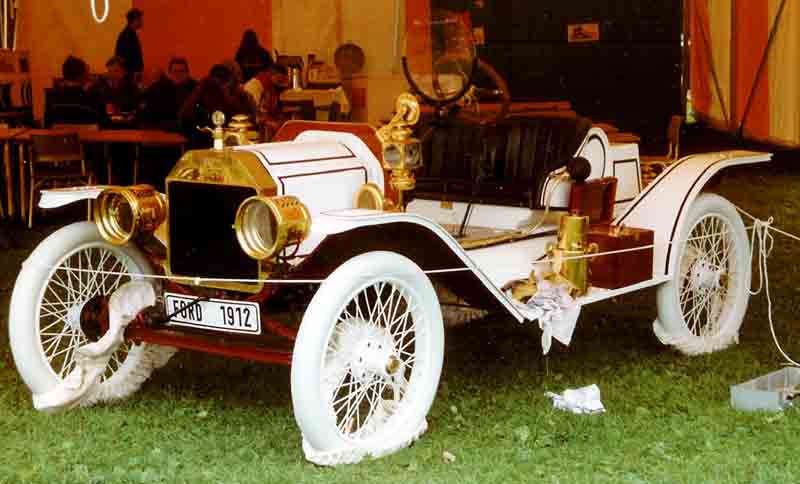
"Let's get going on that Model T. [1205.2s] At that type of price point in merchandising, you're probably competing with a Tesla."
The Model T was one of the first cars that many people could afford. Here, it’s mentioned to compare today’s “simple, easy to buy” cars to an old example of mass-market pricing.
The Model T is Ford’s early-1900s mass-market car that helped popularize standardized, low-cost vehicle production. In this segment, it’s used as a historical example of how “simple to order” cars can be sold at a low price point.
"Right, well, it's very, you know, like a Model Y, it's very simple, basic, and kind of gets the job done, point A to point B."
The Tesla Model Y is an electric SUV. The hosts are using it as an example of a car that’s easy to order and designed to get you from place to place without lots of custom options.
The Tesla Model Y is an electric crossover SUV built around Tesla’s streamlined ordering and software-first approach. In the segment, it’s used to illustrate how Tesla offers a simpler buying process and a “point A to point B” vehicle with limited configuration choices.
"But it makes it easy, right? Because you can advertise lease payments. There's no catch, there's no all. But by the time you get the car you want, it's twice as expensive."
A lease payment is what you pay each month to drive a car for a while. The point here is that ads can highlight the monthly number, which may not reflect the full cost.
Lease payments are the monthly amounts you pay to use a car for a set term, rather than buying it outright. The segment suggests dealerships/brands can advertise low lease payments to make the car seem affordable, even if the total cost ends up higher by the time you get the vehicle you want.
"We spoke about Tesla, so I want to ask you about direct to consumer. We've seen Scout and other upstart brands, or in this case, spin off on Volkswagen testing the different models, state by state, and of course, Tesla is as big as the Caribbean."
Direct-to-consumer means the car company sells the car to you directly, instead of through local dealerships. The question is whether more brands will switch to that approach and what governments do about it.
“Direct to consumer” (DTC) is a sales model where a brand sells cars straight to buyers, rather than relying on a dealer network. Tesla is the most well-known example, and the discussion here is about whether that approach is growing and how states regulate it.
"We've seen Scout and other upstart brands, or in this case, spin off on Volkswagen testing the different models, state by state, and of course, Tesla is as big as the Caribbean."
Scout is mentioned as a newer car brand trying different approaches to selling vehicles. The discussion uses it to illustrate how new companies may challenge the traditional dealership model.
Scout is referenced as an “upstart brand” in the context of trying new ways to sell cars. Here it functions as an example of newer entrants that may use (or test) direct-to-consumer-style retail.
"We've seen Scout and other upstart brands, or in this case, spin off on Volkswagen testing the different models, state by state, and of course, Tesla is as big as the Caribbean."
Volkswagen is brought up as a company that has tried different ways of selling cars depending on the state. The point is that local rules can affect how direct-to-consumer sales work.
Volkswagen is mentioned as testing different sales models “state by state,” which highlights how retail rules can vary by location. In this segment, it’s part of the broader question of whether direct-to-consumer will keep growing under state regulation.
"No, the federal government doesn't play any role, obviously state governments do. My personal point of view is the franchise models worked really, really well."
A franchise model is the traditional setup where dealerships sell the cars for a brand. The host is saying that system has advantages for getting cars to customers and handling the business side.
In car retail, “franchise models” refers to the traditional dealer system where manufacturers sell vehicles to franchised dealers, and dealers handle sales and service locally. The speaker argues this structure “worked really, really well,” implying it affects how cars are marketed, financed, and serviced.
Term
franchised dealers
"if somebody came here from Mars and said, well, let me get this straight. You got a guy who's willing to build a $20 million building that can only be used for that brand, is willing to take all the personnel issues, take used cars, take financing, all that off the table for you."
Franchised dealers are local car businesses that are allowed to sell a specific brand. The point being made is that dealers take on a lot of the day-to-day work, like staffing and arranging financing.
“Franchised dealers” are independent businesses licensed by an automaker to sell that brand’s vehicles in a specific area. In this segment, the speaker contrasts that with a direct-sales approach by describing what dealers typically handle—staffing, used-car handling, and financing.
"I think the weakness in Tesla is the distribution model... There's not a person in the dealership that they can build a relationship with."
Distribution model just means how the cars reach buyers. Here, the speaker is saying Tesla’s approach doesn’t involve local dealers that can build relationships with customers.
A distribution model is how a company gets cars from the manufacturer to customers—through dealers, direct sales, or other channels. The host argues Tesla’s distribution model is a weakness because it doesn’t create the same local dealer relationship.
"Certainly, the weakness for Lucid and Rivian is much more than just distribution. They have, obviously, massive losses to deal with."
Rivian makes electric vehicles. The speaker is saying the company’s issues aren’t only where/how cars are sold—they’re also financial.
Rivian is an electric-vehicle brand known for trucks and SUVs. In this segment, the host argues Rivian’s problems aren’t just about distribution, but also about large losses.
"Certainly, the weakness for Lucid and Rivian is much more than just distribution. They have, obviously, massive losses to deal with."
Lucid makes electric cars. The speaker is saying that, beyond how they sell cars, Lucid also has big financial challenges.
Lucid is an electric-vehicle brand competing in the EV market. The speaker groups Lucid with other EV makers and claims their challenges go beyond distribution, including financial losses.
"You see the ad for $26,000, you're furious with me, because you think I robbed you $5,000, [1758.3s] which is just not true, because you don't qualify for any of those incentives."
“Incentives” are deals that can make a car cheaper—like manufacturer rebates or special programs. If you don’t qualify, the advertised lower price may not apply to you.
In car sales, “incentives” are manufacturer- or program-funded price reductions or benefits that can lower what a buyer actually pays. They often depend on eligibility (like financing terms, residency, or specific purchase conditions), which is why the host says the buyer may not qualify.
"And you shouldn't make a contingent on financing, you shouldn't make a contingent [1765.4s] on buying some warranties, because that's already legal."
“Financing” means borrowing money to buy the car (like a loan). The point is that the best price shouldn’t depend on you choosing a specific financing setup.
“Financing” here refers to how the purchase is paid for—typically via an auto loan or lease. The host is arguing that dealers shouldn’t structure offers so the advertised price only applies if you use certain financing arrangements.
"And you shouldn't make a contingent on financing, you shouldn't make a contingent [1765.4s] on buying some warranties, because that's already legal."
A “warranty” is extra coverage that helps pay for repairs. The host is saying you shouldn’t have to buy extra coverage just to get the advertised deal.
In this context, “warranties” are optional coverage plans sold alongside the vehicle to extend protection beyond the factory warranty. The host’s point is that dealers shouldn’t require buying extra warranties as a condition to get the advertised price.
Term
secondary price
"There's got to have to be some price and a denim next to it, or as you said, [1785.0s] secondary price or whatever it is, because there's regional differences."
“Secondary price” is basically a second number you might see in an ad—like a price that only applies if you qualify for certain deals. The host is saying that’s why ads can look confusing across regions.
“Secondary price” refers to an additional or alternative price figure shown in ads—often the price after certain conditions or incentives. The host is describing how dealers may need to show both a base price and an incentive-adjusted price because regional rules and eligibility vary.
"The dock fee should be in there, because it's mandatory. And then below that, [1807.1s] put the incentives that apply."
A “dock fee” is a required cost for getting the car to the dealership. The host’s point is that it shouldn’t be hidden or added later if it’s mandatory.
A “dock fee” is a mandatory charge related to moving a vehicle from where it arrives (often a port or rail yard) to the dealer. The host argues it should be included in the baseline price because it’s not optional.
"And look, if you have dealers in your area that are not complying with the rules and you're [1816.7s] complying, and it's making you uncompetitive, send it to my office, send me the information."
They’re talking about whether dealers follow the rules for how they advertise car prices. The idea is that if everyone follows the same rules, shoppers won’t get tricked by ads that only apply under special conditions.
The segment discusses “compliance” meaning dealers must follow advertising and pricing rules—especially around how incentives, financing conditions, and mandatory fees are presented. The host frames enforcement as a way to reduce misleading ads and make pricing more consistent across the dealer network.
"Those refunds are going out and USMCA renegotiations are happening as well."
USMCA is the trade agreement between the U.S., Canada, and Mexico, and renegotiations are changes to its terms. In an auto context, updates can affect cross-border vehicle and parts supply chains, tariffs, and eligibility rules for “made in” claims.
"Car loan interest deduction. So, this is wrapping up its first full year now."
This is a tax break where part of the interest you pay on a car loan can reduce your taxable income. The idea is to make buying (or financing) a car cheaper for people who qualify.
A car loan interest deduction is a tax rule that lets eligible buyers reduce their taxable income based on the interest portion of financing a vehicle. In this segment, the speaker says it applies to qualifying U.S.-made automobile purchases and is aimed at people under a certain income threshold.
"and also make it retroactive to the beginning of 26 is to allow the deductibility of lease interest. So, remember, this only applies to finance transactions. So, we can add leases to that."
Lease deductibility is a tax break that would let people deduct the cost of leasing a car, similar to how some loan interest can be deducted. That could make leasing more attractive financially.
Lease deductibility means allowing the interest/financing cost embedded in a vehicle lease to be treated like a deductible financing expense for tax purposes. Here, the speaker is arguing for expanding the rule so leases qualify, not just traditional loans.
"which, of course, makes the fleet younger, which is something I'm very interested in doing. Right now, the average age of a car is approaching 14 years"
Fleet age just means the average age of the cars people are driving. If more people buy new cars (including through leasing), the average age of cars on the road gets younger.
Fleet age is the average age of the vehicles in the “fleet,” meaning the overall population of cars on the road. The speaker argues that encouraging new-car sales and leasing would lower average fleet age, which can correlate with newer emissions technology and more modern safety features.
"So, I'm working very, very diligent. We have the bill already. It's called the USA Car Lease Act to allow lease deductibility the same exact way as it does for"
The USA Car Lease Act is a proposed bill that would make leasing a car more tax-friendly. The goal is to let lease costs get treated like certain loan-related deductions.
The USA Car Lease Act is the proposed legislation mentioned in the segment that would change tax treatment for vehicle leasing. Specifically, the speaker wants lease payments to be deductible in a similar way to existing rules for financed purchases.
The Hermetically Sealed US Auto Market.
Predator, Not Competitor.
Your BYD Is Filming Air Force Bases.
Canada's Regret Incoming.
Washington Finally Stops Playing Whac-A-Mole.
The 92-Brand Graveyard.
The $400 Billion EV Bust.
Ford's Model T Relaunch Is Real.
The FTC Crackdown Dealers Love.
The Mom Test Every Ad Fails.
Your Tariff Refund? Not For You.
The One Question That Closes Trust.
Select text to request an explanation
So this not only prohibits the direct importation of Chinese vehicles, but also the manufacturer
of Chinese vehicles here and the supply chain.
We go all the way into the supply chain and we don't even allow a Chinese vehicle to enter
the US anyway, even if it's somebody in Mexico with a Chinese vehicle, they're not allowed
to cross our border.
It completely shuts off the ability for Chinese cars to come to the US.
Today I'm joined by Senator Bernie Merino.
The American auto industry is facing a dual threat from predatory foreign competition and
a massive affordability crisis at home.
Today Senator Merino breaks down his new bill to ban Chinese vehicles, why he believes
the FTC's recent crackdown is actually a win for honest dealers and the strategy to
bring $25,000 made in America cars back to the showroom.
A big thank you to our sponsors for making this episode possible.
Podium, CDK Global, and CDG Circles.
And now let's get into the show.
Senator Merino back on the CDG podcast.
Senator, thanks for joining me.
No, hey, look, I'm always happy to be talking about cars.
And well, thanks for making it in person first time.
Yeah, let's do it.
All right, let's jump right into it.
This has been, you know, all over the news.
At the New York Auto Forum, you, of course, spoke about Chinese vehicles.
That's not a new topic.
What is new is that you recently introduced the Connected Vehicle Security Act.
It's co-sponsored with Senator Slotkin.
Tell us about this.
What is the purpose of this bill?
And specifically, what can this bill do to prevent Chinese vehicles from entering
the U.S. that the current or what's currently in place with executive orders cannot?
Well, first of all, obviously, executive order is unperdictable because you never
know when a new executive will come in and reverse that.
So by putting in the legislation, you cement it.
But there's something called the Connected Vehicle Rule that commerce put in place.
This goes beyond that.
Basically, it's what I talked about in New York.
This hermetically seals the U.S. market from Chinese vehicles.
For basically two reasons.
You have an economic interest, which is the one I focus on.
You know, the car business is about 10% of our GDP.
So if the Chinese were allowed to come in with impunity and come into the U.S. market,
you'd see what happens in other markets.
You see what's happening in Mexico, what's about to happen in Canada, what's happening
in Europe.
These are predatory to Australia.
These are predators.
These are not competitors.
That'd be different.
Any one of our car companies can compete with any single company on Earth, including
China, but you can't compete with a country.
These are massively subsidized industries that are intended to destroy the Western outer
world so that they can basically own the industry and the entire planet.
We're not going to allow that.
The second piece is a national security component.
These cars have, as you know, cameras.
They can take high-definition videos.
They can take high-definition photos.
They can send location data, ownership data, right to the CCP.
Chinese companies are required to do that.
So if the Chinese government wants data, these companies are required to do that.
A lot of these companies, like BYD, are also defense contractors for the Chinese.
So there's this national security component and the economic security component.
Both those together, we're not going to allow Chinese cars.
And I've been working hard with our allies to say, hey, once we get this in place,
Canada should do it, Mexico Latin America should do it, Europe
and basically push the Chinese out of the industry back within their own borders
and create a normal industry.
And then we're perfectly happy to compete with them.
Help me understand, I think many countries don't have the luxury of the US of being able
to pick and choose, hey, we want to have our onshore manufacturing versus the more
subsidized and cheaper goods for consumers.
Clearly, Canada just approved a small percentage of BYD vehicles.
We know there's production, Chinese vehicle production in Mexico.
So do you think it's wishful thinking to get Canada and Mexico to jump on board?
Or do you think, I mean, do you think the future will be the entire continent?
Or do you think it's going to be only the US?
No, actually, I met with the big trade delegation from Ontario just last week,
and they were very interested.
They took a copy of our bill.
Look, they've brought in, I think the number is 44,000 total Chinese cars.
I just thought I would get the geely out there first.
But look, this is like anything else, right?
Yeah, put a foot in the door.
We know this is sales.
Just give me a foot in the door.
And then the rest of it takes over.
If they think the Canadians think the Chinese are going to stop at 45,000, it's silly.
Because obviously what the consumers will do is, hey, look, we want more of these.
Because again, they're massively subsidized.
It's a Trojan horse.
You say, well, these are great, right?
But you don't take into account that national security or economic security situation.
So, Mexico, we were down there last August.
We met with all the government officials as a result of that visit.
I firmly believe, plus, of course, most importantly, the President personally pushing for this.
They actually put 50% tariff on Chinese cars.
And as a result, the Chinese vehicle penetration in the markets actually started to drop for
the first time.
So, this just is more of that.
I think Europe is going to look at this very closely.
Volkswagen is absolutely under enormous pressure.
Can't remember. 20% of Volkswagen is owned by the Providence in Germany.
So, I think they're going to be looking at this.
I think the world follows what the U.S. does.
So, we can get this into legislation, which I think we will.
It's gotten incredible bipartisan support so far.
I think the rest of the world will follow.
I firmly believe that.
I saw there was a piece recently in the Wall Street Journal about Chinese vehicles in Mexico.
Do you think this bill, would that bill close that loophole?
What's the end game there?
Yeah, that's why I use the term hermetically sealed.
So, this not only prohibits the direct importation of Chinese vehicles, but also the manufacturer
of Chinese vehicles here and the supply chain.
We go all the way into the supply chain.
And we don't even allow a Chinese vehicle to enter the U.S. in any way.
Even if it's somebody in Mexico with a Chinese vehicle, they're not allowed to cross our border.
It completely shuts off the ability for Chinese cars to come to the U.S.
What is your information diet when it comes to this topic?
Because the first thing, as you're speaking, I'm thinking about what are historical examples
where an entire industry was prevented from doing business in the U.S.
or I would say the most similar example.
Any precedent that we can look back to that helps us understand the situation.
So, two precedents.
One on the software side would be TikTok.
That's probably the best example where the Congress said, hey, TikTok is an existential
threat because of tracking data, et cetera.
And there was basically an ultimatum that went out and said that TikTok,
hey, you either have to relinquish ownership to a U.S.-owned group with no ties to that algorithm.
And that's exactly what happened.
The other example is Huawei telecommunications equipment.
We're actually cleaning up the entirety of our telecommunications networks now.
TP-Link is on the chopping block as well to say nothing that touches our telecommunications
infrastructure can do that.
We're also working on bringing Chinese drones to come to the U.S. for exactly that same reason.
You can't allow a foreign adversary to access to your market
where they send back critical and sensitive information.
It feels like we just woke up and now there's all these...
I kind of can view it, I sort of compared to MAHA, Make America Healthy Again,
where in the span of a couple of years, suddenly it's in the zeitgeist and you have,
this is bad for you, that's bad for you.
You're just getting bombarded left and right and here it's similar.
It's like there's drones, there's computer software, there's vehicles.
And so it makes me wonder, maybe the national security portion, can we really prevent that?
They already had TikTok.
I would say the difference is that Chinese vehicles never actually made it to the U.S.
in volume, whereas TikTok proliferated here for years and years and years.
Yeah.
Look, one of the things that we're working on, at least from my perspective in DC,
is let's avoid problems rather than just react when there's a problem.
Typically, I used to call it my dealerships, the problem avoidance department.
If you can get everybody to work in the problem avoidance department, that'd be great,
as opposed to having people work in the problem resolution department.
These are managers that play whack-a-mole all day.
Of course, there's also the problem identification department.
Those are the worst people.
That's wrong.
This is wrong.
And then the problem causing the problem is obviously an issue as well.
Those are the four.
But look, this is about being proactive.
Finally, I think Washington, DC has always been reactive.
If we're proactive, we're in much better shape.
This is the problem that Canada's going to find.
Canada's going to say, well, look, this is a good deal.
We just sold out 44,000 cars.
It's no big deal.
It's fine.
Fast forward two years.
They're going to look back and go, who is the moron that allowed that to happen?
And now there's this major crisis.
We saw the housing sector.
We all saw it in 2005, 2006, and 2007.
Like, hey, people are getting friends of mine who had made or nine mortgages.
Like, what are you doing?
Like, this is crazy.
You barely qualified for one.
And then, of course, the financial crisis almost brought this economy to its knees.
We're not going to allow that with the car business.
It's too important to me.
And national security matters, I think, to everybody.
This is why this bill is getting incredible bipartisan support.
How does this extrapolate over five, 10-year horizon?
Do we see joint ventures with these brands to produce vehicles for US,
where it's mostly a majority controlled by the US?
Because TikTok was not exactly a joint venture.
That was an acquisition.
But do you not see any vehicles in any shape or form enter into the country?
Or could there be a situation where there's some joint venture in the car?
Maybe the government even gets involved.
Look at Intel and the government.
So, is there anything on that?
No.
So, we use the underlying viewpoint on this bill,
something called the foreign entity of concern.
So, we have currently four countries identified as foreign entities of concern.
China, of course.
North Korea, Russia, Iran.
So, we ban Russian cars, too, by the way.
So, you know, no lot is for you.
But at some point in the future, if China is no longer a foreign entity of concern,
there's a space there.
Now, what we don't allow in the bill is any kind of joint ventures,
any kind of common ownership.
We do allow licensing.
And I think that's important.
So, one of the things, I'll give you an example.
We have a great company in Ohio called Eagle Electronics.
They licensed the technology from Quicktel, which is a Chinese company,
to make the communications packs that go into the connected vehicles.
Eventually, Eagle will have its own IP that's separate and distinct from the Chinese IP.
But unfortunately, because the Chinese, we let them get ahead of us,
they licensed that technology.
So, we allow licensing in our bill, where it's completely controlled by the US entity.
There's no common ownership.
There's no joint venture.
And then, eventually, that IP will spin off to a US IP.
Look, we took our eye off the ball.
26 years ago, we normalized trade relations with China.
We allowed them to enter the World Trade Organization.
Back then, 2%, 3%, 4% of the Chinese were in the middle class.
We had 80%, 90% of our country in that scenario.
And that's flipped.
The Chinese middle class has now grown dramatically.
Our middle class has gotten crushed.
We allowed them to get ahead of us.
We used to teach them how to make things.
Now, they teach us how to make things.
That is obviously, again, an economic problem, but also a national security problem.
If they, for example, if tomorrow they try to take Taiwan, what would the US do?
We just sit back and allow that?
Or we enter a conflict with China?
They have so much of the things that we need to have our economy function under their control.
Can you imagine how that sets us up in a position of weakness?
Plus, by the way, be able to connect into all the vehicles in the US, allow them to
tap into the vehicle, find the data.
Imagine somebody works in Mike State, right at Pat Air Force Base,
one of the largest air force bases in America.
That's all of our sensitive intelligence gathering.
And then one of those 36,000 people that work there drives a BYD.
And we're sending high definition videos and pictures of the base.
I mean, that's nuts.
Like we never do that.
And by the way, knowing when that person arrives, where they leave, where they go afterwards.
Can you imagine the national security implications of that?
Like why would we ever allow that?
And again, that doesn't mean that China will always be a foreign entity concern.
But certainly it is today.
This episode is brought to you by Podium.
If you're like most dealers, you've probably tried some version of AI by now.
The real question is it actually doing the work or just answering with generic messages?
In our CDG circles groups, I keep seeing Podium come up when dealers are talking about vendors.
And it's not hype.
It's because they're meeting the needs of dealers right now.
One in three dealerships is already using Podium and thousands of their customizable
AI agents are actively running sales and service workflows every day.
What makes them different is they're not just another AI add-on.
They consolidate sales, service, messaging, and especially voice into one customizable
platform so you're not stacking a bunch of disconnected systems and let's be real.
The phone is still where a lot of money is won or lost.
Podium's voice AI book's appointments, routes calls correctly,
and escalates when it should based on your dealership's playbooks.
If your AI isn't driving real outcomes, it might be worth a look.
Check out podium.com slash cdg or click the link in the show notes below.
It's hard to see in the current geopolitical climate and end game for that and in your term.
Never know.
You never know.
I mean, we don't know.
We don't know where these countries end up.
I mean, Germany was an adversary.
Now they're a great ally.
Same with the UK.
It's funny, obviously, the king spoke before the joint session at Congress and he actually
made the joke.
He said, don't worry, I'm not here.
It's some secret plot to take America back here because over the 250 years,
we've become great friends and great allies.
I mean, he pointed out at the White House at the state dinner that they tried to remodel
the White House in 1810 also by burning it down.
But here, we never know where it goes.
My point is today, we have to be smart.
And I think that's what's missing in Washington, DC, is being proactive,
gaming things out, making certain that you protect the nation.
Now, the other side of the equation is, hey, these cars are really cheap.
So why not allow American consumers have really inexpensive cars?
And the answer is, it's not worth the trade-off.
And that's going to be the biggest fight that we take when we go out and launch this bill,
is, yeah, you'll get a momentary lower vehicle price, but at great national security economic risk.
Not to mention, from the dealer's perspective, you're going to destroy blue sky.
Oh, it's gone.
And destroy valuations as soon as these vehicles come in.
Look, we're here in South Florida.
There's a lot of dealers that think in the back of their mind go,
well, let me be the BYD Jim Moran, right?
Let me be the guy who becomes the big distributor.
We'll become billionaires because I'm the guy.
Look at what they did in Europe.
They'll have dealers go in, make massive investments in facilities,
and then crush margins.
And eventually, those guys go out of business.
Plus, they're just going to go to write.
They have no use for car dealers.
That's not the way that program works.
And you'll see, the big thing that people haven't talked about is there's 92 Chinese auto brands.
They're not all going to make it.
So imagine you get some random Chinese company that starts here.
They sell cars, five-year warranty, six-year warranty, seven-year warranty,
free maintenance for life, all these promises to induce people to buy these cars.
And two years later, they're out of business.
It's also a consumer protection element.
Like, what do you do with all these people that have these Chinese cars
that don't have a warranty?
Look, it happened with Fisker.
Fisker is an all-long car.
I was a Fisker dealer.
I sold three of them.
I bought two of them back and donated them to a museum.
The other guy wanted to keep it because he figured it's a collector's item
because the battery company doesn't exist.
So there's no warranty.
It's a problem.
You mentioned the Chinese middle class growing, the US middle class declining.
We talk a lot about affordability.
I just read that this morning, foreclosures, home foreclosures are rising again.
Also, just in my day-to-day, through people on my network,
my own sister recently got laid off AI.
She's a graphic designer.
I mean, that's a layup layoff.
I mean, it's the first thing that gets laid off, right?
Are there any real levers in Washington that can help affordability?
It's just a topic that we've been talking about for years already,
and it feels like it's just getting worse.
Inflation, maybe the numbers show it's declined,
but it feels in day-to-day in some respects that it's continued to increase.
What do you think is like, what's the end game with affordability?
What can we actually do here to make an impact on the everyday consumer?
Look, we see it.
I mean, look, especially down here in South Florida, you guys really feel it.
I mean, I go out to dinner here in South Florida and I go,
is this a check for everybody eating here?
Because this can't be the meal I just had.
Unbelievable.
I mean, it's unbelievable.
I mean, it's truly astounding.
Here you feel it in a way that's just absolutely palatable.
I used to have a dealership in Coral Gables, and we paid our people well,
but they couldn't live anywhere near Coral Gables.
I mean, it's just completely unaffordable.
That's the same trend in a lot of ways around the country.
We can pull levers.
I'll give you an example.
This manic move to electric vehicles cost the Western auto industry about $100 billion.
Imagine if those auto companies could have that $100 billion back
and say, hey, instead of moving people towards electric vehicles that they don't want,
spend that money making cars more affordable.
The car companies do have culpability here.
For example, why are they still putting nav in cars?
We never use any car navigations.
Is the car I drove to get here?
Why are they doing that?
It's insane.
We all use Apple Play.
We would never go in and start using the car.
You probably don't even know how to use that anymore.
They put a lot of things in cars that people just don't want.
No, but is it like long-term contracts?
Or I actually do wonder.
I think it's the marketing companies instead of the went too far.
Do you need 97 different trim combinations at a car?
I think the problem with reducing trims and simplifying the vehicle
and going into this monoculture is lots of brands are going to lose their appeal
and it's going to hurt their sales and maybe eventually bankrupt.
Well, there's a difference between Porsche Bentley Rolls.
Everybody wants the one-off car.
Versus the everyday car that needs to be more firm.
When I talked to car company CEOs, they said,
look, you should target a sub $25,000 made in America car.
The Honda Civic is there.
Toyota has a model that's pretty close.
That's the sweet spot where we need to focus.
So there's them playing a role, plus the government playing a role
in not adding things that people just don't need.
By the way, the move to electric vehicles also cost the taxpayer $300 billion.
That's what we spent between subsidies, charging stations that we never actually built.
So a $400 billion price tag to move people, by the way,
from 2% electric vehicle penetration back 1819 to where we are now 6%.
That costs $400 billion.
What do we get for it?
Almost nothing.
Now, we momentarily went up to 12 in one month in September of last year
when these subsidies ended, but it's what I mean is good public policy
plus car companies need to focus their efforts on how do we make a vehicle that's affordable.
Simplified, maybe not quite a Model T.
Although, by the way, I do talk to Farley about relaunching a Model T,
where it's one car, it comes one way, no dealer trade.
What does he say when you're talking about it?
He actually buys into the idea, they're looking into it,
because Ford is the one that can uniquely market that.
But imagine it would be if Ford made a sub $25,000 SUV, small SUV, that came one way.
Imagine no dealer trade, so the customer comes in, that's the car,
everybody advertises it the same way, because there's literally no options.
One color, one interior, one set of equipment, which again, maybe if you want to buy a Porsche,
that's an appeal to you, but if you want to buy a $25,000 basic transportation vehicle,
it's actually a pretty good gig.
So, Farley's listening to this.
Let's get going on that Model T.
At that type of price point in merchandising, you're probably competing with a Tesla.
Right, well, it's very, you know, like a Model Y, it's very simple, basic,
and kind of gets the job done, point A to point B.
Yeah, I mean, Elon's showed the way.
I mean, the cars are very simple to order.
I mean, you go on the Tesla website, it's very simple.
The app works really well.
The price point of Tesla is really good.
And what people don't realize is Tesla has the most U.S. content of any automobile.
Virtually the entire car, the entire supply chain for Tesla,
is made here in the United States, and they're very successful.
But not everybody wants an electric vehicle, so expanding beyond that
and having other car companies follow suit is really, really good.
But it makes it easy, right?
Because you can advertise lease payments.
There's no catch, there's no all.
But by the time you get the car you want, it's twice as expensive.
And again, it's not for high end brands,
where again, people want high levels of customization.
But for cars for working class Americans, it's really important.
We spoke about Tesla, so I want to ask you about direct to consumer.
We've seen Scout and other upstart brands, or in this case,
spin off on Volkswagen testing the different models,
state by state, and of course, Tesla is as big as the Caribbean.
Is there any murmurs on direct to consumer or anything changed?
I mean, should we expect, are we going to see that continue to rise in this market?
Like, does the government play any role in that whatsoever?
No, the federal government doesn't play any role, obviously state governments do.
My personal point of view is the franchise models worked really, really well.
I joked that, as I said this in New York, if somebody came here from Mars and said,
well, let me get this straight.
You got a guy who's willing to build a $20 million building
that can only be used for that brand, is willing to take all the personnel issues,
take used cars, take financing, all that off the table for you.
Thank you.
Thank you for doing that.
Making cars is very complicated.
You've got to manufacture vehicles.
You've got to design them.
You've got to engineer them.
You've got to comply with all the things that we just talked about.
Do you really want retail on your brain too?
It's almost like if car dealers said, hey, we're going to go into manufacturing.
I used to joke when you two of these factories would be like a guy like me walking into a
factory going, well, why is the paint booth there?
Why don't you move it over here?
Why is the assembly like, what do you know about that?
Well, what do they know about retail?
You can't have that kind of bandwidth.
I think the weakness in Tesla is the distribution model.
Certainly, the weakness for Lucid and Rivian is much more than just distribution.
They have, obviously, massive losses to deal with.
Tesla's a successful car company.
But I think Tesla would be exponentially more successful
if they went to a franchise model.
It just works really, really well.
I anecdotally talked to many people who own Teslas, and the weakness is on distribution.
There's not a person in the dealership that they can build a relationship with.
It's very robotic.
People like building relationships with that local dealer.
I think it's a good model.
It's endured.
It should work.
Honda found out I was Sony.
They reversed course.
I'm still hopeful that Volkswagen comes to their senses and realizes that they've got
Volkswagen dealers that have waited patiently for good products,
have made massive investments with the brand, and should be rewarded and not punished with more product.
So, you just mentioned what you believe is Tesla's weakness.
One might say that their strength is the customer experience.
This all brings me to the FTC, and the recent letters they sent to dealers.
I spoke with one dealer before this podcast.
I spoke with many dealers, but this was in our digital peer groups.
I was telling you about Circles, where we have dealers just conversing about
all these important topics.
So, I got this one question.
This is from a pretty large dealer CEO, and he told me, said, Yossi,
he said, manufacturers are pushing for incentives regionally, yet pricing,
according to the FTC here, will be broadly applicable across all 50 states.
He said, that leaves me stuck between compliance and competitiveness.
And you were a dealer, so you understand this problem.
And he said, is there any potential alignment between regulators and OEMs,
or we're not put in this position for anyone who's not following me here?
It's very simple.
If you have a regional incentive, but you have to price to all 50 states,
it's two different levels, right?
It's two different tiers here.
So, what do you think about that question?
Yeah.
Well, let me just real quickly, the Tesla thing.
I believe Tesla's strength is that they make a great car that's high quality
with great technology.
That's their strength, and it's simple.
I think that's the strength.
But anyway, back to the FTC.
Look, for the dealers out there, this is really important.
This is actually...
It's a good question.
It was decently funny because I got calls from lots and of car dealer groups,
and it would start by, we didn't get a letter, but a friend did, and he has a question.
So, it became almost like, my friend has a rash, not me.
But anyway, look, you got to remember, the FTC is not a regulatory body.
My friend has a rash.
The FTC.
Well, I just want to say, the way to...
If you're really that curious for anyone, is just go on the website, look at their disclosure,
go on the Wayback Machine, and look at the website two months ago or a month ago,
and you'll right away be able to see who got the letters.
Who got the letters, exactly.
And look at the top 50 dealer groups, and you'll see even more.
Well, and it's not complicated.
Look, the FTC gets more complaints from car dealers than the other industry sectors.
We got to fix that, and I think this will be the time to fix that.
We do have to fix it.
And look, I think at the end of the day, I'll repeat what I said, New York,
this is actually a very, very positive development for the car business.
Number one, Andrew Ferguson is a commissioner,
is the best FTC commissioner car dealers will ever get.
This is as good as it gets.
So, we have to comply while he's there.
Number two is, this is a realization that, again, the FTC doesn't regulate.
They enforce.
And what they're enforcing is fraud.
So, here's the deal.
But the price of the car, as you know, we have to syndicate a price.
My point of view is keep that syndicated price to be the price of the car.
That's what feeds all the websites.
But very, very, very close, and in a very similar font, but the final price.
So, if the car is $29,000, you syndicate $29,000.
If the dock fees $400, but with mandatory documentation fee, $29,400 right next to the price.
Not all the way down in one point font that nobody will ever read.
But it's not the feed the purpose of what the FTC wants?
No, I think the FTC wants it to be clear that the price of the car is $29,400,
but the price of the vehicle is $29,000.
If you start changing the syndicated price, you're going to run into problems in the finance
office because now you have to split that back off.
So, I think $29,000 can be there.
$29,400 right underneath is fine.
If there's a regional incentive.
Here's my issue with that.
Yep.
And you know this, right?
The price you put on your website doesn't just stay on your website.
Every other marketplace and third-party listing site, and they all have different UIs.
So, you kind of get into the same, I mean, unless everyone enforces it across the table,
and you know, maybe there's even some standard that these third-party listing sites can adhere to.
It's like, you know, we comply with blank, blank, blank pricing because otherwise,
your idea could work on my website, but once it goes to third-party, it might look different.
Yeah, the third parties are going to be liable if they're the ones
not complying with disclosure or documentation fees.
So, that's something that they've got to change.
So, they've got to change it so that when they get that $29,000 syndicated price,
that they add the mandatory documentation fee right next to it against similar font,
not 25-point font and 2-point font, like 20-point font, 18-point font.
And then, if there's a regional incentive, you can do the math below that.
$29,400, if you qualify for the South Florida regional discount of $500,
and you take that off, then if you served in the U.S. military, $500,
if you're a GM employee, whatever the discount is, show the math,
but don't make the syndicated price the one that comes after all that stuff.
So, the price is $26,000 by stacking incentives that almost nobody would qualify for.
That's what the FTC is fighting.
So, if somebody walks in and says, hey, I'm here to buy that car for $26,000,
and says, well, you don't have a trade, you're not a military, you don't get the
South Florida discount, you didn't finance, so you don't get the finance bonus cash,
so your price is really $31,000. So, that's what the FTC is fighting.
As I said in New York, show that ad to your mom, and what would your mom say?
Would your mom reprimand you and say, that's not right?
I think it's got to be common sense. Dealers know that.
And by the way, the reason dealers really know that is because the good dealers,
which is, I think, 95% of the networks have good dealers,
the 5% that you compete with that drive people crazy.
That's the guy where I sold you the car for $31,000, which is a really good price.
You see the ad for $26,000, you're furious with me, because you think I robbed you $5,000,
which is just not true, because you don't qualify for any of those incentives.
And you shouldn't make a contingent on financing, you shouldn't make a contingent
on buying some warranties, because that's already legal.
So, don't do things like that. Dealers know we're just cleaning up the final remnant
to that 5% of the network that is not practicing good behaviors.
There's got to have to be some price and a denim next to it, or as you said,
secondary price or whatever it is, because there's regional differences.
There's no other way. He wants to be compliant, but he also wants to be competitive.
If he puts the highest price, he's not competitive, although you could say
that applies to everyone, but then you're missing incentives.
Well, again, the syndicated price should be the price that you're going to sell the car for.
The dock fee should be in there, because it's mandatory. And then below that,
put the incentives that apply. It's the only way forward, but everybody's got the same rules.
And look, if you have dealers in your area that are not complying with the rules and you're
complying, and it's making you uncompetitive, send it to my office, send me the information.
I actually have a cool anecdote on this. So, I spoke with a top 25 dealer CEO the other day,
and they got the letter, and he told me, he said, Yossi, I said, this may, he said,
don't put me on the record on this, but he said, this may actually be one of the best things to
happen in our industry. It is because, again, people don't want to say that because no one wants
to bring more enforcement regulation. The bigger picture is it catalyzed everyone in harmony and
synchrony at the same time to go tackle a problem. You know, at the dealership, there's all these
things going on, but if a customer is upset or something, you just drop what you're doing,
you go to that customer. Everyone goes to handle that problem. This hasn't happened before, right?
It was the first time you're seeing just broad industry effort. I'm telling you, every dealer
that got the letter took it very seriously. It wasn't just one dealer or one off, but it was
kind of like a mass thing and just creates this forcing function where everyone is working on at
the same time. You're seeing third-party marketplaces making updates to their UI.
I mean, I'm hopeful that it's actually going to be a good outcome for consumers and dealers.
The price won't change for consumers because, again, it's the same price. You're not raising the
price. You're just disclosing it differently, but you are providing more transparency and
in theory, you could make it better for everyone in the entire pie.
Yeah. So, I said, New York is the best thing that could have happened to the car business because
it cleans up the final remnants of the old bad behaviors. It puts all the dealers on a level
playing field. It allows everybody to compete equally. You're not competing by being the most
cute by half, right? You're not the one saying, oh, I figured out that I'm going to put a fleet
incentive in there and the other guy wasn't doing that. So, not going to advertise that $29,000
car for $25,000. Now, you get somebody in the door, but they used to say back in the day,
as they say, back in the 80s and 90s car business, you're going to peel the guy off the ceiling.
He comes in, he's raving mad. We'll peel him off the ceiling and hopefully sell him a car.
Those days are gone. Consumers don't put up with that. You look at your generation, Gen Z,
that's not the way you transact. You have no interest in any of that whatsoever. So,
this does clean up the final parts of the car business. And like I said, while we have Andrew
Ferguson as a commissioner of the FCC, this is as good as it gets. If we ever got a crazy
administration that comes after that, it'll be the FTC card rules on steroids. You're going to
have to have a lawyer sit next to a salesperson with disclosure in seven hours in the finance
office as he tells you every possible thing. That's not what we want, but we got to clean
up our own business. This is what I've talked about with NADA for years. We have to do better
at self-policing our own industry so that people don't view car sales and car dealerships in that
80s, 90s sort of way or 70s sort of way, where quite frankly, a lot of these stereotypes exist
for a reason. Let's clean it up. These are sophisticated business. The CEO you're talking
about, the type 1225 dealer group, that's a multi-hundred, maybe even billion-dollar business.
Do you really want to jeopardize that business because you want to try to sell one car?
Here's the problem. It's sort of like a prisoner's dilemma.
Before you have big brother principle telling everyone, you have to do this,
you're stuck in this pickle. Again, I want to be competitive, but my neighbor is doing
that and I have to do it or else I'm losing business. I think self-policing is ideal,
but you need some forcing mechanism. That's what Andrew's doing at the FTC.
That's why I think it's great. I've offered to dealers, there is a consumer link where consumers
can go in and say, here's what happened to me as a consumer and they file that complaint.
That's what causes the fraud investigations to go forward. I've offered, look, if you have
dealers in your market that just are refusing to cooperate, send it to me. If it's legitimate,
we'll send it on to Andrew. We'll make sure that the bad guys get punished. I think it's our
interest to have the bad guys get punished. I think those guys should be severely punished.
Look, there's some franchises, like I'll pick on Toyota, that you'd have to be patently insane
to risk messing in any way with the value and integrity of a Toyota franchise. I think,
for the most part, Toyota dealers don't engage in this kind of behavior.
You have other franchises that maybe there's a lot more, I'll do whatever it takes to sell a car
because right under such pressure and we'll get those guys and we'll make sure that that's not
what they're doing. This episode is brought to you by CDK Global. Dealers, today's challenge
is demand technology that keeps improving. The CDK dealership experience platform is a future-powered
unified solution from a proven partner built to evolve as your business grows. With AI embedded
into daily workflows like merchandising, service to sales and insights and scalable solutions
across every department, CDK reduces complexity, removes friction and improves performance,
backed by trusted industry expertise and support every step of the way. Take a closer look at
the CDK dealership experience platform by clicking the link in the show notes below.
Let's move to a quick one on power free funds. This was another question from a dealer. Just
where does this stand for the auto industry? Like which dealers or OEMs are getting checks or
what's how is this going to reconcile? Yeah, this is decently complicated, but I'll try to make it
as simple as possible. There's two types of tariffs. There's what's called 232 tariffs,
which are the tariffs that are in effect now, still in effect for imported automobiles. Obviously,
10K for the UK, 15% from Europe, 15% from South Korea and Japan. That's not affected at all.
What was affected is something called IEPA tariffs. Those are the ones that affected mostly cars that
came in from Mexico and Canada that had an additional tariff that was not in place because
of USMCA. That was to get Mexico and Canada to comply with fighting fentanyl and drugs coming
across our border. Those companies and those tariffs were deemed not allowed by the Supreme
Court. Those companies will get those refunds. I've encouraged those car companies to see if
those tariffs refunds should be going to their employees, to the hardworking auto workers,
and say, hey, look, we're getting all this money back. Let's give that money or some of it back
to the auto workers who maybe didn't get the bonuses they were supposed to get, etc.
Of course, right now, it's a working process. I'll say that in terms of convincing them to do that.
But they're certainly not giving it back to dealers or they're certainly giving it back to
consumers. So, this idea that the IEPA tariffs cause car prices to go up and that consumer
was affected. Well, the consumer or the dealer is not getting that refund. I think the auto
workers should participate in that. Of course, that's predicated on us giving the car companies
some stability and some certainty on USMCA. I'm working with the administration and a great
US trade representative, Jameson Greer, is working on getting that done as well.
What's timing on this look like? Well, the IEPA refunds are coming now.
So, it's happening in real time? Yeah, they're getting money back now. I think Ford
posted that already in their earnings for the last quarter. So, that's happening in real time.
Those refunds are going out and USMCA renegotiations are happening as well.
Got it.
Car loan interest deduction. So, this is wrapping up its first full year now.
What are you hearing from Ohio, your hometown? I think the biggest question here, this is from,
this is actually, I was speaking about this with one of our reporters on the team, is this
actually moving the needle or is it just a windfall that's going into the deal,
a deal that would have happened anyway? Well, the second part, I don't know. I mean,
there's no way for us to know because we don't get a chance to interview the customer and say,
hey, would you have done it differently? I'm proud of the fact that 1.3 million people took
advantage of this. 1.3 million? 1.3 million. Obviously, it went back to January of 2025.
So, if you bought a US-made automobile during that time, you qualify it from an income perspective.
Remember, primarily for people who make less $200,000 a year, they could deduct this. So,
1.3 million people did. I think where we missed it, we will work really hard to fix it this year
and also make it retroactive to the beginning of 26 is to allow the deductibility of lease interest.
So, remember, this only applies to finance transactions. So, we can add leases to that.
I think it will be very, very strong because we want to actually drive more people to lease.
I think that's better because it recirculates new cars, which, of course, makes the fleet
younger, which is something I'm very interested in doing. Right now, the average age of a car is
approaching 14 years, which is a while. I think that's the average. So, if we can move that back
to where it used to be closer to seven or eight years, we do that by selling more new cars.
Leasing is a big part of that. So, I'm working very, very diligent. We have the bill already.
It's called the USA Car Lease Act to allow lease deductibility the same exact way as it does for
finance. If we get that done this year, I think that will be a big deal.
Also, moving to the personal side, you've been centered now for over a year. How has it been
for you? Have your political aspirations grown since then? Are they contracted?
Well, my political aspirations are fixed. I wasn't born in this country, so I can't be President
of the United States. People joke all the time and say, well, how about Vice President? That's
literally the one thing I can't do. The Vice President's single job is to be President of the
case of President. It is no longer with us. So, for me, I'm having a ball being a Senator.
I'll do it for two terms, which is 12 years. It's a long time. My wife has made it clear
that a third term would be the second wife. So, for sure, this will be two terms. For me,
this is about giving back to the country. It was never about any kind of political idea of having
a career in politics. You're already rich. Look, I had a great life. I had a great life. The country
blessed me way beyond my thoughts. I mean, teenage birdie never thought about having been able to
accomplish what I did in terms of finances. So, I'm perfectly content. I'm not motivated by things
like I was when I was building my businesses. This is about giving back. My greatest inheritance I
give my kids is a better country, not more money. So, for me, if I can make a little dent in the
universe, I feel like I am. I drive down Pennsylvania Avenue, make a left on Constitution. When I do,
I see the capital there with the sun rising. I get there early. I get chills. I still consider it
an incredible honor to be able to be a United States Senator. As long as I feel that way,
I'll serve the full two terms and make a little difference. If I can know that, hey,
if not for me, this wouldn't have happened, not for PR or for fame or for fortune, but for just
self-satisfaction. I helped make the country even a little bit better. It's extremely gratifying.
I feel that way now. I also want to encourage more people to do what I'm doing, successful business
people to come in and serve and then go home where our founders envisioned. That's really
important to me. Hopefully, if my colleagues vote for me, it will be the chairman of the
National Republican Senatorial Committee, which is a committee that identifies candidates,
supports them, and raises money for them. That will be part of a mission as well.
We're about to hit 250 years for America, which is pretty remarkable.
What's the most concerning thing for you right now in just the state of the country,
the discourse? I think we've had three assassination attempts on the president,
which is probably unprecedented. Well, I should say unprecedented. I'm sure there's been many
that have been foiled, but it seems like things are pretty crazy on one hand. On the other hand,
as one of my friend calls it, hyper-informed. Everything is in our face constantly with social
feed. What's on your mind? Well, the hyper-informed is actually probably the most positive thing,
because people really need to have, be good citizens and good voters. You need to have
good information. Is it good information though? Yeah, they get their own self-selected media,
but I think if you can become more informed, check sources, that type of thing, I think it's
really good. The negative is obviously the country's becoming very polarized. I think that's a shame,
because politics shouldn't be a blood sport. Politics, you and I should be able to enjoy,
by the way, thank you for the coffee. A cup of coffee, have a discussion. It's okay that we
disagree. In fact, actually, it's a good thing sometimes if we disagree out there. It's because
we're not all monolithic thinkers. This is part of freedom and liberty is having your own thoughts.
You absolutely are entitled to have your own opinion. Absolutely. I think that's positive.
It's the animosity that results from having a different opinion that's crazy to me. I think
we should understand some baseline things. This is the greatest country on earth. I considered
an incredible privilege that me and my family were welcomed here. It's a great honor to be
welcomed into this country. For people who were born as U.S. citizens, you hit the lottery being
able to be born in the United States of America. This is a good thing. There's dramatically more
that unites Americans than divides us. We hyper-focus on the divisiveness. I think that's
a shame. I think we should be able to come to politics and say, look, I appreciate your point
of view. Hopefully, you appreciate my point of view, but we can still be friends. I think this
idea that we're mortal enemies if we disagree with each other because the politics is completely
insane. Why? Why would we be mortal enemies if we disagree? Sometimes you can talk things out.
And by the way, maybe I can move you a little bit, and maybe you can move me a little bit.
And we both look at that and go, that's a good thing that we're able to move each other closer
to agreement. Hopefully, that's where we get to as a country. Obviously, we're not in the
opposite direction of what I just laid out today. I think that's a shame. I think if there's something
for us to work on as a nation is that. I think not to be all doom and gloom, there are some
positive signs. I think this was in the journal as well that in New York, very democratic city,
they were talking about church attendance among Gen Z rising, which to me, that says culture,
values, good strong values for people to gain. So, I think that's a great sign.
Yeah. And I mean, it's sometimes when the pendulum swings so far in one direction,
it can swing back in the other direction. Another point I wanted to mention is we spoke about
media. I was listening to a podcast with Mark Andreessen from Andreessen Orleans. And he said
something very interesting about how the state of media used to be, which is that if you look at
the last, call it 50 to 100 years, we sort of had, let's just say a handful or maybe like a dozen
dominant media networks. But before that, before there was even any technology, you had these
town squares and you could literally have like a hundred different newspapers competing. So,
his point was that this state of polarization, as we call it nowadays, and all these different
perspectives is actually the default state of what the world used to be like pre-internet
and pre-consolidated media where you'd have the town square and there's all these competing
newspaper companies. So, everyone would consume their favorite media and then over time, as over
the last 50 to 100 years, we sort of consolidated these big media networks and everyone, you had
kind of several networks to choose from. So, that in a way subsided a lot of friction, right? Because
everyone is fed the same thing. So, yeah, you're kind of aligned. So, anyways, his point was like,
guys, this is more of the expected default state of discourse. So, it's just another
an interesting way to frame that. Well, again, I think people should look and check sources, right?
So, if you hear something happen where other sources, what's the real facts? I think that's
really important because again, the gatekeepers are basically gone, right? These three networks that
kind of look at us right now for 30 minutes, right? This is going to be broadcasted to a ton of people
online. There's no filters, right? Which is great. That's why podcasts have become much more popular
because- Trust that scale. Well, also, while we get headline only data, people like to dig deeper.
Yeah, I think that digging deeper is really, really important. Amazing. So, let's wrap up. I mean,
when you think about the next 10 years for franchise dealers, what would be your recommendation
for how a dealer should evolve in this political climate and this geopolitical climate, right?
What would you be doing as a dealer to hedge your bet into the future and to just be a prudent
operator? Look, the basics will always be there. At the end of the day, it's one human wanting
to interact with another human. And so, building a great team matters then, it matters now. Having
great people working in your dealership, top priority. Making certain that you have great
franchises, none of that is going to change. Making sure you have a great location, none of that's
going to change. And making certain that you give that client the best experience possible,
none of that's going to change. At the end of the day, people want to know that you're their
guy, right? I had Herb Chambers as a mentor when I was a kid working for him. And he used to say
to me all the time, you know that you're winning with a client when in the decision-making process,
that client turns to you and goes, what do you think I should do? Give me your advice.
That trust is at a peak. And that is still very important. Don't fair your head in the sand with
technology. Technology comes out as fast. We've dealt with the internet and the way that came out
as AI is certainly something that's going to be extremely disruptive to all businesses.
You don't necessarily need to be at the bleedy edge or everything, but don't be left behind. So,
how do you implement that in a positive way? Keeping an eye on the basics. Asset management
is critical, of course. Making sure that you get the right vehicles at the right time. But
none of that, none of those basic and fundamentals change. Focus on the things that you can control.
Don't focus on the things that you don't control. I think those basic fundamental 101
is essential. Dealers, early access to our private dealer chat groups is now open. Join top
dealers at cdgcircles.com. That's cdgcircles.com or hit the link in the show notes. I'll see you inside.
What do you think dealers think of your current performance as a senator?
I don't know. I hope they think I'm doing a good job. I look at it this way. I want to do a great
job. For me, it's not about building a political career, but I want to do a good job. I want to
do a good job. I'm open to all kinds of feedback. I work hard every single solitary day. I've always,
in my entire life, whether it was when I worked for General Motors, when I worked for Herb Chambers,
when I owned my own dealerships, I just want to do well. My dad used to say to me all the time,
whatever it is that you do in your life, be the best that you can possibly be at that exact job.
Not for money, not because you want accolades, but because you just want to do well. Hopefully,
dealers think I'm doing a good job. Look, obviously, I care a lot about the auto industry.
I hyper-focus on what I call the 3Cs. I said that the day I walked into my office in DC,
cars, crypto, and Columbia, meaning the auto industry. No, no, China. The car business,
the auto industry, transportation, digital assets, and Latin American policy. I want to be the best
resource in the United States Senate in all three of those verticals. When somebody thinks,
hey, there's an issue with Latin American policy, let's go to Bernie. There's an issue with cars,
let's go to Bernie. There's an issue with stablecoins, digital assets, Bitcoin,
cryptocurrency. Let's see what Bernie thinks. There's a thousand other issues that exist in DC,
and I'll be a player in those, but I want to be hyper-focused on those three cars,
especially I care a lot. Look, I've cared about cars since I was a little kid. This is an industry
that fascinated me. It's very important, 10% of our GDP. It's very important to me. I miss the car
business. I miss interacting with dealers. This is why I love things like this. Look, I hope
dealers are out there. If they think I'm doing a really good job, they go on teammarino.org and
make a campaign. Look at that. Not to do your own horn, but I would say that it's been very positive.
People have said really good things. They're very happy with just the way things are trending,
and I think you're very active, but you're also very receptive. I think I would encourage you
to continue, not that you need my encouragement, but it is really valuable to be able to talk to
someone and know that they are receptive and attentive to your concerns. I think that's extremely
important. Like you said, that's the basics. It's like, yeah, I want to say customer service
mentality to this job. That's why I haven't changed my cell phone number. Most politicians,
the first thing they do, mine is the same. I respond to everybody. I think that's very,
very important that you maintain that connection to the consumer. My personal email is bernie
at berniemarino.com. That goes to me. It doesn't go to a staffer. That goes to my iPhone. I respond
to everybody. It's extremely important to stay connected. If there's an idea that you have or
a thought that you have, please reach out. That's why I said I offered the FTC thing. If you think
that you have a competitor in your market that's not doing the right thing, shoot me an email,
bernie, at berniemarino.com. I'll look at it. I'll talk. By the way,
my first status would be, talk to the other guy. Say, look, you need to clean up your behavior.
It's not going to be just attack. I think it's important. I was the first auto dealer ever
elected to the United States Senate. I want to be the last one. If I do a good job, others will
be embraced. You'd be shocked, Yossi, how much the skill set of being in the automobile business
serves in the United States Senate. I'll give you a tiny, tiny, for instance. I had a colleague of mine
that I was sitting next to in the Commerce Committee. He was talking about a bill he had.
I said, well, how's it going with that bill? He said, well, X, Y, Z,
colleague isn't supporting me. I said, well, have you got nothing talking to me? He goes,
oh, no, no. I don't want to go there yet. I'm like, what?
What do you mean? If you have somebody who has an objection, go attack that object.
You have to be relentless. You got to know how to persuade. You got to work your tail off.
Those are all things we learn in the car business. It's funny. A bunch of my colleagues on this
job of being an NRC chair have said to me, if you can sell cars, candidates.
That's basically what the job is. Look, if you're out there and you're an automobile dealer
and you want to serve your country, reach out to me. My colleagues joke and say, well,
if you're going to be an NRC chair, we don't want to turn the U.S. Senate into the NADA,
and they go, oh my God, do you imagine if we did how much more we get done?
I think it's important that call-to-service is the best thing we can do for our country.
We need to introduce incentives into political donations.
You know, donating a dollar will match it with another one.
Exactly. Make a stair step program.
Yeah, a stair step program, right?
Your fifth donor gets you this. I know. Look, at the end of the day, this is an honor to serve
the people of the country. It's an honor. You got to look at that. I have 12 million people
that count on me in Ohio. It's incredible.
I do a good job. And the people care. I mean, you do make an impact. I mean,
also, car dealers understand what it's like to have the future of people's livelihood in your
hands. Like, if you're a car dealer and you have 1,000 employees, your good decision-making impacts
those 1,000 families.
100%?
You kind of understand that. Like, that was the biggest thing for me when I bought my first
dealership. I knew it impacted my family. I'd moved my family from Boston to Cleveland, and
I knew what that meant for my wife and my kids. But when you see your employees, you say, oh,
my God, like, if I make bad decisions, Johnny, who's my sales guy's kid, he's going to be affected.
Like, I got to make sure that I have the humility to know that my decision-making affects others.
And I think business people understand that uniquely versus politicians.
You know, and when I'm coaching an up-and-coming manager, it's the same thing. And let's say
they need to let go of someone. It's evident, right? But they're struggling with it.
I think when you reframe it as, hey, you're actually hurting the other 99 people in the company
by not letting go of one person who it's evidently clear they need to be let go of,
right? Because you're doing a disservice to everyone else. So, to your point, it's,
like you said, you're hurting everyone else, and you want to help by making those decisions.
But also on the hiring side.
Of course.
Be careful who you hire. Like, make sure does that person fit within your culture.
You know, one of the greatest things for me is having my son now go into the car business
and be able to sit completely on the sidelines. Because it's his dealership.
It's, I have no financial interest in it. It's his.
Be able to give him advice and watching him make decisions and watching him grow as a human.
I mean, I'm so insanely proud of him. And, but I also recognize that in a lot of ways,
he's further and more advanced on thinking than I was when I was his age.
Wow.
And I think he's going to be incredibly successful in watching him have the humility as he
thinks about hiring decisions. And he'll call me. I used to,
with my kids, have Business Thursday. I have four kids. I used to drive to school
every morning and we'd have Business Thursday. So, I'd present business problems from the
dealership that week and we'd go around and each one would say what they would do.
And then we'd stop at the convenience store. They'd be able to get whatever snack they
wanted as a result. So, they love Business Thursday. So, my son calls me. He says,
well, dad, Business Friday question. And he goes through a problem that he's having.
Hey, I have the sales guy. I'm thinking of hiring. But here's the situation. What would you do?
And being on the other side of that is, I'm telling you, it's incredibly gratifying. It's
really cool.
Wow. Have you spoken with anyone in the administration, like Howard Lutnik,
who also divested his business, his son runs it? Have you had any conversations with anyone
in similar situations to you?
Oh, yeah. I mean, absolutely. Howard, I consider him a good friend. We have great,
great relationships with the entire admin. These are guys you just want to serve.
Look, Howard is saying, well, he doesn't need to do this. I mean,
Steve would call off same thing. These guys, they're billionaires.
Would call for it.
Yeah. These guys. Why would you come do this government job? It's certainly not for the
100 or 200 grand salary. It's because all of us feel called to serve.
The guy who started that was President Trump. I mean, when he came down to Escalator in 2015,
here's his billionaire. He's got it all. Why would you go do this? We're back to this divisiveness
question of 45% of the people absolutely vehemently despise you. Like, why would you like that?
Like, nobody likes people to hate you. Why would you do this? Because, again,
the greatest inheritance we can give our kids is a great country.
Amazing. That's what it's all about.
Well said, Senator Bernie Marino. Thank you so much for joining me on the podcast.
Thank you.
All right. Hope you enjoyed that episode. Please give the podcast a rating,
consider subscribing to the show, and check the show notes for links to what we talked about.
Thanks for tuning in. I'll see you guys next time.
Request an explanation for:
3 cars
3 cars featured
Request an Explanation
Heard something you'd like explained? We'll add it to this episode.
Sign in to request explanations for terms you heard.
Want to learn more?
Browse our glossary for plain-English explanations of automotive terms, jargon, and concepts.
See something that's not quite right? Our annotations are AI-generated and can sometimes miss the mark.
Click the flag icon on any annotation to suggest a correction.