An 84-month car loan means you pay for your car over seven years. This can make monthly payments smaller, but you might end up paying more in interest and could owe more than the car is worth if it loses value quickly.
EVs stand for electric vehicles, which are cars that run on electricity instead of gas. They are better for the environment and are becoming more common.
Incentives are special offers or discounts that car companies give to make buying a car more appealing. This can include lower prices or better financing options.
Acura is a brand of cars made by Honda that focuses on luxury and performance. They make vehicles that are often more upscale than regular Honda models.
The Great Recession was a major economic downturn that happened in the late 2000s, causing many people to lose jobs and businesses, including car companies, to struggle with sales.
Lease pricing is how much it costs to rent a car for a certain period instead of buying it. This price can change based on how many people want to lease the car and what deals the manufacturer offers.
Tier two advertising is when local car dealerships promote their cars in addition to the main advertising done by the car company. This helps attract customers in their area.
Loan terms are how long you have to pay back a loan. For cars, longer terms mean smaller monthly payments, but you might end up paying more in total because of interest.
Monthly payment shoppers are people who care more about how much they pay each month for a car than the total price of the car. This can sometimes lead to paying more in the long run.
Subprime auto loan delinquency happens when people with bad credit don't pay their car loans on time. When this happens a lot, it can make it harder for everyone to get good loan deals.
Direct to consumer means that a company sells its products straight to customers without using middlemen like car dealerships. This can make buying a car easier and sometimes cheaper.
Financial obligations are the money a company has to pay back or commitments it has to meet. This can make it harder for the company to spend money on new cars or projects.
Sub $40,000 vehicles are cars that cost less than $40,000, which is important for many people looking to buy a new car without spending too much money.
The Ford Lightning is a special electric version of the popular Ford F-150 truck. It's made to be powerful and useful, especially for people who need a truck for work or play.
Affordable cars are vehicles that cost less money, making it easier for more people to buy them. They are usually smaller or simpler cars that still work well.
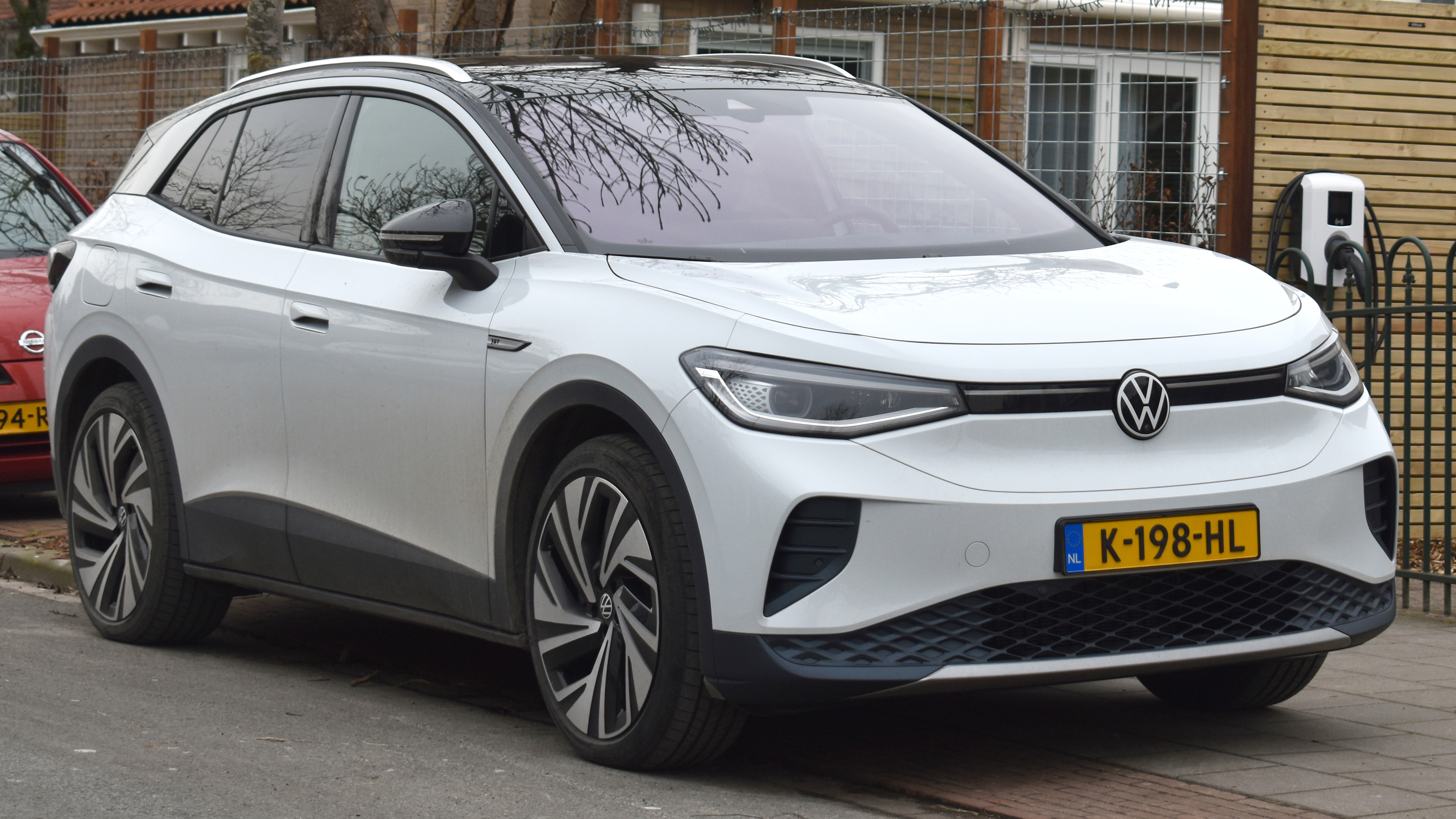
The Volkswagen ID.4 is an electric SUV, which means it runs on electricity instead of gasoline. It has a roomy interior and lots of modern features, making it a great choice for families or anyone who wants an eco-friendly vehicle. This car is important because it's part of Volkswagen's move to make cleaner cars after some past issues with pollution.
Electric vehicles are cars that run on electricity instead of gas. They are becoming more popular because they can help reduce pollution and are better for the environment.
Dieselgate is a big scandal where some car companies were found to have cheated on tests that measure how much pollution their diesel cars produce. This caused a lot of trouble for those companies.
The Audi A3 is a small luxury car that is fun to drive and has a nice interior. It can be very fuel-efficient, especially with its diesel engine, which means it can go a long way on a small amount of fuel. People like to talk about the A3 because it combines style and performance in a compact size.
MSRP is the price that the car maker suggests you should pay for a car. It's like a starting price, but the actual price you pay can be different based on what the dealer decides.
The Tesla Cybertruck is a new type of electric truck that looks very different from regular trucks because of its sharp, futuristic shape. It's designed to be tough and has a lot of cool technology inside, making it popular among people who want something unique and eco-friendly. Many people are excited about it even before it's fully available.
LIVE
It's noon here in Ventner City, New Jersey, in our nation's capital, Washington, D.C.,
and this is CarEdge, live for Wednesday, February 18th with your hosts, me, Ray, here in Ventner.
Excuse me, I'm losing my voice. And Zach, hanging out in front of his bike in Washington.
How are you today, handsome?
It's been fantastic. Happy February 18th to everyone. Thanks so much for tuning in. Today's
show is brought to you by CarEdge.com. If you're looking to get edged while buying a car, you go
to Car... That came out wrong. Go to CarEdge.com, folks, and learn more about all the ways me,
my dad, and our incredible team are trying to help you make the car buying, selling,
and everything in between process so much better. Dad, Honda dealers are desperate right now as
where'd you come up with that headline, Zach? This, that, and the other thing.
Automotive news, baby. Letter to the editor from a Honda dealer. Honda must adapt quickly
as sales plunge. This is a letter to the editor. We've been talking about this gentleman, Brian
Benstock, all week, because that's been really, really, really good commentary over on LinkedIn
about the detriment that 84-month carloads have on the auto industry. Well, here he is writing a
letter to the editor in automotive news talking about how Honda is actually in a sales spiral
and that they really have to change what they're doing because it's causing desperation
everywhere. Dad, let's break this down. This letter to the editor, what's the story here,
and what the heck's going on with Honda? Well, like just about every other manufacturer,
they made a bad bet when it came to EVs, especially for here in the United States,
and that's costing them billions of dollars and it's impacting sales.
And so in an effort to preserve cash and cash flow, they're cutting back on incentives and
things of that nature. And Mr. Benstock's theory is, no, this is when you put the pedal
to the metal. This is when you come out with the aggressively steals. And what's funny about this
is I remember having a similar conversation with my Acura rep in 2008 during the Great
Recession. And, you know, as sales were plunging to almost non-existent, you know,
he looked at me and he said, well, what do you think we should do? And I said, this would be
the time to make the offers so compelling that people would look at them and just say,
can't say no to that. Okay, because if you don't make them that compelling, people will continue
to sit on the sideline. And well, what happened? People sat on the sideline, sales declined 50,
60, 70, 80 percent. And so what he's basically saying is, okay, if things have slowed down,
well, then make the offer so compelling that people find it virtually impossible to say no
to them and make the offers for 24 and 30 and 36 months leases so people can come back into the
market. So I want you to break something down for us here. And I'm just going to read the first
paragraph regarding Honda's mounting EV loss is forced fundamental review of automotive strategy
as sales plunge, which was published on February 10th and automotive news, the cuts to Honda's
tier two advertising association and lease pricing squeezes have crushed our volume.
What does that mean, dad? Can you just take a second? What is tier two advertising association
and lease pricing squeezes have crushed our volume? What does that actually mean to the layperson
who's out there watching this video right now thinking, I'm in the market to buy a Honda,
to lease a Honda? What does this sentence mean? Well, there are dealer advertising associations
tier two advertising associations all throughout the country, both for Honda and accurate,
where the dealers contribute to the advertising association fees and the manufacturer
contributes. And then on a regionalized basis, they produce advertising and programs to help
spur business. And so Honda's making cuts to their tier two advertising associations. They
don't want to contribute as much as they have, which means that the dealers either have to
contribute more or they advertise less and that the that and he thinks the future is
in leasing, not in 84, 96 month loans. So he's saying that not only are they squeezing out
the dollars they want to spend towards tier two advertising, but they're not putting as many
dollars towards having compelling lease programs to attract customers. It's a one to punch is what
he's saying. And so ultimately, I think the thing I want to try and communicate to everyone here is
that buying a car is complex while running a dealerships complex. There are all these tiers
of different associations that contribute money towards incentives towards advertising things
like that. The long story short is they're pulling back the amount that they're spending
on incentives. This is actually to be very clear here. This is a different strategy
than we talked about yesterday with Subaru. Subaru came out and they said, actually, the way that
increase our global volume 33% is we're going to increase incentives and we're going to try and
make it up in volume. So I just want to make that very clear to everyone here. You have one
automaker that we talked about yesterday and we can talk about it again here today. Subaru
increasing incentives, excuse me, in an effort to try and sell more volume or the lease more
volume doesn't really matter to Subaru. They just want to move the metal. Then you have another
brand here Honda, which to be clear, it's convoluted. It's a little bit hard to understand.
They're cutting their tier two advertising association spending and it sounds like they're
making their lease programs less attractive. So you've got two totally different strategies
going out right now. It will be so interesting a few years from now to look back at this and be,
which strategy was right? Was it the make it up in volume Subaru strategy or is it the Honda
strategy of, you know what, dealers just figure it out. You're going to have the cars, we're going
to support you, let's figure it out. Well, I'm going to vote today. You can mark this down
that Subaru strategy makes more sense than Honda strategy. In my mind, okay, every time I was in
the industry and there was a slowdown and the manufacturers cut back, it only added to the
slowdown. And so yes, I get that the bed on EVs cost them billions. I get that, but they still
have money and they're still bringing in cash flow. And rather than just accept that sales are going
to be slower, do something about it. Okay. And in my mind, to do something about it is step up
and come up with compelling offers. And if, I don't know, I've said this forever. If 85%
of new car buyers out there and use car buyers out there are payment buyers, okay, where all
they're interested in is their payment, well rather than encourage people to finance longer,
come up with such compelling short-term lease programs that they just lease them. And by doing
that, you're forcing the people back in the market. If it's a 24 month lease, they'll be back in the
market in two years. If it's a 36 month lease, they'll be back in the market in three years.
And that's how you build back the momentum in mind. So let's bring this back to the two
strategies that we're watching play out right now. And we know, Dad, the people that tune in and
watch this show, they're thinking about, at some point, buying a car lease in a car,
you're probably going to see stronger offers from Subaru than you're going to see strong
offers from Honda. That's the reality based on the signals that we see here. Both brands
want to grow their sales. Both brands are taking different strategies and tactics to try and get
there. And so as customers, when you're cross shopping, you're cross-trek with your HRV,
expect to see a bigger incentive and a better deal over on the Subaru side than you would on the
Honda side. That's the tangible takeaway from this.
And let me say this, even though a lot of people say a lease is a fleece, if all you're
interested in is a payment, if you accept the premise that you are always going to have a car
payment, and that car payment will be for 36 months at $375 a month, or 84 months at $700 a
month, what do you think people are going to gravitate towards? They're going to go to that $375
a month. That's all they care about. If the concept is that the prices of vehicles has gotten so high
that the only way to make them affordable is to continue to extend loan terms, then you're
doing yourself a disservice. You need to educate the public as to why leasing would make more
sense for them, so that they can take advantage of getting the newer technology and the newer
improvements on cars every three years, as opposed to every seven years. It just seems to me that
the vast majority of people who are just looking for a payment will accept leasing if it provides
them with more car for less money. You come across as such a lease advocate. I love that for you,
dad. Here's another way. Let's switch gears a little bit. It's not necessarily a lease
advocate. It's the reality of an affordable payment advocate. Why I always say, if you accept the
premise that you were always going to have a car payment, and 85% of buyers out there are nothing
more than payment buyers have accepted that premise that they're always going to have a payment.
If that's the premise you've accepted, then have the least expensive payment for the most expensive
product you can get. Yes, I get it when people will say, but at the end of three years, you own
nothing. Well, at the end of three years on a seven-year loan, you own more than your vehicle's
worth, so what do you own? You own negative equity. You own nothing. It's the same thing.
Well, here, let's put it into context. Let's put it into context because there was another
headline today. Yes. Auto lenders add flexibility for any four-month financing.
Yeah. Well, you know why they're adding the flexibility? Because it's the Olympics.
Olympic athletes are more flexible than most folks. There's no better time to add flexibility
when the world is sitting around their TVs, watching these world-class athletes,
showing as much flexibility as they are. We need to do the same thing in our loans.
Get the hell out of here. Oh, my God. You're funny, man. Okay, so you're saying,
all right, let's like Lebel said here. Yesterday, we talked about Subaru. They need their sales to
grow. They're going to make it up in volume. They're going to be aggressive on incentives,
and they're going to try and sell more vehicles. Honda today, they're dealers coming out and saying,
hey, our sales are plunging, and you're taking the wrong approach. You're going to cut back
incentives. You're going to cut back on deal-making, and you're just going to let us try and figure
it out. And then, dad, in the same breath you're talking about, well, that strategy will fail
because they actually need to make monthly payments more affordable. But to be clear here,
y'all, always negotiate that. The door praise, listen to all of our advice. And the unfortunate
reality is even with our megaphone here, most people are monthly payment shoppers. So you're
saying to do that could be leasing as a mechanism to make it happen. The other mechanism to make
it happen is you just keep stretching out that loan term. And this headline comes from auto finance
news, which is another one of the industry leaders when it comes to what's going on in the auto
industry. All right. So this is the other strategy, man. And this is literally saying that more
auto lenders are approving a four-month financing. That's a scary reality and one that we've been
talking about for a long time, especially because it looms in the wake of the highest
level of subprime auto loan delinquency we've seen in 32 years. What a conundrum we're in, dad.
It is the exact opposite of what they should be doing for customers.
Okay. And the reason I say it is the same reason Brian Benstock said it. You're taking your
customers and you were focused on the short-term gain that you get today while not paying attention
to the long-term loss of not being able to sell that customer another vehicle for six or seven
years. If you put them into a two-year or two-and-a-half-year, three-year lease, you get them back
sooner. This is the short game versus the long end. Right now what we're seeing is, and we've
talked about it, we've used all sorts of analogies, this is how they're keeping the merry go going
around, dad. They're just getting more people onto the ride today, but ultimately those people
won't be able to get back on in three or four years when they want to get out of their vehicle.
They're only going to have negative equity at that point. That's the problem. You can put
them on that merry go around, and when they try and get off that merry go around in three years
or three and a half years, they will look like Lindsay Vaughn when she crashed during her skiing
attempt. They'll end up broken because there is no way to get off that merry go around at three
or three and a half years in a seven or eight-year note to where you're not going to injure yourself.
It's just you're going to be airlifted to a financial hospital that's going to tell you,
yeah, we need to do a 72-hour cycle on you because you've subjected yourself to this.
The banks are complicit in this. Then three years from now, when the industry's selling fewer
new cars than they anticipated, you'll be able to look back and go, well, how the hell did you ever
expect to get those people out? Is that not what we're currently witnessing right now to a degree?
January's seasonally adjusted sales rate was the lowest we'd seen in many years,
and it's on the other side of extending loan terms and putting people into more upright
down positions. Yes. We're already seeing it play out, and it's going to get uglier,
not prettier as we move forward. You can't take a higher percentage of your customers
and stick them in longer term loans and expect them to come back and enter the marketplace again to
help move things along in three years. They will be so far upside down that it'll be virtually
impossible unless, of course, the 120-month car note becomes the standard, and the 15-year car
note becomes, well, if you need extended terms, I'm sure we could make that happen for you,
but the reality is that people need to finance for a shorter period of time, not a longer period
of time. They need to find vehicles that will allow them to do that as opposed to burying themselves
in the vehicles that don't allow that. That takes us to our next story, another automaker
that we want to cover today, Volkswagen Group. They're delaying the launch of scout motors until
at least 2028. When you talk about more affordable vehicles, this is partly why scout was so exciting.
One was they were going to sell direct to consumer. Two is they made more affordable
off-road looking vehicles. Dad, there are two reasons Volkswagen has cited as to why they're
delaying the launch of scout. I'm going to read this here. The launch of VW Group's new scout
motors brand in the United States has been delayed by at least a year. The company will hold off on
production until at least 2028, citing a combination of technical issues and existing financial
obligations. This is your pathway to more affordable vehicles in the United States. Volkswagen,
underwriting this, other automakers suggesting they're going to underwrite $30,000 and $40,000
vehicles. Well, they have existing financial obligations that they're not able to necessarily
make. I find this to be a tremendous news story, especially with the backdrop of what we know is
going on at Volkswagen. This is a sign of significant weakness at that automaker.
It shows that the EV bet cost them so much that the avenue that they've chosen to try and get
themselves out of that. Well, that avenue is closed for repaving for the time being
until they can find some money to be able to pave the road and then move forward.
That's what it shows. It's interesting when you see headlines like that and you see the
paragraphs like that, part of Volkswagen group Scout Motors. Then you wonder how Scout can
possibly win lawsuits brought by dealer associations when Scout's claiming, oh, no, we're 100%
independent. We're just totally dependent upon Volkswagen's money to make it happen.
You can't have it both ways. That's one part of the story, Dad. Sure. One part of the story is
the direct-to-consumer sales and the fact that VW and Scout are so interconnected. The other part
that I think is really important for this conversation is this is their bet for more
affordable vehicles that have high demand in the United States and they aren't able to even
bring it to market. Here's the real story, if I may. Go for it. You can be like Ford,
you can be like Scout, I don't care who you want to be like and you can say in 2025 and 2026,
we're going to concentrate on bringing to market sub $40,000 vehicles. We're not planning
on bringing them to market until 2028, 2029, 2030. Well, what would have been sub $40,000 in 2026
will not be sub $40,000 in 2028 or 2029 or 2030 based on inflation that naturally occurs year
after year after year after year. Every time we see manufacturers say we're going to bring out
more affordable vehicles in three, four, five years and the price points are going to be X,
they're never going to be anywhere near X. Can anybody remember that the
Cybertruck was supposed to be $39,000? Can anybody remember that the Ford Lightning
pickup truck was supposed to be $39,000? Does anybody remember that neither one of those was
priced anywhere near that when they finally made it to market? To sit here today and say
we're going to be producing more affordable cars in the future, that's our commitment,
and those are going to be price points under $40,000 based on today's dollars.
They're not going to be anywhere near that when they finally do make it to market. So
this is one of the greatest BS scams in the history of automotive. I mean, they just keep
pulling numbers out of their butt, knowing full well that those are nothing numbers they're ever
going to be. Probably good now. In my opinion, in my humble opinion, and remember folks,
my opinion is my opinion, it has nothing to do with courage.
I want to be clear here, dad. I think that there's a lot of efficacy to what you're saying,
and regardless of how you feel about everything you just communicated,
Scout is still pushing back one year, and that is an indictment on what's going on financially
over at Volkswagen. We've been talking about it for a while. I mean, in today's show, we're talking
about Subaru and Honda are in similar situations. They're trying to figure out how to navigate this
time, and I would actually put them a tier above like a brand like Volkswagen in terms of financial
health, stability, brand recognition, how they're perceived by customers. Volkswagen's
significantly below Honda and Subaru. Those are beloved brands that have performed well globally.
Well, Volkswagen's been struggling domestically. Volkswagen's been struggling here in the United
States. Volkswagen's big bet was this. Regardless of when they finally brought their Scout Motors
vehicles to market at $30, $40, or $50,000, they have to delay a year, dad. That's an indictment
on their situation right now and ability to try and pave that road like you were talking about.
Do you think the cost of dieselgate might have anything to do with this?
Dieselgate, EV investments, Volkswagen has the slowest selling car in the United States of America
right now, the ID4. Yeah, but dieselgate is what set them up. When they came out with
software to defeat emissions so that it appeared as if their diesel vehicles were more emission
free than they actually were, I believe the cost of Volkswagen for dieselgate was somewhere around
$25 to $30 billion. Money doesn't grow on trees. I know I have a plant back there,
it's called a money tree, but there ain't no dollar bills on that tree or $10 bills or $20
bills. They're just leaves. You can't screw up so bad that it cost you $25 to $30 billion
and then make a bad bet on EVs and have that cost you another God knows how many billion dollars
and then wonder why you don't have enough money to underwrite the bringing out of scalp motors.
There's only so much money and if you piss it away, you've pissed it away. Just my thought.
Again, folks, today's show is brought to you by CarEdge.com. If you haven't checked it out,
please go check out the website and share it with a friend. Let's come here to the chat from
Matthew earlier in the show. Thank you for this, Matthew. Two days to Porsche delivery. Finally,
states and congrats, Matthew. Really excited for you on your new ride. We want to see pictures.
We want pictures, Matthew. You don't even have to donate the next time, just a picture.
From Rich, always good to see you, Rich. Appreciate the kind contribution. With
real business experience, there are no problems, only solutions. Rich, you belong in a boardroom
somewhere. You know what's interesting about that? You can't have solutions if you don't have
problems. There's no need for a solution if there isn't a problem. It just seems to me.
I love Matthew's read on Volkswagen saying there are technical issues for scouting. That's why
they're delaying a year. Technical issues means panic to change to an ice platform.
We've seen some automakers do this. Obviously, what was it? $60 plus billion in write-offs
associated with EV plans that are no longer coming to fruition? You'd be surprised if
scalp decides, you know what? We're not doing electric vehicles. These are hybrid vehicles,
for example. What's Jaguar going to do? They took a year off.
There are going to be case studies on Jaguar all throughout the next couple of decades about how
to take a brand and how to throw it away, essentially. Well, it's not like Jaguar hasn't
always had issues, but to create an artificial issue by saying, hey, we're going to take a
year off and then when we come back, we're just going to be 100% electric vehicles when
the world has said, we've seen enough of those EVs. We want to do something else now.
Yeah. People are going to go, what were they thinking? What exactly were they thinking?
I want to put up this comment because it ties in with a news article today.
Allow China to sell their cars today in the USA without tariffs and you will see what pent-up
demand looks like. Now, here's the unfortunate reality. I shouldn't say unfortunate. Here's
the reality. This article just was in automotive news today. Poland bans Chinese-made cars from
army sites over data fears. The likelihood that we ever see Chinese-made automobiles in the United
States, I think it's very low. Because of this, I think there's a national security argument to
be made, whether you agree with it or not. It's going to be the argument that's made that does not
allow Chinese vehicles to operate in the United States of America. I thought that was interesting.
Poland banning Chinese vehicles from operation in certain areas within their country.
So why you're not going to see the 10, 15, $20,000 Chinese vehicles here in the United States
anytime soon? Well, Lithia, the largest publicly traded dealer group in this country,
in England and Europe, they sell many Chinese brands. Lithia has said we have no interest
at this time in bringing Chinese brands to America. The reason that they've said it is
if you were to bring Chinese brands to America, initially every one of those dealerships
is going to lose a boatload of money. Why do I say that? Well, what supports a dealership
more than the parts and service departments? The benchmark is to try and have parts and service,
what's known as service absorption, account for 70 to 80 percent of covering 70 to 80 percent of
all your expenses. If there are no vehicles in operation, so when a new Chinese brand comes
to America, there are no vehicles in operation, there is no real service demand, so there's no
service business. That was one of the big issues for many dealers when many came back to the country
because who's vehicles are you servicing? There aren't any. That's why Lithia doesn't want to be
involved in selling Chinese cars in America because they don't have any vehicles to service.
If you're just going to rely on sales of inexpensive Chinese vehicles, because as
that commenter said, we'll really see what pent up demand looks like, well, trust me,
the profit margin in those cheap vehicles is going to be two or three percent. That ain't going to
work. It is going to take hundreds of millions of dollars, billions of dollars to be able to
see to it that those dealerships can survive. For getting geopolitical reasons,
economic reasons would make it appear in my mind why dealers wouldn't be interested at this point
because they wouldn't know how to make money. It's that theory that Subaru is going to use.
You can make it up in volume, but if you're only making three, four hundred dollars for every vehicle
sold and you've got a multi-million dollar investment, you've got to sell a hell of a lot of cars
to sustain that. Totally. There's a couple of reasons. My dad noted that we don't think this
is going to happen. In the near future from Matthew, thank you, Matthew. Really appreciate.
The sad part about Dieselgate was how amazing the cars were before the fix. It had an A3 Audi,
A3TDI, 45 miles per gallon at 90 miles an hour uphill into the wind. They were a tad
dirty. Appreciate the humor, Matthew. Then I just want to pull up this from Jungle Book.
Scouts website now says reserved for under $60,000.
That just proves my theory that what you say the price points are going to be when you first
announce that you're going to do it and what those price points become by the time you actually
produce the vehicles, they're completely separate price points. One is a PR tool to create interest
and excitement in the brand. Then the other is reality that I can't afford that. We have an
employee that works for us who had a deposit on a Cybertruck before they ever came out because
at $39,000 he was thinking he could afford one. Well, guess what? He's never gotten one because
he can't afford the prices that they went up to. The PR piece and the reality are two completely
different things. They are indeed. Now, Dad, let's remind everyone we'll be back here tomorrow
for more Car Edge Live at 12 p.m. Eastern, 9 a.m. Pacific. If we can help you out with anything,
again, folks, caredge.com is where me and my dad spend most of our time with our incredible team
supporting us. We've got so much cool stuff coming out soon to help you with the car buying, car
selling, car protection, insurance, everything in between process. Please check it out. If
you're not subscribed to the channel, please consider subscribing to the channel. We have
so much fun getting to do this every day. It's all because of you showing up and spending time with
us here. Chat makes it all worthwhile. Please tune in tomorrow at 12 p.m. Eastern, 9 a.m. Pacific.
Dad, enjoy the rest of your afternoon. I look forward to doing this again with you tomorrow.
My plan is to enjoy the afternoon and maybe sometime this week you can do one of the things
that I did yesterday. Just get a haircut. I'm growing it out, baby. Okay. Yeah, no, no, you're
growing it out. No, I mean, yeah. No, I mean, why would you want to touch that? Why would you want
to do any... Why would you... It looks like a mink died on your head. Okay.
Okay.
About this episode
Honda dealers are facing a significant sales decline, prompting discussions about their strategies in the current market. The episode highlights a letter from dealer Brian Benstock, who argues that Honda needs to adapt by offering compelling incentives rather than cutting back on advertising and lease programs. The hosts compare Honda's approach to Subaru's aggressive incentive strategy, debating which will prove more effective in boosting sales. They also touch on the broader implications of financing options and the challenges of consumer payment preferences in today's automotive landscape.
Today on CarEdge Live, Ray and Zach discuss the latest news from Honda. Tune in to learn more! Hosted by Simplecast, an AdsWizz company. See https://pcm.adswizz.com
for information about our collection and use of personal data for
advertising.