The Toyota RAV4 is a compact SUV, which means it’s a smaller family-friendly vehicle with more space than a sedan. It’s designed to handle normal road trips comfortably, including trips to places like hot springs. That’s why it’s mentioned for getting there and parking for the outing.
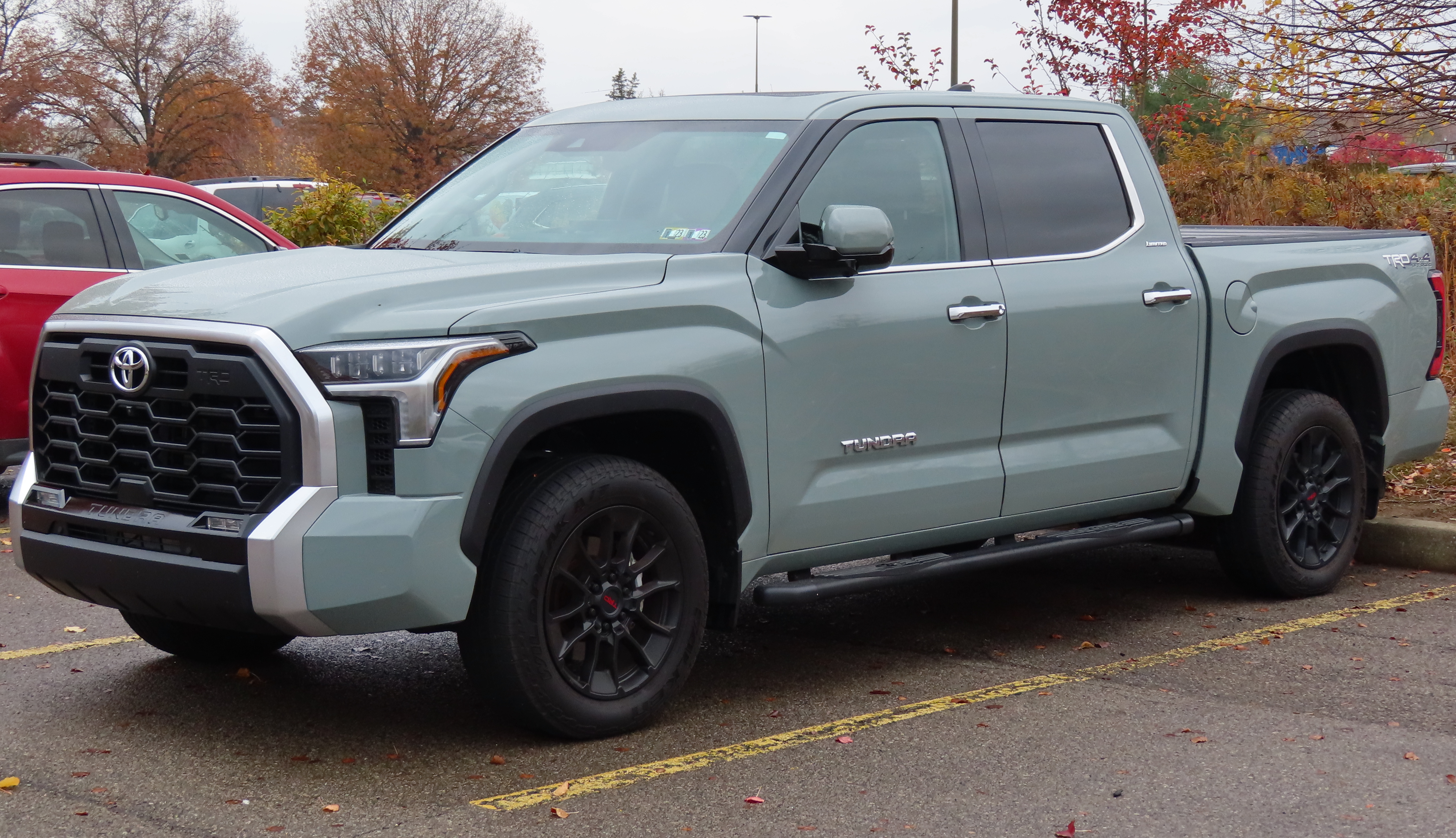
The Toyota Tundra is a large pickup truck. It’s made for carrying things and towing, so it’s useful for trips where you need extra space for gear. That’s why it might be mentioned alongside other vehicles for camping plans.
Honda is a big car company from Japan. In this discussion, they’re saying Honda is losing money because sales are down and their EV plans haven’t worked out yet.
Nissan is another Japanese car brand mentioned as part of the broader financial trouble. The hosts are comparing how different automakers have been struggling recently.
A hybrid car uses two kinds of power: a gas engine and an electric motor. The idea is to use less gas while you wait for more electric cars to become practical.
A battery electric vehicle is a car that runs on electricity from a battery. You charge it, and it doesn’t use gasoline like a normal gas car.
Concept
shift in their business plans
They’re talking about changing the company’s overall plan—what cars they’re going to make and how they’ll make them. With EVs, that usually means big changes in factories and suppliers.
This is a big goal to stop selling gas cars and switch completely to electric cars by a certain year. If they later change plans, it usually means the situation didn’t go as expected.
Car incentives are like discounts or special financing that make a car cheaper to buy. If the brand reduces those deals, the car may feel too expensive and sales can slow down.
Inventory is just how many cars the dealers have on hand that customers haven’t bought yet. If there are a lot of unsold cars, dealers usually have to offer better deals to move them.
Day supply is a way to estimate how long the dealer’s current pile of cars would last. If it’s high, it usually means cars are selling more slowly than expected.
They’re describing a loop where sales are bad, so the company loses money, but then it needs to spend more to get sales going. The hard part is spending more while money is already tight.
“Stale product” just means the cars feel old compared to what else is on the market. If a model doesn’t get updated, fewer people want it, so sales can drop.
Stellantis is a big car company that makes lots of different brands. The speaker is saying the situation they’re describing isn’t limited to one automaker.
The host is talking about how automakers are spending a lot of money to build electric cars. They’re saying that spending can hurt profits for a while, even if it’s the right long-term direction.
This is when a carmaker changes from one version of a model to a newer one. That transition can temporarily slow down how many cars (and parts) show up for sale.
Concept
OEM vs dealer pressure
OEMs are the companies that build the cars, and dealers are the stores selling them. If the carmaker slows production, dealers have to adjust—often by leaning harder on used cars.
A used car auction is like a bidding event for cars. Dealers bid on cars there, but the final cost can be higher than the winning bid because of extra fees.
All-in cost means the real total you pay after adding everything on top of the winning bid. In auctions, fees and shipping can make the final number jump.
Transportation costs are what it costs to get the car from where it was auctioned to the dealership. Even if you buy it cheap, moving it can make the total price jump.
When dealers buy cars at an auction, they often pay extra charges besides the bid price. Those extra costs can make the car more expensive than it first looks.
Used car values are basically the going prices for used cars. If those prices go up, dealers pay more to buy them and have to price their inventory accordingly.
Arbitration is a formal way to settle a dispute without going to court. The key point here is that there’s a limited time window to raise the issue after buying the car.
Dealer auctions are places where car dealers bid on cars to buy them for resale. The pricing can be different than what you’d see buying a car directly from a dealership.
“Repo cars” are cars that were taken back by the lender because the owner didn’t keep up with payments. They often show up at auctions for dealers to buy.
In a reverse auction, you’re selling the car and you ask buyers to bid. The buyers compete to offer the best price to buy it from you.
Concept
auction roulette
They’re comparing auctions to “roulette” because the final price can feel unpredictable. The idea is that a different bidding setup could make the outcome more predictable.
Concept
shortage of vehicles
They’re talking about supply and demand. If fewer cars are available but people still want them, prices tend to go up.
LIVE
When I found out I was gonna be a parent,
I immediately felt a lot of anxiety and worry.
So I went on to BetterHelp to try to look for a therapist
to help me with that.
My relationship with my family and with my boyfriend
and with myself were suffering.
I really needed help.
I was ruminating a lot,
really getting those thoughts out to a therapist
and getting feedback was just life changing.
Discover what BetterHelp online therapy can do for you.
Visit betterhelp.com today.
Hey campers, it's Jan from Toyota.
This summer we're headed to Camp Toyota
and the fun starts now.
We're kicking things off by kicking up mud.
Jump in campers.
We're going off-roading in a forerunner.
Next, we're heading to the hot springs in a RAV4.
And finally, park your Tundras and Tacomas
around the campfire because we're roasting marshmallows.
Your summer start here.
Dealer in between Mayberry,
so you're participating Toyota Delivery Details
event and stream first.
Toyota, let's go places.
Out here, if you're doing nothing,
you're doing everything right.
Though on a cruise with Norwegian,
even if you're doing nothing,
you're still basking in the warm sun,
enjoying the peaceful ocean waves.
You're breathing, don't forget about breathing.
Definitely need to be breathing.
So you get to do nothing or everything,
but you still need to be breathing.
It's like really important.
Experience the difference with cruises to Alaska,
the Caribbean and Europe, Norwegian Cruise Line.
It's different out here.
Visit ncl.com, call your travel advisor
or 1-888-NCL-Cruise.
Norwegian Cruise Line ships
purchase with Bahamas and USA.
It's noon here in Venter City, New Jersey
at our nation's capital, Washington, D.C.
And this is CarEdge Live for Thursday, May 14th.
With your host, me, Ray here,
hanging out in my living room in Venter City
and Zach hanging out with his life ring in Washington, D.C.
How are you today, handsome?
I'm doing so well.
Thanks so much, everyone, for tuning in
on this Thursday, May 14th.
Today's show is brought to you by caredge.com,
a friendly reminder me, my dad and our incredible team,
provide car buying services, research and tools
back at caredge.com.
I'm gonna promote just for a moment here,
dealer reviews.
If you're not using the dealer reviews, I don't know.
I just really encourage you to do this.
We are in the business, y'all,
of grading car dealerships nationwide,
giving them A, B, C, D and F grades
based on how transparent they are.
So please, please, please spend some time back at caredge.com,
use the dealer reviews, and if we can help you out
with anything, it would be our privilege and our pleasure.
Now, dad, let's turn the attention
to the big story this morning,
which is the headline and automotive news.
And it reads, how Honda CEO plans to, quote,
stop the bleeding for the first time
since going public in the United,
since the first time since going public, excuse me,
Honda reported an annual loss.
This is fascinating, dad.
A $2.6 billion deficit for Honda.
What's going on over at Honda?
Why are they in panic mode?
Well, they've been around as a public corporation
for almost 70 years and they never had a loss until now.
There you go, that's today's show in a nutshell.
Yeah, there you have it, folks.
I mean, it's pretty simple.
They went public in 1957.
They never suffered an annual loss until now.
So, A, they're probably not used to the bleeding.
And B, since they've never really suffered
so severely in the past,
they might not know how to apply the tourniquet.
But it appears as if the CEO is taking some steps
to, well, change from where he thought
the company should be headed to where he now thinks
the company should be headed.
So, excuse me, Honda's loss,
Mazda almost came out of my mouth
because they also just reported some earnings and, wow,
they were also, dad, will spend some time on that.
But dad, Honda's loss is primarily a function of two things.
One is sales are down.
So that's something that they're struggling with.
And two is they've invested all this money in EVs
that haven't come to fruition.
So it's kind of a similar story to other automakers
that we've talked about.
Shocking, though, dad, Toyota has a loss in North America.
Honda loses billions of dollars.
It was only a couple of years ago that you and I came on here
and we were talking about Nissan losing most of their money.
But then Honda was supposed to rescue Nissan.
But now Honda's losing money.
So, like, the shakeup in the auto industry,
even for the kind of more established brands,
is happening in real time right in front of us.
Oh, it is.
And it's the way it's happening is really rather fascinating.
You know, you take most of your Japanese brands,
Honda, Toyota, Mazda, and Nissan.
Yep. Toyota said, you know, we're not going to jump into EVs
quite as rapidly as everybody else.
We're kind of taking a wait and see approach, a hybrid approach.
You know, we want to get real good at hybrids
and we want to see where things go.
Battery, electric, vehicle wise, Honda, on the other hand,
with with their current CEO, maybe Mr.
EV jumped in with both feet.
I mean, they he he was the polar opposite of what Toyota was.
He he was betting that battery electric vehicles were truly the future
and committed a lot of money towards development of EVs
and a shift in in in their business plans
and what they build and how they build it.
And, you know, you have to give them a lot of credit
for two years into it and saying, man, I screwed up.
You know, because most CEOs wouldn't say that.
And and and he basically said it.
And and he said, the dream of being 100 percent battery electric
or gas free by 2030 is no longer a dream, maybe by 2040.
OK, they killed all their electric vehicles
that they were planning on doing, regardless of how much money
they had invested in them already.
And he just said, hey, my bad, bad decisions are sure
there's some cost at this point.
Let's move in a different direction.
But at the same time, Honda sales are actually down.
So it's kind of a double whammy.
It was like, hey, we're investing heavily in this one direction.
Matt didn't pan out in the way that they wanted.
And they also have not grown sales.
I mean, I think it was maybe a couple of months ago now.
Wasn't it Brian Bensock?
There was a dealer out there who came out and he was
effusive with like, hey, look, we need incentives to actually sell these vehicles.
They're not selling, but Honda pulled back on incentive.
So it's a one to punch here, bad product decisions that haven't panned out.
And then product that you do have on the ground that is not selling
and dealers have a growing supply of inventory.
I mean, if you're a Toyota shopper out there right now,
Honda has a lot more options in terms of available inventory than Toyota.
Yeah, both are losing money, which is crazy to say.
It is. But, you know, even even with a minor slowdown in sales
for them in North America, they were still and they are still
Japan's second largest automobile manufacturer.
And their day supply is still lower than most.
But yes, they do have more inventory on hand than some others.
And they are more aggressive at making deals at the moment.
The dealers are.
But the incentives from Honda aren't haven't been that strong.
Well, they don't have money.
So this is this is the chicken or the egg problem.
It's like we're losing money because the cars aren't selling.
We're losing money because we invested in EVs that aren't selling.
But now we need to spend even more money to get people to buy our cars
because they're too expensive.
That's a really precarious situation for them to do.
We need to spend more of the money that we don't have.
OK, it's a little stuff that we do have.
So how do you, you know, at a certain point, what do you say?
Yeah, OK, we we've committed X percentage of of money
to go towards incentives for the year.
We lost two point 6000000000 dollars for the year.
We can't suddenly just find, I don't know, a couple 100000000 more
to be able to offer more incentives.
So they have to be judicious as to how they spend the money.
It's easy to spend money you don't have if if you can just print it all.
But they can't.
So it's, you know, they're not like governments
where we're, yeah, well, we just need more currency.
Let's print some.
They they can't do that.
So when you're making tough decisions like they're making
the the key to what they're thinking is going to happen.
And it is one of the truisms of the car business.
Vehicles drive sales, product drive sales.
And so the concept is that they're going to offer up 15 new
hybrids over the next two or three years.
And that new and improved product ultimately will drive sales.
Stale product slows sales down.
New product usually means an increase in sales.
We're seeing it at Nissan where they're having a turnaround
and their sales have improved.
We're seeing it to some degree at Stellantis.
So it's as long as I was in retail automotive,
it's the product that drives the business.
And so whatever direction, whatever new direction.
And there were some good looking vehicles in that automotive
news article that you look at them and you go, OK, well,
if they actually come out with that stuff, that's going to drive
traffic to the showrooms, which will drive sales.
For sure. But more broadly, I think there are a lot of automakers
right now dead that for years or even decades had been kind of fat and happy.
Like they just operated their businesses, they made money,
customers bought the product. Everything was kind of hunky dory.
This big investment towards electric vehicles has really caught
a lot of these automakers in a bad spot now, a.k.a.
Honda doing their first annual loss
from 1957 to today. So what's that 70 years, 68 years?
So they had 68 years of operating as a public company.
They had never lost money.
So like they're just it just puts the pressure on them.
The panic mode is not hyperbolic.
Like it is panic mode and it's not unique to Honda.
This is across all automakers right now.
I mean, it's really even Toyota, you know, we saw Toyota with a loss.
And I want to turn our attention here, dad, to Mazda
because Mazda is another example of this going on in the auto industry right now.
This line right here operating profit for Mazda for the year plunged 72
percent. This is the type of stuff we're talking about last year with Nissan.
When we thought maybe they'd go out of business when like the headlines
from Nissan last year, when they had a 99 percent decrease
in their profit year over year, the headlines were, well, Nissan survived
and who's going to bail them out? That this is Mazda.
Their revenues were down, their profits sales were down.
I mean, everywhere you look, dad, these automakers
are feeling a little bit of pain today.
And that should be, I think, generally good news for consumers
because they're going to need to liquidate this inventory.
Like that's the name of the game.
It could be good news for consumers.
It could also be bad news for consumers.
They could pull back on incentives.
Yes. And they can pull back on some research and development.
You know, so what I think what happens at the highest levels
and God knows I've never worked at the highest levels of automobile manufacturers.
But I think what happens when they look at things like this is they
they go, OK, how can we mitigate the type of losses that we're having?
And what is it that will allow us to turn things around?
And there's no mystery in automotive.
It's product.
So they have to figure out ways to once they conceive
of the product that they want to build to figure out ways
to bring it to market sooner rather than later.
And typically it's it's about, I think, a three year process.
And Honda wants to figure out how to cut that time frame in half
because they don't have time to wait.
So if if you're at the highest levels, you're thinking, OK,
we're going to allocate funds right now to figure out ways
to be able to bring these vehicles to market sooner rather than later.
So that's where the money is going to go.
They're still projecting that that this next fiscal year,
which ends next March 31st, will be a profitable year for them.
They'll be able to turn some things around for sure.
So talk to us about your perspective as a dealer, dad,
when you've worked for automakers, so have you worked for any automakers
during times where they were struggling mightily?
What would the relationship or the conversation be like
with your factory representative?
Like there are ramifications here.
There's a distinction between the original equipment manufacturer,
the OEM and the dealer who sells you and I the vehicles.
What is what goes on when, in the case of Mazda,
profits are down 72 percent.
In the case of Honda first operating loss, like, is it more tenuous?
Is it more tense?
Like what with dynamics trickle through to the dealership?
Hey, campers, it's Jan from Toyota.
This summer, we're headed to Camp Toyota and the fun starts now.
We're kicking things off by kicking up mud.
Jump in campers.
We're going off roading in a forerunner.
Next, we're heading to the hot springs in a RAV4.
And finally, park your tundras in Tacomas around the campfire
because we're roasting marshmallows.
Your summer start here.
Dealer in between may vary.
So you're participating Toyota dealer for details event and stream first.
Toyota, let's go places.
When in the in the eighties,
when there were quotas instituted for the number of vehicles
that could be imported from Japan, you know, my my Nissan rep said.
Kids, you're in the used car business now.
We're not going to have the new cars for you.
You've got to you've got to grow your used car department.
And all those deposits you keep taking on a base
B210 or sensor, whatever the hell it was at the time.
You should stop taking them because you're never getting them.
OK. And and and so it is it's like a come to Jesus moment.
You're in the car business.
It's the car business.
It's not just the Nissan business.
It's cars, anything that's got wheels and an engine.
You you can figure out how to sell it.
And we we bought, I think, from a dealer in Montana.
We bought new Mazda's because we couldn't get our hands on Nissan's.
And we bought new Mazdas and we were selling new Mazdas off of our Nissan lot.
You go if if the manufacturer goes into panic mode,
then the dealer goes into a different type of panic mode and says, OK,
what aspects of the business can keep us going, parts and service, pre-owned cars?
And suddenly that's that's what you really start to focus on.
And and so I think you'll see Mazda dealers
when we spoke to Joe Lewis, his used car department.
They were carrying more used cars than they had been.
So but then again, he's got more new car
in the inventory at the moment that he knows what to do with.
And I think Honda dealer, I mean, you know, it was just what was it?
Two summers ago that we were driving around the Atlantic City area.
There were like no cars at the Honda dealership.
Yeah, they had no inventory.
None. OK, but they were still in business.
They had plenty of pre-owned.
So you learn to adapt if you're going to survive as a dealer.
You learn to adapt.
And and that's that's what these dealers are going to do.
So you think maybe that some of the pressure that the automakers are feeling
ultimately shows up as used car pressure on these dealers
to figure out a way to keep their businesses thriving and supporting customers
first, because maybe on the other side of all this model switch over
and we're not going to produce this vehicle that we thought we were going to
going to, it could mean that there's fewer available pieces of inventory.
They're they're trying to retool production lines and things like that,
which could kind of make sense.
I mean, we've seen new car inventory days supply grow,
but the total amount of inventory we're waiting until next week to get the latest
update and actually hasn't gone up as much as you and I would have anticipated.
And that only means it's because manufacturers have stopped producing as many cars.
So it's interesting.
There's an interesting dynamic here between the pressure of the OEM feels
and the pressure of the dealer feels.
Well, and, and, you know, if if you're if you're at a Honda dealership
where your new car inventory is growing and, you know,
your new car sales are going to be stagnant,
but now you have to get deeper into the used car business.
And we know that there is a shortage of pre-owned cars.
So suddenly it becomes I got to get pretty creative to figure out where the hell
I'm going to get these cars from.
And so that becomes the challenge for everybody.
I'm competing with every other dealer out there to get used cars as it is.
And now I find myself in a position where I have to compete for more of them.
How do I do that?
And, and so you look at the status quo and you say to yourself,
what do I need to change?
What can I do differently?
And you'll come up with a different plan.
You have to.
Yeah, it could be just one more comment here in the most which
here's an opportunity now for our community is if you have a used car to sell.
You know, we're out of we're on the tail end of the of tax season,
where used car prices were accelerating.
They were increasing significantly.
That happens every year.
That's the seasonality of the used car business.
But your local dealership is probably desperate to get their hands on a quality
used car. If you have a car you're thinking of selling, of course,
go get the Carvana offer and the CarMax offer and do the whole thing.
Do the song and dance.
Don't be surprised if your local dealers willing to pay even more
because and it's interesting that we actually do have some data.
I'll pull it up briefly on the screen.
I'm going to make a suggestion to people, for instance,
who have might have a lease car coming to and let's say you have
a Honda lease coming to
and it's a low mileage three year old car.
Create an auction.
Create your own auction between all the Honda dealers in your area.
You don't just have to return it if you want to to the dealer
where you leased it from.
You can inform all of the Honda dealers in your area and say,
gee, my lease is coming due.
I would like to sell it before it comes due.
And I would like to sell it to the highest bidder
so that I can get some equity out of it.
And why is that at least specific if I have a car?
Any car, but I'm just saying, you know, for people with leases
at the moment that are coming, that's yeah, but you don't you don't
just have to take it to the dealer where you bought it.
Yeah, I want to double triple quadruple down on this.
What you just said is a great idea to sell a car.
It is not how to create your own auction.
Yeah, it's a great idea.
It's not dependent at all if you've leased your car.
I just want to make sure that's super clear to everyone.
Well, my dad just suggested I think it was a great idea.
We should build that back at caredge.com.
Who cares if you own your car or if you're leasing it?
That's a great idea.
That's one of the best ways I think you could possibly get the most money possible.
And it ties directly back in with the automaker Honda being in panic mode.
There's panic mode for the dealers.
There's immense demand for used cars.
This is a way for our community to profit off of that.
Dad, let's switch gears here just a little bit.
And it will tie back into used car prices.
We have that, the used car auctions, record setting data in terms of sale prices.
So I think it is really important to understand that car dealers right now
don't really want to buy used cars at dealer auctions.
And interestingly, while there are record high prices,
yes, the amount of vehicles being purchased by dealers has actually decreased.
So it's like commercial companies that are purchasing more vehicles at the used car auctions.
I found that super interesting, Dad.
And it kind of corroborates exactly what we're saying here.
Go run a local auction on any car you want to sell.
Dealers are desperate for quality used car inventory.
They don't want to buy them at the dealer auctions.
Well, the reason they don't want to buy them at the dealer auctions is that there's a buy fee.
OK, you don't get to go to the auction and just pay what, you know, ultimately,
when you had your hand up last, you know, there's fees on top of that.
And then there's the fees of getting the vehicles back to your dealership.
So there's transportation costs involved.
So, you know, if you bid on a vehicle and the winning bid was 29.5,
well, between transportation to get it back to the dealership and auction fees,
you know, you might end up in it at 30,000, five or 31,000 dollars.
It's a $1,500 swing.
So if you can get your inventory off the street from customers
who create their own auction to sell their own cars,
OK, you're still saving money.
Even if you buy it for $30,000 from a customer, there's no transportation charge
and there's no there's no auction fees.
So as dealerships, you have to look for ways to mitigate the cost of of attaining that that inventory.
And so, yeah, I, yeah, dealers, they know when they're at the auction,
they're paying top dollar for things.
And then there's costs on top of that.
But even though there was a dip, OK, during the during the month of April,
used car values are still higher, at least for for the younger lower mileage vehicles.
Those are still garnering a premium wherever dealers are buying them from,
whether they're buying them off the street or buying them at the sale.
You know, another challenge to have with buying a car at an auction,
and we should spend more time, maybe a whole dedicated show, one day to this,
we can get some used car manager to join us and talk about this.
There's fraud that happens at the auctions.
Cars, yeah, cars are graded at one level and then ultimately, you know,
you get it and it's like, what the heck, this doesn't run or it's got this issue or that issue.
So there's fraud that happens.
Shockingly, there are car dealers selling cars to each other.
There's fraud.
Who would have done that?
There's also a thing called arbitration.
Yeah, but then there's there's also limitations to the arbitration period.
And so if you bought a car far away from you,
and it takes more than seven days to transport it back to you,
I mean, like there's all sorts of pitfalls to buy in a car at an auction.
Plus, we know a lot of the vehicles that make it to the dealer auctions.
You and I know the repo cars, like, again, I love this idea that you came up with.
We should totally build a way for someone to auction, like reverse auction,
a car they want to sell, because it's just a brilliant way and everyone wins.
The dealer might pay more money, but they actually spend less because, yeah,
they're not playing auction roulette.
Like, I think it's, I think it's a great idea.
And the data was super interesting that backs that up.
Well, you know, every now and then, I have good ideas.
Okay, I think, I forget the name of the movie, but I think it was called Night Shift.
And I think it was in the 80s.
And one of the characters, I forget who played it, you know, he was an idea man.
Okay, he always had great ideas.
He says, you know, why isn't the tuna mixed with the mayonnaise in the can?
Okay, you know, so, because you got to add the mayonnaise to it anyway.
So, you know, every now and then, you got to have some good ideas.
Okay, and yeah, so I, yeah, that was a good idea I had that, you know, as a customer.
If you know, if you know there's a shortage of something, and we know dealerships do this
all the time when there's a shortage of vehicles, but there's a demand for them,
they get more for them.
Okay, they charge more.
Well, if you as a customer have a nice pre-owned car, and you know there is a shortage of them,
why wouldn't you want to ask dealers to compete to get the maximum amount that you can for your car?
There is a way to do it.
And you got my, you got my gears spinning, Pops.
I think something that we can do, we can do at Carriage.
But yeah, right now, anyone can do it, just like do some research on local dealers and contact them.
Exactly.
Yeah.
You know, and it doesn't, it doesn't even necessarily have to be the same brand.
No, definitely not.
Let's come here.
We had a thoughtful contribution come in from disgruntled ex hippie.
Follow the leader.
Who decided to drop gas and go high road on one of the most popular RAV4?
Who got a crush as it?
Yeah, well, then for 2026, you can only get the RAV4 as a hybrid.
It is what it is.
I mean, you know, there's certain things we can fight back against.
And then there's some things we can't.
And I believe this is one of the things we can't.
Seems pretty clear.
And if we could, and if people say, you know, I would have bought that if it wasn't a hybrid.
And if the, if the half a million customers who they expect to buy those this year,
however many it is they expect to sell.
If all those customers said, damn, if it wasn't an hybrid, I would have bought it.
Nobody buys them.
Okay.
Well, then we can force the deal with the manufacturer to rethink what it is that they're doing.
But at this point, people are buying them without test driving them.
They're buying them sight unseen.
So, yeah, I mean, I get, you know, there's some folks that don't need a hybrid.
There's a guy like me that drives 2,000 miles a year.
I don't want to pay extra to get a hybrid.
I could never earn back the extra that I paid through fuel savings.
They're going to drive enough.
So, yeah, I get it.
For sure.
For sure.
But dad, pretty much whatever Twitter it turns, touches, turns to gold.
And I think obviously with Honda, they're walking back their EV ambitions or hybrid.
They'll figure it out.
Pops, let's go on the show for today.
Again, folks, if we can help you out with anything, caredge.com.
It's worth mentioning with our car buying service, car edge concierge.
What we're talking about with your trade-in, we do that for you.
So we do offer a service here.
Just learn more.
You can learn more back at caredge.com.
Encourage everyone to have a free consultation with our team.
Chat with us, schedule a time talk, or have us call you back.
And you can meet the incredible folks, like Joe, who has saved for his customers over $471,000.
And again, want to reiterate, will help you with your trade.
So that idea, my dad was saying, it is a great idea.
We've been putting in practice with our caredge concierge service for many years now.
But I like it.
I like the idea of making it even more accessible.
Dad, let's call it a show for today.
We'll be back with a Friday episode of Car Edge Live tomorrow.
Feisty Friday?
Sure. Feisty Friday works for me.
Perhaps. We'll see.
But we appreciate everyone tuning in.
Thanks for spending some of your day with us, and we'll be back here tomorrow.
Thank you, everybody.
Have a great day.
We look forward to seeing you here at noon Eastern time from Ventner City.
See you, Pops. Love you.
Yep. Love you too.
Hey, campers. It's Jan from Toyota.
This summer, we're headed to Camp Toyota, and the fun starts now.
We're kicking things off by kicking up mud.
Jump in, campers.
We're going off-roading in a forerunner.
Next, we're heading to the hot springs in a RAV4.
And finally, park your tundras and Tacomas around the campfire,
because we're roasting marshmallows.
Their summer start here.
Dealer in between Mayberry, so you're participating Toyota dealer for details,
event and stream first.
Toyota, let's go places.
If you liked the show, please take a moment to rate, review, and subscribe.
It really does help the show to grow.
Thank you for listening.
About this episode
Honda’s financial “panic mode” takes center stage as the hosts connect the automaker’s first annual loss since going public to down sales and EV bets that “haven't come to fruition.” They dig into Honda’s EV roadmap reversal, dealer incentive pullbacks, and inventory pressure that creates a “double whammy.” The conversation widens to industry-wide stress—Mazda’s profit plunge, Toyota’s slower EV pace, and how dealers pivot to parts, service, and used cars. The episode also includes practical advice on selling a leased Honda via dealer competition.
Today on CarEdge Live, Ray and Zach discuss the latest news from Honda. Tune in to learn more! Hosted by Simplecast, an AdsWizz company. See https://pcm.adswizz.com
for information about our collection and use of personal data for
advertising.