
Honda in PANIC MODE | Episode 1071
About this episode
Honda’s financial “panic mode” takes center stage as the hosts connect the automaker’s first annual loss since going public to down sales and EV bets that “haven't come to fruition.” They dig into Honda’s EV roadmap reversal, dealer incentive pullbacks, and inventory pressure that creates a “double whammy.” The conversation widens to industry-wide stress—Mazda’s profit plunge, Toyota’s slower EV pace, and how dealers pivot to parts, service, and used cars. The episode also includes practical advice on selling a leased Honda via dealer competition.

Toyota RAV4
"...nner. Next, we're heading to the hot springs in a RAV4. And finally, park your Tundras and Tacomas"
The Toyota RAV4 is a compact SUV, which means it’s a smaller family-friendly vehicle with more space than a sedan. It’s designed to handle normal road trips comfortably, including trips to places like hot springs. That’s why it’s mentioned for getting there and parking for the outing.
The Toyota RAV4 is a compact SUV known for being versatile and easy to live with, with options that can suit both city driving and light off-road use. It’s often discussed because it’s a common choice for family trips and outdoor getaways where you want comfort and practicality. In the podcast context, it’s mentioned as the vehicle to use for heading to hot springs, highlighting its everyday usability.
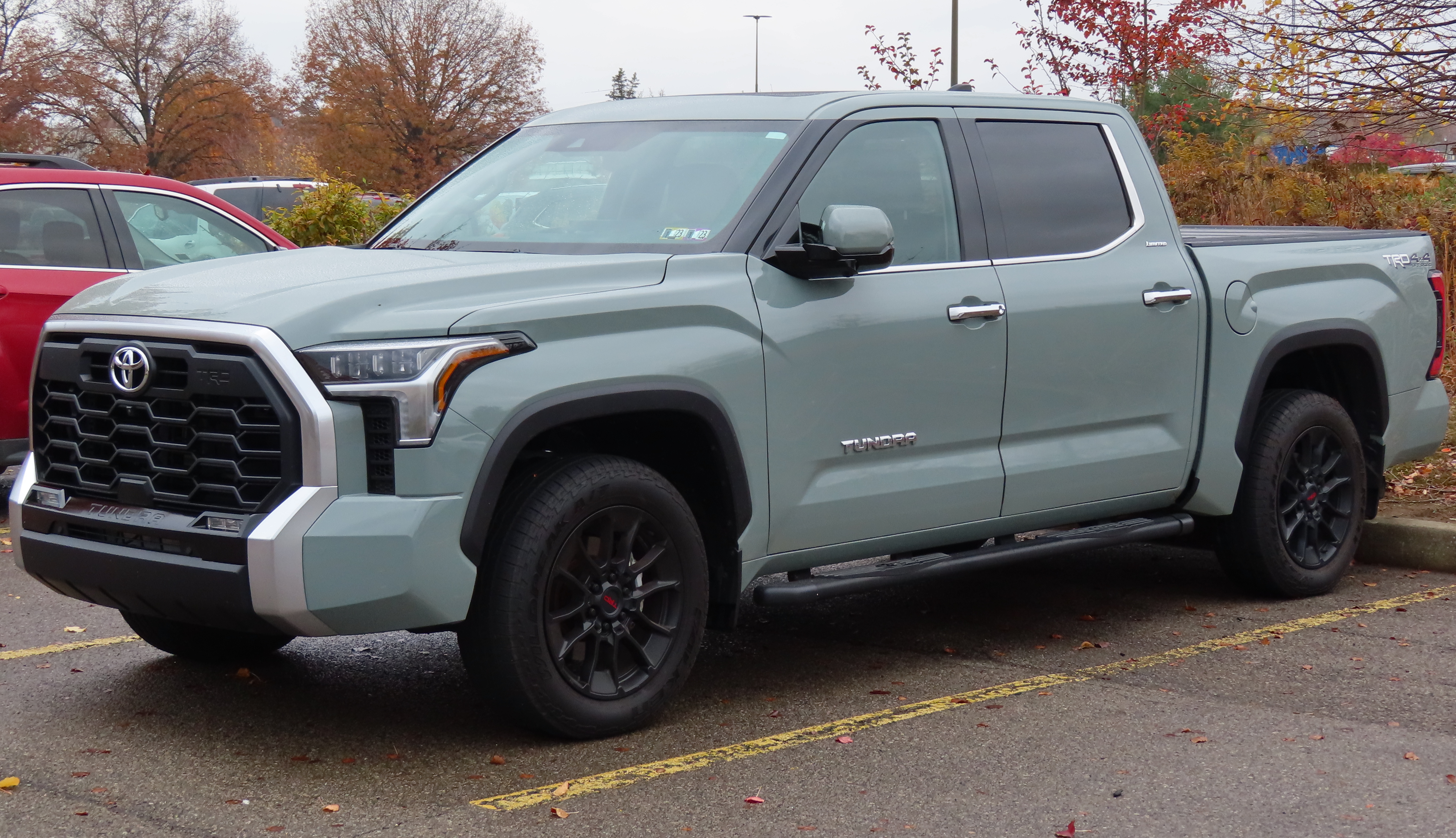
Toyota Tundra
"...the hot springs in a RAV4. And finally, park your Tundras and Tacomas around the campfire because we're roa..."
The Toyota Tundra is a large pickup truck. It’s made for carrying things and towing, so it’s useful for trips where you need extra space for gear. That’s why it might be mentioned alongside other vehicles for camping plans.
The Toyota Tundra is a full-size pickup truck built for hauling, towing, and everyday driving with a focus on durability. It’s the kind of vehicle people bring on road trips and outdoor outings because it has the space and capability to carry gear. In a podcast, it may come up when discussing practical vehicles for camping or getting to remote spots.
Honda
"But dad, Honda's loss is primarily a function of two things... Honda loses billions of dollars."
Honda is a big car company from Japan. In this discussion, they’re saying Honda is losing money because sales are down and their EV plans haven’t worked out yet.
Honda is a major Japanese automaker, and in this segment it’s discussed in the context of financial pressure. The hosts connect Honda’s losses to weaker sales and heavy investment in EVs that haven’t yet paid off.
EVs
"And two is they've invested all this money in EVs that haven't come to fruition."
EVs are cars that run on electricity from a battery. Instead of using gas like most cars, they rely on charging.
EVs are electric vehicles that run primarily on electricity stored in a battery, rather than gasoline. When automakers invest heavily in EVs, they’re betting on battery supply, charging infrastructure, and consumer demand.
Nissan
"we were talking about Nissan losing most of their money. But then Honda was supposed to rescue Nissan."
Nissan is another Japanese car brand mentioned as part of the broader financial trouble. The hosts are comparing how different automakers have been struggling recently.
Nissan is referenced as a prior example in the industry shakeup. The hosts mention that Honda was expected to “rescue Nissan,” but the situation has shifted to Honda also losing money.
Mazda
"you take most of your Japanese brands, Honda, Toyota, Mazda, and Nissan."
Mazda is another Japanese car brand mentioned in a list. It’s not the main focus here—just part of the comparison group.
Mazda is listed alongside other Japanese brands as part of the broader “Japanese brands” group being discussed. In this segment, it functions as context for how electrification strategies are diverging across automakers.
hybrid approach
"We're kind of taking a wait and see approach, a hybrid approach. You know, we want to get real good at hybrids and we want to see where things go."
A hybrid car uses two kinds of power: a gas engine and an electric motor. The idea is to use less gas while you wait for more electric cars to become practical.
A hybrid approach means focusing on hybrid powertrains—systems that combine an internal-combustion engine with an electric motor. Automakers use hybrids as a bridge to reduce emissions and fuel use while EV demand and infrastructure ramp up.
EV
"EV jumped in with both feet. [337.0s] I mean, they he he was the polar opposite of what Toyota was."
EV means electric vehicle. It’s a car that runs on electricity instead of gasoline.
EV stands for electric vehicle, a broad term for cars that use electricity to move. In everyday automotive talk, it often includes battery-electric vehicles (BEVs), though some EVs can also be hybrids or use different power sources.
battery electric vehicles
"He he was betting that battery electric vehicles were truly the future [344.4s] and committed a lot of money towards development of EVs"
A battery electric vehicle is a car that runs on electricity from a battery. You charge it, and it doesn’t use gasoline like a normal gas car.
Battery electric vehicles (BEVs) run only on electricity stored in a battery pack, with no gasoline engine. They rely on charging infrastructure and electric drivetrains, so shifting to BEVs usually means changing vehicle platforms and manufacturing plans.
shift in their business plans
"and a shift in in in their business plans [354.4s] and what they build and how they build it."
They’re talking about changing the company’s overall plan—what cars they’re going to make and how they’ll make them. With EVs, that usually means big changes in factories and suppliers.
A shift in business plans here means changing how the automaker allocates resources—what it builds and how it builds it. For EVs, that typically involves rethinking product roadmaps, supply chains, and manufacturing processes to support battery-electric platforms.
100 percent battery electric or gas free by 2030
"And and he said, the dream of being 100 percent battery electric [378.7s] or gas free by 2030 is no longer a dream, maybe by 2040. [385.4s] OK, they killed all their electric vehicles"
This is a big goal to stop selling gas cars and switch completely to electric cars by a certain year. If they later change plans, it usually means the situation didn’t go as expected.
This is an industry decarbonization target: moving to a lineup that is fully battery electric (or otherwise eliminates gasoline use) by a specific year. When a company changes course on targets like this, it often reflects shifting market demand, cost realities, and regulatory pressure.
incentives
"There was a dealer out there who came out and he was effusive with like, hey, look, we need incentives to actually sell these vehicles. They're not selling, but Honda pulled back on incentive."
Car incentives are like discounts or special financing that make a car cheaper to buy. If the brand reduces those deals, the car may feel too expensive and sales can slow down.
In auto retail, incentives are manufacturer-backed discounts or subsidies (often cash rebates or special financing) meant to lower the effective price and move inventory. When a brand “pulls back” incentives, cars can become harder to sell because the buyer’s out-the-door cost rises.
inventory
"And then product that you do have on the ground that is not selling and dealers have a growing supply of inventory. ... their day supply is still lower than most."
Inventory is just how many cars the dealers have on hand that customers haven’t bought yet. If there are a lot of unsold cars, dealers usually have to offer better deals to move them.
In this context, inventory means the number of vehicles sitting at dealerships (or in the pipeline) that haven’t been sold yet. More inventory increases pressure on dealers to discount or push incentives to avoid aging stock.
day supply
"they were still and they are still Japan's second largest automobile manufacturer. And their day supply is still lower than most."
Day supply is a way to estimate how long the dealer’s current pile of cars would last. If it’s high, it usually means cars are selling more slowly than expected.
Day supply is a sales-rate metric that estimates how long current inventory would last if sales continue at the recent pace. A higher day supply generally signals slower demand and more pressure to discount.
chicken or the egg problem
"So this is this is the chicken or the egg problem. It's like we're losing money because the cars aren't selling. We're losing money because we invested in EVs that aren't selling."
They’re describing a loop where sales are bad, so the company loses money, but then it needs to spend more to get sales going. The hard part is spending more while money is already tight.
The “chicken or the egg” problem here describes a feedback loop between sales and spending: the brand is losing money because cars aren’t selling, but it also needs to spend more (often on incentives or marketing) to make buyers purchase. That creates a cycle where the fixes require cash even while revenue is under pressure.
hybrids
"And so the concept is that they're going to offer up 15 new [584.5s] hybrids over the next two or three years. [589.2s] And that new and improved product ultimately will drive sales."
A hybrid car uses two power sources: a gas engine and an electric motor. The electric part helps the car save fuel, especially in stop-and-go driving.
“Hybrids” are vehicles that use both an internal-combustion engine and an electric motor/battery to improve efficiency. When a manufacturer plans to offer a certain number of new hybrids over the next few years, it’s essentially a product strategy to refresh the lineup and attract buyers looking for better fuel economy and lower emissions.
stale product
"And it is one of the truisms of the car business. [573.4s] Vehicles drive sales, product drive sales. [594.6s] Stale product slows sales down."
“Stale product” just means the cars feel old compared to what else is on the market. If a model doesn’t get updated, fewer people want it, so sales can drop.
“Stale product” is an industry way of saying a model lineup feels outdated—either because it hasn’t been refreshed, it lacks new features, or competitors have moved ahead. The idea is that buyers respond to newer designs and tech, so older offerings can slow sales.
Stellantis
"We're seeing it to some degree at Stellantis."
Stellantis is a big car company that makes lots of different brands. The speaker is saying the situation they’re describing isn’t limited to one automaker.
Stellantis is a major global automaker formed from the merger of Fiat Chrysler Automobiles and PSA Group. The host references it as another place where the same market trend is showing up to some degree.
electric vehicles investment
"This big investment towards electric vehicles has really caught a lot of these automakers in a bad spot now, a.k.a. Honda doing their first annual loss from 1957 to today."
The host is talking about how automakers are spending a lot of money to build electric cars. They’re saying that spending can hurt profits for a while, even if it’s the right long-term direction.
The segment points to the financial impact of large-scale investment in electric vehicles (EVs). The idea is that shifting product plans, manufacturing, and supply chains toward EVs can strain automakers’ finances in the short term, even if it’s strategically necessary.
panic mode
"The panic mode is not hyperbolic. Like it is panic mode and it's not unique to Honda."
“Panic mode” is the speaker’s way of saying companies are feeling serious pressure. They’re arguing it’s a real situation, not just dramatic talk.
“Panic mode” here is a metaphor for automakers reacting to financial stress and competitive pressure. The host emphasizes it’s not exaggeration, arguing that multiple brands are under real strain right now.
model switch over
"first, because maybe on the other side of all this model switch over [1058.6s] and we're not going to produce this vehicle that we thought we were going to"
This is when a carmaker changes from one version of a model to a newer one. That transition can temporarily slow down how many cars (and parts) show up for sale.
A “model switch over” is when a manufacturer transitions from one model generation/variant to the next. During that changeover, production can pause or ramp differently, which can reduce the flow of cars and related parts into the market.
OEM vs dealer pressure
"There's an interesting dynamic here between the pressure of the OEM feels [1086.9s] and the pressure of the dealer feels. [1088.3s] Well, and, and, you know, if if you're if you're at a Honda dealership"
OEMs are the companies that build the cars, and dealers are the stores selling them. If the carmaker slows production, dealers have to adjust—often by leaning harder on used cars.
The “OEM” (original equipment manufacturer) sets supply through production decisions, while dealers feel the impact through their own sales and lot inventory. When OEM supply tightens, dealers may be forced to rely more heavily on used-car sourcing and pricing to keep sales flowing.
pre-owned cars shortage
"but now you have to get deeper into the used car business. [1103.5s] And we know that there is a shortage of pre-owned cars. [1109.0s] So suddenly it becomes"
This means there aren’t enough used cars available. When that happens, used cars tend to cost more and dealers have a harder time finding inventory.
A “pre-owned cars shortage” means there aren’t enough used vehicles available relative to demand. That typically pushes used-car prices up and makes it harder for dealers to meet customer demand.
used car auctions
"We have that, the used car auctions, record setting data in terms of sale prices. So I think it is really important to understand that car dealers right now don't really want to buy used cars at dealer auctions."
A used car auction is like a bidding event for cars. Dealers bid on cars there, but the final cost can be higher than the winning bid because of extra fees.
Used car auctions are marketplaces where dealers and other buyers bid on vehicles that are being sold off by individuals, rental fleets, or other sellers. The key point is that auction pricing can differ from what dealers ultimately pay once all auction-related costs are included.
buy fee
"Well, the reason they don't want to buy them at the dealer auctions is that there's a buy fee. OK, you don't get to go to the auction and just pay what, you know, ultimately, when you had your hand up last, you know, there's fees on top of that."
A buy fee is an extra charge you pay when you win a car at an auction. So the total cost is more than just the bid amount.
A buy fee is an additional charge added on top of the winning bid when purchasing a vehicle at an auction. It directly affects dealer economics because the dealer’s “all-in” cost rises even if the bid price looks attractive.
all-in cost (winning bid plus fees and transport)
"And then there's the fees of getting the vehicles back to your dealership. So there's transportation costs involved. So, you know, if you bid on a vehicle and the winning bid was 29.5... you might end up in it at 30,000, five or 31,000 dollars."
All-in cost means the real total you pay after adding everything on top of the winning bid. In auctions, fees and shipping can make the final number jump.
The “all-in cost” is the total amount a dealer ends up paying after adding auction fees and transportation to the winning bid. This is why a record-high auction price can still be unattractive to dealers if the final cost lands much higher than expected.
transportation costs
"And then there's the fees of getting the vehicles back to your dealership. So there's transportation costs involved. So, you know, if you bid on a vehicle and the winning bid was 29.5..."
Transportation costs are what it costs to get the car from where it was auctioned to the dealership. Even if you buy it cheap, moving it can make the total price jump.
Transportation costs are the expenses to move a purchased vehicle from the auction location back to the buyer’s dealership. In used-car pricing, these costs can be large enough to erase the savings from a lower winning bid.
auction fees
"Even if you buy it for $30,000 from a customer, there's no transportation charge and there's no there's no auction fees. So as dealerships, you have to look for ways to mitigate the cost of of attaining that that inventory."
When dealers buy cars at an auction, they often pay extra charges besides the bid price. Those extra costs can make the car more expensive than it first looks.
Auction fees are extra charges dealers pay on top of the purchase price when buying vehicles at auctions. They can materially change the dealer’s total cost per car, which is why dealers talk about “mitigating the cost” of inventory acquisition.
used car values
"But even though there was a dip, OK, during the during the month of April, used car values are still higher, at least for for the younger lower mileage vehicles. Those are still garnering a premium wherever dealers are buying them from,"
Used car values are basically the going prices for used cars. If those prices go up, dealers pay more to buy them and have to price their inventory accordingly.
Used car values refer to what pre-owned vehicles are selling for in the market. When values rise—especially for younger, lower-mileage cars—it increases the price dealers must pay and can also raise resale margins or pricing pressure.
premium
"Those are still garnering a premium wherever dealers are buying them from, whether they're buying them off the street or buying them at the sale."
A premium means paying extra money for something that’s more desirable. Here, the “desirable” part is younger cars with lower mileage.
A premium is an extra amount above the baseline market price that buyers are willing to pay for a desirable version of a car. In this context, younger, lower-mileage vehicles command a premium at auctions and dealer-to-dealer purchases.
arbitration
"There's also a thing called arbitration. Yeah, but then there's there's also limitations to the arbitration period. And so if you bought a car far away from you, and it takes more than seven days to transport it back to you,"
Arbitration is a formal way to settle a dispute without going to court. The key point here is that there’s a limited time window to raise the issue after buying the car.
Arbitration is a dispute-resolution process where a neutral party reviews a disagreement—often about a vehicle’s condition or the terms of sale. The transcript also notes there are limitations to the arbitration period, meaning you may have only a short window to challenge what you bought.
dealer auctions
"Plus, we know a lot of the vehicles that make it to the dealer auctions."
Dealer auctions are places where car dealers bid on cars to buy them for resale. The pricing can be different than what you’d see buying a car directly from a dealership.
Dealer auctions are wholesale marketplaces where licensed dealers bid on vehicles to resell. Prices there can differ from retail because the buyers are professionals and the bidding is often fast and competitive.
repo cars
"You and I know the repo cars, like, again, I love this idea that you came up with."
“Repo cars” are cars that were taken back by the lender because the owner didn’t keep up with payments. They often show up at auctions for dealers to buy.
“Repo cars” refers to vehicles that have been repossessed—typically after a borrower falls behind on payments. These cars often end up in dealer auctions, which can create different pricing dynamics than retail sales.
reverse auction
"We should totally build a way for someone to auction, like reverse auction, [1493.6s] a car they want to sell, because it's just a brilliant way and everyone wins."
In a reverse auction, you’re selling the car and you ask buyers to bid. The buyers compete to offer the best price to buy it from you.
A reverse auction is an auction format where the seller is the one who invites bids, and multiple buyers compete to offer the highest price. Instead of buyers trying to win a car, dealers (buyers) compete against each other to win the right to purchase the car.
auction roulette
"The dealer might pay more money, but they actually spend less because, yeah, [1501.6s] they're not playing auction roulette."
They’re comparing auctions to “roulette” because the final price can feel unpredictable. The idea is that a different bidding setup could make the outcome more predictable.
“Auction roulette” is a metaphor for the uncertainty of auction outcomes—how unpredictable the final price can be depending on who shows up and how competitive the bidding gets. The point is that a reverse-auction-style setup could reduce that randomness by forcing direct competition.
shortage of vehicles
"If you know, if you know there's a shortage of something, and we know dealerships do this [1558.3s] all the time when there's a shortage of vehicles, but there's a demand for them, [1563.4s] they get more for them."
They’re talking about supply and demand. If fewer cars are available but people still want them, prices tend to go up.
The segment describes how supply-and-demand shifts affect used-car pricing: when there’s a shortage of vehicles but demand remains, buyers (including dealers) pay more. That’s why the hosts argue a seller can potentially get a higher offer by leveraging dealer competition.
Request an Explanation
Heard something you'd like explained? We'll add it to this episode.
Sign in to request explanations for terms you heard.
Want to learn more?
Browse our glossary for plain-English explanations of automotive terms, jargon, and concepts.
Help improve this episode
See something that's not quite right? Our annotations are AI-generated and can sometimes miss the mark. Click the flag icon on any annotation to suggest a correction.