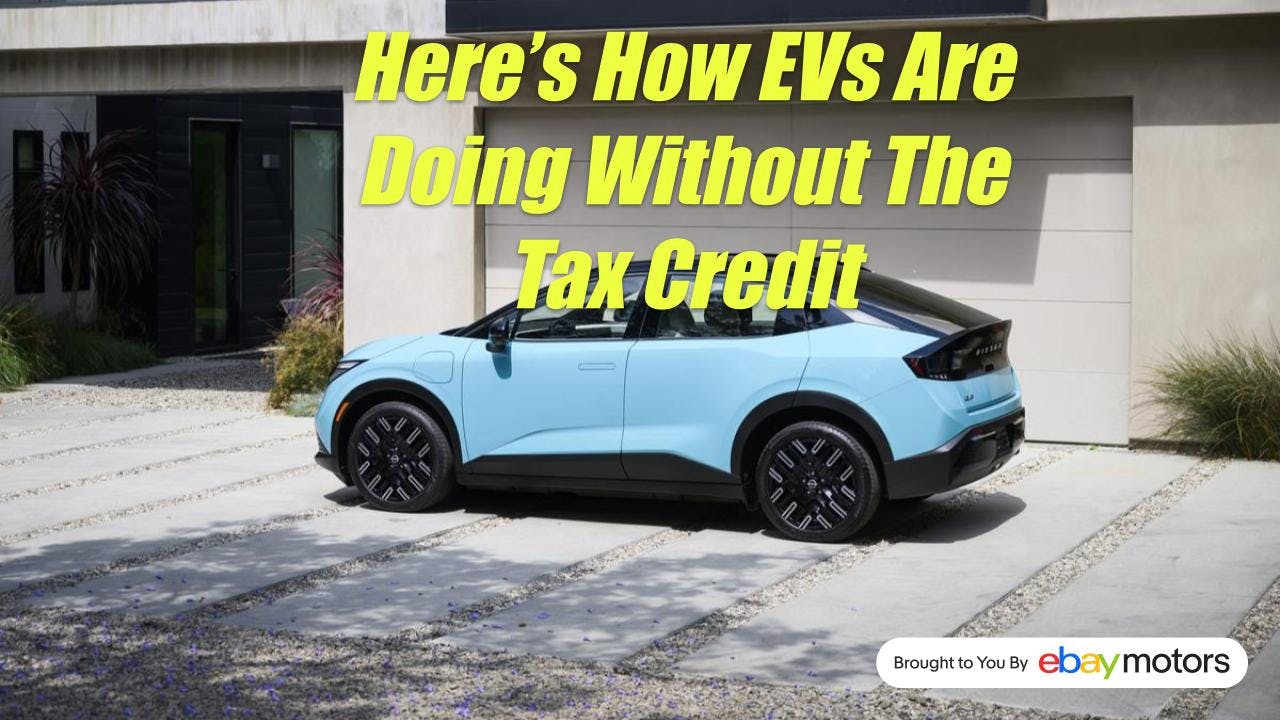
The podcast dives into the impact of the federal EV tax credit expiration on the electric vehicle market, featuring insights from Carl Brower of IC Cars. They explore how EV prices have shifted, noting a price drop for most used EVs except Teslas, which have increased in value. The discussion also covers the reduced availability of used EVs for sale and contrasts these trends with internal combustion vehicles. Additionally, the hosts chat about NASCAR highlights and share practical advice on choosing and using floor jacks, emphasizing safety and quality.
This week on the TTAC podcast we talk with Karl Brauer from iSeeCars.com about what's happened to EVs since the federal tax credit went away.
TTAC contributor Matthew Guy talks floor jacks and we recap NASCAR at Atlanta.
We thank Karl Brauer and Matthew Guy for their time and Matt Posky for editing. Most of all, we thank you for listening!
We'll see you next time!
""One is it's called a two-pump jack, which means that it is a low profile, so it will be able to get under a lower car like a MX-5 or something is modified, it will be able to get under a bear. And with just two pumps of the jack handle, one, two, it will come up and rise up against the jacking points of most cars.""
A two-pump jack is a tool that helps lift a car up quickly by pumping the handle just twice. This makes it easier to get under the car to work on it.
A two-pump jack is a type of floor jack that requires only two pumps of the handle to raise the lifting arm to the desired height. This design allows for quicker and easier lifting compared to traditional jacks that require many more pumps.
"...even if all you're lifting up right now is a spec miata or, you know, your first car on the launcher or ..."
The Mazda Miata is a small, fun car that’s easy to drive and great for people who want to enjoy driving without spending too much money. Many people use it to learn racing because it’s simple and reliable.
The Mazda MX-5, also known as the Miata, is a lightweight, affordable sports car renowned for its excellent handling and driving enjoyment. It has a strong enthusiast following and is often used in racing series like Spec Miata, making it a popular choice for first-time racers and car enthusiasts alike.
"jack is to buy a pair of jack stands. And those are the metal stands that you should put under your car that are not hydraulic, right? They are just metal stands. And in case something does go wrong with the hydraulics, it's only for a matter of the seal within the jack to fail unexpectedly, and that would lower the car on top of you whilst you're working on it. So no, right? Exactly. So you always want to have a couple of jack stands underneath the proper jacking points of your car."
Jack stands are strong metal tools that hold up your car after you lift it with a jack. They keep the car safe and steady so it doesn't fall on you while you work under it.
Jack stands are sturdy metal supports used to hold a vehicle in place after it has been lifted by a jack. They provide a safe and stable way to keep the car elevated while you work underneath it, preventing accidents if the hydraulic jack fails.
"... story of how you found it. Like this 1973 Dodge Charger on eBay that has been tucked away in an Arizona b..."
The Dodge Charger from 1973 is an old, strong car that many people like because it looks cool and has a big engine. Some are found in dry places like Arizona where they stay in good shape for a long time.
The 1973 Dodge Charger is a classic American muscle car known for its powerful V8 engines and aggressive styling. Finding one tucked away in places like Arizona is common due to the dry climate preserving these vintage vehicles, making them prized collectibles.
"thousands of cars that go to some eBay from rare finds like the Pontiac Grand Prix SJ to unique builds in your next daily driver"
The Pontiac Grand Prix SJ is a type of car that was a bit faster and fancier than the regular version. It was made by Pontiac, a car company that doesn't make cars anymore.
The Pontiac Grand Prix SJ is a sportier trim of the Grand Prix, a mid-size car produced by Pontiac. The SJ trim often included performance and luxury upgrades over the base model.
"an EV, you know, the expiration of the federal tax credit of I believe it was 7500 bucks at the end of September 2025. So you guys have taken a look to see how the EV market has rebounded to that."
The federal tax credit is money the government gives you back when you buy an electric car, making it cheaper to own. It helps people buy electric cars by lowering the price.
The federal tax credit is a government incentive that reduces the cost of purchasing electric vehicles (EVs) by providing a credit on the buyer's federal income taxes, often up to a certain amount like $7,500 for new EVs. This credit helps make EVs more affordable and encourages adoption.
"what you've seen in terms of how EVs and again, we're talking pure EVs here, I believe not just put not plugins or right or hybrid. So walk us through how battery electric vehicles have the market for them has reacted to the loss of this tax credit."
Battery electric vehicles are cars that run only on electricity stored in batteries, so they don't use gas at all. You charge them by plugging them in.
Battery electric vehicles (BEVs) are cars powered solely by electricity stored in batteries, without a gasoline engine or hybrid system. They rely entirely on electric motors and require charging from external power sources.
"the price of electric vehicles has gone up by 3.5% since the end of the credit, which is like, wow, how could prices go up after you lost the incentive?"
EV incentives are discounts or money the government gives to people who buy electric cars to make them cheaper and more popular.
EV incentives are government programs that provide financial credits or rebates to buyers of electric vehicles to encourage adoption and reduce emissions. These incentives can affect the pricing and demand for EVs.
"But they've gone down for everything besides Tesla's and like the Porsche Taycan, which isn't really a price sensitive car. So that one went up too."
The Porsche Taycan is a fast and fancy electric car made by Porsche. It is special because it drives like a sports car but uses electricity instead of gas.
The Porsche Taycan is a high-performance electric sports car from Porsche, known for its sporty handling and premium features. It is positioned as a luxury EV and tends to have a stable or rising price in the used market.
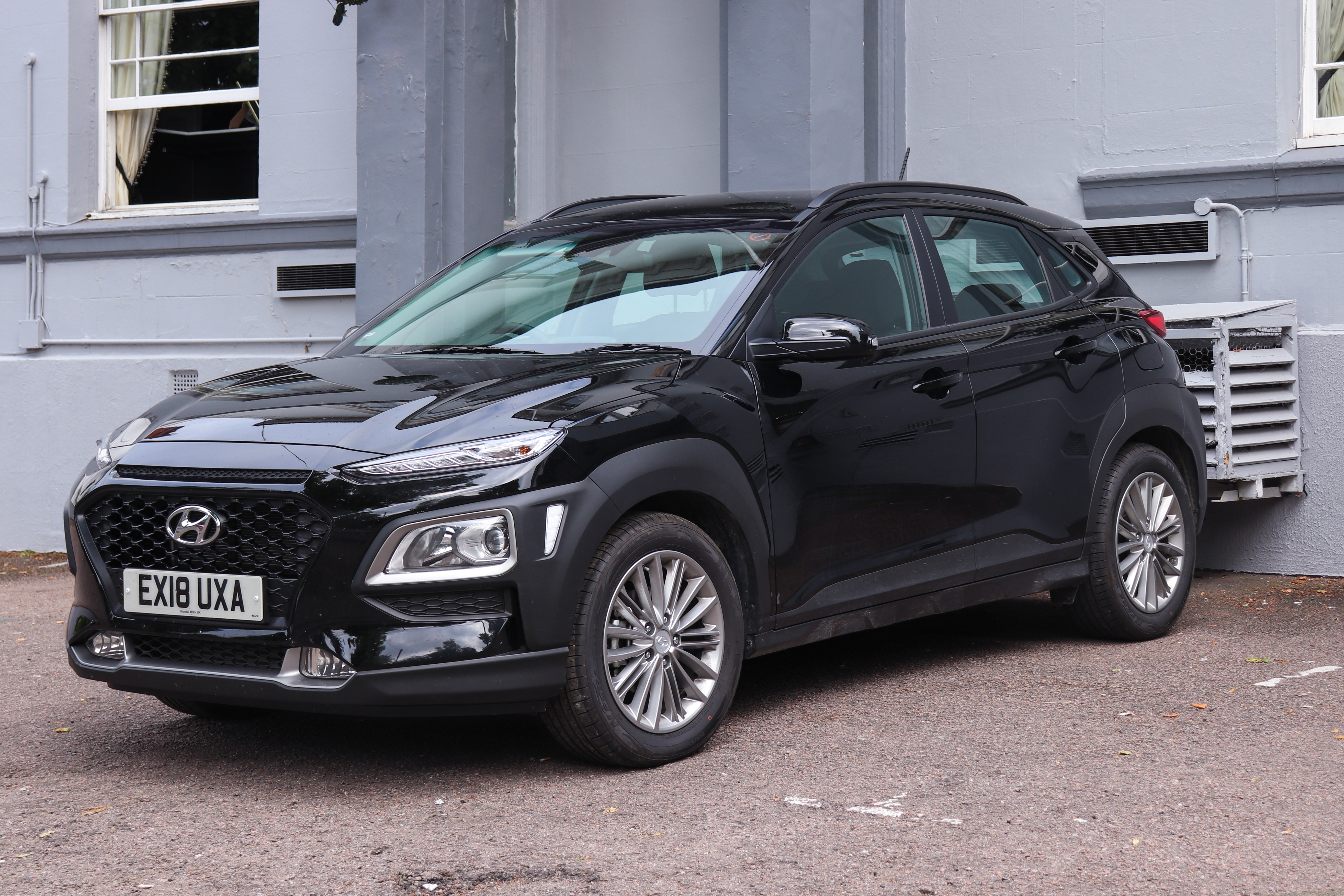
"really all the mainstream EVs that you would think of things like, you know, Kona's"
The Hyundai Kona is a small SUV that you can get as an electric car. It's one of the common electric cars people buy.
The Hyundai Kona is a subcompact crossover SUV that also comes in an electric version known as the Kona Electric. It is a popular mainstream electric vehicle (EV) option in the market.
"Now, what's interesting is the average internal combustion vehicle is also down 2%. So generally speaking, the used car market has fallen in the last four or five months, but not Tesla's."
Most cars use engines that burn gas to make the car go. These are called internal combustion vehicles.
An internal combustion vehicle is a car powered by an engine that burns fuel like gasoline or diesel to create power. This contrasts with electric vehicles that use batteries and electric motors.
"the used car market share, meaning how many of all the used cars that are listed now versus in September, what's the share of EVs down by 20%. So there's also just less EVs out there for sale, probably again, because dealers tried to unload a lot of them before the credits went away, or people who have them are like, I can't get as much as I want now anyway, so I'm just going to keep it."
An EV is a car that runs on electricity instead of gas. It uses batteries to power the motor and doesn't pollute like regular cars.
EV stands for electric vehicle, a car powered entirely or partially by electricity stored in batteries. EVs produce no tailpipe emissions and are becoming more popular as technology improves.
"certainly supply demand overall is pushing prices up for non EVs in terms of new cars."
If more people want to buy something than there are items available, the price usually goes up.
Supply and demand is an economic principle where the availability of a product (supply) and the desire for it (demand) influence its price. When demand exceeds supply, prices tend to rise.
"...the most, 13.8% drop in the price of the Hyundai Ioniq 5, which was $52,000 in September. Now it's 45%. Ne..."
The Hyundai Ioniq 5 is a new electric car that looks cool and can charge its battery quickly. It has lots of smart features and is good for people wanting an electric car.
The Hyundai Ioniq 5 is a modern electric crossover praised for its futuristic design, fast charging capability, and advanced technology. It has quickly become a strong competitor in the EV market segment.
"...000 in September. Now it's 45%. Next is the Chevy Equinox down 8.7%. Average price in September 42, averag..."
The Chevy Equinox is a small SUV that lots of people buy because it’s easy to drive and has enough space for families. It’s often talked about because many are sold and resold.
The Chevrolet Equinox is a popular compact SUV known for its practicality, comfort, and affordability. It often appears in discussions about used car prices and market trends due to its strong sales and presence in the crossover segment.
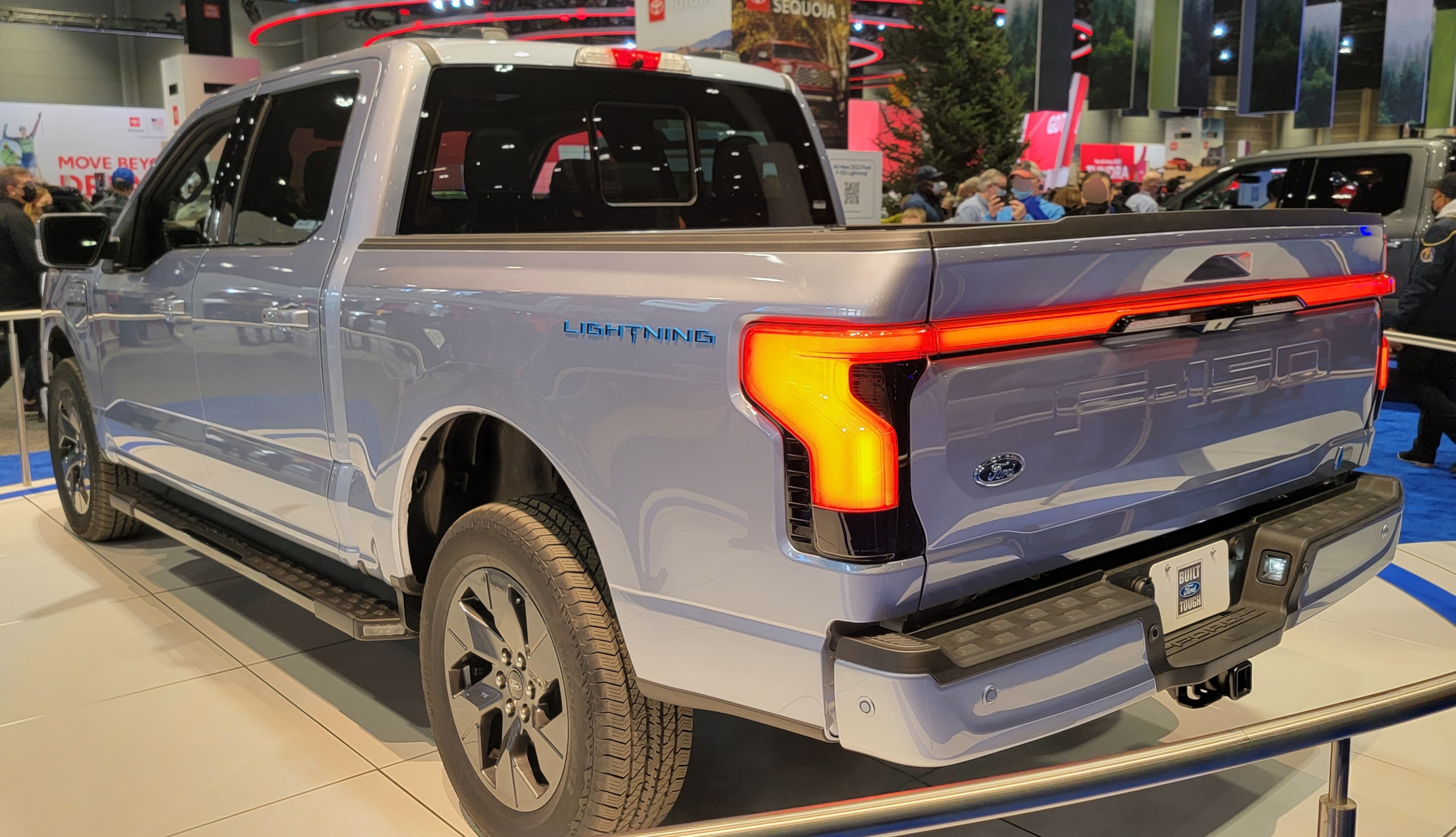
"...n September 42, average price in January 38. Jeep Wagoneer, Ford F-150 Lightning, these are all cars that a..."
The Jeep Wagoneer is a big SUV that can drive off-road but also has nice features inside. It’s good for people who want a strong and comfortable car.
The Jeep Wagoneer is a full-size SUV that combines rugged off-road capability with luxury features, marking Jeep’s entry into the premium SUV market. It’s often discussed for its blend of traditional Jeep toughness and modern comfort.
"...ge price in January 38. Jeep Wagoneer, Ford F-150 Lightning, these are all cars that are like higher volume ..."
The Ford F-150 Lightning is a big electric truck that can do all the work a normal truck does but uses electricity instead of gas. It’s popular because it’s strong and new.
The Ford F-150 Lightning is the all-electric version of America’s best-selling pickup truck, combining traditional truck capability with electric powertrain benefits. It’s a key player in the growing electric truck market.
"...f lower cost, relatively lower cost EVs. The Kia Niro EV was $39,000 in September. Now it's $37,000, d..."
The Kia Niro is a small SUV that can use gas or electricity to save fuel. It’s not too expensive and good for people who want a car that’s easy on gas.
The Kia Niro is a compact crossover available in hybrid, plug-in hybrid, and fully electric versions, known for its efficiency and affordability. It’s a popular choice among budget-conscious buyers looking for eco-friendly vehicles.
"...t's $70,000. Lucidair, $91,000. Now it's $96,000. Audi Q6 e-tron, $68,000. Now it's $72,000. Mercedes-Benz..."
The Audi Q6 e-tron is a fancy electric SUV that will have lots of new technology and comfort features. It’s one of Audi’s new electric cars.
The Audi Q6 e-tron is an upcoming luxury electric SUV from Audi, expected to offer advanced technology and premium features. It’s part of Audi’s expanding electric vehicle lineup competing in the luxury EV segment.
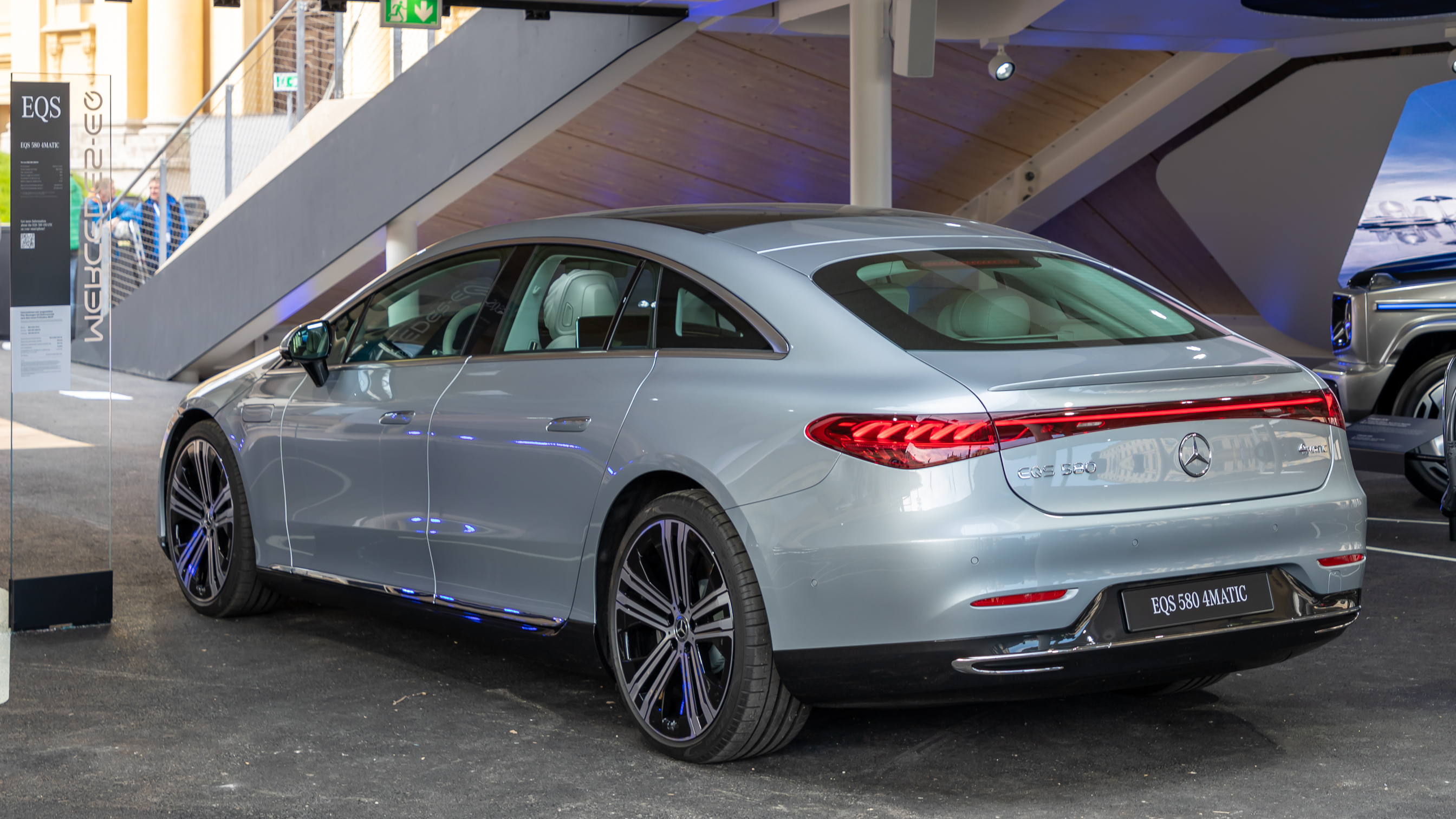
"e-tron was $67,000. Now it's $70,000. Lucidair, $91,000. Now it's $96,000. Audi Q6 e-tron, $68,000. Now it's $72,000. Mercedes-Benz EQS was $109,000. Now it's $123,000. So what that says to me again is kind of what you were saying and some people were saying is that, oh, people don't really care"
The Mercedes EQS is a very fancy electric car that is quiet, smooth, and has lots of luxury features. It’s one of the most expensive electric cars from Mercedes.
The Mercedes-Benz EQS is a luxury electric sedan that represents Mercedes’ flagship EV offering, combining high-end comfort with cutting-edge electric technology. It’s often discussed in the context of premium electric vehicle pricing and competition.
"... seen in the news, but Toyota just introduced the Highlander, the next Highlander for 27 and it's an electric..."
The Toyota Highlander is a medium-sized SUV that many families like because it’s roomy and lasts a long time. Toyota is now making a new electric version of it.
The Toyota Highlander is a midsize SUV known for its reliability, spacious interior, and family-friendly features. The introduction of an electric version marks Toyota’s expansion into the growing electric SUV market.
"...ce it. Same thing with the Beazy Woodland and the CHR, which also were just introduced. And I just did..."
The Toyota C-HR is a small SUV that looks different and is easy to drive in the city. It uses less gas than bigger SUVs.
The Toyota C-HR is a subcompact crossover SUV known for its bold styling and urban-friendly size. It appeals to buyers looking for a small, stylish SUV with good fuel economy.
"...g canceled, like the Lightning and the EV and the ID buzz keep saying those are gone, but others are still..."
The VW ID. Buzz is a new electric van that looks like the old VW bus many people remember. It runs on electricity and is good for families or groups.
The Volkswagen ID. Buzz is an all-electric van inspired by the classic VW Microbus, combining nostalgic design with modern electric technology. It’s notable for bringing electric powertrains to a popular vehicle style.
"Some people find EVs, the range is limiting, the price is too high. Towing is an issue when you talk about EV trucks and SUVs."
Range means how far an electric car can go before it needs to be charged again. Some cars can go farther than others.
Range refers to the distance an electric vehicle can travel on a single full charge before needing to recharge. It is a key factor in EV usability and varies widely between models.
"the price is too high. Towing is an issue when you talk about EV trucks and SUVs. Don't forget cold weather."
Towing means pulling something heavy behind your car, like a trailer. Some electric cars can't pull as much as gas cars.
Towing is the ability of a vehicle to pull trailers or other loads behind it. Electric vehicles often have different towing capacities compared to traditional vehicles, which can be a limitation for some users.
"You're still having a hard time finding working fast chargers"
Fast chargers are special plugs that fill up an electric car's battery much faster than normal chargers, so you don't have to wait as long.
Fast chargers are high-power electric vehicle charging stations that can recharge an EV's battery much quicker than standard chargers, reducing downtime during long trips.
"So I think you generally have people who have multi-car fleets and can lean on an internal combustion vehicle when they need to buy an EV of any price."
This means having more than one car in a family or group. People might have one car for everyday driving and another for special jobs.
Multi-car fleets refer to households or individuals owning multiple vehicles, often with different purposes such as one for daily use and another for specific needs.
"... his focus anymore. He killed the Model X and the Model S recently and he's got the three in the Y left. B..."
The Tesla Model S is a fancy electric car that can go a long way on one charge and is very fast. Tesla is now focusing more on other models instead of this one.
The Tesla Model S is a luxury electric sedan that helped popularize electric vehicles with its long range and high performance. It’s significant for pushing EV technology forward, though Tesla has recently shifted focus away from this model.
"...is cars are not his focus anymore. He killed the Model X and the Model S recently and he's got the three i..."
The Tesla Model X is a big electric SUV with special doors that open up like wings. Tesla is now focusing more on other cars instead of this one.
The Tesla Model X is an all-electric SUV known for its distinctive falcon-wing doors and impressive electric range. Tesla has recently deprioritized this model in favor of newer vehicles.
"He's putting all of his eggs in the AI and robotics and self-driving basket. He's putting all of his eggs in the AI and robotics and self-driving basket."
AI and robotics mean smart machines and robots that can do jobs by themselves, like driving cars without a person controlling them.
AI (artificial intelligence) and robotics refer to technologies that enable machines and vehicles to perform tasks autonomously, including driving, decision-making, and interaction with the environment.
"this goes beyond EV or internal combustion. If the technology hits and up until even six months ago, I was like, this is a five to 10-year thing to have fully autonomous cars all over the place."
An EV is a car that runs on electricity instead of gas, so it doesn't need to be filled up at a gas station.
EV stands for electric vehicle, which is a car powered entirely or partially by electricity instead of traditional gasoline or diesel engines.
"...models. The styling has been good, except for the Cybertruck, which obviously is divisive. I don't particular..."
The Tesla Cybertruck is a new kind of electric truck that looks very different from normal trucks, which some people like and others don’t. It’s meant to be strong and high-tech.
The Tesla Cybertruck is an all-electric pickup truck with a futuristic, angular design that has sparked mixed reactions. Its unique styling and innovative features make it a notable topic in discussions about the future of electric trucks.
"about loving cars might just be buying them and all the parts from Toyota's to Aston Martin's."
Aston Martin is a fancy car company from Britain that makes fast and stylish sports cars that many people think are very special.
Aston Martin is a British luxury car manufacturer famous for high-performance sports cars and grand tourers, often associated with elegance and exclusivity.
""...I didn't realize that Toyota Racing Development announced the long-term commitment to Keelan Harvick...""
Toyota Racing Development is a part of Toyota that makes their race cars faster and better. They also help young drivers get started in racing.
Toyota Racing Development (TRD) is Toyota's in-house tuning and performance division that supports Toyota's motorsport activities and develops performance parts and race cars.
""...Keelan Harvick, who's Kevin Harvick, Jungfeller, who's in 13, 14 years old, right? So I mean, he's just at the start of his career and Toyota's already trying to lock down that young talent for NASCAR...""
Race teams find young drivers who are good at racing and help them get better so they can win races in the future.
In motorsports, teams and manufacturers often identify and support young drivers early in their careers to develop their skills and secure future success in racing series.
"season. First road course race already. And as regular listeners know, I prefer, I'm not saying that's cars should never go all road course. So that would be, here's a small part of me, I would love to see a stock car series. It is all road course, but that's never going to happen."
A road course is a race track that goes left and right, not just around in a circle. It makes the race more interesting because drivers have to steer a lot and handle different kinds of turns.
A road course is a type of racing track that features multiple turns, elevation changes, and a mix of left and right corners, unlike oval tracks. It tests driver skill and car handling more than pure speed.
"But that's called Australian supercars. Yeah. Yeah. I would love to see an American version of that with cup cars, but it's just not going to happen."
Australian Supercars is a popular car race in Australia where special fast cars race on tracks with lots of turns. It's a big deal there and very exciting to watch.
Australian Supercars is a touring car racing category based in Australia, known for high-performance V8-powered sedans racing primarily on road courses. It is one of the premier motorsport series in Australia.
"But yeah, Coda, Circuit of the Americas in Texas this weekend. Gonna probably be another race that Shane van Gisburgen has,"
Circuit of the Americas is a famous race track in Texas where many important car races happen. It has lots of turns and is fun for drivers.
Circuit of the Americas (COTA) is a world-class motorsport track located in Austin, Texas, known for hosting Formula 1, MotoGP, and other major racing events. It features a challenging road course layout.
Select text to request an explanation
Hello, and welcome to the Truth about Cars podcast. I'm Tim Healy, the managing editor,
and this week we're talking EVs, NASCAR, and more. We chat with IC Cars Carl Rauer about
a post-tax credit EV market, and we recap NASCAR at Atlanta with TTAC contributor Matthew
Guy. We also discuss floor jacks for our stuff we use segment. But first, after this
word from our sponsor, eBay Motors, this message comes from eBay. The worst part about loving
cars might just be buying them, and all the parts. From Toyotas to Aston Martins, eBay has
thousands of cars, and the largest online selection of vehicle parts and accessories.
eBay, things people love. Just about every week on the Truth about Cars podcast,
we are discussing the stuff that we use in our homes, in our cars, and on our cars,
as a case may be cleaning products, tools, that sort of thing, and almost always have TTAC
contributor Matthew Guy with us, and we do today. So Matthew, how are you doing?
Hi, Tim. I'm doing pretty good, bud. How are you?
I'm well. So let's go ahead and start. We're talking about something we've talked about before,
but it's been quite some time. So it's worth going over again for Jacks.
It is, and I happen to get a new one over the past week because it was funny every now and then.
We'll follow up these posts, follow up these segments on our podcast with a post on the site,
and oftentimes I'll have a shot of the car that I'm working on and stuff, and one of our other
contributors laughed the other day. He said, what's your recommendation for a floor jack to
replace the rusty one you've got? So I did. I finally replaced it. I finally replaced the one
I've got. And there's some good ideas that I think our listeners could benefit from. This one,
the one that I got was DeWalt brand, and DeWalt is pretty well known for hand tools and all kinds
of different things. And this one is really, really, I find that the jack is really well
put together. It's all steel, of course. And there's two things that I really like about it. One is
it's called a two-pump jack, which means that it is a low profile, so it will be able to get under
a lower car like a MX-5 or something is modified, it will be able to get under a bear. And with just
two pumps of the jack handle, one, two, it will come up and rise up against the jacking points of
most cars. And that's a big difference from the jack that I had before, that you had to really pump
five, six, seven, eight times in order for it to rise up enough just to even get up to the bottom
of the car. So I really, really recommend that feature if any of our listeners are looking at
their first floor jack for working on cars. I was in their shop or in their garage. And the other big
thing for me is most jacks now, you can just take the handle and you can twist it. And that releases
the hydraulics and the car will slowly lower down. And my old one was much more mechanical
that there were two gears that needed to mesh in order for that action to happen, right, to release
the hydraulics. And Tim, you know what it's like after working on cars for a decade, those gears
aren't going to mesh anymore, right? So yeah, right, there was a fair bit of manual labor that
you had to do in order to lower the car. So I was I was over the moon picking this thing up from eBay.
Right, you can find these things on eBay. If there's one other recommendation I could give
our listeners when they're looking for a new floor jack is to it's the opposite of what I
recommend when buying a car. When buying a car, like I always try to recommend, like, don't buy
pickup truck if you just need it one day a year, right? Yeah, you can rent a truck if you only need
it one day a year. Exactly, right. And then that being said, people buy whatever the heck they want,
of course, but that's the recommendation. But it's my opposite recommendation for a floor jack
over buy what you need. So in terms of the weight, so this one's weighted at three tons,
I'm not lifting anything close to that. But it's a lot of jacks you can get very, very
cheaply that are only two tons, right? And that might not be quite enough for for what a person
might be doing in the future, even if all you're lifting up right now is a spec miata or, you know,
your first car on the launcher or something like that. Sure, sure. Two tons are probably
sufficient, but go and save your money. Get a good one, get a good jack, get a big one, and you'll
have it for a very long time. What about safety? We always talk about safety in terms of floor
jacks. Very much so. So a good thing to budget for as well when you're buying your first floor
jack is to buy a pair of jack stands. And those are the metal stands that you should put under
your car that are not hydraulic, right? They are just metal stands. And in case something does go
wrong with the hydraulics, it's only for a matter of the seal within the jack to fail unexpectedly,
and that would lower the car on top of you whilst you're working on it. So
no, right? Exactly. So you always want to have a couple of jack stands underneath the proper
jacking points of your car. And it does not add a lot to the bill. So if you can pick up some
good quality jack stands, save for them if you need to and get those to go along with your very
first floor jack. And I think you'll be very happy and very safe. Cool. Anything else we
should discuss when it comes to floor jacks? Pretty straightforward. Pretty straightforward
for a lot of people. But look for I think look for one I think that says double pump design that
seems to be the verbiage that a lot of people use a lot of companies use these days look for
a low profile one and buy one that is more stout than you need. Awesome. Awesome. All right. So
with that, we'll go ahead and close out our stuff we use second here in truth about cars podcast
with Matthew Guy. Matthew, thank you so much. Thank you very much.
The cars you'll find on eBay are just different. They come with a story that you can't wait to
share. Maybe it's the car's history or the story of how you found it. Like this 1973 Dodge
Charger on eBay that has been tucked away in an Arizona barn for over 40 years,
only 55,000 miles and somehow in great running order. It even has a rare sunroof. Suddenly,
a car that was hidden for decades is uncovered on the eBay and ready to be delivered straight
to your driveway. Thanks to eBay secure purchase, the new seamless and secure way to buy your next
car. In just a few clicks, the title and DMV paperwork is all handled for you. There are
thousands of cars that go to some eBay from rare finds like the Pontiac Grand Prix SJ to unique
builds in your next daily driver and now a new seamless way to buy them. eBay things people love.
This week on the truth about cars podcast, we are chatting with frequent guest Carl Brower,
the executive analyst at iccars.com. That's I the letter I see like vision secars.com. So Carl,
how are you doing today? I'm doing good. Just keep watching the car industry. It seems like
there's never a dull moment as you are well aware, Tim. And the latest thing that we just looked at
was where EV pricing sits four months, five months after the loss of the EV credit at the end of
September. That's exactly where we have you on to talk about today. So it's been big news,
obviously, for those who watch the industry and as well as consumers who might have been considering
an EV, you know, the expiration of the federal tax credit of I believe it was 7500 bucks at the
end of September 2025. So you guys have taken a look to see how the EV market has rebounded to that.
So or not rebounded, I should say that because that would that would that would paint a picture
of one particular direction. React is the word I'm looking for not rebounded. So walk us through
what you've seen in terms of how EVs and again, we're talking pure EVs here, I believe not just
put not plugins or right or hybrid. So walk us through how battery electric vehicles have
the market for them has reacted to the loss of this tax credit.
Well, you know, you lose $7500 for new and $4000 for used electric vehicles. And so your natural
instinct is to think, well, the price is going to have to drop to counteract that like dealers are
going to have to lower their prices to keep the cars selling. And that's true, but you have to
look close or you won't think it's true. If you look at just the regular EV market, it looks like
the price of electric vehicles has gone up by 3.5% since the end of the credit, which is like,
wow, how could prices go up after you lost the incentive? But we've first of all,
we know market shares drop. So it's like, what's going on, you know, demand the price of electric
vehicles excluding Tesla's has fallen by 3.6%. That's the price. So the price of all the used
electric cars that are not Tesla's is down by 3.6%. Used Tesla prices are up by 4.3%. So that is very
interesting that but because Tesla makes up such a large percentage of the used car market,
they pull up, they looks like the used car market prices have gone up, but they've gone up for Tesla's
4.3%. But they've gone down for everything besides Tesla's and like the Porsche Taycan,
which isn't really a price sensitive car. So that one went up too. But all the rest of the EVs,
really all the mainstream EVs that you would think of things like, you know, Kona's
and Mach-E's and all those cars, they're down by 3.6%. So it's interesting that there's a disparity.
You know, I mean, that's almost a 8% disparity between price direction, you know, Tesla up for
everything else down 3.6%. And I find that interesting that I think what it points to,
probably, is that Tesla fans probably wanted a Tesla and they weren't going to buy one new.
They were waiting for used prices. But between how many are out there and how many people still
want to get a used Tesla, regardless of the $4,000 used EV credit, they're still buying them.
And there's probably not enough out there for how many people still want to buy a used Tesla.
And maybe also when the EV credit dropped, people were like, look, if I have to pay more overall
for an EV, I want to get a Tesla because of the network or because of, I just have more faith in
them, they've been doing it longer, whatever. And I just think Tesla kind of fans are kind of their
own kind of unique market. So it's just been interesting to watch how they were resilient.
Now, what's interesting is the average internal combustion vehicle is also down 2%. So generally
speaking, the used car market has fallen in the last four or five months, but not Tesla's. Now,
on the news side, also real quick, also on the one other point on the news side that was also a
pretty interesting statistic, the used car market share, meaning how many of all the used cars that
are listed now versus in September, what's the share of EVs down by 20%. So there's also just
less EVs out there for sale, probably again, because dealers tried to unload a lot of them
before the credits went away, or people who have them are like, I can't get as much as I want now
anyway, so I'm just going to keep it. But for whatever reason, there are 20% fewer electric
vehicles for sale. And just this past few weeks, then there were at the end of September. And
what's interesting is I was like, well, what about last year? Maybe that was just a seasonal thing.
Last year, it grew 19.5%. From September 30th to the end of January in 24 to 25,
used car market share went up 19.5%. This year, it went down by 20%. So definitely some big shifts
going on that I think are very reflective of the EV credit. Now, you asked about noon on the news
side, it's always tricky because you know, Tesla, you can't get any data on, they don't make their
data available like every other new car seller. But the average price of new EVs, not including
Tesla is down 2.3% since September. And the average price of internal combustion vehicles,
new vehicles is up 2.5%. So it's down to three for EVs, but up to five for non EVs. So that just
to me, that just says that there's still strong market share or strong demand for new cars,
certainly supply demand overall is pushing prices up for non EVs in terms of new cars.
And I think the automakers have been able to see, have basically gotten it down to a science on
limiting production of new cars to ensure that they're always able to sell them around MSRP or
higher, which is still what they go for. They tend to go for about MSRP or higher, the average new
car. Okay. Yeah. So I had a couple of questions, obviously. So my first question is, there was
a bit of a debate, you know, when the credit went away and EV evangelists, as well as those of us,
and I'm not an EV angel, excuse me, evangelists, nor am I an EV hater. I see EVs as I see the
other powertrains, a possible tool, and I see the evangelists of EVs, no tailpipe emissions,
but I also see the disadvantage. You know, there's still still emissions and environmental damage
was there as it produced, but that's neither here nor there. My question is, there was obviously a
debate when the credit was going away, you know, and something that was kind of set in defense in
a very like defense of the credit going away was, oh, well, the credit's not really helping lower
price point buyers because there's not a lot of EVs at lower price point, and it may be just a
giveaway to the rich who can afford a expensive EV anyway. So has that really, have you seen that
back out in your numbers? Or has it been more like, no, this person really could have afforded an EV
with the credit and they can't without the credit and the credit makes all the difference in the
world? Or is it really just a kind of a giveaway to people who could afford an EV either way?
Well, and that's a great question. And I think we have a couple of pieces of data that help us
answer it. First, we know that the market shares down about half, right? Like it was crazy in September
because everyone was buying before it went away, and I think it would apply 12% of new vehicles
were electric. But before that, you know, before like August, September, when everyone knew the
credit was going away, it was averaging around 8% for new vehicles. And it kind of stalled there
from over a year earlier, even before changes in elections and administrations and policies,
new EV sales, market share growth across the country had stalled around 8%.
And then it went up a little bit before the credit went away briefly because people were just like,
well, if I'm going to buy one, I got to do it now. And now it's fallen and it's holding down
around half of that 4%. So I think first, it's obvious that if market share of EVs for new EVs
has dropped by about 50% since the credit went away, the credit was helping sell EVs.
Another telling point that goes right to the price and who's buying them and price sensitivity
that you're talking about is if you look at new EVs, again, not including Tesla because they don't
have the information, but everything else we can track easily. The cars that on the new side are
down the most are lower priced cars. So the average price of an EV is $63,000. So first of all,
that means you got to be kind of wealthy to buy one anyways relative to other cars.
But when you look at the cars that are down the most, 13.8% drop in the price of the Hyundai
Ioniq 5, which was $52,000 in September. Now it's 45%. Next is the Chevy Equinox down 8.7%.
Average price in September 42, average price in January 38. Jeep Wagoneer, Ford F-150 Lightning,
these are all cars that are like higher volume and kind of lower cost,
relatively lower cost EVs. The Kia Niro EV was $39,000 in September. Now it's $37,000,
down 5.5%. What EVs have held steady or gone up? Well, the Audi Sportback, Audi Sportback
e-tron was $67,000. Now it's $70,000. Lucidair, $91,000. Now it's $96,000. Audi Q6 e-tron, $68,000.
Now it's $72,000. Mercedes-Benz EQS was $109,000. Now it's $123,000. So what that says to me again
is kind of what you were saying and some people were saying is that, oh, people don't really care
if they're buying EVs that are not price sensitive. If they're buying expensive EVs,
that was absolutely true. And the prices suggested the car companies aren't even
lowering. They're actually raising the prices on these. And my thinking is that they probably
sold a certain amount of them before the EV credit went away. So they don't have that much supply.
And now their attitude is, if we're selling an EQS, a Mercedes-Benz EQS or a Lucidair,
we're just going to sell it at what we need. We're going to try to make profit back on these
vehicles and we'll wait till a wealthy enough buyer comes along that's not going to dicker on price.
But if you're selling IONIQ 5s and equinoxes, ID buzzes, you're having to
struggle. ID buzzes down 6.6% since September. And of course, that was the hot car that now
they canceled for the next year. So mainstream cars with more mainstream EV pricing, which is
still kind of high, but the lower the cost the EV was, the more impacted it was by losing the
credit and the more it needed, the dealers have to lower prices to keep them moving.
Yeah. Okay. And so you mentioned the cancellation of the buzz. That's a perfect
segue to my next question. Every year, there's always a few models, including EVs that get
killed. So now some come back, Chevy's kind of brought the bolt back and forth a few times now,
and I've lost track of where they are at with the bolt. But how much does that change things too?
Just the normal turnover of a few EVs being either canceled or going on hiatus while they await
a redesign? I think that that's where we're kind of at right now is that everyone is kind of
evaluating the car companies are evaluating, you know, which how many of these cars are we
going to try to sell? And how long are we going to what capacity are we going to try to sell them at
and what level of maybe delay are we going to do if we can? And so I think that's also
contributing to the drop to 4% from 8 is that a lot of cars that were planned a year or more ago
have already been delayed or canceled like the EV buzz that we were or the IB buzz that we were
just talking about. And it's fascinating because some of the cars can't be stopped like you've
probably seen in the news, but Toyota just introduced the Highlander, the next Highlander
for 27 and it's an electric version. But I think that's the reflection as much or more of this
train had left the station and we can't stop it. So that car's coming, whether the EV market we
think is well positioned for it or not, you know, whether the consumer market is ready for another
EV or not, we have to introduce it. Same thing with the Beazy Woodland and the CHR, which also
were just introduced. And I just did my videos on my channel on YouTube. So there's EVs coming
still in spite of some being canceled, like the Lightning and the EV and the ID buzz keep saying
those are gone, but others are still coming. So I think what we're really going to see is just a
much more modest level of production and modest assumptions by dealers and manufacturers on how
many will be sold because we've lost half our market share demand since the credit went away.
Yeah. Okay. So now my next question is, you know, there's we have a debate, I say we
weaving the industry, but also sometimes internally at T-TAC and externally,
and we all have opinions on the matter. And I personally, like I said, I'm not an EV evangelist,
nor am I an EV hater. I would like to see EV growth just because I would like to see emissions cut,
despite what's happening with larger policy. We don't have time to get into the last week's
Trump administration changes that kind of upset me. But you know, I like being able to breathe,
especially as someone who lives in an urban area and having pollution reduced from the tailpipes
is great. But I also understand personal choice. I understand that EVs don't work for everybody.
In my case, I can't charge in my building. Some people find EVs, the range is limiting,
the price is too high. Towing is an issue when you talk about EV trucks and SUVs.
Don't forget cold weather. I was just getting there for some folks. It's cold and hot weather.
You run the AC or the heater and you lose 20%. So obviously EVs, that's a long way of saying that
electric vehicles are still a relatively new technology. The infrastructure support is still
struggling to catch up to the cars. You're still having a hard time finding working fast chargers
in enough places. And even fast charging is still a lot slower than refueling an ICE car
or a hybrid where less than five minutes to fill a tank of gas in a plug-in hybrid or
internal combustion engine car, whereas fast charging is going to be 20 or 30 minutes at the
lowest. So obviously there's a lot to be done before EVs can be adopted mainstream, regardless of
the politics and regardless of consumer preference. They're just not quite the same as ICE cars or
even hybrids at this juncture. Now that may change as technology improves. But where I'm going with
this, that was a really long way of saying the question. I do apologize. But where I'm going with
this is, you know, there are some consumers who are always going to want to buy an EV for whatever
reason, whether it makes them feel good about their political choices or moral or moral choices,
whether they like the silence, the instant torque, not having gas. They can charge it home in some
cases. They just have to outlay a few hundred bucks on a charger once and they're done with it.
A lot of people may have an EV for commuting an ICE or hybrid for road trips or longer drives,
where range might be an issue. There's always going to be a slice of EV consumers and there's
also going to be a slice of consumers who don't really care, right? There are some who just want
the best car for the money and if it's an EV and they can make it fit their life, they will.
And there's a third size of consumers, of course, who either are anti-EV or afraid of EVs and maybe
some of them might come around if they realize the range isn't as bad as they think or whatever
and others might just be like, nah, I'm always going to do internal combustion or hybrid until
I'm forced not to. So I guess my question is, and again, sorry for the long setup here, my question
is, with the tax credit going away, how does it change consumer intent for the people who aren't
so price sensitive? And I'm not even talking about those who are wealthy enough that it doesn't make
a difference. This could include people who maybe were on the borderline, but price just isn't the
main consideration. Well, I think that's who we've seen buying them so far. I mean, one of the
better things about the last version of the $7,500 credit was that there were like income,
household income limits and other requirements before you could take advantage of it. A lot of
people, in my opinion, completely correctly said that the first version of the $7,500 credit was
really bad, was a terrible use of taxpayer money because it helped a lot of wealthy people buy
Tesla's. And that's pretty much true. And that's pretty much true. In other words, people who
probably would have bought them without the $7,500 credit and maybe-
Right. And they wanted people to buy like a Focus or Fusion EV, or I know they don't really make
those anymore, but those are the first models that popped in my head. They wanted people to buy a
more mainstream car, right? Exactly. If you were wealthy and you wanted a Tesla, you went and got
one. And that's what a lot of Tesla buyers did. And the fact that they could get a $7,500 credit
because they didn't care if they had a $2 million annual income, they still got the $7,500 credit,
that was all a pretty bad use of federal tax credits. So the second one, I think the household
income was $2.50 for a married couple and half that for a single person, single household.
So you were finally hopefully getting more people who needed monetary help to buy the car. That
should have been what the whole point of the credit was going to be. And so I feel like I'm
sure it did. And I think the study we just did kind of helps prove that because the new cars that
have gone up in price are the ones that probably would have sold whether the credit existed or
not because their prices have gone up since the credit went away and the ones whose prices dropped
new vehicles, probably because those are the ones that needed the credit to help themselves.
And so I think you're asking the right question. I think the answer is essentially
there's a tipping point for intending to buy an EV but need monetary help versus not.
And I would guess because EVs are just generally more expensive than internal combustion cars
and they're generally less usable, they've got less flexibility, whether it's long-distance
driving, you live in a cold climate, you have to carry tow heavy things by a truck.
So I think you generally have people who have multi-car fleets and can lean on an internal
combustion vehicle when they need to buy an EV of any price. I think there's very few people who
are like, I'm the sole person in my household living in the urban environment and I'm going to buy an
EV as my sole vehicle because of everything you just mentioned, charging opportunities and the
whole thing. So I think that's really where we're at and that's why we're stuck at 8% with
credits, federal help and incentives and 4% without because by the time you weed through all the people
who have reasons to question whether they can make an EV work for themselves, whether it's cost or
lifestyle, you're left with somewhere between 4% and 8%. They don't know how much help you've got
coming from the government. Yeah, and the commerce to that question then is obviously, as you mentioned,
automakers have EVs that are still coming because they were in the pipeline three to five years ago
and they weren't going to cancel the program this close to launch just because the tax credit
went away. They'll have to figure out another way to sell them and there could be cash on the hood,
it could be the car, it's good enough, that doesn't matter, blah, blah. But the question is now,
and it's hard to tell, it's hard to, I know this would be hard for you to answer, not working for
Automaker because some things you and I are just not privy to and some things automakers will either
lie to us or spin things, but we'll have to do our best to work through it. But do you see,
how do you see EVs that are in the pipeline now being changed? You see, and we've already hinted
at it a little bit, but the EV Boss is already out there, Lightning is already out there on the
market. Did you see EVs being, and you mentioned without saying examples, you did mention a little
bit of delays of production, but do you really see a lot of delays in production, programs being
canceled, or do you see automakers plowing ahead thinking, well, there's still a market for EVs,
we want to be a leader on environmental, we don't want to be held back just because the
government changed the policy, we still want to market ourselves as an environmentally friendly
company that's on the cutting edge of technology. So do you still, do you see the EVs that are in
the pipeline still coming to market, or do you see a huge wave of delays and cancellations coming,
or somewhere in the middle? So I think what's going to happen, and we've seen some of this already,
is that automakers, first of all, I think they learned from the last five years, which is
don't over commit to something that you can't confidently make a good business model for.
Especially given the volatility of our politics. Exactly. So even if, again, without any changes
in presidential office holders, we were plateauing at 8%, and all of a sudden it was looking like it
would be harder to sell the existing EVs, let alone all the others that were scheduled to flood
the market in the ensuing 12 plus months, a year and a half ago, fall of 24. So then we had a bunch
of things happen that made it even harder to sell them. And so that whipsaw effect has probably
taught the automakers a lot. And examples of what they've learned in terms of pipeline vehicles
coming down the road would be, I think the best example would be Scout. Scout was essentially
supposed to be Rivian Part 2, a pure electric adventure vehicle company trying to leverage
an old American brand name that meant internal combustion adventure vehicles. And all of a sudden,
what are they telling us now, Tim? Hybrid, hybrid, hybrid, it's range extender, range extender,
range extender. So I think that's a great microcosm of what is going to happen. I think what you're
going to see is car companies will either commit to a pure EV that can only be an EV much more
cautiously and much more carefully and prudently. And I think the low cost truck, well, it's going
to be a truck first, but that low cost platform coming from Ford is a good example of that,
where it is going to be an EV from start to finish. And it's going to be as low cost as possible
because it's been designed as an EV from start to finish. Then you're going to see a lot more,
I think, where they can, if it's not too late, Scout being an interesting example,
because I feel like they were pretty far along. And I'm wondering what it took cost-wise for them
to change ideas or philosophies. But the Dodge Charger is another good example.
I think companies are going to be thinking more modular and more flexible and thinking,
we don't know who's going to be coming in the political office over the next five to seven
years, but that's how long our product cycles are. So we have to plan for every possible contingency.
And you have a lot more flexibility if you have a body and a chassis that can have multiple
drivetrain types from a pure gasoline to a hybrid to a pure EV. And I think more of them are going
to do that kind of planning just like Scout already did. Makes sense. And then we've been talking
about the EV tax credit, but we didn't really touch on another item that's been in the news
in the past week or two and really for the past, geez, almost a year now. And I don't know if it's
a direct, well, it isn't directly affecting only EVs. It'll affect all powertrains and all types
of vehicles because of the materials that are involved, but have have tariffs played a part in
this? Or is it just one of those things where, okay, if a tariff is affecting an ICE car because
of the steel and the aluminum in the body and because the engine is built in a certain country,
is it kind of the same with the EVs because they have steel, aluminum bodies and the batteries
and motors are built in a certain country? So, you know, how does tariffs factor in this, if at all?
Very similar to what we just talked about in terms of vehicle philosophy and design.
Well, our companies have also learned that it seems cheaper to build a car in this country than
the US, but that's only if nothing changes in the next five.
In this country instead of the US, I think you meant to say...
Sorry, sorry. No, no, I mean, I should have said that better.
They often think it's often cheaper to build a vehicle in this or that country and ship the cars.
In other words, the random global market, China and Mexico being two good examples,
and we'll ship the cars to the US. And then they have to now know that when they tell themselves
that, well, it seems cheaper today, but I've never heard of a car being sold to US buyers
that was built in the US that suddenly a president said, you know what, we're going to start charging
tariffs on all these Kentucky cars. We don't like this Kentucky plant. We're going to start
pyrophying that plant. That's never happened. Pretty sure it's never going to happen.
And just like they need maximum flexibility on the drivetrains of their future cars,
they need maximum stability on the cost and the business case for cars that they're going to
be building for the next five, 10, 25 years. I mean, as big of an investment as it is to do a vehicle,
it's a huge investment to him to do a plant and have a plant exist.
And the supplier chain that goes with the plant and the whole thing,
you think hub and spoke, right? I mean, you've got a plant and every plant needs a whole
infrastructure around it that supplies it with all the parts that go into the vehicles built in
that plant. Setting that stuff up. That's why everyone was kind of rightfully annoyed with
such aggressive tariffs so quickly because it's like, look, if you want to build things in America,
we can try to build things and we can even absolutely move in that direction. We can't
build things in America next month. So you need to give us more than a month's notice on a tariff,
you know? But I think the effect has been the same. And I think that's what was intended,
which is you need to move your production, whether it takes you two months or two years,
you better get your stuff set up in this country because we're going to charge tariffs. And
I think car companies are now aware that if you're going to do a long-term commitment,
maybe you want to do a long-term commitment with as much stability on your cost and your
business case as you can get. Yeah. And we should also mention when it comes to tariffs,
it's not just tariffs on where a car is built but also parts. So a vehicle built in the States
might in theory escape tariffs, but then maybe some of the parts
are coming from other countries that are tariff too. So that's something to keep in mind. Carl,
is there anything else before we wrap the segment? Anything else that you kind of
noticed that you wanted to really get into that we just didn't talk about?
Well, I think it's fascinating to watch a company like Tesla, which again was kind of
bucking the trend and holding up well on the used car market and probably on the new two.
We don't know because it's hard to track these new car sales. But that's all going on. And yet,
Elon is completely all over AI and robots now. So I feel like whether it's the Chinese global
competition and their pricing advantages that they have over everyone, including Tesla,
or whether it's his also wondering about people talking about peak auto, peak EV,
at least in this market for the foreseeable future, he has decided that his cars are not
his focus anymore. He killed the Model X and the Model S recently and he's got the three in the Y
left. But he clearly seems unconcerned about doing any drastic updates or redesigns of those vehicles
or investing in that. He's putting all of his eggs in the AI and robotics and self-driving basket.
And I think that's also kind of interesting because this goes beyond EV or internal combustion.
If the technology hits and up until even six months ago, I was like, this is a five to 10-year
thing to have fully autonomous cars all over the place. As with so many things related to
computers and AI, it's moving faster than I thought it was going to move. And I'm seeing
what cars are starting to do without any human intervention. And it's surprising me. So if we
get self-driving cars quicker than a lot of us thought, certainly than I thought, a lot of it's
going to be moot. A lot of it's not even going to matter as far because we're not going to own
the cars. We're going to use, we're going to all be ubering everywhere in a self-driving car.
Yeah, I disagree with you there a little bit because I think the autonomous cars are running
into problems that the large language models and agentic AI and computers are not quite running
into. I also think there's going to be a little bit of independent spirit. Like, hey, I want to
drive myself. So I think, and this is also just my personal bias as someone who loves driving,
I think self-driving cars are not going to be quite, you just call a pod and it ubers you
everywhere. I think it'll be more like a previous podcast guest, Alex Roy, and I had discussed
where you can drive yourself when you want to. And then you can also let the car take over when
you want to. Kind of a best of both worlds sort of thing, but that's a whole other topic.
We're running out of time here. I did want to, I do want to say really quickly on Tesla. I think
one reason why Tesla has bucked this trend is Tesla has always, even with the backlash to Elon's
politics and some of his decisions that he's made with Twitter and the support of President
Trump and Doge and some of the stuff he's done to upset liberal leaning customers as well as some
anti-Trump conservative customers. I think Tesla has always still been seen as cool. And I think
there's a lot of people who say, well, Elon's nuts, but I still think Tesla's cool. So I think
that's one reason why Tesla has bucked the trend. I think another reason is the cars still look good,
even the older models. The styling has been good, except for the Cybertruck, which obviously is
divisive. I don't particularly, I actually didn't mind it in pictures at first. I thought I didn't
like it, but I was like, well, at least I can see what he's trying to do. And you know, I've seen
a few in person. I'm like, yeah, it does not look good. So obviously the Cybertruck is a little
divisive. And so I think Tesla has a cool factor that other automakers just never had, because
they were a little bit late to the game with EV development. And Tesla has the anti-legacy
automaker cash it as well. So even when Elon upsets a lot of people, there's still people,
you know, how many bumper stickers have you seen? I bought this before, before Elon went nuts or
I bought this even though I bought this, I don't like Elon, you know, I've seen a lot of those
bumper stickers. So I think that's, I think Tesla has a cool factor that has not yet gone away,
even after 15 years or so. And also I wanted to briefly, I don't have a chance to really pick
your brain on this because we were just out of time, but maybe next time we have you on, and if
we're talking EVs, we can get into this. But we didn't really talk about how the potential of
Chinese integration into the American market with EVs might flip around the game even without the
federal tax credit. As you mentioned, Chinese EVs are a little less expensive. And I've heard,
I've not experienced this, I've not had a chance to drive a Chinese EV, I've not been to China ever
in my life. I know some auto journalists have gone to the auto shows over there and have reported
back that the cars are much more technologically advanced than the EVs you can buy in America from
American, Korean, and European automakers and Japanese automakers as well. So I'm a little
curious, if you can give us a quick minute on it, I'm a little curious to how this might affect
China coming in. So I think I love the idea that the attitude is, if you want to sell cars in the
US, fabulous. Start building them here and we're all over it because turnabouts fair play. And you
and I both know that it was, hey, China, we're all drooling over here, over here near the Atlantic
on your huge market. And we want to sell to it. And China was like, great, we love it. And they
kind of, Mr. Burns, evil, rubbed their hands together. Come on over here and partner with one
of our current automakers and give them full access to your IP, intellectual property as you
design cars. Because we know the Chinese cars 20 years ago were a joke. And now they've gotten all
the IP from us. They figured out how to build cars. And now they're rapidly kicking us out
through various subtle and not so subtle ways. And all the big gravy train that all the non-long-term
thinking Western automakers thought they saw are now happening to realize the reality that, oops,
that gravy train from China is coming to an end. So I would love to see Chinese cars come to this
country. And I would love to see them being built in this country and employing our people and maybe
even do an IP thing with our guys. And they come over here. I'm all for that. Because one thing I
like to remind people of Tim when they're like, but China is going to get ahead of us. Why aren't
we competing with China? You're right. We should totally compete with China. Let's end all labor
unions and all overtime. Let's stop having medical care provided by car companies, no holidays.
We can absolutely compete with China. I don't think you're going to want to compete with China
when I tell you what it takes to compete with China.
Right. But if you want to have an authoritative government that's totally aligned with the car
companies and controls them and no benefits and no minimum wage and no labor unions and no medical
coverage and no insurance, worker comp and all that stuff, or whatever they decide they want,
but certainly nothing that the consumer has any say over. You want to do all that,
we can compete with China. Tell me you want to sign up for that. And I'm going to look at you
and think you're crazy, but I hope you at least start to think about why China has what the
advantages they've got. And I also personally think there's kind of a house of cars. Not that
China would ever be duplicitous. Never, ever. Not what I'm saying at all. I'm just saying
the financials that they're claiming for everything from how much they can make these cars for,
how much profit they're making and how much money they're making may start to show through as not
being quite as, and a lot of people say it's already happening. It's been major price wars,
prices are dropping, sales are dropping. Some people said say recent trends like last six
plus months are already starting to poke some holes in the, China's got it all figured out
more so far behind facade that they've presented. Yeah. And I'm, I'm, I'm keeping
a wait and see attitude until I drive one of their vehicles. So with that, unfortunately,
we are out of time. Carl, we've been with Carl Brower, the executive analyst at iccars.com.
For those who are going to punch that into their browser, it is not the letter I, the letter C,
it is the letter I, the letter, then the word C as in vision, as in to see and then cars.com. So
iccars.com, talking about the effects of the cancellation of the EV tax credit on the EV market
and the overall market. So Carl, thank you so much for your time. Hey, always fun talking cars to
you, Tim. Looking forward to the next one. This message comes from eBay, the worst part
about loving cars might just be buying them and all the parts from Toyota's to Aston Martin's.
eBay has thousands of cars and the largest online selection of vehicle parts and accessories.
eBay, things people love. If you like what you hear on the TTEC podcast, please go ahead and
leave us a review. You can also find us online at ttech.com that is ttac.com or the truth about
cars all spelled out.com. We are your home for car reviews, car news, opinions and so, so much more.
Here on the truth about cars podcast, we talk NASCAR almost every week with
ttech contributor Matthew Guy and we're going to be talking about the second race of the season.
And Alanna, Matthew, how are you? Doing great. Looking forward to talking about Atlanta today.
Yeah. And so in the interest of full disclosure, I did not have a chance to watch the race. I had a
few things going on, but you had a chance to watch the race. I did see Tyler Redick won his second
race of the season, second race in a row. So he is the only winner we've had so far and he's two
for two. So let's talk about Alanna. What happened? Walk me through it as someone who didn't get a
chance to see it. Well, I think this is, if my memory and the stats that I've looked up for
this podcast are correct. This is the first time since 2009, we've had a back-to-back winner to
kick off the season. Yeah, Matt Kenseth. Kenseth, thank you, was the first, has been the most recent
person to do that. So there's a name from the past. Yeah. And sorry, I don't mean to interrupt,
but Redick is only the sixth in NASCAR history to do it. Sixth in NASCAR history. I mean, what a,
that's absolutely awesome. And the way that the points are, I'm looking at the point standings
here now and any long-time listeners of our podcast, thank you, both of you,
know that I am absolutely stoked that the whole win and you're in points
thing is gone, right, for this year. But the way that the points are structured right now,
these two wins have put Tyler Redick in a really, really good position. I mean,
he's 40 points ahead of Bubba Wallace, who is in second place points right now. So that's,
I just wanted to say that just right off the bat that I think this points system is as good as
we're going to get for right now. And I'm really, really thinking that this is a really good thing
for 26. But as for the race itself, I think it's super ironic that you had a couple of overtimes.
I'll get to the ironic thing in a minute, but we had a couple of overtimes because there were a
couple of cars that were trying to wedge themselves into places that weren't big enough,
one of them being, again, Carson Hosevar at the 77, right?
Well, I may have surprised.
Right. And I think that that 77 car is going to find itself in victory lane sometime this year.
They got to, they got to. I mean, they're just running up front,
putting themselves in a really good position. I'd argue that the incident involving the 20
was just as much the fault of the 20 as it was the 77 in terms of the 20 coming down a little bit
and closing that gap, which I know you're supposed to do, but getting a run on the outside is tough
to do at the best of times. And with Atlanta being such a drafting track, I think that a lot of
people are right when they're saying Atlanta is on the same breath now as Daytona and Talladega
for drafting for how a person can race on it and things of that nature. So
you know, there was that, there was those incidents that led to double overtime going into
the final couple of laps of this race and ended up with, again, the 45 right up at the front
for the second time in a row. And here's the ironic part. I think that, I mean, there were
lots of jokes online that, okay, so they beat NASCAR in court, 2311 did, and now they've won two
races in a row, right? Was this part of the settlement? And we know it wasn't, right? Like,
you can't. Yeah, that's a funny joke though. It is a funny joke, right? You're like, you can't
script this type of stuff, right? I mean, there's prior to many variables for it to be for it to
be for it to be cheated their way into, into winning two in a row, right? But looking at,
they made 271 laps, of course, because there was overtime. Chase Briscoe in the 19 was second
place. Ross Chastain was in third place with the number one car, Hosefair there and fourth,
and Daniel Suarez, rounding out the top five. So you had the two Spire Motorsports cars right
next to each other and fourth and fifth. And I also saw that someone had made this point. I don't
remember who it was. It wasn't a major, like, Barapakras or someone like that, but someone was
making the point that you've got two essentially super speedway races to kick off the year. It'll
be interesting to see if 2311 can maintain this momentum, because sometimes, as we all know,
super speedways can create unexpected winners just given the chaos of running at them. So
I think absolutely awesome start for the 45 car and absolutely awesome start for 2311 going into
this season. Yeah, I'm sure Michael Jordan is happy to see his two of his drivers in the top
two spots. And obviously, one of his drivers is one of the first two races. And also,
ready coming back from a damaged car, I've been kind of looking at the highlights and stuff as
you were talking. So obviously, he finished in a damaged car and he's still finished, even though
he was part of a wreck with only, I think, 40 laps to go in regulation. So nice to see him come
back. And obviously, again, I didn't see the race, but it's kind of fun to have a guy, particularly
Redick, who's not, he's not like a villain. You know, he's, I don't know if he'd call him a fan
favorite, but he's definitely on the more popular side. And he's seems like a good guy. So at least
from, I don't think I've ever interviewed him or met him, but just I may have interviewed him in a
scrum, but he seems like a good guy based on his TV interviews. So someone you can root for who,
so that's always nice to have someone you can root for winning the, the two races in the road
of the season, then going maybe for a third next week. But you know, it's, what you said about
Atlanta being kind of with Daytona and Talladega now as another super speedway almost track,
there's some truth that I think, you know, just thinking back to last season and the races there,
it has become a fast track. And I don't know if I want to use the word super speedway, but it's
about as close as you can get without being one. So yeah, I mean, I think, you know, the,
a lot of these mile, mile and a half tracks are not quite there, but Atlanta is getting there
for sure, for whatever reason. Absolutely. Just with the reconfiguration and how
that track is run and how the, this car, right, this, this particular generation of,
of soccer has been massaged over the last couple of years since it's been introduced
and how it is run on Atlanta. And I love how we're all saying Atlanta. We're not saying Echo
Park. Yeah. Well, that's just me. I rarely use the sponsor and it's not like any stand against
sponsors. I have no problem with that. It's just, I just think it's easier for our listeners to
not everyone knows what Echo Park is without looking enough, but I think all of our listeners
will know Atlanta. And that's the way I treat most tracks. Same, same. And I was reading here that
Reddick led race best 53 of the 271 laps, which is a lot of laps. Yeah. It's a lot more than he
led at Daytona. I think he only officially led the final lap at Daytona question mark. Someone
can chime in. That sounds right from what I remember. I think, I think we were reading
before we did our recording of our Daytona recap podcast. I feel like I read a couple
different things saying, Oh, he only led the last lap. That's the lap that counts. Or maybe that
was on the broadcast, but either way, I don't believe he led a single lap at the Daytona 500
this year, even though he won. Yeah. Yeah. As we all remember that, that last lap was he was
not really in position to win until things went sideways for a bunch of drivers,
including Chase Elliott. So yeah. So he, he definitely don't, I don't believe he led a single
lap at Daytona this year. And I think that with 2311 winning these first two races,
I think the trial that wrapped up in December, it was, it was a settlement. But I think, and
we've expressed this in the past, that NASCAR would consider it a loss for them, right? I mean,
anything that NASCAR has to give up, because the France family has ruled the sport and continues
to. And I think some fans see that, and we're probably happy, elated even, right? To see some
of the sports, see the France family take quote, unquote, taken down a peg or two, right? For the
team's benefit, because there were two crucial demands, you know, to which they, to which they
yielded permanent charters and a greater share of revenue. That's, that's two huge wins. And
absolutely. Yeah. So to have that team that drove pun intended, those changes win the first two
races of the 2026 NASCAR season is nothing short of remarkable. If this was Hollywood, right? If this
was Daytona, I'm sorry, days of thunder too, it will be unbelievable, right? You would say, no,
there's no way, right? That a, that a team that is not all that old, that doesn't have a heck of a
lot of on track history behind it could take on the France family, win, and then take home the
checkers and the first two races of 2026, you wouldn't believe it. You'd say, nah, that's way
too, that's just Hollywood fantasy, right? Well, the counterpoint that though is over the past few
years, Wallace, Bobo Wallace has been in contention a lot. This is true. He's had some bad luck. He's
also had some situations where he was, and had a chance to maybe win the race or finish top five
near the end and something went wrong or he was collected in a rack or his car had an issue. He
just didn't, just didn't quite get it done. Maybe he drove well, but not quite well enough.
You know, or maybe he finished third or fourth as opposed to first. So, and Reddick is too.
Reddick has also had a lot of, and I don't know how many wins up top my head he has before this
here, but he's also had a lot of times where he didn't win, but he was in the mix. So, and of
course, Denny Hamlin, a veteran driver. Well, wait, Hamlin doesn't drive for 2311 though.
No, he still drives, still drives the 11 car. I always forget that he owns the 23, part owns
2311. So having his involvement, I take that back because he doesn't drive for them. Having his
involvement as a driver, even though he's driving for somebody else, I'm sure that helps too. So,
2311 is, yeah, you're right. They're not that old, but they have also been on the cusp of
more success than you would think. You just haven't won a ton of races, but
they've been in the mix, you know, a lot. So the Hollywood story might be a little more
believable there. You're right. You're right. You know, 2311, I should give them more credit
than I did and what I was saying, because they have had a ton of success, especially compared
to some of the other teams that are running every week, just like 2311 is. And on a different note,
I'm just looking here, I'm just going through NASCAR.com. And I didn't realize that Toyota
Racing Development announced the long-term commitment to Keelan Harvick, who's Kevin
Harvick, Jungfeller, who's in 13, 14 years old, right? So I mean, he's just at the start of his
career and Toyota's already trying to lock down that young talent for NASCAR in whatever, five
years time. So that's, I always take note of that type of stuff, right? Because he's won
multiple late-model events and things of that nature. So seeing those things into the future
is pretty, pretty cool. Yeah. And a quick look, and I'm not 100% sure if I trust the source of
the numbers, but it does sound like 2311 has won 11 NASCAR races. That sounds good.
That is the Google AI, so I don't know how much I trust it. But I do remember,
Bubba Wall is winning the brickyard last year. So there's a few others. I'm looking now,
digging through a few sources and the sourcing I'm looking at is hard to read. So let's look at
motorsport stats and see if this is a little makes a little more sense. Yeah, they also have
11 wins. Motorsport stats, which I think is a more reliable source. So, you know, they definitely
have 11, 11 wins out of 181 shots. So that's not terrible. No, they've been full-time, full-time,
full-time deal for about five years, I think, question. Yeah. It was after COVID. It was,
well, after 2020, I just, that's my demarcation point for COVID 2020. Yeah, mine too. Yeah. So I
think it was 2021 was their first full season. And to get what, 11 wins? That's, that's combined
among all the different drivers. Yeah, that's not insignificant. There's a lot, there's a lot of
teams who would love to have 11 wins, but don't. And they may also include
Xfinity or what is now called, I forget that they just changed sponsorships. I can't recall.
O'Reilly, O'Reilly parts. O'Reilly auto parts. Thank you. Yeah. So I'm looking at the sheet now.
I see, here I see a Kansas, a Talladega in 2021. I see Kansas 2022, Kansas in 2023 as well,
Michigan in 2024, Brickyard last year. So that's five or six right there.
Kurt Busch win in the 45. I think he five. Homestead win in 2024 as well.
Plus the two wins start this year. Another Kansas in 2022, earlier in the year.
Coda in 23. Yeah. So it looks like about 11. Just, I don't have, it's hard to count,
given the way the spreadsheet was laid out, but that seems about right.
I think that Kansas win you mentioned was Kurt Busch, I think.
Yeah. This is just showing the team. I'd have to click through. Yeah.
Which Kansas, there was more than one here. There were two, right? There was one,
there was one in May. That was Kurt Busch in the 13th week of the 2022 season.
So that'd be the one in May. Yeah. So that goes to show one thing I always take away from
these teams that have had multiple drivers. I mean, Reddick's been in the car now.
This will be his fourth full season. He starts in 2023.
But there have been other drivers in that car, Kurt Busch being one of the most notable ones.
And they've all found success. So that speaks to the quality of the equipment that's out there.
You can often put a really good driver in middling equipment and have success,
but then as soon as that seat is open and taken by another driver who may not be of such high caliber,
the results start to fall off. But, you know, 23-11 has found success in a lot of different,
like I mean, with Bubba Wallace winning in Indy. I'm pretty sure Bubba Wallace won in the first
year at Talladega in 2021 as well. So they've had a history of success amongst all of their
drivers is what I'm trying to say. Yeah. He was the first driver there, I think, and he won in Talladega.
That would be the second Talladega race of 2021. I'm excited to see what's going to be coming next.
Yeah, I'm excited for, well, we should probably roll into before we close out our segment.
So speaking of being excited about what's coming next, I'm excited about the third week of the
season. First road course race already. And as regular listeners know, I prefer, I'm not saying
that's cars should never go all road course. So that would be, here's a small part of me,
I would love to see a stock car series. It is all road course, but that's never going to happen.
But that's called Australian supercars. Yeah. Yeah. I would love to see an American version
of that with cup cars, but it's just not going to happen. But I do love road courses. I always,
I mean, part of the reason why I do love them is also the novelty. So maybe they wouldn't be as
fun if every race was a road course, but they're a little more fun when, when they're, when they're
only five or six races out of the year. But yeah, Coda, Circuit of the Americas in Texas this weekend.
Gonna probably be another race that Shane van Gisburgen has,
has a good shot at winning because of his road course experience. We know Chase Elliott does
well on road courses. He's, he's done well in road America, although that series hasn't been
there in a couple of years. We've seen, you know, the Chicago guys, the guys who do well in Chicago,
street course drivers like Alex Bowman, who won a Chicago race. Some of them might have been,
some of them have done a while on other road courses, some have not. I believe ready, because
another one of those guys who is always in the mix on a street course or road course,
you know, some guys are just really, some guys are just better at others. And I don't want to
see it turning right as opposed to turning left, because I don't think that's all that difficult.
But I think what is difficult is the shifting, knowing what gear to be in the footwork,
especially out of the braking zone. And, you know, I know they're professional drivers and
other better drivers than you and I, but professionals make mistakes too, right? And
especially when you're in a high speed braking zone with cars and your left and cars on your right,
and you're trying to get just the right amount of brake pressure, it's easy to miss a shift and
all of a sudden be too high of a gear and don't have enough torque to come out of the corner
or being too low of a gear and slow down too much or that sort of thing or do some damage
to a transmission. So that's why the reason why I love to see the road course racing is because
it's not just about knowing when to turn in or changing the car setup so that it can turn right
as well as it turns left. And that's all important too, the teams have to, these are cars that are
set up to turn left. If anyone's ever driven an old stock car on a bank track, they are meant to
turn left. They do not want to turn right. They just don't. And so these cars now need to be changed
so that they can turn to the right as well. And that's going to be a huge part of it. The crews
have to set all that up and get that ready. But the drivers need to learn all the different turns
and braking points and apex points and appropriate speeds going into a corner, coming through a
corner, coming out of a corner, but also the footwork, like I mentioned too. And I've noticed
that one reason why Shane Van Ginsberg has done so well on road courses in his two or three years
here is he's very good at the footwork, which some of the other road, some of the other good
road course drivers struggle a little bit with that. So I'm really interested in seeing how the
first road course goes. It's already the third race and we're already on a road course. That's
pretty, pretty awesome. So then we're back in the mile and a half stuff with Phoenix and Las Vegas
after that. And then back to the, and then kind of in Darlington and then the short track in
Martinsville. So, you know, we're, we're going to go road course two mile and a half or as one
that's a little more traditional Phoenix. Obviously Vegas has not been scheduled quite as long
because the track hasn't existed quite as long. And then two, two traditional tracks that have
a lot of history in Darlington and Martinsville. And then we'll roll into April with another
short tracker at Bristol. So three or four weeks there of huge NASCAR history. So before we get
into that meat of the schedule and start looking at good weather and spring weather,
we're going to be in Texas and obviously it's still cold here in the North, but,
and I haven't looked at the forecast, but Austin is generally pretty warm this time of year. So
it should be warm enough. I have not seen if rain is forecast or not, but it should be warm enough
to host a race and we'll see what happens. I'm looking forward to it. Me too. And so this is the,
correct me if I'm wrong, but this is just the second year of the new layout, right? Because
they chopped almost a mile off of the track last year. And if I'm right, I forgot there was a
new layout. Yeah. Right. And so that is something. And so there's more laps, but the total number of
miles that's covered is about the same. But I think that that was a good thing for them to do. It
seemed to create for a decent race last year. And what was it going to say? Oh yeah, SVG finished
sixth this past week at Atlanta. So he's improving in the road course then. All right, excuse me,
the oval. The oval, right? So I think that he'll be, he'll be in the mix this week coming up. And
like you said, Chase Elliott and even Todd Eretic, because he did win, don't forget that,
at Cota in 2023. I need to remind myself of that. Yeah. So he's, will he get three in a row? This
is where we use our radio voices to say tune in next week to see celebrating three in a row.
Yeah. And like I said, he is, he is one of the five or six guys that I look at as having a shot
on a road course. Now there's other guys who could do it, of course. And every time
the series gets to a road course, the drivers who haven't done well on it get better. I mean,
one would think and one would also think their crews get better at setting the cars up and
learning, you know, part of NASCAR is constant learning. And the more you go to a track,
the more you learn about it. And Cota is a relatively new track, but it's not that new
anymore. And nor is it that new to this, to the series. And obviously tracks change. I think
road courses change more from meeting to meeting. And I say change, I don't just mean major changes
like a layout, like changing a corner or shortening a layout or lengthening layout. It can also be
minor stuff like weather. That changes, you know, you could go there twice in a month in
different weather. Weather, track surface, track surfaces, you know, they get worn down,
they get resurfaced, minor stuff like that. So it's a long way of saying NASCAR is always learning,
but I still think there are five or six drivers who I'm not a betting man. I don't, I don't
bet on racing, especially because racing is so unpredictable and a wreck can easily take out
a favorite. But if I were going to bet a road course, there are five or six guys who I would
take ahead of anybody else. And Tyler Ruddick is one of them.
Absolutely. I think you'd be smart to take that bet for sure. And I'll toss
Josefair out there again as well, because I mean, he was on the front row. I mean, he's put himself
into a really good position in these last two races to win something. And, you know, just
polishing those corners a little bit maybe, being able to, being able to carry it out at the end,
I think we're going to see that, that, that 77 car victory lane before this season is over.
Yeah. He showed himself to be the kind of guy who can drive almost any type of track or surface.
And then I, the other driver, and we only have a minute or two left, so I will keep this quick,
but the only, the other driver I really think of as strong on road courses,
he's the kind of guy who can drive like Josefair, but more experienced,
the kind of guy who can drive everything. And that is, of course, Kyle Larson.
Oh, good call. Yes, you're right. And I don't have the stats in front of me,
but I don't know where he has finished. If he hasn't, you know, I know he hasn't won at
Circuit of the Americas for NASCAR in NASCAR, but he's that type of driver that can drive the
wheel just about anything. And most importantly, puts himself in a good spot and tries to avoid
as much trouble as possible. Exactly. All right. Well, with that, we're going to have to go ahead
and wrap our segment here on Fifth Bar Car's podcast, our NASCAR chat that we have to
every week. So check back in next week to talk about, we'll talk about what happened at Kota and
then preview the next race after that. So with that, we will go ahead and end our NASCAR talk
here this week. Thank you, Matthew Guy, for your time. Thank you, Tim. The cars you'll find that
eBay are just different. They come with a story that you can't wait to share. Like this 1973 Dodge
charger on eBay that has been tucked away in an Arizona barn for over 40 years. Only 55,000 miles
and somehow in great running order. It even has a rare sunroof. Suddenly a car that was hidden for
decades is being delivered in just a few clicks with eBay's secure purchase. All the paperwork
handled. There are thousands of cars on eBay from unique finds like the Pontiac Grand Prix,
S.J. to daily drivers. And now with a new way to buy them. eBay, things people love.
That's all for this week's The Truth About Cars podcast. I am Tim Healy, the managing editor,
and you can find us wherever you get your podcasts. You can also find us online at
ttac.com, that's t-tech.com, or The Truth About Cars, all spelled out, .com. We thank Carl Brower,
Matthew Guy, for their time, and Matt Poskey for editing. Most of all, we thank you for listening.
We'll see you next time.
Request an explanation for:
18 cars
Scroll for more
18 cars featured
Request an Explanation
Heard something you'd like explained? We'll add it to this episode.
Sign in to request explanations for terms you heard.
Want to learn more?
Browse our glossary for plain-English explanations of automotive terms, jargon, and concepts.
See something that's not quite right? Our annotations are AI-generated and can sometimes miss the mark.
Click the flag icon on any annotation to suggest a correction.