How not to drive a 300SL Gullwing, 'Manthey' MX-5 & the next Nissan GT-R | Episode 48
The evo podcast
How not to drive a 300SL Gullwing, 'Manthey' MX-5 & the next Nissan GT-R | Episode 48The evo podcast · May 8, 2026
Annotations will appear as you listen
0:00
69:25
Brand
Mantai
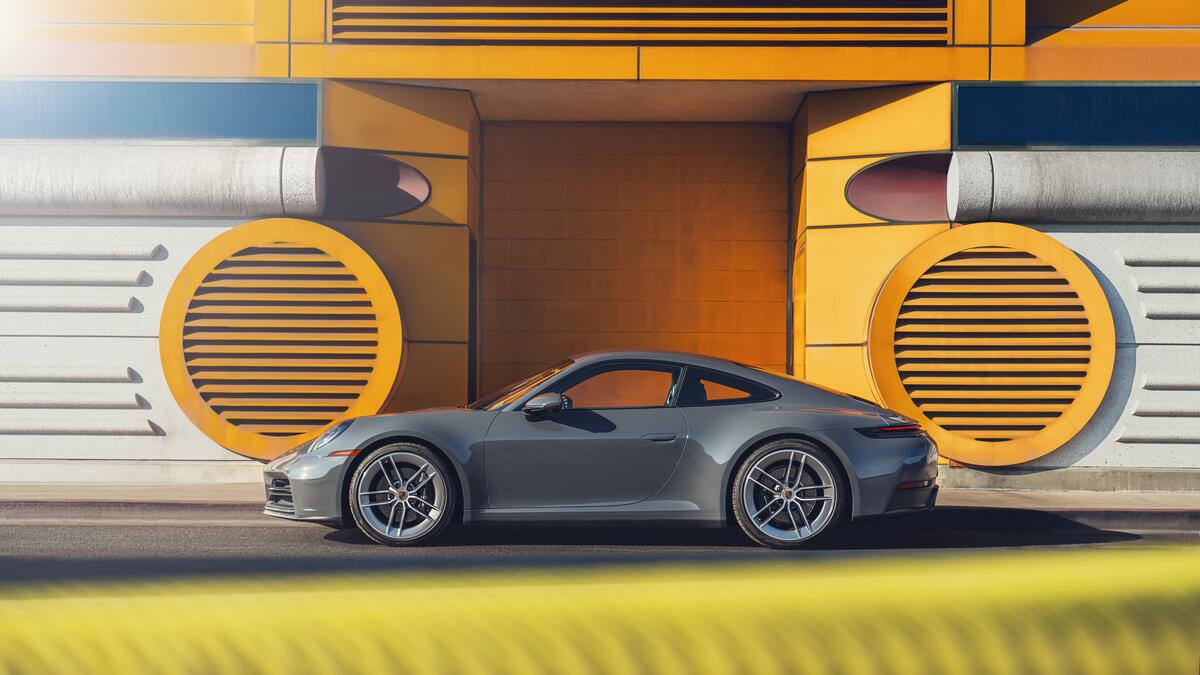
Manthey is a company that makes performance upgrade kits for Porsche models. Here, they’re fitting a kit to a Porsche 911 GT3 to make it better for track driving. The big idea is improving grip and aerodynamics, not changing the main engine parts.
Powertrain is the car’s main “go” system—engine and gearbox working together. If the kit doesn’t touch it, they’re not changing the engine or transmission. Instead, the upgrades focus on how the car handles and how it behaves at speed.
Aero is how the car’s body and wings interact with the air. On a track car, aero is used to push the car down so the tires can grip better at high speed. This kit is mainly about aero improvements too.
Suspension is what helps the wheels stay in contact with the road. It affects how the car feels over bumps and how steady it is when turning hard. In this kit, suspension is one of the main areas being upgraded.
Term
lightweight wheels
Lightweight wheels mean the rims are made lighter than stock. That can help the suspension react more quickly, so the tires can keep better contact with the road. It’s one of the ways performance kits improve handling.
Carbon trim means parts made from carbon fiber. Carbon fiber is a lightweight, strong material often used on performance cars. They’re listing it as one of the extra add-ons in the kit.
Dampers are what keep the car from bouncing too much. “Four-way adjustable” means you can adjust the shock settings in more than one direction so the car feels right on track.
A diffuser is a part under the car that helps create suction. More suction under the car means more downforce, which helps the car feel planted at speed.
Downforce is the “suction” effect from the car’s shape that presses it harder onto the road. That helps the tires grip better when you’re going fast, especially when turning.
Drag is the air resistance that fights against the car’s motion. If you can add grip (downforce) without adding drag, the car can stay fast without needing more power.
Homologation is official approval that a specific car setup meets the rules. It’s what makes certain parts and configurations legal for the road or for a racing class.
Brand
Manto
Manthey is a Porsche specialist that works on performance upgrades, especially for aero and track setups. They’re being praised for making the car stick more without making it heavier.
Porsche is the carmaker whose dealer network and parts numbering system are referenced here. The hosts are saying the car uses Porsche-approved parts and can be serviced through Porsche dealers under warranty.
Factory warranty means the carmaker will pay for certain repairs if something goes wrong, as long as it’s within the warranty rules. They’re saying this setup is covered like a normal Porsche, not a sketchy aftermarket conversion.
Concept
two-part test
They’re testing the car in two ways: on normal roads and on a track. That shows how it behaves day-to-day versus when you push it hard.
“Track-oriented” means the car is set up to drive well on a race track. That usually involves tuning things for grip and control, not just smoothness on normal roads.
The Porsche 911 GT3 RS is a super track-ready 911. Even though it’s meant for circuits, the hosts are saying it can still feel comfortable and controllable when you drive it on normal roads.
The rear dampers are the shock absorbers that help the car settle after bumps. If you can hear them working over speed bumps, it means the suspension is actively controlling the rear of the car.
Saying you’re in fifth gear a lot means the car is staying in a higher gear because the track is fast. It usually means fewer big gear changes and more steady driving.
Braided brake lines are brake hoses with extra reinforcement. They help the brake pedal feel more immediate and consistent when you’re braking hard on track. Less “flex” in the line usually means better control.
Front dampers are the shocks that help the car stay settled over bumps. If they’re stiffer, the front end moves less when you turn in. That can make the car feel more stable on track.
Brake pads are the parts that squeeze against the brake rotors to slow the car down. Different pad materials can be better for track use and can be designed to work with certain types of rotors. In this case, the pads are matched to ceramic discs.
Ceramic brake discs are special rotors made from ceramic material. They’re designed to handle lots of hard braking without losing effectiveness as quickly. The key point here is that the brake pads have to be matched to the ceramic rotors.
Term
brakes still
Brake fade is when your brakes get less effective after lots of hard stops. They’re saying these brakes stayed strong and didn’t lose stopping power.
Brake pads are friction materials that clamp to the brake rotor to slow the car. “High performance pads” are designed for stronger bite and better heat tolerance, but they can be noisy (squeal) and may behave differently in wet or stop-and-go driving.
“Cup 2” is a type of performance tire made for track use. It’s designed to grip hard, especially when the tire is warmed up, which can make braking and handling feel more consistent.
“Cup 2 R” is a more aggressive version of the Cup 2 tire. It’s meant to give stronger grip for track-style driving, which can improve how the car feels when you’re pushing it.
Manthey is a well-known motorsport/track-prep name. The hosts are basically saying you’d go to their track events if you want to use the car the “right” way.
Carbon fiber discs are lightweight parts made from carbon fiber that get used on the wheels or around the wheel area. They’re mainly there to make the car look very dramatic, like something from racing.
The Porsche 935 is a Porsche race car based on the 911. It was made to compete in motorsport, so it has a very distinctive, attention-grabbing look. People mention it when they want to describe a car that stands out visually.
An engine swap means replacing the car’s original engine with a different one. People do it to change how the car drives—often to make it faster or more fun.
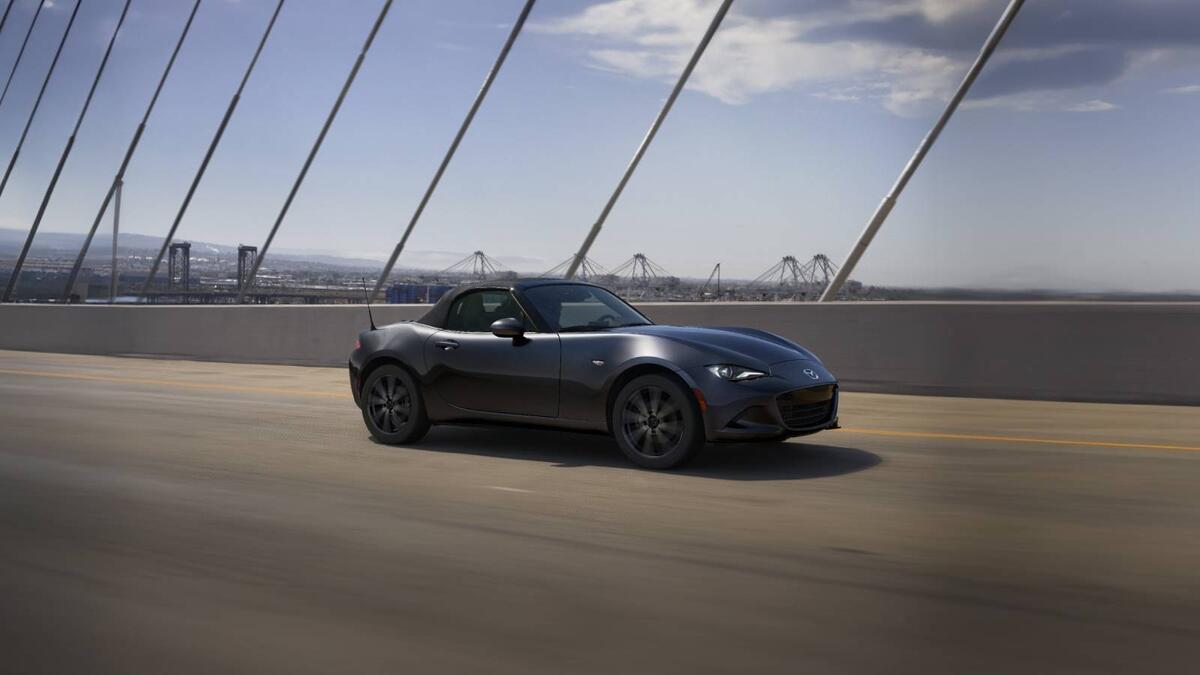
The Mazda MX-5 is a small, light sports car that’s fun to drive because it’s not heavy. Here, they’re talking about an MX-5 that’s been modified with a bigger engine, and whether it still feels like an MX-5.
“Stage” is a way tuners describe how big the upgrade is. “Stage two and a half” means it’s not the smallest upgrade, but also not the most extreme one—more like a middle step.
A “3.0-litre V6” is an engine with six cylinders, shaped like a V, and it’s 3.0 liters total. They’re saying this specific engine is the one that makes the power in the build they’re discussing.
Jaguar is the car brand they mention as the place this engine was used before. They’re saying the engine didn’t get attention because it was fitted to cars people didn’t associate with performance.
Term
Durotep-based engine
They’re referring to the engine’s original design “family,” like where the basic engineering came from. That helps explain why the same core engine can show up in different cars.
“Cylinder head work” means changing parts of the top of the engine where valves and combustion happen. Improving it can help the engine breathe better and make more power.
Cosworth is mentioned as the company that modified the engine’s cylinder head. The cylinder head is where the air and fuel enter and where combustion happens, so changes there can boost performance.
A flat-six is an engine shape where the cylinders are laid out flat, like two rows facing each other. It can make the engine run smoothly and sound unique.
Induction noise is the sound of air being pulled into the engine. Some cars make that sound louder or more noticeable, which can make the driving feel more exciting.
Term
cylinder shorter
They mean the engine is physically shorter than before. A shorter engine can help fit the car better and can also affect how the car balances and drives.
Cam covers are the covers on top of the engine that help keep oil in and protect the engine area. Carbon-fiber versions are lighter and look more special than stock covers.
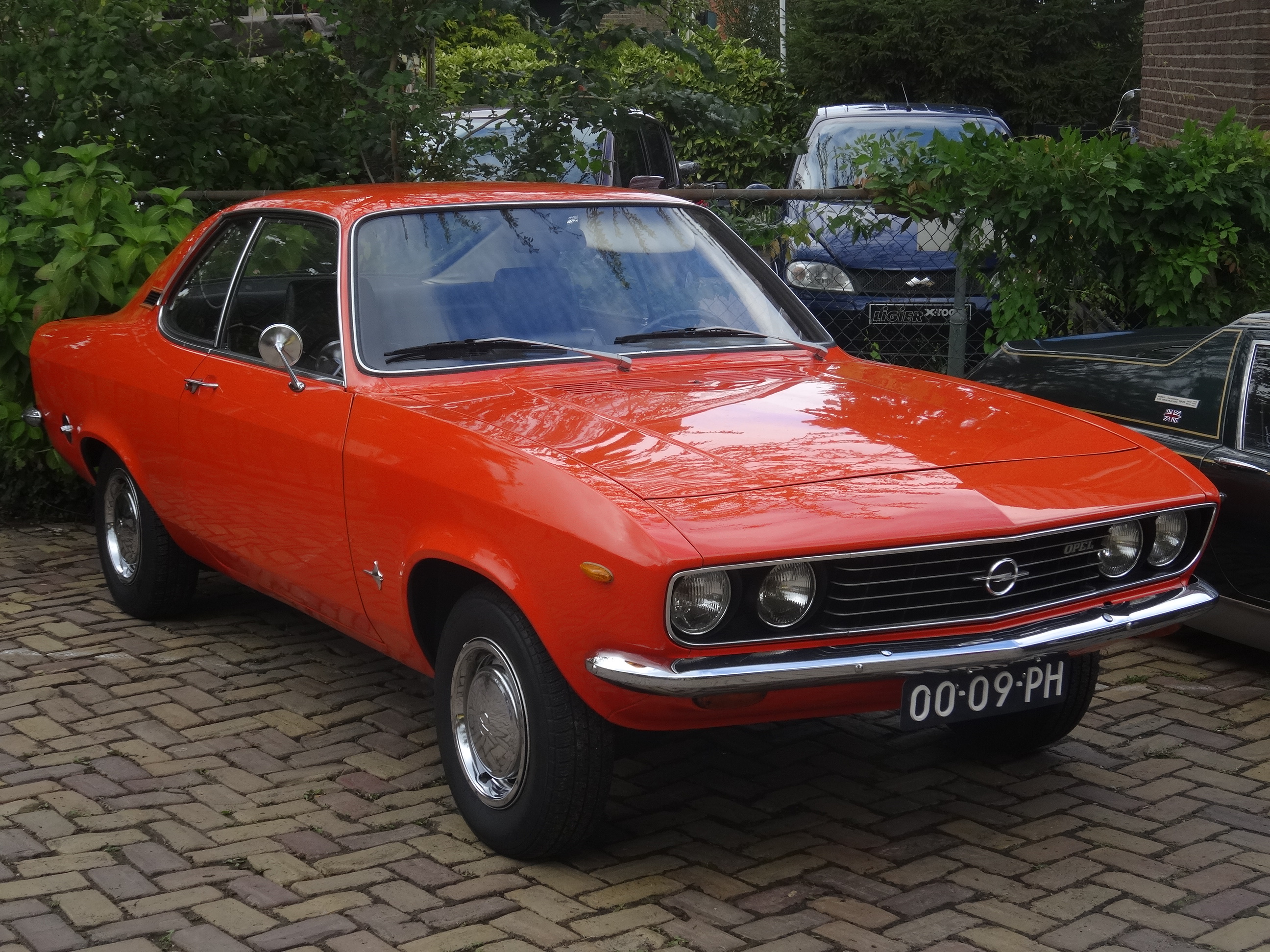
The Opel Manta is a sporty coupe made by Opel. People often remember it for its distinctive styling. In the podcast, it’s being used as a comparison for how one car’s setup or look differs from another.
They’re saying the car hasn’t been restored and it doesn’t have much rust. That’s a good sign because rust repairs can be costly and sometimes indicate deeper problems.
Meister R is a suspension brand best known for aftermarket coilovers and dampers used by enthusiasts to tune ride height and handling. In this segment, it’s mentioned as part of the MX-5’s suspension setup.
Aftermarket tuning is when you modify a car using parts that aren’t made by the original manufacturer. People do it to make the car feel faster, handle better, or sound different.
A five-speed refers to a manual transmission with five forward gears. Gear count affects how the engine stays in its power band during acceleration and how relaxed the engine feels at cruising speeds.
The drivetrain is everything that sends power from the engine to the wheels. If the tuner keeps the same drivetrain, it means they think it can survive the extra power.
An engine-converted car is one where the engine has been changed from the original. It can be done as a full completed build or as a kit you install yourself.
An engine transplant means putting a different engine into a car. It’s not just swapping parts—there’s usually extra work needed to make everything fit and work together.
Subframe changes mean adjusting the car’s metal structure that supports key components. When you swap an engine, the mounting points may not match, so the subframe may need modification.
A turnkey car is a fully completed vehicle you can buy ready to use, rather than a project where you do the work yourself. Here, it includes sourcing a base car, restoring the shell, painting, trimming, and then combining it with the chosen engine tune.
“Blast the shell” means cleaning the car body down to bare metal by blasting off old paint and coatings. It’s a common step before repainting and restoration.
The Ford Capri is a sporty-looking Ford coupe. It was made in different versions over the years. In your podcast context, it’s being mentioned because of how it can look with different paint or styling.
A “project” is a bigger custom job than normal repairs—usually a build or restoration. They’re talking about what it costs and what kind of starting cars the shop prefers.
A donor car is the “starting” car that gets taken apart or used as the base for a project. The point here is that the project cost doesn’t include buying that starting car.
“Tired cars” means cars that are worn out or not very fresh—more used and less perfect. The idea is that the shop prefers those as starting points because they’re usually cheaper than pristine cars.
This is a Bentley grand tourer meant for fast, long-distance driving. In the episode, they’re comparing it to a quicker Bentley version and saying it uses similar underpinnings (the car’s setup) but with a different performance level.
A “performance hybrid” is a hybrid car where the battery and electric motor are set up to help the car feel quicker. It’s not only about saving fuel—it’s about adding power when you need it.
“Chassis tech” refers to the engineering in the car’s structure and running gear—things like suspension design, geometry, and how the car is tuned to behave. Here, the host says the Continental GTS has “all of the chassis tech” from the higher-spec Speed, implying shared handling hardware and calibration.
In suspension tuning, “geometry” describes the angles and relationships of suspension components (like camber, toe, and steering/suspension linkage behavior). The host says the DB12S has been reworked “back to front” on geometry and chassis setup, meaning the handling characteristics were revised rather than just the engine tune.
The Aston Martin Vantage S is a sportier version of the Vantage. Here, they’re basically saying its steering feel and responsiveness are tuned differently than other Aston models.
Car
Aston Martin DBX707S
The Aston Martin DBX707S is a more powerful, sport-tuned version of the DBX SUV. They’re saying it’s already pushed pretty far, so there’s less room left for further tuning than on the DB12.
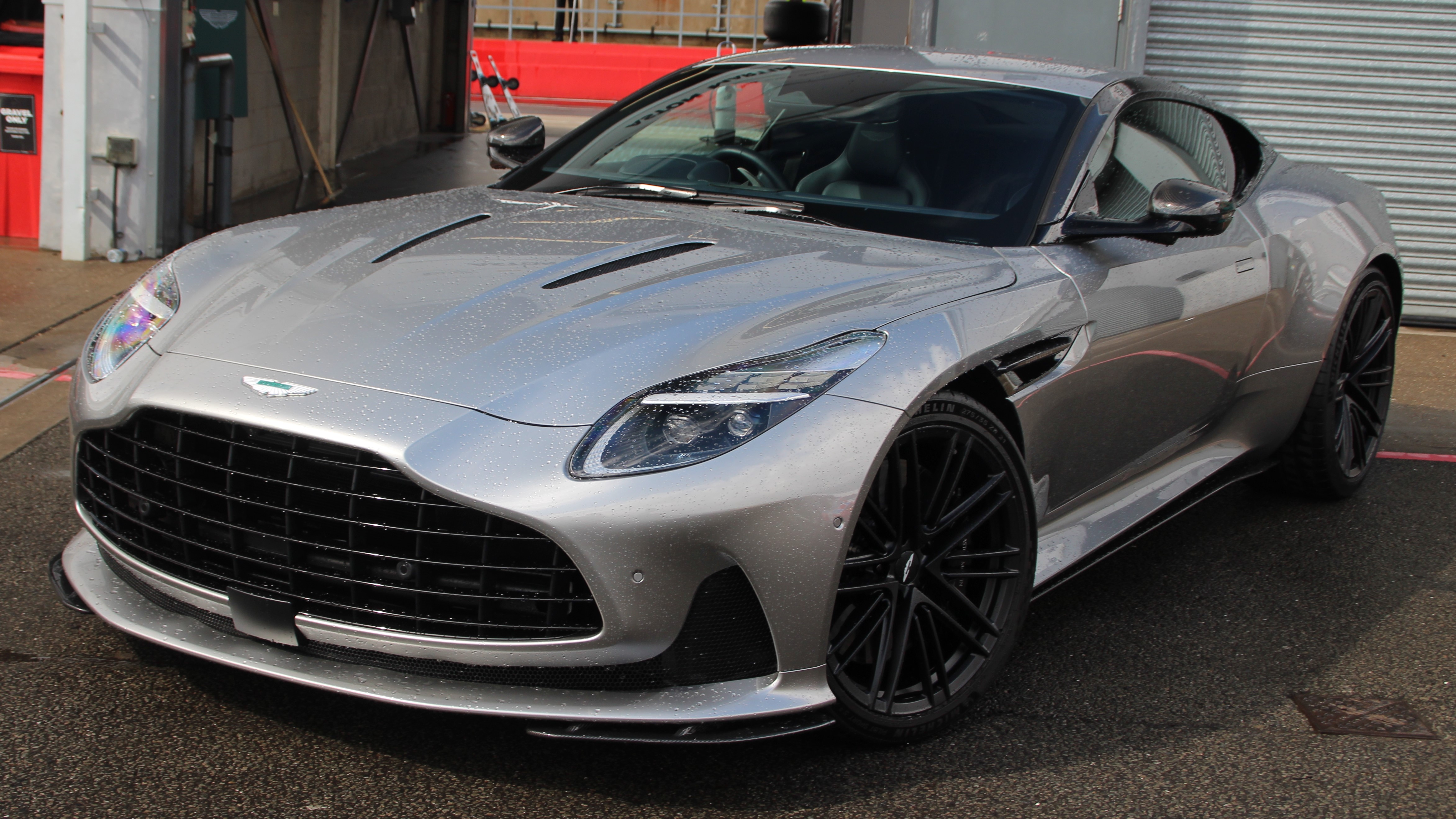
The Aston Martin DB12 is a luxury performance car. In this part, they’re talking about how the steering and handling were adjusted with both hardware and software, including removing a component meant to make the steering wheel return to center more naturally.
“E-pass” sounds like an electronic system that helps the steering feel lighter or heavier. If you change it, the steering can respond differently and feel more or less precise.
The self-centering effect is how the steering wheel wants to straighten itself after you turn. If it’s tuned well, the car feels easier to drive and more predictable.
Steering communication is how clearly the car tells you what the tires are doing. When it’s good, you can feel changes in grip and cornering more easily.
They’re saying the tires are doing a bigger share of the job of keeping the car stable and turning. With better setup, the car can feel more connected and controlled instead of just feeling like it’s grabbing.
The footprint is where the tire actually touches the road. If the car setup helps the tire sit more evenly, you get better grip and the steering feels more accurate.
Body control is how well the car keeps itself composed when you’re driving hard—less leaning and bouncing. When it’s good, the tires stay planted and the car feels more predictable.
The Aston Martin DBX S is a sportier, more powerful version of Aston Martin’s DBX SUV. They bring it up to show the same “incremental improvements” were happening across the brand.
Sport Plus is a driving mode that makes the car respond more aggressively. In this case, the host says it feels sharper but also more controlled, not jumpy.
GT means “grand touring.” It’s about a car that’s comfortable and confident for long, fast drives—not just a car that’s exciting at the limit.
Car
Conti GT
“Conti GT” refers to Bentley’s Continental GT. It’s a luxury grand tourer, and the host is saying the changes they’re talking about make it feel even better and more capable.
Air springs are suspension supports that use air pressure. Because they can be tuned, they can help the car ride smoothly and stay composed when you drive harder.
Dynamics is how the car acts when you’re driving—turning, stopping, and responding to your inputs. It’s more about the “feel” and control than just engine power.
They’re talking about how the car feels on the Isle of Man, where the roads are narrow and curvy. That kind of route makes it easier to judge how precise and easy the car is to drive.
Term
tight and twisty
“Tight and twisty” means lots of close turns with not much straight driving. Cars that feel accurate and stable in corners tend to do well there.
Software tuning means changing how the car’s computer controls things like power delivery and driving modes. The hosts are saying the tuning here was developed using track experience from more than one source.
LIVE
Do you get your bits back to put on eBay?
Yeah, good question.
Hello, everyone, and welcome to Evo Podcast Episode 48.
Joining me this week is Deputy Editor James Taylor.
Hello.
Editors at Lard and Founding Editors
Dickie Mead and John Barker.
I hope you're all well.
All good.
Thank you.
You've been trying out.
No relapses.
No.
Good.
So this week, we got quite a big announcement to come.
We're going to be talking about Evo eras for 2026.
So for those who are familiar with the brand with Evo,
last year we did Evo eras, which was picking the most
significant performance cars, not necessarily the best,
from each decade from 80s through to 2020s.
It went down really well with the readership, online
and in print.
And it gave us lots to chat about on these podcasts.
So we are relaunching that again for this year
with the new topic, which we will come to later.
But before this big reveal, it's been quite a few busy weeks.
So I'm going to start with you, James,
because you've been in one of our old favorites, which is
always something easy to talk about.
Particularly for you, because you seem to live in them.
You've been driving another derivative of a 911 GT3.
Yeah, it's a contractual obligation,
I think, at Evo Magazine.
Yeah, I've been driving the latest Mantai kit.
So this is the 992.2 Gen GT3, so the current GT3
that's out now.
And the previous Mantai kits were driven
of either been for the RS, the one with a really crazy wing
on the back that you left at Anglesey last year.
And then the previous older 0.1 GT3.
So this is their new kit for the current regular GT3.
And it's pretty incredible.
It's like other Mantai kits, they don't touch the powertrain.
So no changes to the engine or the gearbox.
It's all about the suspension and the aero.
And this one also had a few extra bits as well,
because it's a kind of rolling catalog of parts.
So they also do their own lightweight wheels,
which they make in their own factory, their own brake pads,
their own, they now do carbon trim and things like that.
But the core bits of the pack, which costs £56,000,
plus fitting, and you need an 911 GT3 to fit it too.
So yeah, pretty serious stuff,
but it's got adjustable coilover suspensions,
a four-way adjustable dampers, hand adjustable.
And then this really sophisticated aero package.
So for the first time, they've done this huge
on-the-body aero treatments with these special covers
and turning vanes all the way underneath the car,
made out of plastic rather than carbons,
the diffusers carbon, but these are plastic,
because the idea is that you take it on track
and run over curbs and you're down.
So does that become a badge of honor of how many
I'm the floor vanes you've worn out?
I think they just know their customers, don't they?
I think if you go on their events
or they get driven really, really hard,
and I think although the customers
have clearly got lots of money,
they'd seem be complaining, wouldn't they?
If they'd spent 30 grand on a carbon underbody pack
and they're shredding it every track day.
What's it worth then, James, in terms of lap time,
should you get rid of all the vanes?
So yeah, well, I think roughly half the downforce
comes from under the body, so to be a fair bit.
And at top speed, if I'm remembering rightly,
it's 575 kilos of downforce,
which is 100 more than the previous 0.1 pack.
And yet the same drag, so a bit like the RS
that you guys tested to have it all homologated.
Yeah, it has to stay within all the homologation.
Yeah, which is the people at Manto describe it
as eating more food, but still weighing the same,
which is quite a good trick if you can do it.
So yeah, it's all the parts that got Porsche,
part numbers, it's all full factory warranty.
You can take it to any Porsche dealer
to get it serviced, all that stuff.
What's it like?
So you drove it in very typical British spring weather,
so it was pitch black and raining.
It was a two-part test.
Yeah, and you had it, so road and track.
That's right, yeah.
Is it this more road orientated than the RS car
that Dickey and Yusuf drove last summer,
or is it meant to still be adding to track?
Because surely if you're doing more of the track stuff,
you'd have an RS.
Yeah, I think also that the RS pack,
I think by the time you've had it fitted and everything,
it's the best part of a hundred grand, I think.
Whereas this is sort of almost half that.
But yeah, it's very much track oriented.
So I was a bit worried about taking it on the road.
We had it for 24 hours, so we took it into Wales,
and it was very Welsh weather.
But it was brilliant on the road, really, really drivable.
Did they change the setup?
They did, yeah.
So were you running on their suggested road?
Yeah, yeah, so on the road, we put it in there,
suggested settings for the dampers while I say we did.
It was put in those settings, I didn't get underneath the car.
And then a few days later, we drove it at Thruxton circuit,
so it was a couple of clicks different on the dampers,
and the rear wing's got two settings,
it's a kind of flat level,
and then a steeper fall down for a setting.
But yeah, it was really, really usable on the road.
I thought it was going to feel a bit like a fish out of water,
but it didn't at all.
Did it feel like when we first drove the GT3 RS on the road,
you look at it and think,
that's not going to work on the road?
It doesn't look legal, does it?
It looks like it's escaped from grids somewhere.
This looks quite wild as well.
It looks almost like an RS from a distance.
You know, it's a big diffuser on the back,
and it's quite wild looking rear wing.
But now it felt very similar to a normal GT3
in terms of how it is.
If you've got a GT3, and you want something extra,
would you not then go to an RS,
or does this plug a small-
Well, in each stock, stock RS, isn't it?
Yeah.
Used, probably.
Or, well, I don't know.
Yeah, I guess it's closer to that, isn't it?
Without the upgrades,
or you can spend the money on the mantai stuff.
I think of course,
so maybe you can't go all over an RS,
because they're not always easy to get a hold of.
It's pretty particular as well, isn't it?
I think the way they feel and capability
it puts into the car,
although you sort of think the factory cars
haven't really left you anywhere to go,
they are quite a distinct feed.
Yeah, I think once you've driven those
and get dialed into the way they work,
you probably much prefer that to a straight factory spec.
Yeah.
It was just sort of so super responsive,
because the normal GT3 is already very precise,
and you get back exactly what you put in,
but this was sort of even more so,
it was like it's put through a filter, sort of.
And it's a bit noisier than the normal one.
You can hear the rear dampers working
when you're going over speed bumps and things like that,
but it's still got Apple CarPlay,
it's still got stereo,
it's still, you can have a conversation,
just raising your voice a little bit.
And then on the track at Thruxton,
which is terrifying, I've never been to Thruxton before,
but it's mental, but it was amazing round there,
because I mean, there aren't any slow corners at Thruxton,
you're in fifth gear everywhere, pretty much.
Did you have a standard car to compare it with,
or was it just great?
No, unfortunately, we were just in the Manthey car.
There was another GT3 there,
but we didn't get a chance to do a sort of back to back lap,
but I think without being such a fast track
with some quite wicked bumps in it,
I think this just had that little bit more stability
than normal.
But it's the braking that really got me,
I couldn't believe how legs could break.
So they still changed that, they put braided lines
and make a few little tweaks, don't they?
Yeah, so they're stiffened the front dampers by 20%,
so it doesn't sort of fall over the front wheel
as you're turning in braided lines.
And then if you pay even more,
there's an extra option you can have,
which is their own brake pads as well,
which only work with the ceramic discs,
but they're working on some that work
with the regular discs as well for the future.
Porsche braking has never been an issue, really.
Yeah, it's not like the normal one isn't very good.
But this was mad, it was like a racing car or something,
and completely repeatable lap after lap,
never no fade.
But the same on the road,
but used to go on the road, those brakes still.
And they didn't squeak as well.
You drive some cars with high performance pads
and they're horrible and squeaky, this was fine.
And you had such a good feel,
driving it in torrential rain,
really want to have, especially as it was on cup two tires.
I can say, so it comes on a cup two, I guess,
that you can have a cup two R.
Exactly, yeah.
Or the equivalent from Dunlop or Bridgestone or Pirelli,
if you want.
But yeah, a really impressive bit of kit.
So how much was it in total?
Did you add it all up or were you...
Yeah, well, we worked out that the demo car we had,
which is from owned by Porsche GB,
so the normal GT3, I think, starts at a hundred and,
I forgot on there, the maths now.
If you just bought a car with no options
and put the kit on it, it would be 214,000 pounds,
plus fitting, the kit's 56,000.
And then you need to pay for it to be fitted.
And then this car also had a load of other options on it,
so things like the Visak pack and the roll cage in the back
and sound system, things like that.
So probably another 20 grand on two.
Yes, yeah, this car, I worked out,
I think it was 280,000 pounds,
the value of this particular car.
Do you get your bits back to put on eBay?
Yeah, good question, yeah, that's a good question.
Yeah, don't forget the normal dampers back and the...
Yeah, yeah, yeah, why not?
If you bought them, I suppose, yeah, why not?
You could ask.
Yeah, which is another world for me, you know,
this is, you know, hypothetical.
You only need to either go to one of the Mantar days
at the Nürburgring or...
I think if you could, yeah, I think if you could, you would.
You know, we've spent a lot of time in both factory car,
I know Mantars are an extension of factories, isn't it?
But I think if you buy those cars to use them in that way,
then they are definitely a step up
in the way you want them to be.
Yeah, it's not, because I haven't chased
the extra straight line performance or anything.
A lot of those purchases are vanity, probably, aren't they?
Like how many people use the full performance
of a factory car and how much of the extra performance
will they use?
I don't know, but I think that you feel it in everything
it does, don't you, all the times,
whether you're on the limit or not.
And you could argue if you were gonna get some other mods
made to a GT3, you might spend whatever it would be,
the amounts, but then when you come to sell it,
and I devalued the car by that.
And yeah, and I don't think you end up with a whole car there.
I think that's what the beauty of the Mantar stuff is,
it does feel like everything's been brought up in harmony
rather than extreme brakes with, I don't know,
just fists.
Yeah, that's a good point,
because although you can buy the bits on their own,
you don't need to buy the whole pack.
All of them are designed to work together,
so they kind of grow at the pack is greater
than some of its parts.
It's a system, isn't it, I think.
But yeah, that's a hell of a lot of money.
It is a lot of cash.
Yeah, that's a lot of money.
But you know, half the kit for the RS, so.
Yeah, yeah, yeah.
Yeah, but then when it's, yeah, it's,
I guess it's, yeah, what you're gonna,
what's the use case, what you're gonna use it for.
And I think if you were.
I think GT3 kits probably,
it doesn't take the car to kind of cartoonish extremes
in the way it looks.
I think that probably puts more people off the RS.
Yeah, that really looks good.
The most outlandish bit of this kit
has got the discs on the rear wheels,
carbon fiber discs, but like a Porsche 935
or something, they're really eye-catching, but yeah, first one.
So it's sticking with modified cars,
you were at the other end of the stream,
Dickie as well, with the MX-5.
Yeah, Rucketeer, I've engine, back to old engine swaps.
Yeah, I loved it, actually.
I know everyone, not everyone,
but it's popular to give MX-5s a kicking,
isn't it, just because, but I'm a fan of the standard car,
but what Rucketeer do seems such a big step
from what the regular car is.
You sort of, I'd wondered whether they could do
what Mantai do and like keep everything in proportion,
or whether it does just feel like an MX-5
with a big engine in it, but it's such a clever,
just a really well-considered package.
So which car, which generation?
This was a second-gen tone, NB, with a stage two and a half
engine, so it's got a few kind of in the middle tweaks
between the two and three, so I don't think
it was wholly representative of a two or a three,
but so it's 340 horsepower, for which engine?
Little V6, isn't it?
Yeah, so it's a wholly overlooked engine, really,
because it just lived in the front
of various stodgy-looking Jags, seemingly.
So it's the 3.0-litre V6, sort of Durotep-based engine,
but was originally a Porsche design
when Porsche were looking at designing their own engine
and then Porsche ran out of money and sold it,
and then Ford took the engine on,
and Cosworth did some cylinder head work,
and John was on the chute as well.
It's such a good engine.
It just revs and revs.
It feels like it was born to do that.
It's a proper sports car engine.
Sounds like a sports car engine.
Sounds like a 60s Aston Martin or a V-Type or something,
it's got elements of flat six as well, isn't it?
But yeah, with some induction noise,
so it sounds a bit like a Snorty 911,
but everything else is,
it still feels like a small, light, delicate car,
because the engine is actually a couple of kilos lighter
than the Ford stock MX-5.
So I was just gonna ask what they didn't hit in weight.
That was my next question.
So like they're eating more and, you know,
weighing less, I mean.
I need to get some of these diet tips
from these engine manufacturers.
But it looks really small in the engine as well.
It looks like it was born with the engine.
So it doesn't look like it's been chewed or deep.
No, no, no.
It fits beautifully,
because the engine is actually a cylinder shorter.
Yeah, of course.
It just tucks up really nicely against the firewall.
There's plenty of room around it.
It's presented really, really nicely
with some proper carbon cam covers,
and it's just such a nice thing.
And this one didn't have,
it was the opposite of James' Manta car,
in that they just picked a really freakishly original,
very, very low miles,
unrestored, unrusty MX-5,
and then they'd got their own seats,
which they lowered, hadn't they?
So they were, they're very low actually,
when you get, you sort of think your bum's gonna land
on the seat and then you've got that much more.
But once you're in it, it feels really, really comfortable.
So we had some different rims,
different dampers, Meister R, I think,
which I've never heard of,
but I think what Rocker did benefit from
is Bruce, who's the guy that founded the company,
he's just got a proper engineer's brain,
so he knew about this engine
and he knew that once he checked out the MX-5,
he knew how well that would work,
but then he also uses probably the best aftermarket
kind of resource of tuning parts.
I can't think of a car that's had more aftermarket tuning
than an MX-5 over the years,
so he can kind of tailor the car to different price points.
Does it stick with the original Mazda gearbox or is it?
Yeah, they change that.
This has five-speed in this one, didn't it?
Yeah, it's the same drivetrain, but yeah.
And it can take the extra grunt.
It seems really happy with it,
it's not massively torquey.
I mean, it's like 250 foot-pounds or something,
so it's not completely overwhelmed,
so it gives its performance when you rev.
It revs to 8,000 RPM, so it just feels right.
But the whole car is cohesive, isn't it?
You drive off down the road and you're like,
yeah, love the noise.
You kind of wait for it to not work,
like for something to not feel right,
or but it just, yeah, you just get in it
and drive it like an MX-5,
but you have the soundtrack of a proper sports car
and the performance of a proper sports car.
So do you buy finished cars from Rocketeer
or can you take your own and have it?
You can do both, so I think they've done,
I think when I spoke to them, I think they've supplied,
well, there are about 180 Rocketeer engine-converted cars,
but they've sold quite a few as conversion kits,
so you basically get a great engine
with all the kind of bracketry and subframe changes
and the things to give it that engine transplant,
but they are looking at doing more turnkey cars,
so you can ask them to source a base car fully,
like just blast the shell, completely restore the shell,
paint it to your color, trim it to your trim,
and then pick and mix whichever dump
as you want with whichever stage of tune with the engine.
So, and I think the engine conversion on its own
is about 12 and a half grand or something, they're about,
but if you went for a full turnkey car,
it's gonna be 100,000 ish,
but it seems like a lot of money for an MX-5,
but if you, I mean, John will know with a capri,
but at any kind of paint job or, you know.
That's the thing, expert take.
Doing cars like that costs a lot of money, so.
And I think people's perception is slightly behind
where costs have gone,
so it all sounds a little bit more expensive
than it actually is these days.
Just to have something repainted or re-trimmed
or fully restored and repainted shell
or fully re-trimmed interior is gonna be,
by the way, 10 grand or 15 grand or as much
as you wanna spend, so it's,
and you get this perfect little sports car.
I really, yeah, it's one of those cars
you think it would definitely fit into your life.
And I think if you had a garage with a number
of exotic things in it,
I suspect you'd jump in the,
that's what you'd do more than the others
because it's like a hot hatch,
but in sports car form, almost, yeah.
So, no, I loved it, it's good.
And they're working on a N-C conversion,
which we'll show you later in the year.
That's the one that we've never liked.
That's the one that felt really out of sorts
at car of the year.
Maybe until now.
Well, I think that's partly their plan
because they are undervalued,
so that's a good, even better start in place, I suppose.
Yeah, and they were slightly better built originally,
weren't they?
So they should need less work,
newer, obviously, as well,
but less remedial work.
To get going, yeah.
As a conversion as well.
I think, mate, I think MX-5s can all need lots.
Yeah, I think even N-Ds can be a bit,
early N-Ds can be a bit.
Oh, okay.
So, I think they have their issues,
but that's, I think that's the beauty
of someone like that going through it.
I mean, if you know your car well
and you've been doing tweaks
and then you decide to go with a Rocketeer engine,
that's great, because you know your car
inside and out, don't you?
But I think if you're a more of a cash-rich,
time-poor person, if you could just say,
actually, I want one of those,
but I want it in this color with these wheels
and it'd be great.
And in a Resto model and a 100-ish grand,
it gets your engine vaping.
It's no money at all, is it?
So, how much is that, theon 9-11 you drive?
Yeah, it's a Trader Theon Coupe,
which is based on a 964, and it's there,
so the minimum price they now charge
for a project is £430,000.
Does that include a car?
It does not include the donor car.
Does that include the house and the garage to park in?
So you've got about a 964.
Yeah, either you supply the car
or they will source it for you.
Which are now 60 grand, aren't they?
Rather than 15, because your thing has started.
They try and choose, sort of, tired cars to work on,
rather than the pristine ones.
Well, I did wonder if there's any original ones there.
Just the really good ones.
Yeah.
We convert them from singers soon, you are.
That's the business value, isn't it?
Surely you'd set someone up
and you can convert your singer back to an elephant-eared
964 Carrera II with that design, 90 wheels.
I mean, it was a lovely thing,
and you get 6,000 man-hours of work and so on,
but yeah, it's not a small amount of money.
Yeah, and that's 100,000 power,
and MX-5 look reasonable.
But I get, yeah, that's just the rest of the mod world,
isn't it?
But also, as you know with Project Capri,
is that every...
Oh, yes, Project Capri.
Well...
Everything you do has a much bigger cost
than you first thought it was.
And more than 6,000 man-hours.
Absolutely.
What's the date today, Sue?
It's the 4th of May.
5th of May.
5th of May, so.
May, well, I think it's due to be painted this week.
Oh, great.
How many times have you said that, Jake?
Yeah, I'm glad we've got dates now.
How many podcasts have we done?
Quite a lot, yeah.
So, is that finished paint?
That's it, that's the promise this week, so...
So, well, that's exciting.
So, when will we see it?
I don't know, it's gotta be rebuilds again after that.
So, it's gonna be a little while, but...
So, this is episode 48, so, 90?
No, wouldn't say that long, I hope not anyway.
No, it should be...
Autumn time, you should...
No, late summer.
Let's go late summer.
Late summer early also.
In time for the end of the UVO track day, if Sue's here.
Well, for the last one,
which I think I promised to bring it to last year.
I think you did, so, would it be ready in time
for car of the year?
I imagine that.
Well, if you're offering a wild car, yeah.
You've just got to get it there.
Yeah, if you pay for the petrol.
10 to the gallon.
No, moving on.
So, what have you been up to, Sue?
I've actually left the office twice,
which I won't be doing again
because I came back to a match and paperwork
for some missed meetings.
But driving two very interesting GT cars.
So, that's the Martin DB12S and Bentley Continental GTS.
So, the Bentley...
Kind of rivals, aren't they?
Kind of rivals.
The Bentley's is the lower...
So, it's the performance hybrid,
not the ultra performance at 630, 40 horsepower,
as opposed to the 771 from the Speed,
but it's got all of the chassis tech from the Speed,
which, as you know from that group test you did
with the DB12 and the Maserati last year.
Yeah, that's pretty impressive.
It's very impressive.
And then DB12S is a much more...
So, actually, they've gone 20 horsepower more
just to give it a little bit more life at the top end.
But they've kind of gone through the car back to front
on the whole geometry and chassis setup.
No geochains at the front, but a fair few at the back.
It looks quite different, doesn't it?
Versus the Vantage S.
Yes, so they look different.
So, Vantage S and DBX707S,
they were already at quite the top of what they can do with them,
whereas DB12, they had a much broader
sort of envelope to play with.
So, they've gone through the car, as I say,
nose to toe of a lot of chassis tweaks.
Some of it is small and geeky software.
A lot of it is software from changing the e-pass
and taking out the...
So, previously, on the standard DB12
to have the steering weight and the reaction
you'd expect from a GT car, it was quite...
It never felt too nervous for a GT car
but never precise enough for a sports car.
Because I had this damper in there
to try and get the self-centering effect.
So, they've just taken it out.
Because you can have the expectation on an S
is that you would have slightly heavier steering
as a base setting anyway.
So, the customer would be expecting that,
which gives them much clearer sort of lines
of communication for the steering and it is fantastic.
You don't expect it to...
I always found the standard DB12 to be too hyperactive
and it never knew what it wanted to be.
It was similar when we first drove the AMG GT back in 2015.
You're always in the wrong mode or setting for something
and they've just cleaned it all up
and that's what is such a much cleaner DB12.
Much sharper, more precise.
It's not grip, grip, grip.
It's got proper feel to it.
There's more...
The tyres are doing more work.
There's more of a footprint on the road
for the tyres on this car.
They've tweaked the dampers as well
so that they're working much better with the body control.
It's just really, really good.
It's what you'd expect the DB12 to have been when it launched
but I just found, I think we all did when we drove it
on that car of the year in 22.
33
It just felt in the borders.
It just never felt like...
It's like a lot of first gen cars though, isn't it?
There's a hard stop on what they're allowed to do
before everyone needs to be frozen and put into production
but they know all the things they would have done
if they had another bit like anything with a deadline, isn't it?
So, yeah, I'm sure they had lots of thoughts
about how they could improve it
and then I guess with feedback from the launch cars
and customer feedback, they've learnt a bit more about what to do.
That'd be interesting.
Yeah, it's really, really impressive.
And there's no one big thing they've done.
It's just all these incremental changes
which what they did were done with Vantage S and the DBX S
but you just notice it more because it is the first of that new
current family of Aston Martins, so is the oldest.
And as Dickey said, there's a hard deadline
of engineering has to stop
because we need to start selling these and get some money back.
So it just feels...
It feels like the car you always wanted the DB12 to be
but I actually think it's a better GT car
because when it's in just GT mode, it's much calmer,
more fluid, more sort of smooth.
There hasn't dealt with it when it's an S
and then when it's in Sport or Sport Plus,
it's more precise, less hyperactive, but more enjoyable.
So does it get it closer to the Bentley in terms of as a GT
but then take it further out of each of the Bentley as a sports car or is it...
I think it is much, much closer.
It's a much stronger GT car, much closer to the Bentley as a GT car.
And it was interesting, I did the Aston Martins Thursday, Friday
and the Bentley on the Monday, Tuesday.
And in isolation, the GTS is a really impressive piece of kit
because you've got all that chassis take
and you realise you don't need 770 horsepower.
It's lovely to have but actually you don't use it.
And it just seems to bring more out of that Conti GT
with the rear wheel steering, the diff.
The suspension set up, the damper set up on the air springs,
it just works much better, gets more out of that standard car.
I guess you feel like you're driving it a little bit harder anyway
because you need rather than just feeling that...
Yeah, you haven't got that performance
that kind of dominates everything.
So you can be a bit more precise with it
and you can feel it sort of working with you
and working with the road much better.
But I think with the Aston Martin, it's felt to me,
it takes it much, much closer to the speed, if not above it.
I think the Conti GTS against the DB12 S would,
while it's got the fantastic chassis,
I don't think it adds enough to keep up with that Aston Martin.
It'd be fascinating to have the two together
because it is all in...
They've both got similar poweruppers.
It is all in what they've done with the dynamics
and for such huge cars in the Bentley 2,400.
Yeah, there's a bit of lag, isn't it?
Yeah, crazy.
But it just makes it...
I've only driven the standard GT in the US on quite plain roads.
So we drove it on the Isle of Man,
where it's very tight and twisty
and off the mounting course
because it's just for the normal people trying to get to work.
But it's much more precise
and you feel more comfortable in it
and it just...
Yeah, it fills a sweet spot of the range,
but you can't think of the DB12 S for similar sort of money.
It seems more of what we would go for.
It's going to be fascinating to get the two together
because the Aston was surprising
because it's got more, so you expect it to be better.
And actually, the Bentley's got less,
but it gets more out of the car more of the time.
So yeah, they were two really interesting cars
and not sort of cars you'd expect
to be sort of front and centre of what someone who's looking for
or sort of into performance driving
or just enjoying driving
actually make normal drives interesting.
Just being in the...
Normally they can sort of just blend into the background,
can't you?
You've got lovely interior, but you could be in a bit of anything,
whereas they actually feel special.
How do they compare on price?
Are they very similar?
Cut the £1,000 between it.
One is 2...
I think one is 2.12 and one is 2.09.
The next to...
That's before you obviously dive into all the personalisation.
That's 68 unless then James is...
Manthey.
Manthey, GT.
Yeah.
Yeah, hell.
It's like a different car.
I wouldn't want to...
Gosh, could be a triple test, couldn't it?
Yeah, there you go, yeah.
Bentley's Manthey versus the real thing.
Yeah.
Well, there's a lot of the software tuning
on the Conti GTS isn't just taken from the speed.
There's also learnings from SuperSport,
which is the rear-dried non-liberal special they've done.
So, they've also got that mindset of,
well, that's the pinnacle.
What does it offer to the rest of the family
and taking that stuff?
So, I think that's also been sort of added to what the GTS has.
I mean, SuperSport is the DB12S, isn't it?
Yeah.
But it's a special series car, isn't it?
So, it'd be fascinating what, if that's the sort of approach,
what from the SuperSport has gone into the speed as well,
because you were really impressed with that when you did that test.
So, yeah, really two really close rivals.
So, it's worth getting out of the office, then, Stu?
My boss is sat over on my shoulder at the moment,
and I don't think she was too pleased.
She's not, actually. She's nipped out.
Oh, she's nipped out?
Yeah, it is.
So, that's what you like.
She's really good.
She'll never hear it.
Getting away from all those meetings and spreadsheets.
Yeah, it was good to be back out, shooting with Dean Smith, who...
Good old Dean.
Good old Dean.
Didn't mind for two whole days.
He's a changed man.
He is a changed man.
Told you.
Yeah, he was good form.
Yeah, but it was good to see sort of those two cars
sort of getting a bit of a refresh and sort of front and centre.
Good.
Good.
What's next?
What's next?
Well, what's next?
We've not got a car at all.
It's an engine.
Someone has launched another new engine.
This is horse powertrain.
So, we've launched a 536 horsepower V6 twin-turbo petrol
that revs to 8,000 rpm.
These are the guys that backed by Renault, Geely, Aramco.
They did the 1.5 in the case of...
1.3 engine in the case of them.
Yeah, yeah.
But this is for...
It can be used for mild or for hybrid applications.
So, it can have another 402 horsepower or 603 horsepower motors added to it.
That's quite a bandwidth, isn't it?
It's quite a bandwidth.
That's sort of another 1,000 horsepower engine, potentially.
And would they supply to...
I mean, they're like a mass market emission compliant
supplier of volume engines, aren't they?
So, basically, you've got Cosworth at one end doing handmade V12s
for hypercar manufacturers.
And these guys seem to be coming in and going,
right, well, who needs an engine?
So, they're not limited by any alliances they've got with other brands?
No, it's all...
Similar to Rimat, who obviously have just parted company with Porsche.
But the same thing.
They're owned by Herndy.
Had a stake in them.
It just accelerates the development.
And in the world we are at the moment, manufacturers to go back to...
Well, you can't recruit the engine engineers
because you've got rid of them all to have battery and motor people.
It's all been switched off, hasn't it?
So, yeah, they are...
It means you can end up with very familiar engines in all the cars,
but we're used to that with groups of companies anyway.
That's great though, isn't it?
If there's demand, then they can satisfy different demands,
kind of like, clearly, if they wanted to do a V8.
The spec of that engine sounds very familiar as well, isn't it?
Yes, to...
Mr Litchfield would be going...
Well, yes, because obviously,
Renault and Nissan are sort of going through a bit of a messy
divorce with their lights, but this was started before that.
And there is a car that was shown in 2023,
is the Hyperforce with 1,300 horsepower.
But Nissan have since said that...
I think we spoke to them the other week.
In Tokyo, at one of their events,
the four electric cars for sports cars, no one wants them.
So, next GTR will have batteries, but it won't be full batteries,
which means they're going to need an engine that can take some battery capability.
If only they knew someone.
But also, our friends at Alpine as well, where does that leave them?
Does this give them an option for...
For not just an electric...
For not going for the electric, if they want,
to carry on the Haylou car project.
Everything that's the A1.
A610 with that engine.
But low volume.
You have A110 has done so well for them.
Well, it makes many more things much more possible, doesn't it,
for all sorts of people.
And I'm guessing as long as you can stay within the emission
for eggs, or whether you can play around with the character of the sound character,
the engine, or I would imagine it's possible to personalize it a little bit,
so it's not just the same engine in lots of different cars.
The sound will come through the speakers and stereo.
Yeah, similar to what you can do if you want to.
Can't need one of the interesting end.
They've also done the 1.5-litre, which is where I made that error from.
So Lotus are putting hybrid powertrains in Elektra and Amaya,
which is their fully electric cars.
And they're doing the 1.5-litre hybrid powertrain that will go into those
to make them almost range...
There'd be more range extenders than full hybrids.
But that's the sort of...
They are that shop you go to.
We need an engine, please.
And you take one off the shelf.
I think they work with Mercedes on a small petrol engine.
And so, yeah, the demise of the petrol engine is announced.
Everyone seems to start making engines again.
Obviously, small issues over in the Middle East aren't helping with fuel prices and stuff,
but you have to look at normal term and you hope those things aren't happening forever.
And it's also market demands if there's always going to be markets that need petrol engines.
Well, yeah.
Yeah, so the whole world doesn't...
It enables car companies to carry on, doesn't it, without the burden of all of that cost and...
Like you said, stuff that they used to have in abundance and they've sent everyone off.
They've sent everyone off here for new...
Which at the time is what you had to do.
But yeah, they're saying it will weigh this V6.
It's 160 kilos, which is their claim.
That's currently 10 kilos lighter than any V6 currently in the market.
Okay.
I don't know how many V6s are in the market at the moment.
And turbo V6s.
It's got a shallow pond.
Yeah, it is.
Yeah, so that's what I thought is quite an interesting sort of
piece of news that's floating around out there and they don't do these just to say,
oh look, we've done an engine.
It was shown at the Beijing show a week or so ago.
So it's a physical thing.
They're going in front of a rocketeer, probably, aren't they?
Yeah, the motor's in the beat.
And we've got the full...
Slightly larger rim tyres on it there.
Stick it in for pre-job.
Yeah, send me their number.
Right, that's enough of us for part one.
We're going to come back in part two to talk about EVO eras for 2020.
26.
I think we'll let Dickie explain what he's done there.
It's his brainchild.
And yeah, so we're going to have what we're having a Belmont Whacker.
That sounds like a hideous euphemism.
Yeah, or you could have a biscuit.
I'll have a biscuit.
We'll see you after the break.
Hello everyone, welcome back to episode 48 EVO podcast.
Part two with James, Dickie and John.
We've had our Belmont Whacker.
We've decided it's too bad for us.
Everything's in red.
The salt is a solid orange.
There's a solid orange.
That's only 1% of your daily intake.
But yeah, like the car.
It's a point of an underwhelming.
And prone to whacking you, I guess.
Bob Berridge raced a Belmont touring car.
Do you remember that?
He did, he did.
That must have been the only thing that met the length of eggs from that class.
I was back in the dying years of the last century.
Is it?
Potthly.
Yeah, anyway, should we go back even further?
EVO eras.
So as you mentioned at the beginning of the show,
last year we did EVO eras,
which was the most significant driver's cars from the 80s through to the 2020s.
And everyone seemed to enjoy it.
And that was a cross section, wasn't it?
It kind of tried to be from a hot hatch to a supercar.
And then because there were more choice then,
so we had some sports cars and coupes and all sorts of things in between.
So we decided this year to revisit, but we're not going to do the same cars.
So what have we settled on for the EVO eras for 2016?
Possibly big.
Is it something nice and affordable?
No, absolutely not.
The electric cars over the decades.
Supercars, supercars.
Subject close to our heart.
So how are we going to do this?
What's the story about?
The format is broadly the same as last year,
so we'll go decade by decade from our...
Well, our sort of start point proper is the 70s for the supercars,
right the way through to the present.
But unlike last year, we sort of did a sort of exploration of what would have been a supercar
before the supercar term was coined.
So that was open to interpretation a little bit.
So we brought three cars together from like, well, almost 100 years ago
to just before the mirror, because I think everyone accepts the mirror,
set the template for...
You know, there's now people arguing.
Italian, now mid-engine, Italian, exotic cars.
So the mirror was also part of the package that you'll see in the next issue.
And then because the mid-engine design or technology came directly from motorsport,
we had a Ford GT40.
Inspired by the GT40 as well.
It was the mirror.
Excellent.
This was the later mark.
Mark III.
Which was the only one sold officially as a road car.
Officially as a road car, yeah.
So this was Ford's original Ford of Britain's press car, wasn't it?
So it's always been there within their ownership, the company from New.
Hey, it was so cool, wasn't it?
Oh, amazing.
Yeah, amongst these other cars, but it was a real star.
Yeah, definitely.
And before the 60s as well, we had three, well, it was also a...
Well, yes, I forgot we had a blower Bentley.
You should get those.
So four and a half liter blower Bentley,
but rather than the original team car, which would be worth bazillions,
we conveniently Bentley made a run of total room continuation cars,
of which we had the car zero.
So the development car for that.
So that was a fascinating project, wasn't it?
So they stripped the original team.
Yeah, they laser scanned everything, stripped the car,
and then had everything, every last nut bolt and weird thing
that you wouldn't know what it was.
If you stared at it loud.
Billy had scored a counter, used as a blap tip, blap counter.
They remade the whole thing, didn't they?
And it is extraordinary.
Extraordinary looking thing.
And it was an extraordinary project,
because talking to them at the time, it was that sort of,
yeah, this car's really significant and very, very valuable,
but we're going to strip it down and do which...
The jeopardy of, well, what if it doesn't go back together?
I mean, it's not an IKEA wardrobe, but what if you lose a bit?
Yeah.
I've said you just made a new bit, but all that sort of...
It's an amazing, amazing project they did up at Crewe for that car,
that series of cars.
It's so authentic.
You would never, if you didn't know, you would never guess.
Well, it did all the development.
This particular car did all the development.
I mean, we should put a picture of it.
We'd have some British.
We should put a new bit.
And then once they'd, so they built this car
and used it as a development for each individual part,
but they obviously all the parts as a whole.
And then once that was signed off,
they then started building the 12, I think, customer cars.
And as a sort of gift to themselves, I think,
as much as anything, but they did a...
Is it 12 hour or six hour?
It was six hour endurance run at Goodwood.
And then they raced the car at Le Mans Classic.
So it's covered in,
it's got all the patina of an original car, really.
It's got sort of soot down the side and oil streaks
and chips and scuffs and it just looks brilliant.
Or as a press car.
A long, so long test car.
Now that we've driven it, it does look like a press car.
So that was the, that's what we took as our sort of start point,
if you like, for 1920 Supercar.
And then the second of the three cars
was a Mercedes 300 SL Gullwing.
So 1954, which again, another iconic car.
Beautiful, so beautiful, yeah.
And I'd never driven one before,
never sat in one, never rode in one, same as the Bentley.
So they're incredibly familiar machines.
Like you're used to looking at them and reading about them,
but to actually see those cars together and to drive them
and just have a poke around the Gullwing.
It was such a cool car.
Gullwing is a dream car.
You just, you wouldn't have to drive it, would you?
No.
What was it like to drive?
But I'd be quite happy just to look at it all day.
It was, just don't lift off me.
Yeah.
Not too sharp.
It was so advanced in so many ways
for whether you compare it against what would have been
a normal kind of car at the time.
It was Mercedes first stepped back into motorsport.
They built an SL, a Gullwing SL race car a couple of years earlier.
So that was the car that won the Carrera Panamericana,
finished second at Le Mans.
And they pioneered this space for a tubular space frame chassis.
So like a Maserati birdcage, about seven years before the birdcage.
And that's why it had Gullwing doors,
because the structure was quite high sided,
because their tubes, they couldn't cut doors out of it.
So these top hinged doors were a purely kind of functional item.
A necessity of the car.
And when you get in it, and it feels very modern,
because you've got these big broad sills.
So you get in it like you would do a mid-engine supercar, really,
except it's front engine.
The engines counted over to fit it under the bonnet,
because it was the engine and basic suspension
was taken from this big stately Adonale saloon,
but a 1950s saloon, because they didn't have the budget
that they had pre-war, were touching on sensitive topics.
But yeah, they didn't have the resources
that they had before the war, but they wanted to go racing.
So they spent the money on the body and modifying the engine
and creating this space frame,
but they had this weird old swing axle rear suspension
from the saloon car.
And that's what is the most limiting dating thing about the car.
I would say the gearbox is beautiful.
The engine is amazing.
Smooth and strong.
Build quality, it feels like a modern car
in terms of all the switches.
And when you close the door, it feels brand new.
Yeah, it's exquisitely done,
and just the whole layout of the thing is really special.
But yeah, the steering is very heavy,
and the suspension is really, really throttle sensitive.
The rear wheels kind of.
Because they tuck under, sort of splay out under load,
and then as soon as you lift off, they do this.
So if you do that in the middle of a corner,
it does all kinds of weird things.
Yeah, the grip suddenly, whoa, that's grip.
But yeah, you just learn to.
It's weirdly reminiscent of a 911 actually,
even though the engine's in the front,
because it's got a huge fuel tank in the back.
So I think it's like 130 liters of fuel tank.
And the spare wheel is in the right over the rear axle.
Yep.
So the weight distribution is combined
with this weird suspension,
makes it feel quite tail heavy,
but you just learn to not lift right off
if you have any choice.
You just kind of blend in and out of the throttle.
So it just builds the load up,
and just releases a bit of the load, but not quite.
Yeah.
Which is fine if you're going through a corner,
and you know what's happening.
But if you imagine going through a sequence of corners
and having to back off.
Yeah.
You need to.
See if it's raining.
Pay a lot of respect, I would say, ultimately.
But as a thing to drive, it was so.
What was the Bentley lights drive?
We skipped over that.
It's totally befuddling.
Like brilliant fun.
It's totally hailing and it's really fun.
But yeah, like totally learning how to drive.
It's patting your head and.
Yeah.
Well, the throttle's in the middle,
which is the biggest kind of steering wheel.
Yeah, it's got a sprung wheel,
which you kind of start to feel the steering.
And it literally, from where the wheel rim is,
it moves that much back and forwards,
which is pretty disconcerting.
But the wheel is like a damper to save your wrists and hands
from the kickback through the steering.
Because I guess where it would race would have been.
You know, rough road.
Surfaces would have been rougher than they are now.
But you're sat.
That's the margin being in touch for the F1.
Well, exactly.
Yeah.
But it's sort of built like a locomotive, almost.
So, or a wooden floor.
Yeah, there's big wooden floorboards,
but you've got this big steel chassis.
And then the body is kind of sat on top of that.
So, you climb up like a step on the outside of the passenger seat.
Going on to a train or something.
And climb up and over the passenger seat,
because it would have had a riding mechanic.
There's no door on the driver's side,
because apparently the doors used to pop open.
So, it's something to lean on.
Obviously, he didn't worry about the riding mechanic,
but the driver wanted the solid side to the car.
The steering wheel is literally,
I don't know how wide it is.
It's like opening the Sunday times or something
when you're steering it.
The throttle pedal is in the middle,
clutch on the left, brake on the right.
But the gear lever is down under the dash.
Just come straight up out of the floor,
just down by your knee.
So, you're steering along,
and then every gear change,
you sort of start fumbling around under the dash.
There's no spring bias or anything in the gate.
Obviously, no synchro,
so you have to double-declutch on the way up and down.
But it's so cool.
Once you get beyond the operating machine,
actually how it drives and what it does,
it still reacts and responds to the same input.
So, on and off the throttle in a corner,
you feel the balance of the car shift,
and you can kind of slide it around a little bit.
And it was so challenging and stimulating and rewarding.
Because initially, I was just like,
oh, my God, just crunching my way around the gearbox
with one of the heritage engineers sat with me.
And he said, I'm never, ever, ever going to get the hang of this.
And then all of a sudden, you just kind of get the knack
and the satisfaction from changing up from seconds to third.
And A, being quite a quick shift,
and B, not catching any of the teeth.
Yeah, it's like the best, the most satisfying feat.
It's like driving a 2CV.
And it's actually quite fast.
It looked quick, and watching from the side of the track,
you were going really quick.
I think when they were doing the development work,
they did 125.
I can believe what I found.
Battered its way to 125.
And the brakes are shockingly bad.
They're terrible by many standards, really.
And trying to heal in tow when you're pushing the brake
with your toe and trying to blip this throttle with your heel,
it's the weirdest, most disconcerting.
Toe and heel rather than heel and toe.
But I loved it.
It was really an unforgettable car.
I'd love to have another go now.
I've had the joy to think about what it was like to drive.
But on all the bits, the dash has got all these weird mismatched gauges
and dials, and there were these little glass bowls.
They look like valves from the valve radio.
Yeah, and they're just with a little tap on each.
And they were the drip feed for the supercharger.
So they're like the lubrication system.
Was there one for the driver as well?
Yeah, there was a hip flask of brandy in there.
Because you're in charge of the rubber.
Yeah, so they're riding with canning.
I think if one drip a second is a regular flow,
but they'd have to turn it right up on the straight
to keep the supercharger lubricated and then wind it back down.
And then it's all there to fuel pump.
That had to be pumped manually.
And then, yeah, all these other weird,
weird and wonderful gauges.
And the thing that James mentioned,
there's this brass counter which was used as a lap counter
when they were racing a Le Mans.
But so the story goes, the Bentley boys were on their way to Le Mans,
stopped in a hotel on the way.
We're playing billiards, presumably fairly well lubricated.
Supercharger.
And they'd been trying to think,
what are we going to use for a lap counter?
And then one of them looked down the billiards table
and there was a counter.
Oh, yeah, to keep the slide cool.
Yeah, yeah, yeah.
So I think one caused a bit of a dive.
Oh, look, look.
And then the other one unscrewed it from the table and nicked it.
Screwed it to the dashboard.
That's what they attached to the dashboard.
So all of them have that now, don't they?
It's a really, really amazing thing.
And to think that particular machine is a few years old,
but what it was made from, 100 years old, nearly.
It's a mind-blowing, mind-blowing thing.
Well, the SL is 70 years old, isn't it?
Yeah, 72 years old, as old as your grandad.
Yeah.
Yeah, crazy.
And yeah, the advance in 25 years or so is extraordinary.
It's enormous, yeah.
Just the quality of the gear shift in the gullwing.
It's so slick and smooth and just the whole car.
You could just imagine sat on a motorway 100 miles an hour.
Auto barn, yeah.
Just absolutely effortlessly.
Yeah.
Amazing thing.
So sophisticated.
Quite a lot of wind noise.
Yeah, I think door seals and things have always been a difficult thing to get right.
But other than the steering weight and the wind noise,
it felt really, really, really modern.
The other car suffered from wind noise because it didn't have a roof.
Yeah, so we had a 289 AC Cobra.
And there'd been some discussion on what we would have as a supercar,
sort of a 1960 supercar, because there would be crossover between that and what we now
deem to be supercars.
So originally I thought I could do 50 GTO or something,
which I tried to get, but it proved somewhat problematic.
And actually, I think in many ways, the Cobra probably fits the totally different take
from the other two cars.
And 289 isn't the biggest, most powerful version of the Cobra,
but this particular one was so nice.
So after the 289, there was 427, so a 7-litre V8 in this little sports car chassis,
but that was very much a more of a straight line car.
But in the transition from 289 to 427, they went from leaf springs to coil,
sprung suspension and wider track, which this particular car was a very late 289.
So the line was a very last Cobra, right-hand drive Cobra built.
That had this really sweet 289, so 4.7-litre V8 engine with the better suspension from the
427, and it was so nice to drive, just so sweet, nice steering weight, really nice balance.
Lovely, wasn't just all power and so comfortable.
It's just everything about it.
You just sit in it, like, oh, God, it feels like a car you've owned all your life, almost.
It was a really, really, really lovely, special thing to drive.
It looked perfect as well, proportions and everything, the way the wheels sat.
It's just gorgeous.
The tiniest door you've ever seen, when you open the door, it's just like a little slip.
Yeah, like a little cut out on the still sort of, I don't know.
Yeah, very simple, kind of hot roddy, sort of anti-supercar, I suppose, really.
It was a little British, slightly underpowered sports car, and then Carol shall be thinking,
oh, I can put a big V8 in this, and then it just became something of a phenomenon, I think,
as a recipe.
But yeah, if you've never driven one, you need to have a go in a Cobra,
because they're really cool things.
Which leaves us with one final car, which is the one that we've decided,
you've decided.
We've decided it's kind of the original supercar.
Yeah, and I've spent a day or so with it.
Well, yeah, we went to Lamborghini to have a look at the,
not the original car, but they showed a rolling chassis at the Turin Show in 65, late 65.
And it was designed by three young guys, all less than 30s, Stanzani Delara and Bob Wallace,
who was the Lamborghini test driver, so the other two were engineers.
And they built this thing inspired by the Ford GT40, and you can see it, because we had the two
cars with an SV next to the Ford GT40.
And so they were inspired by the sort of folded metal chassis, because everybody else was doing
Superleguerra, like the Mercedes, sort of tubes with panels attached to make the bodies.
And they'd made a pressed steel chassis, which looked a bit like the GT40.
But they'd also taken the V12 from the original Lamborghini, the 350 GT,
turned it around and put the gearbox on the back end of it as part of the block,
which was inspired by the Mini.
So they'd taken what they thought were the two most impressive vehicles of that period,
put them together and made this thing, which obviously was so compact.
Because the V12 was...
Yeah, packaging. I mean, it's genius, isn't it?
Actually, to try and minimize the centre of the mass and minimize the size of the car.
Yeah. And one of the things that bothered me, because I went to Lamborghini and to the factory
with Dean Smith, who's on my top top form, the pictures are just spectacular.
Because it's 60th anniversary, there's a bit of a display on for the mirror.
So they had the chassis there and they had a gold S that they've, you know,
mirror S that they had for a while in the museum.
But to get the shots that you'll see in the mag, we had to wait until the museum was closed
six o'clock. And we weren't going to wait outside or anything like that.
We wanted to shoot it in the museum with the other, you know, the complete car in the background.
So we had to wait for it to get dark.
So we arrived at Lamborghini, we went for lunch.
We went to the historic department.
So three hours later, you finished lunch.
Yeah. And then you ran out of time, because it was then dinner time.
The restaurant they chose is so Italian.
You just down the road, turn left into the industrial estate, turn right, right again.
And there is just a single story.
Just looks like any place you'd see on an industrial estate here.
You're going through the door and it's like you're into the perfect Italian restaurant.
So that's where they go.
So we had lunch.
Then we went to Polo Storico, which is the historic department.
Had to look through some of the old records and things.
Then we went back to the museum when everybody had gone.
Had to look around.
Yeah, yeah, this will work.
Back to the restaurant, because we had to wait for it to get dark, because there's no curtains.
And it had to be dark for the shots that we wanted.
And then we got back to the museum and they had an electrician there turning off the various
lights and the security lights and things.
So get absolute dark.
We had three guys to push the cars around so we could get them into position.
And we spent the whole evening, I think we were from eight to about 11.30
shooting this thing of the day.
They must have wondered what was going on, because it was just
me and Dean telling them where we were on the cars.
And then Dean wandering around with a light wand.
Yeah, that'll do.
Yeah, move next short please.
But the result is fantastic.
Yeah, it's a stunning looking circuit.
From that, look at that chassis.
Because they went on, all the coach builders
nearby came to see Lamborghini at the stand at Turin offering to body this lovely chassis.
And Bertone got the job and Gandini designed it.
And it's such a breakneck speed.
They had the finished body on the chassis at Geneva show the next year.
So it's March, if and Turin was quite late in the year, wasn't it?
Yeah, that's remarkable.
So they did that.
And then they have the first car delivered just before Christmas, the same year as Geneva.
So that which is pretty amazing.
But when I looked at the chassis with the engine,
because I've never driven a mirror up to this point, I've actually avoided it,
actively avoided driving it because I didn't want to ruin my opinion of the car.
But I thought that the weirdest thing is that the gear shift unlike the Ford GT,
which could be either side, couldn't it?
The race cars were all on the right hand side.
But for the Mark III road car, they moved it to the center.
So it doesn't quite be a trouser leg when you're trying to climb into the car.
Yeah.
So in the mirror, it's in the center and the gearbox is at the wrong side of the engine
at the back at the same place.
So I was always worried about how the gear shift would be.
That was lovely.
Graham, we brought the car along for us, the SV.
He said, oh, drive it like a tractor, drive it like a tractor.
But no, if you, if you heel and toe, get the mirrors up, it changes gear really sweetly.
And it's actually really, really nice to drive as well.
So that was that put that one to rest for me.
It's actually.
That's a stunning looking thing as far as something that you're so,
everyone tells you how amazing they look.
And you've looked at photos of them so many times and seen them at shows.
And you kind of think you'd get a little bit blasé about them.
But every single time, even on the shoot, every time you turn around and look at it,
just like stop and like art emoji.
I remember when the transporter turned up at the start of the shooting,
the door came down at the back.
I think we all went silent because it just looks.
But there isn't, there isn't a bad line on it.
And you think, oh, it looks a bit like a Ford GT, doesn't it?
GT 40.
But the two of them side by side, you could see one was designed by engineers
and the mirror was designed by a stylist.
Somebody who really knew what he was doing.
The GT 40 evolved into that shape, didn't it?
Yeah, and then the Ford was so much narrower.
So tiny.
It's because obviously it's called the GT 40 because it's 40 inches high,
but it's not until you actually stand next to one and it's, you know, barely hit.
Yeah, you were in.
That's not very high.
It's not really the size of my head.
It's a good fit in it, isn't it?
So, yeah, that was, and those five cars together was just amazing.
Everybody was there.
It was like gobsmacked because it's such a.
Well, I don't think, I think it's fair to say, I don't think they've ever been together before.
Those five cars, because it's quite a weird, quite a weird group of cars.
But they do define those early years up until kind of day one of newer.
I mean, we could have had prologue, isn't it?
Yeah, for the 250LM.
That was the first mid-engine Ferrari.
So, yeah, if you want to be completely pedantic about it.
So, yeah, some of them were there.
They were more pragmatic choices, but I don't think it's any of the poorer.
No consequence.
And it's a great prologue to what you guys have teed up.
I think the GT 40 seeing it on the road, like James driving it on the road,
it looks so contemporary still, just as a thing.
But you are, yeah, you're aware of how little road, it's sort of
Elise-sized, almost, just like you did a long tail.
The Jeep's one Elise.
Yeah, it sort of, I don't know.
But your perception is, oh, it's a wide.
Yeah, it's a big mean.
No, it's so dangerous.
It would be the front of, you know, forward angle would be the road car.
Yeah.
It would be the smaller.
Is it what you thought it would be?
Because obviously you know, read all about GT 40.
Yeah, yeah.
I've driven anything quite.
No, because it was a real dream for me to drive.
Because I've read about the GT 40 since I was a kid.
And I know the Mark III, the road car, had a reputation a bit like you said,
John, with the mirror, how people talk about them being all for to drive.
But the Mark III was supposed to be sort of the blunted claws version.
And compromised because they'd soften the suspension.
They had that weird big box.
Yeah, for a boot.
In fact, it's just the mug, something you smoke a half a pig in.
Yeah, and they re-rooted the exhaust directly underneath it.
So you probably, actually, if you did put some meat in there, you probably could.
Pickery checks in there.
I thought it was amazing to drive.
I really loved it because it's, you know, monocoque structure.
So it's stiff, like a modern car.
And to me, it felt like a modern mid-engine.
They're quite civilized, aren't they?
I was surprised when I first drove, it was a earlier race version,
but still quite soft, almost, and quite contemporary.
Yeah, and it does everything you would expect it to do.
So if you lift and the nose tucks in, and this was a 302 cubic inch engine.
So five liters and just over 300 horsepower.
And, you know, so it felt quick, but not, you know, it wasn't unmanageable.
It's probably only a thousand kilos, though, wasn't it?
Yeah, yeah.
It's, I think the official curb weight was like 998 kilos, I think.
So brilliant power to weight ratio.
And yeah, it was wonderful.
That everything happened.
It's one of the best-sounding engines I've ever.
F-throttle as well as on-throttle.
Yeah, and it's about an inch behind your head.
There's this one little slim bit of glass just behind you,
and then the air box for the engine is just the other side of the glass.
Well, that's like the the mirror, because it's transverse.
Oh, they're all lined up, aren't they?
Yeah, all the little things for the, you know,
to hold the air fill from sitting there right behind your head.
It's like a terrarium.
Yeah, I mean, I discovered I don't quite fit.
So I've sort of body height was fine.
I could close the door without giving myself a free haircut.
Yeah.
But my legs sort of-
You have to slouch, don't you?
Yeah.
You sort of get in and then slump right down,
and then you kind of fit in it okay.
Every time you shut the door, you-
Yeah, I did sort of duck and-
Even though there's clearance, you can't bring yourself just to shut the door,
because it comes in across the roof.
The Gila team.
But it was a real dream come true to drive that car,
and it was a sort of safe-to-meet-your-hero moment for me.
I thought it was incredible to drive.
Yeah, they looked fascinating on the page,
which you'll see.
Yeah, it's not far up, is it?
No.
So this is going out.
If you listen to this on Friday the 8th,
it will be in the shops the following Wednesday.
If you're a subscriber, you'll be getting your copy any day now.
Tomorrow.
It's potentially tomorrow.
Unless there's an embargo, I've forgotten about.
Then it won't be posted at all, obviously.
No, that's, I think it's going to be a-
Well, it's a nice place to start,
like the pre-prologue version of what's to come.
And the supercars have evolved, haven't they?
We're going to tell this story over the coming issues
up to the current day.
But it's going to be fascinating to see how they've evolved,
and which manufacturers have come and gone.
I think we'll be able to see the progression of different models as well,
or how a predecessor influenced its successor,
or not with some of the, maybe some of the Ferraris, or Lamborghinis,
or some of the other cars we'll have.
I think we want to try and, we'll have a few wild-card.
Yes.
Well, like the previous-
Post-cars, but not the, obviously, they'll be the usual,
some of the usual suspects.
But I think we want to try and throw some curiosities in as well.
And they'll be the same format, so six cars,
six cars for each decade.
So it gives us a bit of a wriggle room to put some unusual ones in.
Yeah, should be good.
Looking forward to it.
Let's bring this one to an end.
Get ready for that to land on your doorstep or head to a shop.
Thank you very much.
Thanks to you.
Thank you, Steve.
John, thank you everyone else.
We will see you next time for the next episode of Evo Podcast.
Thank you very much.
About this episode
Evo Podcast Episode 48 kicks off with “Evo eras” for 2026, revisiting the idea without repeating the same picks. The hosts then zoom in on Manthey’s track-focused Porsche GT3 aero and suspension philosophy—homologated, warranty-backed, and tuned for repeatable braking and real-world drivability. After that, the show pivots to MX-5 culture and engine swaps via Rocketeer, before classic-car driving lessons in the 1954 Mercedes 300SL Gullwing’s throttle-sensitive swing-axle feel and non-synchromesh gearbox technique.
In this week's episode, Stuart Gallagher is joined by James Taylor, Richard Meaden and John Barker to discuss our upcoming supercar eras series, a £100,000 Mazda MX-5, the latest Manthey Porsche 911 GT3 and what could be the heart of the next Nissan GT-R.