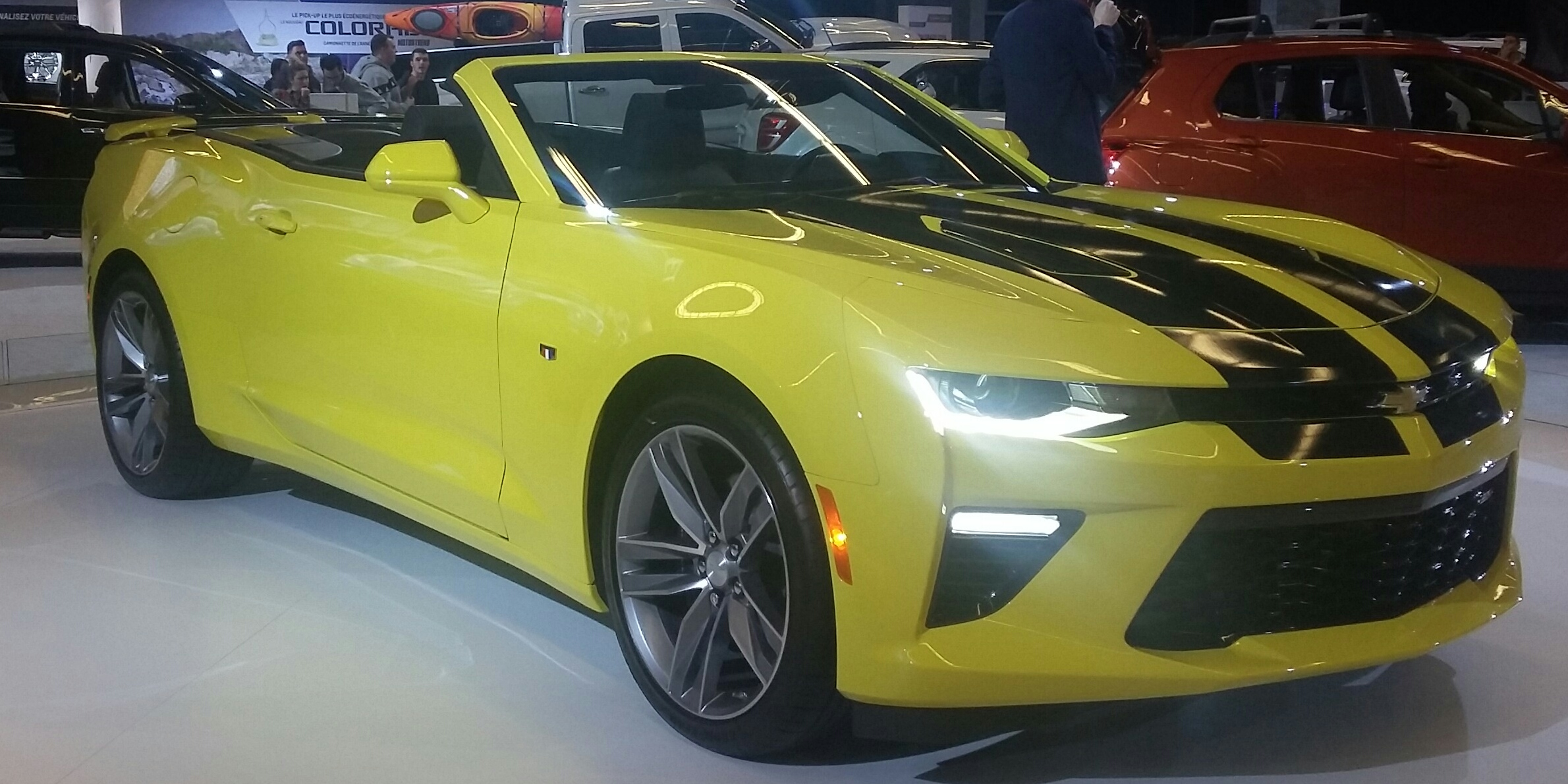
A Camaro Z28 is a sportier, higher-performance version of the Chevrolet Camaro. Here, the host says a demo 1985 Camaro Z28 got into an accident, and that experience led them to stop using demo cars.
A “demo” is a car the dealership uses for customers to look at or test drive. Since it’s been used by the dealer, it may have extra wear or issues, so the sale usually includes extra disclosures.
“As is” means the car is sold in its current condition. The seller is basically saying they’re not guaranteeing it’s problem-free, even if it still has some coverage left.
The “FTC labels” are required stickers/disclosures that tell buyers important legal terms. They’re meant to make sure the buyer knows what coverage or disclaimers apply before buying.
The Federal Trade Commission is a U.S. agency that helps protect consumers. In car sales, it can require clear disclosures so buyers aren’t misled about warranty or vehicle condition.
This means the car still has some of its original warranty left from the manufacturer. Even if the dealer says “no warranty” for other parts, the factory coverage may still help for certain issues.
The radiator support is the front metal frame that holds the radiator and keeps the cooling parts positioned. If it shows repair paint or damage, it can mean the front end was hit before.
Overspray is when paint gets sprayed onto parts that weren’t supposed to be painted. It can show that a car was repainted and that the shop didn’t clean up or mask everything perfectly.
A civil lawsuit is when someone sues to try to get money or a remedy, not to send someone to jail. In car situations, it’s commonly about disagreements over what was disclosed or what condition the car was in.
The Monte Carlo SS is a sporty version of the Monte Carlo, a classic American car. The host is using it as an example of a car that seemed fast back then, even if it wouldn’t feel that way compared to today’s cars.
Term
fast-backed-looking glass
“Fast-backed-looking” is describing a car roof shape that slopes toward the back. It’s meant to give the car a sportier look.
The Nissan Versa is a regular, everyday car model. The host is saying that even a typical modern car would seem faster than older cars that people once considered “hot.”
A customer assistance hotline is where you call the car company to complain about a dealer issue. Asking for a case number creates a record so you can track what happened.
The Honda Accord is a regular, everyday car that’s meant to be comfortable and practical for commuting and errands. It’s commonly used as a family or daily driver because it’s designed to be easy to own and maintain. In the podcast, it’s mentioned as the kind of car someone might drive in their household.
LIVE
Hey folks, it's me again, Leonard B. Lawson, the car guru, and I guess some people's only
reason for living.
Now that's not true, but I do have several people, one guy, and I've said this before,
he uses me to go to sleep at night because he has tinnitus or tinnitus or whatever you
call it when you're going to ringing in your ear.
So he listens to me because he says, I put him to sleep.
And then I have other people that use me as an alarm clock.
They are retired and they want to get up late, I guess.
I had this one lady said, I don't even get out of bed until your show's over.
And I guess that's because it's on local radio.
And then we have the podcast, which is the same as the radio show, except it has a catchy
musical introduction.
So when I'm recording the show for the podcast, I have to add some music.
And you know, you can't even just go online and download some ZZ Top or Credence Clearwater
Revival as the music behind your show.
No, because if you do, you'll get sued.
Now you have to subscribe, actually buy a soundtrack.
So that's what I did.
Found one that sounded kind of blue grassy, kind of a modern blue grassy sound.
And that's what I use.
One time I downloaded a photograph.
I did in somebody who was upgrading my website, downloaded a photograph and put it on my website.
I got a letter from a lawyer in California several months later suing me for $30,000
for using that picture of a typewriter.
We settled.
I ended up having to pay, I think it was $1,500 or something like that.
I could have actually purchased a similar picture of a typewriter, but little did I know.
It was basically copyrighted and you're not supposed to use copyrighted material.
So I started subscribing to these couple services.
I can't remember the name of them, but anyway, they have pictures that you can purchase and
you can run them and not have to worry about getting sued.
Speaking of getting sued, I was talking to a lady the other day in the, well, she was
in the Nissan showroom waiting on service and we were just having the best time and
talking about service issues that people have and how sometimes you'll run into a really
serious problem.
She said, how often do you get sued by people?
And I had to think back.
I said, well, knock on wood.
For me, it's been about 45 years.
I got sued.
One of my salespeople, let's see what year was this?
No, it was 1985.
So that's more like 41 years.
But one of my salespeople was selling a 1985 Camaro Z28 that had been a demo.
One of my salespeople had driven it.
It was one of the reasons why I eliminated demos altogether was the result of this lawsuit.
But he was driving it to work one day and slid through an intersection.
It was not a busy intersection.
It was just a neighborhood intersection and he had hit his brakes.
It was slick and slid and hit the opposite curb.
It messed up the spoiler.
And I think he hit it pretty hard.
And we had to do a little bit of paint work to the very nose of the vehicle.
I mean, it didn't affect any type of drivability, any mechanical parts, just some cosmetic
things.
Well, we put it out there on the lot and we were selling it as is with all its faults,
which, when you're selling a demo, you have to put these FTC labels in the window just
like you do with any used car.
It's considered, well, they just make you do it on demos.
Even though the car has never been titled before, the FTC doesn't care that FTC is the
Federal Trade Commission.
So we have to put these labels in this vehicle.
So we had one in it.
And it said, as is no warranty, but it still had the remaining factory warranty.
And there was a little note at the bottom, a little box you can check it says with remaining
factory warranty.
So the customer came in one day and he looked at the car and he drove it and he liked it
and he bought it.
Well, when they came in to tell me about the deal, I knew about the vehicle and I said,
okay, did we get some kind of a statement from them?
Did we get something signed that he knows that it was a demo and that it had been damaged?
I said, oh yeah, yeah, we got it.
We didn't.
And that was a big mistake because that guy sued us about, let's see, it's about a year.
He came back and he said, well, I found out this thing's been wrecked.
I took it to a shop and they saw overspray on like the radiator support.
And of course, whoever painted the thing, I guess my body shop had gotten a little overspray
on there and didn't get it off.
So he just assumes that the whole front end has been knocked off of it.
And he sued me.
What does he sue me for?
Well, he didn't sue me at first.
First he said, I want you to give me all my money back.
I said, for what?
And they said, well, because it's been wrecked.
I said, it's not been wrecked.
I mean, he had a curb.
Well, you didn't disclose it.
Well, my salesperson said we did.
I pulled the file, didn't see anything in there where we had disclosed anything.
But at the time I poo-pooed it.
I didn't think it was a big problem.
That was a big mistake because I probably could have gotten out of that deal, turn around,
maybe lost $1,500 by reselling it.
It wouldn't have been a big issue.
Fast forward, he sued me in, I don't know which court it was, but they even had a jury.
It was a civil lawsuit.
And we lost that case.
And the jury, I'll never forget when the jury asked the judge, hey judge, is there a limit
on damages that we can impose on this dealer?
And he said, no, there's no limit.
So not only did we have to give him all his money back, but they hit us with $25,000 in
punitive damages.
Yep.
I was in shock and embarrassed.
And so we, my attorney said this won't stand, Lenny, don't worry about it, we'll appeal
it.
We did.
We appealed it.
Tennessee Appellate Court, they overturned it.
Well, they didn't completely overturn it.
They said, yeah, he can have his money back.
But no punitive damages on a right of rescission case, because that was the basis that they
were suing us.
He wanted to be able to rescind the sale.
And the judge said, well, you can rescind it, and it's a right of rescission case, but
you can't have punitive damages because that's not the way the law is written in the state
of Tennessee.
Guess what he did?
He appealed to the state Supreme Court.
He had some pretty aggressive lawyers.
State Supreme Court said, yep, we're going to change the law.
So the case is called Los and Chevrolet, no, Ted Seaton versus Los and Chevrolet.
And it changed contract law in the state of Tennessee.
You are welcome.
So I'll be back here in just a minute.
I was thinking during the break, it seemed like there was another lawsuit, and then I
remembered when we were sued by a guy that had an SS Monte Carlo with a fast-backed-looking
glass.
It was a pretty decent car.
I mean, what passed for a hot car back then would be like nothing right now, be like a
Nissan Versa, because those cars were not fast.
But he loved his SS Monte Carlo, and he had stopped to get some parts, and he was back
in out of parking place.
And I don't know whether he missed his break or hit his gas pedal while he was in reverse,
but he slammed into one of our light poles.
Who did he sue?
He should have sued himself, but he sued me, and I had to go to court.
And yeah, we won that case.
And after the case, we were walking out of the courtroom, and he said, hey, Lenny.
And I said, yes, turned around because he'd been a good customer of ours.
He said, you don't care if I still get my oil changes there, do you?
And I said, no, that's fine.
We had a good laugh about that one.
But that's pretty much it.
Have you ever had to sue a dealer or felt like suing a car dealer over some type of an issue?
Well, if you do, then there's a couple of things that you really have to do to make
sure that it is a legitimate case.
Number one, complain to the manufacturer.
File a complaint with the customer assistance hotline and get a case number.
Now, usually this is reserved for vehicle problems.
You know, you've had it in the shop for three weeks, and they haven't fixed your problem,
or you've been back three or four times for the same problem they haven't gotten to fix.
Would it qualify for the lemon law?
Only if it's in the first 12 months or 12,000 miles of your purchase.
And you can't file a lemon law case on a used car or anything over 12 months or 12,000 miles.
Doesn't mean you can't sue the dealer, though.
You can.
I don't recommend it unless they're just jerks, and there are plenty of them in the car business.
You know, very arrogant people who don't really care about their customers.
They have such high volume, they don't have time to care.
I guess, I don't know.
But I don't want to make anybody mad.
I live in a relatively small community, big county, a very big area in East Tennessee,
and I've just found it better to sit down with the customer and solve the problem, make them happy.
Maybe you can't do everything they want.
My rule has always been, don't tell them what you can't do, tell them what you can do,
and then negotiate from there.
Because a lot of it boils down to negotiations.
But you want them leaving happy to where they're not going to badmouth you,
because people can really, really hurt you online.
You know, used to when somebody had bad service or whatever, they could tell their immediate family
and maybe their circle of friends, but the circle of influence wasn't as great as it is right now
when you've got 2,000 friends on Facebook and most of them you've never seen in your life.
You know, they're just people, you just keep adding friends because your ego needs it.
But yeah, you can do a lot of damage with Google ratings and things like that.
But my recommendation is to go in and talk to the dealer and try to find who owns the place.
They're in a large dealer group.
The dealer is in a corporate office somewhere in New York or South Carolina or California, Michigan.
You know, they're not in the store. They have general managers that run the store.
General managers that run stores are held accountable for a couple things, market effectiveness.
You know, they want to make sure that they're selling enough cars in the marketplace.
Profitability is the biggest thing. Customer satisfaction scores are important to most dealer groups.
They want to be ranked highly, but the number one thing is profitability.
And a general manager that's focused on his pay plan and you come in and you want to him to give you $2,000 back
because of a botched repair, he doesn't really want to do that because that comes out of his pocket.
So it's important to go in and talk to him, though.
Now, if you go into a dealership and you feel like people keep running interference for you,
you keep leaving messages, they won't call you back, you've got an issue,
then maybe it's time for a legal letter from a lawyer because that dealership is not,
well, number one, you shouldn't have bought the car from them anyway.
But how would you know?
Well, typically, if you're really attuned to this and you've been listening to this show,
you can tell the first time you're greeted at the dealership what kind of store they are
by the salespeople, by their demeanor, by what they say.
What kind of monthly payment you're looking for?
If you hear that, that's the wrong kind of place to be because it's a profit store.
I mean, our goal is to make a profit for sure, but that's all they care about.
And pay plans, how the sales managers get paid, how the salespeople get paid,
how the general manager gets paid because the guy that owns the dealership, he's in Atlanta,
and he just gets a check in the mail also.
And sometimes they look at the numbers and stuff like that.
As long as the dealership is staying afloat, making a profit, sending him a check, they don't care.
But if you have a dealership that has local owners, you know, we have some groups in the Tri-Cities,
for example, the Wallace Group and Champion Chevrolet and Johnson City and Kingsport.
I mean, they're not owned by some big corporation.
I mean, it is a corporation, but those people that own those stores, even though they own multiple stores, live here.
But there are other dealerships in the Tri-Cities.
I won't name them, but they don't live here.
And they've moved here from all over the country.
And so they're there for one purpose only.
And those are the ones that are going to run from you if you have a serious problem.
But if you do have a problem and the dealer is present, go see them, sit down and talk with them.
Don't threaten them. Tell them what the situation is.
And don't hit them hard on Google ratings or Facebook or anything like that before you go talk to them.
Because that makes them less likely to help you.
You've already done the damage.
And don't threaten that either.
You could say something like this.
You know, I've had this problem.
You guys haven't been able to fix it.
It's really getting frustrating.
I really want to be able to give you guys top ratings on Google and with the manufacturer.
But right now, that's kind of hard.
I'm not feeling that way.
You know, that's less of a threat than I'm going to tear you up on Google ratings.
I'll give you one star, you know, people tend to push back on that.
Just like when you go into a business and start raising your voice and yelling.
And given the servers at a restaurant a hard time or the people that own a car dealership, you know,
creating a scene in the service drive, yelling and screaming, what good does that do you?
Zero.
Because those are human beings you're yelling at and they don't like that.
They respect people that take them into a private office and sit down and have a conversation.
And I agree that it can be an emotional experience when you've been without your car for two months
and you're getting the run around.
But you'll get a whole lot more by being reasonable than by being a jerk.
And then if they don't respond, you've got good notes, you've got all your documentation,
you go see a lawyer and you have the lawyer send him a letter.
And if that doesn't work, then if he thinks you have a case, then you sue him.
And you do it in the right court.
You know, you just got to make sure that you have a good legal representation and that they know what they're doing.
And then maybe you'll win.
It's not an easy road though.
It's better not to have to go through all that.
We have enough stresses in our lives than to have to go through something like that.
Now, sometimes the manufacturer will step in and offer buybacks and give customers extended warranties.
Many cases, not as much as they used to, but they'll offer trade assistance.
But again, what they do is so much dependent upon your loyalty to that business.
Now, let's say that in your household, your wife drives a Honda Accord and you drive a Chevy Silverado.
And you're having all kinds of problems with that Silverado.
And you've never darkened the dealer's door since you bought it.
You've taken it to the fast-loop places.
Maybe you took it to the Honda dealership for that matter.
And then you have some, well, you run out of warranty and then you have some major event.
And you go in and say, you know, I need you all to take care of this.
They're going to tell you it's out of warranty and there's nothing they can do.
But if they look into their computer system and they see, you had all your oil changes done there.
You've been a regular maintenance customer.
You had a break job done.
You replaced your windshield wipers.
You've got history with that dealership.
Matter of fact, you know the names of one or two of the service advisors.
You've met the service manager.
You've even met the general manager of the dealership, the guy that runs the place or the dealer himself.
You have a mechanical issue out and you're out of warranty.
You're going to get some help.
They're going to go to battle for you.
That, folks, is the value of relationship.
It's not just how much money you've spent there.
It's because they've seen you.
They know your name.
They like you.
You like them.
You trust each other.
That's what makes things work.
Really, that's what makes the world go round.
I'll be back in just a minute.
But we're not about relationships anymore unless it's a fake one like on Facebook, Instagram, TikTok.
You know, everybody just wants to be entertained now.
You know, they just want to see these wild people going off online.
Then when they have an issue, maybe they think that that's what you do.
You know, to get a business or to handle a situation with a neighbor, whatever.
What do we learn how to be nice?
And I think that's what we're all called to do.
You know, I think, number one, people like to be acknowledged.
And if you can acknowledge somebody, their presence, their existence as a human being,
and be nice to them, and compliment them,
I think it's something good to say.
Instead of just, how you doing?
What's up?
You know, say something good, and it's just amazing how something good will come back.
Kind of like a boomerang, if you know how to throw one.
My dad was the best at this.
He developed so many good relationships over the years.
It just amazes me.
Maybe I'll go into a business, or I'll run into somebody, and they'll still come up to me and say,
I just loved your dad.
You know, he was a businessman here in Greenville, Tennessee.
Ran a little Chevy dealership.
But he touched a lot of lives because of his community involvement,
and because he was a good businessman.
And when somebody wanted to talk to him, the door was always open.
And not just to customers, but especially to employees.
Because he always believed that if your employees aren't well taken care of and happy,
then they're not going to be very good with your customers.
Because there's just no buy-in.
There's no loyalty to the business itself, to the guy that owns the business.
But in his old age, I created an office down here for him at my Ford dealership.
He would sit in a place solitaire for a while,
and then he would shuffle out with his walker,
and he would shuffle down to the customer lounge,
and just sit down, and look around, and start conversations.
And a lot of those people didn't know who the heck is this old guy.
But pretty soon they figured it out, oh, that's Lenny's dad.
That's the owner's dad.
And so they listened, and he would sit there and tell stories.
But for the most part, he would listen.
I think that's one of the reasons he was loved and respected so much,
is because he was a great listener.
Are you a great listener? Be one. You'll make a lot more friends.
Thanks for listening to this edition of My Car Guru.
If you have any questions about your car, buying, selling, trading, servicing,
you know, if you wreck it, how do you pick the right body shot?
If you need information on how stuff works, call me 423-552-2020,
or send me an email to LennyLawson2020 at gmail.com.
I'll see you next time.
About this episode
Lawsuits can start from “ignorance” as much as intent—whether it’s a photo on a website, a demo car accident, or missing paperwork and required window labels. The show walks through how dealer disputes escalate into civil court, including rescission and punitive damages, and what to do when you’re the customer. Practical steps include documenting everything, escalating to the manufacturer for a case number, and sending a lawyer’s letter if the dealer ignores you—while staying calm and avoiding premature review threats.