
passive safety
Passive safety is what the car does to protect you during a crash automatically. It includes things like airbags, seatbelts, and the way the body is designed to absorb impact.
crash safety
Crash safety is how well a car protects people when there’s an accident. Engineers design the car and safety systems to reduce injuries, and testers measure that in crash tests.
insurance institute for highway safety
The Insurance Institute for Highway Safety (IIHS) is an independent group that tests cars for crash safety. Here, they’re saying their car did extremely well in those tests.
top safety pick plus award
“Safety Pick Plus” is IIHS’s top safety award level. It means the car did very well in crash testing and also met strong standards for safety features.
third party testing
Third-party testing means an organization independent of the automaker runs standardized evaluations on vehicles. This matters because it reduces the chance that results are influenced by the manufacturer’s own marketing or internal testing methods.
DSP award
The “DSP award” is a safety goal the engineers are trying to earn. It means the car is designed to do well in crash-safety evaluations, not just pass basic requirements.
body structure
“Body structure” is the car’s skeleton. In a crash, it’s what helps protect you by controlling how the car bends and absorbs impact energy.
restraints
“Restraints” are the safety systems that hold you in place during a crash. That includes seat belts and airbags, which work together to reduce injury.
crash avoidance ADAS
“Crash avoidance ADAS” are safety features that try to stop an accident before it happens. They watch what’s going on around the car and can warn you or even brake automatically.
head jammed groups
“Head jammed groups” appears to refer to a specific test category or evaluation group focused on head protection in a crash. The phrase suggests a concern about how the head can move or contact parts during certain impact scenarios, and how the vehicle’s design helps mitigate that risk.
active safety
“Active safety” is about avoiding accidents in the first place. It includes things like driver-assist features that help you react or prevent a crash.
standard equipment
“Standard equipment” means the feature comes on the car by default. Instead of paying extra for it, you get it automatically on the base model.
analog
Here, “analog” means the early versions of these safety systems were simpler and less smooth. They may have felt more like a basic on-or-off warning instead of a smarter, easier-to-understand helper.
avoiding an accent
This sounds like it was meant to say “avoiding an accident.” The idea is that preventing the crash is better than just being protected after the crash happens.
small overlap
A small overlap crash is when only a small part of the front of the car hits something. Since the hit is concentrated, the car has to be engineered to absorb the crash and keep the passenger area from getting crushed.
IHS
IHS is mentioned as the group running crash tests. They test cars in specific ways so results can be compared fairly.
25 percent overlap
In this test, only about a quarter of the car’s front width hits the barrier. That makes the crash harder to manage, so the car needs strong engineering to protect the people inside.
rigid barrier
A rigid barrier is basically a fixed wall used in crash testing. It doesn’t give way, so it’s a consistent way to see how well the car protects occupants.
side members
Side members are strong parts of the car’s frame that help hold the body together during a crash. In certain crashes, they help guide the forces away from the passenger area.
partial impact
A partial impact means the crash hits only part of the car’s front. That can be tougher because the force doesn’t spread out evenly across the car’s structure.
energy is dissipated
During a crash, the car has to “use up” the crash energy. Engineers design the structure so it absorbs the energy by deforming in controlled ways, instead of letting it slam into the people inside.
load bearing systems
Load-bearing systems are the car’s strongest structural parts that take the crash forces. In a crash, they help keep the passenger area from being crushed.
gussets
Gussets are small reinforcement pieces that strengthen where parts of the car’s frame connect. They help the structure handle crash forces more effectively.
balancing act
The “balancing act” refers to the engineering trade-offs between crashworthiness and other vehicle attributes. Adding structure to improve safety can affect weight and packaging, which can then influence fuel economy and drivability.
kinetic energy
Kinetic energy is the energy of a moving car. In a crash, engineers try to control how that energy is absorbed so it doesn’t slam into the passenger area.
cabin intrusion
Cabin intrusion is how far the passenger area gets crushed inward in a crash. Less intrusion usually means more room for you to stay protected by the seat belts and airbags.
side impact
Side-impact testing checks how safe the car is when another vehicle hits it from the side. The goal is to limit how much the door area collapses inward and to make sure the safety restraints can still protect you.
battery design
In an electric car, the battery takes up space in the body. If the battery layout changes, the car’s crash structure and safety systems may need updates too, so the passenger compartment stays protected.
side airbag
A side airbag is an airbag that deploys in a crash from the side of the car. Its job is to protect your body by cushioning you and helping keep you from getting slammed into the door or other parts.
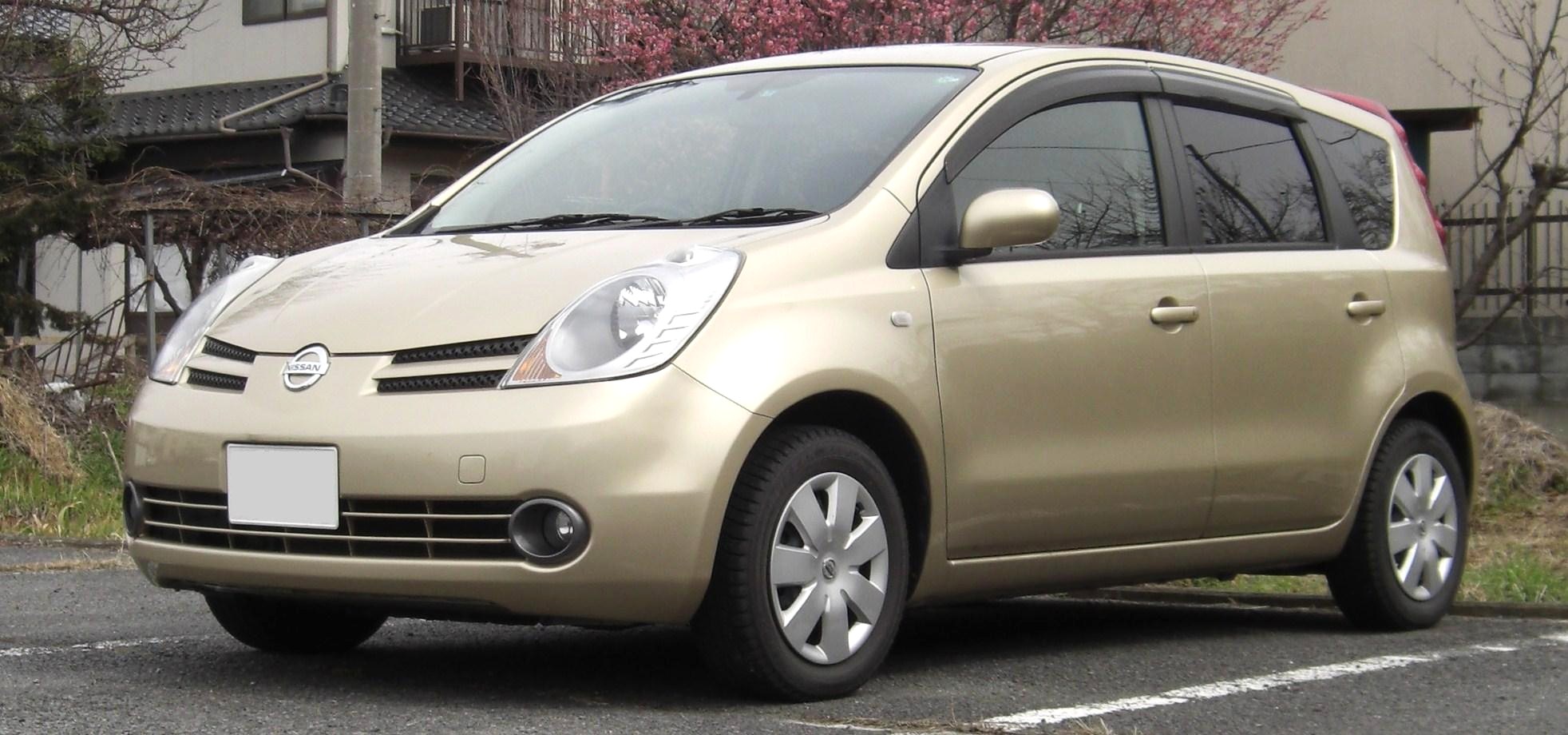
Nissan Not Nissan
The Nissan Note is a small car with a hatchback shape, meant to be easy to drive and park. It’s the kind of car people consider for city commuting. The podcast mention relates to safety features like airbags and how they were handled in earlier versions.
airbags deploy
When a crash happens, the airbag has to inflate at the right moment and with the right force. That timing is what helps protect you instead of making things worse.
kinematics of the arm
Kinematics is just a fancy way of talking about how your arm moves. The airbag can be designed to guide that movement so your arm doesn’t get in the way or get hit.
tear seams
Tear seams are the pre-designed lines that let the airbag cover split open when the airbag inflates. They help the airbag look “built in” but still work correctly in a crash.
protocols
In this context, protocols are the formal safety test procedures and regulatory/industry requirements that define how vehicles must be engineered and validated. The speaker describes coordinating with outside agencies to anticipate how these procedures may change.

Nissan Sentra
The Nissan Sentra is a small car, and the hosts are saying it can still score well on safety. The takeaway is that newer airbag and safety designs aren’t only for expensive cars.
Salon TerraMax HLT
The Salon TerraMax HLT is a tire made for SUVs and crossovers. It’s meant mostly for regular road driving, including wet weather, with only limited help for light snow or rougher surfaces.
highway focused tire
A highway-focused tire is built mainly for regular road use. It’s designed to work well on pavement, especially in wet or dry conditions, not for serious off-roading.

Honda CRV
The Honda CR-V is a popular SUV. Here, they use it as the test car so they can compare two different tires on the same vehicle.

Toyota RAV4
The Toyota RAV4 is a common SUV/crossover. They’re saying this tire is the type you’d see on vehicles like that.

Toyota Highlander
The Toyota Highlander is a popular family SUV. They’re saying this tire is the kind you’d see on vehicles like it.

Ford Edge
The Ford Edge is a crossover SUV. They’re listing it as an example of the kinds of cars this tire is designed for.
autocross
Autocross is a timed course with cones that makes the car change direction a lot. It’s a good test for tires because it forces them to work hard with turns, braking, and acceleration.
sidewall wanting to roll over
If the sidewall rolls over in a turn, the tire flexes more than you’d like. That can make the car feel a little less sharp or responsive when you steer.
tread blocks
Tread blocks are the individual chunks of rubber on the tire that touch the road. When they get worked hard, they can start vibrating more and making extra noise.
scrubbed against the rough pavement
Scrubbing means the tire is being stressed so the tread doesn’t just roll smoothly—it flexes and drags a bit. On rough roads, that can make more noise and feel more bumpy.
Saline TerraMax HLT
Saline TerraMax HLT is a particular tire model. The host is saying it’s a good choice if you want decent grip and ride noise without paying top-dollar for premium tires.
V8 engines
A V8 is a type of engine with eight cylinders. The host is talking about Formula One switching back to V8-style power because it would sound better and be easier to keep strong on long straightaways.
Formula One
Formula One is the highest level of race car series. The host is talking about how the current hybrid rules change how the cars sound and how they manage power during a race.
turbo V6 hybrids
This means a V6 engine that’s boosted by a turbo, and it also uses electricity. The host says fans dislike how it sounds and feels, and that it may not have enough power for long, full-throttle stretches.
high RPM
High RPM means the engine is revving fast. The host is saying that revving high is part of what makes the car feel exciting and helps it keep strong power when the track goes straight for a while.
conserve battery
“Conserve battery” means you can’t use all the electric power all the time. In a race, you have to save some battery energy so the car still has power later.
straightaways
Straightaways are the long straight parts of the track. The host is saying the current F1 cars may not keep pulling as strongly on those long straight sections.
high revving V8 engine
“High revving” means the engine is designed to spin faster (higher RPM). A “V8” is a type of engine with eight cylinders arranged in a V shape, and it usually sounds and feels more energetic.
rules should be in by 2031
The “rules” are new regulations that will change how cars are built or what technologies they can use. If they arrive in 2031, companies may need to update their plans sooner than they’d like.
powertrain
A powertrain is the main set of parts that make the car move. It includes the engine (or electric motors) and the parts that send that power to the wheels.
Cadillac
Cadillac is a car brand that makes luxury vehicles. In this segment, they’re used as an example of a company that has already spent a lot of time and money on a new drivetrain, but might have to change plans because new regulations are coming.
