
How to Make Small Cars Safe: Ep 121
About this episode
Small cars can earn top crash-safety results through a mix of structural engineering, restraint design, and increasingly standard active-safety ADAS. Nissan’s team describes targeting the IIHS DSP award from the planning stage, then using digital and physical testing to manage crash energy and cabin intrusion—especially in small-overlap scenarios. Side airbags and covers are refined as IIHS standards evolve. The conversation then shifts to value tire testing and a separate motorsport debate about F1’s turbo V6 hybrids versus high-revving V8 character.
passive safety
"where we work on vehicle crash safety, passive safety, and work on making sure our vehicles meet the federal regulations and third party requirements for crash safety."
Passive safety is what the car does to protect you during a crash automatically. It includes things like airbags, seatbelts, and the way the body is designed to absorb impact.
Passive safety refers to vehicle safety systems that protect occupants during a crash, without requiring the driver to take action. Examples include crumple zones, airbags, seatbelt systems, and structural design that manages crash forces.
crash safety
"where we work on vehicle crash safety, passive safety, and work on making sure our vehicles meet the federal regulations and third party requirements for crash safety."
Crash safety is how well a car protects people when there’s an accident. Engineers design the car and safety systems to reduce injuries, and testers measure that in crash tests.
Crash safety is the engineering effort to reduce injury risk in collisions through vehicle structure, restraint systems, and crash-test performance. It’s typically evaluated using standardized test protocols that measure how well occupants are protected.
insurance institute for highway safety
"which is the insurance institute for highway safety. They awarded us the top safety pick plus award."
The Insurance Institute for Highway Safety (IIHS) is an independent group that tests cars for crash safety. Here, they’re saying their car did extremely well in those tests.
The Insurance Institute for Highway Safety (IIHS) is a nonprofit organization that runs crash tests and publishes safety ratings for vehicles. In this segment, Nissan is emphasizing that its small car earned IIHS’s top award based on IIHS’s own testing.
top safety pick plus award
"They awarded us the top safety pick plus award. So we're extremely excited and proud of that work, of the work that went into that."
“Safety Pick Plus” is IIHS’s top safety award level. It means the car did very well in crash testing and also met strong standards for safety features.
“Safety Pick Plus” is IIHS’s highest tier of vehicle safety recognition. To earn it, a car has to perform well across multiple crash tests and also meet requirements for crash-avoidance and protection systems.
third party testing
"So I always throw a little bit more weight behind their ratings because they're really just third party testing and something like the the center."
Third-party testing means an organization independent of the automaker runs standardized evaluations on vehicles. This matters because it reduces the chance that results are influenced by the manufacturer’s own marketing or internal testing methods.
DSP award
"So from the get go for center, our target was always to go get the DSP award. And through a series of development that started at the very beginning at the planning stage"
The “DSP award” is a safety goal the engineers are trying to earn. It means the car is designed to do well in crash-safety evaluations, not just pass basic requirements.
“DSP award” refers to a specific safety recognition tied to a vehicle’s development and performance in crash-safety testing. It’s used as a target milestone during the planning and engineering process, so the team designs the car’s structure and restraint systems to meet the award criteria.
body structure
"through digital and through physical testing, we've applied smart solutions from the body structure standpoint and also the restraints standpoint to get us there."
“Body structure” is the car’s skeleton. In a crash, it’s what helps protect you by controlling how the car bends and absorbs impact energy.
“Body structure” is the vehicle’s main framework—think of the pillars, floor, rails, and crumple zones—that determines how crash forces are managed. For small cars, engineers often focus on making the structure strong enough to protect occupants while still deforming in controlled ways.
restraints
"we've applied smart solutions from the body structure standpoint and also the restraints standpoint to get us there. And in addition, the crash avoidance ADAS and head jammed groups also were involved"
“Restraints” are the safety systems that hold you in place during a crash. That includes seat belts and airbags, which work together to reduce injury.
“Restraints” are the occupant-protection systems that work during a crash, such as seat belts and airbags. Their job is to reduce how far and how fast occupants move, and to time the forces so injuries are minimized.
crash avoidance ADAS
"And in addition, the crash avoidance ADAS and head jammed groups also were involved because there are some criteria for those groups as well to get that award."
“Crash avoidance ADAS” are safety features that try to stop an accident before it happens. They watch what’s going on around the car and can warn you or even brake automatically.
“Crash avoidance ADAS” means driver-assistance systems designed to prevent or reduce crashes, not just protect occupants after impact. Examples typically include forward collision warning, automatic emergency braking, and lane-related alerts/assists—systems that can intervene when the driver doesn’t.
head jammed groups
"And in addition, the crash avoidance ADAS and head jammed groups also were involved because there are some criteria for those groups as well to get that award."
“Head jammed groups” appears to refer to a specific test category or evaluation group focused on head protection in a crash. The phrase suggests a concern about how the head can move or contact parts during certain impact scenarios, and how the vehicle’s design helps mitigate that risk.
active safety
"Yeah, active safety is a big one these days and we're seeing it standard in more and more vehicles, especially at the more affordable end of the market."
“Active safety” is about avoiding accidents in the first place. It includes things like driver-assist features that help you react or prevent a crash.
“Active safety” refers to systems that help prevent crashes or reduce their severity while driving. It contrasts with “passive safety,” which focuses on protecting occupants during the crash (like airbags and seat belts).
standard equipment
"Yeah, active safety is a big one these days and we're seeing it standard in more and more vehicles, especially at the more affordable end of the market. So I can't speak to the cost of that because that's a different group that works on that."
“Standard equipment” means the feature comes on the car by default. Instead of paying extra for it, you get it automatically on the base model.
“Standard equipment” means the safety technology is included on the base version of the vehicle rather than being optional. When systems become standard, manufacturers can spread development and component costs across more units, which helps make them more affordable for buyers.
analog
"Yeah, and how you said it's more mature, that's a good way to describe it because some of these systems early on were very sort of analog, they're on off, but things are getting so much more intuitive"
Here, “analog” means the early versions of these safety systems were simpler and less smooth. They may have felt more like a basic on-or-off warning instead of a smarter, easier-to-understand helper.
In this context, “analog” describes early driver-assistance behavior that was less refined—often more binary (on/off) and less natural in how it detected situations and responded. As the systems matured, they became more intuitive and better at communicating what they’re doing to the driver.
avoiding an accent
"but things are getting so much more intuitive and I think consumers are getting more used to it and avoiding an accent is always better than getting in one no matter how safe a car is."
This sounds like it was meant to say “avoiding an accident.” The idea is that preventing the crash is better than just being protected after the crash happens.
“Avoiding an accent” is almost certainly a transcription error for “avoiding an accident.” The point being made is that preventing a crash is often better than relying solely on crash protection, because avoiding the impact reduces the chance of injury even in a well-designed car.
small overlap
"Yeah, so one of the things, crash modes that IHS tests for is the small overlap. They tested on both the left hand and the right hand side where it's where we crash the vehicle with a 25 percent overlap with a rigid barrier."
A small overlap crash is when only a small part of the front of the car hits something. Since the hit is concentrated, the car has to be engineered to absorb the crash and keep the passenger area from getting crushed.
A “small overlap” crash test is designed to simulate a vehicle hitting an object with only part of the front end. Because the contact area is small, the forces concentrate and the vehicle has to manage deformation and energy flow very efficiently to protect the cabin.
IHS
"Yeah, so one of the things, crash modes that IHS tests for is the small overlap."
IHS is mentioned as the group running crash tests. They test cars in specific ways so results can be compared fairly.
IHS is referenced here as the organization that performs crash testing for specific “crash modes.” In this context, it’s tied to standardized test procedures used to evaluate vehicle safety performance.
25 percent overlap
"They tested on both the left hand and the right hand side where it's where we crash the vehicle with a 25 percent overlap with a rigid barrier."
In this test, only about a quarter of the car’s front width hits the barrier. That makes the crash harder to manage, so the car needs strong engineering to protect the people inside.
“25 percent overlap” refers to how much of the vehicle’s front width contacts the barrier in the test. A smaller overlap generally increases the challenge because less of the car’s structure is engaged, so the load paths must be carefully engineered.
rigid barrier
"They tested on both the left hand and the right hand side where it's where we crash the vehicle with a 25 percent overlap with a rigid barrier."
A rigid barrier is basically a fixed wall used in crash testing. It doesn’t give way, so it’s a consistent way to see how well the car protects occupants.
A rigid barrier is a fixed test structure that doesn’t move much during impact, so it provides a consistent, repeatable crash target. Using a rigid barrier helps engineers compare results across vehicles and focus on how the car’s structure manages the crash forces.
side members
"It's not in a way that the side members in the car take the load completely. It's a partial impact."
Side members are strong parts of the car’s frame that help hold the body together during a crash. In certain crashes, they help guide the forces away from the passenger area.
Side members are structural rails in the vehicle’s body that help carry crash loads and maintain the frame’s integrity. In small-overlap crashes, engineers often rely on these members to channel forces away from the cabin.
partial impact
"So unlike a full lap or a full full frontal crash, the loading is not the same. It's not in a way that the side members in the car take the load completely. It's a partial impact."
A partial impact means the crash hits only part of the car’s front. That can be tougher because the force doesn’t spread out evenly across the car’s structure.
A partial impact describes a crash where only part of the vehicle’s structure is loaded, unlike a full-width frontal crash. In small-overlap events, the load doesn’t distribute across the whole front end, so the side structure and specific load paths become critical.
energy is dissipated
"So you're limited in the way your energy is dissipated through the main load bearing systems."
During a crash, the car has to “use up” the crash energy. Engineers design the structure so it absorbs the energy by deforming in controlled ways, instead of letting it slam into the people inside.
In crash engineering, “energy is dissipated” means the vehicle converts the crash’s kinetic energy into deformation and heat rather than letting it all go into occupant motion. How and where that energy is absorbed strongly affects cabin protection and injury risk.
load bearing systems
"So you're limited in the way your energy is dissipated through the main load bearing systems. So what we've done is still manage it in a way that with some structural components that we still are able to channel it into the main side members."
Load-bearing systems are the car’s strongest structural parts that take the crash forces. In a crash, they help keep the passenger area from being crushed.
Load-bearing systems are the structural parts designed to carry crash forces and resist deformation. In small-overlap crashes, the goal is to route loads through the most effective structures so the cabin stays intact.
gussets
"So that's whether we are having some gussets in the front or not. It's still using the main load bearing members to act in a way that our cabin intrusion is optimized"
Gussets are small reinforcement pieces that strengthen where parts of the car’s frame connect. They help the structure handle crash forces more effectively.
Gussets are reinforcing plates or triangular brackets used to strengthen joints and spread loads. In crash structures, gussets can help improve stiffness and ensure forces flow into the intended load paths.
balancing act
"because you could easily just throw giant steel beams in there but then you're going to start affecting fuel economy and drivability and are those things that you're constantly having to balance with the other teams in the engineering process of a vehicle?"
The “balancing act” refers to the engineering trade-offs between crashworthiness and other vehicle attributes. Adding structure to improve safety can affect weight and packaging, which can then influence fuel economy and drivability.
kinetic energy
"we are 100% managing the energy of the kinetic energy that's imparted. So we are very confident that our structural or structural ratings are very consistent from test to test."
Kinetic energy is the energy of a moving car. In a crash, engineers try to control how that energy is absorbed so it doesn’t slam into the passenger area.
Kinetic energy is the energy a moving vehicle has due to its motion. In crash engineering, designers try to manage how that energy is absorbed and redirected through the vehicle structure so it doesn’t overwhelm the cabin and occupant restraints.
cabin intrusion
"So that way we can ensure that the cabin intrusion is always going to be what we plan for and as a result the energy going into the cabin in which the restraints needs to handle will always be the same."
Cabin intrusion is how far the passenger area gets crushed inward in a crash. Less intrusion usually means more room for you to stay protected by the seat belts and airbags.
Cabin intrusion is how much the passenger compartment gets pushed inward during a crash. Lower intrusion generally means the occupant space stays intact, which helps restraints and airbags do their job as designed.
side impact
"The side impact I know that really changed. We're going back a couple years now or quite a few years but was that a big challenge when they started?"
Side-impact testing checks how safe the car is when another vehicle hits it from the side. The goal is to limit how much the door area collapses inward and to make sure the safety restraints can still protect you.
Side-impact testing evaluates how well a vehicle protects occupants when struck from the side, typically focusing on door intrusion and how the structure channels crash energy. It also affects how the restraints (like seat belts and airbags) are calibrated to work with the expected cabin deformation.
battery design
"So I think I just did the research to come up with the new battery design to represent bigger SUVs that are in the market today. And yes, there were changes related to that to the body structure and also the restraint systems,"
In an electric car, the battery takes up space in the body. If the battery layout changes, the car’s crash structure and safety systems may need updates too, so the passenger compartment stays protected.
Battery design in an EV affects how the vehicle structure is packaged and how crash forces travel through the floor and body. Changes to battery placement or enclosure can require corresponding updates to the body structure and safety restraints to maintain the intended crash performance.
side airbag
"specifically the side airbag that would help compensate for that newer and heavier mass. Yeah, and actually I didn't even think of the airbags."
A side airbag is an airbag that deploys in a crash from the side of the car. Its job is to protect your body by cushioning you and helping keep you from getting slammed into the door or other parts.
A side airbag is an inflatable restraint designed to protect the head, chest, and torso area during a side-impact crash. It helps reduce injury by cushioning occupants and controlling how their body moves relative to the door and intruding structures.
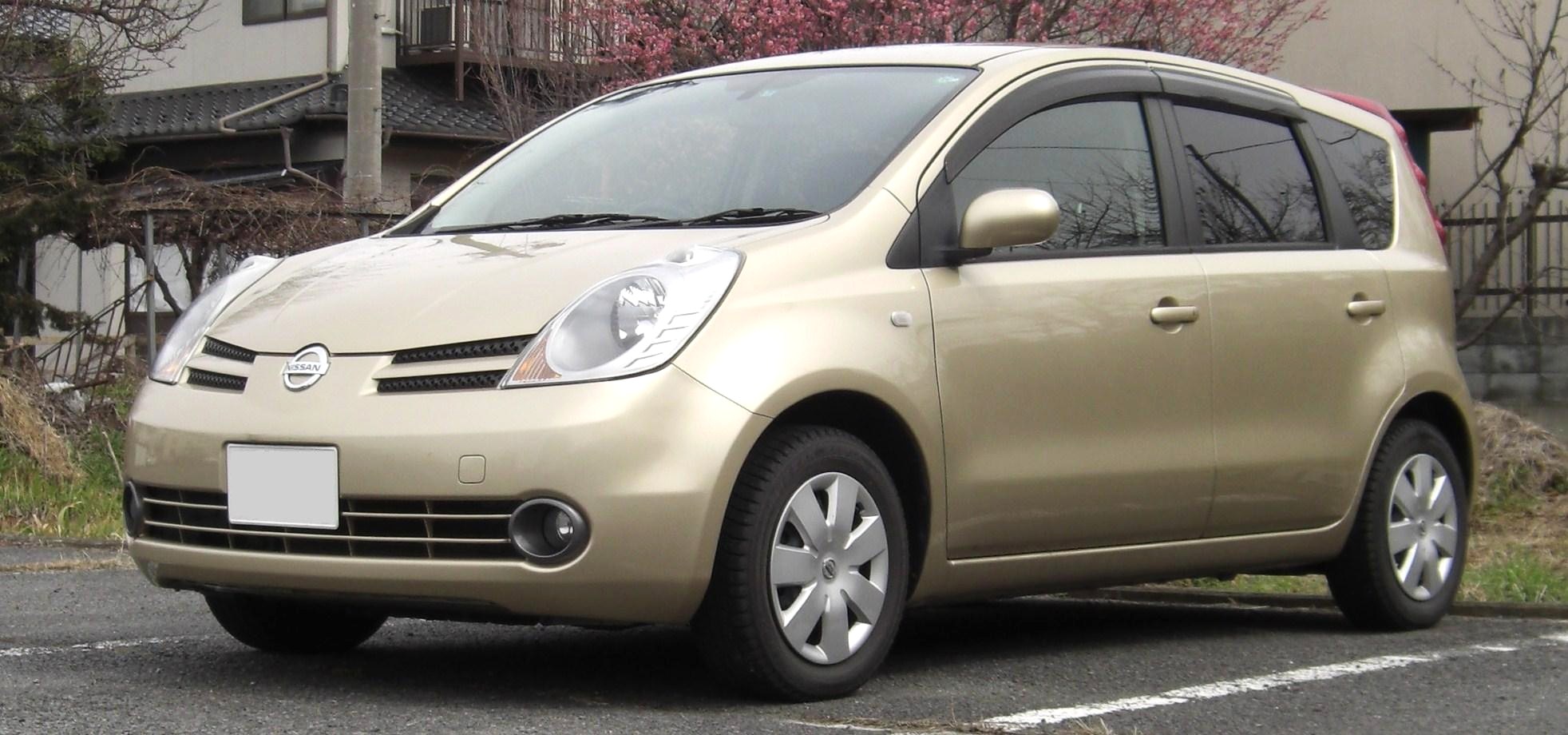
Nissan Not Nissan
"...irbags. I just remember some other manufacturers, not Nissan, but some others struggled with that at first bec..."
The Nissan Note is a small car with a hatchback shape, meant to be easy to drive and park. It’s the kind of car people consider for city commuting. The podcast mention relates to safety features like airbags and how they were handled in earlier versions.
The Nissan Note is a small hatchback designed for efficient city driving and easy everyday packaging. It may be mentioned in a safety-focused discussion because the podcast context references airbags and early safety performance concerns. That makes it relevant when talking about how safety equipment and crash protection have evolved over time for smaller cars.
airbags deploy
"So with the airbags have you noticed a big advancement in the way they deploy provide protection and restraint over the last, let's say, 5-10 years?"
When a crash happens, the airbag has to inflate at the right moment and with the right force. That timing is what helps protect you instead of making things worse.
Airbag deployment is the controlled sequence where the airbag inflates rapidly during a crash. Modern systems tune deployment timing and force so the occupant is restrained effectively without causing secondary injuries.
kinematics of the arm
"airbags that also impact the kinematics of the arm to get it out of the way instead of being sandwiched"
Kinematics is just a fancy way of talking about how your arm moves. The airbag can be designed to guide that movement so your arm doesn’t get in the way or get hit.
Kinematics refers to the motion of the body—how the arm moves during the crash. Airbag design can influence arm movement to help prevent the arm from being trapped or struck, improving overall injury outcomes.
tear seams
"If there wasn't the warning, you wouldn't even know where they are. Yes, that's true. The tear seams are so hidden now that you wouldn't even know where they are."
Tear seams are the pre-designed lines that let the airbag cover split open when the airbag inflates. They help the airbag look “built in” but still work correctly in a crash.
Tear seams are engineered break lines in the airbag cover that allow the cover to split open in a controlled way when the airbag deploys. Hidden tear seams help the airbag integrate into the interior while still opening reliably during a crash.
protocols
"But as far as the evolution, so we have an advanced engineering group that is more in touch with outside agencies and how protocols are going to change."
In this context, protocols are the formal safety test procedures and regulatory/industry requirements that define how vehicles must be engineered and validated. The speaker describes coordinating with outside agencies to anticipate how these procedures may change.

Nissan Sentra
"Well, that's very cool. Like I said, it's still pretty incredible that a vehicle, the weight and price point of the Sentra achieve such a"
The Nissan Sentra is a small car, and the hosts are saying it can still score well on safety. The takeaway is that newer airbag and safety designs aren’t only for expensive cars.
The Nissan Sentra is a compact sedan that’s being referenced here for achieving strong crash-safety outcomes despite being a smaller, lower-cost vehicle. The point is that modern airbag and restraint design can scale down to smaller cars while still meeting stricter test expectations.
Salon TerraMax HLT
"Okay, so moving on, let's talk about our product review for this week and it is the Salon TerraMax HLT. Basically what this is, it is a highway focused tire for SUVs or crossovers."
The Salon TerraMax HLT is a tire made for SUVs and crossovers. It’s meant mostly for regular road driving, including wet weather, with only limited help for light snow or rougher surfaces.
Salon TerraMax HLT is a highway-focused tire aimed at SUVs and crossovers, with the tread designed primarily for pavement. The hosts describe it as capable of handling mild dirt and light snow dustings, but optimized for wet and dry road driving.
highway focused tire
"Basically what this is, it is a highway focused tire for SUVs or crossovers. It's the kind of tire that could deal with some mild dirt or even some light dustings of snow."
A highway-focused tire is built mainly for regular road use. It’s designed to work well on pavement, especially in wet or dry conditions, not for serious off-roading.
A highway-focused tire is tuned for everyday driving on paved roads, typically prioritizing grip in wet/dry conditions, ride comfort, and tread life over off-road capability. That usually means the tread pattern and rubber compound are optimized for pavement rather than deep mud or rocks.

Honda CRV
"It's what you would see in the majority of Honda CRVs Toyota RAV4, the Ford Edge, Toyota Highlander, Subaru forces, those kind of vehicles. So to test it, I actually got to drive a Honda CRV and stock form with this tire on back to back with another completely stock Honda CRV wearing a much more expensive competitors tire."
The Honda CR-V is a popular SUV. Here, they use it as the test car so they can compare two different tires on the same vehicle.
The Honda CR-V is a compact SUV that’s commonly used as a baseline for tire testing because it’s widely sold and typically driven on pavement. In this segment, the hosts use a Honda CR-V to compare the Salon TerraMax HLT against a more expensive competitor tire.

Toyota RAV4
"It's what you would see in the majority of Honda CRVs Toyota RAV4, the Ford Edge, Toyota Highlander, Subaru forces, those kind of vehicles."
The Toyota RAV4 is a common SUV/crossover. They’re saying this tire is the type you’d see on vehicles like that.
The Toyota RAV4 is a compact crossover/SUV that’s frequently used to represent the kind of everyday vehicle that highway-oriented tires are designed for. The hosts mention it as a typical match for the Salon TerraMax HLT’s intended use.

Toyota Highlander
"It's what you would see in the majority of Honda CRVs Toyota RAV4, the Ford Edge, Toyota Highlander, Subaru forces, those kind of vehicles."
The Toyota Highlander is a popular family SUV. They’re saying this tire is the kind you’d see on vehicles like it.
The Toyota Highlander is a family-oriented midsize SUV, which typically runs tires optimized for comfortable highway use. The hosts mention it as part of the vehicle set that would commonly use a highway-focused tire like the Salon TerraMax HLT.

Ford Edge
"It's what you would see in the majority of Honda CRVs Toyota RAV4, the Ford Edge, Toyota Highlander, Subaru forces, those kind of vehicles."
The Ford Edge is a crossover SUV. They’re listing it as an example of the kinds of cars this tire is designed for.
The Ford Edge is a midsize crossover SUV, another common platform for highway-focused tires. In the segment, it’s listed as one of the vehicle types the Salon TerraMax HLT is meant to fit and perform on.
autocross
"Now we didn't go around the oval, we were in the infield and we did an autocross in both dry and wet conditions in these CRVs. Driving the two tires head to head."
Autocross is a timed course with cones that makes the car change direction a lot. It’s a good test for tires because it forces them to work hard with turns, braking, and acceleration.
Autocross is a timed driving event where cars navigate a tight course with cones, emphasizing quick steering response and traction. It’s a useful way to compare tires because it stresses grip during repeated acceleration, braking, and cornering.
sidewall wanting to roll over
"In the dry, there was so little difference between the saline and the more expensive tier one brand name tire, maybe a little bit in the cornering, I could feel the sidewall wanting to roll over a bit more and the tread, the tread blocks started making a little more vibration and noise"
If the sidewall rolls over in a turn, the tire flexes more than you’d like. That can make the car feel a little less sharp or responsive when you steer.
When a tire’s sidewall “rolls over,” it means the tire flexes more than expected during cornering, which can soften steering response. That flex can also make the tire feel less precise as load transfers to the outside of the tire.
tread blocks
"and the tread, the tread blocks started making a little more vibration and noise as they were being absolutely scrubbed against the rough pavement."
Tread blocks are the individual chunks of rubber on the tire that touch the road. When they get worked hard, they can start vibrating more and making extra noise.
Tread blocks are the raised sections of rubber on the tire’s contact patch. Under hard use, they can deform and scrub against the road surface, which can increase vibration and noise—especially on rough pavement.
scrubbed against the rough pavement
"and the tread blocks started making a little more vibration and noise as they were being absolutely scrubbed against the rough pavement."
Scrubbing means the tire is being stressed so the tread doesn’t just roll smoothly—it flexes and drags a bit. On rough roads, that can make more noise and feel more bumpy.
“Scrubbing” refers to the tire’s tread being forced to deform and slide slightly relative to the road during hard cornering or braking. On rough pavement, that can increase noise and vibration because the tread elements are working harder.
Saline TerraMax HLT
"I'd recommend these. They are again the Saline TerraMax HLT tires. We'll take another quick break and we'll be back with the mailbag."
Saline TerraMax HLT is a particular tire model. The host is saying it’s a good choice if you want decent grip and ride noise without paying top-dollar for premium tires.
Saline TerraMax HLT is a specific tire model the host recommends as a value-oriented replacement option. The point of mentioning it is to compare its real-world handling and noise to more expensive “brand name” tires.
V8 engines
"it is about Formula One and the rumors and announcement, I guess, now that they will return to V8 engines."
A V8 is a type of engine with eight cylinders. The host is talking about Formula One switching back to V8-style power because it would sound better and be easier to keep strong on long straightaways.
A V8 engine is an internal-combustion engine with eight cylinders arranged in a “V” shape. In Formula One, the host argues that returning to V8s would improve sound and allow the engine to sustain high power over long straight sections.
Formula One
"it is about Formula One and the rumors and announcement, I guess, now that they will return to V8 engines."
Formula One is the highest level of race car series. The host is talking about how the current hybrid rules change how the cars sound and how they manage power during a race.
Formula One (F1) is the top tier of open-wheel motorsport, where regulations heavily shape engine design and race strategy. In this segment, the host discusses how F1’s hybrid-era power units and energy management affect sound, feel, and sustained acceleration.
turbo V6 hybrids
"There's been so much backlash currently with these turbo V6 hybrids. The previous gen had their issues with sound, but performance wasn't terrible."
This means a V6 engine that’s boosted by a turbo, and it also uses electricity. The host says fans dislike how it sounds and feels, and that it may not have enough power for long, full-throttle stretches.
“Turbo V6 hybrids” refers to a V6 engine that uses a turbocharger plus an electric hybrid system. The host’s complaint is that, compared to what fans expect, the current setup doesn’t deliver the desired sound/feel and can run out of power when the car needs sustained acceleration.
high RPM
"And it should be all about pushing a car towards absolute limits. And in every race, you can't do that because you have to conserve battery or the battery and gas just don't have enough power to continue and continue to accelerate the vehicle. So if we go back to high RPM V8s,"
High RPM means the engine is revving fast. The host is saying that revving high is part of what makes the car feel exciting and helps it keep strong power when the track goes straight for a while.
High RPM means the engine is spinning at a high rotational speed. The host connects high-RPM V8 operation to the idea that F1 cars can stay in their power band and keep producing strong output on long straights.
conserve battery
"And in every race, you can't do that because you have to conserve battery or the battery and gas just don't have enough power to continue and continue to accelerate the vehicle."
“Conserve battery” means you can’t use all the electric power all the time. In a race, you have to save some battery energy so the car still has power later.
In hybrid racing, “conserve battery” means managing the state of charge so the electric system isn’t depleted too early. The host argues this energy-management constraint limits how long F1 cars can keep accelerating at full intensity.
straightaways
"The engines are running out of steam on straightaways. It's just a bad situation everywhere."
Straightaways are the long straight parts of the track. The host is saying the current F1 cars may not keep pulling as strongly on those long straight sections.
Straightaways are the long, straight sections of a track where cars can build and maintain speed. The host claims the current hybrid power units can “run out of steam” on these sections, implying insufficient sustained power delivery.
high revving V8 engine
"And I think the drivers will enjoy the more analog feel of a high revving V8 engine over what they currently have."
“High revving” means the engine is designed to spin faster (higher RPM). A “V8” is a type of engine with eight cylinders arranged in a V shape, and it usually sounds and feels more energetic.
A “high revving” engine is tuned to spin at higher RPMs, which often makes it feel more responsive and exciting. A V8 is an engine with eight cylinders arranged in a “V” shape, typically known for strong sound and smooth power delivery.
rules should be in by 2031
"So the plan is that these rules should be in by 2031. So we're talking five years."
The “rules” are new regulations that will change how cars are built or what technologies they can use. If they arrive in 2031, companies may need to update their plans sooner than they’d like.
This refers to upcoming regulatory rules that will change what powertrains and technologies are allowed or required. When rules are scheduled for a specific year (like 2031), manufacturers may have to redesign their cars again before their current development work fully pays off.
powertrain
"So I kind of feel bad for the manufacturers that have invested this much time and money in the current powertrain, especially Cadillac, who hasn't even made theirs yet."
A powertrain is the main set of parts that make the car move. It includes the engine (or electric motors) and the parts that send that power to the wheels.
A powertrain is the set of components that create and deliver power to the wheels—typically the engine (or motor), transmission, driveshaft, and differential. In racing and regulations, “current powertrain” refers to the specific technology teams are building around before new rules take effect.
Cadillac
"So I kind of feel bad for the manufacturers that have invested this much time and money in the current powertrain, especially Cadillac, who hasn't even made theirs yet."
Cadillac is a car brand that makes luxury vehicles. In this segment, they’re used as an example of a company that has already spent a lot of time and money on a new drivetrain, but might have to change plans because new regulations are coming.
Cadillac is a luxury car brand within General Motors, and it’s mentioned here in the context of investing in a new “powertrain” that may become outdated due to upcoming rules. The point is that rule changes can force automakers to redesign what they’re building.
Request an Explanation
Heard something you'd like explained? We'll add it to this episode.
Sign in to request explanations for terms you heard.
Want to learn more?
Browse our glossary for plain-English explanations of automotive terms, jargon, and concepts.
Help improve this episode
See something that's not quite right? Our annotations are AI-generated and can sometimes miss the mark. Click the flag icon on any annotation to suggest a correction.