
Owners Rank These Brands Best (And Worst) for Initial Quality: Ep. 128
About this episode
JD Power’s Frank Hanley breaks down the Initial Quality Study (IQS), which surveys new-vehicle owners about problems after 90 days and now also tracks repair visits. He argues the 90-day window still strongly predicts longer-term dependability, citing strong correlation with JD Power’s three-year Vehicle Dependability Study. The discussion highlights how “design quality” matters as much as mechanical quality—especially cup-holder usability, which drove year-over-year improvements. Connectivity issues (Apple CarPlay/Android Auto and Bluetooth/Wi‑Fi) remain a major pain point as software updates and vehicle integration get more complex.
90 days of ownership
"Sure, my name is Frank Hanley from JD Power, I actually run our initial quality study and appeal study for automotive that looks at vehicles, quality and satisfaction at 90 days of ownership, so. How long have you been at JD Power?"
“90 days of ownership” is the time window JD Power uses to evaluate early problems. It’s long enough for owners to notice defects, annoying noises, and other issues that show up after the car has been driven and lived with.
initial quality study
"Sure, my name is Frank Hanley from JD Power, I actually run our initial quality study and appeal study for automotive that looks at vehicles, quality and satisfaction at 90 days of ownership, so. How long have you been at JD Power?"
This is a survey that checks how good a brand’s new cars are right after people buy them. They ask owners about problems the car had within the first few months.
An initial quality study measures how well new vehicles hold up shortly after purchase. In this case, JD Power’s study surveys owners about problems they experienced during the first 90 days of ownership.
IQS
"Yep, so IQS our initial quality study that JD Power does in 90 days of ownership, so what we actually do is we reach out to new vehicle buyers after they've had the car for 90 days and we just asked them about any problems they had with the vehicle in that time frame."
IQS is short for a JD Power report that checks how many problems new cars have soon after purchase. It’s based on what owners report after about three months.
IQS stands for JD Power’s Initial Quality Study. It’s based on owner-reported problems during the first 90 days, and it’s widely cited when people compare brands’ early reliability.
hard defect malfunctions
"There can be quality issues like hard defect malfunctions like something broke or they got squeaks and rattles or I mean is quality is really changing the industry anymore..."
This means real failures—things that break or stop working properly. It’s the kind of problem you can’t ignore, not just a small noise.
Hard defect malfunctions are serious, noticeable failures where a component stops working as intended. In owner surveys, these are typically contrasted with minor annoyances like squeaks and rattles.
cup holder
"because we found those actually are just as important to customers anymore if you can't get your cups in the cup holder every single day you get in the car, your satisfaction with the car goes down"
A cup holder is the built-in spot in a car where you put a drink. The point here is that even small design details can make people like (or dislike) the car more.
A cup holder is the molded storage area in a car’s interior designed to hold drinks. In this segment, it’s used as an example of “design quality,” where small usability details affect day-to-day satisfaction.
design quality
"Customer's focus on you know what is true quality has shifted so it's not just manufacturing quality anymore but also that design quality as well"
Design quality refers to how well a vehicle’s design supports everyday use—things like ergonomics, usability, and how controls and storage work in real life. The segment argues that design quality now matters as much to customers as traditional manufacturing quality.
manufacturing quality
"it's not just manufacturing quality anymore but also that design quality as well"
Manufacturing quality is the traditional idea of how well a car is built—how consistent the production process is and how often defects occur. In the segment, it’s contrasted with design quality to explain why customer “quality” perceptions have broadened.
infotainment
"they're not about like you know like you said cars are more reliable this isn't about transmissions breaking it's more about maybe like the experience of infotainment"
Infotainment is the car’s tech system—things like the touchscreen, music, navigation, and phone connections. Some people think quality studies should focus more on this kind of experience than on mechanical breakdowns.
Infotainment is the car’s in-cabin technology that combines audio, navigation, phone integration, and related controls. The hosts mention it as a possible area of “initial quality” complaints, even when the powertrain itself isn’t failing.
90 days study
"some people say that oh it's like 90 days isn't long enough to have a good judgment what do you say to people who who have those sort of criticisms."
A “90 days” study is a short-term customer feedback window used to assess early ownership quality. The segment argues that early issues tend to show up quickly and can predict longer-term durability patterns.
vehicle dependability study
"we also have a long-term durability study we do VDS which is the vehicle dependability study we do that three years."
A vehicle dependability study (VDS) is a longer-term reliability assessment that tracks how often vehicles develop problems over time. In this segment, it’s used to support the claim that early (90-day) issues correlate with problems found after years of ownership.
VDS
"we do VDS which is the vehicle dependability study we do that three years."
VDS stands for “vehicle dependability study.” It’s a multi-year survey used to measure how dependable vehicles are, and the segment claims VDS results align with what shows up in the earlier 90-day window.
early feed
"it's kind of that really early feed on how a vehicle is going to do I mean obviously there could be things that go wrong long term"
“Early feed” here refers to the idea that very early ownership feedback can indicate how a vehicle will perform later. The segment claims that problems showing up at 30–90 days tend to align with longer-term ownership outcomes.
door panel squeaks
"[289.6s] at 90 days so hey we have a big problem with squeaks in the door panel and we need to get [294.9s] on it so you know it's also a pre read for that so interesting that's interesting to hear that like"
Door panel squeaks are annoying noises coming from the interior trim of a car door, often caused by loose clips, poor material damping, or friction between components. They’re a common early-ownership complaint because they show up quickly as the car is used in daily conditions.
correlation analysis
"[311.9s] that's true it's it's an anomaly what it doesn't when we do correlation analysis between [316.3s] the two and there's a very strong like if it's if it's good at 90 days it's usually pretty good [321.1s] three years and yeah if you have tons of problems at 90 days you're going to have tons of problems [325.6s] at three years of ownership so"
Correlation analysis is a way to check if one problem tends to go along with another over time. In this case, they’re seeing whether early complaints usually mean you’ll have more issues later.
Correlation analysis is a statistical method used to see whether two things move together. Here, it’s used to check whether early quality problems (at 90 days) tend to predict later problems (around three years).
repair metric
"[331.1s] very strong correlation between that if you have a lot of repair problems at 90 days [354.3s] they balloon by the time you get to three years so both metric sides now we're seeing you know [360.1s] very strong correlation between the two interesting so so maybe if we go back to cup holders now [366.2s] so so it sounded like the biggest reason for improvement this year was related to cup holders [373.1s] so so there was a look at there's like a quote here I was reading in the press release this [376.7s] year sees notable improvements in cup holder usability drive assistance alert ev range on [381.7s] road noise at fit and finish in fact cup holders are the biggest single contributor to the year [386.7s] over year improvement in initial quality based on more accessible location and capacity to hold a [391.7s] variety of sizes etc etc yep it was last year was a big deterioration so this year we actually [399.5s] did see good improvements so we did have a couple new models that did redesign this year [404.2s] and a couple of brands who you know had very problematic cup holders in the industry [410.3s] that actually redesign their vehicles put in much better cup holders easier to access larger"
A repair metric is a quantified measure of how often and how severely vehicles need repairs during ownership. In the segment, it’s described as being added to the quality tracking so the data reflects real service visits, not just customer surveys.
road noise
"[376.7s] year sees notable improvements in cup holder usability drive assistance alert ev range on [381.7s] road noise at fit and finish in fact cup holders are the biggest single contributor to the year [386.7s] over year improvement in initial quality"
Road noise is how much sound from the tires and road gets into the car. Less road noise usually means the cabin feels more comfortable and “refined.”
Road noise is the sound transmitted into the cabin from tires interacting with the road surface and from aerodynamic or structural vibration. It’s often used as a comfort/quality indicator because excessive noise can make a car feel less refined.
squeak and rattle
"if you think if it's a quality issue and it has a squeak and rattle you can take it to the dealership and they fix it a cup holder that doesn't hold your cups there's nothing they can do so every single time you get in your car now you go to and you know it doesn't fit it doesn't so I mean that's where you can see those can really build up to annoyances on customers because there are no fixes for it"
“Squeak and rattle” refers to annoying interior noises caused by loose trim, poorly damped panels, or contact points inside the cabin. In initial quality studies, these noises matter because they affect customers every day and can be difficult to eliminate completely.
Apple CarPlay
"yeah it's funny my my my father in law sorry ... like infotainment is still a pretty big issue and specifically you guys highlighted like apple carplay android auto connectivity ... I find like 50 of the time apple carplay doesn't connect like or it takes a long time or it reconnects and reconnects"
Apple CarPlay lets you use your iPhone through your car’s screen and controls. If it won’t connect reliably, it’s frustrating because you can’t easily use maps, music, or calls while driving.
Apple CarPlay is a smartphone-to-car system that mirrors compatible iPhone apps and controls onto the vehicle’s infotainment screen. When it fails to connect or reconnects repeatedly, it becomes a major day-to-day usability problem that can strongly affect perceived initial quality.
Android Auto connectivity
"like infotainment is still a pretty big issue and specifically you guys highlighted like apple carplay android auto connectivity ... I find like 50 of the time apple carplay doesn't connect like or it takes a long time or it reconnects and reconnects and I'm not alone is what you're saying"
Android Auto lets you connect an Android phone to your car so you can use apps on the car’s screen. If it connects slowly or keeps dropping, it’s annoying and makes the car feel less dependable day to day.
Android Auto connectivity refers to how reliably an Android phone pairs with the car’s infotainment system to display apps and enable hands-free features. Connection delays or repeated reconnecting are common “initial quality” complaints because they interrupt normal use of navigation, music, and messaging.

Honda Civic
"specifically you guys highlighted like apple carplay android auto connectivity I know like I have a I just bought a 25 civic as like that sort of a runner at runabout and I find like 50 of the time apple carplay doesn't connect"
The Honda Civic is a common everyday car. The host mentions a 2025 Civic to show that even in a normal commuter car, the in-car phone connection (CarPlay) can be unreliable.
The Honda Civic is a mainstream compact car that’s often used as a “daily driver” benchmark for real-world tech and usability. Here, the host uses a 2025 Civic to illustrate a practical initial-quality problem: Apple CarPlay connection reliability.
Bluetooth connectivity
"we also saw just a general problem with bluetooth connectivity [563.9s] so the phone not being as great it was and problems there um also some of the top problems are"
Bluetooth connectivity is how your phone wirelessly connects to the car. If it’s not working well, you may lose calling or music features.
Bluetooth connectivity is the wireless link used for hands-free calling, audio streaming, and phone integration with the car. When Bluetooth pairing or connection is unreliable, it can break core infotainment features like audio and calling.
Wi-Fi connectivity
"um also some of the top problems are [569.7s] wi-fi connectivity in the car app connectivity to the car um so connectivity just across the [575.3s] board was really problematic"
Wi‑Fi connectivity in a car refers to the vehicle’s ability to connect to networks (often for in-car apps, updates, and data services). If Wi‑Fi is unstable, connected features like navigation, streaming, or app access can become unreliable.
software-defined vehicles
"I was saying I [654.2s] would love to do an interview with some some automakers about like they always talk about [657.9s] the software defined vehicles they want it to all be one thing but it's like clearly you would think"
Software-defined vehicles are cars where software controls lots of features. If you update the software, engineers have to make sure it doesn’t accidentally mess with other car systems.
Software-defined vehicles are cars where many functions are controlled by software that can be updated or reconfigured, rather than being fixed by hardware alone. The idea is that the “vehicle brain” runs many systems, so changes must be carefully tested to avoid unintended side effects.
firewalls
"but it's like clearly you would think [661.8s] there have to be some sort of firewalls within that one brain to make sure that like you said or [667.2s] or maybe there aren't"
Firewalls here mean safety barriers inside the car’s computer system. They help keep one app or feature from accidentally causing problems in other parts of the car.
In a vehicle’s computing architecture, firewalls are security and isolation layers that prevent one software domain from interfering with another. The host is suggesting that if the car’s systems share a central computer, firewalls (or similar isolation) are needed so an app can’t disrupt critical functions.
digital gauge clusters
"we don't have traditional gauge clusters anymore even where it's just a needle in a dial it's all digital now so if that blacks out all of a sudden you don't know how fast you're driving down the road"
Your gauge cluster is the screen behind the steering wheel that shows things like your speed. Some cars use a digital screen instead of classic needles. If that screen goes blank, you may not immediately know how fast you’re going.
A gauge cluster is the driver’s instrument panel (speed, warnings, etc.). In many modern cars, the gauges are digital—shown on a screen—rather than analog needles behind a dial. If that digital display fails or “blacks out,” you can lose key driving information like speed.
touchscreen
"when you see specifically cars with screens when they start to get like a much older like 10 years... the screen is like you know chug chug chug you push it and it takes a little bit longer than you expect to actually transition to the next thing"
A touchscreen is the big screen in the car you tap to control things like navigation, media, and settings. Over time, it can start responding more slowly, which makes the car feel less quick to use. It’s annoying and can distract you even if it doesn’t change how the car drives.
A touchscreen is the main interface many cars use for infotainment and vehicle settings. The host is pointing out that as cars age, the touchscreen’s responsiveness can feel slower—similar to how older phones feel laggy—because the system is running older hardware/software. That lag can affect usability and perceived safety even if it doesn’t directly change driving mechanics.

Honda Pilot
"like you know I also have like a 10 year old Honda pilot and you know the screens... it's now after 10 years... it just I feel like there's a... it's not my transmission that's slow to shift out of gear... but the the screen is like you know chug chug chug"
The Honda Pilot is a family SUV people use every day. In this story, it’s an example of how the car’s screen can start feeling slow after around 10 years. The host is saying the driving itself is fine—the screen just responds slower.
The Honda Pilot is a midsize family SUV known for practical daily usability and comfort-focused packaging. Here it’s used as a real-world example of how, after about a decade, the Pilot’s touchscreen can feel sluggish compared with newer tech. The point is about infotainment responsiveness aging, not about the Pilot’s transmission shifting.
driver assistance
"it said it was the biggest gains in quality come from features that are easy to use so simple controls less of juice of driver assistance and software that works for the customers expect"
Driver assistance systems are features that help you drive more safely, like keeping you in your lane or helping with speed. The point is that if they’re confusing to use, people notice it as a quality problem.
Driver assistance refers to automated safety and convenience systems that help the driver, such as adaptive cruise control or lane-keeping. The discussion here is about how too much complexity in these features can hurt perceived quality.
hard buttons
"and as we've seen in the industry right now we're getting a lot of complaints about hey I don't have hard buttons anymore everything's in the screen and now it takes multiple steps to do things like I just wanted to increase the temperature on my climate control by two degrees"
Hard buttons are the physical knobs and buttons you can feel and press. They’re usually faster and safer because you don’t have to tap through screen menus while driving.
Hard buttons are physical, tactile controls on the dashboard (like dedicated knobs or button clusters) for functions such as climate and audio. They let you change settings quickly without navigating menus on a touchscreen.
climate control
"like I just wanted to increase the temperature on my climate control by two degrees and I have to go through three menu screens now versus just we pushed a button"
Climate control is how the car heats or cools the cabin. It controls things like temperature and fan/air direction so you’re comfortable while driving.
Climate control is the car’s heating and air-conditioning system, including temperature regulation and airflow direction. In modern cars it’s often controlled through either physical controls or touchscreen menus.
BMW iDrive
"I remember the original like BMW iDrive like that was like the prototypical version where you're like yeah you wanted to change the temperature and you had to go in like three screens..."
BMW iDrive is BMW’s dashboard screen-and-knob system for things like navigation, music, and climate. The early versions could make you tap through several screens just to do simple tasks.
BMW iDrive is BMW’s in-car infotainment and control system, built around a central screen and a controller. In early versions, common tasks like changing temperature could require navigating multiple menu layers, which made the system feel slower or more distracting than physical buttons.
menu depth
"most of the menus are one or two layers deep you don't ever really get you know really bogged down in menus and layers"
Menu depth means how many “levels” you have to go through on the screen to change something. Fewer levels usually makes the system quicker and easier to use.
Menu depth is how many layers of screens or steps an infotainment system requires to reach a setting. Systems with shallow menu depth tend to feel faster and less distracting because drivers don’t have to dig through multiple pages to make adjustments.
menus and structures
"every every other manufacturer Tesla wanted to put everything in the radio it give them all still all the options they had so like menus and structures really got bogged down compared to what Tesla was doing"
This is about how the car’s screen organizes everything—like whether you have to click through several pages to get to a setting. More layers usually means more steps to do simple things.
“Menus and structures” refers to how an infotainment system organizes options into layers and categories. When automakers put too many functions into the screen, the menu depth and number of steps can grow, making everyday tasks feel more cumbersome than using dedicated buttons.
Porsche
"so the top brands that this year it looks like is it Porsche and then Genesis and then Ford... Porsche was the top brand in the industry this year overall they had the fewest number of problems per 100 on their vehicles"
Porsche is discussed here as the top overall brand for initial quality, based on having the fewest reported problems per 100 vehicles. In this segment, the key point is that Porsche’s owner-reported reliability score leads the industry.
Genesis
"it looks like is it Porsche and then Genesis and then Ford... followed by Genesis"
Genesis is ranked near the top in this quality report. The discussion is about which brands tend to have fewer owner-reported problems.
Genesis is mentioned as the second-best brand in the segment’s “top brands” list for initial quality. The hosts connect it to the same reliability-style metric used for Porsche and others.
Ford
"Porsche was the top brand in the industry this year overall they had the fewest number of problems per 100 on their vehicles followed by Genesis Ford was the best mass market brand in the industry this year"
Ford is singled out as the top “mass market” brand in this report. That means it’s the best performer among the more mainstream brands, based on fewer problems.
Ford is called out as the best mass-market brand in the industry for the year being discussed. The segment frames this as a quality/reliability ranking based on owner-reported issues.
problems per 100
"Porsche was the top brand in the industry this year overall they had the fewest number of problems per 100 on their vehicles"
“Problems per 100” is a reliability metric that counts the number of reported problems normalized to a base of 100 vehicles. It’s used to compare brands by showing which ones tend to have fewer issues among owners.
Nissan
"Ford was the best mass market brand in the industry this year Nissan just below them a little bit was number one last year"
Nissan is ranked slightly behind Ford in this quality list. The hosts also say Nissan was #1 the previous year, so its position dropped a bit.
Nissan is mentioned as just below Ford in the segment’s ranking for the year. The hosts also note Nissan was number one last year, implying a shift in relative quality performance.
year over year
"28 of them show [1078.1s] improvement year over year in quality wow so it was a huge improvement the average car had 17 less"
“Year over year” just means “compared to last year.” Here, they’re comparing how many problems cars had this year versus last year.
“Year over year” means comparing results from one year to the previous year. In quality studies, it’s used to show whether problems are improving or getting worse over time.
launch year
"one of the things was it was a light year for launches you know there's obviously [1115.0s] adage in the industry about launches and they tend to have more problems in a launch year than"
A “launch year” is when a lot of new models are coming out. New cars can have more problems at first because the factory and design are still settling in.
A “launch year” is when many models are newly introduced or significantly refreshed. Automakers often see more early issues in launch years because new designs and production processes are still being debugged.
carryover models
"less launches giving manufacturers the really [1136.7s] the ability to focus on those carryover models make really strong improvements also something"
“Carryover models” are cars that mostly continue from the previous year. Since they’re not brand new, they tend to be more sorted out and can be more reliable.
“Carryover models” are vehicles that largely continue from the previous model year with fewer changes. Because they’re not brand-new, manufacturers can focus on refining known issues, which often improves reported quality.
EV credit
"also something [1142.7s] that had a big impact was with the expiration of the EV credit this year we had less electric vehicles"
An “EV credit” is a government incentive that makes electric cars cheaper to buy. If it runs out, fewer EVs get sold, which can change what shows up in a quality survey.
An “EV credit” is a government tax incentive that reduces the cost of buying electric vehicles. When it expires or changes, fewer EVs may be sold, which can affect the mix of vehicles in quality studies.
ICE counterparts
"electric vehicles always tended to be more problematic than their ice counterparts so [1157.2s] as they made up you know a less a less part of a lot of these manufacturers that also helped the"
“ICE” means gas or diesel engines. “ICE counterparts” just means the similar non-electric versions of the same kind of car.
“ICE” stands for internal combustion engine, meaning gasoline- or diesel-powered cars. The phrase “ICE counterparts” compares electric vehicles to similar gas/diesel models to discuss differences in early reported problems.
continuous improvement
"but they keep doing it and they end up where they're at with this continuous improvement year [1246.5s] over year for brands like Ford and Nissan..."
They mean the company keeps making small quality fixes over time. Instead of one overhaul, they improve little by little each year, which can show up in the quality rankings.
“Continuous improvement” is the idea that a manufacturer steadily reduces defects over time rather than making one big change. In the context of IQS, it means brands keep tightening processes year after year, which can gradually lift their rankings.
electro vehicle brands
"I mean we talked about Cadillac and they are one of those electro vehicle brands now more so than [1313.6s] anything so that's where we're seeing some of their problems as you think they're very [1317.4s] heavily electric cars now..."
They’re talking about electric vehicles (EVs). When a brand is new to EVs, it can take time for the technology and manufacturing to get fully dialed in.
“Electro vehicle” here is being used to mean electric vehicles (EVs). EVs tend to introduce new systems—like high-voltage batteries and power electronics—so early quality issues can show up more often as brands ramp up production.
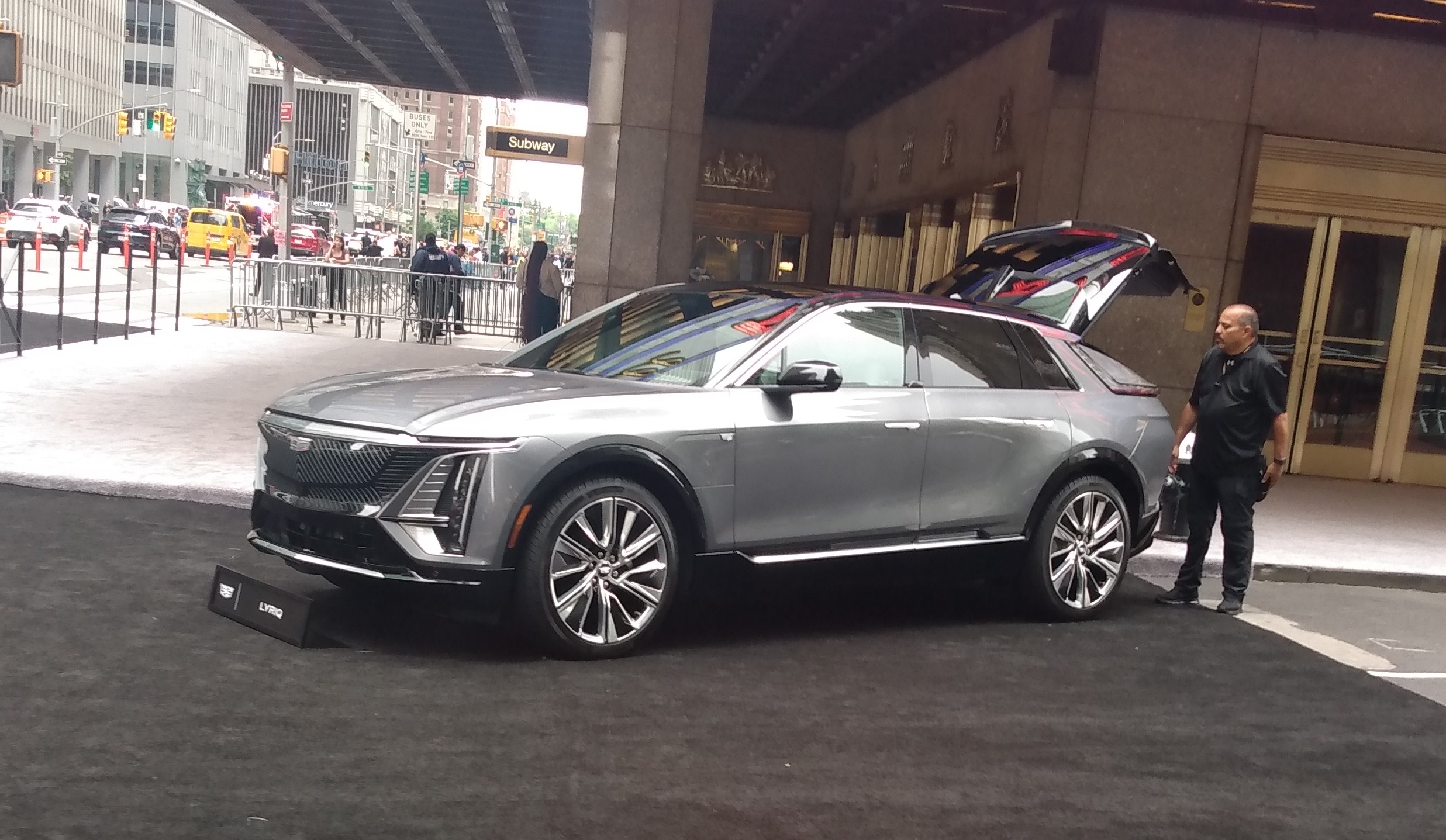
Cadillac Lyric
"with you know the Vistake, the Optique, the Lyric at this point so [1325.1s] you know that's where Cadillac is with that with the electric vehicles..."
Cadillac’s Lyriq is an electric SUV. They bring it up as an example of Cadillac’s EV lineup and connect that to the idea that EVs can have more early problems than traditional cars.
Cadillac Lyriq is an electric SUV model from Cadillac. In this discussion, the hosts mention it to support their point that EV-focused brands can experience more initial quality issues while customers and manufacturers are still working through the technology.
ice vehicle
"versus an ice vehicle and what that means so. Interesting so then maybe it's like talking on [1346.0s] electric vehicles when we look on this chart here there's the the gray ones down at the bottom and"
“ICE” means an engine that burns fuel like gas or diesel. It’s the traditional kind of car powertrain, unlike electric cars.
“ICE” stands for internal combustion engine. An ICE vehicle uses gasoline or diesel burned in an engine to make power, which is fundamentally different from an electric powertrain.
electric vehicles
"[1346.0s] electric vehicles when we look on this chart here there's the the gray ones down at the bottom and [1350.5s] that includes Tesla and so what does what does the gray represent those like not enough data or?"
Electric vehicles are cars that run on electricity from a battery. Instead of a gas engine, they use an electric motor to move the car.
Electric vehicles (EVs) are cars powered primarily by electric motors and a battery, rather than an internal-combustion engine. In quality studies, EVs can be evaluated alongside gas cars, but their data collection and ownership experiences may differ.
Tesla
"[1350.5s] that includes Tesla and so what does what does the gray represent those like not enough data or? [1356.4s] So the product tests on Rivi and we don't have the ability to sample their models in all 50 states."
Tesla is a company that makes electric cars. Here, it’s mentioned because the ranking treats Tesla differently based on how the data was collected.
Tesla is an EV brand whose vehicles are often discussed in owner-quality studies because they rely heavily on software and frequent feature updates. In this segment, Tesla is called out as being shown in a special “gray” category due to data-collection methodology differences.
sample their models in all 50 states
"So the product tests on Rivi and we don't have the ability to sample their models in all 50 states. [1363.4s] Gotcha so because we can't sample them the same as the other brands in the industry we don't"
They’re talking about collecting enough owner feedback across the whole country. If they can’t gather data the same way everywhere, they don’t want the ranking to be unfair or misleading.
This refers to geographic sampling—collecting enough owner data across the full U.S. market. The hosts argue that without consistent sampling across all 50 states, they avoid ranking certain brands to keep the methodology fair and comparable.
Rivian
"[1356.4s] So the product tests on Rivi and we don't have the ability to sample their models in all 50 states. [1363.4s] Gotcha so because we can't sample them the same as the other brands in the industry we don't"
Rivian makes electric vehicles. In this episode, it’s mentioned because the quality chart doesn’t rank it the same way as some other brands due to how the data was gathered.
Rivian is an EV brand mentioned alongside Tesla in the segment’s discussion of ranking methodology. The hosts explain that Rivian isn’t ranked the same way because the study can’t sample its models across all 50 states like it does for other brands.
methodology
"we collect data on them so everybody can see how they are performing [1385.7s] but because it's not the same methodology we have for the other brands we have to isolate them [1390.7s] for consistency in our methodology"
“Methodology” means the exact way the study collects and compares information. They’re saying some brands can’t be compared using the same process, so they’re handled differently.
“Methodology” here means the specific rules and process used to collect and compare owner-quality data. The segment emphasizes that Tesla and Rivian are separated because their data isn’t gathered using the exact same approach as other brands.
brand eligible
"we also implemented a new rule this year at the brand level so all this is a brand ranking [1403.5s] that for a brand to be brand eligible you actually have to have at least two models in it both with [1408.5s] 100 100 returns in it"
“Brand eligible” means a brand only gets ranked if there’s enough owner feedback. The idea is to avoid ranking a brand based on just a couple of cars or too few reports.
“Brand eligible” here means a brand must meet specific statistical requirements before it can appear in the brand-level rankings. The segment says eligibility requires at least two models with a minimum number of owner returns, so the ranking isn’t based on too little data.
Mitsubishi
"the other brands like Jaguar Dodge Mitsubishi Chrysler [1397.7s] we also implemented a new rule this year at the brand level so all this is a brand ranking"
Mitsubishi is mentioned as part of the explanation for how the ranking decides which brands qualify. If there aren’t enough models or owner reports, the brand may not be ranked as a whole.
Mitsubishi is listed among brands used to explain the new brand-level eligibility rule. The point is that if a brand has too few models (or insufficient owner-return volume), it may only be ranked at the individual model level.
Jaguar
"the other brands like Jaguar Dodge Mitsubishi Chrysler [1397.7s] we also implemented a new rule this year at the brand level so all this is a brand ranking [1403.5s] that for a brand to be brand eligible you actually have to have at least two models in it"
Jaguar is brought up as an example of a brand that may not show up in the overall brand ranking. The reason is that the study needs enough models and owner reports to rank it fairly.
Jaguar is mentioned as an example of a brand that may not qualify for brand-level ranking because its lineup is shrinking to fewer models. The segment uses Jaguar to illustrate how the “brand eligible” rule affects which brands appear on the chart.
Chrysler
"the other brands like Jaguar Dodge Mitsubishi Chrysler [1397.7s] we also implemented a new rule this year at the brand level so all this is a brand ranking [1403.5s] that for a brand to be brand eligible"
Chrysler is mentioned because the ranking rules require enough different models with enough owner feedback. If Chrysler’s lineup is mostly one or two models, it may only be ranked by those models.
Chrysler is used as an example of a brand that may not be ranked at the brand level because its lineup is heavily concentrated in a small number of models. The segment references the Pacifica and Voyager as the relevant mix.
Dodge
"the other brands like Jaguar Dodge Mitsubishi Chrysler [1397.7s] we also implemented a new rule this year at the brand level so all this is a brand ranking [1403.5s] that for a brand to be brand eligible you actually have to have at least two models in it"
Dodge is mentioned because, in this study, a brand has to have enough models with enough owner feedback to be ranked at the brand level. The episode points to which Dodge models are currently in the mix.
Dodge is mentioned as a brand whose lineup mix is limited enough that it may not meet the criteria for brand-level ranking. The hosts specifically note the Durango and Charger as key models in the discussion.
100 returns
"that for a brand to be brand eligible you actually have to have at least two models in it both with [1408.5s] 100 100 returns in it and when you think about some of these at this point Jaguar it's transitioning"
“100 returns” is the minimum number of owner reports needed before a car model counts in the study. It helps make sure the results aren’t based on just a few people.
“100 returns” refers to the minimum volume of owner-reported submissions used to qualify a model for inclusion in the quality dataset. It’s essentially a threshold to ensure the ranking is statistically meaningful rather than based on a tiny sample.

Dodge Charger
"it's line up they're down to one model Dodge is largely Durango charger wasn't enough of the mix [1421.1s] Chrysler is largely only Pacific of voyagers and a big pair to the mix"
The Dodge Charger is a well-known Dodge model. In this episode, it’s mentioned because the ranking needs enough models and owner reports to fairly compare brands.
The Dodge Charger is a performance-oriented sedan/large car, and it’s mentioned here as part of Dodge’s limited model mix. The hosts say that with too few models contributing enough owner-return data, Dodge may not be ranked at the brand level.

Dodge Durango
"Jaguar it's transitioning [1415.2s] it's line up they're down to one model Dodge is largely Durango charger wasn't enough of the mix"
The Dodge Durango is an SUV model. Here it’s mentioned because the episode is talking about how the ranking depends on having enough different models to compare.
The Dodge Durango is a midsize SUV, and in this segment it’s referenced as one of the main models in Dodge’s lineup for the quality-ranking discussion. The hosts use it to explain why Dodge may not qualify for brand-level ranking when the model mix is too limited.
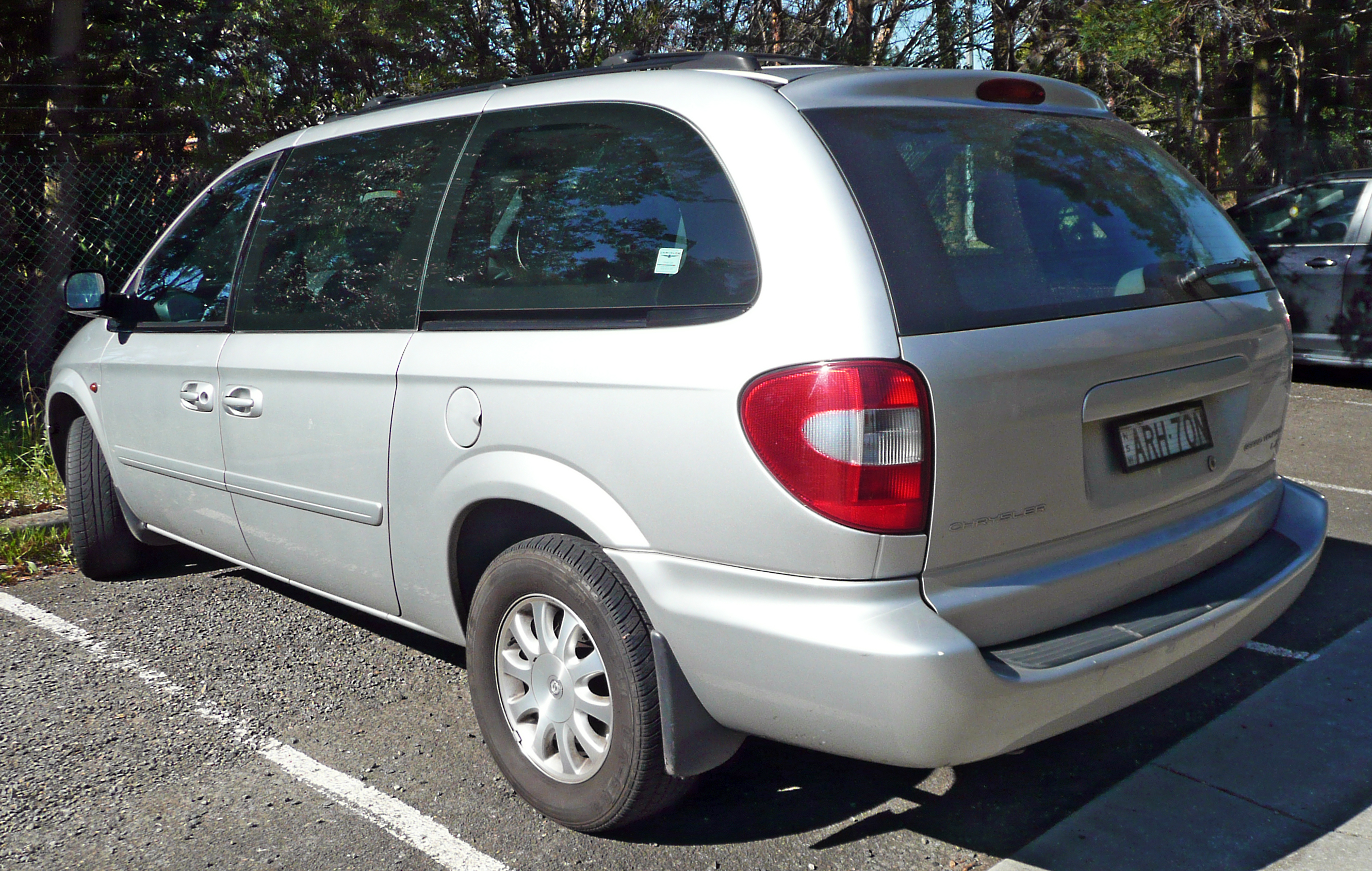
Chrysler Voyager
"Chrysler is largely only Pacific of voyagers and a big pair to the mix so because they're down to one [1426.8s] model we don't rank them officially at a brand level only at them those models at the model level"
The Chrysler Voyager is a minivan. It’s mentioned because the ranking needs enough models to compare brands fairly, and Chrysler’s mix is described as too limited.
The Chrysler Voyager is a minivan model referenced in the segment as part of Chrysler’s limited lineup. The hosts explain that when a brand is effectively down to one model, it doesn’t qualify for brand-level ranking under their eligibility rules.
driving assistance features
"made big improvements in their driving assistance features streamlined a lot of their [1471.7s] applications and stuff for the app on the phone to the vehicle made those better so strong"
Driving assistance features are safety tech that helps you drive, like keeping in your lane or slowing down to avoid crashes. Some of these systems can improve as the car’s software gets updated.
Driving assistance features are semi-automated safety and convenience systems—like adaptive cruise control, lane-keeping, and collision warning—that help the driver. They’re often software-driven, so improvements can show up over time as updates refine behavior.
fit and finish
"so fit and finish inside the vehicles exterior body panel fits and stuff they've all gotten better so they're they're definitely working on their quality"
“Fit and finish” is how well the car is put together. Think panel gaps, how straight things line up, and whether the interior/exterior looks and feels carefully made.
“Fit and finish” describes how well a vehicle’s parts line up and how cleanly they’re assembled—panel gaps, alignment, and overall surface quality. It’s a common way to judge initial quality because sloppy assembly shows up immediately in the exterior and interior details.
facelift
"a little bit of a facelift compared to what others do in the industry but but yeah so that that does help them continue some improvement on the existing models"
A “facelift” is a refresh of an existing car. It usually changes the look (and sometimes tech) without fully replacing the car.
A “facelift” is a mid-cycle refresh where automakers update styling and sometimes technology without changing the vehicle’s core platform. In quality discussions, fewer major redesigns can mean fewer early-production issues compared with a brand-new model.
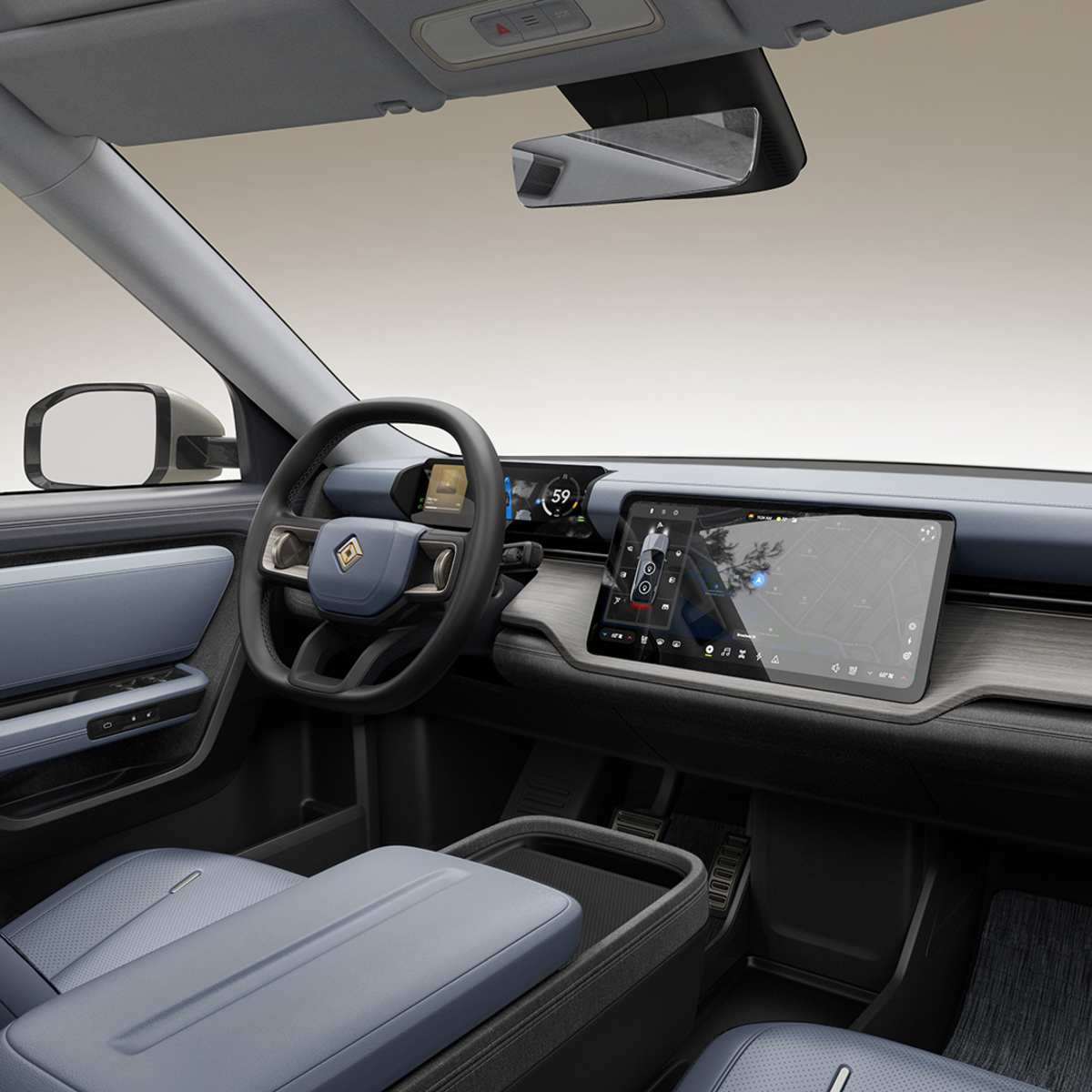
Rivian R2
"I mean there's still one of those infancy brands I think we'll start seeing them making some good improvements coming up I mean obviously they have the launch of the R2 coming up this year"
The Rivian R2 is Rivian’s next electric vehicle that’s coming out soon. It matters here because new EVs are where quality and manufacturing progress show up for real buyers.
The Rivian R2 is Rivian’s upcoming, more mass-market electric vehicle intended to broaden the brand beyond its current lineup. Because it’s a new launch, it’s a key moment for how Rivian’s manufacturing and quality improvements translate into real customer ownership.

Audi A6
"I mean Audi brought out their new A6 was a launch for them Ram last year the 2500 wasn't in the survey because it was a late launch"
The Audi A6 is a luxury sedan. In this segment, the host says a new A6 launch is part of why the brand’s ranking looks worse—because brand-new vehicles can have early problems.
The Audi A6 is a mainstream luxury sedan, and the host specifically calls out a new A6 as a “launch” that affected survey results. New-model launches can skew initial quality because early production runs may have more teething issues.

Dodge Ram
"...di brought out their new A6 was a launch for them Ram last year the 2500 wasn't in the survey because i..."
Dodge Ram is a brand of pickup truck made for tasks like hauling and towing. The Ram 2500 is one of the heavier-duty versions people talk about. In the podcast, it’s mentioned because it wasn’t included in a specific survey.
The Dodge Ram refers to Ram’s lineup of pickup trucks, with models like the 2500 commonly discussed for work and towing capability. In the podcast context, it sounds like the Ram 2500 wasn’t included in a particular survey, which is why it’s mentioned alongside other vehicles. Ram trucks are frequently part of discussions about durability, utility, and real-world ownership.

Ram 2500
"Ram last year the 2500 wasn't in the survey because it was a late launch outside of when we normally sample so we do have 2500 in the survey this year"
The Ram 2500 is a heavy-duty truck. The host says it didn’t show up in the earlier survey because it arrived late, which can change how the rankings look.
The Ram 2500 is a heavy-duty pickup, and the host notes it wasn’t included in the prior survey because it launched late. That matters for “initial quality” rankings because late launches can delay when enough owners are surveyed to produce representative results.

Volkswagen Tiguan
"had the Tiguan so that's not something we don't it's not abnormal once you you know if you launch your vehicles they tend to be a little more problematic than their carryovers"
The Volkswagen Tiguan is a compact SUV. The host mentions it to illustrate that newer or refreshed vehicles can sometimes have more early issues than the older version they replaced.
The Volkswagen Tiguan is a compact SUV from Volkswagen. In this segment it’s used as an example of a vehicle that can become more problematic after a refresh or new generation, compared with earlier “carryover” versions.
apples to apples
"we segment each of the cars I mean obviously because we have many vans and large SUVs and compact SUVs and cars in the survey so we got to look at and compare them apples to apples"
They’re trying to compare similar vehicles to make the rankings fair. Instead of judging a truck against a small car, they group them by type first.
“Apples to apples” here describes comparing vehicles within the same category so the results aren’t skewed by mixing very different types of cars. The host says they segment the survey by vans, large SUVs, compact SUVs, and cars to make the quality comparisons fair.
mobile app
"one of the big weaknesses still we see for electric vehicles is the mobile app so I mean on an ice vehicle the mobile apps kind of a you know fun thing to have you don't really need it you're like oh I can unlock unlock unlock my doors but I all have a key fob but on electric vehicles it's that lifeline you know you need to know is the car charging how much range do I have"
On many EVs, your phone app is basically the main way to check what the car is doing. It can tell you things like how much battery range you have and whether it’s charging correctly.
For many electric vehicles, the mobile app is more than a convenience feature—it’s often the primary way to interact with the car remotely. Drivers use it to check charging status and remaining range, so app errors can directly affect day-to-day usability.
300 mile range
"um and then they do have the charging issues um you know connecting the cable charging slowly and stuff range anxiety still so it's gotten a lot better but it's still a thing where we do seem to see like 300 is the magic number now in the industry if you get a car that has 300 mile range people seem to have to be a lot more comfortable"
They’re saying that if an EV can go about 300 miles on a charge, people tend to feel a lot more confident using it. Below that, it can feel harder to plan trips.
The speaker claims that around 300 miles of EV range is the “magic number” where many customers feel comfortable. It reflects how far drivers expect to go between charges and how range estimates affect perceived usability.
range anxiety
"um that that'll start changing again and we might see some of those you know range anxieties becoming lower and uh being able to go back to lower miles and a little bit smaller batteries in these cars"
Range anxiety is the fear that your electric car won’t have enough battery to finish your trip. People worry they’ll have to find a charger at the worst possible time.
Range anxiety is the worry that an EV won’t have enough battery to reach the next charging stop. It’s driven by how far you can go on a charge (range) and how reliable charging is along your route.

Bmw X7
"... the way up going to a large premium SUV like the BMW X7 which you know wins there's such a big size diffe..."
The BMW X7 is a big SUV from BMW. It’s designed for people who want a premium feel and lots of space. The podcast mentions it because it stands out among large luxury SUVs.
The BMW X7 is a large, premium SUV built for comfort, space, and strong on-road performance. The podcast context suggests it’s being compared as a standout option in the “large premium SUV” category. That kind of vehicle often comes up when discussing how different size classes perform and rank in tests or surveys.

Cadillac XT4
"...or its SUVs Chevrolet all the wins except for the XT4 or sorry CT4 was for their SUVs so they're defini..."
The Cadillac XT4 is a smaller luxury SUV made by Cadillac. In the podcast, it’s mentioned because it didn’t come out on top compared with other SUVs in that group. It’s the kind of vehicle people consider when they want a luxury SUV but not the biggest size.
The Cadillac XT4 is a compact luxury SUV positioned below Cadillac’s larger SUV models. In the podcast, it’s referenced as the exception among SUVs—meaning it didn’t “win” where other vehicles did. That makes it relevant to discussions about how different SUVs perform or rank in a particular evaluation.
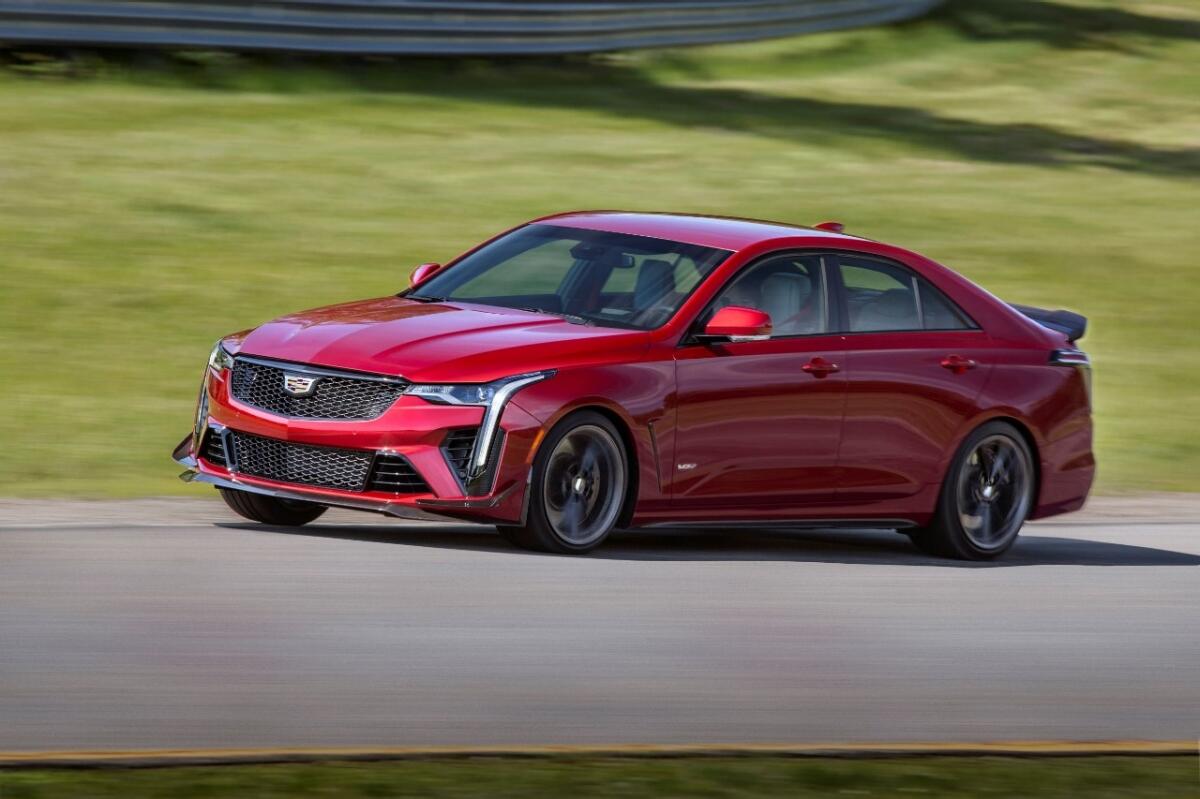
Cadillac CT4
"...hevrolet all the wins except for the XT4 or sorry CT4 was for their SUVs so they're definitely the stro..."
The Cadillac CT4 is a compact luxury car (a sedan) made by Cadillac. In the podcast, it’s mentioned because it didn’t match the results of the other cars in that group. It’s the smaller, more car-focused option compared with Cadillac’s SUVs.
The Cadillac CT4 is a compact luxury sedan from Cadillac, typically discussed as part of the brand’s “car” lineup rather than its SUV lineup. The podcast context indicates it’s being singled out as the exception among vehicles that otherwise “won” in a category. That’s why it’s mentioned—its results or performance in the discussion differed from the others.
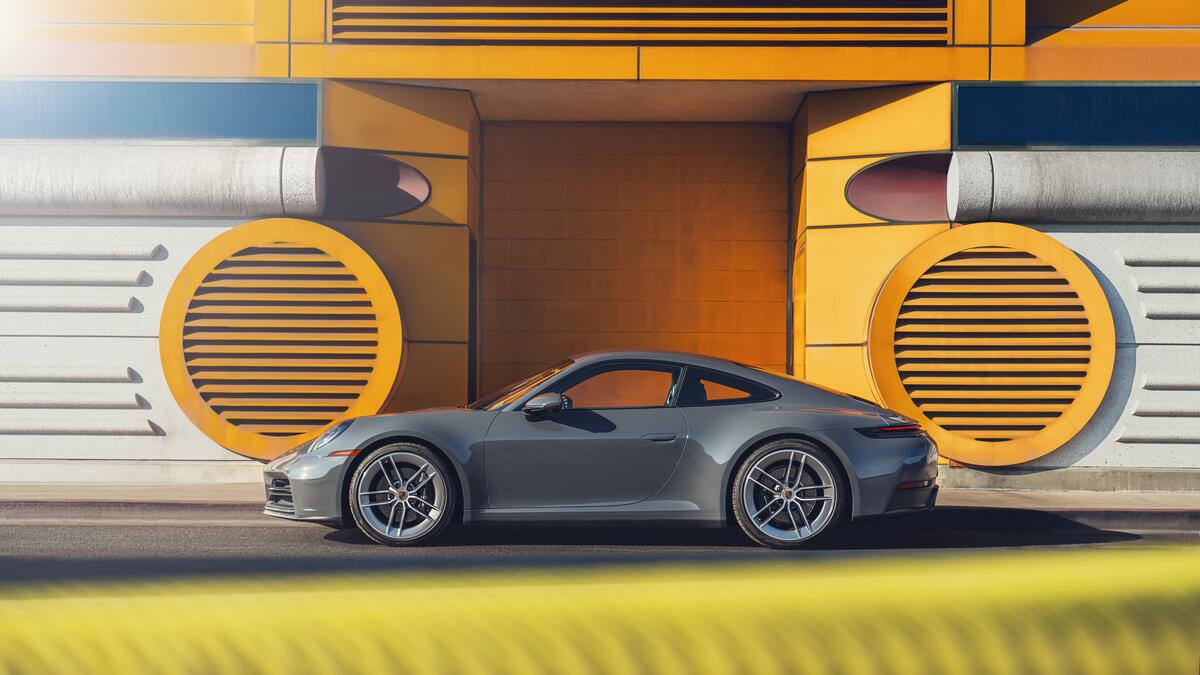
Porsche 911
"the moral of the story here is if you're a responsible individual you should go out and buy yourself a Porsche 911 that's yes we we I think we'd all be much happier if you're a driver on Porsche 911s"
The Porsche 911 is a famous sports car known for being very fun to drive. Here, the hosts are basically saying it’s the safest bet if you want a high-quality car to own.
The Porsche 911 is a rear-engine sports car that’s become the benchmark for “driver’s car” feel. In this segment, the hosts use it as the ultimate recommendation for initial quality/ownership satisfaction.
Request an Explanation
Heard something you'd like explained? We'll add it to this episode.
Sign in to request explanations for terms you heard.
Want to learn more?
Browse our glossary for plain-English explanations of automotive terms, jargon, and concepts.
Help improve this episode
See something that's not quite right? Our annotations are AI-generated and can sometimes miss the mark. Click the flag icon on any annotation to suggest a correction.