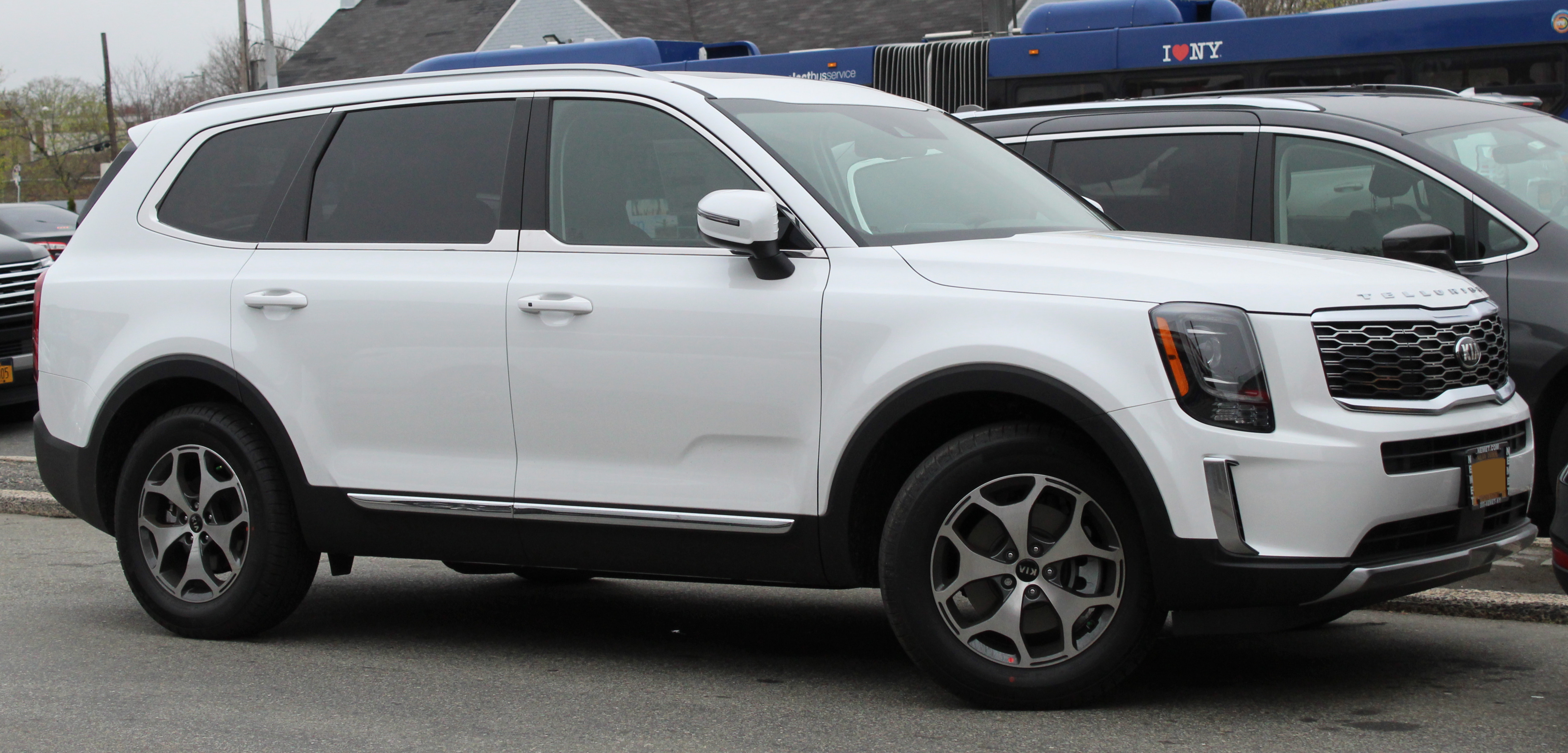
The Kia Telluride is a family-sized SUV with three rows of seats. This episode is talking about a big redesign for the next generation, not just small updates.
The Ford F-150 Lightning is an electric pickup truck. Instead of using gasoline, it runs on a battery and an electric motor. The podcast brings it up because it’s one of the prominent electric-truck examples.
A three-row SUV is a bigger vehicle with seats in three rows, so it can carry more people—usually families. The Telluride is described this way because it’s built to fit lots of passengers.
“Markups” refers to dealers charging more than the vehicle’s base price (often above MSRP) due to high demand and limited supply. The hosts mention Telluride markups during COVID as an example of how scarce inventory drove prices up.
“Second generation” means the model has moved to its next major redesign cycle, typically bringing changes to styling, interior, technology, and powertrain options. The hosts say the 2026 Telluride enters its second generation with updates aimed at staying competitive.
The Hyundai Palisade is another family SUV with three rows. The hosts bring it up because it’s closely related to the Telluride, and the new Telluride changes are meant to make it feel more distinct.
A “trim level” is basically the equipment package you choose on a car—like whether it has more tech, nicer interior materials, or extra convenience features. “Higher trim levels” means more people bought the more expensive, better-equipped versions.
Average transaction price is the average amount people actually pay when they buy the car. If it goes up, it usually means more buyers are choosing pricier versions or options.
Flush door handles are door handles that sit flat with the car’s body instead of protruding. They’re common on newer cars and can help the car look sleeker.
Term
fender on the fenders
They’re talking about a weird-looking shape around the wheel area—like a special fender design. It’s the kind of detail you’d want to see in pictures to understand what they mean.
Toe hooks are strong metal points on the front of a car where you can attach a tow strap or recovery rope. They’re meant for real pulling—not just decoration.
Toe straps are heavy straps used to pull a car out of trouble. They connect to the tow hooks so the pulling force goes through the right, reinforced points.
The Grand Highlander is a Toyota family SUV with three rows. They’re bringing it up because it’s one of the Telluride’s main rivals, and the hybrid version has been doing well.
A V6 is a type of gas engine with six cylinders. It’s typically used when a vehicle needs strong power, but it can use more fuel than newer smaller turbo or hybrid engines.
This is a smaller 4-cylinder gas engine with a turbo that helps it make more power. The idea is to get good acceleration without using as much fuel as bigger engines.
“Fully mechanical” here means the car sends power to the back wheels using mechanical parts, not a separate electric motor on the rear axle. That can be simpler, but it may not be as efficient as systems that use rear electric motors.
Wheelbase is the spacing between the front and back wheels. Making it longer usually creates more interior space, especially for the middle and back seats.
Regen braking is when the car slows down using the electric motor instead of just the regular brakes. It also “recharges” the battery a little while you slow down.
Torque vectoring means the car can change how much pulling force it sends to different wheels. That can help the car turn more predictably, especially during braking or cornering.
Pitching forward is when the car’s nose dips down (and the back lifts) as it slows down or hits bumps. The car can use braking control to reduce that “lurch.”
A “3.8 V6” is an engine with six cylinders arranged in a V shape, with 3.8 liters of displacement. They’re comparing how the new engine feels versus the older one.
Ground clearance is how much space the car has between the ground and its lowest parts. More clearance helps when driving off-road over bumps and rough terrain.
All-terrain tires are made for mixed driving—pavement and rougher surfaces. They usually have tread and sidewalls that grip better off-road than regular tires.
Tow hooks are strong attachment points on the car meant for towing or recovery. If you get stuck off-road, you can use them to pull the vehicle out safely.
Limited-slip means the car tries to prevent one rear wheel from spinning uselessly. It helps send power to the wheel that has more grip, which is especially helpful off-road or in bad weather.
Term
electronic longer suspension stroke
Suspension stroke is how far the suspension can move when the wheels hit bumps. If it’s “longer” and controlled electronically, the car can better absorb rough ground and keep the tires planted.
Term
off-road specific displays
Off-road specific displays are screens in the dashboard that show information meant for trail driving. They’re designed to help you monitor what the car is doing when the terrain gets rough.
The infotainment screen is the big display in the dashboard for things like music, maps, and phone features. They’re talking about how big it is and how it looks next to the gauges.
A V6 is a type of engine with six cylinders. The point here is that the V6 in the SUV they drove didn’t get great gas mileage, so better efficiency would make it easier to live with.
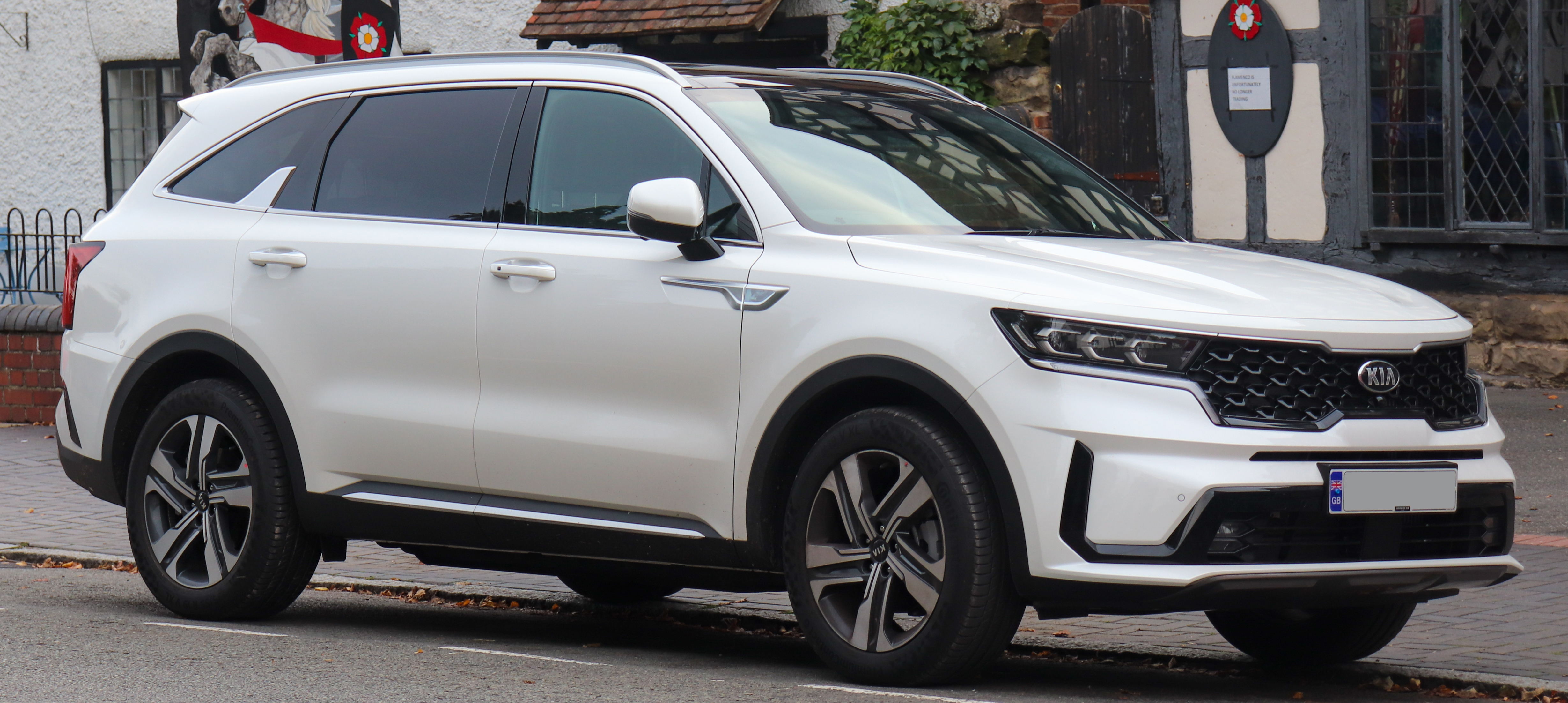
The Kia Sorento is a family-sized SUV. They’re talking about how its hybrid system is supposed to be efficient and how it compares to other Kia hybrids.
A “floating roof” look is when the roof appears to visually separate from the rest of the car. They’re describing a dark trim area that makes the side of the vehicle look more broken up and modern.
The D-pillar is the vertical support post near the back side of the car, behind the rear door area. They’re pointing out that it’s styled with dark trim to change how the roofline looks.
Range Rover is a luxury SUV brand/model line from Land Rover. It’s famous for a signature look where the roof seems to “float” above the body, and other SUVs have tried to copy that style.
A “floating roof” is a design trick that makes the roof look like it’s sitting on top of the car instead of blending into the body. Designers use visual contrast (like darker trim) to create that effect.
“F-Series” is Ford’s way of grouping sales for its pickup trucks in the F lineup. It can make the numbers look bigger overall without showing which trucks are light-duty versus heavy-duty.
“Light-duty” and “heavy-duty” are categories for trucks. Light-duty is for normal driving and lighter work; heavy-duty is for bigger towing and tougher jobs.
They mention the Ford F-150 because it’s Ford’s best-known truck. The hosts are using it as a comparison point for how people think about “light duty” versus “heavy duty.”
A “generation” is the big redesign of a car model. Saying it’s the sixth generation means Toyota has refreshed the RAV4 with a major new version, not just small tweaks.
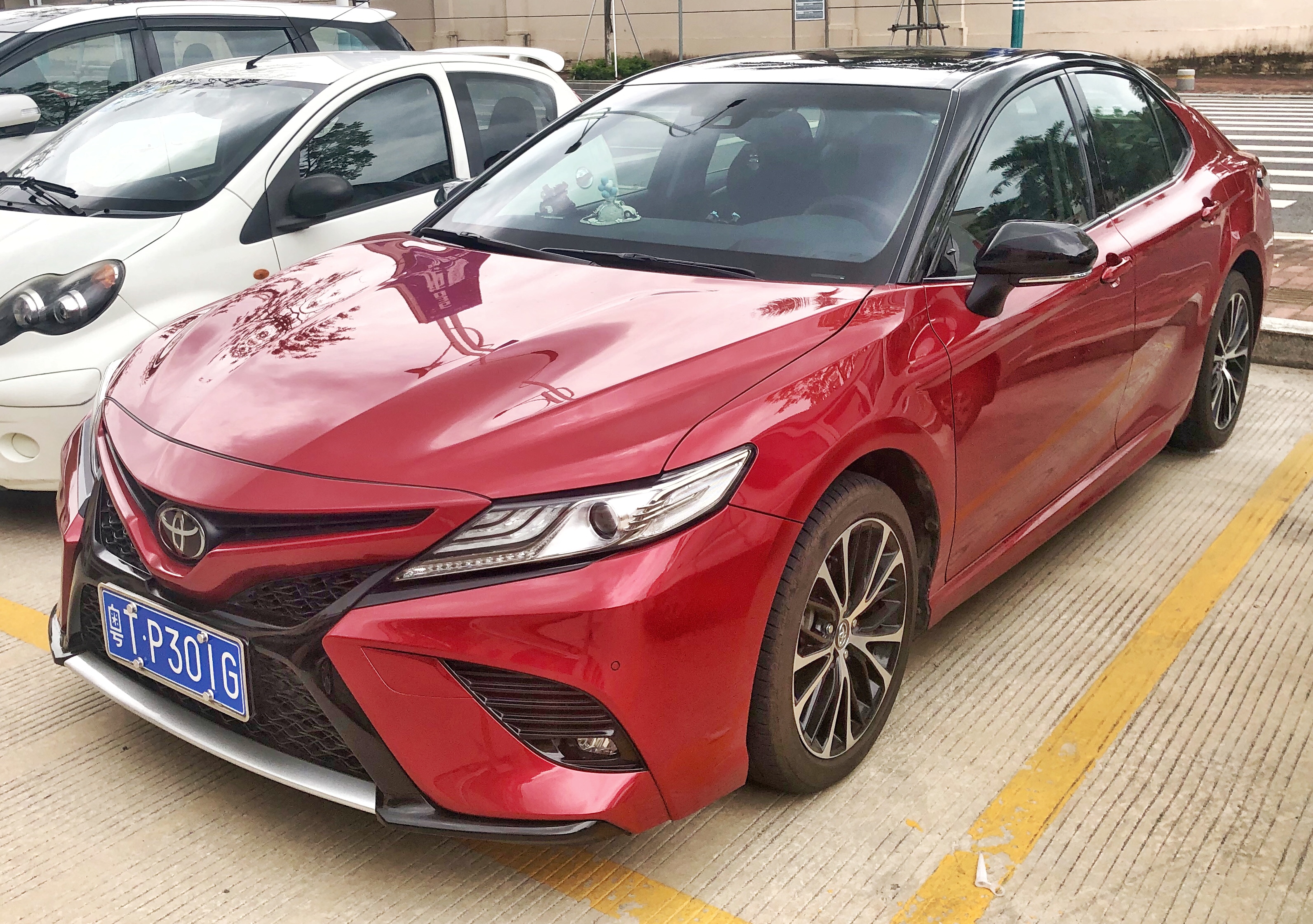
They mention the Toyota Camry because Toyota has already offered hybrids there and it worked out well. It’s used as evidence that making the RAV4 a hybrid is a logical move.
They bring up the Toyota Sienna to show Toyota has already gone hybrid in a different kind of vehicle. The takeaway is that Toyota’s hybrid approach has worked before, so it makes sense for the RAV4.
Term
mesh
Here, “mesh” is the patterned material you see in the front of the car. It’s mainly a styling detail, but it also fits into the front area where air has to flow for cooling.
“SE family” is a way of grouping trim levels that are meant to feel sportier. It typically changes things like styling and included equipment so you get a different “flavor” of the same model.
“Tesla style” here is a shorthand for a minimalist, screen-forward cockpit layout—often with fewer physical buttons and a more tablet-like driver display. The hosts use it as a reference point for how modern the RAV4/Telluride interior screens feel.
A digital cluster is the screen that shows your speed, RPM, and other driving info behind the steering wheel. They’re pointing out that it’s a big, modern screen now.
An electronic shifter is a gear selector that uses electronics instead of a big mechanical linkage. You move the shifter, and the car electronically changes gears.
Shift-by-wire means moving the shifter sends signals to the car to change gears, instead of using a direct mechanical linkage. It can help the interior feel more open and modern.
They’re comparing the Toyota’s shifter shape and feel to Porsche’s. It’s basically saying the design looks similar and that helps it feel more space-efficient.
A plug-in hybrid can be charged at home or at a charger like an EV. The hosts are saying they tested a version that wasn’t the plug-in type, so it relied on hybrid operation instead.
ECVT is a transmission used in hybrid cars. It helps the car switch between electric power and gas power smoothly, without you feeling like it’s shifting gears.
The Toyota Prius is a hybrid car, meaning it uses a gas engine and an electric motor together. It’s known for trying to use less fuel than a typical gas-only car. The podcast mentions it because “Prius” is often used as a general reference for hybrids.
The center console is the box/area between the seats. Some cars make it openable from both sides and flip up like a little tray for using or storing things.
“Faux tie-down” refers to fake or non-functional tie-down points in the cargo area—often molded to look like they can secure items, but not intended for real load securing. The host is using it as a clue about whether the vehicle is truly “rugged” or just styled that way.
The “Silverado EV” is Chevrolet’s electric pickup version of the Silverado. It’s mentioned because GM is putting its next electric-truck plans on hold.
General Motors is the company behind brands like Chevrolet, GMC, and Cadillac. In this segment, GM is said to be pausing its next electric-truck plans and focusing more on gas and hybrid vehicles.
“Pulling back” means automakers are scaling down or delaying their electric-vehicle plans. In this segment, the reason given is waning sales and higher costs, which changes how aggressively companies invest in EV development and production.
Term
tear-ups
Here, “tear-ups” means companies having to undo or redo big EV plans that already cost money. It’s basically the expensive fallout when a project gets changed or canceled.
The Volkswagen ID.4 is an all-electric SUV. It’s one of the more common EVs in the SUV category, so it’s often referenced when comparing EV trends.
Concept
regression
In this context, “regression” means EV progress might slow down or go backward. The hosts are saying car companies will change their plans when the market or rules change.
Tariffs are taxes a government adds to imported goods, which can raise costs for automakers and parts sourced from other countries. In EV planning, tariffs can influence pricing, supply chains, and which models companies decide to build.
“Regulations relaxing” means the government rules get less strict. If that happens, car companies might change how quickly they push EVs versus other types of cars.
Car
Subaru
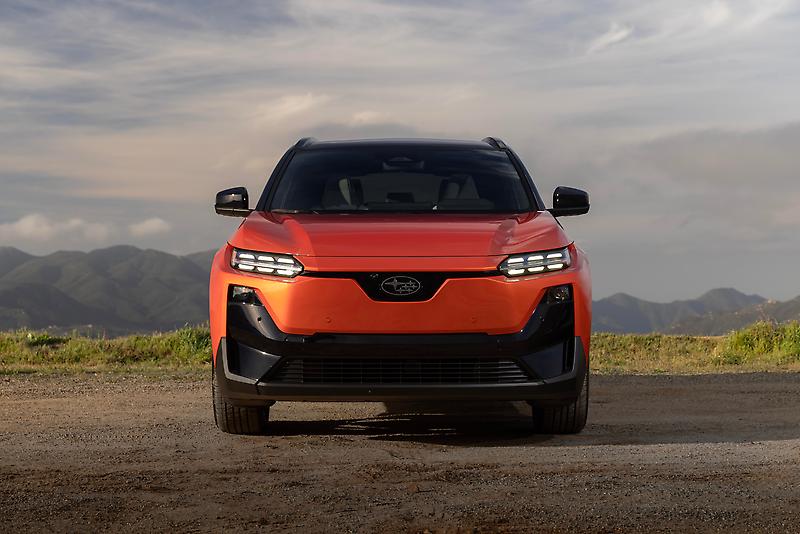
Subaru is a car brand that sells different kinds of vehicles, including gas, hybrids, and electric cars. The hosts are using Subaru as an example of a company that’s investing heavily in EVs while still selling other powertrains.
The Hyundai i30 is a compact car model. The podcast is talking about whether it will stay on sale for a long time. That matters because it affects availability and ongoing support.
Range-extended cars are electric cars with an extra way to keep going longer. Instead of relying only on charging, they can use a built-in system to generate power when the battery gets low.
Federal credits are government discounts for buying certain cars. If the discount goes away, fewer people may buy those cars right then, and sales can move to other types of vehicles.
Term
EV trends
“EV trends” just means what’s happening in the market for electric cars—how popular they’re becoming and how companies are responding.
EREV means an electric car with a built-in gas generator. You drive mostly like an EV, and the gas engine kicks in to make electricity when the battery needs help.
They’re talking about the BMW i3 as an earlier example of an electric car concept. The idea was that it could use a small engine to help keep the car going by generating power.
The Chevrolet Volt was a plug-in car that could run on electricity like an EV, but it also had a gas engine to help it go farther. Some people found it confusing to tell which mode it was in.
A “non-flashy EV” is basically an EV that’s meant to be practical, not flashy or gimmicky. The idea is: it’s just a normal car that happens to be electric.
They’re talking about how car reviewers choose roads for testing and filming. The question is whether those roads match what most people actually drive every day.
Stop-and-go traffic is city driving where you keep stopping and starting. It can change how efficiently a car uses energy compared to smooth highway driving.
Topic
first drives
A “first drive” is when reviewers get to drive a new car for the first time and share their early impressions. It’s usually about how the car feels to drive right away.
Topic
sound bites
“Sound bites” are short audio clips people record so they can use the best lines in the video. In car reviews, they’re often recorded while driving.
Concept
city settings
“City settings” means filming in town or downtown areas with lots going on. It can be harder to film because of people walking by and traffic.
Concept
logistically
“Logistically” means the practical, behind-the-scenes planning needed to make the filming work. In this case, it’s about coordinating the crew and dealing with people around.
Car
E-Outback
E-Outback is the name the hosts say this electric Subaru is called outside the U.S. It’s basically the same idea as the Trailseeker, but with a different name for other markets.
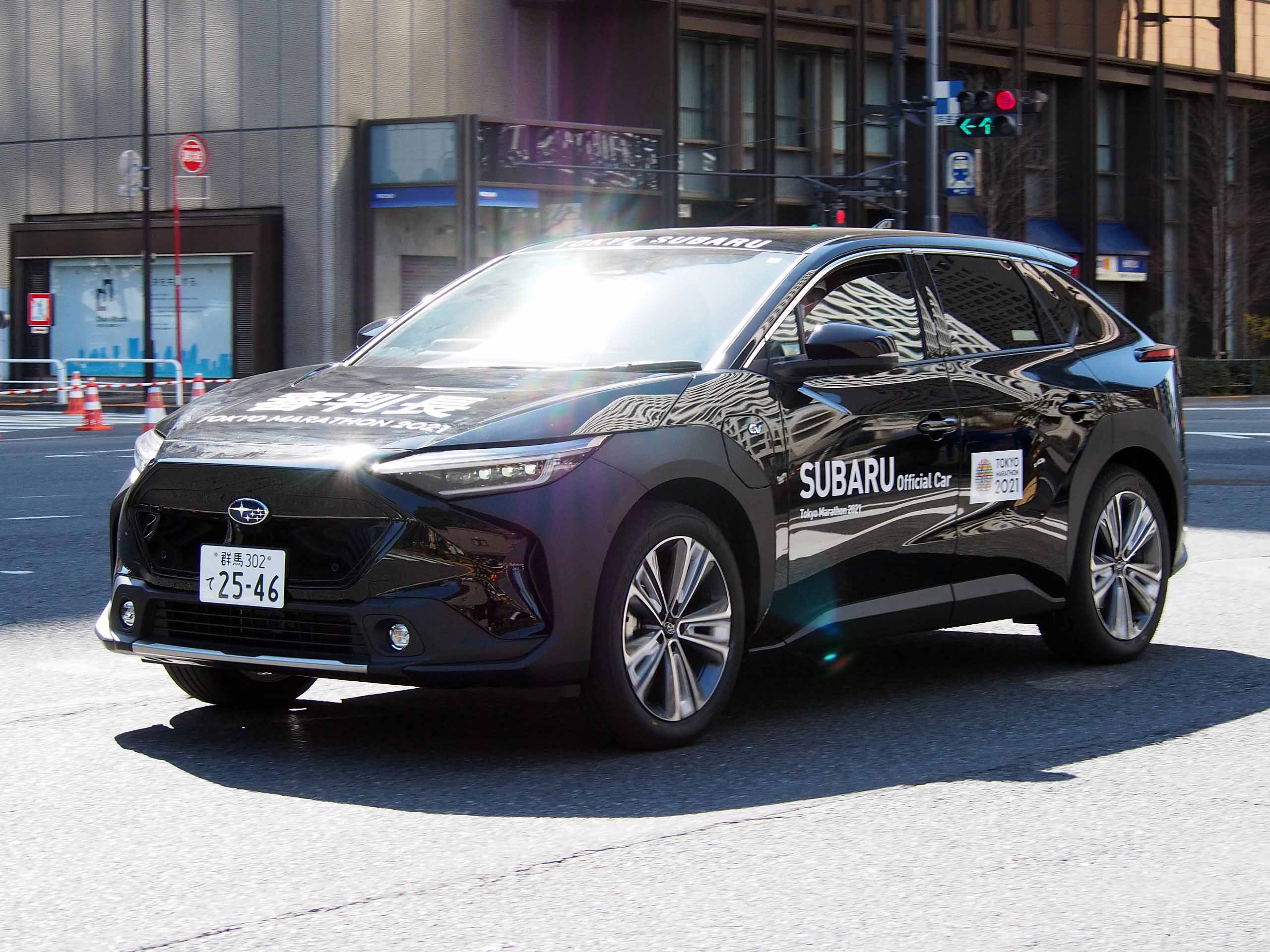
The Subaru Uncharted is a new Subaru model name. The podcast is saying it will be the smallest in a group of similar vehicles, with bigger ones above it. The main takeaway is where it sits in size compared to other Subaru models.
The Subaru Solterra is Subaru’s electric crossover. The hosts mention it’s been around for a few years and has been updated, and they tie it to the Subaru–Toyota EV partnership.
Car
Subaru Getaway
The Subaru Getaway is another new Subaru EV model in their lineup. The hosts say it’s in a higher size tier and compare it to the Toyota Highlander.
Toyota’s BZ4X is an electric SUV that the hosts say later got shortened to “BZ.” They’re using it to explain how Toyota and Subaru share EV development and naming.
LIVE
Welcome to the podcast of Motor Week, television's original automotive magazine.
Motor Week is made possible by AutoValue and Bumper2Bumper and TireRack.com.
Here's your Motor Week podcast host, Jessica Rae.
Welcome, everyone, to the Motor Week podcast.
I'm Jessica Rae, your host this week, filling in, of course, for John Davis, who is out
on vacation, so you're left with me, the second string.
But no worries, because we've got some great automotive topics to talk about.
On today's podcast, we're going to start off with Kia's revamped flagship, the Telluride,
which enters its second generation.
Then we'll stick with another very popular SUV, the Toyota RAV4, and how America's best-selling
SUV stays on top of its game.
Finally, it's the Subaru Trailseeker, a new all-electric model from Subaru that's ready
for adventure, and speaking of EVs, our lightning round will explore why so many brands are
cancelling planned models.
And then we answer a viewer question about why you never see us driving in traffic.
Joining me today are writer-producer Brian Robinson.
Much like the Trailseeker, I'm also ready for adventure.
Awesome.
You've got writer-reporter producer Greg Carlos.
I'm ready for a new mic stand.
You guys have the good mic stands.
Mine's all high, and it's like the mic is attacking me.
It's hurting my face.
Mine's so tall.
Yeah, well, you're so tall.
Yeah, but I mean, you require a special mic stand.
Do you want mine, which is the shortest?
No, I wouldn't make an audio engineer go crazy.
And of course, we're also joined by staff writer Alex Kellum.
Yeah, I'm also here.
Howdy.
So let's start off with the Kia Telluride.
So Kia launched this three-row SUV in late 2019, and it quickly became one of the most
popular models in the segment.
I mean, I remember during COVID, actually, it was so hard to get a Telluride, and the
markups on that were some of the highest I think I had seen for just a regular passenger vehicle.
So for 2026, the Telluride enters its second generation with quite a few updates to try
and keep it on top, but also separates itself from its cousin, the Hyundai Palisade, a little bit.
Brian, you recently drove the all-new, well, all-ish, new Telluride.
So what do we need to know about it?
Well, it's a 27 model.
Oh, sorry.
Yes, duh, for 20, it's launching in 26 as a 27 model.
Yeah, you hit on the big story, came out in 2019.
And I think Kia had pretty low expectations based on their previous large SUV was the
Berrego, which everyone right now is like, Berrego, what was that?
But that was like, they didn't anticipate a global pandemic.
But they sold 60,000 that very first year, and it only went up from there.
2025, they sold over 120,000.
I remember when they refreshed it, they made a point to say that they really had to increase
capacity in their plants over in Korea because the demand was so high.
Right.
Well, they also increased the capacity in Georgia to build them all here now.
Going forward, usually after vehicles have been out for three or four years, you'll see the sales
kind of taper off, but they actually kept exploding for the Kia Telluride.
So it is their flagship, and almost a large percentage of buyers opted for higher trim
levels, so much so that they, since this vehicle came out in 2019, the average transaction price
for a Kia went from $22,000 to $35,000.
So Kia is obviously making bank on this vehicle, and their philosophy was kind of old school Kia
philosophy of taking what Honda and Toyota do, throwing in more features, selling it for less.
That's basically the formula for success for the Telluride.
And I actually went on another manufacturer's three-row SUV event not long after the Telluride
came out, and they admitted, like, the thing is we've got to go back to the drawing point.
That's how big of an impact it had on.
So for second gen, obviously, how do you follow that up?
Well, they didn't want to just evolve the current Telluride.
They wanted to do a complete rethink, and part of that was taking the styling
from the EV9, very modern-looking smooth sides, and kind of bringing that over to the Telluride.
It's really tall, chunky. It's got the really tall face.
So many people did compare it when we first saw pictures of it, too.
It has, like, a Range Rover-esque vibe to it.
Absolutely. The flush door handles that everyone's doing these days.
The one weird thing about it is it's got these fender on the fenders,
and you guys can look it up if you want.
Fenders on the fender?
Yeah. On the top of the fenders, it's got, like, this weird trim.
Oh, yeah. A notch.
Like a keystone.
Yeah. And it's supposed to, like, impart ultimate ruggedness, right?
And it's like, you could pick the vehicle up with that, or you could clash.
Oh, so you're going to put, like, toe straps, too?
But it...
Wait, I'm confused. Can you actually do those things?
No, no.
Okay, yeah, I got to just...
No, no.
You cannot.
It's supposed to look like it.
Yeah.
But it does launch with...
The real toe hooks up front?
It...
On the X-Pro, it does have real toe hooks.
That's what I want to bring up.
I say that because the Rogue...
What was it, the...
Oh, Rock Creek.
Rock Creek just had, like, little paint strips.
To make it seem like it should.
We should get into actually more technical detail.
I'll get... I'll touch on the X-Pro later.
Sure, sure, sure.
So, hybrid is a big part of Kia's philosophy going forward.
They want to get almost, like, Toyota-like with getting hybrids and everything they make.
And so, that's the case here in...
Especially since, I mean, one of its biggest competitors has to be the Grand Highlander,
which has been incredibly successful, especially in its hybrid form.
So, no more V6 engine in the Telluride.
The standard engine is a 2.5-liter turbo four with 274 horsepower.
And then you can get a hybrid version of that same engine, 329 horsepower.
And you can get it all-wheel drive in either one.
The all-wheel drive system remains fully mechanical,
so there's no rear motors or anything back there on the rear axle.
That does have some consequences, though,
because that does mean that the hybrid isn't quite as efficient.
Oh, absolutely.
Like, the front-wheel drive is far more efficient than the all-wheel drive.
Yeah, the front-wheel drive at the lowest trim level, I think 35 combined,
is what they're saying most or more in the 32 combined range with all-wheel drive.
But the engine feels plenty peppy, and you can tow 5,000 pounds with it.
And as far as the interior, they wanted to increase the second-row legroom,
which they did with the wheelbases longer by two inches.
All that went right into rear-seat legroom,
and they improved the access to the third row as well.
Got that second-row sliding farther forward so you can get back there.
Technical details, what else?
It's got the e-ride suspension, which we talked about in there.
I still have a hard time wrapping my brain around it,
but you got the regen braking to kind of torque vector your way around corners,
which helps.
But they can also trigger that to settle the vehicle.
Like if you're going over bumps, or if it's pitching forward,
they can kind of trigger some regen to counteract that.
Yeah, Nissan did something like that with their EVs.
Like the Aria had a system where when you were stopping,
it would kind of try and prevent some of that forward rake a little bit,
and it would level out the vehicle when it could.
Similar to what they did to the Palisade, I'm assuming.
Yep, yep, that's all the hybrid engine is the same.
All the hardware is exactly the same as what we drove in the Palisade.
The standard engine is now that Turbo 4.
Thoughts on it compared to the outgoing 3.8 V6?
Yeah, it's torqueier like a lot of Turbo 4s, but it works hard, obviously,
for a vehicle that size, and you know it's working,
but it doesn't feel underpowered at all.
Getting to the X-Pro version, they wanted to crank that up and get more serious
as far as their off-road version.
It's got 9.1 inches of ground clearance, all-terrain tires, functional tow hooks,
and more kind of off-road specific displays in the gauge package
and the infotainment screen.
As far as that, it's got like a 30-inch wide, I think, I probably haven't written down here
somewhere, but a huge dual-screen setup that Key has been doing even bigger.
The infotainment screen is still just 12 inches, so that's not that much bigger,
but kind of blends in with the gauges.
Pricing starts around $40,000 just under, I guess technically, but up to about $58,000
up the high end.
Any questions that I can answer for you?
I am curious as to, we haven't had it at Motor Week HQ for testing it,
so the rest of us have not driven it.
But I am curious as to, Greg, what are your thoughts?
Specifically to the Telluride or about anything?
You're a family guy.
Yeah, that's true.
This is a little bigger than something that you have.
I mean, so my wife looked at a Telluride a few years ago when we bought her
Sorrento Hybrid, and she liked the look of the Telluride, but then driving it,
it felt a little bit too big for her, and the fuel economy was a problem with that V6.
And driving something like that every day, when you don't really need it,
because we only have two kids, and we're stopping at two kids, so there's no plans for more.
And so the idea of driving that thing every day to work, she goes about 30 miles a day,
and it seemed like a little too big to live with.
And then, like I said, the whole V6 thing, so they're moving in the right direction,
they're making it more fuel efficient.
I think that's going to get some people who are on the fence between that
and the Sorrento to jump up to it.
But I will say, back to your comment, Brian, on how they're trying to
emulate Toyota with their hybrid powertrains.
I mean, I think they're already doing a good job with it, with that 1.6-liter turbo hybrid setup.
They have it in the, like the Sorrento that we have, they had it in the Carnival we had recently.
And I think it's 35 miles per gallon across the board in the Sorrento, and maybe 35 as well,
in either way.
It was like 32, it was a little lower in the Carnival.
I will say this 2.5-liter is way better than that 1.6, as far as smoother operation.
And yeah, they admitted that 1.6 was like their first entry into going mainstream with it,
and this 2.5 is much better setup.
Well, yeah, I mean, that would probably be the only gripe I have with their older hybrid system,
because the fuel economy is real.
Like, we're seeing well over 35 miles a gallon actually right now,
in the, as the weather gets warmer.
So, I mean, from an efficiency standpoint, I mean, their hybrids are the real deal.
Alex?
I'm still kind of hung up on the whole fender detail thing, but I'm looking at a picture of it.
And it's almost like they did it because I feel like vehicles are so smooth now and flat,
and there's nothing to break up the side profile.
But I'm also looking at it, and I see they did the kind of like floating roof kind of thing,
where the D pillar or the rearmost pillar has like a blacked out section to sort of make it
look like the roof is floating. I don't know.
Just like interesting that they do stuff like that to, like I said, break up the side profile.
Yeah, those fender things, it costs quite a bit of discussion on the event.
Like people were like, what's the point?
And they're trying to explain how it makes it look more rugged and everyone's just like...
Well, I thought like actually putting something to have like tie downs or something would have
been smart. Like that's a cool way to make it functional.
You have to explain why it makes it look rugged that it's probably not working.
But shout out Range Rover, right? Like they're the ones who kind of,
they started the whole like floating roof trend and that silhouette that everybody recognizes
instantly as Range Rover. And they're like, I mean, that happened years ago, like a decade ago,
if not more, and people are still like trying to emulate that same type of style and everybody
recognizes that style instantly as Range Rover. Good for them.
Yeah, it's certainly trickled that.
You don't see that?
No, I see the Range Rover influence. I didn't think that, were they the first of the floating roof?
Who was before that?
Oh, was it Nissan Morano?
Yeah, but that was, I think after, remember, because all they did with that was they made that,
no, Robinson and I are doing deep.
This is going to be another podcast.
That's the deep pillar they just blacked it out to make it look like.
But I'm pretty sure that Range Rover was the first one to really do that.
Now, so I Googled this. Who started the floating roof trend?
Now, I don't, this would require a little bit more digging, but the AI overview
says Nissan with the Morano. Followed.
Call it the floating roof.
Yeah, no, they did. They did call the floating roof.
But I think Range Rover had it and they didn't call it a floating roof.
You're right. I remember specifically them calling that Morano a quote unquote.
But Range Rover, I'm pretty sure.
I mean, that's a deep.
That's deep.
I'll say it.
All right, I'll go.
Range Rover started that silhouette trend of the way it looks like it's windswept and it's getting
sucked down like that.
I do agree with that.
Yeah, I do agree with that.
Wow.
We should move on.
Yeah, let's move on.
I like what I'm doing about that.
But we will stick with our SUV trend because the next, actually, all the vehicles we're
talking about are SUVs, shocking. But now we're going to be talking about the best-selling SUV
in America.
That's selling the vehicle, right?
Like F-150.
It depends what you look at. It's still the F-150.
I feel like I would consider this the best-selling vehicle in America because Ford does that thing
where they call it the F-Series.
Like, they're saying, oh, yeah, F-Series sales are this.
Well, that doesn't break it down between light duty and heavy duty.
That's all light duty?
Yeah, it's still the F-150.
Okay.
It's still the number one.
Because I always feel like when we give an award to F-Series, it's like heavy duty.
Reject reality, substitute it with your own, continue.
Well, it is certainly the best-selling SUV in America, the RAV4.
And so when a new one comes along, it's a pretty big deal.
For 2026, the RAV4 enters its sixth generation.
Greg, do these refinements keep the RAV4 the benchmark for the segment?
Yeah, I'd say probably.
For me, it goes with the powertrain of the other all hybrids now.
Toyota's just like, you know what?
We make a good hybrid.
Ever you want a RAV4, you're getting a hybrid.
Not a surprising move.
No, it's fine.
I mean, they did it with the Camry.
I mean, it's just, and they did it with the Sienna before that.
That's true.
Yeah.
And it's been incredibly successful with both.
Yeah, I mean, like, there's no reason they shouldn't do it.
I'm sure most people who, like, if you have been under a rock for 20 years and you hopped
into it, you would have no idea this thing's hybrid.
Right.
Like, man, the fuel economy is awesome.
That was actually the headline of my road test.
Well, really?
RAV4 goes all hybrid.
Will anyone notice?
Coming soon.
You're more likely to notice the interior more so than anything.
Yes, I would agree.
The exterior even, like, John loves using this more evolutionary instead of revolutionary
in terms of styling.
Because it is, if you've seen a RAV4 before, you know that this new one is still a RAV4.
It's the same shape, same size, same like the pro four on the back.
It says RAV4 on it, but the main thing for me is looking at it is they've kind of gone
like the whole EV route with the front end where they body color the grill.
And it's not even really a grill anymore because it's just part of the way it integrates itself
into the body.
It's just that whole front piece.
And obviously, you need a grill for air to get in because this isn't a full EV.
But it looks almost like a blunt EV style with a kind of cool-looking mesh.
So it's like the anti-grill where you don't really want to see that it's a grill,
at least on all trims, but like the woodland edition, which I think is its own thing now.
GR.
Sport.
Yeah.
Kind of has that same.
They tweak, I think they tweak it a little bit for each of them.
They have three distinct families now.
Were you going to get into that?
You can.
You seem like you already know.
Drop some knowledge.
Well, they just have the SE family, which is more sport oriented.
That comes with its own styling and the LE family, which is more the core models
and then the woodland family.
And woodland is just on its own.
Like that's the, and if you didn't, you couldn't tell from the name.
Woodland is like, it's off-roading, kind of rugged style.
Soft rotor.
Which I didn't realize at the time.
So back to the interior, you now have a screen as your gauges and it's not like hooded.
It's very much modern.
Like the, you know, we say it all the time, the Tesla style, even though they don't really
have a gauge screen, just a screen in front of you and then a screen to the side for infotainment.
They're both pretty big.
I think it's like 12.3 or at least 10 inches for the digital cluster.
And like, I think the limited we had was like 14.
There's more than enough screen space.
Let's put it, let's leave it at that.
It's a lot of screen, yeah.
Anyway, you know, it looks modern.
I think RAV4 was probably in Toyota in general, has a history of kind of falling behind in tech
in modern amenities, but now it seems like they've caught up.
So yeah, it feels like it's very much a RAV4 for 2026.
We had the limited grade.
So that does two things that I liked.
It has the wireless charging.
He have two of them and they're right dead center below the screen, which is nice.
So you, the driver puts their phone right there in front of them.
Passenger puts their phone right there in front of them and you can both charge.
But that's on the limited grade.
So you got to pay, you know, ours was what 46 grand, which is steep.
But that's like the top, almost the top without going to, without going to the plug in hybrid.
It is the top and it certainly, and so below the, the second thing that I liked
is the shifter area.
So I thought that this was standard on all of them, but it's not.
So that electronic shifter, the shift by wires, like a little tab,
actually it looks a lot like the Porsche shifter.
It's just like a little tag that sits up and you go forward and backward on it.
I think it looks pretty cool.
In Porsche, it doesn't work for me in the Toyota.
It does work for me.
Like it seems like it fits.
It cuts down on the amount of space that the shifter uses.
So it just feels very open down there.
But that's only on limited grade.
It's only on limited, yeah, which seems weird.
Yeah.
And I feel like, you know, that's going to be one of their next upgrades for,
to keep it fresh in a year or two.
They're going to say it's available on more trims,
but for now it's only limited.
Otherwise you just get the traditional shifter.
As far as driving it, I felt like the power train again,
really solid, quicker than I anticipated.
We didn't have the plug-in.
We just had the regular hybrid.
But off the line, that thing moves quick.
ECVT, so it's not the old school style CVT and fuel efficient.
I mean, I wasn't even trying and I was getting like 42 miles a gallon,
or miles per gallon, sorry, to get all country on y'all.
42 miles per gallon.
That's based off what the screen was telling me.
And just seamless transitions between EV and gas power.
I mean, it's still like the Kleenex of hybrids, right?
Like you call a hybrid or like a Prius is what it was.
So it's just like, it's just the standard for me.
But then while the interior looks nice,
the more I started feeling around in the $46,000 car,
it kind of felt a little cheaper than I wanted it to feel.
So that was kind of a bummer.
And they have this new center console thing
that you can open from either side.
So you can, it flips open from the driver's side,
or it flips open from the passenger side.
And then if you hit both buttons, it'll come up,
and you can flip it over, put it back down.
And now it's like a plastic kind of thing,
which I'm not really sure why.
Maybe somebody can-
It's a work surface, according to them.
It's a work surface?
Yes.
Yeah, I don't know.
I feel like work surface is an interesting way to classify that.
Because in my mind, that would be like what I put the McDonald's drive through.
That would be some fries or something without getting it all greasy.
Chow down on fries.
That can be working of itself.
If you're going to write something on there,
I think it has like a little dish to be perforated.
So like you're not going to write on it.
You're not going to put things that you want to stay there,
because it's hard plastic and things are going to slide.
Yeah, so I don't really get that.
A snack.
I think a snack.
I'm not saying I'm the final word on this.
Again, it kind of felt like a little cheapy to be in something that cost 46,000 dollars.
Sand, some rocks.
Probably a little bit more, maybe a little cooler on the Ellie and the Essie, the base model.
I don't know.
I don't even, I don't know if it's available on all of them.
Oh, is it an option?
I don't know.
It's not an option, but it comes with all.
I had to really kind of study the whole option list on this,
because they have just tons of things.
Let's go through my notes here, if I can see what else.
What have we touched on?
What do we need to touch on?
I think we touched on everything.
I jumped in enough, I feel.
We don't really need to talk right now about the plug-in hybrid,
which does actually see the most updates to the powertrain.
Or the GR Sport version.
Yes, which ideally we'll be testing that sometime in the near future.
So we'll kind of...
Got a big spoiler or a wing.
Oh, yeah.
It does, yes.
Yes, it's quite aerodynamic.
But yeah, I think, well, we can say what it starts at, the starting price.
33,000 is what you have here listed for me.
That's what the podcast producer tells me.
Yeah, and that's, I mean, I would imagine that takes off pretty quickly
if you want anything close to what we had in the limited.
But yeah, I still think Toyota, what it has going for it is it's
it's four-cylinder hybrid systems and name recognition.
And yeah, I think the RAV4 is everything it has been in the past
and now just a little bit more efficient, a little bit more modern.
So I would imagine it's going to maintain its crown as a best seller.
Well said, well said.
Alex, did you have any thoughts to add?
I'm looking at a picture of the Woodland now and I don't see any faux tie-down.
So how am I supposed to know it's more rugged?
But no, I mean, the RAV4 has definitely come a long way since the very first one.
I mean, when you could still get it as a three-door with a soft top and all that.
And it would have been cool if they did something like that,
but they would have no incentive to do that.
They're going to sell a bajillion of these regardless.
I just, the price of a limited, not to be that guy, but man,
that's a lot of money to shell out for a RAV.
I will say driving it, it is very impressive.
Like, I mean, it's the Toyota hybrid system.
I mean, they've been in the hybrid game for so long.
It's such a granular formula now.
So it almost feels luxurious.
Like that powertrain is just so good.
Like when you get name brand cereal or like name brand, you know,
if you go off brand to save money for so long and then you finally get,
I don't know, like Philadelphia cream cheese.
Yes, that's a great grocery store.
You just like, wow, this is so good.
You get a Dr. Pepper instead of a Dr. Perky.
I get, you know, it's nothing wrong with the Dr. Perky,
but you know, it's a little different one.
Dr. Perky, a real thing.
It is.
He's well versed in.
We've gone down the rabbit hole of Dr. Pepper.
Let's stop now, but we won't.
Yeah, I'm not going down the rabbit hole.
But the point is, yeah, I mean, like the RAV4 has come a long way.
But like you said, it kind of just takes what it does best and continues to
build upon that.
So yeah, I'm a big fan of this new one.
And I'm sure like I said, they're going to sell tons of them.
Great point.
Great point.
Thank you, everybody.
Before we move on, I do want to remind everyone that coming up,
we'll also be talking about the two weeks we recently spent
with the all new Subaru Trailseeker.
So stay tuned.
Oh, you definitely want to stick around for that.
Yeah, stick around for that.
And I also want to thank the sponsors of this podcast
and of the show Motor Week, Auto Value and Bumper2Bumper and TireRack.com.
We know our viewers and listeners appreciate your dedication to Motor Week.
So on to our lightning round.
And I actually get to hit the bell.
We do.
I was worried.
Our bell always has technical difficulties.
But moving on, our panelists have 30 seconds
to give their take on a trending automotive topic.
The Sierra EV, Silverado EV and Escalade IQ were set to see major updates
in 2028.
But automotive news recently reported that General Motors is indefinitely
suspending their next-gen electric trucks,
instead focusing back on gas and hybrid powertrains.
This follows a trend across the industry where many automakers are pulling back
on their EV plans due to either waning sales or increased costs due to tear-ups.
I think some that I can think of up the top of my head.
Ioniq 6 was one of them.
The ID4 from Volkswagen, another one of them.
So what do we think this regression is going to mean for the future of EVs?
And maybe what trends do we think we might see in that larger vehicle,
like pickup trucks, SUVs in that segment?
Anybody want to start?
And this really loaded question?
Yeah, you asked like 28 questions.
I kind of lost track of what was going on.
Well, at the end of the day, you have to remember, we all know this,
like automakers, they're businesses and they'll do whatever behooves them.
And if they see trends going one way or another or
tariffs here or regulations relaxing there, they're going to shift to whatever they perceive
the customer demand to be.
And it's hard to plan things out years in advance, especially when things change so much.
But I mean, you said many automakers, and that's true for a fair number of them.
Absolutely.
So yeah, but there are some like Subaru, we're going to talk about.
I mean, they've kind of gone all in on the whole EV thing, it seems like.
I mean, they still have plenty of gas models and hybrid models that are coming out,
but they've also kind of released a fair number of EVs.
How long they'll stick around, as anyone's guess.
But man, am I 30 seconds up?
Probably.
Yeah, I don't know.
I mean, maybe with trucks in particular, I don't know the sales numbers off the top of my head.
So it's nothing here scientific.
It's all anecdotal, but maybe it's something that they tried and it's not,
they're just not seeing the success that they wanted or the customers aren't gaining
the same amount of experience out of it.
And they've decided, okay, let's shift our efforts somewhere else,
like more range extended models and things like that.
Right, you revs.
We're seeing that from where I am and from Ford as well.
That's a great point.
Great point.
I think it tells us exactly what we thought was going to happen when the federal credits went
away. People are buying EVs and especially large ones.
I mean, it's just.
That are the most expensive.
Yeah, I don't know.
Like it's not surprising given everything every other company seems to be doing the same thing.
Although I will say I'll toot my own horn.
Like I feel like I called this a few years ago that Toyota really put themselves in a good position
where they were so, what we called behind in the EV game and they were like,
let's just focus on hybrids and plug in hybrids and everybody kind of laughed at them at the time.
And now they're like, hey, everybody wants fuel efficiency, but not an EV.
Guess who offers basically everything in an hybrid and they're, you know, I don't know if
they were just, they had dumb luck or they really knew what was going to happen or just
their conservative nature kind of worked out for them this time, but it is working out for them.
One thing's for sure is that, you know, there's no, just because it's a big company doesn't
mean they're going to have, they're not going to have knee jerk reactions to things.
You know, gas prices, you know, EV trends, stuff like that.
So yeah, I mean, don't nothing really surprises me anymore.
Yeah, I was wondering where I was going to start with this, but you just said knee jerk reactions,
which General Motors seems to be the king of that.
I mean, as soon as we started talking about EVs, they were like, oh, we're going to be all EV.
And that $2 billion later, yeah, and more than that, they put all their eggs in that basket.
They did so much stuff overseas with it. Yes.
So it's just not sustainable to do what they were trying to do.
But sales being what they are, it was a logical step to reel that back and try to
take more of a sensible approach to EVs.
I think also this is just the part of it is the timing of the lack of federal incentives.
But with gas prices going up, people are wanting more fuel efficient options.
And of course, brands like GM, they really, they don't have any hybrids in their lineup
right now as we speak. At least, even Ford has the power boost hybrid for their F-150s for those
who want more hybrid or fuel efficient options for large vehicles. But I guess, Alex mentioned
the EREVs, which are something that it does seem like people are interested in the EREVs,
right? Which, if you don't know what EREV is, it's extended range electric vehicle.
And so what that does is it has the gas powertrain, but it also has
the EV powertrain. So it's a plug-in hybrid, but not exactly a plug-in hybrid.
Right. The engine is there solely to charge the batteries. It's an EV with an onboard generator.
Yeah, like the first one was the, we're going to go back in time again, Robinson.
All right. The I3.
Yeah, I3, remember, had the little motorcycle engine in it and it would just run.
And the Volt, I mean, GM was the Volt and EREV as well?
You could, there were scenarios where it could run as a hybrid, but it wanted to operate like that.
Okay. Remember how confused people would get with the Volt and how, like, people didn't
understand if it was an EV or a gas-powered vehicle. Like, there was a lot of genuine confusion about
that. And stuff like that, the General Motors, they had that on lock. They were ahead of the game
on that. And then they just pop on another thing. Easily. The Aztec, they were ahead of the game
there with the whole, like, rugged, like, soft roady kind of weekend getaway thing. And then,
like, everybody said they hated the style. Cool. Okay. Yeah. I mean, I think there's a lot that's
up in the air, but there are still plenty of automakers making EVs for those who are interested.
So they still exist. And I think we can agree that EVs, we will still see them in the future.
Because, like, now, I mean, we've probably given this way too much time, but it's like,
I don't know, like, people are starting to figure out the non-flashy EV. It's exactly what Subaru
and Toyota are doing. It's like, it's a car that just happens to be an EV. And now, instead of,
you know, gas station, gas, you're paying this much for electricity. Like, we're not
promising the world with this thing. But like, if you just, if you need a car for this and you
don't want to pay for gas, here it is. And they're in that 35 to $45,000 price range with 300 miles,
250 to 300 miles. And that's what everyone wanted from EVs from the very beginning.
Yeah. Yeah. Absolutely. Awesome. Great discussion, guys. Let's move on to our viewer question,
which is a YouTube comment from Grand Puba7317.
Well, there's 7,316 of them before this guy. Wow, there's a lot of Grand Puba something.
He's not the grandest Puba. Yeah. Okay. So, they ask, why are most car reviews done on perfectly
paved country roads in the middle of nowhere when most drivers will be in suburban stop and go
less than perfect traffic? Are they talking about just our car reviews? Because it sounds
like the most car reviews. It was a comment left on our car review. But I would imagine
a lot of other car reviewers follow similar strategies of what we do that they want to
review a car when people aren't around. Yeah. I mean, first of all, again, shout out to the
name Grand Puba. That's great. Second of all, perfectly paved, questionable. But to kind of
get to it, if I was like driving a car, like I'm thinking of like when I do first drives and we
probably all experienced this where we're doing our sound bites in the car. And that's how a lot
of people do their reviews as they drive and they talk. When you're out on a road where there's not
a lot of traffic, I'm not saying you're not paying attention to the road, but you are like, you
don't have to think about the cars ahead of you as much. You don't have to think about all that
stuff. When you're in stop and go traffic, it's less dynamic. It's less interesting. And if it's
me, it's me getting annoyed at other drivers. And I have a lot of takes that get busted by
someone cutting me off or something like that. And it just plays into what we do. We have the
good fortune of being near some relatively empty roads. I mean, we have occasional traffic,
but when you don't have other traffic in the shot and everything, you can focus on the one
vehicle. Though you watch some of our old content, you do see, and even some of it now,
like we do have shots like in, I guess, what we would call city settings, and it can certainly
add to it, especially if you're going to talk about something involving that.
Yeah, it's good. You've been doing this all the time.
No, no, no, God. I mean, it's visuals, right? Like, it's good when you're talking about a car in a
city setting, obviously, we want to shoot the car in a city setting. The problem is logistically,
it sucks shooting a car in a city setting because our videographers are out on this on the sidewalk,
and then they have people walking by, they want to talk, and then you're in the car,
you're trying to get your you're communicating with the radios. So like, it's a whole thing to do
this. Now, it's worth it sometimes. But it's so much easier to just go out to our normal roads
where they're beautiful, and we're by ourselves and the people out there like us, and we know them,
and we get what we need done. But this isn't, I mean, it's not like we don't drive these cars in
city settings. We do. When we test them, we're driving them everywhere.
This is not the only time, like, just because you're seeing the car on the nice, beautiful,
well paved road, doesn't mean that's the only place we drove it.
Yeah, that's what I was going to get into. What you're seeing on the show, that's not
our actual testing or reviewing. That's us going out with a car to gather footage to have while we
talk about the vehicle. And if you had seen us sitting alongside that road waiting for traffic
to clear before we can get our shots, you'll know that we're not totally avoiding traffic. But
it's just a way to show the car without being distracted by other things, like Alex said.
Right, yeah. Speaking of, anyone want to do car to car later and don't way rush our traffic?
Need some help. It is such a pain. It really is a pain to film when other cars are around. And also,
think of it, you know, you're the viewer watching, not just our car reviews, but other people's car
reviews. We're here to talk about one singular car. And if you're getting distracted by other cars in
the car review, then that's just not great for anybody. So all really excellent points made by
all the professionals here. So Grand Puba, I hope that answers your question. And I hope anybody
else who has a camera next time. Yeah, if there's any dukes or urls or any other royalty out there
that have questions, please reach out. Yeah, you can submit your question to our podcast. You can
send us an email to motorreek at pbs.org. There's an official email channel. So let's get into our
last topic of the day. Now, we talked earlier about how many brands are pulling back on their EV
plans. But like Alex had mentioned, brands like Subaru, with the help of Toyota, are still going
full steam ahead with their EV offerings. And by the end of 2026, Subaru is going to have four
different EV models in their fleet. And that's actually without getting rid of any of their gas
equivalents, which I think that's pretty impressive. Now, one of the more compelling additions is the
2026 Trailseeker. And Alex, I think the Trailseeker can be best described by its name outside the U.S.
E-Outback? I didn't know you wanted me to say it. Yeah, you can say it. Yeah, E-Outback. Yeah, that's
what it is called in Europe and other markets. Yeah, all right. So that was your lead. So it's
all right. Subaru's got a portfolio of EVs now, and I'm going to break down the hierarchy here.
And by hierarchy, I mean the sizes. So at the smallest is the new Uncharted. Then you go a
size up to the Solterra recently updated, but that's been around for a few years. The Trailseeker
or the E-Outback, that's the next level up. And now there's another one called the Getaway. So I
remember some podcasts ago, I griped or ranted about how no one's creative with their names
anymore. I guess someone at Subaru was like, hey, let's come up with some fun names for them.
Yeah, shout out to them for using actual names. You're very influential in the automotive industry.
You know, yeah, that's, I don't know if that's a good thing, but
Did anybody mention their Toyota counterparts? Because I feel like we need to.
Also, it's not like Subaru's doing this on their own. Correct. This is a byproduct of a Toyota
Subaru partnership that has existed for a while. That's what we saw with the Solterra, which
when that came out was with the then the artist formerly known as the BZ4X. Now it's just the
BZ. But there's also at all right. Uncharted. Uncharted is the CHR. Which returns that that
nameplate returns in a very similar sub compact. Weird history. We could talk about that. We'll
talk about that when we actually get the CHR in for testing. All in due time. Plenty going on.
But like you mentioned, the Solterra, the BZ, the Trailseeker, which we're talking about today,
the Toyota equivalent is the BZ Woodland. And then you also mentioned the Subaru Getaway.
That is the equivalent of the Toyota Highlander, which has recently gone all electric for its
next generation. So back to the Trailseeker. Back to the one that we're here to talk about.
So yeah, it's known as the E Outback and other markets. And when you first look at it, like
to me, and not just because it was the same blue or close to the same blue as like the most recent
Outback we had in one of the more recent ones, it really does look like an Outback in terms of its
length compared to the Solterra. It's about six inches longer. And it's like about an inch taller
or so. And it's compared to the Outback. I think it's like the wheelbase is like a couple inches
longer. But the overall length, it's basically the same. It has a wagon-esque stature to it.
A little bit. Yeah. This is still a two row though. And so with it, we had three, there are three
grades, I should say, and they're all all wheel drive or it's a, you know, it's symmetrical
all wheel drive. That's the Subaru name. But this is obviously different from the mechanical system.
And they're all powered by a 74 kilowatt hour battery. So they all get the same battery range
does differ between those three trims. You got the premium at about 280 miles. But then if you
go up to the limited or the touring, you're at like 274. I think that's just because the size
of the wheels changes. Yes. Something like that. It's not like a massive change or anything.
And our testing through our range loop, we were actually estimating a little bit closer to 300
miles. Of course, that's all like, it's dependent on a lot of factors there. That's just what we
had. Good weather. We had good weather, decent driving, a good mix of things. We try and do a
mixed range loop with all of these, both a little bit of city, a little bit of highway.
It's worth noting also that, you know, obviously they launched with the Salteras, their first EV.
This is sort of, I don't want to call it the next generation, but they've made some improvements to
the battery technology with more, with preconditioning, battery preconditioning, and just software
tweaks that have made these more efficient and just overall better EVs. Yeah. And they're easier
to charge it out because they all have necks. That's right. So the North American charging
standard. Does that make it easier? Well, okay. I just said it because it sounded good. But, you
know, it's easier to fast charge because you can tie into the supercharger network. But even
that, so I actually did go to a supercharger and I pulled in because it is, so it's on the,
the charge port is on the passenger side, which is the right side if you want to charge at a
supercharger. Where, where on the car, the front or the back? It's on the front. It's on the front.
Okay. By the fender. Right. So you would pull into the space where it's all Tesla's back into the
space. But what I found though in this specific one, and I know there's like slight differences in
all the supercharger or some of the different generations of superchargers. And I don't use
them very often. So forgive me any kind of Tesla fan who's going to probably jump on me for this.
So I pulled in, got out. It's an extremely short cable as I know, but even still, like I pulled
all the way up to where my nose was right at the curb and I couldn't reach. So I get back in. I had
to like pull up and thank God it was a Subaru. I was able to pull up over the curb and then only then
I didn't go on top. No, I know what you're saying though. The nose was over the curb
onto like the grassy area and only then was I able to plug in with that short of cable. So
I can't say that a hundred percent of the time it's a totally seamless pull up and
charge at a supercharger because you do have to kind of keep in mind how long that cable is.
All right. So I'm going to retract the previous statement. You can now charge them
at Nax compatible chargers. We'll go with that. So the Trailseeker is really interesting to me
in that with a name like that, it's sort of implied that it's more adventurous, more rugged,
compared to other EVs I suppose it is. But there's like some interesting things with that. As far as
I could tell, there is no option for like all-terrain tires or anything like that. For example,
is surprising because on the Toyota equivalent, it is a no-cost option to get all-terrains.
Yeah. As far as I'm aware, someone can correct me, but as far as I'm aware,
there is no option for that. You just get all seasons. I'm sure they're just saving it for
the wilderness. Yeah. I mean, that's what I had to figure is they're going to do another version.
If you do take this on the trail or to the trailhead, the roof rack, they have this whole
thing about like the static load capacity. It's 700 pounds on the Trailseeker. Yeah. So you can
camp out. With regards to the powertrain, I already mentioned it's symmetrical all-wheel drive. So
you have the dual motor configuration there. It pumps out 375 horsepower, which like what we've
known. It's a lot. It's a lot. It doesn't really pump it out because it's just their electric motors.
They're not guessing. All right. It generates 300. Get into the technical here. Come on.
But it is quick. It's quite quick. It's an electric motor. So you should be talking in kilowatts,
not horsepower. He's about to walk out, guys. I'm playing the role of Internet Troll right now.
Yeah. Hey, thanks. 375 horsepower. It's quite quick. It's quick, but nothing about it's not like
scorching hot, right? It's not over the top. It won't overwhelm you. And that's kind of how
I feel about all the Subaru EVs. Like they are quick, probably quicker than you think they're
going to be. Certainly quick for Subaru. Isn't it the quickest Subaru? It was going like mid-4s.
Well, I think what Subaru and Toyota did really well was the way that the throttle,
the pedal is modulated. So it's like, to really feel all that power, you have to press
completely down on the pedal, which when are you doing that? I know EV owners love doing that.
Myself included. Yeah. And I guess the only other thing to bring up that before I kind of open it
to everyone is the price, which is interesting. It starts at about 40,000. I think with Destination,
it's like 41 and a half. And it's only like 1,500 more than the Solterra. So if you like the idea
of a Subaru EV, but you need something a little bit bigger than the Solterra, it's not like you're
paying a huge premium for that. Our top touring came out to about $48,000 with Destination.
Touring gets a whole bunch of different amenities and whatnot, one of which I learned about a
little late, radiant leg warmers, which is actually a heating element underneath the
steering column that radiates heat. That's interesting. Little quirky things like that.
Well, that's more efficient than having a fan blowing. Which if you don't know in an EV,
if you crank up the heat and things like that, it can start to take away from your range.
And from the driver's seat, I guess really I'm going to end with that. When I sat in and I
thought it was basically a Solterra, from the driver's seat looking forward, it just feels like
a Solterra. That interior, it's a copy. Dual charging pads, the 14-inch screen, the gauge
cluster that I'm still not personally a fan of the position of, because I always feel like the
wheel's blocking it in some way. Speaking of the, it's like a hexagonal kind of steering wheel,
right? Square-ish. Square-ish. Square oval. We're working on it.
Okay. But yeah, I mean, outside of that, I'll kind of open it up to everybody and...
Brian, thoughts? I feel like I interjected enough already, but that would be my only comment,
what you hit on there at the end. It's just like being in a Solterra. That's just a little bit
bigger. The pricing is very comparable to the Outback. I feel like this could be cross-shopped
with those who were looking at an Outback, potentially. Like Brian had mentioned earlier,
with that, we're talking about EVs in that $35,000 to $45,000 range. What it has gone for it,
as we said, it has wagon style and the Outback no longer has that wagon style. As we've learned,
actually talking to our audio engineer, people aren't really into the SUV style of the new Outback,
according to sales. I mean, it hasn't really taken off like they thought it would. We like to say
people hate wagons in America. Well, Subaru owners really like the wagon style of the Outback,
and I think that's kind of a one-in-the-win column for the trail seeker.
For sure. Excellent. Great. Great discussion, all. Before we wrap things up, I do want to remind
everyone about the Motor Week app. The all-in-one place to watch all the latest Motor Week content
from our road test reviews, to feature stories, to full episodes. Find it all for free on the
Motor Week app, available on mobile devices and tablets. So our final segment of the show.
I know everybody's excited for this one. A rant or rave. Does anybody have a rant
or rave they'd like to share with the group?
Alex and Gregor are giving each other looks. Alex always has one. I'm pretty sure the last
time I was on the podcast, I had one. You did have one, yes. I deferred everybody else. No, I had
to thought the other. I don't know if it could turn into a rant, I guess, but like, do you think
they still do focus group testing when they like design new cars? Oh, absolutely. Yeah. Okay, well,
I think they need to start finding new groups to focus on because sometimes they like,
even down to like color selection and things and like different, I don't know, like, I don't want
to call anybody out like any one manufacturer out. But like, I just, like, man, some of the decisions
being made these days, I just don't understand. Give me an example, you don't have to say the
brand. Well, one of them is honestly like colors. Like, I saw a headline the other day that was
saying like, oh yeah, they're going to start having more exciting colors again. And it feels
like for the longest time, it's, well, I mean, it's always been this way, I guess, like seas of
the typical, you know, black, silver, white, gray, and then maybe some pizzazz, you get a dark red in
there, maybe a dark blue if you're lucky. And it's stuff like that, that clearly that goes through
some sort of testing. Because that's the same reason why they pick really exciting colors is
like, I guess, like, three or four years out, they predict like this color is going to be more
exciting. And we're going to, you know, we're going to have that in the lineup. And now, you
know, if you want a fun color, half the time it costs, you know, whatever it does. It's true. It's
usually almost always a premium. So then no one buys them. I feel like the colors have always been
there. But yet most people just don't choose to buy them. Because they look right. They look good.
Everybody's like, oh, man, that's awesome. Oh, I couldn't own it, though. Like I couldn't, I couldn't
live with it every day. I bought one. Or the dealers themselves just stock up on gray and white
and black because they sell better. Yeah. It's like, like when you sell your home, like, what are
you going to do? You're going to paint your rooms like a neutral color so that it's, it's more
appealing to most people. I mean, like color is like a, probably not the best example, but it's
just, I don't know. Every now and then I get in a car and I, and I noted or like something I've
noticed a lot recently is like backup cameras. And man, they suck. They are bad. Not all of them.
I think there's a select few. I can think of one in particular. I don't know. I get in some and it's,
it's always like the, it's like fish-eyed or it's like way too small. I know which one you're
talking about right now. I'm not going to say it. There's a couple in my mind. I think it's souring
your, it's so bad. I think it's souring your opinion of all other. Yeah, probably, but I don't
know. It's just stuff like that where I'm like, did no one like sit in the car and go, that's
something that needs to be addressed because now it's like five years later and they still aren't.
Maybe they ordered so many backup cameras. They're like, well, I mean, the backup cameras we're
going to have for the next five years. When you go to Costco and get a whole big box of like
peanuts and your mom's like, no, we got to eat the peanuts. We can't go to the store.
Yeah. I'm, look, I'm not saying all dash or I'm sorry, not all backup cameras are bad or all like,
I'm not saying that I'm just saying that there are some that like for years now they have been
bad and I'm like, has, why is this not been. Yeah. I don't really agree with you on that. I don't
think that there, I think most of them are decent to good and there's a, there's a select few that
are not good. I'll, then that I'll, I'll die on that hill. That's cool. I prefer not to die on that.
Yeah, I will. Okay. It's just one of the examples of just things that I'm like, does this not get
brought up at some point? So you're a video gamer, right? All right. Don't have to call me out, but
you're one of those tick tock video games. I don't know. I don't know about tick tock.
You're so used to, uh, you, uh, to high definition.
Like everything's brilliant and beautiful. And then the second you see something that's not perfect,
you're just like, man, I'm totally out of the world of the game. Like I don't even want this
anymore. That's, that's my opinion. I, well, I mean, I will call out a specific car that I know
that like, I just think the backup camera, there's so many other good redeeming qualities about
the car, but the backup cameras is not great. The Forester, the Subaru Forester, I do remember
one time I was backing up and into some shadows and I get it. These are not the greatest cameras
in the world, but it was like a black abyss. Like I quite literally could not see anything behind me.
Um, so I, I believe it, believe it or not, I looked around with my eyeballs.
I mean, a simple solution to it. I understand what you're saying, which is just like,
if you're going to put it in there and it's like, not great,
you're both the same. All right. I feel like this has turned into a rant about rear view cameras,
and that's not what it was. It was just, there are certain things that's just one example of like,
I don't understand the world's awesome and everything's great. Hey, I like the whimsy.
That's very unlike you, but I like the whimsy you've got today.
All right. I think we're all in a good, better mood right now. So maybe
here's where we'll table that discussion for, uh, for off, off the podcast, but, uh, that was fun.
Thank you. Thank you, everybody. Oh, Brian, do you have something to add before we?
Maybe we should commission a focus group, uh, to help us on our podcast.
I don't know. What are you trying to say? I produce the podcast. This isn't the best podcast you've
ever heard. Can we do it in the old school way where you stand behind the, the two-way glass?
You just listen to people, like I'll just, just, just eviscerate you. Yeah. I'll get our intern
to stare at us through the window and jot down those. Well, if people do have any questions or
comments about the podcast, feel free to reach out to us. You don't have to be a pooba to do it.
You don't have to be the pooba to do it. Be a regular pooba. Be a regular pooba at
so reach out to us motor week at pbs.org. Pretty simple. Send us an email. We'll, uh,
we'll, and we'll get to it eventually. We'll get to it eventually. Yeah. All right. Let's finish
things off here. I do want to thank Brian Robinson, Greg Carlos, and Alex Come for joining me today.
I also want to thank our audio engineer, Nicole Phillips-Nailer podcast creator, Bob Mixter.
Remember, you can catch new episodes of Motor Week every single week on PBS stations nationwide.
Visit motorweek.org slash watch to find air dates. Um, you, if you've cut the cord, no worries.
The PBS app is available for most smart TVs and new episodes streamed there for free. I love the
PBS app and watching the American Revolution by Ken Burns. Very good. Yeah, I'm still waiting to see
who won. Plus, you can also find all of our reviews and feature story segments on our YouTube
channel with new videos uploaded every single Saturday morning for your viewing pleasure.
Basically, if you have a screen, you can watch Motor Week on behalf of myself and John Davis.
Until next time and thanks for being a part of Motor Week.
Automotive magazine series each week on your local PBS station for the Motor Week app.
About this episode
MotorWeek covers a busy slate of new utility vehicles and EV strategy shifts, starting with Kia’s redesigned Telluride and its move to a turbo-four and hybrid setup, plus a more serious X-Pro off-road trim. The panel then turns to the 2026 Toyota RAV4, now hybrid-only and entering its sixth generation, before broadening into GM’s EV pullback and the rise of EREVs. Subaru’s new Trailseeker rounds things out with battery, range, pricing, and charging details.
In Podcast #376, Jessica Ray steps in as host and is joined by the MotorWeek crew. They start to start off with Kia’s revamped flagship, the Telluride–which enters its second generation. Then its with another very popular SUV, the Toyota RAV4, and how America’s best-selling SUV stays at the top of its game. Finally, it’s the Subaru Trailseeker…a new all-electric model from Subaru that’s ready for adventure. And speaking of EVs, the Lightning Round will explore why so many brands are cancelling planned models and then we answer a viewer question about why you never see us driving in traffic.