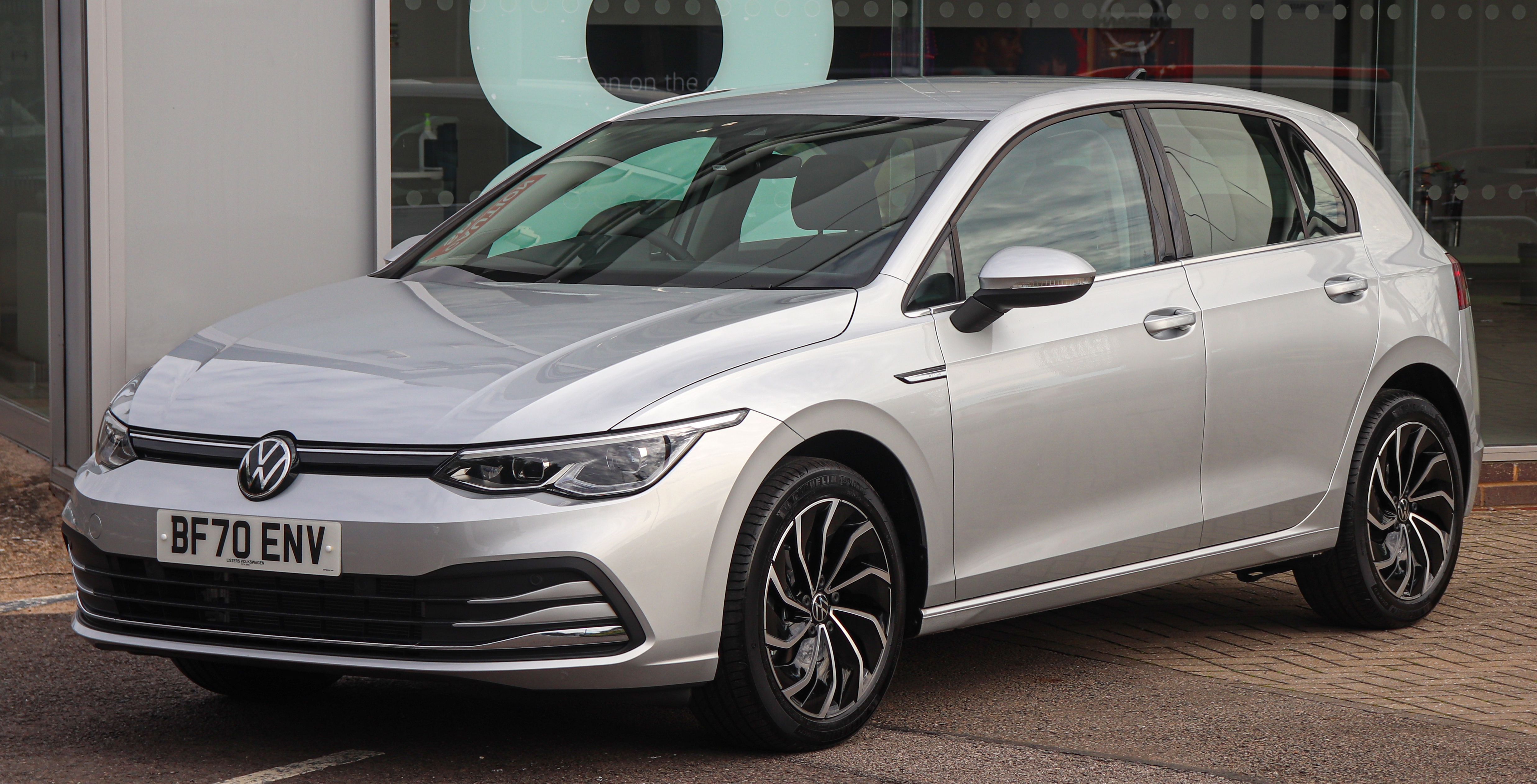
Alt Race is a big car event in Europe. It’s known for lots of cars showing up—often including drifting and famous older racing-style vehicles—usually in a stadium setting.
Drifting is when a driver makes the car’s back end slide on purpose while still steering through the turn. Stadium events are popular for it because it’s easy for crowds to see the action.
They’re talking about how car fans in Europe do things differently than they’re used to. It’s not just about the cars—it’s about the whole scene and community.
Le Mans is a super famous long-distance race where cars have to keep going for a full day. It’s a big deal in racing, especially for European car fans.
The Polo is a small Volkswagen hatchback that’s popular in Europe. They’re saying Europeans might react by wanting something familiar instead of a rare North-American-only car.
Moving a car for an event usually means paying for transport and dealing with paperwork, not just driving it somewhere. It can get really expensive and complicated when it’s across oceans. The host is highlighting how far people will go to get their car to the right place for a show.
Shipping a car from Hawaii to Europe is a huge trip, not a simple “send it” situation. It usually means ocean transport and lots of paperwork. The host is basically saying it’s one of the most extreme shipping routes you can do.
The Honda NSX is a famous Honda supercar. The host is basically saying that even cars like an NSX can end up being shipped to places like Europe for events or filming. It’s an example of how big and expensive international car transport can be.
The host is talking about a way some military families can bring a car back from overseas more easily than regular people. It’s like a “hack” because the move is part of their assignment, and the shipping can be covered or discounted. It’s not something everyone can do, but it’s why some cars end up back in the U.S.
“OEM plus” means you don’t completely change the car. You keep the factory vibe, but add upgrades that make it a little better—like wheels, suspension, or small performance parts.
Concept
slanty wheels
This sounds like a description of very aggressive wheel fitment—where the tires and wheels sit at a dramatic angle. It’s mostly about the look, and it can make the car less comfortable or less practical.
Concept
dumped on frames type of cars
This is basically describing cars that are lowered extremely. That can look cool, but it often makes the ride harsher and can cause problems like scraping and faster tire wear.
They’re saying that in Europe—especially in Germany—having a car can be harder and more expensive. That affects what people do with their cars and how much they’re willing to modify them.
If it’s hard to park or store a car, it changes how people live with cars. It can make it tougher to own multiple cars or work on them for long periods.
Insurance can be more expensive or complicated in some places. When that happens, people may choose cars and upgrades that are easier (and cheaper) to insure.
Concept
Getting your license isn't that hard
How easy it is to get a driver’s license affects who’s driving. If more people can get licensed, you often see more cars on the road and different driving habits.
Concept
Autobahn license (different license for the Autobahn)
Germany can have different driving rules depending on where you’re driving. The Autobahn is special, so you may need the right kind of license or qualification to use it legally.
Mighty Car Mods is a car show/channel that makes videos about modifying cars. The host is using it as an example of how people approach building and changing cars.
The Volkswagen Golf is a common small car that a lot of people modify. The point here is that the hosts are comparing how modifications work in different countries.
TÜV is a German vehicle inspection. It’s where your car has to pass safety and emissions checks, and that can limit what kinds of mods you can legally run.
Some aftermarket parts have to be “approved” before you can legally put them on your car. That approval usually means they meet rules for safety and emissions.
European versions of cars sometimes have to meet different pollution rules than cars sold in the U.S. That can change where parts like the exhaust can fit.
The “underground scene” is basically people who do car mods that don’t follow local rules. The question is whether those mods will become more common when parts come from countries with looser regulations.
DTM is a German racing series for cars that are based on production models. The race cars are heavily modified, but the series is a big part of German motorsport history.
“Stanced out” usually means the car is lowered a lot and the wheels are fitted to look extra aggressive. People do it for the look, and it often takes suspension and wheel changes to pull off.
They’re basically saying they want to copy ideas from other countries’ car scenes. By seeing real modified cars, they can figure out what kinds of changes look good and work well.
“Euro shows” refers to European car events and media that often emphasize different aesthetics and engineering priorities than US scenes. The host says they’ve liked that vibe, which suggests their taste in modifications is influenced by European styling and build culture. This helps listeners understand why Japanese and European car culture are both part of their inspiration pipeline.
They’re talking about brake work that got finished, and then how the brake pedal feels afterward. The pedal feels stiffer and higher than expected, so they want someone to adjust or check it.
The ECU is the car’s main computer. It uses sensor information (like speed) to run different systems, so if the signal doesn’t reach it after removing ABS, some things (like the speedometer) won’t work.
The master cylinder is the part that creates the brake pressure when you press the pedal. If you change other brake parts but not this, the brakes can feel wrong or behave oddly.
Drifters are drivers who intentionally slide the car while keeping it controlled. The host is saying this problem is more common with drift-focused modifications than with normal street brake upgrades.
ABS is a safety system that stops your wheels from locking up when you brake hard. That helps you keep control of the car and steer while you slow down.
Term
outbreak a car
They mean braking so aggressively that the car starts to lose control. ABS helps prevent the wheels from locking up, which makes it easier to stay stable.
Brake bias is how much of the braking happens in the front versus the back. Changing it can make the car feel more stable or more “twitchy” when you brake, depending on the setup.
A bias adjuster is a knob or device that changes how hard the front brakes and rear brakes work relative to each other. People use it to make the car brake the way they want on a track.
A load cell pedal uses a sensor that measures force directly, producing a more realistic and consistent pedal feel compared with simpler potentiometer-style pedals. The host compares the GR86’s brake pedal behavior under ABS to the sensation of a load-cell sim rig, implying the pedal resistance changes in a way that feels “sim-like.”
Wheel lockup happens when the tires stop rotating while braking, which dramatically reduces traction and steering ability. ABS reduces the chance of lockup by modulating brake pressure so the wheels keep turning near the limit of traction.
Modulating means the car keeps adjusting how hard the brakes are applied. ABS doesn’t just clamp the brakes and leave it—it changes pressure to keep the wheels from locking.
The caliper is the part that squeezes the brake pads onto the spinning brake disc. With ABS, the car can reduce that squeeze and then bring it back to help prevent wheel lock.
The rotor is the spinning brake disc. ABS uses sensor data about wheel movement to decide when to ease off and reapply braking so the wheel doesn’t lock up.
A wheel speed sensor is a small sensor that tells the car how fast each wheel is spinning. If the readings don’t agree, the car may not know which wheel is slipping, so it can back off or change its safety help. That can make braking feel different, especially on slippery surfaces.
Locking up is when a wheel stops spinning and starts sliding. Sliding tires don’t grip the road as well, and it can also damage the tire. Cars with ABS try to prevent this by pumping or modulating the brakes.
Flat spotting is when a tire locks and slides instead of rolling. The tire gets a worn “flat” patch, which can make the car shake and feel less stable. It’s a big deal because it can also hurt the tire’s grip and lifespan.
Continental Tires is a well-known tire brand. The sponsor is basically saying: use their website to pick tires that fit your car. The right tires can make a big difference in how well the car stops and sticks to the road.
This is a type of tire made by Continental. It’s meant to work well in a lot of conditions—dry roads, rainy weather, and even light winter snow—so you don’t have to swap tires as often. The host likes it because it feels confident for everyday driving and for more aggressive driving too.
This is a winter tire model made by Continental. Winter tires are built to grip better when it’s cold and when roads are covered with snow or slush. The host is saying it performs really well in snow.
Autocross is a timed driving event where you drive a course made with cones. You’re turning and accelerating a lot, so the tires really affect how well you can control the car. The host is saying their tire choice still works for that kind of driving.
They’re talking about how a car can stop making sense once your life changes. Even if it was a good choice before, it might not match what you need now.
They’re talking about whether the car has an automatic transmission or a manual. They’re saying they’d rather have the manual, because they don’t want to be judged for choosing the automatic.
Ice racing means driving on frozen ground where the tires can’t grip well. It’s easy to lose control, so it’s something that needs a lot of caution and preparation.
Clutch release is the feel and timing of how the clutch engages as you let the pedal out. Small differences in clutch bite point and pedal/actuator calibration can make a car easy or difficult to drive smoothly without jerking or riding the clutch.
Riding the clutch is when you don’t fully let the clutch go while you’re moving. It can make the car feel smoother, but it can also wear out the clutch faster.
A clutch is the part that lets you smoothly start moving and shift gears. Some people think a brand-new clutch needs time to “settle in,” so it feels smoother after a while.
Going from first to second is the first shift most people make when they start driving. If that shift feels rough or weird, it can make the whole car feel harder to drive smoothly.
Torque is what makes a car pull and move without needing to rev super high. If a car has less torque where you’re shifting, it can feel like you have to be more precise with the clutch and gas.
The GR86 is a small sports car that’s meant to be fun to drive, especially with a manual transmission. Here, the speaker is saying the clutch behavior felt “off,” and other owners talk about it online.
Some manual cars use a small valve in the clutch system to make the clutch engage more smoothly. If that valve’s behavior doesn’t match what you expect, the clutch can feel weird or delayed.
All-weather tires are tires meant to work in more seasons, including cold and some snow. The speaker says these tires helped the car feel better when driving in winter.
Drifting is when the car’s rear slides while you’re turning. On ice, grip is low, so it’s easier to lose traction and the car can feel like it’s working harder.
They’re describing a squeaky sound from the car’s windows. It’s usually related to how the window slides in its track, and cold weather or dirt can make it worse.
Term
mechanism itself
If they think it’s the mechanism, they mean the actual moving parts inside the system. That’s different from a loose panel—because the noise is coming from how the parts move.
Moisture and cold weather can make car parts act differently. That can lead to extra squeaks or chirping noises that you don’t notice in warm, dry conditions.
When it’s cold, some car parts shrink or move differently. That can make annoying noises show up—especially if something is already slightly loose or sensitive.
Concept
dangerously slow
“Dangerously slow” is a driver’s perception that the car can’t accelerate quickly enough for safe merging or passing. In this context, it’s tied to the host’s experience of pressing the gas and getting little response until they downshift and rev higher.
Break-in is the early period after buying a new car where components are expected to seat and wear in. The speaker implies the car feels weak until break-in is complete, which can happen if the engine management is limiting performance or if the driver is still learning how the car responds.
The FR-S is a small sports car designed to be fun and easy to drive. It’s known for being a good base for upgrades and modifications. The podcast mentions it because the speaker had one for a long time and changed it over time.
The Subaru BRZ is a sporty Subaru coupe that’s closely related to the FRS/86. The speaker brings it up because the earlier cars had a torque delivery that didn’t feel as strong low down.
FA 20 is the name of the older 2.0-liter engine used in the earlier BRZ/FRS/86. The speaker is saying it didn’t feel strong where you want it most, especially at lower revs.
A boxer engine is an engine layout where the cylinders sit opposite each other like a flat shape. The speaker mentions it because the GR 86 and earlier twins use this same basic engine style.
FA 24 is the newer 2.4-liter flat-four boxer engine used in the GR 86. In this segment, the host credits the FA 24 with smoothing out the earlier car’s torque curve so the car feels stronger and more immediate, even stock.
The Camry is a regular, everyday Toyota sedan. It’s built to be comfortable and practical for commuting and errands. People mention it when they’re talking about a straightforward, normal driving feel.
The Corolla is a small, everyday car from Toyota. It’s designed to be easy to live with and efficient for daily driving. People bring it up when they mean a normal, practical driving experience.
“Stock” means the car is still set up the way the factory built it. That matters because changing things like the exhaust can change how loud and how “alive” the car feels.
The GR86’s engine is related to Subaru’s boxer-engine design. That layout can affect how the engine runs and how it sounds compared with more common engine shapes.
A sound symposer is a system that helps make the engine sound louder or more noticeable inside the cabin. The host is saying their car doesn’t seem to be doing that the way they expected.
The host is comparing the GR86 to BMW because they’re used to how BMW makes the car feel and sound. They’re saying the GR86 doesn’t match that expectation.
Brand
M
“M” is BMW’s performance brand. The host is saying they’re used to how BMW M cars feel and sound, and that makes the GR86 feel different in comparison.
Term
sports car vibes
“Sports car vibes” is a subjective way enthusiasts describe the overall driving experience—how responsive, engaging, and confidence-inspiring the car feels. In this discussion, it’s used to contrast the GR86’s stock character versus what the hosts expect from a sports car.
“Modifications” are changes you make to a car after you buy it—like parts you swap or tune. The point here is that they think the GR86 might feel better with upgrades.
A “one owner lease car” typically means the vehicle was owned by a single person (often a company) and used under a lease agreement, then returned and sold. Low-mileage lease returns can be attractive because they may have been maintained consistently, but you still want to verify service history and condition.
They’re talking about the idea of a cheap sports car that’s still fun to drive. The goal is to make it affordable by keeping it simple, not by loading it with expensive extras.
Aftermarket support means other companies make upgrades for that car. If a car has a lot of aftermarket parts, it’s easier to modify it or fix things with options.
LIVE
Welcome back to the Martini Works podcast I'm here with.
And Gels.
And I'm Dakota.
We're going to be diving into some topics,
kind of like why Lars and Fam picked up a GR86
and maybe hates it.
We're traveling across the world.
We're going to Germany.
So why don't we start off with that?
We're heading to Alt Race.
Lars, do you want to tell the people what Alt Race is
if they don't know?
Yeah, so Alt Race, oh man, where do we start?
Alt Race, the way we think of it, or I think of it at least,
is like one of the premier auto shows in the world, globally.
Whenever we've gone on trips or rented Airbnbs in the past,
we've always had their videos up behind us.
But basically, it's a car club or show based out of Poland
that's hosted just legendary shows around the stadium, usually.
It used to be called Racism, if you heard of that,
they changed the names for obvious reasons.
But yeah, I'm sure you've seen, everybody who's listening to this
has seen their clip somewhere of people drifting around a stadium
or some of these old European icons of motorsports
just being displayed at a show.
We've wanted to go to their events for a decade at this point
and finally get a chance to do it.
I'm super stoked for that.
Yeah, if you haven't checked out an edit of Alt Race
and you'll see the caliber of cars that's there,
it's just absolutely gnarly and I'm really excited.
Me, Brent and Lars will be heading over there
and to just see European car culture is going to be sick.
It's so different, it's something new.
Yeah, it's exciting because we don't talk about it much.
We have a big affinity for Japanese cars, generally speaking.
Obviously, a bunch of us have European cars
and we love that culture just as much,
but we don't get to talk about it much
and I don't think any of us have really gone to Europe for that.
Alex went for Le Mans a couple of times and some of his stuff,
but yeah, I'm very excited to share that culture
and to go back where I came from and explore some of that.
Yeah, because people don't know Lars is originally from Germany,
so that's why it's a really special show
that we're going to head out to and go to
and make some content and check out.
I'm super excited.
Obviously, being a Euro car enthusiast as well,
it's something I never thought I'd be able to do,
so I'm beside myself, the fact that a few months ago,
we were in Japan experiencing that car culture,
now we'll be in Europe and experiencing that car culture.
This year is going to be wild.
Do you think if you brought the Gulf over there
since they weren't available in Europe,
that that would be like bringing some crazy JDM car to America?
That's what I thought about a little bit.
They lose their shit.
I feel like I go one of two ways
because I don't know European car culture enough to fully know.
I feel like I go one of two ways.
One, the good way.
They'd be like, whoa.
I've never seen one of these in person before.
USDM, Golf Harlequin, that's crazy.
Or they'd be like, get that out of my country.
I hate this.
Bring me a Polo.
Some of the Germans might react like that.
That's right.
I don't know because if you didn't know,
the Gulf was only offered in North America.
Polo is what the Europeans got.
So I think it'd be really cool.
That's what I think.
I'm just trying to think of it
where the opposite way around, like, whoa, that's really sick.
It's not that far out of reach because I've
watched some edits of Alt Race, obviously.
And there's people have their car shipped there for the show.
I've seen Hawaii plates and all that out there.
So Hawaii to Europe is an insane trip for a car.
That's about as far as it gets.
I think it was like an NSX.
But yeah, so I wonder if there's a story behind that.
Maybe it could be.
Sometimes I know there's some weird stuff with military
if they're stationed over there.
They'll send your car over.
Or I know I had a buddy in the military and he was in Europe.
And he had a car.
He bought their ship back to the United States.
So kind of a pro tip.
Life hack for importing cars.
Join the military and go move somewhere
and then get a ship back for free.
Just cannot do that if you want to or don't.
I don't care.
That's an option.
Lars, speaking of the European car scene,
what do you think, before we go and experience,
we can reflect when we get back,
are some of the main differences
between American car culture and European car culture?
Yeah, I've been thinking about this a lot.
And I think in a nutshell,
I think European car culture aligns more closely
with how I've built my cars in the past.
I think I've been doing this subconsciously.
And to say that it's more OEM plus type things.
It's less of the slanty wheels.
It's less of the dumped on frames type of cars.
With some exceptions, of course,
I think it's more like either cheaper cars
that are enhanced cosmetically
or expensive cars enhanced mechanically.
I don't think we'll see much blending of that
because people are more,
owning a car in Europe,
and I know in Germany specifically, is expensive.
Storage is really difficult there.
Insurance is difficult there.
In Germany especially.
Getting your license isn't that hard
and inexpensive as well, I believe?
In some of the countries, yeah.
And Germany has two different licenses,
but you have to get a different one for the Autobahn
from my understanding at least.
So like a more expensive advanced one or something.
So I think we'll see more focused builds
is what I'm trying to say.
It won't be like all-out stance or show or race cars.
There'll be cars that you can drive every day
and then go do stuff with, right?
Which loops me back to how I've built the M2 back in the day,
how I have the M3 before it broke,
how I had that car.
Cars you can enjoy and not feel weird
about like bringing anywhere.
I remember I watched a series by Mighty Car Mods
where they went over there and they bought a Golf
and they modified it.
And it was interesting to see from a modifying perspective,
they're a lot more strict too.
Because there's the TUV, the TUV,
where like when your car gets registered
and you have to pass all these inspections
and they're pretty strict about it.
So even when you look at like aftermarket parts over there,
a lot of times they're a lot more expensive
because they have to have that certification
so that way you can put it on your vehicle.
Otherwise, no good, no bueno.
Yeah, wheels especially.
Yeah, yeah, definitely wheels exhausts.
I know they're really rough on exhaust there.
A lot of the BMWs, I learned about this
when I bought the M2 because they had
that really ugly factory muffler
that like hung under the fender or the bumper.
And it's because of the emissions stuff
that they have to cram up there in the European spec cars.
But one of the things I'm really excited to see
actually are like American cars there.
I really wanna know what kind of stuff there is
and also the underground scene.
And by that I mean, you know, like for example,
in California or even Milwaukee, like here in Wisconsin,
there are emissions rules.
You're not supposed to do a lot of the stuff that people do.
So how much of that will we see then
when they're like importing parts
from the lesser controlled countries?
Like I imagine the Eastern European countries
are much more lax.
Do they sneak that stuff into Germany somehow
and then put it on their cars anyway?
I'm really curious how much of that we'll see.
Yeah, for sure.
Is there any cars that you're looking scoping out
for hoping to see there?
Oh man, there's a few like trophy cars
that I know I'll never get a chance to see here.
A lot of it's motorsports based
because in the old trace edits,
you see there's a lot of like OEM support
from Porsche, Mercedes, Audi, BMW,
obviously the German brands.
So one of the icons, for example,
is the LMP1 car that BMW made back in the day.
I keep seeing it all over their website
and every time I see it, I was like,
God, I hope it's there.
I really want to see that person.
But any of the iconic race cars would be sick.
If they brought like one of the salver BMW F1 cars,
that'd be incredible.
Any of the DTM cars, one of the Mercedes Evo would be sick.
Oh yeah, that would be really fucking cool.
Yeah, so I'm specifically looking for things like that.
And the stuff that we don't get here,
like one series wagons or like hatchbacks,
I guess technically.
There could be lots of wagons.
Yeah, that's what I'm excited for too,
is to see basically any car that was made there
and we didn't get is what, especially like a Shirako,
like a newer one, a Shirako art.
Oh my God, if I see one stanced out,
I'm gonna do a full photo shoot of that thing.
Like I'll be so freaking hyped.
But yeah, what I'm really gonna be eyeing up
and looking for is I want to see
how people modify their cars
and maybe pull inspiration from there and just notes.
I think it's really cool like getting to go to Japan
and see how those cars were modified.
It puts in perspective of how things are different
and then also to what gets the US inspired
and how we start modifying our cars here.
So I mean, I've always been a big fan of like Euro shows
and stuff like that.
And I feel like we get a little bit of that vibe here
when we do that, but it'll be obviously
so much different over there.
It'll be fun to, assuming we find English speakers
and all that stuff, we figure out translation.
It'll be really cool to ask some of these people
like why they built these cars a certain way.
Not just look at the results,
but get the story behind it.
I'm really curious,
because maybe my preconception of European car
is just way off.
I have no idea.
I've not been in 25 years at this point.
So yeah, I'm really stoked for that.
We get to connect with some of those people
and learn about them.
Absolutely.
I can't remember, are you getting a rental car
or are we not getting a rental car?
Probably not.
I don't think we're going that far.
Next time, I'm gonna say.
It'd be really cool to drive over there too.
I was watching some videos of people
like going on trips out there
and there's just some crazy beautiful areas
that hopefully we'll get to dabble into outside of the show.
But we're basically just heading there.
Mostly for the show,
we'll be there, me and Brent especially,
we'll drop down, get to the show.
So this isn't a different location this year, right?
Yeah.
Yeah, because it used to be in Poland.
Yep, so they added a second show in spring in Germany.
Usually it's in Poland at a stadium.
This is at, I don't know what venue this is actually.
It's not like an arena or anything like that,
but it's a venue in Düsseldorf.
Okay.
It's like a really pretty city
from what I was looking at.
I'm excited to check it out.
One of the things,
and my wife has been looking into the city
and what to do there.
It turns out, by the way,
it's a funny closing of the loop.
It's known as Little Tokyo in Germany.
Oh, perfect!
Apparently it's like a sister city.
Do they have a 7-11?
Apparently like a lot of Japanese businesses
invested in that area like years ago.
So there's a huge Japanese culture there
and a lot of Japanese people that emigrated there.
If I can get some ramen or onigiri,
like listen, I'm excited to try German food.
I am, but if there is,
and we're in Little Tokyo, I'm gonna hit that up too.
I'm right there with you.
I love that stuff.
Yeah, I don't know a ton
about German culture in general,
so I think it's gonna be so neat
to just be there and take it all in and explore.
It's a lot of it in Wisconsin.
Ah, bras, sauerkraut.
I feel like I got it.
That's why I didn't do any research.
Got a kickstart naturally.
I was born in Wisconsin, baby.
You'll fit right in.
It'll just be like being home.
Just everything's exactly the same.
There's a Packer Bar.
Yeah, food!
Actually, there is.
You can look, the Green Bay Packers have a website
and it's a worldwide find like a Packer Bar.
I tried looking in Tokyo and I couldn't find it.
That would have been insane.
I feel like, especially too,
they're doing more overseas football
and stuff like that now.
Maybe there'll be a Packer Bar.
Maybe I'll bring my Jordan Love jersey.
Bring the cheesed.
Bring the cheesed.
They probably love that shit, honestly.
I feel like you could go anywhere with a cheesed,
and they'd be like, yeah, that's sick.
That's cool.
Where are you from, Wisconsin?
That's neat.
Where's Wisconsin?
The soccer culture is very similar
to the American football culture, especially here,
so we might see something similar.
Absolutely.
So yeah, in the second segment here,
we'll be getting into the GRE6.
Maybe we'll talk a little bit about Lars' car collection.
What he has.
What maybe he'll be getting rid of.
Why?
And then what you think you might hop into in the future.
Oh yeah, I mean, right now I have the E46M3, of course,
that's still broken.
Should we, we should talk about that.
Okay, yeah, let's dabble in that real quick.
So we talked about the brakes for a long time,
and we finally had a shop kind of help us finish that up.
So that's all installed, ready to go.
It feels a little weird just because
the pedal is so stiff now.
It's like high up.
So I need to find somebody to adjust that,
but basically the brakes are good to go.
But turns out when you remove the ABS from the car,
the wheel speed sensor runs through the ABS module
and then to like the ECU, is my understanding of it.
With the ABS completely removed,
that plug goes nowhere right now.
And as a result, I noticed the speedo wasn't working,
and I was like, whatever,
I can live without that, I'll use my maps or whatever.
But the car is now freaking out
because it does not know how fast it's going.
So I can't rev past, I think it's 6,000 RPM.
And it definitely feels like it's low on power.
So I haven't driven it at all since I took it home.
And it's just been kind of setting up.
You're telling me all these BMW race guys,
and nobody's made like a dummy plug for this or?
So it's really weird because I thought the same thing.
I'm like, why is this such a weird thing?
Why was there nothing documented on this?
Why didn't the company I bought the parts from
like warn me about this or whatever?
And long story short,
it seems like most people that upgrade the brakes
don't touch that system,
like the actual master cylinder, the booster
and all that stuff.
They upgrade the calipers, rotors, pads, obviously.
Yeah, they keep all the ABS and everything.
Yeah, yeah.
And I guess this is a freak thing
that only like really drift guys are doing for the most part,
which is where I got the idea from,
like according to last time, let me go do it.
That's not his fault at all.
It's just an odd use case, relatively speaking.
And because I'm factory ECU,
the rest of the car is effectively stock, power related.
I guess the car is just freaking out.
But theoretically I should be able to just plug it back in,
put the ABS back where it was,
not hook up any hydraulic lines, obviously.
And theoretically that should fix it.
It's just been so demotivated to work on it
because to get to that, I have to basically start over again.
I have to pull the master cylinder out of the way.
Jesus.
And I just don't want to.
You've been battling this demon for a while.
I get it.
I get the same way.
Like when something a little bit bigger on your car
breaks up, man, it just puts you in a crappy mood.
And every time you see it, you think about it
and you want to be out driving it,
especially as the weather's getting nicer.
I feel free, man, but we'll get it.
Is there, now help me understand,
because I'm not big into racing and stuff.
I've heard of people deleting ABS or keeping it vice versa.
What are the benefits of not having ABS versus having it?
This is a tough one.
I would never recommend anybody get rid of ABS.
If there's nothing broken with it,
I, modern ABS especially, and the E46 is kind of borderline,
but I wouldn't call it modern, right?
There's really no reason not to have it.
You're not going to outbreak a car with a good ABS system,
again, if it's functioning properly.
So really, it's about removing a failure point,
I would say, which is why I did it.
It's about feeling the car more.
That's what I've always heard, is the feel of it or something.
Yeah, the other one is now I have a bias adjuster,
so I'll be able to dial in front and rear brake bias
between sessions.
That's cool.
Yeah, I'm excited for that one.
Once I get to the point where I can start beating it up again.
But there's definitely some downsides.
Again, the pedal's incredibly stiff.
Yeah, because essentially, you got rid of the booster, correct?
Yeah, so it is just pedaled to master some directly.
It feels like if you've ever had to do an emergency stop
sometime, the pedal gets really, really hard at the bottom.
It's like that all the time.
Weird.
So the closest I can actually equate it to,
honestly, is a Simrig.
If you have a Simrig at home with a load cell pedal,
that's what it now feels like.
OK, that makes sense.
Isn't there something too, the whole point of ABS,
well, it's the help of traction.
But can't your brakes get really hot then,
because it's not modulating?
And isn't there a chance of getting heated up and stuck
or something like that?
Not really.
The ABS just kind of discot this.
What's the right word?
It just lets go of the caliper a little bit.
It's just modulating that as you're locking up.
And Gels probably knows more about this than I do.
But the way it works is it just measures rotation of the wheel
relative to the rotor or the car or speed
or somehow.
The wheel speed sensor.
Yeah, thank you.
So it's just when those don't match,
it just lets go a little bit.
And the heat, though, I mean, I don't know.
I think it should be roughly the same.
The parts around the caliper, including none of that's changed.
It's just how I'm applying the pressure now is different.
Sure.
So I think I'm more at risk of locking up for obvious reasons.
So flat spotting tires is a big deal now.
So I'm going to have to completely
rely on how to drive the car.
Yeah, that'll be interesting.
I mean, you basically will be just tracking that car, right,
though?
Are you going to be tracking another car?
Just that one in the PFM.
And did you already say, if it sticks around,
I'd like to get that out there at some point.
OK, well, we'll hop into our first sponsor, which
is Continental Tires.
Head on over to Martina Works.
Use the filter.
See what tires are for your car.
If you need help picking them out, we'll always help you.
Zach or Chris will be happy to talk to you about what tires
they recommend for your car.
They have the Extreme Contact Sport 02 DWS06 plus.
And then if you want to get way, way, way, way ahead of the game
and while they're in stock, get some Viking Contact 8s,
the new winter tire that they dropped not too long ago.
That's thinking ahead.
But man, dude, those are some of my favorite tires I've ever
used. They're unbelievable in the snow.
But the ECSO2, another one of my absolute favorite tires,
very universal, great for, I'd say
it's the perfect car enthusiast tire
because you can put it on your summer daily.
If it rains out, you're fine in the wet.
Don't need to think about it.
If you're going to go do some spirited driving, you're good.
Got an autocross event for the weekend.
Guess what?
Still good.
It's just universal for car enthusiasts.
So go check out the Extreme Contact Sport 02.
We have some videos on it too that you can check out.
And a huge thank you to Continental
for being a sponsor of Martina Works Podcast.
We'll be right back.
All right, Lars.
You and M own a car that me and Joe was really like.
Yeah.
But you really hate.
Yeah.
I want to get to the bottom of what
you dislike about the GR86 platform
because I think it's been generally pretty accepted
as a this was a good, good job, Toyota.
You did it.
And Subaru will give you some credit.
Except for Lars, like, no, stupid.
Yeah, I hate it.
This car sucks.
This car, oh, man, I've been feuding with this car.
So we bought the car in, I think it was September.
And for context purposes, all right.
So M had a four-runner.
I was like her car.
Nice.
And being around the whole group and everything, right?
Like, the four-runner didn't really make any sense anymore.
And frankly, the four-runner was really expensive
for what it was.
Not very fuel-efficient, all that.
Amazing winter car, obviously.
Super spacious.
Like, we enjoy that car, but it wasn't as nice as yours.
It wasn't like the super top spec one, either.
No, they're all about the same.
So the point is, right, it was kind of expensive
and it longer suited our needs.
So we started shopping for cars.
And I should have started at one point.
We were looking at Priuses, right?
I got really hyped about the new Prius
because I stand by that as a sick-looking car.
And it does its job very well.
Digging a hole, Lars.
Say, going well.
So when we got there, or the day before we
went to actually the dealer, M was looking on their website.
And she was like, what is this?
And I was like, that's a GRD6.
And I'm like, I like that.
And I'm like, OK, we can look at them,
but we're not getting an automatic.
Because I will not be that person who shows up at a car
thing with an automatic GRD6 and be laughed out of the area.
So she's like, that's fine.
We can learn, right?
She's never owned a manual car before.
Sure.
So she's like, yeah, all super excited.
We're going to learn manual, blah, blah.
We get to the dealership.
And this thing is $4,000 or $5,000 cheaper than the Prius.
So there's nothing in me that can say no to this car, right?
And I'm getting excited.
Because it's like, cool, another sports car in the collection.
I can enjoy this.
I can have some fun with it.
And I have the M5.
Like, what could go wrong?
Fast forward six months.
And I've only driven the GRD6 this entire time.
Because it's been winter.
And you love it so much.
The winter tire thing was a struggle for a while there.
And we talked about ice racing the M5.
And I broke that.
We've talked about all this.
I've broken all my cars recently.
And throughout all this period, I've never
learned how to drive manual.
So I'm still only driving the GRD6 right now.
And it's just been pissing me off.
Why though?
That car, every day it's something else.
What do you mean?
Oh my god.
So the first big thing that pissed me off
was the transmission.
There's something about that manual, the clutch release,
or the way it's geared.
I don't know.
It is impossible to drive that car at a normal speed
without lurching it around or riding the clutch.
There's something about it.
Weird.
That's interesting.
And I was convinced this was a me problem.
Because I'd only been driving the M5 for the six months
before that.
You drove the blue one, then we had it here, right?
Only in parking lots.
Did it feel the same, clutch-wise?
I don't think so.
Weird.
But I don't know.
So I thought maybe it was a brand new car, right?
Yeah.
Brand new car.
So I thought maybe the clutch needs to be worn in.
In fairness, it has gotten better.
But there's still something about leaving this parking lot
at the shop here.
Going from first to second, it just feels like, oh my god.
It makes me feel like I don't know how to drive manual to them.
It's taken all my confidence out of it.
So that the two times I drove the M3 to test drive it,
I was like, that's what it's supposed to feel like again.
Weird.
And some of that, again, it's so weird.
Because I've only owned manual cars that are
like north of 300 horsepower.
So maybe it's just a complete lack of torque
that I'm experiencing.
And they do lack that a bit.
So it could be better than the first one.
But it's just so disappointing.
I got the chance to drive the GR86 quite a few times.
I can't say I ever felt that way with it.
Maybe I'm bad at it.
Or yeah, I wonder, well, no, you said it's a new car.
Yeah, brand new.
So it's not like the stock clutch is dicked or something.
It got to the point where I actually joined some of the GR86
pages on Facebook and stuff and started browsing.
And it's reported often.
Like people talk about it a lot.
And the fix, apparently, is like a clutch delay valve
that every modern manual car has.
But the M2 had that.
And it never bothered me there.
So I don't know.
Again, that's one of the things I could probably fix it.
But it's a brand new car.
Why the whole thing happens?
So it's got funky clutch on it.
Yep, funky clutch.
So then the next thing, right?
As it's getting, I'm driving in winter, right?
Obviously, we put all weather tires, the new secure contact
tires on there.
And I'm having fun with the car.
Like this is sick.
Like I'm getting used to it.
It doesn't matter so much if you're slipping the clutch
because it's icy out anywhere.
I'm just drifting every corner.
I'm in a blast.
And then suddenly, everything starts to squeak.
And I mean everything.
The seat squeak, the seat belt squeak,
the glove box creaks, the windshield wiper creaks,
the windows.
Like now that it's spring, it's getting warm out.
So I'm rolling the windows down when I'm driving.
OK, here's the thing.
Here's the thing.
Lars went on a rant about these windows the other day.
I'm like, bro, just clean the goddamn car.
There's something on the windows.
No, apparently, this is a legit thing with this.
I had to do some research.
This is a legit issue with this car.
The windows squeak.
The windows just squeak.
And it's not like.
These windows are atrocious.
Dude, some people are saying, like,
I rolled down my driver's window
and it sounds like I'm honking my horn.
Yes.
It is so loud.
The way I just I started describing it is like there's a bird in there.
It's literally chirping at me.
It's like it's literally going.
It's all.
That is really annoying.
And apparently, it's it's something with the actual like
rail themselves or like the mechanism itself.
Moisture, they said extra like cold temperatures really affects it too.
So that that that's a thing.
And I know that not most people like a lot of people, you know,
this is I don't mean to shit on the car.
Right. We'll get we'll get around that circle.
Other people store this car in winter and I totally get why, you know.
But again, I'm beating it up.
I'm having fun with it.
And then it's just like it just won't shut up.
It just won't shut up.
You told me that this car should be ashamed of itself
for calling itself a sports car.
Yes, which brings us to the next point.
OK, it's obviously we all know that you're already six
not known for being a fast car.
OK. Again, I'm on board with that.
There is no power.
This is the slowest car I've ever owned.
It's not just slow.
It is like in some cases, it feels dangerously slow.
No, like it's dangerously slow.
There might be actually something fucked with your car
that if that's the case, because what the hell?
Yeah, like, oh, yeah, like, OK, I guess.
Dangerously, I have to give you a ride in the heart.
I feel like I have to put like to get on an on ramp,
to get on the highway, for example, again, the cars that I'm used to,
right, you you you're coasting or driving in third.
You take the corner, right?
You just put your foot down and just builds up speed.
I put my foot down that nothing happens.
So like, I have to go to second gear and flog it.
Now it's out of break in finally.
I can rev the thing out to like 7000 RPM or something.
And finally, like, wants to move.
And again, right, that's the sports car part of it.
That's that's cool.
But why do I have to beat on the car every single time?
Like, no wonder they're blown up all the time.
I feel like there's something mess up with a clutch or something.
Like, it's not connected.
It's not giving you full power.
It's acting weird when you're letting like, I don't know.
I because so I had my FRS for many years and obviously did a few mods
and stuff to that got like the tune for it with like the header and all
that kind of stuff to balance out the torque dip and all that kind of stuff.
I will say hopping into when we had the blue one here that was
bone stock at the time, there was such a noticeable difference in an increase
of power that I was like, dude, this like the new one feels.
Didn't they have amazing or torque like on the low end?
Yeah.
So the the first gen like the FRS is BRZ and then the Toyota 86 is before
it was a GR 86 had the FA 20, which was a two liter four cylinder boxer.
The new ones have the FA 24, which is a 2.4 liter four cylinder boxer.
And it did essentially get rid of the atrocious torque curve that the first gen had.
So in the first ones, which is why I'm surprised because like I like just
noticeably, even from fixing it in mind with like the new header and the tune,
like made a world of difference.
But then hopping into the stock one of the new one was still another
like kind of jump in difference.
Like it felt like there was actually something there.
So like that it's really surprising to hear.
It's just I know I know I'm coming as some new viewer or listeners here
are probably like, this guy has no idea what the hell he's talking about.
Or he's like some like car lead is like, I promise you, that's not the point.
I enjoy driving slow cars fast as much as the next guy.
I really I genuinely do.
There's just something off about the way this car delivers power to me.
That like I started thinking about this car more as like a fun economy
car than like a slow sports car, if that makes sense.
OK, and that's the way I've rationalized it to myself because the pros of it
and that there are a lot of pros to it.
Looks really good.
Like it is comfortable to drive in like daily.
Like that part's all really fun, but the complete lack of power
and really good fuel efficiency have just quickly twisted my thought on the whole car.
Sure, like I think of it more like a real drive Camry or Corolla,
whatever the smaller one is.
And that's that's how I've enjoyed learned to enjoy it.
Like and I think the other part of that is there's two more.
Number one, stock, again, my car is completely stock.
It's a brand new car.
I hear nothing like for a car that's built around a Subaru engine, especially,
right, and they sound incredible with the right with the right exhaust setups.
We've talked about this a bunch of doing it eventually.
Why? Why is there no noise at all?
Which is crazy, too, because they have like that sound
symposer and stuff in it to like feed intake noise into the cabin.
So it's like, again, I know I'm used to a specific brand.
Yeah, and maybe maybe it's literally just a case of I'm used to how BMW builds
their cars and especially how M builds their cars nowadays.
I just it doesn't give me sports car vibes when I drive that car.
OK, I do think that the modifications
are required to enjoy it.
I do. I do think that I agree with you.
And in the end, I want to be super clear before the Internet rips me a new one.
I think Jerry sixes are really good cars.
And I think the modified Jerry sixes are some of the coolest cars we see in general.
And the community behind those cars is phenomenal.
They're like, there's nothing you can't do.
It's literally a giant Lego box of a car.
But stock for stock, dude, I just don't see the value, which is the final point.
This car was thirty six thousand dollars.
Yeah. Yeah. What the hell are we doing?
I know that thirty six grant my my M three costs less than that.
I can buy I can buy a twenty eleven because I'm shopping now.
I'm a twenty eleven, you know, E 92 M three of the V eight for less.
Yeah. Yeah.
I think I think that is a good point, too, because with the newer generations
that came out with this, the second generation.
I can't remember the chase code on top of my head.
The new beers, the new Jerry 86.
Like they do come in new off the lot at a pretty hefty price point.
Yeah. And like, honestly, I do think it is a bit high when we had the blue one here.
I couldn't believe how much Alex had to pay for that car to get it.
I'm like, that is an insane amount of money for that car because outside
of like the new engine and maybe like the new like infotainment in it.
It's exactly the same car that I had for many years.
I picked up my twenty thirteen.
It was a one owner car was a lease car had like sixteen thousand miles
or thirteen thousand miles on it when I picked it up.
I paid sixteen thousand dollars out the door with it.
See, it's that made sense.
Yeah, that that was like the recipe that like Scion was cooking with at the time.
They're like, here is an entry level budget base sports car
that comes in at a really good price point and get a new platform
that like, you know, isn't fricking ran through doesn't have a ton of miles on it.
It's got the newer features in it, but it's it's it's simple and here it is.
Yeah. And that I think was like perfect because for sixteen grand when I paid for it,
I thought that was the best fucking deal on earth.
I'm getting like a basically brand new car at the time.
Ton of aftermarket support to it.
It was real drive. It was manual. It was fun.
I loved it.
Paying almost forty grand for basically the same car is insane to me.
It's ridiculous.
And you might be thinking, like, why the hell did you do that then?
Right. If you hate the car and why do you like everything is like,
but it's like, dude, again, right?
That's why I shared the context of why we bought the car to begin with.
I didn't set out to buy a journey six.
Right. I went with what I've been told with the communities like
and the couple that I've driven and I was like, this is going to be fun.
It's just it's just not fun.
It's just not fun.
And for me to pay thirty six grand for this car and then I have to put another
and this is another great thing about about the car for a record,
the parts are relatively speaking cheap, very affordable to modify again,
compared to what I'm used to.
So like, but it's still we're talking about probably five or six grand in parts
to make you talking about I want getting a nice set of wheels and tires for it.
You know, that's that's like two grand.
Oil Overs is like another twelve hundred, fifteen hundred bucks.
An exhaust is, you know, anywhere between seven hundred and twelve hundred dollars.
Doing a header on those cars like is pretty much a must.
Like and then getting some sort of tune to get rid of any like check engine
light or anything like that.
Yeah, you're definitely looking at five, six thousand dollars in mods,
which makes sense if you're not paying thirty six out the door for for a car like that.
But but here's the problem with all that because again,
right now, you're going to be into that car for like forty five grand.
Look at the market.
What can you buy for forty five or even forty thousand dollars?
Right. It's like everything is forty thousand dollars.
You know, you can buy, dude, you can damn nearby a brand new Corvette for that much.
So like anyway, so like all this is to say, like it's really hard for me
to recommend that car to people and I'm shopping now for older used cars again
because of that reason.
But then one of the main reasons I wanted to buy the car was, you know,
it feels really weird for me to sit here and go say, go buy a used GRD six instead.
Yeah, because if you all buy used, you should, you absolutely should.
But if we all go buy used GRD sixes, then that won't be a twenty thirty GRD six.
That just won't exist.
So part of the reason I bought the car, like subconsciously, at least,
was, you know, voting with my wallet, right?
Like I bought the M two in manual, not automatic, even though I wasn't good
at driving manual back then, because I just I wanted the manual transmission
to keep existing and that's that's important to me.
And I think if you're in a situation, do that, you know, how can you support the cause?
So, yeah, but man, I regret buying it like I really do.
I don't think it suits my needs.
And part of the problem is, right?
I'm stuck, quote unquote, stuck now driving that compared to my M five.
Yeah. And the two just don't compare.
I do truly think I agree with what you're saying.
I do. I absolutely love the platform.
Still, I think that they are off the lot too expensive.
Hundred percent. They're just too expensive off the lot.
But I mean, obviously, everything has gone up in price
we kind of talked about that the prices when I bought my car are completely
you know, post covid versus pre covid prices are fucking insanely different.
So it's kind of hard to compare.
But I know I look back when I bought my car
and I thought it was a pretty screaming deal and for what it was.
And I think, you know, it's harder to justify that when you're talking
thirty six thousand dollars for a car.
I traded my M two in for thirty five thousand dollars. God damn.
I'm like, why the hell did I see my car back now?
Give me my I'm I missed.
That's the final lesson of all this.
I miss my fucking car so much.
I want my M two back.
I think that's everything that car reminds me of is what the M two was.
Is what the car could be.
Sure. I do think if you threw some mods at it, though, especially like
just like some some suspension and like an exhaust on it to actually hear
what the hell was happening, I think, you know, you obviously have more fun with it.
But to your point, to like finding like a used one, you know,
go find like that one owner car, find someone who bought theirs for thirty six
thousand, said this car fucking sucks.
I'm going to bring it back to the dealership and then they're going to sell it for twenty.
Never buys my car.
So you get a great the problem is I wanted to argue and I was ready
and I went and looked and all the used year, eighty six as I can find
are going for twenty eight to thirty six thousand dollars.
So they're not even dropping in value.
So even the used ones are still and what does Toyota typically do this?
They kind of just hold their value and sit at what they're at.
But I was expecting to find them for twenty or that low twenty.
Maybe even eighty ninety would be good.
Would be no.
There's nothing like that for sale around.
Thank God, I won't lose my ass on.
Yeah, yeah, yeah.
I'll give that to Lars that I think that car is too much for what you get
because I do think it is a phenomenal car that you start with a blank slate.
Yes, you modify, make it your own, put your own parts in it and then you get
to actually see those and feel those improvements right away, too.
I think it's perfect for that.
But yeah, it's so hard to jump into that platform at a price like that, knowing
oh, I want to spend a ton of money on it as soon as I get it.
You almost have to.
Yeah, which is part of that.
You know, we talked earlier about my taste in cars and the kind of philosophy
of fallen builds.
It's like I left the M2 basically stock for the entire lifetime.
I loved it.
I loved everything about that.
You know, and it just doesn't work for the journey six.
So if you if you buy one, you know, have have a couple of have some
money saved aside or have a plan for how to really make that car your own.
Or maybe you guys tell me if I'm wrong, right?
If I'm just out of my ass and I'm spoiled by other cars or just
thinking of different cars and that's cool, too.
It's man, I would not spend.
But obviously you're feeling something with this.
Yeah, it feels strong about it.
I don't want to make people like feel the type of way like I'm shitting
on their platform.
No, no, no, I don't know.
And I think we all unanimously it's it's a good car.
It's just priced aggressively and you come with a really unique
perspective, which I can appreciate, too, is I experienced that car and
got to drive it, but I didn't have to spend a dime and I had no thought
of purchasing and what that was like or what I spent on the car.
You have a different opinion of I spent this much money.
Here's what I have.
This is what I'm getting out of it.
And I think that is a much different perspective than someone that hopped
in went and drove and had fun for, you know, a few days, weeks and then
gave it back that that's a very different mindset when your own money is on
the line for it.
It's it's different and two, for whatever reason, my head, I just
expected that the used market was a lot lower than what it was to.
And it's not to just I mean, hey, that's kind of good at least.
I mean, at least it's kind of holding its value.
Toyota's do a good job of that.
But yeah, it's a good plan.
We're not shitting on anyone that that has one.
I think you have a great car.
We're just saying, damn, I wish we could have got it for a little bit
more affordable.
Yeah.
Yeah.
Honestly, then, you know, if you do like that platform, you've ever thought
of getting one, I'd try to go scoop like a lower mileage first gen.
Yeah, absolutely.
Go scoop an FRS, go scoop a BRZ.
Shit, even like the later, like I said before, they killed off SIA or was
after they killed off SIA and they had the Toyota 86 again.
Like that was a really cool like car too, because it was newer, had some
updated tech inside.
Wait, so did we get that in the US?
Yeah.
Because it was always the 86 in Japan.
They did the Toyota 86 because they didn't have SIA on.
Yep.
So then they brought it here.
Yeah.
They brought it here.
It was like a face lifted version.
Had they realized that something right?
It was only for a couple of years.
And then they got them.
They brought in the new one.
What is the green one?
That's that's a Toyota 86.
Yeah.
But what is it like a Suka edition?
Yeah, the whole name, something like that.
We talked about if I got one, I'd get that one.
That one looks so good.
Those is really good.
Oh my God.
I love it.
Doesn't I think it has like a brown interior.
Yeah, it's like a tan or tan and black serial number two.
I believe those are cool.
Those are sweet.
Yeah.
So the other thing that I was really looking forward to, because again, I went
down this like economy car phase and I was like, maybe I can save a bunch of money
on gas.
Yeah.
The thing takes premium.
Yep.
We just put regular gas in the Hakone edition.
That one.
Yeah, it's that thing we talked about them.
We were talking about like our favorite color combos.
I picked that one.
Because yeah, I remember seeing that at the Chicago auto show when it came out
and I was like, dude, this car looks fucking incredible.
I love the interior because the one thing I did hate about the FRS interior
was the fucking no matter what color you got, had red stitching all over it.
So I had a hot lava orange FRS with a black like suede El Quintar interior.
And then it was red stitching everywhere.
Mine's just mine's a premium edition.
It's all just cloth.
There's not even any leather in there.
No, they don't do that.
It's interesting.
It's supposed to be an entry level.
Well, then you got to come with entry level.
Exactly.
Exactly.
That's where the 36 thousand dollar vehicle.
Yeah, it's kind of it's nuts.
Crazy to me.
No, I don't know for sure, but I know that's the Subaru.
When you go with that, you can get the different trim levels and suddenly get
like the limited premium and stuff like that.
Maybe that might come with better options because I remember it was like when I
had mine is like, Oh, well, the Subaru is nicer.
Mine's a premium.
Like, OK, yeah, and maybe that that's that's obviously contributing to the price.
I think you can get like the the the more affordable versions for like 32, 33 years.
But even then, we have a what's the car play?
Just just get spend the two grand and get car play.
Yeah, it's the size of the screen, probably some of it.
Oh, that's probably exactly what it is.
Oh, my God, I'm this forerunner had like a really crappy screen like nothing
like what you have in yours.
So that probably is what it is.
Lars, if you could go back rewind right now and you have that same amount of money,
what would you buy? Oh, my God, I have a list.
It's really been pondering.
I've been waiting.
OK, some of this a couple of these might surprise you, but some of these are just
obvious, like I literally I could buy another minty clean E46 M3 and just
like unmolested and just daily drive that.
I think that's a better car for for 30 grand.
What year would it be?
Like 2003, 2005.
I could buy a relatively low mile E92 M3, which is my bucket
list car still, I will own one.
I could buy that for twenty eight grand.
I found one in Pennsylvania.
I want don't buy it.
I mean, it was sold.
It was Montana.
It's white.
It's manual.
It's got a sunroof.
It's red interior.
It's meticulously maintains a two owner car.
Like it's perfect.
Twenty eight grand.
Damn, that'd be a good 400 horsepower, eight, nine thousand RPM V8.
Like are you kidding me?
That's crazy.
I would buy a C6 Corvette because those are easily had for 30 grand.
Easily, not not a zero six, not a zero one, just a basic Corvette.
There's any number what I'm really craving right now
because I'm kind of over the M five thing, too, because it's that car
is just too expensive.
Also, sure, I want an old car.
And I mean, like E 36, E 30.
I want my I keep screwing this up.
E 24, the sharknose, the six year. Oh, yeah, yeah.
I want one of those so in the worst possible way.
If I'm going to work for the speed, I want to look cool doing it.
Yeah, fair enough.
I like some of the other cars, like, I don't know.
I was looking at Vipers for a while, but obviously those are more like
if I got rid of the M five type of car.
But there's in the thirty thousand dollar budget, not even getting to thirty five
in thirty thousand dollar budget, there's so many good options.
You know, there's any number of Mustangs.
My God, Mustangs are great value when you start looking at them at thirty grand.
True. Even there's so many options.
There's a bunch of Audi's that would be cool.
Like TTRS is I think you can buy the first and TTRS is now
for somewhere in that budget. Oh, really?
Thirty or forty. I always thought TTRS is we're sick.
Yeah, like the whole baby R.I. thing is really fun.
Like I think that's cool.
So yeah, there's so many options out there that I think again,
at that price, you can do better at twenty five at twenty two twenty.
Great, great car. Yeah, 100 percent.
Yeah, I guess what's fair to realize, too, though,
in that discussion is everything he mentions, like 15 to 20 years old.
Yes, at this point, where this is a brand new, you know, car.
So you get that new car factor.
But sometimes, you know, if you can find a well maintained
somewhat low mileage, it don't matter.
And I think if this is your only car and again, I say this from a
from a perspective of, you know, privilege, right?
I have three cars right now and I don't want to ever take that for granted.
If this is your only car and you're a car person and you want to have fun,
you know, and still take it to work every day, that changes a lot.
I 100 percent understand that I respect it.
You know, like I'm there with you guys, like because the M5 is probably
getting sold soon also.
It just becomes back to a value proposition.
You know, as as my other car, I would rather I'd literally rather
have a Prius, I would rather have an electric car because all I'm doing
is driving to the shop and back and that's a mile.
Sure. You know, it's all about finding the car that suits your purposes.
And if you again, if you just have the one car and you want something fun,
if go nuts, like absolutely, I would be interested to see, though,
if if you do hang on to it for a bit, we get some mods on it.
You have a summer with it because you haven't gotten to experience
like an actual summer with it yet.
Yeah, if if the outlook might change a little bit.
It would be like, hey, I found that like this car needs to be used
in this way to actually enjoy it.
I do want to like play with the car.
I 100 percent agree with you because some of the stuff there,
I don't really want to talk about here, but just to bring it up
is like the handling of it, right, which is one of the main aspects of it.
I'm I'm kind of like on the fence about because the couple of times I've played
with it, the car is very much lighter than I'm used to.
The car is very light and like nimble, and I'm almost describing it as twitchy.
Like, you know, I had this conversation a couple of days ago
where like it feels like it's hooked up and the car like settled mid corner
and they just like, let's go.
That's weird to me.
I don't know what's going on there yet.
And but like from an analytical like driving perspective,
I want to figure out what that is.
Is it just something I'm not used to?
Is the car designed to make you feel like you're going really fast,
but it doesn't actually have that much grip or what's going on there?
You know, I don't yet, but I do want to play with it.
Yeah, I think it'd be worth it. Absolutely.
One mod, I think that would be good would be Fortunato Coilovers.
I think I'd be a fantastic. Oh, my God.
I just realized that's a second sponsor.
No, but legitimately, Fortunato's would rip on the GRD6
that you would probably love them on that platform.
I think that would be a game changer because when I went from my stock
set up on my Mark V Supra to the Fortunato's, I absolutely loved it.
And not only did I get the opportunity to autocross a Supra,
take it to the drag strip on Fortunato's.
I also drove it from Wisconsin to Tennessee and back multiple times.
And it did phenomenal in all of those categories,
which is one of the major reasons that I love Fortunato.
They're so universal and set up the way you want them to be set up.
And if you want to go more aggressive and do more of a track focus set up
for coilovers, you can absolutely do that as well.
You can get upgraded Swift Springs.
You can have the coilovers completely rebuilt when it's time for that.
And they are all hand assembled by enthusiasts down in Virginia,
which is just another factor because you're dealing with actual people
who care about what they're putting out.
And that is the difference with Fortunato.
So I'll be the first to tell you, they aren't the cheapest coilover that you can get.
But what with that, you get one of the best coilovers you can get.
I absolutely love them.
I think they ride fantastic.
And one thing too, especially when I was a bit younger,
was I always wanted to slam my car and go as low as I could.
But some coilovers would bottom out right away.
And these ones, I was able to lower it to the right height.
I wanted every single time without issue.
They weren't tearing up my CV boots, nothing like that.
So they have great adjustability and they have damping to which you can
customize and make it more adjustable.
But the digressive piston and it makes it just fantastic for daily driving
or driving hard.
It does a great job at both.
So head on over to Martin Works, check out Fortunato.
And thank you to Fortunato for being a sponsor of Martin Works Podcast.
Hey, look at your phone.
I sent you all something.
It's pretty neat. A Venmo for eight hundred dollars.
That's right. It's a request for eight hundred dollars.
Oh, no, it is a nineteen ninety six Honda Civic CX.
Welcome to our training works build thread of the week.
If you guys didn't know, we have build threads on our website.
Essentially, that is a place where you can upload your car and all the specs of your car
and show it off to people and have a chance to be featured on things like this
or other socials you guys have probably seen share some absolutely insane
builds that have come in over the last couple of years on our socials,
whether it be Dakota doing a video on it or a graphics carousel or something like that.
But we wanted to bring it to the podcast
because there are so many cool cars that come in that we
almost impossible to share them all doing what we're doing.
So, you know, might as well bring it to the podcast and talk about some.
So build thread of the week. I picked this one out.
This is a nineteen ninety six Honda Civic CX.
So, E.K. Hatch, Mike, this is his car.
Midori Green, absolutely beautiful.
Midori Green is one of the greatest colors ever put on a Honda.
It is so good. What brand?
Is that is that a Honda color? Yes, this is factory color.
Yeah, that's. Whoa, really? Yeah.
So that is a factory color option.
I don't know if this one was a color from factory, but it is now.
And it looks absolutely gorgeous. I'd assume it is.
Yeah, I've seen these.
There's one that used to always be at Wisconsin shows
and it had the cleanest engine, but it's kind of a similar style built to this.
And I that's what I think made me fall in love with them.
They're just so cool.
So the story about this car is he bought it with a B series type R swap.
It had a gold engine bay at the time over the years.
Owned in the car, swapped it out with a K twenty four LSE transmission
and then threw Jackson racing supercharger on it.
So not a turbo Honda, but a super charge.
Some a little bit different, which is kind of cool to see.
I respect the super charge setup.
I'm sure it's just as fun.
Supercharged K twenty four.
I bet that frickin Rick.
Yeah. And you always see everyone always goes the turbo route.
So to mix it up and do a supercharger is a bit different.
And then that engine bay is absolutely insane.
So they completely redid the engine bay.
They said they kind of took everything out, obviously redid it, said it was gold.
Shaved it or shaved it, put it back to the Midori green color.
Pretty much everything has been gone through by this point
and everything pretty much basically made it his.
The workmeister wheels on it.
Sixteen by eight plus 15 Nido Neo Gentires.
A whole bunch of other stuff going on.
But dude, this thing is a beautiful, beautiful Honda.
I killed it.
This is like my dream.
I know I saw it.
I was like, I feel like I got to pick this one because it means on point.
The wheel selection is great.
It's supercharged with a nice engine swap.
Like, where do you want to have your seven?
Yeah, it's got some good suspension bits too.
So skunk two pro two S two coilovers.
Blackworks racing lower control arms and subframe bracing.
So I bet it like rides really great too.
Like with all the like pushing upgrades and our control arms and stuff like that.
But cool, very cool Honda thought of the server shout out on the podcast.
So if you guys want a chance for your build to be featured in the build thread
of the week, make sure to go over to martini works, sign up to the website,
create a little profile.
We're adding stuff to there, honestly, for stuff for you to do on the website
every single day.
We're working with shell over here to make it like a really cool place
to just come and share your car and share your story.
Link your social media so people can find you too.
It's a good way to get your car out there.
If you want it featured pro tip, more photos, better, higher quality photos,
the better and then give me a good story.
Tell me about the car.
Why did you get it? What do you like about it?
What are you doing with it?
Tell me that that's the recipe for getting shared on our socials
if you're interested. Absolutely.
Yeah, you put a lot of time in your car, put like five minutes in your build.
Yeah, it doesn't take long.
No, we want to know about it.
And people are going to see it.
So you might as well take some time to make it nice.
But we'll lead over to some breaking news now.
And I thought this one was kind of right up the alley
of our previous discussion here, which might flip the tables a little bit.
Oh boy.
This was posted six hours ago.
Oh, this is fresh.
Okay.
There are only seven US built vehicles priced below $30,000 now.
I'm not surprised.
I couldn't even tell you what those seven are.
So it's like with that, I think, I wonder if I can, if it'll say here.
Like you mean like new, like coming off new, right?
Here's the MSRP offline less than $30,000.
Yeah, I mean,
Damn.
See, what that even.
So maybe it does put it in perspective a little bit here.
The Honda Civic hatchback new base model is $29,000.
Oh my God.
Damn.
What the Nissan Ultima $28,800 Honda Accord $29,000.
So maybe, you know, the premium GR86 isn't that far off just compared because the whole
water level is raised.
Yeah.
Where everything else is, maybe we're just getting old.
Yeah, this whole conversation does make me feel really old.
I will say that.
It's like I'm looking forward to, you know, picking up a 15 year old car.
Yeah.
Yeah.
And that's what I was saying.
That's like my little bit of argument for it is like, well, everything he says older and used.
This is a brand new vehicle.
And now too, if we go and look, what vehicles can you get at that price point or rate around
it right now?
That's brand new.
Probably not a whole lot.
It seems like everything's kind of in that price range.
So like what are people buying then?
Like what is what is your average car enthusiasts?
First car nowadays?
Well, I mean, it'd be old and used.
Yeah.
I mean, no.
To be fair, that's what my car was back in the day, too, though.
Yeah, exactly.
Like I don't think anyone's going out and buying a brand new car is their first or second car.
Not too often.
If they are, they're paying a shit ton of money monthly for it.
Maybe first isn't the right choice of words.
I mean, like, right, because you go through the phases of it, right?
Everybody has the old car, right?
And you kind of like work your way up.
You get your first nice job.
You're like, I'm going to ball out and get a new car.
Like what is that for something?
And then that, yeah, that's a good question.
To me, that was that for us.
That was what I did when I first, like, I was finished with college.
We moved to Green Bay.
I was, you know, six months into my new job.
It was like my first, like, career job doing, like, design work.
And I was like, I can swing this car.
And that's really fucking sick.
So I did.
Yeah.
So yeah, I don't know where that's at.
I feel like, man, prices have gone boo boo.
It is.
It's like the bottom has come up.
I don't feel like the middle ground has really moved that much.
Cause like, we were just talking about this between segments here, right?
I bought, I bought my, my M2 back in the day.
You know, brand new was, was like right around 60,000.
The Toyota suit, I just got, I just got a text from somebody
that a manual super final edition is coming up for sale.
I like to a local dealer and that's 62,000.
Damn, so more than a brand new M2.
Yeah. Yeah.
Well, then the brand new M2 is up to like 65, 67 or something.
But like that's not that big of a jump, I feel like.
In the, it's been six years.
Oh my God.
It's been six years since the moment, you know, I don't feel like that's that big
of a water level rise where, where I feel like it, it is.
Cause I picked up my Supra and it was just a couple of years old at the time,
but it had 8,000 miles on it and that was 49.
Yeah.
That's 11,000.
I don't know.
I guess it's, it's all relative of course.
I don't know.
Maybe the used market is, is more mellow.
I don't know.
I don't know.
It's, it's wild.
It's weird out there right now.
I think best bet.
Well, vice two is generally, unless you're getting a car, you're keeping for the rest
of your life.
I don't know if I'd buy any more brand new cars.
Yeah.
It gets weird out there with the brand new stuff.
So I wanted to look to see like, you know, what the original MSRP was for like the FRS.
Yeah.
And that came out and that was around.
I'm seeing stuff anywhere listed between 24, 2 and 25 was the original MSRP.
I feel like it should be now.
Right.
And I think that would be, that would be a perfect price for it now.
But that just goes, it's $10,000 more for essentially the same car.
You know, how many years later now?
Yeah.
The 2020 GR Supra original MSRP was between 49 and 55,000.
So those, those have gone up about 10%.
And you're saying like this is a used one?
No, it's brand new.
Oh, okay.
I thought this was a used one that was coming in.
Also that one, I mean, I guess it's marked up a little bit if it's final edition.
Yeah.
Yeah.
That gets a little weird.
The manuals go for a little bit more too.
But even then, it's like, holy shit.
Yeah.
It's crazy.
It's gone up 10%.
I don't, it just, it seems like the bottom of the, the, the pool.
Yeah.
Right.
The affordable cars that have gone up significantly more percentage wise than the mid two cars.
Dude, a base model Honda Civic going for almost 30 grand is just insane.
Because like, like in that same conversation we just had, I can't, I can't mentally justify
spending $28,000 on a base model Civic.
Yeah.
Think about the, think about the amount of cars you could buy that are like two to five years old
that just mop the floor with something like that for the same price.
So many.
Like we're not even talking about old unreliable.
I'm not talking about 20 year old cars now.
You're talking three.
And I'm not even talking about like a, like a 10 year old seven series or something.
That's going to be unreliable or whatever.
Like we're not, we're talking like a Honda Accord.
Like a 2022 Honda Accord is twice the car that a brand new Honda Civic is.
Yeah.
And it's, you're going to end up paying less for it.
Yeah.
And it's just nuts.
Yeah.
The market, that, that was a really good point too about the, the like mid tier,
mid range cars and how they've relatively stayed the same, but the bottom has just seemed to come up.
What's wild too.
I'm thinking though, it's like, you look at like, you know, maybe picked up the type R.
I think it was around the same price as, as the GRI.
So now granted that had 30 some thousand miles on it, I think, but it's still a, it's still a 2020.
Like it's, you know, you're getting years old top trim that's offered and platform and so it's like
a renowned car.
It's such a, it's such a different platform too.
You're looking at front wheel drive turbocharged, but it's like, you know, I don't know.
I feel like that cars has been held on a pedestal for a while and it's, it's very similar price point.
Right.
Yeah.
The communities overlap.
I see a ton of posts in those J26 communities.
I'm talking about buying one or selling one to buy the other vice versa.
So I do think they cross over and again, it's, it's hard to justify.
I mean, the big lesson here is don't buy new cars.
It is just, and if you do just expect to, to kind of lose your ass on it a little bit.
You're going to lose your ass on it.
That's why I'm saying like, if you plan keeping it and you're having for sure,
go order it, get it to the spec you want.
It's like, you want it right now, go on.
Sure, do it.
But otherwise you're going to lose all that money.
I don't regret the M2 at all for the record.
Like I did not lose any money on that.
I mean, obviously there's cost of ownership.
If you look at from the time I bought it to the time I sold it,
the cost of ownership is not any different than any regular car.
So I don't regret having a brand new car like that to whip around for those years
and learning what I did with it.
Great.
But if, if at any point I had regretted that, or if I wanted to sell it,
or if I just like didn't like it, that would have been a miserable experience.
So yeah, I think for you to put the effort and money
into getting something brand new, you want to be committed to that thing.
You really got to do a lot of research.
You got to know, I wouldn't risk it.
I bought a new car once and it was a horrible decision.
I did lose a ton of money on it because I sold it within like a few months.
Yeah, it was bad.
It was bad, but it was a life lesson.
So I guess I paid for the life lesson.
But I wonder, you guys think this is part of the impact?
I know we talk about this so much, but do you think this is part of the impact of electric cars?
Because the cheapest electric cars are in that price range,
like the mid 30s to 40s, right?
Because I looked at those at one point.
Like you can't buy a Model Y for less than 38, I think, same as the threes.
And people are buying that stuff up and over a fist.
So I wonder if the other manufacturers are just looking and like,
we can make that our floor, right?
And they keep like incrementally getting closer to that.
I don't know.
It's so hard to tell.
And then there's so many factors that go into it.
You're looking for everyday reliability.
You're looking for, well, what's my commute to work look like?
Okay, what am I actually using this car for?
Am I trying to have fun with this car?
How many things are you trying to do with it at once?
I remember when Tesla was first getting like really, really big,
and everyone's like, dude, they're so fast.
They do zero to 60 in like two seconds.
So it's like, okay, yeah, but then that's it.
Or what, you know, that's really it, you know?
Like that's cool if that's what you really want it for.
But what else is there to it?
To me, that didn't really do it.
It's just interesting.
I'm curious, I guess I don't understand the thinking behind it,
but the Prius, as we were looking at at the time,
were also in this price range.
And I think of Prius as a relatively,
I mean, again, different specs and so on and so forth.
Prius is our fairly entry level, I would say.
And I mean, they're their original hybrid car that we all think of.
They were supposed to be like the economy,
like car replacement of like,
you can get so much fucking gas mileage out of this car
for not a ton of money.
Yeah, I remember, I remember,
even like in northern Wisconsin,
there was Priuses all over when they first came out.
Oh yeah, oh yeah.
That's like small town Wisconsin.
You wouldn't have really expected that, but.
Who's buying $40,000 Priuses?
I don't know me.
Someone, you know, I'm so awesome.
Keep doing that.
Yes, but like you said, those who are buying the new cars,
and you can do it, keep doing it.
It helps us out a ton.
Yeah, being the second, third owner.
That's great.
Second and third is a great place to be.
So Lars, you said you got rid of the M2
and you kind of miss it.
Would you get another one, same year, same spec?
Would you try to go for the new one?
I don't like the new one.
Really?
I got to drive it at this BMW event, Alex and I went to,
and I really, I wasn't a fan.
It just felt noticeably, I spent so many hours in my car,
so I knew exactly what I was looking for.
It felt so much bigger.
It is like a chunkier car.
Obviously the M5 is even bigger than that.
I don't mind it for size,
but then there's something that felt like cheap about it.
The M2, the competition specifically,
the M2 competition is such a parts bin car
that grabbed so many things from all the different platforms
and put it together into this original,
unique, special package.
Because I think the M2 comp is so different
from the original M2 even that it's a special car.
Obviously I'm biased, but it's such a special thing.
It drives unlike anything else BMW makes.
The new M2 feels just like a slightly different version of the M4.
And when I drove all of them back to back to back,
I walked away, I fell in love with the M3, not the M2.
I would buy an M3 before I bought an M2.
Sure, that makes sense.
Which is interesting.
And now that you say that,
because we got the opportunity to drive M4, M3, M2,
kind of all back to each other.
And they do start to blend a little bit.
Yeah, it all feels the same all the time.
I'll tell you what didn't feel the same,
but still it was fun as hell was the X3M.
That shit fucking ripped.
That was a surprise.
Holy cow.
That was a fucking tank with a jet engine strapped to it.
That shit was a blast.
The least suspecting, you know, it's the BMW's SUV.
And dude, holy shit.
I mean, to be fair, we had the similar reaction
when we drove the M5.
It's just like tunnel vision, like holy,
it just pulls and then keeps pulling it.
But to get that out of an SUV.
And then we were so unsuspecting.
We were hucking it around turns too.
And like it didn't necessarily feel like an SUV
around the turns.
Like it felt pretty dang good there.
I just remember we're both like,
all right, we got to go do the SUV.
Now will happen the boring one.
Dude, I probably had the most fun in that one
because I was giggling so fucking much.
The crazy thing about those two is if you start talking
to owners about livability with those cars, right?
Because you think they ride shitty or like they're not
fuel efficient or anything.
No, not at all.
They're usually really comfortable.
And the sticker says like 22 miles per gallon average.
Bullshit.
You're getting like 30 with those engines.
Like they're incredible.
I really enjoyed that car.
They're really expensive, but I really enjoyed that car.
But like, I don't know.
I don't know.
I'm like really stuck on this.
What else is there in that price range?
Then what's the price range?
Like a 30 to 40?
Yeah.
New, like newer?
How much are FL-5 typears?
They're going for like 40 to 50.
Are they?
Yeah.
I wasn't sure.
Do you think that's too much?
And yeah, it's a lot.
I think it's OK.
I don't think it's great.
I think like 35 is a good point.
Yeah.
35 to 40.
Anything above 40 for a civic type are.
It's like, here's how they're depreciating.
They really don't.
They really don't depreciate.
They're kind of in that same boat too of like,
like Dakota was saying with the Toyota, they kind of hold.
As long as they don't have a fuck ton of miles on them.
Are they keeping the generation you guys bought up also then?
A little bit.
I would say like when we were looking originally for Maggie's,
they were still about where I remember them being
when I was first looking at them a couple years ago.
Obviously, you're down a little bit,
because the new one came out and stuff like that.
But I'd say, yeah, they're just, the type are,
they're just like kind of one of those ones where it's,
there's only, I don't want to say like so many of them,
but it's like the special trim,
like they're kind of held to like a higher thing.
People seem to hang on to them for a little longer.
And like, they just, they hold their value a little bit more.
I think this is a phenomenon of post COVID used cars shopping though,
because the craziest realization when I started shopping was,
the E46 M3, the E90 M3, and the F80 M3 are all the same price now.
Yeah.
Like they're all like a low mileage E46,
a mid mileage E92 or E90 M3, and a higher mileage F80 are all the same price.
That's insane.
So you can have anything from twin turbo, six cylinder,
NA six cylinder to V8.
And like, it's all about how many miles you want on it basically.
That's nuts.
So like, is that happening with type Rs?
Is that happening with GRD6?
I mean, it sounds like it is, they're all just the same price now.
Yeah, I will say it is happening with like older Hondas and stuff though.
Dude, like Integra's, like the Integra generation that we really like,
with like the round eyes and stuff like that.
Dude, a clean one of those, they're fetching like 20K still.
That's crazy.
That's fucking insane.
Yeah.
Like they're appreciating the value.
That's nuts.
Yeah.
Yeah, everything just jumped out.
Everyone's buying cars now.
Cars are cool.
I don't know.
That's crazy.
Cars are pretty cool.
You gotta, where are the old ladies that bought these things that want 3K?
They're selling them for 20 grand because they're realizing they can make fucking bank.
Everyone has access to the internet now and they know the price of everything.
The old ladies aren't hiding anymore.
They're on Facebook.
Yeah, they know.
They post it.
They're scouring Facebook Marketplace.
Yeah.
And someone, someone comments on, what do you mean?
You could get 20K for this.
And they're like, oh, shit.
All right.
But back in the day, you just drove past.
You've seen the first sales sign on written on cardboard and it was sitting in the lawn.
It's not like that anymore.
Oh.
Now it's all on the internet.
We are old.
Are we that old?
That's the problem.
We're not ready for the new era.
The car I sold to buy the M2, I sold for $10,000, like the 335i.
Damn.
And they're still that much.
They're still, you can't buy a 335.
Everything just stays the same price now.
Nothing fucking depreciates.
I want the cheap barn fines.
Dude, you're talking to Al.
He came by.
He found this.
This will end on a positive note here that I know that there's hope.
He was telling us because he had a mark for GTI and I'm like, damn.
This is clean.
It's clean.
Yeah.
It looks good.
Like normally you see these things are beat up.
Or he's like, yeah, it's a barn find.
Like tell me more.
And he showed me some photos.
It's absolutely dust covered.
It was kind of propped up in the corner of a barn.
Legit, legit.
And yeah, apparently it just sat for a while and he got it for 500 bucks.
Damn.
And stupid clean.
No rust.
He had to clean it up.
Then it was stupid clean.
Just from seeing interiors in immaculate shape.
And yeah, it needed minimal.
So obviously like fluid change and stuff like that.
And yeah, he's up and driving it.
And it's good to go.
So you say they're out there, but I don't know how to find them.
I haven't found that part of it.
A barn find M2CS.
Do you go knock on barns?
Do you get barns?
There's a lot of barns around here in Wisconsin.
Half of them are all falling over.
I just got a knock on there.
Hey, do you have a super cool car for insanely cheap in there?
Is there a really cool car in there?
I'll buy it for 500 bucks.
500 bucks, I'll take whatever you have.
Bring cash in there.
Yeah, whatever car you have in the barn, I'll buy it.
You know, like it was like storage wars.
It could be like barn wars.
Oh my God.
Do you know how good of a show that would be?
You could do that.
I would watch it.
Each of us has to find a car in a barn for 500 bucks.
Whatever the coolest one.
Don't ask what it is.
It's just like, do you have a car in your barn?
Will you sell it for $500?
And then you have to take whatever they give you.
You can deal with whatever it is.
Could be really good.
Could be really shit.
That would be the whole range of anything
from like the old like muscle car to like an R7.
Honestly, at this point, yeah, yeah, that's crazy.
Dude, there is hope out there.
You can do it.
It's just, dude, it's insane.
Like you're talking about like, yeah,
what happened to all these cars and, you know,
it's almost the good ones too.
Like the ones that do come up as a deal.
Everything is such a fucking competition though.
It's everything, literally fucking everything.
If there is a good deal on literally anything,
it will be bought and flipped instantly.
Like it is crazy.
Did like the generation before us go through the same thing
that we're describing right now?
Like was there a time when everybody was trying to buy up
all the civics or the old type R's,
you know, whatever that generation's car was,
you know, where they were like competing with the youngins
who were buying and screwing up all their cars.
I really don't know that it wasn't there to see it.
Just don't think anything.
I think the internet ruined a lot of it,
just in the sense of everything is so accessible now.
And you can find the prices for anything.
Like you don't get the guy that posts his car for sale
and he didn't really know what it was worth,
but he just wanted some cash.
It's like, dude, I can sit in Wisconsin
and in two seconds go look in Texas for RX-7s or DSMs
to find a rust free one.
And you can look at the whole state and find every listing
and the price and average it out and then talk to someone.
Make a decision.
And I can message him directly
and they will probably answer it.
That's so different than what it used to be able to find a car.
Yeah.
You bought the Harlequin the old fashioned way.
Not really.
I mean, I was messaging around.
I use the internet and I don't know how I would have got it
without the internet, but yeah.
I mean, phone calls and I got a friend of a friend.
Yeah.
Right.
Didn't ever saw it until it got here.
Yep.
Yes.
That was a little bit more of those.
I feel like that's the only way you can fucking get that.
But anyways, if you look at this,
hopefully you can see it in the camera.
It's kind of Midori green.
It's really green.
You know what I'm saying?
It's a good color.
It is a good color, which it ends up being the third sponsor
of the Martini Works podcast as you want to take it away.
Did you realize that?
Dude, you're really killing it today.
Yeah.
Motegi, another partner of the Martini Works podcast.
We recently brought them on as the third sponsor
and we've been more than happy to have them because they're
coming out swinging.
It's a weird thing to say because they've been around for a while,
but like they've been making moves kind of in the background
a little bit with a lot of their wheels.
They've come out with a ton of flow form option.
Honestly, their battle line of wheels is absolutely killer.
They've been expanding on that.
They do forge stuff as well.
Their forge stuff is freaking nuts.
Like some really, really good stuff coming from Motegi.
And the best part is like their flow form stuff
honestly comes in at a really good price point.
And the finishes like Dakota was talking about
are absolutely killer.
You can't see all of them.
There's like this candy red that's up there on the battle six.
It looks amazing that blue is hot.
The blue is fantastic on the actual battle website.
Dude, it is so good.
They actually kill with their finishes.
And it's fun to see wheel company like Motegi out there
experimenting with finishes like that still.
I feel like every single wheel brain on the market right now
has just cornered themselves with a matte gunmetal,
matte black and like a bronze and maybe a silver
if they're feeling frisky.
And that's like your four options to choose from.
It's so monotone and neutral.
And it's like you have Motegi out here
doing Christmas tree colors.
And I think that's fucking awesome.
So if you want to check out Motegi wheels,
we do have all of them over on Martini Works.
We'd really highly recommend checking them out.
They have a ton of options out there,
even chrome stuff we're putting the three spokes on the S15
for our drift set.
Really excited to see that.
So if you want to check out the options,
what's available for your car,
more than welcome to do that over martiniworks.com.
And of course, if you have any questions
on fitment or anything like that,
we can help you out with that as well.
But thank you for Motegi for sponsoring
the Martini Works podcast.
Lars, thanks for coming on.
Thanks for having me.
Thanks for listening to me rant about my bad car choices.
That's all right.
You're living here.
We got you.
Have a great weekend.
Have a great weekend.
About this episode
Lars and the MartiniWorks crew kick off with their upcoming trip to Alt Race in Germany, debating how European car culture differs from USDM—especially the stricter TUV rules and the more “OEM+” mindset. The main rant follows: Lars regrets buying a new GR86, blaming a finicky clutch feel, annoying squeaky windows, and a power delivery that feels “dangerously slow” for the money. They also cover Lars’ E46 M3 brake/ABS delete issues, plus market talk about why new cars cost so much and why used bargains are harder to find. Sponsors and a featured Civic build thread round it out.
Like having the Pod every Friday? Keep it going by modding your car at https://martiniworks.com/ Lars and his wife picked up a new Toyota GR86 and with all the hype around these cars, they were excited. However, it seems Lars has felt a lot of regret buying this car and believes theres quite a bit of options in a similar price range that would make more sense. What do you think? Do you love your GR86? Let us know! #cars #podcast #automotive Pick up our Coffee here! https://martiniworks.com/products/other/show-merch A HUGE thank you to Continental, Motegi, and Fortune Auto for being the official tire, wheel, and suspension of the MartiniWorks Podcast! Let us know if you need a set of tires or coilovers. Shop Continental tires here https://martiniworks.com/products/wheels-tires/tires?brands=continental Shop Motegi wheels here https://martiniworks.com/aftermarket-car-parts-brands/wheels/motegi Shop Fortune Auto suspension here https://martiniworks.com/products/suspension/coilovers?brands=fortune-auto Check out the main channel! @MartiniWorksOfficial We also have an unboxing channel @MartiniWorksUnboxed Follow Lars @Lars Vogler.martiniworks Follow Dakota @dakotastonee Follow Gels @akagels