A lively discussion on the pros and cons of vehicle size, exploring whether there's such a thing as too big or too small. The hosts dive into modular vehicles, highlighting the innovative Slate truck that allows customization to fit user needs. They debate the practicality of small cars versus larger vehicles for different lifestyles, including commuting and recreational use. The conversation touches on safety, fuel efficiency, and the future of modular designs in the automotive industry, making for an engaging and thought-provoking episode.
"Alright, modular vehicles. So, the reason this came up, I was talking about this last week just a little bit, so a friend of mine at work and I were talking about Slate.auto."
Modular vehicles are cars that can be easily customized with different parts. This means you can change things like the body style or features based on what you want.
Modular vehicles are designed with interchangeable components, allowing for customization and flexibility in configurations. This concept enables manufacturers to produce various models using a common platform, which can reduce costs and increase efficiency.
"a friend of mine at work and I were talking about Slate.auto. Oh, yes, the Slate car."
Slate.auto is a company that makes cars you can customize a lot. You can choose different parts and features to make the car fit your needs.
Slate.auto is a company that focuses on modular vehicle design, allowing customers to customize their vehicles based on personal preferences. Their approach emphasizes flexibility and user choice in vehicle configuration.
"Well, Slate, I think it says blank slate or something like that on the website. Anyway, the whole theory of it is you pick a base and build it to your preference."
A 'blank slate' means starting with a basic version of a car that you can then change and add things to, making it unique to you.
The term 'blank slate' in the automotive context refers to a vehicle that starts with a basic design, allowing for extensive customization options. This concept is often used to describe modular vehicles where the buyer can add or modify features according to their preferences.
"...So Tesla's biggest thing is they used the skateboard design. That was made originally, if I believe correctly, it was by Ford way back in the mid-2000s."
The skateboard design is a way to build electric cars where the battery is flat and underneath the car, like a skateboard. This helps make the car more stable and gives more room inside.
The skateboard design refers to a vehicle architecture where the battery pack is placed in a flat, skateboard-like platform, allowing for a flexible design of the vehicle's body on top. This design enhances space efficiency and lowers the center of gravity.
"...where the wheels are is where you have your electric motor or motor. And that means you could fit onto a truck body on top of that, an SUV body, a car body, whatever you need onto it."
An electric motor is a part that helps cars move by using electricity instead of gas. It's usually placed close to the wheels to make the car go faster and more efficiently.
An electric motor is a device that converts electrical energy into mechanical energy, allowing vehicles to move. In electric vehicles, these motors are typically located near the wheels for efficient power delivery.
"for example the LS motor, how you can take different parts from an LS3 and put on LS7, put on LS9, blah, blah."
The LS9 is a supercharged V8 engine made by General Motors. It's very powerful and is used in high-performance cars like the Corvette ZR1.
The LS9 is a supercharged 6.2-liter V8 engine produced by General Motors, primarily used in the Chevrolet Corvette ZR1. It is known for its high power output and performance capabilities.
"for example the LS motor, how you can take different parts from an LS3 and put on LS7, put on LS9, blah, blah."
The LS3 is a powerful V8 engine made by General Motors. It's used in many cars and is popular because it can be modified easily with parts from other similar engines.
The LS3 is a 6.2-liter V8 engine produced by General Motors, known for its performance and versatility. It is commonly used in various Chevrolet models and is part of the LS family of engines.
"for example the LS motor, how you can take different parts from an LS3 and put on LS7, put on LS9, blah, blah."
The LS7 is a very powerful V8 engine made by General Motors. It's designed for high performance and is often used in sports cars like the Corvette.
The LS7 is a high-performance 7.0-liter V8 engine from General Motors, known for its power and lightweight design. It is often found in the Chevrolet Corvette Z06.
"And we've also talked on modular, for example, Fords literally got a whole design of motors called the modular motor, which you could take a four valve and put it in where a three valve is and they bolt up, et cetera, et cetera."
The modular motor is a type of engine made by Ford that can be easily changed or upgraded. Different versions of the engine can fit into the same space, making repairs and modifications simpler.
The modular motor is a family of engines produced by Ford, designed for flexibility and interchangeability. It includes various configurations, such as 3-valve and 4-valve designs, allowing for easy upgrades and replacements.
Battery range is how far an electric car can go before it needs to be plugged in to recharge. If a car has a 150-mile battery, it can drive that distance on one charge.
Battery range refers to the distance an electric vehicle can travel on a single charge. A 150-mile battery range means the vehicle can drive approximately 150 miles before needing to be recharged.
"You're talking competitors-wise Bronco Sport. Well, no, hold on."
The Ford Bronco Sport is a small SUV that can handle rough terrain and is great for outdoor adventures. It has a tough look and modern features.
The Ford Bronco Sport is a compact SUV designed for off-road capability and versatility. It features rugged styling and is equipped with advanced technology for both on-road and off-road driving.
"What does a Model 3 go for base level? 35, I think."
The Tesla Model 3 is a popular electric car that can drive long distances on a single charge. It's known for being fast and having lots of tech features.
The Tesla Model 3 is an all-electric sedan known for its performance, range, and advanced technology. It has become one of the best-selling electric vehicles worldwide.
"...So, MSRP for Model 3 right now of $205,000 is $42,000..."
MSRP means the price that the car maker suggests dealers sell the car for. It's a starting point for negotiations when buying a car.
MSRP stands for Manufacturer's Suggested Retail Price. It is the price that the manufacturer recommends that the dealer sell the vehicle for, serving as a guideline for pricing.
"...let's compare that. Okay, Maverick, when it came out, it was under $20,000. Sure. I believe starting with a Maverick based model that you can get right now is at $27,000..."
The Ford Maverick is a small truck that is budget-friendly and great for daily tasks. It was designed to be affordable and practical for people who need a pickup without spending too much money.
The Ford Maverick is a compact pickup truck that was introduced in 2021. It is known for its affordability and versatility, catering to those looking for a practical vehicle for both work and everyday use.
"Maverick's starting price is at $29,800, which is still under $30,000. So you're talking $3,000 more than the Slate Trek right now."
Starting price is the lowest price you can pay for a car before adding extras or taxes. It helps you know how much money you need to buy the car.
The starting price refers to the base price of a vehicle before any additional options, taxes, or fees are added. It gives consumers an idea of the minimum cost to purchase the vehicle.
Term
$30,000
"Maverick's starting price is at $29,800, which is still under $30,000. So you're talking $3,000 more than the Slate Trek right now."
$30,000 is a common price for many new cars. It helps people understand what they can afford when shopping for a vehicle.
This figure represents a common price point for many entry-level vehicles in the market. It is often used as a benchmark for affordability in the automotive industry.
"...was a three-cylinder hybrid that got 45 miles of the gallon. And when they did start off in 2021 or 2020, they were at under $20,000."
A hybrid car uses both gas and electricity to run. This helps it use less fuel and be better for the environment.
A hybrid vehicle combines a traditional internal combustion engine with an electric motor to improve fuel efficiency and reduce emissions. This technology allows for better mileage compared to conventional vehicles.
"...was a three-cylinder hybrid that got 45 miles of the gallon. And when they did start off in 2021 or 2020, they were at under $20,000."
Miles per gallon (MPG) tells you how far a car can go using one gallon of gas. The higher the number, the less gas the car uses.
Miles per gallon (MPG) is a measure of how far a vehicle can travel on one gallon of fuel. Higher MPG ratings indicate better fuel efficiency, which is a key consideration for many car buyers.
"...they had a three-cylinder EcoBoost motor with a hybrid system..."
EcoBoost is a type of engine made by Ford that uses turbocharging to help it use less fuel while still providing good power.
EcoBoost is a line of turbocharged, direct-injection engines developed by Ford. These engines are designed to provide better fuel efficiency and performance compared to traditional engines.
"...and then they had a four-cylinder two-liter all-wheel drive that was optional for it..."
A two-liter engine is an engine that has a size of two liters. It's a common size that can give a good mix of power and fuel savings.
A two-liter engine refers to an internal combustion engine with a displacement of two liters. This size is common in many vehicles and can provide a balance of power and fuel efficiency.
"...that was optional for it, where the hybrid was only front-wheel drive. When you upgrade to the all-wheel drive..."
All-wheel drive means that power goes to all four wheels of the car, which helps it grip the road better, especially in rain or snow.
All-wheel drive (AWD) is a drivetrain system that provides power to all four wheels of a vehicle simultaneously. This enhances traction and stability, especially in adverse weather conditions.
"...where the hybrid was only front-wheel drive. When you upgrade to the all-wheel drive..."
Front-wheel drive means that the front wheels of the car get the power from the engine, which helps with fuel efficiency and control while driving.
Front-wheel drive (FWD) is a drivetrain configuration where the engine's power is directed to the front wheels. This setup is common in many cars and can improve fuel efficiency and handling.
"When you upgrade to the all-wheel drive, it added a significant portion to it..."
An upgrade means making a car better by adding new features or improving parts, like getting a more powerful engine or better handling.
In automotive terms, an upgrade refers to enhancing a vehicle's features or performance, often by adding options or improving components. This can include better engines, technology, or drivetrain configurations.
"...it added a significant portion to it, add like eight grand, 10 grand to it."
A significant portion means a big increase in the price when you choose to add something extra to the car, like all-wheel drive.
In this context, a significant portion refers to a large amount of money or value added to the cost of a vehicle when opting for additional features or upgrades.
"So if you're buying a 30 grand of Maverick that's all-wheel drive, that's a two-liter turbo and still gets about 35 miles to the gallon, 28 miles to the gallon, that makes sense."
A turbo is a part that helps the engine get more air, which makes it more powerful and can help it use less fuel. It's like giving the engine a boost.
A turbocharger is a device that forces more air into the engine's combustion chamber, allowing it to burn more fuel and produce more power without increasing engine size. This results in better performance and fuel efficiency.
"...make it then worth it, say, to something like the RAV4 or a brand new Bronco Sport, or is that even lik..."
The Toyota RAV4 is a small SUV that has a lot of room inside for people and their stuff. It's known for being reliable and good on gas, making it a popular choice for many drivers.
The Toyota RAV4 is a compact SUV known for its reliability, spacious interior, and fuel efficiency. It is frequently discussed as a practical choice for families and individuals alike.
"...source to say a vehicle like, let's say, a Toyota Tacoma or an F-150?"
The Toyota Tacoma is a small truck that people like because it's tough and can handle rough roads. It's popular for both work and play, making it a common choice for those who need a reliable vehicle.
The Toyota Tacoma is a compact pickup truck known for its durability and off-road capability. It has a strong reputation among enthusiasts and is often discussed for its reliability and resale value.
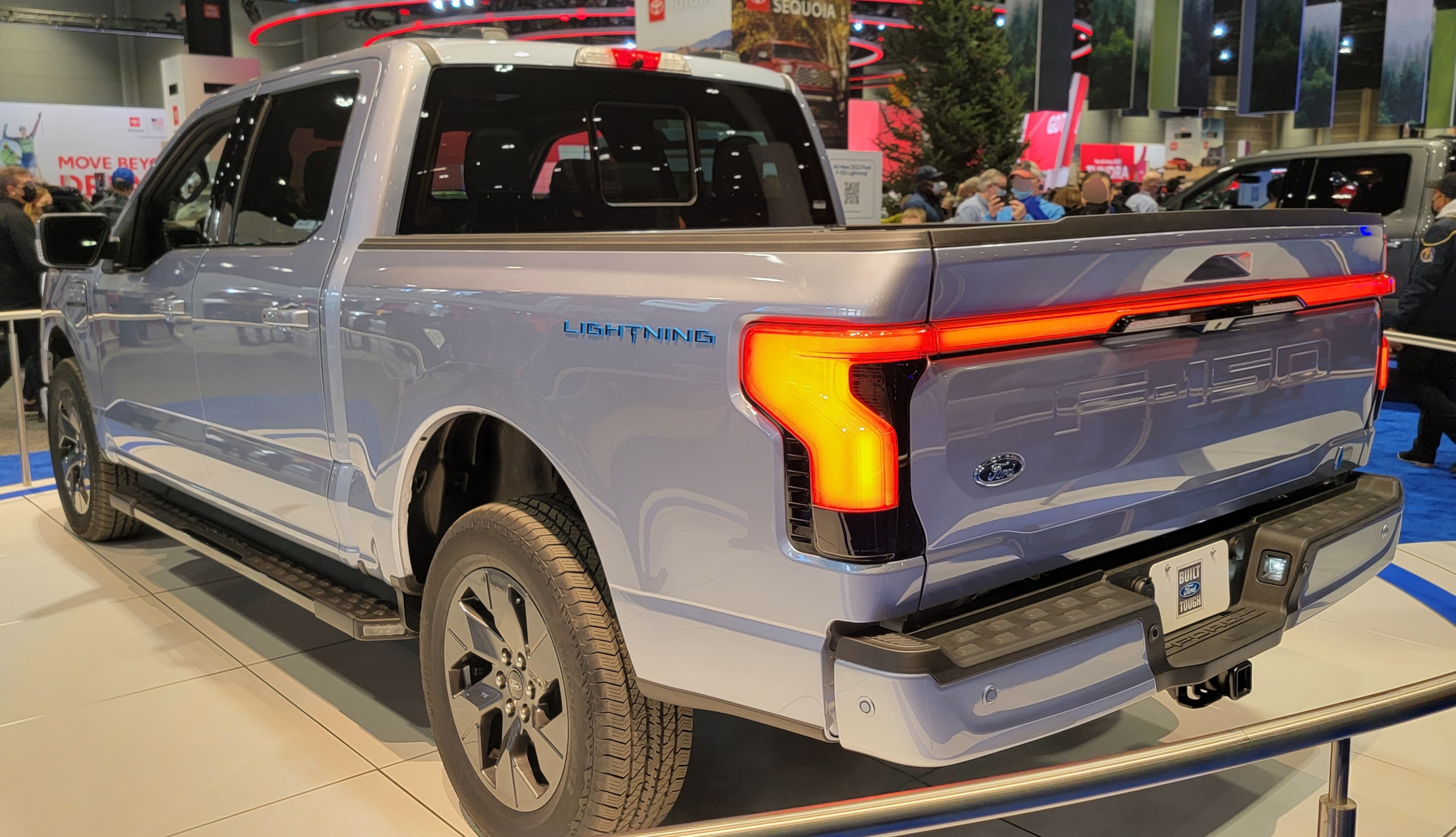
"Or do you have better time or resource to say a vehicle like, let's say, a Toyota Tacoma or an F-150? So personally, Tacomas are expensive."
The Ford F-150 is a popular full-size truck that many people use for work and family trips. It's known for being strong and having lots of space, making it a favorite among truck buyers.
The Ford F-150 is one of the best-selling trucks in the United States, known for its versatility, strong performance, and a wide range of configurations. It's often discussed for its capability as a work truck and its comfort as a family vehicle.
"...it's electric vehicle, is it worth it if you've got tax write-off incentives on it because it's a green vehicle? Depends on how much the tax write-off is."
A tax write-off incentive means you can reduce the amount of money you have to pay in taxes if you buy a certain type of car, like an electric vehicle. This makes the car cheaper for you in the long run.
Tax write-off incentives are reductions in taxable income that can lower the amount of tax owed. In the context of electric vehicles, these incentives are often provided by governments to encourage the purchase of greener cars, making them more financially attractive to consumers.
"I'm trying to remember what truck that was. The avalanche maybe or something like that. They had that wall..."
The Chevrolet Avalanche is a mix between a truck and an SUV, which means it can carry stuff in the back like a truck but also has room inside like an SUV. It's handy for people who need both types of vehicles.
The Chevrolet Avalanche is a unique vehicle that combines features of a pickup truck and an SUV, known for its versatile cargo space. It is often mentioned for its innovative design and functionality.
"...ad? I feel like if it's, if you're longer than a semi truck or heck, if you're longer than, because you..."
The Tesla Semi is a big electric truck that companies can use to transport goods. It's designed to save money on fuel and be better for the environment.
The Tesla Semi is an all-electric truck designed for freight transport, aiming to revolutionize the trucking industry with its efficiency and lower operating costs. It is often discussed for its potential impact on logistics and sustainability.
"...as much as say like a bright red, you know, Ford excursion that's down the road. Right. And okay, smart car..."
The Ford Excursion is a really big SUV that can fit a lot of people and pull heavy things like trailers. It's great for families who need extra space and power.
The Ford Excursion is a large SUV that was produced from 2000 to 2005, known for its massive size and towing capacity. It is often discussed for its capability as a family vehicle and for towing heavy trailers.
"Yeah, or what do they call them? Fiat 500? Yeah, Fiat 500, thank you."
The Fiat 500 is a tiny car that's great for driving around town. It's easy to park and uses less gas, making it a good choice for city living.
The Fiat 500 is a small city car known for its compact size and stylish design. It is often discussed for its fuel efficiency and ease of parking in urban environments.
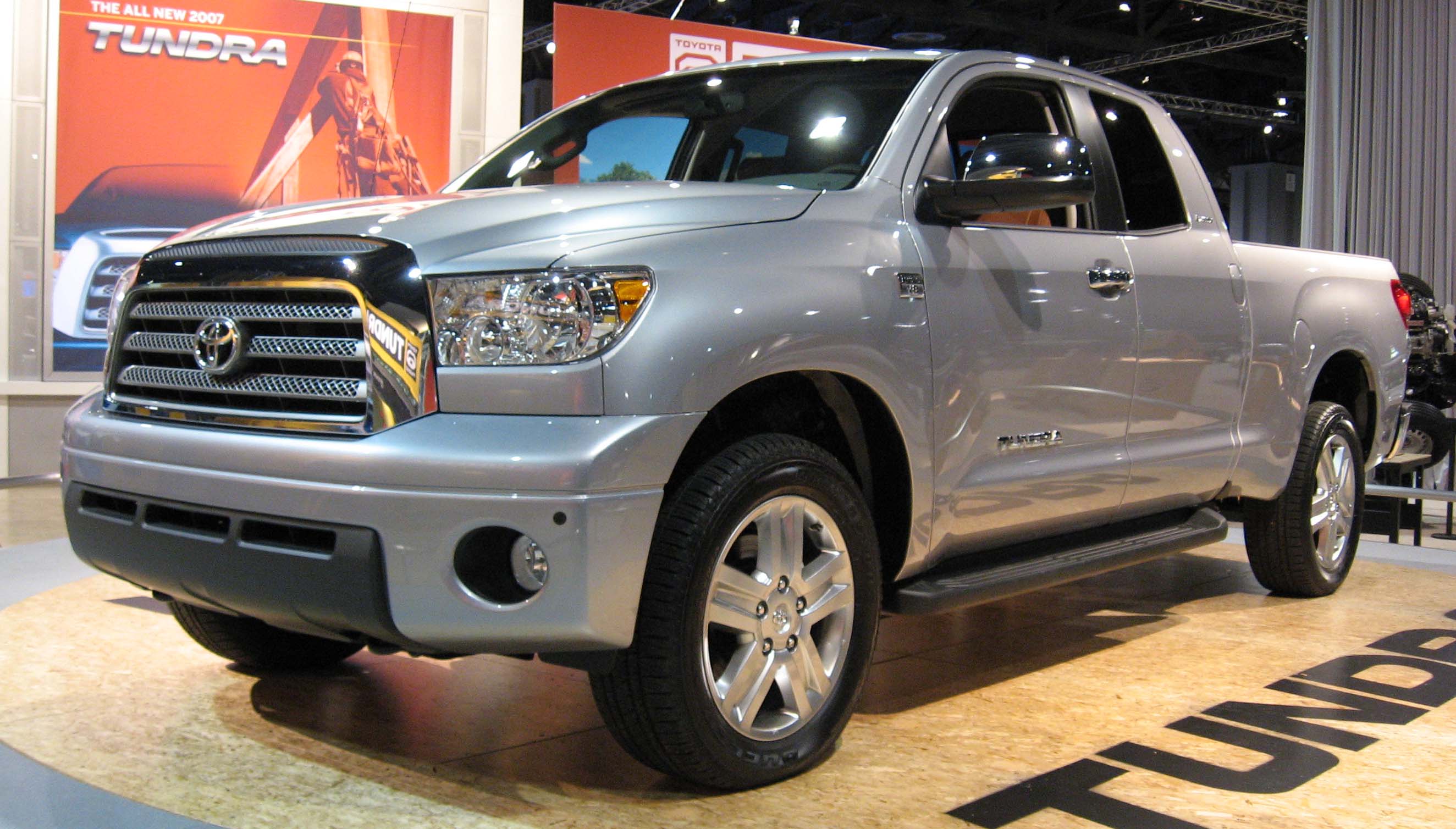
"...k and... Even before you had the 50, you had the Tundra. Well, I had the Tundra before that, and then I ..."
The Toyota Tundra is a big truck that can carry heavy loads and tow trailers. It's known for being very dependable and is made in America, which some people appreciate.
The Toyota Tundra is a full-size pickup truck that is recognized for its robust build and strong towing capacity. It is often mentioned for its reliability and the fact that it is built in the USA.
"...unt... And I do have a smaller vehicle. I have my Mustang, which is still street legal, and I do drive bec..."
The Ford Mustang is a sporty car that many people love for its speed and cool design. It's been around for a long time and is often seen as a symbol of American cars.
The Ford Mustang is an iconic American muscle car that has been in production since the 1960s. It is celebrated for its performance, style, and cultural significance in automotive history.
Select text to request an explanation
Welcome to another episode, another episode, welcome to another episode of Untitled Car
Pride.
Restart that because we were talking halfway through.
Okay, here we go, ready?
No.
Give it a couple seconds.
Welcome to another episode of Untitled Car Project.
I'm your host, Jeremy Moult, Grant Gonzalez, and out today Rob again.
I think we mentioned that in the last show.
Hoping to have him back for at least part of the next show or two.
Hopefully.
We just got a lot of stuff going on this summer guys.
Yeah, it's been a busy one.
You want to talk about what we're covering today?
Alright, so we didn't get a chance to talk about modular vehicles last week, so we're
going to work that in first this week.
And then is there such a thing as too small or too large of a vehicle?
It's not the size of matters, how you use it.
Okay, and anything else we're talking about today?
Nope, I think those are our two topics.
There's a whole bunch of topics underneath that second one.
Alright, well before we get into the topics and then going that, make sure you hit like
and subscribe on this episode that you're listening to on any of your podcast viewing
listening services, as well as make sure to follow us on Untiled Car Project on Facebook,
on Instagram, as well as we have a Facebook group going on there.
And if you have any questions, concerns, comments on this show, make sure to leave it down in
the comments below or email us untiledcarprojectgmail.com.
We are currently looking right now for any guests that would like to be on the show that
is doing currently a kick car or has done the kick car project in the past and or looking
for anyone who's into motorcycle projects.
We'd love to hear from you guys and love to hear about your projects.
Any projects, really.
Any projects.
Yeah.
You got a bad ass boat, we'll talk about it.
Yes, we will.
Alright, real fast because Jeremy reminded me the last episode there was no dad joke
so I'm going to ask you Jeremy, why are charity bears always hungry?
I don't know why, because they're always stuffed.
Alright, that was our dad joke.
Alright, Jeremy, start this off.
Alright, modular vehicles.
So, the reason this came up, I was talking about this last week just a little bit, so
a friend of mine at work and I were talking about Slate.auto.
Oh, yes, the Slate car.
So what do they call the blank truck?
I thought there was a Slate truck.
Well, Slate, I think it says blank slate or something like that on the website.
Anyway, the whole theory of it is you pick a base and build it to your preference.
Let's go more in detail.
So their truck they start off with is a two door pickup truck, electric pickup truck.
That is the first thing, modular with a lot of things you can do to it because with this
truck it is bare basic.
There's no power windows, no power dock doors, there's no radio, all of it's optional.
Whatever is acquired by the federal government to have it has and everything else you can
option to it or modify on to it.
And I think the dashboard is like literally the speedometer, I should say on here what
it is.
I think it's got speedometer blinkers, headlights, the dash is pretty much blank.
The truck itself isn't anything special.
Under their website says, so what is the one Slate model?
Yes, we are all about doing things that are really well and making a single design
vehicle that's built to last made for the US that meets the highest safety standards
and can be updated accessories and transformed at any time.
So your needs to change, needs change, you don't need to buy a new truck, you can make
a slate into something new.
It's a two-seater pickup that you can have as an option to change into a five seat SUV
for example.
Right.
Okay.
Okay.
So the theory, not necessarily the electric part, but the theory I was really interested
in.
Okay.
Right.
So I know there was a couple, at least one other vehicle group that tried to do this.
Tesla went with that, their whole Tesla and I think even before that, Scion.
So Tesla's biggest thing is they used the skateboard design.
That was made originally, if I believe correctly, it was by Ford way back in the mid-2000s,
sold the concept and I think that's when Tesla bought that out.
Or at least it was, maybe they took the idea of it because I don't know if you could patent
it.
And the skateboard, you could add whatever body you wanted to it.
Yeah, skateboard design is batteries in the middle and on opposite ends where the wheels
are is where you have your electric motor or motor.
And that means you could fit onto a truck body on top of that, an SUV body, a car body,
whatever you need onto it.
The theory didn't necessarily have to do with electric.
It could have been a gas motor.
Well for that, for skateboard design was for electric because you have batteries and motors.
But for a gasoline motor, that's a different story.
Yeah.
Okay.
And we've talked about on the show, modular vehicles in terms like for example the LS
motor, how you can take different parts from an LS3 and put on LS7, put on LS9, blah,
blah.
And we've also talked on modular, for example, Fords literally got a whole design of motors
called the modular motor, which you could take a four valve and put it in where a three
valve is and they bolt up, et cetera, et cetera.
And I've talked about this also playing a time that Fords for the most part are like
giant Legos.
A lot of the parts, a lot of them fit where other ones will.
So now here's the thing, right?
Okay.
But we're talking a whole car now.
This is a whole car.
Yeah.
Truck.
A truck.
An SUV.
Whatever you want it to be.
Okay.
Why is this the first company that's doing it?
So a few things on this one and I, here's my opinion on this one, and it goes back to
phones.
So back in mid-2010s, there was a phone company that was coming out with a modular phone,
which is great because you can have a phone where you could take off the back of it, put
a better camera, take off the back, put a speaker on it, take off the back, put a better
microphone, you know, add on the projector to it.
Great.
Okay.
What I found from history from that company, why they failed was because they found that
with people who want modularization with it, okay, they will typically only use a couple
things on the phone and the rest of it is just kind of wasted space for that.
Sure.
The second thing is when you have modularization means that you can't always dedicate, say
your product on there to be the top line best of what it could be because you have to make
it so it can be removable, changeable, whatever.
If you have something that's dedicated for that, you can get a much better product that's
integrated into something.
For example, like if you have a camera that's onto a thing that can be taken off or moved
onto it, you're limited to the size of the puck that you can place onto your phone, whereas
built into a phone, you've got the entire length of it to, say, have a lens that could
go run down it and use mirrors to adjust for length of it and stuff.
Right.
So that's what I've been told on the modular concept of why it's difficult to make one
work is because you have to have, if you're doing a modular system, the system needs to
make sense, you need to have it so the item is a well quality and high quality and the
last thing I would say, for me personally, is what will make a modular vehicle or anything
modular work is price.
If you buy something, for example, that is, let's say, the same cost as a standardized
whatever items on the market, let's say, let's go back to a phone, if you buy a $200 phone
that's comparable to a $200 phone, I know those don't exist anymore, let's just say,
the Google phone.
And you're paying, you know, for any accessories onto it, $50, $20 here and there, and you
have, say, $400 into a vest in this phone and it lasts you so many years and you can
upgrade, that makes sense.
Right.
But if you're paying for a modular phone for $500 to do the same thing that a $200 phone
will do, that doesn't make sense, especially when you're buying more upgrades for it and
then within a year that thing's already obsolete because the new Google phone's out, the iPhone's
out.
Okay.
Yeah.
Okay.
Okay.
So let's say it's a vehicle and they give you this blank slate and you can do anything
you want to it within, you know, whatever they've designed, right?
This one is a two-door pickup.
Yep.
This one starts as a two-door pickup and you can turn it into a four-door SUV.
So I'm going to clarify, on theirs, they don't have it where you can turn into a four-door.
Okay.
It's only a two-door.
So let's, okay, let's say a two-door SUV.
You can make it into an, and this one thing that I didn't know until before recording
is, with the blank slate, you can make these pickups into SUVs, now a five-series SUV.
That is important.
That's a big thing.
Yeah.
Now let's say you've picked a base, you've selected to turn it into that small SUV and
you want the overland package.
That's freaking cool.
So, now, in theory, I should be able to select all of these things that I want and go finance
that as is, right?
I think their motto, too, or their plan was, you could buy the blank slate and do the upgrades
later.
I think, I'd have to do a little more research into that, but I think that concept is pretty
cool, you know.
And I know Sion tried it, where you could upgrade seats, upgrade steering wheel, upgrade all
of these little things, maybe not the motor and stuff like that, but I think you could
do an aftermarket exhaust and stuff like that, right?
All from the factory.
But it failed, I think, because they didn't get enough buy-in from enough people to actually
make the concept work.
So I like the blank slate truck idea.
I do have some problems with it, which ultimately, for me, the first thing that comes down with
the blank slate truck is the cost.
Is it really $26,000?
They say, they currently, right now, from what Google is saying, is they wanted to try
to make it under $20,000, which is what they said.
That's what they tried to.
But however, current price estimates say it is between $25,000 and $27,000 starting.
That's for the base truck.
That, in my opinion, and that's no radio, that's no roll-up windows, that is with cloth
seats.
Anchoring windows.
Anchoring windows.
That's with a 150-mile battery.
That's it.
That's too expensive.
I think so, too.
You're talking competitors-wise Bronco Sport.
Well, no, hold on.
What does a Model 3 go for base level?
35, I think.
Are they?
I think so.
Brand new.
You're talking $10,000 more, but there's a whole lot more things in that car.
Bronco Sport.
What does a Bronco Sport go for?
25.
Brand new.
Yeah.
It's got more features.
So, MSRP for Model 3 right now of $205,000 is $42,000, let me see.
Damn.
That's more than I thought it was going to be.
Yeah.
Same.
MSRP.
So, for a Bronco Sport, MSRP is $32,9 is what that is.
But I've seen them, the Bronco Sport-
So, you're looking at $6,000, $7,000 more.
For brand new.
For brand new.
Brand new to brand new.
I have seen those Bronco Sports though with say like two, three years on them, they're
in the 20s.
Mid-
Yeah, I'm not, I want to, Apple's Apples.
New to new.
Bronco Sport has more things.
Has more things.
They've also, it's modular.
It is modular.
Ford has made it very clear that they want to make it so you can add to it and do, same
with also the Maverick.
Okay.
I mean, let's compare that.
Okay, Maverick, when it came out, it was under $20,000.
Sure.
I believe starting with a Maverick based model that you can get right now is at $27,000.
It should be comparable to-
The Maverick is $27,000.
Yeah, I'm going to Google that right now so I'm not talking on my butt right now.
And you're talking a vehicle that comes with the radio, comes with cruise control, comes
with some bells and whistles, probably has more than 150 miles of range to it.
So here, Maverick, hang on, dude, dude, dude, dude, starting price.
There you go.
I'm sorry.
Misspelled on that starting price.
Wow, they really went up.
That's insane.
Okay.
Maverick's starting price is at $29,800, which is still under $30,000.
So you're talking $3,000 more than the Slate Trek right now.
I'm wondering, hang on, do they actually-
So I need to check that out because the base model Maverick, it used to be, and I'm just
going to see if it still is, was a three-cylinder hybrid that got 45 miles of the gallon.
And when they did start off in 2021 or 2020, they were at under $20,000.
To start.
To start.
So they went up 10 grand?
Yeah, they went up 10 grand.
I wonder why.
I think, and that's if you could fill up the air for a hot sun.
I wonder, so it has to be something along the lines of they've added more things or
they've changed the motor, they've, you know, done away with that three-cylinder with the
hybrid system.
Well, that's what I'm checking.
So back in the day, and it's hard to multitask, I'm going through this.
So back in the day when the Maverick first came out, they had a three-cylinder EcoBoost
motor with a hybrid system, and then they had a four-cylinder two-liter all-wheel drive
that was optional for it, where the hybrid was only front-wheel drive.
When you upgrade to the all-wheel drive, it added a significant portion to it, add like
eight grand, 10 grand to it.
So that makes sense.
So if you're buying a 30 grand of Maverick that's all-wheel drive, that's a two-liter
turbo and still gets about 35 miles to the gallon, 28 miles to the gallon, that makes
sense.
Sure.
But if that's for their entry-level one that was at a three-cylinder, that's a hybrid.
That's a little bit expensive, in my opinion.
I mean, still, you're getting a hybrid for that much money and pickup.
But apples to apples, like you said, let's even compare it then when the Maverick came
out three years ago.
Let's say you had a base-level one Maverick and maybe a couple options onto it.
You're at, say, 22 to 25, because that's what they were selling at for a hybrid one.
Sure.
Now, you have an interior with it.
You have full-factor warranty or any Ford dealership, not a limited Slate dealership.
You have as well as part availability nationwide for whatever it needs to go into it.
You also have, because it's a hybrid, you have a gas-powered, so you go longer than
what the charge can go for, as well as since it's electric.
You can also run it on electric, if need be.
If that truck still existed, because of the used market, I believe there's around there,
but we're talking brand new, if it was a 20 grand.
How do you survive a Slate?
I don't know.
So that's what, for me, the problem that comes down to is the price.
If they can start the Slate truck in the teens.
Like 15.
Yeah.
And I'm talking no options.
The option now, and you're in the 20s, makes sense.
If you have no options then, okay.
If you got the Bose stereo system, the heads-up display and stuff like that, understood, 26,000.
But beast nothing small.
Can you justify the price if you had some modular system that goes back to the phones?
You're paying more money for something, but it makes it worth it if you could say, now
you're, say, if you're into it with options at 20, say you're at 30 grand into with options.
You're at, if they do offer a better battery range of 250 miles, so 250 miles with all
electric, with a five-seater SUV, let's say with a back camera and stereo power windows,
you're in at 32,000.
Is that make it then worth it, say, to something like the RAV4 or a brand new Bronco Sport,
or is that even like a, heck, a Hyundai?
So I think when you kit one out or option it, whether it's the Slate or a Bronco or
the Maverick or Toyota RAV4, whatever, I think if you kit it out with some of these
extra options and kind of cool things, I think it would make anything worth more, right?
Well, here's the other question.
If you buy it and buy into it, is the aftermarket gonna be there if for some reason, say, Slate's
not there in three years?
The modular system, if they make it so you, as a consumer, can go out into a third party
and say, make all sorts of parts you want for it, whether it's a light bar, whether it's
a headache rack, whether that's interior, having more cup holders, whatever you want
to do, great.
Is that market exist?
Because if Slate fails and the aftermarket sport goes with it, was that worth your investment
to get into?
No.
Or was it worth it for you to say, okay, I have this modular system.
I can do this myself.
I can put all these parts into it, whether I design them or make them.
Or do you have better time or resource to say a vehicle like, let's say, a Toyota Tacoma
or an F-150?
So personally, Tacomas are expensive.
Okay.
I'm just giving an example.
No, I get it.
I get it.
But a Tacoma is expensive.
Yeah.
There are a lot of things that you can do to a Tacoma already, right?
They're all aftermarket.
Some of them are TRD, Toyota built.
They are more expensive.
In my opinion, at this time, I would say I would probably go and spend the $40,000,
$45,000 on the Tacoma versus a Slate, because one, it's tried and true.
Yep.
Two, there's a whole bunch of aftermarket stuff from different companies that I can
do to it that are already established.
There are, how many of them do you think we have in the United States?
A lot.
A lot, a lot.
Probably a million of them?
Yeah.
Probably.
And a lot of those parts cross over with the forerunner.
So I guess I played doubles advocate though.
In order for Slate to get there, they have to have people be investing in their product.
Somebody has to buy in.
So here's my thing that I'm confused about.
So they're going electric motor into it.
And I could see going that route for if you have a truck that's in the city that you don't
need to go far that you can modulate, especially having an SUV where you don't need to have
it big and whatever into it.
That's great.
That's a good idea.
Perfect.
Okay.
The problem I've got with it is other than the price is how do you make it cheaper?
You throw a gas motor in there.
Now you have emissions.
You've got fuel economy or fuel stuff that adds way more to the cost of it.
How you're doing electric vehicles should be cheaper than that, correct?
In my opinion, I'm going to venture to gas.
Yeah.
It's expensive because they don't have the infrastructure to build them quite yet in
a mass quantity to when you build things in mass quantity, you get things cheaper.
Scale of economics.
Yes.
Okay.
That's probably why they're 26,000 right now.
Yeah.
If they got to the point where they were building a million of them in a year, maybe they get
that vehicle to the point where they can sell it for 15.
Let's expand them more.
Let's just say one of the big three.
Let's say Chevy buys out Slate or licenses their technology out and starts building their
vehicles in mass where they can make it at scale of economy or it's actually affordable.
That would probably be the best case for them because then you can have your trucks regularly
in maintenance to add a dealership.
You can then have a producer actually back them behind them and have extra parts and
on top of that, you then have the marketing behind so people see it so the more people
are buying it.
If you can get that truck down to say 13,000 or whatever.
Even if it was 15, I think people would start looking at it.
Yeah.
I think at 26, it's a hard sale.
You know, at 20,000 for the Maverick, that was a good buy, right?
Getting up to 30,000, is it still a good buy?
I don't know, maybe for what they're selling, yes, but if the Maverick had the same stuff
as the original one that was sold for 20,000, was now selling for 29,000, maybe that's $10,000
difference, it's not worth it.
You know, I don't know, I like the modular idea.
Here's another thing, I didn't think about this.
This also will depend on, okay, so here's a question to ask you.
This may not be because of political climate where it's at.
It's electric vehicle, is it worth it if you've got tax write-off incentives on it because
it's a green vehicle?
Depends on how much the tax write-off is.
That's why I bring this up because I think it's not as good as it was, but we had it
for a while where it was like $8,000, $15,000 tax rate you get towards a vehicle.
Depending on the vehicle.
Yeah, if there's something like that you can do towards it where it's like say, even
if it's $5,000 off, start it.
At 26,000, that's still 21,000, brand new.
You're talking 21,000 for a vehicle that has fuck nothing.
Okay.
I don't know dude, I think at 21, it's still a hard sale.
Let's just say if taxes break onto it, where you can get it then say at 15, you know.
That would probably make it worth it.
Here's another way to think about it.
If you could buy those trucks and they still have it where, say, parts available for modularization,
right?
Mm-hmm.
And you could buy them cheap in bulk and have the taxes end on them.
I think they'd make a really good company vehicle.
Maybe.
Because you can buy them.
I think that small vehicle would make a really good little delivery truck.
You know what I mean?
Yeah, I think so too.
Because that way, if you're buying it, say at bulk it, say 15,000, and all it really
needs is a radio inside of it, AC, and that's about it.
For delivering things, you're going A to B.
Yeah.
I think that'd be worth it.
You know, here's the funny thing, right?
Mm-hmm.
If it was $12,000, $13,000, I could almost see myself sending one up to Alaska.
Not to drive to the grocery store.
Okay.
But to drive to and from the dock, to the post office, the other piece of property that we
have down there, even out to, you know, people's houses right around the bay, you know, stuff
like that.
I could see doing that, driving up to the lake or one of the rivers to go fishing.
Well, actually, the other thing, on that, well, because you're going in the summer,
it's not as cold up there, correct?
That's right.
Because when it starts getting cold, that thing.
Then it's going to get zapped, right?
Yeah.
The battery gets zapped pretty bad.
There are some electric vehicles on the island.
People charge them at their house or at the power company.
I think you're the only two places right now that you can actually charge on the island.
The 65 miles, 70 miles, whatever it is from where the house is, out to the grocery store.
There's no services, you know.
You jump on that road, you don't have a gas station to stop at.
You don't have a place where you can pull off and charge a car.
So it would make it hard, right?
I think it'd be interesting and not digging into the website that much right now.
But if they offered a modular point at some point where you can put an electric motor into it,
even if it's like a five horsepower gas motor to charge the batteries and make it into a hybrid,
that I think would be very interesting.
Yeah, a little five or ten horsepower generator type thing somewhere.
And just a little five gallon gas fuel cell.
Because then you change your electric car into a hybrid car.
Sure.
And then if you don't want that, you take it off.
That would be a good modular adoption to it.
So here's the other question.
Are you happy that it's an electric vehicle or would you rather have it been a gas motor?
Honestly, if that little thing had a little four cylinder Toyota motor in it,
oh my god, I'd have been all about it.
Okay.
You know what I mean?
If it was, if it looked exactly like the base model and I could do all of those things to it,
but it had a little Toyota or a little Subaru motor or, you know, any one of those little four
cylinder Ford four four cylinder motor EcoBoost, any one of those.
I would have been super, super excited about it.
I think for me, the modular vehicle, I'm not hitting against electric idea onto it.
You know, more simpler of an operation to go with.
If it has the ability to do a hybrid powertrain into it, like I was saying,
the gas doesn't need the power.
It just needs the power of the battery.
I think that would be a good addition to it.
In terms of having gas, the problem I've got is so we need to also let our listeners know.
We talked about it's a two door pickup truck starting.
It's a very small vehicle and there's not a lot of room, I think,
if you throw a gas motor into there.
No.
Anyway, you know, so even a little three cylinder Toyota motor would be.
Well, because you have to have all the pipes on there for emissions and stuff to like have it
redirect for our valves and then the catalytic chargers onto it and then this and that and
all the other.
Yeah.
I mean, you are adding a little bit of space and weight.
Yeah.
I mean, not as much weight as a battery, but it's it's actual physical space.
Sure.
And up.
And for me, I'm like, that's where I'm like in something that small that you're trying to be
affordable.
I could see why the electric would make sense on that one.
If I had it my way, yeah, a little four cylinder would be great and to it because easy to repair.
Or even a little three cylinder with a front wheel drive.
Yeah, I agree with that.
You know, I think I would be all about it.
And what about the motor out of a smart car?
That's small, right?
Yeah, that's true.
A little three cylinder, even something like that, where it was small and in the front and
you could still make that thing small or whatever like it is.
I think I'd rock it.
That'd make sense.
That'd be good.
I honestly, and if it was affordable, right in the sub $15,000 range for a new one,
I think I'd own one already.
Back to the modular things.
What would you want on it?
What kind of modular system would you want adapted to it?
So we already talked for example, I if that came out and I was the one and I would support one
would say a hybrid system of some kind would need to be able to be integrated.
Okay.
You know, whether that's a one cylinder with five gallon gas tank or whatever,
just something so it charges the battery so you can go longer in this.
I like the generator idea to make it hybrid.
I don't know if I would put a tonneau cover on it because I'd want to keep it kind of simple.
But I do like the roof racks on the top of the cab.
Okay.
I think that would be a hard sell with the single cap.
But I don't see why you couldn't put something that went over the top of that and over part of
the bed to put bikes on.
So like a rack?
Yeah, some sort of rack.
You know, you put your bikes or your tent up there or something like that.
Or like so with their SUV version, quote unquote, it's just a top that goes to the bed and now you
have a SUV that then you could fit five.
And that would be kind of cool too.
But I would instead of doing a hard top, I'd want the bikini top, so a soft top.
But I'd want a roll cage over the back of that while people were in the back to make it a little
safer.
You know what I mean?
I'm trying to remember what truck that was.
The avalanche maybe or something like that.
They had that wall behind the driver's seat and passenger's seat that folded down and out of the way.
Something like that with a seat that came up somehow.
I think that would be freaking cool.
I didn't really get a chance to look through all of the options that you could get.
But like I'm assuming some sort of stereo options, some sort of different door skins,
different seat colors, you know, all of that stuff.
Being able to pick a specific look would be mostly what I'd be interested in, right?
Different fender look, different tires and wheels, you know.
I don't know.
I think basically the sky's the limit on that thing, right?
Let me go through real fast so for listeners going through this.
So some of the things that incorporates in the base models for safety feature-wise, right?
It does have traction control.
It has stability control.
It has forward collision warning detection, which is impressive for that price.
Automatic emergency braking.
It has full-length side curtains for both the truck and for the if you do an SUV version,
it has full airbags on that for four.
It's got a keyless entry backup camera, pedestrian identification and high auto beam.
The other thing just as a note on this one,
it's made and designed, probably made in the U.S., designed in California and Michigan,
and engineered in Michigan and assembled in the Midwest.
So a fully American made product.
Hell yeah.
That's actually pretty sick.
That's why it's expensive.
Yeah.
What are some of the modularizations you can do to it?
I'm looking at what type of motors I have with,
as a 150 kilowatt motor, personalized my vehicle.
You're asking me stuff on the fly, which you should know about this, Jeremy.
I know.
Yeah.
I will have to look this up later.
I wanted to say for some of the modularizations I would like to have,
so for me, if I had a small truck as a slate that I was using,
because we've talked about some of our vehicles, like for me, I drive an F-250.
Mm-hmm.
Great truck.
I know there's some problems, but I like having a big truck, but it's not always needed,
which we'll go into or another time soon.
Having a small vehicle is great to have.
So you can get into, say, the city, into a parking spot.
Somewhere, you don't need to have a big truck.
Better fuel economy.
So having something like a small little slate that I don't need to go, say,
300 miles a day, something more I could just putt around town.
I'm only going to do like maybe 50 miles a day or whatever.
It's not bad.
What I'd want to have then would be focused on comfort.
So power windows, power seats, something comfortable in the seats on that one.
And for luxury features, I would like to have, if they had it available for modularization,
the ability to put a small little fridge or heater inside of it.
Okay.
So if I'm driving around town for something like that as a daily vehicle,
it'd be nice to say, okay, I have water bottles in the back that keep cold.
Took my lunch with me.
Took your lunch with you or keep it hot, for example.
Sure.
Because there are some few vehicles that do that nowadays.
I think I'd be one to be nice to have.
Because I don't need something to tow with it.
I don't need to have anything I'm going to keep above it.
It says it can tow 1500 pounds.
It's payload it can have is a thousand pounds.
But with something like that, I'm just going to get my big truck and use it.
Sure.
So for me, an SUV version, having more people in the back,
a bigger battery range would be good, sound system.
Yeah.
You know, if there was a modularization other than the hybrid system,
if that does come out, the one thing I would like to have onto it would be the
ability to say make it a, I believe it's only a front-wheel drive.
It's a single-motor vehicle.
Yeah.
Having the ability to put a second motor into it so I can have an all-wheel drive,
you know, all-wheel drive and a bigger battery.
Because if it's a daily vehicle.
So they do have the bigger battery option.
It said 250 mile range available or coming.
Yes.
So they were basically it doubles the battery life.
Yeah.
But if I had the ability to say, you know, put a second motor into it,
and it had 250 miles or hell, even if you have 150 with a hybrid system,
and I'm paying then, let's say with tax credits and all, and options at $25,000 into it.
Okay.
That's not bad that you're comparing that now to a used RAV4 option.
Yes.
Yeah.
But I mean, you're also looking at a whole bunch more options, right?
Yeah.
So yes, I think at $26,000 with all the options that you've kitted it out with,
I think it would make it worth it.
But as a base model, you know, I think they need to start at $15,000 or $13,000 and work their way up.
It'll be interesting to see where this company will be at in, say, a year time,
because we'll see what actual accessory modifications come with it.
See, hey, maybe they might list this episode and say, hey,
we need to add some of these features to our cars.
Sure.
You know, I mean, the biggest thing is just in that kind of,
what I would see practicality would be just a daily vehicle,
something short distance, and nothing super fancy.
But, you know, I'm surprised for that much money for all the safety features as is really important.
Yeah.
But let's move on to the next topic, which we're kind of hinting at already.
Yeah, you kind of were feathering the clutch there, you know what I mean?
You don't always need a big vehicle.
No.
And sometimes you don't need, like, Jeremy, let's...
So let me read this for you.
Yeah.
Is there such a thing as too small or too large of a vehicle?
Yes.
So what are some of the benefits of either?
Well, let's start off.
If you've got, it first off depends on your kind of lifestyle you have.
So for me, I like having a big truck and a small vehicle.
Having a big truck is nice, whether that's an SUV, a pickup, whatever.
Because I can, if I need to go and tow something, I've got the ability to do that.
If I need to go off a serious off-roading to a point where, say, a basic car,
like a jet I wouldn't be able to, I can do that with a truck.
I have space to either carry around equipment, say, if I'm moving furniture,
going to pick up something large from the store, like a TV or like a table.
Or if I have an SUV where I can carry more passengers and have some people,
because we need to get point A to B, or animals, put animals in the back.
Great having all those options.
However, if I'm going to say, if I was doing to the store every day or going to a job that
would require me to go into the city, or if I'm going to a university every day,
where I'm going to be parking, I don't want to bring a giant behemoth,
that's 18 feet long and 10 stories tall. I want to be able to get into a parking spot,
get it easy, find it, park. And if it's just me, I don't need to have a gas guzzler,
that's going to be just sucking down fuel. It's just something fuel-efficient to get
to point A, point B, comfortable. That makes sense. I see the benefit of having both.
Mm-hmm. But we're talking about extremes, right?
So like, for example, would you have in your arsenal, let's, as an example, let's say a 3,500
Chevy extended crew cab eight foot bed dualies, as well as your second other car would be a smart car?
Those are two different extra vehicles.
I could see it, you know, because I could totally see myself driving the little car to and from
work on a normal basis, and then taking the 3,500 and telling my 33 foot trailer.
Yeah. I could see how some people would be uncomfortable in a small car, and I could see
the intimidation for that. If you're not like on a highway or busy road where you're going to work,
it's like say 25 miles an hour and you're going maybe, you know, three miles or whatever.
Right. Yeah. I mean, it gets sketchy. I've got a buddy that's got one of those little Honda
insights, and he gets pretty sketched out when he gets next to big, big semis on the freeway.
Yeah. You know, it wouldn't take much for one of those tires to hit him and launch him into the
freaking moon, you know? But if you're not having to highway driving, it's a whole different experience.
Let's say like your max, you're going this 45 miles an hour, 35 miles an hour to work.
Sure. Or to a commute. So what size vehicle would be too large for the normal person?
So let's go with an age range. Okay. Or lifestyle first off. Let's say, let's start with the basic.
Let's start with a, you know, red of school or high school or student. We're in high school or college.
Okay. Okay. And your primary thing is school. I think anything larger than a
mid-sized SUV would be too large. Don't, it's not saying you can't do it. I'm just saying,
why would you need to have something that big? If your primary focus is you're in the dorms,
you're at school, you're just studying. Okay. You know, you're not going to need a pickup to,
you know, tow anything. Let's just say, because there's no boat or no nothing you have.
You're not moving people. And if you are, you know, I mean, like, let's say a mid-sized pickup to
SUV. Sure. That's the max size. You don't need to have a giant diesel. Right. Okay. For someone in
school. Yeah. Now, can you see any other option? Why you would need something bigger than that?
Smaller. For someone in school, no. Okay. But what about, let's go to the next one. What about
somebody in mid-20s who tows a 35 foot trailer?
I think you can't, a 35 foot trailer, I don't think you can go smaller than
anything under a three quarter ton truck. Okay. But it depends on why you're doing that. Is it
for work? But there are some vehicles that are two and a half ton. Okay. And I've seen people tow
trailers with those two and a half ton vehicles. Is that too big?
It depends on what, how much weight you're going through. So for example, if you're doing a,
if you're doing it for business and you're towing and not sure what you're taking,
bigger the better. If you're saying it's a 35 foot, this is a retired man,
telling us 35 foot trailer down to Arizona for the, the winner. Yeah.
Yeah. That one, I don't know. I get, that's what I'm getting at. Yeah. I,
so for that instance, for example, that trailer is a pretty big trailer that's needed for that.
Okay. Because at, with two and a half tons, it's a good amount of weight, but I mean,
you're, you need something like that to pull that big, a 250 or 350,
wouldn't tow like for example, a trailer that big. No, I tow my 33 foot all the time with the 250.
Yeah. It's double decker. That's full of cars and tools.
No, no, no. Okay. I'm talking a 33 foot travel trailer. Well, that's different. Okay. We're
saying for that instance. Yeah. For that instance. Yeah. But if we're saying like, if it's a travel
trailer, no, I agree. Then like, we went to the extremes. Okay. And you said 35 foot. I'm like,
depends on what you're doing, depends on what you're towing on that one. And if it's for business,
bigger the better. If it's, you have a specific weight, you need to have it, get the truck.
But if it's something like say a 35 foot trailer and it's consistent where it's,
you know, whether it's you're moving it for work and it's 7,000 pounds, 35 foot, but 7,000
pounds, or whether it's like an RV or a recreational trailer you're having. Then I think you can,
depending on what it is, you can get away with a smaller vehicle. You don't need to have the
biggest one. Well, you don't need it, but I can have it. Is it too big? So one of the benefits
if you have a smaller vehicle that can tow it, need to not have it, it makes it easier for, say
if you're in an RV park. Okay. It makes it so you're not as far out as long because some of them
have length restrictions. The other big thing is when you separate from your trailer from your
vehicle, makes so going towns a lot easier to get into. In and out parking spots, wherever you're
going to. The other one thing people don't consider is height. Height's a big thing. You know, we've
had trucks that are considered two ton and I use that in quotes, you know, and the difference between
a two ton on a Ford F650 versus say a KW one is like a foot and a half, two foot difference,
taller on the KWs. And you can't make it to every gas station. You can't make it to every
hotel because they have an awning on it and you have to keep, you know, that in mind when you're
entering those areas, you know, or a parking garage, if you have to, because sometimes like you're
say the baseball game and they have underground, recover parking. Okay, so to add on to this,
at what size vehicle should you have to have an endorsement?
Because you have to have one for a semi. Yeah, right. I'm very surprised that say like a 40 foot RV,
you don't need to have a CDL for that. Right. You know, so we go to the race track often.
Right. An RV towing a 24 foot car trailer. Yeah, you're at already 80 feet length.
Right. Yeah. That's long. That is long. That's a lot to handle. But what's nuts is because
so in Oregon, 26,000 pounds combined, you have to have a CDL, whether that's truck and trailer.
But if you have a RV home that say weighs 12,000 and your car trailer was 7,000,
you're underneath that limit, even though you're 80 feet long. And you can get away with that because
even though it's a big truck, it's lightweight, it's thin material, you know. Yeah.
I, at what size, at what size do you have to though? I mean, you said 26,000 pounds combined
under 26,000 combined weight. So if you have 26,000 combined weight, you have to have the CDL?
Correct. So if you have like a 550 and you're towing a trailer behind you,
that means your gross vehicle weight is over 26,000 pounds and you have to have a CDL with that.
No kidding. Yeah. So if you have something that say like a 250 and you're towing a trailer and
your combined vehicle weight is under that, then you're still fine. So if you have, let's say,
a toter home and a stacker trailer with a couple cars in it,
they're not telling you to pull over at the scales, are they? Well,
I know. Okay. There are some vehicles that are classified when you get into a weight
range, like for example, if you're in a two and a half ton truck, which you can buy and drive,
okay, that are at 26,000 pounds rated for gross vehicle weight, those you have to have a medical
card for, as well as if it has any air brakes, you have to have a medical card for, for example.
Now, in terms of weight for limits, when we talk about the truck trailer, etc.,
I think it's in Washington, Oregon, I got a double check on that one. But the scales say
for anything over 15,000 pounds and greater, maybe my truck with the trailer is 15,000 pounds,
then you'd probably have to stop. I'm going to look into this before I get into this. Yeah,
because that I mean, yeah, that would be, that would be interesting anyway.
So most of those big toter homes and stuff like that, do they have the air brakes?
It says for Google AI, yes, in Washington state, you are required to stop at weight stations if your
RV exceeds 10,000 pounds gross vehicle limit weight. So yes, you have to stop the scales.
Technically, most of those guys would have to. Yeah. Because what's an RV way? No idea.
They got to be close to 10,000 pounds. You're the one who has an RV trailer?
Well, I'm not talking about the trailer. I'm talking about a motor home. Yeah. My truck is almost
8,500 pounds. Okay. If my truck is 8,500 pounds, a motor home has got to be 10,000. Probably.
So technically, they have to stop at the scales? I guess. There's a lot of time when you're driving
by that they'll say bypass and they'll just wave you on. Maybe that's how they can get away with
that on that one. I'd be curious. I'm gonna have to look into that a little deeper. Okay.
Okay. So at what point does it just become too unsafe on the road?
I think that's a... Do you want to say keep talking for a second?
No. I asked you a question, damn it. Yeah. I mean, personally,
if you've got a 44 foot motor home and you're telling a stacker trailer,
that seems like a lot, right? And I don't necessarily know if that's too big,
but you got to be up there pushing the limits of what that motor home can do, right?
So, I mean, if you got a diesel pusher in the back with a big cap motor,
they could push them in the back. Yeah. I mean, I'm not gonna disagree with that,
but at that point, you're getting up into semi-track length and size, you know?
Mm-hmm. And I don't know if those guys have to have an endorsement because they're not...
Most of those aren't air brakes, right? Most of them, yeah. I would be...
I don't know. I would almost think that it's pushing the limit.
So, I'm reading through cruiseamerica.com. It says, for RV travelers, although it is simple,
the simple answer is no, you don't have to stop. The vast majority of drivers don't need to stop at
wait stations. Every state has different laws, but only commercial drivers and sometimes vehicle
weighing over 10,000 pounds need to stop at them. Additionally, so there are states though,
you have to stop at with over 10,000 pounds on that one, you know? For example, it says,
Arkansas, Georgia, Iowa, Louisiana, Massachusetts, Michigan, Minnesota, Nevada, North Dakota,
Idaho, Rhode Island, Washington, Wisconsin require vehicles weighing more than 10,000
pounds to stop at the highway wait station. While many carry Class B RVs are exempt from
this regulation, the vast majority of Class A and C RVs are not.
Yeah. Interesting. Okay. Yeah, I know that.
Okay. But yeah, it's, for me, because you asked me, sorry, I was blanking out when you were
asking me that. You were saying, is like, what size do you need to? When? Let's see, where did I see
that? When does something just become unsafe for the road? I feel like if it's, if you're longer
than a semi truck or heck, if you're longer than, because you're a 40 foot motor home and you get a
24 foot trailer, I mean, there's literally semi trucks with dual trailers that aren't even that
length. Well, I mean, that's 44 feet, add 24 feet, you're looking at 68 feet of trailer RV.
I think when it comes to length, it should be in consideration too, as well as like,
you can't hop in that. And like for, here's another example. I'm surprised a lot of these
moving companies will give you the keys to a giant moving van, right? People have never done that
before and you get in a 30 foot van. Yeah. And I know some people that rented one of the big ones,
and I ended up driving the, the rental van because I had driven one before. Yeah. You know,
and the lady was sketched out even by the small one. Well, then here's the other question is,
without those being available to general public to use, how do you kind of get used to driving
something that big then? Personally, I think you have to, you have to graduate just like, like
we had talked about before with horsepower, you know, you, you don't start with the biggest thing.
You start with something mid sizes, like you were talking about earlier with the
kids in college driving, maybe a mid size SUV. Yeah. And then maybe you, yeah, then maybe you
graduate up to an F 250 or an F 350 with an eight foot bed. Yeah. And then, okay, maybe you graduate
up to, what is that, a 750? Yeah. You guys have 750s and stuff like that. And then maybe from there,
you, you know, you drive that for a while and you move up to a 750 with a 24 foot trailer on the
back. Yeah. You know, go in stages. Yeah. Well, do you think then then there should be like a,
kind of like with your license, you have your permit then license and then you have bigger
license beyond it. You go into like a CDL. Like, do you think, for example, like people that have
like a vehicle of a certain length should then be required to have a license to be driving that?
I don't know. That's, that's a tough one, right? Because I think as long as you're
safe driving and, and it drives similar ish to other vehicles on the road, I mean, that's a hard
question, right? I think you, you have to graduate up. I don't know how you do that and
monitor it. You know what I mean? You look at the road and see a 40 foot trailer go by and
there's no sticker on it saying, Oh, this guy's been approved. Right. You know. Yes. With a commercial
vehicle that is 100% how you do it. Yeah. It's legitimately how they do it. You just do the
same thing, but with a, I don't know. Yeah. I think it's, I think it's one of those sketchy areas.
I think there are 100% people that should not be driving stuff like that. But like
most of the guys that we go racing with, they've done it for a long time. Yeah. And I'm sure they
graduated from one to the next, to the next, to the next to get to where they're at, right?
And then you've gotten new guys who are just getting into the sport, for example, and they buy
more money than what they know with and try to think, okay, well, I need to start to a race car
and then you buy a brand new 2026, you know, Dodge with the big trailer and then close that and
doing that, we're off the bat. Let's, let's do an example. Okay. Antonio. Okay. If, and we,
him, we have talked about this. If he were to show up tomorrow, just for our listeners, we've,
this is a previous guest we've had on the show. Yeah. If he were to show up tomorrow with a,
I don't know, a 21 foot motor home and a car trailer behind it. Yeah. He'd probably say,
Grant, can you drive us for me? Right. Would he be comfortable driving it? Yeah. And maybe if,
for example, I talked about that is a better example would be like, if we're at the track,
I make past date and he has to drive us home. He doesn't have the confidence to or knowledge to
drive my truck with trailer and how that acts. So he hasn't been in that situation for him.
And we've talked about where we're going to start. It'd be nice to start him off in my truck with,
say, a eight foot utility trailer, maybe a couple of weekends, drive it here and there,
just move in something small where it's not a big risk, whatever, right? Right. And then moving
there maybe to an empty trailer, then move it there to a loaded trailer. So he gets used to
length, gets used to how it goes through, you know, cause you don't need to start with big trailer.
You need to just start with something small and know, okay, it doesn't, when I back up,
the thing's going to go crooked. It's going to go opposite way at turn. Right. Figure how it goes.
Honestly, I think backing a trailer up, you need to learn on a small trailer.
Yeah. Because it's so much harder. Yeah.
And then graduate up to the longer trailer to make it easier.
But I don't know. But here's the other thing, if we can flip on this one, because we've talked
about going too big, what about going too small? Because like when you've got like people on
motorcycles weaving in on traffic and they're hard to see. Yep. I mean, if you're in too small of a
car, you should, the person should be more aware of that because other traffic's not.
Right. Traffic is not going to look at you, right? As much as you need to be watching out
for traffic. Correct. So like smart cars. Yep. Right. You get a black smart car in the middle
of the night and say you're, when your lights go out or whatever, you're not going to be seen as
much as say like a bright red, you know, Ford excursion that's down the road. Right. And okay,
smart car. Yeah. One of the safest cars on the road. Still would sketch me out driving past the
big truck and trailer. Yeah. You know, even, even your, your red truck and your car trailer. Yeah.
I'd probably be a little sketched out driving past you. You know, granted, I probably wouldn't
let you pass me. I'd be a little tiny. Maybe. But any smaller than that, you know, might be
too small for the road. About something like a Mini Cooper.
Old one or new one? Doesn't matter. So the new ones are a little bit bigger. Yeah. And actually,
most of them are bigger than a smart car. But are they at the point where like,
you can be confident where like, you always need to be paying attention to driving. Oh, yeah. But
you don't need to be like extra hyper vision, like you would be in say like a tiny car.
Um, it depends on what you're around. If you're just driving and you've got normal traffic around,
you know, I would think you, you're probably not super hyper sensitive. But if you're on I5,
you know, downtown Seattle or Portland, and there's a bunch of trucks around you,
you probably become a lot more hyper aware of your surroundings.
Do you add then more things on your car, like for example, a smart car,
does it make sense to add either a bright colors to your morcine?
Or B, something that makes you more loud, like an exhaust or like an actual train horn,
something that you could be heard in a vehicle like that? Or does that make it?
I don't think the train horn, because I have a theory on those. I think they scare people.
I like the sound of them. I think they're cool as shit.
Let's just say a loud horn.
I think they scare people and a lot of people swerve when they hear them.
Loud horn, you know, maybe doubling up on the horn and making it louder would be okay.
Exhaust?
Exhaust? I'm all about. I am 100% all about a loud exhaust.
Instead of the smart car, let's use something like the Fiat Panda.
You know, the small ones.
The Panda?
Yeah, or what do they call them?
Fiat 500?
Yeah, Fiat 500, thank you.
Oh, or the...
Barth?
A Barth, yeah.
It's the same thing, but yeah.
Yeah, those are small.
Those things are cool though.
They're bigger than a smart car, but they're still tiny.
Yeah.
And you can make those loud.
I don't think those are as safe as a smart car.
Okay.
But I don't know that for sure.
Yeah, but like a car like that, the biggest thing is with a tiny car, should it be...
Well, we talked about colors.
Should you have it or try to do it where it's very bright, it's very noticeable?
I don't know if the color is going to matter.
No?
No.
If you've got a bright yellow color or a small one, it's going to be noticeable than
like a white car driving by?
I'm wondering if, you know, the paint or the colors that Nike use, where
if anything in the running collection has that if a headlight shines off of it,
it glows or it flashes brighter.
You mean like reflective tape?
Yes, it's like the reflective tape on your safety vest.
Their jackets and shoes and all that stuff flash with that safety color, that safety look.
You tell me when you shine a light at a Nike top, you get flashed?
Yes, in essence.
Yeah, I think adding something like that to the back of one of those cars,
probably not a bad idea.
I don't think it's going to get missed in the daylight as much caveat,
but anything can get missed.
But definitely in the nighttime, I think that something like that on a small car would be
smart.
Let's wrap up that topic.
Because not everyone can afford two cars, especially without the economies going nowadays.
And say there's no happy medium, where a midsize car was not an option to go through.
Is it better to buy a bigger car or a smaller car?
If you say on the two situations you're going for, one is long distance driving over an hour,
mostly highway driving, to and from work, that's one situation.
Situation two, let's say it is a retirement home, most you're going to is to the store and back.
I think in most of those cases, I'm probably going to look for a midsize sedan.
I'm saying if that's not an option, would you rather go to which extreme would you go with?
I'd probably go small.
Yeah, I would probably go to the small extreme rather than the large extreme.
How come?
And this is my first school of thought, the second school is opposite.
So with this small car, you're going to get the better gas mileage.
You're going to be able to park in every spot.
You're going to be able to save that money.
If on the other hand you had the large vehicle, at least if you got hit, you would be relatively safe.
Right, so I mean both of them have their ups and downs.
The large vehicle, you're going to spend a lot more money on gas or diesel or whatever fuel you're running.
I don't know, it's like, for example, highway driving, if you're in a small car, sometimes
can be nerve wracking because you don't know what's going to be on there when you're passing.
But if you're going back forth and it's just an hour day, an hour back in traffic, it makes
sense because of fuel economy, because of distance. With the second scenario, if you're in a place
where it's a retirement home or somewhere you're not going fast, 25 miles an hour, 15 miles an hour,
and you're maybe going to the store that's not very far down the road, you really don't need a big
truck. If you do, it's to buy groceries. So then what's the situation with the bigger truck
or car, whatever? What situation would it make sense to actually have something on the opposite end?
Well, I mean, if you have kids or you've got kids, you've got a boat, you've got a trailer,
you're going to races every weekend. Let's say none of that's a factor, it's all about driving.
If it's all driving, the only thing I can... Country roads? That's what I was thinking,
is an off-road vehicle of some kind. Country roads because maybe you're going up to your
elk hunting spot or... Or maybe passing through water, like somewhere where the road is gone
and you need to have something... Driving through snow every day, maybe, you know.
Mm-hmm. I don't know, that's...
I drive my big truck every day. I love it. Come on, Jeremy, walk on the other end.
My wife just recently sold her car and bought a big fucking SUV.
Yeah, and that makes it... Why? Why'd she get it? Why both of you guys do that?
So, obviously, I got the truck because I had a truck and...
Even before you had the 50, you had the Tundra. Well, I had the Tundra before that,
and then I had the car before that. Why did you need the bigger trucks?
I got rid of the car. I've always loved trucks. I got rid of the car when I hurt my arm,
and I decided to get back into a truck. For me, it was a great decision because I love the trucks.
Okay. Could you, without the emotional connection of getting a truck,
your lifestyle, could you have gotten away with, say, you know, a Bronco Sport or Maverick?
No. Why? Not on its own. Why?
Could I drive just that? Yes. I could. Do I want to?
And that's what I'm saying. Without the emotional connection or anything like that,
from a logical standpoint... From a logical standpoint, yes. I could 100% get away with a
Bronco Sport. Okay. I would say up until you bought your trailer that you guys have.
Even at that, I could get rid of the trailer and only go and do...
And the flip side of the question, for me, because I have a truck, I'm not possible. From what I do
for work, for as much towing as I do, I'd like to have a smaller vehicle because there's a
good amount... And I do have a smaller vehicle. I have my Mustang, which is still street legal,
and I do drive because I don't always need to drive my big-ass truck. Right. That being said,
I also don't need to drive a sports car every day. That's kind of why I want a car that's not
as high-maintenance. It's a whole different story at a different time. Yeah. But for me,
for lifestyle, I couldn't say that because I'm towing with it. I'm loading equipment into it.
I'm moving stuff. I'm actually using... Need the ability for that, for the most part.
So I'm to think about... Yeah. Could I get away with it? Yes. Do I want to? Fuck no.
I think that's a wrap. All right. Well, this is a good show.
So everyone, if you liked this podcast, please make sure to give it a like and a follow and
share it anywhere that you got and tell people about our podcast, Untitled Car Project.
And if you got any questions for us or know anyone who would like to have any comments or
questions or concerns on our show, heck, if you'd like to talk to Jeremy, send us an email at
untitledcarproject.com and make sure to follow us on our socials at Instagram and on Facebook.
We will catch you guys on the next one.
Request an explanation for:
13 cars
Scroll for more
13 cars featured
Request an Explanation
Heard something you'd like explained? We'll add it to this episode.
Sign in to request explanations for terms you heard.
Want to learn more?
Browse our glossary for plain-English explanations of automotive terms, jargon, and concepts.
See something that's not quite right? Our annotations are AI-generated and can sometimes miss the mark.
Click the flag icon on any annotation to suggest a correction.