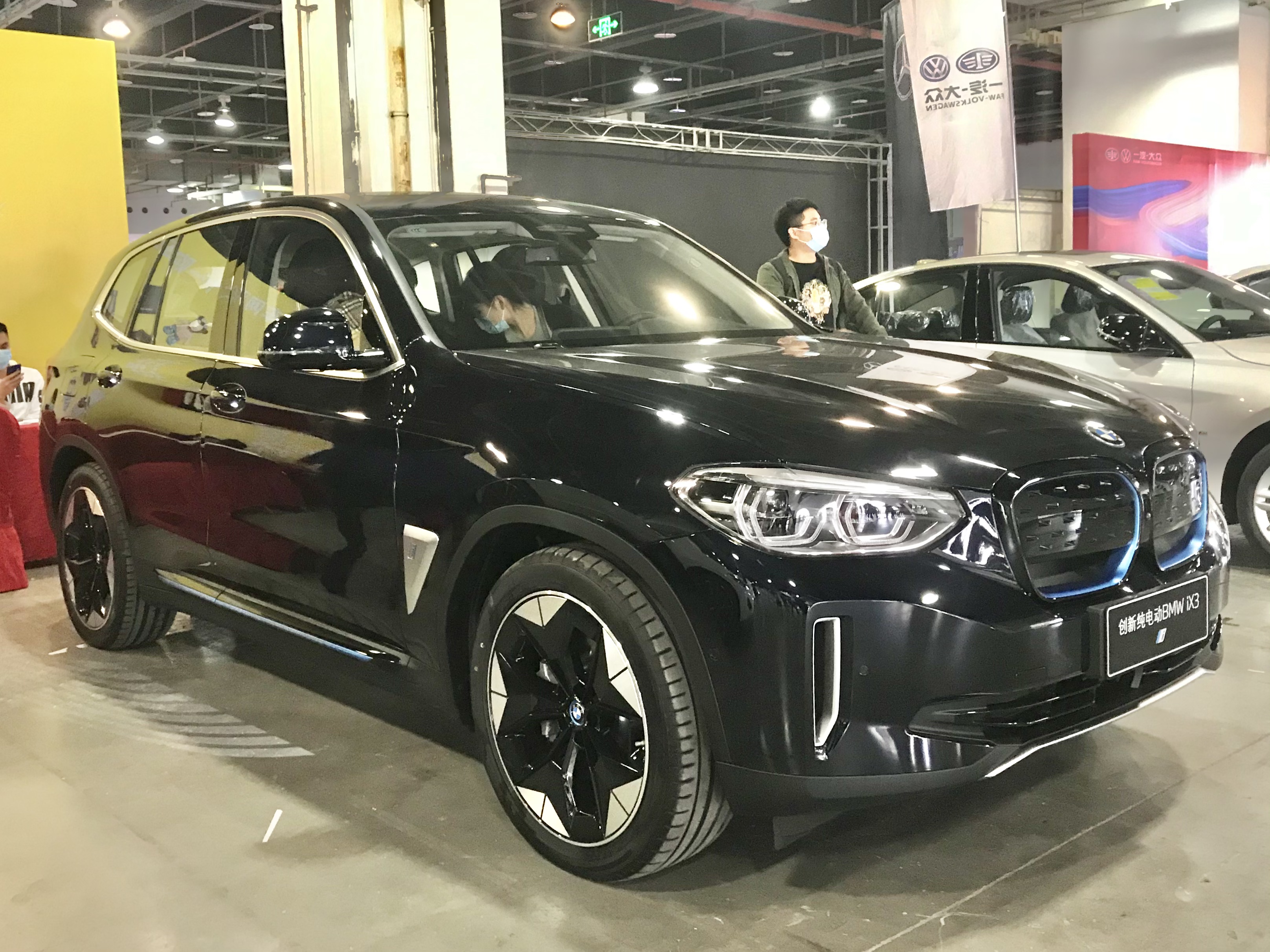
The BMW iX3 is an electric SUV from BMW. It’s meant for people who want the space and driving feel of an SUV, but powered by electricity. The podcast mentions it because it’s an important early model in BMW’s newer electric strategy.
Neue Klasse is BMW’s next-generation car platform idea. The point is that it’s not just a new shape or layout—it’s meant to support new tech and be designed with sustainability in mind from the beginning.
Term
circularity, sustainability
They’re talking about sustainability in a “circular” way—meaning the car should be designed so materials can come back into the system later. It’s presented as part of the overall engineering plan.
This means BMW is aiming to use a big share of recycled materials in the car. In this segment, they claim about one third of the vehicle’s materials are recycled, measured by weight.
They mean the full timeline of the car—how it’s made, how it’s used, and what happens to it later. The point is that you have to look at the whole story, not just what comes out of the exhaust.
A tailpipe is where the exhaust comes out of the car. They’re saying EVs have no exhaust from the tailpipe, but you still have to consider CO2 from making the car and from the electricity used to drive it.
“Product CO2 footprint” is a quantified estimate of total greenhouse-gas emissions associated with a vehicle. In this segment, BMW iX3’s footprint is compared to a conventional iX3 across production/supply-chain and usage.
The supply chain phase is everything that happens before the car is finished—like making parts and processing materials. They’re saying that part of the process can create more CO2 for EVs, especially due to the battery.
The break-even point is when the electric car starts being better for CO2 than the gas car. They’re saying that after about a year of driving, the electric iX3 ends up emitting less overall.
Fleet customers are businesses that buy lots of vehicles for their operations. In this discussion, they’re important because they often demand clear emissions information for reporting and planning.
Concept
regulatory perspective
“Regulatory perspective” means thinking about government rules. The speaker is wondering whether companies use recycled materials mainly because of upcoming laws, not just because it’s better for the environment.
A “frunk” is the storage compartment in the front of an electric car. Since there’s no engine there, it can be used like a trunk—and in this case they’re saying it’s made with a high share of recycled plastic.
It means making sure battery materials can be reused again and again, mostly through recycling. Instead of mining new minerals every time, you bring old materials back into the supply chain.
It’s an EV wiring/electrical design that runs at a higher voltage. Higher voltage can make the system more efficient and can reduce how heavy or bulky some components need to be.
Range is how far the EV can go on one charge. More range usually means a bigger battery, and making a bigger battery can have a bigger environmental impact.
“Cradle to grave” means thinking about a product from start to finish. Here, it’s about making an electric car so that when it’s worn out, its parts and materials can be reused instead of just thrown away.
A battery electric vehicle is an EV that runs on electricity stored in a battery. This segment is saying that the battery’s materials can be recovered and reused, which helps sustainability.
“Mines on wheels” is a way of saying an EV contains valuable materials inside it. When the car is recycled, those materials can be taken out and used again.
Concept
geopolitical regions
This means different countries and parts of the world that can control supply of materials. The idea is that recycling helps you rely less on any one region for important inputs.
CO2 targets are goals for cutting the amount of carbon dioxide a company puts into the atmosphere. For car fleets, it means trying to reduce pollution from the company’s vehicles, often by using cleaner cars.
Honkuk is a tire brand. In this ad, they’re saying their tires are made specifically for electric vehicles and are designed to help with grip and efficiency.
A multi-energy strategy means a company isn’t betting everything on just one kind of power. They plan for different energy options so more customers can switch when it fits their situation.
ESG is a way companies are judged on more than just profits. It covers environmental impact (like emissions), how they treat people, and how they’re run ethically.
“Technology open” means not betting everything on just one kind of powertrain. In this discussion, it’s used to argue BMW can support EVs while still using strengths from other areas.
An internal combustion engine is the kind of engine that burns fuel to make power. The speaker is comparing that to electric cars.
Concept
geopolitical times
This means the world situation—politics and trade issues—that can affect how car companies build and sell cars. The speaker says that makes it harder to commit to just one approach.
This means government rules meant to push cleaner behavior. The host is also saying those rules can sometimes be used like a wall to make it harder for outsiders to compete.
Protectionism is when a country tries to protect its own businesses from foreign competition. The worry is that “green” rules could be used to block other countries rather than help the planet.
Net zero is the idea that a country (or company) should cancel out its pollution so the overall impact is zero. The host is saying that committing early might be harder or more expensive at first.
This means the first group to act can sometimes pay more upfront costs. The host is arguing that if everyone waits for others, the whole transition stalls.
“Efficient Dynamics” is BMW’s name for technologies and design choices meant to use less energy. The idea is that you can make a car more efficient while still keeping it enjoyable to drive.
The BMW i3 is an early BMW electric car. The point here is that BMW didn’t just swap an electric motor into an existing gas car—they planned the EV design as a whole project.
LIVE
Even though perception is always important for humans, if we look at the facts, there's
no reason why sustainability should no longer be a top priority because the state of the
planet has never been worse than it is now.
And so it still needs to be the number one priority.
Hello and welcome to another episode of the Everything Electric podcast where today I'm
catching up with Glenn Schmidt, VP of Global Sustainability at BMW. And in our conversation,
we spoke a lot about how sustainability is the key to resilience within an organisation
and should be the thing that is connecting us in an otherwise divided world. However,
many of you listening will be thinking, hmm, the same BMW that are also exploring a multi-pathway
or a multi-power train pathway. Yes, the very same. And we do explore that as well,
thinking about how on Earth is an organisation like BMW navigate the path towards sustainability
and electrification whilst also sustaining its current workforce. Hmm, very controversial indeed,
and hopefully a good source of debate in the comments I have absolutely no doubt.
So all of that to come, but first a very quick advert break.
Our three free YouTube channels on EVs and Clean Energy Tech are funded by our fun-packed
test drive tastic events in the Northwest and Greater London and our events down under. Next up,
Everything Electric heads to Cheltenham and then Twickenham. All events include a B2B EV day
and commercial vehicles too. Glenn, thank you so much for joining us on the podcast today.
I guess important question first. Could you just describe who you are and what you actually do?
Yeah, thank you very much for the opportunity. Great to have this conversation. My name is Glenn
Schmidt. I'm originally from Vancouver, Canada. So I was born and raised on the west coast,
beautiful west coast of Canada, and I moved to Germany 30 years ago. And I've been working in
the German automotive industry since then. And I've been with BMW now for 21 years. Time really
flies. And I had a lot of interesting jobs. And my last job, I was responsible for external and
government affairs. And in my new role, which I've had for about a year now, I'm responsible for
sustainability within the BMW group. But of course, sustainability is everybody's responsibility,
but I try to coordinate things. And my team kind of ties together all the strategic elements that
you need for sustainability. Well, I mean, there are a couple of things there. Firstly, Vancouver
is maybe my favorite place in the entire world. We've been lucky enough to film a lot of episodes
there over the past few years. And I just, yeah, it's incredible. The other thing I just want to
mention is that whilst 21 years, I'm sure there's many people listening who think that that's a
long time. That's probably the kind of slightly middle of the road when it comes to OEM terms.
And I suspect you have colleagues who've been there for 30, 30 plus years.
That's true. I mean, whenever I'm in meetings with BMW colleagues, and we do this round of
introduction, and often I will kick off and I'll say, you know, I've been with BMW for 21 years,
but it doesn't take very long to have somebody in the meeting who says, well, I can top that I've
been with BMW for 25 or for 30 years as well. Yeah, I like to always coin it this way, you know,
once you join BMW, you don't need to leave BMW. And it's a fantastic company. And it offers a lot
of different exciting opportunities. And, you know, if you want to have a different job,
then you don't really need to be leaving BMW because, you know, you can go into international
roles, you can go into strategic roles, you can do operative roles in terms of production.
You know, there is almost really no, let's say, professional trade that you can't find
within an OEM like this. I think this is one of the things that makes the automotive industry
so exciting. And so challenging is it's an integrator. There are just so many different
industries that kind of come together when it comes to building or designing, building and
selling a vehicle. And it's a global industry as well. So there's an international side to that.
And yeah, BMW really has all of these facets. Well, I think you put it absolutely perfectly
there that the breadth of the automotive industry is so interesting because it's one of the only
industries that is absolutely incredibly complicated, but can also span or is impacted by
geopolitics by just everything that's going on in the world. And at the same time,
is a consumer good and has to be a product that people really fall in love with. And people can
immediately understand what different products are, what they say about people, what people aspire
to have, et cetera, et cetera. So it's, it's a hugely exciting industry. And you've obviously seen
a breadth of different roles within it. Your most recent role, of course, being sustainability,
and that is what we want to spend a big chunk of the rest of the discussion talking about.
So sustainability, I mean, it's incredibly broad term, it means all manner of things.
What does it specifically mean at BMW? And I suppose in your sort of performance review,
if you would have one, what's your kind of KPI or your objective?
Well, I think one of the fundamental points of sustainability has been and still is decarbonizing,
right? So offering solutions to combat global warming, that's still very much at the core
of what we do. And BMW's conviction there is you need to be taking a holistic approach. So
when it comes to the vehicle, don't just look at the tailpipe. Don't just look at the product
itself, but also take a, take a bolder and take a broader view of things. Where is the vehicle
coming from? What are the raw materials that you need? How were they extracted and produced?
How is the vehicle being produced? And then later on, of course, how is the vehicle being,
being used? So that holistic approach, I think is a very, very important element as well.
Then of course, there's a second dimension of sustainability. And that's when you think of
ESG, it's the S, right? It's the social element as well, which I think is turning into also the
social economic element as well. BMW group employs over 150,000 people in many nations around the
world. How is the BMW group contributing to society? What are concrete activities?
So that's one element as well. And then there's of course the G, which stands for governance.
How are you governing this? What targets do you have for the organization?
And how do you coordinate a sustainability community at a global level within such a complex
corporation? So sustainability in its narrow sense is the environmental aspect, but in its
broader sense is much larger. It's how we as a global corporation, with our suppliers, with
our employees, and with all of our partners around the world, how we engage. And I think one way of
looking at it that really kind of captures things quite nicely. And at first glance, it may seem
like a bit of a contradiction is sustainability and competitiveness. These aren't contradictions,
but these are two sides of the same coin, as you would say, two sides of the same equation.
If a company is sustainable in terms of the way it operates, it's also competitive as well.
I think it's fair to say that sustainability is coming under a certain degree of pressure
in a period, and you refer to this as well, Imogen, where the world is turning geopolitical,
inward-looking, more regional, where existing business models or business models that have
been successful for many decades are coming under strain, where it would be easy to say, well,
we need to be focusing on other things, competitiveness. Let's put sustainability
in the backseat for a while. I think that's the true challenge and also the conviction to say,
wait a second, sustainability, if you're doing it correctly, easier said than done, of course,
but sustainability is, it's a competitive value. It's something that should be not just added on
to your business model, but that should be ingrained in your business model. And it's always
easy to be in podcasts like this or to be on the stage and to talk about all the shiny and glossy
things about sustainability. It's a lot of hard work. It's also sometimes resistance within the
organization, but at the end, BMW has often been able to find good solutions that are sustainable
at their core that proved to also be successful in the market. Well, there are so many things there,
but I guess I just want to pick up on that fact that sustainability can be something that's deeply
competitive and can make products infinitely better. And really, when we talk about sustainability
in those terms, what we're actually talking about is resilience. And resilience feels like a slightly
more palatable world in this climate today than sustainability, which I think gets a lot of people's
backs up. They tend to associate it with this sort of slightly polarized narrative that's playing out
when actually we're just talking about making sure that businesses can survive in a really
resilient and healthy kind of way. I suppose, okay, so there's a couple of things here. We've
got how the products are actually sourced, manufactured, used, and then recycled at the end
of their life. We've also got some aspects of sort of building that resilience, what does the
fabric of an organization look like, and then governance. But let's start with the vehicles
themselves, because we know what many people are extremely excited about the BMW iX3, the new BMW
iX3, for a multitude of reasons, not least the fact that it's got 500 miles range, it looks fantastic,
the tech is amazing, et cetera, et cetera. But there are many, many things that I'm sure as an
organization you're extremely proud of from a sustainability perspective. And I wonder if you
could share some of those. Yeah, thank you. I mean, you've, it sounds like you share our excitement
as well. And the BMW iX3, it's the first vehicle of what we refer to as the Neue Klasse. And the Neue
Klasse is a vehicle architecture, but it's more than just an architecture. It's also a whole suite
of technologies that we've introduced with the iX3 that we're also rolling out. And if you start,
I guess, with the positioning of the Neue Klasse, there were sort of three elements in the early
strategic phase, but they also played a really big role also in shaping how the vehicle and the
architecture is positioned. One of them is electric. So it's, it's about electric driving.
The second point is digital connectivity, new levels of connectivity. And the third element is
circularity, sustainability. So this new vehicle architecture, this whole new generation of
technologies is also positioned around sustainability. And it's the first time where the BMW group has
from the very first moment from the, that, that first sheet of white paper that designing and
developing a vehicle from scratch is baked in sustainability and into the concept as well.
And there are a number of, number of highlights, I think that, you know, we can touch on briefly.
One of the things, and this is something that the organization is very proud of is the BMW iX3
has a secondary raw material quota of one third. Now that means one third of the vehicle
is secondary. And that adds up to over 700 kilograms. Of course, easy math to then
calculate what the weight is of the vehicle in total, but electric vehicles are heavy.
And I think this is an important point, you know, often we say to our customers,
wait a second, just because it's one third secondary doesn't mean that it's, it's used.
You're getting a very modern, very sleek vehicle. That's an important point. And the other point
that we also like to stress is comparing the vehicle also to other drivetrain technologies
and taking that holistic approach. And that holistic approach was really how the vehicle was,
was designed. So how do you design the vehicle so that you can recycle it easily?
How do you incorporate the suppliers? 70% of the value of the vehicle is coming from suppliers.
So this is a route that you can go on your own. You need to be mobilizing and working
together with your supplier base. Then also thinking about how the vehicle itself is being
produced in the plant. How can you reduce CO2 and make that sustainable? And then all the way down
to the use phase of the vehicle as well. How is it getting used? So taking that very holistic
approach. And, you know, we always say every gram of CO2 counts, every ton of CO2 that you
don't emit is a good ton of CO2 that's not being emitted. So at first glance, you would always say,
well, an electric vehicle, because it's zero emission, a tailpipe, it's sustainable. But
you really need to take a look at the entire life cycle. And what we've done with the BMW iX3
is calculated the overall product CO2 footprint of the vehicle and compared it to a conventional
BMW iX3. And here you have to be, of course, transparent because an eternal combustion
engine vehicle emits less CO2 during the supply chain phase during the production
than a battery electric vehicle. But we've taken a lot of innovation into the
production and supply chain phase so that we've been able to reduce it by about 35% compared
to not doing any activities in sustainable innovation. And then if you look at the entire
product span and usage phase of the vehicle, and we calculate 200,000 kilometers overall,
the BMW iX3 has a CO2 if you will break even point compared to the BMW iX3 conventional
vehicle after one year. So after one year of driving the BMW iX3, you are emitting less CO2
than the conventional counterpart. And that transparency is something that a lot of customers
appreciate. Certainly the fleet customers appreciate this as well because fleet customers and over
50% of our customers in Europe are in some form fleet customers purchasing vehicles as company
cars or for larger fleets or for rental are managing CO2 of their fleets. So that level of
transparency when it comes to emissions, the data driven approach that we have. And at the end of the
day, arguing it and making that point to our customers and to stakeholders is something that
makes this this concept quite quite distinct and unique because we've never taken it to this to this
extent. Oh my goodness, I have so many questions. I'm like, okay, which thread shall we pull on?
Well, I guess my first question perhaps is that with a third of the materials being recycled,
presumably that also can change what your supply chain looks like from a regulatory perspective.
So for example, if those materials have been recycled within Germany, then that's a domestic
sourcing of that material. So how much has anticipation of future regulations and existing
regulations shaped the necessity to also do that above and beyond doing the right thing from a
sustainability perspective? I think that that question, because a vehicle is very complex,
very complicated and consists of a lot of different materials and material groups,
it's difficult to answer that on an overall vehicle level. I think we need to be making that
distinction. So let's take aluminum, for example, the BMW ix3, it uses aluminum ribbons, they're made
of 70% secondary material, secondary aluminum, there you can really reduce the CO2 immensely,
and the market for secondary aluminum is quite established. Then there are other product groups,
like for example, the plastics. It's an interesting play on words, it's called the
frunk. So it's the front trunk, the frunk of the BMW ix3, which is used as a storage compartment for
the charging cable. There we're able to reach 30% secondary material quota using recycled ocean
plastic. This is just to make it clear to all the listeners, this is not plastic that we're
retrieving from the ocean, but this is plastic that we're purchasing from fissures around the world
to prevent it from going into the ocean. There we're able to reach 30% for the frunk, which is
the highest that you can possibly do, because with plastic you have a lot of degradation,
and you can't maintain the level of quality that you need for the automotive grade components
that you're using. And when it comes to the battery, there were around 50%
secondary raw material quota. When it comes to the lithium, the cobalt, as well as the nickel as
well, and we're trying to close the loops in Europe, but we're at the start of battery electric
vehicles. So there still is mining to extract these minerals, but the intent, the strategic
intent is to close the loops for a number of reasons, in terms of resilience,
protecting the environment, reducing CO2. So there's a complicated answer to a very
simple question that you asked Imogen, and then the other question that you have,
it's sort of chicken egg, is it the strategy or is it fulfilling regulations? In an ideal world,
you would say business is coming up with the business case, and it's inherently sustainable,
and then you would regulate where you need to be regulating. In an imperfect world, and we've had
this, unfortunately, in Europe for a long time, is you're trying to regulate the future that you
want to do it, and you're relying more on bands than you are on empowering and creating the supply
chains, and then you're creating unnecessary roadblocks. So the diplomatic answer to your
question, Imogen, is it's a mix of both, right? It is, of course, and if I look at circularity,
it's thinking of circularity in broader terms, not just to reduce CO2, but also to have resilient,
robust supply chains, and that space is regulated and will continue to be regulated in the future,
so that of course you're prepared for that regulation when it comes.
So I've got two questions, which I suppose are slightly more existential questions, and they
won't be unique to to BMW. I think every single car company is having the exact same debate,
but if we look at something like the new BMW iX3, it's an incredible machine, as we've said. The
stats are extraordinary, 800-volt architecture, 500 miles range, etc., etc., and I know that our
audience will be thinking two things. On the one hand, they'll be thinking, fantastic, 800-volt
architecture means that you've got thinner cables, less cooling requirement, that's a lighter vehicle,
it's a more efficient vehicle. At the same time, 500 miles range is lovely, but it's a big battery,
and that will have a sort of bigger environment footprint. Ultimately, you need to be able to
sell these vehicles and to have those performance stats to help sell them as well. And then equally,
on the software side, these software-defined vehicles, as we know, enable sort of those ongoing
evolution updates can happen over the air in theory that vehicle can continue to improve
for a long time over its lifetime. But equally, car brands have to drive more sales on an ongoing
basis and have to kind of plan redundancy into it in order to kind of get people to move on to
the next vehicle. So the sort of, I guess, the existential question is how on earth do you use
organizations to balance the need to be sustainable, extend the life of these products,
make them more efficient, but also serve customers and drive sales and continue to drive and build
sales as well. Well, the best way to guarantee current sales is to build in a superior product,
right, at the end of the day. And I was sort of getting the feeling listening to you that
maybe between the lines you were saying, well, does a car company like BMW at a global level
sort of maybe build in some inherent faults into the vehicle so that they have a limited life span
so that you're ensuring that sales will be coming down the road. And I think that's not quite the
case, right? I would soften that slightly just to say that like, you know, you've got to as an
organization, I would never suggest that people would be like, oh, we'll put this little fault in,
but that, you know, you're thinking about a customer and thinking about the lifetime of
that customer thinking like, okay, they will probably own this vehicle for X amount of time.
What happens to keep them in the brand? And like the, you know, the pure sustainability person would
be like, no, we want them to own that one vehicle for a thousand years and never buy another vehicle
again. But like that's not the reality of running a business. So that's the sort of slightly softer
way to sort of phrase that question, maybe. Right, right. Yeah. And I think it's,
you know, at the end, it's about coming, coming up with a, with a proposition for the customer that
really checks all of the, all of the boxes, right? And design and performance, these are still the
number one purchase reasons for a vehicle. But we believe in, you know, in a world where you need
more differentiation, that sustainability and sustainability virtues, virtues can also play
an important role. And I think you also have to realize that you have not one owner of a vehicle
in most cases. You know, there are many customers that fall in love with their BMWs and say,
well, I will keep my BMW for decades and wait for it to become a classic vehicle.
And in some cases that's also a good investment because as classic vehicles later on the value
of the vehicle even increases. But typically you will have a customer that will own the vehicle for
a couple of years or lease the vehicle and then will be passed on as a used vehicle to another
vehicle. And then oftentimes these vehicles then move also to other markets as well where they are
used. So you need to be thinking about that entire time and sustainability is also about
durability, right? So if you have a durable vehicle that fulfills very, very high quality
standards, then you are ensuring happy customers and these customers that are pleased with the
vehicle quality then will come back and be repeat owners as well. And what we've done with our
vehicles and especially with the BMW iX3 as the first vehicle in the Neue Klasse is thinking
also from cradle to grave because thinking for the longest time in industry has been very linear,
right? You're extracting material, you're using it and then you're tossing it away. But how do you
actually close the loop so that you design a vehicle so that you can take it apart, that you
have a different view on materials, that it's not at the end of life when the vehicle's life
finally ends after many decades but it's not just scrap, right? But it's a source of raw materials
as well. And if we use the example of a battery electric vehicle, I'm exaggerating a little bit
but just to make it a visualization, you could almost think of these vehicles as mines on wheels,
right? You have the lithium, you have the cobalt, the nickel, the metal, the aluminum,
the plastics to a lesser degree that can all be used again and being put into a closed loop
for the next generation of vehicles. And there's no reason why you shouldn't do that
going forward. And that just takes so many different boxes as well. It's reducing CO2,
it's reducing our independence on other geopolitical regions. Unfortunately, we're in a world where
you have more regionalization moving forward and if you do it correctly, it's also a good business
model as well and makes a lot of economic sense. Yeah, and I guess ultimately enables that sort of
own or broader ownership of the supply chain as well, like if that model is taken further into
the future. So a few weeks ago, I was, I was, okay, I've got one more question before I come to
that question. But a few weeks ago, I listened to your colleague at the Financial Times Street
with the car event and he was talking about how actually AI enables us to, what enables BMW to
talk to all sorts of different customers and actually to really talk in a way that that
customer wants to be spoken to. So I'm curious to know for which sort of people is sustainability
a key concern or a key criteria when exploring their next vehicle purchase?
So there are the two ways of looking at this, you know, there's one way of looking at it is to
say, you know, the customers will tend to look at things that just pertain to them, right? The
design, the price for value, the performance in the vehicle. And some customers, the sustainability
will be really important to them. But that's kind of a smaller group that's not as relevant. And I
think that needs to have an incredible functionality. You need to get the customer enthusiastic
and proud to own. And then on top of that, by the way, this vehicle is very sustainable.
So let's use the example of the aluminum rim. It's, it's perfect. It has a beautiful design,
but it's 70% secondary. Look at the BMW iX3 recently received a number of awards for 2026.
It's the world car of the year. It is the world electric car of the year. It has incredible driving
characteristics with a super brain that we refer to as the heart of joy, because it, it proves that
this reinterpretation of driving is exhilarating and fun and you're doing it in electric form.
And the vehicle is efficient. And if you're driving an electric vehicle, total cost of ownership,
you can also be saving money compared to conventional alternatives. And all these things,
you know, that's sustainability at second glance, all of these things get customers excited.
And I think that's, that's ultimately what's often missed in these debates. I mean, we always talk
about electric mobility from the regulatory perspective and promoting it with a ban or EV quotas
or a lot of intellect indirect regulation as well, kind of forcing the consumer to go in that
direction. But I think the true and ultimately you can't force consumers, right? They need to be
doing this out of conviction. Otherwise, they will continue driving their vehicles.
And at the end, it's the proposition. It's the driving. It's what is the impact for your wallet?
What is the emotion that you have? And I think this is a little bit underrated
with electric vehicles. And, you know, once you go electric, you're not very likely to go back
because it sets an exhilarating exhilarating feeling. So that's the emotional level of things.
And I think, and I touched on this very briefly, you, I mean, fleet customers,
these are, you shouldn't be underrated as well, business customers, because they have
CO2 targets for their fleets, sustainability policies. So you're a large corporation,
you will have a sustainability strategy. How can you support your sustainability strategy
with the fleet that you're driving as well? And having a sustainable fleet is something
that's also important as well. So this is one next to the private consumer, also the
the fleet customer, I think is an important lever also to kind of leverage electric mobility and
to lift it to the next level. This episode is brought to you by Honkuk. The Honkuk Ion Tire
is built exclusively for electric vehicles engineered to deliver what EV drivers need most,
confident grip, quietness, energy efficiency, and long mileage. As the official tire partner
of Formula E, Honkuk proves its EV technology is at the highest level of performance and brings
that same innovation to every Ion tire on the road. So again, at the future of the car event,
a theme that really emerged was the desire for certain European car brands to pursue a multi-energy
strategy, something which I know that BMW is keen to do. And really, when you kind of distill that
down, it's saying, well, customers are on different trajectories, which you have to accommodate,
car brands have to function as global organizations and regionally, there's different things going on.
And also, these organizations are huge employers and hugely responsible for driving livelihoods
within a country. And when we talk about ESG and we talk about sustainability, yes,
we're talking about emissions, but you can't just ignore this major, major workforce as well,
which is a bit of a conflict that, on the one hand, pursuing decarbonization,
pursuing electric vehicles, but also having to transition a workforce in the right kind of way.
And you sort of alluded to earlier that some of the regulations, sort of policies
that may be in place might not be the most favorable thing for BMW and others like you.
And I wonder if we were to put you in charge of both BMW, and let's say Europe, a big role,
what do you think seems like the really logical response that arrives at a conclusion that does
the maximum amount of good in the world? Well, there's a bit of a jump there between the BMW
responsibility and then the responsibility for Europe. Exactly. And it's a good question.
And I'll give it a shot. I think we should not be coming from, let's say,
mandating the future the way we want to have it. What we should be mandating are the targets.
And the overarching target, of course, is to reduce CO2, to be compliant with the Paris climate
agreement, and to make sure that we have this trajectory to 2050 to be net zero. And the BMW
group has embraced this target of becoming net zero by 2050. And this is also the target
of the European Union. So you can't change that, right? That's the pathway that you're on.
The question is, however, how do you get there? And if you're taking the approach when it comes
to drivetrain technologies and CO2 flip regulation of banning one specific technology and forcing
the other technology, then you're creating a constraint. Often I hear the argument, well,
you need to have planning certainty, right? And that would give planning certainty to the industry
to know that in 2035, you will have no new internal combustion engines being registered.
But how can or how could I, if I was responsible for the European Union, say that on the 31st of
December 2034, that's the day where you sell your final internal combustion engine vehicle
and segue into another technology. So banning and just mandating targets is not the right approach.
The right approach, however, is to say, well, we have a collective target and that is to reduce
CO2, every gram and ton of CO2, not emitted counts, take a holistic approach and make sure
that you have the right framework conditions in place. And these framework conditions need to
take a lot of things into consideration because the world is complex. They need to,
the framework conditions need to take into consideration how much charging infrastructure
is available. The framework conditions need to take into consideration what is the European
economy and German economy and industry particularly good at. And next to battery electric vehicles
where you have incredible product substance coming also from our competitors, very good at the
internal combustion engine. Then you need to be thinking as well, well, you have a fleet of over
250 million vehicles on European streets that are all predominantly being driven
with internal combustion engines and fossil fuel. Why not decarbonize
fuels as well? Because that is a lot of potential. If it's all about preventing global warming,
or slowing global warming, we can't stop it anymore, but slowing it, then you would need to
take a look at the existing park and create a framework that also encourages the carbonization
of fuels. And taking a broader and more diverse approach is often better than just trying to
mandate something in the future. And ultimately, it's about competitiveness. So if Europe and
European industry isn't competitive at a global level, even though the industry may be inherently
more sustainable, you will have other regions of the world that are more competitive that will
be pushing through their solution. So unfortunately, we need to be also seeing this at a geopolitical
level as well. From a European perspective, what do we need to do to ensure that the industrial
base remains strong and remains competitive without giving up sustainability? If you do it
correctly, you'll be able to do both of those things at the same time. And I'm so curious,
because it's very easy to look backwards and to think of like, let's draw all these threads
together and sort of unpick it. But do you think if there hadn't been a ban that actually
there would have been a natural move towards electrification anyway purely from an efficiency
perspective? And I guess like the sort of simple version of that question is, has making sort of
one very, very clear parameter that's been deemed largely sort of quite controversial across, you
think it's a problem in terms of how it's perceived, if that makes sense?
It does make sense. Yeah, I think, well, the ban certainly doesn't make sense, but your question
makes sense to me. Yeah, I think that the ban it certainly hasn't hasn't helped, right? I mean,
we have now a debate currently for revision of the sewer two fleet regulation. And I think it's
fair to say that there will be at the end of this debate, although there are different perspectives
and positions, it's fair to say that the ban may get lifted at the end of the day, so it will not
be such a hard ban. But currently we have a ban, right? And that ban hasn't led to an acceleration
in terms of the uptake. If I think about the 27 European member states, five of them will have
in their new car market share over 30% battery electric vehicles, all electric vehicles,
and the remaining, what does that mean? That means the remaining 22 member states have shares that
are well below that. So you have a really big difference within Europe. If I look at,
you know, and often in these debates, there's an elephant in the room, you haven't mentioned it yet,
but I will, and that's China. You see that China has been able to currently, and their new car sales
go well over 50% in terms of battery electric vehicle sales, but there's no ban in place.
So obviously using different methods, doing different means of doing that, but the ban has
done one thing, hasn't necessarily promoted the uptake of electric vehicles. What it has done,
it has ended the future of the internal combustion engine. The moment there's a end date for any
technology, then you will see that a lot of the investment will go out of the technology,
a lot of, with the internal combustion engine, a lot of specialized mid-size SME companies
that are leaders in their segment will have difficulty financially because the market's
disappearing or they're not able to get credits from their banks as well. And although at the
first line, bottom line, it may be, let's say, not intuitive, but it is possible to push something
that's new and even better, like battery electric vehicles, without giving up the old. You give up
the old when you have the economic and industrial powers of the new, and there are economic regions
around the world that understand this principle, that you promote something new, but then you keep
the old as long as you need it. And unfortunately, the world around us is not black and white.
There's a lot of complexity inside of it. So even if I were to go one step forward, BMW has been very
technology open in all of this debate, which does not mean, and I think this may have been mistaken
a number of years ago during the first debate on this issue, technology openness doesn't mean
you're clinging on to the internal combustion engine and not progressing. It means you're using
the advantages that you have in your drivetrain to serve global markets, but it's possible to be
technology open in terms of strategy that promote one technology, and that is the battery electric
vehicle technology, and to do a thorough job of it, a strategic job of it, and to try and get that
position of a strong market positioning as well. So it's possible to do both. In fact,
you have to do both in order to survive in these really turbulent geopolitical times.
And it's such a conflict because I know that I'm anticipating, because we have an audience who are
very fierce advocates of electric vehicles, and of course, because once you've driven electric,
we've said it earlier, like it just sort of makes sense. And there's been this real excitement
anticipation of more and more options being available. And this year, you know, the benchmark
has been set Volvo EX60 and BMW iX3, all of our reviews and not just ours, but other YouTubers
as well. They're always just comparing them to those two vehicles. But at the end of the day,
the European car market in particular hasn't been afforded this blank sheet approach that
Chinese OEMs have, in which it strategically makes sense to pursue one powertrain. Because
why if you were starting from scratch, would you pursue an aging technology and make your
like business extremely complicated? Existing OEMs don't have that that kind of luxury of just
saying, Yeah, do you know what? Let's let's spin that bit. We don't need it. So it's hugely
complicated. And it's such a nuanced debate, which becomes very polarized in I think this current
current climate. So I guess a question I'd love to know, because what I love about having worked
in OEMs is that, you know, these are complicated products, there are inevitably debates that
happen all the time, where different departments, different personalities are vying for a particular
thing. And it creates a lot of fun debate. So I wonder what are the biggest debates that occupy
your weeks internally? You did work for an OEM and if I'm informed correctly, there's a little
which was, is there BMW heritage there? I don't know. I was just doing a bit of research with your
LinkedIn site as well. And I and I saw a like a little splash of BMW in there. But maybe
I wasn't hallucinating, but I thought it was something. I was thinking, was there, have I
misremembered the ownership? But no, I know exactly what you're what you're talking about.
I did a project whilst I was at university at the mini plant here in Oxford. And it was really cool
because it was the first time I learned terms like first in first out or last in first out about
how things are loaded onto a production line. And that specific project I'm really going into the
back of my memory here was around making the glazing process a bit more efficient preventing
damage to the glass that arrived at the factory. And it was the first time I'd really been in a
factory, I think. And it was just, it's like Willy Wonka, but for grown-ups, it's incredible.
So yes, you're right. That was my beer. I just thought I just I just noted that you're conducting
the interview, not me, but I was just curious. But in terms of answering your question, what
are the biggest debates that kind of keep me awake at night? I think one of the big debates
right now in the automotive industry is, what's the path forward for Europe in a world that's
still very global, but where you have a lot of geopolitical competition. And there are two
schools of thinking. One school of thinking is, well, Europe sort of needs to become a fortress,
you know, you need to have tariffs, local content, stiffer local content requirements.
And the best way to kind of keep competition out is to build a wall, right? And the other
thinking is, and surprise, surprise, this is BMW's way of thinking is, well, the European
automotive industry is global. And that means we need to be successful in China, continue to be
successful in China. It's the largest market. It's the it's a there's a hyper competition in the
market. A lot of new technology is being driven or being paced in China as well. So if you're global
and want to be globally successful, then you need to continue to be successful in China
in that way. And you need to do competition. You're cooperating, but you're also competitors,
right? And so that also applies to sustainability as well, right? Is sustainability a connector?
Or is sustainability a device factor? And that's one of the big debates. And my position is,
of course, in a world that's turning a lot more divisive, it's still important to think of sustainability,
climate protection, and this planet is something that connects us. Even though China or Europe
currently, the US will have different approaches, it's still a connector. So that's, I think,
one of the big issues. The other the other thing that debate that keeps me up at night as well is,
um, how do you keep sustainability relevant in a world where you talk a lot more about
competitiveness, resilience, functioning business models in tech supply chains, energy crisis as
well? And there the answer is, well, sustainability answers all of those questions, right? A circular
business model is something that helps you to secure raw materials that you need. It also
de-risks your supply chain if you're sourcing material only once, right? In Europe, we don't
have a thriving mining industry, but we also want to be driving electric vehicles in the future. So
you will need to do mining in the future and extract minerals for the increasingly large
park of electric vehicles. But let's only do it once. Let's keep it in a circular model as well.
And how can we not give up on things that are important to us, like, for example,
the Paris Climate Agreement and continuing to decarbonize? So this whole debate,
where sustainability is being put a little bit under pressure externally, this is something that
is also a big debate as well. And, you know, I said this early on in our conversation,
it's really, the art is to combine and the art is to realize that sustainability is broad
and connects all of these elements. And even though perception is always important for humans,
if we look at the facts, there's no reason why sustainability should no longer be a top priority
because the state of the planet has never been worse than it is now, right? Or continuing to
emit CO2. We have a major problem when it comes to biodiversity. The level of global warming that
we cannot stop leads to disastrous effects around the world. And so it still needs to be
the number one priority. And I suppose as such, there has to be that better understanding that
it is the magic thread that weaves through everything to build that competitive edge,
to build that resilience, to do risk of business, to keep things global as well. Because that by
its nature makes supply chains more diverse and makes them, again, more resilient as a product of
that. So many pearls of wisdom in there. And I suppose if I could afford you one wish,
one thing that would just make some of those daily worries a little bit lighter, what would you ask
them? If I had that magic wand, that one big wish, I think my big wish would be that
sustainability is still a connector. That's something that connects worlds. We will have
different understandings of how to run economies. We will have different political systems. We will
have more and more hyper competition. We will have a scarcity of resources. These things are all
coming. But my hope would be that sustainability doesn't end up flipping and being an instrument
for further protectionism. And unfortunately, we are seeing that trend, that you're using
sustainability regulation to keep people out, to keep the world more fragmented. But that
sustainability can still be a connector. And unfortunately, from an economic or industrial
perspective, you could sometimes say, well, the first mover, you would have a disadvantage
when it comes to sustainability. There's maybe an inherent first mover disadvantage when
an economy says, well, we want to be net zero first. We see India as 2070, China 2060, Europe
2050, Germany 2045. Then you could say, well, there's an inherent disadvantage in doing this first.
But if everybody thinks like that collectively, then it's the end, right?
And so that would be my big wish, that sustainability nature and the planet is
still a connector, despite the differences and the variety that we have around the world.
And my last question, what's the one thing that you're most proud of
for BMW from a sustainability perspective? The thing that you like makes you feel really,
really good inside?
There isn't really one big thing, but it's a whole series of things. I think it's,
I think what, what makes me proud, but what makes the entire organization proud is that
sustainability has always played an important role and has ultimately given a lot of strategic
advantage. In 1973, BMW was the first company to have an environmental officer. Then,
2007, we came up with efficient dynamics. How can vehicles become more efficient,
but still be dynamic and fun to drive? It seems like a contradiction,
but our engineers prove that it isn't. For Project I in 2008, that initial think tank
within the company that said, let's develop an electric vehicle from scratch and think about
things holistically, and that led to the BMW i3, not the one that's coming in the market now,
as we speak, but the i3 that came in 2013, that you still see on the streets, first bold moves
and shows with all electric series vehicles. Now, all the way coming up to the Neue Klasse,
where sustainability and circularity is part of how we position the vehicle and the
transformation of the entire company. I think this is the one thing that doesn't answer your
question. I'm not trying to dodge it, but I think it's just the fact that beautiful BMW
and all of our associates around the world think sustainable. It's not always easy. There are a lot
of debates, but at the end of the day, it's always played an important role in our strategy
and this helped us shape the company that we are today.
Well, I think the fact that you can't point to one thing and it's a collective of things,
points to a bigger achievement of just that sustainability exists as part of the
fabric of the culture and the DNA of the brand. I can't believe that 1973 was the date,
but incredible that 1973, there was that environment.
That's one of the reasons why I always hesitate to say I'm responsible for sustainability,
because that's not really true. Everybody's responsible for sustainability.
Honestly, this has been an incredibly enjoyable conversation. Thank you so much for your candor
and for exploring some of those rabbit holes with me. I so appreciate the discussion.
Thank you so much.
Thank you as well. I've enjoyed the conversation.
About this episode
Glenn Schmidt, BMW’s VP of Global Sustainability, lays out why sustainability and competitiveness are “two sides of the same equation,” reframing it as “resilience.” The conversation challenges petrol/ICE bans, arguing policy should “mandate the targets” for CO2 rather than flip-drivetrain technology constraints—while charging infrastructure and Europe’s large ICE fleet shape what’s realistic. BMW’s answer is engineering and circularity: the Neue Klasse/iX3 approach includes cradle-to-grave thinking, secondary-material quotas, and life-cycle CO2 comparisons with a one-year break-even claim.
Let's be honest, most legacy manufacturers are struggling with the switch to electric, leaving an opening for hordes of new brands, and yet BMW seems to be on-board with an all-electric future. But what are BMW's views on the internal combustion *ban*; is it a massive mistake? Our expert host, Imogen Bhogal (once with OEMs Jaguar Land Rover & ARRIVAL), talks candidly to Glenn Schmidt, BMW's Vice President Global Sustainability, about significant strides made by the automotive giants. Why not come and join us the latest electric BMWs, along with many other brands at our next Everything Electric expo later this week, or later this year: https://everythingelectric.show EE WEST (Cheltenham) - 12th & 13th June 2026 EE GREATER LONDON (Twickenham) - 11th & 12th Sept 2026 EE SYDNEY - Sydney Olympic Park - 18th - 20th Sept 2026 To partner, exhibit or sponsor at our award-winning expos email: [email protected] Check out our sister channel Everything Electric CARS: https://www.youtube.com/@fullychargedshow Support our StopBurningStuff campaign: https://www.patreon.com/STOPBurningStuff Become an Everything Electric Patreon: https://www.patreon.com/fullychargedshow Become a YouTube member: use JOIN button above Buy the Fully Charged Guide to Electric Vehicles & Clean Energy : https://buff.ly/2GybGt0 Subscribe for episode alerts and the Everything Electric newsletter: https://fullycharged.show/zap-sign-up/ Visit: https://FullyCharged.Show Find us on X: https://x.com/Everyth1ngElec Follow us on Instagram: https://instagram.com/officialeverythingelectric #fullychargedshow #everythingelectricshow #homeenergy #cleanenergy #battery #electriccars #electric-vehicles-uk