Glenn Schmidt, BMW’s VP of Global Sustainability, lays out why sustainability and competitiveness are “two sides of the same equation,” reframing it as “resilience.” The conversation challenges petrol/ICE bans, arguing policy should “mandate the targets” for CO2 rather than flip-drivetrain technology constraints—while charging infrastructure and Europe’s large ICE fleet shape what’s realistic. BMW’s answer is engineering and circularity: the Neue Klasse/iX3 approach includes cradle-to-grave thinking, secondary-material quotas, and life-cycle CO2 comparisons with a one-year break-even claim.
Let's be honest, most legacy manufacturers are struggling with the switch to electric, leaving an opening for hordes of new brands, and yet BMW seems to be on-board with an all-electric future. But what are BMW's views on the internal combustion *ban*; is it a massive mistake? Our expert host, Imogen Bhogal (once with OEMs Jaguar Land Rover & ARRIVAL), talks candidly to Glenn Schmidt, BMW's Vice President Global Sustainability, about significant strides made by the automotive giants. Why not come and join us the latest electric BMWs, along with many other brands at our next Everything Electric expo later this week, or later this year: https://everythingelectric.show EE WEST (Cheltenham) - 12th & 13th June 2026 EE GREATER LONDON (Twickenham) - 11th & 12th Sept 2026 EE SYDNEY - Sydney Olympic Park - 18th - 20th Sept 2026 To partner, exhibit or sponsor at our award-winning expos email: [email protected] Check out our sister channel Everything Electric CARS: https://www.youtube.com/@fullychargedshow Support our StopBurningStuff campaign: https://www.patreon.com/STOPBurningStuff Become an Everything Electric Patreon: https://www.patreon.com/fullychargedshow Become a YouTube member: use JOIN button above Buy the Fully Charged Guide to Electric Vehicles & Clean Energy : https://buff.ly/2GybGt0 Subscribe for episode alerts and the Everything Electric newsletter: https://fullycharged.show/zap-sign-up/ Visit: https://FullyCharged.Show Find us on X: https://x.com/Everyth1ngElec Follow us on Instagram: https://instagram.com/officialeverythingelectric #fullychargedshow #everythingelectricshow #homeenergy #cleanenergy #battery #electriccars #electric-vehicles-uk
"...ds like you share our excitement as well. And the BMW iX3, it's the first vehicle of what we refer to as th..."
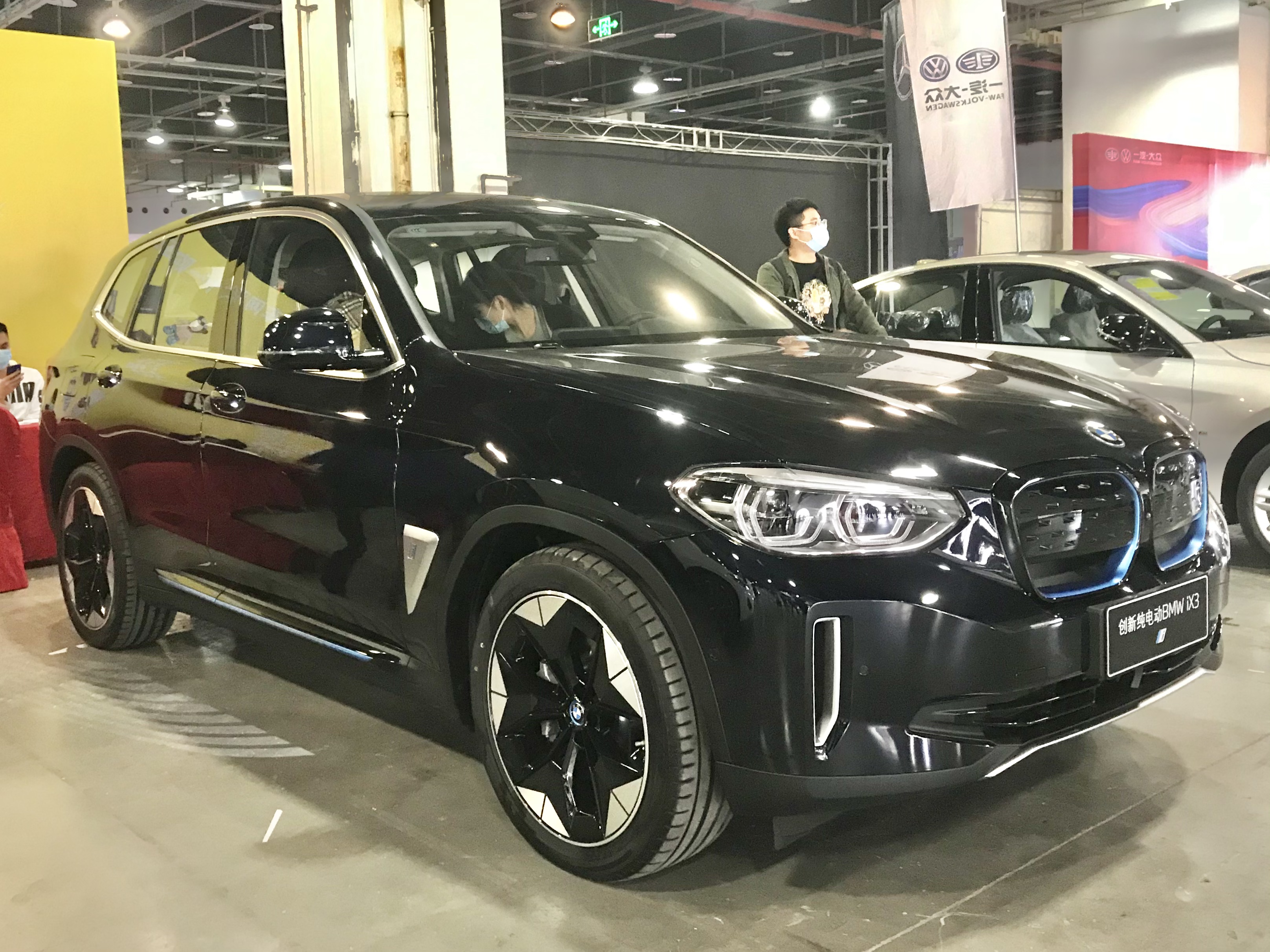
The BMW iX3 is an electric SUV from BMW. It’s meant for people who want the space and driving feel of an SUV, but powered by electricity. The podcast mentions it because it’s an important early model in BMW’s newer electric strategy.
The BMW iX3 (G08) is BMW’s fully electric SUV built on the iX3 platform, aimed at bringing electric power to a more practical, higher-riding body style. It’s significant because it represents BMW’s move beyond small EVs into mainstream SUV territory. In the podcast, it’s mentioned as a “first vehicle” for a broader electrification direction, which is why it’s tied to future plans.
"And the BMW iX3, it's the first vehicle of what we refer to as the Neue Klasse. And the Neue Klasse is a vehicle architecture, but it's more than just an architecture."
Neue Klasse is BMW’s next-generation car platform idea. The point is that it’s not just a new shape or layout—it’s meant to support new tech and be designed with sustainability in mind from the beginning.
Neue Klasse is BMW’s “new class” vehicle architecture—essentially a next-generation platform approach. In this segment, BMW frames it as more than a chassis layout: it’s also a bundle of new technologies and is designed from the start to support sustainability goals.
Term
circularity, sustainability
"And the third element is circularity, sustainability. So this new vehicle architecture, this whole new generation of technologies is also positioned around sustainability."
They’re talking about sustainability in a “circular” way—meaning the car should be designed so materials can come back into the system later. It’s presented as part of the overall engineering plan.
Circularity and sustainability are being treated as linked design goals rather than separate marketing claims. In this segment, BMW ties them to how the Neue Klasse is positioned and how the iX3 is engineered from the start.
"One of the things, and this is something that the organization is very proud of is the BMW iX3 has a secondary raw material quota of one third. Now that means one third of the vehicle is secondary."
This means BMW is aiming to use a big share of recycled materials in the car. In this segment, they claim about one third of the vehicle’s materials are recycled, measured by weight.
A secondary raw material quota is a target for how much of a product’s materials come from recycled (“secondary”) sources rather than virgin materials. Here, BMW says the iX3 has a quota of one third secondary material, totaling over 700 kilograms, which is presented as part of its sustainability case.
"But you really need to take a look at the entire life cycle. And what we've done with the BMW iX3 is calculated the overall product CO2 footprint of the vehicle..."
They mean the full timeline of the car—how it’s made, how it’s used, and what happens to it later. The point is that you have to look at the whole story, not just what comes out of the exhaust.
“Life cycle” here means evaluating environmental impact from manufacturing through use and end-of-life, not just tailpipe emissions. That’s why the host argues you can’t judge sustainability from “zero emission” alone.
"So at first glance, you would always say, well, an electric vehicle, because it's zero emission, a tailpipe, it's sustainable. But you really need to take a look at the entire life cycle."
A tailpipe is where the exhaust comes out of the car. They’re saying EVs have no exhaust from the tailpipe, but you still have to consider CO2 from making the car and from the electricity used to drive it.
A “tailpipe” is the exhaust outlet at the back of a vehicle, and “tailpipe emissions” are what come out while driving. The host contrasts tailpipe zero-emissions for EVs with the need to consider emissions from manufacturing and the supply chain.
"And what we've done with the BMW iX3 is calculated the overall product CO2 footprint of the vehicle and compared it to a conventional BMW iX3."
“Product CO2 footprint” is a quantified estimate of total greenhouse-gas emissions associated with a vehicle. In this segment, BMW iX3’s footprint is compared to a conventional iX3 across production/supply-chain and usage.
"And here you have to be, of course, transparent because an eternal combustion engine vehicle emits less CO2 during the supply chain phase during the production than a battery electric vehicle."
The supply chain phase is everything that happens before the car is finished—like making parts and processing materials. They’re saying that part of the process can create more CO2 for EVs, especially due to the battery.
The “supply chain phase” refers to emissions created upstream—like extracting raw materials and manufacturing components before the vehicle is assembled. The host uses it to explain why EVs can have higher production-related CO2 than combustion cars.
"And then if you look at the entire product span and usage phase of the vehicle, and we calculate 200,000 kilometers overall, the BMW iX3 has a CO2 if you will break even point compared to the BMW iX3 conventional vehicle after one year."
The break-even point is when the electric car starts being better for CO2 than the gas car. They’re saying that after about a year of driving, the electric iX3 ends up emitting less overall.
The “break-even point” is the distance/time where the electric vehicle’s higher upfront emissions (often from battery production) are offset by lower emissions during driving. The host claims the BMW iX3 reaches that point after about one year of driving versus the conventional version.
"50% of our customers in Europe are in some form fleet customers purchasing vehicles as company cars or for larger fleets or for rental are managing CO2 of their fleets."
Fleet customers are businesses that buy lots of vehicles for their operations. In this discussion, they’re important because they often demand clear emissions information for reporting and planning.
Fleet customers are organizations that buy vehicles in bulk for business use (like companies, large fleets, or rental operators). This segment frames fleet purchasing as a driver for more detailed emissions transparency and data-driven reporting to stakeholders.
Concept
regulatory perspective
"Well, I guess my first question perhaps is that with a third of the materials being recycled, presumably that also can change what your supply chain looks like from a regulatory perspective."
“Regulatory perspective” means thinking about government rules. The speaker is wondering whether companies use recycled materials mainly because of upcoming laws, not just because it’s better for the environment.
“Regulatory perspective” here means how rules and compliance requirements shape sourcing and manufacturing decisions. The speaker is asking whether anticipating future regulations (not just sustainability goals) is what pushes companies toward recycled-content materials.
"the BMW ix3, it uses aluminum ribbons, they're made of 70% secondary material, secondary aluminum, there you can really reduce the CO2 immensely,"
“Secondary material” just means recycled material. Instead of making new metal from raw ore, it’s made from recycled sources, which can cut emissions.
Secondary material means material made from recycled feedstock rather than newly mined (primary) resources. In this context, using secondary aluminum is presented as a way to reduce the CO2 impact of producing vehicle components.
"Then there are other product groups, like for example, the plastics. It's an interesting play on words, it's called the frunk. So it's the front trunk, the frunk of the BMW ix3, which is used as a storage compartment for the charging cable."
A “frunk” is the storage compartment in the front of an electric car. Since there’s no engine there, it can be used like a trunk—and in this case they’re saying it’s made with a high share of recycled plastic.
A frunk is the front trunk storage area on many electric vehicles, created because there’s no conventional engine up front. Here, the speaker says the BMW iX3’s frunk uses recycled ocean-plastic–sourced feedstock (as described), and they cite a secondary-material quota for that component.
"we're trying to close the loops in Europe, but we're at the start of battery electric vehicles. So there still is mining to extract these minerals, but the intent, the strategic intent is to close the loops"
It means making sure battery materials can be reused again and again, mostly through recycling. Instead of mining new minerals every time, you bring old materials back into the supply chain.
“Close the loops” in EV batteries means designing the system so materials flow back into production through recycling and reuse. The goal is to reduce reliance on mining and improve long-term supply security for battery minerals.
"if we look at something like the new BMW iX3, it's an incredible machine, as we've said. The stats are extraordinary, 800-volt architecture, 500 miles range, etc., etc."
It’s an EV wiring/electrical design that runs at a higher voltage. Higher voltage can make the system more efficient and can reduce how heavy or bulky some components need to be.
800-volt architecture is an EV electrical system design that uses a higher voltage to move power more efficiently. Higher voltage can reduce current for the same power, which can enable thinner cables and potentially reduce cooling demands.
"The stats are extraordinary, 800-volt architecture, 500 miles range, etc., etc., and I know that our audience will be thinking two things."
Range is how far the EV can go on one charge. More range usually means a bigger battery, and making a bigger battery can have a bigger environmental impact.
“Range” is the distance an EV is expected to travel on a single charge under a specified test cycle. The host connects higher range to having a larger battery, which can increase the battery’s upstream environmental footprint.
"And what we've done with our vehicles and especially with the BMW iX3 as the first vehicle in the Neue Klasse is thinking also from cradle to grave because thinking for the longest time in industry has been very linear, right?"
“Cradle to grave” means thinking about a product from start to finish. Here, it’s about making an electric car so that when it’s worn out, its parts and materials can be reused instead of just thrown away.
“Cradle to grave” is a sustainability framing that considers a product’s entire lifecycle—from raw material extraction (“cradle”) through manufacturing, use, and eventual disposal or recycling (“grave”). In this segment, it’s used to argue that BMW should design vehicles so materials can be recovered at end-of-life and fed into new production.
"And if we use the example of a battery electric vehicle, I'm exaggerating a little bit but just to make it a visualization, you could almost think of these vehicles as mines on wheels, right?"
A battery electric vehicle is an EV that runs on electricity stored in a battery. This segment is saying that the battery’s materials can be recovered and reused, which helps sustainability.
A battery electric vehicle (BEV) is an electric car powered by a rechargeable battery rather than a gasoline engine. The speaker uses BEVs as an example of why recycling matters: battery materials like lithium, cobalt, nickel, and others can be recovered and reused in future vehicles.
"And if we use the example of a battery electric vehicle, I'm exaggerating a little bit but just to make it a visualization, you could almost think of these vehicles as mines on wheels, right? You have the lithium, you have the cobalt, the nickel, the metal, the aluminum,"
“Mines on wheels” is a way of saying an EV contains valuable materials inside it. When the car is recycled, those materials can be taken out and used again.
“Mines on wheels” is a metaphor for electric vehicles as mobile sources of valuable raw materials. The speaker argues that because EVs contain materials like lithium, cobalt, nickel, aluminum, and plastics, recycling can recover those inputs for the next generation of cars.
Concept
geopolitical regions
"It's reducing CO2, it's reducing our independence on other geopolitical regions. Unfortunately, we're in a world where you have more regionalization moving forward"
This means different countries and parts of the world that can control supply of materials. The idea is that recycling helps you rely less on any one region for important inputs.
“Geopolitical regions” refers to how international politics and geography affect where materials and manufacturing inputs come from. The speaker links circular recycling to reducing dependence on specific regions for critical resources, especially as supply chains become more fragmented.
"you, I mean, fleet customers, these are, you shouldn't be underrated as well, business customers, because they have CO2 targets for their fleets, sustainability policies."
CO2 targets are goals for cutting the amount of carbon dioxide a company puts into the atmosphere. For car fleets, it means trying to reduce pollution from the company’s vehicles, often by using cleaner cars.
“CO2 targets” are specific goals companies set to reduce carbon dioxide emissions over time. In fleet contexts, it usually means lowering the emissions from the vehicles a business operates, often by switching to lower-emission powertrains like EVs.
"This episode is brought to you by Honkuk. The Honkuk Ion Tire is built exclusively for electric vehicles engineered to deliver what EV drivers need most,"
Honkuk is a tire brand. In this ad, they’re saying their tires are made specifically for electric vehicles and are designed to help with grip and efficiency.
Honkuk is the tire brand being promoted here, positioned as an EV-focused manufacturer. The speaker ties the brand to Formula E technology transfer, implying the tires are engineered for grip and efficiency on electric cars.
"a theme that really emerged was the desire for certain European car brands to pursue a multi-energy strategy, something which I know that BMW is keen to do."
A multi-energy strategy means a company isn’t betting everything on just one kind of power. They plan for different energy options so more customers can switch when it fits their situation.
A “multi-energy strategy” is an approach where an automaker supports multiple vehicle energy sources rather than committing to just one. In practice, it usually means offering EVs while also maintaining other powertrain options to suit different markets, charging infrastructure, and customer preferences.
"And when we talk about ESG and we talk about sustainability, yes, we're talking about emissions, but you can't just ignore this major, major workforce as well,"
ESG is a way companies are judged on more than just profits. It covers environmental impact (like emissions), how they treat people, and how they’re run ethically.
ESG stands for Environmental, Social, and Governance. In automotive and corporate strategy discussions, it’s a framework for how companies manage emissions and sustainability (environmental) as well as workforce and ethics (social/governance).
"technology open in all of this debate, which does not mean, and I think this may have been mistaken a number of years ago during the first debate on this issue, technology openness doesn't mean you're clinging on to the internal combustion engine and not progressing."
“Technology open” means not betting everything on just one kind of powertrain. In this discussion, it’s used to argue BMW can support EVs while still using strengths from other areas.
“Technology open” is a strategy stance meaning a company keeps options open and doesn’t lock itself into only one powertrain path. Here, the speaker clarifies that being “technology open” doesn’t automatically mean clinging to internal combustion—it can mean using existing drivetrain advantages while still progressing toward EVs.
"technology openness doesn't mean you're clinging on to the internal combustion engine and not progressing."
An internal combustion engine is the kind of engine that burns fuel to make power. The speaker is comparing that to electric cars.
The internal combustion engine (ICE) is the traditional engine type that burns fuel (like gasoline or diesel) to create power. The speaker contrasts ICE with battery-electric vehicles to explain how “technology open” can still involve progressing away from ICE.
Concept
geopolitical times
"In fact, you have to do both in order to survive in these really turbulent geopolitical times."
This means the world situation—politics and trade issues—that can affect how car companies build and sell cars. The speaker says that makes it harder to commit to just one approach.
“Geopolitical times” here refers to global political and economic instability that affects supply chains, regulation, and market access for automakers. The speaker argues that in such conditions, companies may need both technology openness and a clear EV strategy to survive.
"And this year, you know, the benchmark has been set Volvo EX60 and BMW iX3, all of our reviews and not just ours, but other YouTubers as well."
The Volvo EX60 is an all-electric Volvo SUV. The hosts use it as a comparison point to judge how good new electric cars are.
Volvo EX60 is an upcoming/marketed Volvo battery-electric SUV used here as a benchmark for EVs. In this episode, it’s mentioned alongside BMW iX3 as a reference point for how the European EV market is evaluating new options.
"But that sustainability doesn't end up flipping and being an instrument for further protectionism. And unfortunately, we are seeing that trend, that you're using sustainability regulation to keep people out, to keep the world more fragmented."
This means government rules meant to push cleaner behavior. The host is also saying those rules can sometimes be used like a wall to make it harder for outsiders to compete.
“Sustainability regulation” refers to government rules that require companies to meet environmental goals (like emissions limits or reporting requirements). In this episode, it’s discussed as potentially being used as a trade barrier—keeping certain countries or companies out rather than purely improving environmental outcomes.
"But my hope would be that sustainability doesn't end up flipping and being an instrument for further protectionism. And unfortunately, we are seeing that trend..."
Protectionism is when a country tries to protect its own businesses from foreign competition. The worry is that “green” rules could be used to block other countries rather than help the planet.
Protectionism is when governments use policies (like tariffs, quotas, or regulatory barriers) to shield domestic industries from foreign competition. Here, the concern is that sustainability policies could be framed or enforced in ways that fragment global markets instead of coordinating emissions reductions.
"There's maybe an inherent first mover disadvantage when an economy says, well, we want to be net zero first. We see India as 2070, China 2060, Europe 2050, Germany 2045."
Net zero is the idea that a country (or company) should cancel out its pollution so the overall impact is zero. The host is saying that committing early might be harder or more expensive at first.
“Net zero” means balancing greenhouse-gas emissions with removals so that the overall total is effectively zero. In the episode, it’s used to describe different countries’ target dates, and how being “first” to commit could create economic disadvantages for early movers.
"you could sometimes say, well, the first mover, you would have a disadvantage when it comes to sustainability. There's maybe an inherent first mover disadvantage..."
This means the first group to act can sometimes pay more upfront costs. The host is arguing that if everyone waits for others, the whole transition stalls.
“First mover disadvantage” is the idea that the earliest country or company to adopt a new policy or technology may bear higher costs before others catch up. The episode frames this as a potential downside of being the first to pursue net-zero targets, even if coordinated action would ultimately benefit everyone.
"Then, 2007, we came up with efficient dynamics. How can vehicles become more efficient, but still be dynamic and fun to drive?"
“Efficient Dynamics” is BMW’s name for technologies and design choices meant to use less energy. The idea is that you can make a car more efficient while still keeping it enjoyable to drive.
“Efficient Dynamics” is BMW’s branding for a package of efficiency-focused engineering—things like reducing energy losses and improving how the car uses power. The host frames it as a way to make vehicles more efficient without losing the “dynamic and fun to drive” feel.
"For Project I in 2008, that initial think tank within the company that said, let's develop an electric vehicle from scratch and think about things holistically, and that led to the BMW i3, not the one that's coming in the market now, but the i3 that came in 2013, that you still see on the streets"
The BMW i3 is an early BMW electric car. The point here is that BMW didn’t just swap an electric motor into an existing gas car—they planned the EV design as a whole project.
The BMW i3 is BMW’s early mass-market electric car built around the idea of designing an EV from the ground up. In this segment, the host distinguishes an internal “from scratch” Project I effort from the later i3 you still see on the streets (the 2013-era i3).
See something that's not quite right? Our annotations are AI-generated and can sometimes miss the mark.
Click the flag icon on any annotation to suggest a correction.