
From Red Dwarf to The EV Revolution: In Conversation With Robert Llewellyn!
About this episode
From childhood engineering sparks to Red Dwarf’s tightly scripted sci-fi realism, Robert Llewellyn shares the creative threads that led him from “starbug” to electric vehicles. The conversation then zooms out to Everything Electric’s event format and the EV shift: early skepticism, the “two electric vehicles” era, and the turning points of the Nissan Leaf and Renault Zoe. Along the way, they connect media production, optimism, and even humor’s role in making science stick.
Support our StopBurningStuff campaign: https://www.patreon.com/STOPBurningStuff
Become an Everything Electric Patreon: https://www.patreon.com/fullychargedshow
Become a YouTube member: use JOIN button above
Buy the Fully Charged Guide to Electric Vehicles & Clean Energy : https://buff.ly/2GybGt0
Subscribe for episode alerts and the Everything Electric newsletter: https://fullycharged.show/zap-sign-up/
Visit: https://FullyCharged.Show
Find us on X: https://x.com/Everyth1ngElec
Follow us on Instagram: https://instagram.com/officialeverythingelectric
To partner, exhibit or sponsor at our award-winning expos email: [email protected]
EE WEST (Cheltenham) - 12th & 13th June 2026
EE GREATER LONDON (Twickenham) - 11th & 12th Sept 2026EE SYDNEY - Sydney Olympic Park - 18th - 20th Sept 2026
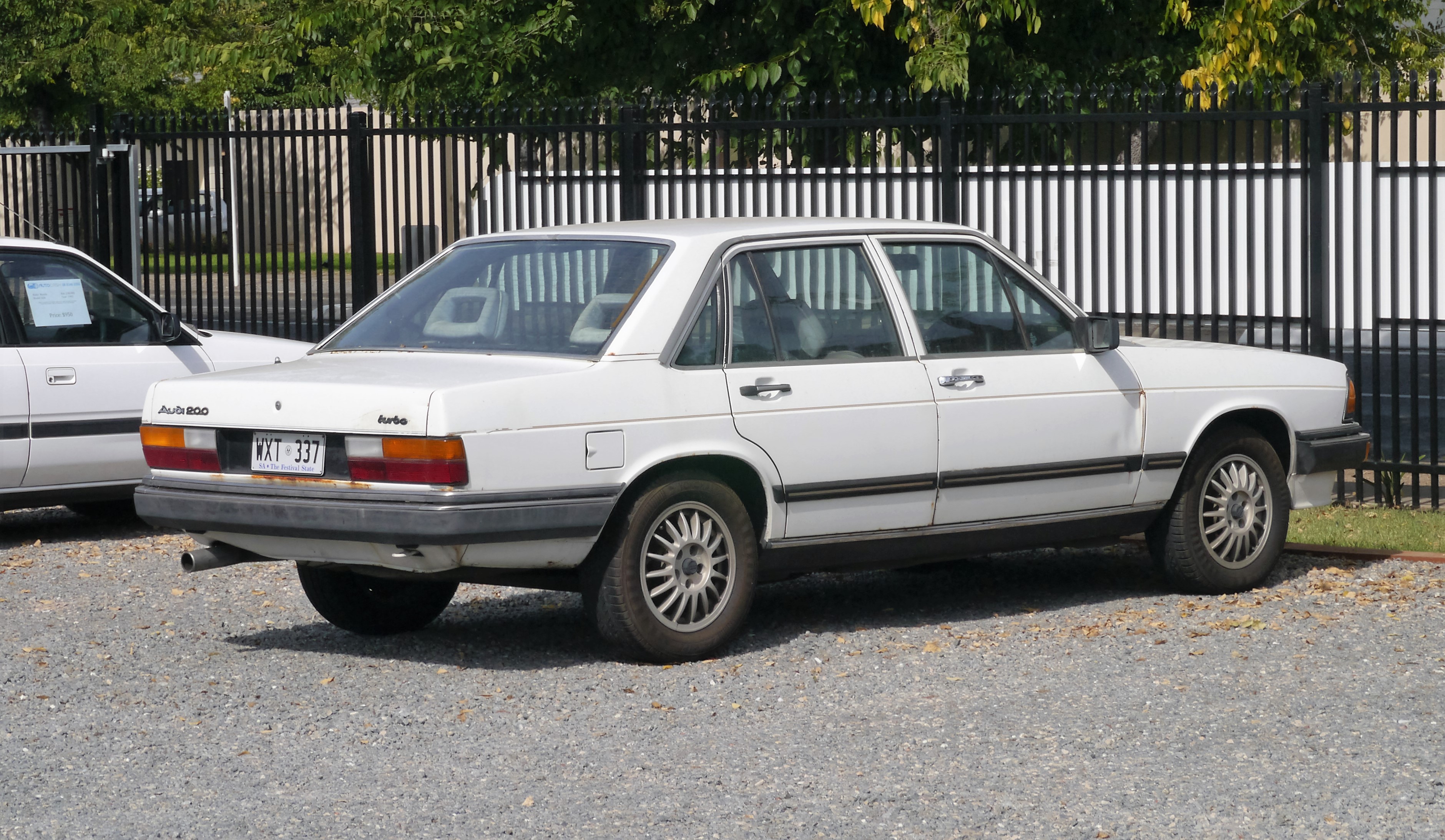
Audi 200
"... much stuff, but you stand on a stage and there's 200 people or 1000 people, or I think the biggest aud..."
The Audi 200 is a car model from Audi that’s built as a larger, more performance-focused sedan. It’s not an electric car; it’s powered by a conventional engine. The “200” is part of the model name, not a measure of electric range.
The Audi 200 is a performance-oriented sedan from Audi’s lineup, typically discussed as a more powerful, enthusiast-focused model rather than a mainstream commuter car. It’s significant because it represents an era when Audi offered higher-performance variants with advanced engineering for its time. It may be mentioned in the podcast simply as a specific car example tied to a story or comparison involving “200” people or something similar in the audio context.

Toyota Prius
"...r than your finger. I put them in the corner of a Prius that I was driving at the time. And you could dri..."
The Toyota Prius is a car that uses both gasoline and electricity. It has a battery and an electric motor, but you don’t usually plug it in like a fully electric car. It’s designed to use less fuel than a typical gas-only car.
The Toyota Prius is a hybrid electric car known for combining a gasoline engine with an electric motor to improve fuel efficiency. It often comes up in discussions about early mainstream electrification because it helped make hybrid technology widely accessible. In a podcast about electric vehicles, it may be referenced as a stepping stone toward today’s plug-in and fully electric options.
milk floats
"They said, what do you mean milk floats? Or do you mean disability vehicles? You know, they just did not know what it was."
“Milk floats” were old-school electric delivery vans used to bring milk around neighborhoods. They’re an example of early EVs that existed long before today’s electric cars.
“Milk floats” were small, low-speed electric delivery vehicles used in the UK for local milk distribution. They’re a historical example of early electric vehicles before modern EVs became mainstream.
solar panels
"and we convert it to run on electricity and batteries and put solar panels on the roof ... we do it in a solar powered van"
Solar panels are devices that turn sunlight into electricity. The idea here is to put them on the van so it can generate some of its own power.
Solar panels convert sunlight into electricity. The host’s concept is a solar-powered van, which highlights how EV charging and energy supply could be supplemented with on-vehicle generation.
electricity and batteries
"we get a catering van and we convert it to run on electricity and batteries"
EVs use batteries to store electricity, then use that stored power to move the car. The host is talking about converting a vehicle so it runs on battery electricity.
Modern EVs store electrical energy in batteries and use it to power an electric drive system. The segment frames a conversion concept: taking a non-EV vehicle and changing it to run on electricity with battery storage.
solar powered van
"But we do it in a solar powered van, which would have been impossible then."
A “solar powered van” means the van has solar panels that make electricity. The goal is to use that electricity to help power the van instead of relying only on charging from outside.
A “solar powered van” implies the vehicle can generate electricity from onboard solar panels to support its energy needs. In EV discussions, this is often about supplementing charging or reducing reliance on the grid, even though real-world output depends heavily on sunlight and energy demand.
two electric vehicles that you could get very small amount
"Back in 2009, 2010, extremely pioneering because they were like two electric vehicles that you could get very small amount."
The host is describing the early-2000s/early-2010s EV market reality: very limited availability and low production volumes. That scarcity made EVs feel experimental and “pioneering” compared with today’s broader lineup.
hydrogen vs battery-electric shift
"I don't, I wouldn't have believed them. I said they'll all be hydrogen. Because that's what [2756.3s] everyone was telling me. It'll only be hydrogen. All the buses and all the digger, everything will [2760.2s] be hydrogen. Yeah. And I didn't know it sounded plausible to me and it was much better than burning [2764.7s] diesel and petrol."
The speaker is talking about a big debate early on: should cars run on hydrogen, or on batteries? Hydrogen uses a fuel to make electricity inside the car, while battery-electric cars store electricity in a battery.
The speaker contrasts hydrogen fuel-cell expectations with the eventual rise of battery-electric vehicles (EVs). This is a real industry fork: hydrogen aims to store energy in a fuel that’s converted to electricity in a vehicle, while battery-electric cars store energy directly in onboard batteries.
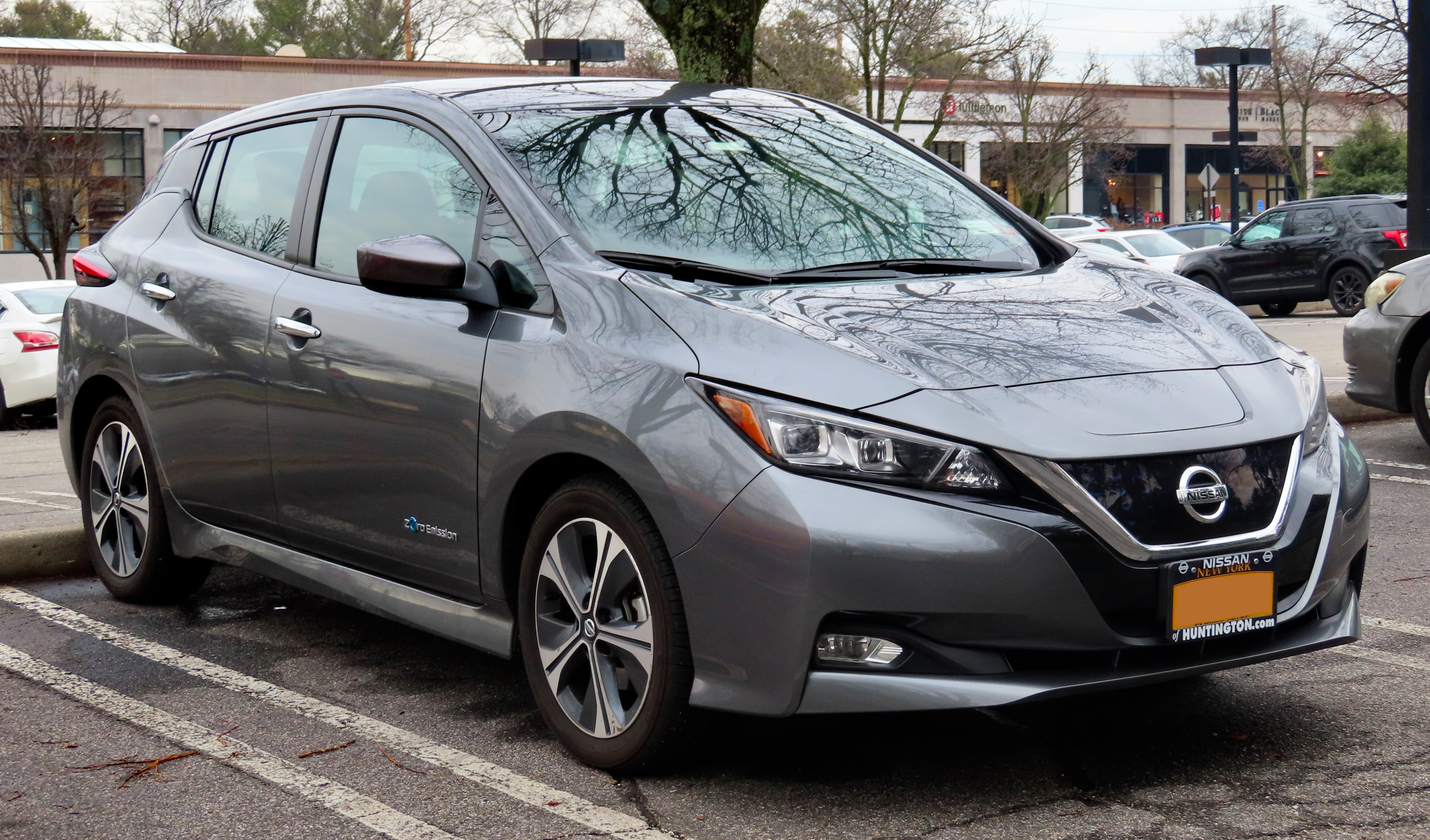
Nissan Leaf
"So when the Nissan [2775.2s] Leaf was launched, when the Renault Zoe was launched, you go, this is, and I went to the [2779.0s] Renault factory in outside Paris, I went, then taking this seriously, you know, this is a"
The Nissan Leaf was one of the first widely sold electric cars. Here, it’s mentioned as a moment when EVs stopped being “maybe someday” and started becoming real products.
The Nissan Leaf is an early mainstream mass-market electric vehicle (EV) that helped prove EVs could be practical for everyday driving. In the context of this conversation, its launch is used as a marker for when EV technology started feeling real rather than speculative.

Renault Zoe
"So when the Nissan [2775.2s] Leaf was launched, when the Renault Zoe was launched, you go, this is, and I went to the [2779.0s] Renault factory in outside Paris, I went, then taking this seriously, you know, this is a"
The Renault Zoe is an electric car that became well-known in Europe. In this discussion, it’s used as another example of EVs arriving as real, purchasable vehicles.
The Renault Zoe is a popular European battery-electric car known for being one of the more accessible EVs in its early years. The host uses its launch alongside the Nissan Leaf to illustrate a turning point toward serious EV adoption.

BYD car
"But way before, I remember seeing a BYD car at Geneva Motor Show [2792.3s] in 2009 and going, oh, they're not very good at cars. That's me, that's me, my insightful little [2803.1s] company. No, this company is never going to, that's not going to make no one's going to buy those."
BYD is a company that makes cars, especially electric ones. The speaker is saying they didn’t think BYD cars would catch on, but BYD ended up selling a huge number of cars.
BYD is a Chinese automaker that became a major EV and battery player, and the speaker references seeing a BYD car at the Geneva Motor Show. The point is about early perceptions versus eventual scale—BYD later sold millions of cars, contradicting the speaker’s initial skepticism.
Request an Explanation
Heard something you'd like explained? We'll add it to this episode.
Sign in to request explanations for terms you heard.
Want to learn more?
Browse our glossary for plain-English explanations of automotive terms, jargon, and concepts.
Help improve this episode
See something that's not quite right? Our annotations are AI-generated and can sometimes miss the mark. Click the flag icon on any annotation to suggest a correction.