
Vertical Aerospace
About this episode
Vertical Aerospace and its eVTOL path get unpacked through the lens of batteries, safety, and real-world operations. The hosts connect how battery energy density, power, longevity, and compactness made electric VTOL plausible, then dig into hover/landing power, battery degradation, and the economics versus helicopters. The conversation also covers distributed electric propulsion, tilt-rotor transition and noise reduction, plus how Vertical Aerospace designs and tests its energy storage system to prevent thermal runaway and fire propagation.
electric vertical takeoff and landing
"They're based in Bristol. And they are developing a eight rotor winged vertical takeoff and landing aircraft... including helicopters, but very specifically in aircraft that are more like the one he's working on now."
Vertical takeoff and landing means the aircraft can lift off and land straight up and down, rather than needing a runway. This is a key goal for electric aircraft because it changes how they operate.
Vertical takeoff and landing (VTOL) refers to aircraft that can take off and land without needing a runway, using lift generated by rotors or other vertical-thrust systems. In this episode, it’s central because the aircraft is designed to be fully electric and still be safe and controllable.
Vertical Aerospace
"Now, we went to see the company that we're talking about today in 2022, Vertical Aerospace. They're based in Bristol. And they are developing a eight rotor winged vertical takeoff and landing aircraft..."
Vertical Aerospace is a company working on electric aircraft that can take off and land vertically. The episode focuses on their electric “vertical flight” design and how far it’s come.
Vertical Aerospace is the company developing electric vertical takeoff and landing aircraft. In this episode, they’re presented as building an eight-rotor eVTOL platform aimed at making short, safe, legally viable flights possible.
eight rotor winged vertical takeoff and landing
"They're based in Bristol. And they are developing a eight rotor winged vertical takeoff and landing aircraft, which when we went to see it was called the VX4 back in 2022."
This describes an eVTOL-style aircraft configuration: multiple rotors provide vertical lift, while the “winged” part helps with forward flight efficiency. The “eight rotor” detail matters because rotor count and layout strongly affect control, redundancy, and how the aircraft transitions between hover and cruise.

VX4
"...which when we went to see it was called the VX4 back in 2022. It's now called the Velo or the Velo."
VX4 is the earlier project name for Vertical Aerospace’s electric vertical takeoff aircraft. The hosts say it was called VX4 when they visited in 2022, and later it got a different name.
The VX4 is the earlier name for Vertical Aerospace’s electric vertical takeoff and landing aircraft project. It’s mentioned as the label used when the hosts visited the company in 2022, before the aircraft was later referred to with a new name.

Velo
"It's now called the Velo or the Velo. I'm not sure how you say it. And it's a more sophisticated the latest iteration of this they've been testing..."
Velo is the name for Vertical Aerospace’s newer electric vertical takeoff aircraft. The hosts connect its progress to better batteries that make this kind of flight more practical.
Velo is the name used for Vertical Aerospace’s latest iteration of its electric vertical takeoff and landing aircraft. The episode frames it as a more advanced version of the earlier VX4 concept, enabled by improvements in battery technology.
batteries
"But I'll tell you the thing that really has changed the whole picture... is batteries. ... advanced to such a huge degree that it is now possible to have the energy density, the power really importantly, the longevity and the lightness and the compactness to make a fully electric aircraft plausible."
Batteries are what provide the electricity for the aircraft to fly. The hosts say better batteries now store more energy, deliver more power, last longer, and are lighter and smaller—making electric flight more realistic.
In electric aviation, batteries are the energy source that determine whether an aircraft can produce enough power for lift and also carry enough total energy for a practical flight. The episode highlights battery improvements in energy density, power, longevity, and weight/size as the breakthrough that makes electric VTOL plausible.
power
"...possible to have the energy density, the power really importantly, the longevity and the lightness and the compactness..."
Power is how much electricity the battery can deliver quickly to the motors. For vertical takeoff, the aircraft needs a lot of thrust right away, so power matters a lot.
Power here refers to how quickly the battery system can deliver electrical energy to the motors. For VTOL, peak power demands are high because the aircraft must generate enough thrust for vertical lift, not just cruise.
longevity
"...the power really importantly, the longevity and the lightness and the compactness to make a fully electric aircraft plausible."
Longevity means how long the battery can keep working well over time. In aircraft use, batteries that don’t last as long can mean more downtime and replacement.
Longevity in this context means how long the battery can keep performing reliably through many charge cycles and operating conditions. For aircraft, longevity affects maintenance schedules, replacement cost, and overall operational viability.
fully electric aircraft
"...to make a fully electric aircraft plausible. And that is what we're talking about today."
A fully electric aircraft is powered by electricity for propulsion, not a gas engine. The hosts say better batteries are what make this idea realistic now.
A fully electric aircraft uses electric propulsion as its primary source of thrust rather than relying on a combustion engine. The episode argues that recent battery advances make this kind of all-electric VTOL concept technically plausible.
eVTOL
"We're not doing, there's nothing contentious in this episode as regards the transition to electric ground transport. We're not talking about ground transport, talking about airplanes, things that fly much quieter and much cheaper and much more efficiently sustainably."
eVTOL means electric planes that can take off and land straight up and down. That’s the key feature that makes them different from normal airplanes.
eVTOL stands for electric vertical takeoff and landing. It describes aircraft that use electric motors to lift off and land vertically, which is the core idea behind many “flying car” concepts.
VX4 EV
"we went to see Vertical Aerospace in 2022. I had to look it up to check that I couldn't remember exactly when it was and we saw the VX4 EV toll in the flesh and it was amazing."
The VX4 EV is an electric aircraft made by Vertical Aerospace. It’s built to take off and land vertically, which is why it’s often compared to “flying taxis” rather than normal airplanes.
The VX4 EV is Vertical Aerospace’s electric vertical takeoff and landing (eVTOL) aircraft. Unlike a traditional car, it’s designed to lift off and land vertically, aiming to make short trips more efficient and quieter than conventional aviation.
electric propulsion
"both in Vertical Aerospace and also for electric propulsion for vertical takeoff and landing [371.9s] aircraft in general over the last 10 years."
Electric propulsion is when an aircraft uses electric motors to move instead of a traditional engine. It matters a lot for vertical flight because the motors have to provide strong lift fast.
Electric propulsion means using electric motors powered by onboard energy storage (like batteries) instead of burning fuel in an engine. For vertical takeoff and landing aircraft, electric propulsion is crucial because it must deliver high power quickly to lift and control the aircraft.
hover
"these electric propulsion systems have enough power to hover [406.1s] this car in the air. He's like, I just want to reach up and press a button."
Hover means staying in the air without moving much. For vertical flight, it’s a big test because the system has to keep providing lift steadily and smoothly.
Hover is the ability of a vehicle to stay suspended in the air with minimal vertical or horizontal movement. For electric vertical flight, hovering is a key performance milestone because it demands sustained power and precise control of thrust.
tilt rotors
"I started working on helicopters and [444.7s] tilt rotors in 1989."
Tilt rotors are a way to make a vertical-lift aircraft also fly forward. The rotors can tilt so the thrust direction changes from lifting you up to pushing you ahead.
Tilt rotors are a VTOL design where rotors can rotate (tilt) to change thrust direction—typically from vertical lift to forward flight. This segment contrasts earlier turbine-powered vertical takeoff and landing work with the company’s more recent electric focus.
energy storage systems
"And then if you go just take a look at energy storage systems in [470.4s]"
Energy storage systems are what the aircraft uses to store electricity for later use. In electric aircraft, this affects how long it can fly and how strongly it can lift.
Energy storage systems are the onboard devices that store usable energy for later power delivery—most commonly batteries in modern electric vehicles and eVTOL concepts. For electric propulsion, the energy storage system largely determines how long the aircraft can fly and how much power it can deliver for hover.
energy density
"And it had to get to this certain point of energy density and power density, right? To be able to have a performance model and an economic model that made sense for vertical"
Energy density is basically “how much energy you can pack into a battery for its size and weight.” If it’s higher, the aircraft can go farther or carry enough energy to do demanding maneuvers without becoming too heavy.
Energy density is how much energy a battery or fuel can store per unit of weight (or volume). For electric aircraft, higher energy density means you can store more energy without adding too much mass, which directly affects how long you can fly and how practical the design is.
airliner safety standard
"that is within the realm of one and a billion. That's the one dimes 10 to the minus nine airliner safety standard that we're surfing in this aircraft."
An airliner safety standard is the very strict safety level that commercial passenger planes are expected to meet. The point is that these electric VTOL aircraft are being designed with similarly tough safety expectations.
An airliner safety standard is a regulatory/safety benchmark used for commercial passenger aviation. The host implies the aircraft’s design and risk controls are being held to a stringent level, including extremely low probabilities of catastrophic outcomes.
flying formation
"Yeah. I think that, again, the motors evolve so much in parallel, right? It's flying formation, as somebody said. You have these technologies that are flying formation, right?"
“Flying formation” is a metaphor meaning the different parts of the technology are improving together. The idea is that batteries, motors, and the aircraft design all have to reach a workable level at the same time.
“Flying formation” here is a metaphor for multiple technologies advancing together toward maturity. The host uses it to argue that motors, batteries, and the aircraft’s propulsion/airframe design are all evolving in parallel rather than one improving while others lag.
propeller systems
"The aircraft configuration, the distributed electric propulsion and the propeller systems, those are flying formation with the ability to be able to take this new type of aircraft and this new type of operation"
Propeller systems are the parts that turn the motor’s power into forward or lifting thrust using spinning blades. For electric aircraft that take off and land vertically, the propellers have to be controlled very precisely.
Propeller systems are the complete set of components that convert motor power into thrust via rotating blades. In electric VTOL aircraft, propeller design and control are tightly integrated with motor output and safety requirements because thrust must be modulated precisely during takeoff, hover, and landing.
urban mobility
"and the ability to be able to take this new type of aircraft and this new type of operation, right? Urban air mobility, power lift configurations and train pilots and train maintainers."
Urban air mobility is the idea of using aircraft to travel around cities, often for short trips. It pushes the technology and the “supporting system” to work reliably in everyday operations.
Urban air mobility (UAM) is the concept of using aircraft—often VTOL-capable—to move people or cargo within and around cities. The host frames it as an operational target that drives requirements for aircraft configuration, propulsion, and the supporting ecosystem like training and maintenance.
go around
"the requirements in terms of how much power you may need to get out in an emergency [686.1s] situation at the end of a flight, plus a provision for some type of delay in that flight plan, [695.2s] whether it's you have to do a go around or you have to divert to an alternate,"
A go around is when an aircraft decides not to land and instead climbs back up to try again. In this discussion, it affects how much power the battery must be able to provide safely.
A go around is a procedure where an aircraft aborts an approach/landing and climbs away to try again. The segment treats go-arounds and diversions as “unknowns” that increase the worst-case power requirement the battery must still support.
divert to an alternate
"whether it's you have to do a go around or you have to divert to an alternate, you add all of [700.1s] those unknowns together, right, to this worst case"
Diverting to an alternate means you land somewhere else instead of your original destination. The point here is that it changes the flight plan, so the battery has to still have enough power to handle it.
Diverting to an alternate means landing at a different airport than originally planned due to weather, traffic, or other issues. In the segment, diversions are part of the worst-case planning that drives how much emergency/landing power the battery system must retain.
battery cells
"The [716.0s] pessimists are saying, wow, okay, the battery cells are going to degrade to the point that you [720.2s] no longer have that guarantee of so much power at a low state of charge"
Battery cells are the individual electrochemical units inside a battery pack that store and deliver electrical energy. The segment discusses how battery cells degrade over time, which can reduce the maximum power available—especially at low state of charge—affecting emergency and hover-landing capability.
low state of charge
"no longer have that guarantee of so much power at a low state of charge, then you have to replace it. [726.3s] And we're like, exactly."
Low state of charge means the battery has very little energy left. The worry is that when the battery is nearly empty, it may not be able to push out enough power when you need it most.
Low state of charge (SoC) means the battery is near empty. The concern raised is that at low SoC, degraded battery cells may not be able to deliver the same peak power needed for emergency maneuvers and hover landing.
battery pack
"you have to replace it. [726.3s] And we're like, exactly. But when you build that into the economic model, you'll see that the cost [733.2s] of replacing battery packs, say, every year, right, every year of a fairly high utilization"
A battery pack is the full battery system in the vehicle, made from many smaller battery cells. Here, they’re discussing whether the pack will need replacement as it ages and gets used heavily.
A battery pack is the assembled system of many battery cells (plus supporting electronics and structure) used to power a vehicle. The segment models economics around replacing battery packs on a regular schedule due to degradation and utilization demands for VTOL operations.
total operating cost per seat mile
"to your total operating cost per seat mile, you'll see that the replacement parts and the [756.5s] maintenance costs are still much lower than the alternate being a mechanical helicopter."
This is a way to measure how expensive it is to operate per passenger per mile. They’re using it to compare the long-term costs of battery replacements against the costs of helicopters.
Total operating cost per seat mile is a unit economics metric that spreads operating expenses across the number of passenger seats and miles flown. The segment uses it to compare the cost impact of battery pack replacement versus the alternative of operating a mechanical helicopter.
mechanical helicopter
"replacement parts and the [756.5s] maintenance costs are still much lower than the alternate being a mechanical helicopter."
A mechanical helicopter is the traditional kind of helicopter that uses an engine to spin the rotors. They’re comparing its operating costs to the electric VTOL concept.
A mechanical helicopter refers to a conventional helicopter powered by an engine and driving rotor(s) through mechanical systems. The segment contrasts this with electric VTOL economics, arguing that maintenance and replacement costs could be lower for the electric approach.
gearboxes
"Because the main is cost of mechanical helicopters are so high because the turbines and the gearboxes are critical."
A gearbox is a mechanical part that adjusts how fast and how much power the engine sends to the rotors. If the gearbox breaks, the helicopter can’t operate, which makes it a costly component to maintain.
A gearbox is a set of gears that changes speed and torque from the engine to the rest of the drivetrain. In helicopters, the gearbox is critical because it transfers power to the rotors, so failures are expensive and can ground the aircraft.
turbine
"Because the main is cost of mechanical helicopters are so high because the turbines and the gearboxes are critical."
A turbine is a type of engine that uses hot, fast gas to spin a shaft. If it has a problem, the aircraft can’t fly, so it’s expensive and takes a lot of maintenance to keep it working.
Turbines are engines that extract energy from a fast-moving flow of gas (usually hot exhaust) to spin a shaft. In helicopters, turbine engines are a major driver of cost and complexity because they’re critical to flight and require specialized maintenance.
bearing
"precision machined pieces, lubrications, cooling systems, bearings, all those things that wear out"
Bearings are parts that help moving metal parts rotate smoothly with less friction. Over time they wear out, and replacing them can require maintenance and take the aircraft out of service.
Bearings are components that reduce friction between moving parts, allowing shafts and rotating assemblies to spin smoothly. They wear out over time, and in complex aircraft drivetrains they contribute to both maintenance workload and downtime.
cooling systems
"precision machined pieces, lubrications, cooling systems, bearings, all those things that wear out"
Cooling systems keep hot parts from overheating. When you’re dealing with very powerful equipment, you need reliable cooling, and that adds complexity and maintenance needs.
Cooling systems manage heat in engines and power electronics so components stay within safe operating temperatures. In high-power aircraft systems, cooling is part of what makes the hardware complex and drives ongoing maintenance.
vertical takeoff landing
"Got a whole lot bigger when electric propulsion technology became feasible for vertical takeoff landing."
Vertical takeoff and landing means the aircraft can lift up and land straight down without a runway. The guest is saying electric motors only became practical once VTOL needs could be met.
Vertical takeoff and landing (VTOL) refers to aircraft that can lift off and land without needing a runway. The speaker connects VTOL to the feasibility of electric propulsion for aircraft that must operate in hover-like conditions.
Cambridge
"Here's an example, Cambridge. So I was in Cambridge a few weeks ago and they have a plan [979.3s] to increase the number of homes in Cambridge from 25,000 to 200,000 in 15 years."
Cambridge is mentioned as an example of a busy, growing area. The point is that getting people and supplies around can be hard, which makes new mobility ideas more appealing.
Cambridge is used here as a real-world example of a dense, growing tech region where mobility and infrastructure constraints become a major planning challenge. The speaker uses it to illustrate why new air-mobility concepts could be valuable.
Bristol
"It took me six hours, six and a half hours to get there from Bristol. And that was largely [1000.1s] because there was a train problem, but you have to connect multiple times."
Bristol is the other city in the example. The speaker is saying that traveling between Cambridge and Bristol is slow and complicated, so people can’t easily make regular trips.
Bristol is referenced as a destination for suppliers and startups, forming part of a cross-city “tech corridor” with Cambridge. The speaker highlights how long travel times and limited direct routes make frequent trips difficult.
community acceptance
"the community acceptance and you don't have the infrastructure. And the community acceptance is driven by three Achilles heels that helicopters have."
Community acceptance means whether local people are willing to live with and support the technology. The speaker is saying electric helicopters could be more acceptable because they may solve several community concerns.
Community acceptance is the idea that local residents and regulators will support a technology only if it addresses concerns like safety, noise, and day-to-day impact. The speaker frames electrified vertical flight as a way to overcome barriers that have limited helicopter adoption in cities.
Achilles heel
"And the community acceptance is driven by three Achilles heels that helicopters have."
“Achilles heels” means the biggest weak spots. The speaker is saying helicopters have a few major problems that make people hesitate to accept them in cities.
“Achilles heels” is a metaphor for a technology’s biggest weaknesses—factors that most strongly limit adoption or performance. Here, the speaker lists three major weaknesses for helicopters: safety perception, passenger experience/comfort, and the ability to get enough power quickly.
passenger experience
"The second is just the passenger experience, the comfort level."
Passenger experience is how comfortable and easy the ride feels for the people inside. The speaker is saying that for helicopters to be accepted in cities, the ride has to feel good to passengers.
Passenger experience refers to how riders perceive comfort, ease, and overall usability during a trip. In the segment, it’s one of the key “acceptance” hurdles for helicopters in cities, alongside safety perception and operational practicality.
electric vehicle aircraft
"And so now what we want to tell them is you say, okay, in the 2030s, you will all have had an opportunity to step in an electric vehicle aircraft and take the flight."
It means a plane that flies using electricity to power its engines, instead of regular fuel. The idea is that passengers will get a new kind of flight experience that’s quieter and cleaner.
An electric vehicle aircraft is an aircraft that uses electric propulsion (electric motors powered by batteries or other onboard electrical energy) instead of a traditional fuel-burning engine. In this context, the host is framing future flight experiences as electric, passenger-focused aviation rather than conventional helicopters.
vertical takeoff and landing aircraft
"And if I ask this question again, in the 2030s, I'm going to see the hands go up marks, the helicopter, we're going to say vertical takeoff and landing aircraft."
This is an aircraft that can take off and land straight up and down. That means it doesn’t need a long runway like many planes do.
A vertical takeoff and landing aircraft (VTOL) can lift off and land vertically, without needing a runway. The host contrasts this with helicopters by arguing that VTOL electric aircraft will deliver a more comfortable, safer passenger experience and help adoption.
bend the innovation curve
"Because that's the, that's the difference maker. That's what's going to allow us to bend the innovation curve is that we're going to provide a passenger experience that"
It’s a way of saying they want people to adopt the new technology faster than they otherwise would. The host thinks passenger comfort and safety will make that happen.
“Bend the innovation curve” is a metaphor for accelerating how quickly new technology gets adopted. Here, the host claims that improving passenger experience with electric VTOL aircraft will speed up acceptance and deployment.
tilt rotor configuration
"And that's why they're so excited about the technology. And you look at all kinds of examples in New York City... And it's one of the advantages of not only the electric propulsion, but also the tilt rotor configuration. So in the tilt rotor configuration, the aircraft..."
A tilt rotor configuration is a design where the propellers can tilt to help the aircraft take off and land vertically. Then they tilt again so the plane can fly more efficiently like a normal aircraft.
A tilt rotor configuration is an aircraft design where rotors (or propellers) can change their orientation during flight. The goal is to combine vertical takeoff/landing with more efficient forward flight, by transitioning from rotor-thrust to wing-based aerodynamic lift.
thrust-borne mode
"So in the tilt rotor configuration, the aircraft, the VALO will only operate in a thrust-borne mode for seconds, less than a minute. So it takes off and it lands vertically..."
Thrust-borne mode is when the aircraft is basically held up by the propellers pushing air downward/upward, not by the wings. It’s used for vertical takeoff and landing.
Thrust-borne mode is when the aircraft is supported primarily by the thrust produced by its rotors/propellers rather than by aerodynamic lift from the wings. This is typical during vertical takeoff and landing, where the aircraft needs strong upward force quickly.
wing-borne condition
"And then when they get to a wing-borne condition, the four propellers are forward and the four in the back stop and still into an aerodynamically efficient configuration."
Wing-borne condition is when the wings are doing most of the work to keep the aircraft in the air. After takeoff, the aircraft transitions from propeller-only support to normal wing lift.
Wing-borne condition refers to the phase of flight where the aircraft’s wings provide most of the lift. After the tilt-rotor transition, the propellers are oriented to support forward flight while the wings carry the aerodynamic load more efficiently.
acoustic excitations
"So it's much slower. And then the slower they spin and only four spinning instead of eight, the acoustic excitations of the propeller spinning goes way down..."
Acoustic excitations are the things that make noise—like the propellers creating vibrations and pressure waves. If fewer rotors spin or they spin differently, the sound can drop.
Acoustic excitations are the sources of sound produced by vibrating or oscillating aerodynamic forces—here, primarily from propellers/rotors. Reducing the number of spinning rotors and changing how they operate can lower these sound-producing effects.
blended tone
"...and it stays as a bit of a blended tone because there are four."
A blended tone means the noise isn’t one sharp, repeating note. Instead, multiple rotor sounds mix together, which can make the overall sound less harsh.
A blended tone is a noise character where multiple sound frequencies combine into a less “single-note” sound. In rotorcraft, spreading or mixing rotor speeds can reduce the distinct, repetitive tonal peaks that make noise more noticeable.
yaw
"And the four change their RPMs as a way to control the aircraft in yaw."
Yaw is the aircraft turning left or right, like swiveling its nose. The pilot can manage it by adjusting how the rotors produce thrust.
Yaw is rotation of the aircraft around its vertical axis—essentially turning left or right. For rotorcraft, yaw control is often achieved by creating different thrust levels (or rotor speeds) across the aircraft.
acoustic vortices
"acoustic vortices. Instead, you have this blend and then the blend is so soft because they're spinning slowly."
This is a way of describing a special kind of sound pattern—like sound waves swirling around. The host is saying their design avoids that kind of noise and instead produces a softer sound.
“Acoustic vortices” are swirling patterns in sound waves that can create distinctive noise characteristics. In this context, the speaker is contrasting how different rotor/propulsion setups generate noise, and how the new system avoids the specific vortex-like sound behavior.
tail rotor
"And you don't have the wind of a turbine. And you don't have the tone of a tail rotor that you have on helicopter."
On a helicopter, the main rotor tries to twist the body. The tail rotor is like a counter-rotating fan that keeps the helicopter from spinning the wrong way.
A tail rotor is the smaller rotor on a helicopter’s tail that counters the main rotor’s torque, helping the aircraft stay pointed in the intended direction. The speaker compares the “tone” of a tail rotor to the noise signature of the electric propulsion system.
Cotswolds
"And we've been doing this at our flight test center in the Cotswolds, you say, hey, come in as low as you can."
The Cotswolds is an area in England. The host is saying they did these flight tests there, which makes the noise claims more credible.
The Cotswolds is a region in England where the speaker says they conduct flight testing. Mentioning the location helps ground the discussion of real-world test conditions for the aircraft’s noise and flight behavior.
wing-borne mode
"So getting into the wing-borne mode as a tail rotor and the electric propulsion drives the sound so that it will not be perceptible in an urban environment."
This means the plane is flying more like a normal airplane, with the wings doing most of the lifting. The host is saying that in this mode the sound becomes much less noticeable.
“Wing-borne mode” is a flight state where the aircraft’s wings provide most of the lift, rather than relying on rotor lift. The speaker is describing how the aircraft transitions into this mode and how the electric propulsion changes the resulting noise.
Honkuk
"This episode is brought to you by Honkuk. The Honkuk Ion tyre is built exclusively for electric vehicles engineered to deliver what EV drivers need most."
Honkuk is a tire brand. In this ad, they’re saying their tires are designed specifically for electric cars and racing in Formula E.
Honkuk is presented here as a tire brand making an EV-focused product line. In the segment, it’s positioned as the official tyre partner of Formula E and as supplying technology for electric-vehicle tires.
Formula E
"As the official tyre partner of Formula E, Honkuk proves its EV technology is at the highest level of performance and brings that same innovation to every Ion tyre on the road."
Formula E is a racing series for electric cars. Brands often use it to show their EV parts can handle demanding performance conditions.
Formula E is an electric-car racing series used as a technology proving ground for EV powertrains and related components. The segment uses it to support the tire brand’s claim of high-level EV performance engineering.
Liverpool Bay
"There was a time we flew at sort of a wind turbine height through the big wind farm off Liverpool in Liverpool Bay."
Liverpool Bay is a body of water off Liverpool in the UK. The host mentions it while describing a wind-farm flight test and the noise level inside the helicopter.
Liverpool Bay is the coastal area off the UK city of Liverpool. The speaker references flying near a large wind farm there to describe how loud the helicopter environment was and how they used instrumentation during the flight.
twin engine helicopter
"it was probably a twin engine helicopter. It had to fly over part of Liverpool to get out to where we were going."
This is a helicopter with two engines instead of one. If one engine has a problem, the other can help keep the helicopter flying, which is especially important during takeoff and landing.
A twin-engine helicopter uses two separate engines to power the rotor system. Having two engines matters for safety and performance because the aircraft can keep flying if one engine fails, especially during takeoff and landing.
category A type operations
"by procedure, by regulation, these transport category rotorcraft, twin engine rotorcraft, are operating in category A type operations or performance class one"
This is a rules-based safety category for certain helicopters. It means the helicopter has to be able to handle an engine failure in the most dangerous parts of flight, like takeoff or landing.
Category A type operations (for transport-category rotorcraft) is a regulatory safety classification that sets strict requirements. It’s tied to how the aircraft must handle engine failures during critical phases like takeoff and landing.
performance class one
"category A type operations or performance class one, where they have to be able to show the same safety margin and same fault tolerance that an airliner has"
This is a safety/performance standard used in aviation. It means the aircraft has to be able to keep you safe even if something fails during takeoff or landing.
Performance class one is an aviation performance/safety standard for certain aircraft operations. It requires the aircraft to demonstrate a high level of safety margin and fault tolerance comparable to an airliner during critical phases.
safety margin
"where they have to be able to show the same safety margin and same fault tolerance that an airliner has"
Safety margin is the buffer between what the aircraft needs to do and the limits it can safely operate within. Here, it’s used to describe how much extra capability the helicopter must retain if an engine fails during takeoff or approach.
takeoff decision point
"where if an engine failure happens at any point in the takeoff or approach to landing phases, the critical phases, the aircraft can then either land safely, reject and land safely"
TDP is a specific moment during takeoff when the pilot/aircraft must be able to make a safe choice. Before and after that point, the helicopter’s options and required performance are different.
The takeoff decision point (TDP) is the moment during takeoff when the aircraft must be able to either continue safely or reject the takeoff. After TDP, the helicopter’s performance assumptions change because it has gained enough speed and altitude.
TDP
"there's a certain altitude that will set that TDP. You fail off one engine, and then the other engine has to go to an emergency power rating."
TDP is short for takeoff decision point. It’s the altitude/moment where, if an engine fails, the helicopter has to switch to emergency power to keep things safe.
TDP stands for takeoff decision point. The speaker explains that there’s a certain altitude that sets TDP, and if one engine fails at that point, the remaining engine must provide emergency power.
torque
"and drive so much torque into that side of the gearbox, then you have to size your gearboxes"
Torque is the “twist” that makes a motor or engine turn harder. More torque usually means more stress and heat in the parts that transfer power.
Torque is the twisting force that makes a rotating system accelerate or move. The speaker uses it to describe how emergency power can push large torque through the gearbox and drivetrain, which drives heat and stress.
translational lift
"once you get a couple seconds after TDP, the helicopter has enough speed that it has translational lift, which drops the power off and it's just a climb."
Translational lift is extra lifting force that shows up when the helicopter starts moving forward faster. Once it has enough speed, it doesn’t need as much power to keep climbing.
Translational lift is extra lift a helicopter generates when it gains forward speed. The speaker contrasts this with the hover/vertical lift phase, explaining that after a few seconds past TDP, the helicopter can reduce power because translational lift helps.
transfer function
"...There's a transfer function in there that takes time, whereas the electrons create an electromagnetic torque so quickly..."
A transfer function is a way engineers describe how a system’s output changes when you change the input. The speaker is saying some parts of the system respond more slowly than the electric motor’s torque.
A transfer function is a mathematical description of how a system responds from input to output over time. Here, it’s contrasted with how quickly electric drive can generate torque, implying that some mechanical/dynamics effects take longer to respond.
air ambulance helicopter use
"...one of the real key things, as you mentioned, when you were in Miami... with air ambulance, helicopter air ambulance... the ability to get medics to a remote location..."
They’re talking about how helicopters can get doctors and medics to remote or hard-to-reach places fast. The point is that this kind of aircraft could help do that even better.
The hosts discuss how helicopter air ambulance operations can reach remote locations quickly and bring medical teams to patients. They connect that capability to why this kind of aircraft technology could be well-suited for air medical missions.
golden hour
"loved one was in an accident and needed to get to a hospital inside of that golden hour, they could get you there."
The “golden hour” is the critical period after a serious injury when rapid medical treatment can greatly improve outcomes. The speaker frames VTOL air transport as a way to get patients to a hospital within that time window.
helipad
"I asked, I said, wow, I see a, I see a helipad here. I said, how often is that used?"
A helipad is a marked landing spot for aircraft like helicopters at a hospital or building. The speaker’s point is that even if one exists, budgets can limit how often it can realistically be used.
A helipad is a designated landing area for helicopters (and other rotorcraft/VTOL aircraft). The speaker uses a hospital helipad example to explain why limited funding can restrict how often it’s used.
combustion cars
"in terms of, I mean, my experience now, you know, I mean, I think I feel in a lucky position in that I've driven combustion cars for, I don't know, 40 years before I drove electric cars."
“Combustion cars” refers to vehicles powered by internal combustion engines that burn fuel to make power. The speaker contrasts their experience maintaining these cars with their experience maintaining electric cars.
oil filter changes
"I've been there. Yeah. And it's got, especially if you, especially if you like to keep your cars long. Yes. My wife's, my wife's car is 20 years old."
This refers to routine maintenance on combustion cars involving changing engine oil and the oil filter. The speaker lists it as part of the typical set of things that can go wrong or require servicing on gas vehicles.
gaskets
"servicing of spare parts of oil, of filtered changes of gaskets go, you know, everything that can go wrong with a with a combustion car"
Gaskets are seal-like parts that stop fluids from leaking where engine parts meet. The speaker is saying that gas cars can have issues with parts like these over time.
Gaskets are sealing parts used in engines and other systems to prevent leaks between components. The speaker mentions gaskets as part of the kinds of mechanical items that can wear out or fail on combustion cars.
heat treated
"they have to be heat treated and they have to be coated and they have to be inspected"
Heat treatment is when manufacturers heat and cool metal in a controlled way to make it stronger. For gears, it helps them resist wear and handle heavy forces.
Heat treatment is a manufacturing process that alters a metal’s internal structure to improve strength, hardness, and wear resistance. For gears, heat treatment is critical because the parts must survive repeated high-stress loading.
significant digit tolerances
"meet really, really high number of significant digit tolerances. And when you look at that"
Tolerances are how precisely a part has to be made. The tighter the tolerance, the more exact the dimensions must be—especially for gears that need to mesh correctly under load.
Tolerances are the allowed variation in a manufactured part’s dimensions. “Significant digit tolerances” here emphasizes extremely precise gear geometry requirements, where even tiny deviations can affect performance and durability.
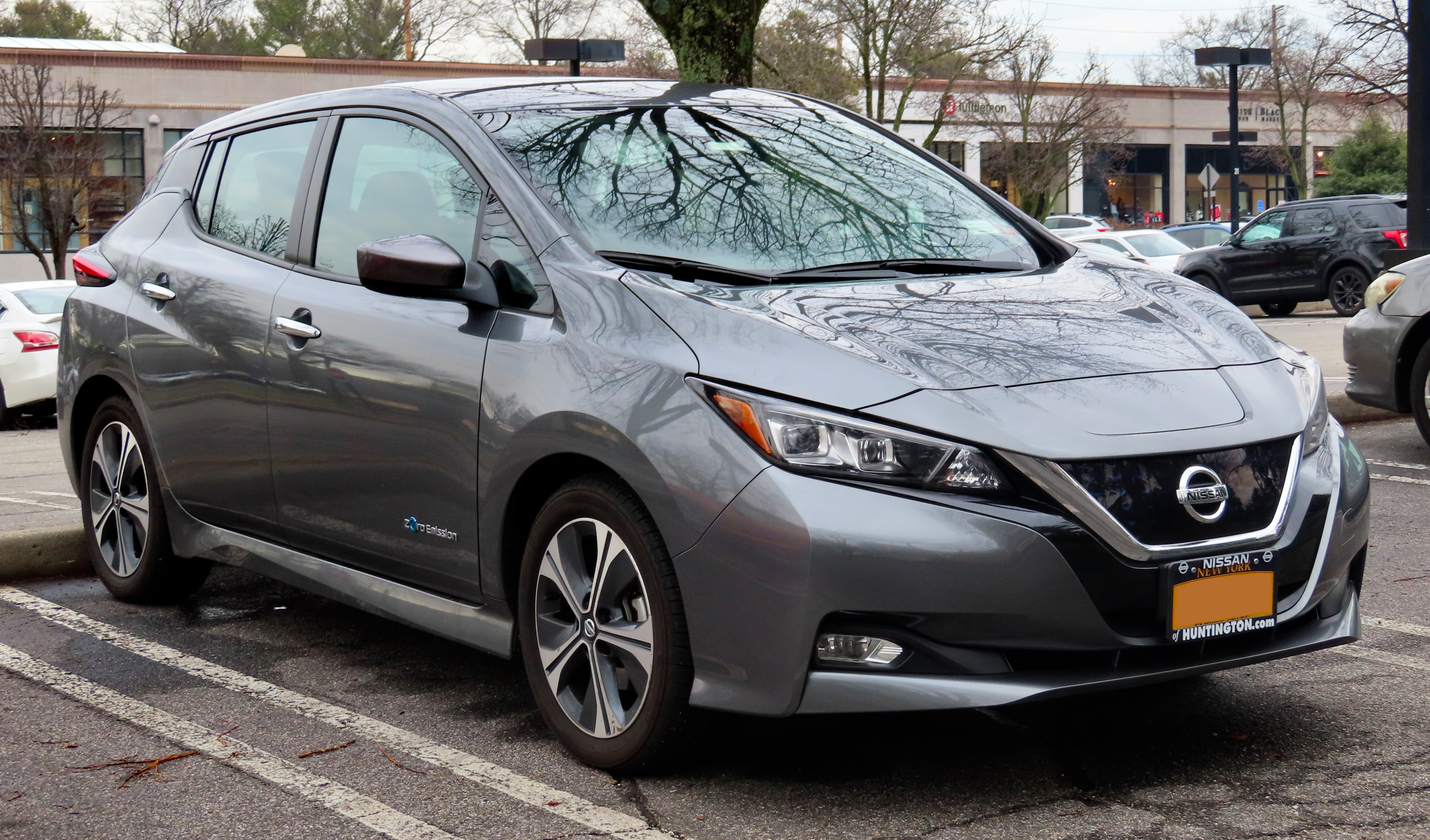
Nissan Leaf
"I have, what is it now? 16 year old Nissan Leaf. Lots of things have gone wrong with it. It's not a perfect car."
The Nissan Leaf is an electric car. The point here is that, unlike many gas cars, the electric motor can require very little maintenance over a long time—at least in the owner’s experience.
The Nissan Leaf is a mass-market electric car that’s often used as a real-world example of EV ownership and maintenance differences. In this segment, the host highlights that after 16 years, the motor hasn’t needed attention—contrasting EVs with more maintenance-heavy mechanical drivetrains.
transport category rotorcraft
"a transport category rotorcraft will have in the hundreds, if you count the piece parts that are critical, such that if they were to fail, the helicopter will go down and result in a catastrophe."
This is a helicopter that’s certified to carry people or cargo. The idea is that it has to meet strict safety standards, so it has lots of parts that are considered “must not fail.”
A “transport category rotorcraft” is a helicopter type certified for carrying passengers or cargo under stricter safety rules. In this context, the host is contrasting how many critical components such a helicopter has versus an EV aircraft design, to explain inspection and overhaul workload.
critical parts
"if you count the piece parts that are critical, such that if they were to fail, the helicopter will go down and result in a catastrophe... you have just a handful of critical parts that need to go through the inspections and the overhauls"
These are the parts of a vehicle that, if they break, could cause a serious accident. The host is saying EV aircraft designs may have fewer of these high-risk components to manage.
“Critical parts” are components whose failure would be catastrophic—meaning the aircraft could be lost. The host uses this to argue that an EV aircraft has fewer critical parts to inspect and overhaul compared with a conventional transport helicopter.
hub comes apart
"If a hub comes apart, right? If you shaft in the hub, just shears through and throws all four blades."
On a helicopter, the hub is the center piece where the rotor blades attach. If it fails, the blades can separate and become extremely dangerous, which is why it’s considered a critical failure point.
In rotorcraft, the “hub” is the central mounting point where rotor blades attach. The host’s example—“hub comes apart” leading to blades being thrown—illustrates why certain rotor components are treated as critical for safety.
shears through
"If you shaft in the hub, right? If you shaft in the hub, just shears through and throws all four blades."
This means a part breaks because of sideways forces, like it can’t handle the twisting/pushing load. The host is using it to describe how a rotor failure could quickly become catastrophic.
“Shears through” describes a failure mode where a part breaks due to shear forces—forces that push layers to slide past each other. The host uses it to explain how a rotor hub failure could mechanically propagate into blade loss.
overhaul
"you have just a handful of critical parts that need to go through the inspections and the overhauls instead of hundreds."
An overhaul is more than routine maintenance—it’s a deeper service where important parts are checked and often rebuilt or replaced. It’s done to keep the aircraft safe for continued use.
An “overhaul” is a major maintenance event where components are inspected, repaired, or replaced to restore them to safe operating condition. The host contrasts frequent, large-scale overhaul needs (hundreds of critical parts) with fewer critical parts on an EV aircraft design.
chase aircraft
"we have a chase aircraft... you'll see some flights, and then you'll see a helicopter flying behind it. So the helicopters flying chase just to be an extra set of eyes to the test model."
A chase aircraft is like a support vehicle in the air that stays near the test plane. Its job is to watch what’s happening and help the team during testing.
A “chase aircraft” is an aircraft that flies alongside a test vehicle to observe it and provide additional safety and situational awareness. Here, the host explains that helicopters are used as chase platforms to act as extra “set of eyes” during flight testing.
automotive type cells
"It takes these cells, which are automotive type cells, right? It takes the automotive cells, cylindrical cells are the ones that we're using, but packages it in a way that meets the safety requirements."
“Automotive type cells” refers to battery cell designs commonly used in road vehicles, typically engineered for high power, durability, and safety under automotive operating conditions. Here, they’re saying their aircraft energy storage system uses cylindrical cells that are derived from automotive cell technology.
cylindrical cells
"It takes the automotive cells, cylindrical cells are the ones that we're using, but packages it in a way that meets the safety requirements."
These are battery cells that come in a round, can-like shape. How they’re shaped changes how you build the larger battery pack around them.
Cylindrical cells are battery cells shaped like small cans, commonly associated with certain high-power lithium-ion chemistries. The shape affects how the cells are packed, cooled, and protected inside a larger energy storage system.
high impact crash loads
"It takes the automotive cells, cylindrical cells are the ones that we're using, but packages it in a way that meets the safety requirements. Safety requirements include vibrations, it includes high impact crash loads."
These are the big forces a battery pack has to handle in a crash. They’re talking about designing the pack so it stays safe even under severe impact.
High impact crash loads are the forces a battery system must survive during severe impacts, such as those encountered in accidents. The segment notes that their packaging is designed to meet safety requirements that include these crash forces.
vibrations
"Safety requirements include vibrations, it includes high impact crash loads. And one thing where we put a lot of time and effort is the mitigation of energy release, right?"
Batteries have to survive shaking and jostling. Vibrations can stress the pack over time, so engineers design for it.
In battery packaging, vibrations are a key durability and safety factor because they can loosen connections, damage internal structures, or worsen thermal behavior over time. The segment lists vibrations as part of the safety requirements their energy storage system must meet.
thermal runaway
"And one thing where we put a lot of time and effort is the mitigation of energy release, right? If a cell catches on fire, if you get a thermal runaway."
Thermal runaway is when a battery cell gets so hot that it starts a chain reaction. That can lead to fire, so engineers design packs to stop it from spreading.
Thermal runaway is a dangerous battery failure mode where one cell overheats and triggers neighboring cells, potentially leading to fire or an explosion. The segment highlights that their design focuses heavily on preventing or mitigating this event.
mitigation of energy release
"And one thing where we put a lot of time and effort is the mitigation of energy release, right? If a cell catches on fire, if you get a thermal runaway."
It means designing the battery pack so that if something goes wrong, the dangerous effects don’t spread or get worse quickly. The goal is to contain the failure and reduce the risk of fire.
Mitigation of energy release refers to engineering measures that limit how much energy escapes from a failing cell and how quickly it spreads. In battery packs, this typically means barriers, containment, and protective strategies to reduce the risk of fire propagation.
battery integration
"And so that gets carefully planned in with the project so that we can still support the integration of that battery into that next level."
Battery integration just means putting the battery pack into the vehicle in a way that works safely. It’s not only about the battery itself—it also has to connect properly to the rest of the system.
Battery integration is the engineering work of fitting a battery pack into a vehicle’s structure and systems so it can be safely used and maintained. In this segment, it’s about ensuring the battery design can be carried forward across design iterations without breaking the aircraft’s overall architecture.
critical design review
"because right now we have a gamma version that's being integrated with the other aspects of the Velo detailed design for our critical design review"
A critical design review is a major “go/no-go” meeting for a new design. People check whether the design is ready and safe enough to proceed to the next stage.
A critical design review (CDR) is a formal checkpoint where engineers and stakeholders evaluate whether a design is complete enough to move forward. It typically focuses on whether the design meets requirements for safety, performance, and manufacturability before later iteration and production steps.
short circuits
"just by putting in a little mechanism that short circuits, make them catch fire, deliberately, deliberately have a catch fire."
A short circuit is when electricity takes an unintended shortcut. For batteries, that can cause overheating and fire, so testing checks whether the system can contain the damage.
A short circuit is an unintended electrical path that allows current to flow where it shouldn’t, often causing rapid heating. In battery safety testing, engineers may deliberately trigger a short to see whether the cells enter thermal runaway and how the system contains the resulting fire and heat.
fire propagation
"and show that you can vent all the hot gas out the bottom of the aircraft and not have the propagation of the fire create a hazard on the aircraft"
Fire propagation means whether a fire spreads to other areas. Battery safety testing focuses on keeping a small fire from turning into a bigger one.
Fire propagation is how a fire spreads from its initial source to other parts of a system. In battery safety testing, preventing propagation is crucial because it determines whether a single-cell event stays contained or becomes a catastrophic event.
fault tolerance
"Whereas with the electrical system, the ability to improve the fault tolerance by just adding wires and silicon chips, right, wires, silicon chips and electric motors,"
Fault tolerance means the system is designed so that if one part fails, the whole thing doesn’t immediately become dangerous. The idea here is that electronics can be built with redundancy so the aircraft can stay safer even when errors happen.
Fault tolerance is how well a system can keep working (or fail safely) when something goes wrong. In this segment, the host argues that electrical architectures can improve fault tolerance by rerouting control/energy paths and using redundant electronics.
United Kingdom Civil Aviation Authority
"…we'll certify Velo to airliner safety standards as published in our certification by the United Kingdom Civil Aviation Authority."
This is the UK government body that sets and enforces aviation safety rules. The speaker is saying the aircraft’s certification is being aligned with those strict safety standards.
The UK Civil Aviation Authority (CAA) is the UK’s aviation regulator that oversees certification and safety compliance for aircraft and aviation operations. The segment says the aircraft (Velo) is being certified to airliner safety standards as published by the CAA.
European Aviation Safety Authority
"And they are using the standard that was developed by IASA, the European Aviation Safety Authority."
EASA is the European agency that creates aviation safety rules and standards. The segment is saying the certification approach is based on those established airliner safety standards.
The European Aviation Safety Authority (EASA) is the EU agency responsible for aviation safety regulation and standards. The segment says the safety standard being used was developed by EASA and then aligned with airliner-level risk targets.
10 to the minus nine standard
"…to establish a safety standard that's the same as an Airbus jetliner that 10 to the minus nine standard."
This is a safety requirement that sets an extremely low chance of a catastrophic accident. The speaker is saying the electric design approach can realistically meet that very strict number, while older mechanical helicopter designs can’t be retrofitted as easily.
The “10 to the minus nine” standard is an aviation safety target expressed as an extremely low probability of catastrophic failure (on the order of one in a billion flight-hours or similar risk framing). The segment argues that matching this level of safety is easier with an electric architecture than with retrofitting conventional mechanical helicopter designs.
Honeywell
"…we teamed with Honeywell. Honeywell produces the flight control computer for the Boeing 787."
Honeywell is a company that makes aircraft electronics and control systems. Here they’re mentioned because they build flight-control computer technology used on a major commercial airliner.
Honeywell is an aerospace supplier known for avionics and flight-control systems. In this segment, it’s cited as producing the flight control computer for the Boeing 787, used as credibility for the certification/safety approach.
flight control computer
"Honeywell produces the flight control computer for the Boeing 787. And I started as a flight"
A flight control computer is the aircraft’s main “brains” for flying. It reads sensors and pilot commands and then tells the control systems what to do to keep the plane stable and on course.
A flight control computer is the onboard computer that interprets pilot inputs and sensor data to command control surfaces and/or propulsion for stable flight. Here, the speaker references Honeywell’s flight control computer experience from the Boeing 787 to support the safety/certification approach.
control laws
"controls engineer, working on the B-22 Osprey back in 1989, developing the control laws and looking at the safety of the system and how you manage the redundancy."
Control laws are the “rules” the computer uses to decide what to do with the aircraft’s controls. They help the plane respond correctly and safely.
Control laws are the mathematical rules a flight-control system uses to command actuators (like control surfaces or thrust) to achieve desired behavior. In this segment, they’re being optimized for safety and performance.
redundancy
"developing the control laws and looking at the safety of the system and how you manage the redundancy."
Redundancy is like having backup systems. If one computer or component has a problem, the aircraft can still operate safely.
Redundancy means using multiple independent systems so the aircraft can keep functioning even if one part fails. The speaker discusses managing redundancy to maintain safety.
Pentium
"so you don't have a bad computer processing unit come off the Pentium line and that can corrupt all three computers at the same time, those type of things."
Pentium is a type of computer processor. The point is that if one processor goes wrong, the system has to prevent it from ruining the other computers too.
Pentium refers to Intel’s x86 CPU line. Here it’s used as an example of a “bad computer” scenario that could corrupt multiple redundant computers at once, so the system needs safeguards.
Mach control law
"And Honeywell also came with this proprietary tech, which I think is so cool. They call it their Mach, M-A-C-H, control law."
This is a special kind of control algorithm Honeywell developed. It helps a vehicle steer using many different control inputs in a coordinated way.
The “Mach control law” is Honeywell’s proprietary control-law approach referenced as being designed for missile and flight-vehicle guidance. It’s presented as an algorithmic method for handling complex steering with many control inputs.
SMN
"they call it the SMN. So solve for M equations in N unknowns. So you have a whole lot more unknowns than you have equation, right?"
SMN is a way of describing how the control computer handles a situation where there are more “knobs” to adjust than there are basic equations describing motion. The system then figures out how to use those knobs effectively.
SMN is described as “solve for M equations in N unknowns,” highlighting an underdetermined control problem. The idea is that there are more control variables (unknowns) than motion equations, so the system must choose an allocation strategy.
control effectors
"You got four equations of motion, but we've got 30 different control effectors. If you count the brakes on the main landing gear, which we use to steer on the ground, we have 30."
Control effectors are the hardware the computer can command to steer or stabilize the vehicle. In this case, it includes things like thrust changes and even braking used for steering on the ground.
Control effectors are the physical actuators the system uses to influence the vehicle—such as brakes used for ground steering or thrust changes from propellers. The speaker emphasizes having many effectors to provide more steering authority.
nonunique trim solution
"So you have a nonunique trim solution at any given trim state. So it has this marks built into it that allows it to optimize the allocation"
Trim is the steady operating state where the vehicle isn’t constantly fighting to stay level. “Nonunique” means there are multiple ways to reach that same steady state using different control settings.
A nonunique trim solution means there are multiple actuator settings that can achieve the same steady-state “trim” condition. The speaker ties this to the SMN approach, enabling the system to pick among many valid allocations.
Request an Explanation
Heard something you'd like explained? We'll add it to this episode.
Sign in to request explanations for terms you heard.
Want to learn more?
Browse our glossary for plain-English explanations of automotive terms, jargon, and concepts.
Help improve this episode
See something that's not quite right? Our annotations are AI-generated and can sometimes miss the mark. Click the flag icon on any annotation to suggest a correction.