Vertical takeoff and landing means the aircraft can lift off and land straight up and down, rather than needing a runway. This is a key goal for electric aircraft because it changes how they operate.
Vertical Aerospace is a company working on electric aircraft that can take off and land vertically. The episode focuses on their electric “vertical flight” design and how far it’s come.
Term
eight rotor winged vertical takeoff and landing
This describes an eVTOL-style aircraft configuration: multiple rotors provide vertical lift, while the “winged” part helps with forward flight efficiency. The “eight rotor” detail matters because rotor count and layout strongly affect control, redundancy, and how the aircraft transitions between hover and cruise.
Car
VX4
VX4 is the earlier project name for Vertical Aerospace’s electric vertical takeoff aircraft. The hosts say it was called VX4 when they visited in 2022, and later it got a different name.
Car
Velo
Velo is the name for Vertical Aerospace’s newer electric vertical takeoff aircraft. The hosts connect its progress to better batteries that make this kind of flight more practical.
Batteries are what provide the electricity for the aircraft to fly. The hosts say better batteries now store more energy, deliver more power, last longer, and are lighter and smaller—making electric flight more realistic.
Power is how much electricity the battery can deliver quickly to the motors. For vertical takeoff, the aircraft needs a lot of thrust right away, so power matters a lot.
Longevity means how long the battery can keep working well over time. In aircraft use, batteries that don’t last as long can mean more downtime and replacement.
A fully electric aircraft is powered by electricity for propulsion, not a gas engine. The hosts say better batteries are what make this idea realistic now.
eVTOL means electric planes that can take off and land straight up and down. That’s the key feature that makes them different from normal airplanes.
Car
VX4 EV
The VX4 EV is an electric aircraft made by Vertical Aerospace. It’s built to take off and land vertically, which is why it’s often compared to “flying taxis” rather than normal airplanes.
Electric propulsion is when an aircraft uses electric motors to move instead of a traditional engine. It matters a lot for vertical flight because the motors have to provide strong lift fast.
Hover means staying in the air without moving much. For vertical flight, it’s a big test because the system has to keep providing lift steadily and smoothly.
Tilt rotors are a way to make a vertical-lift aircraft also fly forward. The rotors can tilt so the thrust direction changes from lifting you up to pushing you ahead.
Energy storage systems are what the aircraft uses to store electricity for later use. In electric aircraft, this affects how long it can fly and how strongly it can lift.
Energy density is basically “how much energy you can pack into a battery for its size and weight.” If it’s higher, the aircraft can go farther or carry enough energy to do demanding maneuvers without becoming too heavy.
Term
airliner safety standard
An airliner safety standard is the very strict safety level that commercial passenger planes are expected to meet. The point is that these electric VTOL aircraft are being designed with similarly tough safety expectations.
Concept
flying formation
“Flying formation” is a metaphor meaning the different parts of the technology are improving together. The idea is that batteries, motors, and the aircraft design all have to reach a workable level at the same time.
Propeller systems are the parts that turn the motor’s power into forward or lifting thrust using spinning blades. For electric aircraft that take off and land vertically, the propellers have to be controlled very precisely.
Urban air mobility is the idea of using aircraft to travel around cities, often for short trips. It pushes the technology and the “supporting system” to work reliably in everyday operations.
A go around is when an aircraft decides not to land and instead climbs back up to try again. In this discussion, it affects how much power the battery must be able to provide safely.
Term
divert to an alternate
Diverting to an alternate means you land somewhere else instead of your original destination. The point here is that it changes the flight plan, so the battery has to still have enough power to handle it.
Battery cells are the individual electrochemical units inside a battery pack that store and deliver electrical energy. The segment discusses how battery cells degrade over time, which can reduce the maximum power available—especially at low state of charge—affecting emergency and hover-landing capability.
Low state of charge means the battery has very little energy left. The worry is that when the battery is nearly empty, it may not be able to push out enough power when you need it most.
A battery pack is the full battery system in the vehicle, made from many smaller battery cells. Here, they’re discussing whether the pack will need replacement as it ages and gets used heavily.
Term
total operating cost per seat mile
This is a way to measure how expensive it is to operate per passenger per mile. They’re using it to compare the long-term costs of battery replacements against the costs of helicopters.
A mechanical helicopter is the traditional kind of helicopter that uses an engine to spin the rotors. They’re comparing its operating costs to the electric VTOL concept.
A gearbox is a mechanical part that adjusts how fast and how much power the engine sends to the rotors. If the gearbox breaks, the helicopter can’t operate, which makes it a costly component to maintain.
A turbine is a type of engine that uses hot, fast gas to spin a shaft. If it has a problem, the aircraft can’t fly, so it’s expensive and takes a lot of maintenance to keep it working.
Bearings are parts that help moving metal parts rotate smoothly with less friction. Over time they wear out, and replacing them can require maintenance and take the aircraft out of service.
Cooling systems keep hot parts from overheating. When you’re dealing with very powerful equipment, you need reliable cooling, and that adds complexity and maintenance needs.
Vertical takeoff and landing means the aircraft can lift up and land straight down without a runway. The guest is saying electric motors only became practical once VTOL needs could be met.
Cambridge is mentioned as an example of a busy, growing area. The point is that getting people and supplies around can be hard, which makes new mobility ideas more appealing.
Bristol is the other city in the example. The speaker is saying that traveling between Cambridge and Bristol is slow and complicated, so people can’t easily make regular trips.
Community acceptance means whether local people are willing to live with and support the technology. The speaker is saying electric helicopters could be more acceptable because they may solve several community concerns.
“Achilles heels” means the biggest weak spots. The speaker is saying helicopters have a few major problems that make people hesitate to accept them in cities.
Passenger experience is how comfortable and easy the ride feels for the people inside. The speaker is saying that for helicopters to be accepted in cities, the ride has to feel good to passengers.
It means a plane that flies using electricity to power its engines, instead of regular fuel. The idea is that passengers will get a new kind of flight experience that’s quieter and cleaner.
This is an aircraft that can take off and land straight up and down. That means it doesn’t need a long runway like many planes do.
Concept
bend the innovation curve
It’s a way of saying they want people to adopt the new technology faster than they otherwise would. The host thinks passenger comfort and safety will make that happen.
A tilt rotor configuration is a design where the propellers can tilt to help the aircraft take off and land vertically. Then they tilt again so the plane can fly more efficiently like a normal aircraft.
Thrust-borne mode is when the aircraft is basically held up by the propellers pushing air downward/upward, not by the wings. It’s used for vertical takeoff and landing.
Wing-borne condition is when the wings are doing most of the work to keep the aircraft in the air. After takeoff, the aircraft transitions from propeller-only support to normal wing lift.
Acoustic excitations are the things that make noise—like the propellers creating vibrations and pressure waves. If fewer rotors spin or they spin differently, the sound can drop.
Term
blended tone
A blended tone means the noise isn’t one sharp, repeating note. Instead, multiple rotor sounds mix together, which can make the overall sound less harsh.
This is a way of describing a special kind of sound pattern—like sound waves swirling around. The host is saying their design avoids that kind of noise and instead produces a softer sound.
On a helicopter, the main rotor tries to twist the body. The tail rotor is like a counter-rotating fan that keeps the helicopter from spinning the wrong way.
This means the plane is flying more like a normal airplane, with the wings doing most of the lifting. The host is saying that in this mode the sound becomes much less noticeable.
Liverpool Bay is a body of water off Liverpool in the UK. The host mentions it while describing a wind-farm flight test and the noise level inside the helicopter.
This is a helicopter with two engines instead of one. If one engine has a problem, the other can help keep the helicopter flying, which is especially important during takeoff and landing.
Term
category A type operations
This is a rules-based safety category for certain helicopters. It means the helicopter has to be able to handle an engine failure in the most dangerous parts of flight, like takeoff or landing.
Term
performance class one
This is a safety/performance standard used in aviation. It means the aircraft has to be able to keep you safe even if something fails during takeoff or landing.
Safety margin is the buffer between what the aircraft needs to do and the limits it can safely operate within. Here, it’s used to describe how much extra capability the helicopter must retain if an engine fails during takeoff or approach.
TDP is a specific moment during takeoff when the pilot/aircraft must be able to make a safe choice. Before and after that point, the helicopter’s options and required performance are different.
TDP is short for takeoff decision point. It’s the altitude/moment where, if an engine fails, the helicopter has to switch to emergency power to keep things safe.
Translational lift is extra lifting force that shows up when the helicopter starts moving forward faster. Once it has enough speed, it doesn’t need as much power to keep climbing.
Term
transfer function
A transfer function is a way engineers describe how a system’s output changes when you change the input. The speaker is saying some parts of the system respond more slowly than the electric motor’s torque.
They’re talking about how helicopters can get doctors and medics to remote or hard-to-reach places fast. The point is that this kind of aircraft could help do that even better.
The “golden hour” is the critical period after a serious injury when rapid medical treatment can greatly improve outcomes. The speaker frames VTOL air transport as a way to get patients to a hospital within that time window.
A helipad is a marked landing spot for aircraft like helicopters at a hospital or building. The speaker’s point is that even if one exists, budgets can limit how often it can realistically be used.
“Combustion cars” refers to vehicles powered by internal combustion engines that burn fuel to make power. The speaker contrasts their experience maintaining these cars with their experience maintaining electric cars.
This refers to routine maintenance on combustion cars involving changing engine oil and the oil filter. The speaker lists it as part of the typical set of things that can go wrong or require servicing on gas vehicles.
Gaskets are seal-like parts that stop fluids from leaking where engine parts meet. The speaker is saying that gas cars can have issues with parts like these over time.
Heat treatment is when manufacturers heat and cool metal in a controlled way to make it stronger. For gears, it helps them resist wear and handle heavy forces.
Tolerances are how precisely a part has to be made. The tighter the tolerance, the more exact the dimensions must be—especially for gears that need to mesh correctly under load.
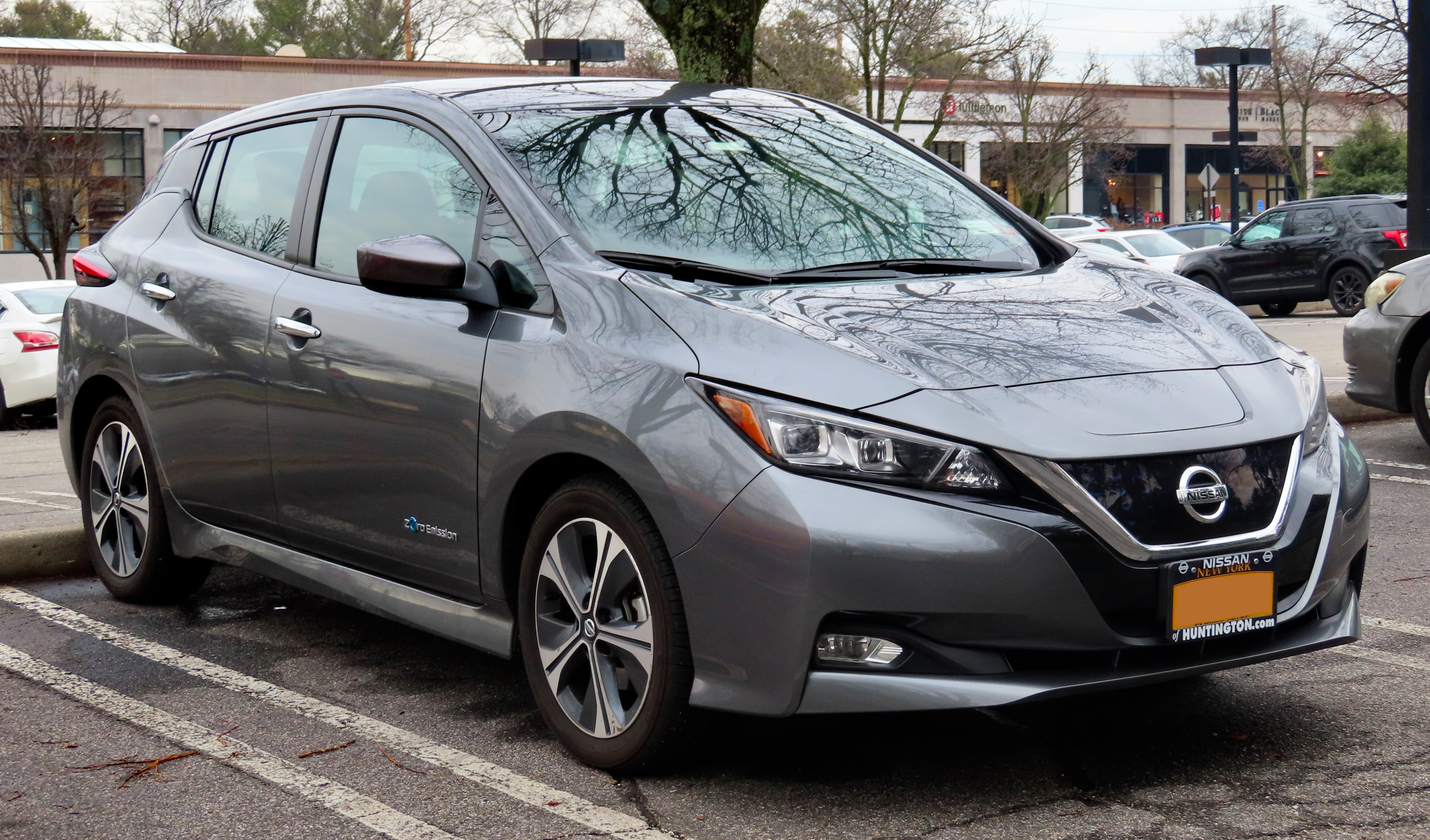
The Nissan Leaf is an electric car. The point here is that, unlike many gas cars, the electric motor can require very little maintenance over a long time—at least in the owner’s experience.
This is a helicopter that’s certified to carry people or cargo. The idea is that it has to meet strict safety standards, so it has lots of parts that are considered “must not fail.”
These are the parts of a vehicle that, if they break, could cause a serious accident. The host is saying EV aircraft designs may have fewer of these high-risk components to manage.
Term
hub comes apart
On a helicopter, the hub is the center piece where the rotor blades attach. If it fails, the blades can separate and become extremely dangerous, which is why it’s considered a critical failure point.
Term
shears through
This means a part breaks because of sideways forces, like it can’t handle the twisting/pushing load. The host is using it to describe how a rotor failure could quickly become catastrophic.
An overhaul is more than routine maintenance—it’s a deeper service where important parts are checked and often rebuilt or replaced. It’s done to keep the aircraft safe for continued use.
A chase aircraft is like a support vehicle in the air that stays near the test plane. Its job is to watch what’s happening and help the team during testing.
“Automotive type cells” refers to battery cell designs commonly used in road vehicles, typically engineered for high power, durability, and safety under automotive operating conditions. Here, they’re saying their aircraft energy storage system uses cylindrical cells that are derived from automotive cell technology.
Thermal runaway is when a battery cell gets so hot that it starts a chain reaction. That can lead to fire, so engineers design packs to stop it from spreading.
It means designing the battery pack so that if something goes wrong, the dangerous effects don’t spread or get worse quickly. The goal is to contain the failure and reduce the risk of fire.
Battery integration just means putting the battery pack into the vehicle in a way that works safely. It’s not only about the battery itself—it also has to connect properly to the rest of the system.
A critical design review is a major “go/no-go” meeting for a new design. People check whether the design is ready and safe enough to proceed to the next stage.
A short circuit is when electricity takes an unintended shortcut. For batteries, that can cause overheating and fire, so testing checks whether the system can contain the damage.
Fault tolerance means the system is designed so that if one part fails, the whole thing doesn’t immediately become dangerous. The idea here is that electronics can be built with redundancy so the aircraft can stay safer even when errors happen.
This is the UK government body that sets and enforces aviation safety rules. The speaker is saying the aircraft’s certification is being aligned with those strict safety standards.
EASA is the European agency that creates aviation safety rules and standards. The segment is saying the certification approach is based on those established airliner safety standards.
Term
10 to the minus nine standard
This is a safety requirement that sets an extremely low chance of a catastrophic accident. The speaker is saying the electric design approach can realistically meet that very strict number, while older mechanical helicopter designs can’t be retrofitted as easily.
Honeywell is a company that makes aircraft electronics and control systems. Here they’re mentioned because they build flight-control computer technology used on a major commercial airliner.
A flight control computer is the aircraft’s main “brains” for flying. It reads sensors and pilot commands and then tells the control systems what to do to keep the plane stable and on course.
Pentium is a type of computer processor. The point is that if one processor goes wrong, the system has to prevent it from ruining the other computers too.
SMN is a way of describing how the control computer handles a situation where there are more “knobs” to adjust than there are basic equations describing motion. The system then figures out how to use those knobs effectively.
Control effectors are the hardware the computer can command to steer or stabilize the vehicle. In this case, it includes things like thrust changes and even braking used for steering on the ground.
Trim is the steady operating state where the vehicle isn’t constantly fighting to stay level. “Nonunique” means there are multiple ways to reach that same steady state using different control settings.
LIVE
Hello, and welcome to another episode of another soaring episode of the everything
electric podcast. This episode is really, I think fascinating, particularly, particularly
if you have any marginal interest in flight, in aerospace, in future mobility, in what could
be happening in this space. And I think it's what's fascinating about this episode and the deep
dive we've done on this is how a lot of the technologies that we're talking about in this
episode effectively were impossible 15 years ago. They were a pipe dream. They were never going to
happen. And now it is really happening. Now, we went to see the company that we're talking about
today in 2022, Vertical Aerospace. They're based in Bristol. And they are developing a eight rotor
winged vertical takeoff and landing aircraft, which when we went to see it was called the VX4
back in 2022. It's now called the Velo or the Velo. I'm not sure how you say it.
And it's a more sophisticated the latest iteration of this they've been testing what I tell you what
you do when you do cars, make cars and how hard it is to make cars. That's a walk in the park,
making something that is a legally viable, safe, technically capable aircraft. It sounds quite
difficult. Do you know what? I think I'm very skilled, but I don't think I could do this.
I'll be honest with you. This is extraordinary. What they've got to go through to do this is amazing.
But I'll tell you the thing that really has changed the whole picture and that's happened
really in the last 10 years and particularly in the last couple of years is batteries.
You know, the most boring looking things that you can possibly imagine, it's just a box of
gubbins and it has wires coming out of it. They are, they have advanced to such a huge degree
that it is now possible to have the energy density, the power really importantly,
and the longevity and the lightness and the compactness to make a fully electric aircraft
plausible. And that is what we're talking about today. We're talking about vertical aerospace's
Velo and I'm talking to this extraordinary man. He's just so informative and he's had a long
life in vertical takeoff and landing craft, including helicopters, but very specifically
in aircraft that are more like the one he's working on now. And he refers to them in here and
we'll put lots of links in that for people who are interested. There's a lot more you can have
a look at the vertical aerospace website. It's fascinating anyway. So I spoke to David King
who is the chief engineer at vertical aerospace, really lovely man, really amazing, informative,
just, you know, experienced, just understands the challenges that are there. And it's really,
it is fascinating. We talk a lot about helicopters and safety and aircraft and safety and, you know,
multiple layers of safety. And I have, as you will hear, and I've flown in a few helicopters
in my weird career. And I'm still here after doing that. So, you know, I'm very grateful for that.
We'll go into that more in the podcast. But yeah, it's, I think you'll really enjoy this. It's
very interesting. Just in case you're of a mind to spread the word about this podcast series,
that would be wonderful. We'd really appreciate that. If you haven't subscribed, please do. Please
tell your mates to have a look at it and tell them to subscribe if they haven't. We're not doing,
there's nothing contentious in this episode as regards the transition to electric ground transport.
We're not talking about ground transport, talking about airplanes, things that fly
and fly much quieter and much cheaper and much more efficiently sustainably.
Sorry, I didn't mean to add that because that's getting a little bit political. Oh, I mustn't,
I mustn't. So, please do welcome to the Everything Electric podcast David King,
Chief Engineer at Vertical Aerospace. Our three free YouTube channels on EVs and Clean Energy Tech
are funded by our fun-packed Test Drive Tastic Events in the UK and Australia.
Next up, Everything Electric Greater London and then Sydney. All events include a B2B EV day
and commercial vehicles too. Well, David, this is, I mean, I am so excited about what you guys are
doing and it's so good to have you on the show. Thank you for taking the time to talk to us today.
Thank you very much. And I'm really interested to know, this is kind of the next big step,
what you're working on. So, I mean, just for some viewers and listeners who may not know,
we went to see Vertical Aerospace in 2022. I had to look it up to check that I couldn't remember
exactly when it was and we saw the VX4 EV toll in the flesh and it was amazing. It was a really
amazing experience for me because it's just, you can't, I kind of knew what it was before it went
in but when you actually go in a room where this thing is sitting there, you go, oh my goodness,
this is very serious and quite big and quite, you know, I think if you see it on an airfield,
it wouldn't have been as impressive. It was just that it was in a space, your space. So,
can you tell me, so what's happened between then and now? I mean, it's clearly things have moved
on a great deal. Yeah, I mean, it's fun to look back and see all the progress that's been made
both in Vertical Aerospace and also for electric propulsion for vertical takeoff and landing
aircraft in general over the last 10 years. It was 10 years ago that our company was founded
by Stephen Fitzpatrick in 2016. That was 10 years. It's the 10 year anniversary and he was,
he owned a Formula One team at the time and that was right when Formula One started to talk about
electric propulsion, electric motors and what they could mean to Formula One and he was learning
more about electric propulsion. At the same time, he was stuck in a traffic jam in Sao Paulo.
Right. And so he saw that, hey, these electric propulsion systems have enough power to hover
this car in the air. He's like, I just want to reach up and press a button. Yes. And hover over
the traffic and get to the race. Yeah. And not be, and everybody's had that experience, right?
Yes. Everybody's had that experience where you're still frustrated with traffic. You just want to
press a button and go into a James Bond mode and hover. So the technology has matured so much in
these 10 years and it's fun to look back at that. And then it's also now fun to project 10 years
forward, right? And then if you look at where we are today versus where we will be. And so when
you came in 2022, that was right before I started. Right. So I started working on helicopters and
tilt rotors in 1989. Wow. And it's been all turbine powered vertical takeoff and landing
aircraft until the last three and a half years when I joined vertical right at the beginning
of 2023. And it has been a fun ride, you know, a learning experience. And it's just so fascinating
to see the crossover from automotive, right? Electric vehicles, extra ground vehicles and
everything that's been matured. And then if you go just take a look at energy storage systems in
general, right? The electrification of everything and how much capital has flown to these companies
and these endeavors. And that's just yielded innovation after innovation and improvement
after improvement. And it had to get to this certain point of energy density and power density,
right? To be able to have a performance model and an economic model that made sense for vertical
takeoff and landing our taxi. And now we're there, right? We have reached the point where the energy
storage systems technologies are mature enough, both from density of the energy, how much power you
can get out for the vertical takeoff and landing phase, as well as the technologies that protect
the safety of the occupants for all of the possibilities of bad things that could happen
that are within the realm of one and a billion. That's the one dimes 10 to the minus nine
airliner safety standard that we're surfing in this aircraft. That is, I mean, it's so interesting
because we probably need to go back 30 or 40 years where the notion of an electrically powered
aircraft, it would be so absurd because you'd have lead acid batteries. You'd have three
quarters of a ton of batteries and it would fly for a minute. It was never going to happen then.
And then if you even go back, say, 15 years, the cost of the batteries was so phenomenal,
the energy density was way less than it is now. So it's kind of followed that progression. It's
very much. I mean, would you say, is it more down to the batteries than the motors? Would you say
that 15 years ago, the motors had the power that you might need, but the batteries?
Yeah. I think that, again, the motors evolve so much in parallel, right? It's flying formation,
as somebody said. You have these technologies that are flying formation, right? They're all
converging to a certain maturity destination in parallel with each other. And so the motors and
the batteries are going together. The aircraft configuration, the distributed electric propulsion
and the propeller systems, those are flying formation with the ability to be able to
take this new type of aircraft and this new type of operation, right? Urban air mobility,
power lift configurations and train pilots and train maintainers. Okay, so that's flying
formation too. How do you develop the infrastructure so that you can get
efficient vertical takeoff and landing operations from a major hub airport without disrupting
the runway traffic? How do you have runway independent efficient traffic? So that's the
air traffic management technologies. And so that's flying formation, right? And that's
maturing at the same time. So you have to have several things come together at the same time.
And that's what we're seeing. And then if you look back at 15 years ago, right? And you've been
following this for 15 years at least, right? And so what were people saying 15 years ago
about the prospect? I mean, it's all about, I mean, the one that still hangs around is you'll
have to throw the battery away after three years and, you know, and they won't last and
that, you know, all that, I mean, everything. And where the electricity comes from burning coal,
all those, the list is long. Yeah. Yeah. Yeah. But back to the battery. I mean, that's a really
interesting one because people look at that and say, all right, so the batteries will degrade
over time. And if you're using this electric propulsion system for vertical takeoff and
landing, the requirements in terms of how much power you may need to get out in an emergency
situation at the end of a flight, plus a provision for some type of delay in that flight plan,
whether it's you have to do a go around or you have to divert to an alternate, you add all of
those unknowns together, right, to this worst case within the realm of one and a billion.
And then at the end, you have to have enough power to be able to do a hover landing.
And so that's what drives the concern that people put out there. The
pessimists are saying, wow, okay, the battery cells are going to degrade to the point that you
no longer have that guarantee of so much power at a low state of charge, then you have to replace it.
And we're like, exactly. But when you build that into the economic model, you'll see that the cost
of replacing battery packs, say, every year, right, every year of a fairly high utilization of
an EV tall of a Velo, every year you have to replace a battery pack. And then you run that cost
into your total operating cost per seat mile, you'll see that the replacement parts and the
maintenance costs are still much lower than the alternate being a mechanical helicopter.
That is very interesting. Because the main is cost of mechanical helicopters are so high because
the turbines and the gearboxes are critical. Meaning if something goes wrong, the aircraft
goes down. So because it's so critical, and it's complicated, right, it's complex, you have a lot
of pieces that fit together, precision machined pieces, lubrications, cooling systems, bearings,
all those things that wear out, right, that wear out over time. And you have to maintain those and
the maintenance burden and the overall costs not just being how much it costs
to send the gearbox or the turbine back to the manufacturer to rebuild it, but then the cost to
the operator because then you have this aircraft out of service. And you have to have another one
in your inventory to fill that gap for your customers. So if you just do the mass from a
total operating cost per seat mile, you'll see that even with batteries needing to be replaced on
average once a year for high utilizations, it's still a much lower total operating cost per
seat mile relative to a helicopter. I mean, there's a couple of things that I really want to pick
up on. I mean, one, could we get a bit of your history because clearly you know considerably
more about things that fly in quite unusual ways than the average Joe. Because you have a history
of vertical takeoff and landing aircraft of different sorts. I mean, I want you to talk about
I don't even know what it's called the weird one that we've seen fly over our house.
And it's got two different colors and it makes a different noise.
It makes a different noise because that's a 60,000 pound aircraft with 6,000 horsepower
engines, right? Huge Rolls Royce engines. But anyway, so if you look at my niche, right,
my niche being a tilt rotor chief engineer, so a little teeny niche, right? It was a little
bit with two bodies in the world, right? You had the Bell Boeing D22 and Yavlian Ardo doing
some developments on the commercial side. Got a whole lot bigger when electric propulsion
technology became feasible for vertical takeoff landing. When that happened, then people look
at what type of configuration makes sense. You look at the state of the art in the motors
and you realize that, hey, you're better off with distributed electric propulsion
than just one big propeller. And then if you look at distributed electric propulsion, you look at
the different ways that you can control it and the different ways you can optimize its performance
for both phases for vertical takeoff and landing. And then for cruise, the tilt rotor configuration
comes out advantageous for a few of the variables. So this niche of being a tilt rotor chief engineer
got a lot bigger and that was exciting when that happened five years ago. But I come from this
looking at the helicopters and it's kind of a career of frustrations as to why
the demand hasn't taken off as much as it could. If you think about all of the potential
needs for mobility right now, and if you say, okay, how do I solve this mobility problem in
and around? Here's an example, Cambridge. So I was in Cambridge a few weeks ago and they have a plan
to increase the number of homes in Cambridge from 25,000 to 200,000 in 15 years. That's huge.
Factor of eight if I'm doing my maths, right? So that is a big, big challenge for mobility
and for infrastructure and for connectivity in an area that's already difficult to get to.
It took me six hours, six and a half hours to get there from Bristol. And that was largely
because there was a train problem, but you have to connect multiple times. There's no direct path
and then there was one problem and a hiccup and I had to get somebody to drive and fetch me because
the train got stuck but six and a half hours. And so people that have to get from Cambridge to Bristol
once a week because you have this tech corridor and Bristol is this big club of small startup
companies doing great technology developments and Cambridge and Oxford are also these university
towns with all these startups and these tech corridors that are expanding. But you need
connectivity, right? You need to be able to go to visit your supplier in Bristol from Cambridge
and right now when you talk to the people that have to do that, they said, well,
it's a day trip out, it's a day trip back, it's one day there, so it's three days. So I said,
if they could turn that three days into one day, that's just an example of solving the mobility
problems. So back to my point is for helicopters, there's still all of this underserved demand.
So people can't regularly have a helicopter flight from Cambridge to Bristol because you don't have
the community acceptance and you don't have the infrastructure. And the community acceptance
is driven by three Achilles heels that helicopters have. The first is just the perception of safety.
The second is just the passenger experience, the comfort level. The third is just to make it
compatible from a form perspective, you got to get a whole lot of power out in a hurry.
Then you also have the affordability issue. Then you also have the cleanliness issue.
So you look at those five problems, electric propulsion can solve all five of those.
So it's just so exciting to see that, you know, helicopters that are operating today
in around cities are often using the same inventions from the 1920s. And it's about time,
right? It's about time that you bend the innovation curve for vertical takeoff and landing and it's
going to open up all kinds of applications. Yeah. And I mean, because that's what I can't quite envisage
yet until I'm there when I see one of your machines takeoff. But I've had the privilege slash
challenge of flying in a few helicopters in my very odd career.
How was your experience? What was your passenger experience?
Yeah, I mean, it was fine. I trusted the engineering. pilots.
I knew they wouldn't let me go in an unsafe machine. You know, all those things.
I cannot lie and I've flown in loads of weird planes for TV shows and things. And I don't
remember ever when I stepped out of that helicopter, I was so relieved that I was still alive.
So it was completely psychological. The flights were completely faultless, no problems whatsoever.
Everything was fine. But I have to say, in terms of my experience of flying,
that was, you know, I think I was the most nervous in those helicopters.
All right. Now, you're normal. You are normal. Let me tell you a story, if you don't mind,
a personal story. So 1989 was when I started working in the helicopter until we were out of
buses a long time ago. That was the same year I started dating my wife. My wife of 34 years.
Yeah. And just a few years ago, right before I started working in vertical,
my wife and I, Robin and I, we were on holiday in Greece. And I pulled out my laptop and I'm
about ready to press buy. I was about to buy a helicopter transfer from one island to another.
And I tell Hayes what I'm about to do. She's like, no, stop, stop. Don't do it.
I'm like, why not? Why not? And I immediately thought that she was concerned about the price.
And so I, hey, Robin, let me tell you, I know it's pricey, but let me tell you why I think
the time saving is going to make it worth it. Right? We only have limited window on holiday.
And she's like, no, I get all that. She goes, I go, well, then what is it?
She goes, I, I hate helicopters. And I'm like, what? I mean, we've been together for 30 some years
and it's my life's work. Why am I just learning now that you hate helicopters?
Has somebody had the two of you been in helicopters a few times before?
Yes. The two of us have been. And she had not disclosed this until this moment.
And she's like, well, you know, I was kind of humoring you because I know it's your life's work
and you love helicopters. And I'm like, okay, so what is it that you hate about helicopters?
And she was just like you. She said, she was, well, first of all, she goes, they're just
not comfortable. She said they're loud. They're not comfortable. They smell. She said, they're
really expensive. And then she said, she goes, and I just don't feel safe when I get in one.
And when I get out, I have this who I am. And so I'm like, whoa, that's kind of a strong emotional
reaction. So what I've been learning is if you look at surveys, and if you just in a, if you're
in the middle of a presentation conference room, ask that question, how many people have been in
helicopter? Keep your hand up if you love the experience. And you'll see a lot of the hands go
down. And so now what we want to tell them is you say, okay, in the 2030s, you will all have had
an opportunity to step in an electric vehicle aircraft and take the flight. And if I ask this
question again, in the 2030s, I'm going to see the hands go up marks, the helicopter, we're going
to say vertical takeoff and landing aircraft. And how many people loved it? It's going to have
all the same hands. Because that's the, that's the difference maker. That's what's going to allow
us to bend the innovation curve is that we're going to provide a passenger experience that
they're going to love. Because that was, I mean, the other thing I think is critical, which I'm
assuming is going to be similar with this. I've been in, oh, now I've got to remember the name of
it, but a small training electric aircraft, just as a single engine, two seats are very,
very small. I can't remember what it is, but it's, it's one they use. Was it a pepper
star? Thank you so much. And that was, and I was fine. I mean, that, and that was quite challenging
because it was a very windy day. And it's quite a small, so it was a bit bumpy, but it was fine.
But what was extraordinary was when the pilot then we then filmed it from the ground, and he flew,
I don't know what 50, 60 feet, I mean, low, but not, not really not hedge height, but you know,
and we could not hear it. And then I went, that is extraordinary, you know, and when he was,
you know, a thousand foot, there's no way you could hear it. There's an absolute no sound at all.
But what is that going to be similar? Because that's the one I live in near the Cheltenham
race course. And every year when it's the Cheltenham races, there's a lot of horse owners arrive by
helicopter, they fly over our house, you do hear them. Yes. That is one of the key
reasons why this is going to unlock the third dimension to unlock this demand is because right
now, the communities just don't want helicopter operations. And you look at how, how debilitating
that is for a community planner. Here's an example. We were in Miami in January, took the full scale
mockup of the VALO, which is the production configuration of what you saw in 2022, and had
a number of people come and look at it, unveiled it. The city of Miami Beach came and the Florida
Department of Transportation and spent time with us and tried to learn as much as they could because
they are being as progressive as they can in their community planning. And in one of the challenges
they have is that they have these world-class hospitals and trauma centers that serve the
Caribbean islands. Because in the Caribbean islands, you'll have insufficient hospital care if somebody
is in an emergency situation. So you have to airlift people, you have to get them to Miami.
But they said these hospitals are in these residential areas that have a lot of political power
and really push back on the helicopter operations. So they limit how many airlifts they can do.
And what that means is that they accept some and turn away others. And when you have to turn away a
life-saving airlift, I mean that's really difficult to do. So the community is saying, wow, how do we
solve this problem? How do we get the airlift capability and quiet? And that's why they're so
excited about the technology. And you look at all kinds of examples in New York City, in Manhattan.
City Council will every year present a bill to try and shut down the helicopter operations in and
around Manhattan for noise reasons. And every year it loses, right? It's okay, we still want to keep
them because they're beneficial. But it doesn't lose by a lot, right? There's still a lot of people
that don't want it. So it's great now that within the United States there's this pilot program called
EIPP. And people are going to start to see them operating in urban areas and they're going to
get the chance to hear them. And it's one of the advantages of not only the electric propulsion,
but also the tilt rotor configuration. So in the tilt rotor configuration, the aircraft,
the VALO will only operate in a thrust-borne mode for seconds, less than a minute. So it takes off
and it lands vertically with eight propellers, four on the front of pylons that are mounted to the
wings, four on the after the pylons. And you need that power to take off. And it's just a very quick
in a few seconds, boom, it's up. Then the pilot takes his left hand control receptor and pushes
it forward. And that just says go faster. And then the four in the front start tilting forward in
this transition regime. And then when they get to a wing-borne condition, the four propellers are
forward and the four in the back stop and still into an aerodynamically efficient configuration.
And then the four in the front slow down because the power required to fly in wing-borne mode
is about 25% of what it is to take off vertically. So it's much slower. And then the slower they
spin and only four spinning instead of eight, the acoustic excitations of the propeller spinning
goes way down and it stays as a bit of a blended tone because there are four. And the four
change their RPMs as a way to control the aircraft in yaw. And by changing the RPM,
instead of having one frequency that you hear, like a helicopter, whoop,
whoop, whoop. Yeah, because that's the main rover pulsing with these big
acoustic vortices. Instead, you have this blend and then the blend is so soft because they're
spinning slowly. And you don't have the wind of a turbine. And you don't have the tone of a
tail rotor that you have on helicopter. So when it flies over top, and we've been doing this at
our flight test center in the Cotswolds, you say, hey, come in as low as you can. And we can't get
them to fly too low because there's some regulations, but they'll get down to, you know, a thousand feet
over our heads. And it sounds, you just hear the aerodynamic roaring, like, it's all you hear.
And it sounds like a commercial jet at 35,000 feet. Right. But it's 1000 feet over your head.
So getting into the wing-borne mode as a tail rotor and the electric propulsion drives the sound so
that it will not be perceptible in an urban environment. So right now when you are in an
urban environment and you hear a helicopter come by, it's like, what is it? Where is it?
How close is it? And you can't see it, but you hear it. And then you finally see it. Here,
you will see it. It will fly over your head, part your hair, and you still don't.
But I haven't got enough hair to part, but I get the point.
This episode is brought to you by Honkuk. The Honkuk Ion tyre is built exclusively for electric
vehicles engineered to deliver what EV drivers need most. Confident grip, quietness, energy
efficiency, and long mileage. As the official tyre partner of Formula E, Honkuk proves its EV
technology is at the highest level of performance and brings that same innovation to every Ion tyre
on the road. I mean, that is really a really exciting aspect of it. And I'm assuming then,
because that's the other thing, as your wife also knew. There was a time we flew at sort of
a wind turbine height through the big wind farm off Liverpool in Liverpool Bay.
And so we were kind of, I don't know what we were, 400 feet up, so not very high. And then we could
see the turbine standing and they were going above us. It was an impressive sight. But the
thing was, we all had headphones on and microphones. It was so noisy inside the helicopter. This is a
flash. I don't remember what make it was, but there were 123456 seats in
the back and the pilots in the front. It wasn't as small, a tiny helicopter, big enough, but the
noise when we were flying internally was a lot. And I'm assuming, is it quieter then? Will it be
a quieter plane to be in? It's a completely different experience. It's a completely different
experience. It's the experience with some of the experience you had in the Pipa store. It's
interesting, it was probably a twin engine helicopter. It had to fly over part of Liverpool
to get out to where we were going. One thing that's interesting, if you look at twin engine
helicopter designs, when they're initially sized, the powertrain is sized for two seconds of the
flight. Two seconds of the flight is what fundamentally sizes it. And those are the two
seconds right around the takeoff decision point. So by procedure, by regulation,
these transport category rotorcraft, twin engine rotorcraft, are operating in category A
type operations or performance class one, where they have to be able to show the same safety
margin and same fault tolerance that an airliner has, where if an engine failure happens at any
point in the takeoff or approach to landing phases, the critical phases, the aircraft can
then either land safely, reject and land safely in a way that doesn't damage anything. Or continue
flying, clear all the obstacles in the airfield and continue flying towards its destination.
So you have to do one of those two. So what you struggle with in a helicopter is right when it
lifts up vertically to take off decision point, there's a certain altitude that will set that
TDP. You fail off one engine, and then the other engine has to go to an emergency power rating.
Typically rated for 30 seconds. So you can go to this really high power, which can't stay there
alone or else you're going to damage it because it's going to get so hot and it's running so fast
and drive so much torque into that side of the gearbox, then you have to size your gearboxes,
your gears, your rotors, your motors all for this just two second window because once you get a
couple seconds after TDP, the helicopter has enough speed that it has translational lift,
which drops the power off and it's just a climb. So it's just for a few seconds. So if you think
about one of the things that stands out the first time you drove an electric vehicle, it's
you step on the accelerator and the power comes so fast, right? Electrons can move really quickly,
whereas this thermodynamics connected to this complex mechanical and dynamics takes a while,
right? There's a transfer function in there that takes time, whereas the electrons create an
electromagnetic torque so quickly that that is such a great fit for vertical takeoff and landing
because it's just this little tiny window that you need a lot of power and you need it in a hurry
and it is such a great fit and that's why when the technology matured, it was at 15 years ago,
you look, I think, Joby was one of the first to be founded and when people saw that and they're like,
whoa, VTOL, that's what we got to do. That's what Steven Fitzpatrick saw in 2016. He's like,
whoa, this is such a great fit for VTOL. We need to dive in there because anecdotally,
everybody sees the demand, right? Everybody sees that population centers are becoming
more and more populated. And the mobility problem, the connectivity problems are getting worse and
worse and worse. Back to Cambridge, I mean, what are their options, right? I mean, Rachel
Reeves gave a press conference where she said, yes, we're going to commit funds to helping the
community solve their mobility problem, but it's going to take a long time and cost a whole lot
of money, right? It's not easy to build more rail lines or more highways, right? And then you really
disrupt the communities when you do that. Whereas the third dimension, right, the birds are pretty
accommodating. They stay away and there's really not traffic jam. You don't get stuck in traffic jam
look up and you see the birds queuing up in traffic jam. So it is a really, really attractive
option to solve these mobility problems. Yeah. And I mean, also, I can imagine one of the real
key things, as you mentioned, when you were in Miami, because that's the other one experience I've
had with air ambulance, helicopter air ambulance. And I felt that's many years ago. That was the
second time when it ever went in a helicopter. But what that facilitates, the ability to get
medics to a remote location where there's people that really need them, and those you think that
is just genius. Well, this technology surely lends itself to that specific role.
Absolutely. I mean, the golden hour. I mean, it's that you expand the reach of the golden hour.
There are certain areas where they do have pretty strong air medical services where if you or a
loved one was in an accident and needed to get to a hospital inside of that golden hour, they
could get you there. But most communities in the world don't have that type of service right now.
And there's also a big cost pressure, right? There's a big cost pressure on medical systems
across the globe. And the ability to have a vertical takeoff and landing aircraft that solves
the noise problem and can be done at a lower operating cost than a helicopter. It addresses
the two big, the two big items holding it back. And when I was in Cambridge, I saw the, you know,
the heart hospital there on the biomedical campus that's world renowned. And I asked, I said, wow,
I see a, I see a helipad here. I said, how often is that used? It seems to be the weeds are getting
a little high. It doesn't look like somebody's got to maintain it at every hour. And they're like,
well, not that often. You know, not that often because it's financed through charities. And so
there's only so much money, right? And so you, you're basically tapped out of the budget to be
able to use it. So there's more demand than there is funding available to do it. So it's like, okay,
let's say if we come up with a model where you've got an aircraft that can serve the same,
the same area, but do it more cost effectively, right? You, if you drive it at half the operating
cost, and then I was like, wow, okay, then you can do twice as many. How many, how many lives
is that same? Yes, yeah. But I mean, in terms of, I mean, my experience now, you know, I mean,
I think I feel in a lucky position in that I've driven combustion cars for, I don't know, 40
years before I drove electric cars. So I, I have a realistic hands on experience of the amount of
servicing of spare parts of oil, of filtered changes of gaskets go, you know, everything
that can go wrong with a with a combustion car, I've been there. Yeah. And it's got,
especially if you, especially if you like to keep your cars long. Yes. My wife's, my wife's car is
20 years old. And so she, she lives it every day and enjoys that. She enjoys the handling of
manage the maintenance. I know what I got to do here. I know what I had to do here,
making those trade off decisions. Yeah. And, and that's why there's just the mechanical
elements that you, you take something that's really mechanically complex, a helicopter,
and you replace it with something that's electrically complex. Yes. But mechanical.
The maintenance of the shoe is a whole different paradigm. And then if you look at
what it takes to develop a new tilt rotor, as I told you, my niche was, was tilt rotors.
And, you know, when I look at companies that were developing smaller tilt rotors and looking
at the man and saying, why, why aren't startup companies trying to do this? And it's because
it is takes so long to design and build and qualify and source the supply chain for the gear
boxes. It's all about the, the, the powertrain. It takes so, so long and it's so hard to qualify
the gears because the gears are, are critical parts and they have to be heat treated and they
have to be coated and they have to be inspected and they have to meet really, really high number of
significant digit tolerances. And when you look at that, you're like, wow, that's, that's what drives
the delays and the, and how long it takes and, and why it's not attractive for a startup company.
We're now with electric motors. You know, you look at, you know, how many companies then they
start with just drones. Yes. And now let's scale it up, scale it up. It becomes a paradigm that
can be cracked. Right? You can be a startup company and you go build an electric aircraft.
Yes. And get it tested. Which would have been impossible 20 years ago. You wouldn't have bothered,
would you? Right. Yeah. Right. With the gearboxes and the
I suppose the, I think you've kind of alluded to it already. And it's really, I would love to
discuss that whole notion of the back of needing to replace batteries. But the,
I would assume the general maintenance is reflective of a cut of electric cars. I mean,
they need so much less servicing and maintenance. Obviously, all the mechanical stuff, the steering
brakes, lights, wipers, all that is exactly the same. But the, you know, the difference in,
I have, what is it now? 16 year old Nissan Leaf. Lots of things have gone wrong with it. It's not
a perfect car. It had a lousy range. It still has pretty pouring. But the motor in it, I don't even
know where it is. I know it's got one because it goes along the road. I've done nothing in 16 years,
not one, and it's never been looked at. No garage has looked at it. You know, it's completely different
experience. That's exactly the paradigm. Now, I mean, if you look at it just quantitatively,
a transport category rotorcraft will have in the hundreds, if you count the piece parts that are
critical, such that if they were to fail, the helicopter will go down and result in a catastrophe.
Whereas you just have a few, a handful of them on an EV tall, you'll still have some, right? So
if the wing breaks, that's still catastrophic. If a hub comes apart, right? If you shaft in the hub,
just shears through and throws all four blades. Yeah, that would be catastrophic. So you have
just a handful of critical parts that need to go through the inspections and the overhauls
instead of hundreds. And so that's the two orders of magnitude improvement.
So I think you've mentioned it, but the running costs, I mean, I've got no idea what it costs to
run a helicopter, but I know from working in TV shows and having some idea of the budget
that when we did use helicopters, and I'm talking 25, 30 years ago, it was not cheap.
It was the special treat for one episode in that series. Okay, we'll use a helicopter to get this
because that would really help. It was really unusual, very, very rare. Whereas now you would,
you just have a guy with a drone, you know, all those shots you now do with a drone.
I mean, I still find it bizarre. I said, oh, God, yeah, we actually hired a helicopter
to get that aerial shot. And there was a cameraman hanging out the side of it. So now it's
crazy. But I mean, that's the basic gist. Oh, yeah, absolutely. And we're seeing that right
now because when we do our experimental flight testing, and it's an envelope expansion test,
we have a chase aircraft. Right. So I don't know if you do, if you Google
Velo in flight or vertical aerospace in flight videos, you'll see some flights, and then you'll
see a helicopter flying behind it. So the helicopters flying chase just to be an extra
set of eyes to the test model. And what we have to pay for that chase helicopter
for flight out is really expensive. So we can't wait until our next generation, right,
when the Velo, the production versions are coming off the line. And then those are flying,
we want to use the pre-production ones that are matured as chase. So we're going to have a chase
that's lower cost to operate, and they're renting a helicopter and save ourselves a lot of money.
But that, so that's, I think people, a lot of people who watch this will know about a fair
amount about electric cars, or will drive electric cars. So that the only way you can
sort of equate the two things is if every time you got in your electric car, you had to accelerate
from naught to as fast as you possibly could. Yes. Every time, even if you're just going down the
road together. Every time. You know, that's the pressure that you're putting on the batteries.
Every time, in a second or two. Yes. Yeah. So I mean, are the batteries you're using now,
are they similar to batteries that are in electric cars, or are you having special batteries,
especially manufacturing? So the ESS itself, and I love the fact that we don't officially call it
a battery system, call it an energy storage system, just to kind of give it that, that name,
that point store, what it does. The energy storage system itself is an innovative
part of the technology, aircraft, because it takes these cells, which are automotive
type cells, right? It takes the automotive cells, cylindrical cells are the ones that
we're using, but packages it in a way that meets the safety requirements. Safety requirements
include vibrations, it includes high impact crash loads. And one thing where we put a lot
of time and effort is the mitigation of energy release, right? If a cell catches on fire,
if you get a thermal runaway. So we have a proprietary approach, which has three different
levels of mitigation protection. And then we test it, and then we optimize those three levels,
and we test it again, and then we optimize those, and we test it again. So just going to show you
a little flavor of this development process that's been ongoing at Vertical for the last 10 years,
and I've seen it firsthand in the last three and a half, it focuses on fast iterations,
it focuses on, let's get to that next level of discovery quickly, right? Quickly, safely,
efficiently, learn as much as we can, and then iterate. So what we're producing in Velo is going
to be our third generation energy storage system. We had a different one on aircraft one,
now a different one on aircraft two and three, and production is going to be a third generation.
But each of those three generations goes through five formal cycles of design, spiral evolution.
So we have our alpha, beta, gamma, delta, epsilon. And so at each of those, we run specific tests on
it, and then say, okay, what can we do then to optimize it for this next iteration? And so that
gets carefully planned in with the project so that we can still support the integration of that
battery into that next level. So hey, we may not be fully at the epsilon version, because right now
we have a gamma version that's being integrated with the other aspects of the Velo detailed design
for our critical design review, knowing that, hey, there will still be a couple of iterations on a
couple of these internal things we expect as we go through some of these tests, right? You hang it
about 60 feet above the air, and you drop it, and you show that it absorbs all the energy, and there's
no hazardous release of energy. And then similarly, you light multiple cells on fire at the same time,
just by putting in a little mechanism that short circuits,
make them catch fire, deliberately, deliberately have a catch fire. And then you let it run for
15 minutes and show that you can vent all the hot gas out the bottom of the aircraft and not have
the propagation of the fire create a hazard on the aircraft so that the aircraft can then get to a
landing spot, land vertically, get everybody off, and then deal with it.
Because that's the obvious thing is the kind of level of safety equipment you need, or safety
knowledge and understanding and procedures in anything that flies. I mean, it's not just
vertical take off anything that flies, it's a very different beast. I mean, you've got four wheels
that are on the ground, and two of them steer, and you want that how basic cars were when they
started. And in fact, how fairly basic, but also very dangerous aircraft were when they started
when you were sitting in a box of wood with some string tied to it, and you hope for the best,
I guess. And so then if you assess what can go wrong, and if you look at all the things that
can go wrong with a mechanical powertrain, and that mechanical powertrain, then is the
sole source of you propelling forward. Now, in a vertical take off a landing aircraft,
this powertrain is what holds you in the air, and propels you forward. So if it goes out,
gravity wins. So it becomes a hazardous situation. So then you do your assessment of what are all
the things that can go wrong. That's where you get into the hundreds. That's this big long list
on a mechanical. Whereas with the electrical system, the ability to improve the fault tolerance
by just adding wires and silicon chips, right, wires, silicon chips and electric motors,
it provides a practical way to get a higher safety level. So we're designing and we'll certify
Velo to airliner safety standards as published in our certification by the United Kingdom
Civil Aviation Authority. And they are using the standard that was developed by IASA,
the European Aviation Safety Authority. And they made a strategic decision when they developed that
within the last decade to establish a safety standard that's the same as an Airbus jetliner
that 10 to the minus nine standard. And the rationale was that if you project
the realization of this demand in the urban areas over the next 10 years, you can forecast a really
high utilization of number of sorties, number of aircraft that will be operating in these urban
areas over popular areas. And if you use the accident rate for helicopters today, and you apply
that to a forecast growth and demand, you will see a completely unacceptable accident rate for
the public. You will have multiple accidents in and around popular areas every week. But if you
take the airliner safety standard, which is the safest way to travel right now, right, it's safer
for me to hop on an airliner and fly from Heathrow to Philadelphia, then it would be for me to walk
to work through Bristol. Statistically, a lot safer. Yeah, and so statistically,
it's a safer way to travel. And so then you will have a fatal accident once every 30 years,
which is acceptable. And so that's the difference. And so
the concern initially was, is that practical? Because it's not practical to take existing
single engine helicopters and retrofit them to 10 to the minus nine. You have too many mechanical
elements, but it is practical with distributed electric propulsion, the technology available
today, the ability to take proven parts. And what we did in Avello was we teamed with Honeywell.
Honeywell produces the flight control computer for the Boeing 787. And I started as a flight
controls engineer, working on the B-22 Osprey back in 1989, developing the control laws and looking
at the safety of the system and how you manage the redundancy. And it is a long journey to
optimize all those algorithms and how you monitor build in enough
dissimilarity so you don't have a bad computer processing unit come off the
Pentium line and that can corrupt all three computers at the same time, those type of things.
And Honeywell has mastered it over the last 20, 30 years. And so we said, oh, we're going to use
that, right? They've got this high pedigree that's already to the airline are standards,
really, really terrific safety record with Boeing. So we're going to just take that and
incorporate that. And then Honeywell also came with this proprietary tech, which I think is so
cool. They call it their Mach, M-A-C-H, control law. And so the control law was originally designed
for missiles, for flight vehicles that are over affected, where it's got more ways to steer
the aircraft through the sky than the four degrees of freedom that you're trying to steer to.
So it's over affected. And so they have this algorithm, which I like the way they call it,
they call it the SMN. So solve for M equations in N unknowns. So you have a whole lot more
unknowns than you have equation, right? You got four equations of motion,
but we've got 30 different control effectors. If you count the brakes on the main landing
gear, which we use to steer on the ground, we have 30. And so you have more ways to control it.
So you have a nonunique trim solution at any given trim state. So it has this
marks built into it that allows it to optimize the allocation based on where the aircraft is
and how it's sensing the aircraft is performing. And so that is such an enabling tech,
because what it allows the aircraft to do is is number one is the transition,
where you actually have to have to go through a change in the aerodynamic characteristics.
The fact that you can control the patrol yaw and heave by changing the RPM and the thrust of the
eight propellers, changing the way that you do it together, right? You can give pitch moments,
you can give rolling moments, depending on how you how you change the thrust level
with the wing surfaces, right? Multiple wing surfaces and multiple tail surfaces.
And you've got four tilt actuators that can move forward and out. And you have the ability to change
collective pitch on the four props in the front, which can allow you to spin at the same RPM and
change thrust. So you put all that into the mathematics and the computers, and you can have
some really precise control. One thing that I found fascinating coming from a helicopter and
tilt rotor world is the ability to take off vertically and just hover one to three feet
above the ground, right at the ground, and just hold it rock steady. And then you look at the test
pilot, because he's still eye level with you. And he's not, you know, working like crazy to do it.
He's pretty much just just making sure it's steady and watching the system do his thing.
But if you look at the tilts, you'll see them all moving in high frequency.
Well, because the high panel control system is working hard, because the aircraft is seeing a
whole lot of disturbances, because you've got these eight propellers that all have a wake
coming off it. And this this wake effect has velocity and then it impinges upon the ground,
and then it's got to go either outboard or inboard. If it comes inboard, then it joins up
underneath the aircraft. It comes up like a fountain, because it's got to go somewhere. And
then it bounces the aircraft left and right forward and aft. And if you ever watch a V 22 Osprey
video of it taking off on a ship or on the ground, you'll notice that when it takes off,
it jumps up to 10 feet above the ground. It doesn't hang out between 10 feet in the ground,
because if so, it'll start to wobble back and forth and pitch forward and aft. So the power of
the flight control system with the 30 control effectors, the high bandwidth mock control law
allows you to just take off and hold it. And so you get the benefit of hey, it's smooth for the
passengers. It's talked about the passenger experience is going to be so key for this to take off.
Number two, it's not super high workload for the pilot. So the ability to be able to get pilots
through the train to proficiency, right? Instead of it taking six weeks to train in
proficiency, it'll take three weeks. So you get them through. And initially, the model is to bring
pilots already with a commercial pilot slice. They already have that level of experience and
skill proven on another aircraft and then bring them in. And then they're trained
to in a type rating to the payload to train them to proficiency. So it won't take as long
because it's not as hard to fly. And then you also get the benefit that when you have this
this effect of the way hitting the ground and coming back up, it essentially puts a cushion
on the aircraft. So you don't use as much power. Wow. Okay. So if you then start to accelerate
when you're close to the ground, instead of when you're far away from the ground,
the amount of power that it takes and the amount of state of charge that you burn is lower.
And then that also helps is you come in and land, right? As you come in and land, you can
slow down to a hover closer to the ground and get some benefit of the ground. So you also get the
benefit of that. And the performance, as we mentioned before, to be able to still do the
vertical takeoff and the vertical landing after any combination of failures, not extremely improbable,
right? That's what sizes the power to because I mean, the thing that I would love to sort of,
I do understand it because I've sort of been in enough aircraft to get stuff, but you go up,
you're not moving forward. Let's just say you go up and you're not moving forwards. And then you
adjusting so you start to pull forwards as you drop them. The front motors,
the wings need, you know, for wings to work, this is the one thing I'm saying, they need a
certain amount of wind. You need to be moving at a speed where they have an effect, where they get
lift. And it's that intermediary period as you go from going up and you're not moving forward to
moving forward. I'm just totally intrigued by how that works. I mean, and that's not new to this,
is it in a way? The Osprey has to go through that process as well. Yeah, I mean, it's almost
magical. And so when I started in 1989, was right when the V 22 aircraft one had its first flight.
So I was there when it did its first transition. It was done down at the Arlington
Municipal Airport, Bell's Flight Test Center in Texas. And it was just magical, right? Because
it was seamless. And what happens is, as you said, it's Bernoulli's law, right? As you pick up speed,
you get more aerodynamic lift on the wing, pressure differential, air flowing over versus
there flowing below the wing, starts to build up, up. At the same time, the thrust
that you're getting in the vertical direction from the proper years, the world in the world,
starts to come down. Right. So lift goes up from the wing as lift slash thrust from the propellers
goes down, such that the net is holding the aircraft in the air is equivalent to the mass.
And so you can go through several different trajectories of how much power you have in the
propellers, as long as you've sized it properly. And the speed for the lift on the wing. So you have
a transition quarter, a conversion quarter that says, here's the combination of tilt angles and
speeds and powers and and then even flap angles, right? You can even adjust the high lift surfaces
on the wing, give you a little bit more as a function of speed. And you'd solve that equation
so that it becomes routine. If you go look at some published videos, you can see some good videos
of Simon Davis, who's our chief test pilot. And Cy will tell you the rigor that we went through as
we expanded the envelope from taking off and landing hover. Our first one was, you know,
tied to the ground with tethers. And then we slowly get faster, faster, faster review all the
data correlate the models go a little faster. He said, you're looking at it at increments and
you're balancing your mathematical models and you're predicting tweaking some software. He said,
but then once you get through it, he said, it's just so routine now, you just you take off your
press forward and and you don't even you don't notice it from a pilot's perspective is what he
was saying. As you transition and that's as you transition from thrust porn to wingbar and that's
what I've heard from from test pilots over the years. And I mean, presumably then that experience
for the for passengers is is going to be smooth. They'll feel it going up and then they'll feel
it going forward. And they won't suddenly go, whoa. Yeah, right. That's part of the optimization.
And as I even mentioned, he said it becomes, I think he was born magical right around 60 65 knots.
He said everything just gets really quiet. As soon as you get to the point that you feel you're
you're in wingborn flight, he said, everything just quiet's down. You don't feel the propellers
anymore. You don't hear the propellers anymore. You don't feel the, you know, that any vibrations
or accelerations, he said, everything just gets really quiet. And then that's where the aircraft
flies, except for the last minute. Yes. Yes. You go back to the rest point. Yeah. So then I mean,
not because we've kept you for a long time, but what the other thing I'd love to know is, you
know, so it can take off like a conventional aircraft on a runway goes along gets faster,
goes up in the air. Is that is that one of its? So that's a good question. Our prototype right now
can. Right. Our prototype we do, and we're going to do conventional takeoffs on our way to defer
the aircraft to the farm next week. But in production, we have sized it so that it can do
short takeoff and landing. So 40 knots. Right. But not we didn't call we're not going to qualify
the landing gear to do full wing borne. But we will get the benefit of 40 knots. So 40 knots,
you still get half the power required goes down. Right. Where you're kind of in this partial mode
of wing borne and thrust borne without having to show that we qualify for full takeoff and landing.
And that's just as part of this optimization. The way to qualify the landing gear to a full
airplane type landing gear is going to be bigger than I understand. We're going to carry all
ass around for something that's not really the use case of the aircraft. So that was part of
the optimization. But then roughly what size of landing area do you or takeoff and landing area
does it need? I mean, clearly it's a lot less than an airport and a runway. It's much smaller.
Oh, yeah. Yeah. And that's a good question. I'm trying to think because you can do it just from
tarmac. Right. I mean, I'm thinking, you know, Leonardo, when we were we're we're doing a
short takeoff to land, he's 40 knots on the AW609. It just used the kind of the tarmac just
outside the hangar and just just towed it to the one end and it took off at the other end. So it's,
you know, it's on the order of boss, not even 100 meters. But then if it's first, I mean,
would a landing pad for what you need when you're literally doing vertical takeoff and
landing? I mean, is it football pitch or tennis court? Is it what scale? It's a 65 diameter.
Right. It's fine. Right. And so a lot of twin engine helicopters take off from a D of 60 feet.
Our D is 16 meters. So it's less than that. It's 52 feet or so is the rotor tip to
rotor tip at the end of the wing. So that's what sizes are our footprint dimension. And so if you
count that as the diameter, it's it's 16 meter diameter. So it's rough. It's kind of, I mean,
you could you could land that where where where it's they've got an H painted on the ground,
you know, for a helicopter. Yes, absolutely. That's part of that. Yeah. That's part of the
game. That's part. So I'm getting some messages now that I'm already over time. This has been so
much fun. It has. Thank you so much. I've really enjoyed talking to you. It's been wonderful. Thank
you so much, David. Well, thanks for having me.
Really hope you enjoyed that. Please do check out our live events that are coming up soon.
One in Twickenham in the beginning of September 11th and 12th, I believe. And then a week later
in Sydney in Australia, which is going to be spec, they're both going to be spectacularly big
shows. That's for sure. But that's that's it really. Yes, that's it. Yeah, there'll be another podcast
toddling your way very soon. But for the time being, if you have been, thank you for watching.
About this episode
Vertical Aerospace and its eVTOL path get unpacked through the lens of batteries, safety, and real-world operations. The hosts connect how battery energy density, power, longevity, and compactness made electric VTOL plausible, then dig into hover/landing power, battery degradation, and the economics versus helicopters. The conversation also covers distributed electric propulsion, tilt-rotor transition and noise reduction, plus how Vertical Aerospace designs and tests its energy storage system to prevent thermal runaway and fire propagation.