
From China to Cheltenham? Is a declining 'West' in danger of a death spiral?
About this episode
From a Ferrari Luce launch in Rome—complete with strict embargo rules and hundreds of journalists—to real-world UK EV adoption, the hosts connect design, charging, and battery tech to a bigger question: whether Western automakers face a “death spiral” as Chinese brands surge. They preview Everything Electric West in Cheltenham, where “about half” the lineup is Chinese, and argue that EVs are becoming normal enough that “we just say a car.”
Fresh from the furore over Ferrari's 1st EV, Robert Llewellyn calls Dan Caesar to discuss just how many Chinese cars they're seeing in the Cotswolds and Surrey Hills nowadays. As well as what you can expect from Everything Electric's 1st ever event in the West of England (June 12th & 13th), what it all means for the Western car industry, and whether the Pope gave Ferrari's Luce his blessing. Why not come and join us at our next Everything Electric show: https://everythingelectric.show EE WEST (Cheltenham) - 12th & 13th June 2026 EE GREATER LONDON (Twickenham) - 11th & 12th Sept 2026 EE SYDNEY - Sydney Olympic Park - 18th - 20th Sept 2026 To partner, exhibit or sponsor at our award-winning expos email: [email protected] Check out our sister channel Everything Electric CARS: https://www.youtube.com/@fullychargedshow Support our StopBurningStuff campaign: https://www.patreon.com/STOPBurningStuff Become an Everything Electric Patreon: https://www.patreon.com/fullychargedshow Become a YouTube member: use JOIN button above Buy the Fully Charged Guide to Electric Vehicles & Clean Energy : https://buff.ly/2GybGt0 Subscribe for episode alerts and the Everything Electric newsletter: https://fullycharged.show/zap-sign-up/ Visit: https://FullyCharged.Show Find us on X: https://x.com/Everyth1ngElec Follow us on Instagram: https://instagram.com/officialeverythingelectric #fullychargedshow #everythingelectricshow #homeenergy #cleanenergy #battery #electriccars #electric-vehicles-uk
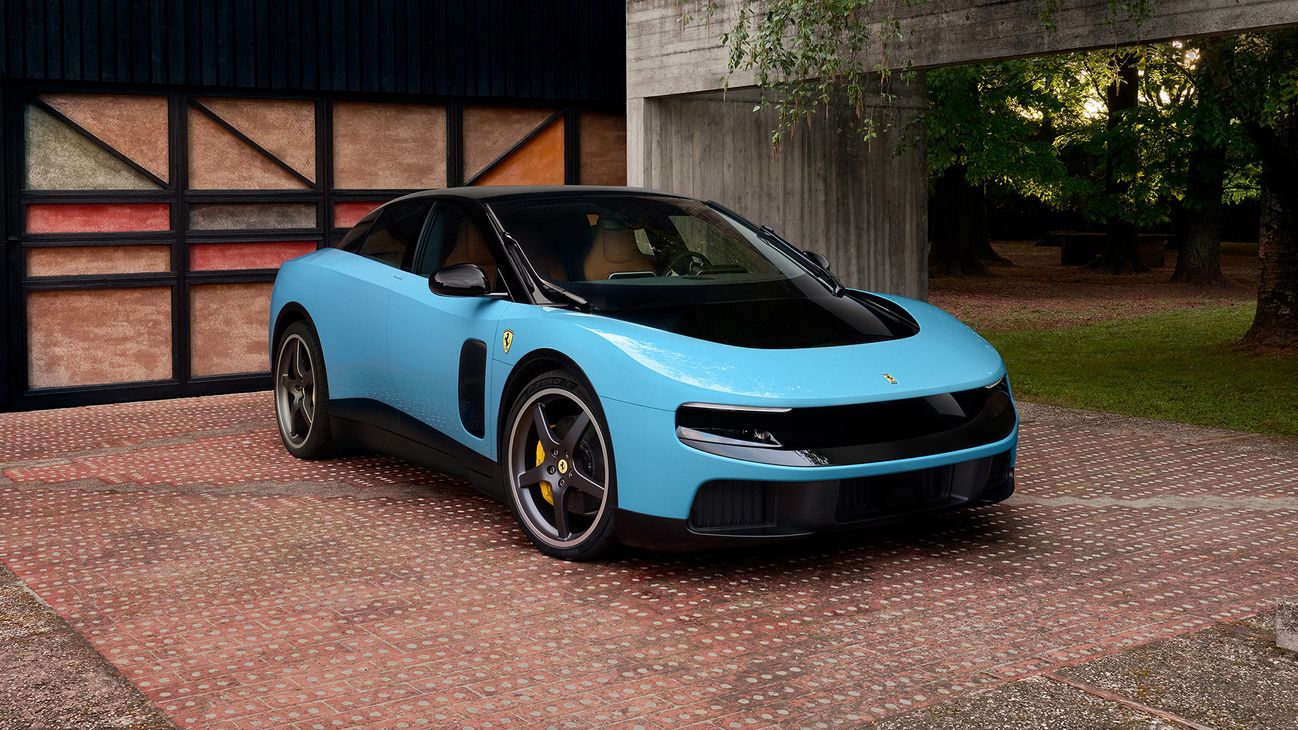
Ferrari Luce
"But the unveiling of the Ferrari Luce and the person who went to see the car after me was Il Bappa."
Ferrari Luce is a Ferrari electric car that was just revealed. The host is saying the reveal was a big deal with lots of journalists watching, which suggests Ferrari is taking EVs seriously.
Ferrari Luce is a Ferrari-branded electric vehicle concept/launch that’s being discussed as a major, high-profile unveiling. The key point is that Ferrari is using a big, global media event to introduce this new model, signaling how seriously the brand is approaching electrification.
analog dials
"So it has literally analog dials like it has a beautiful aluminum hand ground, a binnacle with a sort of domed glass."
Analog dials are the classic dashboard gauges with real markings and a needle. They’re used so you can read important info quickly without looking at a screen.
Analog dials are dashboard gauges that use physical markings and needles instead of a fully digital readout. On EVs, they’re often used to make key info feel more “mechanical” and intuitive at a glance.
binnacle
"hand ground, a binnacle with a sort of domed glass. It's all of a special glass and all that stuff."
A binnacle is the dashboard housing where the gauges sit. Think of it as the instrument cluster’s protective “frame.”
A binnacle is the housing or cluster area that surrounds the instrument gauges on a dashboard. It’s a design term for the “pod” that holds the speedometer/tachometer-style instruments.
battery temperature
"But behind that is a digital screen so it can show you rev speed, battery temperature and that the needle changes as you change the background."
Battery temperature is how hot or cold the EV battery is. The car uses it to protect the battery and to decide how much power it can safely deliver.
Battery temperature is the operating temperature of an EV’s traction battery pack. It matters because the car manages charging, power output, and longevity based on thermal conditions.
digital screen
"But behind that is a digital screen so it can show you rev speed, battery temperature and that the needle changes as you change the background."
A digital screen is the electronic display in the dashboard. It can show changing info like battery status and other driving details.
A digital screen in the instrument cluster is an electronic display that can show changing information like battery temperature and driving metrics. In modern EVs, it often works alongside physical gauges to combine “analog feel” with flexible data.
luxury saloon car
"I mean, this is an absurdly fast, incredibly powerful, luxury five seat four door luxury saloon car is what I would call it."
A luxury saloon car is basically a nicer, more comfortable sedan. It’s meant to feel refined for everyday driving, not just sporty thrills.
A luxury saloon car (often called a sedan in the US) is a passenger car focused on comfort, refinement, and typically a more upscale interior. The term here is used to frame the vehicle’s body style and intended feel.
trunk slash boot
"the biggest trunk slash boot of any Ferrari ever made. So it has storage space."
Trunk/boot is the storage area in the back of the car. They’re saying this one has a lot of space.
Trunk (US) / boot (UK) is the storage compartment at the rear of a car. The speaker is emphasizing that this EV has unusually large rear cargo space.
drivetrain
"because remember Jack saw the drivetrain last year, the battery in the motors. Yes. The suspension."
The drivetrain is everything that sends power from the car’s energy source to the wheels. In an EV, that includes the electric motors and the parts that connect them to the drive wheels.
The drivetrain is the set of components that transfer power from the energy source to the wheels. In EVs, it typically includes the motor(s), reduction gearing, and related power-transfer parts.
suspension
"Yes. The suspension. So we kind of knew about that."
Suspension is the parts that help the wheels move smoothly over the road. It also helps the car handle better and feel less bouncy.
Suspension is the system that connects the wheels to the body and controls ride comfort and handling. It affects how the car stays stable over bumps and during cornering.

Fiat Punto
"...the back and they would cut in and they pointed a fiat Punto and tell it to stop. They were so aggressive and ..."
The Fiat Punto 3 Doors is a small car with a hatchback shape and three doors. It’s made for everyday driving, especially in cities. The “3 doors” part just describes the body style.
The Fiat Punto 3 Doors is a compact hatchback variant of the Punto line, built for practical city driving and easy parking. It may be mentioned in a podcast because it’s a common, recognizable small car, and the “3 doors” detail helps identify the specific body style. In the context you provided, it sounds like it’s being used as a reference point for a particular incident or interaction.
battery management systems
"who knew how to manage batteries, knew how to run battery management systems [659.8s] and control systems to let you send power from a battery to an electric motor."
An EV’s battery management system is like the battery’s safety and control computer. It watches the battery’s temperature and voltage and helps keep charging and power use within safe limits.
A battery management system (BMS) is the electronics that monitors and controls an EV’s battery pack. It tracks cell voltages and temperatures, balances cells, and helps protect the pack by limiting unsafe charging/discharging.
electric motor
"[659.8s] and control systems to let you send power from a battery to an electric motor. [664.6s] You know, that all came out of Silicon Valley, not Detroit in America,"
An electric motor is the part that turns electricity into motion. In an EV, it helps the car accelerate smoothly and can also slow the car down when you lift off the pedal.
An electric motor converts electrical energy from the battery into mechanical rotation. In EVs, it’s controlled precisely so the vehicle can deliver smooth acceleration and regenerative braking.
air vents
"[715.1s] So they do a lot of interiors of aerospace. [716.6s] So it's very strongly, you know, influenced by aerospace design. [720.6s] Like, you know, your private jet has similar air vents to the Ferrari"
Air vents are openings in the bodywork that help move air through or around the car. They can help with cooling and also with how air flows over the vehicle.
In performance and aerospace-influenced design, air vents are used to manage airflow for cooling and aerodynamic control. Their shape and placement can affect how efficiently components shed heat and how the body handles airflow.
launch thing
"There's one thing it does that I genuinely don't understand. ... if you sit in it and you put, you do the launch thing ... Foot on brake, foot, my other foot on accelerator, hard press, both of them. And you let the brake off."
It sounds like a special “launch” mode. The car uses a specific pedal sequence to get the best possible acceleration from a stop, while keeping the wheels from slipping.
This sounds like an electric-car launch mode: a procedure that coordinates braking and accelerator input to get maximum acceleration from a standstill. The point is to manage traction and drivetrain response so the car can hit very high speeds quickly.
torque
"I mean, I explained to our, so it's not mechanical gears, but it keeps the torque of the motor at the maximum."
Torque is the “pulling power” the motor makes. More torque usually means quicker acceleration, and the car is trying to keep that power at the top level when you accelerate hard.
Torque is the twisting force an electric motor produces, and it strongly affects how quickly the car accelerates. The host is describing a control strategy that keeps the motor’s torque at its maximum during launch/acceleration.
four of them, one for each wheel
"The electric motors, there's four of them, one for each wheel, are tiny. They're really, really small. ... And there's four of them."
Instead of one motor, the car uses a motor at each wheel. That lets it adjust power wheel-by-wheel, which helps it accelerate harder and stay stable on different surfaces.
Using four electric motors—one driving each wheel—enables precise control of traction and torque distribution. This can improve acceleration and handling because the car can respond to wheel slip and grip differences at each corner.
Yasa
"Because we just saw the Yasa motors. Imagine I went to see a Yasa motor, which make these incredibly powerful motors very small."
YASA is a company that makes electric motors. The host is using it as an example to show that very powerful motors can also be made very small.
YASA is a company known for compact, high-power electric motors used in performance and racing applications. The host references seeing a YASA motor to explain how the motors in this car can be extremely small for their output.
250 horsepower each
"These are small and they're only 250 horsepower each. And there's four of them."
They’re saying each motor makes about 250 horsepower. With four motors, the car’s total power comes from adding what all four motors can produce.
The host is quoting motor output per motor: 250 horsepower for each of the four motors. In a multi-motor setup, total system power is the sum across motors, so per-motor ratings help explain how the car reaches its overall acceleration.
43,000 RPM
"A test they do is they spin from zero to, I think, it's 43,000 RPM in under a second."
RPM means how many times something spins in one minute. Here, it’s describing how fast an electric motor can spin during a quick test. The point is how extremely fast the motor ramps up.
RPM (revolutions per minute) is a measure of how fast a rotating component spins. In an EV context, very high RPM figures usually refer to the motor’s rotor speed during a test run. The host is describing a rapid spin-up test from a standstill to that motor speed in under a second.
SK batteries
"It's the best batteries, SK batteries made in Korea. Although they do have a big factory in China."
SK batteries are the battery cells used in some electric vehicles. The host is saying they’re top-tier and that the company makes them in Korea, with big factories in other places too.
SK batteries refers to SK On’s battery brand, a major supplier of lithium-ion cells used in EVs. The host highlights that these are “the best batteries” and specifies they’re made in Korea, while also noting SK has large manufacturing footprints elsewhere. This matters because battery cell sourcing and manufacturing scale can affect cost, supply, and performance consistency.

Leap Motor B10
"And then today, to contrast, I've been driving the Leap Motor B10. But you've got to say, if you're looking for a compact SUV, I mean, it's very, very nice car to drive."
The Leap Motor B10 is an electric SUV. It’s meant to be a normal, usable EV for everyday driving, and the host says it feels really good to drive.
The Leap Motor B10 is an electric compact SUV from Leapmotor, positioned as a practical EV with a focus on everyday drivability. The host contrasts it with the earlier high-performance discussion and says it’s “very, very nice” to drive, implying it’s aimed at mainstream buyers rather than extreme performance testing.

Alpina B10
"...ay, to contrast, I've been driving the Leap Motor B10. But you've got to say, if you're looking for a c..."
The Alpina B10 is a faster, specially tuned version of a BMW 5 Series. It’s meant to drive more powerfully than a standard model, while still trying to feel comfortable. It may be mentioned to compare how different kinds of cars feel to drive.
The Alpina B10 is a performance-oriented version of the BMW 5 Series, tuned by Alpina for stronger power delivery and a more refined driving feel. It’s significant because Alpina focuses on making a fast car that still aims to be comfortable for regular use. In an electric-focused podcast, it may be brought up as a contrast point to highlight how different powertrains change the driving experience.
Honkuk
"This episode is brought to you by Honkuk. The Honkuk Ion Tire is built exclusively for electric vehicles, engineered to deliver what EV drivers need most."
Honkuk is a tire brand. They’re talking about an EV-focused tire line and saying it’s designed to help electric cars with things like efficiency and quiet ride quality.
Honkuk is a tire brand promoting its “Ion Tire” specifically for electric vehicles. The host claims it’s engineered for EV needs like grip, quietness, energy efficiency, and long mileage, and also ties it to Formula E as an “official tyre partner.”
Formula E
"As the official tyre partner of Formula E, Honkuk proves its EV technology is at the highest level of performance and brings that same innovation to every Ion Tire on the road."
Formula E is an all-electric single-seater racing series. When a tire brand says it’s an official tyre partner of Formula E, it’s implying the tires are developed and validated under high-performance EV racing conditions. That’s used as a credibility signal for technology transfer to road tires.

Xpeng G6
"But actually, I've been driving an X-Peng G6 Performance for the last week. Oh, because I know the G6 quite well that all the performance. I've got to say, it is exceptional."
This is an electric car from XPeng called the G6, and “Performance” is the sportier version. The host says they drove one for a week and really liked how it felt and looked.
The X-Peng G6 Performance is a battery-electric SUV/crossover from XPeng, and the “Performance” trim typically signals a more driver-focused setup than the base model. In this segment, the host is describing it as exceptionally good based on a week of driving, including the look (like the black wheels) that comes with that version.
solar panels
"So I don't know the exact number now that was a while ago that I went and asked everyone. So it's 28 houses, very small village. And I, for years, I was the special bloke that lived just on the edge of the village because I was special because I had solar panels on one of those fancy electric cars."
Solar panels are devices on your roof that make electricity from sunlight. The host is saying they had solar power and an electric car before many other people in their area did.
Solar panels are rooftop photovoltaic panels that convert sunlight into electricity. In the context of this segment, the host uses them to explain why they were an early adopter of electric cars in their village.

Tesla
"Can't think, but the others are Teslas, Tesla, I'm just going through them. No one yet has got a Renault 5."
Tesla is a well-known electric car brand. The host is mentioning it because they’re seeing lots of EVs around now, not just the older gas-powered cars.
Tesla is a major electric-vehicle brand, and the host groups it with other EVs they’re seeing. In this segment, Tesla is used as a reference point for how common EVs have become compared with the earlier dominance of luxury SUVs.
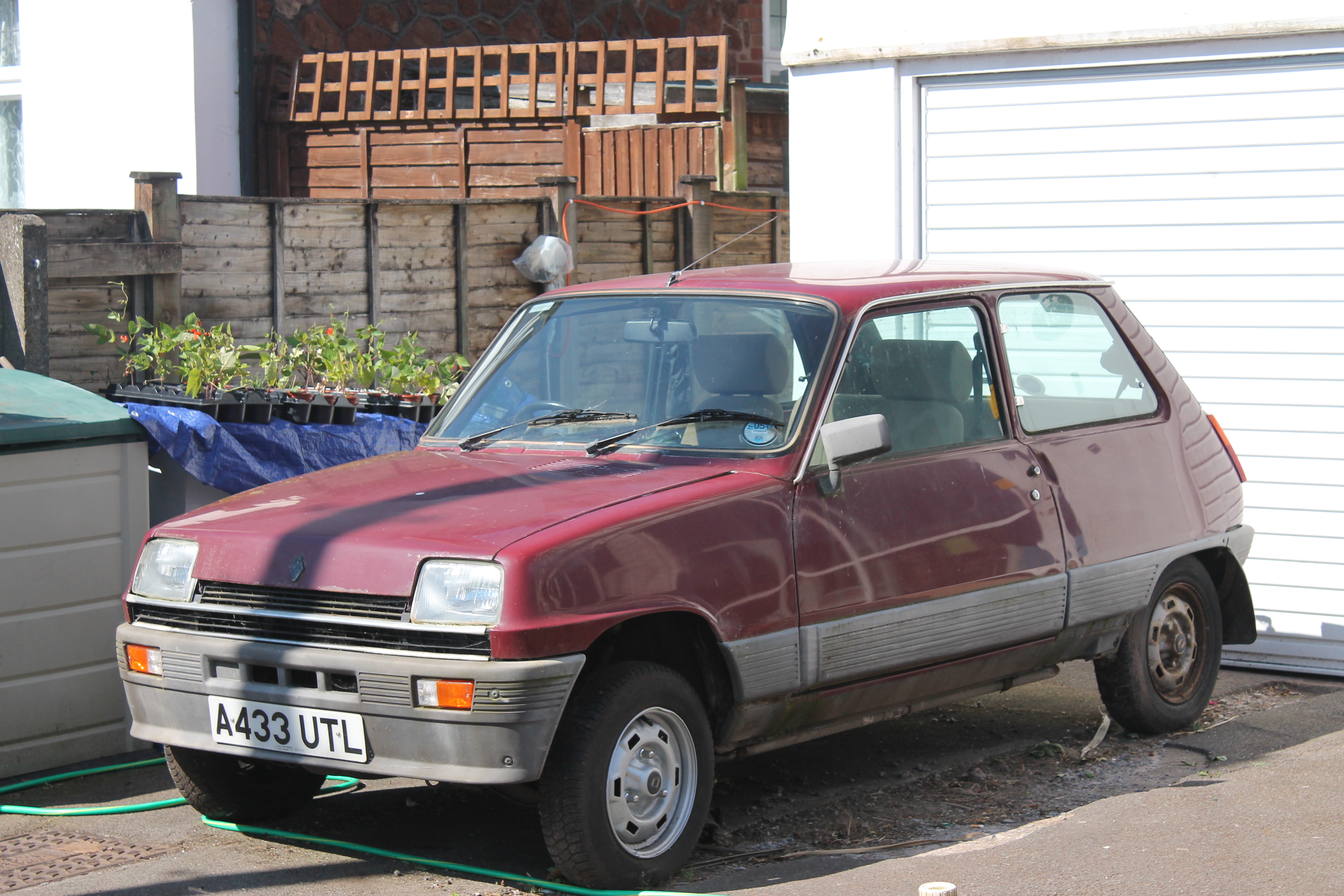
Renault 5
"No one yet has got a Renault 5. I'm going to be bitter when they do."
Renault 5 is a famous Renault model name. The host is basically saying they haven’t seen one around yet, even though they’re seeing lots of other electric cars.
The Renault 5 is a well-known nameplate from Renault, and it’s being referenced here as a specific car model the host hasn’t seen yet. Mentioning it in an EV-heavy parking-lot context highlights how mainstream European EVs (or EV versions of classic models) are expected to show up alongside Chinese EVs and Tesla.

Land Range Rovers
"... be in always, when we were there, always full of Range Rovers. And Land Rovers and maybe some BMW saloon cars."
The Range Rover is a large, comfortable SUV made by Land Rover. It’s designed to be good for both everyday driving and rougher roads. People may mention it because it’s a well-known luxury vehicle.
The Land Rover Range Rover is a luxury SUV known for combining off-road capability with a high-end interior and comfort-focused ride. It’s often discussed because it represents the “premium” side of Land Rover’s lineup and is a common choice for people who want both refinement and versatility. In a podcast, it may come up as a recognizable example of the kinds of vehicles people see frequently in certain settings.
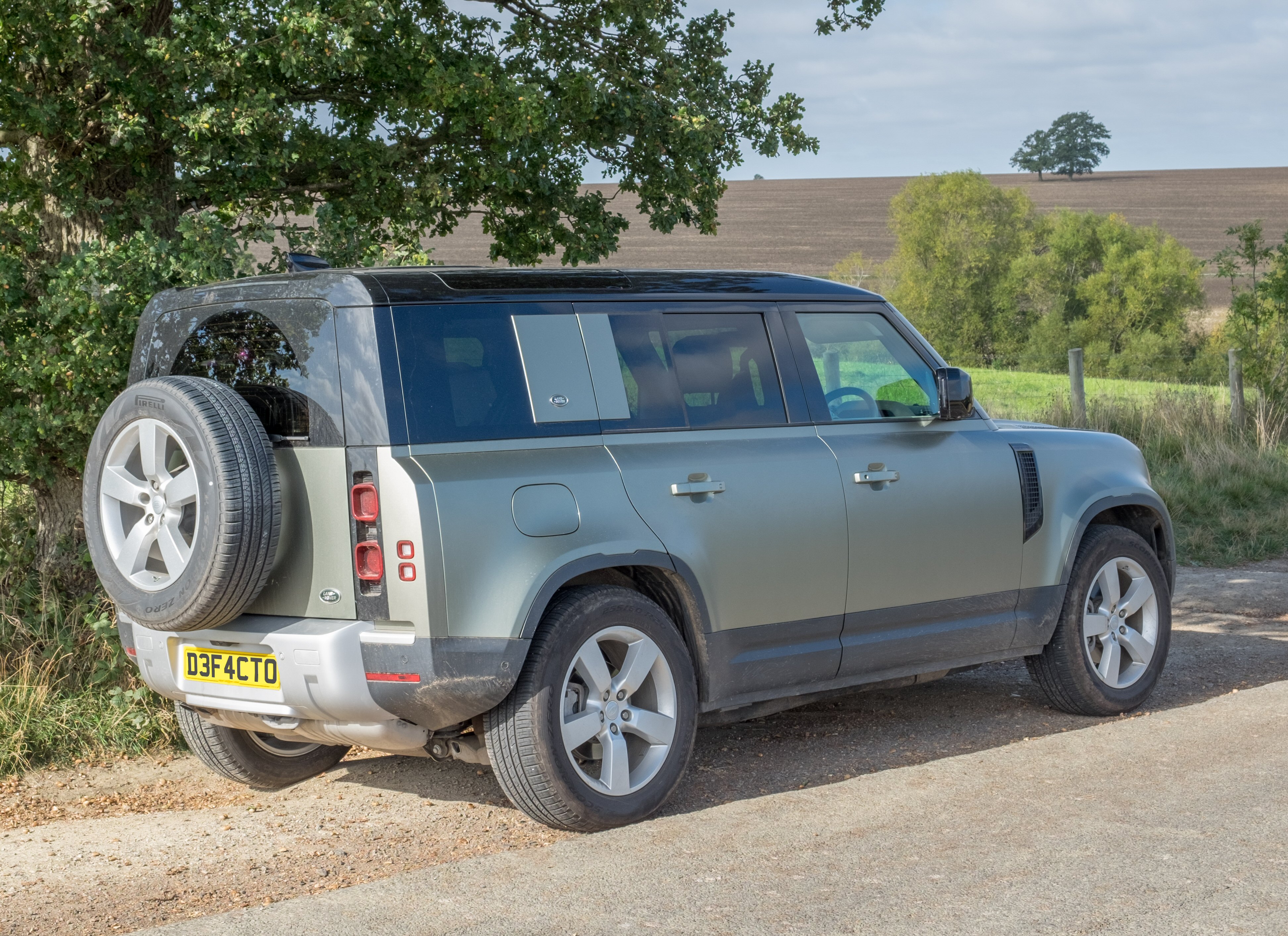
Land Rover
"when we were there, always full of Range Rovers. And Land Rovers and maybe some BMW saloon cars."
Land Rover is the company that makes SUVs like the Range Rover. The host is using it to describe what used to be common before electric cars took over the parking lot.
Land Rover is the British brand behind Range Rover and other SUVs, and the host mentions it as part of the earlier, non-electric-heavy mix in the school car park. In this context, it’s a shorthand for “traditional” luxury SUVs before EVs became common.
declining 'West' in danger of a death spiral
"And it's just the changing market share must be blowing people in traditional automotives mines because you've built up, I guess, a moat called brand loyalty. And it seems to me that that has been ripped up and torn to shreds."
The host is talking about a situation where one side (the “West”) could keep losing ground in EVs. The concern is that once momentum shifts, it can become harder and harder to catch up.
This is the episode’s central framing: the “West” losing momentum in the EV market and potentially entering a self-reinforcing decline. The host connects it to shifting market share and the idea that brand loyalty can be disrupted quickly when new competitors gain traction.
brand loyalty
"And it's just the changing market share must be blowing people in traditional automotives mines because you've built up, I guess, a moat called brand loyalty. And it seems to me that that has been ripped up and torn to shreds."
Brand loyalty means people stick with the same car brand because they trust it or feel connected to it. The host is saying that this “loyalty advantage” can get broken when new EV brands win customers.
Brand loyalty is the tendency of customers to keep buying the same brand because of past satisfaction, identity, or trust. The host uses it as a “moat” that’s supposed to protect traditional automakers, but argues that EV competition is eroding that advantage.
Nissan
"And then also BYD, MG, IM, GLE, Polestar, and then, you know, others like Nissan and Renault, [1232.1s] they were the OGs, right, of the industry."
Nissan is a well-known car company. The host is saying Nissan will be part of the brands at the event.
Nissan is a major global automaker that produces both EVs and non-EVs. Here, it’s mentioned as one of the non-Chinese brands expected at the event lineup.
Polestar
"Or built in, I mean, Polestar, you know, you could say Swedish, but it's built in China. [1255.1s] Yeah."
Polestar is an electric-car brand. The host points out that even though it’s associated with Sweden, the cars are built in China.
Polestar is an EV brand that’s often described as Swedish, but the host notes it is built in China. That distinction matters because it reflects how EV supply chains and manufacturing are shifting globally.
BMW
"The likes of Hyundai, Ford, Mercedes, BMW. [1240.2s] We've just got some vehicles from Kia, from Missuzu, KGM."
BMW is a German car brand. The host is including BMW in the list of brands that will be at the event.
BMW is a German automaker known for performance-oriented vehicles and a strong European presence. In this segment, it’s listed as one of the established brands in the event lineup.
Mercedes
"The likes of Hyundai, Ford, Mercedes, BMW. [1240.2s] We've just got some vehicles from Kia, from Missuzu, KGM."
Mercedes is a luxury car brand. The host is saying Mercedes will be represented among the brands at the event.
Mercedes (Mercedes-Benz) is a major premium automaker with a long history in European and global car markets. The host mentions it alongside other legacy brands as part of the brands attending Cheltenham.
Kia
"We've just got some vehicles from Kia, from Missuzu, KGM. [1243.4s] You know, it's a really kind of interesting and eclectic lineup."
Kia is a car brand from South Korea. The host says Kia will have vehicles at the event.
Kia is a South Korean automaker that has expanded its EV offerings in recent years. The host mentions Kia as a source of vehicles at the Cheltenham event.
Xiaomi
"And there are other brands on the way, you know, like GAC, ION, NEO, Firefly, [1265.6s] Xiaomi is coming early next year, Zika's coming in the third quarter,"
Xiaomi is a tech company best known for electronics. The host is saying Xiaomi is coming to the EV scene soon.
Xiaomi is best known as a consumer electronics brand, but it’s also referenced here as an upcoming EV entrant. The host is using it to illustrate how many new players are arriving in the EV market.
multi-power train
"But clearly the Chinese have been very clever because they've adopted a multi-power train [1295.4s] approach, you know."
“Multi-power train” means a company offers cars with more than one kind of drivetrain. The host is saying Chinese brands are good at offering different options so they can sell in more places.
“Multi-power train” refers to using multiple types of powertrains—typically different combinations like battery-electric, hybrid, and/or other electrified setups—across a lineup. The host credits Chinese automakers with being flexible in how they offer different drivetrains to match different markets and regulations.
super hybrids
"Chinese have been super flexible with their super hybrids, [1308.0s] and as well as obviously their pure EVs as well."
A “super hybrid” is a more capable kind of hybrid car. It still uses a battery and electric motor, but it’s designed to do more of the work electrically than a typical mild hybrid.
“Super hybrids” refers to advanced hybrid powertrains that go beyond a basic hybrid by using stronger electric drive capability and more sophisticated energy management. In this context, the host is contrasting them with pure EVs as part of how Chinese manufacturers are expanding their European lineup.
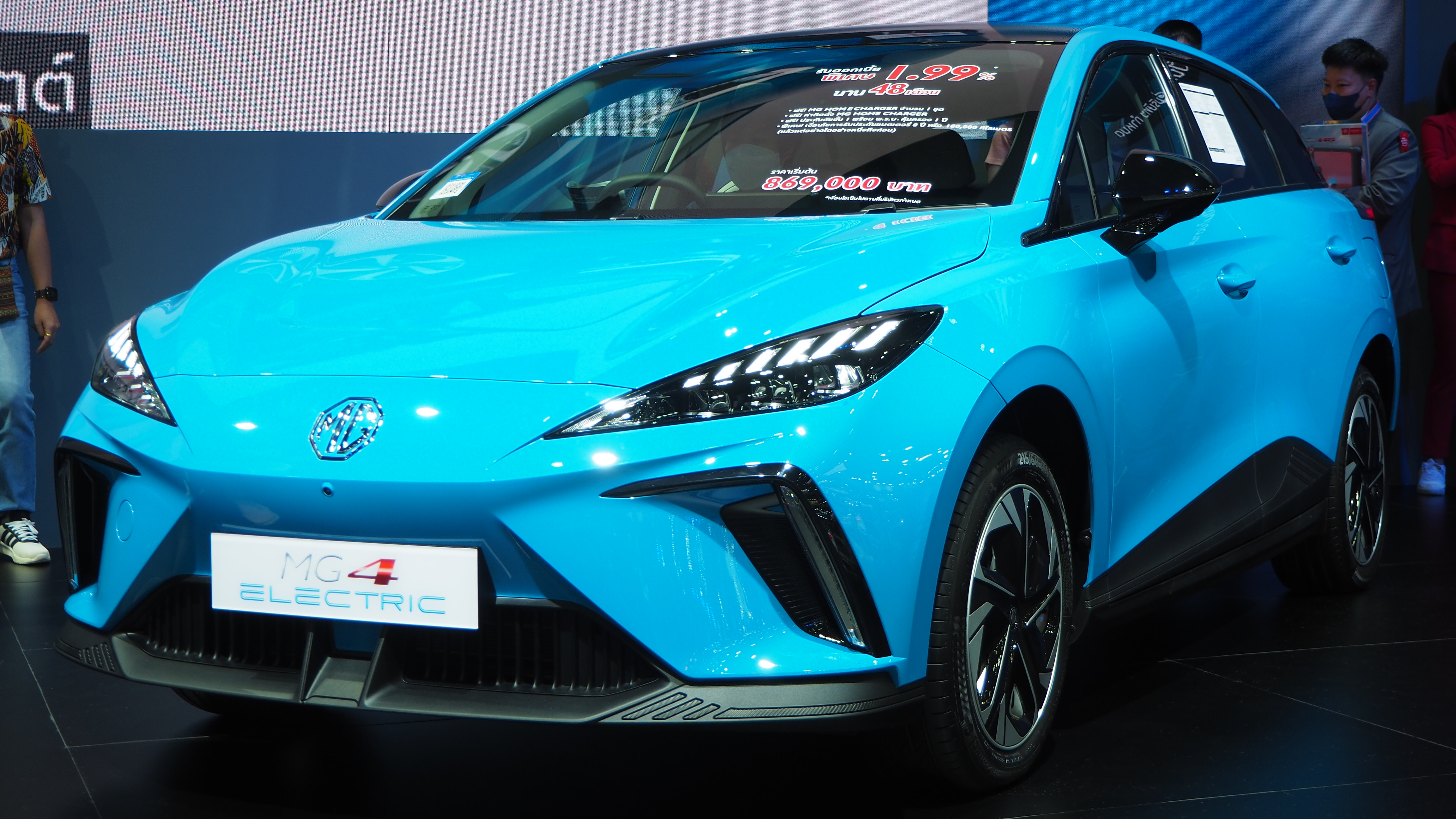
MG4 Urban EV
"You and I drove in the urban, is it called the MG4 Urban EV? [1329.0s] MG4 Urban EV, I've got the hang of it now. [1330.7s] It feels smaller than the MG4."
The MG4 Urban EV is MG’s small electric car. Here, they’re basically saying it’s a bit smaller than the regular MG4, which can make it easier to live with in tight city spaces.
The MG4 Urban EV is a compact electric car from MG (a brand within the SAIC group). In this segment, the hosts compare its size to the standard MG4, noting it feels smaller and is likely shorter—useful for understanding real-world packaging and maneuverability.
Big Motion World
"And then we also have a company there called Big Motion World, [1343.0s] who actually sell and test drive used EVs. [1346.1s] I was so happy."
Big Motion World is a business that sells and lets people test drive used electric cars. It’s basically an EV dealer focused on pre-owned models.
Big Motion World is described as a company that sells and test drives used EVs. That’s relevant because it points listeners to an EV shopping channel focused on pre-owned vehicles rather than only new-car showrooms.

Tesla Model Y
"I was so happy. [1347.0s] So I got an email from someone saying, I came expecting to hate this car, [1351.3s] and it was a Tesla Model Y, test drove a used one. [1354.1s] And now I've got one and I absolutely love it."
The Tesla Model Y is Tesla’s popular electric SUV. The host is saying someone expected to dislike it after a used-car test drive, but ended up loving it.
The Tesla Model Y is Tesla’s compact electric SUV, known for mainstream appeal and strong charging ecosystem support. In this segment, the host describes a used Model Y test drive that flipped someone’s expectations—highlighting how real ownership experience can change perceptions of EVs.
BYD
"is kind of joins the energy and car ecosystem is that BYD are launching their flash chargers soon"
BYD is a big EV and battery company from China. Here they’re talking about BYD bringing very fast charging stations to the UK.
BYD is a major Chinese electric-vehicle and battery company that’s expanding into fast-charging infrastructure. In this segment, the hosts focus on BYD’s plan to launch “flash chargers” in the UK.
London Tech Week
"They're going to be at London Tech Week imminently. But then Bono, who is the UK country manager for BYD,"
London Tech Week is a tech conference/event in London. The hosts mention it to explain when BYD plans to announce its new charging hardware.
London Tech Week is a technology event used here to frame the timing of BYD’s flash-charger announcements. It’s not an automotive term by itself, but it’s a specific named tech-industry venue relevant to when and where the charging tech is being promoted.
Cheltenham Show
"Bono, who is the UK country manager for BYD, is going to come to the Cheltenham Show and you're going to have a fire-side chat with him."
The Cheltenham Show is a named event venue where the segment says BYD’s UK country manager will appear for a fireside chat. It’s used here as the local UK platform for announcing and discussing the charging technology.
flash chargers
"just to kind of recap what flash charging means, they're capable of speeds up to 1,500 kilowatts, enabling 10% to 70% charge in five minutes."
“Flash charging” means charging an EV extremely fast—on the order of minutes. Instead of pulling all the power directly from the grid, the charger uses built-in batteries to deliver the big power burst.
“Flash charging” refers to ultra-fast charging designed to deliver a large amount of energy in minutes rather than tens of minutes. The segment describes a system that can reach up to 1,500 kilowatts and achieve roughly a 10% to 70% charge in five minutes, using onboard energy-storage batteries to buffer power demand.
kilowatts
"they're capable of speeds up to 1,500 kilowatts, enabling 10% to 70% charge in five minutes."
Kilowatts are a measure of charging “power.” Higher kilowatts usually means the charger can deliver energy faster, but the car still has limits.
Kilowatts (kW) measure charging power—how quickly energy can be delivered to the vehicle. In fast-charging contexts, higher kW generally means faster charging, though the car’s battery and charging curve also limit the real-world rate.

Z9 Denza Z9
"First model showcase flash charging in the UK will be the Denza Z9 GT, which we hope to get our hands on at some stage."
The Denza Z9 GT is the EV model they say will be the first in the UK to demonstrate this ultra-fast “flash charging.” The idea is that it can gain a lot of driving range in just a few minutes.
The Denza Z9 GT is a specific electric vehicle model being positioned as the first to showcase flash charging in the UK. The segment ties it to the charger’s claimed capability—charging fast enough to add substantial range in about five minutes.
flash charging
"We'll try and find that out. [1549.7s] I had read that somewhere, but who knows? [1552.0s] You're probably 100% great, but I will check that [1557.0s] and we'll put a link in about the flash charging [1560.3s] in the show notes for this particular episode."
“Flash charging” means charging an EV really quickly. The goal is to get you back on the road fast by adding range in a short stop.
“Flash charging” refers to very fast charging intended to add a meaningful amount of range in a short time. In EV discussions, it usually implies high power delivery and optimized charging behavior to reduce the time spent at the charger.
Silverstone
"So I really look forward to that. [1585.5s] Yeah. And also, I mean, I just want to say, [1588.7s] aside from anything else, Bono G, who is sort of European head of BYD, [1594.0s] is just a brilliant talker, very entertaining,"
Silverstone is a famous race track in the UK. People often go there for big car events and racing.
Silverstone is a major motorsport circuit in the UK, best known for hosting Formula 1. EV events and car meetups there often signal mainstream interest in new technology and performance.
JLR
"whether it's at Nissan in Sunderland, whether it's at JLR. There's certainly those kind of conversations are going on now."
JLR stands for Jaguar Land Rover. The host is mentioning it as another Western automaker that could be involved in future production capacity and partnerships.
JLR is the common abbreviation for Jaguar Land Rover, a UK-based automaker group. The host mentions it alongside Nissan Sunderland to illustrate that Western OEMs are considering capacity and partnerships across multiple UK manufacturing players.
reverse takeovers
"Now those partners are looking suspiciously like what will be reverse takeovers over time. As we genuinely saw, I was lucky enough to go to Beijing Motor Show this year,"
A reverse takeover is a corporate deal where the “smaller” or private side ends up controlling the “bigger” public company. The host is implying that some partnerships could eventually turn into control-changing deals.
A reverse takeover is when a private company (or a smaller entity) effectively takes control of a public company by using the public company’s listing. In the context of automakers partnering with Chinese firms, the host is suggesting deal structures that could shift control over time rather than traditional acquisitions.
Beijing Motor Show
"As we genuinely saw, I was lucky enough to go to Beijing Motor Show this year, you weren't there, but genuinely saw European auto execs scrambling after Chinese car company CEOs."
The Beijing Motor Show is a big car show in China. The host mentions it to support the idea that European auto leaders are paying close attention to Chinese companies.
The Beijing Motor Show is a major international auto event in China where automakers and suppliers showcase new vehicles and technologies. The host uses it as evidence that European executives are actively engaging with Chinese car leaders.
purpose-built electric car
"And they, I mean, the i3, the BMW i3 is a beautiful example of a beautifully purpose-built electric car."
A purpose-built electric car is designed as an EV from the start. Instead of modifying an older gas-car design, the car’s layout is planned around the battery and electric motors.
A purpose-built electric car is designed from the ground up around electric power, rather than being adapted from a gasoline vehicle. That usually allows better packaging (like battery placement) and can improve efficiency and driving characteristics.

BMW i3
"And they, I mean, the i3, the BMW i3 is a beautiful example of a beautifully purpose-built electric car."
The BMW i3 is a fully electric BMW that was designed from the start as an EV. The point here is that it wasn’t just a modified gas car—it was built around electricity.
The BMW i3 is a purpose-built electric car from BMW, known for its lightweight design and early adoption of EV tech. It’s often cited as an example of an EV that wasn’t just a conversion of an existing gas model.
conversions of or adaptions of existing vehicles
"So there is exceptions, but there was a lot of sort of, you know, conversions of or adaptions of existing vehicles."
This means taking an older car design and trying to make it electric. The host’s point is that it can be less ideal than designing an EV from scratch.
This refers to turning an existing (often gasoline) vehicle platform into an electric one. The speaker suggests that early EV efforts in Europe were sometimes “compromised” because the underlying design wasn’t originally optimized for batteries and electric drivetrains.
Stellantis
"They've sold millions of cars in China. They've gone into partnership with Stellantis to come into Europe and they're building cars here."
Stellantis is a big car company that makes lots of different brands. Here, it’s mentioned because it’s working with Leap Motor to help those electric cars reach Europe.
Stellantis is a major automaker formed from the merger of Fiat Chrysler Automobiles and PSA. In this segment, it’s mentioned as a partnership partner for Leap Motor to help bring EVs into Europe.
macro trends
"These things are macro trends that are bigger [1915.8s] than any individual, often bigger than some of these companies."
“Macro trends” means big, long-lasting changes in the world or the industry. The host is saying these changes are bigger than any one company’s actions.
“Macro trends” refers to large, long-term forces in the economy or industry that affect many companies at once. The host uses it to argue that EV market shifts are driven by bigger dynamics than any single automaker’s decisions.
bottom of the funnel
"If you walked into a showroom and said, I'm at the bottom of the funnel, I go, sir, the gents is just over there."
It’s a marketing phrase for people who are ready to buy. They’re not just browsing—they’re at the stage where they’re thinking seriously about choosing an electric car.
“Bottom of the funnel” is marketing jargon for people who are close to making a purchase decision. In this context, it means shoppers who are already actively considering buying an electric car rather than just learning about the idea.
services
"They stopped at the services. I don't know where they, they couldn't remember where it was."
“Services” means the motorway rest areas where you stop for food, breaks, and—more and more—charging. It’s the place you’d go when traveling with an electric car.
In the UK, “services” usually means motorway service stations—rest stops with parking and amenities, increasingly including EV charging. The speaker’s example is about where drivers naturally stop during a trip.
wristband
"I just listed places, you know, like rugby services, redding services, redding a wristband, where there's, I think, 45 charges."
A wristband is like a card or tag you use to pay or unlock charging at some stations. The host is pointing out that charging access is becoming more common and familiar.
A “wristband” is a physical access token some EV charging networks used to authenticate and start charging. It’s mentioned as part of how drivers interact with charging locations (alongside the number of chargers).
electric cars
"it needs to be new hosts [2243.4s] and it needs to address the new paradigm and it needs to include electric cars."
Electric cars run on electricity stored in a battery, not gasoline. The host is saying they should be included in mainstream car media going forward.
Electric cars are vehicles powered primarily by one or more electric motors and a battery, rather than a gasoline engine. This segment frames them as part of a “new paradigm” for mainstream TV coverage and consumer adoption.
state-of-the-art
"And they're using absolute cutting-edge state-of-the-art blade batteries made by SK. [2395.7s] I mean, the best, you know, they're not sort of,"
Here, “state-of-the-art” just means the most advanced technology they could get. It’s a way of saying the battery is cutting-edge.
In this context, “state-of-the-art” is used to mean the newest, most advanced battery technology available at the time. It’s not a technical measurement by itself, but it frames the speaker’s claim that the pack uses top-tier components.
blade batteries
"And they're using absolute cutting-edge state-of-the-art blade batteries made by SK. [2395.7s] I mean, the best, you know, they're not sort of,"
“Blade batteries” are a special way of building the battery so it’s flatter and more efficient. The idea is to fit more energy into the same space and make the battery pack work better.
“Blade batteries” refers to a battery design where cells are built in a long, flat form factor (often associated with CATL’s technology). The goal is to improve energy density and pack efficiency compared with more conventional cylindrical or prismatic layouts.
battery pack
"They've designed their battery pack. [2413.3s] The whole thing, you can replace every part on it."
A battery pack is the whole battery system in an electric car, not just one cell. It includes the cells and the parts that hold and manage them.
A battery pack is the complete assembly in an EV: multiple battery cells arranged into modules, plus the supporting structure and electronics. The host is emphasizing a modular, serviceable pack design where components can be replaced over time.
replace every part
"The whole thing, you can replace every part on it. [2416.4s] It's not, you know, and the individual battery cells that they put in that pack,"
They’re talking about designing the battery so parts can be swapped out later. The goal is that when better battery tech arrives, the car can be updated instead of being stuck with an old battery.
The host is describing an EV battery-pack strategy aimed at long-term upgradability: designing the pack so cells/modules can be removed and replaced as newer battery technology becomes available. This is meant to reduce obsolescence and extend the vehicle’s useful life.
kilowatt hours
"it's 120 kilowatt hours of usable batteries in it. [2438.6s] But what they'll be able to do is put 120 kilowatt hours,"
Kilowatt-hours (kWh) tell you how much energy the battery can store. More kWh usually means the car can go farther, all else being equal.
“Kilowatt hours” (kWh) is a measure of energy capacity—how much electrical energy the battery can store. In EV discussions, higher usable kWh generally means more potential driving range, assuming efficiency is similar.
usable batteries
"and what their predictions are from everyone, [2433.8s] that they will have this, it's 120 kilowatt hours of usable batteries in it."
“Usable” means the battery energy the car lets you use for driving. The car keeps a little in reserve to help protect the battery and avoid unsafe extremes.
“Usable batteries” means the portion of the total battery capacity the car actually allows you to access for driving. Manufacturers reserve some capacity for battery longevity and safety, so usable kWh can be lower than the pack’s headline capacity.
drive system
"otherwise the balance of the suspension and the drive system, and the way that the wheels turn over their individual motors and the software,"
The drive system in an EV includes the components that deliver power from the battery to the wheels, including motors and power electronics. Its balance with suspension is important because weight and power delivery affect traction and stability.
individual motors
"otherwise the balance of the suspension and the drive system, and the way that the wheels turn over their individual motors and the software,"
Individual motors means each wheel (or axle) can be driven by its own electric motor. That enables more precise control of traction and torque distribution, but it also makes the software and vehicle balance more sensitive to weight changes.
software
"and the way that the wheels turn over their individual motors and the software, it would make it too difficult."
In EVs, software is the control system that coordinates motor torque, traction behavior, and how the car responds to steering inputs. When the vehicle’s weight distribution changes, the control strategy often needs to account for it to keep handling stable.
battery box
"Ferrari, a Ferrari Luce, with a couple of lumps of lead in the battery box to make it heavy enough to actually drive the damn thing"
A battery box is the protected container where the electric car’s battery sits. Where it’s placed and how heavy it is can change how the car feels and handles.
A battery box is the structural enclosure that houses an electric vehicle’s battery pack. Its placement and mass affect the car’s center of gravity and how the suspension and drivetrain behave.
Millbrook
"I've got a feeling it probably is going to be at somewhere like Millbrook, or, you know, not on a road."
Millbrook is a place where car companies test vehicles. It’s the kind of location where you can try something risky without worrying about normal road traffic.
Millbrook refers to Millbrook Proving Ground in the UK, a test facility used by automakers for vehicle development and validation. The hosts mention it as a safer environment to evaluate an extreme, heavy EV concept rather than driving it on public roads.
renewable energy
"But, you know, our role in expanding the world view of this new technology of renewable energy, of batteries, it's kind of changed."
Renewable energy is electricity made from sources that don’t run out, like sunlight and wind. If you charge an electric car with this kind of electricity, the car can be cleaner overall.
Renewable energy is power generated from sources that naturally replenish, like wind, solar, and hydro. In an EV context, it matters because it can reduce the carbon footprint of charging batteries.
Ferrari Lube
"All you will see this week is talk about the Ferrari Lube. All you've seen in weeks gone by is BYD Overtake, Tesla, Chinese."
“Ferrari Lube” sounds like a specific phrase people are seeing online. In this quote, it’s used to contrast what shows up in people’s feeds versus EV-related news.
“Ferrari Lube” appears to be a specific phrase or meme-like reference rather than a clearly defined EV or automotive product in this context. It’s mentioned alongside EV headlines, implying a shift in what people see in public conversation.
Request an Explanation
Heard something you'd like explained? We'll add it to this episode.
Sign in to request explanations for terms you heard.
Want to learn more?
Browse our glossary for plain-English explanations of automotive terms, jargon, and concepts.
Help improve this episode
See something that's not quite right? Our annotations are AI-generated and can sometimes miss the mark. Click the flag icon on any annotation to suggest a correction.