Belts are rubber parts inside your car that help run important things like the air conditioner or the engine timing. If they break, your car can stop working properly.
Newer cars have special tools called sensors that watch important parts like your tires and engine. They tell you when something needs fixing or checking by lighting up signs on the dashboard.
The maintenance light is a signal on your car's dashboard that tells you when it's time for regular check-ups or service, like changing the oil. It helps keep your car running well.
Pothole season is when roads get lots of holes and bumps, usually after winter. These holes can hurt your car's tires and parts, so it's important to watch out for them.
Cold cranking amps tell you how strong a car battery is when starting your car in cold weather. The higher the number, the better it can start your car when it's very cold outside.
The alternator is a part in your car that makes electricity when the engine is running. It charges the battery and powers things like lights and radio.
The dashboard warning light is a little light on your car’s dashboard that tells you if something is wrong, like the battery or alternator not working right.
The 2014 Mitsubishi Outlander is a type of SUV that many people use for family trips or daily driving. It’s a popular car that can handle different road conditions.
The Saturn Ion is a small car made by Saturn, a car company that doesn't exist anymore. The 2004 version is an early model and was popular because it was affordable and had a different look.
Cruise control helps you keep your car going at the same speed without pressing the gas pedal. Sometimes, parts of this system can stop working, especially in older cars.
The Lincoln MKZ is a fancy car that people use for comfortable driving. The 2012 version is a few years old but still has nice features and a smooth ride.
The Chevrolet Impala is a big car that many families use because it's roomy and comfortable to ride in. The 2014 model has nice features and doesn't use too much gas. People talk about it because it's a good, affordable car for everyday driving.
The Ford Ranger is a smaller truck that people use for carrying things and driving on different roads. It's known for being tough and useful for many jobs, so lots of people like it. It's a good choice if you want a truck that's not too big but still strong.
A damaged wheel means the round metal part your tire sits on is bent or broken, which can make driving unsafe.
LIVE
How very apropos, Ryan. I love the music.
708 now on WCCO. I am not Denny Long,
obviously. This is Laura Oaks from the WCCO Radio Newsroom.
Denny has the day off. He'll be back next week. And it is time
for this morning's Car Care Show with Nick Stoffel
from Lloyd's Automotive in St. Paul. Good morning, Nick.
Good morning. Nice to have you here. And our phone lines
are going to get very busy and the text line will too, of course. But there are a couple of things
that I wanted to ask you before we get going that I'm hoping
others can relate to. And that is getting over
some of the intimidation that either
new drivers or maybe women who aren't
used to having to take care of their car problems
or worry about that because the dad
or the husband or whoever has always handled it but they want to be a little more
empowered with that kind of stuff. Maybe a single mom
who's kind of on her own and having to learn this stuff by herself. I wanted to
see from you what are some of the like the
things that we must monitor that are easy
to do that we shouldn't be intimidated by. Maybe a tire pressure light,
the check engine light, belts, hoses, fluids. Kind of some
of that basic stuff that most people should know. What would you
say to that? Well, that's a good question. I would say
first off is most people, to be
honest, don't know how to do those things any longer. You know, as we get older,
when we were younger at the filling station, we used to check tire pressure, check
oil level, check washer fluid. I feel like those days are long gone.
Luckily for us, the cars have evolved where there's sensors and indicators
that remind us, hey, you have a low tire. It's time to
do an oil change. There's a maintenance light. There's, you know, there's a concern or a problem.
There's a check engine light. So there are reminders within the vehicle itself that tell
you something's not right. Now, it's important though, when you see those indicators, don't ignore them.
Now, it doesn't mean it has to be expensive. You have to do the work, but
at a minimum, you need to have it assessed, figure out what's going on, get an estimate,
then you can make an informed decision whether or not you repair it or wait for something
for another time. Great. And just tying into that, I was just checking
out the Lloyds Automotive website. First of all, if people, if you're not
familiar yet with Lloyds Automotive in St. Paul, they've been in business for 50 years.
They are super highly rated. They have won
and been acknowledged for just about every rating and award you could possibly
imagine. So Nick knows what he's talking about here. And their blog on their
website is apropos for the day two, Nick, because what I'm seeing
is the title of warning signs you should never ignore strange
noises and what they could mean. So that kind of falls into what we're
talking about. Are there, are there some noises that we should for sure be paying
attention to maybe particularly during pothole season?
Well, I would say the most important is something
changes. You know, I used to never hear this type of noise. I never
had this type of reaction with my vehicle. You know, as you mentioned pothole season,
you know, you don't always see those potholes, especially this morning, we got a little snow
on the ground, you're driving along, you hit those imperfections in the road and
something changes. Maybe a light comes on. It's important to stop, walk around
the car, make sure if it looks okay, but you need to do more than that. If something is different
it needs to be looked at. And I can't say it more than if it doesn't mean you need to go and
spend hundreds or thousands of dollars to have something repaired that day. However,
you can't ignore it. You got to have it looked at. You need to know what's going on because
what happens if you ignore it, that little problem that might have been in simple fix
grows into something more, something more expensive, something more complicated
and, you know, more time, more money and we'd like to avoid that if all possible.
Alright, now I want to get some calls and texts going. Wake up people. It's 7-12. You've had
your coffee already. So have I. I'm coffeeed out. It's gotten to the point where it doesn't taste good
anymore. So here we are. The number is 651461
9226. What questions do you have
for Nick Stoffel from Lloyd's Automotive in St. Paul? He's with us until
7.45 this morning. Now's your chance. Did you hit a pothole?
Is there a light on? You're not sure what it means? Is there a noise you're hearing
that you don't know what to do about? Anything.
We're freewheeling today. Open lines and Nick Stoffel is with us
and has all the answers. Nick, one of the things I want to get back to from that blog
post that I mentioned in terms of sounds that we don't want
to hear and what they could possibly mean. A big one is a grinding
noise. Can you talk about what a grinding noise could indicate?
Typically we hear something grinding. Obviously it's friction and if that grinding
comes and goes and what I mean by that is there's a scenario where you're driving, you apply
the brakes, you hear the noise, you release the brakes, it goes away. That would tell me
it's something related to the brakes. If you're driving along and it's speed sensitive
the noise as the speed increases, the frequency of the noise increases
then we start thinking about something that's rotating. Maybe it's the tires, possibly the wheel bearing
or the brakes once again. So it's important if you're hearing a noise
the descriptive experience, what I tell Danielle at times
have a notepad. If you're experiencing something that doesn't seem right, write it down
if it's intermittent, pay attention how often it happens.
Or this happens once a week, once a month or very rare occurrence
that can be very helpful when you do bring the vehicle in for maintenance or repair.
You can mention that. You have a little blog or little notepad that shares some of those
experiences and how you made them happen or how they
occurred. You can share that with us or with your shop and dealership.
They can try to duplicate that to confirm what's going on. Okay, great.
Let's go to the phones. We have Steve in Ham Lake. Steve, what's your question?
Thank you for the time.
I'm curious about the rated cold cranking
capacity on batteries. I'm reading an article
in the March 21 issue of Hot Rod
and the writer says, a battery puts out
100% of its rated power at 80 degrees,
65% at 32 degrees and only 40% at 0 degrees.
It currently implies to me that there's two yardsticks in place.
When I buy a battery and it says 700 cold cranking amps
which would be at 0, I expect it to put out
700, not 40% of that. Is there a easy
explanation for what's going on here?
Well, the battery does lose capacity at the cold attempt.
So what they're telling you, cold cranking amps at that degrees,
that's the rating that's putting out at that temperature. Now, that being said,
the car is never going to ask for 700 cold cranking amps.
The starter draw on the coldest day is a few hundred amps maybe,
depending on the make, the model compression, a lot going on there, but it's a few hundred amps.
What we're really concerned about is when that brand is brand new, it puts out
up to 700, you need 300. But as the battery ages,
the capacity ages with that, it's 650, 600,
so forth and so on, we want to make sure that 3, 4, 5 years
on the road, you have that capacity to keep the car started
on the coldest days. Thanks for your call, Steve. Let's head to
Don in Fridley. Go ahead, Don. Hi, I had a question on
these electronics. All these cars are electronic now.
And if the alternator goes, it affects
the computer system. And I wanted to know
how you can, how do you stop
that from happening? Well, you can't necessarily
stop that from happening. So the alternator is the
recharger. We have a cell phone charger on our outlet at our house.
Well, the alternator does the same for the car. When the vehicle is running at
speed, the alternator is creating energy that replenishes and fills up the battery.
When the car is running, it's running out that alternator. The battery
is just there to start the vehicle and complete the circuit. So if the alternator
starts to put, stops putting out that energy, you have a limited time
before the car is going to die. So if you're driving along in the alternator where to
fail, most likely there will be an icon or indicator on the dash telling
you that, that kind of gives you heads up, hey, something's wrong here.
Don't ignore that light. Get it into the shop because what will happen is once the
battery is depleted, the car is going to stall, then you're stranded and need a tow.
All right. Thanks for your call, Don. We appreciate it. It's 717 on WCCO.
You're listening to Car Care with Nick Stoffel from Lloyd's Automotive
in St. Paul. If you have a question for Nick, here's the number to call
or text. 651461
9226. We'll be back with your calls and texts after this.
I told you you'd love my bumper music this morning, you guys.
This is Laura Oaks in for Denny Long. Thanks for listening. This is Car Care
with Nick Stoffel from Lloyd's Automotive in St. Paul. We're taking your Car Care questions
by text or phone. The number for both is
651461 9226.
And Nick, we have a text from Rick who I think is trying to
test my ignorance here and I'm going to read it.
Good morning. We have a 2014 Mitsubishi Outlander with 90,000
miles. I'm going to be putting new plugs in it. My choices are
iridium, double iridium, or ruthenium.
What's the difference? Thanks, Rick. What do you say?
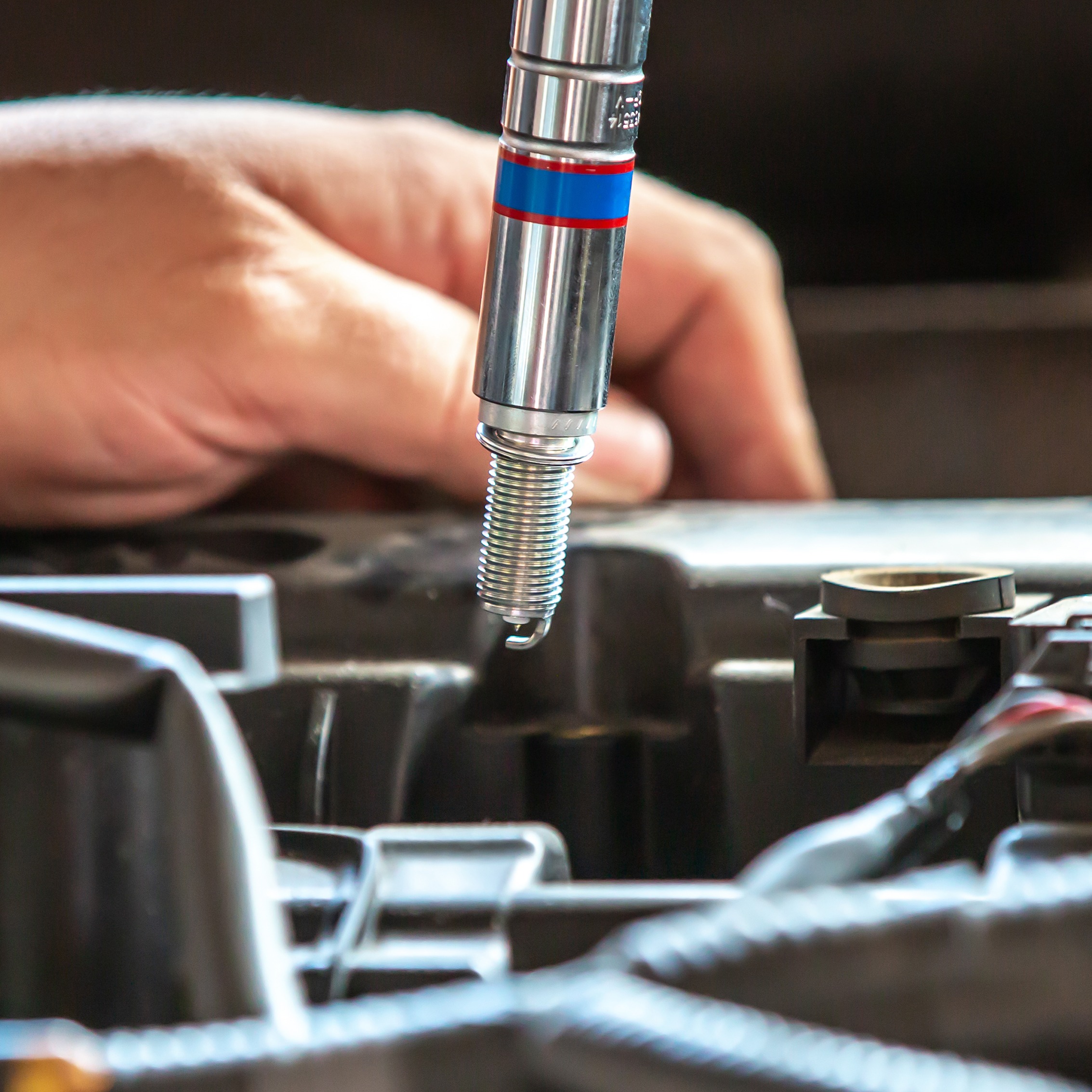
Well, spark plugs have evolved. They use a precious material.
Platinum's also in there and the reason for that is at the longevity.
It helps the spark plug last longer. Every time that spark plug
fires, there's an arc between the little gap there and that can
wear the spark plug out. My recommendation is put back
in what came out. An upgrade is not going to make a difference with the spark plug.
Try to get the same brand. There's a whole bunch of
stuff involved with that. So if you go to the Part Store, tell them what you have.
Tell them you want the original equipment spark plug. If they say, oh, we have this better one, don't do
that. You only need what it came in. Don't spend extra money in this situation.
Put back what came out and the spark plug will last
another 60, 80, 100,000 miles, whatever the recommendation is.
Excellent. Thanks for the question, Rick. And thanks for the answer, Nick. I'm learning a lot. Now I know
about spark plugs. I also have learned about cold cranking amps
this morning. Let's go to our next text or what are your thoughts about
places that just do oil changes, Nick?
If you're overdoing
especially for an oil change, bio means anywhere you can go helps. My concern though
is an oil change is important. However, having the vehicle inspected
is just an important, meaning that you're looking at the brakes, the tires,
the underbody, the chassis, the steering suspension, or all those
things getting looked at or assessed is that oil change. So if you go
to the quick loop, we'll call it and they just get you in and out in 15 minutes.
You don't know about the condition of the other items on the vehicle. It's important because
if something's becoming worn or something needs to be adjusted or tightened or
maintained, that's not happening and that can cause a premature
failure, which will cost more money. So if you're going to pinch bio means take it
wherever you can, get that service done, but keep in mind next time around
take it into your regular shop or dealership so they can do that full inspection
to make sure you're not missing out on anything. Alright, good advice. And the guidelines
for frequency of oil changes has evolved over the years, hasn't it?
I remember it used to be every three years. Now I think we're up to five
or maybe our... Careful with that question because you'll get a whole
bunch of responses. Well, what do you say? Then I joke about it often.
So manufacturers are all over the board. It might be
5,000 miles, 7,500 miles, 10,000 miles. Now as Denny knows
I've done this since I was a teenager and based on my experience, what
we see in the shop day in, day out on a good quality synthetic coil,
5,000 miles. If your vehicle still uses the conventional oil, which is becoming
more rare, a 3,000 mile interval and that's simply because
of the repairs that we see, the sludge, the wear, the tear on the timing
components and some of the valve timing stuff. There's a lot of little
intricate pieces inside that engine that need good clean oil and as that gets
worn down or breaks down, it creates sludge and can restrict how those pieces
operate, which can cause a failure, which costs more money again. So as
the theme is, we want you to maintain your vehicle, which costs something, but maintaining
it is always less expensive than doing a repair. So do yourself the favor,
maintain the vehicle, get it in every 5,000 miles. If you don't drive
that much, as I told you just last week, I think, still get
that vehicle in twice a year to at least have it inspected. All those other
components that we just touched on, as they wear out, they need maintenance too.
If you maintain them, they last longer, which saves you money. Okay, thank you, Nick.
Now, I'm going to break from the format for just a second here because I'm putting
my reporter head on. Talking to you, you mentioned just a few minutes ago
that you've been doing this since you were a teenager. You've been dealing
with cars, learning how to fix some, you know, spending time
in a garage since you were a teen. And it reminded me of my dad because
that's how he lived his life as well. He owned an auto parts store
where I grew up in Shakopee. Always was working on a car in the garage.
Started doing classic cars with his buddies. And
so this topic is just, it's warm memories for me. But I want to know
from you, what do you dig about this? Like
why do you want this to be your job?
And what makes you smile about this job every day?
You say that because my kids say, Dad, why did you choose to do what you do?
And I just laugh and say, I don't know. So the back story is
I was 15 years old. There was an Amaco Station
down the road from where we lived. A gentleman, Dan Burns,
who you probably remember, he was my predecessor and did the show for years and years and
I've kind of evolved into it. Owned that gas station.
I worked there through high school. After high school, I joined the Marine Corps because I didn't want to be part of this car thing
as I called it. Got out of the Marine Corps, went to visit Dan and I started
at Lloyd's. And that was back in 1998. So in the history of my working
career, it's been Dan Burns of the Marine Corps, been my bosses.
I had the opportunity to buy Lloyd's from him in 2021.
And since then, whether or not, you know, we've expanded, we're under our third shop now
this is last year and deciding if we're going to keep growing or maintaining what we
have. But it's been one heck of a journey.
Cars are, I don't know, they're cool. I mean, it's just, you know, like your dad, I mean, I grew up in the
shop. We used to tinker with our cars. We had hot rods.
And it was fun, you know, it was just kind of something that took by the time and
it's evolved into three businesses, which doesn't have much to do with cars anymore. It's more about
people and organization, but I'm figuring that out too. So we're going to keep going
forward and see what happens. That's great. First of all, thank you for your service. And
my dad was also a Marine. Thank you. And tell me what are the three Lloyd's
locations so people can figure out which one might be closest to them?
Well, they're independently branded. Lloyd's is
on Grand Avenue in St. Paul, which we talked about on a weekly basis.
The second location is a place called Parkway Auto Care, which is also
in St. Paul. It's on the corner at Ford Parkway in Snowing, right across from the
water towers there. And our newest location is
at 4 or 522 East Lake Street. We've rebranded it
Lake, I'm sorry, Longfellow Automotive. And it's
fun. You know, it's a beautiful building. It's one block off the river. It's
a great neighborhood. We spent a bunch of resources kind of
cleaning things up and remodeling the inside this past few months.
Once spring happens, we're going to get some landscaping and some artwork done on the
outside and hopefully we can support that community neighborhood and
keep growing what we're doing. Love it. Let's take another texture question.
2004 Saturn Ion, the cruise control worked
intermittently then quit. What are the possible causes?
Well, cruise control, first off, if there is a
warning light, like a check engine or any indicator on the dash,
one of the defaults is that the cruise control is not going to work. It's more of a safety
issue. The light is a warning, but we don't know what the light means
so the cars decide if I don't know what's wrong, I'm not going to have any of these add-ons. I just want you to
focus on driving. Also, there's some other switches and components
that are part of the cruise control that can fail. I would say, you know, the cars, you know,
got 20 plus years on it. If you're a, someone that's on the highway
a lot and using the cruise control, I would have it, you know, diagnose, figure out exactly
what's going on. If there is a warning light on that's preventing it from working,
that needs to be looked at also because those little things become big
if we ignore them. So, I would say next time you're in for service, simply mention
that the cruise control is not working. You know, pay the amount to have the diagnosis done.
Once you know the diagnosis, you have an idea what the cost of repair is,
you can figure it out for yourself. It's cost-effective or something to live without.
Excellent. Good advice. It is 729 on CCO. That means we need to
take a break. You're listening to CarCare with Nick Stoffel from Lloyd's Automotive
in St. Paul. If you have a question for Nick and you want
to call in or text us, the number is 651-461-9226. We have
about 15 minutes left with Nick. So, get those questions in during
the break. It's 730. We'll be back in a moment. 734
on WCCO. This is Laura Oaks in for Denny Long this morning. We're talking
with Nick Stoffel from Lloyd's Automotive in St. Paul for about
10 more minutes. So, if you have a question for Nick about your car,
you can call us or text 651-461-9226.
Nick, I'm going to go to the text line right now because
here is somebody who needs some help with the battery. I would like to know
if it is unusual to have your car not start with a battery
that's less than two years old when you've been gone two months. The
battery was not a good one. I have a 2012 Lincoln MKZ
with 65,000 miles. What do we know?
So, I agree. Let's get that battery charged up, run the vehicle,
see how it goes. If you're back in town and you're driving on a daily
basis, you're probably going to be just fine. One thing I would tell you
though is make a note of that. It's a common theme. I always say
make a note. Next time you're in for service, say to the shopper
dealership, hey, I was gone this past winter for a couple months. I came back
and the vehicle was dead. We had to charge the battery. Can you test
everything to make sure it's okay? Let's make sure the battery has the capacity
kind of referencing that other text or color. Also, let's make sure when the car
shut off that there's not something wearing down on that battery. If there's a slight drain
or a drop because there's some sort of component that's not working properly,
that can deteriorate, get worse, make the battery
wear down over a couple months, but think it's bad enough that it could wear down over a night.
So, we want to make sure there's not any underlying problem there. So, next time you're in, have some testing
done. Make sure everything's working as it should. Got it. Another
texture. I have a 2016 Jeep Renegade with 51,000
miles on it. The parking brake is not a lever but just a button
and it has been sending me messages that it needs service and at
times it won't come on or turn off when I press the button. Is this
an expensive fix? Maybe.
Parking brakes are an emergency brake or a touchy
subject. It used to be that we would tell people if you use it on a regular
basis, by all means, it's fine. If you never use it and hope that it works on that one
random day, it's not likely because everything's kind of gummed up and seized up.
Newer cars now, however, the parking brake is built
into the rear caliper and there's an electric motor that engages and
disengages it so it's more likely to last longer and work longer.
If there's a warning, once again, there's a warning saying something is wrong, you need to have that looked at.
It doesn't mean you have to spend the money to fix it today but at least you know what's
going on. The last thing you want to have happen is that parking brake engage,
not release, and now the car is stationary and you can't drive it. So,
once again, have it looked at, get an idea of what's going on, get an estimate for it.
Maybe give a second opinion if necessary but at least you know what's going on and what the cost might be.
Alright, here's a good question from a texture that we've talked about in our household
with our cars. When should you take your car to your dealer and when to your neighborhood
garage for routine maintenance? They have a 2016 Subaru.
Well, that's a personal preference obviously.
I'm going to say bring it to us because that's who we do.
But most commonly I think that people will utilize the dealership
while they have an under warranty or they have a maintenance package as part of the
purchase of the vehicle. I think as vehicles age, we start to see them
at the neighborhood shop or the local place.
In our businesses, we see them from the first service to the last service so we see a whole
mix of it. But I think it's probably most common where people have the vehicle under warranty
they might follow that maintenance package that came with the purchase of the vehicle.
Then based on relationships, experience, convenience,
they make the decision best fit for them. Alright, we're talking with Nick Stoffel
from Lloyd's Automotive in St. Paul for a few more minutes.
If you have a question for him, give us a call or a text 6514619226.
Another texture, Nick, that
2014 Impala, the Iron Ranger in me wants to say
Impala with 82,000 miles. The owner's manual
recommends a spark plug change at 100,000 miles.
Is there a risk with age that the plugs will get more difficult
to remove due to rust or corrosion?
That is a great question and very true. So oftentimes
you look at the maintenance schedule and it'll say certain mileage but it also might have
some months or years in there that we ignore. We always just go based on the mileage.
So I would say if you drive your vehicle less than
the typical driver where that schedule's designed for, those maintenance
items might need to be done sooner based on time. So
careful there, you don't want to overdo it. But yes, spark plugs
the material that they're made of, the threaded part that threads into
the cylinder head, if that becomes corroded or seized, you can
make a more expensive repair or possibly damage the cylinder head which becomes
more expensive in its own. So maintenance is important
and if you don't know like boy, you know, my car is this age, it has this mileage
are these things due? You can always look online or call. Call and
ask. The best information that when you ask those questions
don't assume, ask the questions, hey my vehicle is 12 years old
there's only so many miles on it. It says the spark plugs are due at a
mileage further down the road for me but it'll take me years to get there.
Is this something that should do? Have that conversation, have those people
help you understand the pros and cons, the consequences and the cost
and the potential risk so therefore once again you make the most informed decision
for you and your vehicle. Great, thank you Nick. I want to remind folks that you guys
have just some excellent resources and information on your website and I want
to go back to the most recent blog post about some of the strange
noises you might be hearing, what they could mean, what you shouldn't
ignore and especially during pothole season now when some of us
are ending up in the shop whether we like it or not, that's something that I think people are
possibly going through. Tell us about some of those rattling
sounds that should not be ignored. Well first off you mentioned
potholes and like I said this morning we have a snow on the road so you might not
see or if you see a puddle keep in mind you can see the puddle but you can't see
how deep it is so try to avoid obviously don't go into uncoming traffic
don't cut somebody off maybe slow down but be aware you know it's most important
this time of the year that we really focus on the road ahead of us because you see that little
puddle but all of a sudden I knew that puddle is a two or three or four inch pothole
which could create some damage making those noises making this
experience suspension components fail possibly have a flat
tire or a damaged wheel which can be very costly so if you have
if you see a pothole ahead or you see a puddle ahead take caution you know obviously
before we know it will be road construction season they'll be able to fix
those potholes so it's only a few months out of the year that we have to be really
ultra sensitive to those potholes but this is the time of the year you have to really start paying
attention because the less we want and you know we want to fix everyone's car but
it's not enjoyable for us for people to come in on a tow truck because of something like that
and that's you know it could something's not broken so it's more expensive it's
inconvenient because you weren't planning it it wasn't a scheduled repair now you're on a
tow truck your whole day or days are interrupted so try to avoid that we're
all in a hurry we're all very busy I know that but when you see that puddle ahead of
you on the road make sure you be cautious right
you know proceed cautiously I would say right and I think a lot of people
like me and down my favorite route to work
I have already figured out my path for avoiding the potholes
and those manhole covers that are just not even with the road
and I'm just pride myself on missing these holes and missing these
manhole covers and then all of a sudden yes it's like a game and then this morning
with a little bit of snow on the road bam I hit one just what you were talking about so
it is something to be aware of it is 743 on WCCO
we've had a great chat this morning with Nick Stoppel from Lloyd's Automotive
in St. Paul give them a visit give them a call for whatever you may need
they're very highly rated you can check them up there so that yourself
and Nick thanks for joining us we'll talk again soon
yeah thank you for having me and hopefully we'll have actually if Dennis should be careful
because you've done such a good job that you know maybe they won't have him back
oh we won't have him back he'll be back with bells on next week
I better be careful thank you Nick
About this episode
Nick Stoffel from Lloyd's Automotive discusses practical car care tips, emphasizing the importance of paying attention to warning lights, strange noises, and basic maintenance tasks like checking tire pressure and fluids. He explains common issues like grinding noises related to brakes or wheel bearings and clarifies battery cold cranking amps and alternator function. Nick advises sticking to original equipment spark plugs and highlights the value of full vehicle inspections beyond quick oil changes. The conversation also touches on empowering drivers, especially those new to car maintenance, to better understand and manage their vehicles.
Why you should not be intimidated by issues and repairs with your vehicle. What different noises mean for different problems in your vehicle. What to know before picking and replacing spark plugs. Opinions on businesses that only do oil changes. The ongoing debate over when to get an oil change. How Nick became an automotive technician. Parking brake repair basics. Ask our car care expert Nick Stoffel of Lloyds Automotive. Visit lloydsautomotive.net 651-228-1316.