They’re talking about what Porsche fans and people in the Porsche world are saying and sharing. It’s more about the community and stories than just car specs.
“Gulf blue” is a specific shade of blue that people associate with racing cars sponsored by Gulf Oil. It’s basically a color reference, not a car model.
They’re talking about a 2008 Porsche Cayman S. It’s a mid-engine Porsche (engine sits closer to the middle of the car) and it’s from the first version of the Cayman’s second generation (987.1).
An air-cooled engine uses air flowing over the engine to keep it from overheating. The speaker likes the older air-cooled feel, but also wants modern conveniences like working air conditioning.
The “Longtail 917” is a special Porsche race version built for endurance racing. The “longtail” shape helps the car stay stable at high speed, especially on tracks like Le Mans.
“Le Mans only” means the car was made mainly for the Le Mans endurance race. That kind of racing demands durability and stability for long hours, not just short sprints.
SERA is mentioned as a French group that helped with aerodynamics. That means they worked on the car’s shape to help it cut through air better at racing speeds.
Frau Baer is a person connected to Porsche’s customer racing era. The host says she was one of the main contacts people used to get Porsche racing parts.
“Assets on the balance sheet” means the parts were recorded as company value in Porsche’s financial statements. Because those parts were treated as assets, Porsche’s accounting department pushed to write them off and remove them from inventory.
Spare parts are extra pieces a company keeps so repairs can be done quickly. Here, Porsche had lots of unused parts sitting around, and the accounting team wanted to get rid of them.
“Write off” is an accounting action where a company reduces the recorded value of an asset because it’s no longer expected to be used or recovered. In the episode, Porsche wanted to write off the unused parts and dispose of them.
The 911 has been made for many years, and Porsche changed it in stages. If you know which “era” a 911 is from, you’ll understand what people are talking about when they compare cars.
The Porsche 917 is a well-known Porsche race car from the endurance-racing era. The host is basically saying the 936 is closely related to it in how Porsche approached the project.
A transmission is the gearbox that helps the engine deliver power efficiently. In racing, using an existing one can make the car easier and faster to build.
Suspension is what connects the wheels to the car and helps the tires stay in contact with the road. In a race car, it’s tuned to help the car handle better.
Term
steering wheel hubs
The hub is the part that connects the steering wheel to the steering system. In race cars, it’s designed to fit the driver and be secure.
Car
Porsche 936
The Porsche 936 is a Porsche race car from the 1970s. It’s the kind of car teams built for long-distance races, and in this episode they’re pointing out its big Le Mans success.
The 24 Hours of Le Mans is the world-famous endurance race in France, where cars compete to cover the most distance over a full day. The speaker highlights that the discussed Porsche won it three times, framing it as a major achievement for Porsche.
Group 5 is a set of racing rules that determines what kinds of cars can compete. Porsche was planning their racing program around those rules for the 1976 season.
Silhouette Racing means the cars have to look like a certain shape or style, even if the race engineering underneath is very different. The rules affected what Porsche built for that era.
The Porsche 911 Turbo is a turbocharged 911 model. In this episode, they’re saying the race car they’re talking about was built using the 911 Turbo as a starting point.
The World Sports Car Championship was an international endurance racing series organized under FIA rules. Here, it’s mentioned as the series the FIA chose to continue, specifically for Group 6 prototypes, which directly impacted Porsche’s racing program.
Group 6 prototypes are a racing category for purpose-built race cars. The FIA switching to that category is described as a reason Porsche’s plans and car development priorities shifted.
The FIA is the organization that makes the rules for a lot of international racing. Here, they’re the ones making the decision that affects what Porsche can race and how.
The Porsche 935 was a purpose-built Porsche race car from the 1970s. The hosts are saying it could win its class, but the team also wanted to win the whole race for maximum attention.
This is a Porsche 911 race version that ran at Le Mans. In the story, its engine was reused as the key “borrowed” part for the later race car they were building.
The Porsche 924 Turbo is a Porsche model that can be turned into a race car. The hosts say Porsche’s plan for Le Mans was to run these, but the CEO wanted a car that could win the whole race, not just a class.
The Indianapolis 500 is a major race in the United States. In this story, Porsche couldn’t run its plan there because of rule issues, so they shifted focus to another race.
USAC was the organization that set the rules for major American racing events like Indianapolis. Here, their rule decisions impacted whether Porsche could run its engine the way it wanted.
Boost pressure is how much extra air a turbocharger pushes into the engine. Racing rules can cap it, so teams have to adjust their setup to stay within the rules and still make power.
Methanol is a type of racing fuel. Switching an engine from methanol to gasoline isn’t just a refill—it changes how the engine needs to be tuned to run correctly.
Car
Porsche 956
The Porsche 956 is another Porsche race prototype that came after the 936. The point here is that Porsche reused and evolved the engine concept from the earlier car for the 956.
Car
Porsche 917/50
Porsche had a race-car project that people initially called the “917/50.” The speaker says that name didn’t end up being correct, so Porsche changed the designation.
Car
Porsche 926
“926” is the project number Porsche used for a while. It’s basically an internal label that changed as the team figured out the right way to name the car.
Car
Porsche 934
The speaker mentions Porsche 934 as a reference point for how Porsche numbered cars for different racing groups. It’s used to explain why they wanted the new car’s number to “fit” the system.
“Group 4” is a racing category that sets rules for what kind of cars can race. Here, it’s mentioned to show how Porsche’s car numbers matched those categories.
Term
electric car with the four hubs
The phrase describes an early idea for an electric car where the drive system is built into the wheels (or near them). The point here is that the speaker is talking about early EV concepts tied to Porsche’s fascination with electricity.
The Porsche Carrera GT is a very high-performance Porsche supercar. It’s designed for fast driving and strong performance, not everyday commuting. It may be mentioned because it represents a major engineering achievement from Porsche.
They’re talking about Porsche being interested in electricity when he was young. It’s used as background for why he later became involved in engineering ideas related to power and vehicles.
The Buick Century is a model of car made by Buick. It’s generally the kind of vehicle people used for everyday driving, like commuting and family trips. It may come up in history because it’s connected to the timeline of how cars and technology developed.
Instead of having a motor in the engine bay, the motor is built into the wheel itself. That means the car can push the wheels directly from the wheel area.
A battery electric vehicle runs on electricity stored in a battery. The battery has to be heavy enough to carry the energy, which affects how far the car can go.
Lead-acid batteries are a very old type of rechargeable battery. They work, but they’re heavy, so they don’t store much energy compared to newer battery types.
A combustion engine is the classic engine that burns fuel to make power. In this setup, it’s used to generate electricity instead of directly driving the wheels.
The Chevrolet Volt is a car that can run on electricity, but it also has a gasoline engine as a backup. When the battery runs low, the gas engine helps make electricity so you can keep driving.
Ferdinand Porsche was a key person behind Porsche’s early history. In this episode, they’re talking about his involvement with the Nazi era, which is historical context.
Company
Ferry Porsche
Ferry Porsche was another major Porsche family figure. In this segment, they mention him because of what they say about his Nazi-era affiliations.
The SS was a Nazi organization. The hosts mention it because they’re discussing historical political involvement connected to Porsche family members.
Concept
World War II
World War II is the global war that happened in the 1930s and 1940s. Here it’s mentioned to explain the historical setting of the people they’re discussing.
Auto Union is referenced as another German automaker involved in a “let’s do this” versus “I quit” type of clash. Auto Union is historically important in German racing and car manufacturing, and it’s often mentioned in early 20th-century automotive history alongside brands like Mercedes and Porsche.
An “authoritarian environment” describes a setting where authority is strict and decisions flow from the top down, with little room for debate. In this episode, it’s used to explain how Ferdinand Porsche was raised and how that shaped his own leadership style.
LIVE
Welcome to Porsche Patter with Bracken Helms, the show where we hear Bracken and his distinguished
guests from the Porsche community patter on about Porsches and all things automated.
Porsche Patter is sponsored by Circuits Explore.
Circuits Explore creates authentic automotive apparel made for life-minded automotive enthusiasts.
The links for Circuits Explore are in the show notes.
Okay, let's get to it.
Jay Gelotti, part one.
All right, I met Jay at this last LA Lit Show and as we were talking, we both kind of decided it would be a good idea to possibly have him on the podcast and for me to interview him.
Then I went home and started doing some research on him and I got a little hesitant.
Not so much hesitant, but I was kind of like looking at some of the other podcasts because he's been on a bunch of podcasts.
Okay, great. He's done a million podcasts and I'm just going to do the other one.
I'm just going to be one of many.
But then listening to some of the podcasts, I realized a lot of them are regurgitating the same things that the other ones are doing.
So I emailed him and was saying, I can't remember what I said in the email, but basically, you know, I have things I want to talk about.
I don't know if you're a stickler on what we talk about and he was open.
So it actually became really easy because I just started thinking, you know, he's kind of a historian and he's written books and many articles and magazines about Porsches.
So I'm thinking, I'm just going to ask him all these crazy questions that I don't have answers for.
And if he doesn't have answers for him, I guess I'll just cut it out or we can just skip to the next questions.
And it ended up being really good.
I mean, in my opinion, I had a really good time.
So in the first part of this, you'll notice that I'm just kind of not so much asking him, but telling his story and just kind of getting clarification.
Because those are some of the questions that were in all the other podcasts, because I feel like it's important to kind of know who he is.
But I don't want to spend, you know, the whole podcast talking about stuff that's already been talked about in the previous ones.
Some of the things I want to comment on is when he was talking about that Frau Baer picture.
I'm thinking of when it was done because I've done the interview with Michael Kaiser and I know that he was just kind of poking around at Porsche.
And that's how he met Jurgen Barth.
So I'm thinking one of these times that he was just hanging out at the factory was probably when he took that picture.
Another thing I want to talk about is his one book with the Porsche decades.
I don't know how well it's selling, but he should be selling well.
It's kind of a nice little cheat sheet.
Oh, I've never really been a Porsche person, but I bought an SUV and I joined the PCA, but I don't know anything.
So I just read this book and now all of a sudden like just reading one book in your total idiot.
You could be somewhat very knowledgeable about Porsche.
Then at the end we get into Ferdinand Porsche, the original.
And there's probably a few extra comments I can make about that, but I don't think I can right now.
Anyway, here's Jay Gelotti, part one.
You got introduced to Porsche because your dad worked at the Volkswagen dealership.
Yes, that's partly correct.
And then also you were watching, I guess, normal TV, but Le Mans movie came on and there was the factuation with Steve McQueen.
Yeah, well, I mean, first of all, for those of us who grew up in the 70s, Steve McQueen was on TV all the time.
So we watched his movies regularly.
And I have a distinct memory of seeing the Le Mans film the first time it was shown on television in the US.
I think it was in 1973, so I would have been about nine years old and it left a pretty deep groove in my psyche.
But then also my dad working in the Volkswagen dealership, you know, there's always been that really close connection between Porsche and Volkswagen.
So all those roads have come together and led me to being a real Porsche fan, especially on the sports car racing side of things as I got into junior high and high school.
And you owned a Volkswagen? You've had a couple of Volkswagen's?
Yeah, yeah. I had a couple in high school and college. The first one was a 68 white one.
My dad was the used car manager, so he was really good at finding cars for the family to use.
And then the second one, when I was a senior in high school, we made one car out of two.
He had a car that had been crashed really bad in the front, but had a good engine.
Had another one that had had an engine fire, but otherwise was pretty good.
So basically took two cars, ended up with a light blue, kind of almost like a Gulf blue 72 slash 73 Beetle.
And I drove that senior year in high school and then all through college.
Okay. And then you've had a 32 Carrera, which I have a 32 Carrera.
Oh, what year is yours?
85.
Oh, same year as mine.
Okay.
What a coincidence. What color is yours?
Mine's black on black.
Oh, okay. I have the famous Prussian blue with a tan interior. Yeah, I love that car.
Become part of our family. We just passed the 25 year anniversary of me buying that car, bought it on eBay.
If you can believe that back in 2001, when that was kind of a crazy thing to do, but it's all worked out.
You have another Porsche, right?
I just knew about the Carrera 3.2, but what was the other one?
Or what is the other one?
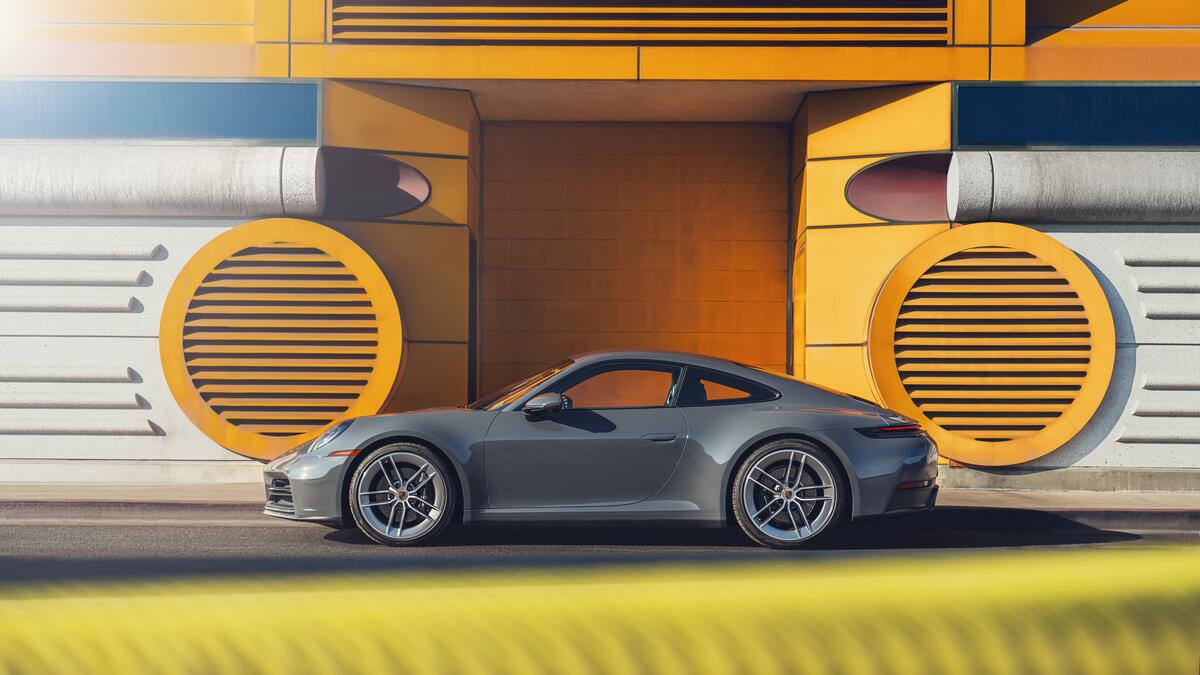
We also have a 2008 Cayman S. So it's a 987.1.
We've owned it now for about, oh, more than 15 years, I guess.
And it's nice to have one foot in both worlds.
You know, I like the old school air cooled, but it's also nice to have a somewhat more modern car where the air conditioning works and the radio works.
The Cayman S is a Macadamia, which is another interesting metallic color.
We kind of like the nostalgic colors. So yeah, those are our two Porsches.
We're somewhat similar because the other car I want to get is a 987 Cayman.
You know, it's the original styling for the Cayman, which I really like.
You know, kind of harkens back to the 550 coupe from the 1950s in some ways.
I always wanted a mid-engine car.
So what article did you write in triple zero?
Because I've had all the triple zeros.
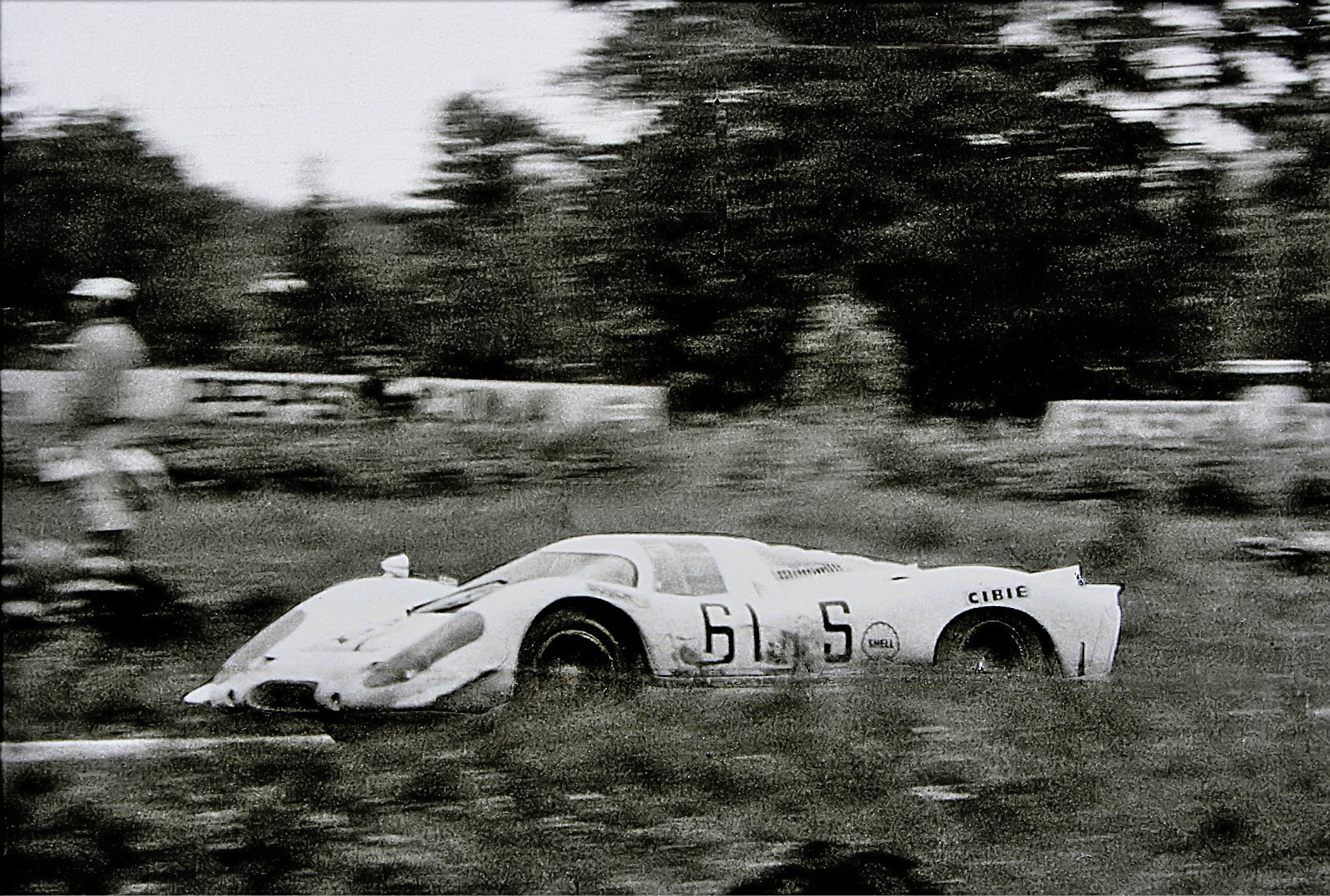
Triple zero, I did an article on the Longtail 917s.
Okay.
Yeah, we did kind of an extensive article on the Longtail cars, which were for Le Mans only, and which Porsche got help from the French aerodynamicists at the SERA organization to do the body work on the Longtails.
My first book on the Golf 917s touched on the Longtails because the Golf team ran two Longtails in 71, but didn't quite get into as much detail on the whole Longtail experiment that Porsche did at Le Mans, particularly in 70 and 71.
And then I noticed that you've worked with Michael Kaiser.
Yeah, a little bit.
I mean, when somehow this was in the late 90s, and this is when the internet was just becoming a thing, and somehow I stumbled across the information that he was working on a book about the Le Mans film.
And so I think I just sent him an email and offered to help because I had collected a fair amount of information about the film over the years.
I ended up sending some things to him to scan, including my movie poster, a couple other little things that ended up in the book.
And so that was kind of fun.
I never got to meet him in person until, would have been 2011 at Laguna Seca.
Yeah, I haven't talked to him in a while.
He did license some photos to me for my first book, including a couple photos that he hadn't ever put on his website before, and I don't think they were in any of his books either, including he let me use a photo that in the photo you see
who's a famous lady in Porsche's history, at least among people who were involved with Porsche and Porsche Porsche's customer racing program in the 60s and 70s.
She was in charge of the customer parts department basically.
So if you were a customer of Porsche and you were racing Porsche's, basically Frau Baer was one of the contacts in that department who you went to to get your parts.
So there's there's a number of stories about her, but no one I don't think anyone had ever had a picture of her in any book.
So it's kind of cool that he had a picture of her that he had taken when he visited Porsche, I think late in 71 or early in 72.
And when I was talking to Jerry Woods, he brought up that or I heard that name and I started hearing it a lot and I didn't even know it was a girl.
I just like I kept hearing who the hell is this Frau Baer?
Yeah, our first name I believe was Joanna.
Okay.
The other connection there is with Voschik Pollock because I had a friend in the Porsche Club who has since passed away, but my friend who was also very good friends with Voschik and would sometimes visit Voschik in his office.
And Voschik would be on the phone with Frau Baer.
And there was always pressure from Porsche's accounting department, I think mainly to get rid of spare parts that were just sitting around because they had to be, you know, they were assets on the balance sheet, basically.
And so the accounting department would want to write this stuff off and just get rid of it.
And Voschik would be like, no, no, no, let me buy it.
So he'd be on the phone negotiating with Frau Baer.
And that's in part, I think how Voschik ended up with this huge store of parts for vintage Porsche racing cars.
And thank God that he did that because, you know, those parts, I think most or all of them have gone to really good use over the years.
Restoring and repairing vintage Porsche racing cars.
And of course, when Voschik passed away in the 90s, they had this huge, huge estate sale where they basically sold everything, including the posters.
I bought a couple posters and you were basically getting like mint condition right out of the box Porsche racing posters.
That was really cool.
But some of the fortunate people who got engines, you know, 908, 917, you know, those kind of engines in the estate sale.
That was pretty interesting.
And my friend Brian Redmond was involved in administering the estate.
Quite a saga, but it kind of goes back to Frau Baer, who was, you know, the contact at Porsche, whose job mainly was, as I understand it, to manage that arts department.
And then the first book you wrote was the 917 book.
And then after that, the Porsche...
Porsche decades.
Decades.
So that's the second book.
And that's pretty much like everything Porsche just not deep dive on anything, but pretty much for...
Yeah.
I had this idea.
I had a thought that we didn't have a good introductory book on Porsche's history.
No one had even tried to do a book like that in a long, long time.
And I felt like in the Porsche Club, a lot of my fellow club members don't know much about the history.
And I really feel like if you learn a little bit about the history, you enjoy the club more because the long-term members and the members who do know a lot about the history will start talking about things in conversation.
And they might assume that you know certain pieces of information that maybe you don't know.
It can be as simple as just the different generations of the 911, for instance, or other generations of other cars.
And we throw around those three-digit type numbers pretty fluently.
But the new people, people who are new to the club, new to Porsche's history, when you start throwing those numbers around, they might not know what the heck you're talking about.
So the book introduces things like that.
It covers both street cars and the competition cars, but it goes all the way back to 1875 when Ferdinand Porsche was born.
Because I think relatively few of my fellow club members know all that much about the pre-World War II.
Never mind the pre-World War I history of Porsche.
There was a lot there that I didn't know.
So I had to do a lot of research and a lot of learning myself in order to be able to write it at an introductory level.
Right. And now you're working. There's another book in the works that's supposed to be coming out soon, right?
So we're doing the 936.
There's actually going to be two 936 books that come out sometime this year.
The book that I'm doing is more the story side of the 936.
It's the 50-year anniversary.
Just this past Saturday, we had the 50-year anniversary of the first race for the 936.
And the 936 is a close cousin of the 917.
When Porsche decided to build the 936, they had to build it in a hurry.
And so it made sense for both time and money reasons to use as many of these spare parts.
We were just talking about the spare parts that they had in their inventory.
It made sense for them to use as much technology as they had on hand because why reinvent the wheel, right?
So for the 936 ends up with the transmissions, basically suspension steering wheel hubs,
lots of other parts and pieces from the 917 program.
And then the chassis itself was newly designed, but it's very similar to a 917 Can-Am car or a 9083.
So there's a lot of 917 in the 936.
That's part of why I'm interested in it.
And also because it's a car, again, a lot of Porsche people, you say 936,
they have no idea what you're talking about.
But this is a car that went on to win the 24 hours of Le Mans three times,
which is a pretty significant achievement for a company like Porsche.
Yeah. And that's kind of what I was going to ask.
It seemed like it was kind of like thrown together in a way with 917 parts,
because if I remember right, someone in charge all of a sudden says,
no, we're going to go racing.
So they kind of just threw it together.
But then so the first of it was kind of like leftover 917 parts.
But then the tail end was kind of somewhat of a test bed for the 956.
Well, yes. And I can explain that.
So Dr. Furman, who was in effect the CEO of Porsche at the time,
he was concerned because Porsche was putting all their effort into what then was called Group 5, Silhouette Racing.
And they plan to compete very actively in Group 5 for 1976.
So the car is going to be the 935, right?
So it's based on the Porsche 911 Turbo with a lot of modifications.
And that was Porsche's effort to try to win the world championship of makes in 76.
Then the FIA decided to continue with the World Sports Car Championship,
which is for Group 6 prototypes.
And Dr. Furman was worried about a couple of things.
First of all, he was worried that the FIA would combine the two and run both classes in the same races.
And the problem there is the 935 might win the Group 5 class,
but if it doesn't win the race overall, you know, you're not going to get any publicity benefit
because people only care about who wins the race overall.
That was the reason he said maybe we should look at building a Group 6 prototype
because he didn't want Alfa Romeo or Renault to get all the glory.
Now, in the end, it turned out that the FIA split those two series
and they ended up not racing at the same time on the same tracks generally,
except at Le Mans, which was outside of both championships.
So at Le Mans, you did have Group 6 and Group 5 and Group 4
and a bunch of other classes all racing together.
So it ended up being a good decision to build a Group 6 car
using as many components as they could from, well, virtually all the components came from existing cars.
The only thing, you know, major thing that came from elsewhere was the engine,
which came from the 911 RSR Turbo that they had run at Le Mans as a prototype in 1974.
So you put it all together. Helmet Flagle was the engineer who was in charge of going around
and looking at all the parts and pieces and figuring out what they could use,
what they needed to create new in order to end up with what became the 936.
And to your point, way later on in the program in 1981,
Peter Schutz was the CEO of Porsche.
When he came in, you know, the racing team told him that the only plan they had for Le Mans
was to run the 924 Turbos, which potentially could win the class.
And Peter Schutz was not happy about this.
He said, no, as long as I am the CEO, we don't go to a race unless we can win it overall.
So you guys go figure it out.
And so Porsche engineers had to take the 936s out of the museum.
It was actually the second time they had taken them out of the museum.
But the rules for the engine rules had changed.
So the Porsche engineers said, ah, we have this engine that we were going to run
in the Indianapolis 500 in 1980.
And this engine was a little bigger capacity engine,
but it never ran at Indy because USAC changed the rules
or didn't give Porsche the ruling that Porsche wanted in terms of boost pressure at the 500.
So the Indy program was canceled, but Porsche never throws anything away.
And so the engineers did some quick calculations and some quick thinking.
They said, hey, we have this engine.
We can convert it from running on methanol to running on gasoline.
We can put it in the 936 and probably have a really good chance of winning,
which they did in 1981 at Le Mans.
X and Bell had a perfect race, one by 14 laps.
And then that engine goes on to become the basis of the engine that the 956 runs on in 1982.
Yeah, right.
Yeah, I just learned recently that they named, unless I'm wrong,
they named the cars by their group.
So 934, group 4, 35, 36.
Yeah.
I mean, I never put that together.
Yeah, it makes a whole lot of sense when you think about it.
Although the 936 had two type numbers earlier on when they first talked about it.
This is in Norbert Singer's book.
When Dr. Furman first brought it up and basically said, we're going to do this,
they called it the 917 slash 50, but then they said, well, that's no good.
It's not a 917.
So then they changed it to 926.
So they had the type number 926 for a while.
But then they said, well, wait a minute, we've got the 934 for group 4, 935 for group 5.
Maybe we should call this car the 936 so that they're kind of aligned with their type numbers
and their classes and the rest is history, as they say.
Right.
I think that's where I got the information because I was reading up on Norbert Singer.
Yeah.
I remember when I was a little kid, like in middle school, there was this book
and it went over Ferdinand Porsche way before.
It was all the consultant stuff and the electric car with the four hubs.
I remember learning when he was young, he put electricity in his house.
Is there anything else you can tell me that people wouldn't know about Ferdinand original before?
Well, this is why, of course, I want people to read my book, Porsche Decades,
and then if you're really interested in Ferdinand Porsche,
you go on to read some of the other more in-depth books about him,
including our great Porsche author, Carl Ludwigson's book called Genesis of Genius,
is one of the best books that covers Ferdinand Porsche's career
up until the point that he starts his own company.
One thing is his fascination with electricity as a young kid, basically.
First of all, nobody in his town where he was growing up had electricity.
So electricity to him was kind of like AI might be to the teenagers of today.
It's like opening up this future thing, this massive technological change.
And so the first electricity in the town he grew up in is this carpet factory that's being built.
And so he is there kind of underfoot when all the electrical equipment is being installed
in this new carpet factory.
And then he learns enough about it to actually start wiring the family house
and having electric lights in the family house.
And so it's that fascination with electricity that basically gets him out of being in the family business,
allows him to go to Vienna and work for an electrical products company,
and also study unofficially at the Technical Institute in Vienna.
But it's no surprise that as an electrical engineer by training,
how he gets into cars is by helping a company called Loner build electric cars.
And that's basically how he gets into the automobile world.
And that's in about 1898.
So not even, you know, it's two years before the 20th century.
And he invents and patents, as you mentioned, the electric wheel hub motors.
So the motors actually built into the hub of the wheel.
And that was his innovation for EVs, battery electric vehicles.
He didn't stay with battery electric vehicles all that long because he ran into all the problems that we talk about today, right?
Batteries are too heavy. Where do I charge it?
Range, range, anxiety, all that stuff he kind of ran into out of the gate in 1898, 1899.
And remember, with those were lead acid batteries.
So, you know, the batteries alone weighed thousands of pounds.
So that's why he pretty quickly switched to what we would call a hybrid.
So he used a combustion engine to drive a generator to provide the power to his wheel hub motors.
And in the earliest part of the 20th century, you know, the first decade of the 20th century, that's kind of where the focus was.
They still, they still built some pure EVs.
But mostly what they were doing was hybrid with a combustion engine, kind of like the Chevrolet Volt, you know,
a combustion engine that provides the electricity to the drivetrain.
Um, so when you read about Ferdinand, a lot of times it says, you know, he was just focused on cars.
He wasn't paying attention to politics.
But then you hear people that are just like, you know, he was in the Nazis and, you know, Anton Piak or however you say his name,
he has some serious checkered past.
So what thoughts do you have on Ferdinand, Porsche and during the Nazi thing?
Yeah, I mean, that's a long discussion, right?
I mean, that's like an hour discussion or a two hour discussion right there.
But briefly, what I will say, first of all, is we can't walk away from it.
We can't whitewash it.
We can't pretend that the bad things didn't happen.
We can't pretend that, you know, now, did Ferdinand and Ferry Porsche, did they want to be members of the Nazi party?
That's not clear.
But we have to acknowledge the fact that they were members of the Nazi party and Ferry Porsche was a member of the SS.
Again, my feeling is, is that was imposed on them.
Well, one of our handicaps is that Ferdinand Porsche himself did not write hardly anything about that period of time.
So we don't really know how he felt about, we only know what other people said about how he felt.
And so, of course, that's not as good as having first person account of things.
One of the best quotes is from Albert Speer, who was Hitler's architect.
And in some ways, Speer and Porsche butted heads, especially during World War II.
But after the war, Speer said that Ferdinand Porsche was the most unpolitical person he ever met.
So that's pretty good because that's coming from high level Nazi.
You know, Albert Speer was right up there.
I think that Ferdinand Porsche was, we would say by today's standards, we would probably say he was either naive, completely naive to what was going on,
or was willful.
A lot of people in Germany at that time, I think willfully look the other way.
But in Ferdinand's case, he was an engineer through and through.
All he wanted to do was to do his work.
And so by concentrating on his work, maybe that made it easier for him to perhaps turn a blind eye to what was really going on with the Nazi regime.
So that's sort of my consolidated thought.
But again, it's a very, very complex and lots of twisting and turning of the story when you get into that whole Nazi period.
And it's really hard to know exactly how he felt about what was going on.
Yeah, I mean, I don't know a whole lot.
But from what I've read, his personality seems to just be like stubborn and super focused on what he wants,
because there was times like a Mercedes or Auto Union where they're like, no, let's do this.
And he's just kind of, fuck you, I quit.
Storm's out of there.
So it seems like he's focused on exactly what he's interested in, doesn't care about much.
That is true.
He was cantankerous.
He was very much, you know, it's my way or the highway.
And sometimes he got had to go on the highway as a result of that.
But I think it's important to remember back to your original question,
I think it's important to remember that Ferdinand Porsche grew up in an authoritarian environment.
And he himself was an authoritarian.
If you read Ferdinand Porsche's books, as the son, Ferdinand Porsche is able to say about the father that he was very authoritarian.
And within the family, his word, you know, when he said this is what we're going to do or what, you know, that was it.
There was no discussion, except occasionally when they would be in the car together,
because often Ferry would drive and his father would ride with him.
And Ferry Porsche wrote that that was the only time that he could maybe question his father on certain things when it was just one on one.
But otherwise his father was very demanding, cantankerous, didactic.
It was like, you know, you had to do it his way or you were not going to get along with him.
So that part of his personality, again, you can see how that might have been a fit in an authoritarian culture and a hierarchical culture,
which is, you know, how Germany was certainly at that time.
Special thanks to our sponsor, Circuit64. Goodbye for now.
We hope we can get together again for our next episode.
Now get out there and enjoy the cars and the people.
About this episode
Jay Gillotti traces a lifelong Porsche obsession from childhood memories of Le Mans on TV and family Volkswagen connections to years of collecting, writing, and ownership. He talks through his history book, the 917 longtail story, and the 936’s rapid development from existing parts. The conversation also reaches back to Ferdinand Porsche’s early electric and hybrid experiments, then turns candid about the Nazi-era realities that can’t be ignored.
Jay Gillotti has written very well know books such as Gulf 917 and Porsche Decades. This year a new book he is writing is coming out about the Porsche 936. He has also written articles for 000, Panorama, Forza, Vintage Motorsports, International Motor Racing Research Center, Collier AutoMedia and Wayne Carini's The Chase. He was also contributed to other automotive books like A French Kiss with Death, 1982 and Daring Drivers, Deadly Tracks. He has helped out at events like Pebble Beach Concours D'Elegance and moderated many Porsche Events people like Brian Redman, John Horsman, Vic Elford, Derek Bell, Hurley Haywood among others.
In this episode we talk about: -How he got into Porsches. -How Vasek Polak got is collection of parts and such. -Books he has written. -New book on 936 that is coming out. -Ferdinand Porsche