

Porsche 936
The Porsche 936 is an older Porsche race car that competed in endurance racing. In this conversation it comes up because the host thinks someone accidentally said “936” when they meant “963.”
Audi
Audi is a car brand the host is talking about here because of how successful it’s been in racing. The host’s point is that Audi kept winning even when there wasn’t much competition.

RS Spyder
The RS Spyder is a Porsche race car built for long-distance endurance races. It competed in a specific prototype class (LMP2), which determines the kind of car and performance rules teams have to follow.
LMP2
LMP2 is a category for prototype race cars in endurance racing. It’s a defined ruleset that controls what teams can build so competition is more about racing and tuning than pure budget unlimited design.
Johnny Von Newman
Johnny Von Neumann is mentioned as a person who helped shape Porsche’s early following on the West Coast. The host says an article claims he was especially important to the Porsche 356 Speedster.
WEC
WEC is short for the World Endurance Championship, a major series for long-distance race cars. The host is comparing how a car performs in WEC versus other racing contexts.

Porsche 963
The Porsche 963 is a top-level race car Porsche built for long-distance endurance racing. It’s the kind of car that competes at events like Le Mans, where the whole goal is to go fast and last a long time.
24 hours of Le Mans
Le Mans is a famous race in France where cars race for 24 hours straight. It’s so well-known that even casual fans remember the winner.
balance of performance
Balance of performance (BoP) is a set of rules used in endurance racing to equalize performance between different cars and manufacturers. The host suggests some people think the Porsche 963 is disadvantaged by BoP compared with Ferrari, but he says he can’t judge the rules and technology deeply enough.
Derek Bell
Derek Bell is a well-known race driver, especially famous for long-distance races like Le Mans. The host mentions him as someone he’s met and admires.
Jackie X
The host is saying Jackie is his favorite driver because Jackie became a big symbol of Le Mans. He’s described as “Mr. Le Mans,” meaning he’s strongly tied to that race.
Le Mans wins
“Le Mans wins” means winning the 24-hour race at Le Mans. It’s a huge endurance event where the car has to last and keep running fast for a whole day.
Formula One
Formula One is the most famous kind of pro race car series, with open-wheel cars. The host is saying the driver was good there too, but their real strength was long-distance endurance racing.
Tom Christensen
Tom Christensen is a famous race driver, especially known for winning at Le Mans. In this conversation, he’s mentioned as the person who beat the record for Le Mans victories.
FIA
The FIA is the organization that makes the rules for a lot of major auto racing. The host is talking about how FIA politics and decisions influenced who benefited in different eras.
Group C
Group C was a specific class of endurance race cars used for a period of time. The host says when it was canceled, racing in the 1990s didn’t have a great replacement, so the racing quality suffered.
Montreal
Montreal is a city in Canada where Formula One races have been held. In this story, it’s the track where the speaker watched the race in 1982.
Gilles Villeneuve
Gilles Villeneuve was a famous Formula One race driver. The speaker is talking about how Villeneuve died just before the race they planned to attend.
Grand Prix
A Grand Prix is a single big Formula One race event. It’s like one stop on the F1 calendar.
Zolder
Zolder is a race track in Belgium. The speaker mentions it because a major driver incident happened there around the time of their planned F1 trip.
Ricardo Palletti
Ricardo Palletti was a Formula One driver. The speaker is describing how he died around the time of the race in Montreal.
livery
A livery is the car’s paint and sticker design—its exact look. The speaker is saying certain racing color schemes don’t translate well to normal street cars.
color science
Color science is about how colors look to your eyes and how lighting and materials change their appearance. The speaker is saying the golf racing colors have a specific look for a reason.
Max Hoffman
Max Hoffman was a key Porsche dealer/importer in the U.S. In this story, he’s portrayed as pressuring Porsche to make a car that could be advertised for under a certain price.

Porsche 356 speedster
The Porsche 356 Speedster is an early Porsche that became famous for its simple, open-top design. Here, the hosts connect it to Max Hoffman pushing Porsche to make a specific kind of car that could be sold for a certain price.
homologation purposes
Homologation means building a limited number of street-legal cars so they’re allowed to race in certain competitions. In this story, Porsche did it because the rules demanded it.
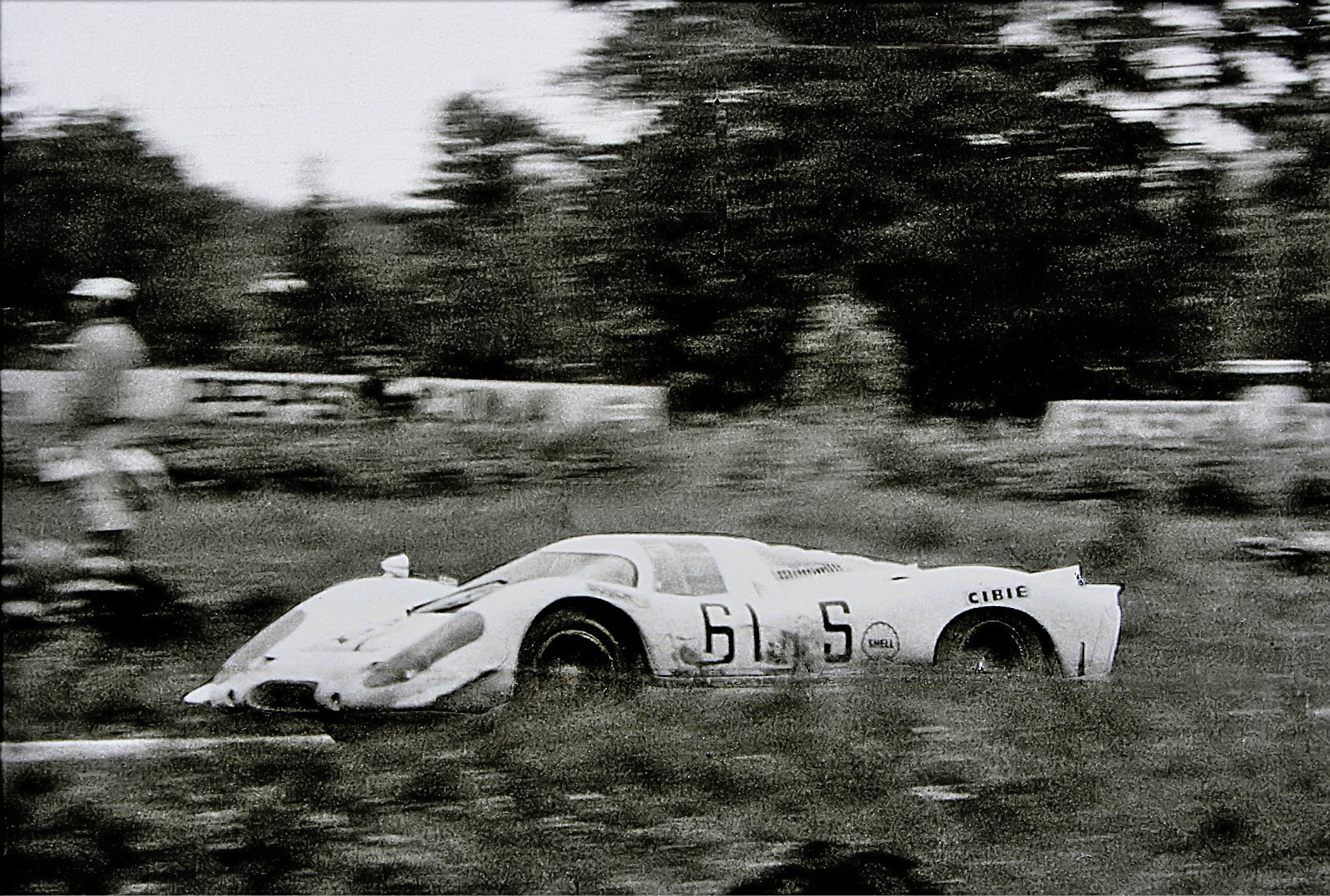
Porsche 917
The Porsche 917 is a famous race car that Porsche built for long-distance racing. People still talk about it because it was very successful and became a major part of Porsche’s racing history. The episode is also mentioning what happened to these cars after they finished racing.
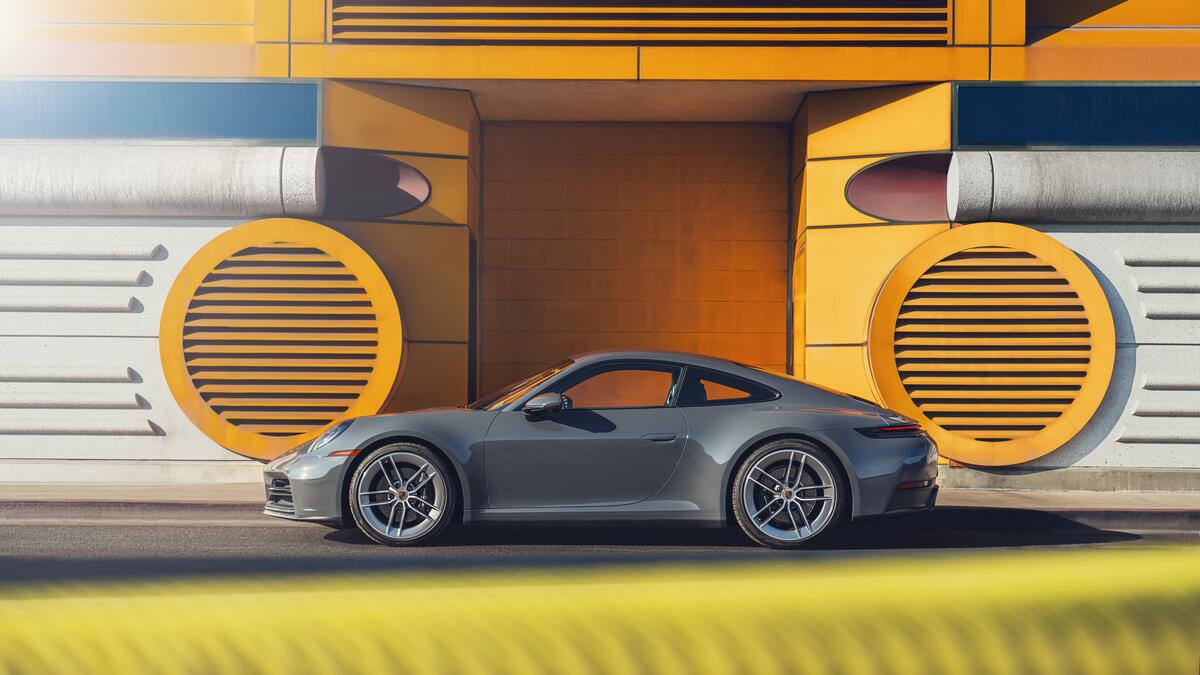
Porsche 911 RS
A Porsche 911 RS is a race-oriented version of the 911. The point in this segment is that it was made for racing requirements and business needs, not because Porsche knew it would become famous decades later.
Group 3
Group 3 was a category of race rules that determined what kinds of cars could compete. The host is saying Porsche had to build a certain number of cars to qualify for that category.
air-cooled 911
“Air-cooled” describes an engine cooling system that relies on airflow over the engine rather than a liquid coolant circuit. In the context of the 911, it highlights the classic Porsche approach used for decades, which is part of why the host frames the 911’s “ultimate” identity around its air-cooled era. This matters because regulatory and emissions challenges can push manufacturers toward different engineering solutions over time.
Porsche 356
The Porsche 356 is an early Porsche model that’s important historically. In this discussion, it’s brought up to compare how long it stayed popular and how Porsche thought the 911 might not last as long. They also mention the 356 Speedster as a version people really recognized.

Porsche 928
The Porsche 928 is a different kind of Porsche than the 911—more of a modern grand tourer. In this segment, it’s discussed as Porsche’s attempt to solve regulatory problems like noise and emissions that they worried the 911 couldn’t meet. The host also says Porsche expected the 911’s era to end and planned a replacement.
emissions
Emissions are the harmful gases a car puts into the air. Governments set limits on them, and carmakers have to engineer engines and exhaust systems to meet those limits. The host is saying Porsche worried the 911 might not be able to comply.
noise
Here, “noise” means how loud the car is during official testing. Because the 911 has the engine and exhaust in the rear, the sound comes from one spot. If the test measures loudness with a microphone as the car drives by, that can make the 911 seem louder than a layout where the sound is spread out.
front engine car
A “front engine car” has its engine in the front. In this discussion, that layout is contrasted with the 911, where the engine and exhaust are closer together at the back. The idea is that with a front engine, the noise sources are more spread out, which can reduce how concentrated the sound is during testing.
Porsche 911
The Porsche 911 is Porsche’s most famous model line. The point here is that fans loved it so much that Porsche kept making it instead of replacing it with something else.
regulatory environment
The regulatory environment means the government rules car makers have to follow. In this case, emissions rules are driving what Porsche can and can’t do with the engine.
air cooled car
Air-cooled engines get rid of heat using air flowing over the engine. The host’s point is that emissions rules made it harder to keep an air-cooled engine meeting modern requirements without losing performance.
water cooled
Water-cooled engines use coolant (liquid) to carry heat away from the engine. The host’s claim is that emissions rules made water cooling the only practical way to keep performance up.
Vita King
Vita King is the person the host credits with helping Porsche get through a tough time. The idea is that he pushed changes inside the company so Porsche could survive and then plan for growth.
strategic decisions
“Strategic decisions” means big, long-term choices a company makes. In this context, it’s about how Porsche changed its approach to survive first, and then how it planned to grow.

Porsche Cayenne
The Porsche Cayenne is Porsche’s SUV, meaning it’s built for more space and everyday driving than a sports car. It came along when Porsche was trying to expand and sell more vehicles. The podcast is using it as an example of that growth strategy.
market for SUVs was seven times greater than the market for sports cars
The host is comparing how many people want SUVs versus sports cars. The point is that if one category is much bigger, a company trying to grow usually has to pay attention to where the customers are.
federalization
Federalization is how an imported car gets made legal for the U.S. It usually means meeting U.S. rules for things like emissions and safety equipment.
gray market cars
Gray market cars are vehicles imported and sold through channels that aren’t the manufacturer’s official U.S. distribution. Because they weren’t originally built to U.S. rules, they often require federalization to satisfy DOT and EPA requirements.

Ferrari 288 GTO
The Ferrari 288 GTO is a rare, very fast Ferrari made in limited numbers. The episode mentions it because early cars were delivered to a shop for work soon after they arrived. That helps show how uncommon and special the car was when it first appeared locally.
DOT
DOT is the U.S. government agency that sets vehicle safety rules. In this story, they had to make the car meet those rules to be legal in the U.S.
EPA
EPA is the U.S. agency that sets rules for vehicle emissions (how much pollution a car produces). They had to make the Ferrari meet those emissions rules to be legal in the U.S.
Interstate 84
Interstate 84 is a big highway in the northeastern U.S. He’s using it to describe where the ride happened before crossing into New York.