
About this episode
The conversation starts with a quick correction on Porsche prototype numbering—“936” vs “963”—then zooms out to endurance racing: who Porsche had to beat, how BoP arguments get made, and why Le Mans memories can outlast championships. The hosts also dig into motorsport politics, including FIA influence and the fallout from “the end of Group C.” Later, Jay Gillotti shares personal history from the 1982 Canadian GP era and his 1985 work federalizing early Ferrari 288 GTOs, plus lively takes on Porsche 911 regulation-driven evolution and the 928.
Jay Gillotti has written very well know books such as Gulf 917 and Porsche Decades. This year a new book he is writing is coming out about the Porsche 936. He has also written articles for 000, Panorama, Forza, Vintage Motorsports, International Motor Racing Research Center, Collier AutoMedia and Wayne Carini's The Chase. He was also contributed to other automotive books like A French Kiss with Death, 1982 and Daring Drivers, Deadly Tracks. He has helped out at events like Pebble Beach Concours D'Elegance and moderated many Porsche Events people like Brian Redman, John Horsman, Vic Elford, Derek Bell, Hurley Haywood among others.
In this episode we talk about:
-Favorite driver.
-Politics in racing.
-Least favorite thing about racing.
-Favorite livery.
-Most excited car he was involved with.
Send questions and suggestions to [email protected]
https://www.circuitsixfour.com/
https://www.instagram.com/circuit6four/https://mail.google.com/mail/u/0/#inbox

Porsche 936
"Alright, some of the things I can comment with this one is at one point he says 936 but we're talking about the 963. So you know he means 963."
The Porsche 936 is an older Porsche race car that competed in endurance racing. In this conversation it comes up because the host thinks someone accidentally said “936” when they meant “963.”
The Porsche 936 is a historic Porsche Le Mans–prototype race car from the 1970s. Here it’s mentioned only because the speaker says the guest switched the numbers—“936” versus “963”—highlighting how Porsche prototype model numbers refer to different eras and cars.
Audi
"I'm not trying to take anything away from Tom Christensen or Audi but the fact that they just kept racing and winning without much competition"
Audi is a car brand the host is talking about here because of how successful it’s been in racing. The host’s point is that Audi kept winning even when there wasn’t much competition.
Audi is the German automaker the host references in the context of endurance racing success. The point being made is about Audi’s continued ability to race and win even when competition was limited.

RS Spyder
"I mean at times some of the biggest competition was the RS Spyder that was in the LMP2 category."
The RS Spyder is a Porsche race car built for long-distance endurance races. It competed in a specific prototype class (LMP2), which determines the kind of car and performance rules teams have to follow.
The RS Spyder is a Porsche prototype race car best known for competing in endurance racing in the LMP2 class. It was part of Porsche’s late-2000s Le Mans/ALMS-era push, where prototype racing rules heavily shaped what teams could build and how they raced.
LMP2
"I mean at times some of the biggest competition was the RS Spyder that was in the LMP2 category."
LMP2 is a category for prototype race cars in endurance racing. It’s a defined ruleset that controls what teams can build so competition is more about racing and tuning than pure budget unlimited design.
LMP2 is a prototype racing class used in endurance events, designed to be a step below the top LMP1 category. The rules standardize many elements so teams compete more on setup, reliability, and driver performance than on unlimited engineering freedom.
Johnny Von Newman
"But like the other guy that on the West Coast that was somewhat just as influential was Johnny Von Newman."
Johnny Von Neumann is mentioned as a person who helped shape Porsche’s early following on the West Coast. The host says an article claims he was especially important to the Porsche 356 Speedster.
Johnny Von Neumann is referenced as an influential West Coast figure connected to Porsche’s early U.S. enthusiast scene. In this segment, he’s credited in an article as being especially important to the Porsche 356 Speedster’s story.
WEC
"It's pretty dominant in some. But WEC, it's just not so great."
WEC is short for the World Endurance Championship, a major series for long-distance race cars. The host is comparing how a car performs in WEC versus other racing contexts.
WEC stands for the World Endurance Championship, a top endurance racing series. The host notes the Porsche 963 isn’t as strong in WEC as elsewhere, which can happen because series-specific rules, race formats, and competitor lineups differ.

Porsche 963
"Well first of all to me, I mean the 963 has won a number of races in the WEC and won some championships. But Le Mans overshadows everything. So people might not remember who won the championship or who won this race, who won that race."
The Porsche 963 is a top-level race car Porsche built for long-distance endurance racing. It’s the kind of car that competes at events like Le Mans, where the whole goal is to go fast and last a long time.
The Porsche 963 is Porsche’s modern Le Mans–class hypercar built for the World Endurance Championship (WEC). In this segment, the host connects it to Porsche’s recent race wins and to the Le Mans conversation, including being on the same lap as the winning Ferrari.
24 hours of Le Mans
"But a lot of people will remember who won the 24 hours of Le Mans. And you know our friends at Ferrari are on a three game winning streak there."
Le Mans is a famous race in France where cars race for 24 hours straight. It’s so well-known that even casual fans remember the winner.
The 24 Hours of Le Mans is endurance racing’s most famous event, where teams race for a full day and night. This segment emphasizes that even when championships are forgotten, most people still remember who won Le Mans.
balance of performance
"And we talked earlier about balance of performance. So some people are going to say, well the 963 is disadvantaged on balance of performance and that Ferrari has an advantage. Well, I don't understand the technology and the rules in the level of depth to really say whether balance of performance is the reason we haven't won at Le Mans."
Balance of performance (BoP) is a set of rules used in endurance racing to equalize performance between different cars and manufacturers. The host suggests some people think the Porsche 963 is disadvantaged by BoP compared with Ferrari, but he says he can’t judge the rules and technology deeply enough.
Derek Bell
"And I've been so lucky to spend time with these great drivers like Vic Alford and Derek Bell, Hurley, Ryan."
Derek Bell is a well-known race driver, especially famous for long-distance races like Le Mans. The host mentions him as someone he’s met and admires.
Derek Bell is a legendary endurance racing driver closely associated with Le Mans. In this segment, he’s named among the drivers the host has met, reinforcing the episode’s focus on endurance racing culture.
Jackie X
"I guess I might say as a fan, I would have to say Jackie X, even though I've never met him in person. I would have to say he's probably my favorite driver just because when I was a kid growing up, he was Mr. Le Mans."
The host is saying Jackie is his favorite driver because Jackie became a big symbol of Le Mans. He’s described as “Mr. Le Mans,” meaning he’s strongly tied to that race.
“Jackie X” is presented as the host’s favorite driver because of Jackie’s Le Mans legacy and the way he inspired the host as a kid. The segment frames him as “Mr. Le Mans,” emphasizing endurance-racing identity rather than a single race result.
Le Mans wins
"I mean, he was good in Formula One also, but he just had a knack for endurance racing and with six Le Mans wins, which, you know, I never thought anybody necessarily beat that record."
“Le Mans wins” means winning the 24-hour race at Le Mans. It’s a huge endurance event where the car has to last and keep running fast for a whole day.
“Le Mans wins” refers to victories at the 24 Hours of Le Mans, one of the most prestigious endurance races in the world. In endurance racing, winning is about maintaining speed and reliability over a full day, not just a single sprint lap.
Formula One
"I mean, he was good in Formula One also, but he just had a knack for endurance racing and with six Le Mans wins, which, you know, I never thought anybody necessarily beat that record."
Formula One is the most famous kind of pro race car series, with open-wheel cars. The host is saying the driver was good there too, but their real strength was long-distance endurance racing.
Formula One (F1) is the top tier of open-wheel, single-seater racing governed by the FIA. The host contrasts F1 with endurance racing, saying the person discussed was also strong in F1 but especially had a knack for endurance events.
Tom Christensen
"Of course, Tom Christensen eventually did beat that record by quite a bit, but I never thought anybody would beat that record."
Tom Christensen is a famous race driver, especially known for winning at Le Mans. In this conversation, he’s mentioned as the person who beat the record for Le Mans victories.
Tom Christensen is a Danish endurance racing driver best known for his record-setting success at the 24 Hours of Le Mans. The host is referencing him as the driver who surpassed the earlier benchmark of Le Mans wins.
FIA
"Well, we did talk about it and I think that the dynamic of the FIA and of course the FIA, I'm sure would in hindsight would deny this, but being a French based organization"
The FIA is the organization that makes the rules for a lot of major auto racing. The host is talking about how FIA politics and decisions influenced who benefited in different eras.
FIA stands for Fédération Internationale de l’Automobile, the governing body that regulates major motorsport series worldwide. In the segment, the host discusses how FIA decisions and perceived favoritism affected racing politics in the 1960s and 1970s.
Group C
"In more recent years, again, I haven't followed it close enough to really say, oh, there was a bad political decision that, you know, the FIA or somebody else made. [468.4s] I can't think of any real recent examples of that. [474.7s] I mean, the other one we could, I guess we could think about is the end of Group C."
Group C was a specific class of endurance race cars used for a period of time. The host says when it was canceled, racing in the 1990s didn’t have a great replacement, so the racing quality suffered.
Group C was a top-level sports car racing category used in endurance racing from the early 1980s into the late 1980s. The host notes that when Group C was canceled around the end of the 1980s/early 1990s, there wasn’t a strong direct replacement, which they felt hurt the quality of racing in the 1990s.
Montreal
"The only Formula One race I've ever been to was 1982 at Montreal... We were set to go to Canada to see the race."
Montreal is a city in Canada where Formula One races have been held. In this story, it’s the track where the speaker watched the race in 1982.
Montreal is where the Canadian Grand Prix was held in 1982, and it’s a major stop on the Formula One calendar. The speaker ties it to a specific moment in F1 history and personal experience as a fan.
Gilles Villeneuve
"And my great hero, my great favorite driver in Formula One at the time was Gilles Villeneuve. And he got killed the month before."
Gilles Villeneuve was a famous Formula One race driver. The speaker is talking about how Villeneuve died just before the race they planned to attend.
Gilles Villeneuve was a legendary Formula One driver known for aggressive, fearless driving and a strong fan following. The speaker mentions his death shortly before the 1982 Canadian Grand Prix, highlighting how dangerous F1 could be at the time.
Grand Prix
"when we were there at Montreal in June of 82 for the Grand Prix, a young driver... got killed."
A Grand Prix is a single big Formula One race event. It’s like one stop on the F1 calendar.
Grand Prix refers to an individual Formula One race event within the season. The speaker uses it to describe the specific Montreal race weekend in 1982.
Zolder
"And a month before the race, he goes and gets killed at Zolder in Belgium."
Zolder is a race track in Belgium. The speaker mentions it because a major driver incident happened there around the time of their planned F1 trip.
Zolder refers to the Circuit Zolder in Belgium, a motorsport venue that has hosted Formula One and other racing series. The speaker connects it to Villeneuve’s fatal accident timing and the broader theme of driver deaths.
Ricardo Palletti
"a young driver, young kind of unknown driver, Ricardo Palletti got killed... But we could see the smoke."
Ricardo Palletti was a Formula One driver. The speaker is describing how he died around the time of the race in Montreal.
Ricardo Palletti was a Formula One driver who died in 1982. The speaker says he was killed at the Montreal Grand Prix weekend, emphasizing how the sport’s risks affected fans in that era.
livery
"What's your favorite livery? Oh, I have to be, say golf... I do not like the golf colors or really any racing liveries on street cars."
A livery is the car’s paint and sticker design—its exact look. The speaker is saying certain racing color schemes don’t translate well to normal street cars.
A livery is the specific paint scheme and graphic design used on a race car, typically including sponsor placement and color patterns. In this discussion, the speaker focuses on how the “golf” colors and other racing liveries look different on race cars versus street cars.
color science
"I mean, I wrote the book, right? So I love the golf colors. There's color science behind the golf colors..."
Color science is about how colors look to your eyes and how lighting and materials change their appearance. The speaker is saying the golf racing colors have a specific look for a reason.
Color science is the study of how colors are perceived and reproduced under different lighting and materials. Here, it’s used to explain why the “golf” racing colors can look the way they do, even if the team didn’t understand the details at the time.
Max Hoffman
"[634.0s] Was the 356 speedster Max Hoffman or Johnny von Neumann? [639.4s] Oh, it's Max Hoffman for sure. [641.3s] I don't think there's any real question about that."
Max Hoffman was a key Porsche dealer/importer in the U.S. In this story, he’s portrayed as pressuring Porsche to make a car that could be advertised for under a certain price.
Max Hoffman was a major Porsche importer/dealer in the U.S., and he’s credited here with influencing what Porsche built for the market. The host claims Hoffman pushed Ferry Porsche for a specific kind of car that could be sold under a price target.

Porsche 356 speedster
"So when you think about Porsche, some of their like magic cars that everybody was like, [675.9s] that we look back on like the 356 speedster and then like the 73 RS, those were kind of done by accident."
The Porsche 356 Speedster is an early Porsche that became famous for its simple, open-top design. Here, the hosts connect it to Max Hoffman pushing Porsche to make a specific kind of car that could be sold for a certain price.
The Porsche 356 Speedster is an early Porsche model that became iconic for its minimalist, open-top racing-inspired look. In this segment, it’s discussed as a “birth” moment tied to Max Hoffman’s influence on what Porsche would build and sell.
homologation purposes
"[690.1s] And then the 73 RS, they were just building cars for homologation purposes. [694.0s] They weren't like, oh, let's build like the ultimate car that's going to blow people's mind 30, 40, 50 years from now."
Homologation means building a limited number of street-legal cars so they’re allowed to race in certain competitions. In this story, Porsche did it because the rules demanded it.
Homologation purposes are when a manufacturer builds a limited number of road-legal cars so the model can qualify for specific racing classes. The host uses this to explain why Porsche made cars like the 73 RS—because racing rules required it, not because they were trying to predict future collector value.
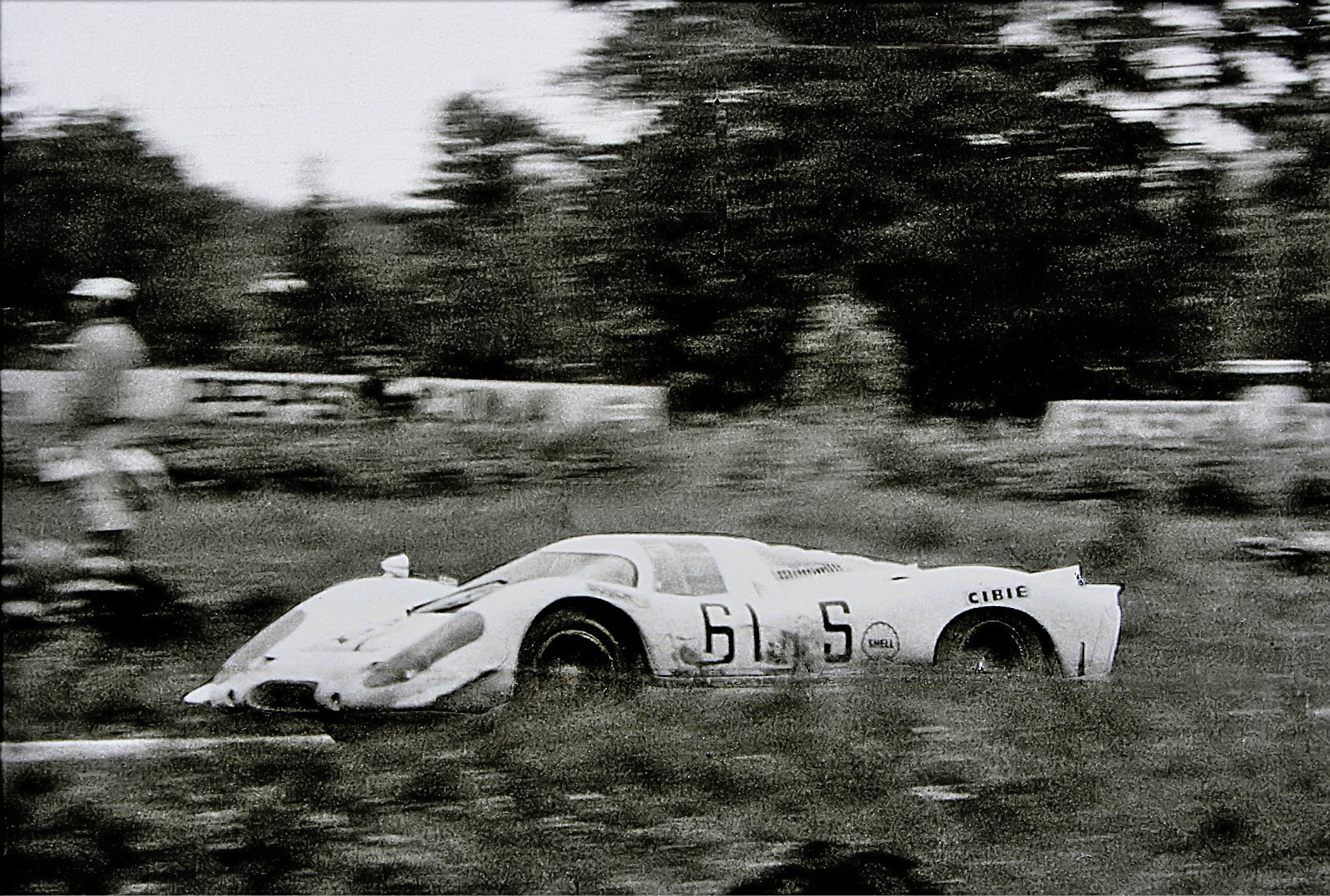
Porsche 917
"...a legend. I mean, think about what happened to my 917s after they were done racing. A lot of them were p..."
The Porsche 917 is a famous race car that Porsche built for long-distance racing. People still talk about it because it was very successful and became a major part of Porsche’s racing history. The episode is also mentioning what happened to these cars after they finished racing.
The Porsche 917 is a legendary endurance-racing race car from the late 1960s and early 1970s, widely remembered for its dominance and dramatic racing history. The podcast context focuses on what happened to the 917s after their racing careers—many were preserved, modified, or repurposed—showing how significant the cars became beyond the track. It’s discussed because the 917 is a key part of Porsche’s motorsport legacy.
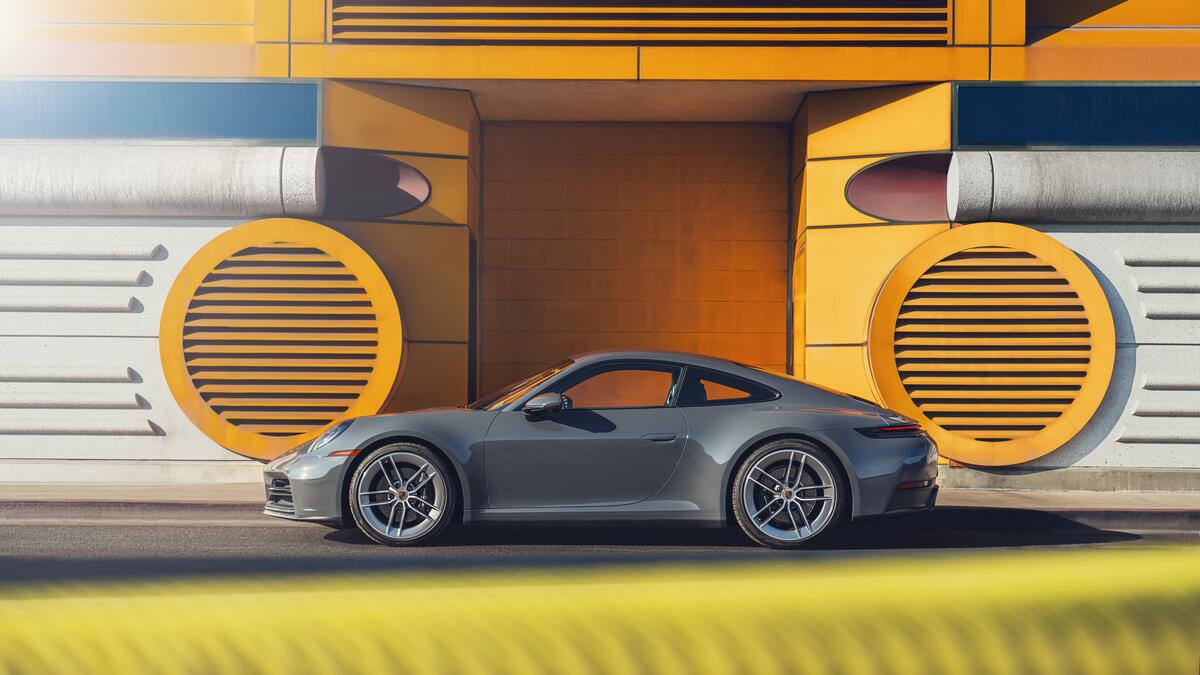
Porsche 911 RS
"So 911 RS, yeah, I don't think there was any sense that, hey, we're building the legend here, you know. [739.5s] In fact, they were really scared that they wouldn't sell enough cars, right?"
A Porsche 911 RS is a race-oriented version of the 911. The point in this segment is that it was made for racing requirements and business needs, not because Porsche knew it would become famous decades later.
The Porsche 911 RS refers to 911 models built with a lightweight, race-focused intent, often associated with homologation-era rules. Here, the host argues the 911 RS wasn’t created to become a future legend—it was built to satisfy racing and sales realities of the time.
Group 3
"[745.2s] I think you had to build 400, right? I think you had to build 400 for whichever class that was. [752.0s] Group 3, I think, whatever class it was."
Group 3 was a category of race rules that determined what kinds of cars could compete. The host is saying Porsche had to build a certain number of cars to qualify for that category.
Group 3 was a historic FIA racing class designation used to categorize production-based race cars. The host mentions a required build quantity (e.g., 400 cars) tied to the class, implying Porsche needed to meet Group 3 rules to compete.
air-cooled 911
"But yeah, there's no way they could have said, hey, you know, these cars will be considered the ultimate 911 or the ultimate air-cooled 911 or whatever."
“Air-cooled” describes an engine cooling system that relies on airflow over the engine rather than a liquid coolant circuit. In the context of the 911, it highlights the classic Porsche approach used for decades, which is part of why the host frames the 911’s “ultimate” identity around its air-cooled era. This matters because regulatory and emissions challenges can push manufacturers toward different engineering solutions over time.
Porsche 356
"Now they're starting to realize like, but now that you have all these computers, it's hard to make cars lightweight. Like with the 356, it kind of, people knew the speedster and then people kind of like, when they sold so many of the 73 RS, that should have been assigned."
The Porsche 356 is an early Porsche model that’s important historically. In this discussion, it’s brought up to compare how long it stayed popular and how Porsche thought the 911 might not last as long. They also mention the 356 Speedster as a version people really recognized.
The Porsche 356 is the early, air-cooled Porsche that helped establish the brand’s lightweight, nimble character. In this segment, it’s used as a historical reference point for how long the 356 lasted and how Porsche’s later planning compared the 356’s lifespan to what they expected for the 911. The host also mentions the 356 Speedster as a known enthusiast favorite that helped build demand.

Porsche 928
"And then they decided to go the direction of a bigger car and they decided the 928's the direction they want to go seems a little bit crazy to me. ... So I think the 928 was a sincere effort to create a modern Porsche. ... And so the 928 is what they came up with for the modern world. And as I'm sure you know, 928 is a fantastic car."
The Porsche 928 is a different kind of Porsche than the 911—more of a modern grand tourer. In this segment, it’s discussed as Porsche’s attempt to solve regulatory problems like noise and emissions that they worried the 911 couldn’t meet. The host also says Porsche expected the 911’s era to end and planned a replacement.
The Porsche 928 is a front-engine, grand-touring Porsche that arrived as Porsche’s “modern” alternative to the 911. Here, the host argues that Porsche developed the 928 partly because they feared the 911 would struggle with emissions, safety, and noise regulations. The segment also frames the 928 as a response to what Porsche believed the regulatory future would require.
emissions
"Because they were really concerned about the 911 not being able to pass emissions, safety standards and noise."
Emissions are the harmful gases a car puts into the air. Governments set limits on them, and carmakers have to engineer engines and exhaust systems to meet those limits. The host is saying Porsche worried the 911 might not be able to comply.
Emissions are the pollutants a vehicle releases into the atmosphere, such as hydrocarbons, carbon monoxide, and nitrogen oxides. Regulations on emissions can force changes to engine design, fueling, and exhaust systems. In this segment, emissions are part of Porsche’s concern that the 911 might not meet future rules.
noise
"Noise was a huge concern with the 911 because in a 911, your exhaust and your engine are in the same place. So all the noise is concentrated in one spot. And so for countries that measured noise by driving the car past a microphone, all your noise is concentrated."
Here, “noise” means how loud the car is during official testing. Because the 911 has the engine and exhaust in the rear, the sound comes from one spot. If the test measures loudness with a microphone as the car drives by, that can make the 911 seem louder than a layout where the sound is spread out.
In automotive regulation, “noise” refers to how loud a car is during standardized testing. The host explains that with the 911’s rear-engine layout, the exhaust and engine are in the same location, so the sound is concentrated. That concentration can make it register louder in tests that measure sound as the car passes a microphone.
front engine car
"It's not spread out like it is with a front engine car where the engine is in the front and the exhaust is in the back and you're spreading the noise out."
A “front engine car” has its engine in the front. In this discussion, that layout is contrasted with the 911, where the engine and exhaust are closer together at the back. The idea is that with a front engine, the noise sources are more spread out, which can reduce how concentrated the sound is during testing.
A “front engine car” places the engine at the front of the vehicle, which changes how exhaust noise is physically distributed. The host contrasts this with the 911’s rear-engine layout, arguing that front-engine packaging spreads the noise out because the exhaust is typically at the rear while the engine is up front. This affects how loud the car can seem in microphone-based pass-by tests.
Porsche 911
"But the Porsche people, the hardcore Porsche people just did not accept it as, they certainly didn't accept it as a replacement for their beloved 911. And that's a large part of why the 911 is still here with us today."
The Porsche 911 is Porsche’s most famous model line. The point here is that fans loved it so much that Porsche kept making it instead of replacing it with something else.
The Porsche 911 is the long-running rear-engine sports car that became the brand’s identity. In this segment, the hosts frame it as the “beloved” model that hardcore Porsche fans refused to replace, which helps explain why the 911 continued through the late-1970s and early-1980s.
regulatory environment
"Again, it's, you have to look at the regulatory environment. There's just, Porsche finally reached the end of the road with an air cooled car."
The regulatory environment means the government rules car makers have to follow. In this case, emissions rules are driving what Porsche can and can’t do with the engine.
The regulatory environment is the set of government rules—especially emissions standards—that automakers must meet. Here, it’s presented as the key constraint shaping Porsche’s engineering decisions, including why cooling and engine approaches had to change.
air cooled car
"There's just Porsche finally reached the end of the road with an air cooled car. There's just no way where they saw things going with emissions particularly."
Air-cooled engines get rid of heat using air flowing over the engine. The host’s point is that emissions rules made it harder to keep an air-cooled engine meeting modern requirements without losing performance.
An air-cooled car uses airflow over the engine to remove heat instead of relying on a liquid cooling system. The host argues Porsche reached the “end of the road” with air cooling because emissions targets made it difficult to maintain both compliance and strong performance.
water cooled
"So they probably could have built an air cooled engine that would pass emissions, but then it would have no performance. So they had to go water cooled."
Water-cooled engines use coolant (liquid) to carry heat away from the engine. The host’s claim is that emissions rules made water cooling the only practical way to keep performance up.
A water-cooled engine uses a liquid coolant circulated through passages and a radiator to manage engine temperature. The host argues Porsche had to switch to water cooling because meeting emissions requirements with an air-cooled engine would have compromised performance.
Vita King
"And Vita King saw that and he implemented what needed to be implemented in order to save the company. And then he and his team made strategic decisions."
Vita King is the person the host credits with helping Porsche get through a tough time. The idea is that he pushed changes inside the company so Porsche could survive and then plan for growth.
Vita King is credited in this segment with implementing changes that helped stabilize Porsche during a period of financial pressure. The host portrays him as the driver of internal reforms and subsequent strategic planning that enabled Porsche to grow again.
strategic decisions
"And then he and his team made strategic decisions. Once this, once the company was stabilized, they made strategic decisions to figure out how, how do we grow our company?"
“Strategic decisions” means big, long-term choices a company makes. In this context, it’s about how Porsche changed its approach to survive first, and then how it planned to grow.
“Strategic decisions” here refers to high-level, long-term choices about how Porsche would operate and compete—especially after stabilizing the company. The host connects these decisions to both product direction (what cars to build) and company growth plans (how to expand beyond the existing lineup).

Porsche Cayenne
"...igure out how, how do we grow our company? So the Cayenne is an example of, you know, at the time, the mark..."
The Porsche Cayenne is Porsche’s SUV, meaning it’s built for more space and everyday driving than a sports car. It came along when Porsche was trying to expand and sell more vehicles. The podcast is using it as an example of that growth strategy.
The Porsche Cayenne is Porsche’s SUV, introduced as a way to broaden the brand’s lineup beyond traditional sports cars. In the podcast context, it’s referenced as an example of how Porsche looked to grow the company at the time. That makes it a notable discussion point because it represents a strategic shift toward mainstream volume while still carrying Porsche branding.
market for SUVs was seven times greater than the market for sports cars
"So the Cayenne is an example of, you know, at the time, the market for SUVs was seven times greater than the market for sports cars. If you want to grow your business, where should you look?"
The host is comparing how many people want SUVs versus sports cars. The point is that if one category is much bigger, a company trying to grow usually has to pay attention to where the customers are.
This is a market-size comparison used to justify Porsche’s product strategy. The host is arguing that when SUVs are vastly more in demand than sports cars, a manufacturer that wants to grow has to follow that demand rather than staying focused only on its traditional niche.
federalization
"Dick Fritz, who was an ex-Canadian employee. He was doing federalization of gray market cars, including Ferraris."
Federalization is how an imported car gets made legal for the U.S. It usually means meeting U.S. rules for things like emissions and safety equipment.
Federalization is the process of making a “gray market” car compliant with U.S. federal regulations so it can be legally imported and used. In this segment, it’s specifically about meeting DOT and EPA requirements for emissions and safety.
gray market cars
"He was doing federalization of gray market cars, including Ferraris. And that summer we had the first two 288 GTOs in the country in the shop."
Gray market cars are vehicles imported and sold through channels that aren’t the manufacturer’s official U.S. distribution. Because they weren’t originally built to U.S. rules, they often require federalization to satisfy DOT and EPA requirements.

Ferrari 288 GTO
"...ng Ferraris. And that summer we had the first two 288 GTOs in the country in the shop. And they were trying ..."
The Ferrari 288 GTO is a rare, very fast Ferrari made in limited numbers. The episode mentions it because early cars were delivered to a shop for work soon after they arrived. That helps show how uncommon and special the car was when it first appeared locally.
The Ferrari 288 GTO is a high-performance limited-production Ferrari built for the road, with strong ties to the brand’s racing technology. In the podcast context, it’s mentioned because the first two examples were brought into the country and were being worked on in a shop. That kind of story is often used to highlight how rare and significant the car was at the time.
DOT
"And they were trying to figure out how to do the DOT and EPA work to federalize that car for the U.S. market. And the engineer, you know, the in-house engineer who was working on the EPA and the emissions one day says to me, hey, you want to go for a ride."
DOT is the U.S. government agency that sets vehicle safety rules. In this story, they had to make the car meet those rules to be legal in the U.S.
DOT refers to the U.S. Department of Transportation, which sets vehicle safety standards (like lighting, crash-related requirements, and other compliance items). Jay mentions DOT work alongside EPA work as part of federalizing the Ferrari 288 GTO for U.S. legality.
EPA
"And they were trying to figure out how to do the DOT and EPA work to federalize that car for the U.S. market. And the engineer, you know, the in-house engineer who was working on the EPA and the emissions one day says to me, hey, you want to go for a ride."
EPA is the U.S. agency that sets rules for vehicle emissions (how much pollution a car produces). They had to make the Ferrari meet those emissions rules to be legal in the U.S.
EPA refers to the U.S. Environmental Protection Agency, which regulates vehicle emissions. Jay Gillotti describes EPA/emissions compliance work as part of federalizing the Ferrari 288 GTO so it could be sold legally in the U.S.
Interstate 84
"But there was a little back road that goes from Connecticut into New York alongside Interstate 84, pretty much an empty road. And I think we went over the state line at about 140 miles an hour in the 288 GTO."
Interstate 84 is a big highway in the northeastern U.S. He’s using it to describe where the ride happened before crossing into New York.
Interstate 84 is a major U.S. highway route running through Connecticut and into New York. Jay uses it as a geographic reference for the back-road ride where he says they crossed the state line at about 140 miles per hour in the Ferrari 288 GTO.
Request an Explanation
Heard something you'd like explained? We'll add it to this episode.
Sign in to request explanations for terms you heard.
Want to learn more?
Browse our glossary for plain-English explanations of automotive terms, jargon, and concepts.
Help improve this episode
See something that's not quite right? Our annotations are AI-generated and can sometimes miss the mark. Click the flag icon on any annotation to suggest a correction.