
About this episode
Pricing, driving feel, and racing history collide as the hosts talk through classic 911 values, including a 1967 911S offer that was “15 grand,” and the way today’s market can make ownership feel risky. They compare turbo 911 and 993 Turbo experiences, then zoom into period Porsche racing: an R-Race testing story, megaphone exhaust details, and how the “Mission Bell 250” became the Trans Am series they raced. The episode closes with practical driving and modification philosophy.
Keith Waterman is an old timer in the Porsche world. He owned Euro Trends, which is a Porsche shop. He has worked on Porsches since 1960.
In this episode we talk about:
-Favorite Porsche models.
-Advice to someone who wants to modify their Porsche.
-His racing days.
-Favorite driving route.
-What he thinks about Porsche today.
Send questions and suggestions to [email protected]
https://www.circuitsixfour.com/
https://www.instagram.com/circuit6four/https://mail.google.com/mail/u/0/#inbox
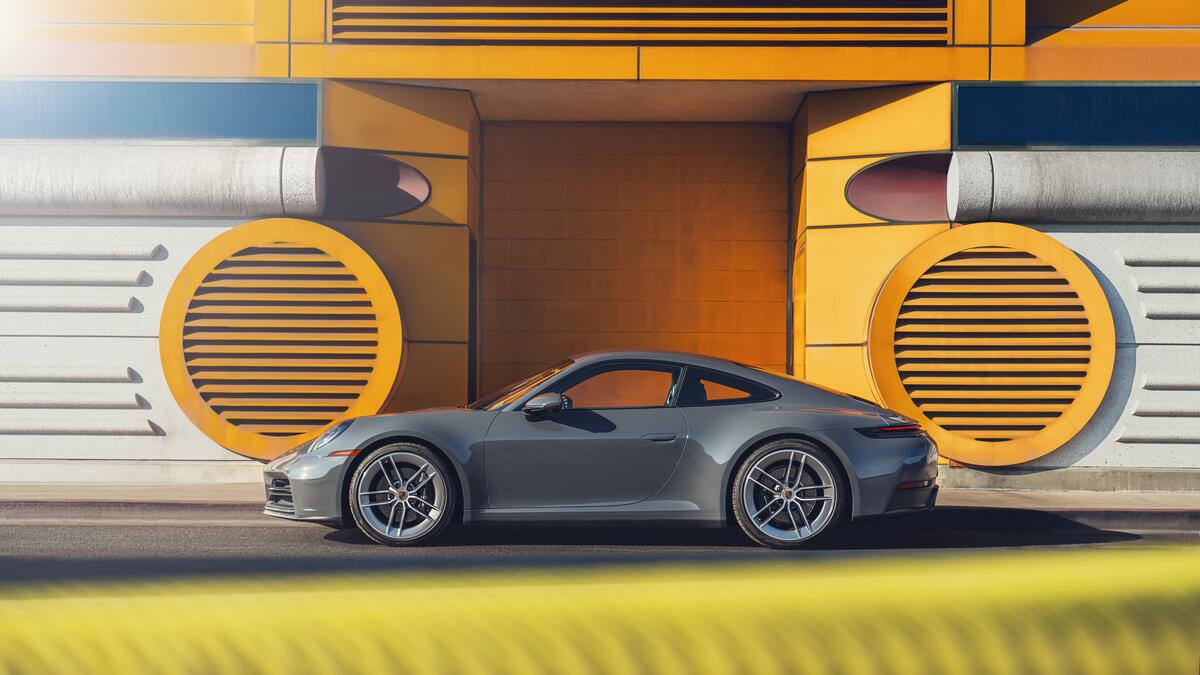
Porsche 911
"In this one at one point, he talks about a 1967 911S and the lady got an offer for 15 grand. And he's like, man, she should have taken it."
This is a classic Porsche 911 from 1967, specifically the 911S version. The point here is that the car was offered for about $15,000, but the host believes it was worth much more—showing how collectible 911 prices have climbed a lot.
A Porsche 911S is a classic 911 variant from the late-1960s, known for its air-cooled flat-six and period-correct 911 styling. In this segment, the host discusses how a 1967 911S sale offer (15 grand) was likely far below what the car would be worth, highlighting how 911 values have surged over time.
bubble
"Then we're talking about a bubble. Oh my God. Yeah, it was about to explode because the things price were just way too out of control."
Here, “bubble” means the car market is getting overheated—prices are rising too fast because of hype and people expecting prices to keep going up. The host is saying it got even more intense later.
In collector-car talk, a “bubble” refers to a market period where prices rise faster than underlying fundamentals, often driven by hype and speculation. The host argues the Porsche market was already in a bubble-like state before the pandemic and that it later became even more extreme.

Ford Mustang
"...w, when I first looked it up, it's like javelins, mustangs, chameros and I'm like, he drove a Porsche though..."
The Ford Mustang is a sporty car made by Ford. People talk about it a lot because it’s known for being fun to drive and for having strong engine options. It’s often mentioned alongside other famous performance cars.
The Ford Mustang is a long-running American sports coupe/convertible known for its strong performance potential and huge enthusiast following. It often comes up in conversations about classic muscle cars because it’s widely recognized and has many generations with different engines and driving characters. In a podcast context, it’s a natural reference point when discussing iconic performance cars and what people aspire to drive.

AMC Javelin
"...nd you know, when I first looked it up, it's like javelins, mustangs, chameros and I'm like, he drove a Pors..."
The AMC Javelin is a muscle car made in the 1970s. Muscle cars are designed to feel powerful and exciting, especially with bigger engines. The podcast mentions it because it’s one of the well-known classic cars from that style of era.
The AMC Javelin is an American muscle car from the 1970s era, remembered for its bold styling and performance-oriented lineup. It’s often brought up in discussions that compare classic muscle cars because it shares the same “iconic” category as other famous nameplates from that time. In the podcast context, it’s referenced as part of a list of cars that people associate with the same general muscle-car vibe.

Porsche 356
"Like, I mean, if it's a 911, it could be SC, you know, pre-impact, Carrera 964993, 356."
The Porsche 356 is one of Porsche’s earliest famous sports cars. It’s important because it helped define what Porsche would become—lightweight, fun, and very “Porsche.”
The Porsche 356 is the early, original Porsche sports car line that established the brand’s lightweight, rear-engine identity. When someone lists it alongside 911 generations, it’s usually to highlight classic Porsche heritage and the “roots” of the 911’s design philosophy.
pre-impact
"Like, I mean, if it's a 911, it could be SC, you know, pre-impact, Carrera 964993, 356."
“Pre-impact” is shorthand for an older 911 that predates later safety/bumper design rules. It’s basically an earlier front and rear bumper setup compared to newer versions.
“Pre-impact” refers to earlier Porsche 911 bodywork/bumper designs made before later crash-structure and bumper regulations. On older 911s, this usually means the earlier front/rear impact-absorbing hardware and styling before the more modern “impact” bumpers.
79 turbo
"I've got a 79 turbo that I've done a lot of work on and it's so expensive. I mean, it's valued"
They’re talking about a 1979 Porsche 911 Turbo. It’s a classic Porsche with a turbocharged engine—one of the big reasons these cars are so desirable today.
“79 turbo” refers to a 1979 Porsche 911 Turbo. The 911 Turbo is notable for using a turbocharged flat-six engine, which helped make the 911 a benchmark for fast, usable performance.
boxer
"it takes some of the pleasure out of driving. You know, my boxer, you know, for 10 grand, so what,"
“Boxer” describes the engine shape where the cylinders move opposite each other. Porsche uses this style in many of its cars, and it helps the engine sit low in the car.
A “boxer” engine is an engine layout where the cylinders move in pairs that oppose each other, like boxers throwing punches. Porsche’s classic “boxer” flat engines are known for their low center of gravity and distinctive sound.
85 Carrera
"last time I was here, I told you, like, I have 85 Carrera, a little miles, it's like, perfect. It was great when I first got it, like,"
They mean a 1985 Porsche 911 Carrera. It’s the naturally aspirated “regular” 911 (not the Turbo), and it’s a popular classic for driving and collecting.
“85 Carrera” refers to a 1985 Porsche 911 Carrera. The Carrera is the non-Turbo 911 variant, typically with a naturally aspirated flat-six, and it’s a key part of the 911 lineup’s enthusiast reputation.
market could fall out
"There's a bubble up here. Yeah, you know, the market could fall out. I mean, it's, it's, it's like the housing market was here in 2005, 2006."
They mean the prices people pay for these cars might drop. If that happens, it can change what you’d get when you try to sell.
“Market could fall out” is the speaker’s way of saying the collectible-car market can drop sharply if demand weakens. In enthusiast terms, that affects how much you can sell a specific Porsche for later.

73 RS
"pay me what she owes me and move along. Yeah. Last time I read the 73 RS, like it just kept going, keeps going."
They’re talking about a 1973 Porsche 911 RS. The RS is a special, more track-oriented version of the 911, and it’s highly collectible.
“73 RS” is shorthand for a 1973 Porsche 911 RS. The RS (Rennsport) is a lightweight, performance-focused 911 variant that’s especially prized because it’s tied to Porsche’s racing heritage and limited production.
push rod
"He's got a Porsche, a pushrod, four cylinder in it and Denny Baker, Denny Aker, Aker, like A-K-E-R. [518.4s] Uh-huh. And he has a shop downtown Seattle."
“Pushrod” describes a type of engine design where parts inside the engine use rods to open the valves. It’s a mechanical way of getting the camshaft’s motion to the valves.
A pushrod engine uses pushrods to transfer motion from the camshaft to the engine’s valves. The speaker mentions a “pushrod, four cylinder” Porsche engine, which helps identify the engine’s mechanical layout rather than just its cylinder count.
Porsche transmissions
"This thing I think weighs 900 pounds. Okay. And you know, a lot of aluminum. It has the, [561.5s] the Porsche transmission and engine."
This means the car’s gearbox is from Porsche. Since the speaker is talking about a modified race car, the point is that the swap affects how the car drives and how well the parts integrate.
A “Porsche transmission” means the gearbox used in the car is from Porsche rather than the original Cooper setup. In this segment it’s part of a broader swap story: the Cooper is described as using Porsche engine and transmission components, which can change how the car drives and how it fits together.
modify their car
"So what advice would you give to someone who wants to modify their car? [605.5s] First question I would ask why. Okay. Porsche did a very good job building the car."
They talk about how to think before changing your car. The speaker’s main message is: figure out your real reason for modifying, and don’t assume aftermarket parts will work as perfectly as the original ones.
This segment shifts into advice on modifying a car, starting with the question “why” you want changes in the first place. The speaker argues that modifications often don’t fit as perfectly as original parts and can trade off performance in one area while hurting another.
driving school
"And if you want performance driving, I'm going to send you [657.6s] to driving school before I touch your car."
They recommend taking a driving school course before doing performance mods. The idea is that better skills can make the car safer and more fun than just adding parts.
“Driving school” here is used as a practical prerequisite before any performance modifications. The speaker’s point is that learning to use the car safely and effectively can matter more than adding power or upgrades.
Willow Springs racetrack
"I drove it from Harbor City out to Willow Springs racetrack with a dealer plate hanging on the back of it."
Willow Springs Raceway is a famous race track in California. The host is describing taking their race-prepped Porsche there to test it.
Willow Springs Raceway is a well-known road course in California used by racers and enthusiasts for testing and track days. The speaker mentions driving the car there with race hardware installed, emphasizing how they evaluated the setup on track.
megaphone
"What do you mean megaphone is that exhaust? They were tapered exhaust right out. They came off the... I had the 911 R hitters and then I just had a megaphone that I think they were 18 inches, I think."
A “megaphone” is a race exhaust shape that sticks out and is louder than a normal muffler. Racers use it to help the engine breathe and make more power.
A “megaphone” exhaust is a straight-through, race-style exhaust with a flared “megaphone” outlet. It’s used to improve exhaust scavenging and reduce backpressure compared with more restrictive mufflers.
911 R hitters
"I had the 911 R hitters and then I just had a megaphone that I think they were 18 inches, I think."
“911 R hitters” sounds like a specific race exhaust/header setup for the Porsche 911 R. The host is saying it bolts on in place of a normal muffler and works with the megaphone exhaust.
“911 R hitters” appears to refer to the Porsche 911 R-style exhaust “hitters”/headers used on race cars. In this context, they’re paired with a megaphone exhaust and described as bolting on where a muffler would normally go.
small valve
"So your race car was what? I think it was a... It was a 68 911 L small valve, dyno dead at the warehouse here in Culver City."
“Small valve” means the engine’s valves are smaller than a larger-valve setup. Smaller valves can limit airflow, so racers often change valve sizes to get more power.
“Small valve” refers to using smaller intake/exhaust valves in the engine head. Valve size affects airflow and breathing, so changing valve sizes is a common way racers tune power.
dyno
"So your race car was what? I think it was a... It was a 68 911 L small valve, dyno dead at the warehouse here in Culver City."
A “dyno” is a test machine that measures how much power an engine makes. It lets you compare setups in a controlled way.
A “dyno” (dynamometer) is a machine used to measure engine output by running the car or engine under controlled load. The speaker references dyno testing to quantify horsepower.
rear wheels
"I think there was a 178 horsepower we had on the rear wheels."
“Rear wheels” refers to measuring power at the wheels that actually drive the car. That number can be lower than engine power because some power is lost through the drivetrain.
“Rear wheels” horsepower means the power measurement is taken at the driven wheels (wheel dyno), not just at the engine crankshaft. This typically includes drivetrain losses, so wheel horsepower is usually lower than engine-rated horsepower.
Richie Ginther
"Richie Ginther was there. He did the seat reduction cars and he wanted to know how I got more power out of that than he did on the Fs, that big valves."
Richie Ginther was a well-known race driver connected with Porsche in the 1960s. Here, the host says he was involved with race-car development and wanted to understand how they found more power.
Richie Ginther was a prominent racing driver and team figure associated with Porsche in the 1960s. In this segment, he’s described as working on “seat reduction cars,” indicating involvement in race-prep and performance development.
seat reduction cars
"Richie Ginther was there. He did the seat reduction cars and he wanted to know how I got more power out of that than he did on the Fs, that big valves."
“Seat reduction cars” likely refers to a specific Porsche racing preparation involving reducing valve “seats” (the valve seat area in the cylinder head) or related head work. The speaker contrasts it with “big valves,” implying a head/valvetrain tuning approach.
Riverside
"We'd meet Peter Briggs at Riverside with it. He brought it down."
Riverside was a well-known race track in California. The host is saying they met up there with the car for racing activities.
Riverside refers to Riverside International Raceway in California, a historic venue for American road racing. The speaker says they met Peter Briggs at Riverside with the car.
Trans Am series
"What race was this? This was the Mission Bell 250. It became the Trans Am series that we raced."
Trans Am was a big American racing series for sports cars. The host is saying the race they were doing helped connect into what became the Trans Am series.
The Trans Am series (SCCA Trans-Am) was a major American road-racing championship that adopted Porsche 911s and other sports cars in the late 1960s. The speaker says the Mission Bell 250 “became the Trans Am series,” linking the event to that broader racing platform.
SCCA
"And we were in SCCA but when the Trans Am came out here we ran Sears Point and Laguna Sega."
SCCA is the Sports Car Club of America, a big U.S. organization that runs road racing events. The host is saying their racing scene was tied to SCCA before Trans Am expanded locally.
SCCA stands for Sports Car Club of America, which organizes amateur and professional road racing in the U.S. The speaker says they were in SCCA, then notes how Trans Am came out to the area and changed their racing schedule.
Sears Point
"when the Trans Am came out here we ran Sears Point and Laguna Sega."
Sears Point is the old name for Sonoma Raceway. The host is saying they raced there during the Trans Am period.
Sears Point is the former name of Sonoma Raceway in California. The speaker mentions running there as part of their racing schedule when the Trans Am era came to the region.
Laguna Sega
"when the Trans Am came out here we ran Sears Point and Laguna Sega."
“Laguna Sega” is likely Laguna Seca, a famous race track in California. The host is listing it as one of the tracks they raced on.
“Laguna Sega” is almost certainly a transcription error for Laguna Seca, the famous road course in Monterey, California. The speaker lists it alongside Sears Point as tracks they ran in the Trans Am/SCCA context.
injection pump
"[868.6s] said I got an injection pump there. We put that on and he said I think you could do it a little bit better."
An injection pump is a fuel-delivery device. It helps send the right amount of fuel to the engine at the right time so the car runs smoothly and makes power.
An injection pump is the component that pressurizes and delivers fuel to the engine in a controlled way. In many diesel setups it’s a key part of how much fuel gets injected and when, which directly affects power and drivability.
hairpin turn
"[947.6s] I was shocked. I mean I'm coming down the hill into a hairpin turn that's about 110 [954.3s] and I shifted down twice, tapped the brakes. I don't know. Gone."
A hairpin turn is a very tight corner where you basically have to turn back on yourself. It’s a good test of brakes and how well the car stays under control when you’re slowing down hard.
A hairpin turn is a very tight, often near-180-degree corner that forces heavy braking and careful downshifting. It’s a useful kind of road to test brakes and driver control because small mistakes show up quickly in speed and stability.

Volkswagen Bora
"...y went down one time they came in with a Maserati Bora. That was one of the sweetest sounding cars I've ..."
The Volkswagen Bora is a regular passenger car model made by Volkswagen. It’s not mainly known as a race car, but it can still be interesting to listen to and drive. In the podcast, it’s mentioned because someone thought it sounded especially good.
The Volkswagen Bora is a compact-to-mid-size sedan/wagon-style model that’s known more for its everyday usability than for being a track-focused car. It comes up in the podcast because the speaker is describing a particularly memorable sound from a “Bora,” using it to illustrate how certain cars can stand out audibly. That makes it relevant in a discussion about what makes a car feel exciting even when it’s not the most extreme machine.

Maserati Bora
"[1023.2s] They like buying exotic cars. They went down one time they came in with a Maserati Bora. That was one of the sweetest sounding cars I've ever heard."
The Maserati Bora is an Italian sports/grand touring car with the engine in the middle. The host is saying it sounds especially good—like a standout exhaust note.
The Maserati Bora is a mid-engine Italian grand tourer known for its sharp styling and V8 performance. The speaker calls it one of the sweetest-sounding cars they’ve ever heard, emphasizing the auditory character that enthusiasts chase.

Porsche Carrera GT
"...don't get off on. I would love to drive that that Carrera GT but I've got to have it for half a day. I can't h..."
The Porsche Carrera GT is a very rare, very fast sports car made by Porsche. It’s the kind of car people want to drive at least once because it’s special and hard to get. The podcast is using it as an example of a dream car.
The Porsche Carrera GT is a rare, high-performance supercar built for serious driving, not everyday commuting. It’s especially discussed because it’s a “bucket list” car—something many enthusiasts want to experience briefly due to its exclusivity and driving focus. In the podcast context, it’s mentioned as a dream to drive for a short period, highlighting its status and desirability.
twin turbo
"First time I got into a Cayenne twin turbo I jumped on a thing out here [1122.6s] it's like whoa man I got to do that half a dozen times and then I can you know get my foot in it"
“Twin turbo” means the engine has two turbochargers. They help the car make power faster, so acceleration can feel really sudden.
A twin-turbo setup uses two turbochargers to force more air into the engine, which helps produce stronger acceleration. In practice, it can feel like a sudden surge of power when you get on the throttle—exactly the kind of “whoa” moment the speaker describes.

Porsche Cayenne
"First time I got into a Cayenne twin turbo I jumped on a thing out here [1122.6s] it's like whoa man I got to do that half a dozen times and then I can you know get my foot in it"
They’re talking about a Porsche Cayenne with twin turbochargers. It accelerates really hard, and they had to get used to that punch before they could drive it confidently.
The Porsche Cayenne twin turbo is a performance-focused version of Porsche’s SUV, using a twin-turbo setup to deliver strong acceleration. The speaker describes how the initial acceleration surprised them, and that they needed repeated drives to build confidence and learn how much throttle they could use.

Ferrari 355 Spider
"We have a Ferrari that comes in. What do you call that thing it's a 355 Spider? [1161.4s] That is one of the sweetest sounding vehicles I've ever driven but do I get excited about driving it?"
They’re talking about a Ferrari 355 Spider, which is a mid-engine supercar with the top down. They love how it sounds, but they don’t like driving it because they can’t see as well as they want.
The Ferrari 355 Spider is a mid-engine Ferrari with a convertible (Spider) body style, known for its distinctive sound and classic supercar feel. The speaker says it’s one of the sweetest-sounding vehicles they’ve driven, but they don’t enjoy driving it much because visibility is poor for them.
brakes
"that is a fun road. I mean you're not going to get over 70 mile an hour on it and then you [1203.6s] better better be praying that your brakes are real good."
Brakes are what slow the car down and help you stop safely. The speaker is saying this road is fast enough that you really need strong, dependable braking.
Brakes are the system that slows and stops the car by converting motion into heat through friction. The speaker’s comment implies the road is fast enough that braking performance and confidence matter a lot.
Request an Explanation
Heard something you'd like explained? We'll add it to this episode.
Sign in to request explanations for terms you heard.
Want to learn more?
Browse our glossary for plain-English explanations of automotive terms, jargon, and concepts.
Help improve this episode
See something that's not quite right? Our annotations are AI-generated and can sometimes miss the mark. Click the flag icon on any annotation to suggest a correction.