
Pattering on with Bill Helmes Part 8
About this episode
Bracken Helms sits down with his father, Bill Helms, to discuss the nuances of buying and owning classic air-cooled Porsches. Bill shares expert advice on why high-mileage, regularly driven Porsches are often more reliable than low-mileage "garage queens" that have sat idle. They dive into what made the 1978 to 1989 Porsche 911 SC and Carrera models so legendary, highlighting their uncompromising build quality. Bill also shares a classic story of a Corvette owner's shocking realization after test-driving a 911 for the first time.
Bill Helmes is my dad and has been in the Porsche business for almost 50 years.
In this episode I talk to my dad about:
-How to buy an older Porsche.
-Comparing cars that are driven and the cars that are not.
-Back in the day what made Porsche a better car than the competition.
-Surprises in the car world today compared to in the past.
Send questions and suggestions to [email protected]
https://www.circuitsixfour.com/
https://www.instagram.com/circuit6four/https://mail.google.com/mail/u/0/#inbox
Bill Helms
"Okay, here's another pattering on with my dad, Bill Helms. All right. I don't know if I just have bad luck or this is just the way things are."
The father of the show's host, who has spent his life working with, buying, and selling classic Porsche sports cars and has a wealth of knowledge about them.
Bill Helms is a veteran Porsche broker, dealer, and enthusiast with decades of experience buying, selling, and sourcing rare Porsches across the United States. He frequently shares historical insights into the classic car market, dealership operations, and Porsche model history.
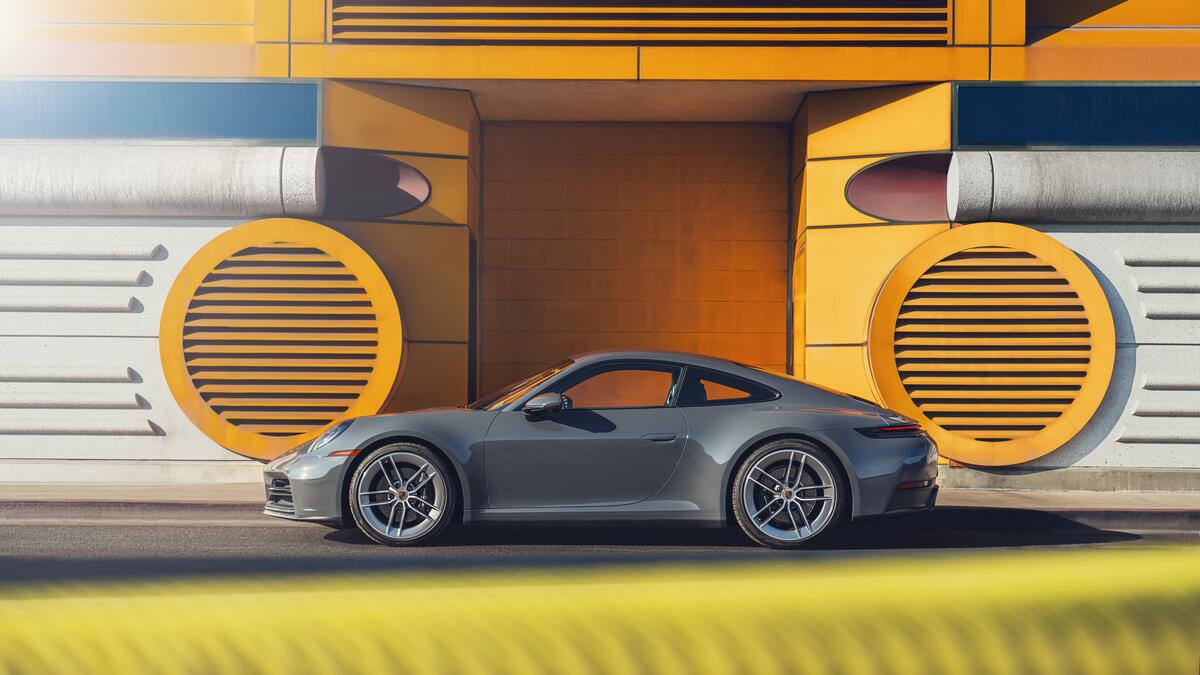
Porsche 911
"...ly hasn't been wrecked and you don't buy an older 911. We're talking air-cooled."
The Porsche 911 is a famous sports car from Germany known for its distinctive shape and having its engine in the very back. Older versions made before 1998 are called 'air-cooled' because they cooled their engines using airflow rather than liquid radiator fluid. People love them today because they are rare, classic, and offer a very direct, old-school driving feel.
The air-cooled Porsche 911, produced from 1963 through 1998, is highly coveted by collectors for its mechanical purity, distinctive engine note, and analog driving experience. These models rely on air and oil rather than liquid coolant to regulate engine temperature, representing a classic era of Porsche engineering. They are frequently discussed due to their rapidly appreciating market value and the unique maintenance considerations of vintage sports cars.
air-cooled
"We're talking air-cooled. I'm talking air-cooled now. You don't buy an old 911 without taking it to a good mechanic you trust."
An older type of engine design that doesn't use liquid radiator fluid (antifreeze) to stay cool. Instead, it uses a large fan and flowing air to keep the engine from overheating, which gives these cars a very distinct, mechanical sound.
"Air-cooled" refers to engines that rely on air flowing over cooling fins (often aided by an engine-driven fan) and oil circulation to dissipate heat, rather than a liquid coolant jacket and radiator. Porsche famously used this design for the 911 from 1963 until the end of the 993 generation in 1998.
Pre-Purchase Inspection (PPI)
"You don't buy an old 911 without taking it to a good mechanic you trust. You've got to know what you're getting into when you buy the car."
Having a professional mechanic look over a used car before you buy it to make sure there are no hidden problems or expensive repairs waiting for you.
A Pre-Purchase Inspection (PPI) is a comprehensive mechanical and cosmetic assessment performed by an independent specialist before a used vehicle is purchased. For vintage or high-end sports cars, a PPI is crucial to identify hidden structural damage, deferred maintenance, or mechanical issues like engine cylinder leak-down.
Porsche 911 Carrera 2S (993)
"I've had people put away like a 98 2S and it's got 480 miles on it and they're going to finally fire that car up. And it's probably going to have a bunch of oil leaks and some brake issues and all that kind of stuff."
A very rare and highly sought-after version of the Porsche 911 from 1998, which was the last year Porsche made cars with air-cooled engines. It has a wider, more aggressive body shape but uses a standard non-turbocharged engine.
The 1998 Porsche 911 Carrera 2S (C2S) represents the final year of the air-cooled 911 (993 generation). It combined the wide-body look of the Turbo model with a naturally aspirated 3.6-liter flat-six engine and rear-wheel drive, making it one of the most collectible modern classics.

Porsche 928
"I just was involved in a 79-928 and the car had 5700 miles on it. One owner, legitimate car. A guy bought new black 5-speed with the cloth interior."
A luxury sports car Porsche made with the engine in the front instead of the back, powered by a big V8 engine. It was meant to be more comfortable and modern than the 911, though it never quite replaced it.
The Porsche 928 was a front-engined, V8-powered grand tourer produced from 1978 to 1995. Intended to replace the 911, it featured advanced aluminum construction, a futuristic design, and a unique passive rear-steering "Weissach axle."
Porsche 911 Turbo (996)
"Now that the cars are more comfortable, like there's that guy with the 996 turbo and I think it's got like a million miles on it. And they're asking, well, how did you do it? And he's just, I just drive the car."
A high-performance, all-wheel-drive version of the Porsche 911 from the early 2000s. It uses a special, race-proven engine that is incredibly tough and can easily handle high mileage.
The 996-generation 911 Turbo, produced from 2001 to 2005, was powered by the legendary "Mezger" water-cooled twin-turbo flat-six engine derived from racing. Unlike the standard 996 Carrera, the Turbo did not suffer from IMS bearing issues and is highly regarded for its bulletproof reliability.
Porsche 911 SC
"I've had the SC up in a garage for five or six months and the battery went dead. So it wasn't able to even start it. And I went up there, my friend, we jumped it, we started it and it was running fine."
A classic version of the Porsche 911 built in the late 1970s and early 1980s. It is famous for being incredibly reliable, tough, and the car that saved the 911 from being replaced by other models.
Produced from 1978 to 1983, the 911 SC (Super Carrera) featured a 3.0-liter aluminum flat-six engine. It was a pivotal model that saved the 911 from being discontinued in favor of the front-engined 928, proving to Porsche executives that the rear-engined layout had a dedicated future.

Chevrolet Corvette (C4)
"But I remember being really little and you had a brand new C4 Corvette. It was white and it must have been one of the last C4s. If we're talking timeline, like it was damn near C5."
An American sports car from the 1980s and 1990s. It was fast and looked futuristic at the time, but the interior plastics and ride comfort were often considered cheap and harsh compared to Porsches.
The fourth-generation Chevrolet Corvette (C4), produced from 1984 to 1996, featured a sleek, modern design with a digital dashboard and a fiberglass monoleaf spring suspension. While it offered impressive handling for its era, its interior build quality and squeaks/rattles were often criticized compared to European sports cars.
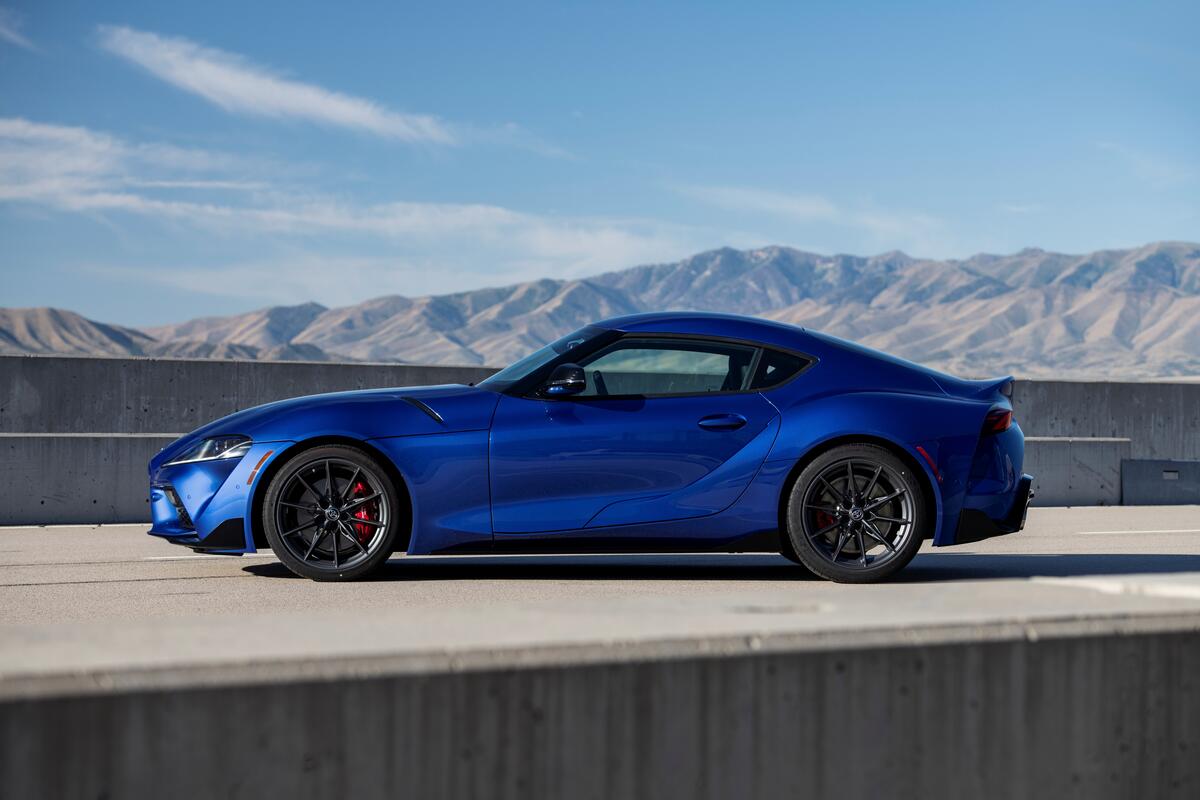
Toyota Supra (A80)
"And then even later on when you had that 90 whatever that that super like that twin turbo, the, I don't know what generation it is, but the one with the big wing like 94, 95, 96, I don't know, you know, with the big wing, it was crazy. And like my friends wanted to ride in it... But then I started talking about that Supra that your friend in Southern Utah had."
A famous Japanese sports car from the 1990s, best known for its large rear wing and an incredibly strong engine that tuners could easily modify to produce massive amounts of power.
The fourth-generation Toyota Supra (A80), produced from 1993 to 2002, is a legendary Japanese sports car powered by the twin-turbocharged 3.0-liter 2JZ-GTE inline-six engine. Renowned for its over-engineered block, the 2JZ can handle massive amounts of horsepower on stock internals, making it an icon of the tuning community.
Michael Willhoit
"And if Michael Will, Hoyter, Terry Keele or whoever did not have the car, they knew of one. So you got the word out that way and then they would call you back and everybody makes a little bit of money."
A well-known car dealer in the Porsche community who is famous for finding and selling incredibly clean, rare, and low-mileage classic Porsches.
Michael Willhoit is a prominent and colorful classic car dealer based in Springfield, Missouri, specializing in rare, low-mileage, and air-cooled Porsches. He is well-known in the national Porsche community for sourcing pristine examples and his long-standing dealership, Willhoit Enterprises.

BMW Series Bmw
"Yeah, they have gotten expensive, but you know, back in the day, you could buy a seven series BMW or the big Mercedes or Lexus and you wouldn't lose a lot of money. I do not sell those cars anymore. I lease them because you take such a terrible hit, say on a seven series BMW..."
BMW's largest and most expensive luxury sedan, packed with high-tech features and comfortable seats. While great to drive new, they lose their value extremely quickly because they are expensive to fix as they age.
The BMW 7 Series is the brand's flagship full-size luxury sedan, showcasing their most advanced technology, comfort features, and engineering. Historically, these high-end executive sedans suffer from rapid and severe depreciation on the secondary market due to high maintenance costs.
depreciation
"And I lease all those cars now because we do the numbers and the resale value is so horrible on the cars because you got nowhere to go. You buy a car for 125 grand that's worth 60 four years later. It's just insane. We're 125 car and bring 95 back in the day. But they don't. You just you can't you can't do it. You can't they just drop like a rock."
The amount of money a car loses in value as it gets older and gets driven more. Most luxury cars lose their value very quickly, meaning they are worth much less just a few years after being bought new.
Depreciation is the rate at which a vehicle loses its monetary value over time. While some limited-run sports cars hold their value or appreciate, high-end luxury sedans and SUVs typically experience steep depreciation, often losing over 50% of their original MSRP within the first few years.
Ken Garff Automotive Group
"When I got in the business, there was one car lot that owned two franchises and that was Ken Garf in Salt Lake, which they're pretty big now. They've obviously expanded and they had four or five like Volvo and Mercedes and Rolls Royce and Ferrari."
A very large company that owns many car dealerships across Utah and other states, starting out as a small family business in the 1930s.
Founded in 1932, the Ken Garff Automotive Group is a major American dealership conglomerate based in Salt Lake City, Utah. It has grown from a single dealership into one of the largest automotive retail groups in the United States, operating dozens of franchises across multiple states.
Request an Explanation
Heard something you'd like explained? We'll add it to this episode.
Sign in to request explanations for terms you heard.
Want to learn more?
Browse our glossary for plain-English explanations of automotive terms, jargon, and concepts.
Help improve this episode
See something that's not quite right? Our annotations are AI-generated and can sometimes miss the mark. Click the flag icon on any annotation to suggest a correction.