The father of the show's host, who has spent his life working with, buying, and selling classic Porsche sports cars and has a wealth of knowledge about them.
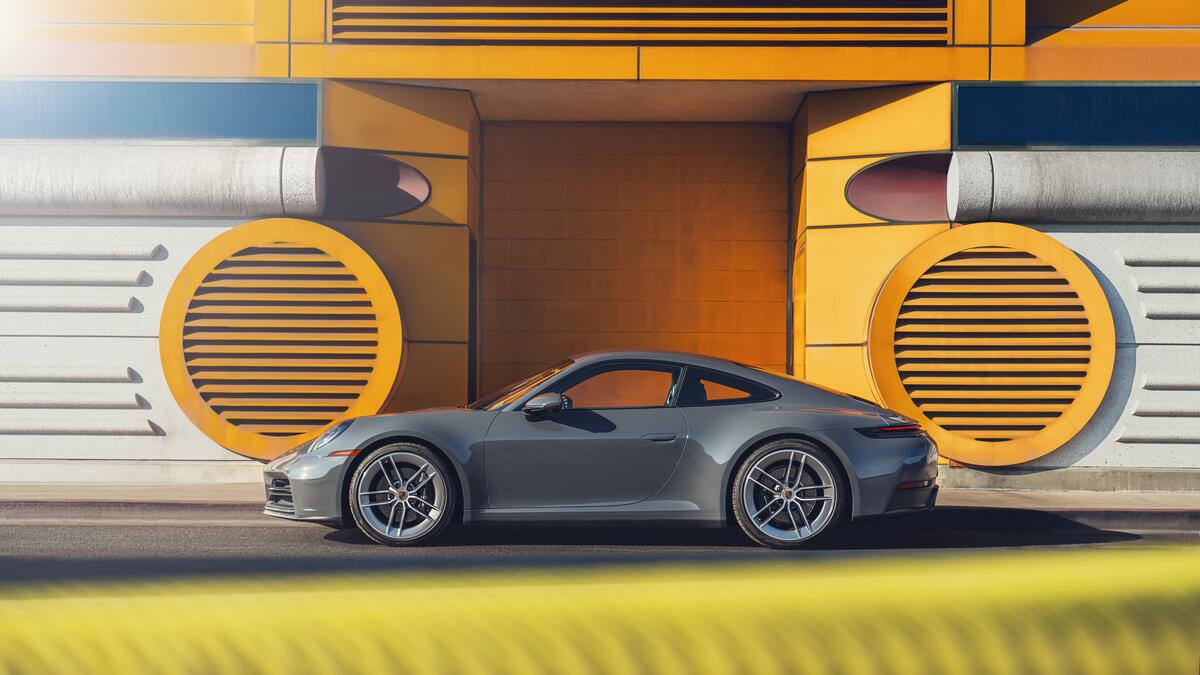
The Porsche 911 is a famous sports car from Germany known for its distinctive shape and having its engine in the very back. Older versions made before 1998 are called 'air-cooled' because they cooled their engines using airflow rather than liquid radiator fluid. People love them today because they are rare, classic, and offer a very direct, old-school driving feel.
An older type of engine design that doesn't use liquid radiator fluid (antifreeze) to stay cool. Instead, it uses a large fan and flowing air to keep the engine from overheating, which gives these cars a very distinct, mechanical sound.
A very rare and highly sought-after version of the Porsche 911 from 1998, which was the last year Porsche made cars with air-cooled engines. It has a wider, more aggressive body shape but uses a standard non-turbocharged engine.
A luxury sports car Porsche made with the engine in the front instead of the back, powered by a big V8 engine. It was meant to be more comfortable and modern than the 911, though it never quite replaced it.
A high-performance, all-wheel-drive version of the Porsche 911 from the early 2000s. It uses a special, race-proven engine that is incredibly tough and can easily handle high mileage.
A classic version of the Porsche 911 built in the late 1970s and early 1980s. It is famous for being incredibly reliable, tough, and the car that saved the 911 from being replaced by other models.
An American sports car from the 1980s and 1990s. It was fast and looked futuristic at the time, but the interior plastics and ride comfort were often considered cheap and harsh compared to Porsches.
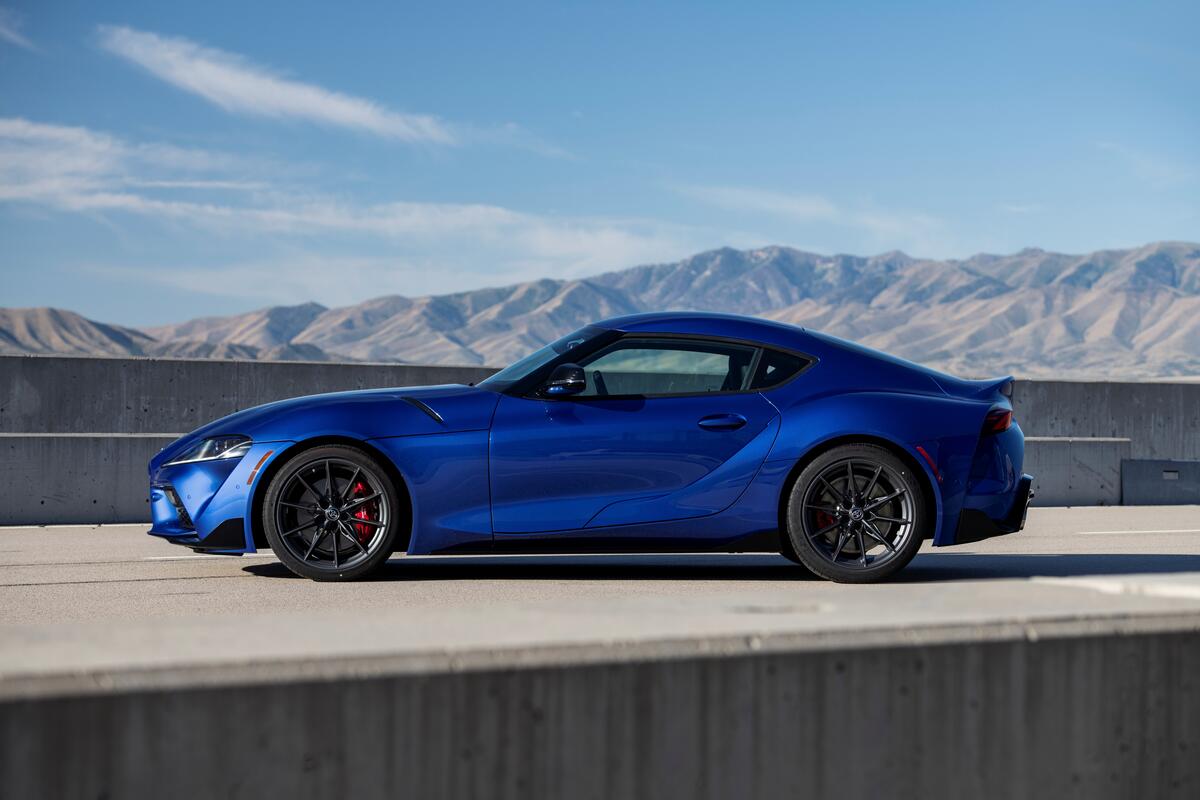
A famous Japanese sports car from the 1990s, best known for its large rear wing and an incredibly strong engine that tuners could easily modify to produce massive amounts of power.
BMW's largest and most expensive luxury sedan, packed with high-tech features and comfortable seats. While great to drive new, they lose their value extremely quickly because they are expensive to fix as they age.
The amount of money a car loses in value as it gets older and gets driven more. Most luxury cars lose their value very quickly, meaning they are worth much less just a few years after being bought new.
A very large company that owns many car dealerships across Utah and other states, starting out as a small family business in the 1930s.
LIVE
Welcome to Porsche Patter with Bracken Helms, the show where we hear Bracken and his distinguished
guests from the Porsche community patter on about Porsches and all things automotive.
Porsche Patter is sponsored by Circuits Explore.
Circuits Explore creates authentic automotive apparel made for life-minded automotive enthusiasts.
The links for Circuits Explore are in the shown notes.
Okay, let's get to it.
Okay, here's another pattering on with my dad, Bill Helms.
All right.
I don't know if I just have bad luck or this is just the way things are.
So he didn't have his computer around.
I keep bugging him about doing this over it because if I don't do the interviews in person,
then I do them over the computer like Zoom, but he kept not having his computer.
So I know you can do it over the phone.
So I did it over the phone.
Apparently there's a lot more involved with doing it over the phone.
Like you have to adjust the volumes a little bit, do some different things.
So his volume is a lot lower than mine.
So I had to like change his volume to match mine, which then brought in some background noise.
It just happened to be where my next door neighbors were having construction done on their house.
As we got started, you can hear me in the middle of the interview being like, what is that noise?
And it gets louder.
So we talked for like an hour.
I'm just going to post the first 20 minutes because I'm trying to decide it kept getting louder.
And so I got to decide if I have to rerecord that.
I really don't want to.
I like the organic feel of it being the first time not regurgitating what we did.
I mean, I'm sure the conversation would change because we're just talking, but still I want to use what was the original.
Anyway, some of the things I want to clarify is I said something about like what made the cars better back in the day.
And I'm talking about Porsche compared to other cars of the time, as if I don't already have enough issues with SUVs.
When he was talking about how the seven series and some of these like Mercedes and, you know, Lexus and cars like that that just are like dropping in value.
And you can't just go to the lot there.
You can't just go to like a car lot and there's a million of them on there, not as much as they used to be because people are all buying SUVs.
Oh my God.
Why is everybody just like going?
This isn't just a natural phenomenon.
I don't even want to go into this, but it's not just a natural phenomenon that people went to an SUV.
We were kind of trained into the SUV.
Some of you may know what I'm talking about.
Some of you may not.
And then it's weird that we're just talking about cars.
And just in this first 20 minutes, well, I mean, the whole hour, only two things came up and they happen to be in this first 20 minutes.
I mean, we're just talking about cars, but it kind of has a lot to do with what's going on in the world right now.
I mean, the first thing he talks about is like after the recession, you know, things have changed because the middle class and upper middle class has been squeezed out,
which has, you know, affected the way the car business works and the corporations.
I haven't really talked to him about this, but that was kind of a surprise to me.
I mean, not really.
You see all like when everything's being monopolized, but I was talking to probably about six months ago.
I was talking to a friend of mine and his family owns like a dentist shop, their dentist, like dentist shop.
And it's a family owned business, but he's saying, oh, it's kind of not anymore.
Like most of these, they just come and take the name like John Thomas's dentistry.
John Thomas doesn't really own it anymore.
Some big corporation that you don't see owns it.
And even the ones that still own it, they're like these corporations come in and they run it the way they want to, even if you're still kind of the owner.
So it's just crazy that, I mean, this is definitely our environment right now.
We're just trying to have car talk.
But anyway, here's some more pattering on with Bill Helms.
First, you got to start with a really solid car from the factory.
You got to start with good bones because it's really hard to take the edginess out of a 911.
It's expensive and it's a difficult thing to do.
Number one, I'd say you want to buy a car that obviously hasn't been wrecked and you don't buy an older 911.
We're talking air-cooled.
I'm talking air-cooled now.
You don't buy an old 911 without taking it to a good mechanic you trust.
You've got to know what you're getting into when you buy the car.
And it's wise to take it to a body shop you trust.
These older 911s are getting some miles on them and it gets trickier to buy those cars.
So you definitely have to have some help and know what you're doing getting in.
Okay, so that brings up a question that I've heard probably from you and other people I don't know.
But cars that have been driven versus super low miles.
The ones that have been driven sometimes are more mechanically sound than ones that have just been sitting.
Is this true or false?
That is very true.
I mean, I've had people put away like a 98 2S and it's got 480 miles on it and they're going to finally fire that car up.
And it's probably going to have a bunch of oil leaks and some brake issues and all that kind of stuff.
I mean, it's tricky.
I just was involved in a 79-928 and the car had 5700 miles on it.
One owner, legitimate car.
A guy bought new black 5-speed with the cloth interior.
Beautiful little car.
The car hadn't been driven the last 12 years.
It was in mechanic and mechanic.
It checked it over.
The gas tank had to be drained and we still haven't got it started because there were some parts missing.
I have sold the car and it's come back to Chicago.
And now they've got it chased finding some parts and then once it gets fired up, what's going to leak from its settings, right?
Because there's just all kinds of things that can go wrong.
So yes, it's better off buying a car with more miles.
You can buy it cheaper and one that's been driven quite a bit.
So instead of setting for a long time, it gets driven, you know, once a month or from at least from 3 or 4, 5, 6, 8, 10 times a year than that car that just sets.
Are you walking around?
No.
I'm hearing noises like you're walking around.
I'm hearing it too.
I'm hearing it too.
I thought it was on yours.
It's not here.
It's quiet here.
Okay.
There's just people that you see in these like old air cooled cars that are just they drive them every day and they've got like a lot of miles on them and they don't seem to have issues.
I mean, yes, like you're having tune ups more regularly because you're driving them constantly, but you're it's not any more like unreliable.
Now that the cars are more comfortable, like there's that guy with the 996 turbo and I think it's got like a million miles on it.
And they're asking, well, how did you do it?
And he's just, I just drive the car.
More things you're seeing about people coming out of the woodwork that are driving these cars now that they're more comfortable and they're just putting a ton of miles on them.
Yeah, there's no question you drive.
They're really, really good dependable cars and you keep the oil change and you do the services that you're supposed to do and the cars will run better.
I've had the SC up in a garage for five or six months and the battery went dead.
So it wasn't able to even start it.
And I went up there, my friend, we jumped it, we started it and it was running fine.
But all of a sudden, once you drive it two or three times, it just runs better.
And I've been driving the SC now, I've been driving it almost every day somewhere.
I've been driving it, you know, half hour, 45 minutes a day and the cars running so much better.
And you can just tell it enjoys it.
No question about it, especially the old 911s, no question about it.
Okay.
What made Porsche a better car back in the day?
No compromise.
Their engineers were their best and the way they put their cars together, they're from the door handles to the way the body was put together, the way it was painted.
They're just beautifully built cars.
I mean, that's 78 to 89 911.
That's probably the best, most high quality Porsche it was ever built.
There are no compromises and there are no weak spots in that car.
I think they were coming to the end thinking maybe the SC was going to be their last car, Super Carrera.
And they put their heart and soul into it thinking they were going to move to the 928 and they didn't.
And then they even proved it with the Carrera.
So those, those two cars, there's not a weak point in the car, not a handle, not anything on the car was a compromise.
And Porsche would not compromise and their paint was immaculate.
That was probably one of the biggest disappointment when they moved out of that hand built because those cars were built so beautiful and they were built to go forever.
I mean, I know there was a few wake up calls for me because I didn't know any better.
I remember like we're in, you know, Utah back in the day when it was kind of more country bumpkin.
And, you know, I was in a different Porsche all the time.
I mean, so many 911s and even in other Porsches.
But I remember being really little and you had a brand new C4 Corvette.
It was white and it must have been one of the last C4s.
If we're talking timeline, like it was damn near C5.
You had it for like a day or two.
And I remember you took me to school and I'm telling you to go fast and drive this and just almost not believing that you were really driving the car because it was just so awful.
Because people, oh, Corvette, you know, oh, they're just the school is born, you know, all this stuff.
And then you get in the car and it was just like, I felt like you forgot how to drive the car.
Like I was so little like it really just confused me.
Like it wasn't like I had an opinion like, oh, this is a crappy car.
Just being like, I don't get what just happened.
And then even later on when you had that 90 whatever that that super like that twin turbo, the, I don't know what generation it is,
but the one with the big wing like 94, 95, 96, I don't know, you know, with the big wing, it was crazy.
And like my friends wanted to ride in it.
I felt like you had that car too long.
I think you had problems selling it because it seemed like we had it for a while and I just didn't see the appeal of it.
Are we talking about a Corvette?
The first one was the Corvette.
But then I started talking about that Supra that your friend in Southern Utah had.
Well, I'll tell you a story about a Corvette.
I had a client that was working and all of a sudden making a bunch of money.
And he had a Corvette and he saw that I had a 9 11 in the newspaper.
I wanted to come out and look at my car.
This is also a time ago.
This is in the late 70s.
I think or maybe around 80 81.
I think it was anyway.
He's so proud of himself and he's got money to buy anything.
And he rolls out in this Corvette and it was beautiful car all dialed in.
And he said, I've never really driven a Porsche.
Can we go for a test drive?
I'll never forget.
He was absolutely shocked at that car.
He could not believe the difference between his new Corvette and that Porsche.
And he bought a Porsche from in like two or three days later.
If I think he bought that one, one and then bought Porsches forever.
And that he never bought another.
I mean, he was he was absolutely shocked because he's a handsome cocky guy.
Not cocky.
He was a confident man.
And he was just so surprised that the different quality of those two cars.
I mean, he was in shock as well.
He should be.
I mean, it was a no comparison car.
And those cars were so amazing when they were new.
And this is like an 8000 mile SC or something like that.
And I'll never I'll never forget that.
He just couldn't believe it.
Yeah.
What Porsches were hard to sell or like which specs on the car were not desirable?
Well, if you know, it really depended.
I mean, back then you now is fine.
But back then you had to have a sunroof and you had to have leather interior.
And then in the early cars, you had to have that right hand mirror soon.
It was optional, believe it or not.
That was a tough car to sell that 78 SC when it came out was right hand mirror was optional.
A lot of 78s and even quite a few 79s didn't have that mirror if I remember right.
And then 80 it was standard.
But boy, if you didn't have a right hand mirror or sunroof or leather interior,
they were very difficult to sell.
They did not go away.
And then the we're the weirder colors were difficult to sell to where now the more different colors,
like even like the Minerva blue or mint green or some of the wilder colors.
Now they're they're hot.
Now that's what people want unless they're just really an unattractive car.
Back then it was you wanted red, black, silver, dark blue metallic, that kind of stuff.
You didn't want the wild colors and and they were harder to sell and a lot of beige colors people bought.
They like the chiffon and cashmere beige and all kinds of different colors.
They were popular back then, even some browns.
But the wild colors you couldn't sell.
They were maybe made the car really difficult to sell.
But the sunroof and the non leather and no right hand mirror, that was really tough.
I mean, now, obviously, that's the opposite.
Like if you're buying an old car, one without a sunroof is desirable.
Yeah, this 79, 928 I just sold did not have a sunroof and I didn't even pay attention
when I was selling it because I had thought back for some reason and thought the 928 didn't have a sunroof till 80.
So I had didn't even mention and end up being more valuable that it didn't have a sunroof, right?
This was a cool car because it was it's black manual and that had that kind of purple checkerboard interior that they have in this interior was brand new.
I mean, that would have been so hard to sell on 79 that would have been more of a base car.
And now it's going to bring so much more money because of that interior and the condition of that interior.
There's not a pretty I mean, this car really was a legitimate 5500 mile car that had been in a garage under a car cover.
I mean, the interior absolutely stunning.
That would have been a tough car to sell back in the day.
What were some Porsches that were impossible to find?
There were, you know, there just weren't that many cars so you didn't have that many to choose from.
But if a client called me and he wanted a turbo, I could get him the turbo.
I mean, I might have to go to LA or I might have to go to Oklahoma or I might have to do something like that.
But I could get the car.
I mean, they were there was nothing impossible to get.
Now, to get you a brand new 79, 930, that would have been a very, very difficult car to get.
I had to pay Windows sticker plus.
And, you know, that that was a hard get because they were they were just coming out.
But once saved by 81, 82, 83, there were cars around so I could find one in Cincinnati.
So they were tough, but you could always get a car.
How much different do you think your career would have been if you were in like a bigger market?
And this question came to me because, you know, a couple of years ago, I don't know, I was talking to someone.
They asked, oh, what cool cars has your dad done?
Like, obviously, there was some that I like that we've talked about in previous episodes.
But to me, I'm just like, I mean, I grew up in Utah, just a normal Porsche was a big deal.
Where like, I'm like, OK, well, if he was in downtown LA, would I have like some crazy story of some rare car owned by some coke dealer?
Well, I mean, bigger city, more people so there'd be more opportunities for that.
But no, there were rare cars and everywhere you go.
I mean, Porsche had a following.
There were just cars around there, obviously more in LA.
No question about it, but there were also more buyers.
So cars got gobbled up quick.
I mean, I would take cars in the early days, obviously, to LA because sort in the LA times and, you know, you get a lot of different calls and people.
But, you know, people would drive over to see your car because there wasn't a lot of cars.
A big market, small market, it didn't matter because I was connected to the big markets.
I had really good connections in LA.
So all it was was a phone call and getting the car and drive it down, right?
Or if I needed to get a car, I, you know, there was no internet.
But if I needed to get a car, I had connections all around the country to get a car.
And if Michael Will, Hoyter, Terry Keele or whoever did not have the car, they knew of one.
So you got the word out that way and then they would call you back and everybody makes a little bit of money.
Okay.
What surprises you most today in the Porsche world or most over the years?
You know, before I'd even say that the recession, the middle class and upper middle class has never recovered.
So the middle class now only buys a car when they need to buy a car.
We're back in the day, they would trade their car in every three or four years and spring came around and they'd buy a used Porsche or a used sports car and stuff like that.
So really the economy from that point on really changed American out people bought cars.
Are you talking like in the late 80s or are you talking about like the one like 2007?
I'm talking 2007.
That crash, that changed things.
That changed things where things never came back.
The middle class was obviously squeezed and they're buying habits for Porsches and sports cars and play cars, convertibles and spring totally changed and it never really has come back.
In the old days, if I had a Porsche, say with 10,000 miles on it, I had 10 places to go with it.
But now it's not like that anymore.
The wealthy want to buy a brand new car and the used expensive car doesn't bring as much money as it used to because that upper middle class doesn't seem to step in and buy the cars like they used to.
Interesting phenomenon, but that's really what's happened.
I feel like everything's gotten expensive.
Like, I mean, even like the used cars, it seems like.
Yeah, they have gotten expensive, but you know, back in the day, you could buy a seven series BMW or the big Mercedes or Lexus and you wouldn't lose a lot of money.
I do not sell those cars anymore.
I lease them because you take such a terrible hit, say on a seven series BMW, which a great sedan to drive or Mercedes.
And I lease all those cars now because we do the numbers and the resale value is so horrible on the cars because you got nowhere to go.
You buy a car for 125 grand that's worth 60 four years later.
It's just insane.
We're 125 car and bring 95 back in the day.
But they don't.
You just you can't you can't do it.
You can't they just drop like a rock.
You know, it's a little bit different with sports cars because there's less numbers, but you don't see a lot of big high end sedans at car dealerships anymore.
They want you to order it.
People aren't coming in and buying them anymore.
They're buying the SUVs that beautiful sedan that five series or seven, whatever doesn't get bought like it used to be.
Consequently, the resell is just, oh man, you got to lease them.
What would you say is better today and what is not better today in the car world?
Corporations.
When I got in the business, there was one car lot that owned two franchises and that was Ken Garf in Salt Lake, which they're pretty big now.
They've obviously expanded and they had four or five like Volvo and Mercedes and Rolls Royce and Ferrari.
They had four or five cars.
Other than that, they were all family owned every dealership in Utah back then and even across the country.
You didn't have more than one store.
The owner was the general manager and he was running his own store and so they were all run loosey-goosey.
Everybody had their own way of doing business and it wasn't one size fits all and now the corporations have bought up all the dealerships.
Am I dealing?
Okay, there's a couple I deal with that only own one store and the rest of them, I mean, like Dave Strong is now strong Audi and they've got Volkswagen Audi and they sent sole Porsche to a corporation.
But that's what the biggest change is the corporation stepping in and then running and even the family businesses that people think they're going to.
The family still owns them, but they have brought in a corporate management system to run the dealership.
So I'm not going to mention any names, but I just switch from one dealership I worked with for 40 years and went over to the family owned business because my salesman transferred over there.
And I thought I'll go over there because it's family run business and I go over there and he's got a corporate system running his business.
So it's the same exact same system.
That's without question has changed the car business immensely taking a lot of fun out of it.
Like and share with your friends.
Feel free to send questions or suggestions to the email in the description of the show.
Special thanks to our sponsor, Circuit64.
Goodbye for now.
We hope we can get together again for our next episode.
Now get out there and enjoy the cars and the people.
You
About this episode
Bracken Helms sits down with his father, Bill Helms, to discuss the nuances of buying and owning classic air-cooled Porsches. Bill shares expert advice on why high-mileage, regularly driven Porsches are often more reliable than low-mileage "garage queens" that have sat idle. They dive into what made the 1978 to 1989 Porsche 911 SC and Carrera models so legendary, highlighting their uncompromising build quality. Bill also shares a classic story of a Corvette owner's shocking realization after test-driving a 911 for the first time.
Bill Helmes is my dad and has been in the Porsche business for almost 50 years.
In this episode I talk to my dad about: -How to buy an older Porsche. -Comparing cars that are driven and the cars that are not. -Back in the day what made Porsche a better car than the competition. -Surprises in the car world today compared to in the past.