
About this episode
Gearbox quirks and buying choices take center stage as Jay Gillotti and the hosts trade stories about classic Porsche manuals—starting with the 915 feeling “like a bucket of bolts” until you get “in harmony,” and weighing the conventional wisdom about the G-50. The conversation also spans air- vs water-cooled preferences, PDK vs manual for track use, and reliability angles like why the 997.2 appeals for getting rid of the IMS bearing issue. Budget “starter” picks land on the 944 (if service support exists), with Ferrari 308 and Porsche Cayenne strategy as side quests.
Jay Gillotti has written very well know books such as Gulf 917 and Porsche Decades. This year a new book he is writing is coming out about the Porsche 936. He has also written articles for 000, Panorama, Forza, Vintage Motorsports, International Motor Racing Research Center, Collier AutoMedia and Wayne Carini's The Chase. He was also contributed to other automotive books like A French Kiss with Death, 1982 and Daring Drivers, Deadly Tracks. He has helped out at events like Pebble Beach Concours D'Elegance and moderated many Porsche Events people like Brian Redman, John Horsman, Vic Elford, Derek Bell, Hurley Haywood among others.
In this episode we talk about:
-Air-cooled vs Water-cooled.
-PDK vs Manual.
-Best starter Porsche.
-Dream car.
-Thoughts on Porsche today.
Send questions and suggestions to [email protected]
https://www.circuitsixfour.com/
https://www.instagram.com/circuit6four/https://mail.google.com/mail/u/0/#inbox
915
"So, he talks about the 915 and G15. He says, you know, it was just when I first drove it, it was like a bucket of bolts."
“915” is the name Porsche gave to a specific manual transmission used in older 911s. It’s the kind of gearbox where you have to shift smoothly and time things well, or it can feel rough. The host is saying it can feel “messy” if you don’t learn how to use it.
“915” refers to Porsche’s 5-speed manual transaxle used in many 1970s–1980s 911s. It’s known for a mechanical, driver-involved feel, where smooth clutch/throttle coordination matters for clean shifts. In the episode, it’s brought up as part of why the car can feel chaotic until you learn the technique.

BMW G15
"...hat's just honest. So, he talks about the 915 and G15. He says, you know, it was just when I first drov..."
The BMW 8 Series is a luxury car meant for long-distance driving. It’s designed to feel comfortable and smooth while still being sporty. In the podcast, it’s mentioned in connection with how it drives and how its systems work.
The BMW 8 Series is a luxury grand touring car, designed for comfortable high-speed driving with a focus on refinement. In the podcast context, it’s referenced alongside discussions of transmissions and driving impressions from an earlier era. That makes it relevant when people talk about how these cars feel to drive and what engineering choices were made.
G15
"So, he talks about the 915 and G15. He says, you know, it was just when I first drove it, it was like a bucket of bolts."
“G15” is a Porsche name for a certain manual transmission. The point is that it can feel awkward or rough if you don’t shift it the right way. The guest is basically saying you need practice to make it feel smooth.
“G15” is Porsche shorthand for a specific manual gearbox family (often associated with early 911-era 5-speed layouts). Like the 915, it’s discussed as something that can feel rough or “bucket-of-bolts” until you learn the shift timing and technique. The episode uses it to contrast how different transmissions can feel to new drivers.

Porsche 928
"And so he's talking about 944, 928 to me. And we're not thinking like, [165.3s] oh, those are two opposite things."
The Porsche 928 is a different kind of Porsche than the 911—more of a long-distance, touring-style car. In the conversation, it’s one of the 1980s Porsches being considered instead of a 911.
The Porsche 928 is a grand-touring Porsche from the late 1970s through 1980s, notable for its front-engine layout and its role as a “911 alternative” in that era. Here it’s mentioned alongside the 944 as part of the brother’s 1980s shopping idea.
water-cooled
"[217.7s] Air-cooled or water-cooled? [220.6s] Forced choice. People ask me this all the time because I have one of each."
A water-cooled engine uses liquid coolant to carry heat away from the engine. The host is comparing it directly to air-cooled engines.
“Water-cooled” refers to engines that use liquid coolant circulated through passages and a radiator to control operating temperature. In this segment, it’s used as the contrast to air-cooled, tied to the host’s “old school” preference.
air-cooled
"[217.7s] Air-cooled or water-cooled? [220.6s] Forced choice. People ask me this all the time because I have one of each."
An air-cooled engine uses airflow to keep the engine from overheating. The host is saying they prefer that traditional approach over a liquid-cooled setup.
“Air-cooled” describes engines that shed heat mainly through airflow over the engine’s fins, rather than using a liquid coolant system. The host contrasts it with “water-cooled” and frames it as an old-school preference.
PDK
"[237.1s] PDK or manual? [238.8s] Well, I haven't driven a PDK, so it's not really fair for me to rate it. [251.2s] Now, if I was doing any kind of serious track work in a modern car, there's no question that the PDK is the way to go."
PDK stands for Porsche Doppelkupplung, Porsche’s dual-clutch transmission. The host argues it’s the “way to go” for serious modern track work because it can shift quickly and keep the engine in the right power band.

Porsche Cayman
"Well, I like my Cayman a lot. I haven't driven a lot of water-cooled, Borschas."
The Porsche Cayman is a Porsche sports car with the engine in the middle. The speaker likes it a lot because it drives really well and feels like a true enthusiast car.
The Porsche Cayman is Porsche’s mid-engine sports coupe, known for its balanced handling and “driver’s car” feel. In this conversation, it’s the speaker’s current favorite water-cooled Porsche, suggesting they like the modern platform and dynamics.
IMS bearing issue
"And along with the rest of the world, the 997.2 is great because it gets rid of the IMS bearing issue."
IMS bearing is an internal engine part that can wear or fail on some older Porsche engines. If it breaks, it can cause major engine damage, which is why people pay attention to which years/versions they buy.
The IMS bearing issue refers to a potential failure of the intermediate shaft (IMS) bearing found in some Porsche flat-six engines from certain years. When it fails, it can lead to expensive engine damage, which is why later revisions (like the 997.2) are often sought.
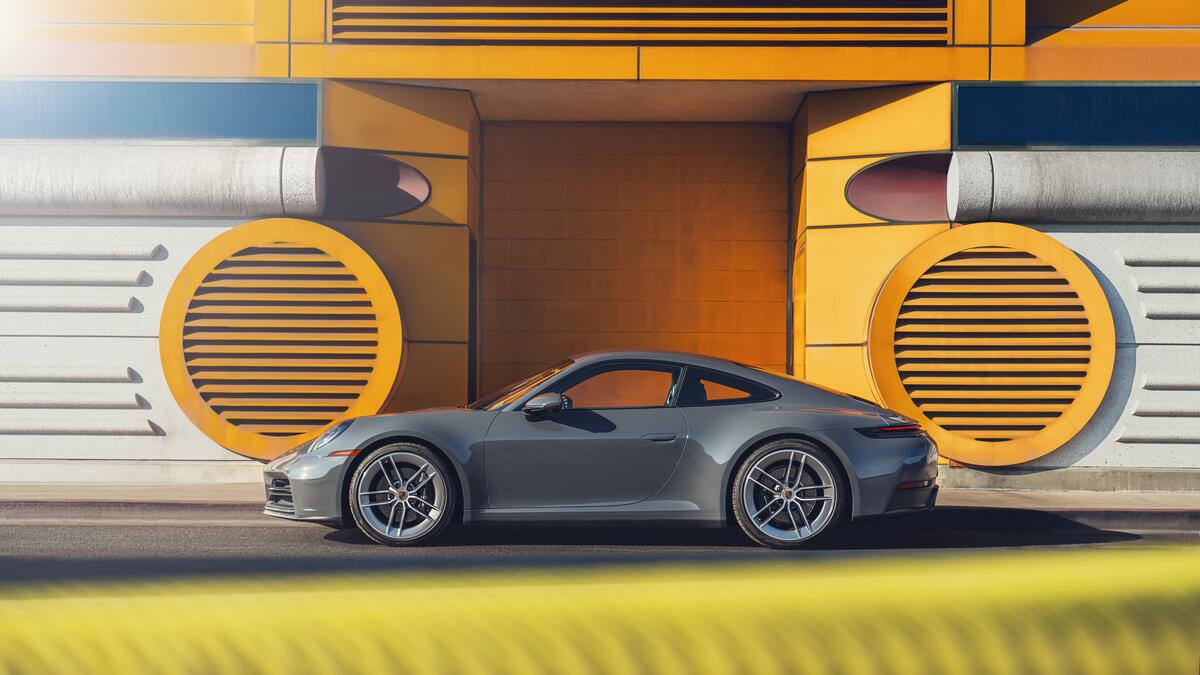
993 RS
"I would probably lean toward the 993 RS just because it's a little more modern. Still air-cooled, but it's the modern. It's the most modern version."
The 993 RS is a Porsche 911 from the 993 generation that’s built to feel more track-focused. The speaker likes it because it’s still air-cooled, but it’s the more modern-feeling version of that classic style.
The Porsche 993 RS is a late-air-cooled 911 variant (the 993 generation) tuned for a more focused, lightweight, track-oriented experience. The speaker calls it the “modern” choice among air-cooled options, and highlights its look and the fact that people they know rate it highly.
Cayman Gt4S
"...en any of them, I hear a lot of good things about Cayman GT4s from my friends who have them. Of course, it depe..."
The Cayman is a Porsche sports car with the engine in the middle. It’s a coupe, not a convertible. The podcast mentions it because some people really like the Cayman GT4 for its performance.
The Cayman is Porsche’s mid-engine sports car, closely related in driving feel to the Boxster but with a coupe body style. In the podcast, it’s brought up because people speak positively about Cayman GT4s, which are track-focused versions. That’s why it comes up when discussing the best “real-world” Porsche options for enthusiasts.
long wheelbase
"But to own one, I'd want a long wheelbase, a longhood long wheelbase car with a little more capacity..."
“Long wheelbase” means the distance between the front and rear wheels is longer. That usually makes the car feel steadier and less “snappy” than a shorter-wheelbase car.
“Long wheelbase” describes a longer distance between the front and rear axles, which generally makes a car feel more stable at speed and less twitchy than a short-wheelbase setup. In classic Porsche 911 talk, wheelbase length is often used to explain differences in balance and how the car behaves when pushed.
Weevo shift kit
"I like my 9.15. I have a Weevo shift kit in my 9.15, which improves the action a little bit."
A “shift kit” is an aftermarket set of parts that makes shifting feel better. They’re saying the Weevo kit improved how the gearbox feels when you move the shifter.
A “Weevo shift kit” is an aftermarket modification aimed at improving shift action in a manual gearbox. In this context, the speaker says it makes the 915 gearbox’s shifting feel better, which is a common goal with short-throw/shift-improvement kits.
hydraulic clutch
"Oh, I've always wondered with the hydraulic clutch, would I like the hydraulic clutch? I don't know. I kind of like my old-fashioned mechanical Volkswagen clutch."
A hydraulic clutch uses fluid pressure to move the clutch. It can feel different from older clutch systems that use more direct mechanical linkage.
A “hydraulic clutch” uses fluid pressure to operate the clutch mechanism, typically making pedal feel and engagement characteristics different from cable-actuated setups. The speaker is comparing that feel to an older, more “mechanical” clutch experience.
Carrera
"I've probably done eight or 10 track days with my 9.15 gearbox Carrera, and it's generally been fine..."
“Carrera” is a Porsche 911 trim name that usually means a more performance-focused version. Here, it’s just identifying the kind of 911 the speaker drives.
“Carrera” is a Porsche 911 model/trim name used to denote higher-performance versions. In this segment, it’s tied to the speaker’s experience driving their 911 on track with the 915 gearbox.

Porsche 968
"in the Porsche Club who have 9.68 and absolutely think that they are fantastic cars. But I think [817.1s] I'd lean 9.44 on that one."
The Porsche 968 is a later version of the 944 family of classic Porsches. The speaker is saying some Porsche fans really like the 968 and think it’s a fantastic car compared with the 944.
The Porsche 968 is the late-model evolution of the 944/968 front-engine Porsche line, generally known for being more refined and powerful than earlier 944s. In the segment, the host acknowledges that friends in the Porsche Club love the 968 and frames it as a strong alternative to the 944 “original form.”
naturally aspirated
"Turbo or naturally aspirated? Naturally aspirated for the most part [825.9s] just because turbos you can't use the way we drive on the street."
Naturally aspirated means the engine makes power without a turbo. The speaker prefers it because turbo power can be harder to use smoothly in everyday driving, depending on the car and how it’s set up.
Naturally aspirated describes an engine that draws air in without a turbocharger or supercharger. The host prefers naturally aspirated versions “for the most part” because, in their view, turbo boost is harder to use effectively in real-world street driving—especially in earlier turbo cars.
turbo lag
"it's hard to actually use the turbo. Now, the later cars, of course, [840.5s] they're all turbocharged or most of them are. And it's a whole different thing because I haven't [846.1s] driven a 992, but I rode in one. When my friend who was driving put his foot into it, I didn't [852.9s] sense hardly any turbo lag."
Turbo lag is the momentary hesitation you can feel before a turbo starts making boost. The speaker is saying the newer car they rode in didn’t have much of that delay, so it felt quick right away.
Turbo lag is the delay between when you press the accelerator and when the turbocharger builds enough boost to make strong power. The host says a 992 they rode in showed “hardly any turbo lag,” and that the car felt like it “took off like a rocket.”
wide body
"Wide body or narrow body? I'm a wide body guy. If I can, I just, I don't know, I like [879.9s] the aesthetics of the wide body cars generally speaking."
Wide body means the car’s fenders are widened so it can run wider tires and look more aggressive. The speaker just prefers the look of wide-body cars.
Wide body refers to a factory or aftermarket body configuration where the fenders and wheel arches are widened to fit broader tires and increase stance. The host says they’re “a wide body guy” because they like the aesthetics of wide-body Porsches.
Resto mod
"It's just probably not what I would have in my garage. I have not seen really hardly any [932.2s] Resto modded Porsches that made me think, oh yeah, I got to have one. I'd love to have that in my [941.1s] garage."
A restomod is an older car that’s been updated with modern parts while trying to keep the classic style. The speaker is saying they personally prefer cars that feel more original rather than heavily modernized.
Restomod (often shortened to “resto mod”) is a modified classic car that keeps the original look but updates key components—like suspension, brakes, or powertrain—for modern usability. The host says they don’t connect with restomod Porsches as much as they do with cars that feel closer to how “Dr. Porsche intended” them.

Porsche 944
"Best starter Porsche? [957.5s] If you have a mechanic nearby that can work on a 944, I think a 944 would be worth a look [965.8s] as a starter Porsche."
The speaker is recommending the Porsche 944 as a good first Porsche. Their main point is that it’s only a smart pick if you can find a mechanic who knows these cars.
The Porsche 944 is being pitched as a “starter Porsche” because it’s a more approachable entry point into classic Porsche ownership. The host’s key condition is practical: if you have a mechanic nearby who can work on a 944, it’s worth considering.

early Boxster
"If your starter Porsche budget is $25,000, then that makes me think 944, get a good one if you can and have a mechanic who knows how to work on it, or maybe a nice early Boxster."
The Porsche Boxster is a Porsche roadster. The host is suggesting an early one as another option for someone looking for a more affordable Porsche to start with.
An early Porsche Boxster is a mid-engine roadster that’s often recommended as a more attainable entry point into Porsche ownership compared with older 911s. Here, it’s offered as an alternative “starter Porsche” option if you can’t (or don’t want to) target a 944.
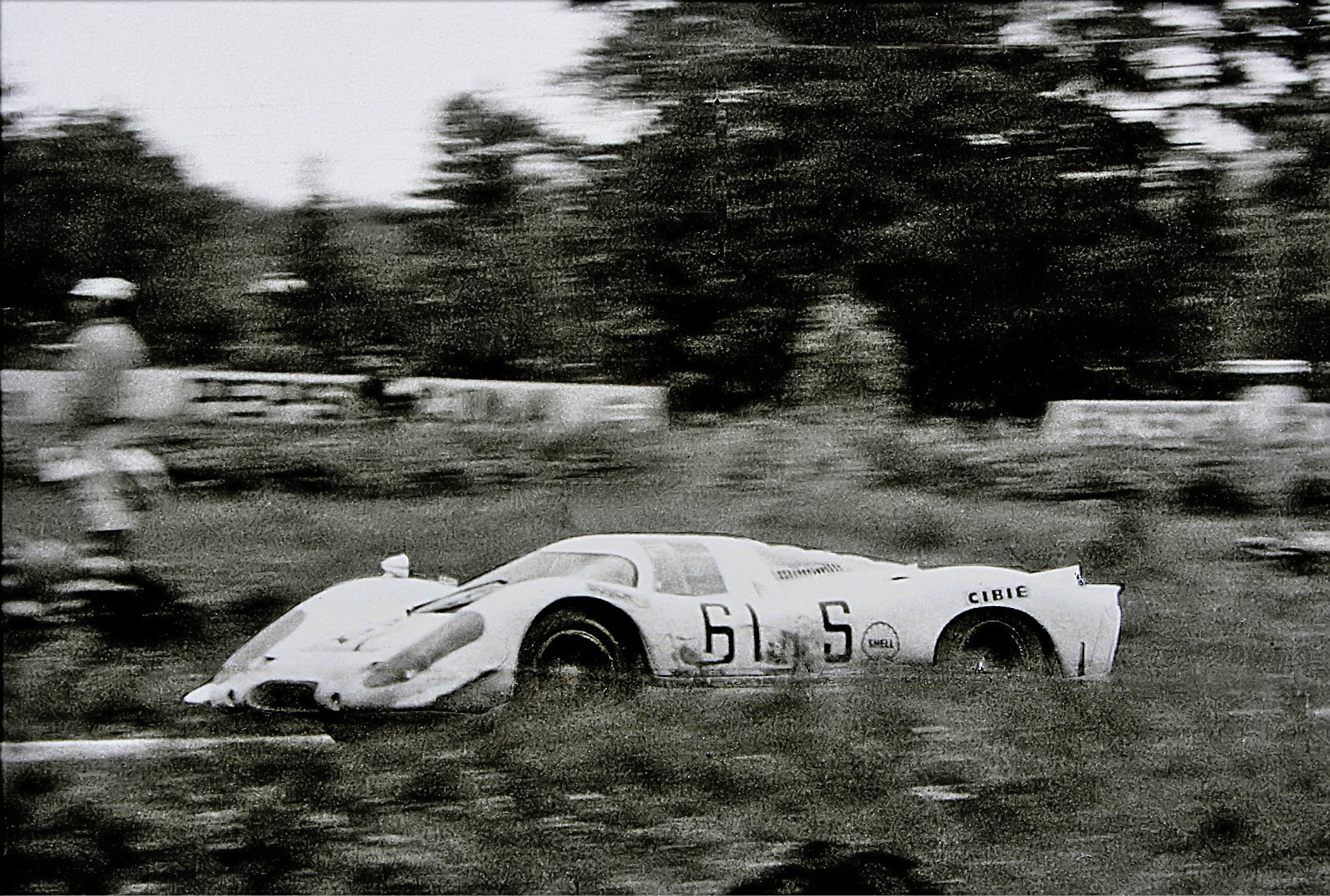
Porsche 917
"...d it be? Any car at all. Well, I'm tempted to say 917 just because I love them so much. But what would ..."
The Porsche 917 is a famous race car from Porsche’s racing history. It’s known for being extremely fast and for winning major endurance races. People mention it as a dream car because it’s one of the most iconic racing Porsches ever built.
The Porsche 917 is a legendary race car best known for dominating endurance racing in the late 1960s and early 1970s. It’s often mentioned with admiration because it represents Porsche’s peak motorsport engineering and ambition. In the podcast, it’s brought up as a dream choice simply because of how iconic and historically significant it is.

Ferrari 328
"328 Ferrari is probably where I would go. Again, because of the nostalgia, because when I was in high school and college, that was like, I even I briefly worked in a Ferrari dealership after I"
The Ferrari 328 is an older Ferrari supercar with a V8 engine in the middle of the car. People like it because it’s a very “classic Ferrari” driving experience and design from that era.
The Ferrari 328 is a classic V8-era Ferrari known for its 3.2-liter V8 and mid-engine layout. It’s often remembered as a bridge between earlier carbureted Ferraris and the more modern, higher-tech 1980s/early-1990s supercar feel.

Ferrari 308
"And I have driven a 308. I have driven a 328 also. So I know I know what I'm the driving experience is like. So that's probably where I"
The Ferrari 308 is an older Ferrari with a V8 engine placed in the middle of the car. It’s famous because it feels very connected and fun to drive, which is a big part of why people love classic Ferraris.
The Ferrari 308 is a mid-engine V8 Ferrari that helped define the brand’s “driver’s supercar” reputation in the late 1960s through the 1980s. It’s a key model for understanding why many enthusiasts associate Ferrari with sharp steering feel and an engaging, mechanical driving experience.
Cayenne project
"And, you know, there's a famous story, I believe it's in Mr. Ludwigson's book in excellence about the Cayenne project. And, you know, Porsche was this close to doing the Cayenne with Mercedes."
The “Cayenne project” is Porsche’s big plan to create the Cayenne SUV. It matters because it was a huge change for Porsche, and the discussion here is about how partnerships and business decisions shaped whether it happened.
The “Cayenne project” refers to Porsche’s effort to develop and launch the Cayenne SUV, a major strategic shift from Porsche’s traditional sports-car focus. In this story, it’s used to illustrate how Porsche considered partnerships and corporate deals to fund and scale the new direction.
Mercedes
"And the story that I believe is in the book is that at the last minute, almost at the last meeting where they were going to sign the deal with Mercedes, the Mercedes representatives came in"
Mercedes is brought up because Porsche almost partnered with them for the Cayenne. In the story, Mercedes asked to own part of Porsche, and Porsche walked away from the deal.
Mercedes is mentioned in the context of a potential partnership or ownership stake during the Cayenne negotiations. The story highlights how Porsche’s leadership reacted to Mercedes wanting a minority ownership position at the last minute.

Porsche Cayenne
"...s in Mr. Ludwigson's book in excellence about the Cayenne project. And, you know, Porsche was this close to..."
The Porsche Cayenne is Porsche’s SUV. It’s built to combine Porsche-style performance with more space and everyday usability. It comes up in discussions because it represents a major shift in what Porsche makes.
The Porsche Cayenne is Porsche’s SUV, created to bring Porsche performance and brand identity into a more practical, family-friendly format. It’s discussed in the context of Porsche’s development history—specifically references to a book about the Cayenne project and how close Porsche was to different outcomes. That makes it a frequent topic when people talk about how Porsche expanded beyond traditional sports cars.
Volkswagen
"So that's how the Cayenne ends up being a project done with Volkswagen instead. I don't think there's much alternative at that."
Volkswagen is mentioned because Porsche ended up working with the Volkswagen group for the Cayenne instead of Mercedes. It’s basically about who Porsche partnered with to make the SUV happen.
Volkswagen is referenced here as the corporate partner that ended up involved with Porsche’s Cayenne program. The point is that Porsche’s SUV expansion ultimately aligned with Volkswagen’s group resources rather than a Mercedes deal.
Request an Explanation
Heard something you'd like explained? We'll add it to this episode.
Sign in to request explanations for terms you heard.
Want to learn more?
Browse our glossary for plain-English explanations of automotive terms, jargon, and concepts.
Help improve this episode
See something that's not quite right? Our annotations are AI-generated and can sometimes miss the mark. Click the flag icon on any annotation to suggest a correction.