
About this episode
The hosts close out Jay Gillotti Part 7 with personal updates and a deep dive into Porsche culture. They discuss Dick Barber’s passing and why “That interview never happened.” The conversation ranges from Apple-liveried 935 history at Laguna Seca to advice on learning track driving before “acting crazy out on the streets.” They also debate influencer-era incentives, the car hobby’s environmental tradeoffs, and how approachable books can help newcomers feel welcome in PCA.
Jay Gillotti has written very well know books such as Gulf 917 and Porsche Decades. This year a new book he is writing is coming out about the Porsche 936. He has also written articles for 000, Panorama, Forza, Vintage Motorsports, International Motor Racing Research Center, Collier AutoMedia and Wayne Carini's The Chase. He was also contributed to other automotive books like A French Kiss with Death, 1982 and Daring Drivers, Deadly Tracks. He has helped out at events like Pebble Beach Concours D'Elegance and moderated many Porsche Events people like Brian Redman, John Horsman, Vic Elford, Derek Bell, Hurley Haywood among others.
In this episode we talk about:
-Favorite time period of Porsches.
-What he finds troublesome in the car community.
-Hardest part of writing his books.
-Automotive hobby on environment.
-What else excites him outside of cars.
Send questions and suggestions to [email protected]
https://www.circuitsixfour.com/
https://www.instagram.com/circuit6four/https://mail.google.com/mail/u/0/#inbox
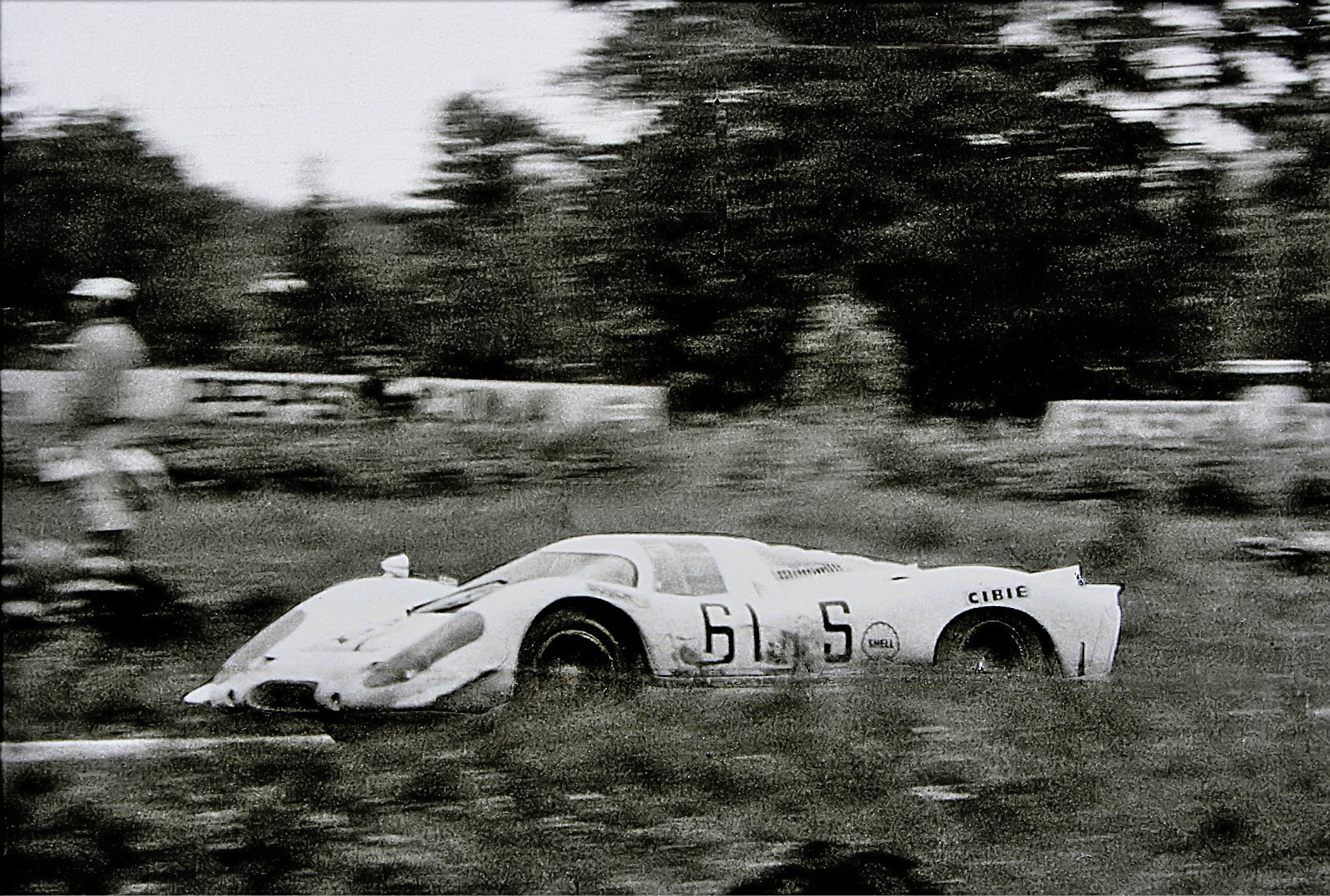
Porsche 917
"Well, again, I have to go back, I think to my 917 era just because that's the era that really speaks to me and kind of captures my imagination."
The Porsche 917 is a legendary Porsche race car from the late 1960s/early 1970s. People love it because it was built to win endurance races and it helped make Porsche famous in racing.
The Porsche 917 is one of Porsche’s most iconic race cars, best known for its dominance in endurance racing in the late 1960s and early 1970s. It’s famous for its powerful, purpose-built racing engine and for being a car that helped define Porsche’s reputation in motorsport.
Driving responsibly on public roads
"The thing that immediately comes to mind is people not driving responsibly on the street. So people driving too fast or doing things in an irresponsible manner on the street is probably the first thing that really concerns me."
The host discusses a key concern in car culture: people driving irresponsibly on public streets (speeding, reckless behavior) rather than taking those risks to a controlled environment. The takeaway is that safer street behavior helps protect both people and the broader reputation of the community.
going viral
"We talk about things going viral, and that's what we don't want to have happen."
“Going viral” means a video or story gets shared a lot online very quickly. They’re worried that a single bad incident could spread and make people judge the whole community.
“Going viral” refers to content spreading rapidly online, often through social media sharing. In this context, the concern is that one bad incident could be widely circulated and shape outsiders’ perceptions of the Porsche Club, the brand, and car culture.

Porsche 936
"But I hope people will really enjoy what we've done on the 936. Hopefully it'll cause them to want to buy my book later on this year. But if they don't buy my book and read it, this will give them a good idea of at least how the 936 program got started."
The Porsche 936 is a famous Porsche race car from the 1970s. It was made for long-distance racing, and it’s remembered as one of Porsche’s most important competition cars.
The Porsche 936 is a legendary Porsche race car from the 1970s, built for endurance racing and closely tied to Porsche’s Le Mans-era prototype program. It’s especially notable for its purpose-built engineering and the way it became a symbol of Porsche’s racing dominance in that period.
Secret Spider
"And a little bit about the success of our Secret Spider, as we call it. What's your favorite car book, automotive book?"
“Secret Spider” is a nickname tied to Porsche racing history. It refers to a specific behind-the-scenes project connected to the 936 story.
“Secret Spider” is a nickname used in Porsche racing history for a particular project or car associated with the 936 program’s development. The key idea is that it refers to a less-publicized effort that still contributed to the program’s eventual success.
John Horseman
"I mentioned John Horseman. He was the chief engineer for the golf racing team working under John Weier. And his book called Racing in the Rain is quite good."
John Horseman was an engineer in racing. In this conversation, he’s described as a chief engineer working under John Weier, and he’s also associated with a book about racing in tough conditions.
John Horseman was a chief engineer involved with racing, and in this context he’s credited as working for the golf racing team under John Weier. His role matters because it connects engineering leadership to the kind of race development and documentation that later became book-worthy racing history.
John Weier
"He was the chief engineer for the golf racing team working under John Weier. And his book called Racing in the Rain is quite good. John Weier's book, which is called The Certain Sound, that came out when I was in college."
John Weier is mentioned as the person John Horseman worked under on a racing team. The episode also connects him to a racing book that came out around the time the speaker was in college.
John Weier is referenced here as the leader under whom John Horseman worked on a racing team. The mention also ties Weier to a specific racing book, reinforcing that these engineers and team leaders documented their experiences for later enthusiasts.
Rentsport Union
"Thoughts on Rentsport Union? Remember, that event started and continues to really mainly be focused on Porsche's racing heritage."
Rentsport Union is an event that’s mainly focused on Porsche racing history. It’s a place for fans to learn about and celebrate where Porsche’s racing story came from.
Rentsport Union is discussed as an event organization with a focus on Porsche’s racing heritage. The important takeaway is what the event is “about”: celebrating and keeping alive the history of Porsche competition cars.
Lime Rock
"I did go to Rentsport One at Lime Rock because I'm from Connecticut originally."
Lime Rock is a famous race track in Connecticut. People go there to watch and drive sports cars, so it’s a big deal for racing fans.
Lime Rock Park is a well-known road course in Connecticut that’s popular with sports-car racing and track days. In the Porsche world, it’s a common venue for historic and club-style events, so visiting it is a meaningful “racing heritage” stop.
Rentsport One
"I did go to Rentsport One at Lime Rock because I'm from Connecticut originally. So I made a visit to see the family and my dad and I went up and we were there for Rentsport One."
Rentsport One sounds like a motorsports event or gathering. The host went there because it’s tied to racing culture and his background.
“Rentsport One” appears to be an event series or gathering focused on motorsport and track culture. The host connects it to Porsche racing heritage and personal history, suggesting it’s a meaningful community event rather than a one-off show.
Brian Redmond
"I have to say my friend Brian Redmond. So I met him at Le Mans in 1985. And it's one of those sort of life changing moments because I was there at Scrutineering."
Brian Redmond is a race driver. The host met him at Le Mans in 1985, and he was driving for Jaguar then.
Brian Redmond is a racing driver the host met at Le Mans in 1985. The host specifically describes him driving for Jaguar at the time and being present during scrutineering, making him central to the story.
Le Mans
"I have to say my friend Brian Redmond. So I met him at Le Mans in 1985. And it's one of those sort of life changing moments because I was there at Scrutineering."
Le Mans is a famous long-distance race in France. It’s one of the biggest events in motorsport, and it has a lot of official race-day procedures.
Le Mans refers to the 24 Hours of Le Mans endurance race in France, one of the most prestigious events in motorsport. It’s known for long-duration racing, strict procedures, and a strong connection to factory teams and historic racing culture.
Scrutineering
"And it's one of those sort of life changing moments because I was there at Scrutineering. You know, Le Mans, they do Scrutineering in the little park next to the cathedral."
Scrutineering is the pre-race inspection. Officials check the cars to make sure they follow the rules before they’re allowed to compete.
Scrutineering is the official inspection process before a race where cars are checked for compliance with the rules. At Le Mans, it’s a formal step that can involve verifying technical specifications and ensuring the car meets class/entry requirements.
Group 44 Jaguars
"At least they did at that time. And it was getting late in the day and Brian was driving for Jaguar at the time. And so the Jaguars were going through Scrutineering, Group 44 Jaguars."
“Group 44” sounds like a category the race used to sort cars. “Group 44 Jaguars” means Jaguar cars that were entered in that particular category.
“Group 44” refers to a specific racing group/class designation used for entries at that time, and “Group 44 Jaguars” means Jaguar cars entered under that grouping. It’s a way of identifying which cars were going through scrutineering together.
Ferdinand Porsche
"[1203.3s] No, let's just get crazy with it. [1206.0s] Yeah. You know, Ferdinand Porsche would be up there because there's so much we could find out historically and just... [1213.4s] Someone who's alive today would be maybe Jackie X, although I suspect he'd be tough interview."
Ferdinand Porsche was the key engineer behind the Porsche company. People talk about him because his ideas helped shape how Porsche built cars and race cars.
Ferdinand Porsche was the influential Austrian-born automotive engineer and founder figure behind the Porsche name. In enthusiast circles, he’s often referenced as the person whose engineering mindset shaped Porsche’s early racing and production philosophy.
Jackie X
"[1213.4s] Someone who's alive today would be maybe Jackie X, although I suspect he'd be tough interview. [1221.7s] He doesn't seem to like very much talking about the past. [1225.2s] He's very much a present and future guy. That's just the way he is."
The speaker mentions “Jackie X” as someone they’d interview, but they don’t say who that is in the clip. There isn’t enough information here to confidently identify the real person.
“Jackie X” appears to be a nickname for a living Porsche-related figure the speaker expects to be difficult to interview, but the transcript doesn’t provide enough context to identify the person unambiguously. Without more detail (full name, role, or connection), it’s hard to pin down who “Jackie X” refers to.
Porsche Decades
"And the Porsche Decades, it's still available. I know the 917 you can't buy. You can buy it on eBay. It's sold out from the publisher, but Porsche Decades is still available."
“Porsche Decades” is a Porsche history book that’s meant to be easier to start with. The idea is that it helps new people learn the basics before getting into more detailed books.
“Porsche Decades” is presented here as a Porsche-focused book series intended to help readers “join the conversation” about Porsche history. The host frames it as a more approachable entry point compared with the “deep dive” Porsche books.
rabbit hole
"Because like us, we can get crazy. We can start just blurting out crazy things and go down some rabbit hole. [...] which is we start going down the rabbit hole and we're speaking a different language."
A “rabbit hole” is when a conversation gets so detailed that you end up going off in a direction you didn’t plan. The point here is that Porsche discussions can get too niche for newcomers.
A “rabbit hole” is a metaphor for getting pulled into an increasingly specific topic and losing track of the original question. In this segment, it describes how Porsche club discussions can spiral into niche history and terminology that newcomers don’t yet know.
PCA
"We in PCA sometimes get a reputation for not being welcoming to the new people. [...] So very clearly, my goal with Porsche Decades was to give people an opportunity"
PCA is the Porsche Club of America. It’s a group for Porsche fans, and the discussion here is about how club talk can get so detailed that newer people sometimes feel left out.
PCA refers to the Porsche Club of America, a large enthusiast organization for Porsche owners and fans. In this segment, it’s used to discuss how club conversations can become so history- and model-specific that newer members feel excluded.
deep dive
"And then depending on what you're interested in, you branch out to all the other, particularly the deep dive books. Because virtually everything that comes out on Porsche now is a deep dive."
A “deep dive” means going really far into details. Here, it’s contrasted with a simpler starter book that helps new people get into Porsche history before reading the super detailed stuff.
In enthusiast publishing, a “deep dive” is a highly detailed look at a specific topic—often a particular Porsche model, era, or technical subject. The speaker contrasts it with “relatively small” and “easy to read” entry books meant to bring newcomers into the broader discussion.
Request an Explanation
Heard something you'd like explained? We'll add it to this episode.
Sign in to request explanations for terms you heard.
Want to learn more?
Browse our glossary for plain-English explanations of automotive terms, jargon, and concepts.
Help improve this episode
See something that's not quite right? Our annotations are AI-generated and can sometimes miss the mark. Click the flag icon on any annotation to suggest a correction.