
About this episode
Right Hand Drive Guys welcomes Jeremy Weller and kicks off with the Evo sitting in the studio—JDM, right-hand drive, and even generation clues like fog lights. The conversation jumps from submarine life to how the Evo platform shows up in video games, then into Jeremy’s car path: Speed 3 to a built Audi S4, and later his turbo four-door, rotary shopping, and right-hand-drive import plans. The episode also covers extreme tuning, turbo failures, OEM-plus upgrades, and the practical headaches of seals, tariffs, and rare parts.
In this episode of the Right Hand Drive Guys Podcast, we sit down with Jeremy Weller, a Brunswick, Maine native and longtime car enthusiast whose journey through the automotive world has taken some interesting turns.
With deep roots in Mazda motorsports, Jeremy shares his background in racing and performance, and how that foundation shaped his passion for cars. Recently, he made the jump into the RHD world with his first right-hand-drive car — a Mitsubishi Evolution IV — marking a whole new chapter in his enthusiast journey.
We talk about the transition from track-focused builds to JDM ownership, what drew him to the Evo platform, and how his experience influences the way he approaches cars today.
🎙️ From Mazda racing heritage to JDM evolution — this is what the next chapter looks like.
right hand drive
"Hey, and welcome back to the next episode of the right hand drive guys podcast ... if you heard that then you know, it's definitely a JDM right hand drive Evo"
Right-hand drive means the steering wheel is on the right side of the car. This episode is focused on that setup, which is common in some countries and is a big part of the car’s identity for fans.
Right-hand drive (RHD) means the steering wheel is on the right side of the car, which is common in countries like the UK, Japan, and Australia. In enthusiast circles, RHD conversions and factory RHD cars are often discussed because they affect driving feel, legality, and parts availability.
fog lights
"Let me see those fog lights ... sevens didn't have the is when they discontinued the fog lights."
Fog lights are extra lights on the front of a car meant to help you see better in fog or bad weather. Here, they’re also being used to help figure out which version of the car it is.
Fog lights are auxiliary headlights designed to improve visibility in bad weather like fog, rain, or snow. The hosts are using the presence/absence of fog lights as a clue to identify the specific Evolution generation.
JDM
"That's you and if you heard that then you know, it's definitely a JDM right hand drive Evo"
JDM stands for “Japanese Domestic Market.” It usually means the car was made to be sold in Japan, which often includes right-hand-drive and different factory options.
JDM means “Japanese Domestic Market.” It refers to cars that were originally sold in Japan, which often includes right-hand-drive layouts and equipment differences compared with cars sold in other markets.

Nissan 300 ZX
"My first car was supposed to be an old 300 ZX [186.9s] Oh, that didn't happen. I got a 95 for escort"
The Nissan 300 ZX is an older Nissan sports car that a lot of car fans love. People like it because it looks cool and drives like a real sports car, even though it’s from the past.
The Nissan 300 ZX (often called the Z32 in enthusiast circles) is a late-80s/early-90s sports coupe known for its sleek styling and strong performance for its era. It’s a popular “dream car” because it blends everyday usability with a true sports-car feel.

Ford Escort
"Oh, that didn't happen. I got a 95 for escort [190.5s] Total that son of a bitch"
A Ford Escort is a smaller, everyday car line from Ford. Here it’s just the car the speaker ended up with instead of the sports car they wanted.
The Ford Escort is a compact car line that was common in the U.S. in the 1990s. In this conversation it’s mentioned as the replacement for the speaker’s intended Nissan 300 ZX.

Chevrolet Cavalier
"I thought I was getting a Civic. I got a Cavalier. It's both start with C [203.0s] but like"
The Chevrolet Cavalier is an older, regular compact car from Chevy. In this story, it’s the car the speaker got instead of the sports car they thought they’d buy.
The Chevrolet Cavalier is a compact car that was sold in the U.S. through the 1990s and early 2000s. In the episode, it’s the “simpler” car the speaker ended up with after expecting something else.

Honda Civic
"I thought I was getting a Civic. I got a Cavalier. It's both start with C [203.0s] but like"
The Honda Civic is a very common, everyday compact car. In this conversation it’s just part of the mix-up about what the speaker expected to buy.
The Honda Civic is a long-running compact car known for being practical, efficient, and easy to live with. Here it’s mentioned as the car the speaker thought they were going to get before ending up with a different “C” car.
2.3 liter direct inject engine
"[374.3s] It's just a to me. It's just a normal [377.3s] 2.3 liter direct inject engine [379.9s] Like that's it's a 23 dizzy man. Like I see my Mazda boys out there. They know"
This is a 2.3-liter engine that sprays fuel directly into the engine’s cylinders. That kind of fuel system helps the engine control fuel more precisely, which matters a lot on turbo cars.
A 2.3-liter direct-injection engine uses a fixed displacement (2.3 liters) and injects fuel directly into the combustion chamber rather than into the intake. Direct injection is a common modern approach because it can improve efficiency and allow more precise fuel metering for turbo setups.

Mazda speed three
"I'll be on the internet trolling people to be like, oh, what this this GTR is gonna race this this Mazda speed three [395.0s] It's gonna walk it. I'm in there like even though it lost. I'm like nah [399.8s] nah rematch [401.8s] Gonna walk that [407.3s] Do it [409.9s] That's cool, you know, how are they turbo? They are okay, so it's a factor loader."
The Mazda Speed3 is a sporty Mazda that a lot of people modify. Here they’re saying it’s easier to work on than some other cars because there’s more room in the engine bay.
The Mazda Speed3 is a performance-oriented Mazda hatchback known for being a popular “platform” for modifications. In this segment, the hosts talk about it in the context of turbocharging and how much space it gives for working on the engine bay.

Nissan Gtr
"...et trolling people to be like, oh, what this this GTR is gonna race this this Mazda speed three It's go..."
The Nissan GT-R is a fast sports car made by Nissan. It’s built for performance, so people often expect it to be very quick compared to other cars. In this episode, it’s being brought up in the context of racing and performance talk.
The Nissan GT-R is a high-performance sports car known for strong straight-line speed and serious track capability. In the podcast context, it’s mentioned in a “trolling people” comparison about racing expectations versus other cars, which highlights how the GT-R is perceived as a benchmark for performance. That reputation is why it often comes up when people talk about who can actually keep up.
turbo
"[409.9s] That's cool, you know, how are they turbo? They are okay, so it's a factor loader. Okay. Yeah, I get it [416.5s] Yeah, I think turbo cars seem to have like [418.7s] I don't know the easy to tune so you can yeah"
A turbo is a device that uses exhaust to push extra air into the engine. More air usually means more power, and that’s why turbo cars have lots of aftermarket parts and tuning options.
A turbocharger uses exhaust gas to spin a turbine that forces more air into the engine, allowing higher power without increasing engine size. The hosts also mention that turbo cars tend to have large followings and big aftermarket support, largely because they’re common and tunable.
radiator support
"[451.9s] Yeah, that is the worst when you have a cramped engine bay and you're like, yeah, you like [458.2s] You try to turbo civic back in the day, dude, you'd have to cut the radiator support. Oh, yeah, it's all kinds of everything's gonna [465.0s] Yeah, dude, it was a mess, but yeah, I know I just roll around with some guys that"
The radiator support is the part up front that holds the radiator in place. When you add a turbo and parts don’t fit, people may have to cut or modify that area to make room.
The radiator support is the structural panel/frame area that holds the radiator and related front-end components. In turbo conversions, people sometimes have to modify or cut it to make room for larger intercoolers, piping, or turbo hardware when the engine bay is tight.
stock block
"But he at one point and maybe still today has the fastest stock block [503.6s] First gen speed three. I think it was like pretty cool."
A “stock block” means the main engine housing is still the factory one. Tuners call it out because making huge power without upgrading that core part is harder.
A “stock block” means the engine’s core casting is left in factory form rather than replaced with a stronger aftermarket block. It’s a common benchmark in tuning because pushing big power through an unmodified foundation increases stress on the internals.
transmission
"Was going up the hill and the transmission just Went out the back really and I was like whoa what just happened"
The transmission is the part that helps the engine send power to the wheels. If it fails, the car may suddenly stop working the way it should.
A transmission is the gearbox that transfers engine power to the wheels and selects different gear ratios for acceleration and cruising. When the transmission “went out,” it usually means the car can’t shift properly or drive normally.
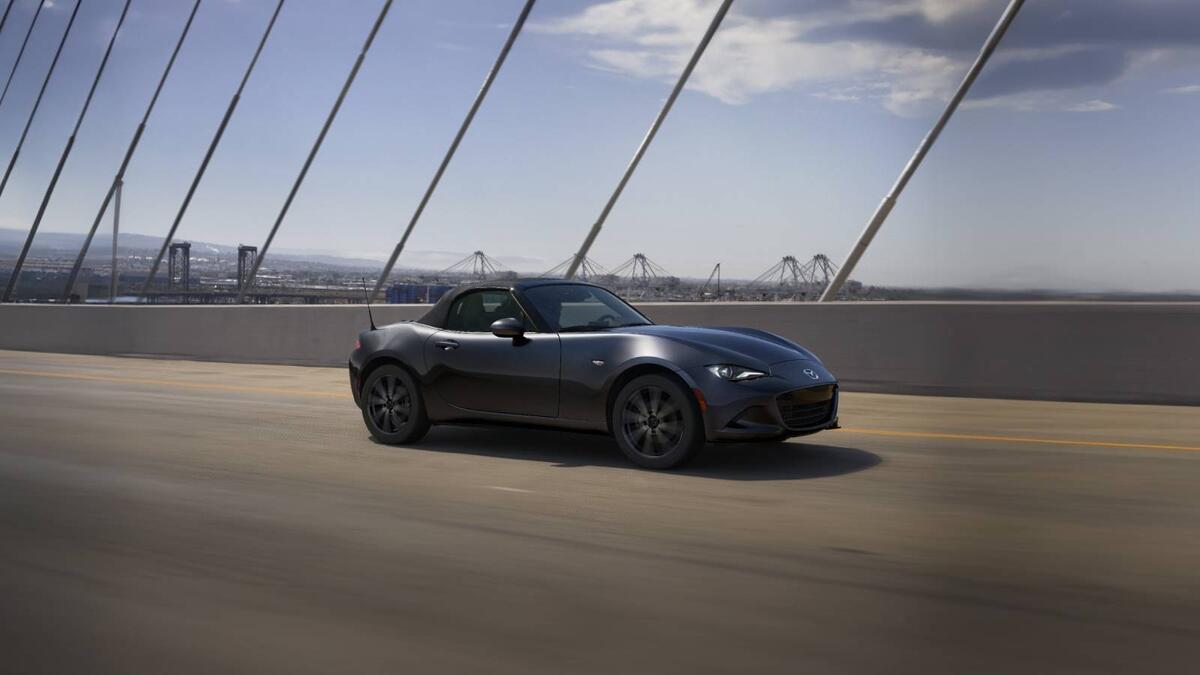
Mazda MX-5 / Miata
"...two and had some fun with that Picked up my first Miata out there M-edition 96"
The Miata is a small two-seat sports car made by Mazda. It’s designed to be light and easy to drive, so it feels fun on twisty roads. The “96” refers to the model year, which some owners like for its specific version of the car.
The Mazda MX-5 (often called the Miata) is a lightweight, rear-wheel-drive roadster built for fun, simple handling, and an engaging driving feel. It’s a common “starter” sports car and a popular platform for enthusiasts, which is why it comes up in stories about early car ownership and weekend driving. The mention of a “96” M-edition points to a specific mid-90s variant that people often seek out for its character and period-correct setup.

Mazda RX-7
"And I just I was scouring the internet for anything [743.3s] You know almost walked into an RX 7 was gonna go through the the shipping process"
The Mazda RX-7 is a sports car from Mazda that uses a rotary engine, not the usual piston engine. Because it’s an older enthusiast car, people often talk about keeping it maintained and fixing common wear items.
The Mazda RX-7 is a right-hand-drive-friendly sports car best known for its rotary engine (a Wankel design) rather than a traditional piston engine. In enthusiast circles, it’s a popular platform for maintenance, parts sourcing, and ownership because many examples are older and need attention to wear items.
seals
"And if these cars haven't been maintained or gone through you're going to do it [777.0s] Oh, you know so where maybe with this you were able to get it drive it [781.7s] Enjoy it and not have to worry about replacing seals or doing this or that."
In rotary-car ownership discussions, “seals” usually refers to the sealing components inside the engine that can wear with age and mileage. When seals aren’t in good shape, performance and reliability can suffer, so owners plan maintenance and repairs.

Mazda RX-8
"Oh and he does have the original 13 be in there [795.1s] I [796.2s] Believe so, yeah, even my shinkha that I had I had a RX 8 shinkha as well"
The Mazda RX-8 is also a rotary-engine Mazda—so it’s built around a different kind of engine than most cars. People who own them usually expect to do maintenance and repairs as the car gets older.
The Mazda RX-8 is another rotary-powered Mazda, also using a Wankel design that spins instead of reciprocating like a conventional engine. It’s often discussed alongside the RX-7 because both are rotary enthusiast cars, and their ownership typically involves planning for age-related maintenance.

Mitsubishi Evo
"I Believe it's Japanese for evolution, but since the Evo already existed, you know, it was a trademark thing So I see technically I already had an evolution. Wow, that's pretty cool"
The “Evo” is Mitsubishi’s performance model line. It’s basically the brand’s way of saying “evolution,” and the conversation here is about how the name came to be used.
The Mitsubishi Evo is the Evolution model line from Mitsubishi, known for rally-bred all-wheel-drive performance. In this segment, the host is discussing the name “Evo” and how it relates to the earlier “evolution” trademark idea.

Mazda Speed 3
"They only brought 500 to the States. Yeah, I actually traded it for an almost brand-new speed three That's how I fell into the Mazda or into the the speed three game"
The Mazda Speed 3 is the hotter, turbocharged performance version of the Mazda3. They’re saying they traded into one and that’s what pulled them into that “Speed 3” world.
The Mazda Speed 3 is a performance version of the Mazda3, typically known for its turbocharged engine and enthusiast-focused tuning. The segment describes trading into a “speed three,” which is a common enthusiast upgrade path from other modified cars.
boosted
"Ripped it's like like noise. Yeah, I mean it was boosted and stuff. So like it was a little above and beyond, but He did some really great great drifting around the drive was"
“Boosted” usually means the car has extra power added using a turbo or supercharger. That’s why the car would feel stronger than stock.
“Boosted” means the engine is making extra intake pressure using a forced-induction system like a turbocharger or supercharger. In this context, the RX-8 they drove was “boosted,” so it likely had more power and different driving feel than a stock car.
Driver Motor Sports
"So I came up on a place driver motor sports out in Rustberg, Virginia Really great to work with"
Driver Motor Sports is a car shop the host recommends. They specialize in right-hand-drive cars and help with importing them.
Driver Motor Sports is the named shop the host mentions as a place to source and work with right-hand-drive cars. The host says they’re located in Rustberg, Virginia and are helpful with the import process.
import process
"So for those out there looking for right-hand drive cars, they specialize in a lot of you know that and they take care of the import process"
The “import process” is the set of steps for bringing a car from another country. The shop is saying they help customers with the paperwork and logistics so it’s easier to get a right-hand-drive car.
The “import process” refers to the steps required to bring a vehicle from another country into the U.S., including paperwork, compliance requirements, and logistics. Here it’s mentioned in the context of a shop specializing in right-hand-drive cars and helping customers handle the import work.
tuning
"Like that adds up to this and what drivers driver motorsports is saying [1015.5s] You know found out that the [1019.2s] The original turbo [1021.9s] After they kind of did some tuning it just blew up caught fire"
Tuning is when someone adjusts the car’s settings—usually the computer—so it runs differently. It can make the car faster, but if it’s not set up right for the parts, it can also cause problems.
In car context, tuning means adjusting engine management and other settings to change how the car makes power and responds. It can involve software changes, fueling/ignition adjustments, and sometimes supporting hardware. The episode ties tuning to a failure event after the original turbo work.
spooling
"Yeah, but that's why it now has the Art Genari six and a half Evo TME [1034.9s] Upgraded turbo man, and it's it's fast spooling"
Spooling is how fast the turbo “kicks in” and starts making boost. If it spools quickly, the car feels more responsive when you step on the gas.
Spooling is how quickly a turbocharger builds boost pressure after you press the accelerator. Faster spool usually means less turbo lag and quicker acceleration. The host says the upgraded turbo is “fast spooling,” implying improved throttle response.
Brembos
"So if you noticed earlier the evil nine brambos they were painted They were painted"
Brembo makes performance brakes. Upgrading to Brembo-style brakes usually helps the car stop more strongly and handle repeated hard braking better.
Brembo is a performance brake brand known for high-grip, track-capable brake systems. When someone mentions “Brembos,” they usually mean upgraded brake calipers (and sometimes rotors) for stronger stopping and better heat handling.
HKS intercooler
"I've got a gigantic HKS intercooler Core sitting at home waiting on my pipe RHD Japan. Hurry up"
With a turbo, the air gets hot when it’s compressed. An intercooler cools that air so the engine can breathe better and run more safely under boost.
An intercooler cools the compressed air coming from the turbo before it enters the engine. The “HKS intercooler” refers to an aftermarket unit from HKS, which can improve charge-air temperatures, helping power and reducing the chance of knock under boost.
intercooler core
"I've got a gigantic HKS intercooler Core sitting at home waiting on my pipe RHD Japan. Hurry up"
The intercooler core is the part inside the intercooler that does the cooling. It’s basically the heat-exchanger that helps the turbo air come in cooler.
The intercooler core is the internal heat-exchanging “radiator” portion of the intercooler. It’s the part that actually transfers heat from the hot compressed air to the cooler airflow.
RHD Japan
"I've got a gigantic HKS intercooler Core sitting at home waiting on my pipe RHD Japan. Hurry up"
RHD Japan is a shop that sells parts for Japanese cars, especially right-hand-drive setups. Here, they’re being waited on for a specific part to finish the build.
RHD Japan is an aftermarket parts retailer/importer that specializes in right-hand-drive Japanese car parts. In this segment, it’s referenced as the source for the host’s intercooler piping.
HKS high suction kit
"But yeah, so under the hood. I've also added in an hks high suction kit [1245.1s] Um classic"
HKS is a company that makes aftermarket performance parts. A “high suction” kit is meant to help the engine breathe better by improving how air gets into it. The host is saying they installed this kit on their car.
HKS is an aftermarket performance brand, and an “intake”/“high suction” kit is typically aimed at improving airflow into the engine. On turbo cars especially, better intake flow can help the engine respond more crisply and support higher boost setups. In this context, the host is describing a specific HKS kit they added under the hood.
bushing
"I had a shop go through and change out every bushing on the subframe front to rear. It's all white line"
Bushings are little rubber parts that help connect suspension pieces. When they wear out, the car can feel loose or vague; replacing them can make the ride feel tighter and newer.
Bushings are rubber or polyurethane mounts that sit between suspension parts to reduce vibration and allow controlled movement. Replacing worn bushings on the subframe can noticeably tighten steering and make the car feel more responsive, because the suspension geometry stays more consistent.
subframe
"I had a shop go through and change out every bushing on the subframe front to rear. It's all white line"
A subframe is a strong metal framework that suspension parts bolt to. If the connections there are worn out, the wheels can feel less precise—fixing the bushings can make the car feel much more solid.
A subframe is a structural frame section that the suspension components attach to, helping locate the wheels and maintain alignment under load. When the subframe bushings are replaced, the suspension can hold its intended position better, which is why the driver may describe the car as feeling “brand new.”
white line
"It's all white line And I will say It feels like a brand new car. That's cool."
White Line makes aftermarket suspension parts, like bushings. Here, it sounds like they used White Line pieces when replacing the worn suspension connections.
White Line is an aftermarket brand known for suspension bushings and related handling parts. In this context, using White Line bushings suggests the shop replaced the worn rubber with performance-oriented components to restore or improve suspension feel.

Tesla Rs Model
"And Something for the viewers. This is the rs model So back in the day that would just be super basel..."
crank windows
"Uh, but you know, I got crank windows Um from the factory in the rs model"
Crank windows are the kind you roll up and down by hand. They’re usually simpler than power windows and can be lighter.
Crank windows are manual side windows operated with a hand crank instead of an electric motor. They’re often found on more stripped, performance-oriented trims because they can save weight and reduce complexity.
ABS
"Um, you know, they usually came without abs without power steering without ac. Yeah, it's a race car. I have those"
ABS is a safety system that helps you brake without the wheels locking up. That way, you can usually steer more effectively, especially on wet or icy roads.
ABS (anti-lock braking system) helps prevent wheel lockup during hard braking. It modulates brake pressure so the tires keep traction, which improves steering control on slippery surfaces.
power steering
"Um, you know, they usually came without abs without power steering without ac. Yeah, it's a race car. I have those"
Power steering uses a pump or electric assist to reduce the effort needed to turn the steering wheel. Without it, steering effort is higher—especially at low speeds—so stripped “race car” setups often remove it.
AC
"Um, you know, they usually came without abs without power steering without ac. Yeah, it's a race car. I have those"
AC is the car’s air conditioning that cools the cabin. Some race-focused cars skip it to save weight or keep things simpler.
AC (air conditioning) cools the cabin using a refrigerant system. Performance-minded builds sometimes delete or avoid it to reduce weight and complexity, even though it’s useful on hot days.
oem plus builds
"Make it an oem plus builds. Um, so A lot of the goodies on this vehicle are from, you know, Just about every generation"
“OEM plus” means upgrading the car in a way that still feels like it could’ve come from the factory. It’s not trying to make it look totally custom—more like tasteful improvements.
An “OEM plus” build aims to improve a car while keeping it feeling factory-correct—using upgrades that look and behave like they belong on the original design. It’s a middle ground between stock and full custom, often focusing on reliability, fitment, and period-appropriate parts.
blow off valve
"Those factory items like even as simple as the blow off valve held more pressure Um, you know looks cleaner into the bay. Yeah"
A blow-off valve is a turbo-related part that vents pressure when you lift off the gas. It helps the turbo system behave better and can create that distinctive “pssh” sound some people like.
A blow-off valve (BOV) releases pressurized air from the intake system when the throttle closes, preventing compressor surge. On turbo cars, it can affect throttle response and the sound/feel of shifts, and it’s often discussed in tuning circles.
mishi moto
"Got a partial sponsorship with mishi moto for a little while so I got hooked up with some radiator hoses"
This sounds like Mishimoto, a company that makes aftermarket cooling parts for cars. The host mentions getting radiator hoses through a sponsorship.
“mishi moto” appears to refer to Mishimoto, an aftermarket brand known for cooling-system parts like radiator hoses and intercooler components. The speaker says they had a partial sponsorship, implying they received or discounted parts for the build.
radiator hoses
"Got a partial sponsorship with mishi moto for a little while so I got hooked up with some radiator hoses"
Radiator hoses carry coolant through the engine and radiator. If they’re old or upgraded for performance, they can help the car stay cooler and avoid leaks.
Radiator hoses are the coolant hoses that route liquid between the radiator and engine cooling passages. Upgrading them is common in performance builds because higher heat loads and age-related cracking can cause leaks or reduced cooling performance.
Injector Dynamics 1050s
"[1584.9s] Yeah, so motor stock. Um, so it's got the injector dynamic 1050s [1590.4s] Um [1592.1s] fuel injectors, um, let's see the I already said the arginari"
Injector Dynamics 1050s are upgraded fuel injectors. They can spray more fuel so a turbo car can run properly when it’s making more power.
Injector Dynamics 1050s are high-flow fuel injectors designed to deliver more fuel than stock injectors. On turbo builds, bigger injectors help support higher boost and power while keeping the air-fuel mixture in a safe range.
R-Tech exhaust manifold
"[1602.1s] I've got the [1605.7s] Let's see. I've got an r-tech exhaust manifold. Those are nice. Yeah, mhe [1610.3s] I think it's the map dump pipe, uh, invidia dump pipe"
An R-Tech exhaust manifold is an upgraded part that helps get exhaust gases out of the engine more efficiently. On turbo cars, that can help the turbo work better.
An R-Tech exhaust manifold is an aftermarket exhaust manifold that routes exhaust gases from the engine to the turbo more efficiently than many stock setups. Better exhaust flow can improve turbo response and overall performance on a turbo build.
Invidia dump pipe
"[1610.3s] I think it's the map dump pipe, uh, invidia dump pipe [1616.5s] Um, I've got the hks high suction kit. It's got what do you have for tuning?"
An Invidia dump pipe is an exhaust upgrade for a turbo car. It helps exhaust flow more freely, which can improve performance.
An Invidia dump pipe is an aftermarket exhaust section that helps route exhaust gases from the turbo to the rest of the exhaust system. On turbo cars, dump pipes are often used to reduce restrictions and improve flow for better power and spool characteristics.
Haltech 1500 Elite
"[1623.1s] It's a haltech 1500 elite [1625.6s] with [1626.7s] Some touches. Oh, dude, that's right. You have chris inkley"
The Haltech 1500 Elite is a tuning computer for the engine. It helps control how the car runs so the turbo and fuel system can be calibrated for the upgrades.
A Haltech 1500 Elite is an aftermarket engine management ECU used to control fueling, ignition timing, and boost-related parameters. Enthusiasts use it to tune the car more precisely than many stock systems, especially with supporting mods like injectors and exhaust.
anti-light for the launch
"[1626.7s] Some touches. Oh, dude, that's right. You have chris inkley [1629.9s] It's got uh, it's got like uh, the anti-light for the launch, right? I remember it does [1634.9s] You shot the"
“Anti-light” here sounds like a launch feature that helps the turbo respond quickly when you start accelerating hard. It’s meant to reduce lag so the car feels punchier off the line.
“Anti-light” for the launch likely refers to a launch-control or anti-lag strategy that helps manage turbo behavior during hard acceleration. The goal is to keep boost response strong when you floor it, rather than waiting for the turbo to spool.
Hugest flame
"[1634.9s] You shot the [1636.5s] Hugest flame dude. It was like a hugest one. It was like 51 dude. It was insane [1642.3s] He almost caught like a bush on fire with it."
They’re talking about big flames coming out of the exhaust when the car is launched hard. It usually happens when the engine is running in a very aggressive mode, and it can be stressful on the exhaust over time.
“Hugest flame” is describing visible exhaust flames during aggressive throttle events, which are often associated with over-fueling or ignition strategies used for anti-lag/launch behavior. While it looks dramatic, it can be hard on exhaust components if it’s done repeatedly.

Ford Mustang
"Like whatever dude, they had They had them for mustangs. Yeah, that's crazy. Like it's crazy how This lik..."
The Mustang is a sports car made by Ford. It’s known for being a popular performance car with different versions over the years. People bring it up a lot because it’s widely recognized and there are many different Mustangs to choose from.
The Ford Mustang is a long-running American sports car/pony car known for its performance options and strong enthusiast following. In podcast talk, it often comes up because there are many trims and generations, and people may be referencing how common or recognizable Mustangs are in car culture. That’s likely why it’s mentioned alongside other performance cars in a “what’s crazy” style comparison.
aftermarket
"I don't know that was like a sought after thing in the aftermarket was like the evo body kit with the huge fog lights"
“Aftermarket” means parts made to replace or upgrade the factory parts. So instead of stock, you can buy add-ons from other companies.
“Aftermarket” refers to parts or accessories made by companies other than the original manufacturer. In this context, it means the Evo body kit and lighting were sold as upgrades beyond the factory configuration.
body kit
"I don't know that was like a sought after thing in the aftermarket was like the evo body kit with the huge fog lights"
A body kit is a set of add-on parts that change how a car looks. It can include things like bumpers and side pieces.
A body kit is a set of exterior panels—like bumpers, side skirts, and sometimes spoilers—designed to change a car’s look and sometimes its aerodynamics. The episode mentions an Evo body kit with prominent fog lights, which is a common aftermarket style.
spoilers
"Yeah, the five was the most popular one for that, dude. It's pretty pretty cool. Really. And then spoilers got bigger. Yeah, you know and"
A spoiler is an extra piece on the back of a car. It helps the car stay more stable at speed by changing airflow.
A spoiler is an aerodynamic add-on (often on the trunk or hatch) intended to change airflow and increase downforce. The transcript connects bigger spoilers with the evolution of the Evo’s aftermarket and rally-inspired styling.
Mitsubishi Lancer Evolution VI TME
"[1834.5s] Yeah, I've got uh stamped [1838.3s] Authenticated evo six tme wheels."
This is a special limited version of the Mitsubishi Lancer Evolution. Because only a small number were made, it’s the kind of car that collectors pay attention to.
The Mitsubishi Lancer Evolution VI TME is a special, limited-production Evo variant (the “TME” edition) that’s sought after because it’s tied to a specific homologation/limited-run story and tends to have unique spec details. The episode also references a very low worldwide production count, which is a big part of why these cars and their parts are collectible.
stamped
"[1834.5s] Yeah, I've got uh stamped [1838.3s] Authenticated evo six tme wheels."
In wheel talk, “stamped” usually refers to markings or identification impressed into the wheel (for example, part numbers or authenticity indicators). The speaker pairs it with “Authenticated,” implying the wheels are verified as belonging to a specific Evo variant.
Falcon
"They are wrapped in uh, the falcon as in a six sixties and they're super grippy"
“Falcon” is the brand of the tires. Tire brand and type affect how much grip the car has.
“Falcon” refers to a tire brand. The speaker says the wheels are wrapped in Falcon tires and emphasizes grip (“super grippy”), which matters because tire compound and model strongly affect traction and feel.
super grippy
"They are wrapped in uh, the falcon as in a six sixties and they're super grippy"
“Super grippy” means the tires stick to the road really well. That helps with acceleration, braking, and cornering.
“Super grippy” is enthusiast shorthand for high traction—tires that provide strong grip at the contact patch. It’s typically influenced by tire compound (rubber softness) and tread design.

Ford Falcon
"I don't want to throw They are wrapped in uh, the falcon as in a six sixties and they're super grippy I'm ..."
The Ford Falcon is a car model made by Ford, and the “six sixties” reference means an older 1960s version. It’s known for being a classic performance car. In this context, the speaker is saying it handles well and grips the road.
The Ford Falcon is a performance-focused car line, and the context here suggests a specific 1960s-era Falcon with a six-cylinder setup. The mention of it being “super grippy” points to how certain older Falcons can feel planted and responsive, especially when set up with the right tires and suspension. It’s discussed because classic Falcons can be surprisingly capable and fun, even by modern standards in the right configuration.
interwall
"I'm sure you guys have probably run them before they're just great tires and super strong interwall"
This sounds like it might mean the tire’s sidewall—the part of the tire next to the rim. That area affects how the tire holds up and how it’s identified.
“Interwall” appears to be a transcription error for “sidewall,” which is the tire’s outer wall between the tread and the rim. Sidewall construction and markings can matter for durability and for identifying the exact tire.
Cusco bracing
"Like cusco bracing's [1870.8s] Front bars it's got the rear strut bar"
Cusco makes aftermarket parts that stiffen the car’s body. That helps the suspension work the way it’s supposed to, especially when you drive hard.
Cusco is an aftermarket performance brand known for chassis-bracing parts. Bracing like this is meant to reduce flex in the body so suspension tuning feels more consistent.
rear strut bar
"[1870.8s] Front bars it's got the rear strut bar [1876.0s] um [1877.2s] You know, I know I'm forgetting somewhere in there."
A rear strut bar is a metal brace that ties parts of the suspension together. It helps the car feel tighter and more predictable when you turn.
A rear strut bar (often called a strut brace) connects suspension mounting points to reduce chassis flex. Less flex can improve steering feel and consistency because the suspension geometry stays closer to what the designer intended.
Blitz ZZ's 6k front and rear coils
"Um, but I've got the blitz zz's [1892.8s] 6k front and rear [1895.2s] coils [1896.7s] Which actually make the drivability"
Blitz ZZ's are suspension parts that change how stiff the car rides. “6k” is a stiffness setting—higher numbers usually mean a firmer ride and better control when driving aggressively.
Blitz ZZ's are aftermarket coil springs/shocks used in a coilover setup. The “6k” front and rear refers to spring rate (stiffness), which affects ride harshness and how well the car controls body motion on-road and on rough surfaces.
drivability
"[1895.2s] coils [1896.7s] Which actually make the drivability [1899.3s] Really great. That's cool on a"
Here, “drivability” means how pleasant and controllable the car feels day to day. It’s about whether the setup is fun without being miserable.
In suspension talk, “drivability” means how easy and predictable the car feels in everyday driving—ride comfort, steering response, and how smoothly it transitions over bumps. It’s often used to describe whether performance mods make the car pleasant to live with.
rally cross
"You know any discomfort driving this vehicle are there any plans to rally cross this thing? [1918.6s] I get that question all the time dude and that would be sick"
Rallycross is a racing style on a short course that can include both dirt and pavement. Cars need good grip and suspension that can handle uneven surfaces.
Rallycross is a motorsport where cars race on mixed surfaces (often dirt and tarmac) over short, closed circuits. It typically demands suspension travel, traction, and durability that differ from pure street or track driving.
dog box
"might just put a dog box in it [1948.8s] Yeah, and uh, you know good old sequential and"
A “dog box” is a racing-style manual transmission. It lets you shift quickly, but it can feel rougher than a normal street transmission.
A “dog box” is a close-ratio manual transmission using dog-style engagement for the gears. It’s designed for fast, repeated shifts under hard driving, but it’s usually harsher and less smooth than a typical street gearbox.
sequential
"Yeah, and uh, you know good old sequential and [1951.8s] Because it's not a daily right, you know for right 67 months out of the year"
“Sequential” means you shift through the gears in order. It’s often quicker and more consistent for racing than a traditional shift pattern.
A sequential gearbox shifts through gears in order (1st to 2nd to 3rd, etc.) rather than using an H-pattern. This can make shifts faster and more consistent, which is why sequential setups are common in motorsport.
wheel dollies
"It sits in my garage on wheel dollies [1960.8s] Yeah [1962.2s] No towel"
Wheel dollies are little rolling stands for the wheels. They help prevent the tires from sitting in one spot for months and make storage easier.
Wheel dollies are rolling platforms used to support a car’s wheels when it’s stored for long periods. They reduce tire flat-spotting and make it easier to move the car without driving it.
antique plate
"Main passed that new bill that your car in order to qualify as an antique now has to be 35 years Oh dang and mine is Just about to hit 30"
An antique plate is a special type of license plate for older cars. It usually has rules about how old the car has to be, and that age rule can change.
An antique plate is a special license plate category for older vehicles, usually with eligibility rules tied to the vehicle’s age. In this discussion, the key point is that the “antique” threshold was raised, which affects when a car qualifies for that plate and any related benefits.

Mitsubishi Lancer
"Um, you know little customization, you know put evo 4 on there because I'm absolutely tired of people coming up and being like Nice lancer."
The Mitsubishi Lancer is a popular Mitsubishi model. Here, it’s mentioned because people sometimes confuse the car being discussed with a Lancer.
The Mitsubishi Lancer is a long-running compact car, and it’s especially known in enthusiast circles for performance variants. In this segment, the hosts mention people misreading or misidentifying the car as a Lancer, which is why the speaker wants a clearer plate/customization.
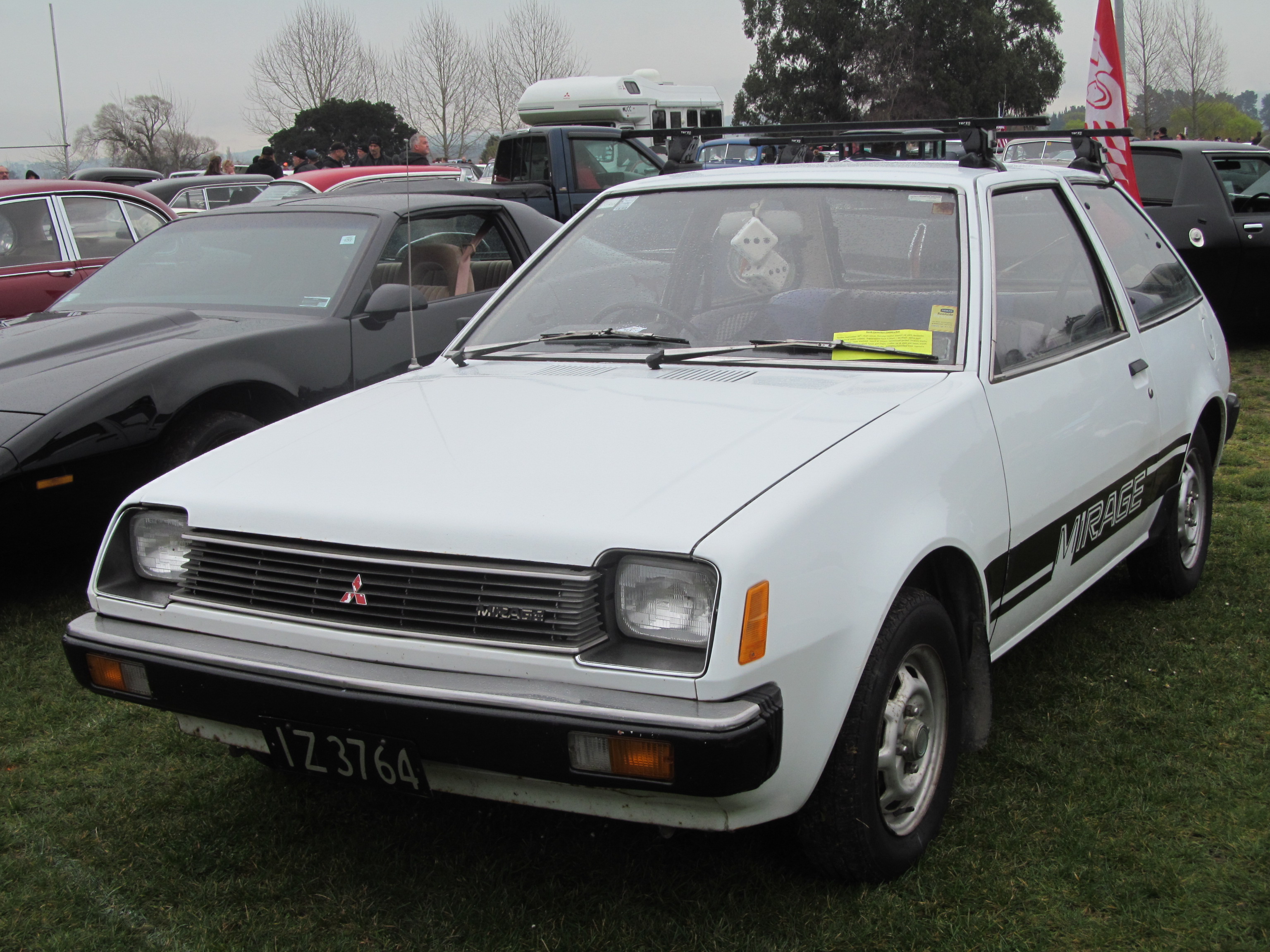
Mitsubishi Mirage
"Mara that was a mirage, right like the the lancers the mirage the galants, you know, those vr4s Yeah Yeah I mean, it's cool like because I remember the dudes with the mirages would do the evo thing like it was"
The Mitsubishi Mirage is a smaller Mitsubishi. In this chat, it comes up because someone is talking about how a Mirage can be modified or compared to Evo-style cars.
The Mitsubishi Mirage is a smaller, economy-focused Mitsubishi model, but in this conversation it’s being discussed in the context of performance comparisons. The hosts mention “mirage” and “evo thing,” implying people associate it with the Evo performance world even though it’s a different platform.

Mitsubishi Galant VR-4
"Mara that was a mirage, right like the the lancers the mirage the galants, you know, those vr4s Yeah Yeah"
The Mitsubishi Galant VR-4 is a faster, performance version of the Galant. In this segment it’s mentioned as another Mitsubishi people bring up when talking about Evo-like builds.
The Mitsubishi Galant VR-4 is a performance-oriented version of the Galant, known for its turbocharged, all-wheel-drive setup in enthusiast circles. Here it’s listed alongside Lancers and Mirages as part of a group of Mitsubishi models people swap or compare when talking about “Evo” style builds.
100k
"Outside of building. Yeah outside of when you hit 100k like like how about this? How about you know when you got this car, you probably created a vision"
“100k” means the car has about 100,000 miles. People often use that number as a point to plan what to do next with the car.
“100k” here refers to 100,000 miles on the odometer, which is a common milestone used by car owners to plan maintenance and future upgrades. The speaker ties it to a future plan “outside of building,” suggesting they’re waiting until the car reaches that mileage before doing the next step.
carbon fiber
"I've reached out to a few artists that work with carbon fiber [2284.0s] I would love to [2287.0s] recreate a wide like a wider body for this"
Carbon fiber is a super-light material used on performance parts. It can make the car lighter and is also popular because it looks “race-y.”
Carbon fiber is a lightweight composite material used in performance and show-car parts. Because it’s strong for its weight, it’s commonly used for body panels and interior components to reduce mass and add a motorsport aesthetic.
widebody
"Eventually want to get with [2276.3s] Like a bodyworks company [2279.5s] You know, I've reached out to a few artists that work with carbon fiber [2284.0s] I would love to [2287.0s] recreate a wide like a wider body for this"
A widebody means the car’s fenders are widened. That usually helps fit wider tires and also gives the car a more aggressive, “race” look.
A widebody is a bodywork modification that adds wider fenders/quarters to increase track width and make room for wider tires. It’s often done for looks, but it can also improve grip and stability by letting the car use more tire contact patch.
Evo 5/6 platform
"recreate a wide like a wider body for this that isn't [2291.0s] You know converting it to an evo 5 6 platform"
An “Evo 5/6 platform” is basically using the Evolution V/VI as the blueprint for how the car is built. People do it to copy the Evo’s setup and parts rather than keeping it stock.
“Evo 5/6 platform” refers to basing the car’s conversion around the Mitsubishi Lancer Evolution V/VI generation’s layout and parts. In practice, it usually means swapping in that generation’s suspension, drivetrain, and body components to match the Evo’s geometry and performance package.
sound deadening
"I'll completely strip the inside [2313.9s] There's already no sound deadening because that was part of the rs."
Sound deadening is the stuff that makes the cabin quieter. If you remove it, the car gets lighter and more “raw,” but it will be louder inside.
Sound deadening is material added to reduce cabin noise and vibration. Removing it saves weight and can make the car feel more raw, but it also increases road and mechanical noise inside the cabin.
downforce
"that's a hero on it, you know and just give it some crazy downforce and maybe you just start tracking it"
Downforce is the “squishing” effect from aero that presses the tires to the road. More downforce usually means better grip when you’re going fast.
Downforce is the aerodynamic force that pushes the car’s tires toward the ground. More downforce generally improves grip and stability at speed, which is why it’s a common goal for track-focused builds.
tracking it
"give it some crazy downforce and maybe you just start tracking it [2342.8s] That would be fun instead of rally just do something a little bit on the road"
“Tracking it” means taking the car to a race track for laps. It’s harder on the car than normal driving, so people often set the car up differently for it.
“Tracking it” means using the car on a closed circuit for repeated high-speed laps. It changes the priorities of the build—cooling, brakes, tires, and chassis stiffness—compared with normal street driving.
boot seal
"“...I already replaced the boot seal and I you know, you notice an immediate difference...”"
A boot seal is the rubber seal around the trunk area. If it’s worn out, water can leak in when you wash the car. Replacing it can stop leaks and reduce wind noise.
A boot seal is the weatherstrip around the trunk/boot opening that prevents water and wind from entering the cargo area. If it’s failing, washing the car can lead to water leaking into places it shouldn’t, and you may also notice more wind noise. Here, the host reports an immediate improvement after replacing it.
Request an Explanation
Heard something you'd like explained? We'll add it to this episode.
Sign in to request explanations for terms you heard.
Want to learn more?
Browse our glossary for plain-English explanations of automotive terms, jargon, and concepts.
Help improve this episode
See something that's not quite right? Our annotations are AI-generated and can sometimes miss the mark. Click the flag icon on any annotation to suggest a correction.