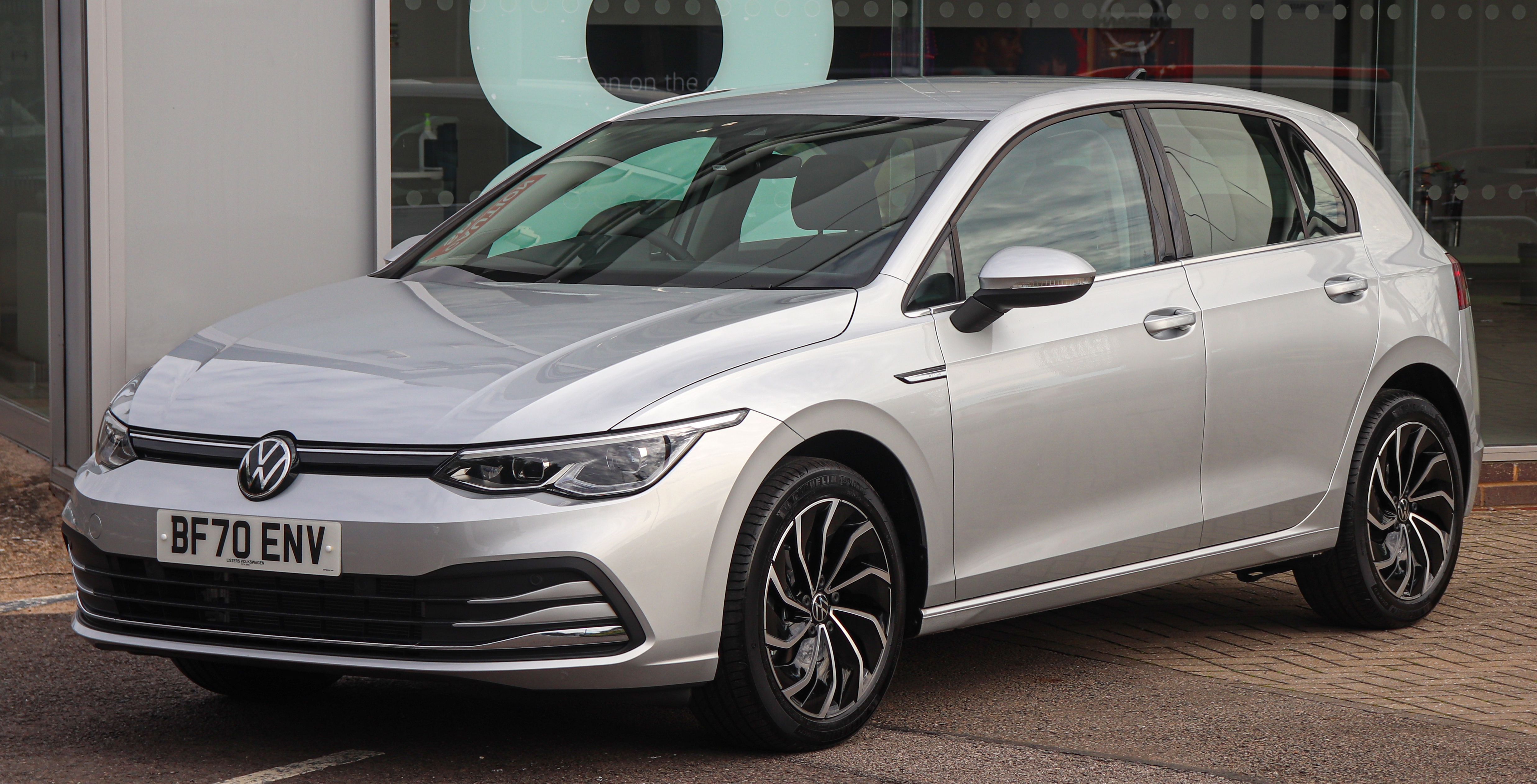
The Volkswagen Golf is a small car that many people like to drive because it's easy to handle and good on gas. It's been around for a long time and is known for being reliable and practical, which is why it's often talked about.
Car
Porsche 962
The Porsche 962 is a famous race car that competed in endurance races during the 1980s. It was very successful and is recognized for its speed and engineering.
Willow Springs is a well-known racetrack in California where many drivers go to test their cars and compete in races. It's famous for its long history and different types of tracks.
Interscope is a company that makes music and also has a racing team that competes in car races. They are known for being involved in big events like Le Mans.
The Porsche 935 is a special version of the 911 made for racing. It has a lot of changes to make it faster and more aerodynamic, which helped it win many races.
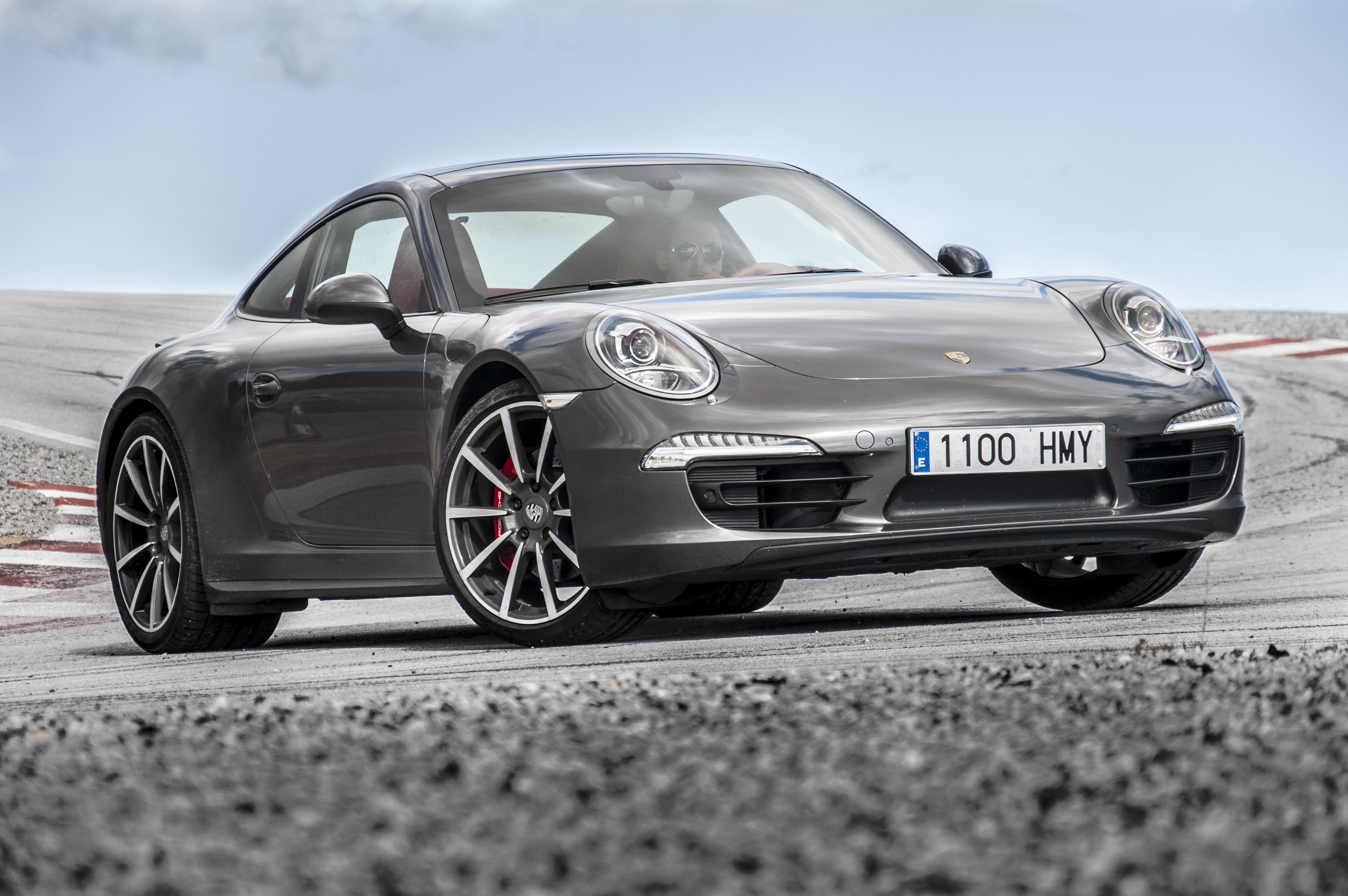
The Porsche 911 is a fancy sports car that a lot of people admire because it's fast and looks really cool. It's been around for many years and is famous for being great on the racetrack, which is why it comes up in conversations about racing.
Turbo charging helps engines produce more power by pushing extra air into them. In the early days, this technology wasn't very reliable, which caused problems for some cars.
Chicanes are turns on a racetrack that make drivers slow down. They help keep the race safe and interesting by forcing cars to navigate through tight corners.
Car
Porsche 956
The Porsche 956 is a famous race car from the 1980s that won many races. It's known for being very fast and having a special design that helps it cut through the air better.
Car
Porsche
Porsche is a famous car brand that makes sports cars. They are known for being fast and performing well in races.
A rental car is a car you can borrow for a short time, usually from a company that rents cars. People often use them when traveling or if they need a car for just a few days.
Car
Porsche 906
The Porsche 906 is a racing car made by Porsche in 1970. It's known for being very light and fast, making it popular in races.
RS means 'racing sport' in German and is used for special high-performance versions of the Porsche 911 that are designed for better speed and handling.
Finishing fourth means the driver ended the race in the fourth position, which is just behind the top three racers. It shows how well they did compared to others.
A road course is a type of racetrack that has many turns and twists, unlike a simple circle track. It tests how well drivers can handle their cars in different situations.
The half shaft is a part that helps connect the engine's power to the wheels, allowing the car to drive. If it breaks, the car won't be able to move properly.
Car
Porsche 934
The Porsche 934 is a special racing car based on the 911 model. It was designed to compete in races and has features that make it faster and more powerful than regular cars.
Turbo lag is the wait you feel when you press the gas pedal and the car doesn't respond immediately. It happens because the turbocharger takes a moment to start working and give the car more power.
A synchromesh transmission helps you change gears smoothly in a car. It makes it easier to shift without grinding the gears, which is important for regular driving.
A dog box is a special kind of transmission used in race cars that lets you change gears very quickly. However, it’s harder to use than regular transmissions because you have to be very precise.
Las Vegas is a city in Nevada known for its casinos and shows, but it also has a racetrack where car races take place. It's a popular spot for racing events.
A mid-engine car has its engine located in the middle of the vehicle, which helps with balance and handling while driving. It's a popular design for high-performance cars.
A stick shift is a type of car transmission that you control with a lever. You have to change gears yourself, which can make driving more fun for some people.
Naturally aspirated means the engine gets air from the environment without any extra help from turbochargers or superchargers. This can make the car feel different when you drive it.
The Porsche 917 is a very famous race car that was built to go really fast and win races. It has a unique shape and a powerful engine, and it's often talked about because of its success in big racing events.
LIVE
Welcome to Porsche Pattern with Bracken Helms, the show where we hear Bracken and his distinguished
guests from the Porsche community patter on about Porsches and all things automotive.
Porsche Pattern is sponsored by Circuit 6-4.
Circuit 6-4 creates authentic automotive apparel made for life-minded automotive enthusiasts.
The links for Circuit 6-4 are in the shown notes.
Okay, let's get to it.
John Morton, part three.
All right, and this one we talk about, he was the last one to win at Riverside,
which is, you know, a track he holds dear because he's driven that track a lot.
And also where he got his start with the Carroll Shelby driving school.
Don't come after me.
I know a lot of you people are going to be mad.
Oh, I golf.
Okay.
My dad's big into golf.
My grandpa was into big golf.
My great-uncle was into golf.
My brother golfs.
I think my sister golfs.
A lot of people golf, but yeah, golf courses do take up like a lot of space.
If you listen to the Malcolm Gladwell podcast, he does a whole bit on golf courses.
So if you're not into that one sport, you can see why there's a little bit of bitterness.
Anyway, moving on, then I asked about his time at Le Mans.
We talk about Porsche race cars he's driven.
And towards the end of that, it gets a little complicated.
When we talk about the 993 and the 996, he gets confused at first.
So all the good things he's saying are about the 996.
He says it's a 993, but you'll see that kind of plays out.
But he likes the 996 car.
He didn't like the 993 car.
When he talks about the Starlight or Star Air, Star Air was the 993 car.
When he talks about Kevin Buckler, the racers group, the G&W Motorsports car, that's all
the 996.
So he likes the 996 better.
But what I found most interesting is at the very end, he kind of says it really
just doesn't matter about the car.
When I'm giving you all these facts, I'm basically talking about the race team.
Because it could be the greatest car in the world, but if I'm on a team that shitty and
can't put it together properly, it's not like I really like this car more than that car.
Which was like an aha moment for me because I'm just like, well, why didn't you like
this car?
I don't know.
One more thing.
So the iRoc car, I looked it up.
The only two that are pinkish is the, it might be the Unser car, but it's probably
the Gordon Johncock car.
All right, anyway, so here's John Morton, part three.
So you got the last win at Riverside.
Yes.
And the Jaguar with Hurley.
Okay, let me see if I remember this wrong or I read it and I was confused.
So you won the race like two years earlier and you thought that was going to be the
last one.
So you were excited like, oh, this is, I won the last race.
Then they had another one and you didn't win.
Then they had another final.
This is the final final and then you recaptured it again.
The first win was with Pete Halsmer in a 9-62 on the BF Goodrich team, which was Jim Busby's
team.
We ran, you know, two seasons with him.
Why were they, they just, it just took them three years to like shut it down or they
kept saying it was.
No, I think I don't know exactly what transpired, you know, financially, but it was doomed
to be turned into a better stupid shopping center.
It's what happens to race tracks.
Right.
Why doesn't it happen to golf courses?
I agree.
Yeah.
And there's plenty of room on a racetrack that's already there.
Golf courses are just a waste of space.
They are.
I'm scared now that Willow Springs wanted track that I first raced on or one of
the first tracks I raced on is now being run by an entity that is going to turn it into
something better than it was, but usually they get better.
And then they turn it into houses.
They go where the money is.
It's the corruption of.
I mean, I just barely saw new pictures of Willow Springs.
They have the track all painted now and it's got like.
Yeah.
And I hope, I wish him the best luck with that because I love that track and I've
got a tremendous amount of history with that track and almost every car I've raced
it had some connection with Willow Springs.
I hope it succeeds.
But when I first started running there testing back in the seventies, it cost 15 bucks to
rent a track to test your car.
So what did you think about Le Mans when you first went to Le Mans?
I mean, that probably was pretty exciting.
It was very exciting.
I lived in with Sylvia in a one bedroom apartment in El Segundo and we're trying to race and
I got a call from Ted Field.
You know who he is.
Yeah.
He owns Interscope.
Right.
Which was a race team and a record company and, you know, and I got a call one day
from him and he said, would you be interested in racing on my team, the Interscope team
at Le Mans?
And I acted like I wasn't shocked.
He said, I can't pay much.
I can only pay you $2,000.
I'd never made $2,000 in my life racing.
And I said, yeah.
He said, I'll pay your expenses and $2,000.
I said, yeah, I can do that.
And so I did and I teamed with Milt Mentor and him.
That's the first time I raced there was 79 and the car was a early 9-11 turbo race car,
935.
Right.
You didn't really love the car because it was kind of the early ones were kind of.
They were hand grenade engines with the, you know, they'd torch the cylinders, put
the engine out of commission.
They, you know, turbo charging hadn't been perfected.
And we lost an engine about, I don't know, just before it started to rain
in the middle of the night.
So I mean, you heard about Le Mans forever when you finally there, like it was to play a game
when I was a kid called Le Mans, I was a board game and you rolled the dice and moved your
car on the board.
Yeah.
I did that when I was in, you know, grammar school.
And this is like you raced before the Chicanes.
I know if the 956 we didn't have the Chicanes and with the Ferraris and the Interscope
car, there were no Chicanes.
So before that, I mean, that was a long runway.
I mean, you were just, some people were a little bit intimidated, especially if it was
your first time.
Some people used it as a time to take a little break.
No, the first, it was scary because it's basically a two lane road.
Yeah, it was scary at first, but you get used to it.
You have a feeling that this is the danger, but say, well, I wanted to do this.
I'm doing it kind of an attitude.
Eventually it just, that's what you, you know, that's what you did if you're raced there.
And then, you know, I think it became almost as dangerous with the Chicanes because you
got two chance, two extra chances to crash.
And the speeds were still high.
There's still over 200 in a Porsche or, you know, in a lot of cars.
Yeah, it seems like everybody I interviewer has some story about 79 Le Mans.
I feel like everybody I come in contact.
Well, I mean, a lot of them are like all on the same team.
Like Jerry Woods, one of my first real interviews was Bob Garrett's.
And then I went up to his house and I knew him really well after a while.
But it's obvious she took him from the track after all the women left.
And leaving her out there timing night practice.
They had to take her to a some motel and she slept on a cot or where they had all
of the beds in the storage.
And that was, was it Garrison that did that?
Yeah, I slept in the Porsche room.
Yeah. And she was working for what's Judy Stropis, you know, timing.
She went as many times as I went and not always the same race, the same year.
Oh, OK. But she did a lot of them, too, as a timer.
Yeah. The year that we ran with the Interscope car, 79, Newman and
Barber and Stomlin finished second.
Yeah. After the race, Milton and I, Milt Mentor, were just, you know,
not celebrating because we broke in the middle of the night.
But we were with the Barber team and we were in a rental car inside the track,
not on the racetrack, but inside the spectator area.
And I don't know if Milt was driving and Newman jumps in the car, pushes him
aside and took over the car.
And he's saying, run over those God damn, you know, paparazzi.
He couldn't go anywhere without being swarmed.
Yeah. Actually almost trying to run over some of them.
Yeah. I mean, I've heard a lot of stories about that.
Some like, like Jerry's just like they were just in our way.
Like we would have like spray cans.
We were spray painting their like cameras so they would stay away.
Like and then some people like Dick Barber, like, oh, it was great
because it brought money to him and it brought like audience to him.
So he loves it.
But it's just like it was a love hate with Paul Newman.
Like he was a great guy, but it brought a lot of like,
because I guess in France, at least at the time, there was no backstage pass.
You could just roam wherever.
And so they, even though they'd set up the barriers, they just,
the cameraman and the paparazzi would just like knock them down
and they couldn't even get into their pits a lot of times.
Yeah. Yeah.
Especially when the numeral UNO car started like having problems
and it's just like the crowds are going crazy and oh, God, there's a chance they could win.
Yeah, there was a chance.
In fact, the reason they didn't win is pretty incredible.
But the Whittingtons did probably know that story.
Yeah, I've heard it from different angles.
The Whittington and Klaus Ludwig, they broke and they did a makeshift repair.
You know, well, a belt was out on the track and was able to get back to the pits.
Out of the three drivers, only one of them was mechanically inclined enough
to pull that off and he happened to be in the car when it happened.
Yeah. Then that's something I didn't know.
But I know it was one of the Whittingtons that did it.
Yeah, because Jerry Woods went and worked for Kramer like a year or two after that.
And they told him. Yeah.
So I was going to ask you about some of the porches you raced
and your thoughts on them.
So you raced a 906 in 1970.
That was Vashat Pollock's car.
Yeah, yeah, yeah.
And it was a it was a roadster.
They had made us a different body for it.
OK. No, it was an open car.
And it was basically a hopped up 911 engine.
And yeah, I drove at Riverside and at Ontario and Vashat's 906.
The mechanics were the guys that became Andyle.
Oh, OK. What did you think about the 906?
Or the car he raced with that was turned into a whatever chopped off.
Vashat had a lot of nice cars.
I drove for him several times, but, you know, he was. Oh, yeah.
He modified the car or had it modified.
So it wasn't a pure 906.
I didn't like the 906 because a good driver could always beat me
in my lotus Porsche because they had more power.
They were faster.
But the 906, I thought they were cool cars.
And I like them, I still do.
I drove one that used to be the best one in the West Coast that Scooter Patrick drove.
And I was surprised.
I drove it out at Willow, it was owned by Seinfeld.
He's since sold it.
But my head hit the roof all the time.
I mean, I could hardly drive it and I'm not tall, but I'm long wasted, I guess.
But yeah, I liked him.
And then you raced in 1974, you raced.
Uh, he just said a 9-11.
So I guess it was like an RS, RSR, I mean.
Seventy four.
You said you raced it in Ontario and mid Ohio.
Oh, that was one of the Iraq cars.
Oh, that's cool.
Well, they sold them.
Yeah.
And this one was bought by a guy named Bob Bergstrom,
who was a good driver.
He had a sporting goods store, a ski store.
And he had me drive those two races.
I can't remember whose car it was in the.
It was the kind of rose colored, pinkish, I think car.
And then it was painted white, put different shocks and did, you know,
upgraded a little bit and it had a thing that said head on it.
It was head skis because he was a sold skis.
But during the Iraq series, it was the pink car.
Yeah, I can't remember whose it was.
Okay.
What'd you think about that?
That's pretty cool.
I liked it.
I hadn't been racing a Porsche as much, but the thing that was discouraging about it,
it was at Ontario on the road course.
We finished fourth, I think Peter Greg won the race easily.
One.
I mean, he was so much faster than any of the other Porsches.
It was like, how did he do that?
One of those deals.
He had to have an edge because he was seconds faster than any of the other Porsches.
And he broke the car broke.
They interviewed him afterwards.
He won.
But an answer said, what did you think when the half shaft broke or whatever failed?
And he said, I thought, oh, shit.
And I thought, did he just say shit on the loud speaker at Ontario Motor Speedway?
And he did.
I didn't expect he had cheated, but it seemed like he was so fast that he did cheat.
He was my teammate on the Dotsons three times on the five tens.
And I was faster, not in a Porsche probably, but in.
Yeah, I knew that you'd had some ties with him.
Well, his widow was sitting in this couch last year with us,
because we're still friends, but I almost never see her.
I think she lives in, can't remember where she lives now.
She married Rex, a mechanic on a team.
She drove for Roush's team and he tragically died and that is doing a household thing.
So she's had two rough marriages because I think she was married to Peter
for seven or eight days before he committed suicide.
You know, all this stuff, all this Porsche stuff.
Yeah, I know a decent amount about Porsche stuff.
Um, in 1976, you drove the 934 with Fulmer.
Right.
So what'd you think about the 934?
It understood too much.
I didn't like it much.
It was, you know, it was a more of a street 935.
It was a much milder car than the 935 and I didn't care for the handling much.
But it, you know, it was a brand new car.
So it's the way it came.
1980, you also drove a 935 at Sebring and Riverside.
Was that 935 any better?
Or was that still the same?
That was early in the, yeah, it was better than, you mean, than the 934?
No, then you, then the 935 and 79.
The Interscope car was probably very similar because that was an
Andyle car, a guy named Howard Meister owned it, but it was the car that
Andyle was using to develop, you know, the turbocharging, the fuel injection
and all that.
The car still had a lot of lag, a throttle lag, I recall.
Turbo lag, yeah.
Yeah, turbo lag.
In 1985, you were in the 962.
What did you feel about the 962?
Well, I thought they were great cars.
They were limited, not that I had a feeling about it other than a
knowledge because it was a wide engine.
The ground effects had started to become more prevalent and more important.
It was a great race car with a huge, very long history of success, but it was
limited by the engine configuration because the ground effect was limited by
the width of the engine was still a winning car and won a lot of races.
It was a really nice car to drive.
It was weird as a race car because it was synchromesh transmission.
That was unusual in a pure race car like that.
A race car has a dog box.
Okay.
It's like a motorcycle.
When they're not synchromesh, they're a little easier to shift in a way, but
a little more demanding to do it right.
You know, the synchromesh kind of hides your incompetence and a dog
box tends not to.
They call them crash boxes and dog boxes, but all race cars were that way,
except the Porsches were, when I say race cars, I mean pure race cars,
not modified street cars like the 911.
But yeah, they were dog boxes and the, uh, all the other cars in the
Porsche was a synchro, you know, it's just like a regular transmission.
And you didn't like that.
No, I like it fine.
No, I didn't have any problem with it, but it was an unusual, it
was unusual for a race car in that era.
Okay.
So you didn't get into it.
Other than you tend to not to be able to shift as fast.
So you didn't get into another Porsche until 97.
You raced in Sears Point and in Las Vegas.
And then you raced, you know, different Porsches from 98 to 2002.
That was a rare engine, 911.
Yeah.
I mean, an engine, a mid-engine, both, you know, it wasn't a good car.
It was with Gurney's son, one of Gurney's sons.
Wait, what was a mid-engine car?
The one I raced at Sears Point in what year?
It says you raced at Sears Point in 1997 and it just said a 911 at
Las Vegas and Sears Point 97.
Just two races.
That was, uh, owned by a nice guy that I think got taken advantage of.
It was a mid-engine 911 and it wasn't, wasn't very good.
They like moved the engine up.
It was, the engine was in front of the transmission.
Yeah.
That's interesting.
It was a, it wasn't a factory operation.
Yeah.
But I drove with Danny Gurney, which was on the Dan's sons.
Okay.
Yeah.
I think it did say the other co-driver was Gurney and I'm like, it
can't be Dan, it might be one of his sons or something.
One of his four sons.
And then 98, you drove the 993 GT2.
What did you think about that car?
I liked it.
It had a regular, you know, it had a stick shift, like a
conventional stick shift.
And then later they had the thing where you touch it and it, you
know, Servo puts it in neutral for a split second and allows it to shift.
I liked it a lot.
If I had a street car, I think I'd like one of those.
Okay.
So, so the early on you, it was the 993, then it went to the 996, the
one with the different headlights.
Did you like the 993 better than 996?
I liked the 993, the 996, I think was that was the team was called Star Air.
98, you drove a 993 and then after that, the GT2, then after that, it
was for a couple of years, you raced the 996 GTR or GT3R, which was the same
thing they just added the S was the 996 GT3 RS.
I don't know about all the nomenclature, but it was a team called G&W
Erasing that ran the car for a friend, a guy who became a friend.
Michael Schrom, he later drove for, had the team, the wine company, Kevin Buckler.
I drove for him a couple of times and GT3R, I think that's what they called it.
Yeah.
GT3 with it, with a conventional shift before they went to the paddle shift or
the touch shift, I've driven those cars.
I drove one car for, I guess it was Seinfeld's car.
I tested, I drove it on a, at Will's Springs, not in a race, the kind
where when you touch the handle, you can shift it without a clutch.
That was just one period that where they were developing the transmission.
Now it's, I don't even know how they shift those, the mechanisms like anymore.
So did you have a preference for the 993 or 996?
The 993 is the one I drove in first, right?
Yeah.
The last of the air cooled and not turbocharged.
GT2, I think is turbocharged.
I didn't like that car very much.
And I don't think that they ever got it right.
You know, the team that was, you know, doing shocks and springs and all.
Yeah.
Bar, and so that one I didn't like as well in the company that was
Starr air, that was the air cooled ones in 1998.
So that was probably the 993.
That was a night that was called a GT2 and M.
So that was the GT2 class.
It was turbocharged.
It was.
And you didn't like that one.
I didn't like it.
It didn't like it as much.
So the 98 car was the 993 GT2 with CJ Motorsports.
I didn't like the GT2.
So that was the first one.
What was the other one?
Well, that was normally aspirated.
The normally aspirated one was 2002 2002.
And that one was with that one was with G&W Motorsports and the racers group.
Right.
And that was a GT3.
Right.
Normally aspirated.
Right.
So you put one I said I didn't like was, was a GT2 car.
Okay.
Sue liked the later model, the 996, because it was naturally aspirated.
A lot of the stuff, I mean, to ask a driver what he liked, it's, is a little bit
like saying what would you have liked it if it was on a perfect team that got
the most out of a car, if you're on a different team that is not getting,
you know, you tend to say I didn't like that car as well.
But what you're really maybe saying is I didn't like the team as well
because they didn't do as good a job of developing the car.
That makes sense.
You also drove a 917, not competitively, but you've driven a 917 and a 917 30.
What did you think about those cars?
In the last few years, I've driven several of Seinfeld's cars.
One of my best friends, the guy I roofed the house with.
Okay.
In 1975, he's probably the foremost Porsche restorer in the country now.
What's his name?
Joe Cavallieri.
He restored the first Porsche race car was actually a purpose built race car.
Race, race in the Mexican road race in 1952 or 54, I can't, it's called 5501.
Okay.
He restored that and he restored 5503, which was the first one to ever have a
four cam engine in it.
He restored 5504.
He restored the 917 Steve McQueen car.
He's doing a 910 now.
He, he's in the finishing stages of a, a 907.
You know all these numbers, right?
Yeah.
Uh, 9083.
Okay.
I drove the 917 K and I've driven the one that's more bulbous looking round or
looking, I forget the name of that one, but a Miles Collier owns it now.
And I've driven two 908 threes and two or three 908 twos, several 917s.
I've driven a 917 10 and a 917 30.
An RSK, RS 60, eight cylinder RS 60, which is very rare.
One of the four, no, one engine.
So which of these did you like and which ones were you not in love with?
You know, the, um, this is the aura of driving a 917 or a 9083.
I don't know.
They're just, it just is cool because of the history you're driving.
It doesn't matter how, because you're not racing it in anger.
The best handling one I've driven, I think, uh, was a 9083 really nice
handling car, the downside on a lot of those Porsches to me is the gear
shift mechanism, the shift linkage was not as positive.
It should have been the 9083 would be my favorite Porsche I've driven.
Thanks for joining us for today's episode.
If you enjoyed the show, please subscribe, comment, like and share with
your friends.
Feel free to send questions or suggestions to the email in the
description of the show.
Special thanks to our sponsor, Circuit Six Four.
Goodbye for now.
We hope we can get together again for our next episode.
Now get out there and enjoy the cars and the people.
About this episode
John Morton shares his experiences from his racing career, including his memorable win at Riverside and his time at Le Mans. He discusses the nuances of various Porsche models, expressing a preference for the 996 over the 993, despite some initial confusion about the two. Morton reflects on the importance of the race team over the car itself, revealing that a great car can falter without a strong team. The conversation also touches on the challenges of racing, the evolution of Porsche vehicles, and memorable moments from his racing past.
John Morton is a race car driver. He raced with the Shelby, BRE Datsun, Lola, Porsche, Jaguar and Nissan. Then started vintage racing after 2002.
-1971 & 1972 Trans Am Championship in Datsun 510 -1979 class win at 24 Hours of Daytona in Ferrari 365 GTB/4 -1984 class win at Le Mans in a Lola. -1993 & 1995 class win at 12 Hours of Sebring in Nissan 300ZX -1994 winner of 12 Hours of Sebring and class win at Le Mans.
In this episode we talk about: -Winning the last race held at Riverside. -Le Mans. -Porsche race cars he has driven.