USMCA is a trade agreement between the U.S., Canada, and Mexico. If it’s unclear whether it will be renewed, car companies may hesitate to make big long-term plans because rules and costs could change.
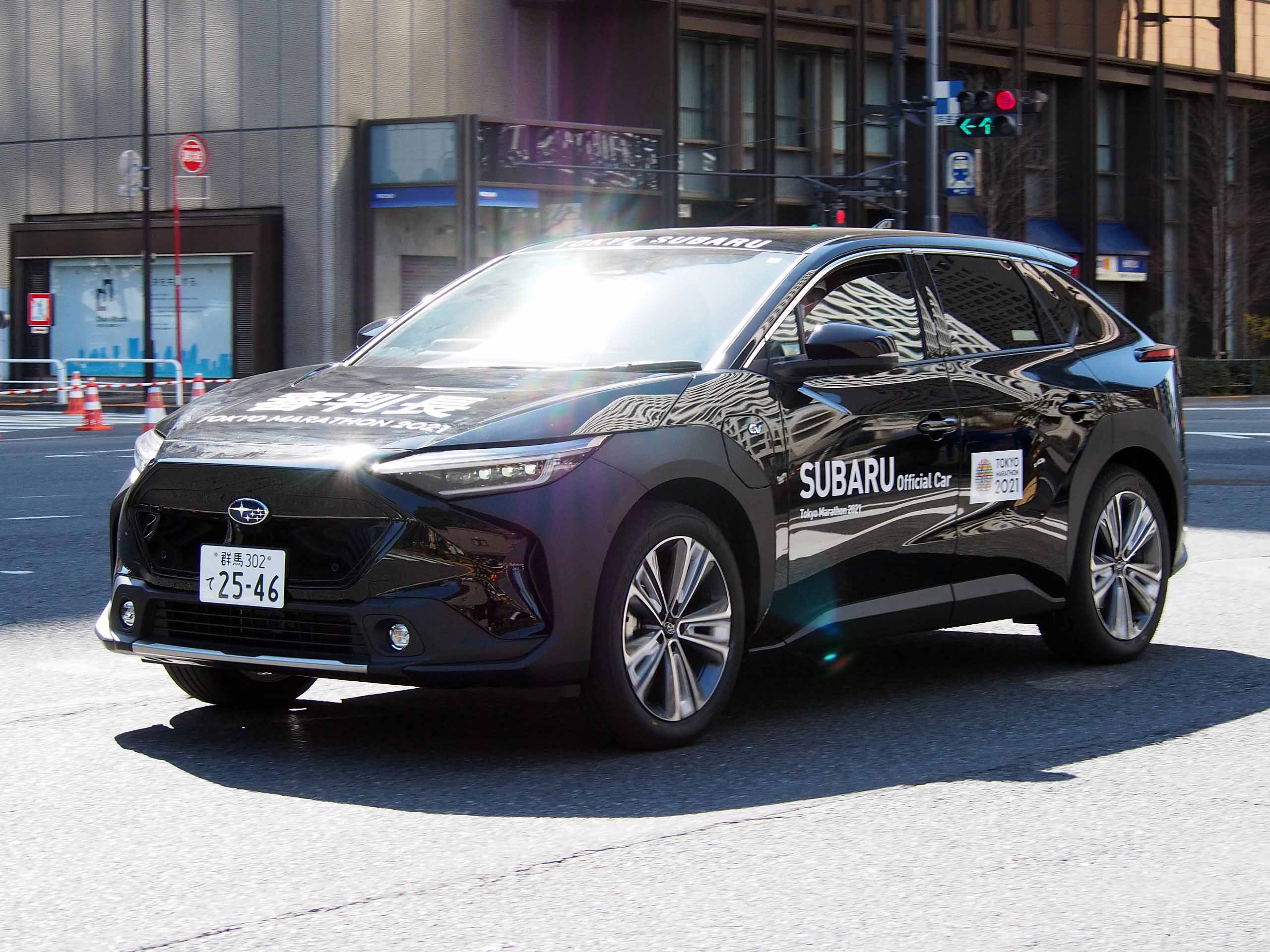
The Subaru Solterra is Subaru’s electric SUV. Here, Subaru is lowering the price so the car can qualify for Canada’s government EV rebate, which can reduce what buyers pay.
An EV rebate is money back (or a discount) from the government when you buy an electric car. The car has to meet certain rules to qualify, so manufacturers sometimes adjust pricing to make sure it does.
“Trim mix” just means which versions of a car people are buying—like the basic model versus the fully loaded one. If the trim mix isn’t getting worse, it suggests buyers are still choosing more expensive, better-equipped versions.
“Frame-based” means the car is built on a separate strong frame, like many trucks and rugged SUVs. That construction can make the vehicle feel different and often attracts a different kind of buyer than regular passenger cars.
A “compact SUV” is a mid-sized small SUV—bigger than the smallest SUVs, but not as big as the larger ones. Car shoppers often compare within this size class, so sales and pricing trends can be very different here than in other SUV sizes.
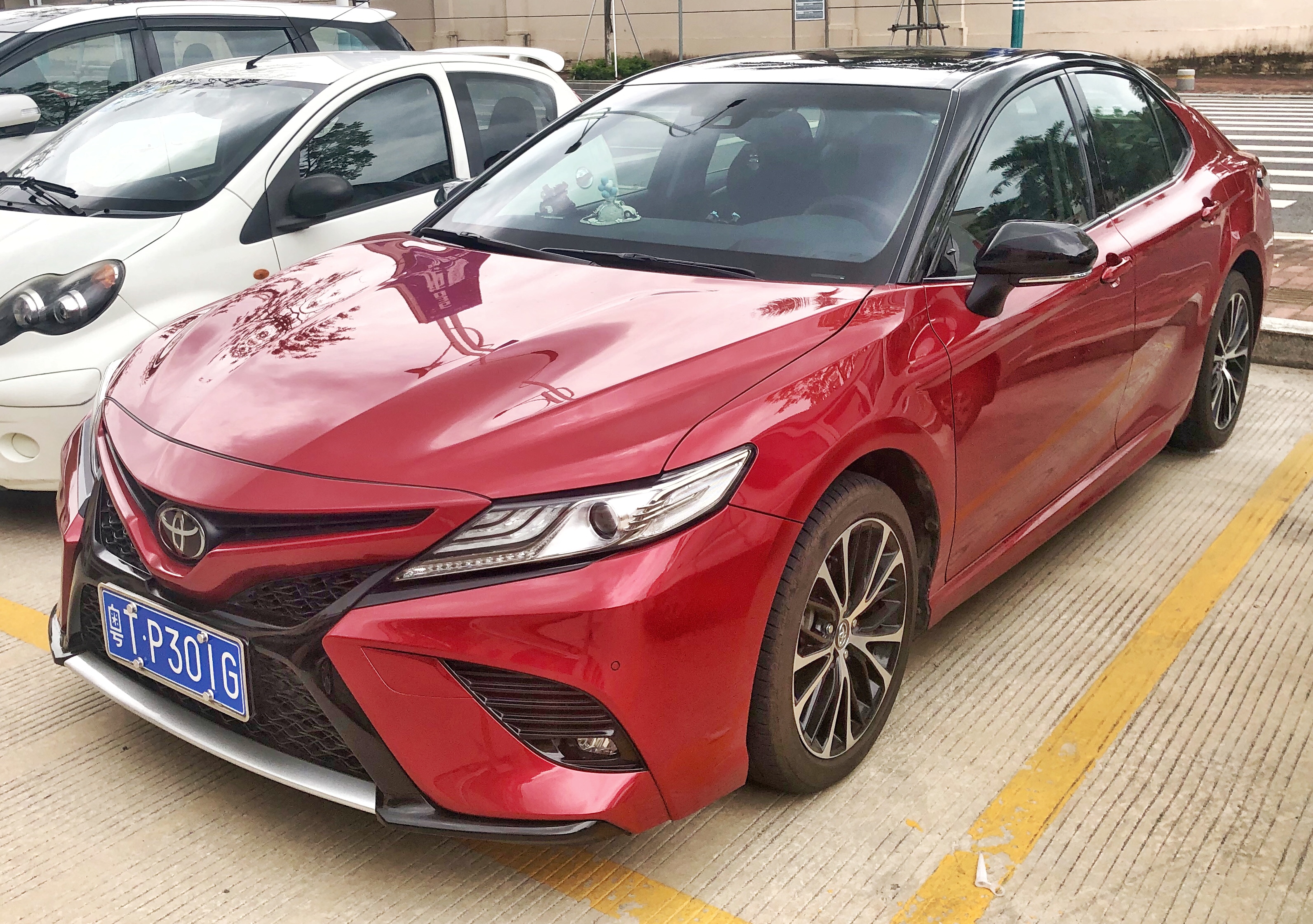
The Toyota Prius is a hybrid car—meaning it uses both a gasoline engine and an electric motor. Here it’s mentioned as one of the cars in the mid-size passenger-car group that saw sales growth.
In this context, “retail” means regular customer sales—people buying cars for themselves through dealerships. It’s different from sales to businesses or fleets.
A hybrid is a car that uses two energy sources: a gas engine and an electric motor. It can switch between them depending on how you’re driving, which often helps it use less fuel.
An SUV body style is the common “taller” family-car shape—higher seating and more space. The host is saying this kind of vehicle is probably what shoppers are looking at, often with extra features.
All-wheel drive means the car can send power to all four tires. That usually helps it grip better in rain, snow, or slippery conditions.
Term
well-trimmed
“Trim” is basically the car’s package of features. “Well-trimmed” means it likely comes with more options and nicer equipment.
Term
CFTP
CFTP is a sales/marketing metric that tries to measure how long it takes someone to go from thinking about a purchase to actually buying. Here, they’re using it to compare how quickly people shop for different types of cars.
A sedan is the classic car shape with a separate trunk. The host is saying the car is positioned like an SUV, but it’s still built around sedan-style fundamentals.
A platform is the car’s underlying building block. When they say “platform size,” they mean the bigger or smaller engineering base that affects overall size and fit.
They’re talking about the typical car buyer getting older over time. That can change what kinds of cars sell best because different age groups want different things.
They’re talking about the biggest pickup trucks and how many people in Canada are buying them. The key point is that the share of sales is changing fast compared with smaller vehicles.
They mean one type of vehicle suddenly becomes more popular than another. In this case, the ranking between full-size trucks and smaller SUVs changes over a short time.
In a lease, the car is assigned a value at the end. A “residual value buy up” means that value is boosted, which usually makes the monthly payment cheaper because you’re paying for less of the car’s expected drop in value.
APR is the interest rate on a car loan, shown as a yearly percentage. A higher APR usually means higher monthly payments and more money paid over time.
A 36-month lease means you’re renting the car for three years. The length of the lease can change the monthly payment because it affects how the lease is calculated.
A 48-month lease is a lease that lasts four years. It can change your monthly payment and the overall cost because the lease is spread out over a longer time.
This is a lease option that sets a very low mileage limit. If you drive less than that limit, your payment can be lower—but if you go over, you may pay penalties.
Incentives are money-saving programs that make EVs cheaper to buy or lease. The hosts are saying the rules changed and that leasing and buying don’t get the same benefit.
A stair-step incentive means the discount changes at certain levels, like moving up or down “steps.” That can change how good a lease deal is depending on where you fall.
Lease penetration just means “how many people are leasing instead of buying.” Here, they’re saying fewer EV shoppers chose leasing after incentives changed.
Term
EVAP program
EVAP program is a government incentive for buying or leasing electric vehicles. When it returns or changes, it can make leasing deals more or less attractive, which changes what people choose.
Transaction price is the actual negotiated price paid for a vehicle (often after incentives and deal structure). The hosts use it to compare EV pricing over the first six months of this year versus last year.
Monthly payments are what you pay each month for the car deal. They’re comparing the monthly cost this year versus last year.
LIVE
Hi everyone and welcome to the July 10th, 2026 episode of the Automotive News Canada
podcast.
I'm your host, Greg Lason, the digital and mobile editor at Automotive News Canada, coming
to you from just outside Windsor, Ontario, the automotive capital of Canada.
Today on the show I speak with JD Power Canada director of OEM Solutions, Robert Carwell.
He's here to talk about auto sales in the first half of the year.
He comes armed with all kinds of insight and data.
We discuss sales, leasing, transaction pricing, incentives and more.
But first, a look at some of the top Canadian automotive stories of the week.
North America's auto industry this month avoided the collapse of the United States-Mexico-Canada
agreement, but automakers warn years of uncertainty remain.
That's because the US declined to renew the trade pact for another 16 years.
The USMCA now faces annual reviews through 2036, unless Canada, the US and Mexico at
any moment agree to extend it.
Industry leaders say that uncertainty makes long-term investment decisions more difficult.
They are urging all three countries to restore stable, tariff-free trade as soon as possible,
says Canadian Vehicle Manufacturers Association CEO Brian Kingston.
An urgent resolution is required to eliminate tariffs and create certainty for long-term
auto investments in the region.
In retail news, Subaru is slashing the price of its updated Solterra electric SUV.
It's doing so in an effort to ensure the vehicle qualifies for Canada's revived EV rebate.
The 2027 model will start at just under $48,000.
That's about $4,000 less than the current version.
The new price makes it eligible for up to $5,000 in federal incentives.
Subaru says the lower price should make the all-wheel drive crossover more affordable when
it arrives in dealerships later this year.
And we finish on the manufacturing front.
Canada's massive submarine contract will not deliver the economic boost to the auto sector
that Ottawa had hoped for.
Prime Minister Mark Carney announced Germany's TKMS will build up to 12 submarines, but the
deal includes no major automotive investment commitments.
The decision is also casting doubt on a proposed partnership between South Korea's Hanwha
and Canadian auto suppliers to manufacture military equipment, although discussions could
continue.
That's a look at some of the top Canadian automotive stories of the week.
You can find more on those and other stories at our website, AutomotiveNews.ca.
I'm now joined by JD Power Canada, Director of OEM Solutions, Robert Carwell.
Robert, thanks for joining me on the podcast this week.
Thanks for having me, Greg.
Always a fun time with you.
Yeah, always good to have you.
We are halfway home this year.
In the first half, what's your reaction to the first six months, or how would you characterize
the first six months of 2026?
Great, that's a great question.
I mean, it's what we're all talking about, right?
We all want to fathom and understand it better.
I'd say when I look at the market, there's been surprising strength to it.
We had probably some pull ahead last year as a result of tariffs.
So I don't think we were down this year quite as much from what a normal cadence last year
would have been, and of course, then the June numbers, which we've all seen with retail
up slightly.
But you know what?
It's clearly characterized by two things, though.
Prices are rising, and dealer grosses are falling, and incentive spend is increasing.
So I think clearly we're in a cadence, and we're kind of teeing ourselves up for the
second half of the year now, where we are enticing consumers to come back.
It's work now to retail a vehicle.
You and I both know what's the best motivator to get Canadian consumers back into a new
vehicle.
You know what?
It's a good deal.
And clearly we see the industry right now trying to convey that message.
Incentives are up.
They're still not offsetting the fact that total prices are rising, but we are increasing
incentive spend.
We're trying to make those enticing deals out there.
And that's the fact that dealers keep cutting front end margin, and they keep cutting skinnier
deals.
So it was an OK first half, but we had to work to do it.
It didn't come for free.
It's funny you say work, because I remember a few years ago, dealers saying it's easy
to sell cars right now when we were coming out of COVID and everyone had money to spend,
and the inventories were back, and people were desperate for vehicles.
It isn't so easy anymore as tariffs increase price affordability on other things begin
to weigh on the consumer.
Are you starting to see that, that now there is some competition for the auto dollar in
a family budget?
Robert, is that why the automakers have to incentivize a purchase?
Yeah, absolutely, Greg.
It's just about keeping that cycle going.
We're at 60 days to turn this year in the first half.
So let's discuss what that means.
That's the slowest turn rate in the last five years for the first half.
So we are clearly enticing consumers to come back in.
There is a bit of a lack of appetite or a lack of action on the consumer part.
We're trying to spur that with incentives, and you see the dealer half of that.
Now, in totality at 60 days to turn, it's not bad.
And the other way that informs me of how to characterize our industry retail and where
consumers are at is that there's that edge of a bit of a malaise out there where we are
getting consumers back.
Sales aren't bad.
If you look at the total top end numbers, it wasn't terrible, but it's just that edge
of the malaise.
And I think the best way to describe it is that we track water consumer metrics with
our transaction data here at JD Power.
And everything is just slowly getting worse.
And what I mean by that, it's deteriorating to not be in the consumer's advantage versus
pre-COVID, if we could characterize that as a standard business timeframe.
But we haven't hit the bottom of it yet.
So it's just that little bit of breathing space that still is suggesting to us that
yeah, consumers can come back.
They can still get financed.
They can still have the option of releasing, get a better APR, and they still can manage
that monthly payment.
But clearly, there's just less and less room in that equation to keep this going.
So given what we just talked about, and we know there was one additional sales day in
June, and that month did have increased sales, was that an anomaly because of what we just
talked about, or is there a bit of a rebound going on, or is it tough to characterize based
on just the single month of June?
It's tough to characterize, Greg, because again, it's now six months.
Clearly, it's the entire first half of vehicles continuing to get a little bit more expensive
every month.
And we're putting more incentives out there, and dealers are cutting skinnier deals.
So we aren't trying to get the most enticing prospect out there for retail consumers.
At one month up, I wouldn't put too much stock into that just yet.
But it's kind of flowing after the preceding five months where, yeah, we've been down.
But if you kind of think about it, we're measuring back against last year, we probably had a
little bit of that tariff pull ahead, kind of enticing consumers to get ahead of that
pricing curve that we all thought was going to hit us.
You know, you and I have talked in the past about how Canadians have downsized their rides,
if you will, but maintained or increased even the bells and whistles that they come with.
So maybe I went from a full-size SUV to a mid-sized truck, but I tripped it out with
all of the available options because that's still less than paying for a full-size SUV.
Is that still the case?
Are we still seeing Canadians downsize the size of their vehicle, but maintain the bells
and whistles and the trims of those vehicles, sort of on the higher end of things?
Yeah, absolutely.
Greg, you know, we're a mature market.
You see that in play all the time.
There aren't large wholesale decreases in the trim mix.
I'd say maybe some of the frame-based segments might be experiencing a little bit more of
that where consumers are kind of humbling and hawing and maybe not taking as elaborately
equipped a vehicle.
Endos and mixes are only aligning, but in other cases, you know, not so much.
And you kind of see this in where pricing is going.
I'd say now on the two critical segments for most consumers in Canada, right, which is
compact SUV and subcompact SUV.
And subcompact SUV is on a tear in terms of market share growth, but also it's taking
a little bit more pricing than the compact SUV segment is because there's probably a
fair amount of people out there that are now getting kind of conquested by that subcompact
SUV segment from where they would have been in that compact SUV segment.
And you see some of those share changes reflecting that.
But overall in the marketplace, yeah, you still see the trim mix.
It's not deteriorating in our marketplace.
I want to keep talking segments.
Derosia Automotive just today, as you and I speak, noted that the intermediate passenger
car segment, so Prius, Camry, some others in there, saw a 24% sales increase in the
first half of the year.
I thought cars were dead.
What's going on with cars, Robbie?
Right, just as many of us in the industry thought.
Well, Greg, I'll preface it by saying right now our data's telling us we're about 90%
for retail.
And maybe it was about 8812 in terms of light truck versus passenger car as body styles,
right?
So, truck, obviously, encompassing pickup SUV and van body styles.
So I mean, it's still dominant for SUVs.
But there has been a little bit of spark and a light bulb going off on some of those passenger
cars.
There's a bunch of things here, complicated, Greg.
I think the hybrid kind of power train equation is also complicating some of this in that
there's more Canadians that are now clearly on a path to save some of their operating
costs and the hybrid power train, regardless of the body style, but they're available in
a number of passenger car body styles, is driving some purchase intent for consumers.
And we see that everywhere.
As that's emerging as kind of the most dominant alternative power train technology that we
have right now, and it's resonating with consumers at the price points that it's available.
But I'll also note incentives are up sharply in passenger car segments too.
In a way, there were kind of this catching up passenger cars in terms of incentivization
to where a lot of the rest of the industry was.
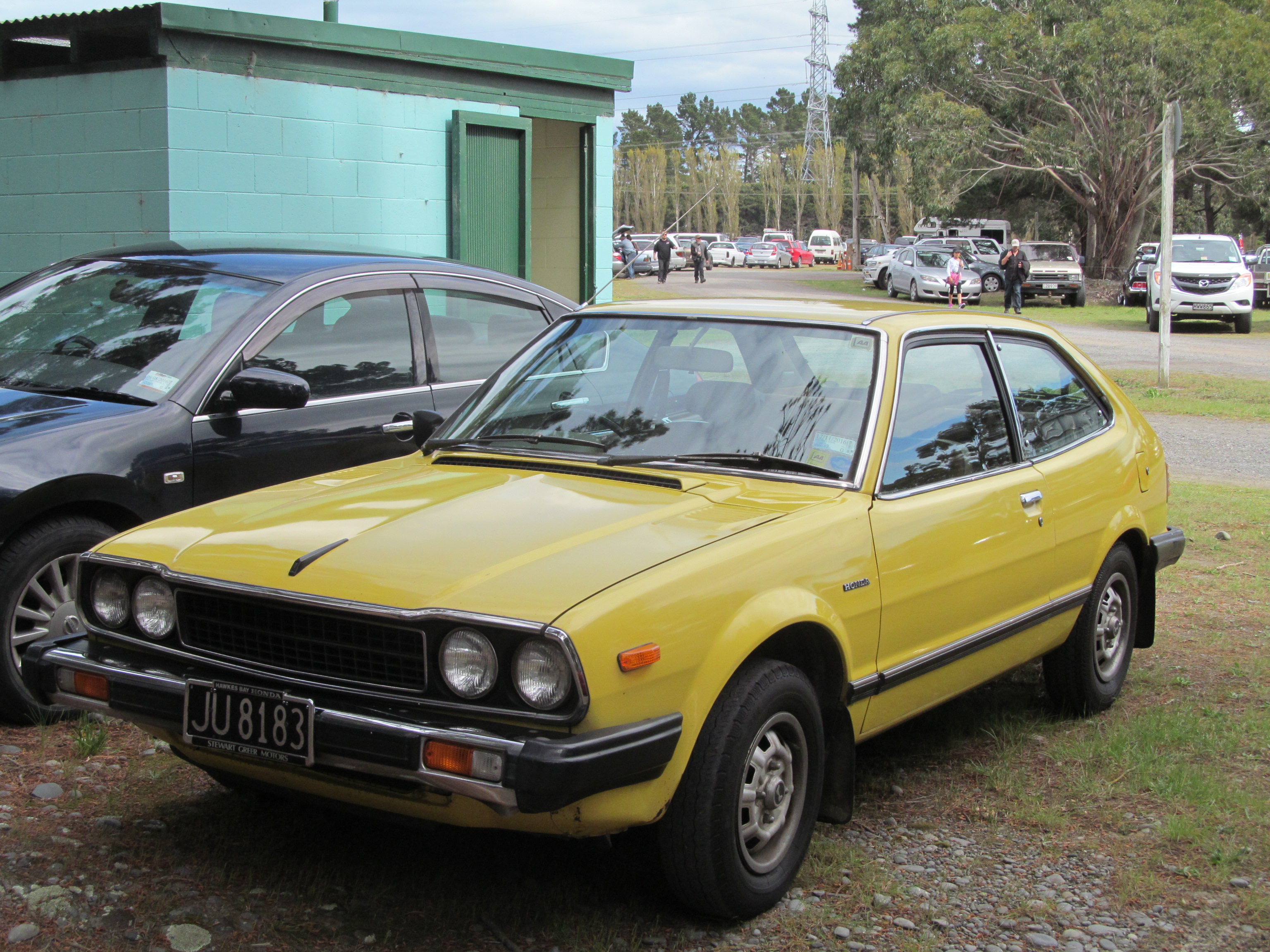
And what that also kind of means is that if you look at the last kind of 60 days of retail,
your average intermediate car, so think like Honda Accord segment, at transaction price,
it's actually underneath where your average compact SUV was.
So think about that for a second.
You can get a smaller platform.
Yes, it's an SUV body style, most likely with all-wheel drive, well-trimmed, right?
But at about an average CFTP of about 41,000 to 42,000, where your intermediate passenger
car, one entire platform size larger, but yes, it is a sedan on an SUV.
Coming in at about 39,000 underneath it, that does present some compelling options for consumers
when you come back to purchase.
Do you know if demographics are at play in this?
And I only ask because full disclosure, I have an 18-year-old daughter who's driving
now and I have a 16-year-old son who's getting ready to drive and they both want cars.
They don't want trucks or SUVs.
Is the younger generation more interested in passenger cars?
And if so, is it because, well, they're cheaper?
Greg, no doubt about it, right?
That's a primary motivator and it's where we see a more aggressive uptake of the younger
generation.
Unfortunately, it doesn't take away from the total industry trend, which is of the average
buyer age getting older in totality.
And I know you and I spoke about this many times before because this is of concern to
me because as the demographic gets old, and I can tell you, most of the erosion in the
buyer base is of buyers 35 and under.
And yes, again, for the first six months of this year, we have the lowest amount of buyers
in that 35 and under bucket.
It just slowly keeps eroding and being replaced by buyers in the 50-years-old and older bucket.
The one in between is eroding slowly, but there aren't a lot of changes there.
And as these demographic changes occur, it's kind of potentially delaying onset of first-time
vehicle purchase.
And something to be concerned about and something to watch.
I think for a lot of the brands out there, you want to make sure you're doing all you
can to appeal to younger buyers.
And as you and I know, the quickest way to do that is with a more aggressive pricing
and marketing plan.
And certainly compact car absolutely can fulfill that.
For automakers and dealers, they should, I assume, still be making decent margins because
which generation or which demographic has the money, it's probably those over 50 who
have saved all their lives and are experiencing some generational wealth income from older
parents passing on and inheritance and those kind of things.
So while the industry is losing at the entry level, aren't they gaining financially at
that upper level of 50 plus buyers?
Yes, certainly.
And that's the trade-off, right?
There's nothing wrong with having older buyers to to your point, they're generally better
positioned financially and can afford more car today, which is great.
But we also want to kind of make sure we have sufficient options to fill that funnel for
tomorrow's business case with those younger buyers and entice them into our brands as soon
as possible in the hopes that we can sell one more or two more cars to them, hopefully
retaining within our brand, with anyone's particular brand, for the lifespan or duration
of that consumer.
Let's talk trucks.
What is the truck market like?
And I ask because Ram is doing very well, but Stellantis now has a handful of pickups
on the way across brands.
Ram, Jeep, you name it, it seems like they want to pick up under just about every badge
to cash in on the truck craze.
But what is happening in Canada when it comes to full-size trucks?
It's a core segment for us.
Greg and Inino, Canadian consumers love their full-size crew cap pickup trucks, but it's
been tough.
So perennially, for the last number of years, large pickups have been the number two retail
segment in Canada, according to our estimates.
And it actually fell to third most popular segment about 60 days ago.
So there's about two months of data verifying that this isn't when we're approaching kind
of 75 to 90 days of data verifying that this isn't just a blip that we've had a segment
inversion.
And unsurprisingly, as I just mentioned to you a few moments ago, subcompact SUV, those
small, tiny SUVs that also a lot of Canadians love, well, they love them enough that that's
become now the second largest segment in Canada.
And segmentation changes, Greg.
They don't happen quickly.
But gosh, this one, like, like, happens so fast and unfolded so rapidly.
I'll give you an example.
Last year at this time, full-size truck exceeded subcompact utility by over a full percentage
point.
And in the first half of this year, so within the last 12 months, they've inverted almost
entirely in the other direction, where a full-size truck is now well over one percentage point
less in market share than subcompact utility.
So at the retail level, this is the difference between a full-size truck being at 12 to 13
points of share and subcompact utility at 13 to 14 points of share, depending on the
given month.
The curves appear to just be widening and widening now every few weeks.
Like I said, we've got about 75, 90 days of data, and they're not getting closer to each
other.
They're getting further apart.
Now, the important part to remember is it doesn't imply that Canadians are trading in
a full-size crew cab truck on a super small subcompact utility.
What it's telling us is those truck buyers are waiting.
They're delaying coming back in.
Full-size trucks have a large tariff exposure, as do some other segments.
Pricing's gone up more than almost any other segment in Canada so far this year.
There are those tariff pressures, so incentive growth is actually in check on this segment
in particular.
And my suspicion is, and what our data is telling us is consumers are just standing
back right now.
So it's incumbent on a player in that segment to entice those consumers back.
And then what we see with subcompact utility is whoever is in market to come back and buy
one, they're not hesitating.
Because let's face it, they're still amongst the cheapest of all segments to purchase in.
So there isn't hesitation on behalf of the consumer.
There is some compact utility also being contrasted by this segment.
There are some subcompact car returnies and compact car buyers are also piling into subcompact
utility.
Because it is widely represented by many brands across Canada.
There are many options and it's one of the most affordable segments to buy in.
So those are kind of like the dynamics behind that.
And unfortunately, go back to your original question.
I think for the large truck, and really any frame-based segment in Canada, including large
utility and mid-sized pickup trucks, it's a harder business case this year.
I want to talk, I would be remiss if I didn't ask about leasing.
Because one of the ways consumers can sometimes save a buck or two on their monthly payment
is to turn to leasing.
But there's been changes in leasing, hasn't there?
Leasing has been dialed back after a while of seeing it increase.
Where does leasing fit in all of this, Robert?
And what does that segment or that market look like?
Yeah, not actually.
I want to quite characterize it.
Is that, Craig?
OK.
Leasing is still on a tear.
Just here's the thing.
It didn't exceed 30 percentage points of the market.
We thought it would.
So we've broached 30 before.
A lot of pundits would have thought that by the midway point this year.
Yeah, we would have exceeded 30.
But we're at 29 points of leasing.
It didn't go anywhere.
Every month, it still keeps ramping, ramping up.
Let's face it, it's one of the ways you can gain a payment, right?
Because manufacturers can put some ventures into residual value buy up of the vehicle.
They're not necessarily going for minimalist APR.
I think Canadian consumers have accepted the fact that, yeah, you can have an APR
that starts with a three, right, or a four.
Because they understand that's where their mortgages are right now.
So a lot of the subventions being back loaded into the portion consumers don't see,
which is residual value buy up.
On top of that, consumers can choose to vary their term.
They can take a shorter term, get the 36 month lease term in Canada
for the first half of this year, Craig, has the most aggressive APR,
kind of of any purchase option.
And then on being averaging about 3.5% roughly of APR,
where to give you some context, the 48 month lease, which is the most popular,
is just over four.
And the average financing contract, driven by 84 obviously,
is about four and a half, quarter points.
And then on top of that, you can do an ultra low kilometer option.
And you can get that payment down into, you know,
the maybe the $700 range, depending on the classification of the vehicle,
depending on the segment that you're buying into.
Where we have seen it dial back a bit is actually in EVs, electric vehicles.
So leasing was building so strongly on electric vehicles,
we were surpassing 40 points of field penetration on electric vehicles.
But then a curious thing happened.
Our federal government decided to put the re-institute incentives
for K&K Consumers to Purchase and EV,
that both apply to a purchase and a lease,
but they don't apply the same rate on leases and there's a stair step to it.
So we saw the lease penetration deal type on EVs actually go down
during the first six months of this year for a number of months
after the EVAP program came back.
But having said that, you know, it's not like people stopped leasing EVs.
You know, it went from just over 40% to about 36, 37%.
So it's still very popular amongst K&K Consumers,
but there's been a little bit of that kind of, you know, that economic meddling
in the marketplace, so to speak, that changed up some of the leasing dynamics on EVs.
But we don't see long-term leasing going away as a very, very popular mechanism
for Canadians to purchase an EV.
Let's talk about the transaction price through the first six months, 49,700.
That is up $600 over last year.
If you look at the monthly payments, 9.25 right now versus 9.00 last year,
how would you describe or characterize that increase?
Is that a large increase when you're looking back over time?
I know that vehicles have spiked since COVID, so, you know, that they're up a lot
over five years, but is increasing $600 over one year a lot, Robert.
At a macro level, Greg, it's not that much, but here's the point.
It just keeps going up all the time.
And don't forget, this is happening at the same time as we are driving less consumers
into full-size trucks and intermediate utilities, and a little less on full-size utility.
That's kind of a different consumer mindset.
And we are driving many more people into much less expensive vehicles, subcompact utility,
but the total pricing curve is still going up.
So what it's telling you is there's a lot of segments out there that average Canadians
are buying that are up 456 percent year over year in price,
and that's actually fairly staggering, and that we're still predicted to do about 1.8 million
units this year.
Robert, always good to have you on the podcast.
You come armed with a ton of statistics and detail and insight, and we appreciate it.
Absolutely, Greg.
Always appreciate discussing these topics with you.
I'd like to thank Robert for his time.
If you would like to be a guest on the show, have a suggestion or simply want to comment,
email me at glasen at AutoNews.com.
And remember, you can listen to all our previous podcasts on Spotify, iTunes, Google Play,
or on our website, automotivenews.ca.
Just scroll to the podcast hub in the middle of our homepage.
And don't forget, you can follow Automotive News Canada on X, where we're at Auto News
Canada.
And you can find me there too under at glasen, A-N-C.
Finally, you can look for us on LinkedIn, just search Automotive News Canada.
That does it for this episode of the Automotive News Canada podcast.
We hope you'll join us next time.
So long, everybody.
About this episode
Canadian auto sales held up better than expected in the first half of 2026, but Robert Karwel says the market is being propped up by rising incentives, thinner dealer margins and buyers chasing better deals as prices climb. The discussion digs into slower inventory turns, lingering tariff uncertainty, and how Canadians are still favoring well-equipped smaller vehicles. They also explore the surprising strength of passenger cars, especially hybrids, as some sedans are now pricing below compact SUVs.
USMCA uncertainty; Subaru’s Solterra price cut; and sub deal lacks auto. Plus, J.D. Power Canada Director of OEM Solutions Robert Karwel talks first-half sales, pricing, leasing, incentives and more.