
June 17th, 2026 | Mitsubishi walks the talk on new products; AlixPartners’ Mark Wakefield
About this episode
Mitsubishi lays out its Momentum 2030 roadmap, including an EV arriving this fall and new models like a Pajaro-based SUV and a redesigned Outlander—while also dropping plans for future full-battery EVs in favor of hybrids. Mark Wakefield of AlixPartners then turns to China’s vehicle AI edge and how export strategy is pressuring North America and Europe toward tighter local-content rules. He argues the US should modernize USMCA for North America-wide supply, not a US-only wall, and warns proposed content thresholds could get very expensive.
Mitsubishi previews a wave of new models for U.S. dealers. Chevrolet pulls the wraps off a redesigned Silverado 1500. Plus, AlixPartners Global Automotive Market Lead Mark Wakefield joins Automotive News from the Center for Automotive Research’s Management Briefing Seminars to discuss how China is redefining the artificial intelligence-powered vehicle and what a renegotiated USMCA could mean for North America’s competitiveness.
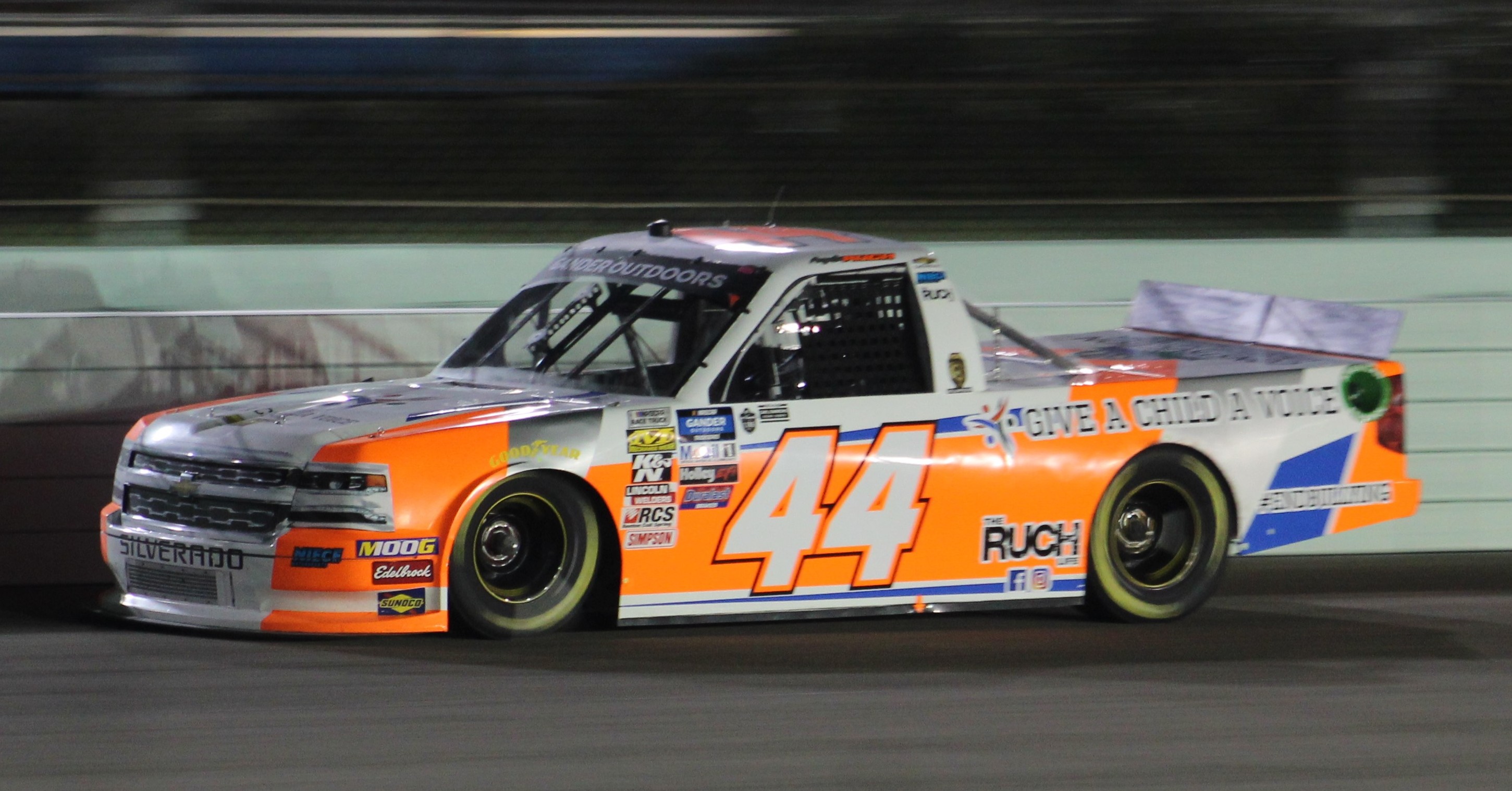
Chevrolet Silverado
"waiting for. Chevy's redesigned Silverado is here and we've got the details. Instalantis ta..."
The Chevrolet Silverado is a large pickup truck made for work and towing. When it gets redesigned, it usually means the truck has new updates and features compared with the older version. That’s why it’s a big topic in car news.
The Chevrolet Silverado is a full-size pickup truck built for towing, hauling, and everyday driving. In a news context, it’s often discussed because major redesigns can bring updated engines, new tech, and changes to trim and capability. A redesigned Silverado being “here” is significant because it signals a new generation of the model and typically affects pricing, availability, and how the truck competes in the segment.

Mitsubishi Outlander
"They include the brand's first modern EV arriving this fall, a rugged Pajaro-based SUV potentially badged as the Montero, a redesigned Outlander and a pickup co-developed with Nissan."
The Mitsubishi Outlander is a popular SUV model. The show says it’s being redesigned, which usually means Mitsubishi is updating the car in major ways, not just small cosmetic changes.
The Mitsubishi Outlander is the brand’s mainstream SUV, and this episode says it’s getting a redesign. That matters because a redesign typically brings updated styling, packaging, and powertrain changes—often aligning the model with new regulations and customer expectations.
hybrid powertrains
"Notably, Mitsubishi has dropped plans for future full-battery electric vehicles in favor of hybrid powertrains, citing evolving US regulations."
Hybrid powertrains use both an electric motor and a gasoline engine (or another energy source) to move the vehicle. In this context, Mitsubishi is shifting away from full-battery electric plans toward hybrids, citing evolving US regulations—meaning compliance and cost/availability likely drive the strategy.
Chevrolet Silverado 1500
"Chevrolet is pulling the wraps off its redesigned 2027 Silverado 1500 and GM is counting on it to be a hit."
The Chevrolet Silverado 1500 is a major full-size pickup truck. The show says the 2027 version is redesigned, which usually means big updates that can change how it drives and what features it has.
The Chevrolet Silverado 1500 is GM’s flagship full-size pickup, and this segment says it’s being redesigned for the 2027 model year. For listeners, the redesign is the story because it typically affects everything from powertrain options and tech features to towing/ride characteristics—areas that matter most to truck buyers.

Gmc Sierra
"...h seven trims. The Silverado and its sibling, the GMC Sierra, combined for nearly a third of GM's US new vehic..."
The GMC Sierra EV is a pickup truck that runs on electricity instead of gasoline. It comes in different trims, which usually means different equipment and capability levels. It’s discussed a lot because electric trucks are a major shift in how people power and use pickups.
The GMC Sierra EV is an all-electric version of the Sierra lineup, bringing a battery-electric powertrain to the full-size pickup category. It’s significant in the podcast because the discussion includes multiple trims and compares sales impact between the Sierra and the Silverado’s related model. Electric pickups like this are often covered due to their range, charging practicality, and how they fit into mainstream truck demand.
product roadmap
"Do dealers actually believe this product roadmap will turn things around, or is there still skepticism? Yeah, there was definitely some concern from the retailers we spoke with after this meeting"
A product roadmap is basically a company’s plan for what new cars (and tech) it will bring out, and when. Dealers care because it affects what they can sell and how soon customers will see new vehicles on the lot.
A product roadmap is a company’s planned schedule for what vehicles and technologies it will launch, and when. In auto retail, dealers watch it closely because it determines what inventory they’ll be able to sell and how soon new models will arrive.
hybrids
"Now, Mitsubishi is walking away from full EVs in favor of hybrids. Now, what's driving that shift and what happens if regulators change course in two short years?"
A hybrid uses a gas engine and an electric motor together. It’s designed to use less fuel than a normal gas car, without requiring you to plug it in like a fully electric car.
Hybrids use both an internal-combustion engine and an electric motor/battery. The key idea is that the car can blend power sources to improve efficiency versus a purely gas car, while avoiding the “all-electric” dependence on charging.
walking away from full EVs
"Now, Mitsubishi is walking away from full EVs in favor of hybrids. Now, what's driving that shift and what happens if regulators change course in two short years?"
This means Mitsubishi is backing off from making mostly fully electric cars. Instead, they’re choosing other electrified options that don’t rely entirely on charging from the grid.
“Walking away from full EVs” means shifting away from battery-electric vehicles as the main strategy. Instead, the company is choosing other electrified options (like hybrids) that can reduce reliance on charging infrastructure and battery supply constraints.
plug-in
"What's interesting though is that they're pivoting almost wholesale towards hybrids, whether that's mild hybrids, whether that's traditional hybrids, or whether that's plug-in"
A plug-in hybrid has a bigger battery you can charge at home or at a public charger. That lets it run on electricity for longer than a regular hybrid, as long as you’ve charged it.
“Plug-in” refers to plug-in hybrid electric vehicles (PHEVs), which have a larger battery that can be charged from an external power source. That enables more electric-only driving than a non-plug-in hybrid, depending on battery size and charging access.
software-defined vehicles
"They're now moving into—you've heard of SDVs, those software-defined vehicles. They're now moving into—"
A software-defined vehicle is a car that’s run more by software than by fixed hardware. That means it can get new features and improvements over time, sometimes even without visiting a shop.
A software-defined vehicle (SDV) is a car where key functions are controlled primarily by software rather than fixed hardware. That enables frequent feature updates and new capabilities over time, often via remote updates.
OTA changes
"instead of just being able to OTA changes, having more and more enablement of learning"
OTA changes are software updates sent to the car wirelessly. Instead of going to a dealership, the car can receive updates over the internet.
OTA (over-the-air) changes are updates delivered wirelessly to a vehicle’s computers, similar to how phones get software updates. In an SDV world, OTA updates can add features, adjust behavior, and improve systems without a dealer visit.
machine learning of a transmission
"in the vehicle. So, we've always had a degree of that, the machine learning of a transmission [503.0s] that got used to you and did that sort of thing."
It means the car’s computer can learn how you drive and then adjust how the transmission shifts. So it can get better at matching your habits instead of using one set of rules for everyone.
This refers to using machine learning to let a transmission adapt its shifting behavior based on how you drive. Instead of fixed shift maps, the car can learn patterns and adjust for smoother or more responsive operation over time.
infotainment
"What would the consumer experience [524.4s] of a highly AI-influenced car be? The infotainment they would already be seeing,"
Infotainment is the car’s screen and audio system—things like music, navigation, and settings. With AI, it can also help you by understanding what you say and suggesting actions.
Infotainment is the in-car system that combines entertainment (like audio and video) with information and vehicle controls. In an AI-focused car, it becomes the main interface for voice, recommendations, and connected services.
large language models
"as well [535.5s] as the large language models that allow you to do natural speech and have a conversation with your [541.7s] vehicle."
Large language models are AI tools that can understand and respond to human language. In a car, they help the vehicle understand what you mean when you talk to it, not just follow a few fixed commands.
Large language models (LLMs) are AI systems trained on huge amounts of text so they can understand and generate human-like language. In a car, they’re used to interpret natural speech and turn it into actions or suggestions.
natural speech
"as well [535.5s] as the large language models that allow you to do natural speech and have a conversation with your [541.7s] vehicle."
Natural speech means you can talk to the car in a more normal, everyday way. Instead of saying exact phrases, you can speak more naturally and it still tries to understand you.
Natural speech means the system is designed to understand everyday spoken language, including phrasing and context, rather than requiring strict command wording. That’s what enables more conversational interactions with the vehicle.
voice command
"And it'll go, [552.4s] do that. That's not a literal voice command like drive to, that's taking language and [560.7s] applying it then in the vehicle."
A voice command is when you say something like “do this,” and the car carries it out. The point here is that AI can understand more than just fixed commands—it can interpret what you’re trying to do.
A voice command is a direct spoken instruction that the car maps to a specific action (like “roll the window down”). The transcript contrasts this with AI language understanding that interprets intent and then performs the appropriate action.
battery
"it's doing it to compete with the other hundred-and-something automakers that they're competing [514.5s] with. It's not really focused on what are the Germans doing or what are the Americans doing [519.2s] in the vehicle. What does that look like in practice? What would the consumer experience [524.4s] of a highly AI-influenced car be? The infotainment they would already be seeing, [530.4s] and the connective was you're basically having an extension of both your mobile life, but as well [535.5s] as the large language models that allow you to do natural speech and have a conversation with your [541.7s] vehicle. So, it could suggest things of, if you said right now, if you're in a Ziker, you can say, [549.0s] could you roll the right rear window down halfway? And it'll go, [552.4s] do that. That's not a literal voice command like drive to, that's taking language and [560.7s] applying it then in the vehicle. But there's also then the learning of how do you drive, [567.2s] where do you drive, how to condition the battery, how to get charge out of this or that,"
In this context, battery means the big electric power pack in an EV. The car can manage it—like warming it up or controlling how much power you use—to help you get better range and safer operation.
Here, “battery” refers to the high-voltage energy storage used to power an electric vehicle’s drivetrain and systems. The transcript mentions “conditioning” and “charge,” which are battery-management topics that affect range and performance.
driving assistance
"As a vehicle learns, it can adjust its driving assistance. That's much more advanced AI because [596.6s] now you're getting into stuff that matters versus pick the right song or what's the [602.3s] temperature I like my car at."
Driving assistance refers to automated safety and convenience features that help the driver, such as collision avoidance, lane-related functions, and other semi-automated behaviors. The transcript suggests AI can tailor these systems as it learns your driving patterns and risk tendencies.
central compute
"And you've got like a central compute that has [622.6s] actuation, but it's all actually available to that central compute to change something."
Central compute is the car’s main “brain” computer. It’s what can coordinate different systems and, with AI, decide what actions the car should take.
Central compute is the car’s main high-performance computer that coordinates multiple functions. The transcript implies it has access to actuation controls, meaning it can command vehicle systems to change behavior based on AI decisions.
actuation
"And you've got like a central compute that has [622.6s] actuation, but it's all actually available to that central compute to change something."
Actuation is the part where the car actually makes something happen—like moving a control or changing how a system operates. The AI decides, and then actuation carries out the decision.
Actuation is the process of physically moving or controlling a mechanism—like adjusting a window, changing a motor’s output, or commanding a steering/braking-related function. In AI-enabled vehicles, the AI can translate decisions into actuation commands.
capacity
"I want to talk about capacity, China's auto production capacity. Where does it stand [634.7s] now and when do you see it tapering off or increasing?"
Here, “capacity” means how much cars factories can make. They’re talking about whether China’s car-making ability is still ramping up or starting to slow down.
In this context, “capacity” means manufacturing capacity—how many vehicles a country’s automakers can produce. The discussion is about China’s auto production capacity and whether it will grow or taper off.
brownfield
"But to get through the timeline, there's a lot that's just being done as brownfield type stuff. It'll be interesting to see what happens in Mexico."
A brownfield site is an area that was already used before, like an older factory or industrial property. The idea is that it can be quicker to repurpose than building from scratch on brand-new land.
A brownfield project is redevelopment of land or facilities that were previously used, rather than starting from untouched greenfield land. The speaker implies automakers are using faster, existing sites to meet production timelines.
USMCA
"And I think there's going to have been a waiting game on how USMCA really goes. But other than North America, it's already happening where you're seeing plants come up."
USMCA is a trade agreement between the U.S., Mexico, and Canada. It affects how easily cars and parts can be shipped and sold across those countries, and it can influence how companies plan where to build vehicles.
USMCA is the United States–Mexico–Canada Agreement, a trade deal that governs how cars and parts move across North America. In the episode, it’s used to frame how quickly automakers can ramp production and sourcing under changing rules and tariffs.
temporary wall
"Will the barrier get taller or will it start to lower because we see it happening elsewhere? I think the time period, you don't want a permanent wall because then you end up in a spot that's uncompetitive."
A “temporary wall” means using trade restrictions for a limited time to give local companies a chance to adjust. The point is to avoid making the protection permanent, because that can reduce competition and innovation.
A “temporary wall” describes short-term trade barriers (like tariffs or restrictions) intended to protect domestic industry while it adapts. The speaker argues against permanent barriers because they can leave the industry uncompetitive.
industrial policy
"You want a temporary wall that allows the industry to change, but also trying to level playing fields and have an industrial policy that allows you over time have a competitive industry and have a more self-sufficient industry."
Industrial policy is when the government tries to steer which industries grow by using programs, incentives, or regulations. In this context, it’s about helping the auto industry become more competitive and less dependent on imports.
Industrial policy refers to government actions—like incentives, rules, or targeted support—meant to shape which industries grow and how they compete. Here, it’s tied to creating a more competitive and self-sufficient North American auto supply chain over time.
Request an Explanation
Heard something you'd like explained? We'll add it to this episode.
Sign in to request explanations for terms you heard.
Want to learn more?
Browse our glossary for plain-English explanations of automotive terms, jargon, and concepts.
Help improve this episode
See something that's not quite right? Our annotations are AI-generated and can sometimes miss the mark. Click the flag icon on any annotation to suggest a correction.